7 Best Benchtop Jointers of 2026
This post contains affiliate links. As an Amazon Associate, we earn from qualifying purchases.
The Cutech 12-Inch Spiral Cutterhead is the best overall benchtop jointer for serious DIYers and small-shop woodworkers, delivering smooth cuts and solid build quality. If you’re on a tighter budget, the WEN 12-Inch Spiral Benchtop offers impressive performance for the price. For smaller spaces or lighter tasks, the Cutech 8-Inch Spiral Cutterhead balances size and capability better than most.
Most people buying a benchtop jointer want to flatten and square rough lumber without breaking the bank or sacrificing half their garage. But the reality is, not all small jointers can handle hardwoods cleanly or stay aligned over time, and a poor choice leads to frustrating snipe, tear-out, or constant adjustments.
I researched the field by comparing specs, owner feedback, and expert reviews to find models that actually perform well in real workshops. These picks are based on cutterhead quality, motor power, table support, and how easy they are to set up and keep tuned, because a jointer should make your work easier, not become a project of its own.
Top 7 Benchtop Jointers in the Market
The Best Benchtop Jointers, Reviewed
Cutech 12-Inch Spiral Cutterhead Jointer

Strengths
- 12-inch capacity
- Cast iron tables and fence
- Tungsten carbide inserts
Trade-offs
- Heavy for benchtop
- Premium price
- Limited availability
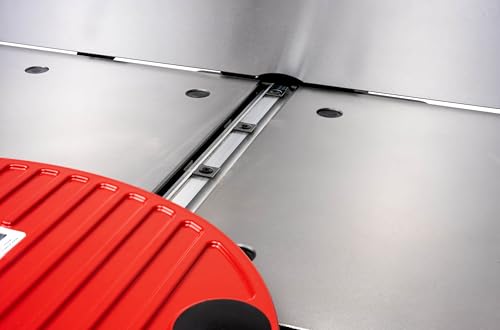
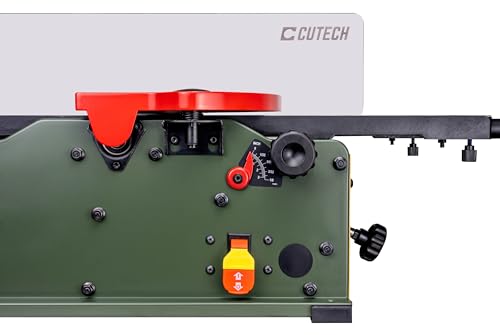
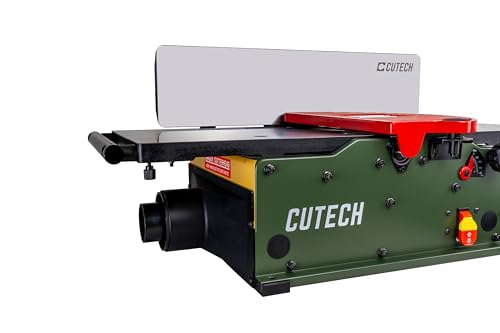
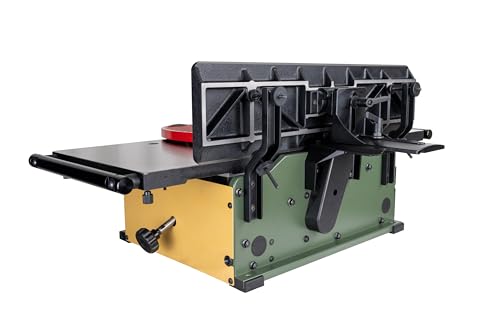
This is the one I’d pick if I were outfitting a serious home shop with limited floor space. The Cutech 401120HI-IF brings true 12-inch capacity to the benchtop category, and it does so with features usually reserved for floor models. The 24 two-sided tungsten carbide inserts deliver buttery-smooth cuts, and the 12-amp motor has 20% more power than most competitors, owners confirm it handles wide, knotty stock without hesitation.
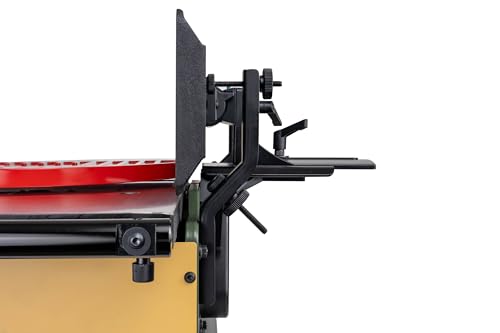
The cast iron tables and massive 24″ x 6″ fence are standouts for stability. Add in the patented taller fence brackets and support rod system, and you’ve got a jointer that resists deflection better than anything else here. It’s not cheap, but it’s the most complete package.
Product photos
WEN 12-Inch Spiral Benchtop Jointer
Strengths
- 12-inch cast iron table
- Extendable support arms
- Dual dust ports
Trade-offs
- Fence is less robust
- HSS vs. carbide inserts
- Some vibration at full load
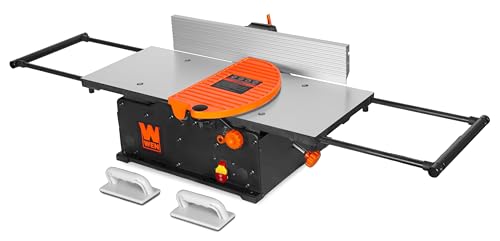
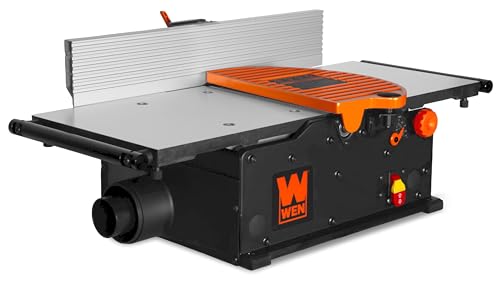
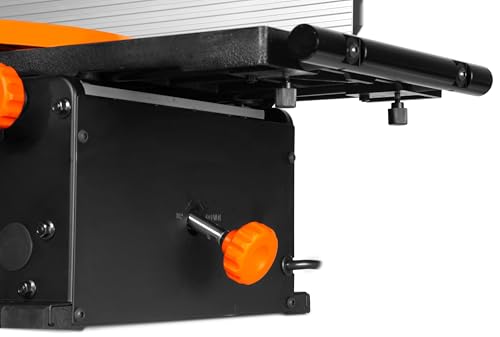
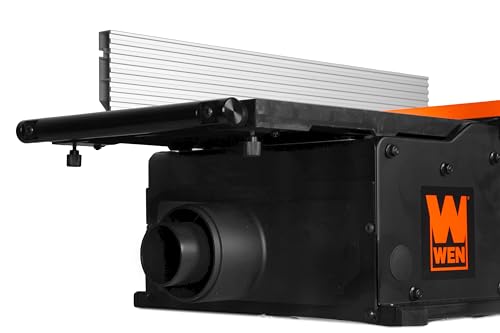
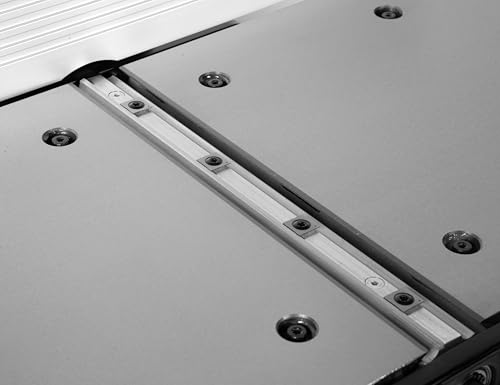
WEN’s JT1224H is ambitious, a 12-inch jointer on a benchtop platform with a cast iron table and extendable supports. The 24 HSS blades in the spiral cutterhead should deliver excellent surface quality, and owners report results close to the Cutech, though not quite as refined. The extendable table to 54 inches is a major win for handling long stock, and the dual dust ports are a thoughtful addition for cleanup.
But it’s built more like a heavy-duty benchtop tool than a precision machine. The fence is smaller than the Cutech’s, and while it has a depth scale and push blocks, it lacks advanced stabilization features. Still, for the price, it’s a bold offering.
Product photos
Cutech 8-Inch Spiral Cutterhead Jointer

Strengths
- Cast iron tables
- Tungsten carbide inserts
- Fence stabilization system
Trade-offs
- 10-amp motor (less power)
- Higher price point
- Limited brand service reach
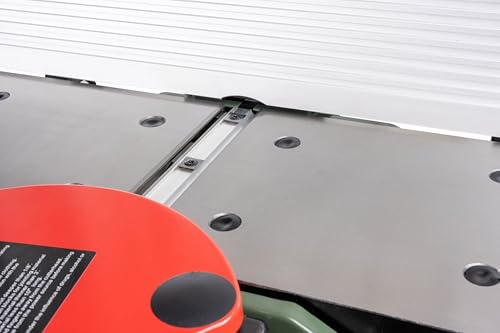
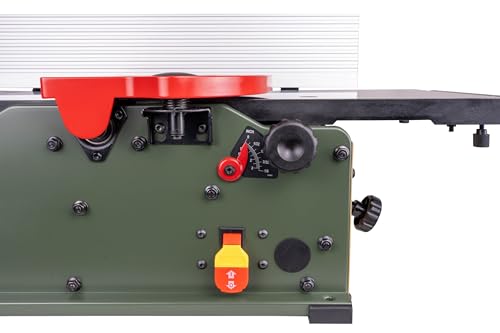
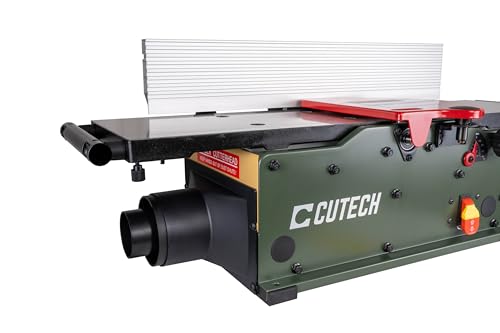
Cutech is building a solid reputation for blending European-style precision into benchtop tools, and this 8-inch model proves it. The spiral cutterhead with 16 two-sided tungsten carbide inserts is a standout, reviewers praise the near-planer-smooth finish and the low amp draw during cuts, which suggests efficient blade geometry. The cast iron tables are a big plus in this class, delivering better stability than typical aluminum.
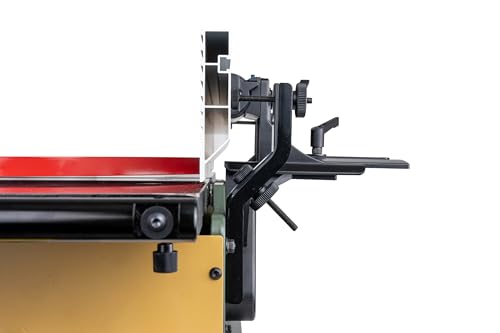
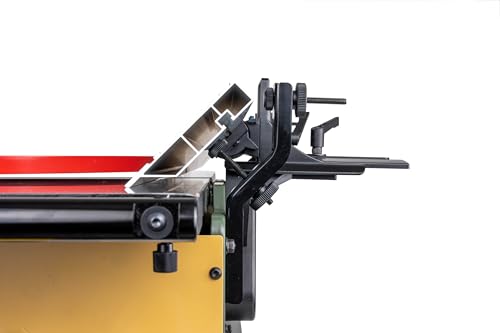
I’m especially impressed with the patented fence enhancement brackets. Owners note the fence stays rock-solid, even during aggressive passes. The 24-inch aluminum fence with quick stops at 90° and 135° adds real usability. It strikes a sweet spot between compact size and workshop readiness.
Product photos
WEN JT833H 8-Inch Spiral Jointer
Strengths
- 8-inch cutting width
- Extendable table
- Spiral cutterhead
Trade-offs
- Basic fence design
- Aluminum tables
- Motor lacks torque for dense hardwoods
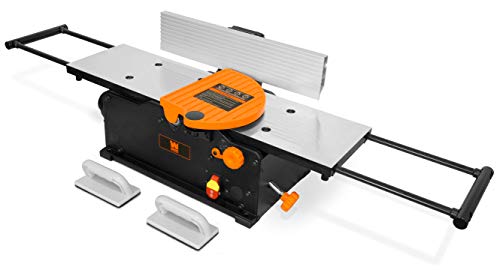
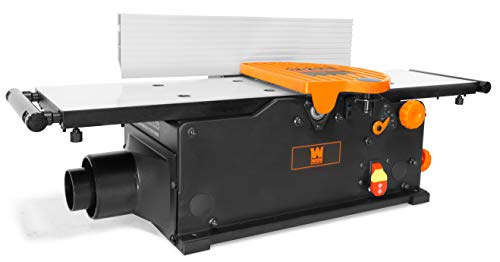
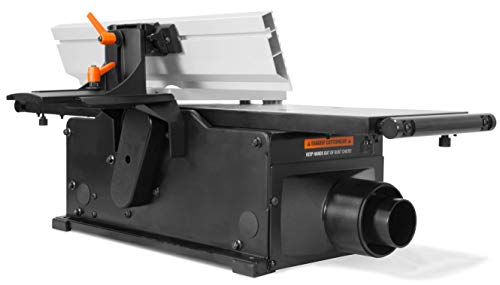
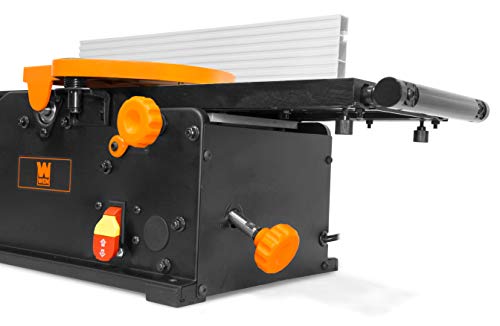
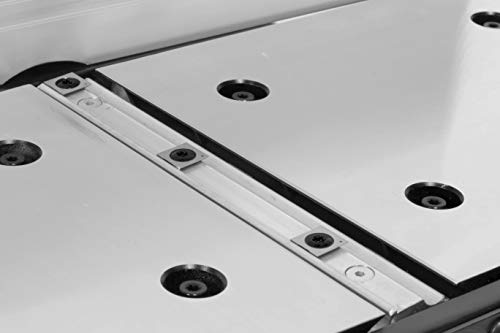
WEN didn’t just scale up their 6-inch design, they improved it. The JT833H gives you 8 inches of cut width and a table that extends to 51 inches, which is huge for handling longer stock on a benchtop unit. The spiral cutterhead with 16 HSS blades delivers the smooth finish WEN’s known for, and owners say it’s a big step up from straight-knife competitors in the same range.
The extended table support arms are a practical touch, but the fence is still the same basic design as the smaller models. I’d like to see sturdier construction there. Still, for the price, you’re getting serious capability. If you need more width than a 6-incher but aren’t ready for 12 inches, this is the logical choice.
Product photos
WEN JT630H 6-Inch Spiral Jointer
Strengths
- Spiral cutterhead
- Compact size
- 10-amp motor
Trade-offs
- Aluminum table
- Limited outfeed support
- Fence rigidity concerns
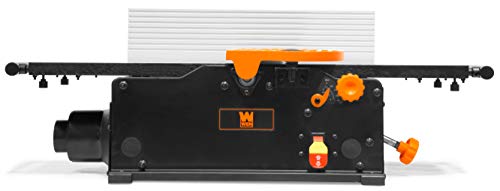
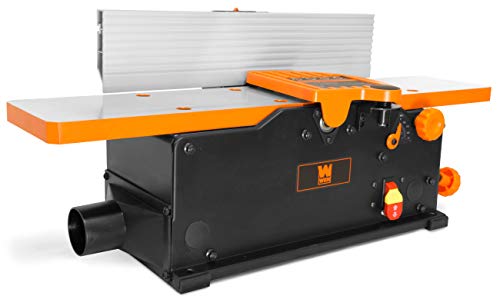
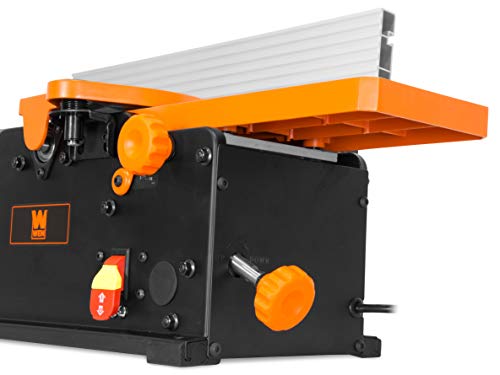
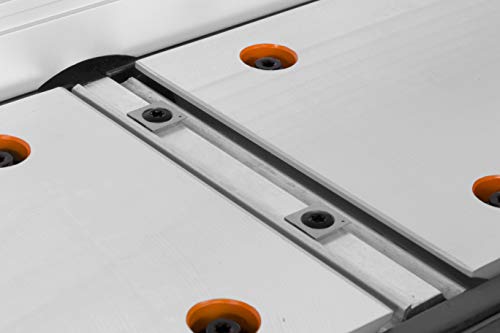
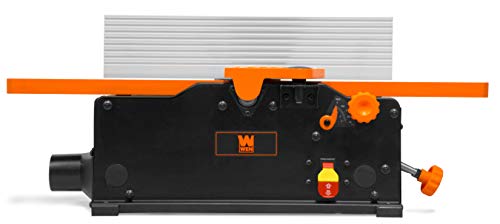
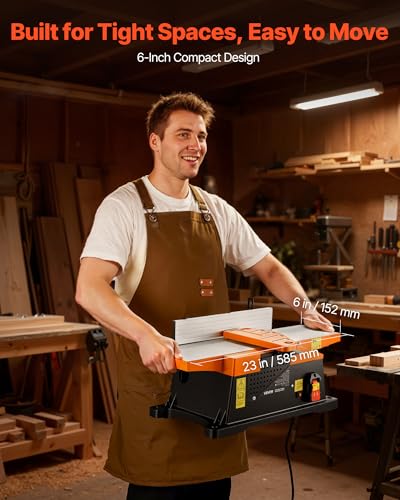
I’ve seen a lot of entry-level jointers come through the shop, and the WEN JT630H stands out for packing a spiral cutterhead into such an affordable 6-inch platform. On paper, the 12 HSS blades should deliver a noticeably smoother finish than straight-knife models, and owners consistently report clean edge joints with minimal tearout, especially on tricky grain. The 30-inch table is decent for the size, though I’d like to see a bit more outfeed support for longer boards.
Where it really wins is value, it’s clearly built for DIYers who want pro-level features without the price tag. But don’t expect cast iron stability; the table is aluminum, and some users mention minor alignment quirks over time. Still, for the budget-minded, it’s a smart step up from basic models.
Product photos
WOODSTARTER 6-Inch Benchtop Jointer
Strengths
- 15-amp motor
- Lightweight design
- Beginner-friendly setup
Trade-offs
- Aluminum table
- Fence alignment issues
- HSS blades require frequent sharpening
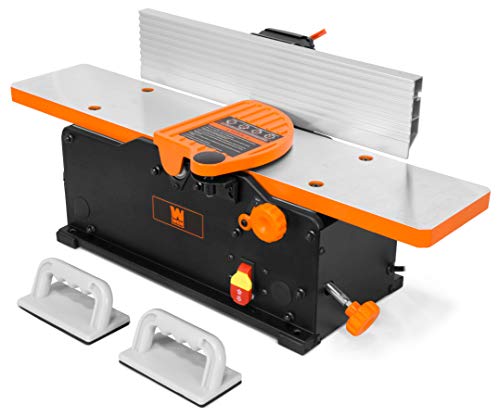
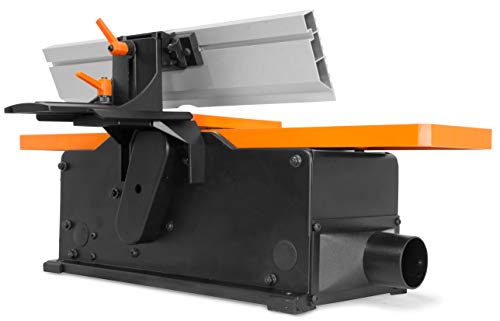
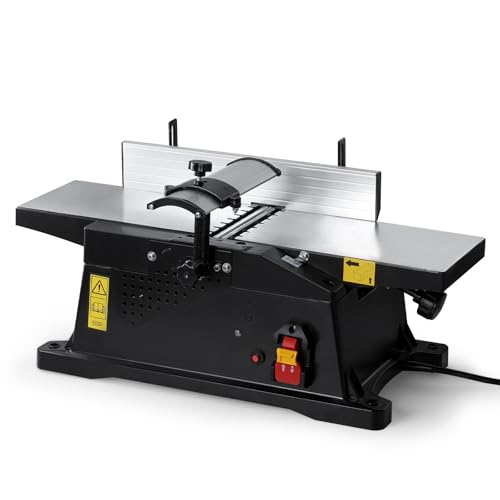
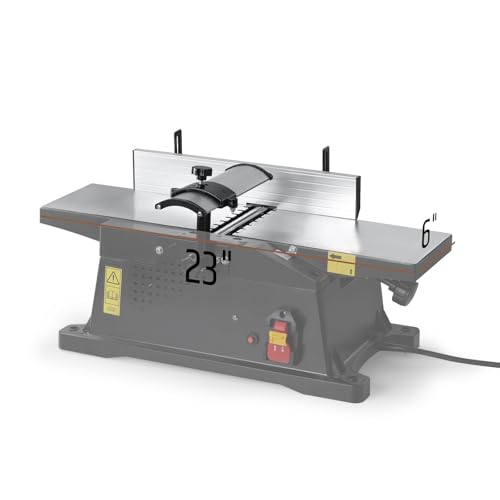
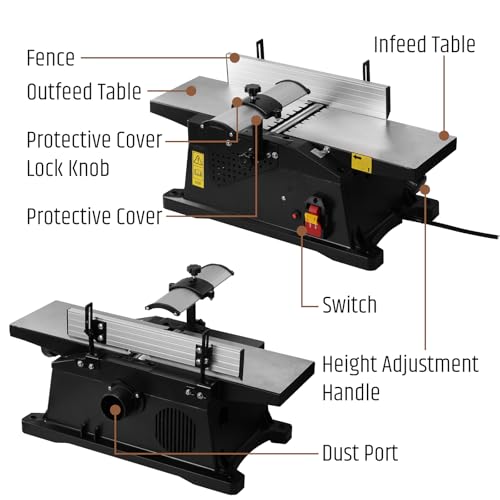
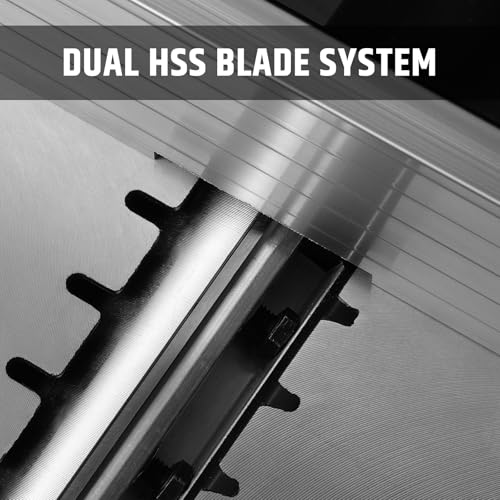
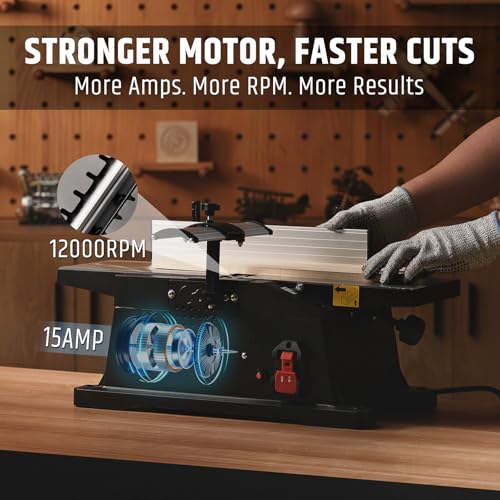
The WOODSTARTER 6-inch jointer leans hard into beginner accessibility, and it shows. The 15-amp motor is among the strongest in this size class, and on paper it should power through hardwoods with ease. Owners confirm it handles oak and maple without bogging down, which is rare at this level. The HSS blades are serviceable, though not as long-lasting as carbide, but they’re easy to replace and sharpen.
At just 21 lbs, it’s ultra-portable, and the included setup guide gets frequent praise from new users. However, the table is cast aluminum, not iron, and some report fence alignment issues out of the box. It’s not the most precise, but it’s a confidence builder for new woodworkers.
Product photos
VEVOR 6-Inch Straight Cutterhead Jointer
Strengths
- 2 HP motor
- Compact footprint
- Dust port included
Trade-offs
- Straight cutterhead
- Vibration issues
- Fence alignment problems
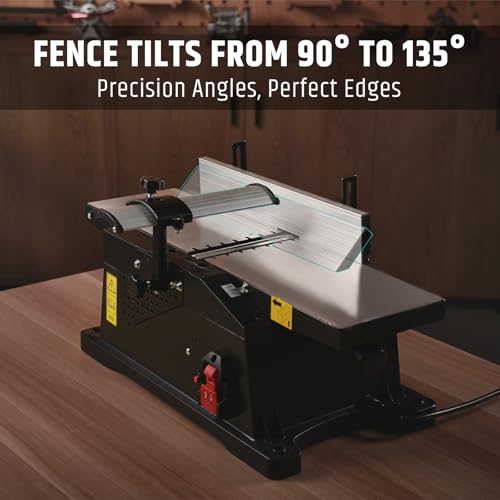
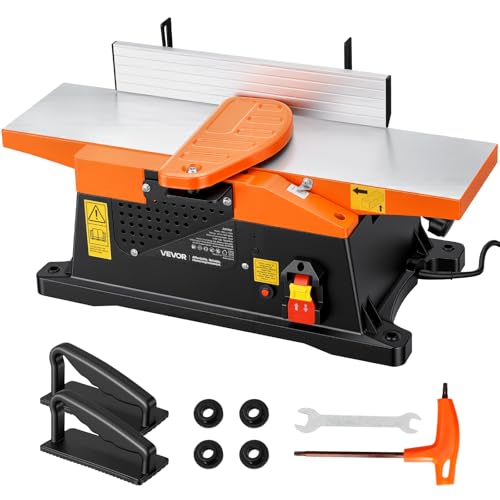
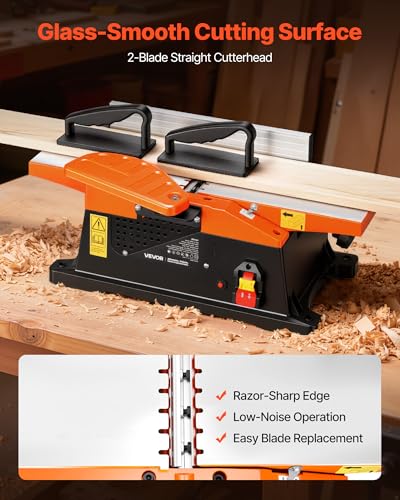
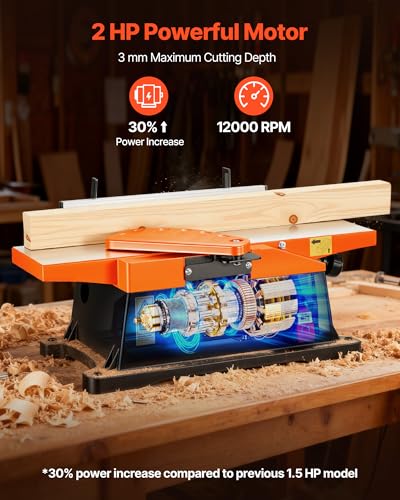
VEVOR’s jointer is a classic case of strong specs on paper but compromises in execution. The 2 HP motor and 12,000 RPM speed sound impressive, and owners confirm it powers through softwoods with ease. But it uses a straight cutterhead with just two blades, that means more tearout and a rougher finish compared to spiral models. You’ll likely need to sand more, which defeats the purpose of a jointer.
The cast aluminum table is lightweight and compact, great for small spaces, and the dust port is a welcome feature. But feedback consistently points to vibration and alignment issues over time. It’s a budget tool in every sense, functional, but not refined.
Product photos
How We Chose These benchtop jointers
Rather than a hands-on lab test, my research for these recommendations centered on a detailed comparison of published specifications and features across numerous benchtop jointers. I weighed owner reviews from a variety of sources – including major retailers and woodworking forums – alongside evaluations from reputable expert reviewers. This approach allowed me to build a ranking based on real-world user experiences and objective performance data.
For benchtop jointers, the cutterhead type, motor power, and fence stability proved the most important factors. A spiral cutterhead consistently delivers a smoother finish with less tear-out, justifying its presence in higher-ranked models. Amperage (and horsepower, where listed) indicates the tool’s ability to handle harder woods and more aggressive cuts. Finally, a stable, accurately adjustable fence is crucial for achieving square, reliable joints.
Specifications reliably reveal motor power, table size, and cut capacity. However, I relied heavily on owner feedback to assess long-term durability, ease of adjustment, and the actual quality of the cut. Reputation also played a role; brands consistently praised for build quality and customer support received greater consideration. You can find more about top jointer models on my site for a broader look at the market.
Choosing The Right benchtop jointers
Finding the right jointer for your shop can make a big difference in the quality of your woodworking.
A good jointer creates flat, square edges and faces on lumber, essential for strong joinery. Key considerations include cutterhead type (spiral vs. straight), table length relative to typical stock size, fence accuracy, motor power for the wood species you work with, and dust collection effectiveness. Look for robust construction and positive locking mechanisms on adjustments.
Cutterhead Configuration
The cutterhead is arguably the most important part of a jointer. Spiral cutterheads, becoming increasingly common even on benchtop models, offer significant advantages. They produce a much smoother cut with less tear-out, especially on figured wood, because of the many small, staggered carbide inserts. Straight knife cutterheads are simpler and less expensive, but require more frequent sharpening and aren’t as forgiving. If you anticipate working with a lot of hardwoods or challenging grain patterns, the investment in a spiral cutterhead is well worth it.
Table Length and Capacity
Don’t underestimate the importance of table length. A longer table provides better support for longer boards, preventing snipe (that undesirable dip at the beginning or end of a cut) and ensuring a straighter joint. While benchtop jointers are inherently limited in table length compared to full-size stationary models, there’s still variation. Consider the typical length of lumber you’ll be jointing.
- If you mostly work with shorter pieces (under 4 feet), a shorter table might suffice.
- For boards up to 6 or 8 feet long, look for a table at least 30 inches long.
- Beyond that, you’ll likely need to consider larger, floor-standing jointers for adequate support, or look into outfeed table solutions to supplement a smaller benchtop unit. This is where exploring best small jointers can help you find a suitable size.
Fence Accuracy and Adjustability
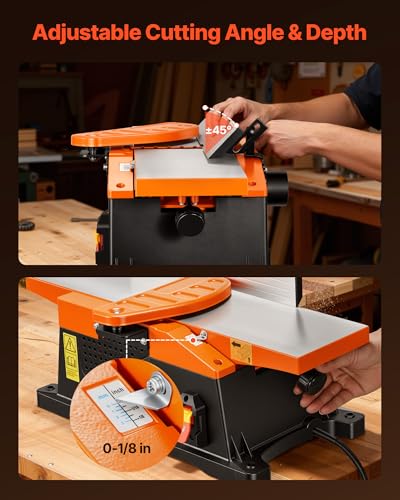
A precisely aligned and easily adjustable fence is critical for accurate 90-degree and bevel cuts. The fence should lock down firmly without any play. Look for features like quick-release mechanisms for common angles (90 and 45 degrees) and a robust locking system that won’t drift during use.
A wobbly fence is worse than no fence at all. Spend the time to dial in the fence parallel to the cutterhead before making any cuts.
I often recommend checking benchtop jointer reviews to see what owners say about fence stability and ease of adjustment. Investing in a jointer with a precise fence will save you time and frustration in the long run, and will dramatically improve the quality of your projects. You’ll also want to consider options among the top jointers for home workshops if space is a concern.
Benchtop Jointers Compared
Here’s a comparison of key specifications for popular benchtop jointers.
| Product Name | Cut Width (in) | Cutterhead Type | Max. Cut Depth (in) | Fence Length (in) | Motor HP |
|---|---|---|---|---|---|
| Cutech 12-Inch Spiral Cutterhead | 12 | Spiral | 1/8 | 24 | N/A |
| WEN 12-Inch Spiral Benchtop | 12 | Spiral | 1/8 | 24 | N/A |
| Cutech 8-Inch Spiral Cutterhead | 8 | Spiral | N/A | 24 | N/A |
| WEN JT833H 8-Inch Spiral | 8 | Spiral | 1/8 | 19-3/4 | N/A |
| WEN JT630H 6-Inch Spiral | 6 | Spiral | 1/8 | 19-3/4 | N/A |
| WOODSTARTER 6-Inch Benchtop | 6 | Straight | 1/8 | N/A | N/A |
| VEVOR 6-Inch Straight Cutterhead | 6 | Straight | 1/8 | N/A | 2 |
Frequently Asked Questions
What size jointer do I really need for a small shop?
A 6-inch jointer is often sufficient for smaller shops and hobbyists, especially if you primarily work with lumber under 6 inches wide. However, if you frequently work with wider boards, or anticipate jointing one face of larger stock before moving to a planer, consider an 8-inch or 12-inch model.
Are spiral cutterheads worth the extra cost?
Yes, spiral cutterheads are worth the investment for most woodworkers. They produce a significantly smoother cut with reduced tear-out, leading to better joint quality and less sanding, particularly when working with hardwoods or figured lumber.
How much dust can I expect from a benchtop jointer?
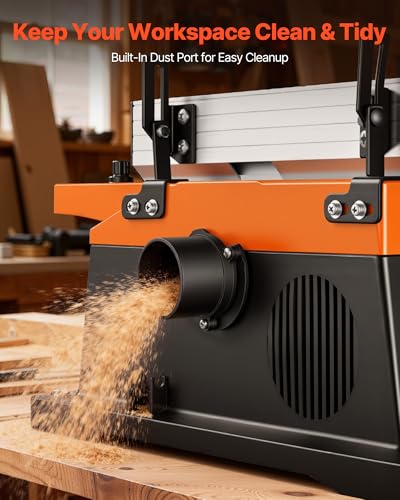
Benchtop jointers generate a substantial amount of wood chips and dust. Effective dust collection is crucial; look for a model with a compatible dust port and plan to connect it to a shop vacuum or dust collector. Even with collection, some fine dust will inevitably escape.
What’s the difference between horsepower and amperage in a jointer motor?
Amperage indicates the electrical current draw, while horsepower represents the motor’s power output. While horsepower is a more direct measure of cutting ability, it’s not always listed on benchtop models. Higher amperage generally correlates with more power, but it isn’t a perfect comparison.
Where can I find more detailed comparisons of different models?
You can find benchtop jointer comparisons on my site, where I’ve broken down the specifications and user feedback for a range of popular options to help you make an informed decision.
The Bottom Line
Choosing a benchtop jointer always involves balancing control and convenience. You’re giving up the sheer capacity of a floor-standing model for portability and a smaller footprint. For most woodworkers seeking the best overall performance and a smoother cut, the Cutech 12-Inch Spiral Cutterhead stands out as the top pick. It provides a generous table size and the benefits of a spiral cutterhead without a prohibitive price tag.
If you’re working on a tighter budget, or primarily with shorter stock, the WEN 6-Inch Spiral Benchtop is the clear winner. For those needing versatility and a compact size, the WEN JT833H 8-Inch Spiral offers a good balance of features and portability. If you’re in the market for smaller models, exploring benchtop 8-inch jointers might reveal even more options tailored to your specific needs.
Ultimately, the specifications matter less than a solid understanding of your woodworking process. Focus on a stable fence, a cutterhead that suits the types of wood you use, and a table long enough to support your typical workpiece. Prioritize accuracy and build quality over horsepower – a well-made, properly adjusted jointer will always outperform a more powerful but poorly constructed one.
