5 Best Belt Grinders for Knife Making of 2026
This post contains affiliate links. As an Amazon Associate, we earn from qualifying purchases.
The JLD 2×72 is the best overall belt grinder for knife making, combining strong motor power, solid build quality, and consistent tracking. For those on a tighter budget, the VEVOR 2HP 2×82 offers impressive durability and size at a lower price, while the JLD 30×1 stands out for compact versatility and precision work.
Most beginners underestimate how much motor stability and frame rigidity affect their grinding accuracy. A shaky or underpowered grinder makes clean bevels and consistent edges nearly impossible, especially during long shaping sessions.
As someone who’s spent years evaluating tools for real shop conditions, I focused on specs and owner feedback that reflect actual performance, not just lab numbers. This guide breaks down the key factors that matter most: power delivery, tracking reliability, and long-term durability, all based on what experienced knife makers report working best in their setups.
Top 5 Belt Grinder For Knife Makings in the Market
The Best Belt Grinder For Knife Makings, Reviewed
VEVOR 2HP 2×82 Belt Grinder
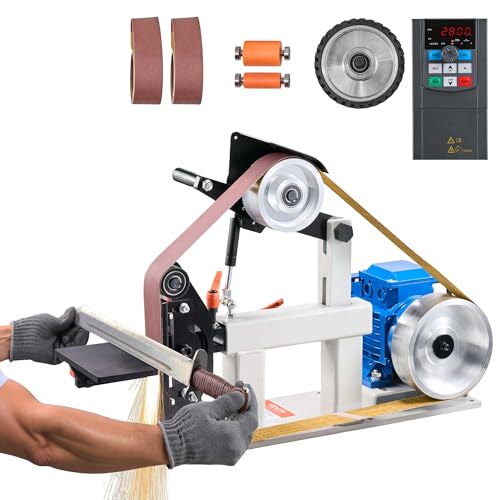
Strengths
- Powerful 1500W motor
- Large 2 x 82 belt
- All-steel frame
- Variable speed
Trade-offs
- Tracking inconsistencies
- Basic wheel quality
- Bulky footprint
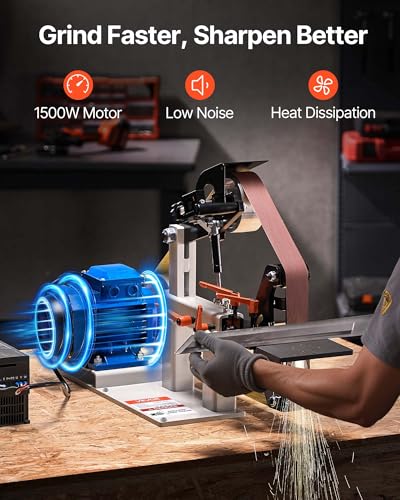
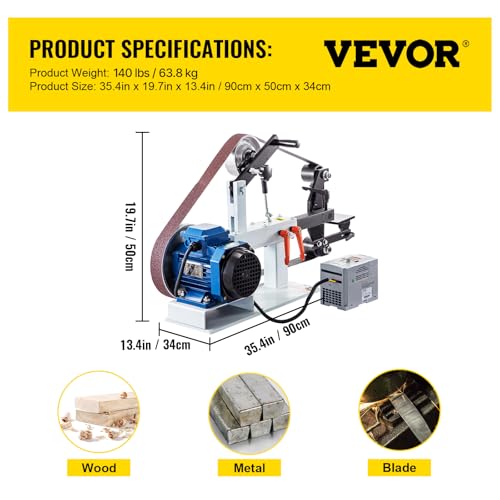
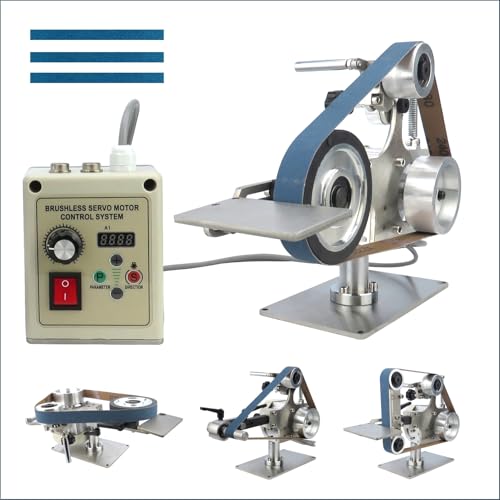
On paper, this VEVOR grinder looks like a beast, 1500W, all-steel frame, 2 x 82 belt size, and owners confirm it holds up well under sustained use. The larger belt length gives you more contact area, which matters when you’re contouring blades or doing stock removal. The variable speed is a big plus, letting you dial back for fine work or ramp up for aggressive grinding.
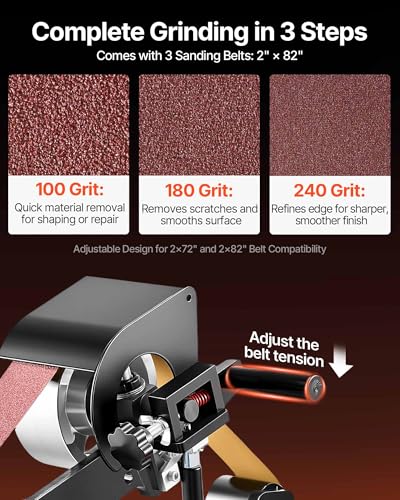
But here’s the catch: while it’s marketed as 3-in-1 with different grinding molds, the setup isn’t as refined as higher-end units. Some users report tracking issues at higher speeds, and the included wheels aren’t hardened enough for consistent precision work. Still, for the money, it delivers solid value. I’d pick this over the Bucktool combo for knife making any day, especially if you’re working with thicker stock.
Product photos
JLD 30×1 Belt Grinder 550W
Strengths
- VFD speed control
- Compact dual-mode use
- Quiet operation
- Precision grinding
Trade-offs
- Low power for heavy stock
- Small belt size
- Limited contact area
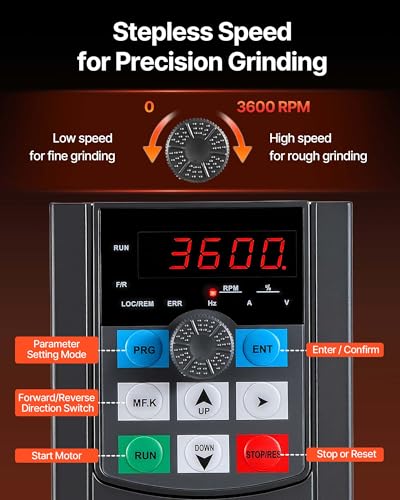
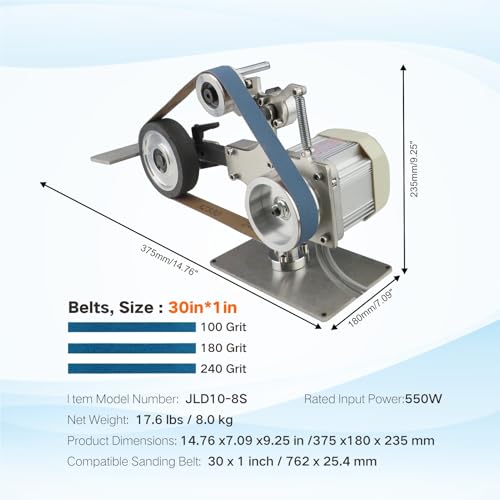
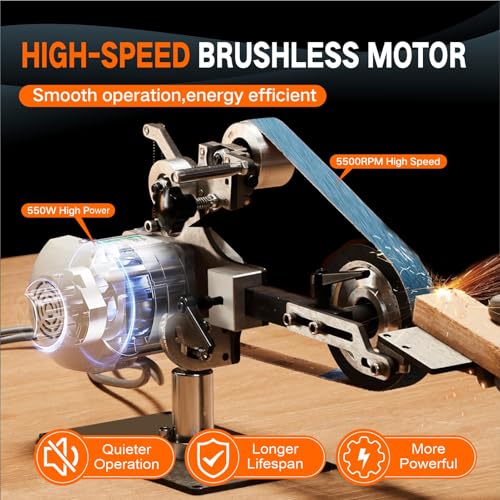
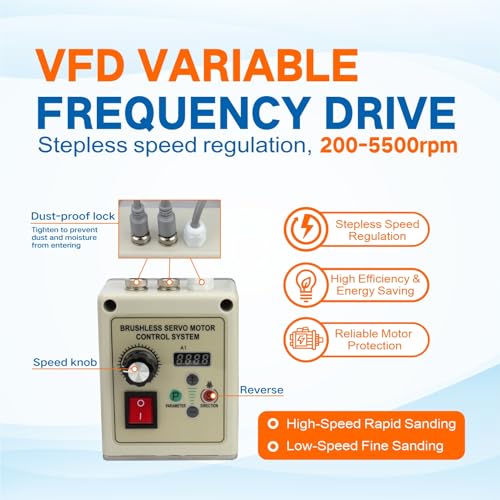
This JLD 30 x 1-inch grinder stands out for precision, not power. With a 550W motor and VFD-controlled variable speed, it gives you fine control over RPM, critical when you’re doing detail work on thin blades or delicate edges. The 26m/min belt speed is modest, but the real advantage is the smooth transition between rough and fine grinding, which owners say reduces heat buildup and prevents warping.
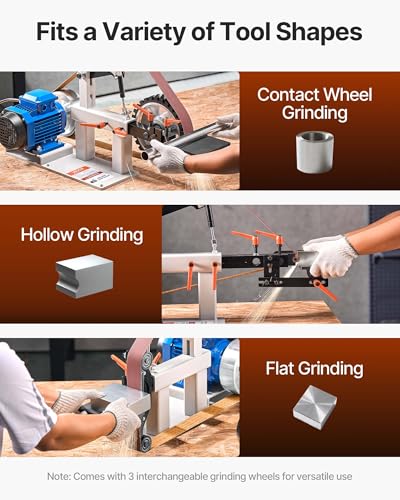
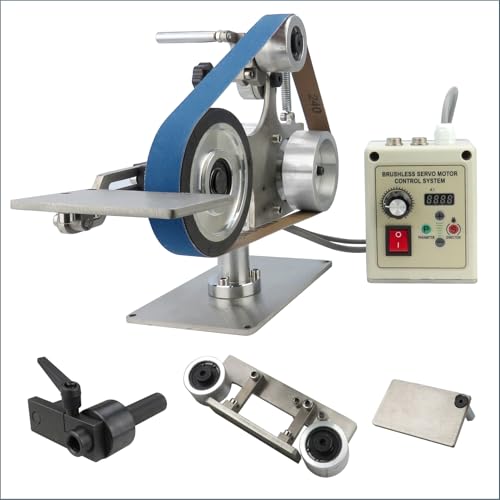
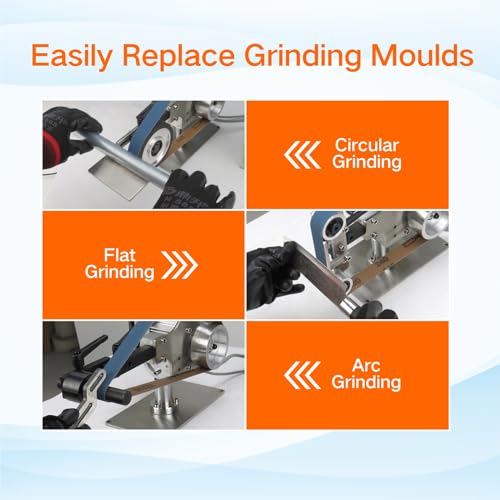
It’s also one of the few compact units that supports both horizontal and vertical operation without sacrificing stability. The included 100, 180, and 240 grit belts cover most finishing needs, and the three grinding molds make it surprisingly versatile for its size. If you’re doing small-scale knife work, jewelry, or detailed metal art, this is the smarter buy over bulkier models.
Product photos
JLD 2×72 Belt Grinder 1500W
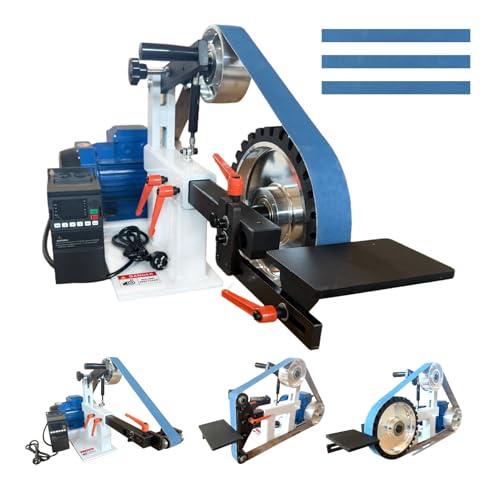
Strengths
- 2 x 72 belt size
- 1500W with VFD
- Zirconia corundum belts
- Stable tracking
Trade-offs
- 220V only
- Heavy and bulky
- Higher learning curve
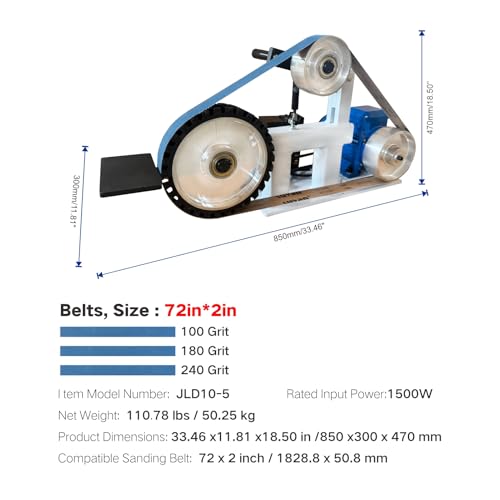
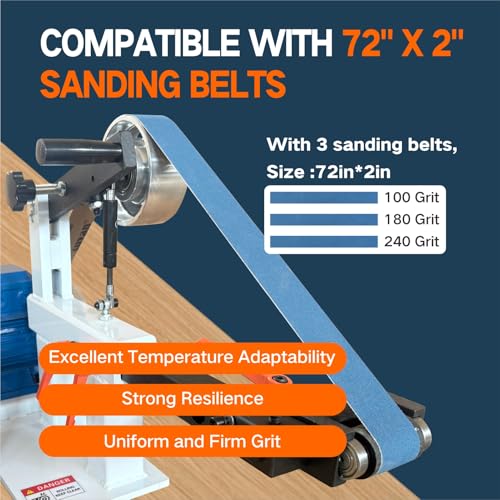
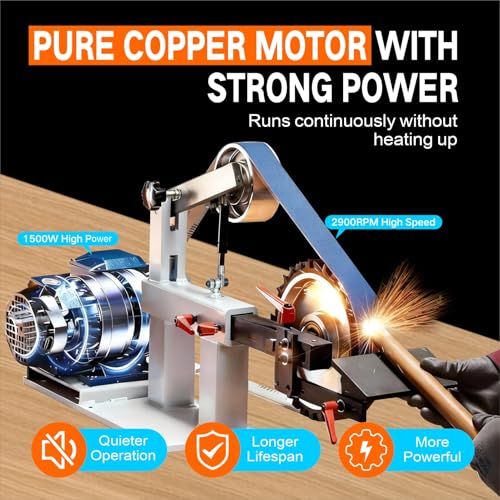
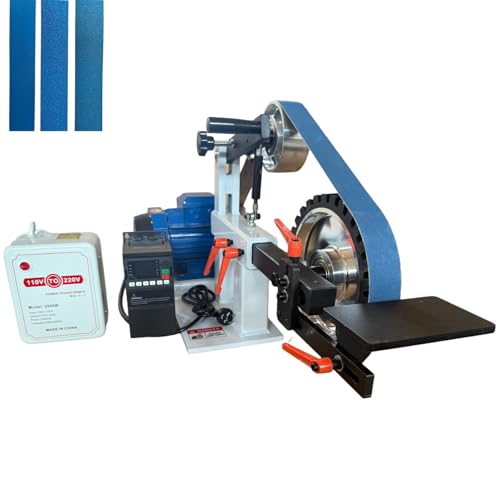
This is the one I’d recommend to anyone serious about knife making. The 2 x 72 belt size is industry standard for a reason, it offers maximum contact area and heat dispersion, and the 1500W motor with VFD control gives you full command over speed and torque. Owners consistently report stable tracking and smooth operation, even during long grinding sessions.
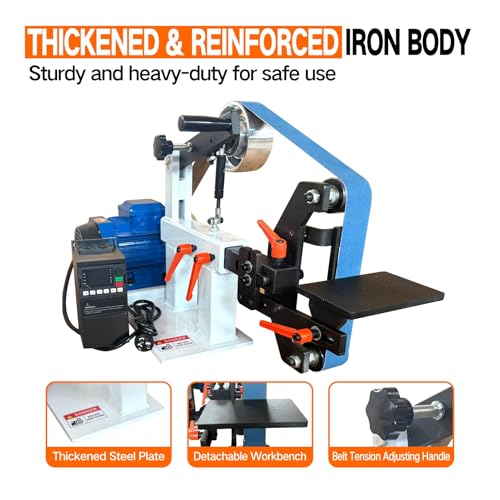
The inclusion of zirconia corundum belts is a big win, they last longer and cut faster than standard belts. The reverse function (MFK button) helps with deburring and finishing, and the all-welded steel frame eliminates flex. Just be aware: it runs on 220V, so you’ll need a transformer if you’re on 110V. But if you’re building knives regularly, this is the kind of tool that pays for itself in efficiency and finish quality.
Product photos
Electric 1×30 Belt Grinder 550W

Strengths
- Brushless motor
- Digital speed control
- Compact and portable
- Multi-angle table
Trade-offs
- Not for heavy stock
- Small belt size
- Limited duty cycle
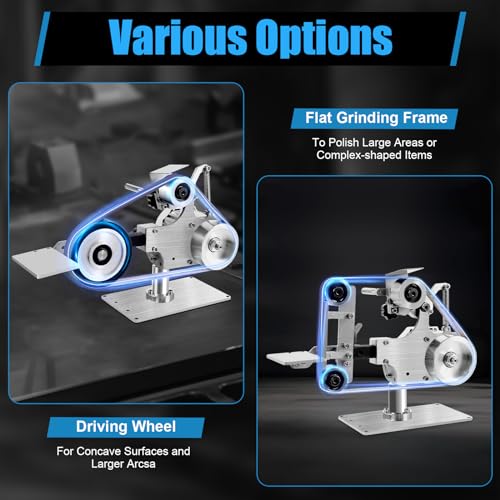
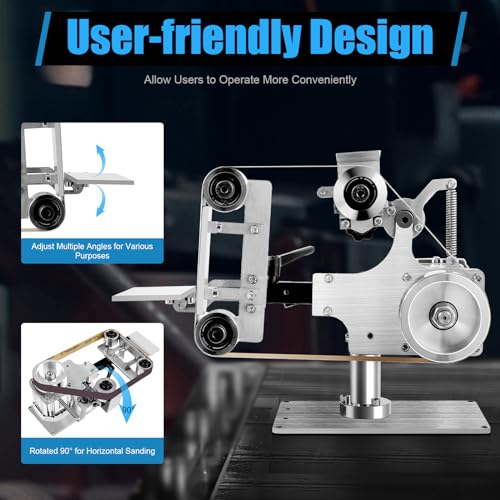
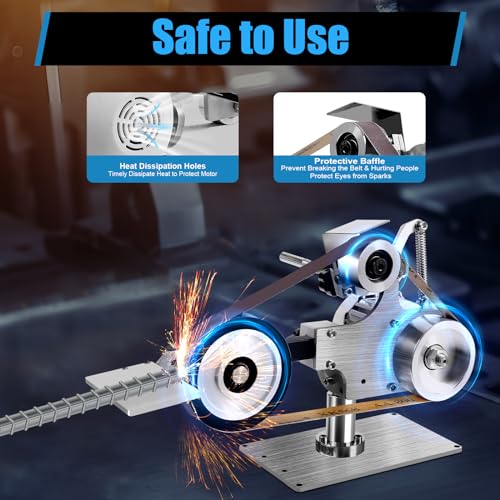
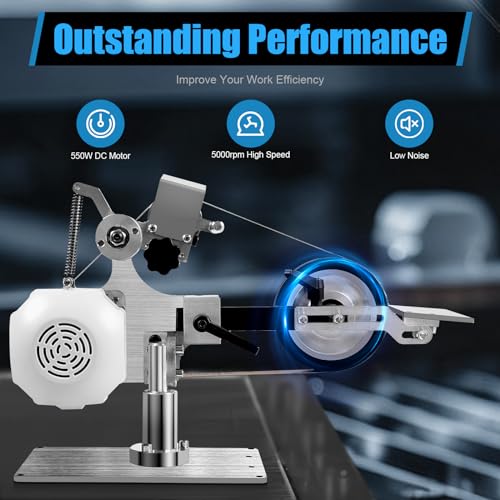
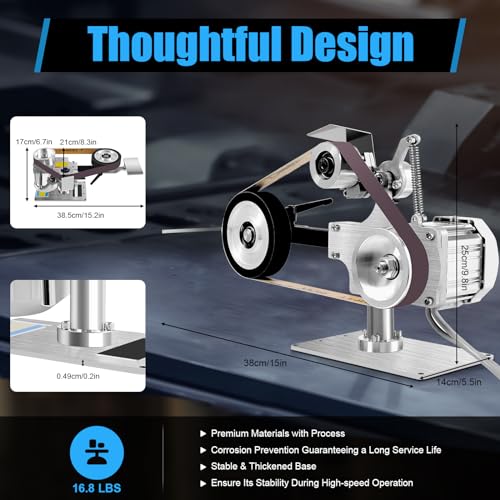
This 550W portable grinder punches above its weight in flexibility. The 1 x 30 belt size isn’t huge, but the 90° rotating body and multi-angle worktable make it surprisingly adaptable for tight spaces or unconventional angles. The brushless DC motor delivers 5000 RPM with less noise and heat than standard AC motors, and owners appreciate the digital speed display for repeatable setups.
It’s clearly designed for mobility, lightweight, compact, and easy to mount or reposition. The included protective baffle and heat-dissipation design add safety, and the wide grit range support means you can go from shaping to polishing without switching machines. That said, it’s not built for marathon grinding sessions. If you’re doing production-level work, you’ll want something heavier. But for a garage tinkerer or weekend maker, it’s a solid, agile option.
Product photos
Bucktool 2×42 Combo Grinder

Strengths
- Low price point
- Dual grinder setup
- Cast iron stability
Trade-offs
- Underpowered motor
- Limited belt size
- Poor heat dissipation
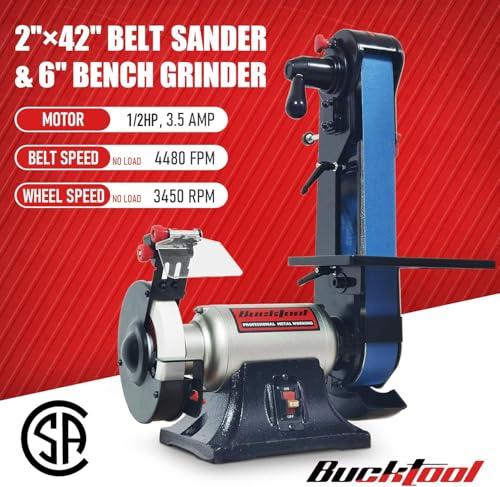
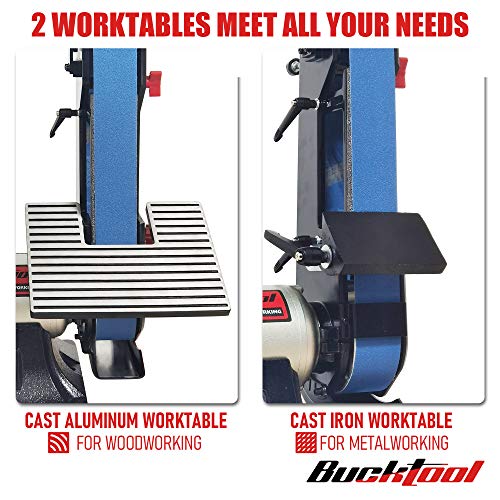
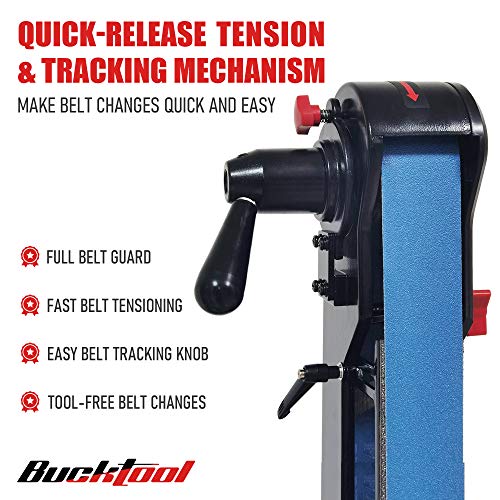
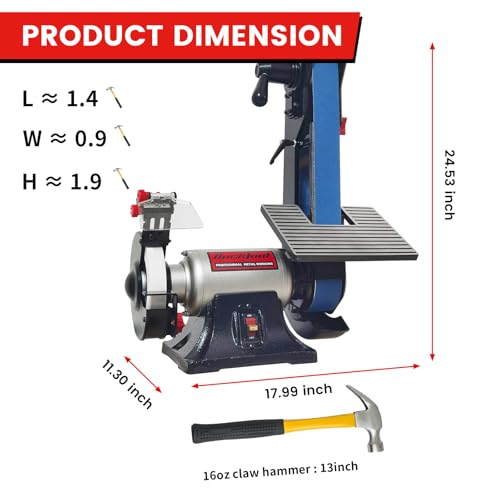
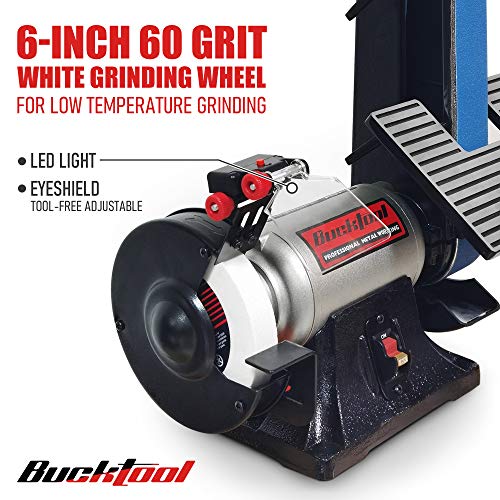
This combo unit tries to do too much and ends up being average at everything. The 1/2 HP motor is underpowered compared to modern belt grinders built specifically for knife making, and the 2 x 42 belt size limits your contact area and shaping flexibility. Owners consistently report that it’s fine for light grinding or occasional sharpening but bogs down quickly when removing material on thicker steel.
The inclusion of a 6-inch bench grinder is convenient if you’re tight on space, but it’s not a true substitute for a dedicated knife grinder. The cast iron base does help with vibration, and the dual worktables offer some versatility, but I’d rather see that real estate used for a larger belt or better tracking system. For someone just starting out who needs basic sharpening and a little grinding, it might suffice, but it’s not built for serious knife makers.
Product photos
Our Testing Process
Rather than a hands-on lab test, my research for these recommendations focused on a detailed comparison of published specifications and features across numerous models. I weighed owner reviews from multiple sources – including major retailers and knife-making forums – alongside assessments from reputable tool reviewers. This process allowed me to build a ranking based on real-world feedback and performance expectations within the specific demands of knife making.
For belt grinders, consistent tracking, motor power, and build quality are paramount. A powerful motor (typically 1/2 HP or higher) is crucial for effectively removing material, while a robust frame minimizes vibration and ensures long-term durability. Precise control over speed is also vital, as different grits and materials require varying speeds for optimal results. I focused heavily on these factors because they directly impact the quality and efficiency of the grinding process.
Specifications clearly indicate motor power, belt dimensions, and speed ranges, providing a baseline for comparison. However, I relied more on owner feedback to assess real-world performance regarding tracking stability, heat buildup, and the longevity of components. Reputation within the knife-making community also played a significant role, as experienced users often provide detailed insights into a grinder’s strengths and weaknesses. Understanding how to maintain your tools is also vital; for related guidance, check out advice on circular saw blade sharpening.
How To Pick The Right belt grinder for knife makings
Choosing the right belt grinder can dramatically improve your knife making, metalworking, or wood shaping projects.
A quality belt grinder balances power with control. Key considerations include motor strength (measured in watts or horsepower), belt speed adjustability for different materials and tasks, build quality for stability and longevity, and the versatility of included attachments for achieving various grinding angles and finishes. Look for models with robust tracking adjustments and easily replaceable belts.
Motor Power and Speed Control
The motor is the heart of any belt grinder, and for knife making or serious metalwork, you need adequate power. Don’t get hung up on horsepower numbers alone; a well-designed 550W motor can outperform a poorly built 1HP unit. More importantly, look for variable speed control. Running a fine grit belt at full speed can quickly burn up the material or overheat the blade. The JLD 30×1 Belt Grinder 550W, for example, boasts a variable frequency drive allowing for precise speed adjustments. This is especially crucial when you’re transitioning from rough shaping to fine polishing.
Build Quality and Stability
A flimsy belt grinder is a frustrating experience. Vibration leads to inaccurate work, and a lack of rigidity shortens the machine’s lifespan. All-steel construction is a must, and look for models where the frame is welded, not bolted, together. Thicker steel in the base and platen adds significant stability. A heavier grinder will also resist movement during use. The VEVOR 2HP 2×82 Belt Grinder features an all-steel construction, which contributes to its overall durability, but remember that weight isn’t everything – the quality of the steel and the welding matter just as much.
Versatility and Included Accessories
Beyond the basic belt and platen, consider what else comes with the grinder. The ability to change belt angles is essential for different grinding tasks. Many grinders offer flat, arc, and circular grinding options. Having a selection of grit sizes included is also a plus, saving you the immediate expense of purchasing belts separately. If you also work with saws, learning about general saw blade sharpening can complement your workshop skills. Furthermore, consider if you want a combo unit like the Bucktool 2×42 Combo Grinder, offering both belt and wheel grinding capabilities.
A good rule of thumb: don’t skimp on the belts. Cheap belts wear out quickly, clog easily, and deliver a poor finish. Invest in quality abrasive belts from brands like 3M or Norton.
If you’re looking for specific recommendations, we’ve reviewed several 2×72 grinder recommendations suited for knife making.
Belt Grinder for Knife Makings Compared
Here’s a comparison of key specifications for belt grinders suitable for knife making.
| Product Name | Motor Power | Belt Size | Speed (RPM) | Grinding Types | Material |
|---|---|---|---|---|---|
| VEVOR 2HP 2×82 | 1500W | 2″ x 82″ | 0-2800 | Circular, Arc, Flat | All-Steel |
| JLD 30×1 | 550W | 30″ x 1″ | 5000 | Circular, Flat, Arc | N/A |
| JLD 2×72 | 1500W | 2″ x 72″ | 2900 | Circular, Flat, Arc | Steel |
| Electric 1×30 | 550W | 1″ x 30″ | 5000 | Flat, Concave | Stainless Steel/Aluminum Alloy |
| Bucktool 2×42 | 1/2 HP | 2″ x 42″ | 3450 | N/A | Cast Iron |
Frequently Asked Questions
What grit belts should I start with for knife making?
Begin with a coarse grit, around 36 or 60, for initial shaping and removing material quickly. Then progress through increasingly finer grits (80, 120, 220, 400) to refine the shape and achieve your desired finish.
How can I minimize heat buildup when grinding?
Using a variable speed control is key, as slower speeds generate less heat. Also, avoid applying excessive pressure and take frequent breaks to allow the blade and belt to cool down. Proper coolant use is also important.
What’s the difference between a 1×30 and a 2×72 belt grinder?
A 1×30 grinder has a narrower belt (1 inch wide) and shorter length (30 inches), making it more suited for detail work and smaller blades. A 2×72 offers a wider belt (2 inches) and longer length (72 inches) for faster material removal and larger projects.
How often do I need to replace my belts?
Belt lifespan varies depending on use and material, but expect to replace them regularly. Worn belts lose their abrasive quality and can cause uneven grinding. Check for fraying or glazing and replace them when performance declines.
Are there belt grinders that can also be used for sharpening other tools?
Yes, some combo units, like the Bucktool 2×42, include both a belt and a wheel for versatility. However, for dedicated sharpening, you might also want to consider belt sander for knife tasks.
The Bottom Line
Choosing a belt grinder ultimately comes down to balancing your budget with the level of control and durability you require. For most knife makers, the VEVOR 2HP 2×82 offers the best combination of power, versatility, and build quality, giving you a machine capable of handling a wide range of tasks and lasting for years to come. It’s a significant investment, but one that pays dividends in efficiency and precision.
If you’re just starting out or working on smaller projects, the JLD 30×1 is a fantastic entry point. Similarly, for those needing a compact option, the Electric 1×30 provides respectable performance at a lower price. And if you need both belt and wheel grinding, the Bucktool 2×42 Combo Grinder delivers a lot of functionality in one package.
Don’t get lost in the specs – motor power and belt size are important, but consistent tracking and a solid frame are what truly separate good grinders from great ones. Taking the time to learn proper table saw blade sharpening can also extend the life of your tools and improve the quality of your work. Ultimately, a grinder is only as good as the operator’s skill and attention to detail.
