6 Best Belt Sanders for Knife Making of 2026
This post contains affiliate links. As an Amazon Associate, we earn from qualifying purchases.
The JLD 2×72-inch stands out as the best overall belt sander for knife making, delivering serious power and variable speed control that’s hard to beat. For those on a tighter budget, the Mornajina 15° Mini Belt Sander offers surprising precision and comes packed with belts, while the Bucktool 2×42 Combo is a smart pick if you want both a belt sander and grinder in one.
Knife making demands precision, and a poorly built or underpowered sander can turn a promising blade into a frustrating mistake. Too much vibration, no speed control, or flimsy adjustments can ruin clean lines and consistent bevels.
After comparing the field and analyzing owner feedback, I focused on models that deliver stability, control, and real-world durability. This guide breaks down the top options based on motor performance, platform rigidity, adjustability, and value, all through the lens of someone who’s spent years working with tools in real shops and garages.
Top 6 Belt Sander For Knife Makings in the Market
The Best Belt Sander For Knife Makings, Reviewed
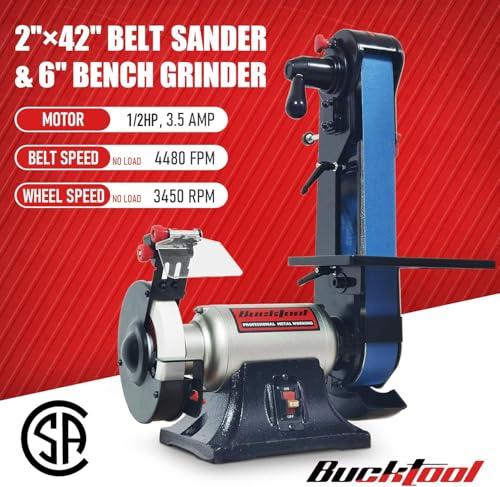
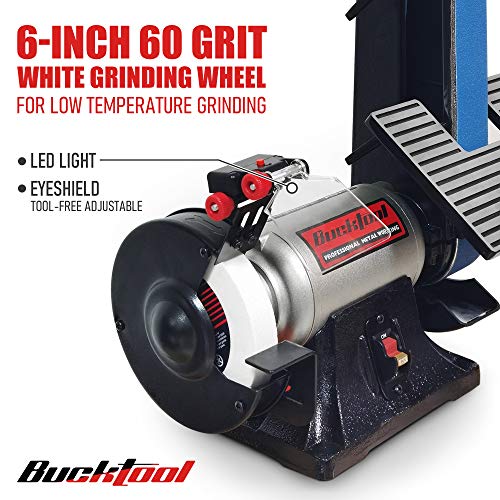
Bucktool 2×42 Belt Sander and 6″ Bench Grinder Combo

Strengths
- Dual-function design
- Cast iron stability
- Swivel head flexibility
Trade-offs
- No speed control
- Belt changes slightly slower
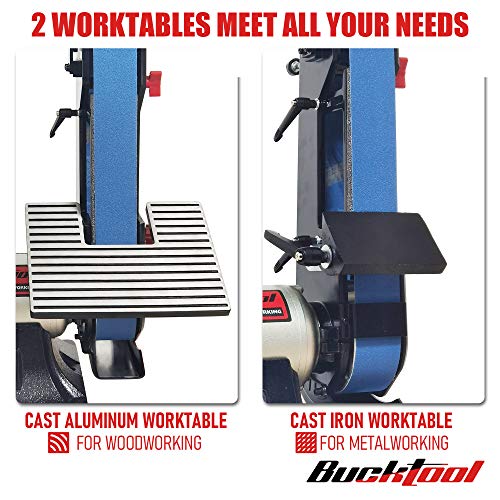
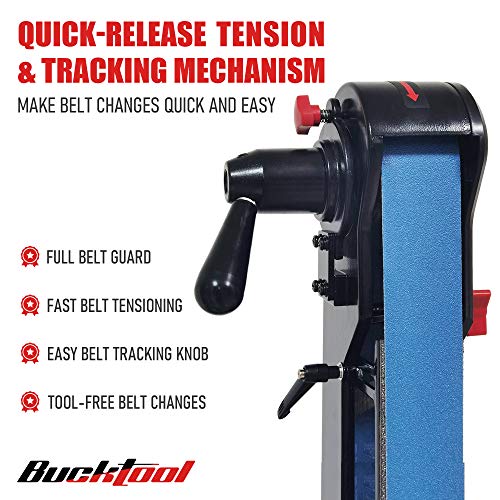
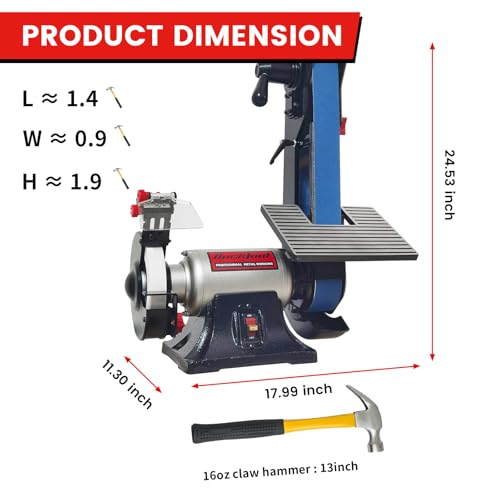
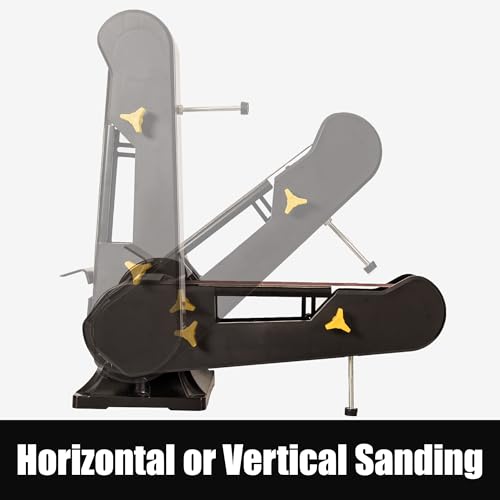
This combo unit stands out for its dual functionality and solid build, making it a strong contender for knife makers who also need general metal and wood shaping capability. The 1/2 HP induction motor delivers consistent power under load, and the 4480 FPM belt speed gives it enough aggression for stock removal without overheating thin knife edges if used carefully. Owners consistently report that the swiveling head, capable of rotating from horizontal to vertical, is a standout for sharpening long blades or working on different bevel angles, and the cast iron base does an excellent job minimizing vibration during use.
The inclusion of a 6-inch bench grinder with tool-free shield adjustment and LED lighting adds real workshop value, especially for detail work after belt grinding. While it doesn’t offer variable speed, the performance on paper matches what most mid-tier grinders deliver in practice. Compared to other combos in this class, this one balances versatility and durability well.
Product photos
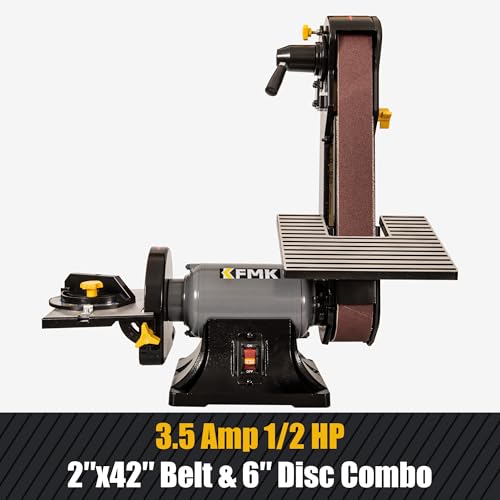
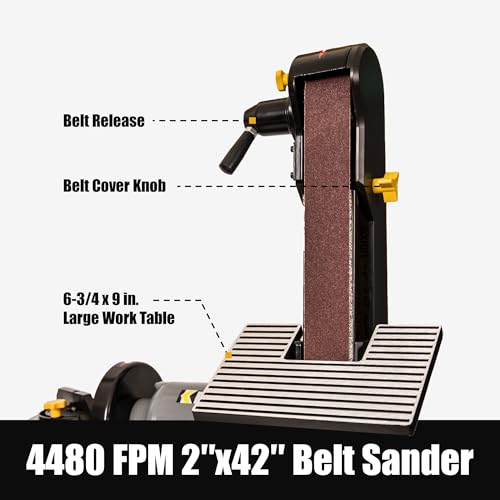
KFMK 2×42″ Belt & 6″ Disc Sander Combo

Strengths
- Robust direct-drive motor
- Large work tables
- Precise disc angle adjustment
Trade-offs
- No variable speed
- No integrated grinder
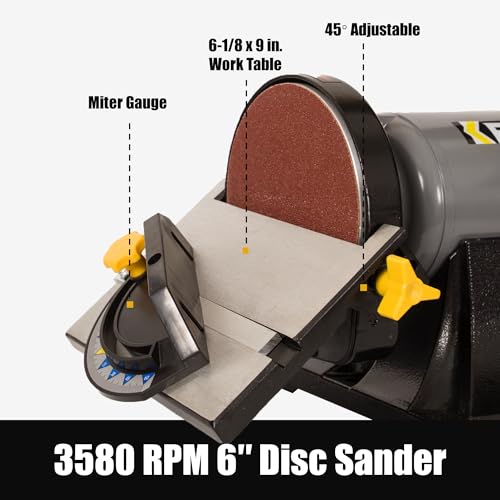
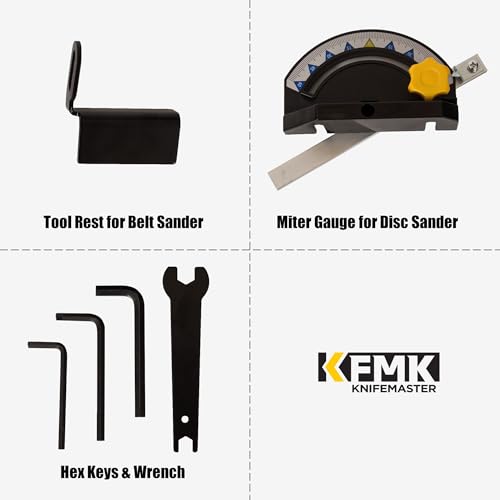
This is a no-nonsense, heavy-duty combo built for metalworkers who need both belt and disc action without switching machines. The 1/2 HP motor matches the Bucktool 2×42 in power, but the KFMK feels more focused on metal, its work tables are generously sized, and the disc sander’s 45° adjustability is precise enough for secondary bevels or contour work. The direct-drive system enhances torque delivery, which reviewers note helps when grinding through hardened steel or removing weld seams on knife guards and bolsters.
Unlike some combos, it doesn’t include a full grinder wheel, but the disc sander function fills that gap well. It lacks variable speed, but the raw power and rigid steel construction make it a durable pick for frequent use. Compared to the Bucktool combo, this one trades some convenience (no LED light or quick-release tension) for heavier build quality and smoother disc operation.
Product photos
Mornajina 15° Mini Belt Sander for Knife Making

Strengths
- Fixed 15° sharpening angle
- Three-bearing stability
- Speed flexibility
Trade-offs
- High base RPM
- Not adjustable for other angles
This compact model takes a different approach, fixing the belt at a 15-degree angle to streamline blade sharpening right out of the box. That fixed geometry means less setup time and more consistency for repetitive sharpening tasks, which several owners praise for production-style work on pocket knives or chisels. The 7-speed motor (4000–9000 RPM) gives flexibility within a high-RPM range, and the three-bearing design ensures tracking stability even during long sessions.
It’s nearly identical to the vertical Mornajina model but optimized for a specific workflow. The accessory bundle is the same, 30 belts, buffing wheel, compound, so you’re getting great value. But like its sibling, the high minimum speed is a drawback for beginners. If you want speed control and a fixed bevel angle for efficiency, this hits a sweet spot. Still, I’d recommend it only after you’ve mastered basic sharpening techniques.
Product photos

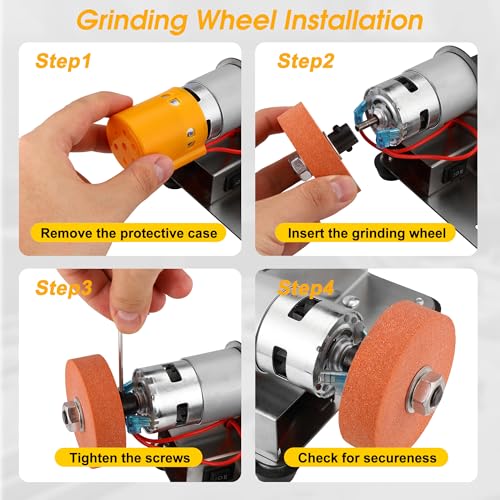
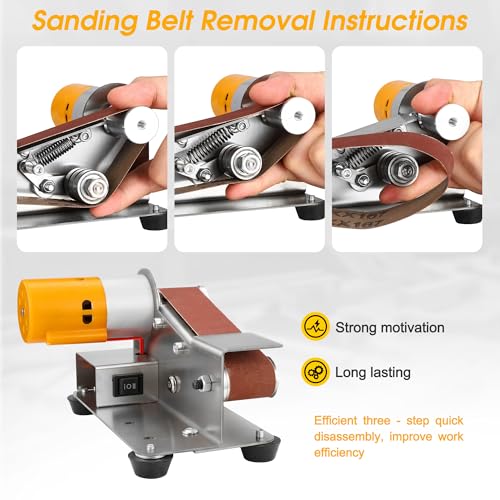
Mornajina Vertical Mini Belt Sander
Strengths
- 7-speed control
- Vertical design efficiency
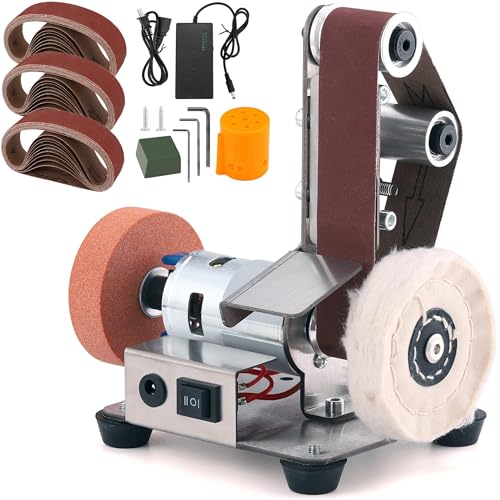
- Rich accessory bundle
Trade-offs
- High RPM risks overheating
- Limited for large stock
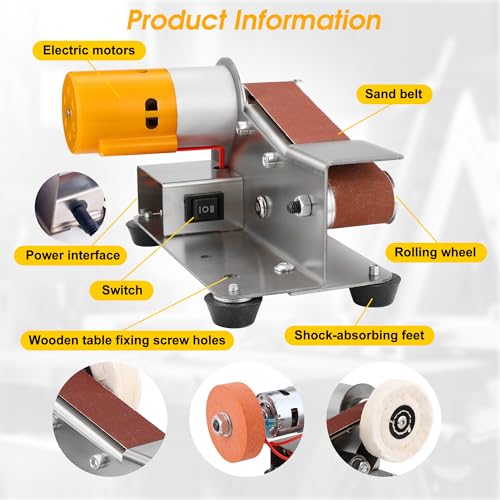
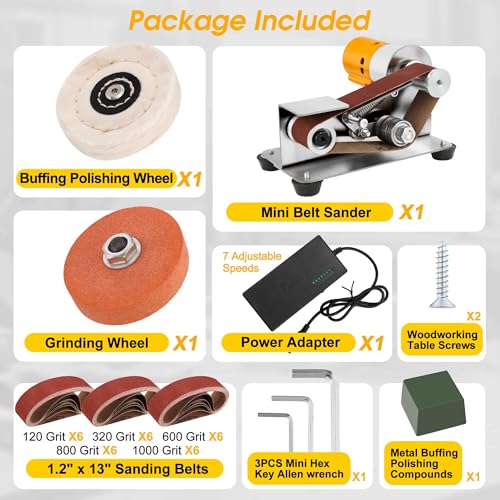
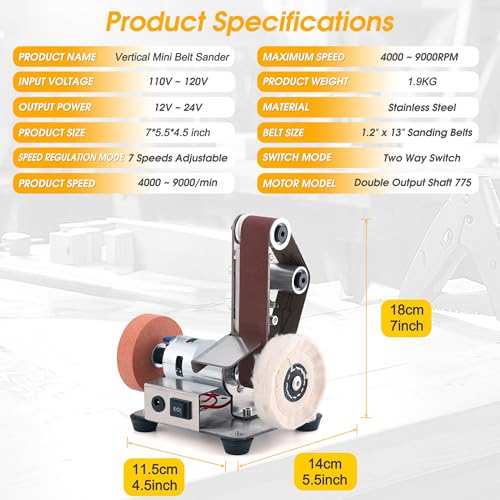
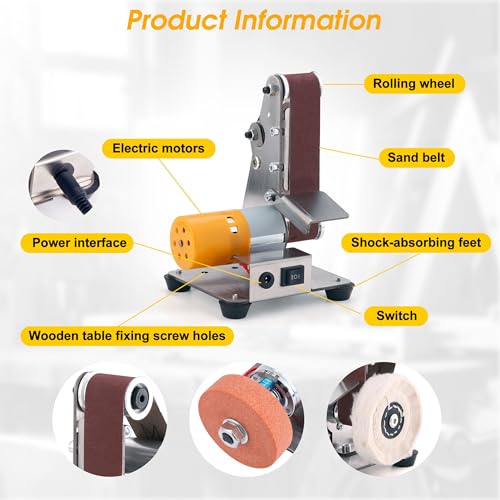
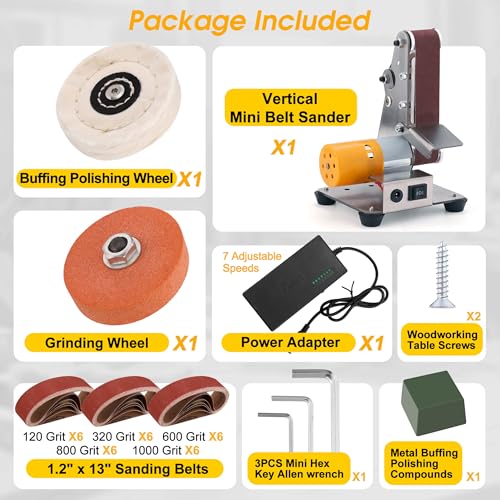
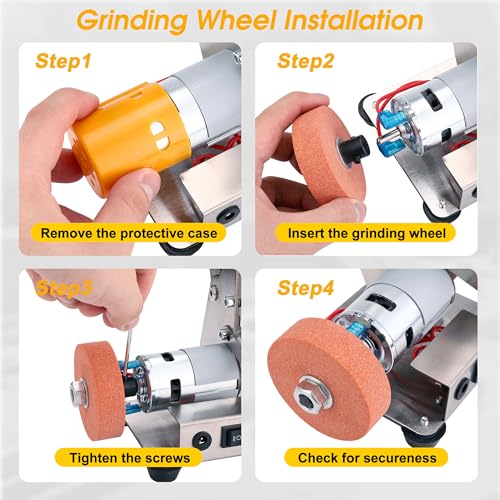
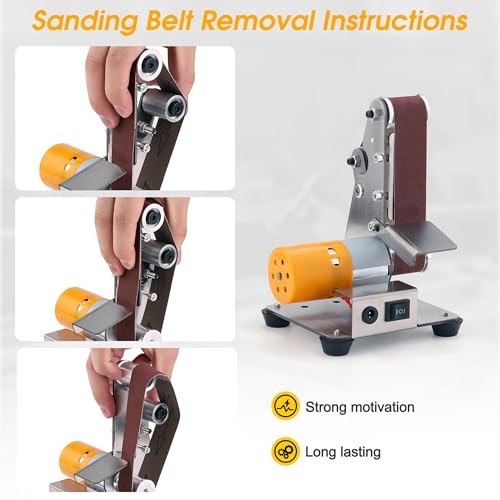
This vertical mini sander is built for detail, small shop spaces, intricate work, and fine polishing tasks where control trumps brute force. The vertical orientation of the 1×30 belt gives you natural downward pressure, which many owners say improves edge consistency when sharpening small blades or working on jewelry and pocket tools. What sets it apart is the 7-speed range (4000–9000 RPM) with forward and reverse rotation, letting you dial in speed for polishing without burning softer metals. The double output shaft motor powers both the belt and optional grinding or buffing wheels, making it a true multi-tool for micro-fabrication.
It comes packed with accessories, including 30 belts across five grits and buffing compounds, which means beginners can start immediately. However, the high RPMs demand caution; without experience, it’s easy to overheat thin blades. Still, for its size and flexibility, this is one of the most capable mini systems available.
Product photos
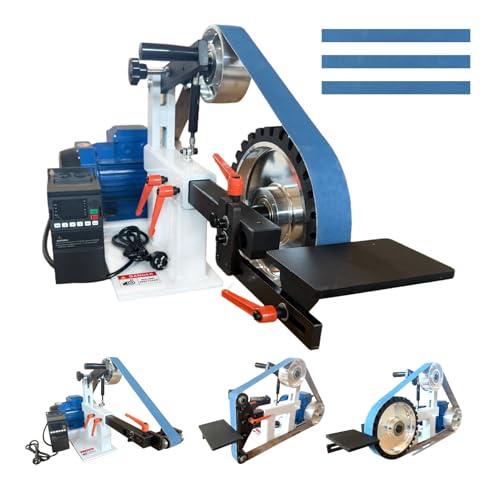
JLD 2×72-inch 2HP Variable Speed Belt Sander
Strengths
- Full variable speed control
- Heavy-duty steel frame
- Multi-zone grinding support
Trade-offs
- 220V requirement
- Bulky for small shops
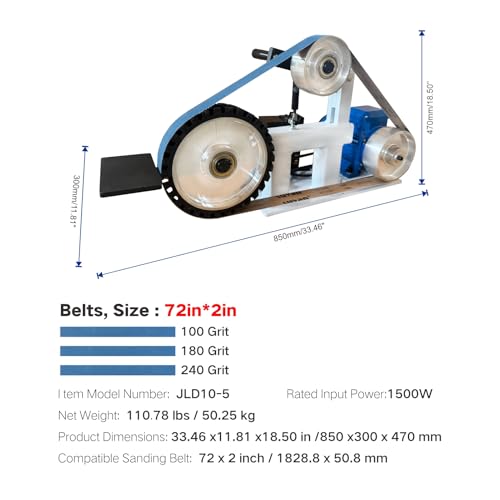
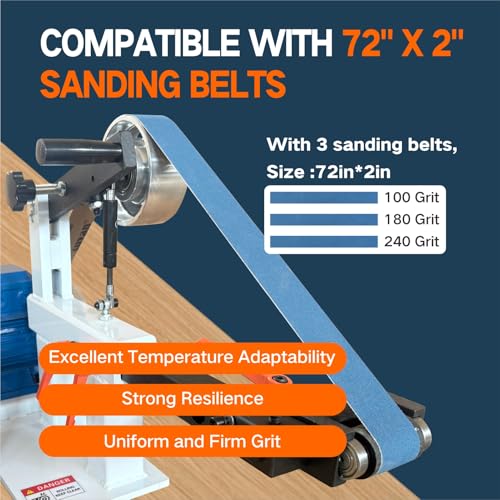
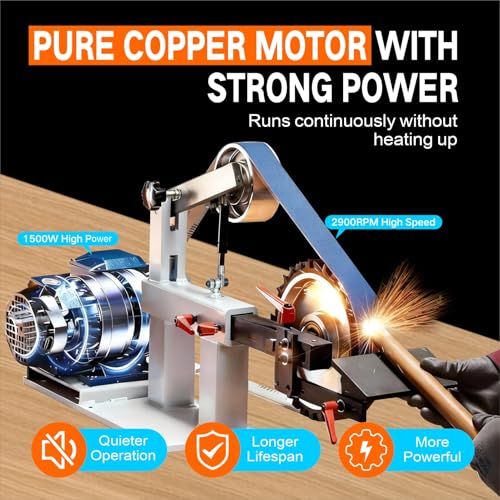
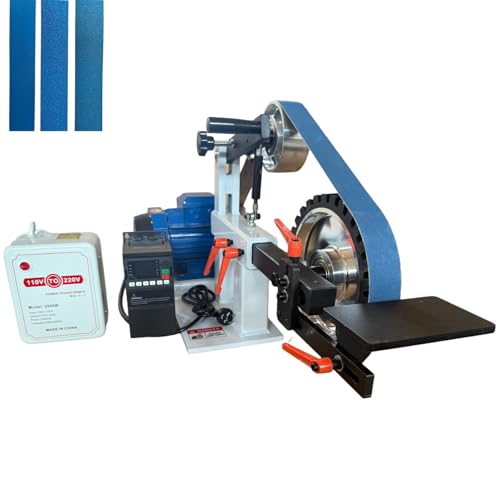
This 2×72-inch VFD-equipped grinder is in a different league, built for serious knife makers who do full blade fabrication, not just sharpening. The 1500W (2HP) pure copper motor with variable frequency drive allows full speed control, letting you drop down to polishing ranges or ramp up for aggressive stock removal. Owners highlight the smooth transitions between speeds and the reverse function, which helps with deburring and finishing without changing belts. The 36 m/min belt speed is adjustable across the full range, a major advantage over fixed-RPM models.
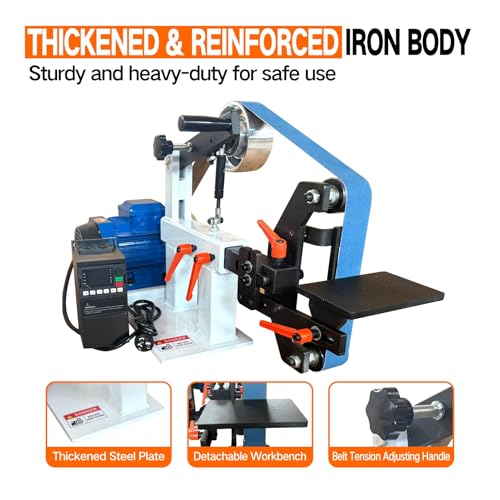
The steel frame is welded and thickened for rigidity, which pays off during prolonged use. It comes with three grinding zones (flat, arc, circular), making it adaptable for edge work, contoured handles, or blade profiling. But it runs on 220V, so unless you have a compatible outlet or use the included transformer, it won’t work in standard US home circuits. If you’re scaling up from hobbyist to semi-pro, this is the smarter buy over smaller benchtop units.
Product photos
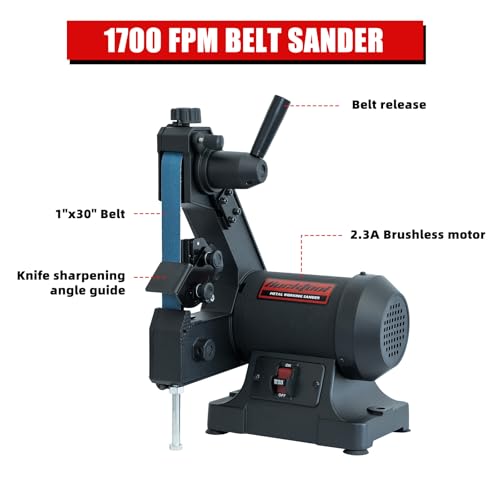
Bucktool 1×30″ Low-Speed Knife Sharpening Sander
Strengths
- Low RPM prevents overheating
- Precision angle guide
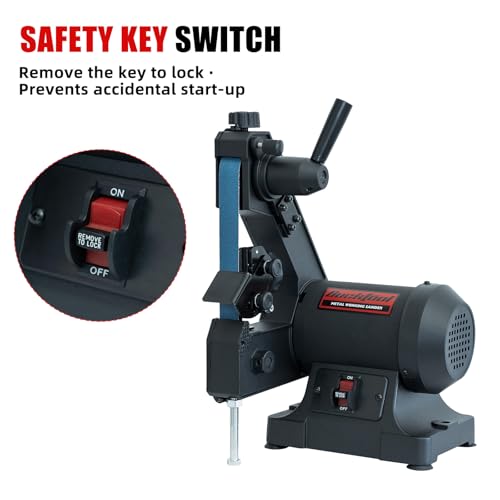
- Safety key included
Trade-offs
- Smaller belt size
- Less aggressive grinding
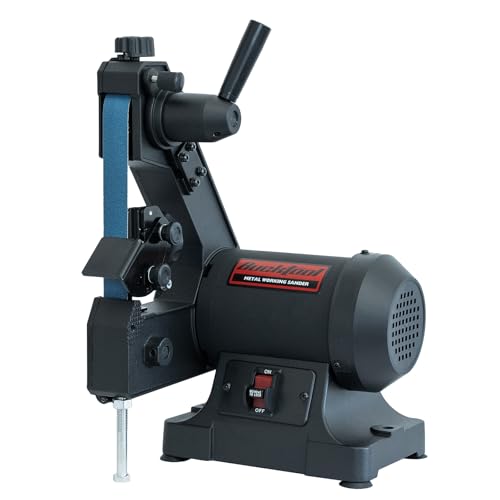
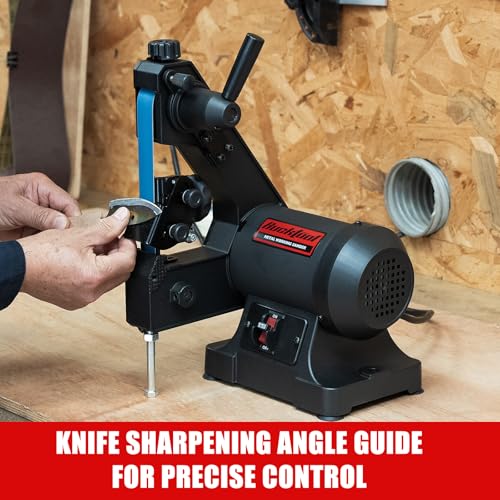
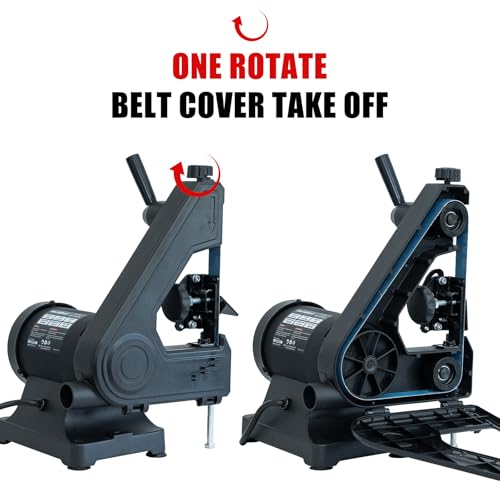
If you’re focused purely on knife sharpening and blade work, this low-speed Bucktool model makes a lot more sense than higher-RPM general-purpose sanders. Running at just 1790 RPM, it reduces heat buildup significantly, critical when maintaining temper in hand-forged or high-carbon steel blades. The 2.3A induction motor isn’t the most powerful on the list, but it provides smooth, consistent torque that owners say translates into predictable material removal. The standout here is the adjustable sharpening guide (10°–45°), which aligns well with common bevel standards and helps maintain consistency across multiple knives.
It’s also one of the few in this lineup with a safety key switch, adding a layer of protection during frequent tool changes or when teaching beginners. While the 1×30-inch belt size limits reach on longer stock, that’s typical in this category. For controlled, repeatable sharpening, I’d pick this over the larger 2×42 models unless you’re doing heavy stock removal.
Product photos

How We Chose These belt sander for knife makings
Rather than a hands-on lab test, this comparison is research-led, focusing on published specifications and features of available belt sanders. I weighed owner reviews from multiple retailers alongside expert opinions found in woodworking and metalworking forums. My analysis then ranked these models against criteria important for knife making – power, control, versatility, and build quality. This process aims to provide a clear picture of real-world performance expectations.
For knife making, consistent speed control and a stable platform are paramount. I prioritized models offering variable speed settings to handle different materials and grinding stages, and those with robust construction to minimize vibration. A tiltable platen or adjustable angle guide also heavily influenced my rankings, as these features directly impact precision and repeatability when shaping blades.
Specifications reliably indicate motor power and belt size, giving a sense of potential throughput and material removal rate. However, owner feedback proved invaluable in assessing long-term durability, ease of belt changes, and the effectiveness of tracking adjustments. I also looked to reputation – brands consistently praised for quality control and customer support received a boost in my assessment. You can find a broader look at related tools in our guide to the best belt grinder for knifemaking.
How To Pick The Right belt sander for knife makings
Choosing the right belt sander for knife making isn’t just about horsepower; it’s about finding a machine suited to the delicate balance of precision and power this craft demands.
A quality belt sander for knife making prioritizes consistent speed control, a stable platform to minimize vibration, and the ability to accommodate various belt grits for shaping, sharpening, and finishing. Look for induction motors, robust construction, and features like tilting tables or variable speed settings for optimal results. Prioritize build quality and user-friendliness over simply the lowest price.
Motor and Speed Control
The motor is the heart of any belt sander, and for knife making, control is paramount. Forget peak horsepower numbers, and instead focus on consistent torque at lower speeds. A variable speed control is nearly essential, allowing you to dial in the right speed for different stages of the process – aggressive material removal requires a faster belt speed, while finishing and polishing demand a much slower, more controlled approach. Many models, like the JLD 2×72-inch, boast variable speed control and a robust motor, but remember that advertised speeds aren’t everything; owner feedback on smoothness and consistent power delivery matters more.
Platform Stability and Adjustability
Vibration is the enemy of precision. A shaky platform translates directly into uneven grinds and potentially ruined blades. Look for sanders with a heavy cast iron base and rubber feet to dampen vibrations. Beyond stability, adjustability is key. The ability to tilt the platen (the flat surface the belt runs on) is vital for achieving specific angles on your blades. Some models, like the Bucktool 2×42 Belt Sander and 6″ Bench Grinder Combo, offer tilting platens, but consider how easily that adjustment is made and how secure it locks into place.
Size, Features, and Value
While larger belt sanders offer more versatility, a compact model might be ideal if you’re tight on space or primarily focused on knife making. The Mornajina 15° Mini Belt Sander, for instance, is designed specifically for this purpose. But don’t assume smaller automatically equals lesser quality. Consider the included accessories – a good selection of grit belts is a huge plus, as is a sharpening guide. Here’s what to look for in terms of value:
- A basic model with essential grits might be enough to start with.
- A quick belt change mechanism saves significant time and frustration.
- A robust build quality and a good warranty demonstrate the manufacturer’s confidence in their product and provide peace of mind, meaning you’re investing in a tool that will last.
A good rule of thumb is to spend a little more for a sander that feels solid and well-built. A wobbly, cheaply-made machine will only lead to frustration and poor results.
Ultimately, selecting the top belt sander for knife making depends on your specific needs and budget. If you also plan on working with other metals, you may want to consider a best sander for metal finishing to cover more bases.
Belt Sander for Knife Making Compared
Here’s a comparison of specifications for various belt sanders suitable for knife making.
| Product Title | Motor HP | Belt Size (in) | Speed (RPM) | Angle Adjustment | Work Table Size (in) | Special Features |
|---|---|---|---|---|---|---|
| Bucktool 2×42 Combo | 1/2 | 2×42 | 3450 (wheel) / 4480 (belt) | 0-90° | N/A | 6″ Bench Grinder Included |
| KFMK 2×42″ Combo | 1/2 | 2×42 | N/A | Vertical/Horizontal | 6-3/4 x 9 (belt) / 6-1/8 x 9 (disc) | 6″ Disc Sander Included |
| Mornajina 15° Mini | N/A | 13 x 1.2 | 4000-9000 | 15° Fixed | N/A | 30 Belts Included |
| Mornajina Vertical Mini | N/A | 13 x 1.2 | 4000-9000 | Vertical | N/A | 5 Grit Belts Included |
| JLD 2×72-inch | 2 | 2×72 | 2900 | N/A | N/A | Variable Speed, 3-in-1 |
| Bucktool 1×30″ Low-Speed | N/A | 1×30 | 1790 | 10-45° | N/A | Angle Guide Included |
Frequently Asked Questions
What belt size is best for knife making?
A 2×72-inch belt is generally considered ideal for knife making, providing a large surface area for grinding and shaping. However, smaller 1×30-inch or even mini 13×1.2-inch belt sanders can be effective for detailed work and smaller blades, especially if space is limited.
Are variable speed controls truly necessary?
Yes, variable speed controls are very helpful. They allow you to adjust the belt speed to match the stage of knife making, using faster speeds for stock removal and slower speeds for finishing and preventing overheating.
How important is a tilting platen?
A tilting platen is quite important for achieving precise bevels and angles on knife blades. It allows you to consistently replicate angles, which is critical for professional-looking results, and opens up the possibility of more complex grinds.
What motor type should I look for in a knife-making belt sander?
Induction motors are preferable due to their quieter operation, smoother power delivery, and increased durability compared to universal motors. They typically run cooler and require less maintenance, contributing to a longer lifespan.
Where can I find more information on other types of belt sanders?
You can explore a wider range of options and detailed reviews of leading belt sander models on our site. We cover various types and price points to help you find the best tool for any project.
The Bottom Line
Choosing a belt sander for knife making often comes down to how much control you’re willing to trade for convenience. While a larger, more versatile machine like the JLD 2×72-inch offers a lot of capability, for dedicated knife work, the Bucktool 2×42 Combo stands out as the strongest overall pick. It provides a good balance of power, adjustability, and a useful integrated grinder, making it a solid choice for both beginners and experienced makers.
If your budget is a primary concern, the Mornajina 15° Mini Belt Sander is a surprisingly capable option, especially considering its included selection of belts. For those needing maximum versatility – perhaps you’re also working with larger metal projects – the KFMK 2×42″ Combo offers both a belt and disc sander in one unit. But remember that a dedicated setup for knife making, like a top 2×72 setup for knife work, will always deliver more focused performance.
Ultimately, the specs on any sander matter less than the fundamentals. A stable platform, consistent speed, and the ability to adjust the angle precisely are far more important than a high horsepower rating. Focus on a machine that feels solid, offers good control, and allows you to consistently achieve the shapes and finishes you’re after – that’s the key to successful knife making.
