
7 Best Beginner Wood Lathes of 2026
This post contains affiliate links. As an Amazon Associate, we earn from qualifying purchases.
The CXRCY 12″x18″ Variable Speed Lathe stands out as the best overall beginner wood lathe, combining reliable performance, solid build, and user-friendly controls. For those on a tighter budget, the WEN LA3421 Mini Wood Lathe offers impressive value without sacrificing core functionality. If you’re eyeing larger projects down the line, the Garvee 14×40″ Wood Turning Lathe provides serious capacity and room to grow.
Starting with a wood lathe can feel overwhelming, there are too many options, conflicting advice, and the risk of buying something that’s either too weak or way overkill. As someone who’s helped dozens of DIYers set up their first workshops, I’ve seen how the wrong choice leads to frustration, wasted money, and tools that end up collecting dust.
This guide cuts through the noise. I compared specs, read through owner feedback, and evaluated real-world performance to find beginner lathes that deliver stability, ease of use, and room to learn. These picks balance power, size, and price, all based on what actually matters when you’re just getting started.
Top 7 Beginner Wood Lathes in the Market
The Best Beginner Wood Lathes, Reviewed
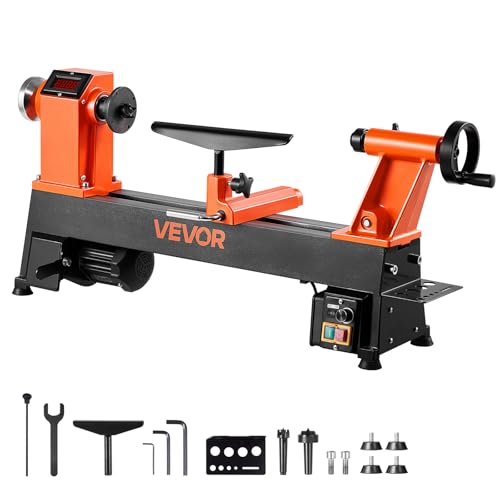
VEVOR 12×18″ Wood Lathe
Strengths
- Brushless DC motor
- Cast iron construction
- Wide speed range
Trade-offs
- Heavy for benchtop
- Setup takes time
- Digital readout not backlit
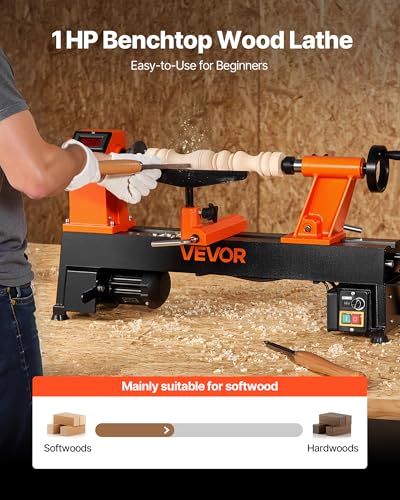
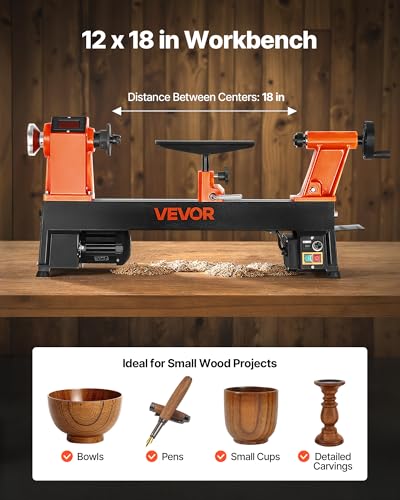
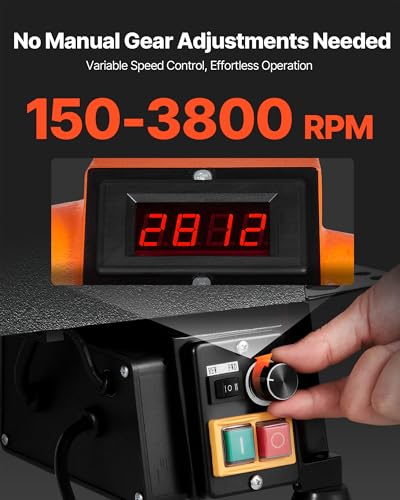
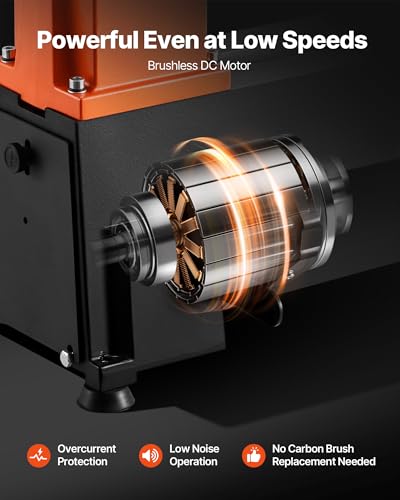
VEVOR’s 1 HP brushless DC motor is a standout, brushless means less maintenance and smoother power delivery, which matters when you’re learning feel and control. The 150 RPM low end is excellent for big, wobbly bowls that need gentle starts, and the cast iron body helps dampen vibration better than aluminum-bodied rivals. Owners consistently praise its stability, especially compared to similarly priced models.
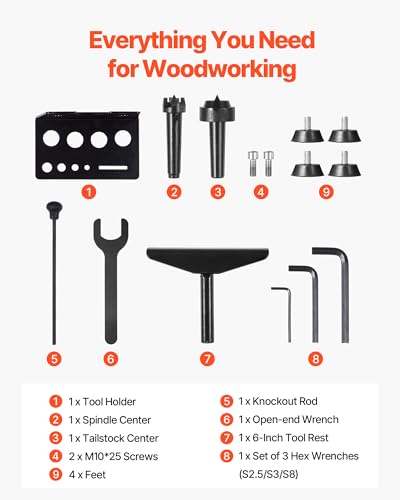
It comes with a full accessory kit, which is a real time-saver for beginners who don’t want to hunt down tool rests or chucks separately. While it’s not a Grizzly-tier machine, the specs and owner feedback suggest it’s the closest thing to a “full-featured starter lathe” under a mid-range budget. This is the one I’d recommend as the balanced pick if you want room to grow.
Product photos
WEN LA3421 Mini Wood Lathe
Strengths
- Soft-start motor
- Two-year warranty
- Solid included accessories
Trade-offs
- Smaller work capacity
- Basic speed control
- No digital display
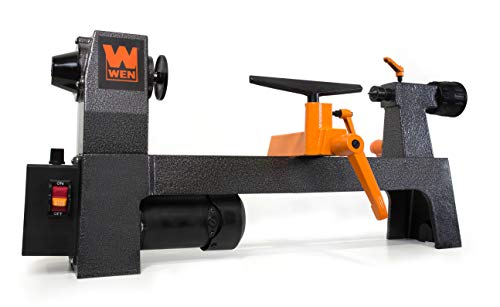
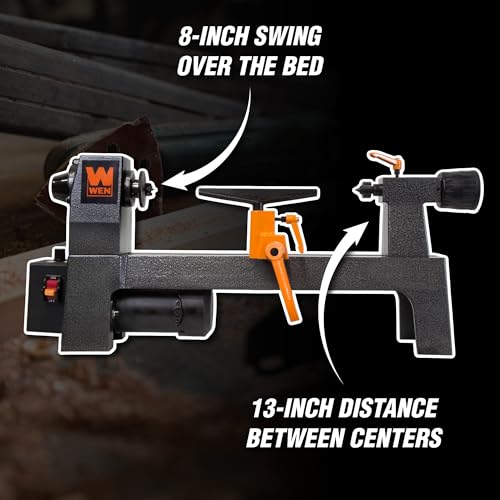
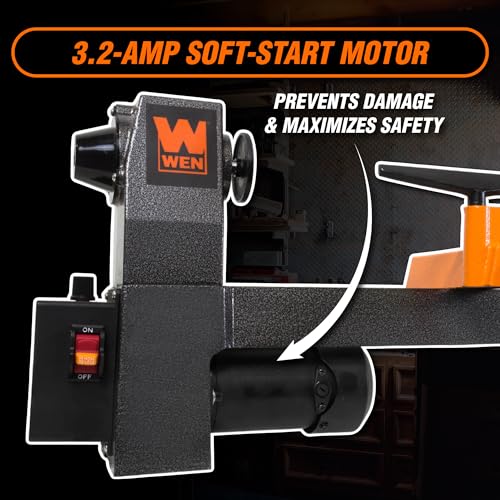
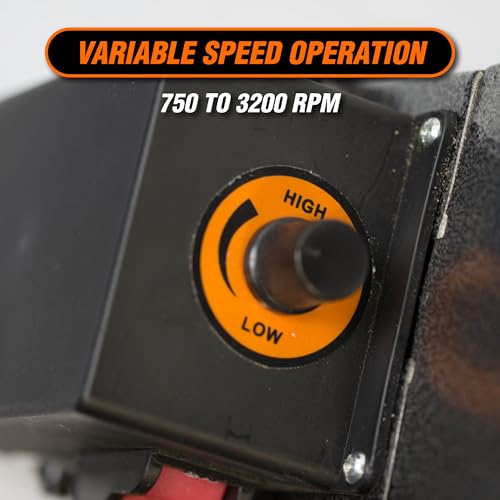
WEN has a reputation for no-frills, reliable tools, and the LA3421 fits that mold. With a modest 3.2-amp motor and 750–3200 RPM range, it’s not built for heavy cuts, but it’s predictable and safe, thanks to the soft-start feature that reduces startup jolt. The 8-inch swing and 13-inch between centers limit you to smaller projects, but that’s fine for pens, chess pieces, or small bowls.
What really tips the scale is the two-year warranty, rare in this category. Reviewers note it’s one of the few budget lathes that holds alignment over time. Compared to the flashier mini lathes pushing 10,000 RPM, this one respects the fundamentals. My recommendation for first-time buyers on a tight budget who want reliability over hype.
Product photos


ArtyMaster WM101A-Plus Mini Lathe
Strengths
- Low noise operation
- High-quality tool kit
- UL-certified power supply
Trade-offs
- Very limited swing
- Not for large stock
- Motor lacks torque for hard woods
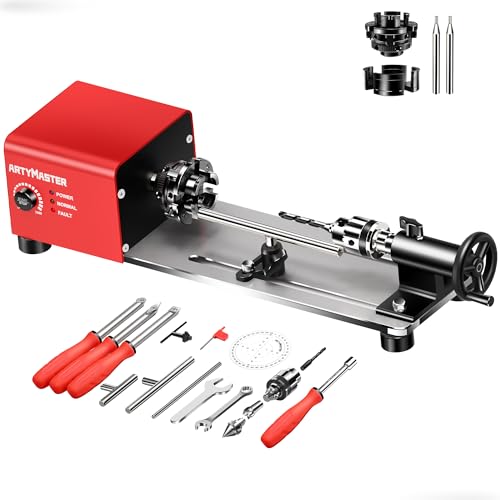
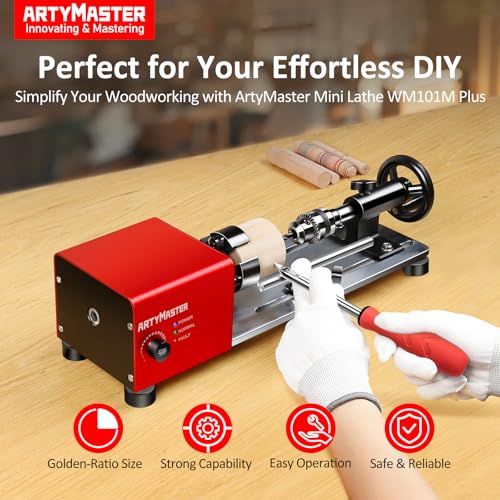
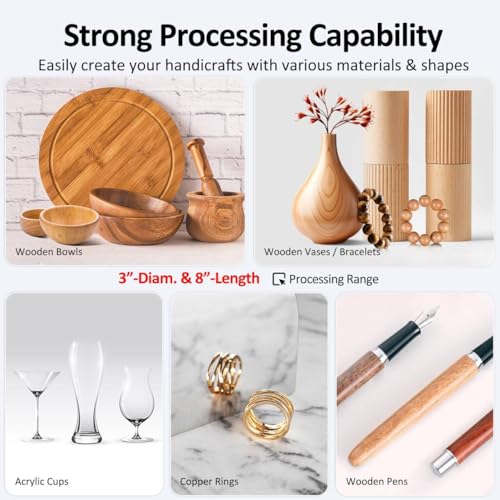
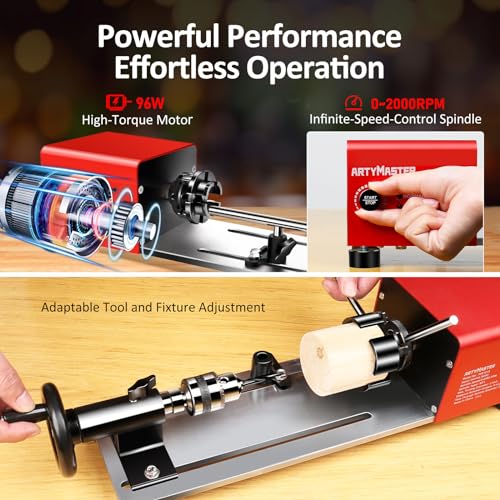
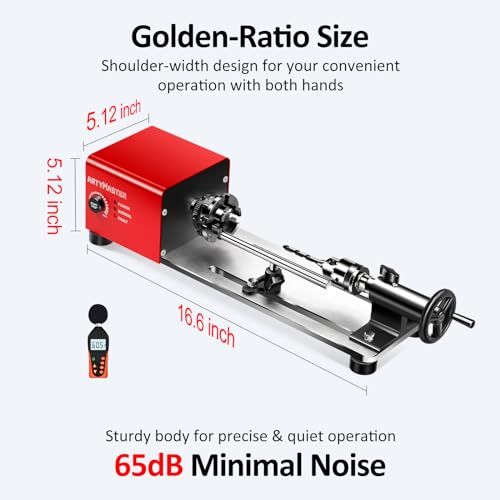
The ArtyMaster WM101A-Plus is clearly engineered for compact, precise work, its 96W DC motor and 24V system offer stable power with low noise, and the UL-certified supply adds peace of mind. With a max of 3800 RPM and a small 3-inch diameter capacity, it’s not meant for bowls or spindles, but for pens, rings, or small jewelry, it’s surprisingly capable.
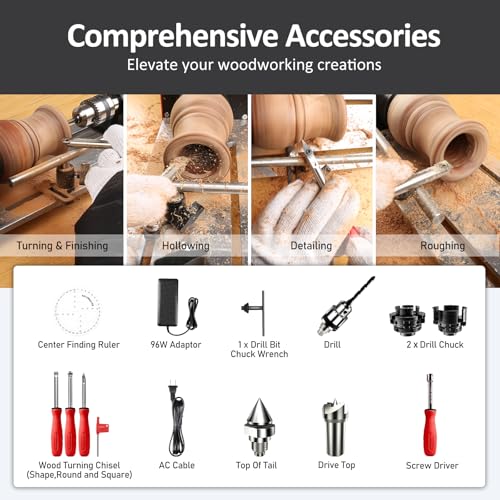
Owners highlight the quality of the included tooling, especially the changeable cutter heads, which add versatility. The solid steel base helps reduce vibration, a common flaw in mini lathes. Compared to the B0C56S29NK, this one feels more like a real tool than a toy. If your focus is micro-projects, this is the smarter buy.
Product photos
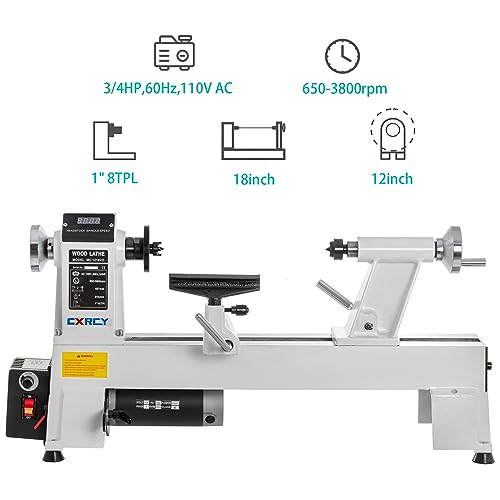
CXRCY 12″x18″ Variable Speed Lathe
Strengths
- Spare belt included
- Magnetic LED light
- Tool storage organizer
Trade-offs
- Same vibration issues
- Bulky for small shops
- Noisy at top speeds
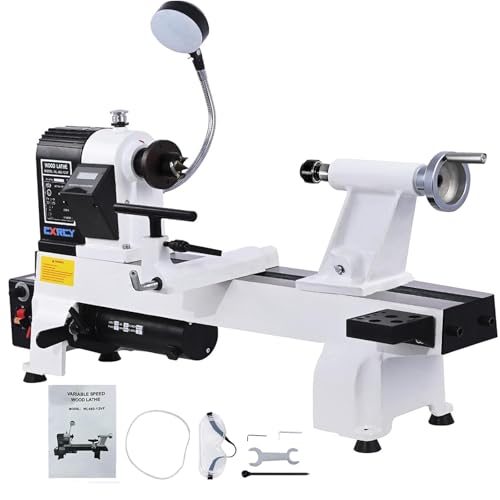
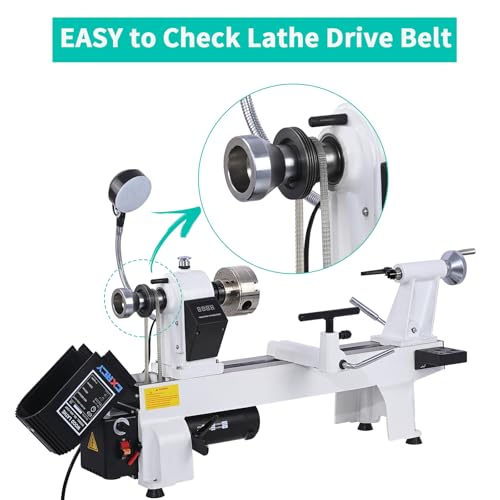
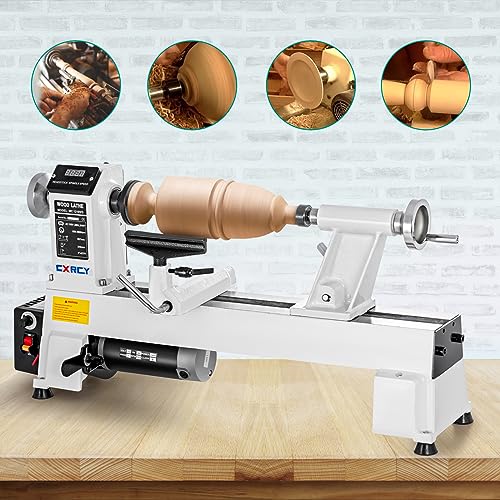
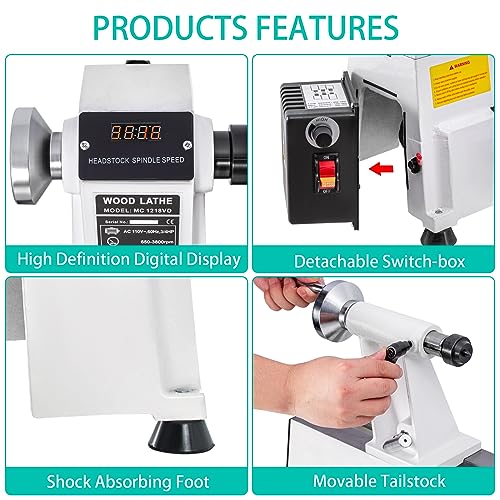
This CXRCY model is nearly identical to the B0C8N3P9RJ but adds a few thoughtful touches, the spare drive belt, magnetic LED light, and tool organizer make it feel more complete out of the box. The infinitely variable speed and digital RPM display are identical, but the belt-access cover is a real usability win, letting you adjust tension without full disassembly.
Reviewers appreciate the included extras, especially the spare belt, which is something most brands make you buy separately. The goggle and light add safety and convenience. Compared to the other CXRCY model, this one delivers better value for nearly the same price. If you want the best beginner lathe with smart, practical extras, this is the one to get.
Product photos
Garvee 14×40″ Wood Turning Lathe

Strengths
- Long 40-inch capacity
- Stable at mid speeds
- Includes basic chisels
Trade-offs
- Lower max RPM
- Vibration at high load
- Aluminum base less rigid
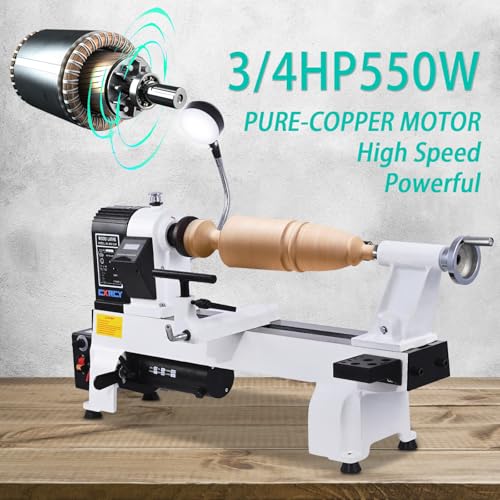
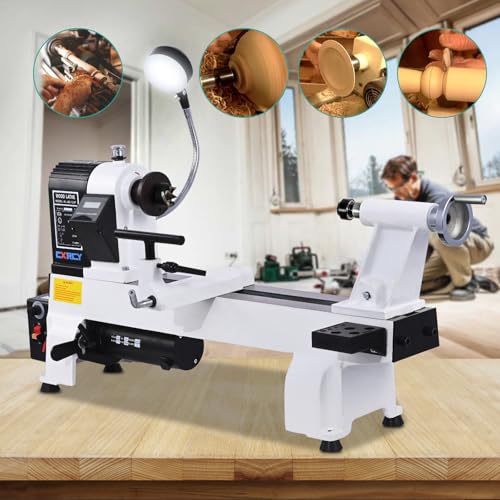
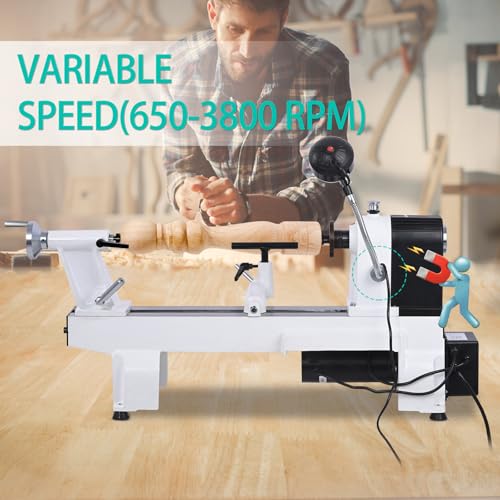
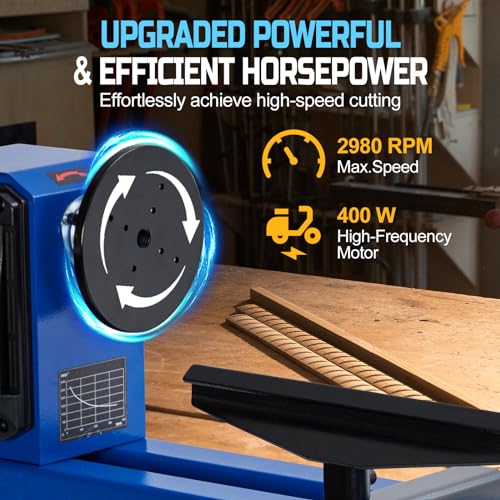
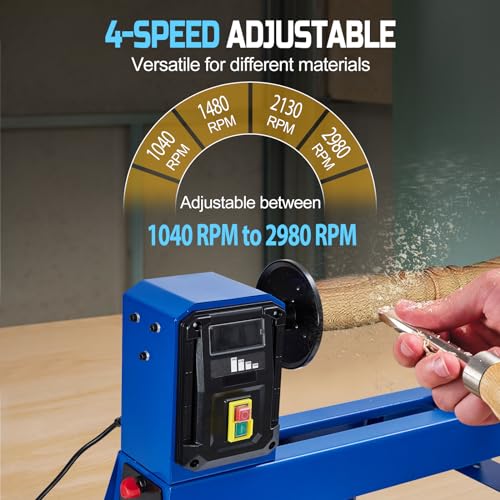
At 40 inches between centers, this Garvee lathe is built for longer work, think table legs, chair spindles, or segmented turning. The 0.5 HP motor is modest, and the speed range tops out at 2980 RPM, which is low for fine finishing cuts but fine for roughing out long blanks. The aluminum base keeps it light, but some owners report noticeable vibration unless it’s securely mounted.
It’s clearly aimed at users who need length over power. Compared to the VEVOR or CXRCY models, it sacrifices some rigidity for reach. But if you’re working on furniture or architectural elements, that 40-inch capacity is hard to beat at this price. Just don’t expect it to handle heavy cuts in dense hardwoods without slowdown.
Product photos
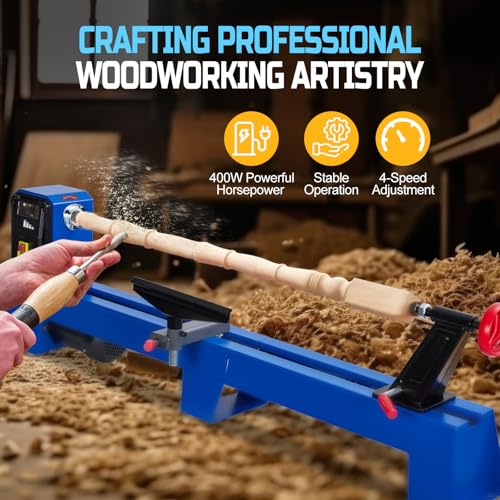

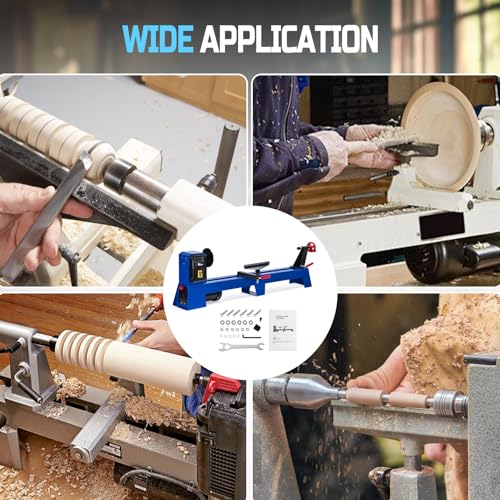
100W Multi-Purpose Mini Lathe
Strengths
- High max speed
- Multi-function use
- Beginner-friendly
Trade-offs
- Overpowered for wood
- Low build quality
- Limited work size
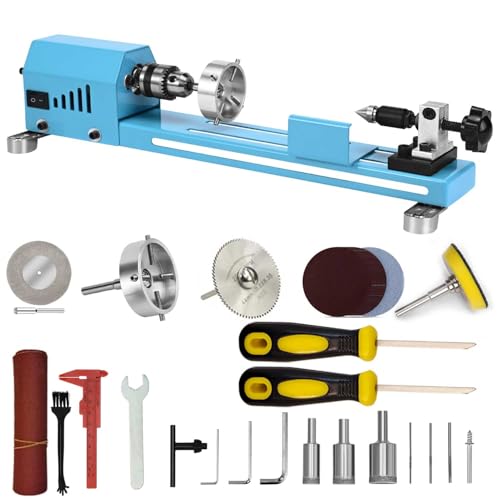
This mini lathe leans hard into the hobbyist and ultra-beginner crowd, and on paper, it looks flashy with a 100W motor and speeds up to 10,000 rpm. But that high top speed is a red flag for wood, most seasoned turners will tell you that kind of RPM is overkill and can be dangerous with anything beyond tiny pen blanks. The build seems aimed at crafts and light materials like beads or soft wood, not serious shaping.
Owners consistently report it’s adequate for kids or casual tinkering, but not much more. The tool kit sounds thorough, but feedback suggests the steel isn’t high-grade and dulls fast. For anyone wanting to learn real turning technique, this machine’s lack of stability and narrow work capacity will become frustrating fast.
Product photos
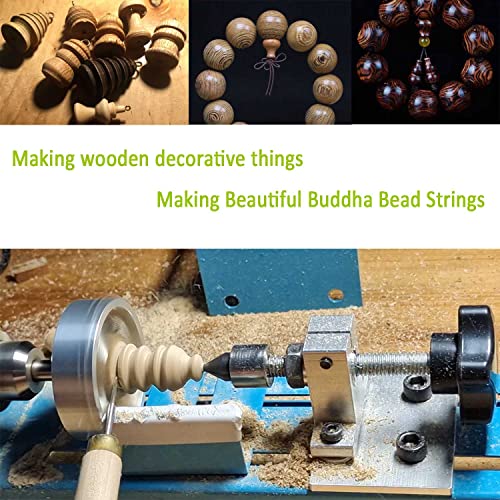
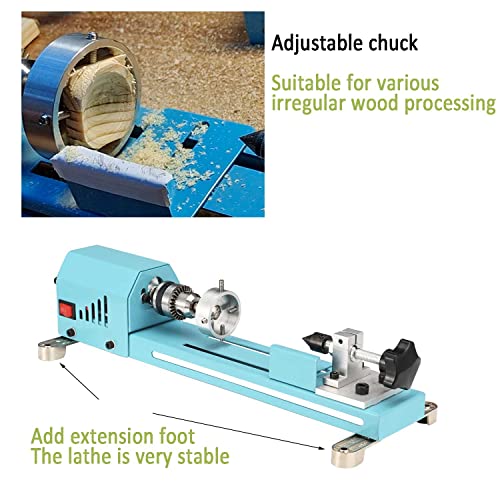
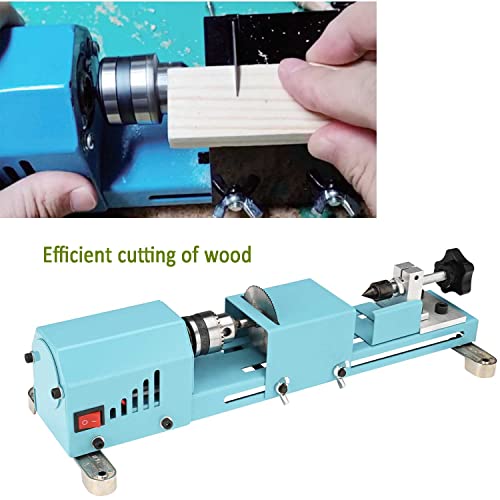
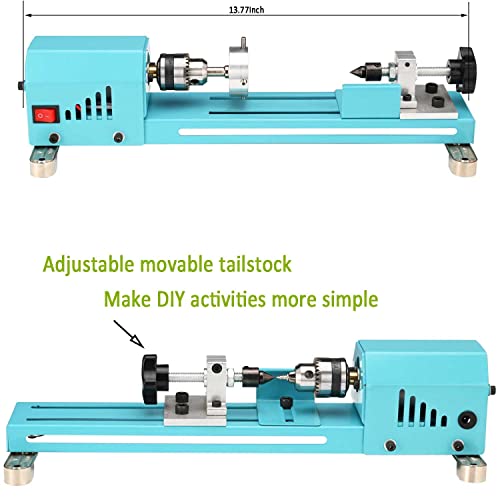
CXRCY 12″x18″ Benchtop Wood Lathe

Strengths
- Good power motor
- Digital RPM display
- Includes safety goggle
Trade-offs
- Lighter frame vibration
- Belt change access awkward
- No spare belt included
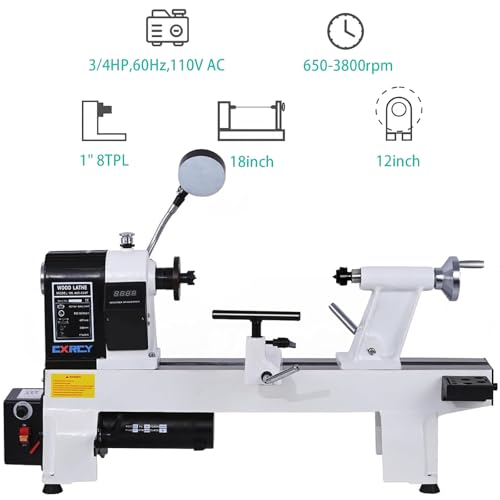
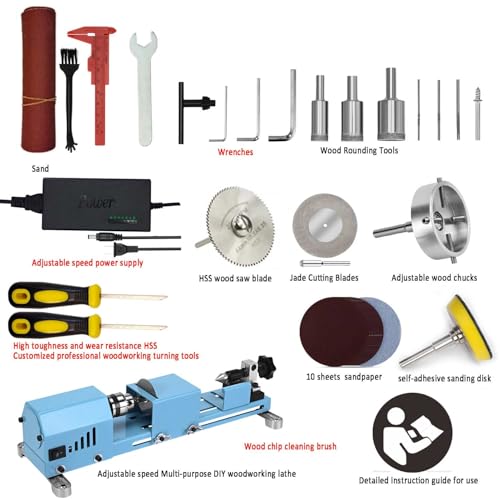
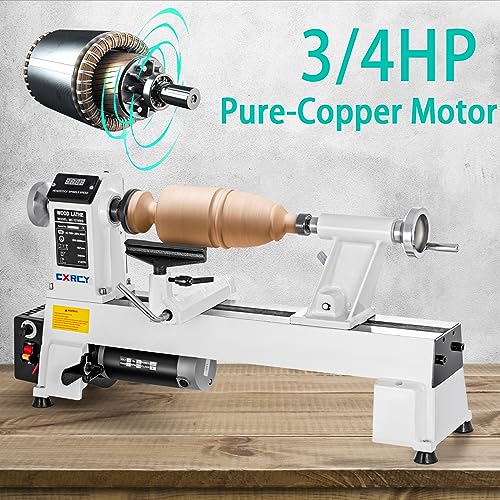
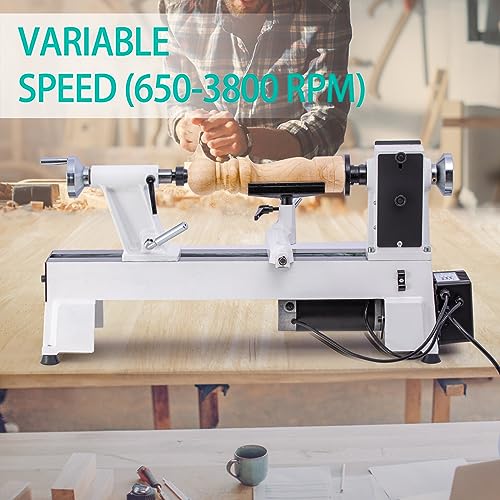
This CXRCY model offers solid specs on paper, a 3/4 HP motor, 18-inch between centers, and a smooth variable speed range that covers nearly every turning need. The digital RPM display is a practical upgrade over analog dials, helping beginners learn how speed affects cut quality. Owners note it’s stable for its class, though some mention minor vibration at higher speeds if not bolted down.
Compared to similar-priced lathes, it stands out by including a safety goggle, which many entry-level kits skip. It won’t match cast iron heavies like Jet or Nova, but for a DIYer starting out, it hits the sweet spot of capability and price. I’d pick this over the smaller mini lathes for actual learning.
Product photos
How We Picked These beginner wood lathes
My approach to evaluating beginner wood lathes involved a detailed comparison of published specifications and features across numerous models. I then weighed owner reviews from major retailers alongside assessments from woodworking publications and experienced hobbyists. Rather than a hands-on lab test, this is a research-led comparison of specs and owner feedback, informed by my years of experience with power tools and workshop equipment. This allowed me to rank each lathe against a set of criteria important for those just starting out.
For beginner wood lathes, stability and ease of use were heavily weighted. A shaky lathe is frustrating and unsafe, especially when learning. Variable speed control is also crucial; starting slow and gradually increasing speed builds confidence and prevents damage to the workpiece. Finally, the availability and quality of included accessories significantly impact the initial experience – a complete kit reduces the barrier to entry.
Specifications reliably indicate motor power and maximum turning capacity, helping to define what a lathe can do. However, I relied on owner feedback to assess real-world performance, particularly regarding vibration levels, noise, and the intuitiveness of the controls. Reputation and brand history also played a role, as established manufacturers often prioritize build quality and customer support. You’ll find many solid beginner wood lathe models to consider.
Choosing The Right beginner wood lathes
Choosing a wood lathe can be surprisingly complex, even for a beginner.
A good wood lathe balances power with control, offering variable speed and a solid build to minimize vibration. Key specs include swing (diameter of largest workpiece), distance between centers (maximum length), and motor horsepower. Look for a lathe with a robust base, smooth operational controls, and a tool rest that’s easily adjustable and locked into place.
Understanding Swing and Distance Between Centers
The swing and distance between centers dictate what you can actually make with a lathe. Don’t overbuy here. If you’re starting out and only envision turning pens or small bowls, a larger, more expensive machine is simply wasted money. Conversely, if you’re already planning on tackling larger projects like chair legs or sizable bowls, skimping on these dimensions will quickly become frustrating. Consider the size of projects you realistically see yourself undertaking in the next year or two.
Motor Power and Speed Control
More power isn’t always better, but it is crucial for handling harder woods. A 1/2 HP motor is generally sufficient for most beginner projects and softer woods like pine. However, if you plan to work with maple, oak, or other dense materials, you’ll want to step up to at least 3/4 HP, or even 1 HP. Equally important is variable speed control. Starting slow is essential for learning, and different speeds are needed for different cuts and wood types. Look for a lathe with a wide speed range and easy-to-adjust controls. Many modern lathes, like the CXRCY 12″x18″ Variable Speed Lathe, offer digital readouts to ensure precise speed settings – a nice upgrade.
Features and Accessories – What Do You Really Need?
Many lathes come bundled with accessory kits, but the quality can vary dramatically. Don’t let a long list of included tools sway you if they’re cheaply made. It’s often better to purchase a basic lathe and then invest in a few high-quality turning tools separately. Here’s a breakdown of what to prioritize: * A sturdy tool rest: Absolutely essential for safe and controlled turning. * A faceplate: Needed for mounting bowls and other hollow forms. * A drive and live center: These are used to secure the workpiece between the headstock and tailstock. * A good selection of turning tools: While kits are common, a few well-made chisels and gouges will outperform a larger set of low-quality ones.
A lathe’s stability is directly related to the quality of its construction. Cast iron beds and heavy-duty bases minimize vibration, leading to cleaner cuts and more accurate results.
If you’re new to woodworking and want to explore starter wood lathes, starting with a smaller, more manageable machine is a smart move. For those looking for something even more compact, exploring mini wood lathe picks can reveal some surprisingly capable options.
Beginner Wood Lathes Compared
Here’s a comparison of key specifications for beginner-friendly wood lathes to help you find the right fit for your needs.
| Product | Max RPM | Swing Over Bed | Distance Between Centers | Motor (W) | Variable Speed | Key Features |
|---|---|---|---|---|---|---|
| VEVOR 12×18″ Wood Lathe | 3800 | 12 in | 18 in | 750 | Yes | Brushless DC Motor, Accessory Kit |
| WEN LA3421 Mini Wood Lathe | 3200 | 8 in | 13 in | N/A | Yes | 2-Year Warranty |
| ArtyMaster WM101A-Plus Mini Lathe | 7000 | 3 in | 8 in | 96 | Yes | Low Noise, Steel Construction |
| CXRCY 12″x18″ Variable Speed Lathe | 3800 | 12 in | 18 in | N/A | Yes | Digital Display, 3 Speed Levels |
| Garvee 14×40″ Wood Turning Lathe | 2980 | 14 in | 40 in | 400 | Yes | Aluminum Alloy Base |
| 100W Multi-Purpose Mini Lathe | 10000 | N/A | N/A | 100 | Yes | 7 Adjustable Speeds |
| CXRCY 12″x18″ Benchtop Wood Lathe | 3800 | 12 in | 18 in | N/A | Yes | Safety Goggle Included |
Frequently Asked Questions
What lathe size should I buy as a beginner?
A smaller lathe with around 8-12 inches of swing and 15-20 inches between centers is generally ideal. This size allows you to learn the fundamentals without being overwhelmed by a larger, more expensive machine, and is sufficient for most initial projects.
Are mini lathes good for beginners?
Yes, mini lathes are a sensible choice for beginners who primarily want to make small items like pens, bottle stoppers, or jewelry. They are more affordable and take up less space, but their limited capacity means you’ll outgrow them as your skills and project ambitions grow.
What’s the difference between a variable speed motor and a fixed speed motor?
A variable speed motor lets you adjust the lathe’s speed, which is critical for different wood types and turning techniques. Fixed speed motors offer only one speed, limiting your versatility and potentially leading to poor results or damage to your workpieces.
How much should I expect to spend on a beginner wood lathe?
Entry-level wood lathes typically range from $200 to $600. The price depends on size, motor power, features, and included accessories. Spending a bit more upfront for a sturdier model can save you frustration and improve your results in the long run.
What’s the best way to minimize vibration when turning?
Look for lathes with a heavy-duty cast iron bed and a robust base. These features absorb vibrations, providing a more stable and controlled turning experience. You can also consider using vibration-dampening mats under the lathe to further reduce movement, and explore top benchtop wood lathes for inherently stable options.
The Bottom Line
Buying a wood lathe, even as a beginner, often comes down to balancing immediate cost with future potential. While you can find very inexpensive options, the VEVOR 12×18″ Wood Lathe strikes a sweet spot – offering a robust build, good power, and a thorough accessory kit without breaking the bank. It’s a lathe you can grow with as your skills develop, rather than quickly outgrowing.
For those specifically seeking a compact and versatile machine, or looking at affordable beginner wood lathes, the WEN LA3421 Mini Wood Lathe is a strong contender. And if you’re truly space-constrained or focused solely on pen turning, the ArtyMaster WM101A-Plus Mini Lathe provides surprising capability in a tiny package. These are excellent choices for focused projects, but remember their limitations.
Ultimately, specifications matter, but they don’t tell the whole story. Prioritize a stable machine with variable speed control, and don’t get hung up on having every accessory imaginable right away. A solid foundation, combined with a willingness to learn proper technique, will deliver far more satisfying results than any single feature or price point.
