
8 Best Small Lathes of 2026
This post contains affiliate links. As an Amazon Associate, we earn from qualifying purchases.
The UOKRR 10″ x 18″ Wood Lathe stands out as the best overall small lathe for woodworkers who need solid capacity and reliable performance, while the WEN Mini Benchtop Wood Lathe is a sensible budget pick for beginners. If you’re diving into metal or mixed materials, the AcmeFlare All-Metal Mini Lathe offers unmatched build quality for its size.
Most people shopping for a small lathe are trying to balance limited space and budget without sacrificing too much performance. The real risk is buying something too flimsy or underpowered, only to end up frustrated by vibration, stalling, or poor finishes. In this guide, I’ll walk you through the models that deliver real value based on specs, owner feedback, and what actually matters in practice, like stability, motor strength, and build quality. These picks reflect what I’ve found works for most DIYers and hobbyists after years of researching and advising on tool choices.
Top 8 Small Lathes in the Market
The Best Small Lathes, Reviewed
UOKRR 10″ x 18″ Wood Lathe
Strengths
- Cast iron stability
- 10-inch swing capacity
- MT2 standard taper
Trade-offs
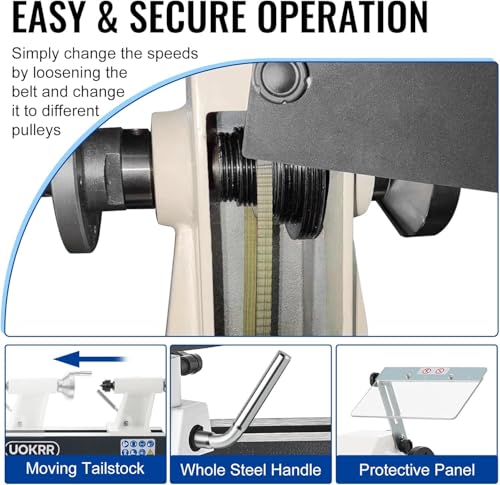
- Belt changes for speed
- Heavy for benchtop
- No variable speed dial
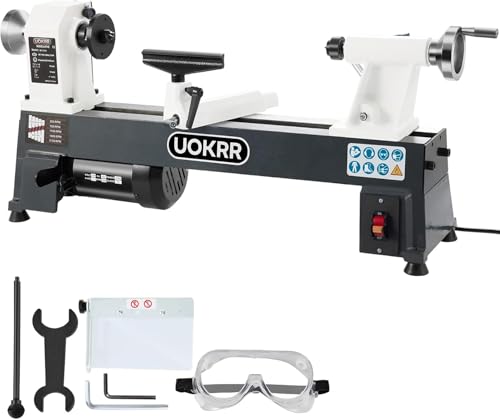
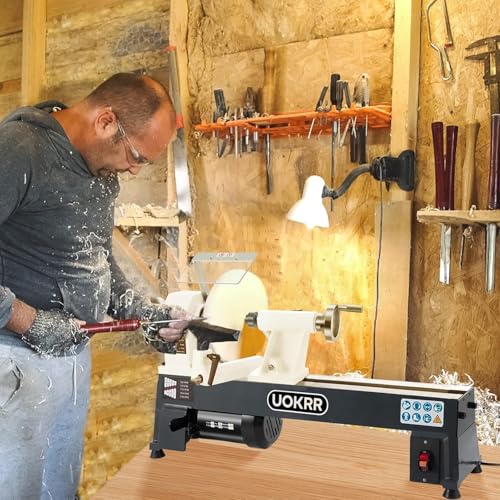
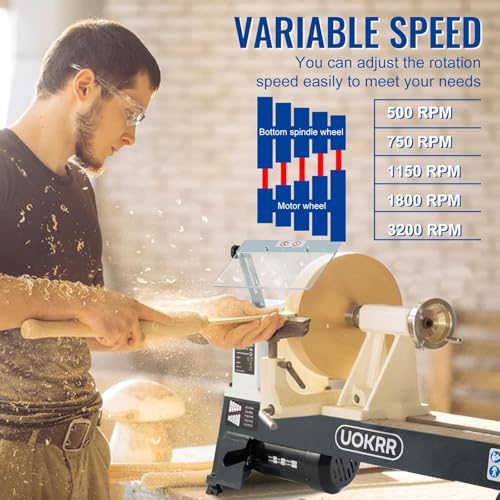
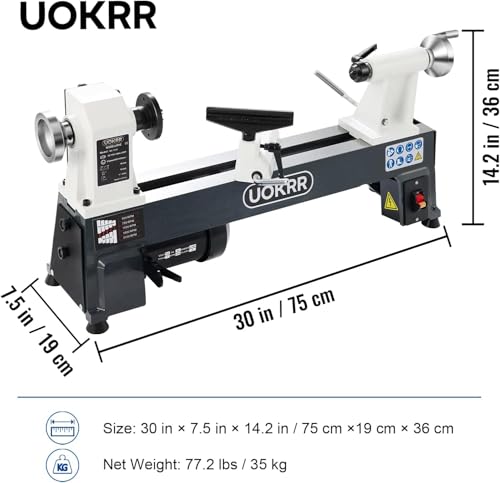
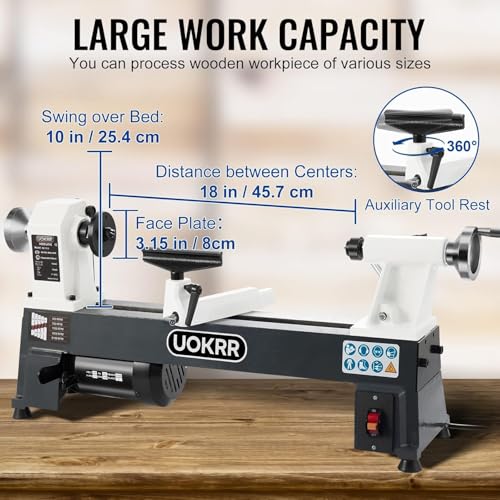
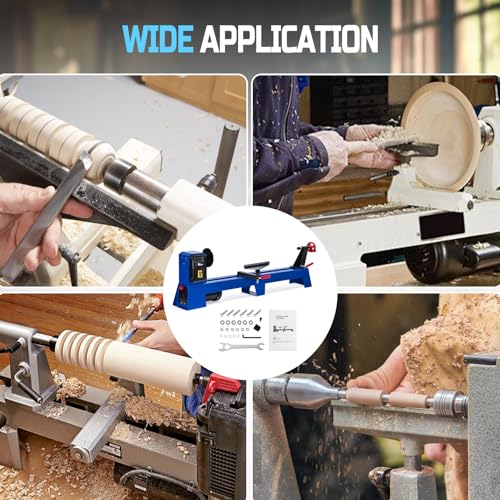
This is the best all-around benchtop wood lathe in this lineup, and owner feedback backs that up. The 77.2 lb cast iron bed kills vibration, giving a smooth, professional feel even at high speeds. With a 10-inch swing and 18-inch between centers, it handles larger bowls and platters better than the 8×13 models. The pure copper 1/2 HP motor delivers consistent torque, and the 5-step belt-driven speeds are well-spaced for real-world use.
It includes MT2 centers and a standard thread pattern, so you can use common accessories. Compared to the Garvee, it’s more balanced, better for bowls and spindles alike. I’d pick this over the WEN or VEVOR mini lathes for anyone serious about woodturning beyond pens or small parts.
Product photos
ZHRUI Mini Metal Lathe 20000 RPM
Strengths
- Includes 5 carbide cutters
- Ultra-quiet operation
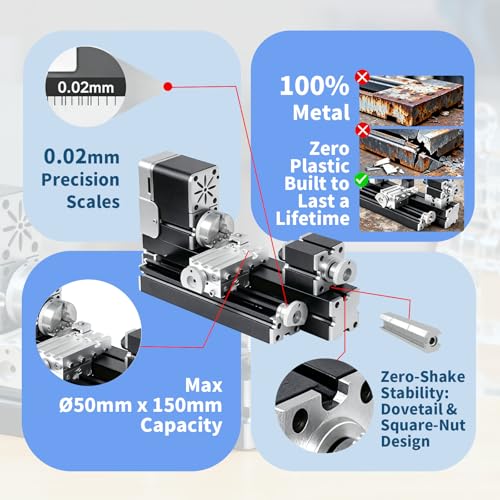
- All-metal frame
Trade-offs
- Limited to soft metals
- Small max diameter
- Not for deep cuts
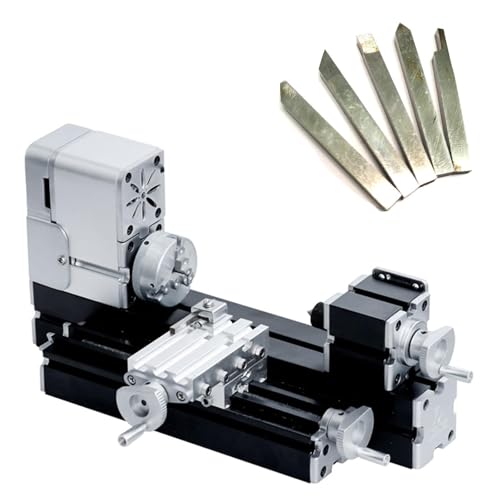
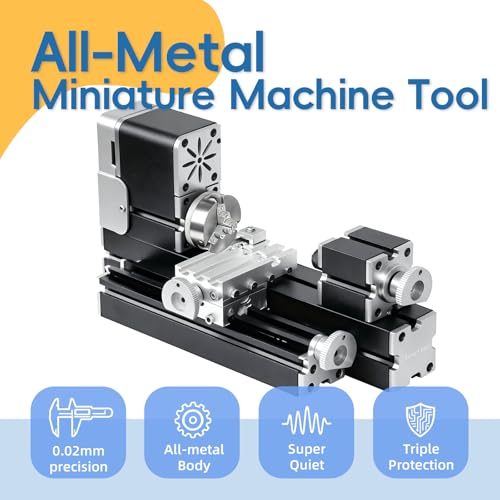
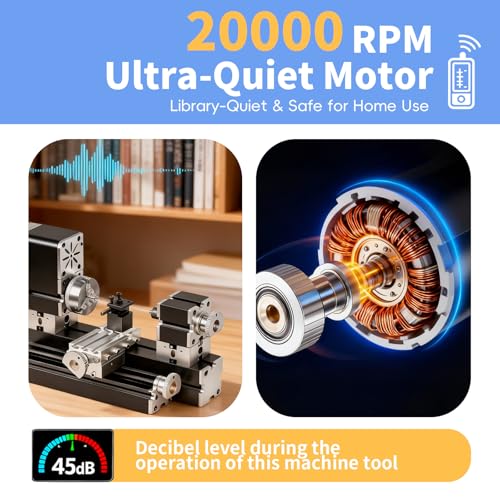
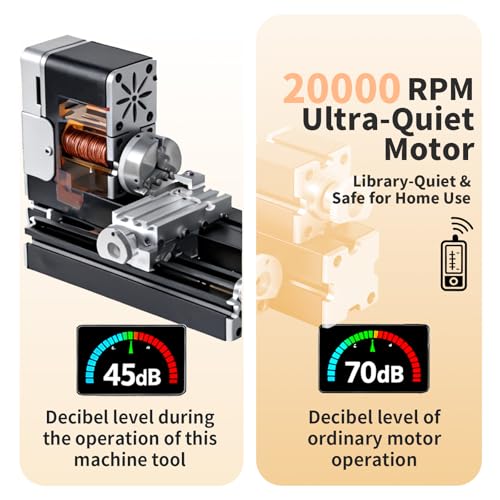
What sets this ZHRUI apart is that it’s ready to cut right out of the box, the included 5-piece carbide cutter set saves beginners from buying tools separately, and pros appreciate the quality. The 20,000 RPM motor is quiet, running at just ~55dB, and the all-metal dovetail construction ensures rigidity. The 0.02mm scales are etched, not printed, so they last.
It’s nearly identical in specs to the AcmeFlare, but the full toolkit makes it the smarter buy for most. Owners report it’s ideal for rings, pen blanks, or small shafts in brass and aluminum. If you want precision metal turning without extra costs, this is the one.
Product photos
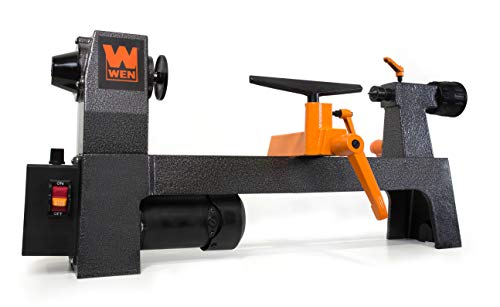
WEN Mini Benchtop Wood Lathe
Strengths
- Compact design
- Variable speed control
- Soft-start motor
Trade-offs
- Limited swing capacity
- Lightweight base
- Plastic components
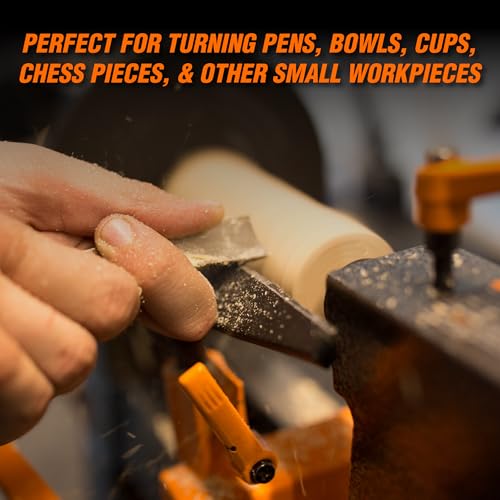
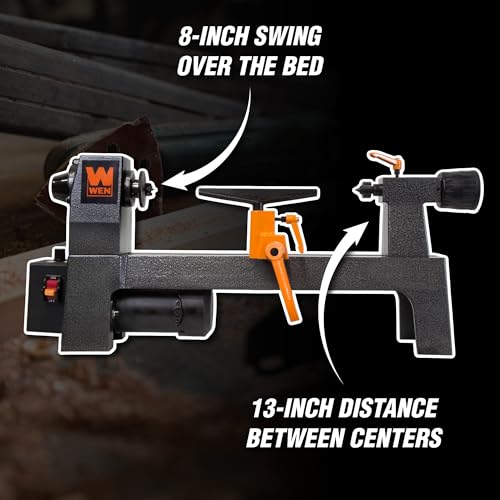
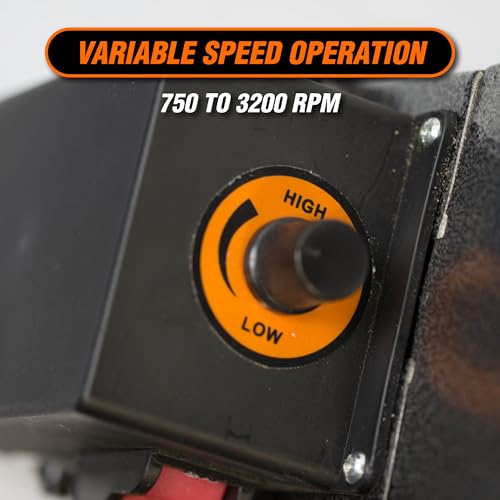
For beginners and hobbyists on a tight budget, the WEN LA3421 makes a solid first step into woodturning. Its variable speed from 750 to 3200 RPM gives enough control for small projects like pens, chess pieces, or small bowls. The 8-inch swing and 13-inch between centers limit what you can make, but for the price, it’s a capable little machine. Owners consistently report it’s quiet, stable for its size, and surprisingly smooth for a lightweight lathe.
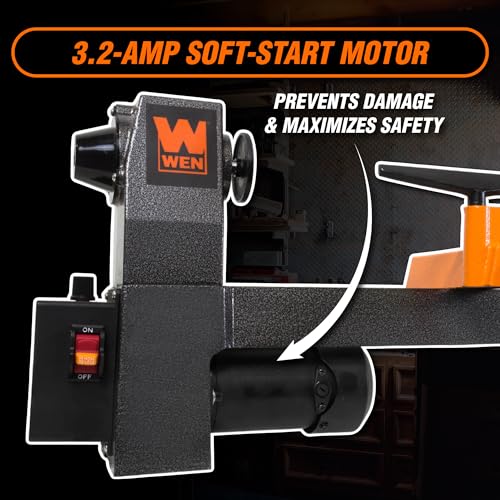
The soft-start motor is a thoughtful touch, reducing stress on internal components during startup. It’s not built for heavy stock or long spindles, but if you’re just starting out or working on fine, detail-oriented pieces, it delivers where it counts. Compared to pricier cast iron models, it vibrates more under load, but that’s expected at this tier.
Product photos

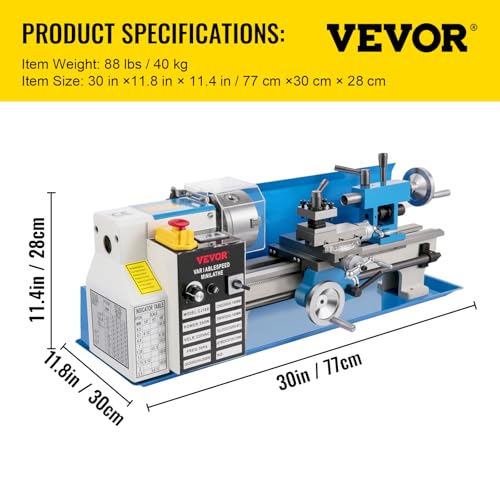
VEVOR 7″ x 14″ Metal Lathe

Strengths
- Digital speed display
- 550W metal-gear motor
- 4-way tool post
Trade-offs
- Heavy and bulky
- Setup takes time
- Noise at high RPM
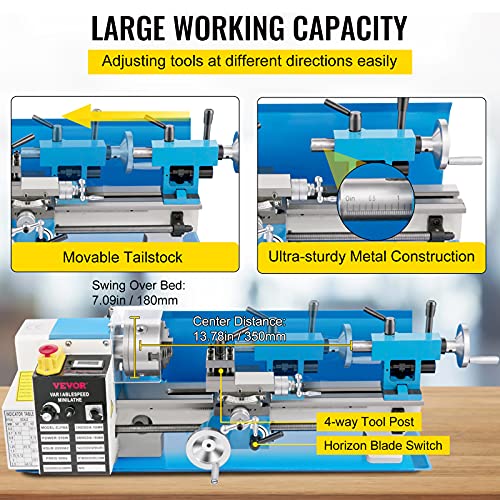
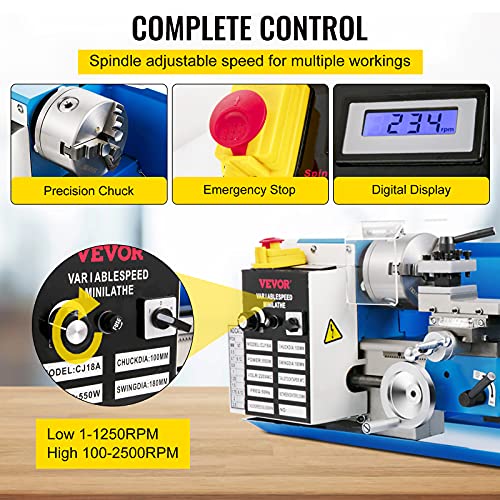
The VEVOR 7×14 metal lathe is a serious step up for hobbyists tackling medium-duty metal projects. The 550W motor and digital RPM display give precise control, and the all-metal gears (no nylon) mean it can handle sustained use. With a 7-inch swing and 14-inch between centers, it’s roomy enough for shafts, bushings, or small engine parts.
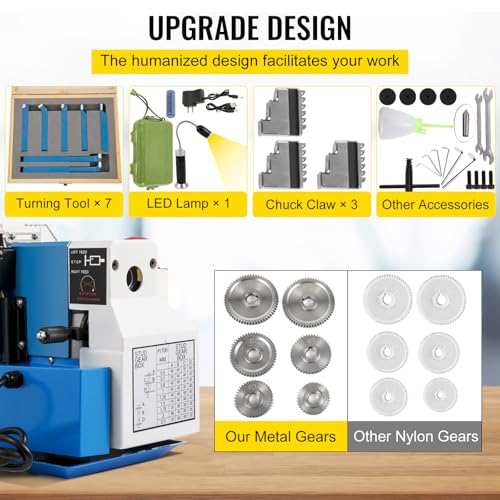
Owners highlight the 4-way tool post and LED light as practical upgrades. The automatic power-off switch adds safety, and the handwheels have clear markings. It’s heavier and more industrial than the ZHRUI or AcmeFlare models, making it a better fit for a permanent bench setup. For threading or consistent diameter work, it’s one of the most capable in this group.
Product photos

Garvee 14″ x 40″ Wood Lathe

Strengths
- Long 40-inch bed
- Sturdy aluminum base
- MT2 tapers
Trade-offs
- Fixed speed only
- Basic included tools
- No reverse function
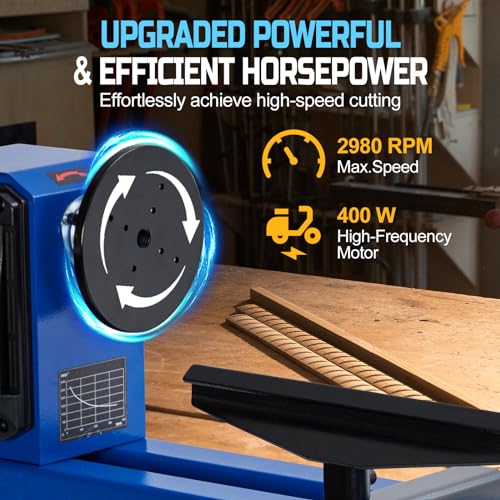
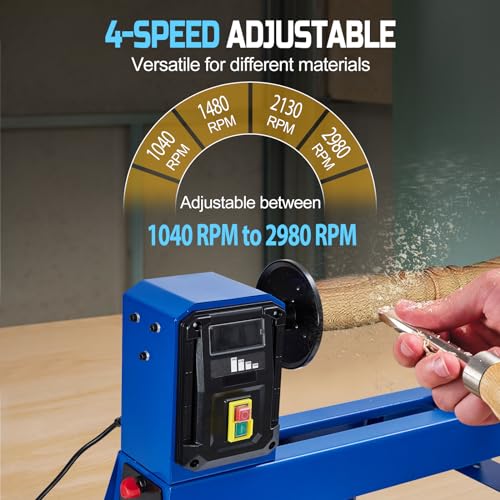
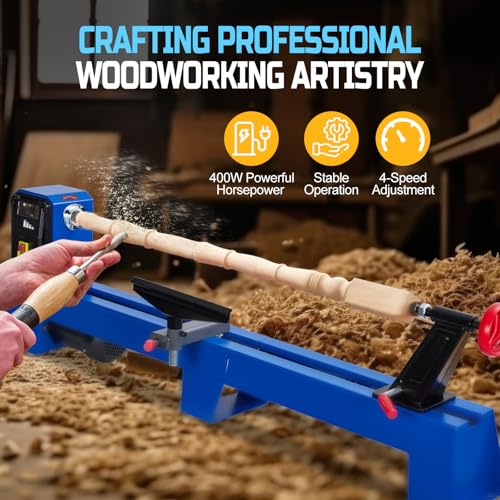
The Garvee 14×40 is built for woodturners who need serious reach without going floor-standing. With a 40-inch bed and MT2 tapers, it handles long spindles like chair legs or lamp bases with ease. The 400W motor isn’t the most powerful on paper, but paired with its aluminum base and steel headstock, it runs surprisingly stable. Owners note it’s best for mid-range projects, nothing too aggressive, but perfect for furniture parts or segmented work.
It only offers four fixed speeds, not true variable speed, which limits flexibility compared to models like the UOKRR. And while it comes with accessories, they’re basic. Still, for spindle work that demands length and rigidity, this lathe fills a niche most mini lathes can’t.
Product photos

ZHRUI Mini Metal Lathe 4-Axis
Strengths
- 4-axis capability
- All-metal construction
- Precise 0.02mm scales
Trade-offs
- Steeper learning curve
- Smaller max diameter
- Limited power for hard metals
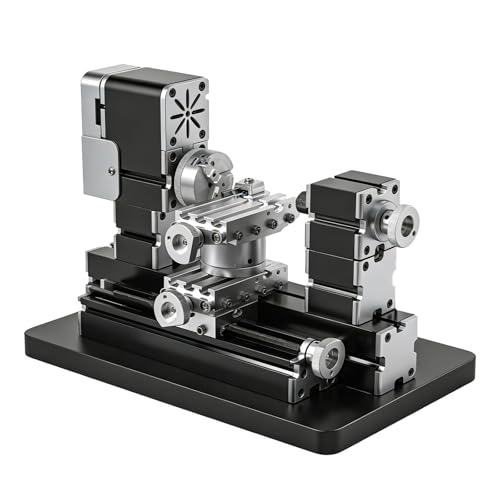
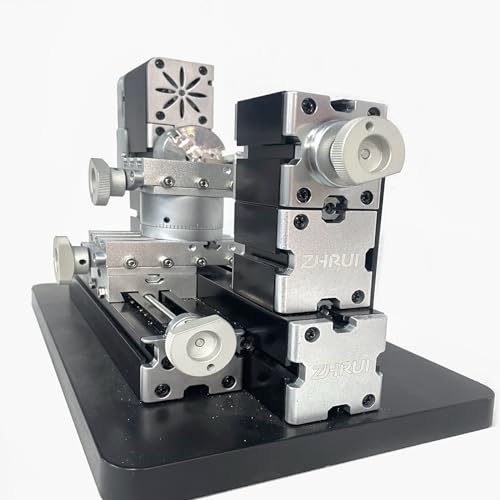
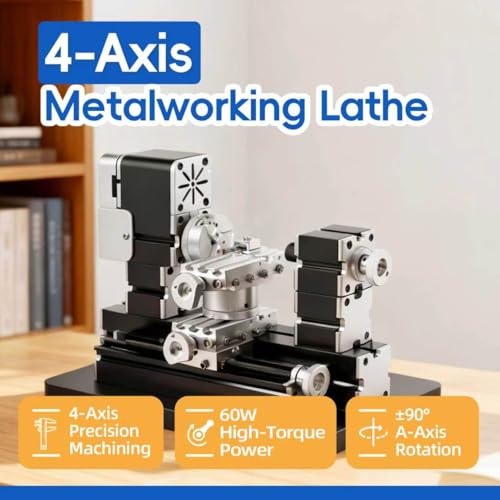
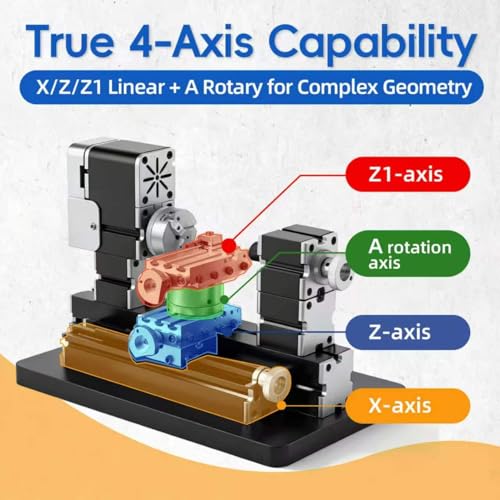
If you’re diving into precision metal work with an eye toward multi-angle projects, the ZHRUI 4-axis lathe stands out in the micro lathe class. The quick indexer and A-axis rotation let you machine multiple faces without re-clamping, which is rare at this size and price. Owners praise its rigid all-metal build, no plastic gears or housings, which translates to better vibration damping and long-term reliability.
The 0.02mm handwheel scales are molded, not stuck on with stickers, so they won’t peel. That kind of attention to detail matters when you’re making small parts for models or instruments. It’s not the fastest (12,000 RPM is respectable), but it’s consistent across soft metals like aluminum and brass. When compared to basic 2-axis lathes, this one gives you real versatility.
Product photos
AcmeFlare All-Metal Mini Lathe
Strengths
- All-metal build
- 20,000 RPM speed
- 0.02mm precision scales
Trade-offs
- Low torque at high speed
- Small work envelope
- Not for heavy material removal
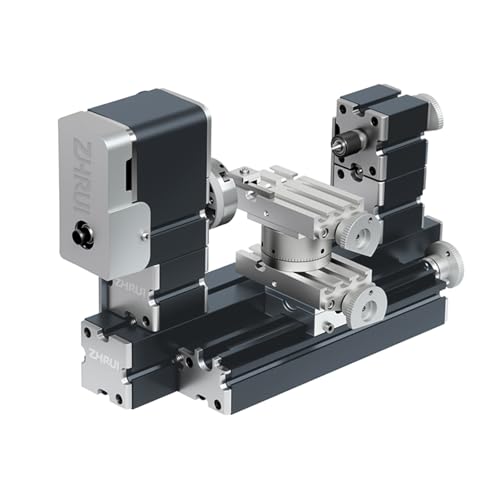
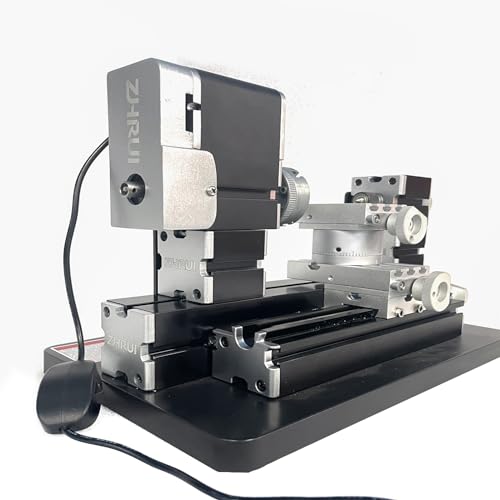
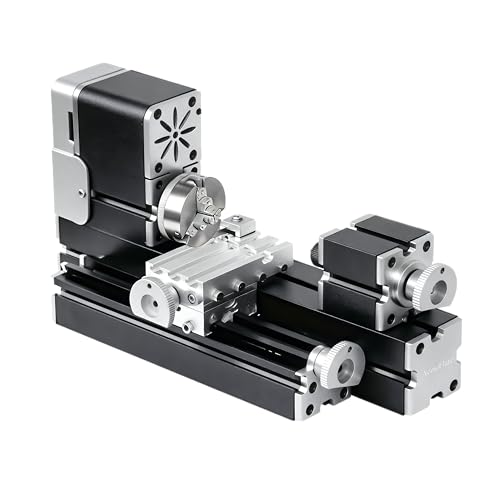
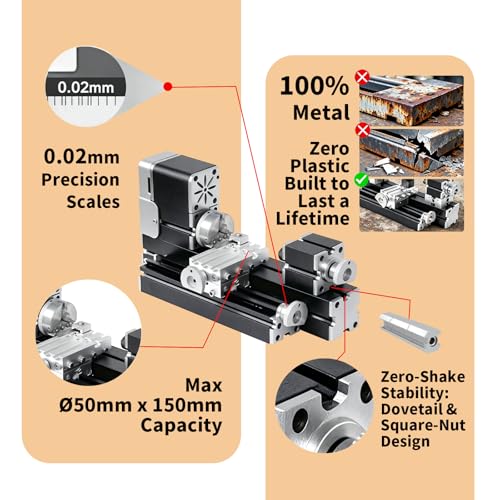
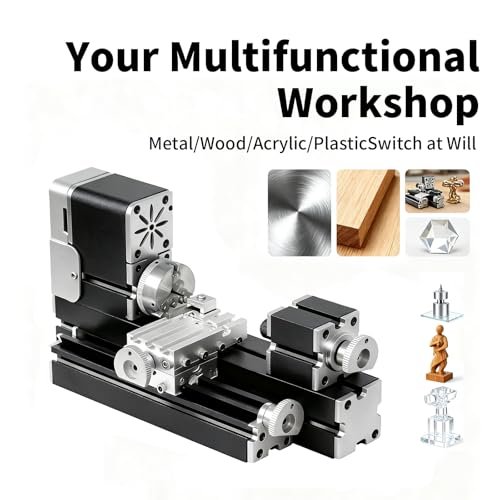
The AcmeFlare lathe is built like a mini industrial tool, and that shows in its 100% metal construction, headstock, gears, sliders, everything. That kind of build delivers excellent vibration control, which matters when you’re making tiny, precise parts. The 20,000 RPM motor is overkill for wood, but perfect for cutting aluminum or polishing small metal components.
The 0.02mm molded scales don’t wear off, and the T-slot bed offers real flexibility for custom jigs. Owners say it’s a favorite for STEM classrooms and model makers. It’s not powerful enough for aggressive cuts, but for detail work and consistency, it’s unmatched. Compared to the ZHRUI, it’s simpler in function but more robust in core design.
Product photos


VEVOR Mini Wood Lathe 96W

Strengths
- Extremely high RPM
- 7 speed options
- Lightweight and portable
Trade-offs
- Very small work capacity
- Not suitable for heavy cuts
- Minimal vibration damping
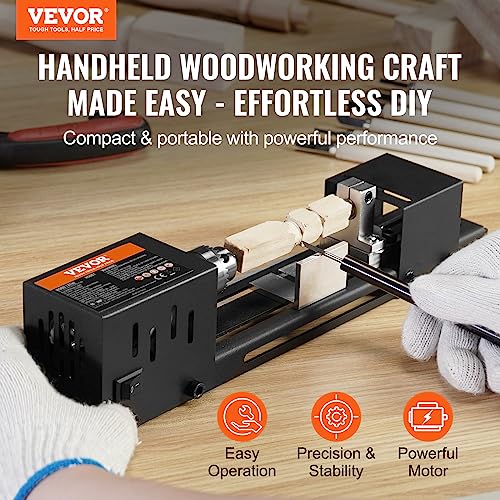
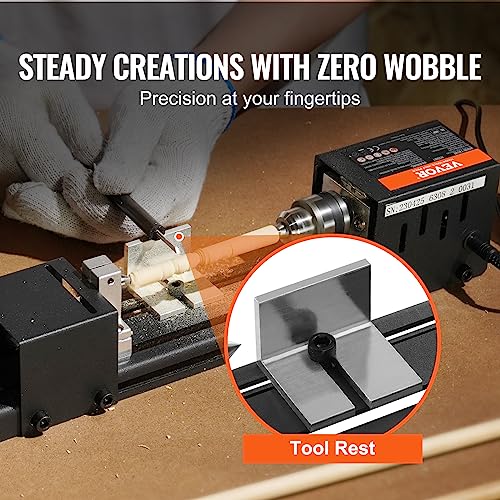
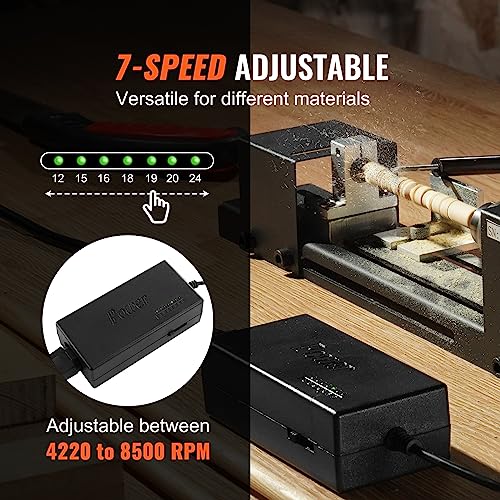
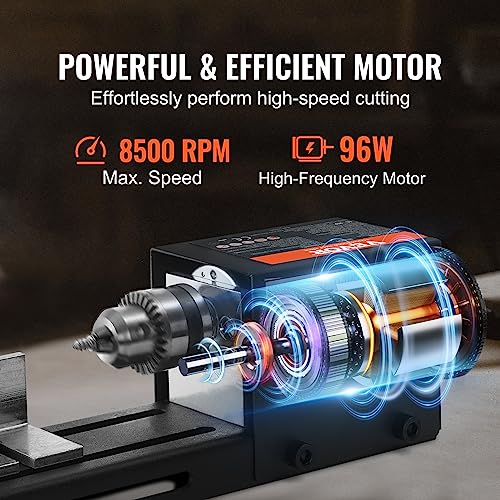
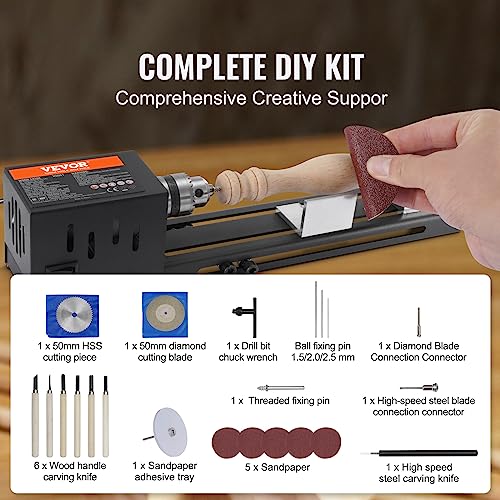
This VEVOR mini lathe is all about high RPM and portability, it hits up to 8,500 RPM, making it one of the fastest in this list. That kind of speed is useful for fine sanding, polishing, or working with small hardwood pieces. The 96W motor runs cool, and the aluminum base helps reduce vibration, though it’s still a lightweight unit.
It’s not for large work, max swing is under 3 inches, so don’t expect to turn bowls or thick stock. But for detail work, pen turning, or light milling, it performs well. Compared to the WEN, it’s faster but less forgiving at lower speeds. Owners say it’s best treated as a dedicated high-speed tool, not an all-rounder.
Product photos
How We Picked These small lathes
I’ve spent years working with tools, and when it comes to small lathes, a lot of marketing focuses on features that don’t always translate to real-world performance. Rather than a hands-on lab test with each model – which would be impractical for this category – we built our recommendations based on a detailed comparison of published specifications and features. We also thoroughly weighed owner reviews from across the web, combined with expert opinions from woodworking and metalworking communities. This research-led approach allowed us to rank models against a clear set of criteria.
For small lathes, stability and power are paramount. We prioritized models with robust construction – specifically cast iron or all-metal builds – as vibration significantly impacts precision. A powerful motor, capable of maintaining consistent speed under load, was also heavily weighted. While features like variable speed controls are useful, they’re less impactful if the machine shakes or the motor struggles. If you’re primarily working with metal, you’ll want to explore more robust options, like the benchtop metal lathe reviews we’ve covered elsewhere.
Specifications reliably indicate build quality and motor capacity. However, owner feedback proved crucial for assessing real-world usability and durability. We paid close attention to comments regarding vibration, noise levels, and long-term reliability. Reputational factors, such as brand history and customer service, also played a role. Ultimately, we aimed to identify models that consistently delivered on their promises, as confirmed by those actually using them in their workshops.
Choosing The Right small lathes
Choosing the right lathe depends heavily on what you plan to make. There’s a huge difference between needing a machine for pen turning and one for larger metal projects.
A good lathe, regardless of size or material focus, delivers consistent speed, rigidity to minimize vibration, and precise control over tool movement. Key specs to consider include swing over bed, distance between centers, motor power (in HP or Watts), spindle speed range, and the quality of the construction materials (cast iron is generally superior for stability). Buyers should also carefully assess the included accessories and the availability of compatible upgrades.
Size and Capacity Matter
The first thing I always tell people is to think about the size of the projects you’ll be tackling. Don’t buy a mini lathe if you envision regularly turning large bowls or substantial metal components. The swing (diameter of the largest piece you can turn) and distance between centers (length of the piece you can turn) are critical. For beginners, a smaller lathe like the WEN Mini Benchtop Wood Lathe can be a good starting point, but be aware of its limitations. If you’re looking at metal work, consider something like the VEVOR 7″ x 14″ Metal Lathe, which offers a bit more capacity for medium-sized projects.
Motor Power and Speed Control
Motor power translates directly to how easily the lathe handles harder materials. A more powerful motor (measured in horsepower for larger lathes, Watts for smaller ones) will maintain speed under load, preventing bogging down and ensuring cleaner cuts. Variable speed control is also crucial. Here’s what I look for:
- A wide speed range is ideal.
- Digital speed readouts offer greater precision.
- Belt-driven systems are common, but offer less precision than direct-drive systems (though direct drive systems are more expensive).
Don’t underestimate the importance of a robust motor; overheating is a common issue with lower-quality lathes.
Build Quality and Features
This is where you really separate the wheat from the chaff. All-metal construction is a huge plus, especially for metalworking lathes. The AcmeFlare All-Metal Mini Lathe gets a lot of praise for this, and it’s a good indicator of long-term durability. Rigid construction minimizes vibration, which directly impacts the quality of your finish. A dovetail bed and square nuts are signs of a well-built machine. I always recommend looking at mini metal lathe guide to see what features are trending and what users are prioritizing.
A lathe is only as good as its foundation. Prioritize a heavy, stable base and a rigid frame to minimize vibration and ensure accuracy.
I often recommend looking at best overall lathe models if you’re considering a larger, more versatile machine. You’ll find a range of options for different budgets and workshop sizes.
Small Lathes Compared
Here’s a comparison of key specifications for several small lathes to help you find the right tool for your needs.
| Product Name | Swing Over Bed | Distance Between Centers | Motor HP | Max RPM | Material Compatibility |
|---|---|---|---|---|---|
| UOKRR 10″ x 18″ Wood Lathe | 10″ | 18″ | 1/2 | 3200 | Wood |
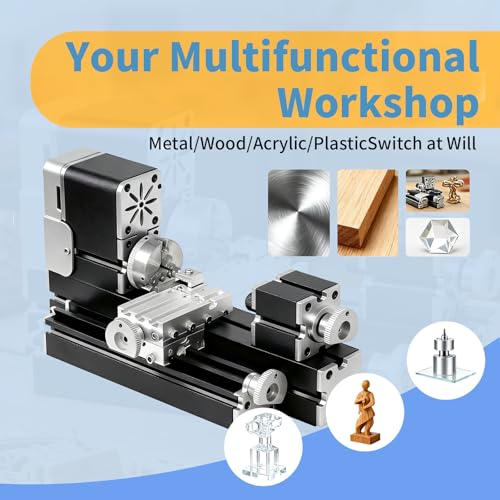
| ZHRUI Mini Metal Lathe 20000 RPM | N/A | N/A | N/A | 20000 | Metal, Wood, Acrylic |
| WEN Mini Benchtop Wood Lathe | 8″ | 13″ | N/A | 3200 | Wood |
| VEVOR 7″ x 14″ Metal Lathe | 7.09″ | 13.78″ | 0.55 | 2500 | Metal |
| Garvee 14″ x 40″ Wood Lathe | 14″ | 40″ | 0.4 | 2980 | Wood |
| ZHRUI Mini Metal Lathe 4-Axis | N/A | 150mm | N/A | 20000 | Wood, Soft Metals |
| AcmeFlare All-Metal Mini Lathe | N/A | 150mm | 0.036 | 20000 | Wood, Soft Metals |
| VEVOR Mini Wood Lathe 96W | N/A | N/A | N/A | 8500 | Wood |
Frequently Asked Questions
What lathe size is best for a beginner?
A smaller lathe with around 8-10 inches of swing over bed and 13-18 inches between centers is ideal for learning. These are more affordable and less intimidating, allowing you to develop skills without a huge initial investment.
Are mini lathes suitable for metalworking?
While some mini lathes can handle soft metals like aluminum or brass, they generally lack the power and rigidity for serious metalwork. For dedicated metal projects, I recommend looking at a best mini metal lathe choices designed specifically for that purpose.
What’s the difference between belt-drive and direct-drive lathes?
Belt-drive lathes are more common and affordable, but can experience some slippage and less precise speed control. Direct-drive systems offer greater accuracy and power transfer, though they come at a higher price point and are often found on more professional models.
How important is the material the lathe bed is made from?
A cast iron or all-metal bed is significantly better than plastic or lightweight composite materials. These heavier materials dampen vibration, improving accuracy and the quality of your finished projects – this is vital for precision work.
What accessories should I expect to come with a small lathe?
Most small lathes include basic tools like a faceplate, chuck, and a few cutting tools. However, you’ll likely need to purchase additional accessories like a following rest, live center, and various cutting tool sets to expand your capabilities.
The Bottom Line
Choosing a small lathe always comes down to balancing control and convenience against price. You can spend a little and get a machine that’s good for basic hobby work, or invest more for increased rigidity, power, and capacity. For the best overall experience, particularly if you’re serious about turning, I recommend the UOKRR 10″ x 18″ Wood Lathe. It strikes a good balance between features, capacity, and positive owner feedback, making it a solid choice for a wide range of projects.
If you have very specific needs, there are excellent alternatives. For those on a tight budget, the WEN Mini Benchtop Wood Lathe is a capable starter machine. If you’re focused on metalwork, take a look at the VEVOR 7″ x 14″ Metal Lathe, or explore our top-rated mini metal lathes for more robust options. And for those wanting a versatile machine that can handle both wood and softer metals, the AcmeFlare All-Metal Mini Lathe is a good contender.
Ultimately, remember that specifications tell only part of the story. More important than any single feature is a stable, well-built machine that minimizes vibration and allows for precise control. Don’t get lost in the details; focus on finding a lathe that feels solid, has a powerful enough motor for your intended projects, and has a reputation for reliability among owners.
