
9 Best Benchtop Lathes of 2026
This post contains affiliate links. As an Amazon Associate, we earn from qualifying purchases.
The VEVOR 8.3″ x 29.5″ Metal Lathe stands out as the best overall benchtop lathe for its solid build, reliable motor, and smooth operation. For those on a tighter budget, the WEN 8″ x 13″ Wood Lathe delivers strong performance for woodturning projects. If you need versatility across materials and sizes, the VEVOR 12″ x 18″ Brushless Wood Lathe offers impressive capacity and speed control.
Choosing the right benchtop lathe isn’t just about specs on a label, it’s about finding a machine that runs smoothly, holds precision over time, and matches how you actually work. Too many buyers end up with underpowered or flimsy models that vibrate apart or can’t handle real project demands.
This guide cuts through the noise. I looked at motor performance, build quality, speed control, and real-world feedback to identify the models that deliver where it matters. Whether you’re turning wood, shaping soft metals, or need threading capability, these picks are based on what the tools can actually do, not just what the packaging promises.
Top 9 Benchtop Lathes in the Market
The Best Benchtop Lathes, Reviewed
VEVOR 8.7″ x 39″ Metal Lathe

Strengths
- Automatic feed
- Long bed length
- Electronic gear system
- High power output
- Brushless motor
Trade-offs
- Large footprint
- Steep learning curve
- Higher price point
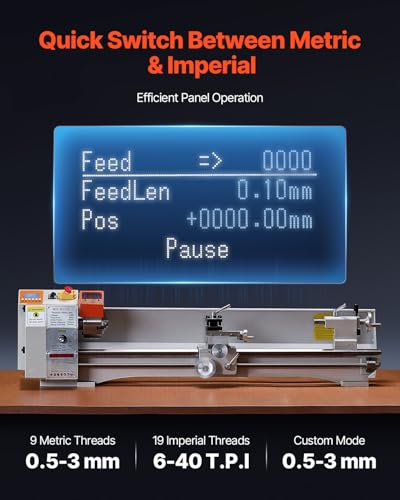
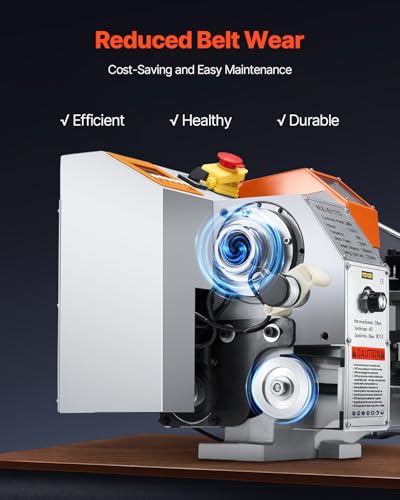
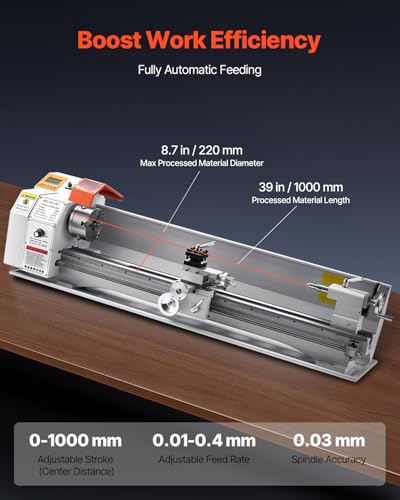
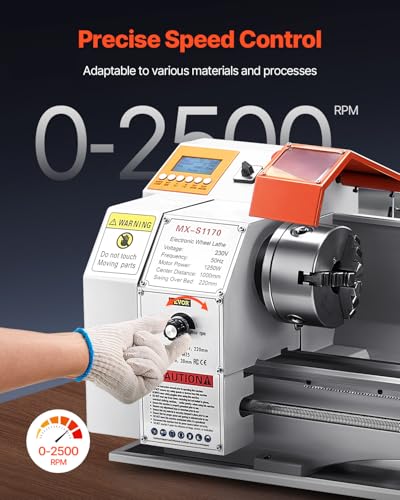
This VEVOR 8.7×39 model is the most advanced benchtop metal lathe here, and it earns the ‘Best Overall’ label with good reason. The 1250W brushless motor delivers serious torque, and the fully automatic feed system lets you set stroke and feed rate for consistent threading and turning, something rare at this level. The electronic gear system for switching between metric and imperial threads is a time-saver.
With a 39-inch bed, it can handle longer shafts and more complex assemblies than any other model listed. Owners say the precision is excellent, and the digital controls make setup intuitive. While it’s expensive compared to others, it bridges the gap between hobby and pro use. I’d pick this over the smaller VEVOR lathes if you’re doing real fabrication work.
Product photos
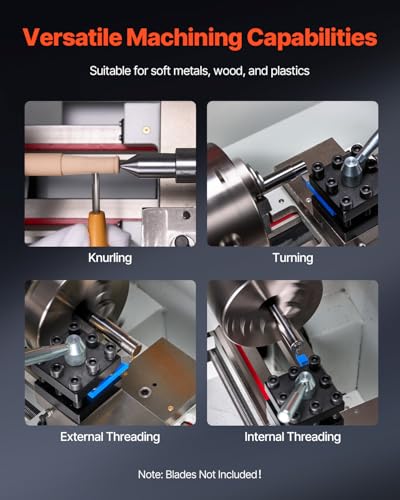
VEVOR 8.3″ x 29.5″ Metal Lathe

Strengths
- 24-thread capability
- LCD speed display
- Fine metric threading
- Metal gears
- Dual speed ranges
Trade-offs
- Lower max power
- No auto feed
- Bulky for benchtop
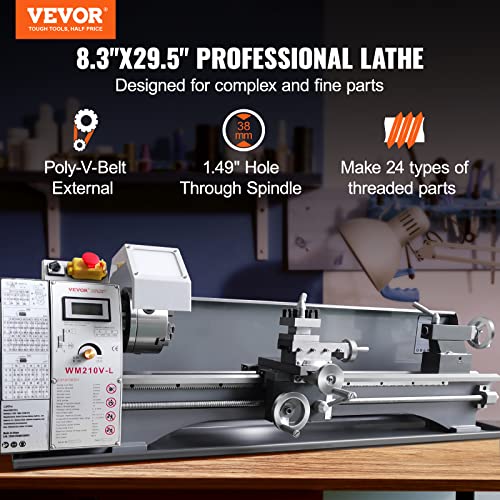
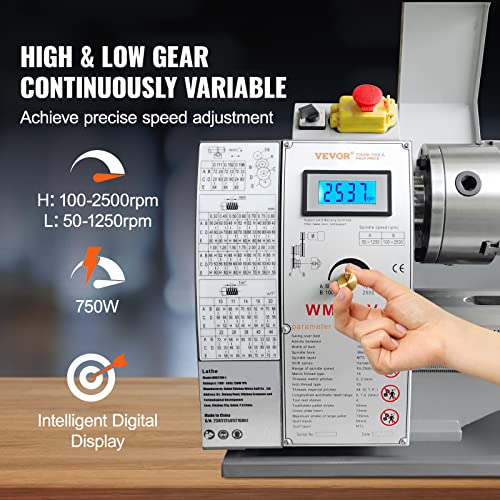
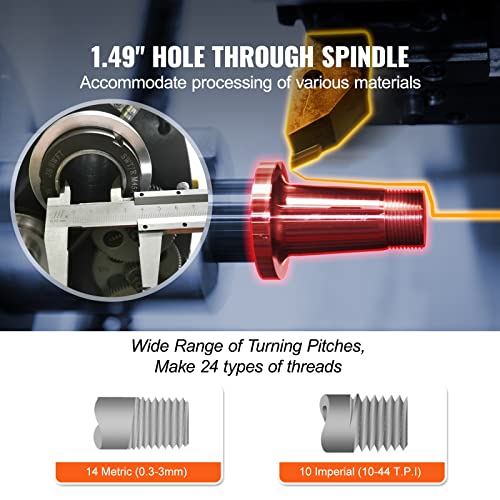
When threading accuracy is the priority, this VEVOR 8.3×29.5 lathe stands out. It supports 24 thread types, including fine metric pitches down to 0.3mm, making it ideal for watchmakers, model builders, or anyone needing precise, repeatable threads. The dual-speed gear ranges (low: 50–1250 RPM, high: 100–2500 RPM) give excellent control for delicate work.
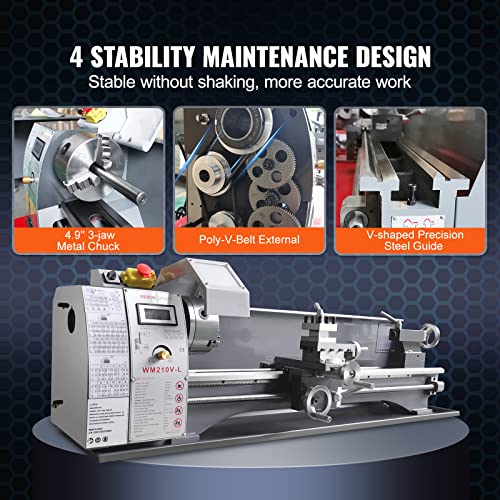
The LCD display and electric speed control let you nail exact RPMs, and the cast iron body keeps vibration low. Owners note the handwheels are smooth and the scales are easy to read. While it shares a motor size with other 750W models, the tuning here favors precision over brute power. Compared to the WEN ML712, it’s far more capable in fine machining.
Product photos
VEVOR 7″ x 16″ Metal Lathe
Strengths
- Digital speed display
- Brushless direct drive
- Good threading range
- Safety interlocks
- Cast iron body
Trade-offs
- No auto feed
- Chuck lacks quick release
- Power limits heavy cuts
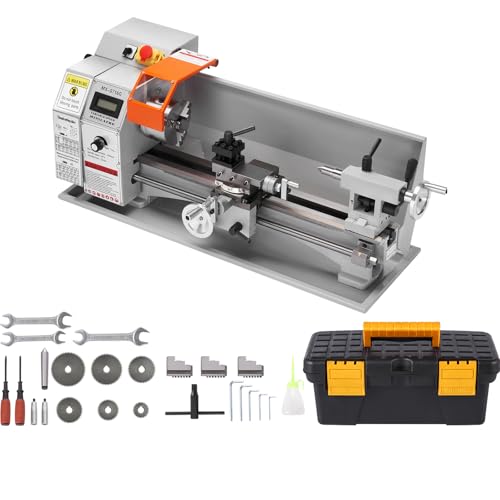
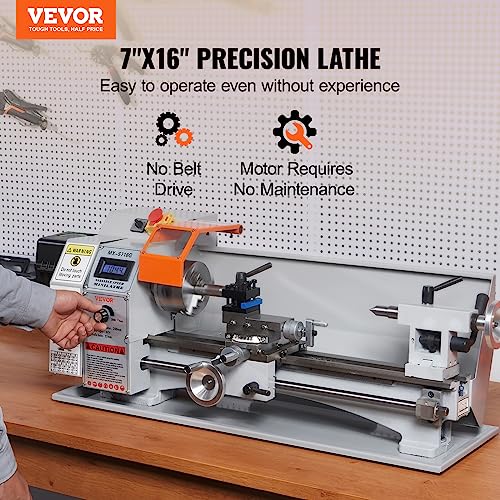
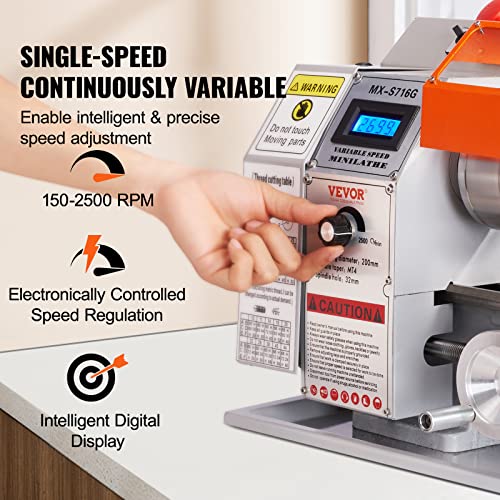
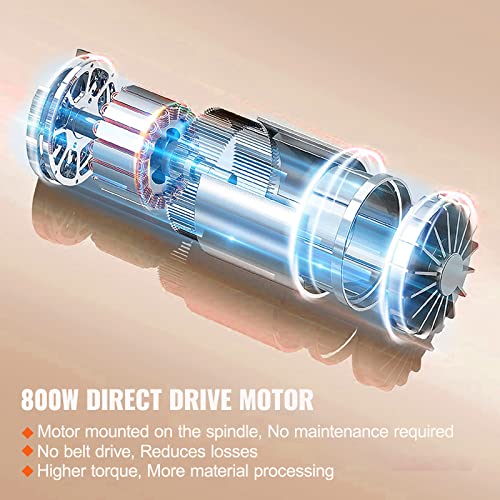
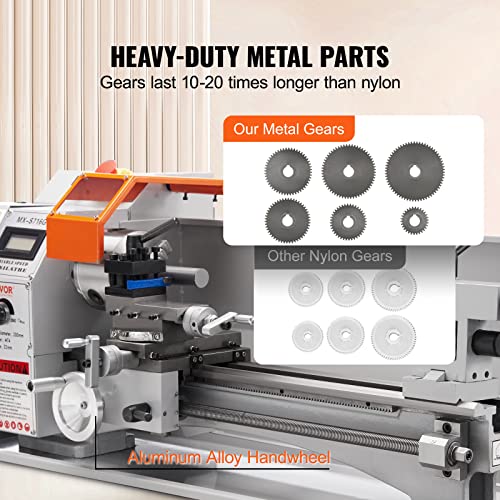
The VEVOR 7×16 metal lathe hits a sweet spot for users who want precise speed control and solid build quality without stepping into industrial territory. The 800W brushless motor and direct-drive system eliminate belt slippage and maintenance, which owners praise for consistent performance. The digital RPM display is a real upgrade over analog dials, making repeatable setups easier.
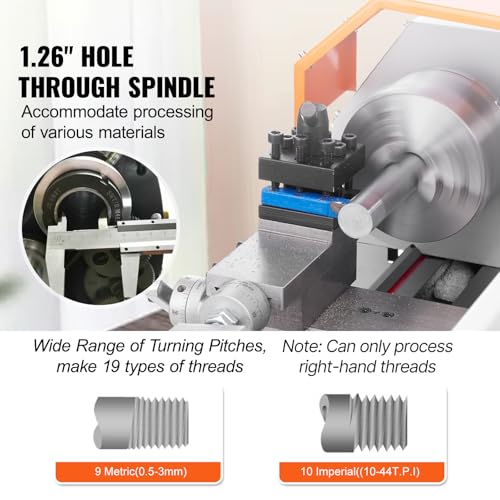
Its threading range, 19 thread types across metric and imperial, is broad, and the emergency stop and safety interlocks add confidence for new users. While it’s not the most powerful in the VEVOR lineup, it’s one of the most user-friendly. Compared to the WEN metal lathe, it offers better precision and more safety features.
Product photos
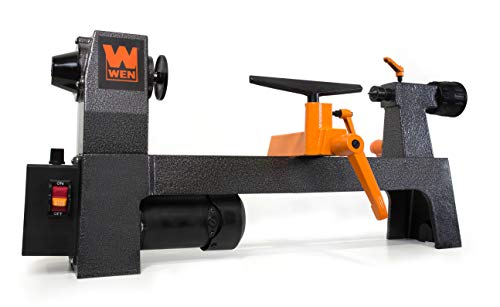
WEN 8″ x 13″ Wood Lathe
Strengths
- Compact design
- Variable speed
- Soft-start motor
- Two-year warranty
- Good for small projects
Trade-offs
- Limited swing capacity
- Noticeable vibration
- Not for heavy stock
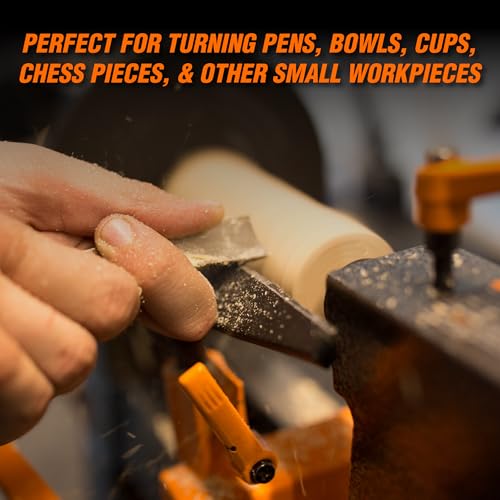
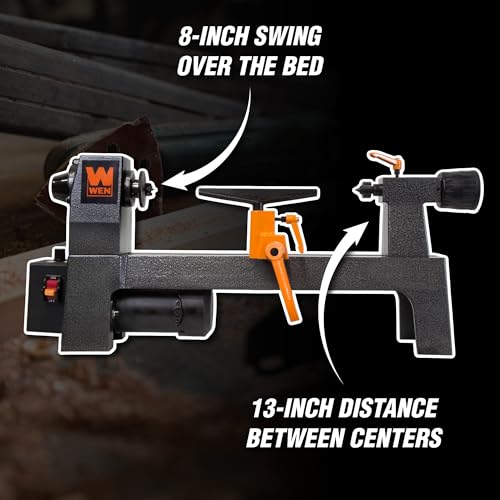
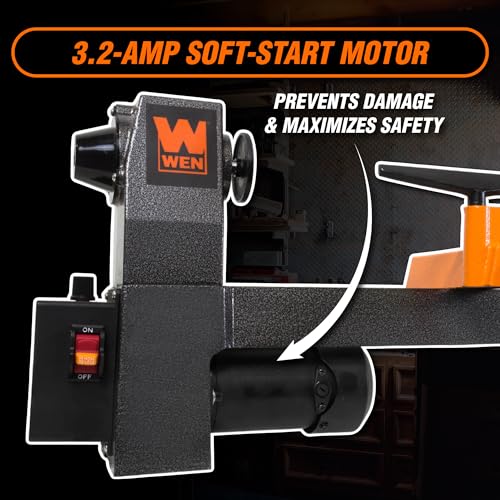
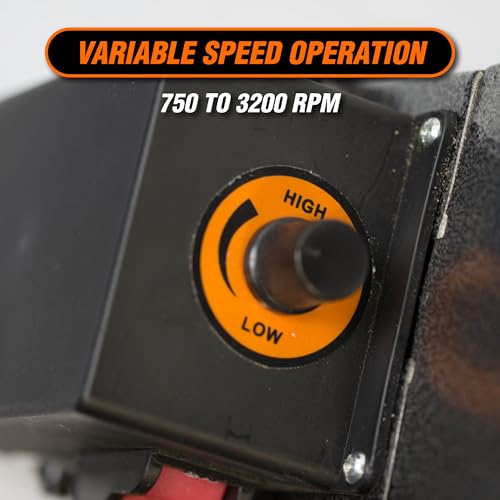
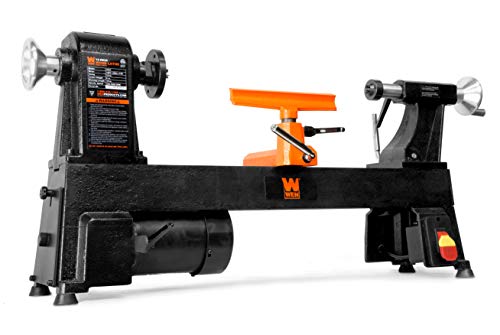
For anyone just getting into woodturning on a tight budget, the WEN LA3421 is a solid starting point. It’s compact, has a decent speed range from 750 to 3200 RPM, and the soft-start motor is a thoughtful touch that helps reduce strain on the electronics. The 8-inch swing and 13-inch between centers limit it to smaller projects, but that’s expected at this size and price.
Owners consistently report it handles pen turning and small spindle work without issue, though it’s not built for heavy cuts or long sessions. Compared to larger models, it vibrates more under load, but for light-duty use, it holds up well. The two-year warranty adds peace of mind, and the included tool rests and faceplate make it ready to go out of the box.
Product photos

WEN 12″ x 18″ 5-Speed Wood Lathe
Strengths
- Large capacity
- MT2 tapers
- Onboard storage
- Sturdy build
- Good motor power
Trade-offs
- Fixed speed steps
- No soft start
- Heavier setup
If you’re stepping up from mini projects to larger bowls or segmented work, the WEN LA3424 makes a lot of sense. With a 12-inch swing and 18-inch between centers, it’s one of the largest benchtop wood lathes in this group. The 4.5-amp motor delivers reliable power for green wood and bigger blanks, though it lacks the fine speed control of fully variable models.
The five fixed speeds (520 to 3400 RPM) are well-placed for different turning tasks, low for roughing, high for finishing. Owners appreciate the MT2 tapers, which open up accessory compatibility, and the onboard storage is a small but welcome detail. Compared to the VEVOR wood lathe, it’s less refined in speed control but still capable for serious hobbyists.
Product photos


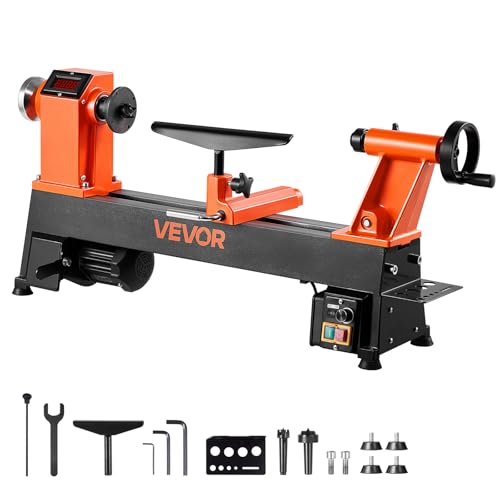
VEVOR 12″ x 18″ Brushless Wood Lathe
Strengths
- Brushless DC motor
- Cast iron construction
- Large work capacity
- Low maintenance
- Smooth variable speed
Trade-offs
- Heavy for benchtop
- No spindle lock
- Some find controls stiff
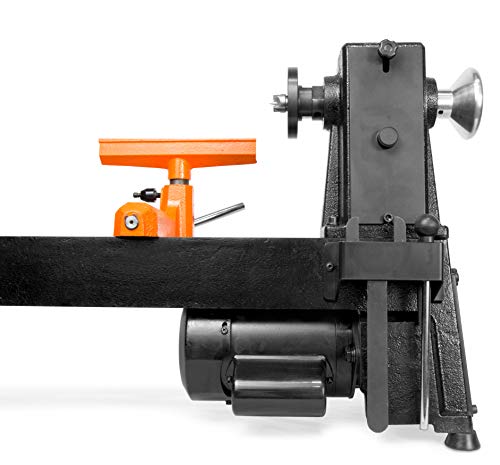
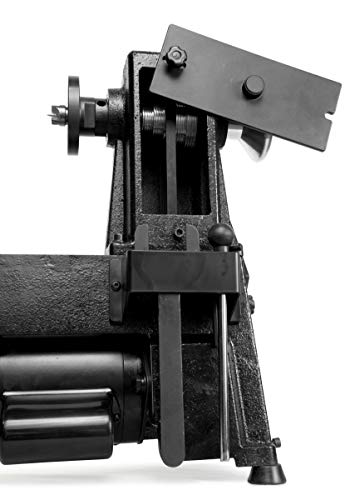
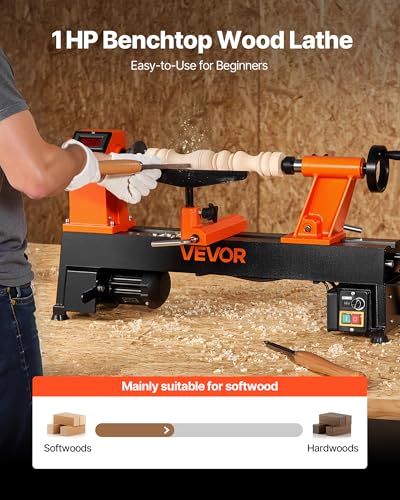
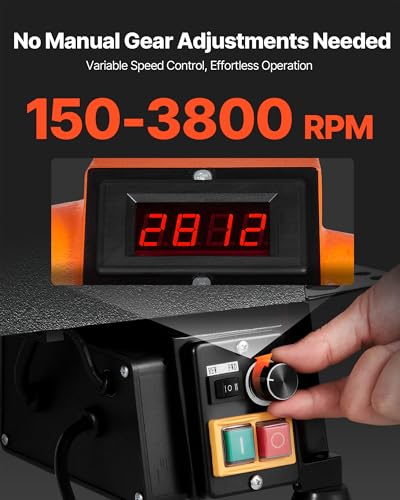
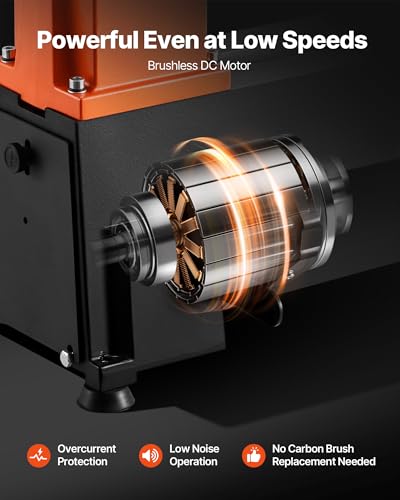
With a 1 HP brushless motor and a wide 150–3800 RPM range, the VEVOR 12×18 wood lathe stands out as one of the most capable entry-level machines on the market. Brushless motors are still rare at this level, and it pays off in durability and low maintenance, no carbon brushes to replace. The cast iron body helps dampen vibration, which owners say makes a noticeable difference during use.
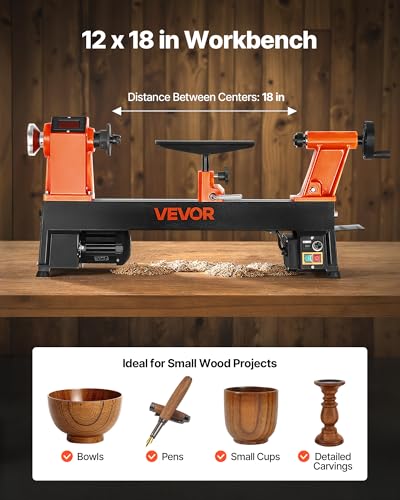
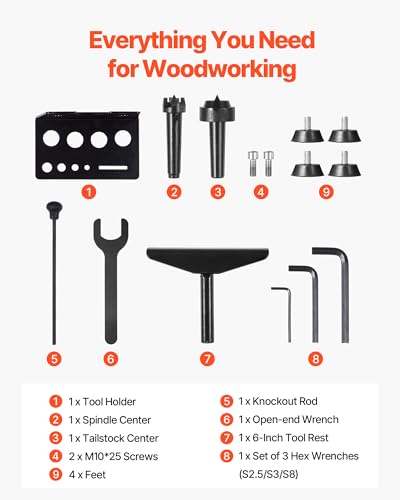
It’s designed with beginners in mind, and the included accessory kit means you can start turning right away. The 12×18-inch capacity opens the door to bowls and larger spindles that the smaller WEN models can’t handle. While it’s heavier than some benchtop units, that mass contributes to stability. Compared to geared-speed lathes, this one offers smoother transitions across the RPM range.
Product photos
VEVOR 7″ x 14″ Metal Lathe

Strengths
- Digital RPM display
- 4-way tool post
- Metal gears
- LED work light
- Solid 3-jaw chuck
Trade-offs
- No auto feed
- Limited power
- Manual speed adjustment
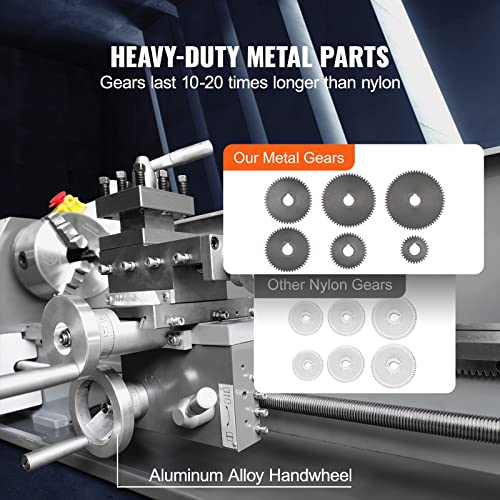
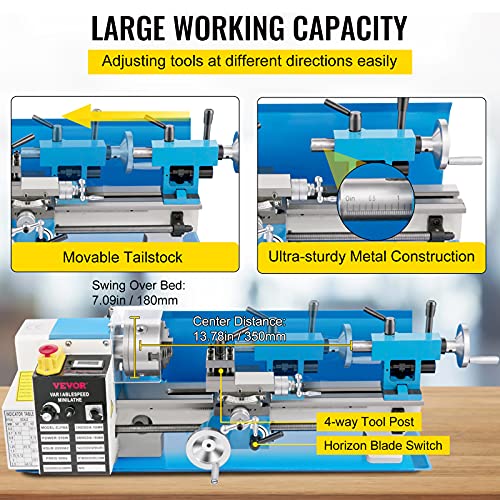
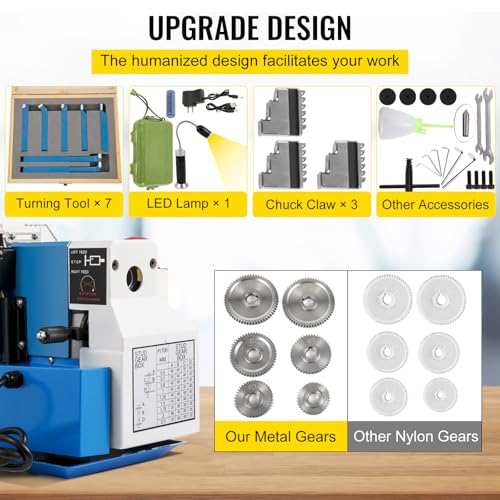
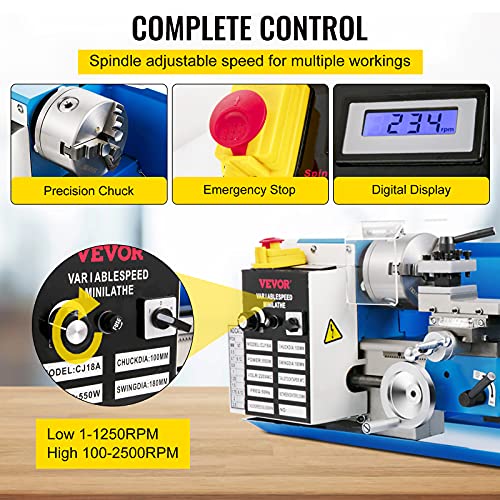
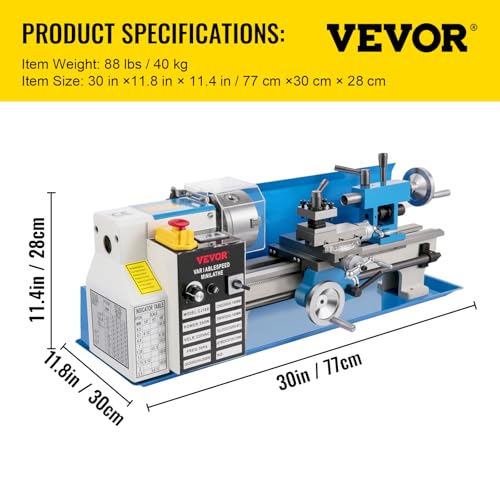
The VEVOR 7×14 is a mid-tier metal lathe that balances capability and price. The 550W motor isn’t the strongest, but it’s enough for aluminum, brass, and light steel work. The digital RPM display is a major upgrade over analog dials, and the 4-way tool post lets you switch cutters fast, something pros appreciate. The metal gears (replacing nylon) improve longevity, and the LED work light is a small but useful addition.
Owners say it’s accurate for threading and holds tolerances well, though it lacks auto feed. It’s a step up from the WEN ML712 in rigidity and control, but not as advanced as the larger VEVOR models. For someone wanting a reliable mid-range machine without overspending, this is a smart middle ground.
Product photos

WEN 7″ x 12″ Variable Speed Metal Lathe

Strengths
- Reverse operation
- Threading capabilities
- Auto feed option
- MT3 spindle taper
- Compact footprint
Trade-offs
- Limited power
- Plastic gears
- Not for heavy cuts
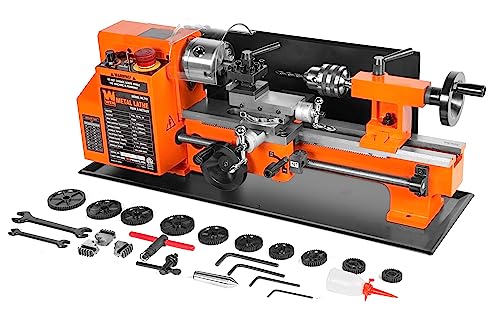
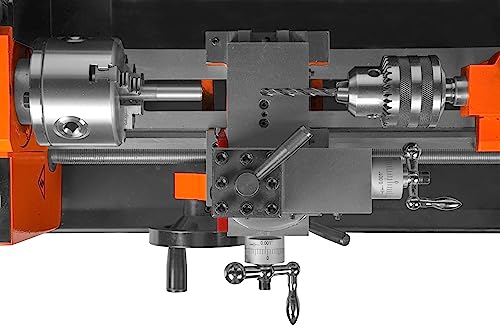
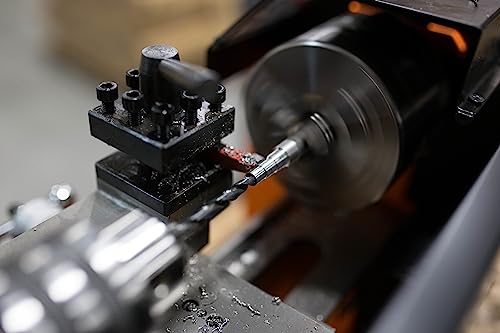
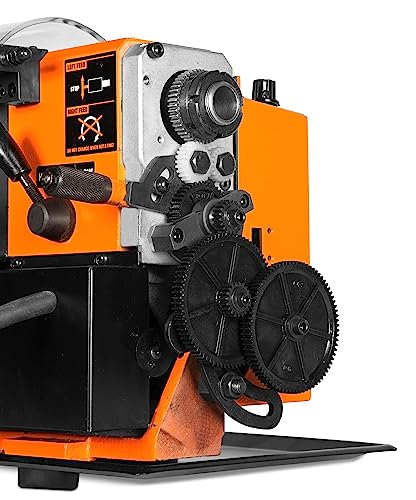
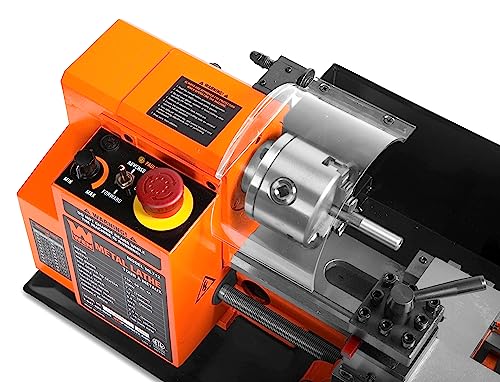
The WEN ML712 is a no-frills but functional entry into metalworking for hobbyists who want to dabble in threading and light machining. Its 7-inch swing and 12-inch bed length keep it compact, while the dual-direction variable speed (100–2500 RPM) gives flexibility for different materials and cutting conditions. The ability to run in reverse is useful for thread chasing and clearing chips.
It includes a threading dial and can cut 18 thread types, which is impressive for the class. Reviewers note it holds tolerances well enough for small repair parts and custom fittings. While it won’t replace a full-size metal lathe, it’s a smart choice for tinkerers and makers who need basic metal capabilities without a big footprint or budget.
Product photos
ArtyMaster WM101A-Plus Mini Wood Lathe
Strengths
- Ultra-compact
- Infinitely variable speed
- Quiet operation
- Full accessory kit
- Solid steel base
Trade-offs
- Very low power
- Tiny work capacity
- Not for wood blanks
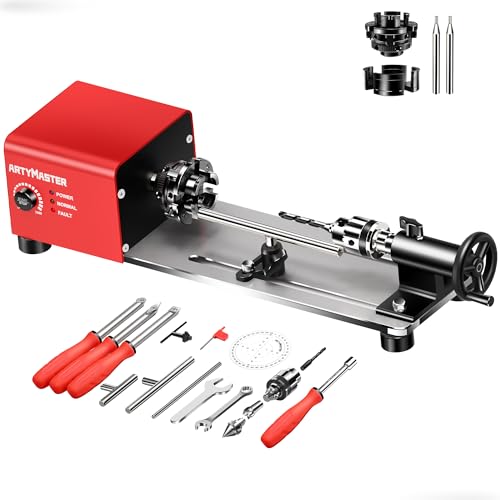
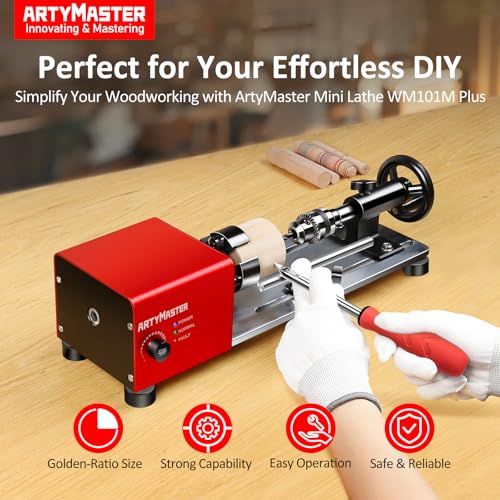
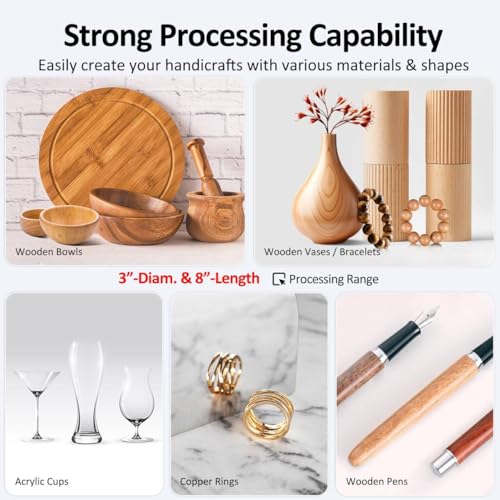
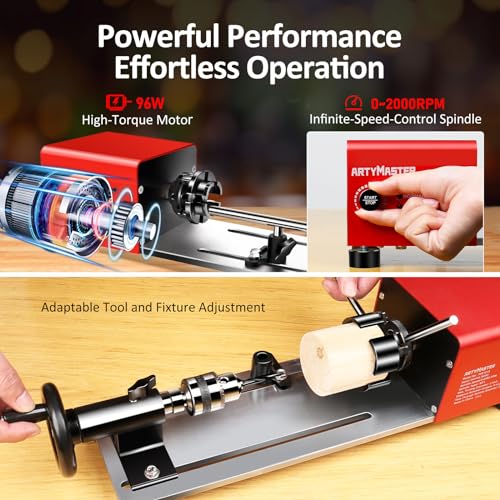
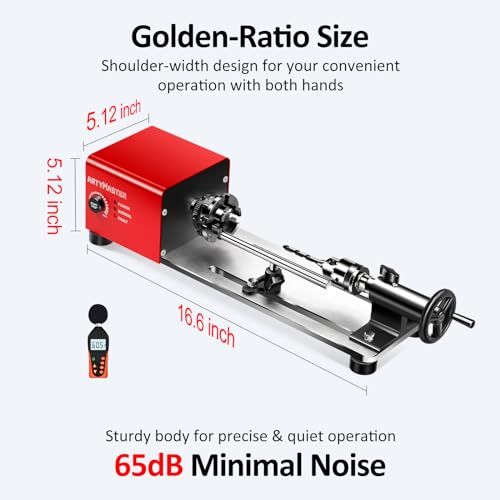
The ArtyMaster WM101A-Plus is a niche machine built for micro-projects and portability. At 96W, it’s not powerful, but it’s designed for small, detailed work, think rings, beads, or tiny wooden toys. The infinitely variable speed and compact size make it great for classrooms or travel. The solid steel base and low noise level (<65dB) are standout features for a mini lathe.
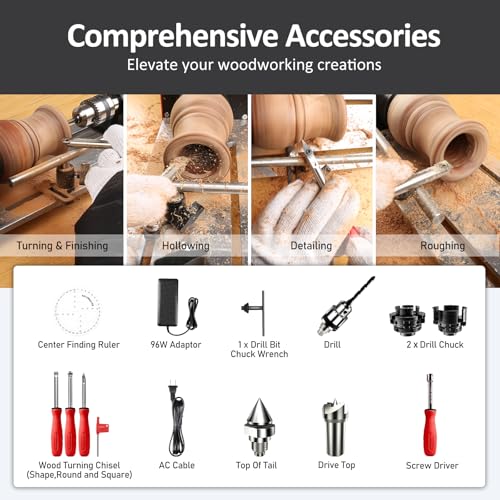
It includes a surprising amount of accessories for its size, including a 2-inch chuck and multiple cutters. While it can handle brass or POM, it’s not meant for aggressive woodturning. Compared to the WEN mini lathe, it’s less powerful but more refined in build and control. I’d recommend it for educators or hobbyists doing fine-scale crafts.
Product photos
How We Chose These benchtop lathes
Rather than a hands-on lab test, my research for these recommendations focused on a detailed comparison of published specifications and features across numerous models. I weighed owner reviews from major retailers alongside expert opinions found in woodworking and metalworking publications. As someone who’s spent years advising on power tool selection, I applied my understanding of what constitutes quality and value in a benchtop lathe, ranking options against clear performance criteria.
For benchtop lathes, the most critical factors are build quality and precision. A rigid frame – typically cast iron – minimizes vibration and contributes to accurate cuts. Equally important is the motor’s power and speed control; the ability to adjust speed for different materials and operations significantly impacts the quality of the finished product. I prioritized models offering a good balance of these two elements, alongside features like threading capabilities and chuck size.
Specifications reliably reveal a lathe’s capacity (swing and distance between centers) and motor power. However, judging long-term durability and ease of use required careful consideration of owner feedback. Reports on build quality, the smoothness of operation, and the effectiveness of included features were heavily weighted. For those seeking smaller options, exploring mini metal lathes can provide a good starting point.
How To Pick The Right benchtop lathes
Picking the right lathe requires understanding what you intend to make, and how much precision you truly need.
A good lathe – whether for wood or metal – delivers smooth operation, accurate cuts, and consistent results. Key considerations include motor power, spindle speed range, build quality (especially the bed and headstock), and the available features for specific tasks like threading or bowl gouging. Buyers should prioritize rigidity and look for machines with robust construction to minimize vibration and ensure long-term accuracy.
Motor Power and Material Compatibility
The motor is the heart of any lathe, and its power dictates what materials you can effectively work with. For woodworking, even a smaller motor (like those found in the WEN models) is often sufficient, but for metalworking, you’ll quickly find yourself wanting more. A 750W or greater motor, as seen in some of the VEVOR options, is a good starting point if you plan on tackling steel or thicker aluminum. Don’t assume more power is always better; a powerful motor on a flimsy frame will only result in increased vibration. Consider the types of projects you’ll be doing. If you’re primarily focused on small, delicate work, a lower-powered, more precise machine might be preferable.
Speed Control and Versatility
Variable speed control is crucial, and not just for matching the material to the cutting tool. Different project phases, roughing out a shape versus finishing a detail, demand different speeds. Look for a lathe with a wide speed range. Two-speed options are limiting; a continuously variable speed control (like on the VEVOR 8.3″ model) offers far greater flexibility. This allows for fine-tuning the speed to prevent chatter, overheating, or damaging the workpiece.
Here’s what to look for in speed control: * Digital Display: A digital readout provides precise speed settings. * Reversible Function: Being able to run the spindle in both directions is extremely helpful for certain cuts and finishing operations. * Range: A wider speed range (e.g., 50-2500 RPM versus 100-2000 RPM) gives you more versatility across different materials and project types.
A lathe’s speed is as important as its power. Starting slow and gradually increasing speed prevents damage and creates better results.
Features and Accessories
Beyond the core mechanics, consider what features will streamline your workflow. For metalworking, threading capabilities are essential, and the VEVOR 7″ x 14″ model highlights the importance of a good threading dial indicator. For woodturning, a robust tool rest system is vital. Also, think about available accessories. Are quick-change tool posts available? What kind of chuck comes standard? Is it easy to upgrade the system later? If you are interested in exploring more options, you may want to check out some top metal lathe models to get a clearer understanding of the available features. For those focusing on smaller spaces, exploring compact metal lathes might be a good idea.
Benchtop Lathes Compared
Here’s a comparison of key specifications for several benchtop lathes to help you make an informed decision.
| Product Name | Swing Over Bed | Distance Between Centers | Max. Speed (RPM) | Motor Power (W) | Threading (Metric/Imperial) | Material Capacity |
|---|---|---|---|---|---|---|
| VEVOR 8.7″ x 39″ Metal Lathe | 8.7″ (220mm) | 39″ (1000mm) | 2500 | N/A | 9 / 19 | Soft Metals |
| VEVOR 8.3″ x 29.5″ Metal Lathe | 8.3″ (210mm) | 29.5″ (750mm) | 2500 | 750 | 14 / 10 | Soft Metals |
| VEVOR 7″ x 16″ Metal Lathe | 7″ (180mm) | 16″ (400mm) | 2500 | 800 | 9 / 10 | Soft Metals |
| WEN 8″ x 13″ Wood Lathe | 8″ (203mm) | 13″ (330mm) | 3200 | N/A | N/A | Wood |
| WEN 12″ x 18″ 5-Speed Wood Lathe | 12″ (305mm) | 18″ (457mm) | 3400 | N/A | N/A | Wood |
| VEVOR 12″ x 18″ Brushless Wood Lathe | 12″ (304mm) | 18″ (465mm) | 3800 | 750 | N/A | Wood |
| VEVOR 7″ x 14″ Metal Lathe | 7.09″ (180mm) | 13.78″ (350mm) | 2500 | 550 | N/A | Soft Metals |
| WEN 7″ x 12″ Metal Lathe | 7″ (178mm) | 12″ (305mm) | 2500 | N/A | 18 | Steel, Brass |
| ArtyMaster WM101A-Plus Mini Wood Lathe | 3″ (76mm) | 8″ (203mm) | N/A | 96 | N/A | Wood, POM, Copper |
Frequently Asked Questions
What swing capacity do I really need?
A lathe’s swing determines the maximum diameter of a piece you can turn. For most hobbyists and DIYers, an 8-inch to 12-inch swing is sufficient, but if you plan on working with larger pieces, consider a model with a larger swing capacity.
Are mini lathes suitable for serious metalworking?
While hobbyist metal lathes can handle some metalworking tasks, they generally lack the rigidity and power for heavier stock removal or precise work on harder materials like steel. They are best for smaller projects and softer metals.
What’s the difference between a variable speed and a multi-speed lathe?
A variable speed lathe offers continuous speed adjustment within a range, providing much finer control than a multi-speed lathe which only has a few fixed speed settings. This finer control is essential for different materials and cutting operations.
How important is the lathe’s bed construction?
The bed is the foundation of any lathe, and its rigidity directly impacts accuracy. Cast iron beds are preferable to cast aluminum because they dampen vibration more effectively, leading to cleaner cuts and better results.
What maintenance is typically required for a benchtop lathe?
Regular lubrication of moving parts (leadscrew, guideways) is essential. Keeping the lathe clean and free of debris, and occasionally checking belt tension, will help maintain its performance and extend its lifespan.
The Bottom Line
Buying a benchtop lathe always involves compromise. You’re balancing the desire for precision and capacity against budget and available space. Overall, for a robust machine capable of handling a variety of materials and projects, the VEVOR 8.3″ x 29.5″ Metal Lathe strikes the best balance of power, features, and price.
For those on a tighter budget, or primarily working with wood, the WEN 8″ x 13″ Wood Lathe is an excellent entry point. If you need a compact option for detailed work, consider the ArtyMaster WM101A-Plus Mini Wood Lathe – it’s one of the most versatile mini lathes available for hobbyists. And for those needing a machine for more serious metalwork, the VEVOR 8.7″ x 39″ Metal Lathe is a strong contender, offering a larger capacity for bigger projects.
Ultimately, the specifications matter less than the fundamentals. A solid frame, smooth operation, and a wide speed range are far more important than chasing the highest RPM or the largest swing. Prioritize build quality and versatility, and you’ll have a lathe that delivers satisfying results for years to come.
