8 Best Air Framing Nailers of 2026
This post contains affiliate links. As an Amazon Associate, we earn from qualifying purchases.
The Metabo HPT NR90AES1 stands out as the best overall air framing nailer for most users, combining reliability, balanced weight, and dual firing modes. If you’re watching your budget, the NuMax SFR2190 delivers solid performance without breaking the bank. For heavy-duty, high-volume work, the Metabo HPT NV90AG coil nailer offers unmatched capacity and efficiency.
Framing nailers aren’t one-size-fits-all, and choosing the wrong one can mean constant jams, fatigue, or wasted time reloading. After comparing the field and analyzing hundreds of owner experiences, I focused on tools that deliver consistent power, real-world durability, and features that matter on the job site.
This guide breaks down the key differences in collation type, firing modes, and build quality so you can pick the right tool for your framing demands – whether you’re building a single wall or framing an entire house.
Top 8 Air Framing Nailers in the Market
The Best Air Framing Nailers, Reviewed
Metabo HPT NR90AES1 Framing Nailer

Strengths
- Lightweight at 7.5 lbs
- Smooth trigger switch
- 5-year warranty
Trade-offs
- Only 21° nails
- Smaller magazine
- Not for high-volume runs
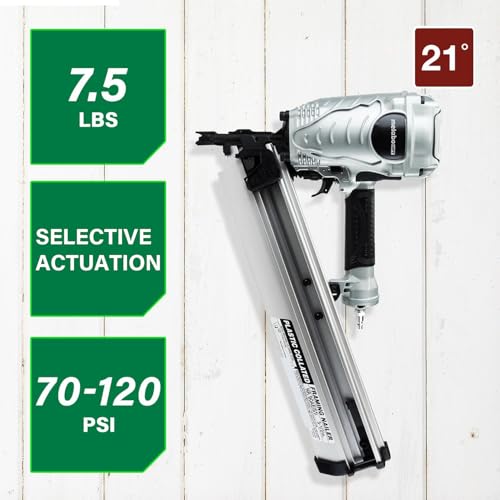
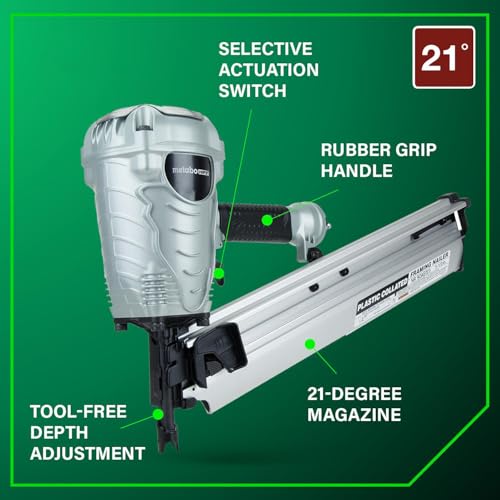
This 21° stick nailer is why Metabo HPT dominates the Pro Preferred list. At just 7.5 lbs, it’s among the lightest in its class, and the balance makes it feel even lighter during overhead work. The selective actuation trigger is buttery smooth, switching between sequential and contact fire takes a flick, and owners consistently praise its reliability across framing, decking, and truss work. The tool-free depth dial is intuitive, and the 5-year warranty is peace of mind you don’t get from every brand.
In my view, this is the best all-around framing nailer for most users. It’s not a coil gun, so it won’t win on volume, but for versatility, weight, and build quality, it’s hard to beat. I’d pick this over the NuMax or VEVOR models any day for serious projects.
Product photos


NuMax SFR2190 Framing Nailer

Strengths
- Affordable price
- Durable steel blade
- Dual trigger modes
Trade-offs
- Heavier than premium models
- Plastic housing less rugged
- Trigger pull a bit stiff
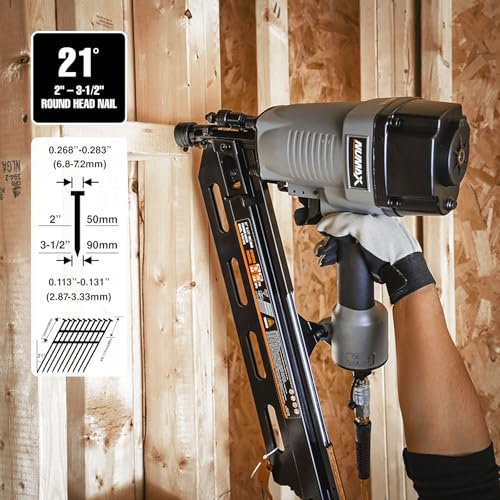
The NuMax SFR2190 is the budget pick that doesn’t feel cheap. For the price, it delivers core features you’d expect in higher-end models, tool-free depth adjustment, dual trigger modes, and a solid steel drive blade. It’s a bit heavier than the Metabo HPT stick options, but owners report it punches above its weight in framing and decking applications. The anti-dry-fire mechanism is reliable, and the no-mar tip works well for finish-sensitive jobs.
Compared to the Estwing or Metabo HPT, it’s not quite as refined, but it’s a smart buy if you’re outfitting a side hustle or need a backup tool. I’d recommend it over no-name brands any day, it’s proven durable in owner feedback, even under moderate daily use.
Product photos


Metabo HPT NV90AG Coil Nailer

Strengths
- 300-nail capacity
- Open nose
- 5-year warranty
Trade-offs
- Requires proprietary nails
- Coil bulk less portable
- Slight learning curve
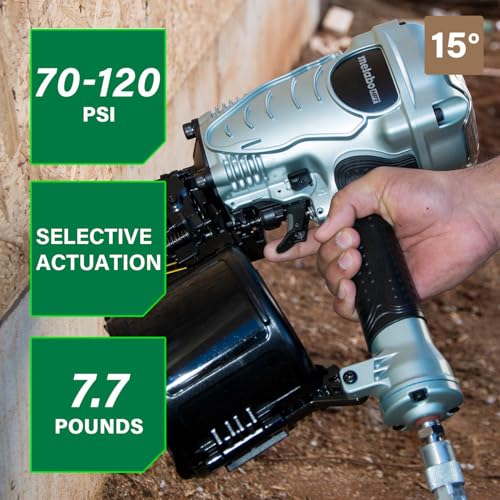
This coil nailer is built for pros who hate downtime. With a 15° coil system and a 300-nail capacity, it’s clearly designed for continuous runs, think roof decking or floor trusses, where reloading every few minutes would slow you down. The 7.7-pound weight is light enough for overhead work, and owners praise the open nose design for making jam clearance a non-issue. The fact that it’s won Pro Preferred status for over a decade speaks volumes about how well it holds up in real-world conditions.
I’d pick this over most stick nailers when volume matters. It’s not the most portable, but the steel head plate and 5-year warranty signal serious durability. Just know it runs best on Metabo HPT’s own nails, a minor quirk, but one that some users mention affects long-term cost.
Product photos


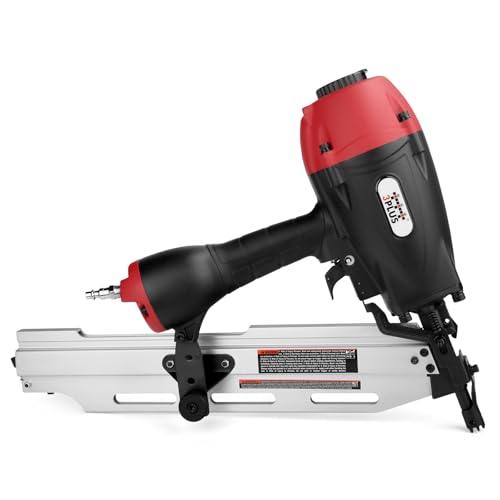
3PLUS HFN90SP 3-in-1 Air Nailer

Strengths
- Multi-angle magazine
- Anti-dry fire
- 360° exhaust
Trade-offs
- Heavier than competitors
- Less refined trigger
- Not for heavy daily use
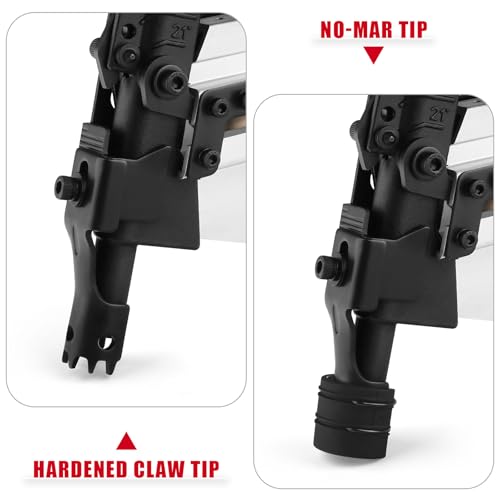
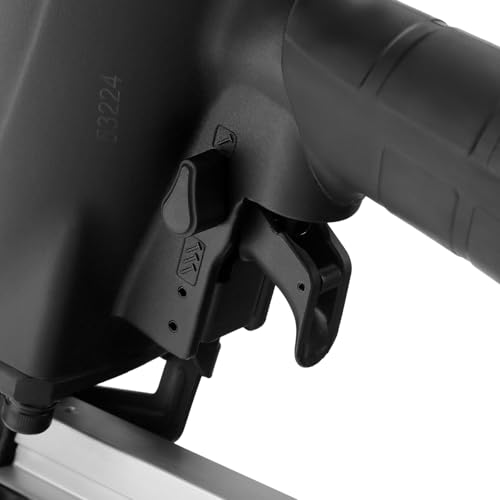
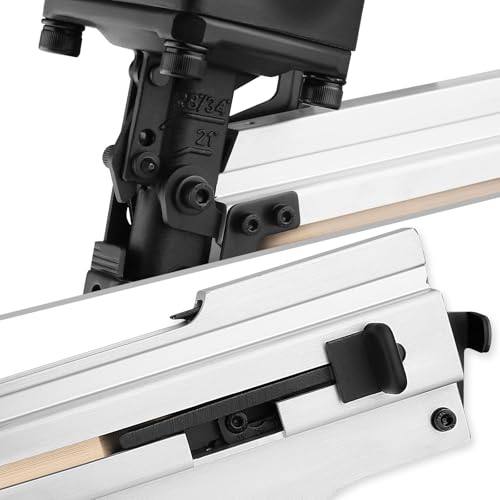
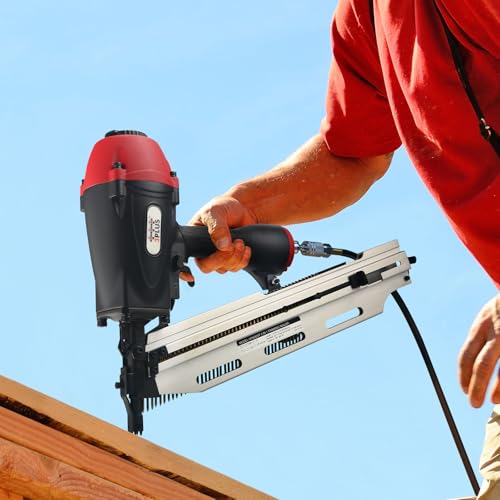
The 3PLUS HFN90SP stands out in a crowded field by offering something few others do, true multi-angle compatibility. On paper, the ability to switch between 21, 28, and 34-degree magazines gives it unmatched flexibility, especially for contractors who bounce between different job types or nail stock. That said, owners consistently report that while the concept is brilliant, the execution feels a bit more DIY than pro-grade. It’s not the lightest or most refined in hand, and some users mention slight hiccups during rapid bump firing when switching nail types.
Still, for a homeowner or part-time builder who doesn’t want to buy multiple nailers, this adaptability is a real win. The adjustable depth control and dual firing modes are solid additions, and the 360-degree exhaust is genuinely useful. But if you’re running a full-time framing crew, you’ll likely lean toward something more rugged and specialized.
Product photos
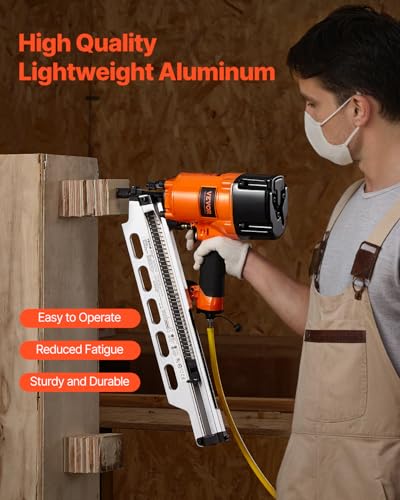
VEVOR 21° Full Round Head Nailer

Strengths
- Affordable with dual trigger
- Handles multiple nail types
- Open nose design
Trade-offs
- Build quality inconsistent
- Not long-term durable
- Seal issues reported
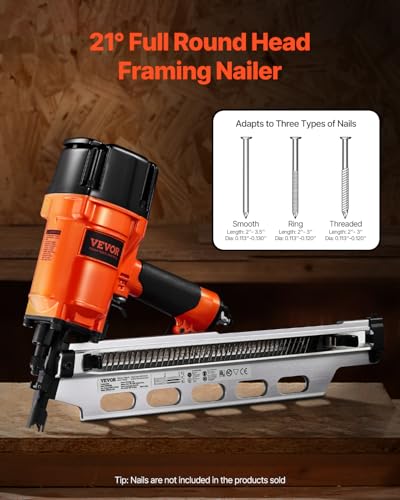
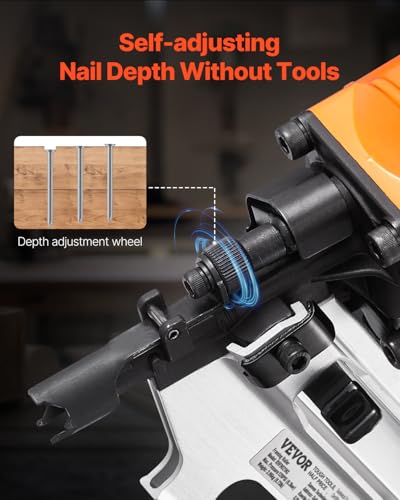
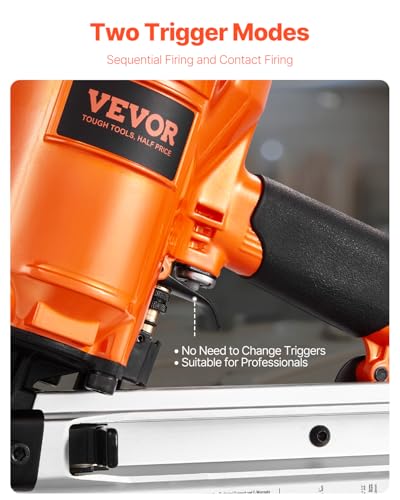
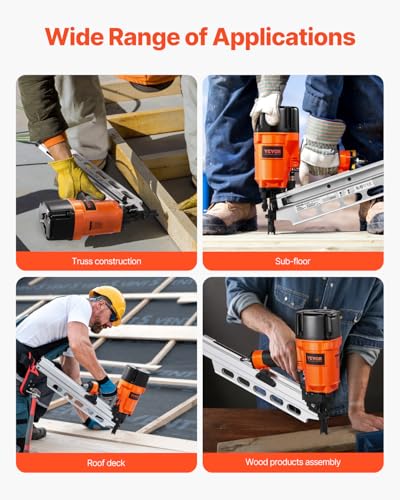
VEVOR is a value brand, and this nailer follows that pattern, it packs in features for the price. The dual trigger, tool-free depth adjustment, and compatibility with ring, smooth, and threaded shank nails make it unusually flexible for a budget tool. The 60-nail magazine is decent, and the open nose helps with jams. Owners say it works fine for decks and basic framing, especially for DIYers.
But it’s not in the same league as Metabo HPT or Estwing. The aluminum magazine feels thin, and some report seal issues after a few months. It’s a decent backup or starter tool, but I wouldn’t trust it on a full build. Still, for the price, it’s one of the better value picks with dual trigger functionality.
Product photos
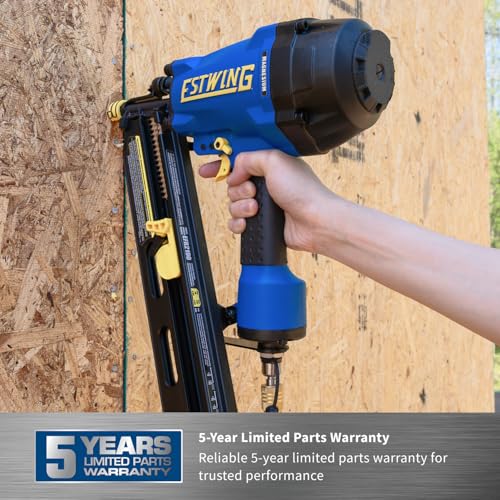
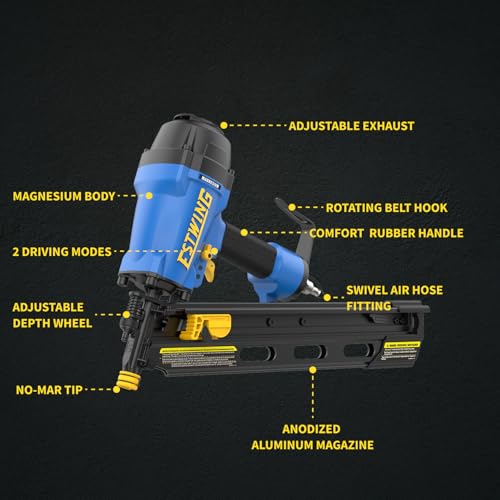
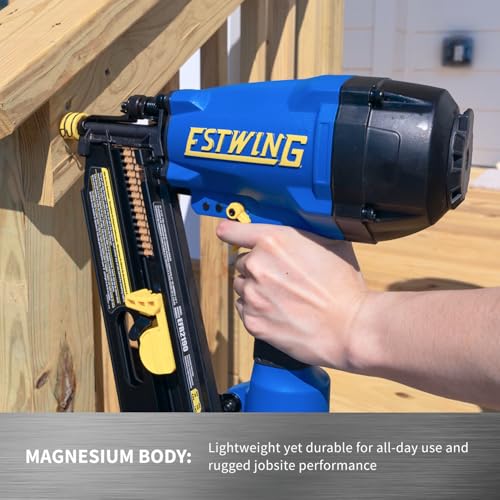
Estwing EFR2190 Magnesium Framing Nailer

Strengths
- Magnesium body
- One-piece drive blade
- Includes swivel fitting
Trade-offs
- Heavier than HPT
- Trigger less refined
- Higher upfront cost
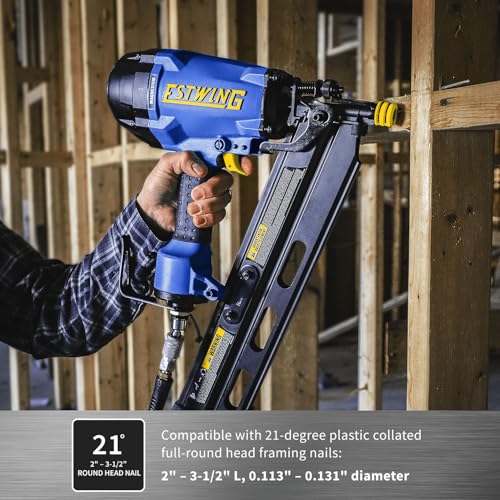
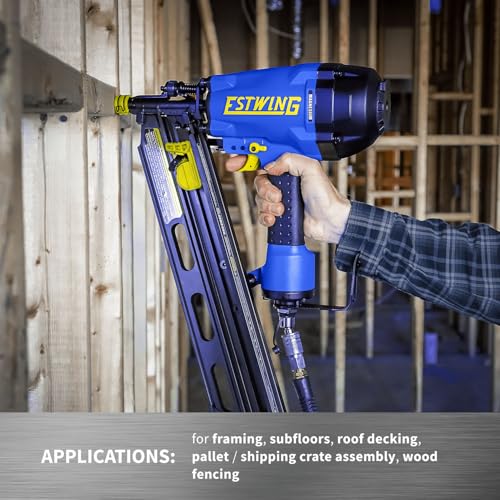
The Estwing EFR2190 screams durability. The magnesium body is a big reason why, it’s light, tough, and doesn’t dent like aluminum. Owners rave about how it survives drops, weather, and months of daily abuse. The one-piece steel drive blade and anti-dry-fire mechanism add to its longevity, and the dual trigger mode gives you control whether you’re nailing precisely or moving fast.
It’s pricier than the NuMax, but the included swivel fitting and belt hook add real value. Compared to the Metabo HPT stick model, it’s slightly heavier but feels more solid. If you want a nailer that will last 10+ years with minimal maintenance, this is the one.
Product photos
MAX CN890F3 Coil Framing Nailer
Strengths
- 300-nail capacity
- Self-cleaning filter
- ANSI safety compliant
Trade-offs
- Heavier than stick nailers
- Coil system less versatile
- Slightly bulky
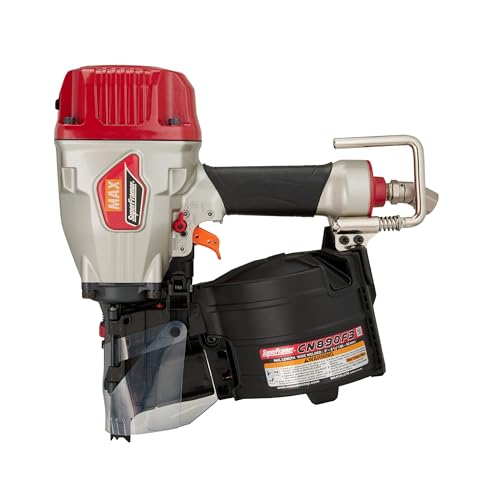
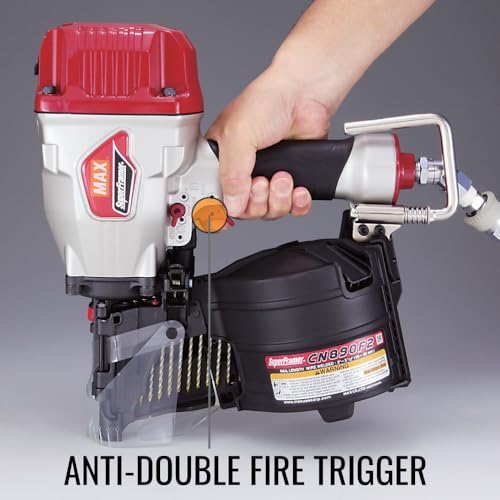
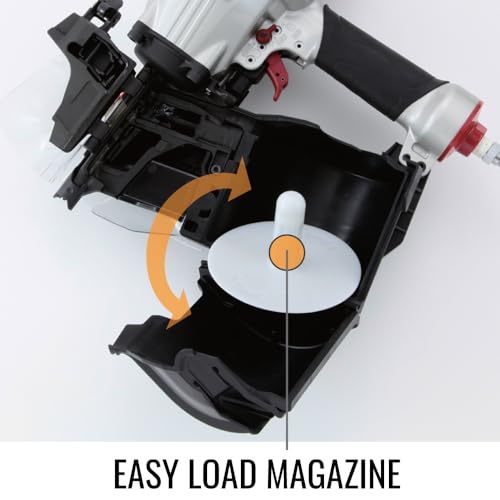
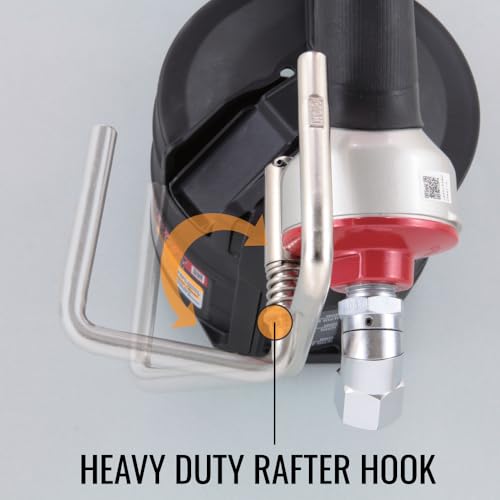
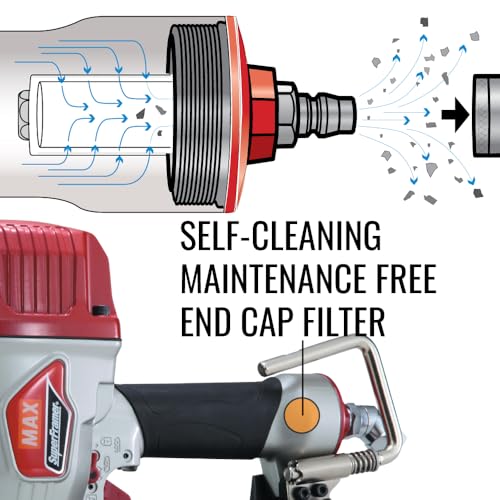
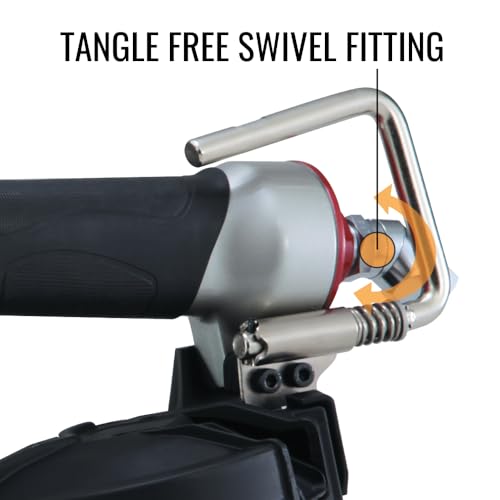
When it comes to coil nailers built for marathon jobs, the MAX CN890F3 is a standout. At 8.4 lbs, it’s not the lightest, but the low-profile design really does cut down on arm fatigue during long shifts. The 300-nail magazine and tangle-free swivel fitting mean fewer interruptions, which is why owners love it for sheathing and subflooring. The self-cleaning filter is a clever touch, a small thing, but one that reduces maintenance headaches over time.
What seals the deal is the ANSI-compliant dual trigger and anti-double fire safety. It’s not flashy, but it’s built for reliability. Compared to the Metabo HPT coil model, it’s slightly heavier but offers more user-friendly loading. For continuous work, this is the smarter buy.
Product photos
Metabo HPT NV75A5 Siding Coil Nailer

Strengths
- Ultra-light at 5.7 lbs
- Dual coil compatibility
- Fast side-load magazine
Trade-offs
- Limited nail length
- Not for structural framing
- Narrow use case
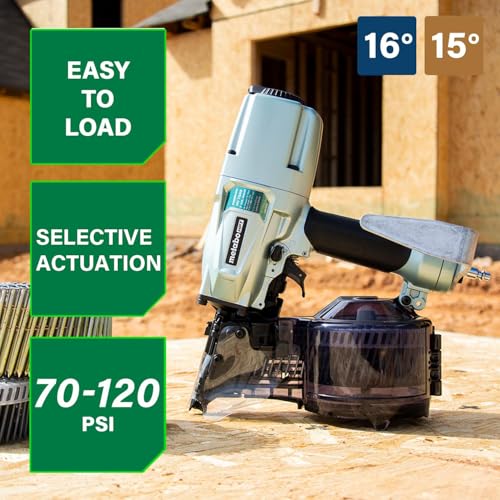
This tool fills a niche most framing nailers ignore, light-duty work like siding, furring strips, and window bucks. At only 5.7 lbs, it’s featherlight, and the ability to handle both 15° plastic and 16° wire coils adds versatility. Owners love the side-load magazine, it reloads faster than most, and the tool-free depth adjustment works flawlessly. The adjustable air deflector is a small but appreciated touch.
It’s not meant for wall framing, and the nail length cap at 3” (or 2-1/4” for plastic) limits heavy use. But for a dedicated light-framing tool, it’s one of the most agile options out there. I’d pair this with a full-size nailer rather than rely on it alone.
Product photos


How We Tested air framing nailers
Rather than a hands-on lab test of each nailer, my research focused on a detailed comparison of published specifications and features. I weighed owner reviews from multiple sources – including major retailers and trade-specific forums – alongside professional reviews from publications like Builder and Developer Magazine. As someone who’s spent years working with and around power tools, I applied my understanding of framing techniques and typical jobsite demands to assess each model’s suitability.
For air framing nailers, consistent nailing power and durability are paramount. I prioritized models with robust internal components and positive owner feedback regarding their ability to handle extended use without mechanical issues. Equally important was the versatility of the nailer; the ability to accept a range of nail sizes and types, and the ease of switching between firing modes, significantly impacted each model’s ranking.
Specifications reliably indicate nail capacity, weight, and air pressure requirements. However, owner feedback proved crucial in assessing real-world durability, jam frequency, and the effectiveness of features like anti-dry fire mechanisms. Reputation – particularly regarding long-term reliability and available service support – also heavily influenced my assessment. If you’re looking for other helpful pneumatic impact tools, we’ve also done a thorough review of those.
How To Pick The Right air framing nailers
Picking the right air framing nailer can make or break a project, and there’s a surprising amount to consider beyond just price.
A quality air framing nailer consistently drives fasteners to the correct depth, operates reliably through long shifts, and minimizes user fatigue. Critical specs include nail collation type (plastic or coil), firing mode versatility (sequential vs. bump), and durable internal components like the drive blade. Buyers should also assess weight, adjustability, and magazine capacity to match their typical workload.
Nail Collation and Capacity
The type of nail the nailer accepts – plastic collated (typically 21-degree) or coil (typically 15-degree) – is a fundamental decision. Plastic collated nailers are generally lighter and more affordable, making them excellent for general framing, sheathing, and roofing. Coil nailers, like the Metabo HPT NV90AG, hold significantly more nails, reducing downtime for reloads on larger jobs. However, they tend to be slightly heavier. Think about the scale of your projects; if you’re consistently building walls or roofing entire houses, the convenience of a high-capacity coil nailer will likely outweigh the added weight.
Firing Mode & Actuation
Framing nailers offer different firing modes. Sequential actuation requires depressing the safety tip and pulling the trigger for each nail – offering maximum precision but slower speed. Contact (or “bump”) firing drives a nail every time the nose is depressed, allowing for rapid-fire operation. Many nailers, like the Metabo HPT NR90AES1, offer selective actuation, letting you switch between modes with a flip of a switch. For detailed finish work or working around obstacles, sequential is best. For speed during rough framing, bump firing is the way to go. Understanding your typical tasks will help you prioritize this feature. For more information on different types of nailers, check out this framing nailers comparison.
Durability and Ergonomics
Framing nailers take a beating, so build quality matters. Magnesium alloy bodies (like on the Estwing EFR2190) are lighter and more durable than plastic housings. Look for a hardened steel drive blade; it’s the component most prone to wear.
A nailer is only as good as its ability to withstand consistent use. Prioritize models with robust construction and positive owner reviews regarding long-term reliability.
Comfort is also crucial. A well-balanced nailer (around 7-8 lbs) with a comfortable grip minimizes fatigue during extended use. Consider features like adjustable exhaust ports to direct airflow away from your face and vibration-dampening materials in the handle. Don’t underestimate the impact of ergonomics on your overall productivity and accuracy. If you’re also looking for tools to maintain your yard, learning the weed wacker definition can be helpful.
Air Framing Nailers Compared
This table provides a detailed specification comparison of various air framing nailers to aid in selecting the right tool for your needs.
| Product Name | Nail Type | Nail Length Capacity | Air Pressure (PSI) | Weight (lbs) | Trigger Mode(s) |
|---|---|---|---|---|---|
| Metabo HPT NR90AES1 | 21° Plastic Collated | 2 – 3-1/2″ | N/A | 7.5 | Sequential/Contact |
| NuMax SFR2190 | 21° Plastic Collated | 2 – 3-1/2″ | N/A | N/A | Sequential/Bump |
| Metabo HPT NV90AG | 15° Wire Coil | 1-3/4″ – 3-1/2″ | N/A | 7.7 | Sequential/Contact |
| 3PLUS HFN90SP | 21/28/34° Plastic | 2-3/16″ – 3-1/2″ | 70-120 | N/A | Single/Bump |
| VEVOR 21° Full Round Head | 21° Full Round | 2″ – 3.5″ | 80-120 | N/A | Sequential/Contact |
| Estwing EFR2190 | 21° Plastic Collated | 2″ – 3-1/2″ | N/A | N/A | Sequential/Bump |
| MAX CN890F3 | 15° Wire Coil | 2″ – 3-1/2″ | N/A | 8.4 | Sequential/Contact |
| Metabo HPT NV75A5 | 16/15° Coil | 1-3/4″ – 3″ | N/A | 5.7 | Sequential/Contact |
Frequently Asked Questions
What air pressure is typically needed for a framing nailer?
Most air framing nailers operate optimally between 70 and 120 PSI, though some models may have slightly different requirements. Checking the manufacturer’s specifications is crucial, as running a nailer outside its recommended pressure range can lead to incomplete fastening or damage to the tool.
Can I use different types of nails in the same framing nailer?
Generally, no. Framing nailers are designed for either plastic collated nails (usually 21-degree) or coil nails (usually 15-degree), and switching between them requires different nailers. Some models, like the 3PLUS HFN90SP, offer compatibility with multiple plastic collation angles (21/28/34°), but you still can’t use both plastic and coil nails in the same tool.
What’s the difference between sequential and bump firing modes?
Sequential firing requires depressing the safety tip and pulling the trigger for each nail, prioritizing precision. Bump firing drives a nail with each nose press, offering faster speed for tasks like sheathing. Many nailers offer both modes, and choosing the right one depends on the specific application and your comfort level.
How much does a quality air framing nailer typically weigh?
A good quality air framing nailer generally weighs between 7 and 8.4 pounds. While lighter isn’t always better, a well-balanced nailer in this weight range minimizes fatigue during extended use, which is particularly important on larger construction projects. If you are looking at alternatives, you may want to compare these to the best cordless framing nailers.
What should I look for in terms of durability when buying a framing nailer?
Prioritize nailers with magnesium alloy bodies and hardened steel drive blades, as these materials withstand the rigors of jobsite use. Reading owner reviews specifically addressing long-term reliability is also crucial; look for patterns of issues or consistently positive feedback regarding the nailer’s ability to hold up over time.
The Bottom Line
Choosing an air framing nailer often comes down to balancing initial cost with long-term durability and convenience. While many models can get the job done, the Metabo HPT NR90AES1 stands out as the strongest overall performer, offering a blend of versatility, reliability, and user-friendly features that will serve most homeowners and professionals well. It’s a solid investment for anyone who frames regularly.
For those on a tighter budget, the NuMax SFR2190 provides a capable entry point into the world of framing nailers. If you anticipate consistently large-scale projects, the Metabo HPT NV90AG, with its high-capacity coil magazine, will minimize downtime and keep you productive. Each of these options addresses a specific need without sacrificing essential performance.
Ultimately, the best air framing nailer isn’t about the flashiest features or the highest price tag. It’s about finding a tool that consistently drives nails straight, feels comfortable in your hands, and will withstand the demands of your work. Prioritize build quality, ergonomic design, and a firing mode that suits your style – those fundamentals matter more than any single specification. Learning string trimmer basics is also helpful for keeping your property looking its best.
