What Is a Weed Wacker? A Straight-Talk Guide to Trimmers
This post contains affiliate links. As an Amazon Associate, we earn from qualifying purchases.
A weed wacker, more accurately called a string trimmer, is a handheld power tool that uses a rapidly spinning nylon line to cut grass, weeds, and other soft vegetation in areas a lawn mower can’t reach. It’s defined by its power source (gas, corded electric, or battery), its shaft design (straight or curved), and its line feed system. The tool’s real job is detail work: cleaning up edges, trimming around trees, and tackling overgrown spots.
The universal mistake is treating it like a miniature lawn mower. People try to clear a whole field with it, or worse, use it to edge concrete without understanding the tool’s limits. They burn out motors, shred line in minutes, and end up with a ragged-looking yard.
This guide cuts through the brand name confusion and marketing fluff. We’ll look at how these tools actually work, break down the real differences between types, and give you the specifics you need to pick one that won’t end up gathering dust in your garage.
Key Takeaways
- “Weed wacker” and “Weed Eater” are brand names that stuck; the generic term is “string trimmer.” A true lawn edger uses a metal blade.
- Power source is your first decision: corded electric for tiny yards, battery for most suburban lots, and gas for large properties or commercial use.
- The spinning line cuts via centrifugal force stiffening the nylon, it’s an abrasion tool, not a blade. Using too thick a line strains the motor.
- Straight-shaft trimmers are better for taller users and allow attachments; curved-shaft models are lighter and easier to maneuver for average-height users.
- Trimmer line quality varies wildly. Soaking generic line in water overnight can reduce brittleness, but a premium line like Echo Black Diamond lasts longer from the start.
How Does a Weed Wacker Actually Work?
The mechanism is deceptively simple. An electric motor or gas engine at one end of the shaft spins a metal or plastic head at the other end, typically between 7,000 and 10,000 RPM. Two lengths of nylon line, anchored on a spool inside that head, extend out through exit holes. Centrifugal force generated by the high-speed rotation makes the flexible line rigid enough to slice through grass stems.
A string trimmer’s cutting action is a high-speed abrasion process. The nylon monofilament line, spinning at 7,000–10,000 RPM, does not slice like a blade. It literally wears away plant material through friction, which is why line diameter and cross-sectional shape directly influence cutting aggression and wear rate.
This is a wear-based system. The line constantly gets shorter as it abrades against your targets, grass, weeds, soil, fence posts. That’s why all trimmers have a line-advance system. The most common is “bump feed”: you tap the spinning head on the ground, a clutch mechanism engages, and a spring releases more line from the internal spool. Get the trimmer mechanism wrong, tapping too hard or at the wrong angle, and you’ll jam the spool or break the line prematurely.
The physical feedback is distinct. A properly loaded head with fresh line emits a steady, high-pitched whirrr. When the line wears too short, the pitch rises and you feel more vibration in the shaft. If you hit something solid like a rock or sidewalk, the sound is a sharp slap and you’ll likely see shredded nylon fragments flying.
Types of Weed Wackers: Gas, Electric, and Battery
Your choice here dictates everything about the tool’s personality, its weight, noise, maintenance needs, and where you can use it. This isn’t about good or bad, it’s about matching the tool to the territory.
| Type | Best For | Biggest Compromise | Annual Maintenance |
|---|---|---|---|
| Gas-Powered (2-Stroke) | Large yards (1/2 acre+), tall weeds, frequent use | Noise, fumes, mixing fuel, seasonal carb issues | Spark plug, air filter, fuel stabilizer, carb clean |
| Gas-Powered (4-Stroke) | Heavy-duty use, longer runtimes, fewer emissions | Higher cost, heavier weight, more complex | Oil changes, valve checks, plus standard gas upkeep |
| Corded Electric | Small yards (<1/4 acre), light duty, low cost | Limited range by extension cord, cord management | Virtually none; check brushes on motor after years |
| Cordless Electric | Most suburban yards, quick jobs, low noise | Battery runtime anxiety, upfront battery cost | Battery care (store at 50% charge), terminal cleaning |
Gas-Powered: The Workhorse.
These are the classic models, powered by either a 2-stroke or 4-stroke engine. A 2-stroke engine requires a precise mix of gasoline and 2-cycle oil (usually a 50:1 or 40:1 ratio). Get that mix wrong, too much oil, and the engine smokes like a chimney and gums up the spark plug. Too little oil, and you’ll seize the piston. I learned this the hard way helping a neighbor. His trimmer billowed blue smoke after five minutes. He was using the gas from his lawn mower, which was straight fuel. The engine survived, but the spark plug was fouled beyond cleaning.
4-stroke engines run on straight gasoline and have a separate oil reservoir, like a car. They’re quieter, more fuel-efficient, and have fewer emissions. But they’re also heavier and more expensive. Brands like Stihl and Husqvarna dominate this professional-grade space.
Corded Electric: The Simple Solution.
Plug it in and go. These are lightweight, quiet, and have consistent, unlimited power as long as your outlet holds out. The limitation is literal. A 100-foot extension cord is a tripping hazard and a management project. They’re perfect for postage-stamp lawns or cleaning up tight spaces around a foundation.
Cordless/Battery-Powered: The Modern Standard.
This is where the market has exploded. Power is measured by battery voltage (e.g., 18V, 40V, 56V, 80V). Here’s the real talk: an 18V tool from a major brand is fine for light grass trimming. For actual weed wacking, meaning tackling overgrown dandelions, thin saplings, and thick edge grass, you want 40V as a minimum. The high-voltage platforms (56V EGO, 60V DeWalt, 80V Kobalt) genuinely rival mid-tier gas power for 30-45 minute runtime bursts.
The battery is the heart of the system. A 2.0Ah battery might last 15 minutes under heavy load; a 5.0Ah battery might get you 45. Always buy a tool that shares a battery platform with your other yard tools (blower, mower). It changes the entire economics. For a deep dive on features and power source comparison, that’s where you start your research.
Straight Shaft vs. Curved Shaft: It’s About Your Back
This choice is ergonomics, not power. The motor or motor type is the same; the difference is the tube connecting it to the cutting head.
- Curved Shaft: The shaft has a gentle bend near the head. This brings the cutting head closer to your body, putting the weight more directly over your feet. It’s easier to balance for side-to-side trimming motions, especially for people of average height (say, 5’6″ to 5’10”). The trade-off is slightly less reach and generally fewer options for attachments.
- Straight Shaft: The shaft is a straight tube. This gives you greater reach, making it easier to trim under low bushes and fences without bending over. It also places the cutting head further out, which can provide better leverage for heavy growth. Most straight-shaft trimmers are designed to accept attachments like brush cutter blades, edger wheels, and pole saws. The downside is the weight is cantilevered further out, which can fatigue your wrists and shoulders faster.
If you have a large, flat yard with lots of garden beds, a curved shaft might feel more natural. If you’re taller, have a sloped property, or plan to use attachments, the straight shaft is the clear choice. There’s no performance penalty for either in terms of cutting, it’s all about how the tool feels in your hands after 20 minutes.
Choosing the Right Line: It’s Not All the Same
The line is the consumable. It’s what does the work and what you’ll replace most often. The diameter (like .080.095.105) is critical, it’s usually stamped on the trimmer head or in the manual. Using a line thicker than specified can overload the motor, especially on electric models.
But diameter is just the start. The shape of the line’s cross-section determines how it cuts:
| Line Type | Cross-Section | Best Use | Wear & Trade-off |
|---|---|---|---|
| Round | Circular | General grass trimming, soft weeds | Wears evenly, quiet, least aggressive |
| Twisted / Square | Multi-edged | Thicker grass, tough weeds, edge cleanup | Cuts more aggressively, wears faster, can be louder |
| “Professional” Blends | Varied (e.g., co-polymer) | Heavy-duty, commercial use, abrasive conditions | Resists melting and breaking, highest cost |
The Reddit forums and tool communities have strong opinions here for a reason. The OEM line that comes with your trimmer is often mediocre. I’ve switched entirely to aftermarket lines. Echo’s Black Diamond line is a community favorite for its durability.
Maxpower is another highly-rated, cost-effective brand. A tip that actually works: soak your line in a bucket of water for 24 hours before use. The nylon absorbs some moisture, becoming slightly less brittle and more resistant to snapping on impact. This is especially helpful for cheaper lines.
For more specifics on materials and selection, our trimmer line guide breaks it down further. And if you’re wondering about its primary purpose, yes, you can handle cutting grass with a weed wacker in tight spots, but it’s not a mower replacement.
What a Weed Wacker Can’t Do (And What to Use Instead)
This is where frustration happens. Knowing the limits saves you money and time.
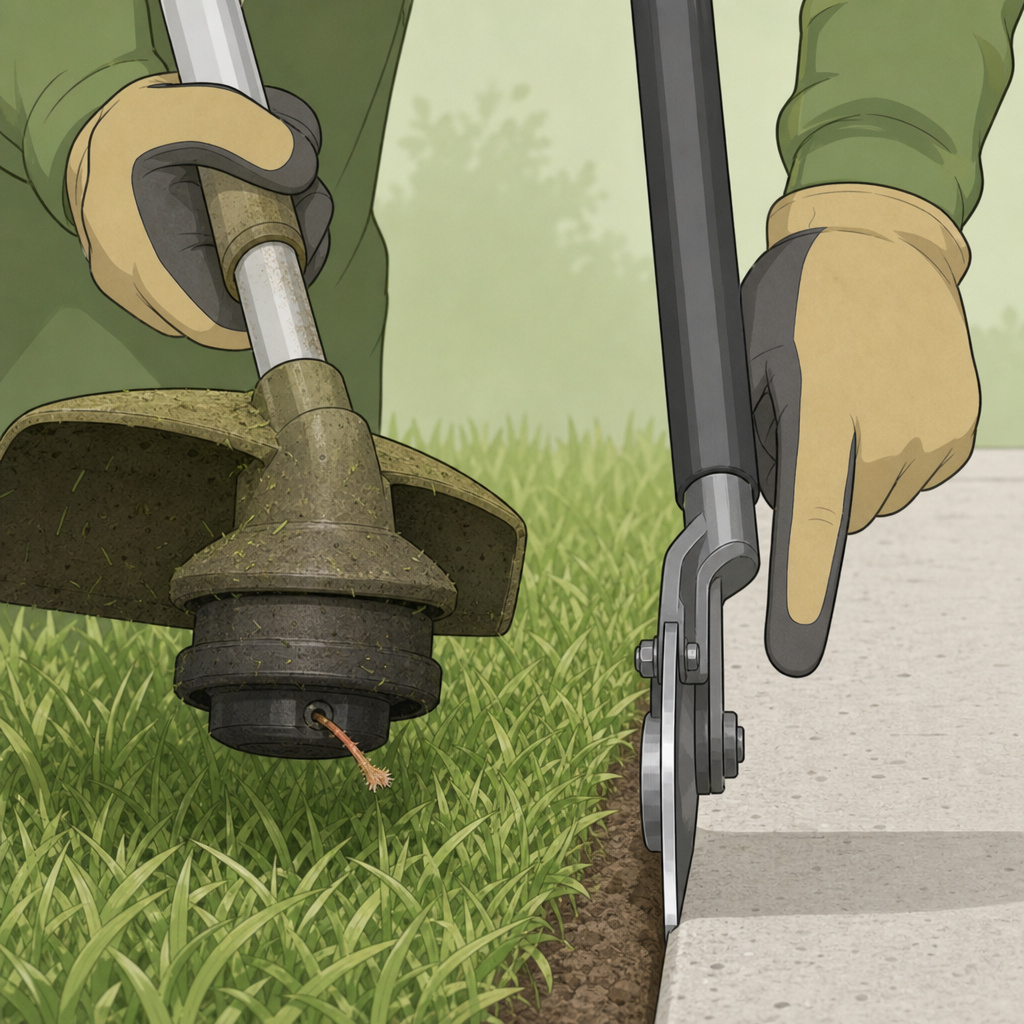
- It’s not a dedicated edger. You can edge with a trimmer by holding it vertically, but it’s a skill. The nylon line wears rapidly against concrete and stone. For a crisp, clean, permanent edge line, a dedicated stick edger with a steel blade is the right tool. The YouTube mechanic was right: using string against concrete just trashes the line.
- It’s not a brush cutter. Saplings thicker than a pencil, woody vines, or dense brambles will stall an electric trimmer and quickly shred line. For this, you need a brush cutter attachment (a metal blade) on a straight-shaft gas or high-power cordless trimmer.
- It’s not a precision pruner. Don’t try to “trim” shrubs or bushes. You’ll leave a mangled, frayed mess. Use hedge trimmers or hand pruners.
- It’s not for wet grass. Wet grass clumps and wraps around the head and drive shaft, creating a soggy, heavy mess that can strain the motor and is a pain to clean.
The right technique matters as much as the right tool. When you get into a tight corner, like where a fence post meets the ground, don’t just jam the head in. Feather the trigger, let the very tip of the line slowly wear away the grass. Forcing it just breaks line.
Essential Safety and Maintenance
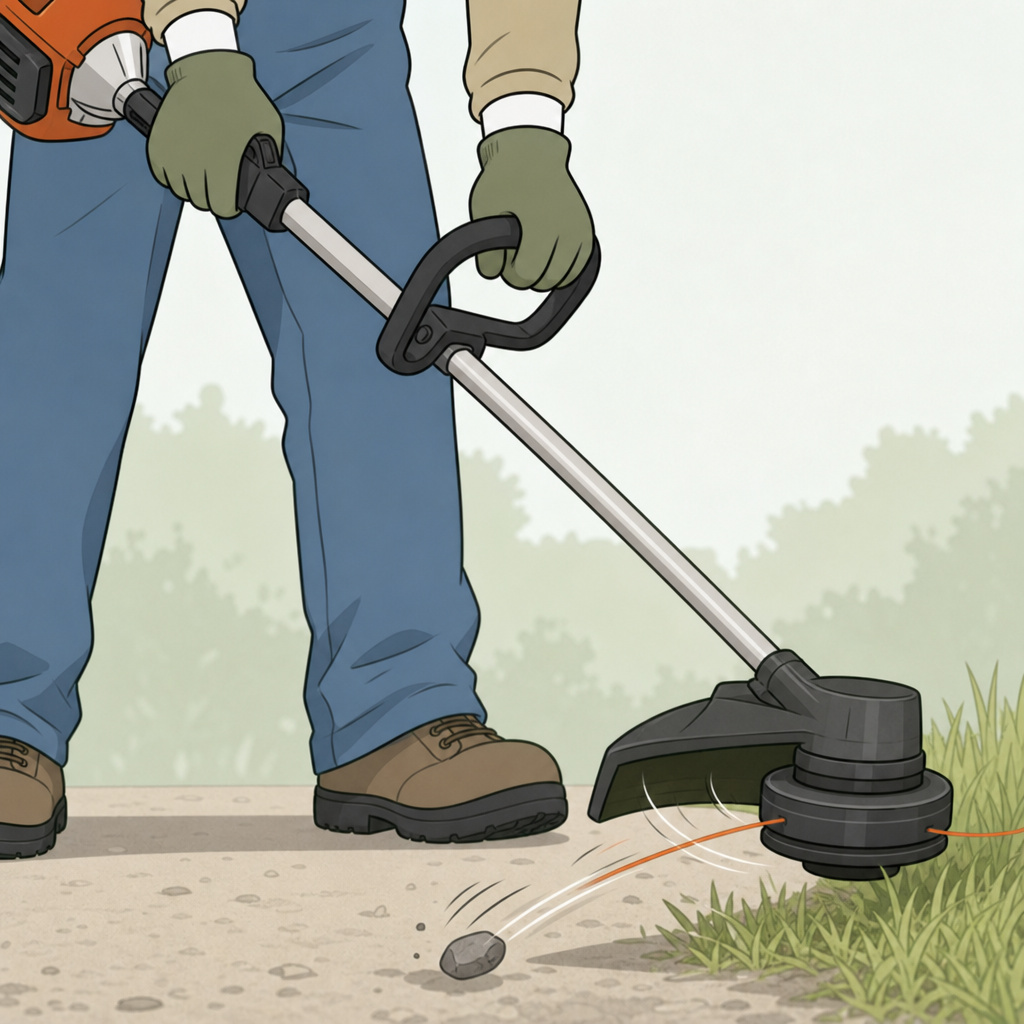
Before you start: Wear impact-resistant safety glasses every single time. The line can pick up and throw small stones, bits of metal, or stick fragments at eye level. Wear long pants and closed-toe shoes. Debris can lacerate skin. Always keep bystanders, especially kids and pets, at least 50 feet away.
Maintenance separates a tool that lasts five years from one that dies after two.
For All Trimmers:
- Clean the head and underside of the guard after each use. Caked-on grass retains moisture and promotes rust.
- Check the line length before starting. Too short strains the motor; too long reduces RPM and control.
- Store it properly. Don’t leave a battery-powered unit in a freezing garage or a scorching shed. Our guide on proper storage practices covers the specifics for each type.
For Gas Trimmers:
- Use fresh, properly mixed fuel. Stale gas (older than 30 days) is the number one cause of starting problems.
- At season’s end, run the carburetor dry or add fuel stabilizer.
- Replace the spark plug annually. It’s a $5 part that makes a huge difference.
For Cordless Trimmers:
- Don’t run the battery to 0%. It stresses the cells.
- Store batteries at room temperature, ideally at a 50-70% charge.
When things go wrong, won’t start, line won’t feed, strange vibrations, don’t panic. Most issues are simple. A clogged air filter, a fouled spark plug, or a tangled spool. Our resource on common trimmer issues walks through the diagnostics.
Frequently Asked Questions
Is “Weed Wacker” the same as “Weed Eater”?
Yes and no. “Weed Eater” is a brand name, originally from the company that popularized the tool. “Weed wacker” is the genericized term that followed, like “Kleenex” for tissues. The technically correct generic name is “string trimmer” or “line trimmer.”
What’s the difference between a weed wacker and an edger?
weed wacker uses a spinning nylon line to cut vegetation in a sweeping motion, primarily for trimming. An edger uses a vertical metal blade to cut a clean, sharp line between grass and another surface, like a sidewalk or driveway. You can do light edging with a trimmer, but for a defined edge, you need the right tool. Learn the proper lawn edging techniques if you’re using a trimmer for the job.
Can I use any trimmer line on my machine?
No. You must use the line diameter specified for your trimmer head (e.g., .080, .095). Using a line that’s too thick can overheat and damage the motor. The shape (round, square, twisted) is your choice based on the vegetation you’re cutting.
How long do battery-powered weed wackers last on a charge?
It varies massively. A small 18V/2.0Ah battery might last 15-20 minutes on light grass. A large 56V/5.0Ah battery can run for 45-60 minutes under moderate load. Always check the Amp-hour (Ah) rating of the battery, a higher number means longer runtime, not more power.
Why does my gas weed wacker smoke so much?
Excessive blue smoke usually means an incorrect fuel mixture, too much oil in the gas. For a 2-stroke engine, ensure you’re using the correct ratio (like 50:1). It could also be spilled oil burning off the muffler, which should clear after a few minutes. If it persists with correct fuel, the engine may have a worn seal.
The Bottom Line
A weed wacker is a detail tool, not a primary cutter. Its job is to clean up what your mower leaves behind. Your first decision is power source: battery for most suburban needs, gas for big jobs and large properties. Your second is comfort: straight shaft for reach and attachments, curved for easy maneuverability.
Ignore the brand name hype. Focus on the specs that matter, motor power (CCs for gas, Volts/Ah for battery), shaft type, and compatible line size. Buy a quality line from the start; it’s cheaper than replacing a burned-out motor. And always, always wear the glasses. The one time you don’t is the time a piece of driveway gravel comes flying back.
Choose for your actual yard, not the yard you wish you had. A properly matched string trimmer is one of the most satisfying tools to use. It turns an overgrown mess into a crisp, finished landscape in under an hour.
