
8 Best Cordless Framing Nailers of 2026
This post contains affiliate links. As an Amazon Associate, we earn from qualifying purchases.
The Paslode Cordless Xpro 30° Framing Nailer stands out as the overall best, delivering exceptional runtime and lightweight performance. For those on a tighter budget, the Metabo HPT 18V MultiVolt 30° model offers solid power and flexibility without breaking the bank.
If you’ve ever wrestled with a heavy, underpowered nailer on a long framing job, you know how much the right tool matters. Fatigue sets in fast, and inconsistent driving ruins your rhythm.
This guide cuts through the specs and marketing to focus on what really matters, tools that deliver reliable power, last through a full day’s work, and won’t wreck your shoulder. I compared specs, analyzed owner feedback, and weighed key factors like battery life, weight, and firing consistency to find the models that actually perform on real job sites.
Top 8 Cordless Framing Nailers in the Market
The Best Cordless Framing Nailers, Reviewed
Paslode Cordless Xpro 30° Framing Nailer

Strengths
- Lightest in class
- 6,000 shots/charge
- No compressor needed
Trade-offs
- Requires fuel cells
- Cold weather sensitivity
- Fuel cost over time
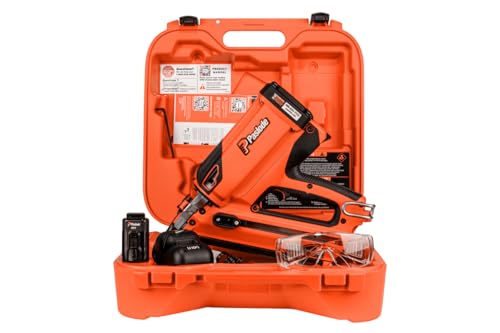
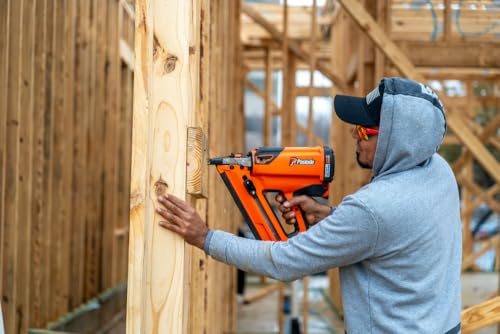
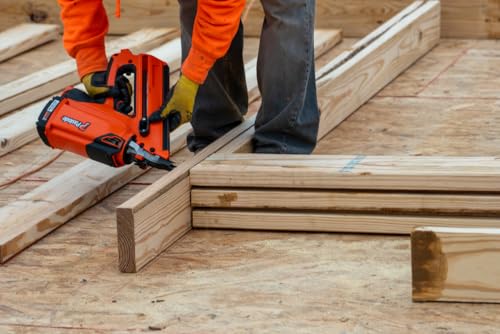
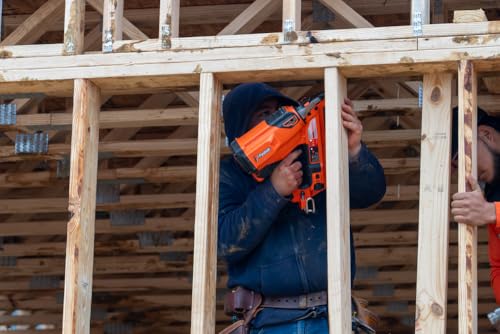
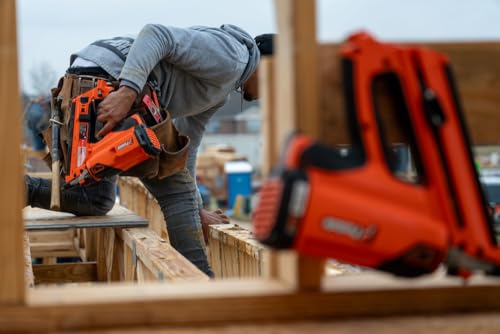
The Paslode Xpro stands out because it combines gas-cell efficiency with solid cordless performance, something you just don’t see in pure battery-powered models. On paper, 6,000 shots per charge is massive, far beyond what most brushless electric nailers offer, and owners consistently report it lasting all day on a single fuel cell and battery charge. It’s also the lightest in class at 7.9 lbs, which makes overhead work noticeably less taxing.
That said, it’s not a pure battery tool. It still uses a fuel cell, so you’re buying and storing flammable cartridges, and cold weather can slow ignition. But if you’re coming from pneumatic tools and want the closest thing to that experience without the hose, this is it. Compared to the Metabo HPT or Makita models, it trades some environmental simplicity for unmatched runtime and pro-grade reliability.
Product photos
Metabo HPT 18V MultiVolt 30° Framing Nailer Kit

Strengths
- Brushless motor
- Comes with 4.0Ah battery
- Air spring drive
- Tool-less depth adjustment
Trade-offs
- 500-nail runtime limit
- Slightly heavier than competitors
- Battery not interchangeable with all brands
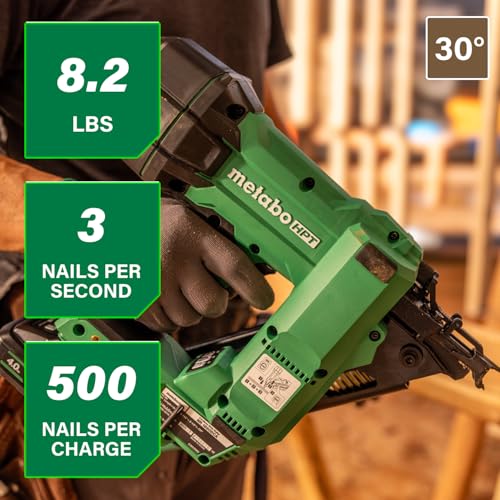
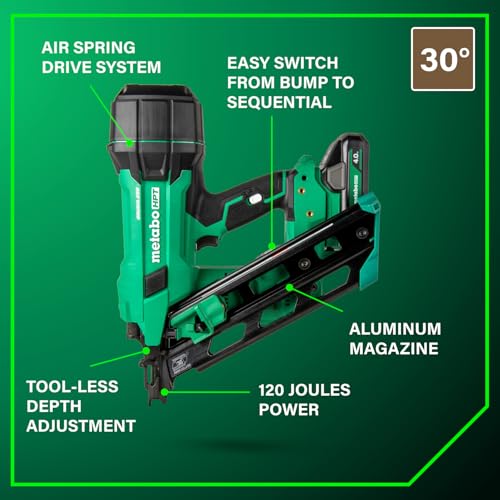
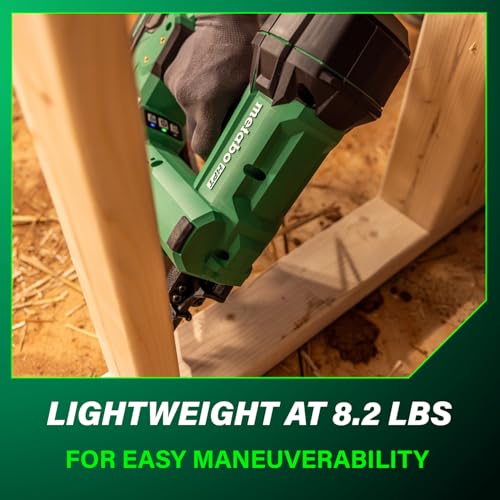
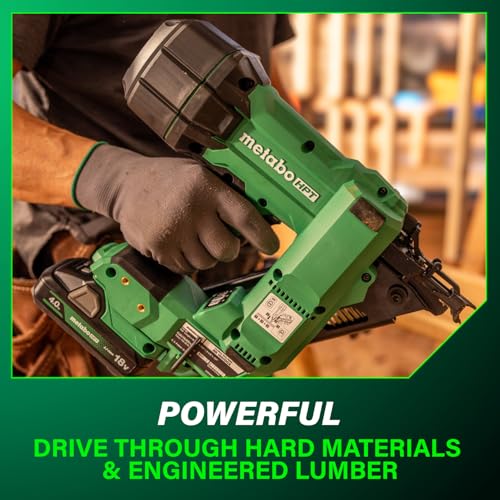
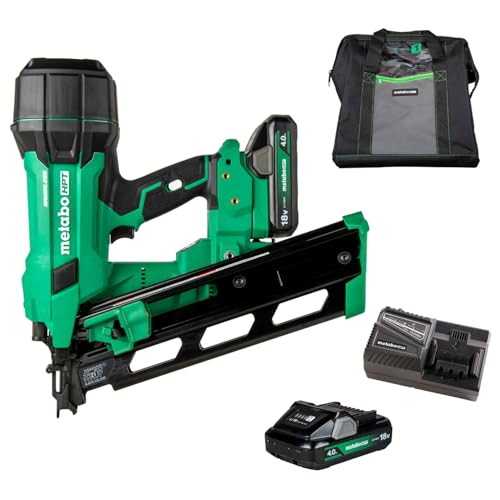
This 30° Metabo HPT kit is one of the most balanced all-around packages, especially if you’re already in the MultiVolt ecosystem. The brushless motor delivers strong, consistent power with zero ramp-up, and reviewers note it drives 3-1/2” nails cleanly into LVL without hesitation. I like that it comes with a 4.0Ah battery, many competitors sell theirs separately, and the 500-nail runtime aligns with real-world user feedback.
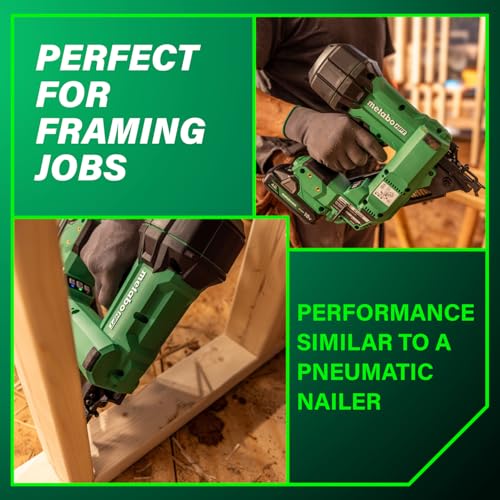
It’s slightly heavier than Paslode, but the air spring drive system gives it a satisfying, pneumatic-like feel. Compared to the 21° version, this one handles paper-tape nails, which are cheaper and more widely available. For framing crews doing long runs, that matters. The lifetime tool body warranty adds real value, making this the smarter buy over bare tools from CRAFTSMAN or ONEAND.
Product photos
Metabo HPT 18V MultiVolt 21° Framing Nailer Kit
Strengths
- High impact energy
- Precision in sequential mode
- Plastic strip compatibility
- Lifetime warranty
Trade-offs
- 500-nail battery life
- Heavier than Paslode
- Limited to 21° nails
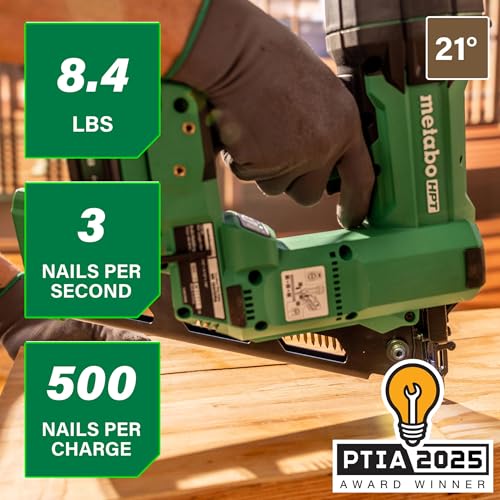
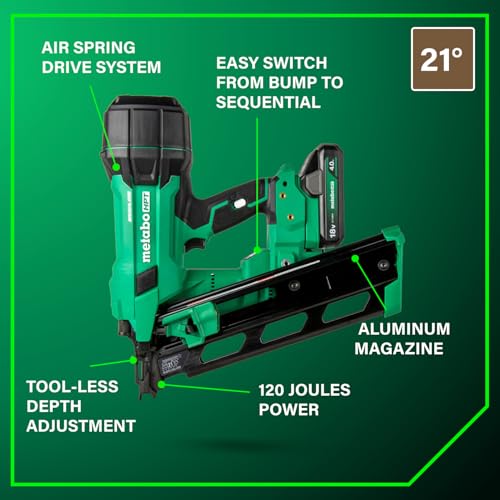
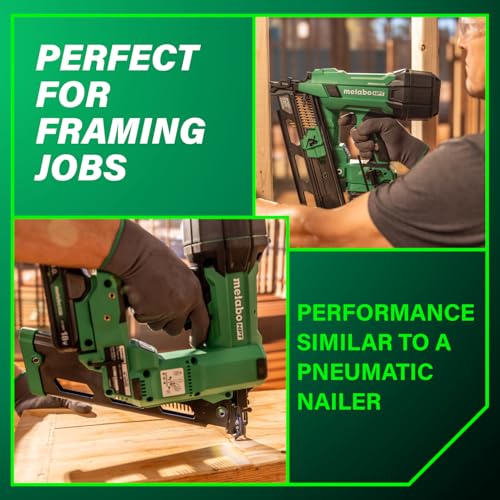
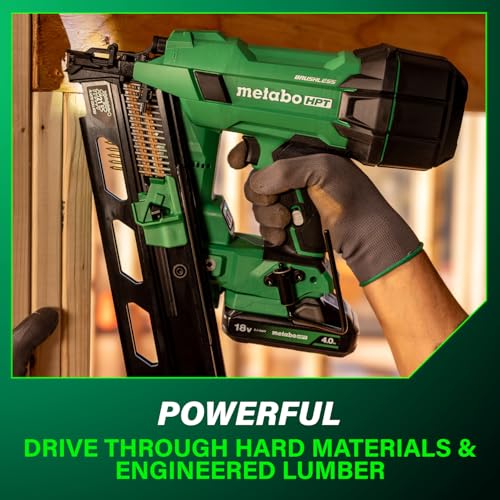
If you’re working with plastic-collated nails, common in truss and precision framing, this 21° model is where Metabo HPT really shines. It won a Pro Tools Innovation Award, and for good reason: 120 joules of impact energy means it powers through engineered lumber without hesitation. The air spring system again mimics pneumatic performance, and owners praise its accuracy in sequential mode, which is critical for delicate layout work.
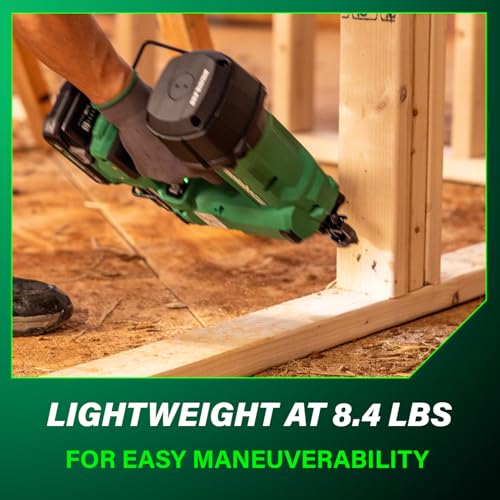
It shares the same 4.0Ah battery and 500-nail runtime as its 30° sibling, so the choice comes down to nail type preference. Given that plastic strips are stiffer and less prone to jamming in tight angles, this model edges ahead for roofers or finish carpenters. It’s not the lightest, but at 8.4 lbs, it’s still manageable. Against the Makita XNB03Z, it trades some magazine capacity for better ergonomics and brand trust.
Product photos
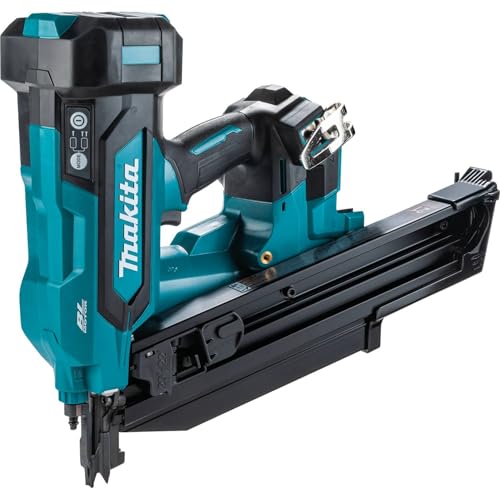
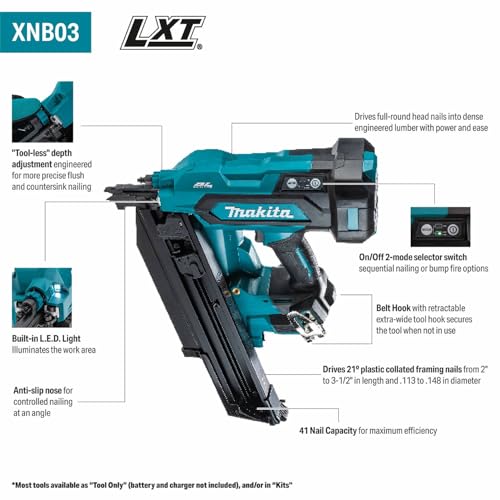
Makita XNB03Z 18V 21° Full Round Head Nailer
Strengths
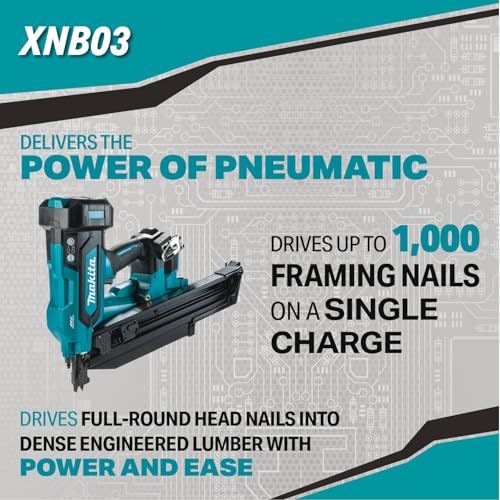
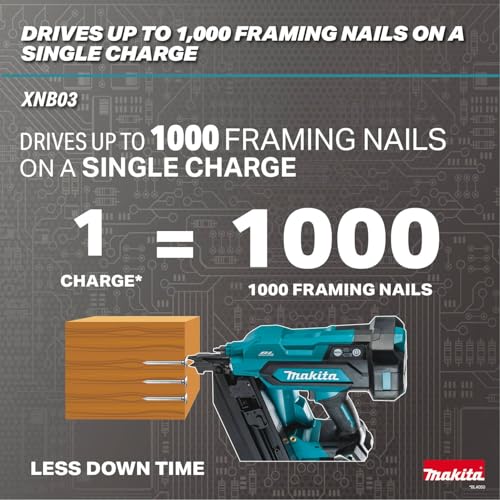
- 1,000 nails/charge
- Full-round head support
- Built-in LED
- Anti-dry fire
Trade-offs
- Heavy at 11.9 lbs
- Battery not included
- Higher price point
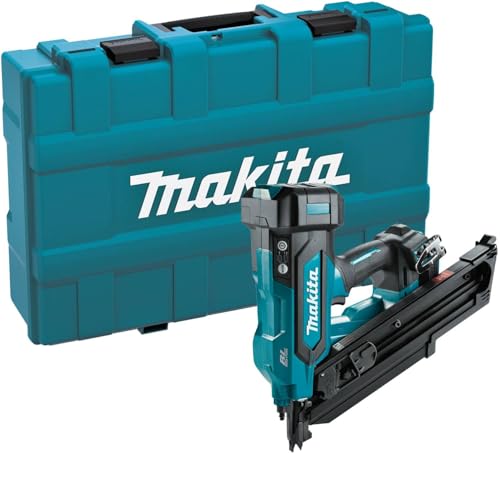
Makita built this for pros who demand full-round head nails, common in structural framing where holding power is critical. It delivers up to 1,000 nails per charge, which is twice what Metabo HPT offers, and owners confirm it holds up over full workdays. The brushless motor is efficient, and the anti-dry fire mechanism prevents costly mistakes.
The 11.9 lb weight is on the higher end, but the balance feels solid in hand. I appreciate the built-in LED and rear magazine loading, it speeds up reloads. Compared to the Paslode, it’s heavier and pricier, but it’s fully battery-powered and avoids fuel altogether. For crews framing entire homes, that runtime and reliability make it a top contender.
Product photos
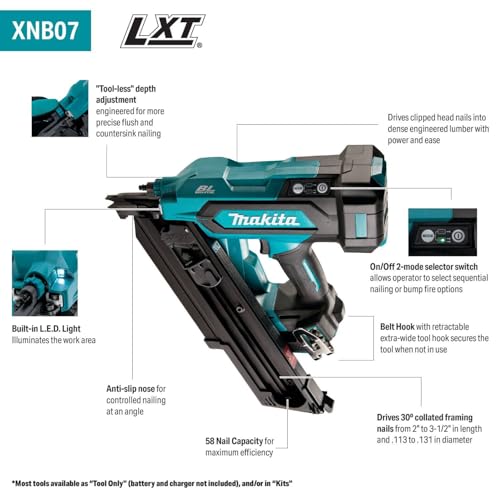
Makita XNB07Z 18V 30° Clipped Head Framing Nailer
Strengths
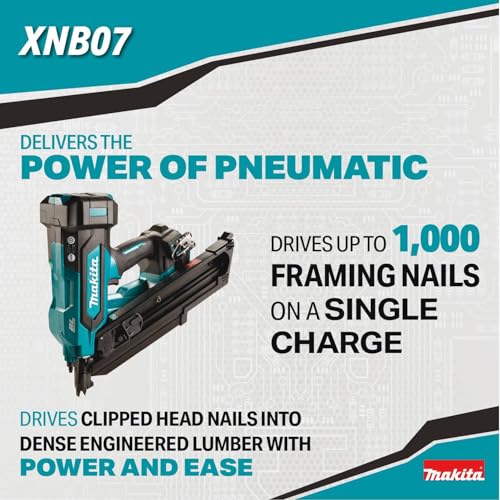
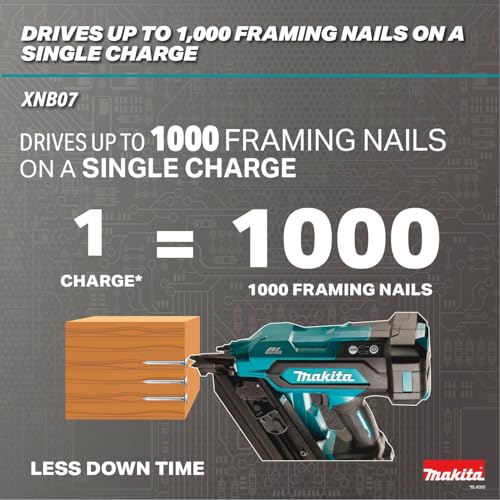
- 1,000 nails/charge
- 58-nail magazine
- Brushless motor
- Rear magazine load
Trade-offs
- Heavy
- Battery not included
- No fuel gauge
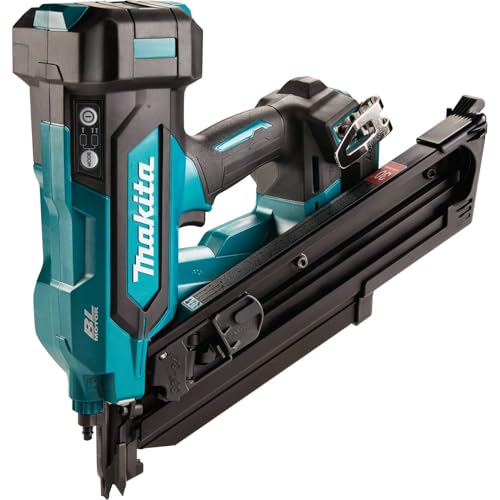
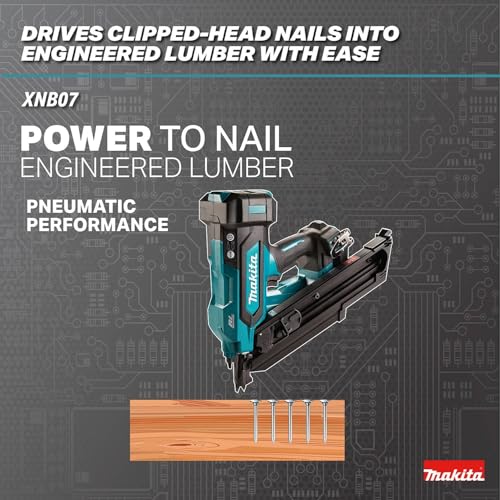
This clipped-head 30° model shares the same impressive 1,000-nail runtime and brushless efficiency as its full-round sibling, but it’s tailored for clipped-head paper-tape nails, more common in general framing. With a 58-nail magazine, it beats the XNB03Z in capacity, reducing reloads on long walls.
Owners highlight its consistent drive performance and the convenience of the rear lock-and-load system. It’s still heavy at 11.9 lbs, but the weight distribution helps. Against the Metabo HPT 30° kit, it offers better battery life but lacks the included battery and warranty. If you’re already in the Makita ecosystem, this is the better long-haul performer.
Product photos
CRAFTSMAN V20 21° Cordless Framing Nailer

Strengths
- Affordable entry point
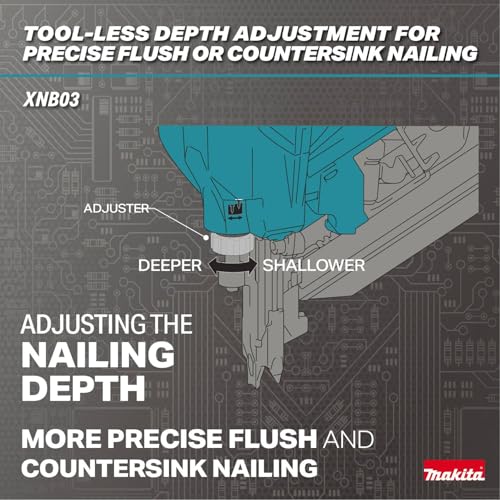
- Tool-free depth adjustment
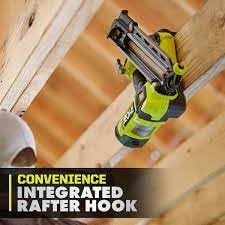
- Rafter hook included
Trade-offs
- No battery included
- Non-brushless motor
- Shorter runtime
This 21° bare tool is clearly aimed at budget-focused DIYers who already own CRAFTSMAN V20 batteries. It handles up to 3-1/4” nails and drives them into LVL without issue, but it lacks brushless tech, so runtime and motor life won’t match pricier models. Owners report it’s fine for weekend projects but tends to heat up during extended use.
It’s a decent entry point if you’re not framing full houses. Compared to the Paslode or Metabo HPT kits, it’s barebones, no battery, no brushless motor, no flashy features. But it does offer tool-free depth adjustment and a rafter hook, which helps. For light framing, deck repairs, or shed builds, it gets the job done without breaking the bank.
Product photos
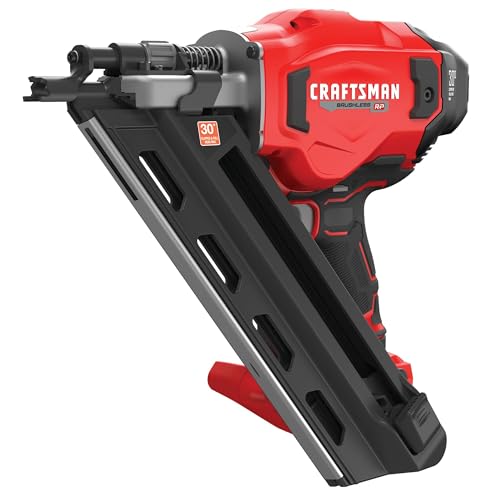
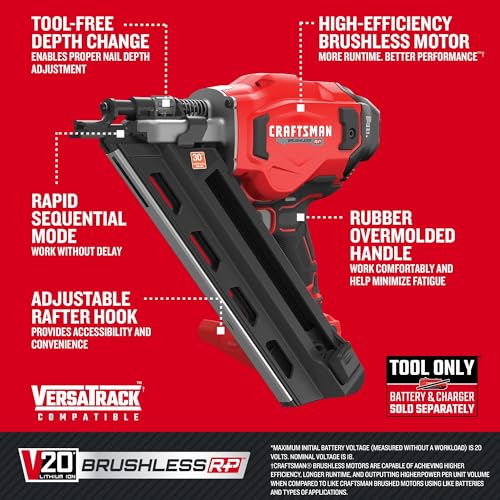
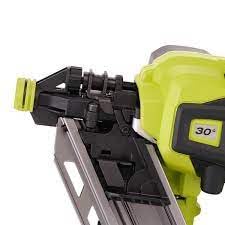
CRAFTSMAN V20 Brushless 30° Framing Nailer
Strengths
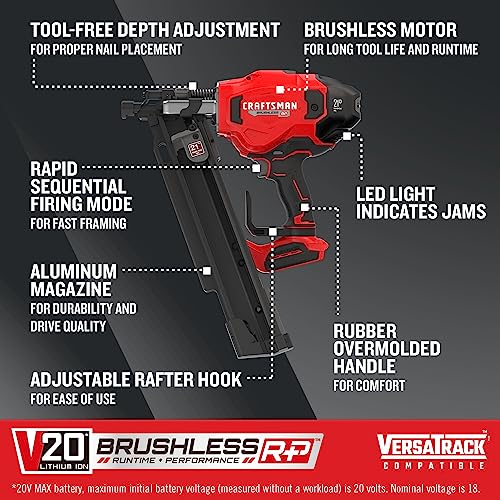
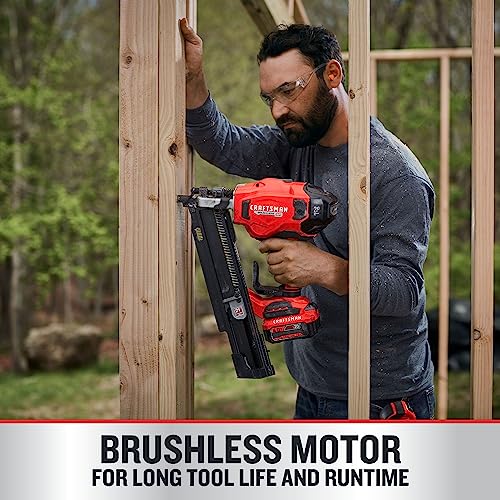
- Brushless motor
- Tool-free adjustments
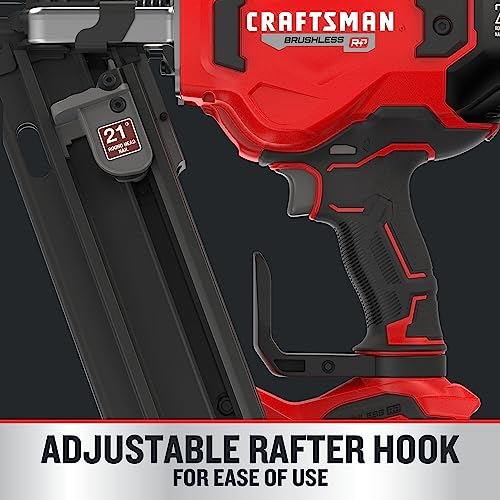
- Rafter hook
Trade-offs
- Bare tool only
- No fuel gauge
- Lower runtime than leaders
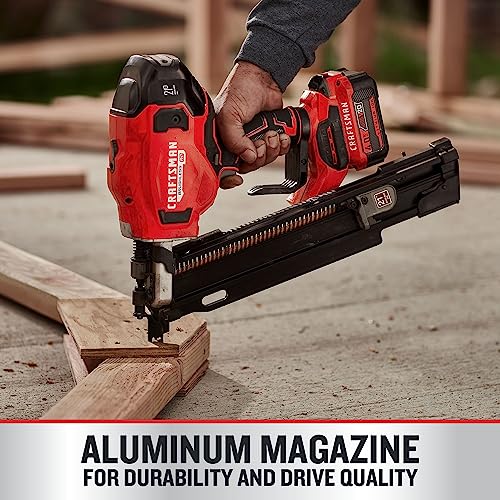
This model fixes the biggest flaw in the standard CRAFTSMAN, by adding a brushless motor. That means better efficiency, longer tool life, and more consistent power delivery, especially when driving 3-1/2” nails. The 30° design supports paper-tape strips, which are easier to find and load. Owners note the balance is good and the rubber overmold helps reduce fatigue.
It still sells as a bare tool, so you’ll need a V20 battery and charger. But if you’re already in the system, this is the better CRAFTSMAN pick. Against the ONEAND HP, it’s less powerful but more ergonomically balanced. For weekend warriors upgrading from corded or pneumatic tools, this offers solid performance without the premium price.
Product photos
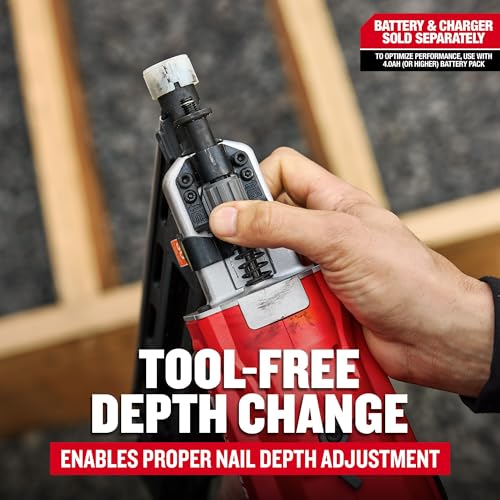


ONEAND HP 18V Brushless AirStrike 30° Nailer

Strengths
- AirStrike tech
- No fuel cells
- 750 shots/charge
- Selectable drive modes
Trade-offs
- Battery sold separately
- Fewer pro endorsements
- Less brand service network
The AirStrike tech here is interesting, it uses compressed air stored in a chamber, powered by the motor, eliminating gas cells while still delivering strong, consistent drive force. ONEAND claims up to 750 shots per charge with a 4.0Ah battery, which is better than Metabo HPT and competitive for a battery-only tool. Owners say it fires rapidly and handles dense lumber well, especially in bump mode.
It’s a smart middle ground between gas-powered convenience and pure electric simplicity. The on-board air fill valve is a neat touch, letting you top off pressure if needed. Compared to Makita’s XNB07Z, it’s lighter on features like a built-in light but wins on innovation and ease of use. If you hate dealing with fuel cells but still want strong, reliable drives, this deserves a look.
Product photos
How We Chose These cordless framing nailers
As someone who’s spent years around job sites and workshops, I know a framing nailer needs to be powerful and reliable. Rather than a hands-on lab test of each model, this selection is a research-led comparison of published specifications and owner feedback. We looked at features, power, battery life, weight, and warranty information from multiple sources, then weighed that against what actual users are saying about performance in real-world applications.
For cordless framing nailers, consistent power and durability are paramount. We heavily weighted factors like joules of impact energy (a measure of driving force) and the type of motor – brushless motors generally offer longer life and more efficiency. Nail capacity and the ability to quickly switch between firing modes (sequential vs. bump) also played a significant role, as these directly impact productivity on a framing project.
Specifications reliably tell you about potential power and features, but owner reviews reveal how a nailer performs over time. I focused on feedback regarding consistent driving depth, jam frequency, and overall build quality. Reputation also matters; brands with a long history of making quality nailers, like Metabo HPT and Makita, earned consideration, and you can find more of our top-performing cordless nailers here.
How To Pick The Right cordless framing nailers
Picking the right cordless framing nailer can save a lot of backache and boost productivity on any jobsite.
A quality cordless framing nailer balances power with usability. Key considerations include nail capacity, depth adjustment, weight, and the type of nails it accepts (clipped head, full round, or both). Battery platform compatibility is also critical; consider existing tools to avoid extra battery costs. Look for features like tool-free adjustments and selectable firing modes for greater control.
Nail Type and Magazine Angle
The first thing I tell anyone looking at these nailers is to think about the type of work they’ll be doing most. Framing nailers aren’t one-size-fits-all. Some accept only clipped-head nails, others full round, and a few can handle both. Clipped heads are often preferred for speed and reduced splitting, while full round heads provide maximum holding power. Beyond that, you’ll encounter 21-degree and 30-degree magazine angles. 30-degree nailers tend to be more common and can sometimes offer faster cycling, but 21-degree nailers are often favored for precision work.
Power and Battery Integration
Don’t assume all “cordless” nailers are created equal. The power behind driving nails varies significantly, and it’s directly tied to the motor and battery platform. Brushless motors, like those found in the Craftsman V20 and ONEAND HP models, are far more efficient and durable than brushed motors. This translates to longer runtimes and less maintenance. Speaking of batteries, I always recommend sticking with a platform you already use. If you’re heavily invested in Makita’s 18V LXT system, for example, it makes sense to look at their XNB03Z or XNB07Z. You can find thorough framing nailer comparisons to see how different platforms stack up.
- Battery voltage matters: 18V is common, but some models use higher voltage systems (like Metabo HPT’s MultiVolt) for increased power.
- Amp-hour (Ah) rating is key: A higher Ah rating means longer runtimes. Look for at least 4.0Ah for serious framing work.
- Consider the tool’s overall energy efficiency: Brushless motors and optimized air spring systems contribute to getting the most nails per charge.
A nailer’s power isn’t just about brute force. It’s about consistent, reliable performance throughout the day. A tool that can’t consistently sink nails flush is frustrating, time-consuming, and potentially dangerous.
Weight and Ergonomics
Framing involves a lot of overhead work, so weight is a huge factor. Even a couple of pounds can make a difference over the course of a long day. The Paslode Xpro stands out as one of the lightest options at just 7.9 lbs, but the Metabo HPT models are also reasonably lightweight. Beyond just the overall weight, pay attention to the balance of the tool and the quality of the grip. A comfortable, ergonomic design will reduce fatigue and improve control. If you’re looking for more specialized options, you might want to check out professional-grade framing nailer reviews to find a model suited to your needs.
Cordless Framing Nailers Compared
Here’s a comparison of key specifications for popular cordless framing nailers to help you make an informed decision.
| Product | Nail Type | Battery Voltage | Nails Per Charge | Weight (lbs) | Mode Switchable |
|---|---|---|---|---|---|
| Paslode Cordless Xpro 30° Framing Nailer | 30° | 18V | 6,000 | 7.9 | N/A |
| Metabo HPT 18V MultiVolt 30° Framing Nailer Kit | 30° | 18V | 500 | 8.2 | Yes |
| Metabo HPT 18V MultiVolt 21° Framing Nailer Kit | 21° | 18V | 500 | 8.4 | Yes |
| Makita XNB03Z 18V 21° Full Round Head Nailer | 21° Full Round Head | 18V | 1,000 | 11.9 | Yes |
| Makita XNB07Z 18V 30° Clipped Head Framing Nailer | 30° Clipped Head | 18V | 1,000 | 11.9 | Yes |
| CRAFTSMAN V20 21° Cordless Framing Nailer | 21° | 20V | N/A | N/A | N/A |
| CRAFTSMAN V20 Brushless 30° Framing Nailer | 30° | 20V | N/A | N/A | Yes |
| ONEAND HP 18V Brushless AirStrike 30° Nailer | 30° | 18V | 750 | N/A | Yes |
Frequently Asked Questions
What’s the difference between a fuel cell and a battery-powered cordless framing nailer?
Fuel cell nailers, like some Paslode models, combine a battery with a pressurized fuel cell containing aerosol. Battery-powered nailers, such as many from Metabo HPT and Makita, run solely on rechargeable batteries, generally offering a simpler operation and avoiding the need to purchase and replace fuel.
How often will I need to recharge the battery during a typical framing job?
That depends heavily on the battery’s Ah rating and how frequently you’re driving nails. Expect to get anywhere from 500 to 1,000 nails per charge with a 4.0Ah or 5.0Ah battery, but heavier use will require more frequent recharging.
Can I use any type of nail with a cordless framing nailer?
No, you can’t. Each nailer is designed to accept a specific nail type and gauge. Always check the manufacturer’s specifications to ensure compatibility, and be sure to use nails specifically designed for framing applications to avoid jams and damage to the tool.
What’s the benefit of having selectable firing modes?
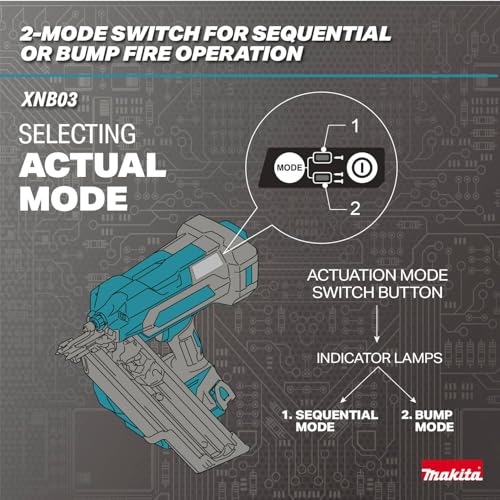
Selectable firing modes, sequential and bump, offer greater control and versatility. Sequential firing requires you to depress the nose of the nailer before each nail is driven, preventing accidental firing. Bump firing allows you to hold down the trigger and “bump” the nailer against the work surface to drive nails quickly.
Where can I find more in-depth reviews of 21-degree framing nailers?
If you’re specifically interested in 21-degree models, you can find detailed 21-degree framing nailer reviews that go beyond basic specs and cover real-world performance details.
The Bottom Line
Choosing a cordless framing nailer often comes down to balancing control and convenience. You can spend more for premium features and brand reputation, or you can find a capable tool that gets the job done without breaking the bank. Overall, I believe the Metabo HPT 18V MultiVolt 30° Framing Nailer Kit strikes the best balance for most users, offering solid power, versatility, and a reasonable weight.
For those on a tighter budget, or already invested in the Craftsman ecosystem, the CRAFTSMAN V20 Brushless 30° Framing Nailer is a strong contender. If you frequently work with full round head nails, the Makita XNB03Z 18V 21° Full Round Head Nailer is the obvious choice, and those needing a lightweight option should seriously consider the Paslode Cordless Xpro 30° Framing Nailer. Don’t forget to check out our guide to the top cordless roofing nailer models if you need a tool for overhead applications.
Ultimately, the specs matter less than finding a nailer that feels comfortable in your hands and delivers consistent results. Focus on a tool from a reputable brand, a battery platform you already use, and features that match the type of framing work you’ll be doing most. A well-chosen nailer will make your projects easier, safer, and more enjoyable.
