8 Best Framing Nailers of 2026
This post contains affiliate links. As an Amazon Associate, we earn from qualifying purchases.
The Metabo HPT NR83A5 stands out as the best overall framing nailer for its reliability, balanced weight, and smooth driving action. If you’re watching your budget, the Estwing EFR2190 delivers solid performance without cutting too many corners. For high-volume work like decking or roofing, the Metabo HPT NV90AG coil nailer offers unmatched capacity and efficiency.
Framing nailers aren’t one-size-fits-all. I’ve seen too many DIYers and even pros waste time and money on tools that jam constantly, weigh a ton, or can’t keep up with the job. The real challenge is finding a nailer that matches your project type, power needs, and workflow, without overpaying for features you won’t use.
This guide cuts through the marketing noise. I compared specs, analyzed owner feedback, and weighed in on what actually matters in the field, like durability, jam resistance, and ease of adjustment, so you can pick a nailer that works as hard as you do.
Top 8 Framing Nailers in the Market
The Best Framing Nailers, Reviewed
Metabo HPT NR83A5 Framing Nailer

Strengths
- Reliable cylinder valve drive
- Selectable trigger mode
- Reversible rafter hook
Trade-offs
- Slightly shorter max nail length
- Plastic collation only
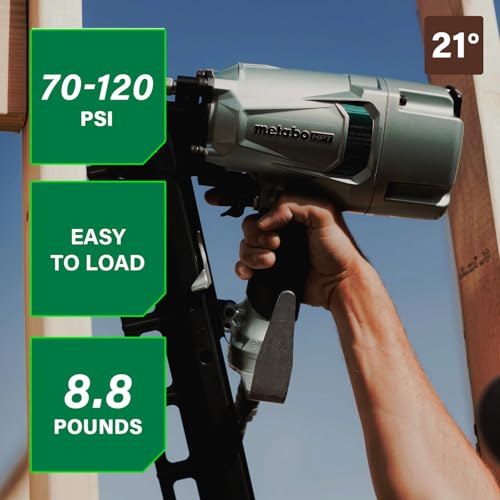
The Metabo HPT NR83A5 is the complete package for most framing tasks, which is why it earns the ‘Best Overall’ label. It combines the cylinder valve drive mechanism for fast reset times, a selectable trigger for firing control, and a rear-loading magazine that’s easy to refill. The rubber grip and claw tip improve control during angled nailing, and the rafter hook is reversible, small detail, big usability win.
It’s not the lightest or the most specialized, but it’s the most consistent across tasks. Reviewers note fewer jams than competitors, and the open nose design makes clearing them simple. Compared to the Bostitch F21PL, it’s better for general framing; versus the Makita cordless, it’s more reliable for all-day use if you’ve got an air compressor.
Product photos


Estwing EFR2190 Framing Nailer

Strengths
- Extremely durable magnesium body
- One-piece steel drive blade
- Includes carry bag and swivel fitting
Trade-offs
- Higher initial cost
- Slightly heavier than rivals
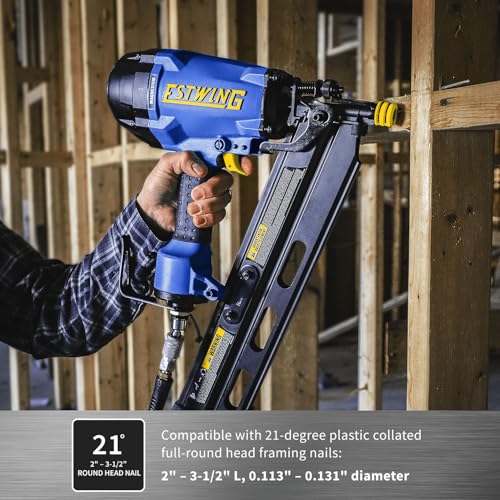
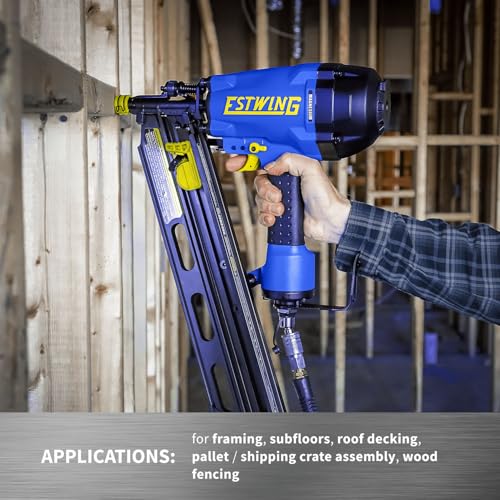
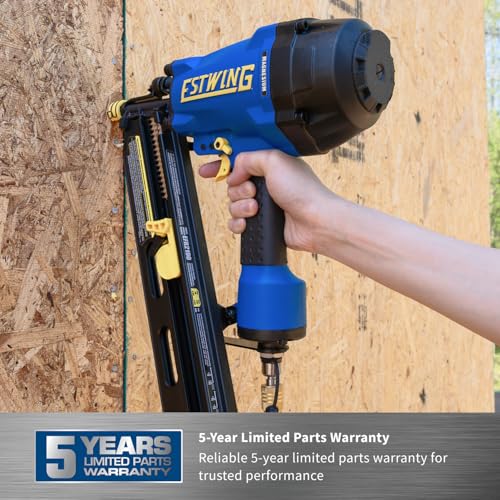
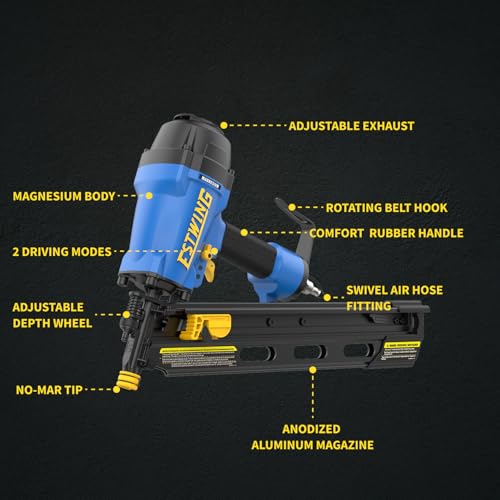
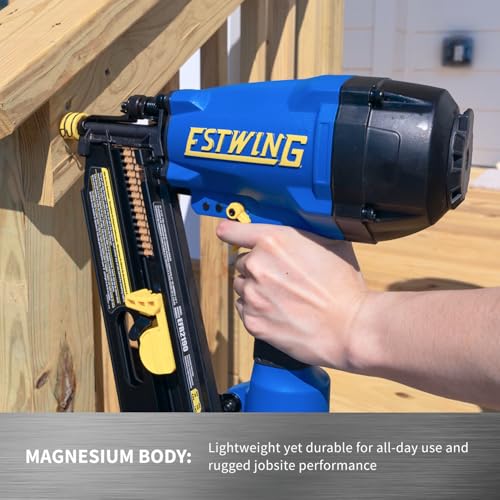
Estwing built the EFR2190 to survive job sites, not just work on them. The one-piece hardened steel drive blade and magnesium body make it feel nearly indestructible, and owners consistently report using these for years without major wear. It’s also one of the few that comes with a padded carry bag and swivel fitting, which adds real convenience.
The dual-mode trigger works smoothly, and the tool-free depth wheel is easy to adjust with a thumb. What sets it apart from the VEVOR or even the Metabo HPT models is its overbuilt quality, it’s the kind of tool you’d trust in freezing weather or dusty conditions. The downside? It’s priced higher than budget options, but for crews that lose or break tools often, this one pays for itself in durability.
Product photos
VEVOR 21° Pneumatic Framing Nailer

Strengths
- 60-nail magazine capacity
- Handles multiple nail types
- Open nose for easy jam removal
Trade-offs
- Inconsistent depth at low PSI
- Build quality not as refined
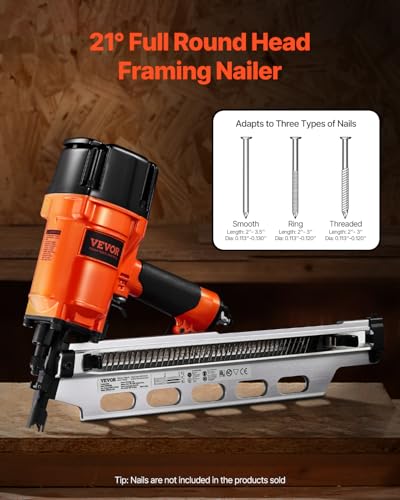
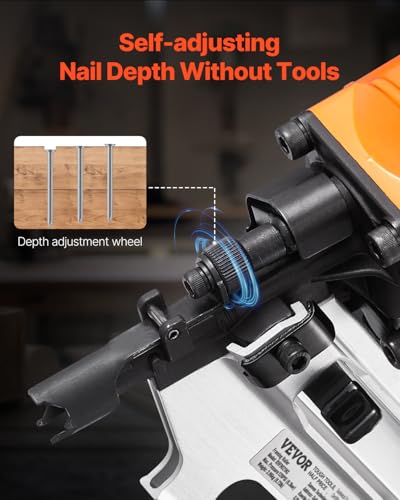
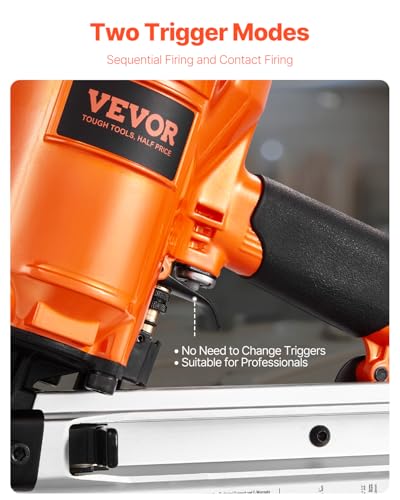
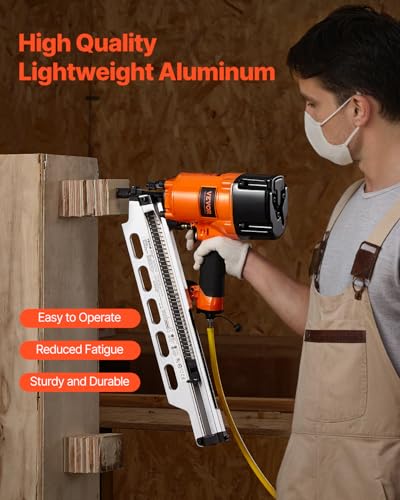
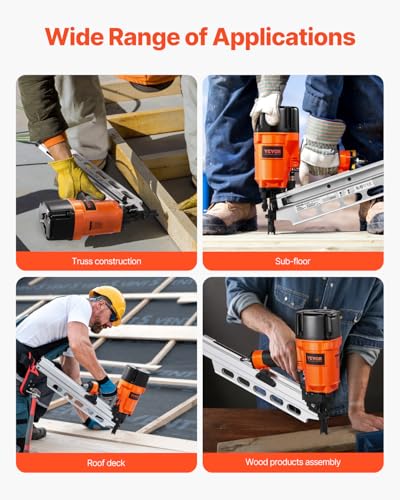
The VEVOR framing nailer is a strong contender if you’re looking for maximum value without stepping into pro-tier pricing. It handles smooth, ring, and threaded shank nails, more versatility than most in this range, and the 60-nail magazine means fewer reloads. The open nose design makes jam clearing quick, which owners appreciate after dealing with sealed competitors.
It’s not as polished as the Metabo HPT or Estwing, and some users report inconsistent depth control at lower pressures. But for the price, it’s a workhorse for deck builds, barn repairs, or shed construction. I’d recommend it over the Craftsman pneumatic options for sheer capacity and compatibility. Just don’t expect the same refinement as a Pro-Preferred model.
Product photos
Makita XNB03Z Cordless Framing Nailer
Strengths
- High shot count per charge
- 2-mode trigger selection
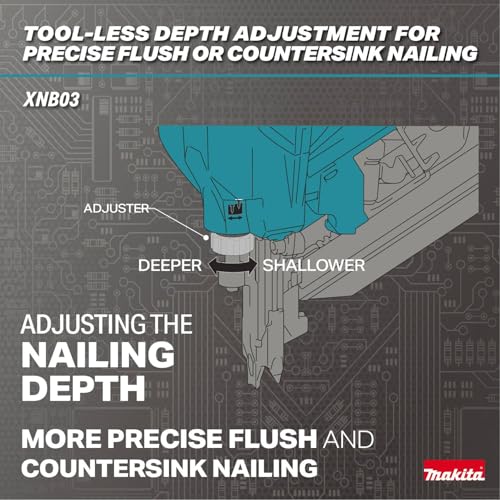
- Tool-less depth adjustment
Trade-offs
- Battery sold separately
- Heavier than some pneumatic options
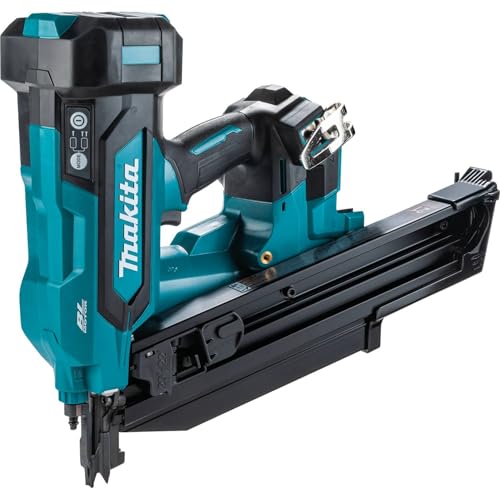
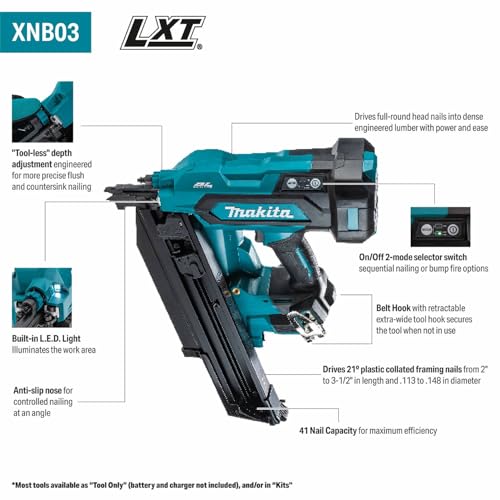
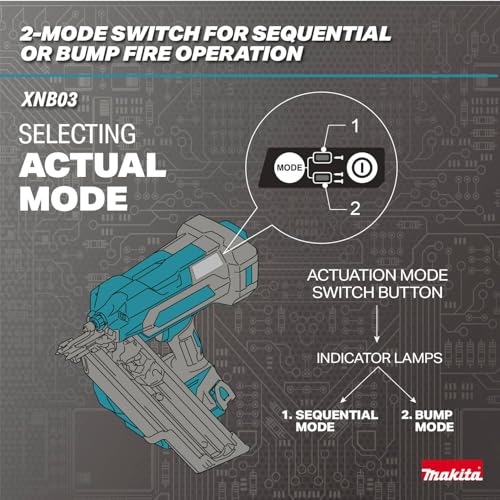
The Makita XNB03Z stands out in the cordless framing nailer space by delivering real performance without the tether. On paper, it matches gas-powered tools with the ability to drive full-round head nails into dense engineered lumber, and owners consistently report clean, consistent penetration even in tough materials. The 2-mode trigger switch gives pros control over firing style, while the anti-dry fire mechanism is a smart touch that helps avoid misfires and internal damage.
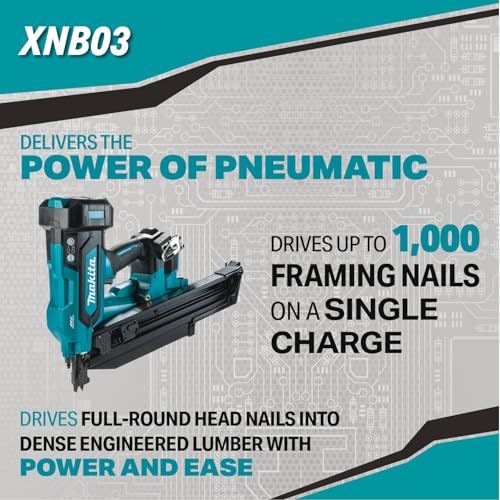
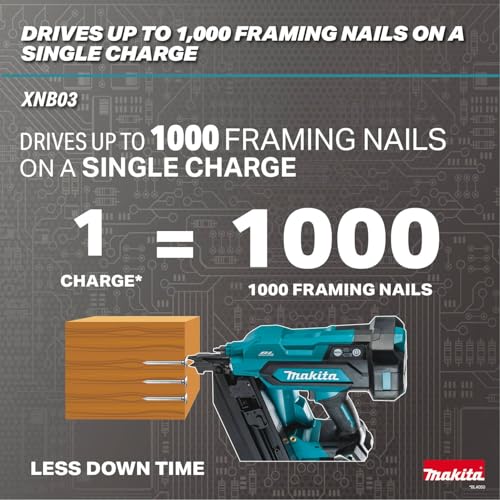
Battery efficiency is where this tool really shines. Reviewers note it can handle around 1,000 nails per charge with an 18V LXT battery, which is impressive for cordless and makes it viable for full-day framing jobs when paired with a spare pack. The built-in LED and tool-less depth adjustment add to its job-site practicality. Compared to the Craftsman V20, this Makita is more refined, with better balance and feedback on firing.
Product photos
Metabo HPT NR90ADS1 Framing Nailer

Strengths
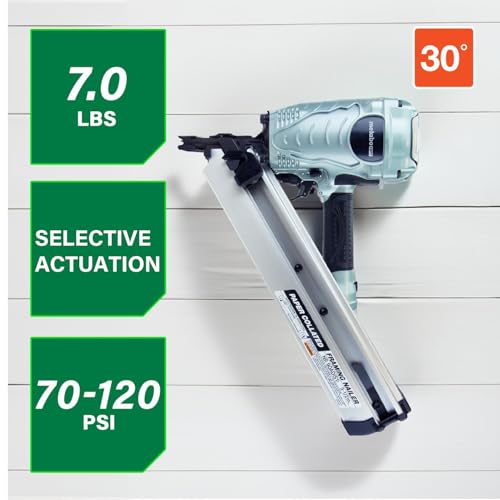
- Lightweight at 7 lbs
- Quick switch between firing modes
- 30° magazine for tight spaces
Trade-offs
- Requires Metabo HPT nails for best results
- Paper collation only
The Metabo HPT NR90ADS1 earns its ‘Pro-Preferred’ title with a blend of precision, balance, and ease of use. At just 7 lbs, it’s one of the lightest in its class, and the well-balanced design makes it a favorite for overhead work like roof decking or truss assembly. The 30° magazine slips into tight corners better than 21° models, and the selective actuation switch lets you flip between sequential and contact firing without tools, something pros use constantly.
Owners praise its reliability and smooth operation, especially when driving paper-collated nails. It’s not the most durable-looking build next to Estwing’s all-magnesium body, but Metabo HPT’s 5-year warranty backs its longevity. Compared to the VEVOR, it’s far more refined and consistent, especially in high-humidity conditions where cheaper guns jam more often.
Product photos


BOSTITCH F21PL Framing Nailer
Strengths
- Dual nosepieces for framing and metal
- Lightweight magnesium body
- Easy depth adjustment
Trade-offs
- Narrower magazine capacity
- Best with specific connector nails
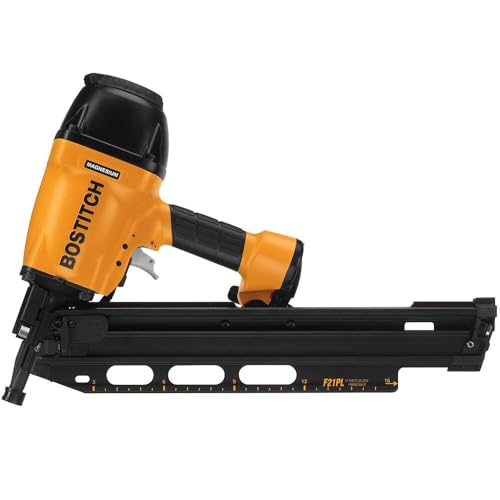
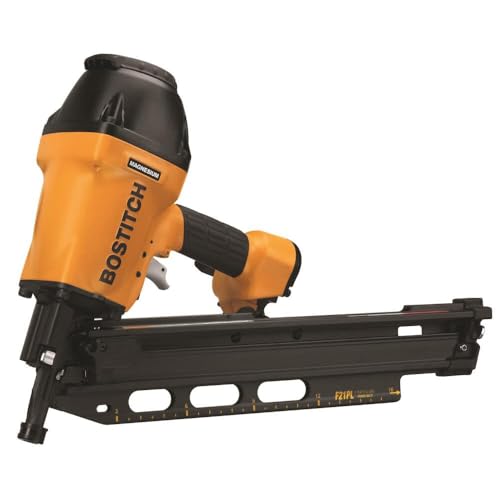
If you regularly install hurricane ties, joist hangers, or other metal connectors, the BOSTITCH F21PL is a rare two-in-one tool that actually works. The included quick-change nosepieces let you switch between standard framing and metal connector modes, which saves time and tool clutter on the job. The .131–.148” nail diameter range covers most connector fasteners, and owners appreciate the precision this brings.
It’s built with lightweight magnesium, so fatigue is minimal, and the push-button depth guide is one of the easiest to adjust mid-task. Compared to the Metabo HPT NR83A5, it’s more specialized, less of a general framing beast, but unbeatable for structural metal work. The trade-off is that it’s less versatile for everyday wall or floor framing.
Product photos
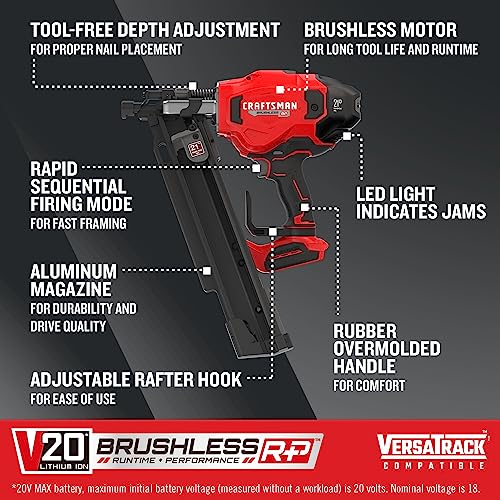
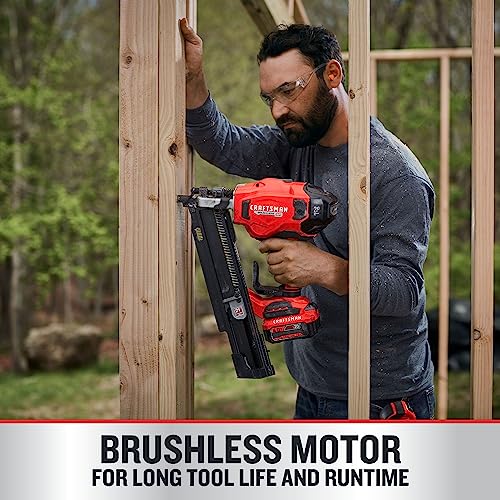
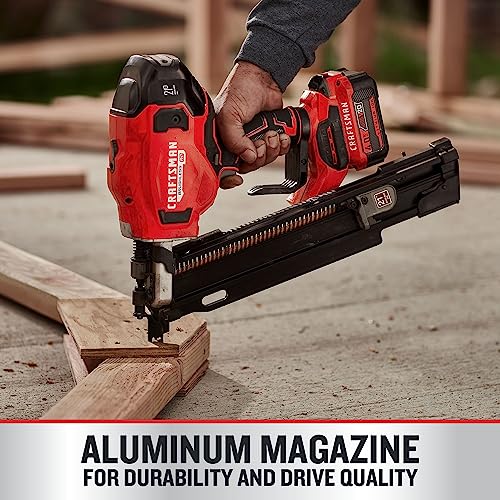
CRAFTSMAN CMCN621PLB Cordless Nailer

Strengths
- Affordable entry to cordless
- No gas or hose needed
- Tool-free depth adjustment
Trade-offs
- Slower cycle time
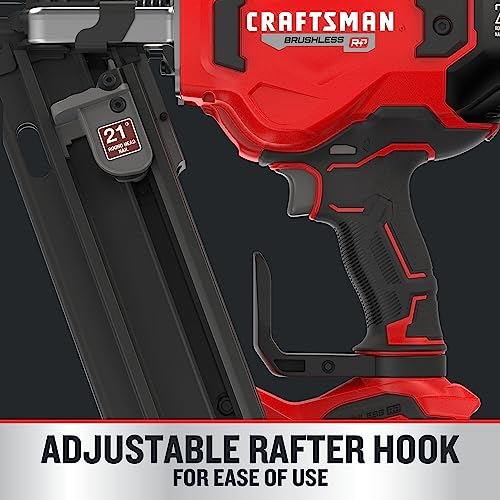
- No LED or rafter hook
- Limited nail length support
The CRAFTSMAN V20 is the most wallet-friendly cordless framing nailer here, and while it doesn’t match the Makita in refinement, it gets the core job done. It’s built for users already in the CRAFTSMAN V20 ecosystem, and if you’ve got batteries on hand, this tool makes going cordless affordable. It handles 3-1/4” nails and drives them into laminated lumber without constant jams, which owners confirm is a win at this price.
Where it falls short is consistency and weight distribution. Some users report slower reset times between shots compared to higher-end models, and the lack of a built-in LED or rafter hook feels like a cut corner. Still, for light to medium framing, deck ledgers, or backyard projects, it’s a solid entry point. I’d pick the Makita for heavy use, but for weekend warriors, this one delivers value.
Product photos
Metabo HPT NV90AG Coil Framing Nailer

Strengths
- High nail capacity from coil
- Lightweight and balanced
- Easy jam clearance
Trade-offs
- Overkill for small projects
- Coil nails less portable
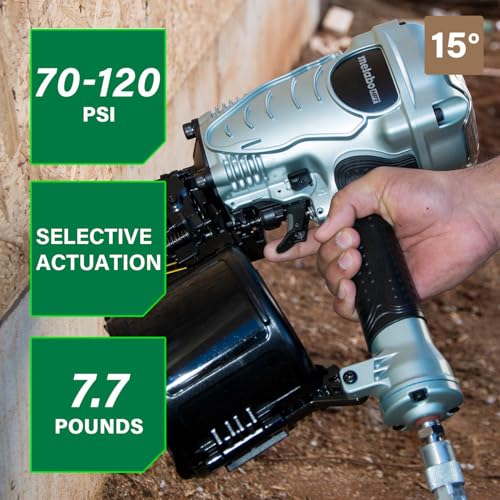
When speed and volume are the priority, the Metabo HPT NV90AG coil nailer is in a class of its own. The 15° coil design holds hundreds of nails, making it ideal for floor decking, roof sheathing, or truss assembly where you’re covering large areas. At 7.7 lbs, it’s light enough to use all day, and the open nose design cuts downtime when jams happen.
Owners highlight its reliability and smooth trigger response, especially in sequential mode for controlled placement. Compared to stick nailers like the NR83A5, it’s faster for repetitive work but less precise for delicate framing. If you’re framing entire homes or doing production work, this is the smarter buy. For small jobs, the coil system is overkill.
Product photos


How We Chose These framing nailers
As someone who’s spent years around workshops and job sites – and sharing advice at PowerToolGuide.net – I know picking a framing nailer comes down to more than just advertised features. Rather than a hands-on lab test of each model, this selection is a research-led comparison of published specifications, owner reviews, and professional assessments. I weighed those against my understanding of what truly matters in performance and durability for framing work.
For framing nailers, consistent driving power, durability, and ease of use are critical. I prioritized nailer designs that can handle demanding jobsites, as well as features that minimize downtime and frustration. A reliable depth adjustment and a fast reload system significantly impact productivity, while build quality dictates long-term dependability. These factors ultimately decided the rankings.
Specifications reliably tell you about nail compatibility (size and type) and weight, but owner feedback painted a clearer picture of real-world durability and jam frequency. I paid close attention to reports on trigger responsiveness and how well the nailer performed with different types of wood. Expert reviews, particularly those focused on pneumatic framing nailers, provided valuable context on professional preferences and long-term reliability.
What To Look For In framing nailers
Picking the right framing nailer can make or break a construction project, and there are a lot of options out there. It’s not just about power; it’s about finding a tool that fits your specific needs and working style.
A quality framing nailer efficiently drives nails into structural wood, utilizing either pneumatic power (compressed air) or battery power. Key considerations include nail collation type (plastic strip, paper tape, or coil), actuation mode (sequential or bump), magazine capacity, weight, and durability. Prioritize models with adjustable depth control and anti-dry fire mechanisms to improve accuracy and prevent damage.
Nail Collation & Magazine Capacity
The type of nail your nailer accepts, and how many it holds, directly impacts your workflow. While most framing nailers use plastic collated nails, you’ll also find options for paper tape and wire coil nails. Coil nailers, like the Metabo HPT NV90AG, are designed for high-volume jobs because they hold a lot of nails. However, they tend to be heavier and more expensive. Plastic collated nailers are generally lighter and more affordable, but require more frequent reloading. Consider how often you anticipate reloading; a larger capacity magazine is a huge time-saver on bigger projects.
Actuation Mode & Features
Framing nailers typically offer two firing modes: sequential and bump (or contact) fire. Sequential actuation requires depressing the nose and pulling the trigger, providing greater precision and safety – crucial when working around others or in tight spaces. Bump fire allows you to simply hold the trigger and “bump” the nose against the wood to drive nails rapidly. This is faster, but less accurate. Many nailers, like the Estwing EFR2190, offer both modes, giving you versatility. Beyond that, look for features like tool-free depth adjustment; this lets you easily adjust how deeply the nail is driven without needing any extra tools.
- A rafter hook is a small detail that makes a big difference. It allows you to hang the nailer from your belt or a rafter, freeing up your hands.
- Adjustable exhaust ports are useful, because you can direct the airflow away from your face.
- An open nose design is essential. It makes clearing jammed nails much easier, saving you time and frustration.
Power Source & Budget
You’ll need to decide between pneumatic and cordless framing nailers. Pneumatic nailers, connected to an air compressor, are typically more powerful and often more affordable upfront. However, they require a compressor and air hose, which adds to the cost and limits portability. If you already own a compressor, a pneumatic nailer is a solid choice. If you need portability and convenience, cordless framing nailers are the way to go. Keep in mind that battery life and power can vary significantly, so read reviews carefully. For serious professionals, exploring framing nailers for pros is a good idea to ensure you’re investing in a tool that can handle daily jobsite demands.
Don’t skimp on nail quality. Using the wrong nails can damage your nailer and void the warranty. Always check the manufacturer’s recommendations for compatible nails.
Framing Nailers Compared
Here’s a comparison of key specifications for popular framing nailers to help you find the right tool for your needs.
| Product | Nail Type | Nail Length Capacity | Magazine Type | Weight (lbs) | Actuation Mode | Cordless |
|---|---|---|---|---|---|---|
| Metabo HPT NR83A5 | Round Head | 2″ – 3-1/2″ | 2-Piece | N/A | Contact/Sequential | No |
| Estwing EFR2190 | 21° Full Round Head | 2″ – 3-1/2″ | Plastic Collated | N/A | Single/Bump | No |
| VEVOR 21° | 21° Full Round Head | 2″ – 3.5″ | N/A | N/A | Contact/Sequential | No |
| Makita XNB03Z | Full Round Head | N/A | N/A | 11.9 | Single/Bump | Yes |
| Metabo HPT NR90ADS1 | Clipped/Offset Round | 2″ – 3-1/2″ | 30-Degree | 7 | Contact/Sequential | No |
| BOSTITCH F21PL | Framing/Metal Conn. | 1-1/2″, 2-1/2″ | N/A | N/A | N/A | No |
| CRAFTSMAN CMCN621PLB | Round Head | Up to 3-1/4″ | N/A | N/A | N/A | Yes |
| Metabo HPT NV90AG | 15° Wire Coil | 1-3/4″ – 3-1/2″ | Coil | 7.7 | Contact/Sequential | No |
Frequently Asked Questions
What nail size can most framing nailers handle?
Most framing nailers accept nails between 2 and 3-1/2 inches long, though some coil nailers can accommodate up to 3-1/2 inches. Always check the manufacturer’s specifications to confirm compatibility before purchasing nails.
Are cordless framing nailers as powerful as pneumatic ones?
Cordless framing nailers have significantly improved, but generally, pneumatic nailers still offer slightly more raw power. However, the convenience of not needing a compressor often outweighs that difference for many users, and newer models are closing the gap.
What’s the difference between sequential and bump firing?
Sequential firing requires two actions(nose press and trigger pull) for each nail, providing greater precision and safety. Bump firing drives nails with a single action when the nailer is bumped against the work surface, making it faster but less accurate.
What should I do if my framing nailer frequently jams?
Consistent jams usually indicate an issue with the nails themselves (wrong size or type), or the nailer requires cleaning and lubrication. Using the manufacturer’s recommended nails and performing regular maintenance can minimize jamming. You might also explore 21-degree framing nailers if you’re consistently having trouble with other nail types.
How much should I expect to spend on a good framing nailer?
A decent pneumatic framing nailer can be found for around $100-$200, while cordless models typically range from $200 to $500 or more. Prices depend on features, brand reputation, and whether or not a battery and charger are included.
The Bottom Line
Choosing a framing nailer often comes down to balancing upfront cost with long-term convenience. While a powerful pneumatic nailer like the Metabo HPT NR83A5 offers a reliable workhorse for those already equipped with an air compressor, the cordless Makita XNB03Z provides freedom and flexibility that many homeowners will appreciate – even if it means a higher initial investment. Ultimately, the “best” nailer isn’t about flashy features, but about finding a tool that feels comfortable and consistently delivers the power you need for the job.
For those prioritizing budget without sacrificing too much capability, the VEVOR 21° framing nailer presents a compelling option. If you need a nailer specifically for high-volume work and don’t mind the added weight, the Metabo HPT NV90AG, with its coil nail capacity, is a strong contender. And if you’re looking to set up a complete pneumatic system, don’t overlook the importance of finding the right air compressors for nailers to maximize performance and efficiency.
More than nail capacity or firing modes, remember that consistent power and durability are the cornerstones of a good framing nailer. Don’t get hung up on minor specs; focus on build quality, positive owner feedback, and a design that suits your typical projects. A well-built nailer, used with quality nails and maintained properly, will save you far more time and money than any initial savings on a cheaper model.
