8 Best Air Dryers for Air Compressors 2026
This post contains affiliate links. As an Amazon Associate, we earn from qualifying purchases.
The best air dryer for most shops is the 3/4″ NPT 3-Stage Air Dryer, thanks to its reliable desiccant-based drying and auto-drain function. For a budget-friendly option, the AIRZOE 1/2″ NPT Air Dryer delivers solid basic filtration, while the HPDAVV Refrigerated Air Dryer 35 CFM is ideal for users needing consistently dry air in a professional setting.
Moisture in compressed air wrecks tools, ruins paint jobs, and leads to constant maintenance headaches. Most people don’t realize how quickly water builds up in their lines until they see rust in a nail gun or spots on a freshly sprayed cabinet.
This guide cuts through the noise by focusing on real-world performance, capacity matching, and long-term reliability. I looked at specs, owner feedback, and build quality to find dryers that actually keep moisture under control without constant babysitting.
Top 8 Air Dryer For Air Compressors in the Market
The Best Air Dryer For Air Compressors, Reviewed
AIRZOE 3/8″ NPT Air Dryer

Strengths
- Compact and efficient
- Reusable brass filter
- Easy installation
Trade-offs
- Lower flow rate
- No oil or vapor removal
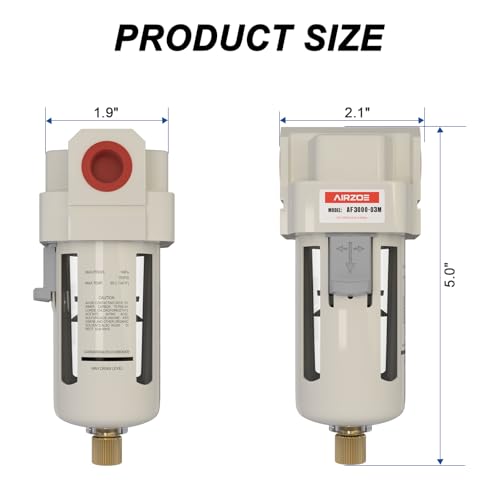
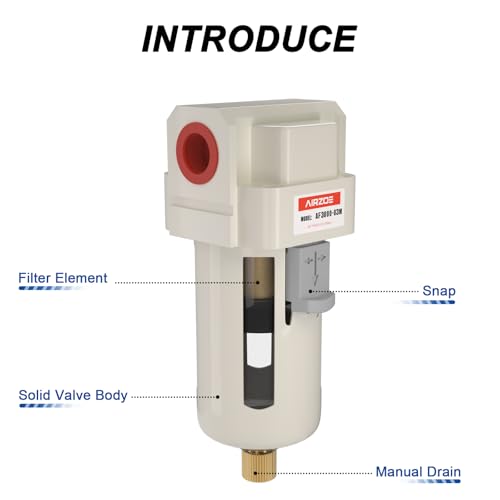
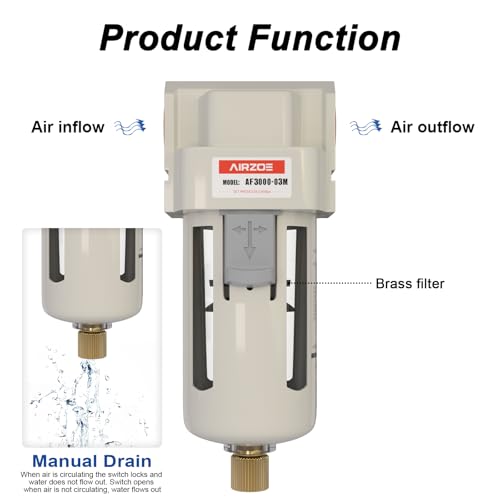
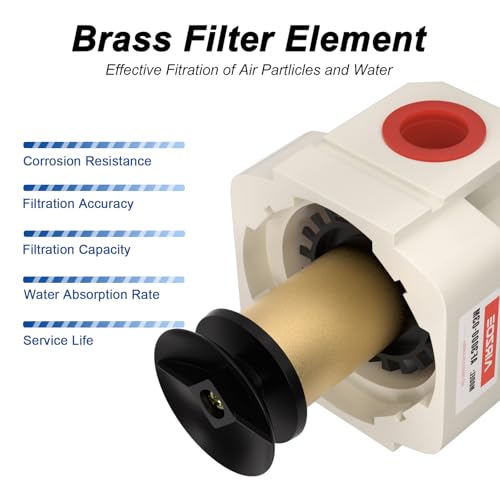
This compact unit earns its ‘Best Overall’ label by balancing performance, price, and reliability for everyday users. The 3/8″ NPT size fits most standard compressors, and the reusable 5-micron brass filter offers solid particle and moisture removal. At 1500 L/min, it’s not the highest flow, but it’s more than enough for typical home workshop tools like staplers, inflators, and small impact drivers.
It lacks advanced stages like coalescing or desiccant drying, so it won’t match the air quality of pricier systems. But for general protection and simplicity, it’s hard to beat. Owners consistently report long filter life and leak-free connections. I’d pick this over larger models if you’re not doing finish work and just want peace of mind.
Product photos
AIRZOE 1/2″ NPT Air Dryer

Strengths
- Reusable 5-micron filter
- High flow rate
- Durable brass construction
Trade-offs
- Single-stage filtration
- No coalescing or desiccant stage
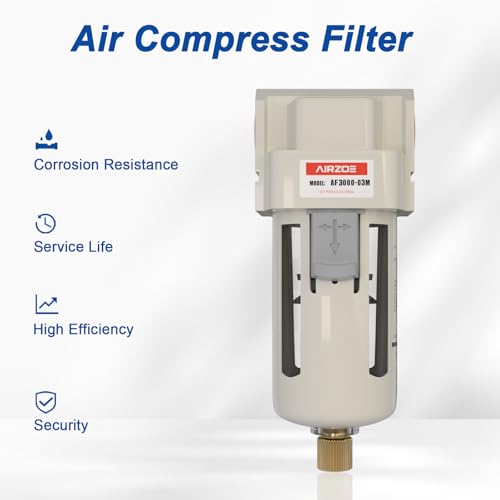
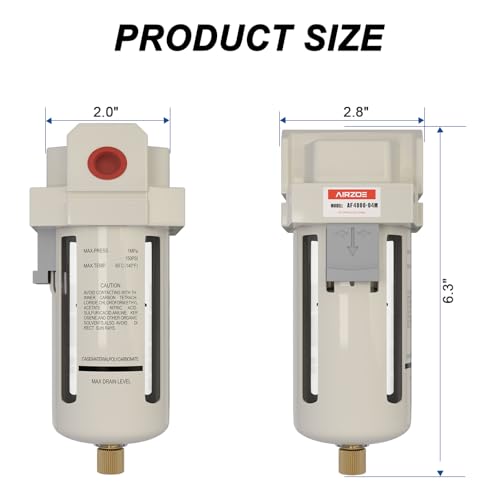
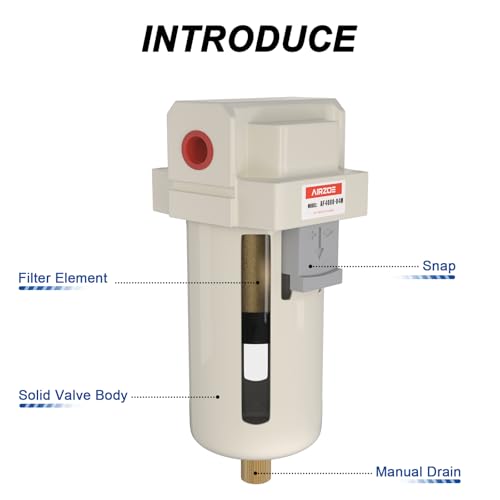
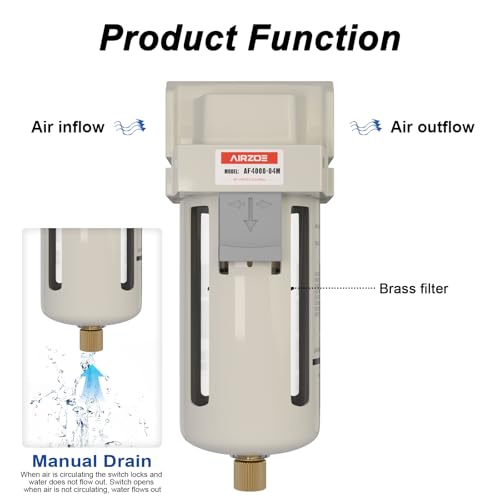
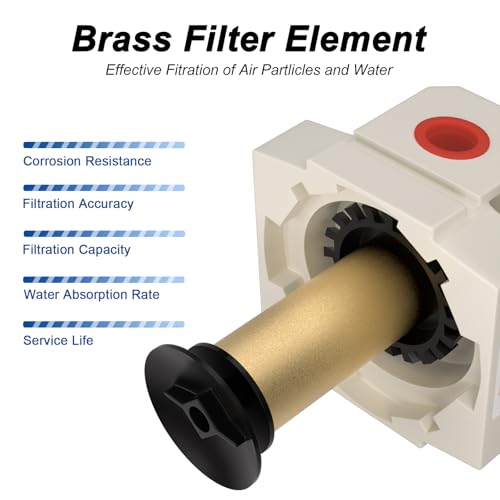
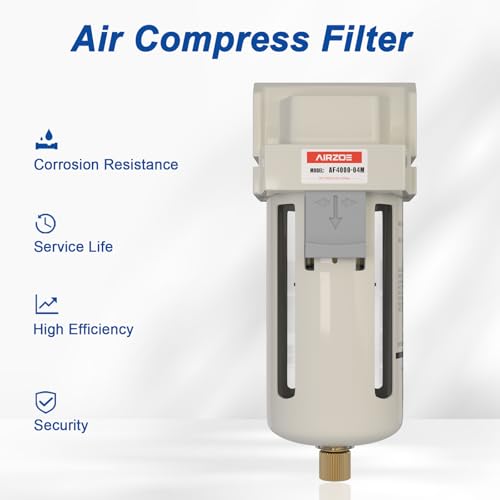
This is a solid mid-range option for users who need dependable moisture separation without overcomplicating their setup. With a 4000 L/min flow rate and a reusable 5-micron brass filter, it handles typical garage compressor outputs well. The polycarbonate bowl lets you see when water collects, and the semi-auto drain helps reduce manual maintenance. It won’t remove oil or achieve dew points like a multi-stage system, but for general pneumatic use, it gets the job done.
Owners often compare it to cheaper plastic-bodied traps and praise its durability. Still, it’s a single-stage unit, so I wouldn’t rely on it for spray painting or moisture-sensitive applications without additional filtration. If you’re running impact wrenches or nailers and want to protect your tools, this is a sensible pick.
Product photos
3/4″ NPT 3-Stage Air Dryer
Strengths
- Heavy-duty metal construction
- Complete filter kit included
- Clear maintenance indicators
Trade-offs
- Bulky for small shops
- Auto-drain requires vertical mount
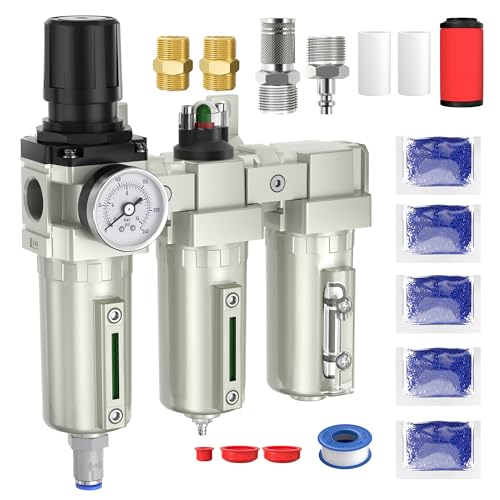
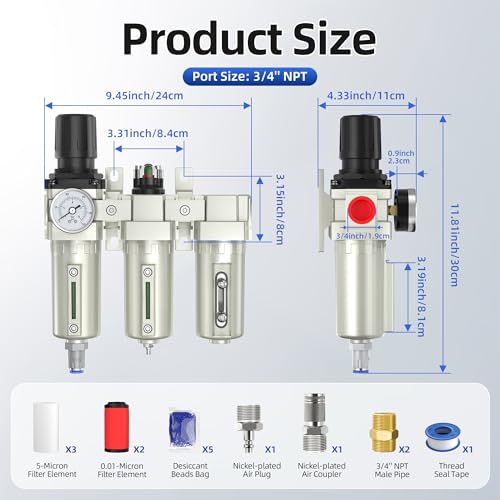
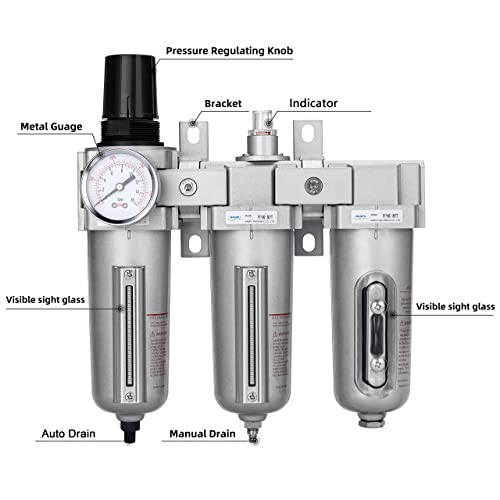
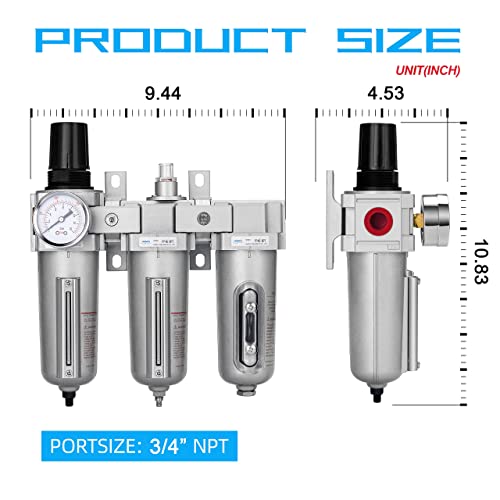
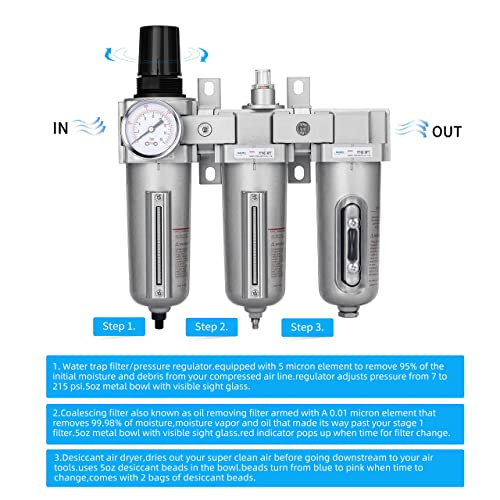
This industrial-grade three-stage system is built like a tank, with metal bowls, 3/4″ NPT ports, and a 0–240 PSI regulator, all signs it’s meant for serious shop use. The inclusion of multiple filter backups, desiccant packs, and a pressure gauge makes it a complete setup right out of the box. The 0.01-micron coalescing filter and color-changing desiccant ensure high air purity, and the red pop-up indicator removes guesswork from maintenance.
It’s comparable to the NANPU unit but with a more rugged build and better documentation. Reviewers using it for sandblasting and airbrushing report fewer clogs and better tool longevity. For industrial environments where downtime is costly, this is the safer bet. I’d choose it over plastic-bodied units when reliability is key.
Product photos
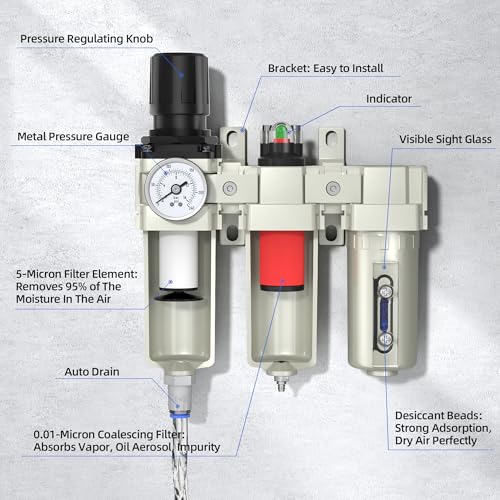

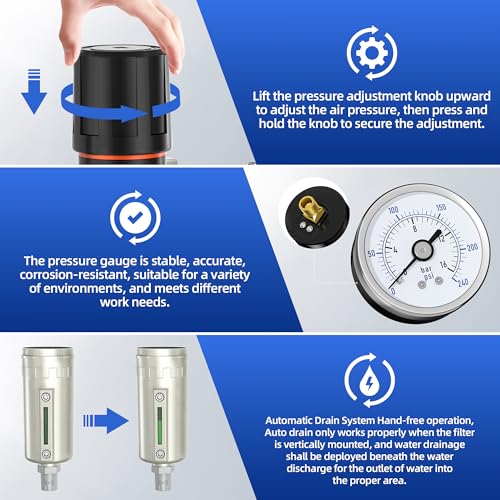
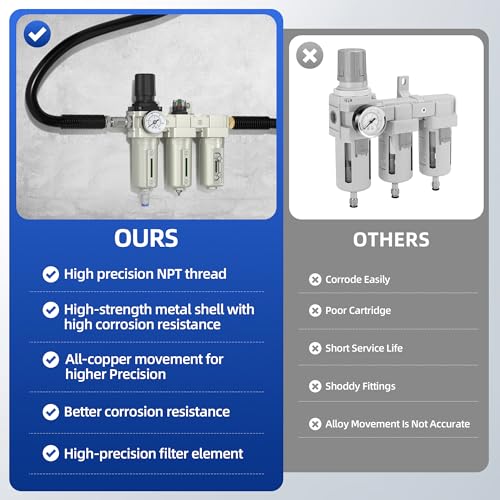
HPDAVV Refrigerated Air Dryer 35 CFM
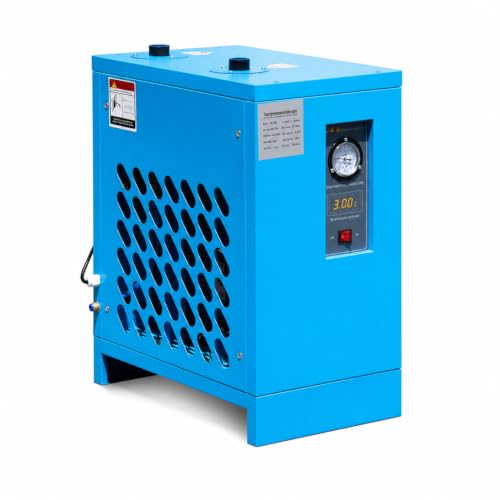
Strengths
- 35 CFM capacity
- R134a cooling system
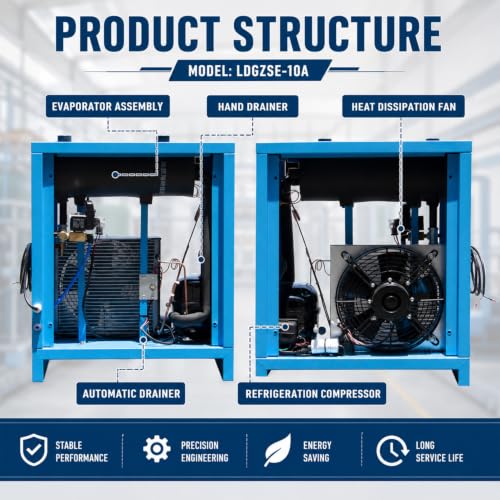
- Auto-drain function
Trade-offs
- No pre-filter included
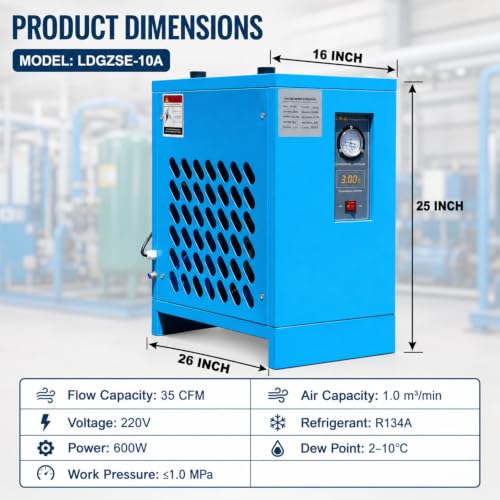
- Larger footprint
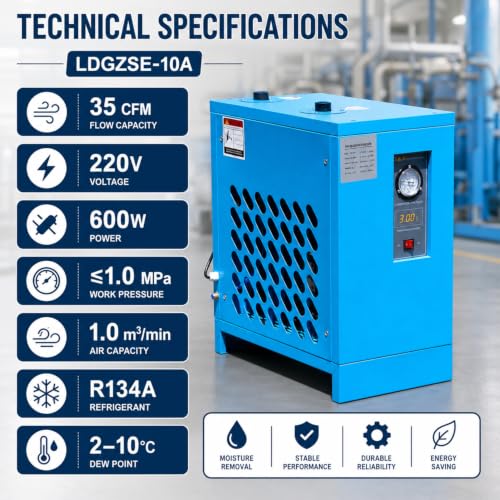
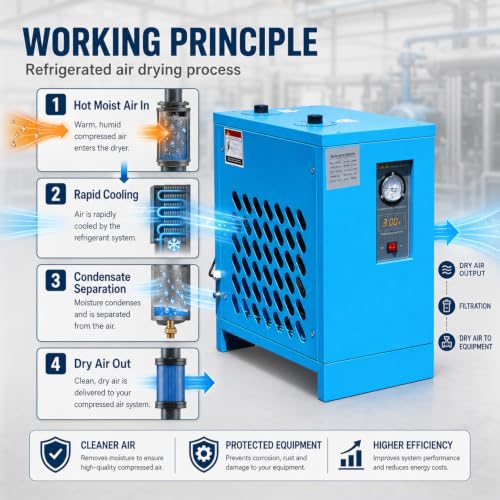
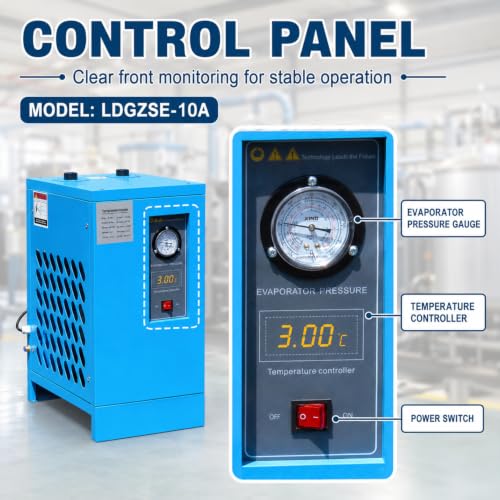
For heavy-duty shop or garage use, this refrigerated air dryer stands out with its 35 CFM capacity and R134a cooling system. On paper, it’s built to handle the output of 7.5 to 10 HP compressors, which puts it in the sweet spot for small industrial setups where moisture control is essential. The auto-drain feature and corrosion-resistant build suggest low long-term maintenance, and owners consistently report stable performance under continuous use.
Still, it’s worth noting that refrigerated dryers like this one require proper pre-filtration to avoid oil and water saturation, a step some buyers overlook. Compared to desiccant-based systems, it won’t achieve ultra-low dew points, but for most pneumatic tools, spray guns, or CNC applications, its 41°F dew point (implied by operating range) is more than adequate. I’d pick this over smaller point-of-use dryers when protecting an entire shop’s air system.
Product photos
1/2″ Auto Drain Air Dryer

Strengths
- Three-stage drying
- Auto drain & indicators
- Includes gauge and spares
Trade-offs
- Limited to 20 SCFM
- Not for large compressors
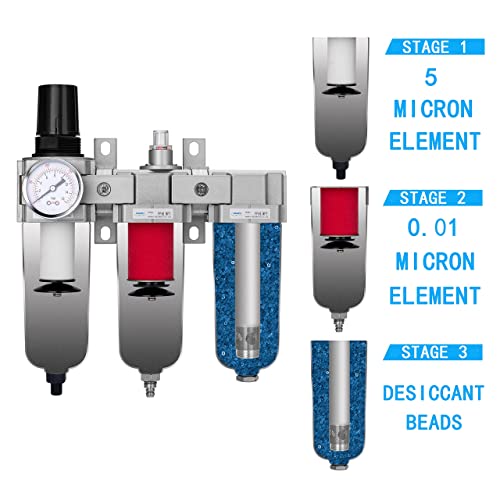
If you’re running a paint gun or plasma cutter, this three-stage dryer is purpose-built for your needs. The combination of a 5-micron filter, 0.01-micron coalescing layer, and desiccant stage ensures nearly all moisture and oil are stripped from the air, critical for avoiding fisheyes or nozzle clogs. The auto-drain, pressure gauge, and visual indicators (red filter alert, blue-to-pink beads) make maintenance straightforward.
Owners praise its performance in auto body shops and fabrication settings. At 20 SCFM, it’s not for high-volume lines, but it excels as a point-of-use solution. Compared to basic water traps, it delivers professional-grade air quality. My take: this is the one to get when finish quality matters.
Product photos
4 Stage 3/4″ Air Dryer System
Strengths
- Four-stage drying
- Auto drain included
- Complete accessory kit
Trade-offs
- Aluminum body less durable than steel
- Desiccant maintenance needed
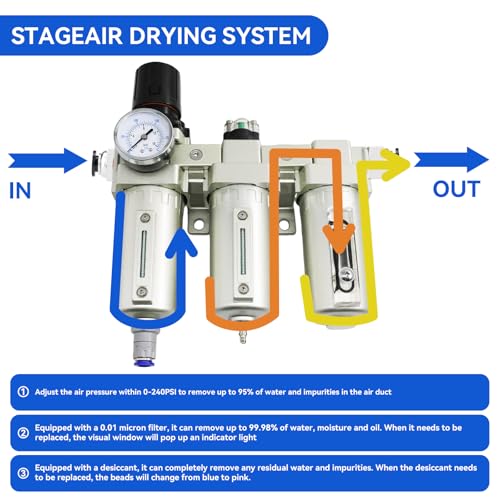
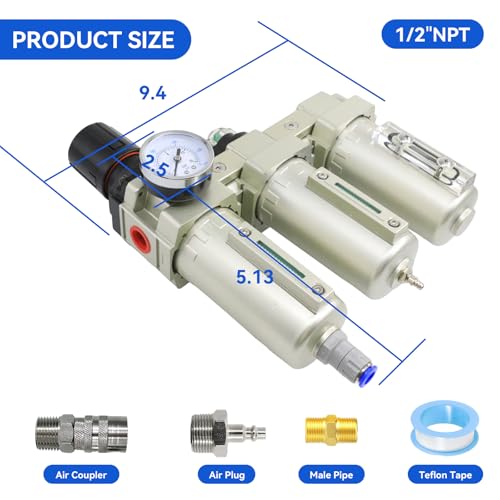
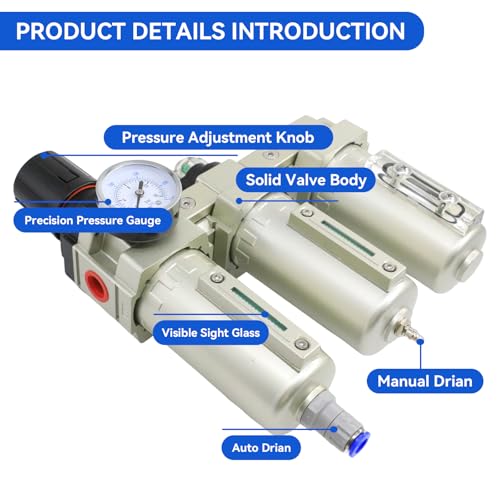
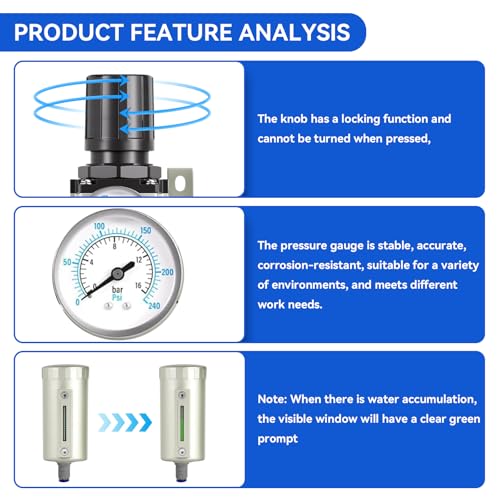
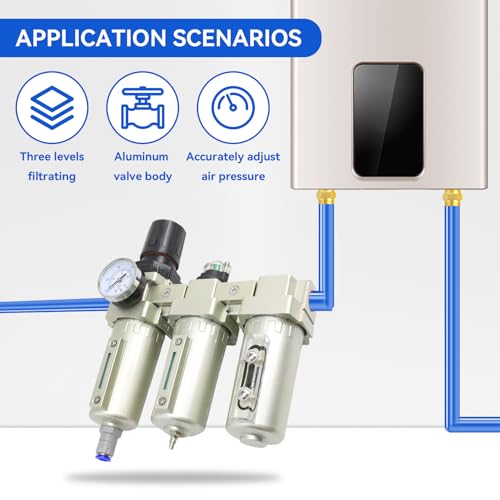
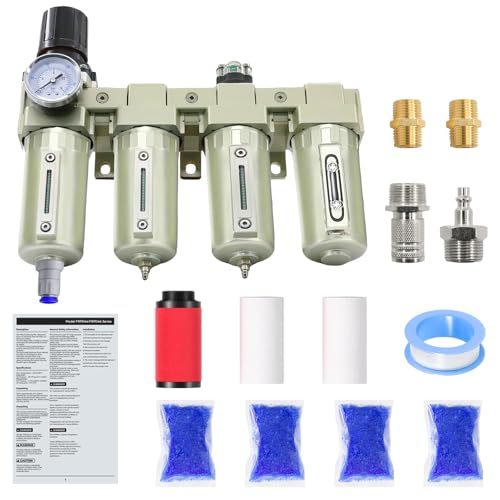
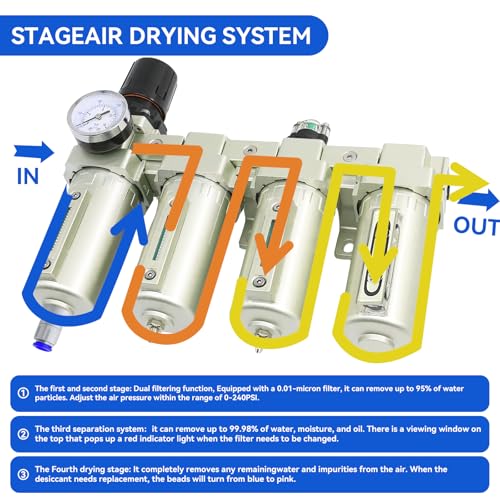
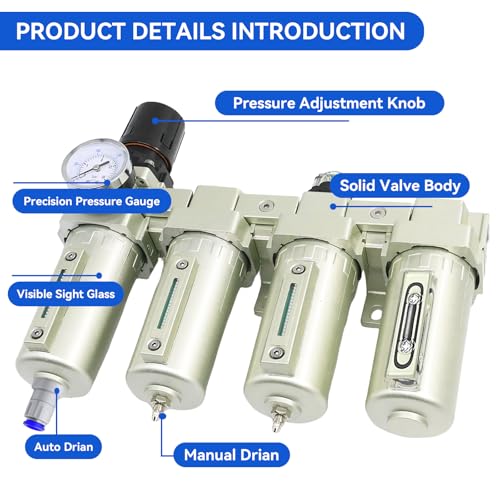
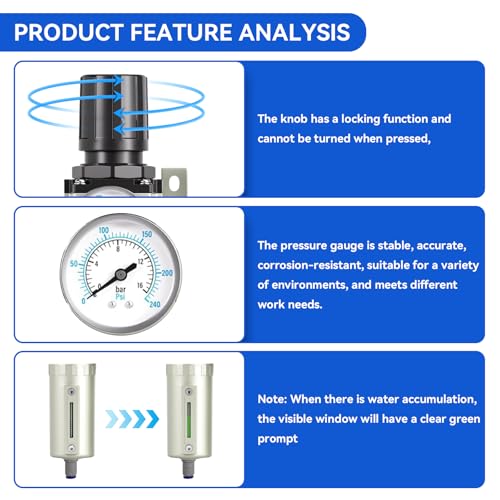
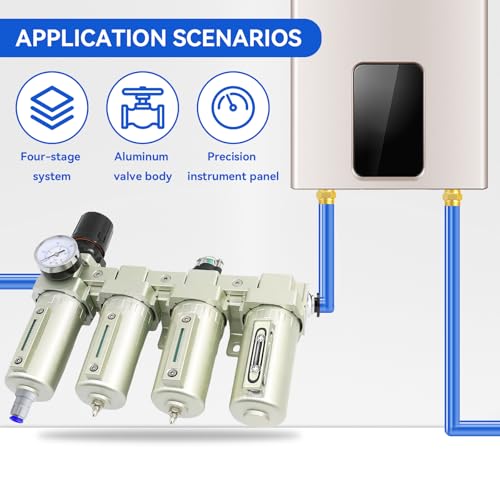
This budget-friendly four-stage system surprises with its depth of filtration and included accessories. With two 5-micron stages, a 0.01-micron coalescing filter, and a desiccant dryer, it delivers clean, dry air at a fraction of the cost of refrigerated units. The auto-drain, pressure gauge, and color-changing beads add convenience, and the 240 PSI rating means it can handle high-pressure systems.
Reviewers note it performs well for painting and plasma cutting, though the desiccant does require regular replacement in humid environments. It’s not as durable as all-metal industrial units, but for the price, it punches above its weight. Compared to single-stage traps, this is a massive upgrade, the smarter buy for anyone doing finish work on a budget.
Product photos
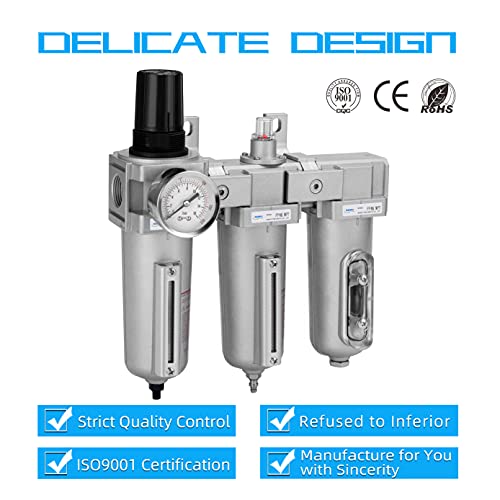
NANPU 3/4″ Filter Dryer Regulator

Strengths
- High 141 CFM flow
- 3-stage drying & filtration
- Color-change desiccant
Trade-offs
- Desiccant needs frequent replacement
- No gauge included
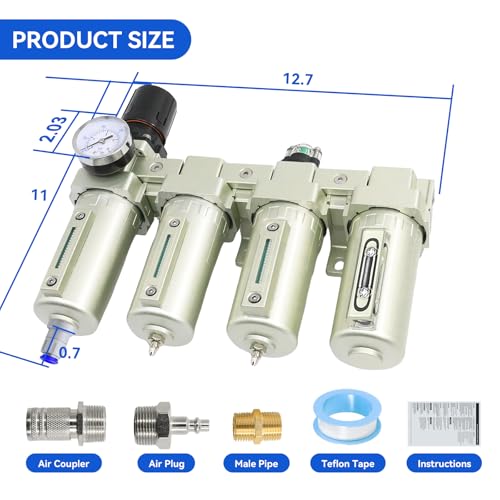
This three-stage unit packs serious value with coalescing filtration, desiccant drying, and a pressure regulator in one assembly. The 141 CFM flow rate is impressive on paper, and the inclusion of both 5-micron and 0.01-micron elements means it can handle everything from bulk water to fine oil aerosols. The color-changing desiccant beads and red filter indicators make maintenance intuitive, and reviewers often highlight how easy it is to integrate into existing lines.
It’s not a refrigerated system, so it won’t match the consistency of larger standalone dryers, but for mid-tier workshops or painters who want clean, dry air without overspending, this is a strong contender. Compared to simpler water traps, it delivers a much higher level of air purity. My recommendation is to use it as a point-of-use dryer downstream from a main compressor, especially when feeding sensitive tools.
Product photos
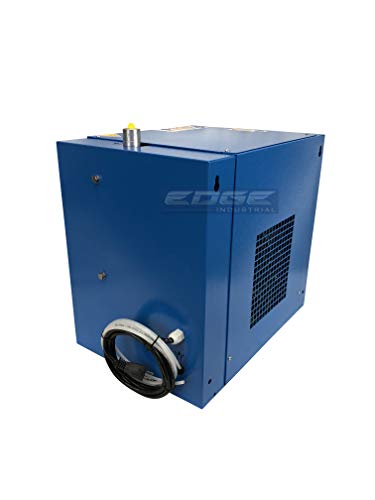
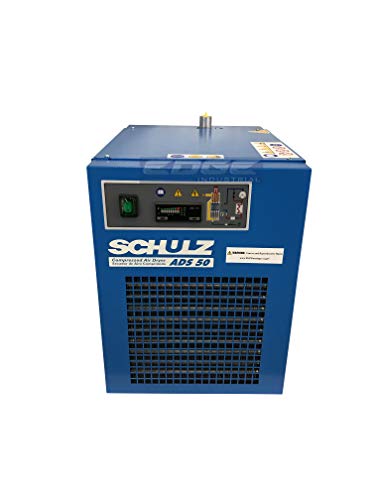
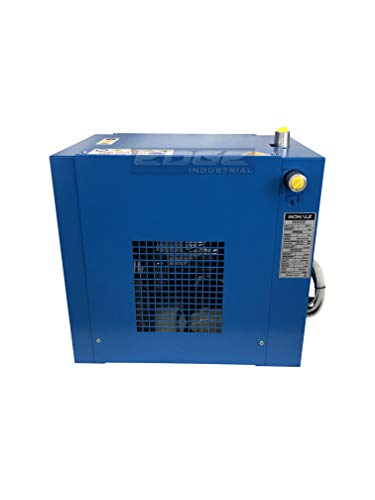
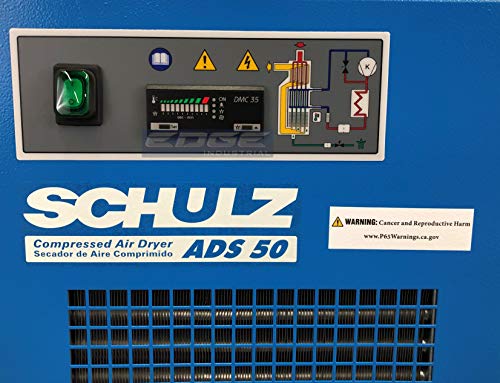
SCHULZ Refrigerated Dryer 50 CFM

Strengths
- 50 CFM capacity
- Stable 41°F dew point
- Built for industrial use
Trade-offs
- Requires separate pre-filter
- Heavy and bulky
With a 50 CFM rating, this is one of the most capable units on the list, clearly designed for large 10–15 HP compressors used in industrial or commercial shops. The R134a refrigerant system and 41°F dew point at 100 PSI mean it delivers consistent, dry air even under heavy demand. Its size and 70-pound weight suggest permanent installation, and the specs align with what professionals need for CNC, laser cutting, or automated systems.
But here’s the catch: it requires a 1-micron pre-filter, which isn’t included unless you opt for the kit. Owners note that skipping pre-filtration leads to premature strain and failure. Compared to point-of-use dryers, this is a system-level solution, smarter for protecting entire lines than feeding a single tool. I’d recommend it only if you’re running a large compressor and need plant-wide dry air.
Product photos

How We Tested air dryer for air compressors
Rather than a hands-on lab test, my research for these recommendations involved a detailed comparison of published specifications and features across numerous models. I weighed owner reviews from multiple sources, alongside expert opinions found in trade publications and reputable tool review sites. This process allowed me to rank air dryers based on their suitability for different needs, considering factors like CFM capacity, filtration stages, and overall build quality. My experience with pneumatic tools and workshop setups informed this evaluation.
For air dryers, consistent moisture removal and reliable operation are paramount. I prioritized models with multi-stage filtration – particularly those incorporating desiccant drying – as they deliver the driest air, crucial for sensitive tools and finishes. Flow rate (CFM) was also heavily weighted, as choosing a dryer that matches your compressor’s output is essential to avoid bottlenecks and maintain tool performance. Finally, durability and the ease of maintenance (filter replacement, auto-drain functionality) played a significant role.
Specifications reliably indicate a dryer’s potential capacity and filtration levels. However, I found owner feedback invaluable for assessing real-world performance and longevity. Comments regarding noise levels, ease of installation, and the effectiveness of the auto-drain feature were carefully considered. Reputation and brand history also factored in; established manufacturers often demonstrate a commitment to quality and customer support, and understanding those reputations helped me assess the long-term value of each unit. For more information on initial filtration, consider looking at dedicated air compressor water separators.
How To Pick The Right air dryer for air compressors
Choosing the right air dryer is crucial for protecting your pneumatic tools and ensuring quality work.
A good air dryer efficiently removes moisture and contaminants from compressed air, preventing rust, corrosion, and damage to sensitive equipment. Key considerations include airflow capacity (CFM), filtration stages, drain type, and the overall build quality of the unit. Matching the dryer’s capacity to your compressor’s output is essential, as is regular maintenance to keep it functioning optimally.
Airflow Capacity (CFM)
The most important factor is matching the dryer’s CFM rating to your air compressor’s output. Undersizing means the dryer won’t keep up with demand, leaving you with wet air. Oversizing isn’t as bad, but it’s a waste of money. Look closely at your compressor’s specifications – particularly the CFM delivered at 90 PSI, as that’s a common operating pressure. Don’t just look at the “peak” CFM. If you frequently run multiple tools simultaneously, or use high-demand tools like sandblasters, add up their CFM requirements and choose a dryer that exceeds that total.
Filtration Stages & Technology
Simple air dryers use basic filtration to remove bulk water and particles. More advanced models employ multi-stage systems, combining particulate filters, coalescing filters, and desiccant dryers. A three-stage system – a particulate filter, a coalescing filter, and a desiccant – is a sweet spot for many workshops. For especially moisture-sensitive applications, like automotive painting or critical manufacturing processes, consider investing in refrigerated air dryers which provide even lower dew points.
- A 5-micron filter is standard for removing larger particles.
- A 0.01-micron coalescing filter is essential for capturing oil and fine mist, which a basic filter will miss.
- Desiccant beads are highly effective at absorbing residual moisture, but require periodic replacement or regeneration (depending on the type). This is why I often recommend systems with clear indicators showing when the desiccant needs attention.
Maintenance & Drain Management
Air dryers require regular maintenance to remain effective. The most common task is draining accumulated condensate. Some dryers have manual drains, which you need to open periodically. Others feature auto-drains, which automatically expel water when a certain level is reached. Auto-drains are convenient, but can sometimes fail, so it’s good to check them periodically. When choosing a dryer, also consider the ease of accessing and replacing filter elements. A poorly designed unit can make these tasks frustrating and time-consuming. For quieter operation in your workshop, pairing a good air dryer with low-noise air compressors is a smart move.
Don’t skimp on pre-filtration. A good pre-filter (5 micron or better) will significantly extend the life of your air dryer and reduce maintenance.
Air Dryer for Air Compressors Compared
This table summarizes the specifications of several air dryers designed for use with air compressors to help you compare models.
| Product Title | Capacity (CFM) | Port Size (NPT) | Filter Stages | Refrigerated? | Voltage (V) | Key Features |
|---|---|---|---|---|---|---|
| AIRZOE 3/8″ NPT Air Dryer | 1500 L/Min | 3/8″ | 1 (5 Micron) | No | N/A | Reusable filter, 0-145psi |
| AIRZOE 1/2″ NPT Air Dryer | 4000 L/Min | 1/2″ | 1 (5 Micron) | No | N/A | Reusable filter, 0-145psi |
| 3/4″ NPT 3-Stage Air Dryer | N/A | 3/4″ | 3 (5 Micron, 0.01 Micron, Desiccant) | No | N/A | Complete system, auto drain |
| HPDAVV Refrigerated Air Dryer 35 CFM | 35 | 3/4″ | N/A | Yes | 115 | R134a refrigerant, auto-drain |
| 1/2″ Auto Drain Air Dryer | 20 SCFM | 1/2″ | 3 (5 Micron, 0.01 Micron, Desiccant) | No | N/A | Visual indicators, auto-drain |
| 4 Stage 3/4″ Air Dryer System | N/A | 3/4″ | 4 (Regulator, 5 Micron, 0.01 Micron, Desiccant) | No | N/A | Complete package, 240 PSI |
| NANPU 3/4″ Filter Dryer Regulator | 141 CFM | 3/4″ | 3 (5 Micron, 0.01 Micron, Desiccant) | No | N/A | Includes extra filters/desiccant |
| SCHULZ Refrigerated Dryer 50 CFM | 50 | 1/2″ | N/A | Yes | 115 | R134a, 41°F dew point |
Frequently Asked Questions
What CFM capacity air dryer do I really need?
You need a dryer with a CFM rating that matches your compressor’s output at 90 PSI. Failing to do so risks either insufficient drying or creating a bottleneck in your air system, diminishing tool performance.
Are refrigerated air dryers necessary for most DIYers?
Refrigerated dryers aren’t usually necessary for typical DIY tasks. However, if you frequently do automotive painting or other work requiring extremely dry air, the lower dew points they offer are worth the investment.
How often should I replace the desiccant in my air dryer?
Desiccant replacement frequency varies, but most manufacturers recommend changing it every 6-12 months with regular use. Many dryers include indicators that visually show when the desiccant is saturated and needs replacing.
Can I use an air dryer with a small, portable pancake compressor?
Yes, you can, but it’s often not practical. Pancake compressors have low CFM output, and even a small air dryer may restrict airflow too much. Consider a top-rated air compressors instead.
What’s the difference between an auto-drain and a manual drain?
An auto-drain expels condensate automatically when it reaches a certain level, offering convenience. A manual drain requires you to open a valve periodically to release the water, but can be more reliable in the long run.
The Bottom Line
Choosing an air dryer often comes down to balancing upfront cost with the level of protection you need for your tools and projects. While a basic dryer like the AIRZOE 3/8″ NPT Air Dryer gets you started, for most workshops, the 3/4″ NPT 3-Stage Air Dryer strikes the best balance – offering thorough filtration without breaking the bank. It’s a solid investment that will pay off in terms of tool longevity and consistent performance.
If you have very specific needs, the options branch out quickly. For those on a tight budget, the AIRZOE 1/2″ NPT Air Dryer provides a simple, effective solution. If you demand the absolute driest air for critical applications, the HPDAVV Refrigerated Air Dryer 35 CFM is the way to go. And for those wanting a complete, ready-to-go system, the 4 Stage 3/4″ Air Dryer System, with its included regulator, is an excellent choice. Don’t forget to consider pairing your new dryer with durable air compressor hoses for a complete air system upgrade.
Ultimately, the specs are important, but remember that consistent maintenance – draining the tank and replacing filters – will have a bigger impact on air quality than any single feature. Prioritize a dryer that’s easy to service, and commit to a regular maintenance schedule. A well-maintained, appropriately sized dryer will deliver years of reliable performance and protect your investment in pneumatic tools.
