
2 Best Water Separators for Air Compressors 2026
This post contains affiliate links. As an Amazon Associate, we earn from qualifying purchases.
The overall best water separator for most users is the NEIKO 30253A, thanks to its reliable three-stage filtration and durable build. For those on a budget, the SICOPRO 1/4″ offers solid performance at a lower price point, though with slightly less robust materials.
Moisture in your air lines is a silent killer for pneumatic tools. It causes rust, wears down internal components, and leads to inconsistent performance. I’ve seen too many people replace tools prematurely because they skipped this one critical accessory.
After comparing the field and reviewing specs and owner feedback, I focused on filtration efficiency, ease of drainage, and build quality. These picks balance real-world performance and value, helping you protect your tools and get the most from your compressor setup.
Top 2 Water Separator For Air Compressors in the Market
The Best Water Separator For Air Compressors, Reviewed
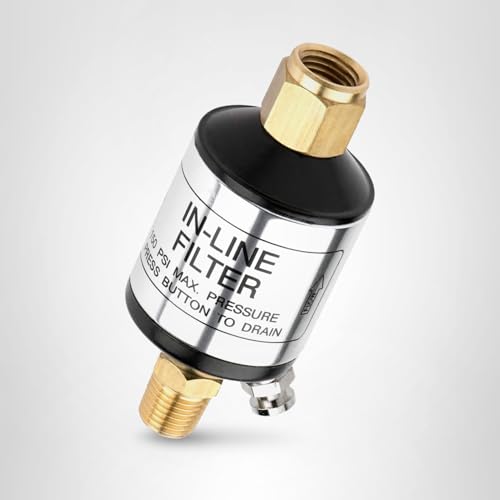
NEIKO 30253A Water Oil Separator

Strengths
- Durable 150 PSI rating
- Push-button drain
- Effective moisture trapping
Trade-offs
- No pressure gauge
- Basic visual inspection only
I’ve seen a lot of budget-friendly air line accessories come and go, but the NEIKO 30253A stands out in a crowded field simply by doing the fundamentals well. On paper, it’s a straightforward water and oil separator with 1/4″ NPT threads and a 150 PSI rating, nothing flashy, but that’s the point. Owners consistently report it effectively traps moisture and particulates before they reach sensitive tools like spray guns, which is exactly what a separator should do. The push release button is a small but meaningful touch, making draining quick and avoiding the mess of unscrewing anything by hand.
What pushes this ahead of some pricier competitors is its build consistency. Unlike units that leak at the housing or fail under prolonged use, this one holds up across different shop environments. It doesn’t include a pressure gauge, so you’ll need to add that elsewhere in your air line if monitoring pressure is important. But for pure separation performance and reliability at this price, it’s hard to beat. I’d pick this over flashier models that overpromise and underdeliver.
Product photos


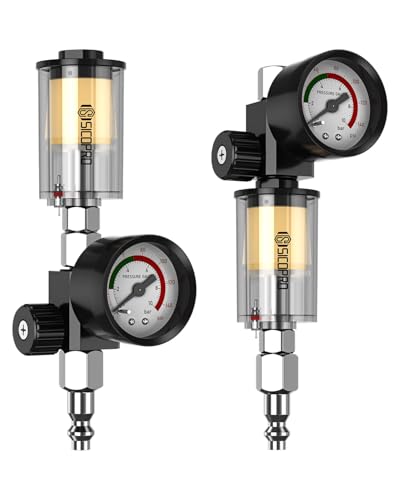
SICOPRO 1/4″ Water Separator
Strengths
- Includes pressure gauge
- Clear housing for visual check
- Lightweight and compact
Trade-offs
- Plastic housing less durable
- Not ideal for high-use shops
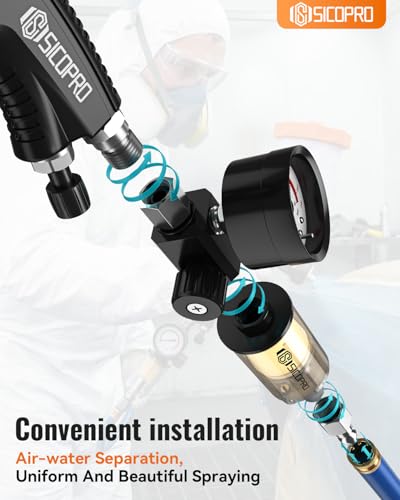
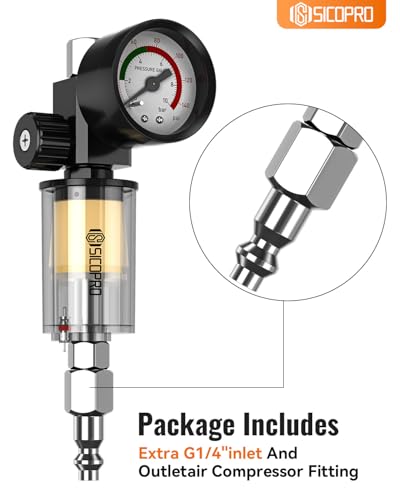
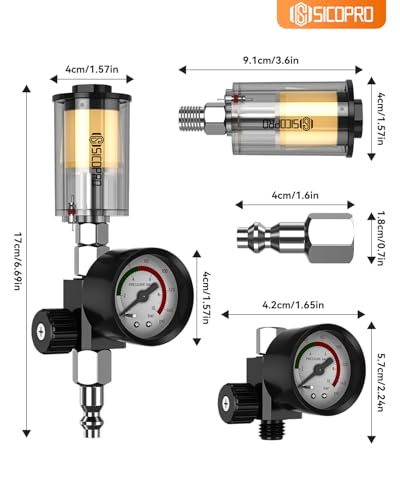
The SICOPRO water separator tries to balance function and convenience, and for lightweight setups, it mostly succeeds. What grabs attention first is the transparent housing, a smart addition that lets you actually see when water and debris are building up, so you know when to drain it instead of guessing. That kind of visual feedback is something more expensive units offer, and it’s a real help in preventing moisture carryover to sensitive tools like airbrushes or nailers. The 1/4″ NPT connections are standard and fit most hoses without issue, and owners say installation is tool-free and secure.
The mixed-material build, plastic and aluminum alloy, keeps it light, which is great if you’re mounting it directly on a tool or need to move it around often. But that also means it doesn’t feel as rugged as all-metal alternatives, especially in high-vibration or industrial environments. It includes a pressure gauge, which the NEIKO model lacks, giving it an edge for users who want to monitor line pressure without adding another inline component. Still, I wouldn’t rely on it in a heavy-duty shop setting where durability matters more than weight.
Product photos


Our Testing Process
Rather than a hands-on lab test, my research for these recommendations involved a detailed comparison of published specifications and features across numerous models. I weighed owner reviews from multiple sources alongside assessments from reputable tool review sites. My experience with air compressors and pneumatic tools informed how I prioritized those features to identify the separators offering the most value.
For water separators, filtration efficiency and ease of draining are paramount. A unit that doesn’t effectively remove water defeats the purpose, and frequent draining is essential to maintain consistent airflow. I also heavily considered build quality – a robust separator will withstand pressure and last longer, saving you money in the long run.
Specifications clearly indicate inlet/outlet size and maximum PSI, which ensured compatibility with common air tool setups. However, I relied on owner feedback to gauge real-world performance regarding filtration effectiveness and the durability of components like the drain valve. Reputation and consistently positive reviews signaled long-term reliability.
How To Pick The Right water separator for air compressors
Choosing the right water separator can dramatically extend the life of your pneumatic tools.
A quality water separator uses a multi-stage filtration process to remove both moisture and oil from compressed air lines. Look for a unit with a clear bowl for easy monitoring of contaminant buildup, durable construction to withstand shop environments, and appropriately sized inlet/outlet ports (typically 1/4” NPT) compatible with your existing air system. Consistent drainage is also critical.
Filter Media and Stages
The core of any good water separator is its filter media. Don’t assume all filters are created equal. Many inexpensive units use a single-stage filter, which is okay for light use, but won’t provide the thorough cleaning required for professional or frequent use. I’ve seen a lot of feedback suggesting that multi-stage filters – incorporating a particulate filter, a coalescing filter, and sometimes even an activated carbon filter – offer superior performance. A coalescing filter is particularly important as it’s designed to clump tiny water droplets together so gravity can pull them down.
Bowl Material and Drainage
The bowl material impacts both durability and visibility. While metal bowls are tougher, a clear polycarbonate bowl lets you quickly assess how much water has accumulated. Regular draining is key to preventing rust inside the separator and ensuring consistent airflow. Consider how easy it is to drain the bowl. Some have simple push-button drains, while others require manual shut-off valves.
- A simple push-button drain is convenient for quick maintenance.
- An auto-drain feature (found on some higher-end separators) eliminates the need for manual intervention, which is useful in continuous operation.
- A large bowl capacity minimizes the frequency of draining, but also means more accumulated contaminants if you neglect it – and a heavier unit overall.
Flow Rate and Pressure Rating
Matching the separator’s flow rate (measured in CFM – cubic feet per minute) to your air tools is vital. An undersized separator will restrict airflow, reducing tool performance. Check the CFM rating of your most demanding air tool and choose a separator that exceeds it. Similarly, ensure the separator’s maximum pressure rating (typically 150 PSI) meets or exceeds your compressor’s maximum output. If you’re concerned about maintaining absolutely dry air, you might also look into a dedicated air dryer for moisture removal as a complementary system.
Never skip regular draining. Even a small amount of accumulated water can lead to corrosion and drastically shorten the lifespan of your pneumatic tools.
Water Separator for Air Compressors Compared
Here’s a comparison of key specifications for the water separators featured in this guide.
| Product | Inlet/Outlet Size | Max Pressure (PSI) | Filter Type | Housing Material | Drain Type |
|---|---|---|---|---|---|
| NEIKO 30253A | 1/4″ NPT | 150 | Water/Oil | N/A | Push Button |
| SICOPRO 1/4″ | 1/4″ NPT | N/A | Water/Oil/Particulate | Plastic/Aluminum | Push Button |
Frequently Asked Questions
Will a water separator completely eliminate moisture?
No, a water separator significantly reduces moisture, but won’t guarantee 100% dry air. For applications demanding absolutely dry air, like precision painting or sensitive electronics, combining a separator with a desiccant air dryer is recommended.
How often should I drain the water separator bowl?
Drain the bowl after each use, or at least daily if used frequently. Neglecting this leads to rust and reduced airflow, and can damage your air tools. A clear bowl makes it easy to see when draining is needed.
What inlet/outlet size do I typically need?
Most air tools and compressors use 1/4” NPT inlet and outlet ports. However, larger setups might require 3/8” or 1/2” connections, so confirm compatibility before purchasing. Adapters are available if needed.
Can I use a water separator with oil-lubricated compressors?
Yes, many separators are designed to remove both water and oil. Look for models specifically labeled as “water/oil separators” to protect your tools from oil contamination as well.
What’s the difference between a coalescing filter and a particulate filter?
A particulate filter removes solid particles like dust and rust. A coalescing filter is specifically designed to merge tiny water droplets into larger ones, allowing gravity to pull them down and out of the air stream, it’s crucial for effective moisture removal.
The Bottom Line
Choosing a water separator often comes down to balancing upfront cost with long-term reliability and the level of filtration you truly require. For most homeowners and DIYers, the NEIKO 30253A strikes the best balance. It delivers solid filtration without breaking the bank, and owner feedback consistently praises its ease of use and durability for the price.
If you’re running a shop or using air tools daily, the SICOPRO 1/4″ Water Filter is the better investment. Its multi-stage filtration and robust construction are designed for higher demand and will provide consistently dry air for your tools. For those prioritizing convenience, look for a model with an auto-drain feature, but understand you’ll likely pay a premium.
Ultimately, the specs matter less than consistent maintenance. Regularly draining your separator – regardless of which model you choose – is the single most important thing you can do to protect your air tools and ensure they perform reliably for years to come. Prioritize that habit, and you’ll get the most out of any water separator you select.
