
8 Best Air Compressor Hoses of 2026
This post contains affiliate links. As an Amazon Associate, we earn from qualifying purchases.
The Flexzilla 3/8-inch 50-foot hybrid hose is the overall best choice for most users, delivering outstanding flexibility and durability, while the RainBello 25-foot polyurethane hose stands out as a solid budget-friendly pick for lighter tasks. For those needing versatility and high airflow, the YOTOO 3/8-inch hybrid hose is a strong contender.
Most people underestimate how much a poor hose can slow down a job. Kinks, leaks, and stiff coiling waste time and sap tool performance. After comparing the field and analyzing specs and owner feedback, I focused on what actually matters: airflow, durability, and real-world usability.
This guide breaks down the top options based on proven performance, material quality, and practical features, so you can pick the right hose for your tools and workspace.
Top 8 Air Compressor Hoses in the Market
The Best Air Compressor Hoses, Reviewed
Flexzilla 3/8 in. x 50 ft Hose

Strengths
- No kink, no memory
- All-weather flexibility
- Aircraft aluminum fittings
Trade-offs
- Higher price
- ZillaGreen color not for everyone
- Can attract dust
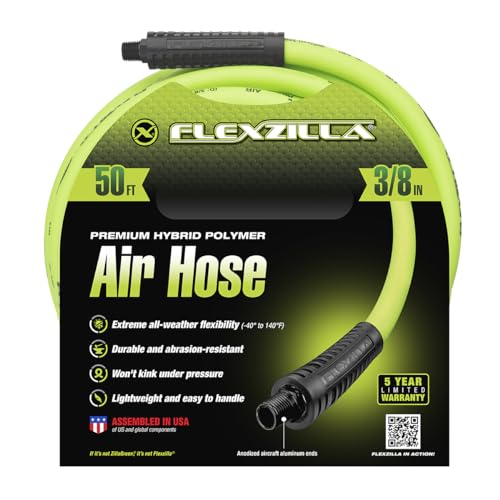
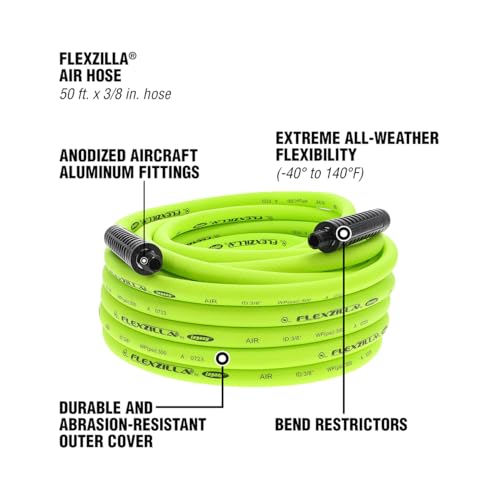
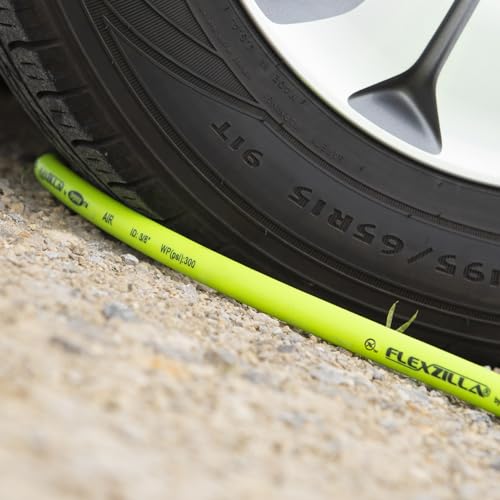
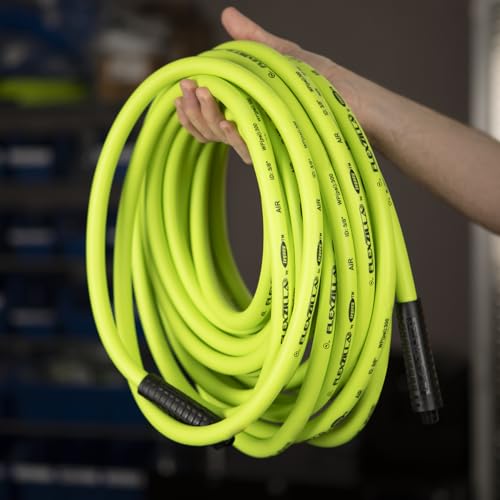
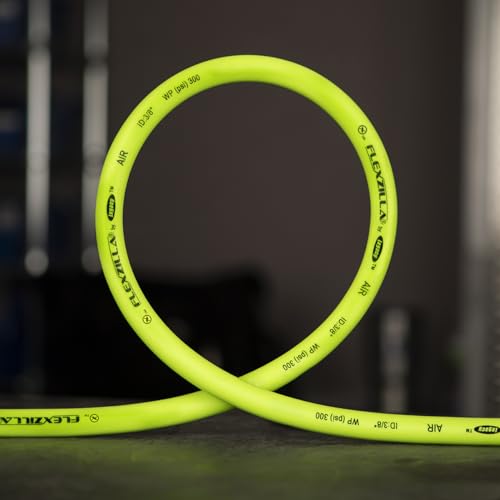
If I had to pick one hose for a general-purpose shop, it’d be the Flexzilla. Its hybrid polymer core delivers zero memory, meaning it lays flat, coils easily, and doesn’t fight you like rubber hoses do. The 3/8-inch diameter and 300 PSI rating ensure strong airflow over 50 feet, and the aircraft aluminum fittings with bend restrictors are built to last.
Owners consistently praise its performance in freezing temps, where it stays flexible when others stiffen. It’s also the benchmark others try to match, YOTOO, JOROY, and EVOULTES all borrow its design language. While it costs more, the durability and usability justify it. This is the hose I’d recommend to anyone building a reliable, long-term setup.
Product photos
RainBello 25FT Reinforced Polyurethane Hose
Strengths
- 300 PSI rating
- Braided reinforcement
- Swivel brass fittings
Trade-offs
- Shorter length
- Smaller diameter limits airflow
- Higher price than basic coils
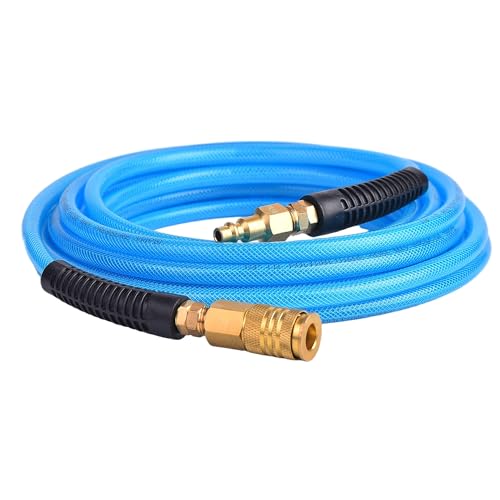
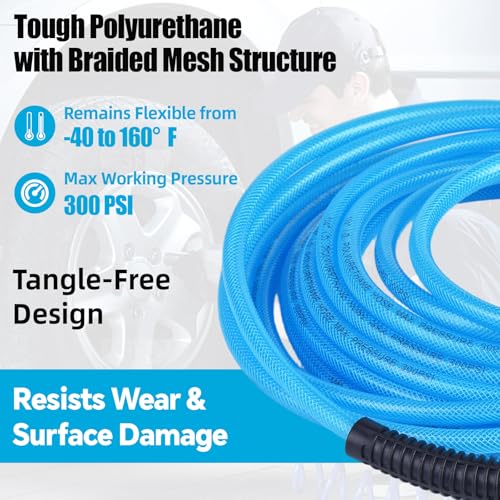
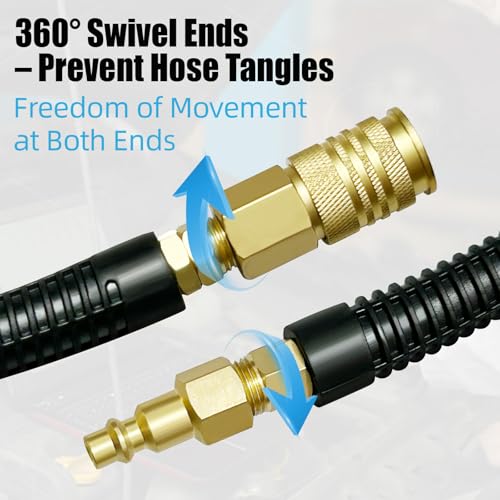
The RainBello hose packs a surprising punch for a 25-foot 1/4-inch line. It’s rated for 300 PSI, unusual at this length and diameter, and backed by a braided polyurethane construction that owners say resists crushing and abrasion better than standard PU hoses. The swivel brass fittings reduce twist and help prevent leaks, a detail pros appreciate during repetitive tasks.
Its flexibility in extreme temperatures, from -40°F to 160°F, makes it a strong contender for unheated garages or outdoor use. But the 1/4-inch ID still limits airflow compared to 3/8-inch hoses, so it’s best for spot use rather than continuous high-volume demand. I’d choose this over the Hromee any day for durability, but not over the Flexzilla for daily heavy use.
Product photos

JOROY 3/8-Inch by 50 Feet Hybrid

Strengths
- 300 PSI rating
- Three-layer durability
- Full-length 3/8-inch ID
Trade-offs
- Brass fittings less durable
- Slightly stiffer than Flexzilla
- No lifetime warranty
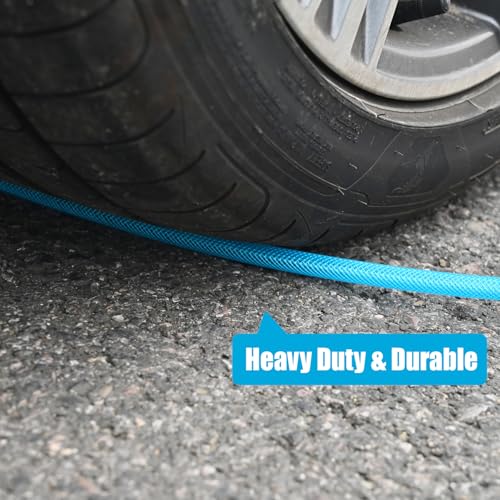
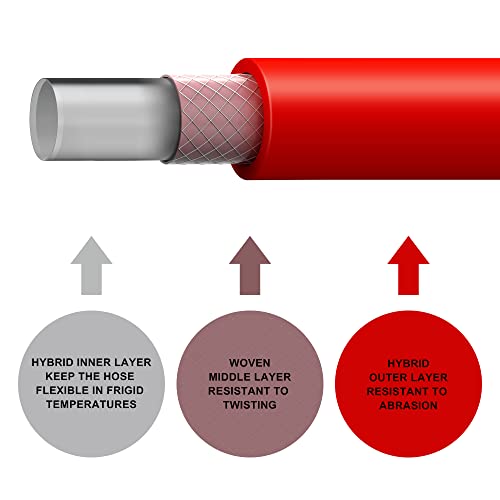
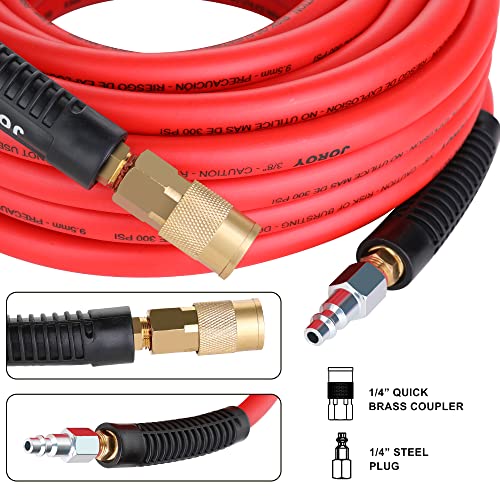
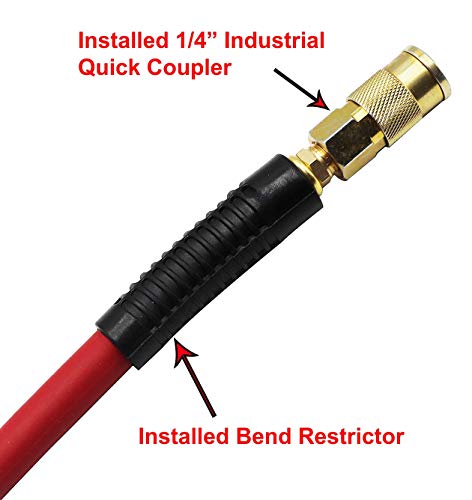
JOROY’s 50-foot hybrid hose is one of the best value picks in this group. It matches the Flexzilla in diameter, length, and 300 PSI rating, but often comes in at a lower price. The three-layer construction, inner, polyester braid, outer, adds real durability, and the bend restrictors work well to prevent kinks at the fittings.
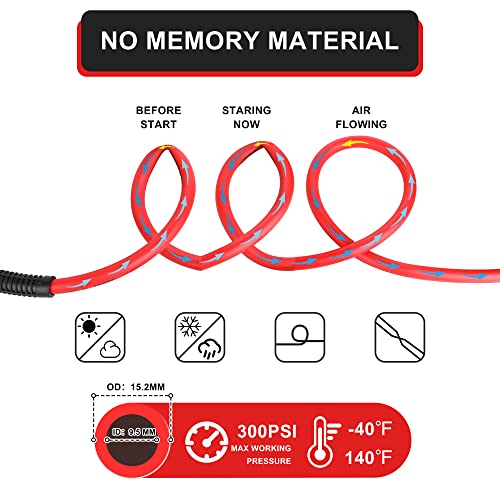
The hybrid material blends rubber’s flexibility with PVC’s abrasion resistance, and owners say it holds up well in cold weather. The only real downside? The fittings are brass, not aircraft aluminum, so they’re a bit heavier and less crush-resistant. But for the money, it’s hard to beat. I’d choose this over the YOTOO if I wanted similar performance for less.
Product photos


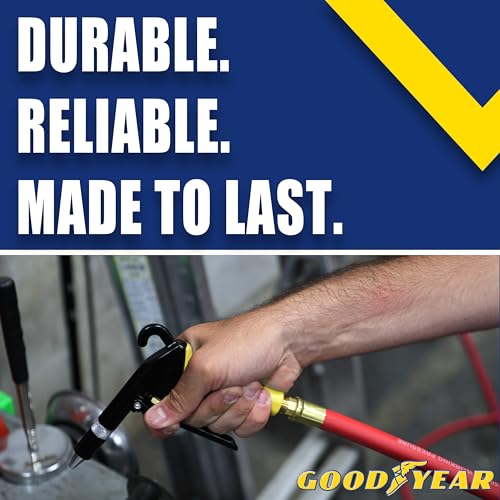
Goodyear 50′ x 3/8″ Hybrid Hose

Strengths
- Made in USA
- Solid brass fittings
- Spiral reinforcement
Trade-offs
- Lower 250 PSI rating
- Slightly stiffer handling
- Fewer color options
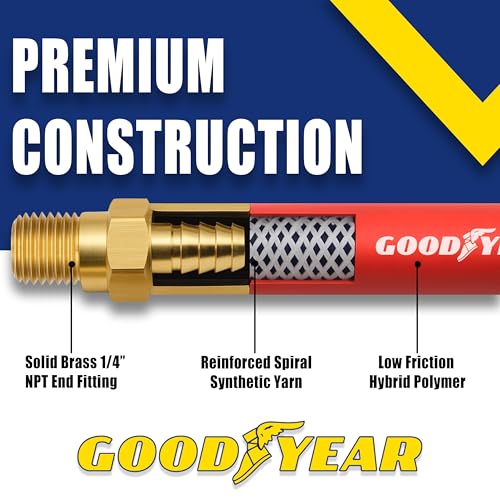
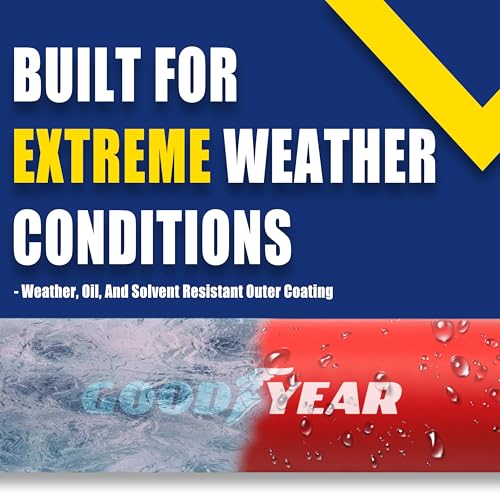
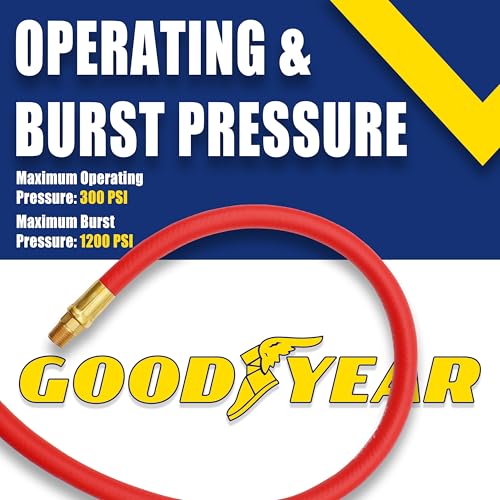
The Goodyear hybrid hose wins points for Made in USA construction, a rare find in today’s market. Its spiral synthetic yarn reinforcement and solid brass fittings give it a rugged, no-nonsense build that owners say feels more substantial than imported alternatives. The 3/8-inch diameter ensures good airflow, and it resists kinking well, though it doesn’t lay as flat as Flexzilla.
It’s rated for 250 PSI, lower than the 300 PSI standard, so it’s not ideal for the most demanding tools. But for users who value domestic manufacturing and solid materials, it’s a strong contender. I’d pick Flexzilla for performance, but Goodyear if patriotism and build transparency matter.
Product photos
YOTOO 1/4″ x 25′ Polyurethane Recoil
Strengths
- Self-coiling design
- Cold-weather flexibility
- Removable fittings
Trade-offs
- 1/4-inch ID limits airflow
- Not for heavy tools
- Shorter reach
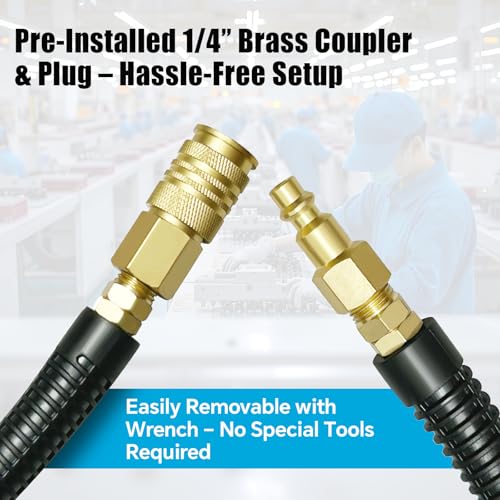
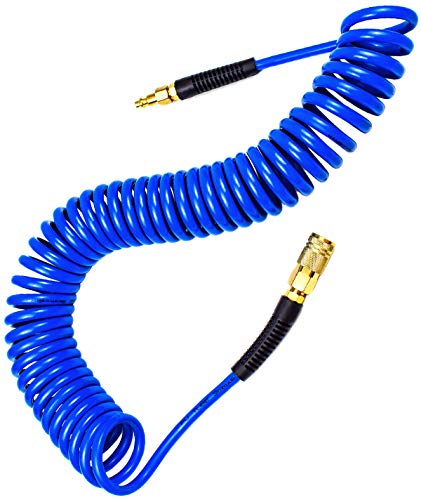
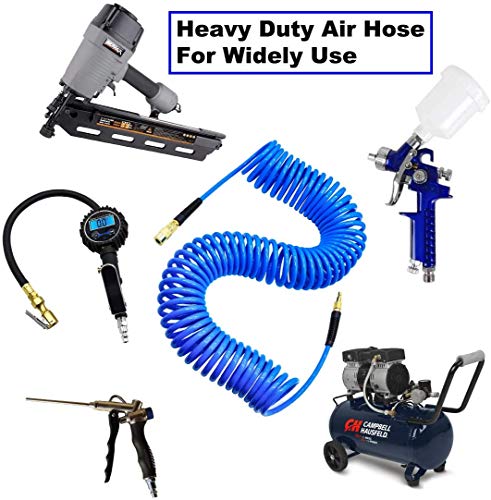
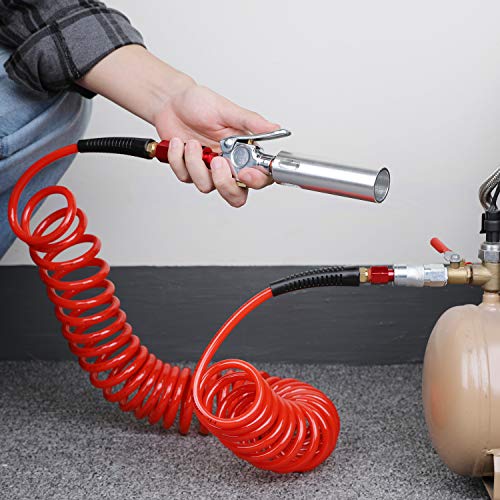
This YOTOO recoil hose is the go-to for users who hate storing long hoses. The 25-foot polyurethane coil retracts neatly, resists kinks, and handles cold weather down to -40°F, owners love that it stays flexible in winter. The 150 PSI rating is better than the Hromee, and the included coupler and plug are industrial-grade and removable.
It’s not for high-demand tools, but for air blow guns, tire inflators, or light-duty staplers, it’s a tidy, efficient solution. The blue color helps it stand out, and the two-year warranty adds peace of mind. Between recoil hoses, this one beats the Hromee on pressure and flexibility.
Product photos


EVOULTES 1/4 In x 28 Ft Recoil

Strengths
- Repairable bend restrictors
- Extended 28 ft length
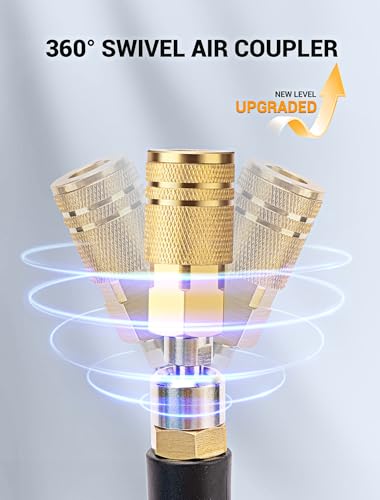
- 360° swivel coupler
Trade-offs
- Still limited by 1/4-inch ID
- Not for high-pressure tools
- Coil memory can weaken over time
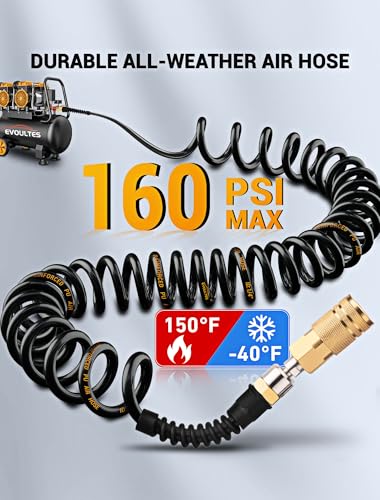
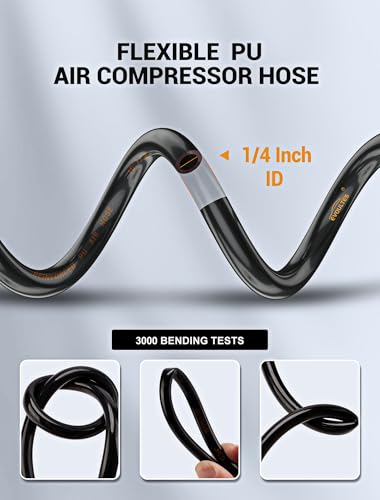
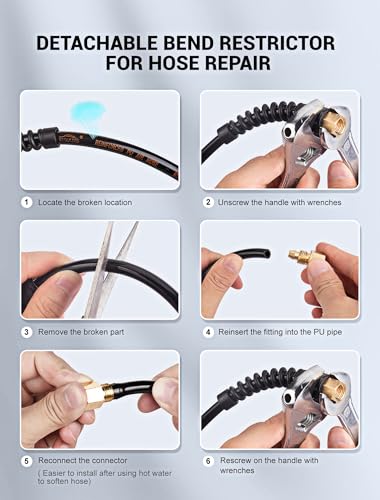
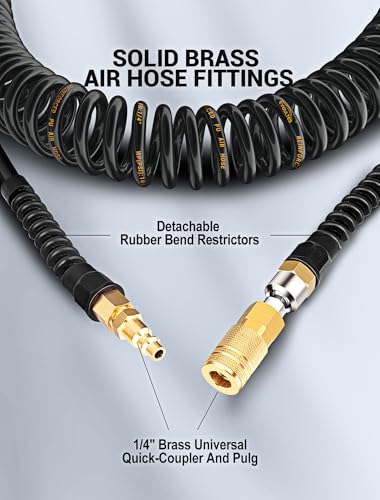
The EVOULTES hose stands out for one key reason: repairable bend restrictors. Most recoil hoses fail at the ends, but here the rubber restrictors are detachable, if the hose gets damaged, you can replace just the end, not the whole line. That’s a smart design win for long-term users tired of replacing entire coils.
At 28 feet, it’s longer than most recoil hoses, and the 360° swivel brass coupler reduces strain during use. Owners report solid performance with inflation tools and small air guns, though the 160 PSI limit still keeps it out of pro-grade territory. For home users who want a serviceable, long-lasting coil, this is the best pick.
Product photos
Hromee 1/4 in x 25 ft PU Hose
Strengths
- Lightweight
- Self-coiling
- Includes coupler and plugs
Trade-offs
- Lower max PSI
- Not for heavy tools
- Polyurethane can degrade over time
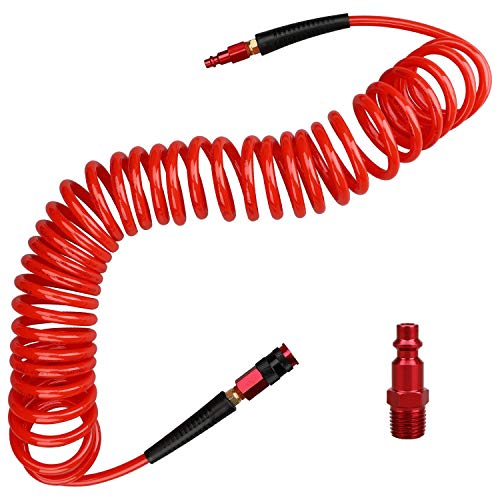
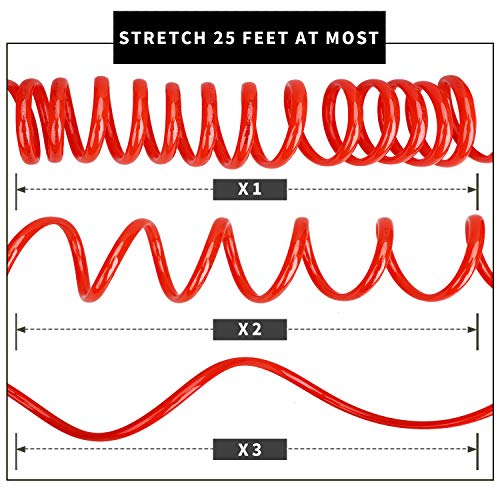
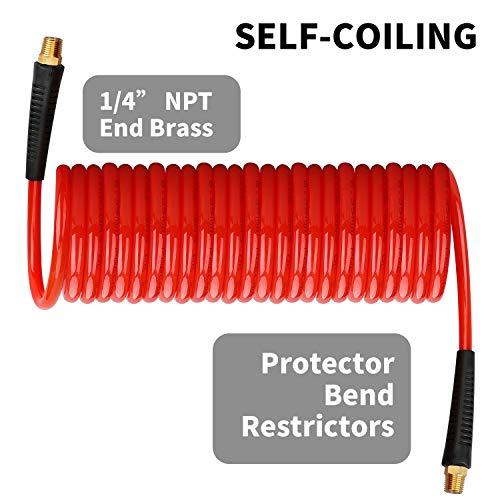
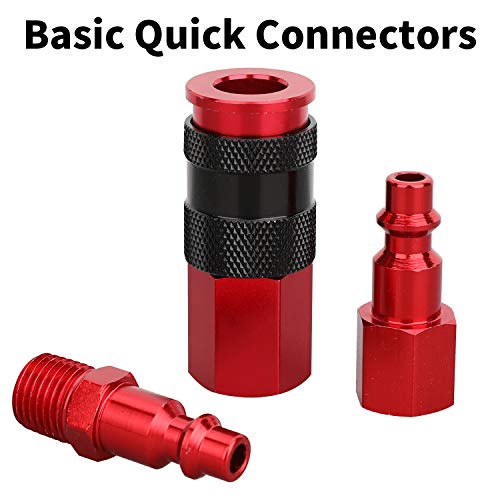
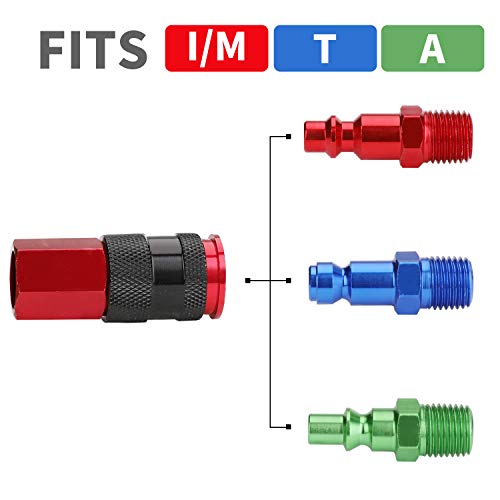
For occasional users and tight budgets, the Hromee recoil hose makes a solid first impression on paper. The 25-foot polyurethane coil is lightweight and resists kinking better than standard rubber hoses, and owners consistently report it snaps back neatly after use, no more wrestling with tangled lines. The red color stands out on cluttered job sites, and the included I/M plugs and universal coupler cover most basic tool connections.
Where it falls short is in pressure handling, it’s rated for 120 PSI, which is lower than most heavy-duty tools demand. That makes it a poor match for impact wrenches or framing nailers running at full throttle. I’d only recommend this for low-demand tasks like inflating tires or using small air brushes.
Product photos
YOTOO 3/8-Inch by 50-Feet Hybrid

Strengths
- High 300 PSI rating
- 50-foot reach
- Kink resistant
Trade-offs
- Fittings not as robust
- Slightly heavier than polymer hoses
- Not made in USA
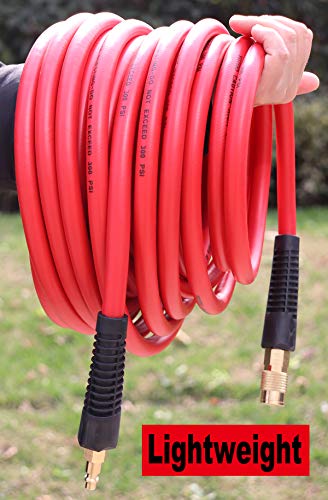
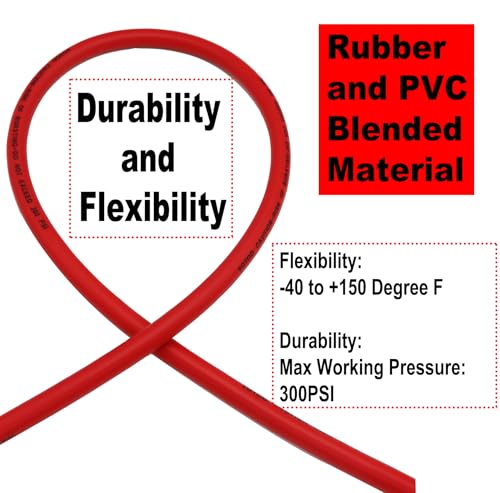
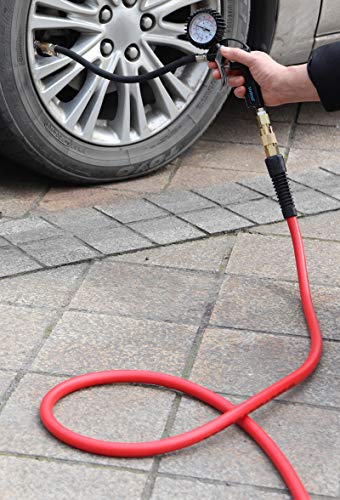
This YOTOO 3/8-inch hybrid hose stands out for its size and airflow potential. With a 3/8-inch inner diameter and 300 PSI rating, it’s built to minimize pressure drop over long runs, ideal for powering high-demand tools at the far end of a garage or workshop. The hybrid rubber-PVC blend gives it decent flexibility without sacrificing durability, and owners note it handles cold weather better than basic PVC hoses.
It’s nearly identical in specs to the JOROY and Flexzilla models, but lacks the aircraft-grade aluminum fittings or zero-memory polymers that justify premium pricing elsewhere. Still, with bend restrictors and pre-installed couplers, it’s a no-frills workhorse that gets the job done. I’d pick the Flexzilla over this if budget allows, but this is a smart alternative.
Product photos

How We Evaluated air compressor hoses
Rather than a hands-on lab test, my research for these recommendations involved a detailed comparison of published specifications and features across numerous models. I weighed owner reviews from major retailers alongside expert opinions found in tool-focused publications. Applying my experience with pneumatic tools and workshop setups, I ranked hoses against a set of criteria emphasizing durability, flexibility, and practical usability for common tasks.
For air compressor hoses, the inner diameter and working pressure are paramount. A wider 3/8-inch hose delivers significantly more airflow, crucial for tools like impact wrenches and spray guns. Working pressure of 300 PSI is a sweet spot – sufficient for most jobs without excessive weight or cost. Beyond these, the quality of the fittings and overall construction heavily influenced my rankings.
Specifications readily reveal things like inner diameter, pressure ratings, and material composition. However, real-world performance – how a hose handles kinks, coils, and resists abrasion – relies heavily on owner feedback. I prioritized hoses consistently praised for flexibility and durability, and paid attention to comments about fitting quality and long-term reliability. You can find more information on best air compressor hoses on our site.
How To Pick The Right air compressor hoses
Picking the right air compressor hose is more than just grabbing the cheapest option. A good hose will save you frustration, improve tool performance, and even last for years.
A quality air compressor hose should balance flexibility for maneuverability with durability to withstand abrasion, kinks, and varying temperatures. Look for a hose with a sufficient inner diameter to support your tools’ air consumption, a working pressure that exceeds your compressor’s maximum output, and fittings appropriate for both your compressor and tools.
Inner Diameter and Airflow
Don’t underestimate the impact of inner diameter. Many homeowners assume a standard 1/4-inch hose is sufficient, but if you frequently use high-demand tools like impact wrenches or sanders, you’ll quickly notice a performance drop. A 3/8-inch inner diameter provides significantly more airflow, reducing pressure loss and allowing tools to operate at their full potential. Larger diameters aren’t always better, though – they can be bulkier and harder to manage, especially in tight spaces.
Material and Durability
The material a hose is constructed from dramatically impacts its lifespan and usability. While traditional rubber hoses are durable, they can become stiff and heavy, especially in cold weather. Polyurethane air compressor hoses offer excellent flexibility and abrasion resistance but can be pricier. Hybrid hoses attempt to blend the benefits of both, and understanding the differences in air compressor hose materials is key to choosing wisely. Consider your typical work environment: harsh job sites demand a more rugged hose than a clean garage.
- If you work in very cold temperatures, prioritize a hose specifically designed for flexibility in the cold. Rubber and hybrid options are usually better, but look for a polyurethane hose specifically rated for low temperatures.
- For general-purpose use around the home, a good quality hybrid hose will offer a good balance of durability and ease of use.
- If you need a hose that can withstand constant abrasion and rough handling, a heavy-duty polyurethane or reinforced hybrid hose is essential. These will often have a thicker outer cover and more robust fittings.
Convenience and Special Features
Beyond the core construction, consider features that improve usability. Recoil hoses, for example, automatically retract, saving storage space and reducing the risk of tripping. However, recoil mechanisms can sometimes fail, and repair options can be limited. A practical rule of thumb is this:
Prioritize a hose you can easily repair over one with a complex feature that might leave you stranded if it breaks.
Detachable bend restrictors, like those found on some newer models, are a great example of a feature that enhances repairability. A quick-connect coupler is also essential for fast tool changes, and swivel fittings prevent tangling. Consider whether you’d benefit from a hose made in the USA, like the Goodyear option, if supporting domestic manufacturing is a priority. Ultimately, the “best” hose is the one that best fits your specific needs and work style.
Air Compressor Hoses Compared
Here’s a comparison of key specifications for various air compressor hoses to help you make an informed decision.
| Product Name | Inner Diameter | Length | Max PSI | Material | Fittings | Coils/Recoil |
|---|---|---|---|---|---|---|
| Flexzilla | 3/8 in. | 50 ft | 300 | Hybrid Polymer | Aircraft Aluminum | No |
| RainBello | N/A | 25 ft | 300 | Polyurethane | 1/4″ NPT Brass | No |
| JOROY | 3/8 in. | 50 ft | 300 | Hybrid | 1/4″ Industrial | No |
| Goodyear | 3/8 in. | 50 ft | 250 | Hybrid | 1/4″ NPT Brass | No |
| YOTOO (Recoil) | 1/4 in. | 25 ft | 150 | Polyurethane | Quick Connect | Yes |
| EVOULTES (Recoil) | 1/4 in. | 28 ft | 160 | Polyurethane | 360° Swivel Brass | Yes |
| Hromee (Recoil) | 1/4 in. | 25 ft | 120 | Polyurethane | 1/4″ NPT Universal | Yes |
| YOTOO (Hybrid) | 3/8 in. | 50 ft | 300 | Hybrid | 1/4″ Industrial NPT | No |
Frequently Asked Questions
What hose length should I get?
A 50-foot hose offers the most versatility for reaching around vehicles or across a workshop. However, a 25-foot hose is often sufficient for basic tasks and easier to manage if you don’t require extensive reach.
Are recoil hoses truly reliable long-term?
While convenient, recoil hoses have more internal mechanisms that can fail compared to standard hoses. Repairing them can be difficult, so consider whether the convenience outweighs the potential for needing to replace the entire hose.
What’s the difference between 1/4-inch and 3/8-inch hoses?
A 3/8-inch inner diameter delivers approximately 50% more airflow than a 1/4-inch hose, which is crucial for powering tools like impact wrenches effectively. However, the larger hose is less flexible and can be harder to maneuver.
Can I use an air compressor hose with different fitting sizes?
No, you’ll need adapters to connect hoses with incompatible fitting sizes. Standard fittings are 1/4-inch NPT, but some tools or compressors may require different sizes, so always check compatibility before use.
What hose material is best for outdoor use in varying weather?
Hybrid polymer hoses generally perform best outdoors because they resist cracking from both heat and cold, and are less prone to kinking than rubber. If you need a hose for portable compressors for tools, a hybrid is an excellent choice.
The Bottom Line
Choosing an air compressor hose often comes down to balancing upfront cost with long-term usability. While you can get by with a basic hose, investing in a quality option like the Flexzilla will pay off in reduced frustration and improved tool performance. It strikes a great balance of durability, flexibility, and airflow for most homeowners and DIYers.
For those on a tighter budget, or needing a dedicated recoil hose for smaller tasks, the YOTOO (Recoil) offers convenience at a lower price point. Alternatively, if you anticipate needing a broader selection of tools and attachments, consider exploring readily available air compressor accessory kits to get everything you need in one package.
Ultimately, remember that inner diameter and working pressure matter more than fancy features. Prioritize a hose that delivers sufficient airflow for your tools and can withstand the demands of your workspace, and don’t skimp on quality fittings – those are often the first points of failure.
