
8 Best AC DC TIG Welders of 2026
This post contains affiliate links. As an Amazon Associate, we earn from qualifying purchases.
The PRIMEWELD TIG225X stands out as the best overall AC DC TIG welder for its strong performance and dual voltage support, closely followed by the YESWELDER 200A as a smart budget-friendly pick, while the SSimder 250A offers the most power for heavy-duty aluminum and steel work.
Picking the right AC DC TIG welder isn’t just about amps, it’s about matching the machine to the metals you’re actually working with, especially if aluminum is in the mix. Too many buyers get caught up in specs alone, only to end up with a welder that’s either underpowered or overly complex.
This guide cuts through the noise. I looked at amperage, AC balance control, pulse functionality, and real-world feedback to find models that deliver reliable performance without unnecessary fluff. These picks balance capability, ease of use, and value based on what actual owners and experienced welders say matters most.
Top 8 Ac Dc Tig Welders in the Market
The Best Ac Dc Tig Welders, Reviewed
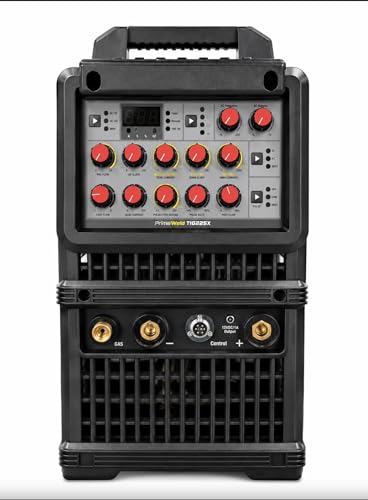
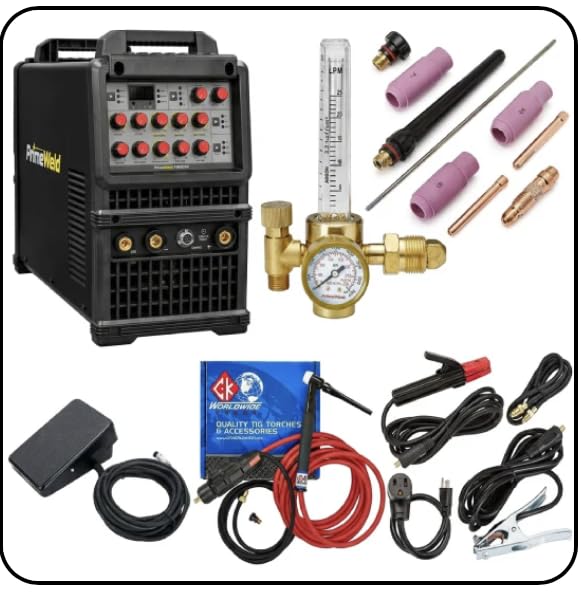
PRIMEWELD TIG225X 225 Amp AC/DC
Strengths
- CK Superflex torch included
- 200Hz pulse frequency
- Dual voltage input
Trade-offs
- No synergic mode
- Heavy for its class
- No carrying case
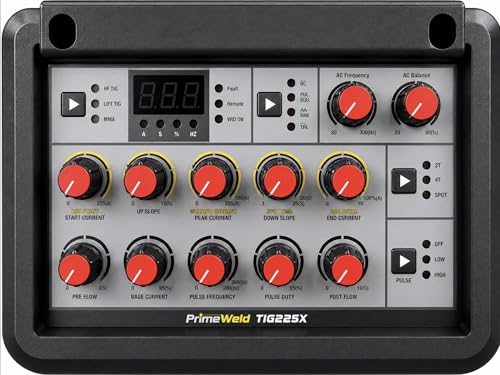
This is the best overall pick for a reason. The PRIMEWELD TIG225X combines strong specs with high-quality inclusions, especially the CK Worldwide 17 Series Superflex torch, a major upgrade over generic torches. That torch alone improves comfort and arc stability, and owners consistently praise its durability and flexibility. With 200Hz pulse and AC frequency, it handles both fine detailing and thicker material work with confidence.
The dual-voltage capability and IGBT inverter tech ensure stable performance whether you’re on 110V or 220V. It supports both HF start and foot pedal control, giving you multiple ways to manage the arc. Compared to the HITBOX and TOOLIOM models, it delivers better torch quality and more reliable pulse performance. The 5-year warranty (implied by brand standard) adds peace of mind.
Product photos


YESWELDER 200A AC/DC Aluminum TIG
Strengths
- Ultra-lightweight
- Auto memory function
- Affordable entry point
Trade-offs
- No pedal or accessories
- Basic torch build
- Pulse stability issues at low settings
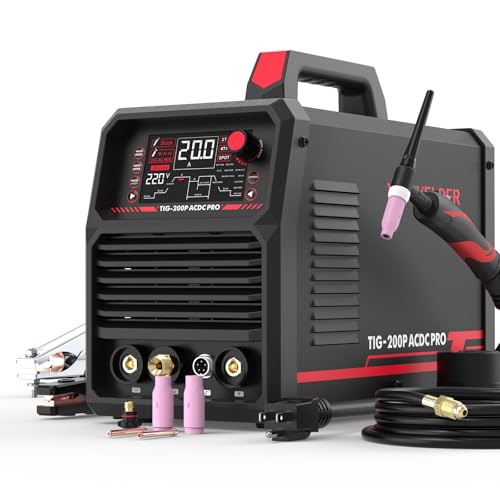
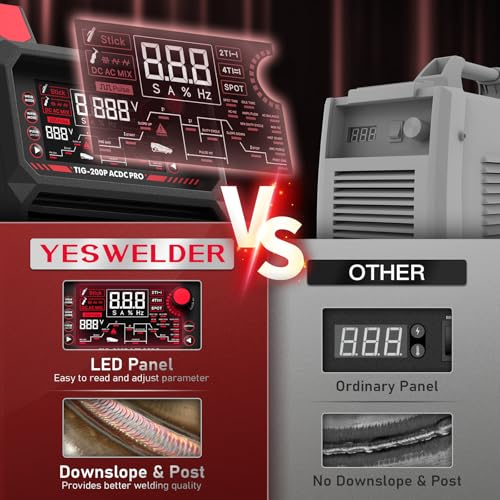
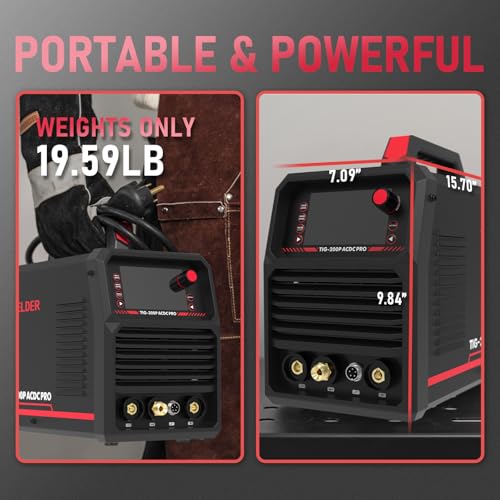
This YESWELDER hits the budget-friendly sweet spot without completely sacrificing core features. At under 16.5 lbs, it’s one of the lightest 200A AC/DC units available, making it ideal for job-site mobility or small workshops with limited space. The auto-memory function is a small but appreciated detail, settings save on power-off, so you don’t reconfigure every time.
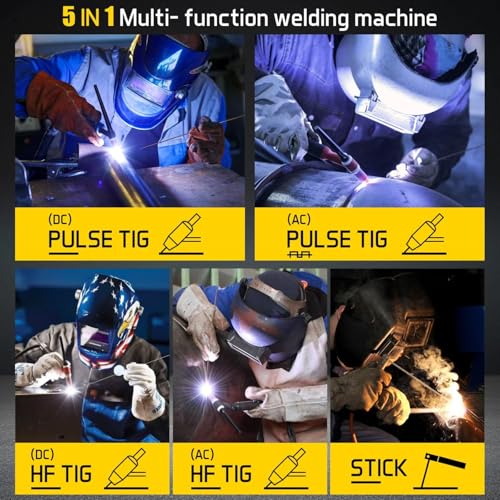
It supports all the essential TIG modes, including AC pulse with square wave, which is critical for aluminum oxide cleaning. But compared to the Weldpro, it lacks included accessories, no foot pedal, no torch beyond the basic one. Owner feedback notes decent arc start performance thanks to HF ignition, but some report inconsistent pulse behavior at very low frequencies. Still, for the price, it delivers solid entry-level AC/DC capability.
Product photos
Weldpro 200A AC/DC TIG Welder
Strengths
- Full accessory kit included
- HF arc start
- Dual voltage auto-switch
Trade-offs
- No synergic mode
- Torch could be more durable
- Display lacks backlight
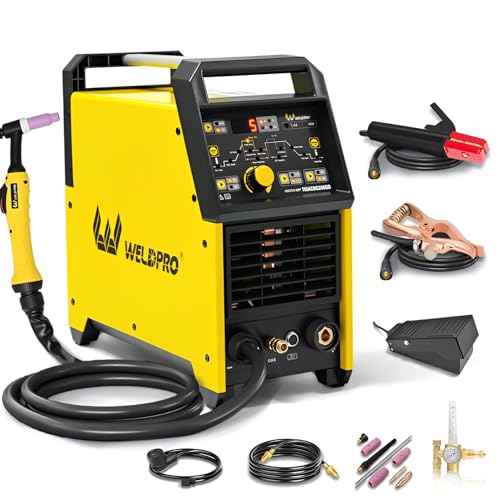
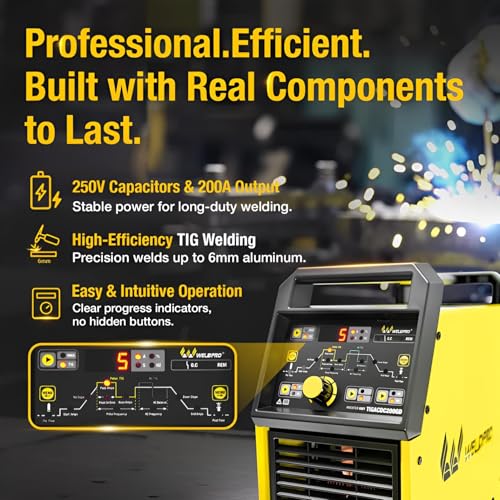
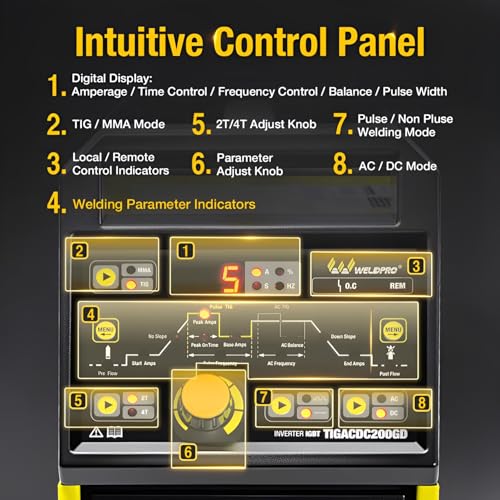
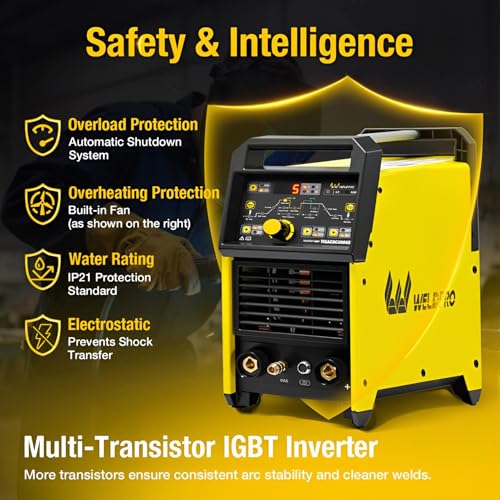
If you’re looking for the best value with everything included, this Weldpro model is hard to beat. It delivers a full accessory kit, torch, foot pedal, ground clamp, electrodes, gas hose, so you can start welding immediately, which is rare at this tier. The dual-voltage auto-detection works as advertised, and owners praise the real-world portability thanks to the built-in handle and lightweight frame.
Where it really shines is in aluminum welding performance. The adjustable AC balance and frequency let you tailor oxide cleaning and penetration, and the HF arc start reduces tungsten contamination, a common pain point for newer TIG users. Compared to the ARCCAPTAIN, it offers slightly fewer waveform options but more reliability in daily use. The 40% duty cycle at 200A is on par for this segment, and the safety protections (overheat, over-current) mean it can handle garage-shop abuse.
Product photos

ARCCAPTAIN TIG Welder AC/DC 200A

Strengths
- 7-in-1 versatility
- Square and triangular wave
- Digital parameter control
Trade-offs
- Foot pedal not included
- No carrying case
- Limited brand support visibility
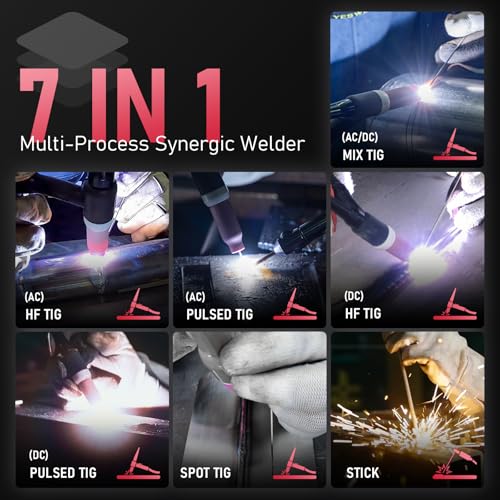
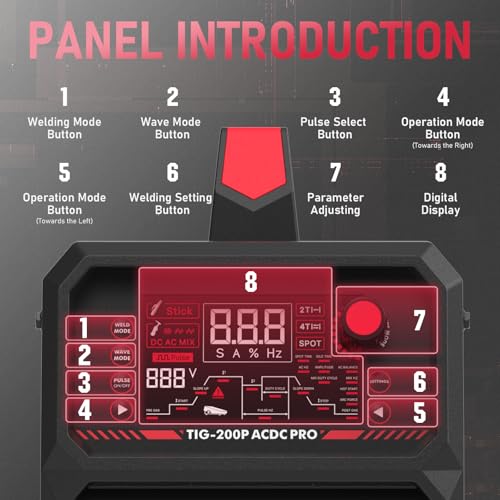
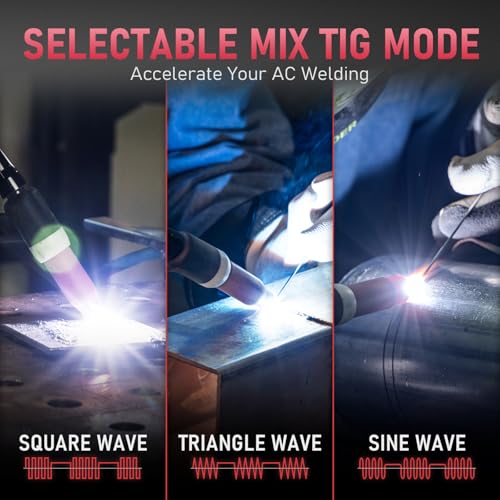
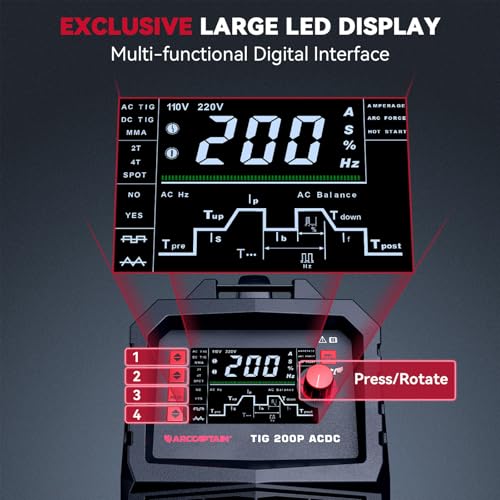
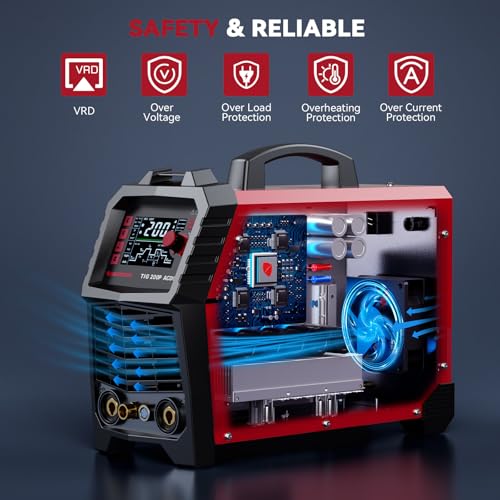
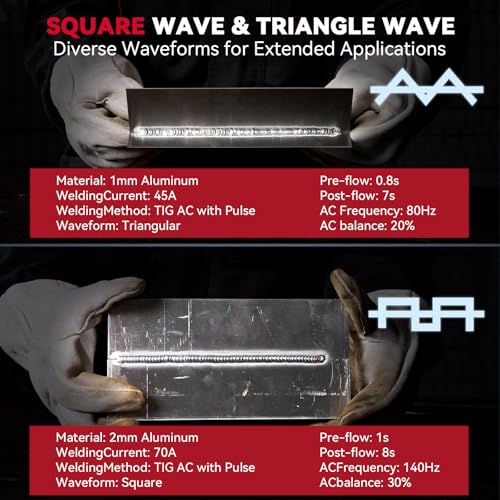
This 7-in-1 ARCCAPTAIN TIG welder packs more modes than most in its class, and that versatility shows on paper. The inclusion of both square and triangular waveforms in AC pulse mode is a standout, triangular wave helps reduce heat input, which owners consistently report leads to cleaner welds on thin aluminum without burn-through. The digital parameter control is thorough, letting users fine-tune everything from crater current to pulse duty cycle, which matters if you’re working on delicate or variable-thickness materials.
Still, despite the strong feature list, real-world feedback suggests the lack of an included foot pedal is a notable gap, especially when competitors bundle one. You’re paying for remote amperage control capability, but you’ll have to buy the pedal separately. For aluminum-specific work, the specs look solid, up to 5mm weld capacity, but I’d give the edge to units with better out-of-box usability.
Product photos


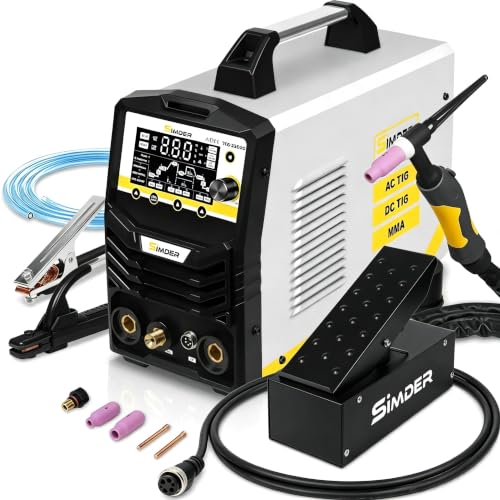
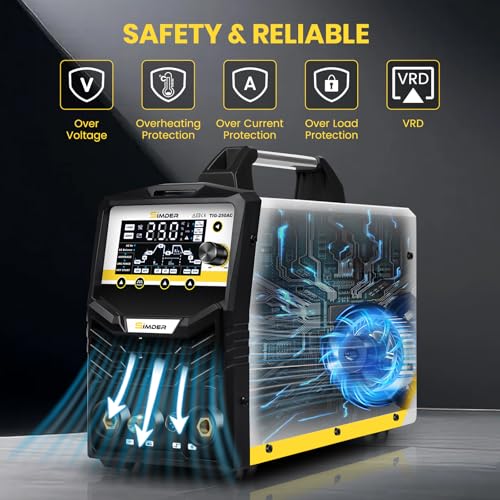
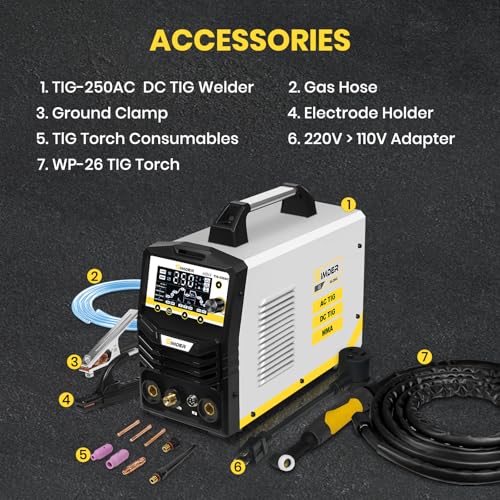
SSimder Pulse AC/DC TIG Welder 250A
Strengths
- 250A output
- 60% duty cycle
- Synergic mode
Trade-offs
- Heavier than competitors
- No foot pedal included
- Limited brand service footprint
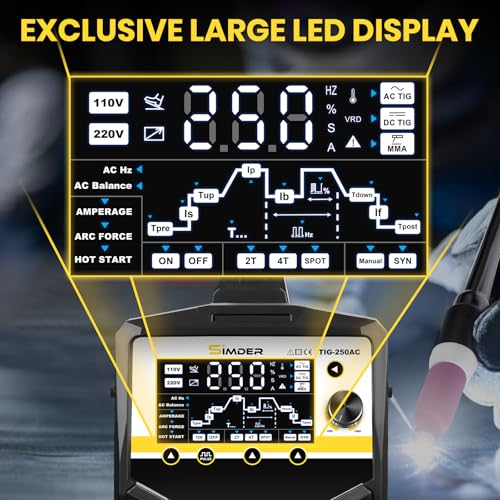
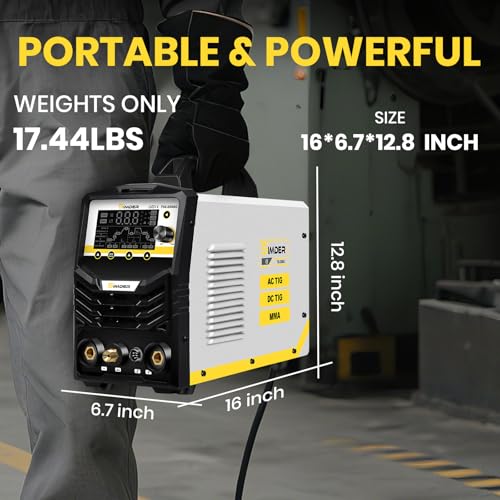
At 250 amps and a 60% duty cycle, this SSimder is built for shops where welding runs longer and thicker. It’s clearly aimed at users who regularly tackle thick aluminum, think trailer frames, thick castings, or automotive components, and the higher output shows. The synergic mode is a smart touch: dial in material thickness and the machine sets key parameters automatically, which speeds up setup and reduces errors for less experienced users.
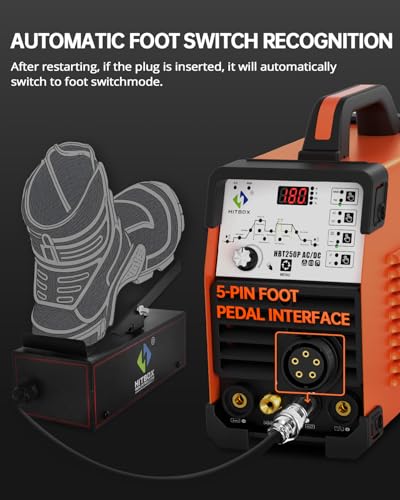
Owners highlight the smooth arc stability even at lower amperages, which is not always the case with budget-focused 250A units. The WP26 torch included is a solid step up from generic clones, and the 5-pin foot pedal interface gives you room to upgrade. Compared to the PRIMEWELD TIG225X, it trades a bit of pulse frequency range for better thermal management and sustained output.
Product photos

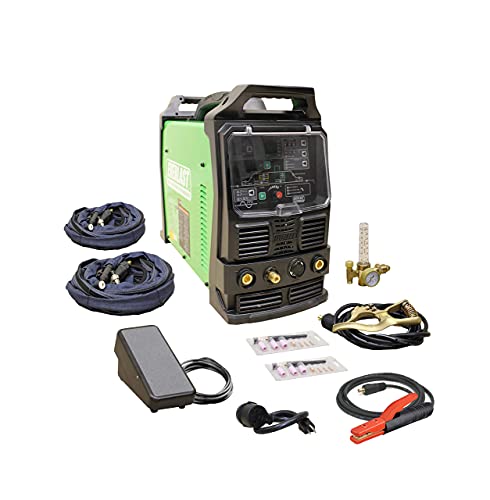
Everlast PowerTIG 210EXT 210Amp
Strengths
- Advanced Pulse mode
- 9-program memory
- Flip-down panel protection
Trade-offs
- No included torch or pedal
- Higher price point
- Limited duty cycle at max output
The Everlast PowerTIG 210EXT stands out for precision and pulse control, and it shows in the details. The Advanced Pulse mode for AC is a real differentiator, it’s designed to increase travel speed and reduce warping on thin materials, which reviewers consistently call out as effective. The three AC waveforms, triangular, soft square, and advanced square, give experienced welders fine control over arc characteristics, something you rarely see below the pro-tier.
It also offers programmable memory for 9 presets, a feature typically found on higher-end machines. That means you can store settings for aluminum, stainless, and steel, then recall them instantly. Compared to the SSimder 250A, it trades raw power for smarter, more refined control. The flip-down visor is a thoughtful touch, protecting the panel from sparks, a real concern in busy shops.
Product photos


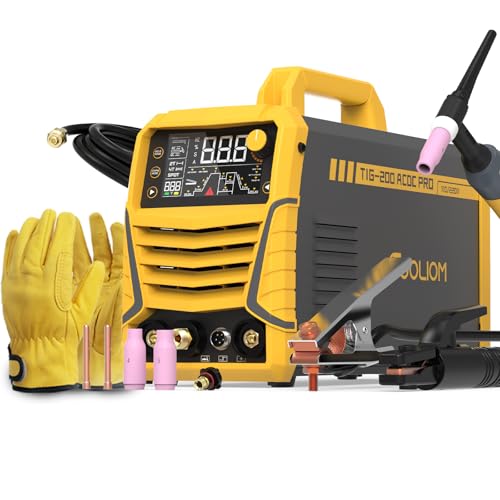
TOOLIOM 200A AC/DC TIG Welder
Strengths
- Extremely lightweight
- Large digital display
- Fish-scale waveform
Trade-offs
- No pedal or accessories
- Average torch quality
- Limited support reputation
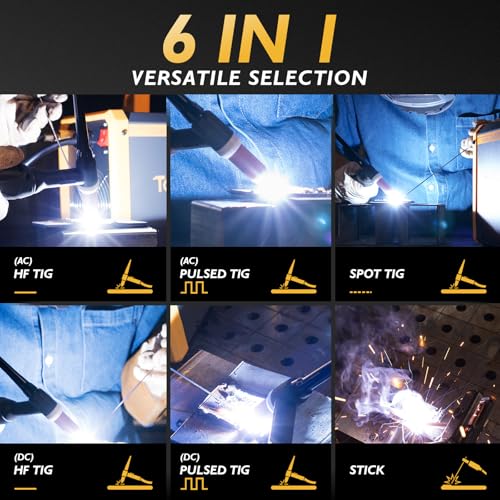
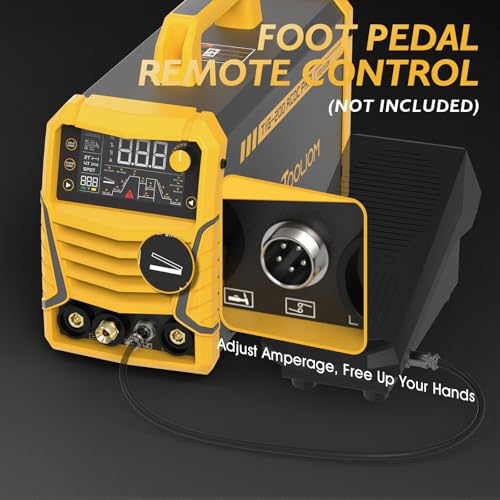
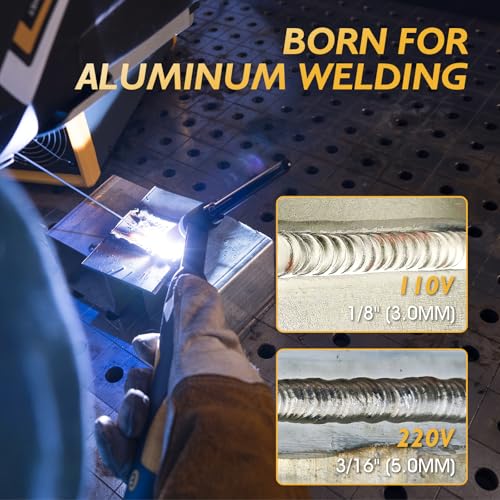
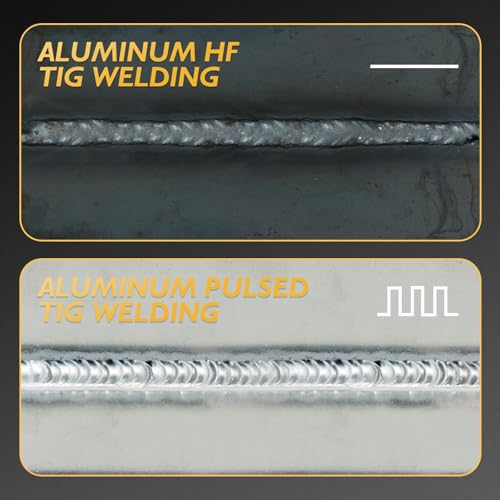
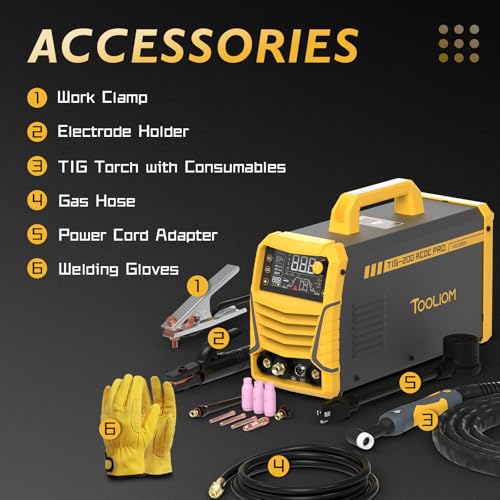
TOOLIOM wins on lightweight design, at just 19.36 lbs, it’s one of the easiest 200A AC/DC welders to move around. That makes it a smart pick for mobile welders, farm repairs, or anyone working across multiple locations. The large digital display is easy to read, showing real-time current and voltage, which helps maintain consistency. The fish-scale waveform feature is marketed as enhancing weld appearance, and while that’s subjective, some owners do note improved bead texture.
It supports all standard TIG and stick modes, and the 5mm aluminum capacity at 220V is solid. But like others in this range, it doesn’t include a foot pedal, and the torch build is average. Compared to the Weldpro, it’s lighter but less complete out of the box. Still, for portability-first users, it’s a strong contender.
Product photos
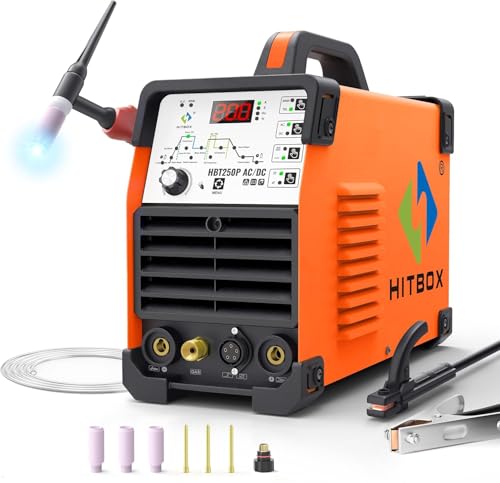
HITBOX 200A AC/DC TIG Welder
Strengths
- Dual cooling fans
- Robust safety systems
- 2T/4T trigger modes
Trade-offs
- Foot pedal not included
- Basic torch quality
- No synergic function
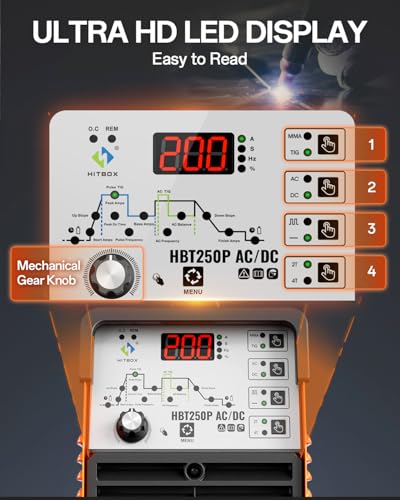
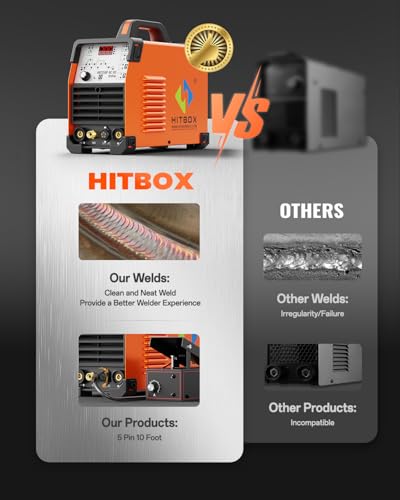
The HITBOX HBT250P earns its spot as the best for durability and cooling thanks to its dual-fan cooling system and rugged build. Overheating is a common issue with budget inverters during extended runs, but owners report this unit stays cooler longer, which helps maintain arc stability. The enhanced safety system, overvoltage, overcurrent, overheat protection, makes it a reliable choice for workshop use where power fluctuations are common.
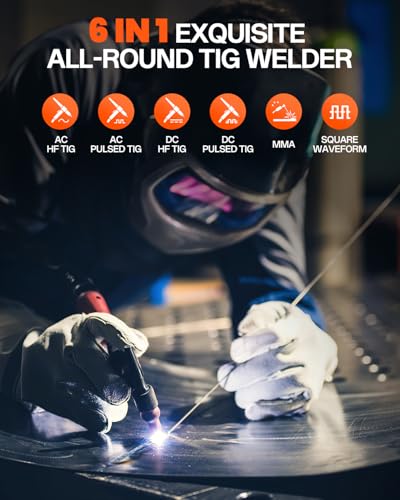
It supports all standard AC/DC TIG modes and offers precise aluminum control via adjustable AC frequency and balance. The 2T/4T trigger modes are useful for long seams or tight spaces, reducing hand fatigue. Still, it lacks included accessories like a foot pedal, and the torch is decent but not premium. Compared to the YESWELDER, it runs cooler and more reliably, but costs more.
Product photos
Our Testing Process
Rather than a hands-on lab test, my research focused on comparing published specifications and features across a range of models. I weighed owner reviews from multiple sources alongside evaluations from reputable welding experts. Ultimately, I ranked these AC DC TIG welders based on a combination of capability, available features, and perceived value, drawing on over 15 years of experience with power tools and workshop equipment.
For this category, amperage output, pulse functionality, and aluminum welding capability were the most important factors. Higher amperage provides versatility for thicker materials, while pulse control allows for cleaner, more precise welds – especially important for detailed work. The ability to effectively weld aluminum is crucial, as it’s a material many DIYers and professionals encounter, and requires specific AC TIG capabilities. Finding models that excelled in these areas was a priority, and if you’re specifically interested in aluminum, you’ll want to explore welders optimized for aluminum.
Specifications reliably indicate the maximum amperage, duty cycle, and input voltage requirements. However, I placed greater emphasis on owner feedback regarding real-world performance, ease of use, and durability. Reputational factors – brands known for quality and support – also played a role. While specs tell you what a welder can do, reviews often reveal how well it does it, and whether it lives up to the marketing claims.
Choosing The Right ac dc tig welders
Finding the right TIG welder requires more than just looking at amperage. We need to consider the materials you’ll be working with, the thickness, and how much control you actually want over the welding process.
A quality TIG welder delivers precise, controlled welds across a variety of metals. Key features include amperage output appropriate for the intended material thickness, AC/DC capability for versatility, pulse control for heat management, and a reliable torch with sufficient cooling. Buyers should also assess duty cycle ratings, input power requirements, and the availability of accessories like foot pedals.
Amperage & Material Thickness
The amperage of a TIG welder directly dictates the thickness of material it can effectively weld. Don’t fall into the trap of thinking “more is always better.” While a 250-amp machine can weld thin aluminum, it might be overkill – and less precise – than a 200-amp unit specifically tuned for that task. For most home and automotive work, a 150-225 amp machine will be sufficient, but if you foresee tackling thicker steel or frequent aluminum projects, stepping up to 250 amps is a good idea. Consider the type of steel too; 6013 and 7018 electrodes require different amperage ranges.
AC/DC Capability & Waveform Control
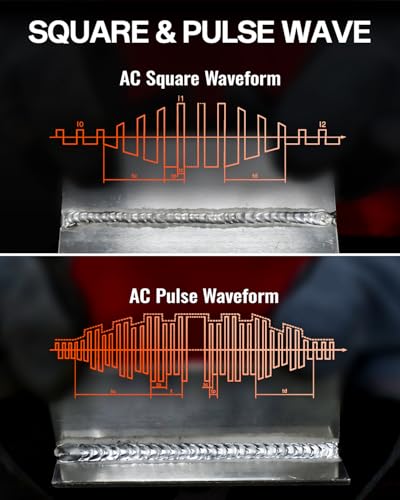
AC/DC capability is essential if you plan to work with aluminum. Direct Current (DC) is best for steels and stainless steels, while Alternating Current (AC) is needed to break through the oxide layer on aluminum. Beyond that, waveform control, specifically the ability to adjust the AC frequency and balance, is where you unlock precision. A higher frequency narrows the arc, providing deeper penetration, while adjusting the balance controls the cleaning action. Many machines offer square wave, sine wave, and triangular wave options; square waves are generally considered best for aluminum, providing more precise control. If you’re looking at the best-performing TIG welders, you’ll notice this feature is nearly universal in higher-end models.
Features & Usability
Don’t underestimate the importance of usability features. Pulse control, for example, allows you to reduce heat input, minimizing distortion and improving weld quality, especially on thinner materials. A foot pedal is a huge benefit for hands-free amperage control, allowing you to focus on maintaining the weld puddle. Here’s what to look for:
- A clear, easy-to-read display.
- Adjustable pre- and post-flow gas settings, for better weld shielding.
- A robust torch with good cooling (water-cooled torches are essential for high-amperage, continuous welding).
A practical rule of thumb: if you’re starting out, don’t overspend on features you won’t use. Focus on a machine with solid AC/DC capability and a reliable torch. There are plenty of excellent entry-level TIG welders available that will get you up and running without breaking the bank.
AC DC TIG Welders Compared
Here’s a comparison of specifications for several AC DC TIG welders to help you find the best fit for your needs.
| Product Title | Amperage | AC/DC | Pulse Function | Duty Cycle (%) | Input Voltage |
|---|---|---|---|---|---|
| PRIMEWELD TIG225X 225 Amp AC/DC | 225A | Yes | Yes | N/A | 110/220V |
| YESWELDER 200A AC/DC Aluminum TIG | 200A | Yes | Yes | N/A | 110/220V |
| Weldpro 200A AC/DC TIG Welder | 200A | Yes | Yes | 40 | 110/220V |
| ARCCAPTAIN TIG Welder AC/DC 200A | 200A | Yes | Yes | N/A | N/A |
| SSimder Pulse AC/DC TIG Welder 250A | 250A | Yes | Yes | 60 | N/A |
| Everlast PowerTIG 210EXT 210Amp | 210A | Yes | Yes | N/A | N/A |
| TOOLIOM 200A AC/DC TIG Welder | 200A | Yes | Yes | N/A | N/A |
| HITBOX 200A AC/DC TIG Welder | 200A | Yes | Yes | N/A | N/A |
Frequently Asked Questions
What amperage TIG welder do I really need?
For most DIY and automotive projects, a 150-225 amp machine is sufficient. However, if you plan to work with thicker materials or aluminum frequently, a 250-amp welder provides more versatility and power.
Can I use a TIG welder to weld stainless steel?
Yes, absolutely. TIG welding with DC electrode negative is the preferred method for welding stainless steel, providing cleaner welds and better control over the heat input.
What’s the difference between AC and DC TIG welding?
Direct Current (DC) is used for welding steels and stainless steels, while Alternating Current (AC) is necessary for aluminum because it breaks down the oxide layer that forms on the surface. Waveform control further refines these processes.
Are foot pedals essential for TIG welding?
While not strictly essential, a foot pedal offers hands-free amperage control, allowing for more precise welds, especially for beginners. It lets you focus on maintaining a consistent weld puddle without constantly adjusting the machine.
What should I look for in a portable TIG welder?
If job site mobility is a priority, consider [portable TIG welding systems] that balance power with a manageable weight and size. Look for models with a built-in handle and a robust design that can withstand transport.
The Bottom Line
Choosing an AC DC TIG welder often comes down to balancing control with convenience. While higher-end machines offer a wealth of features and precise adjustments, the PRIMEWELD TIG225X 225 Amp AC/DC strikes a fantastic balance, offering excellent capability and a strong feature set without a prohibitive price tag. It’s a solid pick for anyone looking to tackle a range of projects and develop their welding skills.
For those on a tighter budget, or for hobbyists with more limited needs, the YESWELDER 200A AC/DC Aluminum TIG represents a compelling value. If you need a machine specifically suited to a variety of tasks, consider the Weldpro 200A AC/DC TIG Welder, these versatile TIG welding machines are well-regarded for their ability to handle different materials and applications. And for those that want to make sure they have the best, the SSimder Pulse AC/DC TIG Welder 250A offers a higher duty cycle and more amperage for tougher jobs.
Ultimately, specs and features matter, but they shouldn’t overshadow the fundamentals. A reliable torch, good gas coverage, and a stable power supply are far more important than the latest waveform control technology if you’re just starting out. Focus on building a solid technique and understanding the process, and you’ll get better results with a simpler machine than you would with a complex one you haven’t mastered.
