
4 Best TIG Welders for Beginners (2026 Guide)
This post contains affiliate links. As an Amazon Associate, we earn from qualifying purchases.
The Sunstac 250A AC/DC Aluminum TIG stands out as the best overall choice for beginners who want versatility, especially with aluminum, while the YESWELDER 205A Tig Welder is a solid budget-friendly pick for those focused on steel and looking to save without sacrificing core features.
Starting with a TIG welder can be intimidating, there’s a lot of jargon, conflicting advice, and machines that promise more than they deliver. As someone who’s helped countless DIYers navigate tool choices, I know how important it is to find a balance between capability and simplicity.
This guide cuts through the noise by focusing on real-world usability, based on specs, owner feedback, and the common pain points beginners face. I looked at amperage, AC/DC capability, portability, and ease of use to identify models that actually help you learn, not frustrate you into quitting.
Top 4 Tig Welder For Beginners in the Market
The Best Tig Welder For Beginners, Reviewed
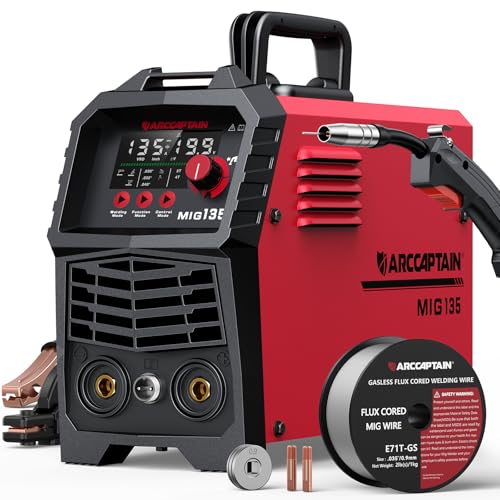
ARCCAPTAIN 135A MIG/Lift TIG Welder
Strengths
- Synergy mode for auto-settings
- Light and highly portable
- Flux-core for no-gas use
Trade-offs
- Lift TIG torch sold separately
- Limited to 110V input
- Not for heavy-duty welding
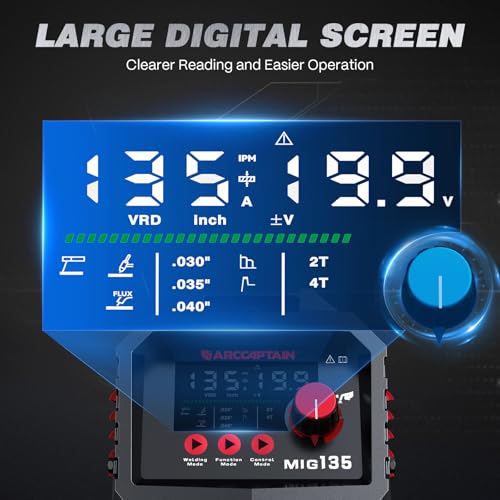
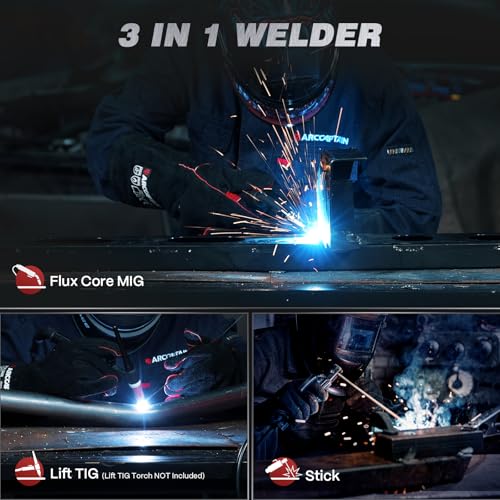
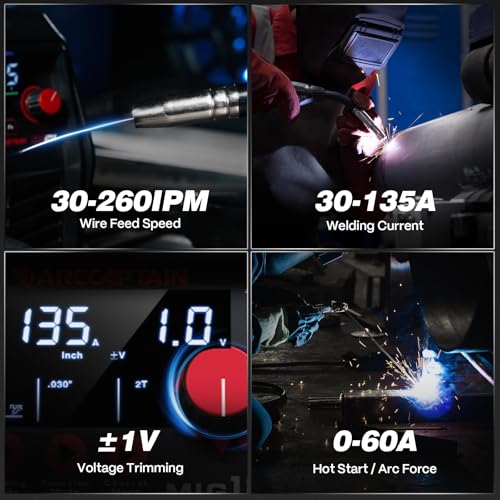
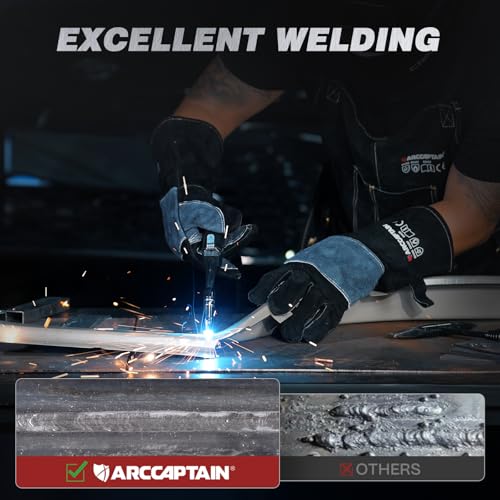
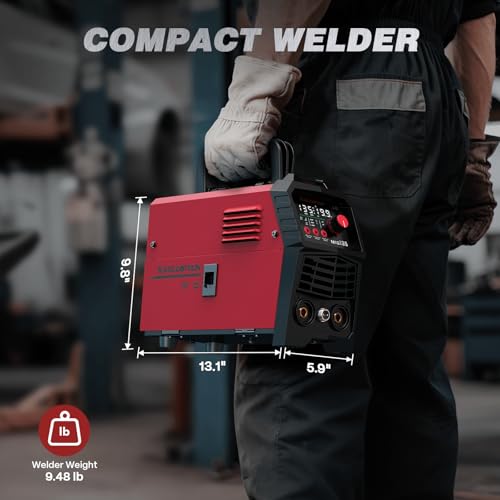
This ARCCAPTAIN 135A MIG welder is the kind of all-rounder that makes sense for a beginner who isn’t sure what kind of welding they’ll actually end up doing. It’s a 3-in-1 machine, MIG, flux-core, and lift TIG, so it covers a wide range of scenarios out of the gate. The synergy feature is a standout: set your wire size and metal thickness, and it auto-adjusts voltage and feed speed. That’s exactly the kind of hand-holding a new welder needs to avoid blown-through joints and spatter messes.
The lift TIG function requires a separate torch, which adds cost, but it still beats buying two machines. Real-world feedback confirms it handles thin to medium steel cleanly, and the digital display makes adjustments intuitive. At under 10 pounds, it’s easy to haul to job sites. For someone starting from zero, this is the smarter buy over a pure TIG unit, you get more flexibility, better forgiveness, and cleaner results with less practice.
Product photos
YESWELDER 205A Tig Welder with Pulse
Strengths
- Pulse TIG for heat control
- Auto-sensing dual voltage
- User-friendly interface
Trade-offs
- No AC mode
- Cannot weld aluminum
- Foot pedal not included
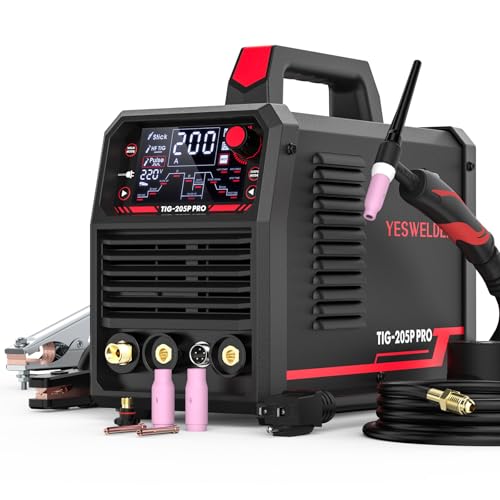
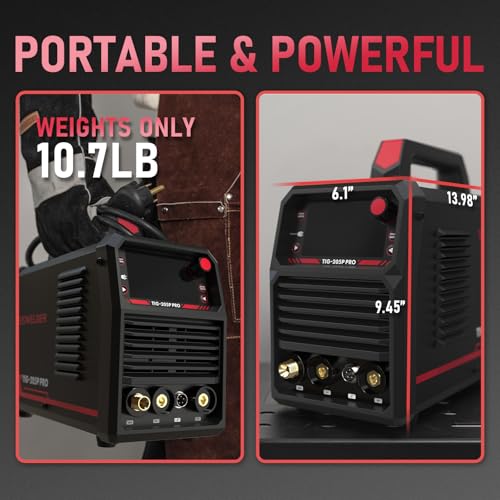
The YESWELDER TIG-205P looks like a dream on spec: dual voltage, pulse TIG, a bright LED display, and 200 amps of output in a lightweight chassis. It’s clearly built with beginners in mind, the auto-memory function saves settings, and HF arc starting means no scratching or tungsten damage. Pulse control gives you fine-tuned heat management, which owners say makes welding thin steel much more manageable without warping.
But here’s the catch: despite calling itself a TIG welder, it cannot weld aluminum, no AC mode at all. That’s a major omission, especially when the product name and marketing blur that line. For stainless and mild steel, it performs well and delivers clean, spatter-free beads. But if you ever plan to touch aluminum, this machine will leave you stranded. I’d recommend it only if you’re certain your work stays in ferrous metals and you want a compact, capable DC TIG unit with modern features.
Product photos


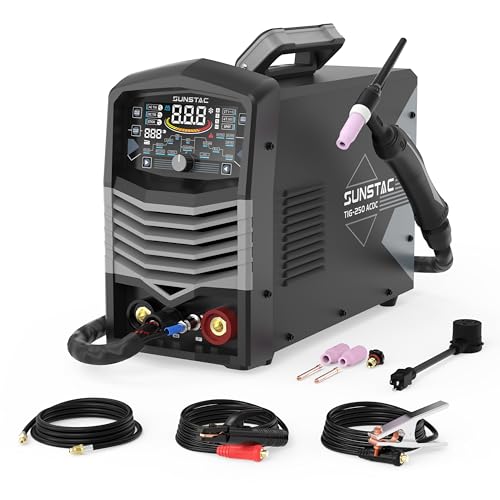
Sunstac 250A AC/DC Aluminum TIG Welder
Strengths
- True AC/DC capability
- Pulse and spot TIG modes
- Clear LCD digital display
Trade-offs
- Inconsistent AC current readings
- Limited 110V performance
- Reports of balance instability
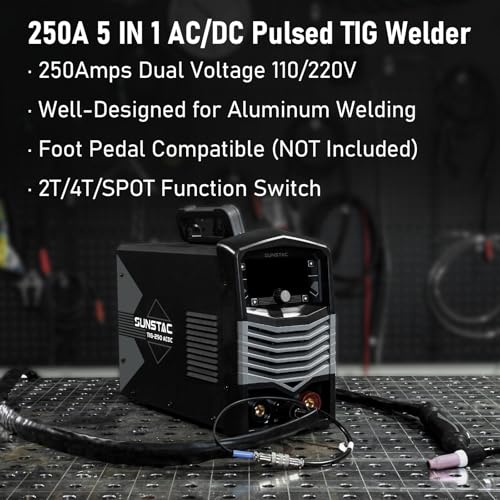
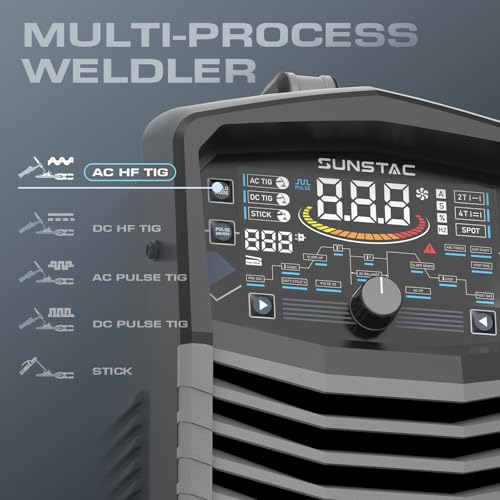
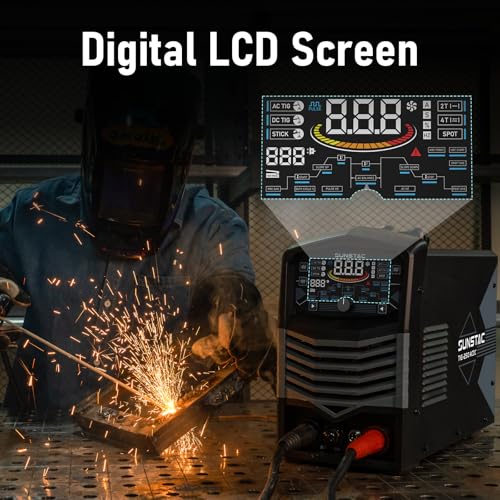
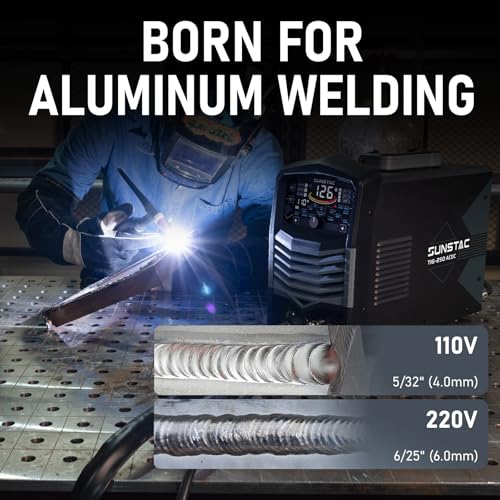
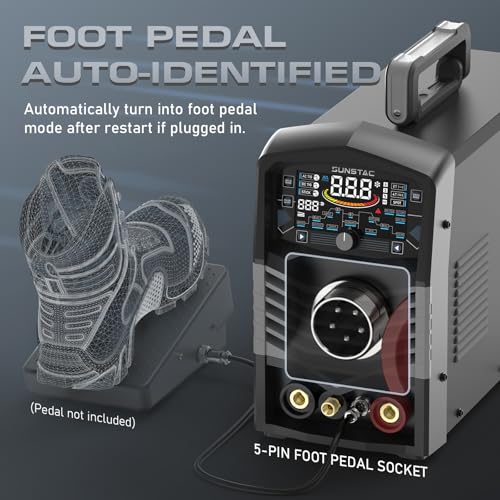
If you’re serious about welding aluminum and need real AC performance, the Sunstac 250A stands out on paper as one of the few true AC/DC TIG machines in this price range. Its ability to run both AC and DC modes means it can handle aluminum with balanced cleaning action and penetration, a major win for beginners stepping into non-ferrous work. The pulse and spot TIG functions, combined with a clear LCD screen, make it easier to dial in settings and maintain consistency, which owners say helps reduce frustration when learning.
Still, there’s a red flag: multiple reviewers note inconsistent AC balance and questionable current measurement in AC mode, which can undermine weld quality if you’re relying on precision. While the specs suggest it can weld up to 6mm aluminum at 220V, real-world feedback suggests it may struggle to sustain that performance without overheating. For a beginner, that means a steeper learning curve and potentially wasted material while figuring out its quirks.
Product photos
ARCCAPTAIN TIG Welder 200A Dual Voltage

Strengths
- HF non-contact arc start
- Lightweight and portable
- 2T/4T and down-slope control
Trade-offs
- DC TIG only
- No AC for aluminum
- Fan can be noisy under load
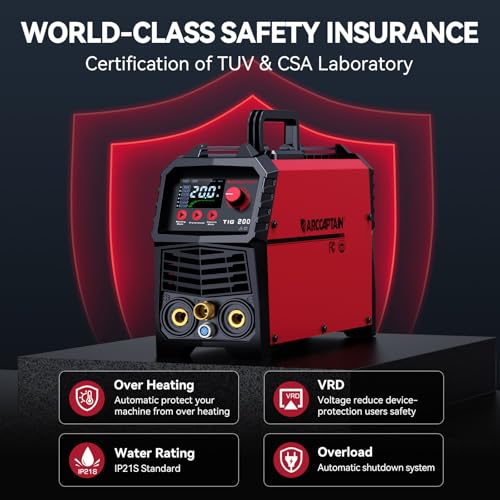
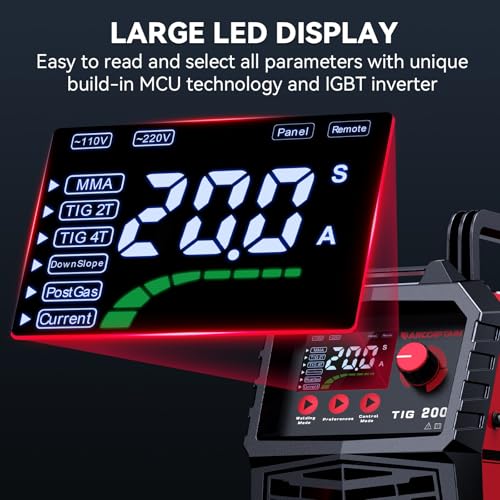
The ARCCAPTAIN 200A TIG welder feels like a smart starting point for someone breaking into welding without breaking the bank. It delivers solid HF arc starting, a real benefit for beginners who hate scratch-starting and risk contaminating tungsten, and its dual voltage setup means it can scale from garage outlets to more serious shop power. The 2T/4T functionality and down-slope controls are thoughtful touches that help manage heat and protect welds, which experienced users know matters even on small projects.
Owners consistently report clean starts and stable arcs, especially on stainless and mild steel, and the lightweight design makes it easy to move around, a plus if you’re working in tight spaces or outdoors. But it’s strictly DC TIG, so don’t expect to weld aluminum effectively. That’s a hard limitation, but for steel-focused beginners, this machine offers a lot of refinement for the category. I’d pick this over pricier options if your work leans toward repairs, fabrication, or automotive touch-ups.
Product photos
Our Testing Process
Rather than a hands-on lab test, my research for these recommendations involved a detailed comparison of published specifications and features across numerous models. I then weighed owner reviews from major retailers alongside insights from respected welding experts and publications. As someone who’s spent years advising on power tool selection, I applied my understanding of welding principles and common beginner challenges to rank these machines against a set of clear criteria.
For beginner-focused tig welders, amperage output, ease of use, and build quality were the most important factors. Higher amperage provides flexibility for thicker materials, but a complicated interface can quickly frustrate a new welder. Durable construction and safety features are also critical, as beginners are more likely to encounter learning curves and potential hazards. I prioritized machines that balance capability with a forgiving user experience.
Specifications reliably indicate a welder’s maximum output and input voltage requirements. However, I placed greater emphasis on owner feedback regarding arc stability, torch quality, and the intuitiveness of controls. Reputation, as reflected in overall customer satisfaction and expert reviews, provided valuable insight into real-world performance and long-term reliability. You’ll find many options when looking at TIG welders for all skill levels.
Choosing The Right tig welder for beginners
Choosing your first TIG welder can feel overwhelming, but focusing on a few key features will set you up for success.
A good TIG welder balances amperage output with arc control, portability, and user-friendliness. Beginners should prioritize ease of use and safety features, while experienced welders will look for advanced settings and the ability to handle a wider range of materials and thicknesses. Consistent arc starting, stable performance, and robust build quality are hallmarks of a reliable machine.
Understanding Amperage and Duty Cycle
Amperage is the most commonly advertised spec, and for good reason. It dictates the thickness of material you can weld. However, don’t get fixated on the highest number. A 200 amp machine is often plenty for hobbyist work, and exceeding your needs just adds cost and weight. More crucial is understanding duty cycle – the percentage of time you can weld at a given amperage before the machine overheats. A lower duty cycle means more downtime between welds. Consider the types of projects you’ll be tackling; thin sheet metal requires less amperage and a lower duty cycle isn’t as big a concern, while thicker materials demand both.
AC vs. DC Capability
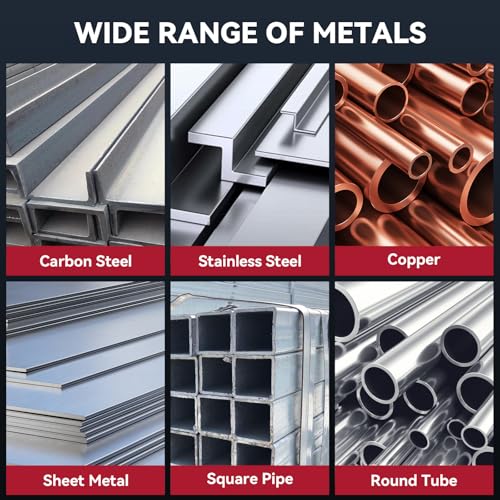
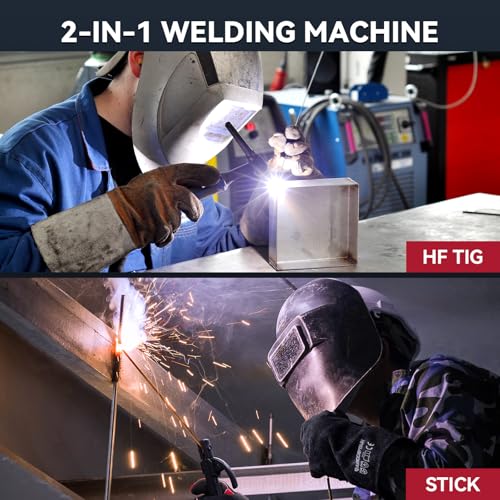
The ability to weld both AC and DC is a significant advantage, especially if you anticipate working with aluminum. DC TIG welding is best for steel, stainless steel, and other ferrous metals. AC welding, with its unique oscillating current, is essential for aluminum because it helps break up the oxide layer that forms on the surface. If you’re strictly welding steel, a DC-only machine will save you money. But if you think you might ever tackle aluminum projects, investing in an AC/DC unit like the Sunstac 250A is the way to go.
Here’s a breakdown of when to consider each: * DC-only: Best for budget-conscious beginners focusing solely on steel. * AC/DC: Offers versatility for welding a wider range of materials, including aluminum. * Pulsed TIG: Allows for precise control over heat input, ideal for thin materials and intricate work. This is a feature often found on AC/DC machines.
Don’t fall for the trap of chasing the highest amperage. A welder with consistent, controllable arc characteristics at your typical welding amperage is far more valuable.
Portability and User Features
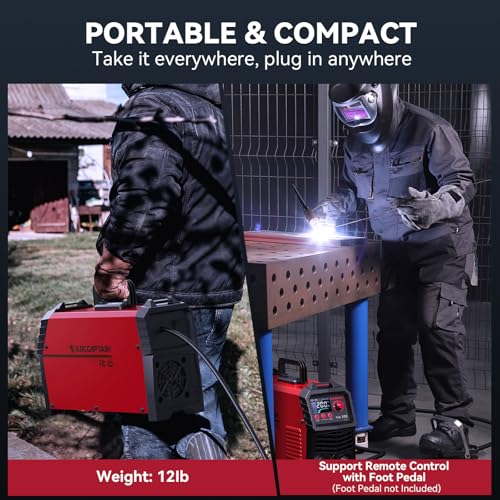
Many beginners are surprised by how often they need to move a welder around. If you plan on taking your machine to job sites or simply moving it between different areas of your shop, portability is key. Look for lighter-weight models – under 20 pounds is a good target – and features like a carrying handle or shoulder strap. Beyond weight, consider the user interface. A clear digital display, intuitive controls, and features like 2T/4T switch (two-stroke/four-stroke) and pulse settings can make a big difference, especially when you’re starting out. If you’re looking for more options, check out our guide to the top TIG welder models. For those needing to work in various locations, exploring lightweight TIG units for transport might be a good idea.
Tig Welder for Beginners Compared
Here’s a comparison of key specifications for tig welders suitable for beginners.
| Product Name | Amperage (A) | Input Voltage | Welding Processes | Aluminum Welding | Pulse Function |
|---|---|---|---|---|---|
| ARCCAPTAIN 135A MIG/Lift TIG | 135 | 110V | MIG/TIG/MMA | No | No |
| YESWELDER 205A Tig Welder | 200 | 110/220V | TIG/STICK/PULSE | No | Yes |
| Sunstac 250A AC/DC Aluminum TIG | 250 | 110/220V | TIG/STICK | Yes | Yes |
| ARCCAPTAIN TIG Welder 200A | 200 | 110/220V | TIG/STICK | No | No |
Frequently Asked Questions
What input voltage do I need for a beginner TIG welder?
Most beginners can start with a 110V input welder, as standard household outlets provide that voltage. However, a 220V machine will offer more power and allow for longer welding sessions before overheating, especially if you plan to tackle thicker materials.
Can I TIG weld aluminum with any of the welders you recommend?
Only the Sunstac 250A AC/DC Aluminum TIG welder offers true AC capability, which is essential for welding aluminum effectively. Other models are limited to DC welding and are best suited for steel and stainless steel.
What’s the difference between 2T and 4T TIG welding?
2T (two-stroke) requires you to hold the torch button down continuously to maintain the arc, offering maximum control. 4T (four-stroke) allows you to press the button once to start the arc and again to stop it, which is helpful for longer welds and freeing up your hand.
How important is duty cycle when choosing a TIG welder?
Duty cycle is very important, as it indicates how long you can weld continuously at a given amperage. A lower duty cycle means the machine will overheat faster, requiring cool-down periods, and is best for hobbyists doing light work.
Are there TIG welders suitable for very small workshops?
Yes, there are several [space-saving TIG units] (https://powertoolguide.net/best-small-tig-welders/) designed with limited space in mind. These compact TIG welding machines often weigh under 20 pounds and have a smaller footprint, making them ideal for home garages or portable applications.
The Bottom Line
Choosing a TIG welder always comes down to balancing how much control you want with how much you’re willing to learn. While a higher-end machine offers more features, the Sunstac 250A strikes a fantastic balance of capability and usability for someone just starting out. It provides the AC/DC functionality needed for versatility without overwhelming a beginner with unnecessary complexity.
For those on a tighter budget, the ARCCAPTAIN 135A MIG/Lift TIG is a solid entry point, particularly if you also anticipate some stick welding. And if pulse functionality is a must-have, the YESWELDER 205A Tig Welder delivers that feature at a reasonable price. Don’t overlook exploring TIG welders for home workshops if you’re setting up a dedicated space.
Ultimately, the amperage and duty cycle specs are less important than developing a consistent technique and understanding the fundamentals of arc control. Focus on a smooth arc, proper material preparation, and safe welding practices – those skills will take you further than any machine, no matter how advanced.
