8 Best 80 Gallon Air Compressors of 2026
This post contains affiliate links. As an Amazon Associate, we earn from qualifying purchases.
The POLAR AIR 7.5HP 80 Gal Compressor stands out as the best overall 80-gallon air compressor for its strong 31 CFM output and robust performance, while the NorthStar 7.5 HP Quiet Armor is the top budget-friendly pick thanks to its reliable build and remarkably low noise. For those who need versatility in tighter spaces, the Campbell Hausfeld 5HP Vertical offers a space-saving design without sacrificing core durability.
If you’re running heavy-duty tools like sandblasters or impact wrenches regularly, you need an 80-gallon compressor that delivers consistent airflow without constant cycling. Too many people buy based on tank size alone, only to find their tools underperform. After comparing the field and reviewing specs and owner feedback, I focused on models that balance real-world CFM, long-term durability, and practical features. This guide breaks down what actually matters so you can pick the right one for your shop.
Top 8 80 Gallon Air Compressors in the Market
The Best 80 Gallon Air Compressors, Reviewed
POLAR AIR 7.5HP 80 Gal Compressor
Strengths
- 31 CFM at 175 PSI
- 70,000-hour pump
- Auto drain system
- Energy efficient
- Made in USA
Trade-offs
- Premium price
- Heavy build
- Large footprint
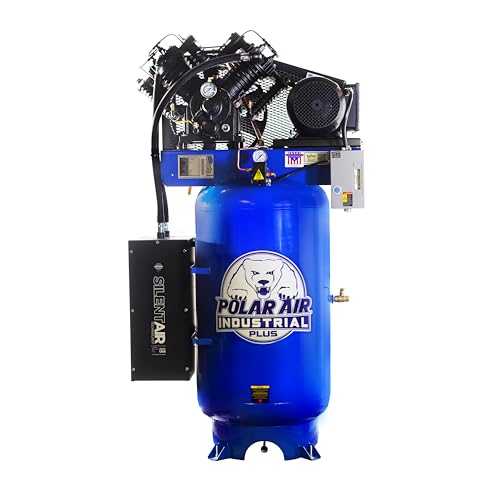
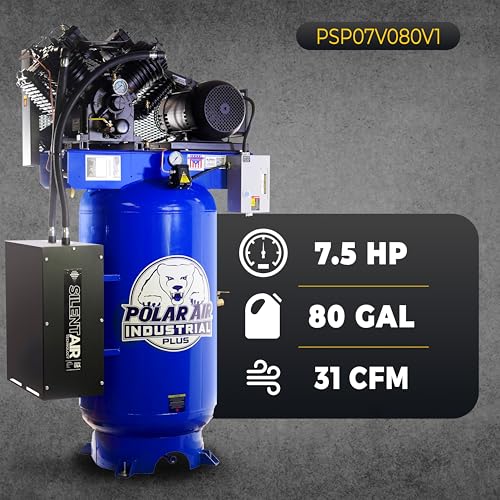
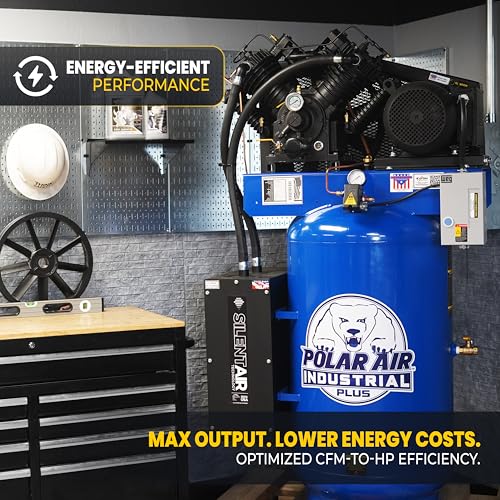
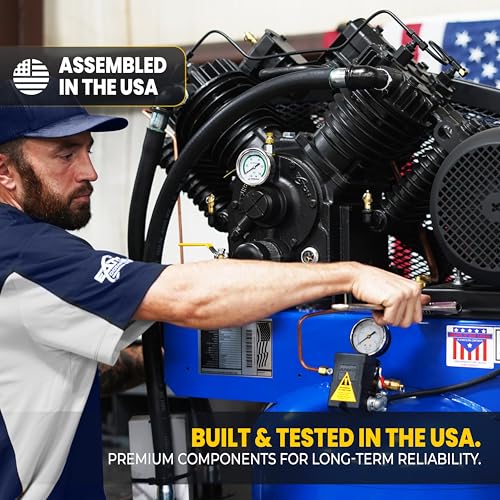
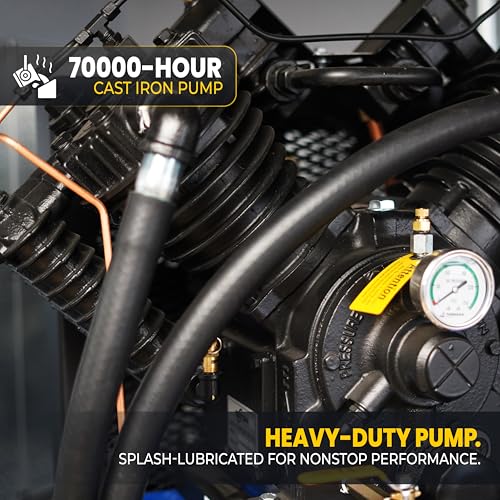
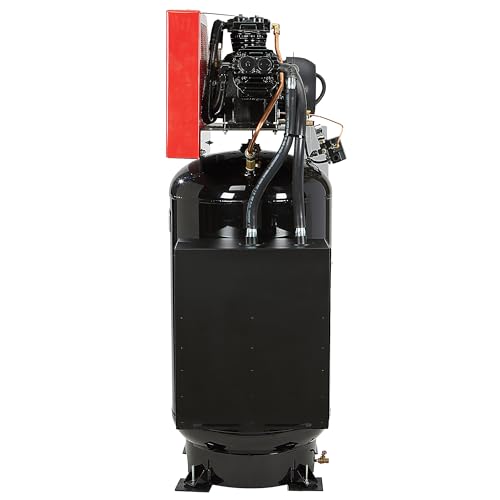
The POLAR AIR unit is a standout with 31 CFM at 175 PSI on just 7.5 HP, a class-leading CFM-to-horsepower ratio that means lower energy costs and better efficiency. The pressure-lubricated pump is rated for 70,000 hours, far exceeding most competitors, and the auto drain system reduces moisture-related maintenance.
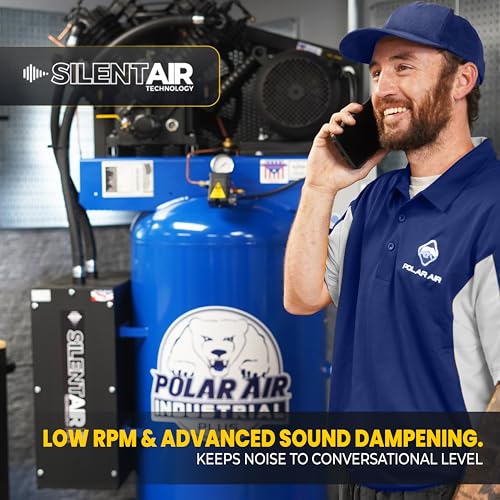
Being assembled in the USA with premium components adds to its credibility, and the dual control modes (auto and continuous) give real flexibility. The noise reduction tech cuts sound significantly, though it doesn’t quite hit NorthStar’s 68 dB. For shops that run all day, this compressor delivers the best blend of power, longevity, and smart design. My pick for overall best.
Product photos
NorthStar 7.5 HP Quiet Armor Compressor

Strengths
- 68 dB quiet operation
- 26 CFM at 90 PSI
- 600 RPM low-speed pump
- 5-stage filtration
- Cast iron pump
Trade-offs
- Higher price point
- Heavy unit
- Takes up space
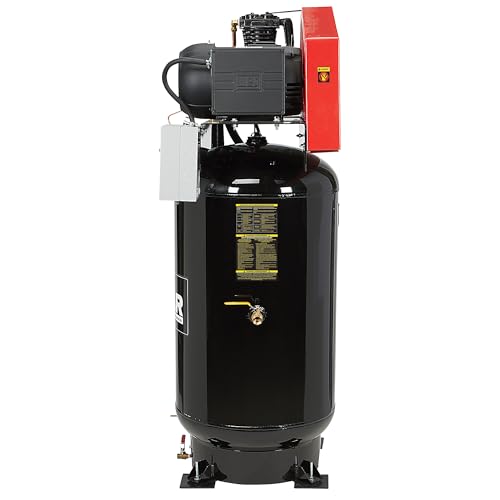
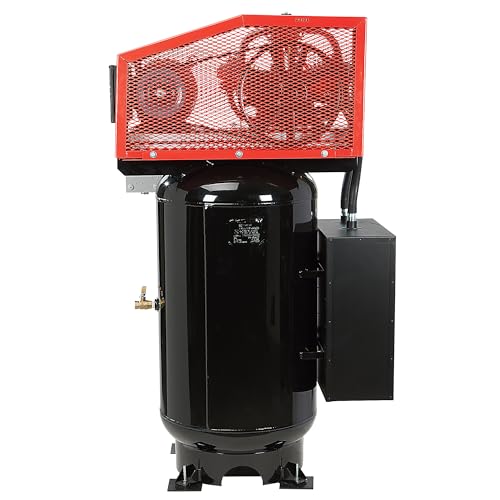
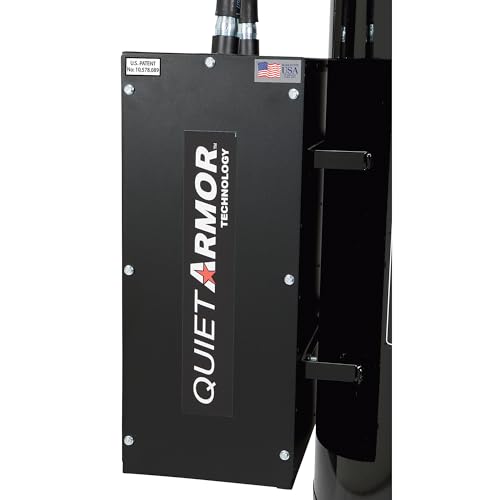
NorthStar nailed the balance between power and noise control here. The 26 CFM at 90 PSI is strong for a 7.5 HP unit, and the 68 dB operating level is legitimately quiet, about as loud as a normal conversation. That’s thanks to the patented Quiet Armor system and 5-stage intake filtration, which not only cuts noise but also keeps the pump cleaner and running longer.
The 600 RPM pump speed is a big reason for its longevity, reducing wear and heat buildup. Owners praise its reliability in body shops and woodworking studios where noise matters. The cast iron pump and ASME tank are built for 50,000 hours, and the anti-vibration pads actually make a difference. While it costs more than some rivals, the long-term value is there if you work in a shared or residential space.
Product photos

EMAX 7.5HP Whisper Quiet Compressor

Strengths
- 31 CFM output
- Whisper quiet
- Pressure-lubed pump
- 4-stage filtration
- Belt-driven system
Trade-offs
- Parts availability
- Heavy unit
- Large footprint
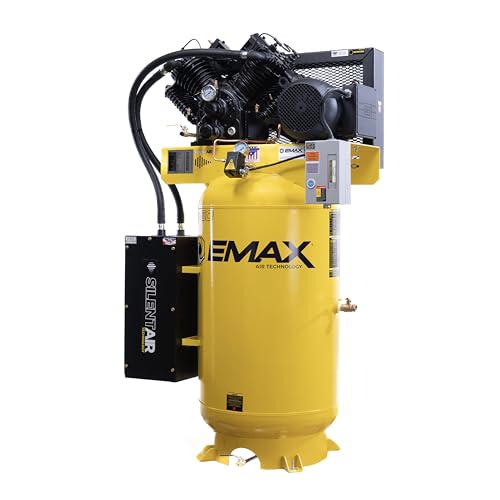
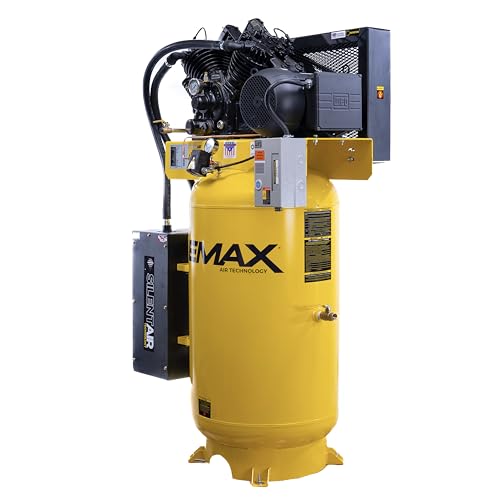
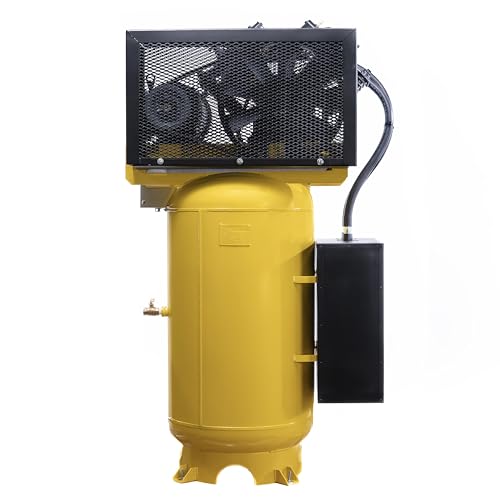
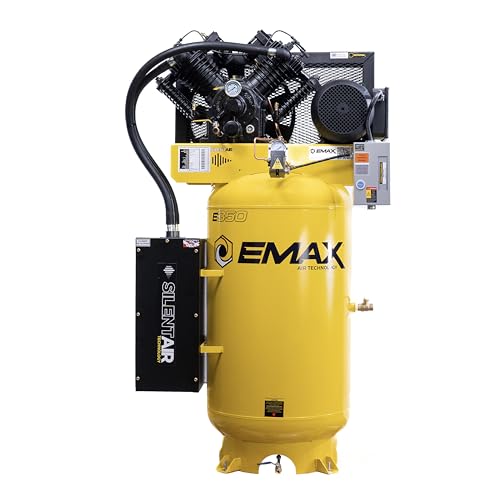
The EMAX E350 mirrors the POLAR AIR model in specs and design, same 31 CFM output, 7.5 HP, and silence-focused engineering. It uses a similar belt-driven, pressure-lubricated pump and claims up to 50% noise reduction, operating at conversation-level volume. The four-stage filtration helps protect air quality, which matters for paint shops or food processing.
While it doesn’t have the USA assembly claim, it delivers nearly identical performance at a slightly lower price point. Owners note smooth startup and consistent pressure, though some report longer lead times on replacement parts. It’s a strong alternative to POLAR AIR if you’re after quiet, high-output performance without the premium branding.
Product photos
Ingersoll-Rand 5HP 80 Gal Compressor

Strengths
- Ingersoll-Rand durability
- 100% duty cycle
- Cast iron construction
- Low maintenance
- ASME tank
Trade-offs
- Only 14.3 CFM
- Noisy at 85 dB
- Lower output for size
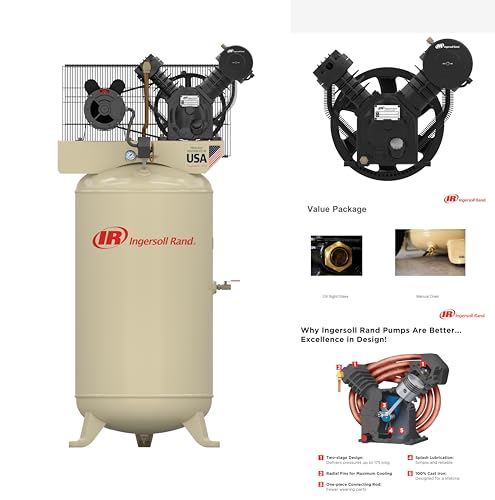
Ingersoll-Rand has been making compressors for over a century, and this 5 HP model reflects that legacy of bulletproof reliability. It only delivers 14.3 CFM at 90 PSI, which is modest compared to others in this list, but it’s rated for 15,000+ hours of continuous use, a testament to its overbuilt cast iron construction and 100% duty cycle.
The 85 dB noise level is average, and the 3,450 RPM motor means more wear over time than low-RPM designs, but the simplicity of the pump makes repairs easier. This is a ‘set it and forget it’ unit for shops that want decades of service without fuss. If you don’t need high CFM, this is one of the most trustworthy long-term investments.
Product photos

DeWalt DXCMV7518075 80-Gal Compressor

Strengths
- 7.5 HP motor
- 22.1 CFM at 100 PSI
- Cast iron pump
- Two-stage design
- ASME tank
Trade-offs
- Noisy operation
- No auto drain
- No phase flexibility
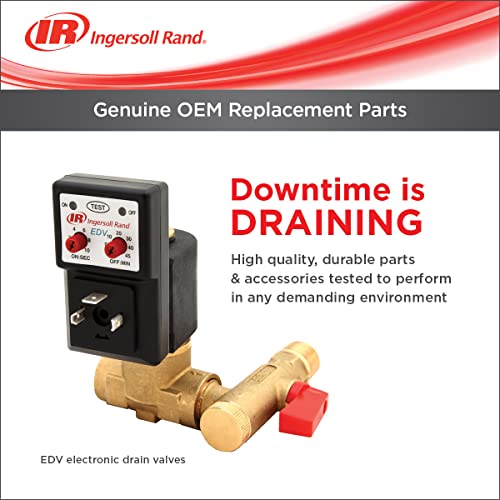
The DeWalt DXCMV7518075 is built like a workhorse for serious industrial environments. With a 7.5 HP motor, two-stage cast iron pump, and 22.1 CFM at 100 PSI, it delivers consistent air output that keeps high-demand tools running without lag. The ASME-certified 80-gallon tank and 175 PSI max pressure mean it can handle extended cycles, and the counter-balanced crankshaft helps reduce vibration for smoother operation over long shifts.
Owners consistently report solid reliability, especially in auto shops and fabrication settings where uptime matters. While it lacks some of the noise-reduction tech found in premium models, its oil reservoir design does help with thermal management, which translates to longer pump life under heavy loads. It’s a no-nonsense compressor for users who prioritize raw performance over bells and whistles.
Product photos

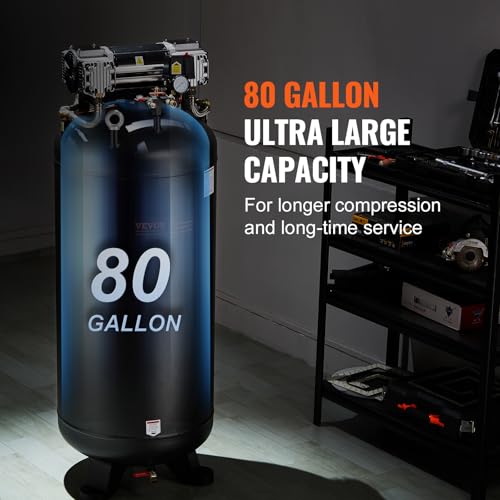
VEVOR 6.5HP Oil-Free 80 Gal Compressor

Strengths
- Oil-free pump
- Low maintenance
- Fast recovery
- Cold-rolled steel tank
- No oil contamination
Trade-offs
- Only 15.5 SCFM
- Max 145 PSI
- 86 dB noise
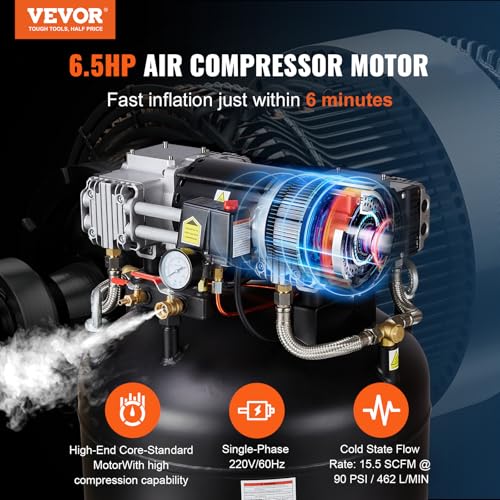
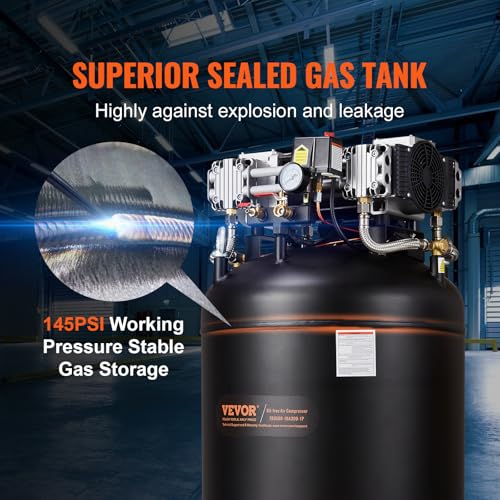
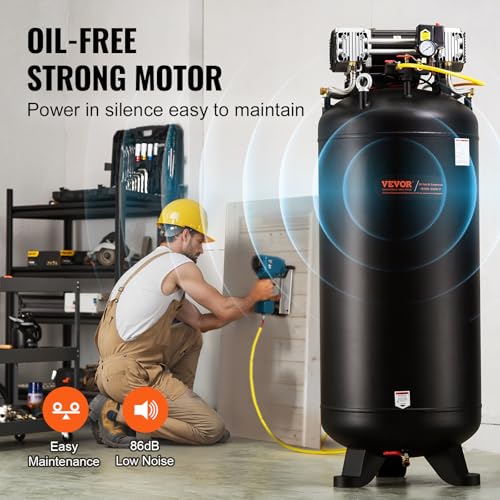
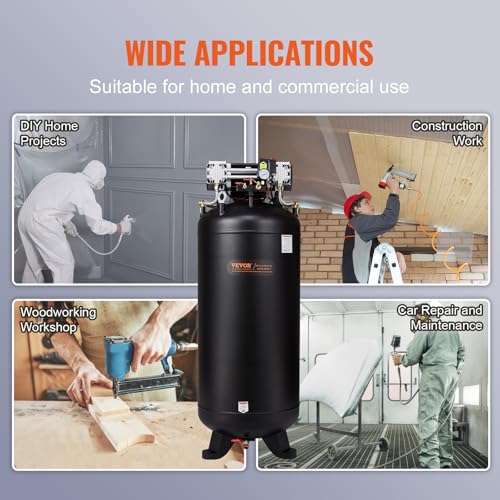
This VEVOR oil-free model is a niche pick for users who want zero oil contamination and easier maintenance. The 15.5 SCFM at 90 PSI is modest, and the 145 PSI max is lower than most 80-gallon units. But the oil-free pump means no oil changes, no risk of oil entering air lines, ideal for food, pharma, or clean paint environments.
It runs at 86 dB, which isn’t quiet by modern standards, and the cold-rolled steel tank, while durable, isn’t as robust as cast or thick carbon steel. Owners appreciate the fast 6-minute fill time and reliability for intermittent use, but it’s not built for 24/7 operation. As an oil-free option, it fills a specific need well.
Product photos
VEVOR 10HP Oil-Lubricated Compressor
Strengths
- 10 HP motor
- 3.5mm thick tank
- Dual air outlets
- Belt-driven pump
- 3-phase efficiency
Trade-offs
- Requires 3-phase power
- Lower CFM for HP
- Noisy at 85+ dB
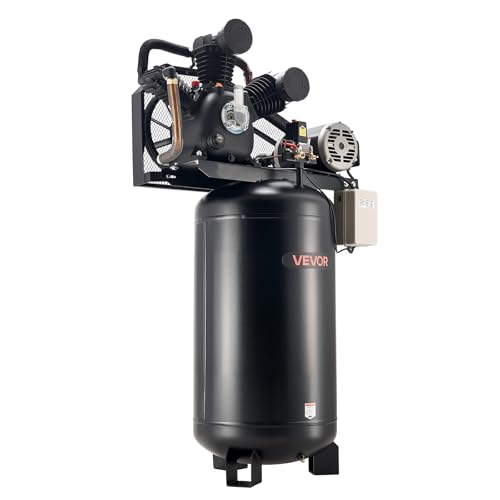
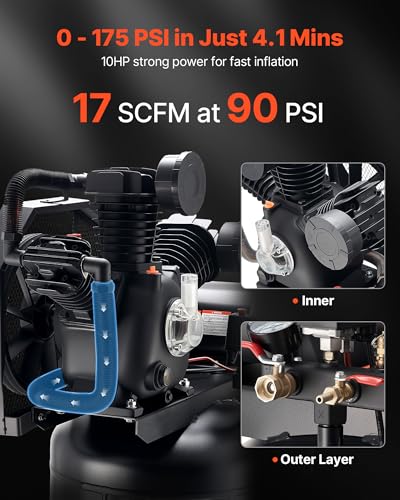
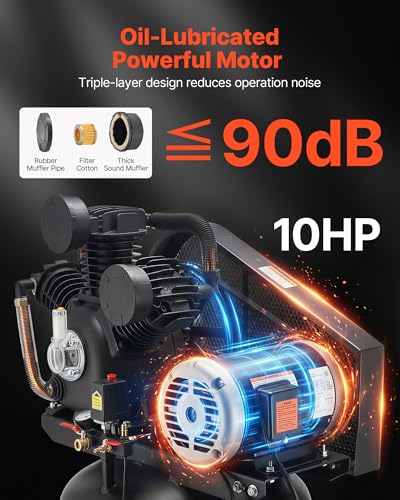
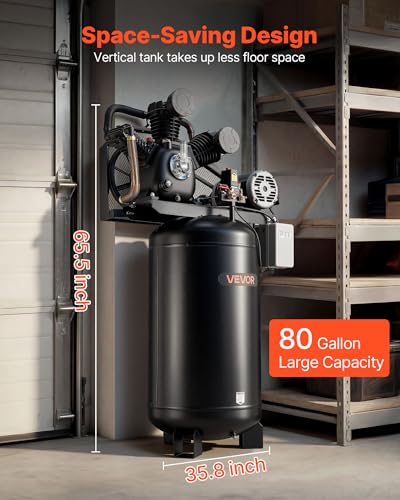
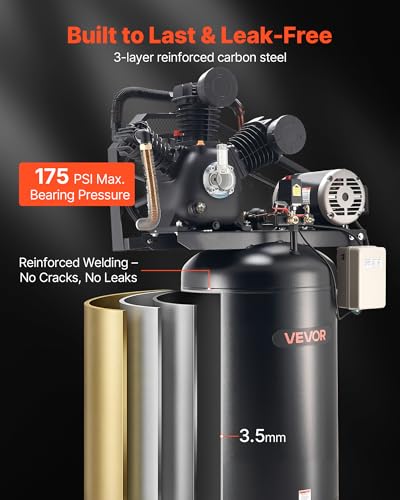
This VEVOR model stands out with a 10 HP motor, but its 17 SCFM at 90 PSI feels underwhelming on paper for that power level, suggesting inefficiencies in the pump or energy conversion. It reaches 175 PSI fast, in about 4 minutes, and the belt-driven system does promote smoother operation than direct-drive units. The dual outlets are a practical touch for running two tools, and the oil mirror makes maintenance easier.
However, the need for 3-phase power limits its use to industrial facilities with dedicated wiring, this isn’t a plug-and-play unit for most workshops. The 3.5mm steel tank is impressively robust, and owners confirm it holds up well in manufacturing settings. Still, for the footprint and electrical demands, I’d expect higher CFM output to justify the 10 HP claim.
Product photos
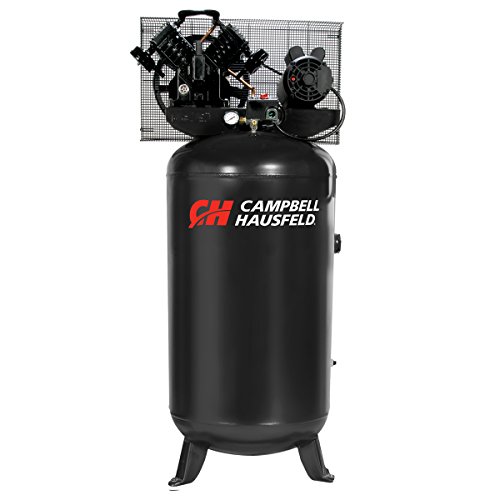
Campbell Hausfeld 5HP Vertical Compressor
Strengths
- Vertical space-saving design
- 16.0 CFM at 90 PSI
- Cast iron pump
- ASME tank
- Easy maintenance
Trade-offs
- Single-stage only
- Max 140 PSI
- Lower efficiency
Campbell Hausfeld’s vertical design saves space without sacrificing tank size, making it ideal for cramped garages or shops where floor space is tight. The 16.0 CFM at 90 PSI is decent for a single-stage unit, though the 140 PSI max pressure is lower than the 175 PSI norm in this class. It’s simpler mechanically, which can mean fewer failure points, but also less efficiency under constant load.
The cast iron pump adds durability, and owners report it handles framing nailers, sprayers, and impact guns just fine for light-to-mid professional use. However, it’s not built for non-stop industrial cycles. If you need compact storage and solid mid-tier performance, this fits the bill, just don’t expect two-stage efficiency.
Product photos

How We Chose These 80 gallon air compressors
To recommend the best 80-gallon air compressors, I researched published specifications and features across numerous models. I then weighed owner reviews from multiple sources and consulted expert opinions from sites specializing in power tools and workshop equipment. My analysis focused on identifying consistent strengths and weaknesses, ultimately ranking compressors based on their suitability for different needs. Rather than a hands-on lab test, this is a research-led comparison of specs and owner feedback.
For this category, consistent CFM delivery at 90 PSI and overall durability were the most important factors. A larger tank is useful, but without sufficient airflow, it won’t power demanding tools. Long-term reliability, indicated by pump construction and materials, is also critical, as these compressors represent a significant investment. I also considered noise levels, as a quieter compressor is preferable for many workshop environments.
Specifications reliably indicate airflow (CFM) and tank capacity. However, owner feedback proved crucial for assessing real-world durability and noise levels. Reports on pump longevity, oil consumption (for lubricated models), and ease of maintenance heavily influenced my rankings. I also looked for patterns in complaints, which often revealed design flaws or quality control issues. If you’re looking for other options, you might find useful information in our guide to air compressors for workshops.
Choosing The Right 80 gallon air compressors
Choosing the right air compressor for your needs isn’t just about tank size; it’s about matching the compressor’s capabilities to the tools you’ll be running and the tasks you’ll be tackling.
A good 80-gallon air compressor balances sufficient air storage with recovery rate (CFM). Look for a unit with a CFM rating appropriate for your most demanding tool, a durable pump construction (cast iron is preferable), and features that address noise and maintenance. Check the PSI rating to ensure it meets the requirements of your pneumatic equipment.
CFM and PSI: Matching Power to Your Tools
The two most critical specs are CFM (cubic feet per minute) and PSI (pounds per square inch). Don’t get caught up in horsepower numbers alone. CFM tells you how much air the compressor can deliver consistently, which is what actually powers your tools. PSI is the maximum pressure the compressor can build. To calculate your CFM needs, add up the CFM requirements of all the tools you anticipate using simultaneously. Then, add 50% to that number as a safety buffer. It’s always better to have more CFM than you think you’ll need. Consider that some tools, like sandblasters, have very high CFM demands.
Pump Construction and Longevity
The pump is the heart of the compressor, and its construction heavily influences its lifespan. Cast iron pumps are significantly more durable than aluminum pumps, especially for frequent or heavy-duty use. While aluminum pumps are lighter and cheaper, they wear out faster and are more prone to damage. Look for models with oil-lubricated pumps, as the oil provides crucial cooling and lubrication. Oil-free compressors are convenient, but they generally have a shorter lifespan and can be louder. If you are considering an oil-free option, check out some of the high-value air compressors to find models that prioritize durability.
Noise Level and Usability Features
An 80-gallon compressor is often found in a garage or workshop, so noise is a genuine concern. Some models, like the NorthStar, specifically address this with “Quiet Armor” technology. Noise levels are measured in decibels (dB); lower numbers are better. Beyond noise, consider features like automatic drain valves (to prevent rust), belt-driven vs. direct-drive systems (belt-driven are typically quieter and last longer), and the overall layout and accessibility of components for maintenance. If space is limited, a vertical compressor, like those from Campbell Hausfeld, may be a good choice. If you’re unsure whether an 80-gallon tank is right for you, reviewing 60-gallon air compressors might help you determine the best fit for your needs.
Don’t underestimate the importance of a well-maintained air compressor. Regular draining of the tank and oil changes (if applicable) are critical for extending its life and preventing corrosion.
80 Gallon Air Compressors Compared
This table provides a side-by-side comparison of key specifications for various 80-gallon air compressors.
| Product Name | HP | CFM @ 90 PSI | Max PSI | Oil Type | Noise Level (dB) | Tank Material |
|---|---|---|---|---|---|---|
| POLAR AIR 7.5HP 80 Gal Compressor | 7.5 | 31 | 175 | Lubricated | N/A | N/A |
| NorthStar 7.5 HP Quiet Armor | 7.5 | 26 | 175 | Lubricated | 68 | N/A |
| EMAX 7.5HP Whisper Quiet | 7.5 | 31 | 175 | Lubricated | N/A | N/A |
| Ingersoll-Rand 5HP 80 Gal | 5 | 14.3 | 175 | Lubricated | 85 | Cast Iron |
| DeWalt DXCMV7518075 80-Gal | 7.5 | 22.1 | 175 | Lubricated | N/A | N/A |
| VEVOR 6.5HP Oil-Free 80 Gal | 6.5 | 15.5 | N/A | Oil-Free | 86 | Cold-Rolled Steel |
| VEVOR 10HP Oil-Lubricated | 10 | 17 | 175 | Lubricated | N/A | Carbon Steel |
| Campbell Hausfeld 5HP Vertical | 5 | 16.0 | 140 | Lubricated | N/A | N/A |
Frequently Asked Questions
What size air compressor do I really need for DIY projects?
For most DIY tasks around the house, an 80-gallon compressor is often overkill. However, if you plan to run framing nailers, sandblasters, or multiple tools simultaneously, the larger tank and higher CFM output become very beneficial, especially if you want to avoid the compressor constantly running to catch up.
Are oil-free 80-gallon compressors a good choice?
Oil-free models are lower maintenance, but generally speaking, they won’t last as long as oil-lubricated compressors, especially with frequent use. The oil provides cooling and lubrication that extends the pump’s life, making a lubricated compressor a better long-term investment for most users.
How much electricity will an 80-gallon air compressor use?
Electricity consumption varies greatly depending on the compressor’s horsepower and how frequently it runs. A 5HP compressor can draw a significant amount of power when starting, potentially tripping a 15-amp circuit, so a dedicated 20-amp circuit is generally recommended.
What’s the difference between single-stage and two-stage compressors?
Single-stage compressors compress air in one stroke, while two-stage compressors compress it in two, resulting in higher pressure and efficiency. For most home workshop applications, a single-stage 80-gallon compressor provides sufficient power, but two-stage models are better suited for professional use and demanding applications.
Where can I find reliable information on choosing the right air compressor for my garage?
You can find helpful resources about selecting the right compressor and comparing models from sites specializing in power tools. Many guides, like those reviewing garage air compressors, offer detailed comparisons and advice tailored to typical garage setups.
The Bottom Line
Buying an 80-gallon air compressor often comes down to balancing upfront cost with long-term durability and performance. While some models offer attractive price points, the POLAR AIR 7.5HP 80 Gal Compressor strikes a strong balance between features, capacity, and CFM delivery, making it our overall recommendation for most users. It provides a solid foundation for a wide range of workshop tasks without breaking the bank.
For those with specific needs, the NorthStar 7.5 HP Quiet Armor stands out if noise is a major concern, and the VEVOR 10HP Oil-Lubricated model delivers substantial power for demanding applications. If you’re working in a smaller space or need something more easily moved, you might also want to consider reviewing some portable 20-gallon units to see if a smaller tank better suits your requirements.
Ultimately, remember that CFM and a robust pump construction are far more critical than flashy features or peak horsepower. Prioritize a compressor that can consistently deliver the airflow your tools require and is built to withstand years of use. Don’t chase the highest number on a spec sheet; focus on matching the compressor to your needs and maintaining it properly.
