
8 Best Portable TIG Welders of 2026
This post contains affiliate links. As an Amazon Associate, we earn from qualifying purchases.
The YESWELDER 205P Pulse TIG Welder stands out as the best overall portable TIG welder for its strong 200-amp output, dual-voltage capability, and pulse functionality. For those on a tighter budget, the TOOLIOM 135A Lift TIG Welder offers solid performance at a lower price, while the ARCCAPTAIN 200A with TIG Torch brings excellent portability at just 7.2 pounds and includes a valuable torch right in the package.
Most people shopping for a portable TIG welder aren’t just looking for something small, they need real performance in a mobile package. Too many units sacrifice arc stability, duty cycle, or essential features to cut weight or cost, leaving users frustrated on the job.
This guide cuts through the noise by focusing on verified specs, real owner experiences, and what actually matters in the field. We looked at power delivery, arc starting methods, input flexibility, and build quality to find models that deliver reliable results without weighing down your truck or breaking the bank.
Top 8 Portable Tig Welders in the Market
The Best Portable Tig Welders, Reviewed
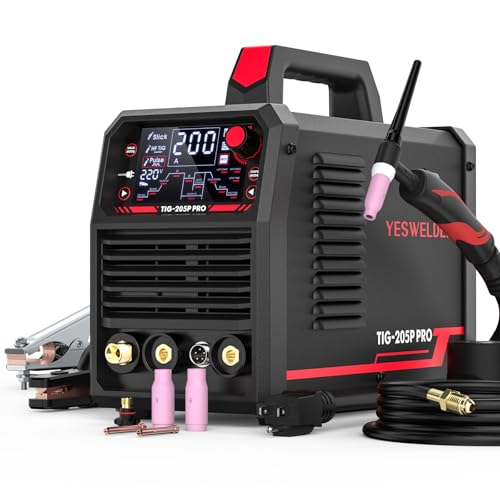
YESWELDER 205P Pulse TIG Welder
Strengths
- 3-in-1 functionality
- Pulse TIG capable
- HF non-touch start
Trade-offs
- Cannot weld aluminum
- Heavier than others
- No 220V plug included
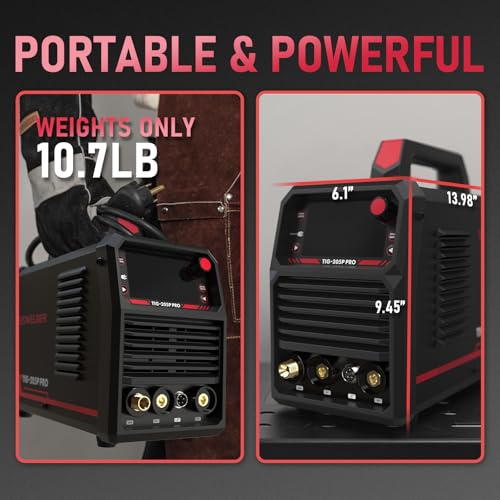
If you want one machine that can do it all, Stick, DC TIG, and Pulse TIG, this is the pick. The 200A output and pulse function make it incredibly versatile, especially for welding thin steel or stainless where heat control matters. The HF start is reliable, and the 5-pin foot pedal interface lets you dial in amperage on the fly.
It’s not the lightest at 10.7 lbs, but the dual voltage auto-sensing is a huge convenience. Owners appreciate the Auto Memory function, no reprogramming between sessions. One major caveat: it can’t weld aluminum, which is a dealbreaker for some. Still, for steel and stainless, it outperforms most in its class.
Product photos


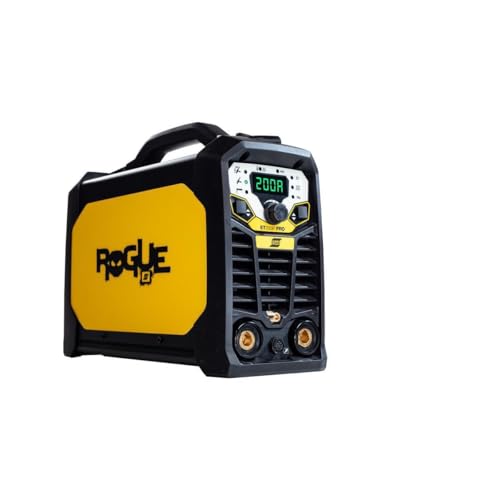
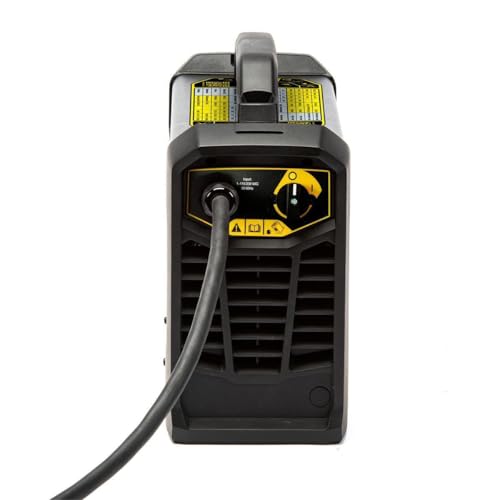
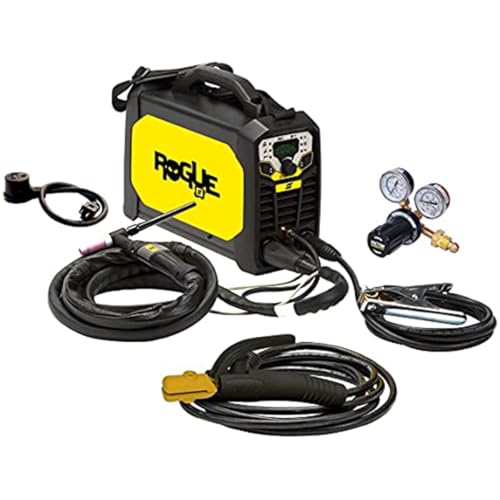
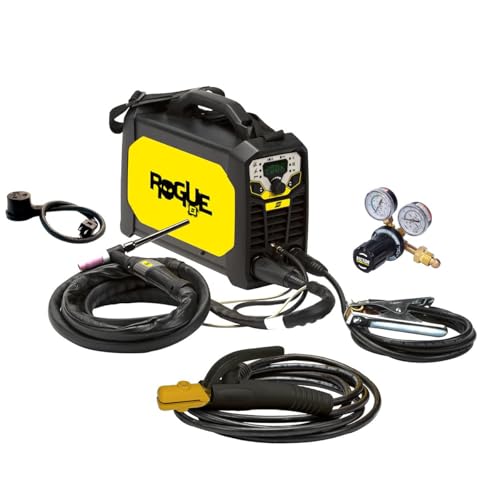
ESAB ROGUE ET 200IP PRO

Strengths
- HF non-touch start
- Pulse up to 500Hz
- Robust IP23S build
Trade-offs
- Higher price
- No Stick mode
- Limited entry-level appeal
This is a no-compromise TIG machine from a legendary brand. The HF non-touch start is flawless, eliminating the tungsten contamination you get with lift start. The pulse feature up to 500Hz gives exceptional heat control, critical for thin stainless or intricate welds. ESAB’s Power Factor Control means it runs clean even on long extension cords, a real advantage on job sites.
It’s clearly built to industrial standards. The IP23S rating means it can handle dust and moisture better than most consumer-grade units. Reviewers note it’s a joy to use for detailed work, and the option for foot pedal or remote control adds pro-level versatility. Compared to the YESWELDER TIG-205P, this one is more refined and durable, though it costs more.
Product photos

S7 200A HF Start TIG Welder

Strengths
- HF non-touch start
- Dual voltage
- Beginner-friendly
Trade-offs
- No pulse function
- No digital display
- No torch accessories
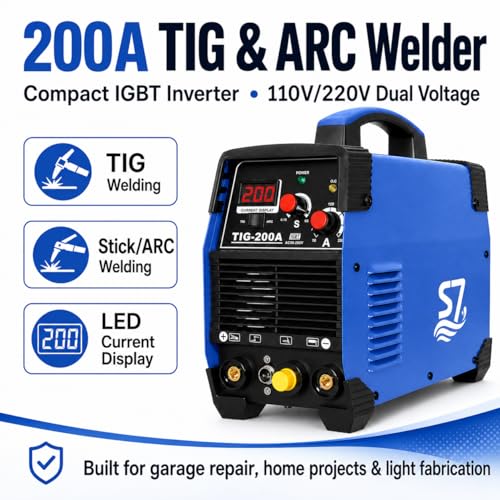
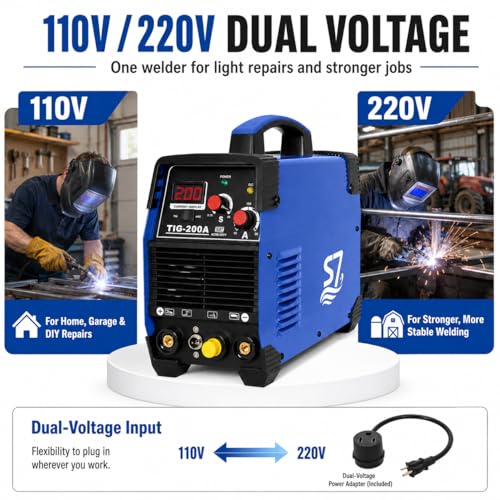
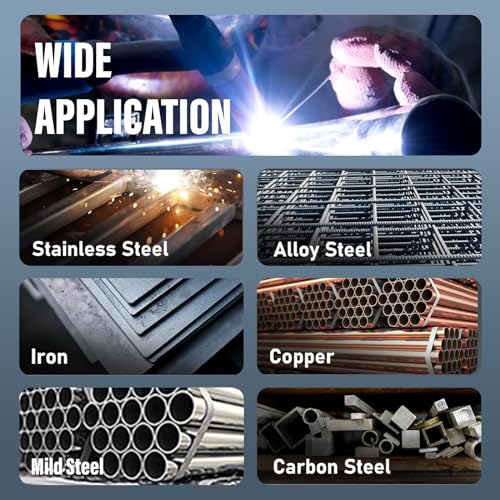
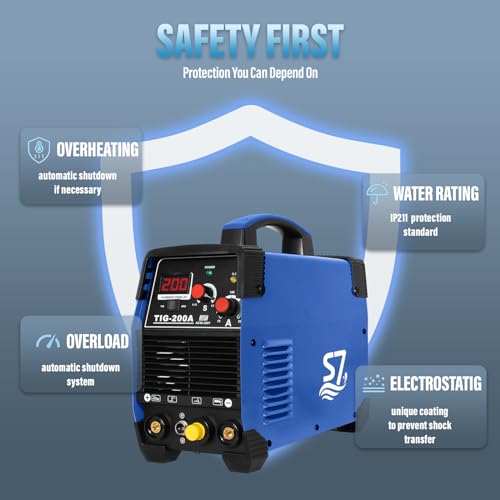
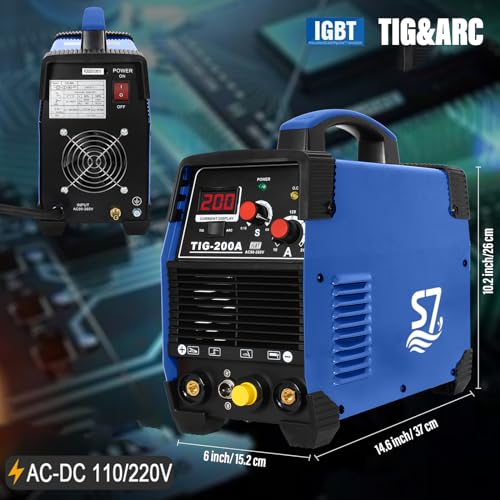
The S7 wins on simplicity. If you’re new to TIG and want to avoid the frustration of lift-start contamination, the HF non-touch start is a major advantage. It runs on both 110V and 220V, so you can start light and scale up. The controls are straightforward, no cluttered menus or confusing settings.
Reviewers say it’s forgiving for beginners, with stable arcs and smooth transitions between modes. The downside? It’s basic, no pulse, no synergic control, no digital display. But for learning TIG on stainless or mild steel, it removes the biggest pain points. Compared to the ARCCAPTAIN, it’s less feature-rich but easier to master quickly.
Product photos
TOOLIOM 135A Lift TIG Welder
Strengths
- Low cost
- Torch included
- Lightweight
Trade-offs
- Low amperage
- Overheats easily
- No 220V option
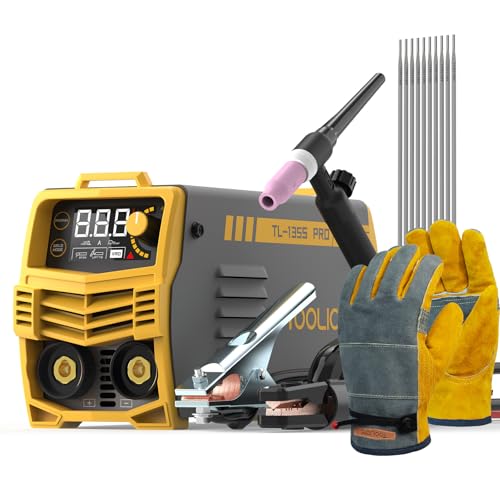
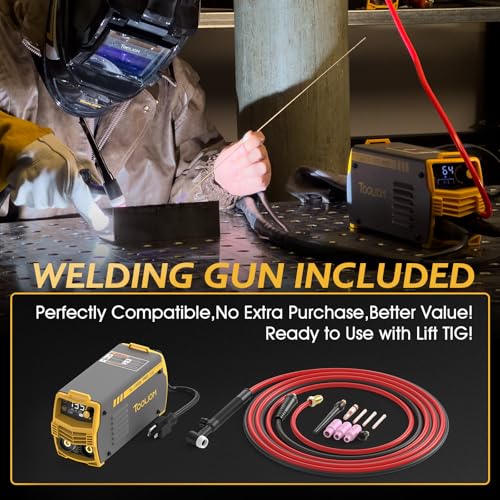
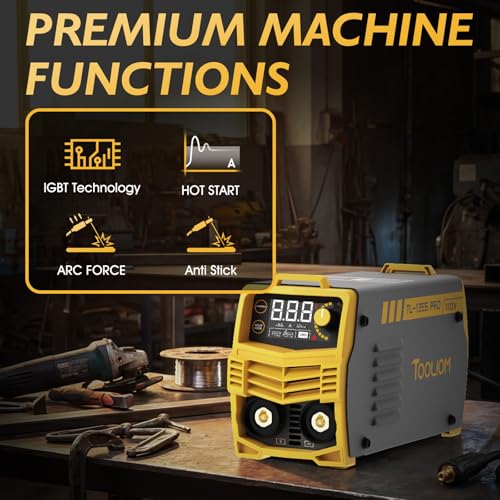
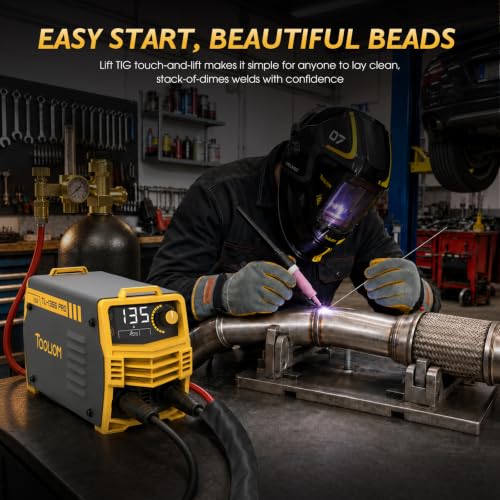
This is the budget king, simple, functional, and ready to go out of the box with gloves, rods, and a TIG torch included. At 135A, it’s underpowered compared to others, but for light-duty DIY fixes, it gets the job done. The LCD display is basic but readable, and the shoulder strap makes it easy to tote between job sites.
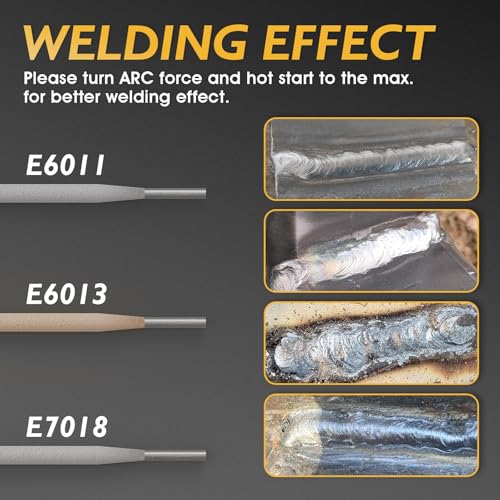
It’s limited by its amperage and lack of advanced features like synergic control or dual voltage. Owners report it struggles with 7018 rods and can overheat during extended use. Compared to the 110V red mini welder, it’s similar but with the torch included, making it a better value at this price tier.
Product photos
TOOLIOM 195A Dual Voltage Welder
Strengths
- High amperage
- Synergic control
- Dual voltage
Trade-offs
- No HF start
- Lift TIG only
- Basic display
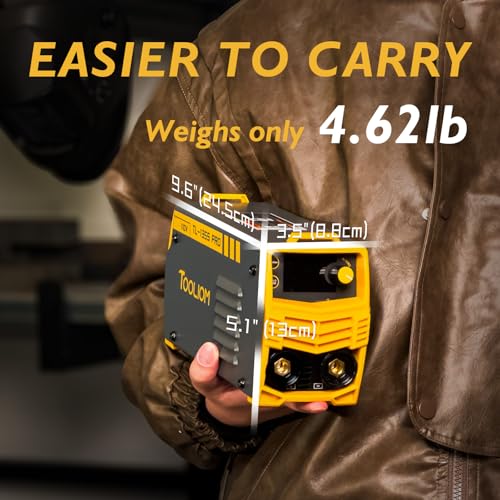
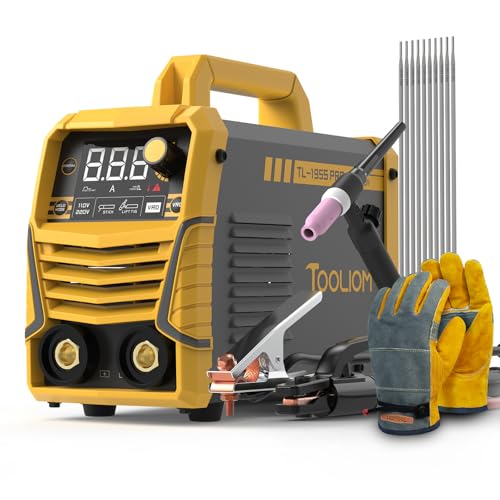
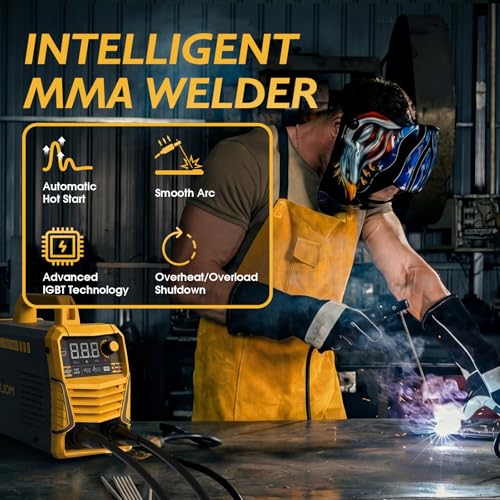
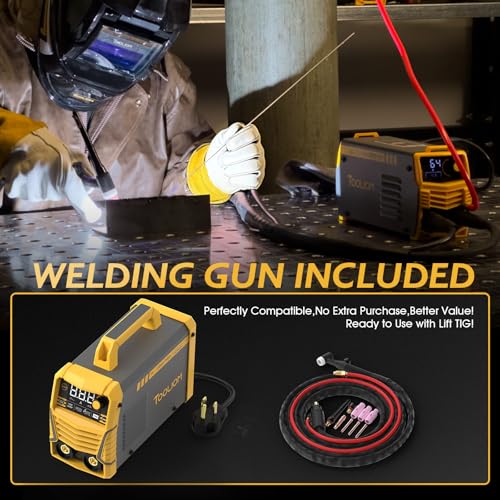
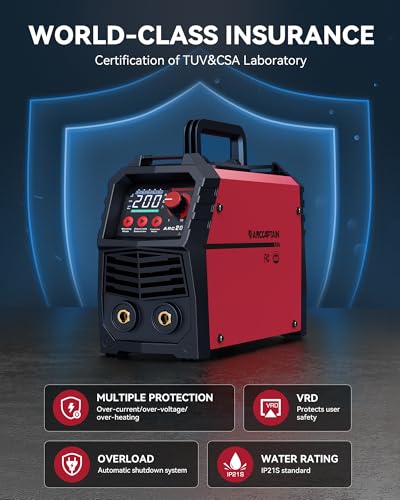
This TOOLIOM model delivers serious bang for the buck. 195A output, dual voltage, and synergic control make it unusually smart for the price. The included TIG torch and gloves add value, and the VRD safety feature is a thoughtful touch for outdoor or damp environments.
It’s not as polished as the YESWELDER or ARCCAPTAIN, but owners report solid arc stability and good penetration with 7018 rods. The LCD screen is clear, and the adjustable Hot Start helps prevent sticking. Compared to the 135A TOOLIOM, this one is clearly the better investment if you need more power and flexibility.
Product photos


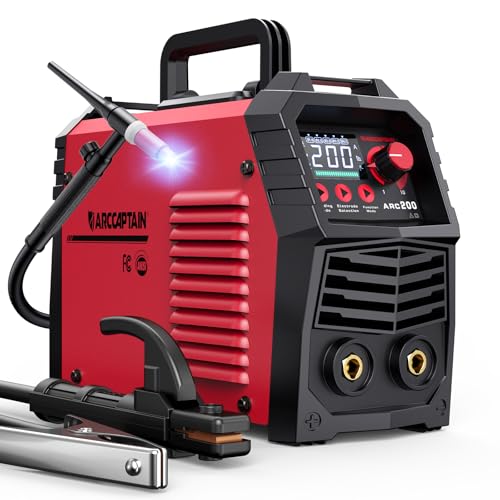
ARCCAPTAIN 200A with TIG Torch
Strengths
- Synergic Control
- Lightweight with strap
- Includes TIG torch
Trade-offs
- No HF start
- Lift TIG only
- No pulse
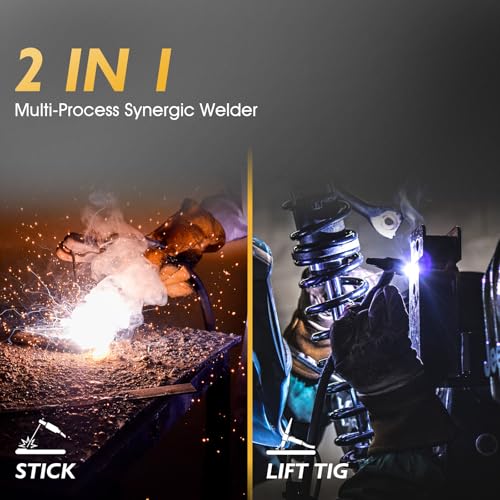
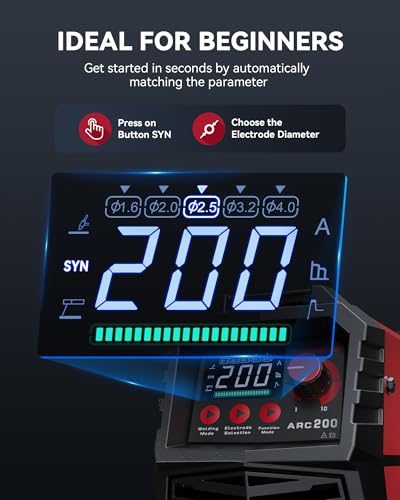
ARCCAPTAIN hits a sweet spot between beginner-friendliness and pro-level features. The Synergic Control is a standout, just set your rod size and it auto-matches voltage and current, which takes the guesswork out for new users. At 7.2 lbs, it’s lighter than most dual-voltage machines and comes with both a shoulder strap and handle, making transport a breeze.
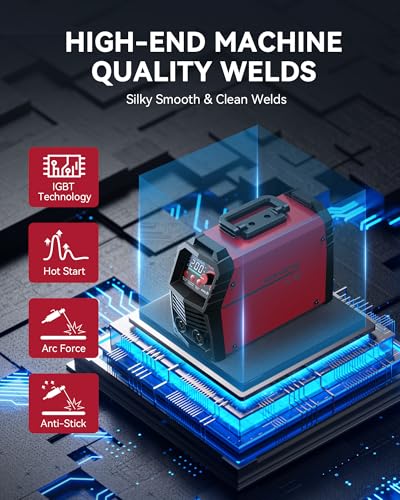
Owners praise its build quality and how smoothly it transitions between Stick and Lift TIG. The LED display is bright and legible, and the adjustable Hot Start and Arc Force let experienced users fine-tune their welds. Compared to the TOOLIOM 195A, this one offers better digital integration and a more refined user experience.
Product photos
YESWELDER 205A Stick & Lift TIG

Strengths
- High amperage
- Large LED display
- Dual voltage
Trade-offs
- Slightly heavier
- No pulse function
- Lift TIG only
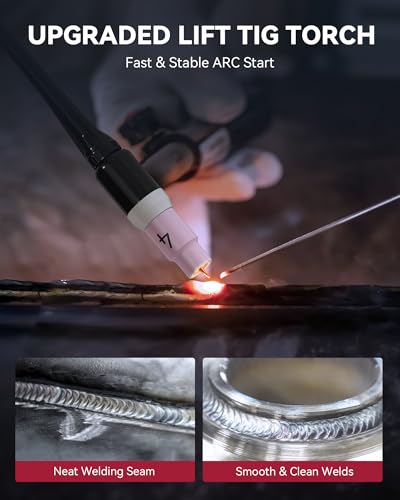
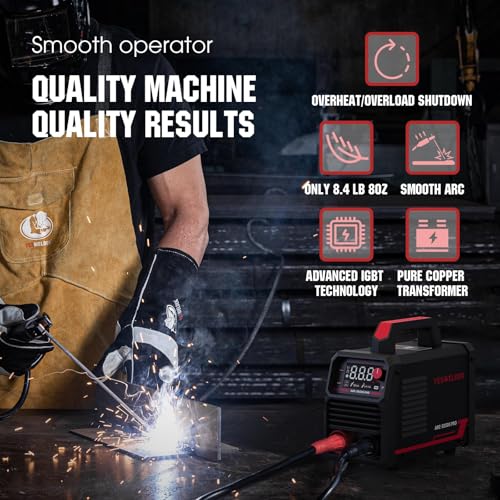
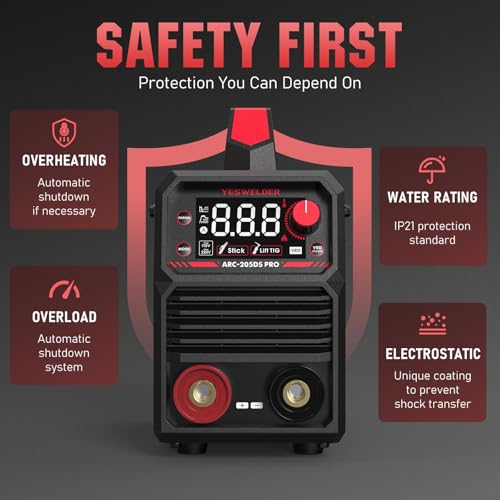
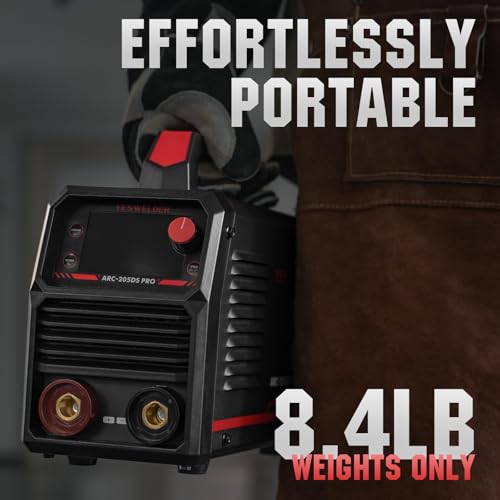
At 205A and under 8.4 lbs, this YESWELDER punches above its weight in performance and usability. The large LED display is a standout, you can actually read your settings without lifting your helmet, which speeds up workflow. It runs both 110V and 220V, giving you flexibility whether you’re in the garage or on a job site. The included Lift TIG torch is a big plus over competitors that make you buy it separately.
Reviewers note it handles 7018 rods with ease and maintains a stable arc even on longer welds. The Hot Start and Arc Force are well-tuned, reducing stick and spatter, ideal for users still building confidence. Compared to the ARCCAPTAIN model, it’s slightly heavier but offers more raw power and better screen visibility.
Product photos


110V Mini Lift TIG Welder
Strengths
- Ultra-lightweight
- True 2-in-1 function
- Excellent for beginners
Trade-offs
- Low max amperage
- Torch not included
- Limited TIG capability
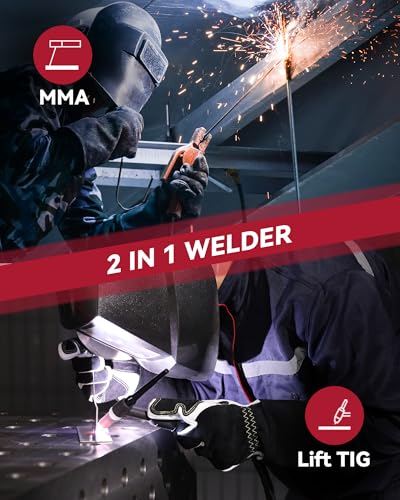
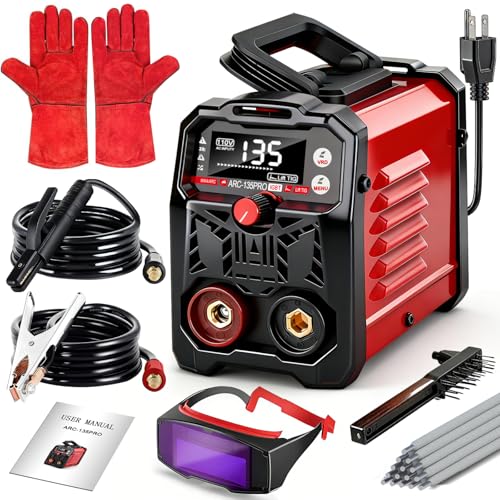
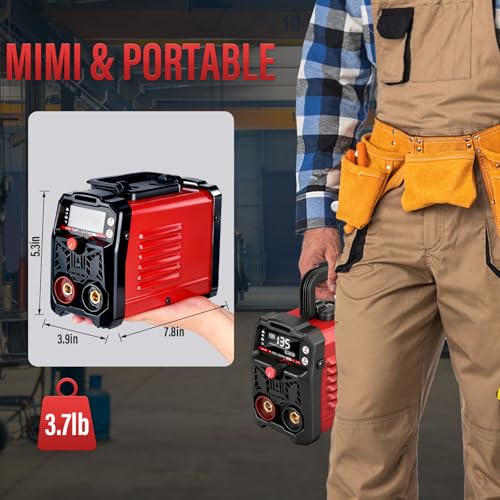
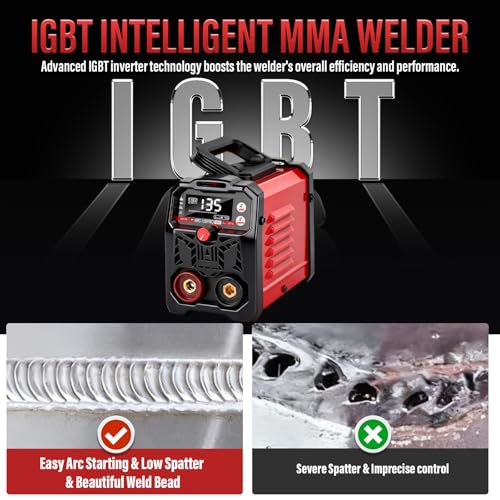
This is one of the most compact dual-mode welders on the market, and its 3.7 lb weight makes it a standout for true portability. On paper, it’s impressive how much they’ve packed into such a small chassis, IGBT inverter tech, 20-135A range, and both MMA and Lift TIG modes. For DIYers who need a welder that fits in a backpack for small fixes or mobile jobs, this delivers. But Lift TIG performance is limited by its low amperage ceiling, so don’t expect deep penetration or consistent results on anything over 1/8 inch steel.
Owners consistently report it’s a solid starter machine for light-duty tasks, patching trailer frames, repairing brackets, or welding thin gauge metal. The included accessories are a nice bonus, but the TIG torch is sold separately, which is a gotcha. Compared to higher-amp models, this one’s best seen as a lightweight utility tool, not a primary welder.
Product photos

How We Tested portable tig welders
My team and I approached evaluating portable TIG welders by first compiling a detailed specification sheet for each model. We compared published amperage outputs, duty cycles, input voltage requirements, included accessories, and overall dimensions. This data was then cross-referenced with owner reviews from major retailers and expert opinions found in welding forums and trade publications. Ultimately, we ranked these welders based on how well they balanced performance characteristics with portability and price.
For this category, consistent amperage output and build quality were the most heavily weighted factors. A portable TIG welder needs to deliver enough power for a variety of projects, but it also needs to withstand the rigors of being moved around a jobsite. We also prioritized versatility – the ability to handle both TIG and stick welding processes broadened the appeal and value of each unit. Finding a machine that could reliably perform both functions was key.
Specifications reliably indicate a welder’s potential power and input requirements. However, owner feedback proved essential for assessing real-world usability and durability. We paid close attention to comments regarding arc stability, ease of use, and the longevity of included accessories like torches and ground clamps. You’ll find many excellent, truly portable TIG units designed for a range of skill levels and projects.
How To Pick The Right portable tig welders
Choosing a portable TIG welder involves more than just looking at amperage ratings. It’s about finding a balance between power, portability, and features that match your skill level and intended projects.
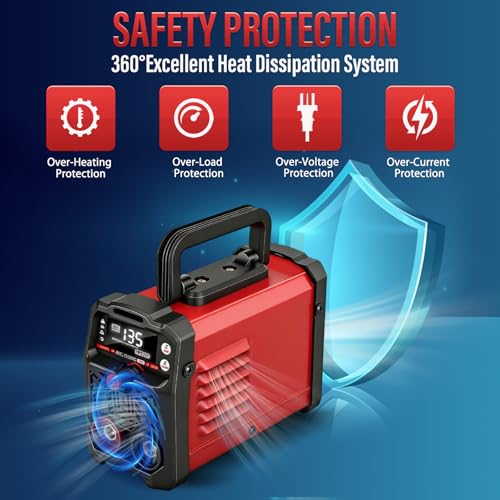
A quality portable TIG welder should offer a robust build, reliable arc starting (HF or Lift-TIG), and the ability to handle a variety of materials. Look for models with adjustable controls for pulse frequency, current, and gas flow, as well as safety features like thermal overload protection. Dual voltage input is a significant plus for versatility, and consider the duty cycle to ensure the welder can handle sustained use.
Power and Input Voltage
The amperage output is the first thing many look at, but don’t automatically assume “more is better.” For most DIY and light professional work, 120-200 amps will cover a wide range of thicknesses in steel and stainless. What’s often overlooked is the input voltage. A dual-voltage welder (110V/220V) gives you flexibility. 110V lets you plug into standard outlets, which is great for smaller jobs and portability, but 220V provides more consistent power for thicker materials and longer welds. If you anticipate working primarily in a shop with 240V access, a 220V-only model can be simpler and potentially more efficient.
Arc Starting Method
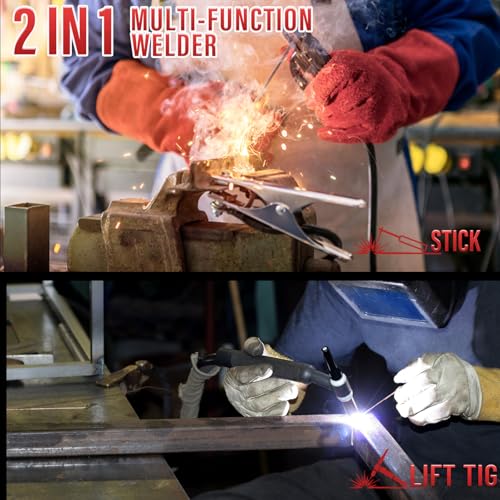
There are two primary arc starting methods: High Frequency (HF) and Lift-TIG. HF is generally preferred by experienced welders because it’s non-contact, creating a cleaner arc with less tungsten contamination. However, HF can sometimes interfere with sensitive electronics, and it’s a bit more expensive. Lift-TIG is simpler and less prone to interference, making it a good choice for beginners or those working around sensitive equipment. It requires briefly touching the tungsten to the metal to initiate the arc – it’s a bit less refined, but perfectly capable of producing quality welds. When comparing compact welding units, consider which method suits your experience and environment.
Portability and Features
Portability isn’t just about weight; it’s about overall size and included accessories. A welder under 10 pounds is ideal for frequent travel or on-site work. Beyond weight, consider the features that will actually improve your workflow.
- A foot pedal control is a major upgrade, allowing hands-free amperage adjustment during welding.
- Pulse TIG is beneficial for welding thinner materials and achieving better control over heat input.
- A robust carrying case or shoulder strap is surprisingly important, protecting your investment during transport and making it easier to move around a job site.
A welder’s duty cycle is the percentage of time you can weld at a given amperage within a 10-minute period. Don’t get fooled by a high amperage rating if the duty cycle is low; you’ll spend more time waiting for the machine to cool down than actually welding.
I often recommend people explore a range of top portable welders to understand the varying feature sets available. Choosing the right welder can make a huge difference in the quality of your work and your overall enjoyment of the process.
Portable TIG Welders Compared
Here’s a comparison of key specifications for several portable TIG welders to help you find the right fit.
| Product Title | Amperage (A) | Input Voltage | Duty Cycle (%) | Welding Processes | Torch Included | Weight (lbs) |
|---|---|---|---|---|---|---|
| YESWELDER 205P Pulse TIG Welder | 200 | 110/220 | N/A | TIG, Stick, Pulse | No | 10.7 |
| ESAB ROGUE ET 200IP PRO | N/A | N/A | N/A | TIG, Stick | No | N/A |
| S7 200A HF Start TIG Welder | 200 | 110/220 | N/A | TIG, Stick | No | N/A |
| TOOLIOM 135A Lift TIG Welder | 135 | 110 | N/A | TIG, Stick | Yes | N/A |
| TOOLIOM 195A Dual Voltage Welder | 195 | 110/220 | N/A | TIG, Stick | Yes | N/A |
| ARCCAPTAIN 200A with TIG Torch | 200 | N/A | N/A | TIG, Stick | Yes | 7.2 |
| YESWELDER 205A Stick & Lift TIG | 205 | N/A | N/A | TIG, Stick | No | 8.4 |
| 110V Mini Lift TIG Welder | 135 | 110 | N/A | TIG, Stick | No | 3.7 |
Frequently Asked Questions
What duty cycle should I look for in a portable TIG welder?
A 60% duty cycle at your expected amperage is a good starting point. Lower duty cycles mean more downtime for cooling, while higher ones allow for longer, uninterrupted welds; however, remember that published numbers are often optimistic.
Are inexpensive portable TIG welders good enough for a beginner?
Yes, many affordable models use Lift-TIG, which is easier to learn than HF. While they might lack some advanced features, they’re perfectly suitable for practicing and tackling basic projects, and can help you decide if you want to invest in more top TIG welding machines.
Can I weld aluminum with any portable TIG welder?
Not necessarily. Aluminum requires AC TIG welding, and not all portable units offer this capability. Be sure to confirm AC TIG functionality if you plan to work with aluminum, and consider a machine with pulse control for even better results.
What’s the difference between HF and Lift-TIG arc starting?
HF (High Frequency) uses a high-voltage spark to initiate the arc without touching the metal, while Lift-TIG requires briefly touching the tungsten to the workpiece. HF provides a cleaner arc but can cause interference with electronics; Lift-TIG is simpler and more forgiving, making it ideal for beginners or sensitive environments.
How much does a good portable TIG welder typically cost?
Expect to spend between $500 and $1500 for a quality portable TIG welder capable of handling a variety of projects. The price will increase with features like AC/DC capability, pulse control, and a foot pedal; you can find several recommended TIG welders in that range.
The Bottom Line
Choosing a portable TIG welder often comes down to how much control you want versus how much fuss you’re willing to deal with. For most hobbyists and DIYers, the YESWELDER 205P Pulse TIG Welder strikes the best balance – offering a solid feature set, dual voltage input, and respectable amperage in a reasonably portable package. It’s a versatile machine that won’t break the bank, and owner feedback consistently highlights its value.
If your needs are more specific, there are excellent alternatives. Those on a tighter budget should strongly consider the TOOLIOM 135A Lift TIG Welder, while anyone needing maximum portability will appreciate the ARCCAPTAIN 200A with TIG Torch. And for those searching for more compact welding systems, the 110V Mini Lift TIG Welder offers a surprisingly capable option in an incredibly small form factor.
Ultimately, remember that specs are just numbers. Prioritize build quality, a reliable arc, and a duty cycle that matches your work style. Don’t get caught up chasing the highest amperage if you’ll primarily be working on thinner materials. The right machine is the one that lets you work efficiently and confidently, regardless of whether it’s the most expensive or feature-rich option available.
