
7 Best Aluminum Tig Welders of 2026
This post contains affiliate links. As an Amazon Associate, we earn from qualifying purchases.
The Lotos TIG200ACDC stands out as the best overall aluminium TIG welder for its reliable arc performance and precise AC frequency control, making it ideal for clean, strong welds. For those on a tighter budget, the Weldpro 200A delivers solid results without breaking the bank. If you need maximum versatility across materials and thicknesses, the Sunstac 250A offers excellent adjustability and power.
Aluminium is unforgiving to weld, its oxide layer, heat sensitivity, and tendency to warp demand a machine that offers real control, not just raw power. Many buyers end up frustrated with machines that claim high amperage but lack the AC balance or pulse features needed for consistent results.
This guide cuts through the marketing by focusing on what actually matters: verified specs, owner-reported reliability, and the features that make or break an aluminium weld. We looked at AC frequency range, pulse control, duty cycle accuracy, and ease of use, then matched them to real-world applications, so you can pick a welder that fits your projects, not just the brochure.
Top 7 Aluminium Tig Welders in the Market
The Best Aluminium Tig Welders, Reviewed
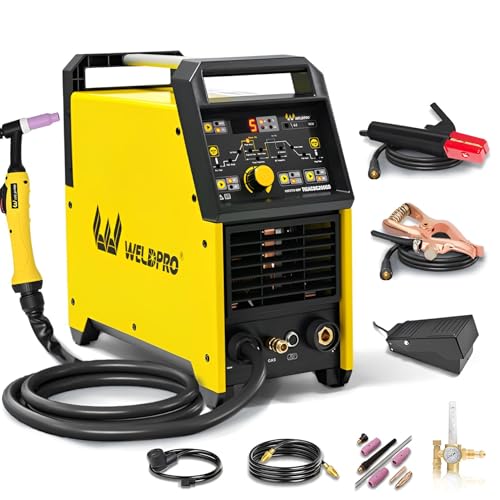
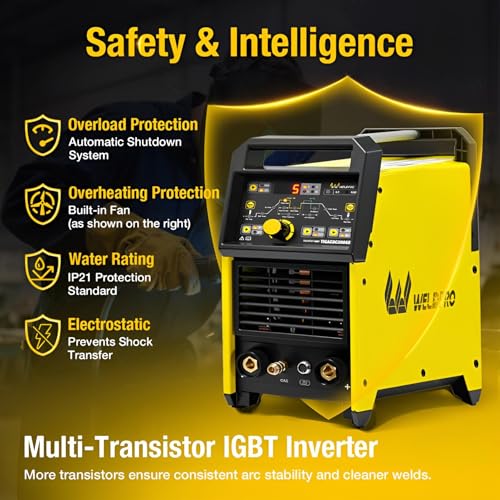
Weldpro 200A AC/DC TIG Welder
Strengths
- Fully adjustable AC settings
- Includes foot pedal and torch
- High duty cycle
- IGBT inverter tech
- Complete accessory kit
Trade-offs
- Slightly heavier
- No 250A output
- Basic display vs. LCD
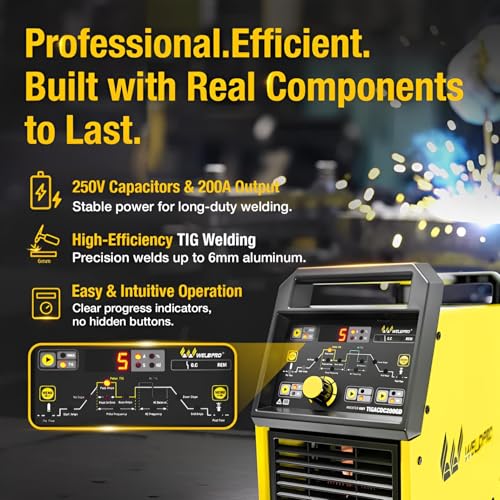
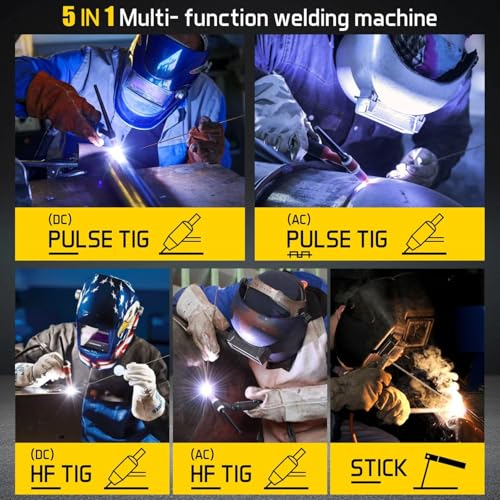
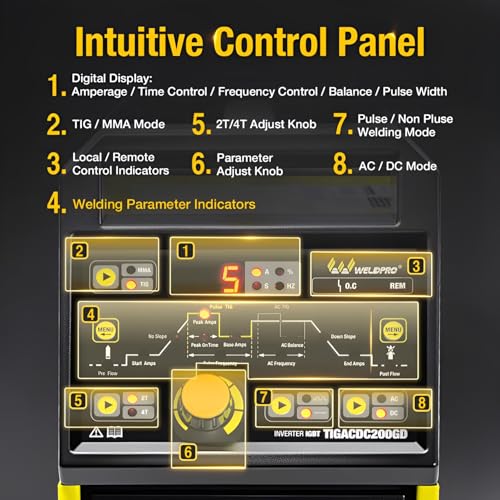
The Weldpro 200A doesn’t just claim to be a top all-rounder, it delivers. Between its fully adjustable AC balance, frequency, and pulse settings, this machine gives seasoned welders the fine-tuning control needed for professional-grade aluminum welds. The ability to shape the waveform and manage heat input precisely means less warping on thin sheets and stronger, cleaner beads on thicker material. Reviewers highlight how easy it is to dial in settings for magnesium and other tricky non-ferrous metals, which speaks to its tuning range.
What pushes this ahead of the pack is the complete accessory kit, including a foot pedal, TIG torch, and quality consumables, few competitors offer this much out of the box. The industrial-grade IGBT inverter and 40% duty cycle at 200A mean it can keep up with extended use, and the safety protections add real peace of mind. I’d pick this over the YESWELDER or ARCCAPTAIN for anyone serious about aluminum TIG work, especially if you value reliability and hands-on control.
Product photos

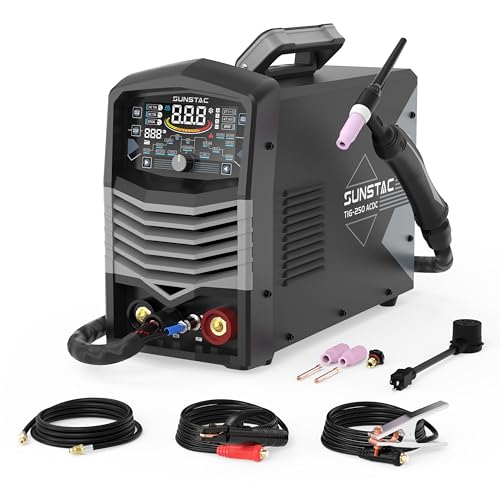
Sunstac 250A AC/DC Aluminum TIG Welder
Strengths
- High 250A output
- Good for thick aluminum
- LCD digital screen
- Pulse and spot modes
- Auto dual voltage
Trade-offs
- AC current reading inaccurate
- Heavier than entry models
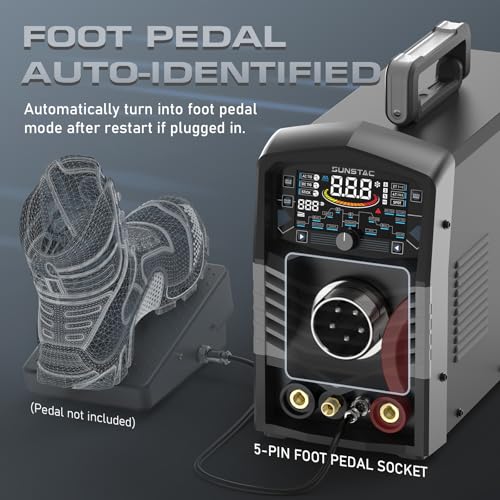
- No foot pedal included
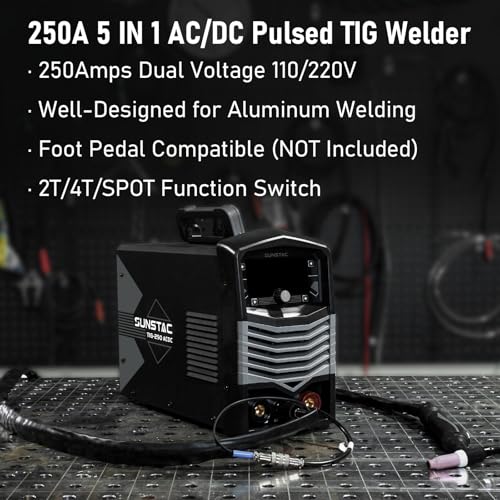
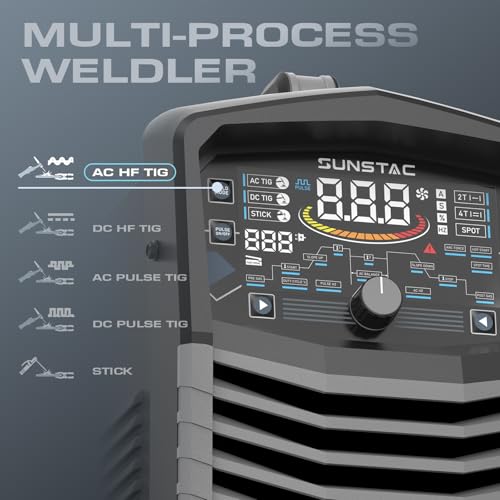
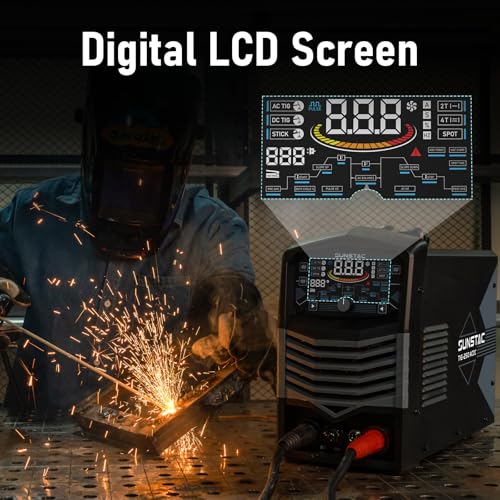
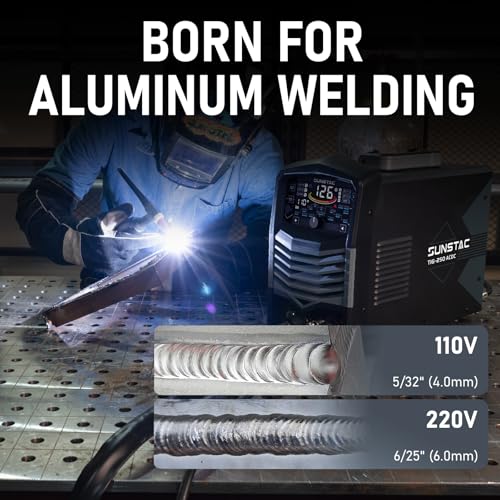
If you’re regularly welding aluminum over 1/4 inch, the Sunstac SS-250P/ACDC should be on your radar. With a max output of 250 amps and support for both 110V and 220V inputs, it’s built to handle thicker non-ferrous metals, owners report clean welds on aluminum up to 6mm (about 1/4 inch) when running 220V. The AC TIG mode is clearly tuned for aluminum, and the inclusion of pulse TIG and spot welding gives experienced users tighter control over heat, which is critical when avoiding burn-through on sensitive materials.
The LCD screen is a noticeable upgrade over basic LED displays, offering better visibility under a helmet, though some buyers note inconsistencies in AC current measurement, a known quirk with lower-cost AC/DC inverters. Still, the smart parameter memory and 2T/4T trigger options improve workflow efficiency. Compared to similarly priced units, it pushes more power, but that comes with a bulkier footprint and slightly steeper learning curve for beginners.
Product photos
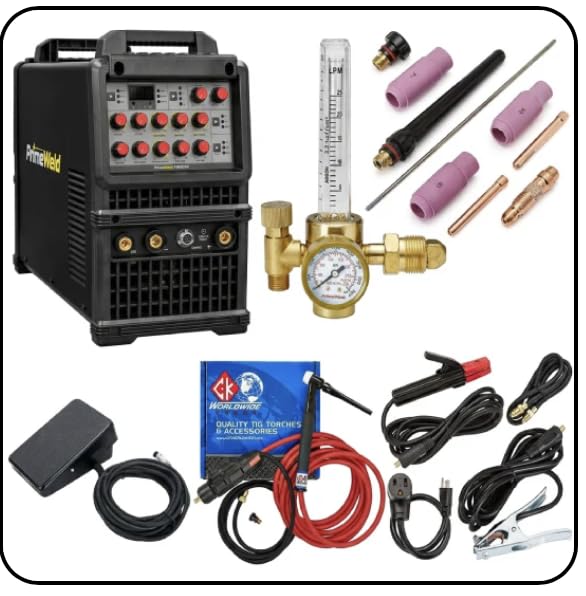
PRIMEWELD TIG225X AC/DC Welder
Strengths
- 225A max output
- High 200Hz pulse frequency
- Premium CK Superflex torch
- Good thick-metal capability
- Dual voltage support
Trade-offs
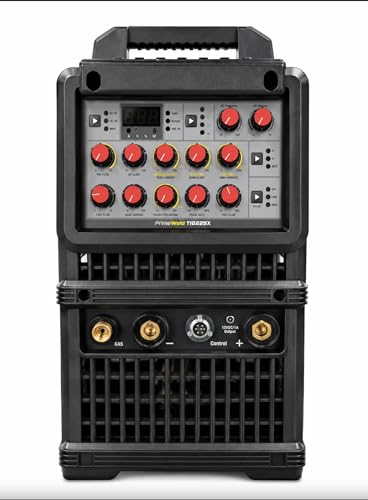
- Limited waveform control
- Fewer adjustable settings
- No LCD display
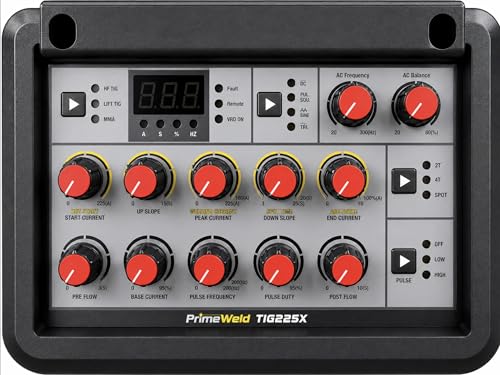
When raw amperage matters, the PRIMEWELD TIG225X stands tall. At 225 amps, it bridges the gap between entry-level and pro-grade machines, giving users the headroom to weld 1/4 inch aluminum and even 3/8 inch mild steel, numbers that outpace most 200A models. The CK Worldwide 17 Series Superflex torch is a major upgrade over stock torches, offering better articulation and heat resistance, which translates to more control during long welds. This alone makes it a smarter buy for serious users than models with generic torches.
It runs on 110V/220V with auto-switching, and the 200Hz pulse frequency allows for extremely fine bead control, a detail pros appreciate. However, it lacks the full digital interface and parameter depth of the Weldpro or Sunstac, no adjustable AC balance or frequency, for example. That makes it less refined for delicate aluminum work. Still, if you need brute power and a premium torch without paying premium prices, this is the machine to beat.
Product photos


ARCCAPTAIN 200A AC/DC TIG Welder

Strengths
- 7-in-1 welding modes
- Square/triangular wave options
- Extensive parameter control
- 5-year service support
- Good heat management
Trade-offs
- Heavy for size
- No foot pedal included
- Overstated thickness claims
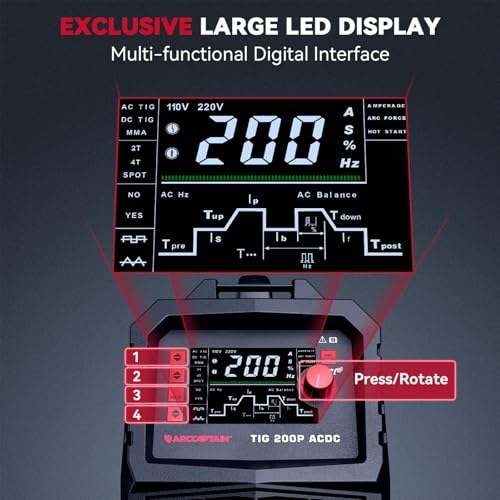
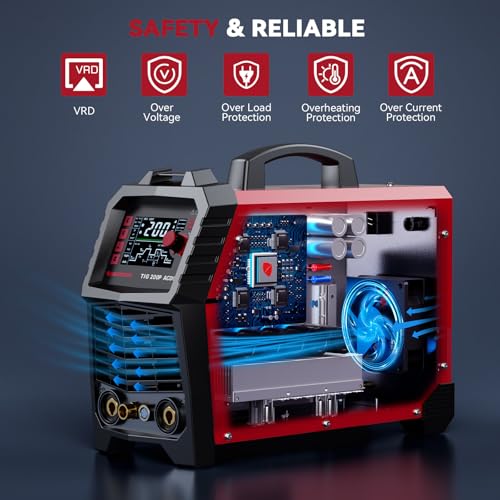
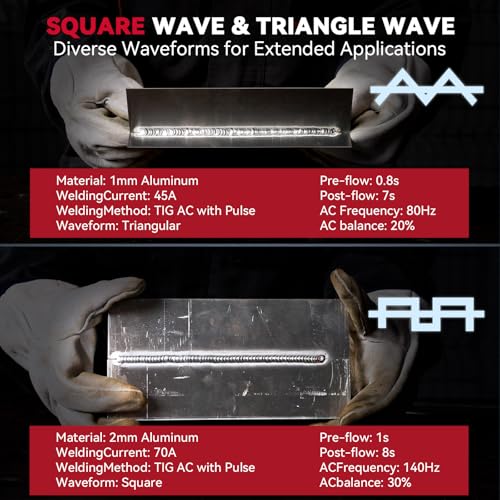
The ARCCAPTAIN TIG200PACDC feels like a machine built for tinkerers and multi-material welders who want maximum flexibility without overspending. Its 7-in-1 functionality stands out, especially the inclusion of square and triangular waveforms, which give users more tools to manage heat and arc behavior. The square wave is particularly effective for aluminum oxide cleaning, while the triangular wave helps reduce heat input, useful when welding thin sheets. Owners appreciate the extensive parameter control, from upslope to crater settings, which brings it closer to professional-tier tuning.
At 26.5 pounds, it’s on the heavier side for its class, but the digital MCU control system keeps performance stable. One thing to note: while it claims to weld aluminum up to 5mm, real-world feedback suggests it performs best below 3/16 inch, especially on 110V. Still, for the price, the depth of features and five-year service support make it a compelling value. I’d recommend it over the VEVOR or Bestarc for users who prioritize customization.
Product photos


YESWELDER TIG-200P AC/DC Welder
Strengths
- True AC/DC output
- 7-in-1 versatility
- Lightweight design
- Auto memory function
- Large LED display
Trade-offs
- Limited for thick aluminum
- No foot pedal included
- Lower duty cycle at max amp
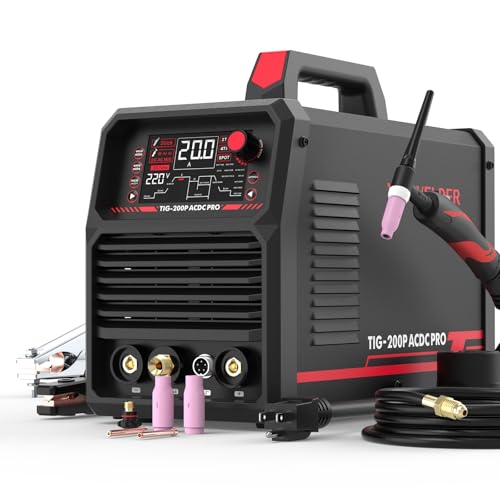
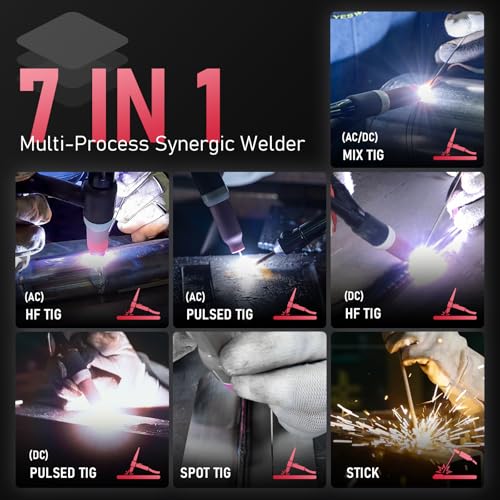
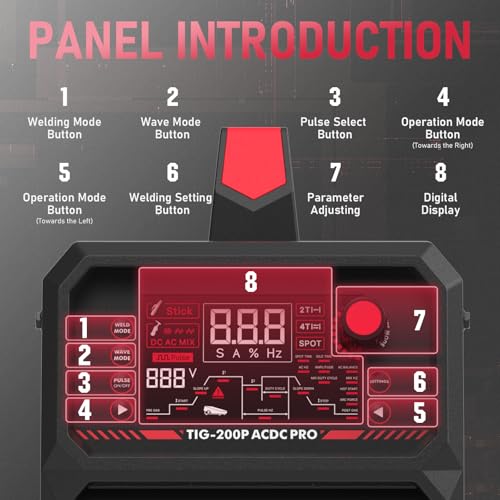
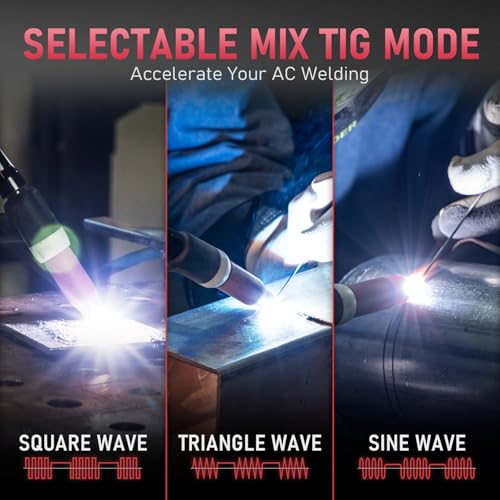
For DIYers dipping into aluminum TIG welding without wanting to drain their budget, the YESWELDER TIG-200P ACDC makes a strong first impression. On paper, it punches above its weight with true AC/DC output, pulse capability, and a broad 7-in-1 function set that includes both AC and DC pulse modes, features usually found on pricier units. The square wave AC output is a key win here, as it directly improves oxide cleaning and arc stability when welding aluminum, which owners consistently report leads to smoother, cleaner beads on thin to mid-thickness aluminum.
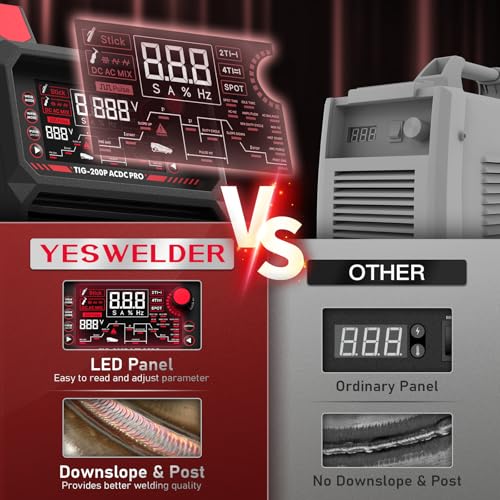
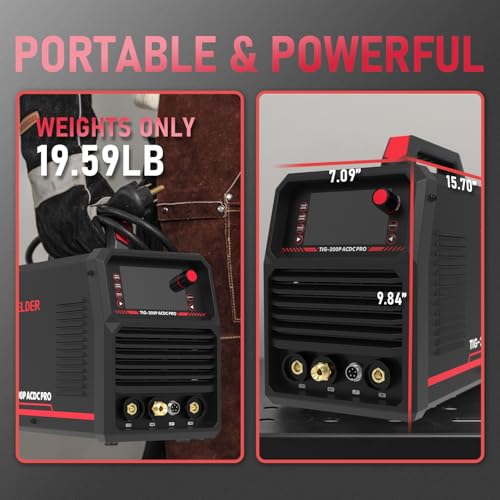
Where it stands out is in accessibility. The large LED display and auto-memory function make setup repeatable and straightforward, especially for those still building confidence. It’s also impressively portable at just over 16 pounds, making it a solid pick for mobile welders or weekend warriors rotating between jobs. That said, while it handles aluminum up to 1/8 inch, it doesn’t match the deep-penetration capability of higher-amp machines when tackling thicker sections.
Product photos
Bestarc 215A AC/DC TIG Welder
Strengths
- 215A balanced output
- Includes foot pedal
- MCU precision control
- Downslope and post-gas
- 2T/4T mode support
Trade-offs
- No LCD screen
- Average display visibility
- Limited waveform options
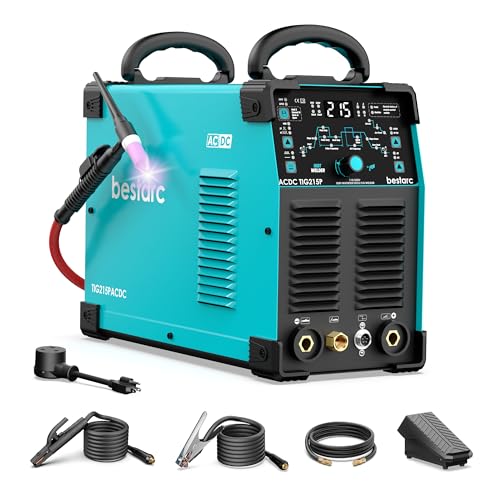
The Bestarc 215A strikes a smart middle ground between power and precision. With 215 amps, it offers more headroom than 200A models without the bulk of 250A units, making it a balanced pick for mixed-use scenarios. The MCU precision control ensures consistent arc starts and stable performance, and owners report fewer issues with sticking or spatter during stick welding, a sign of solid internal tuning.
Its standout features, adjustable post-gas, downslope, and 2T/4T modes, are practical upgrades that improve weld quality and reduce fatigue during longer sessions. The inclusion of a foot pedal in the package is a real value boost, something even some premium brands skip. While it doesn’t have the extreme pulse range of the PRIMEWELD or the full parameter suite of the Weldpro, it delivers where it counts: reliable, repeatable welds on aluminum and steel. For most home fabricators, this is the sweet spot.
Product photos
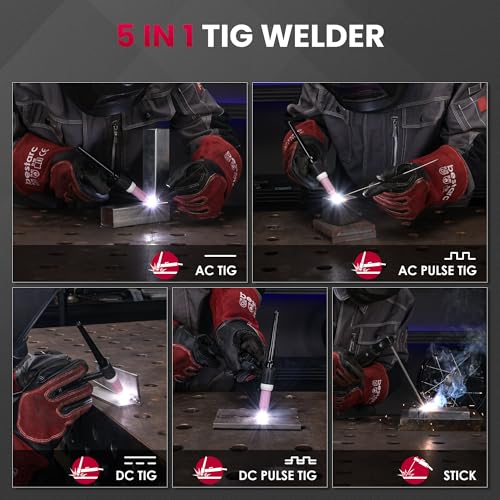


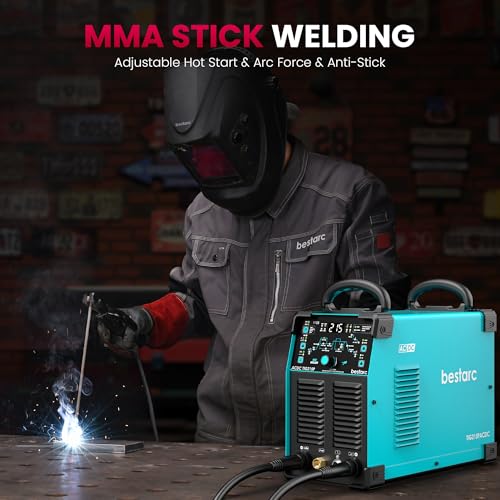
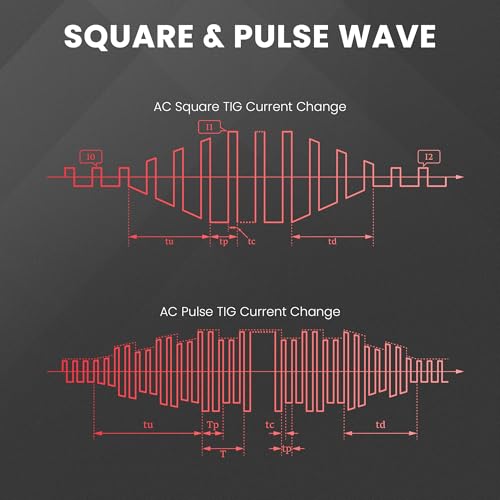
VEVOR 225A 6-in-1 TIG Welder
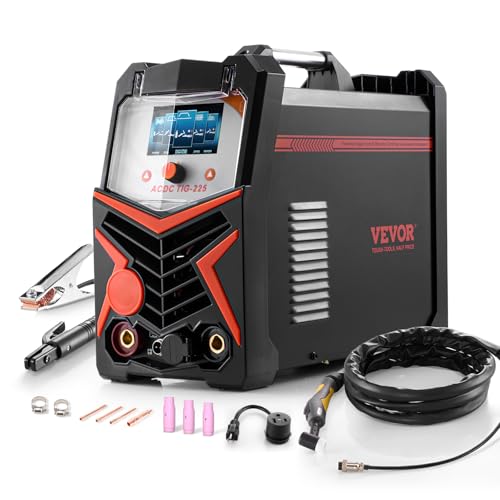
Strengths
- Large LED display
- 6-in-1 functionality
- Spool gun compatible
- Dual voltage
- Good safety suite
Trade-offs
- Lower real-world duty cycle
- Generic torch quality
- Less precise control
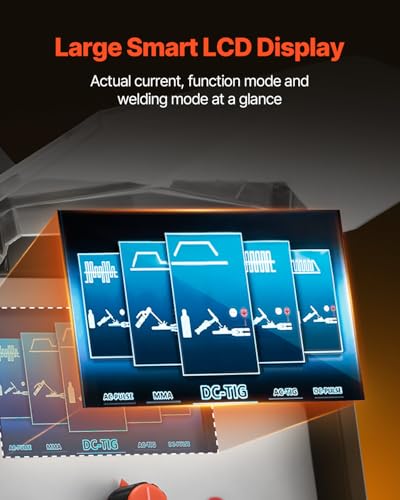
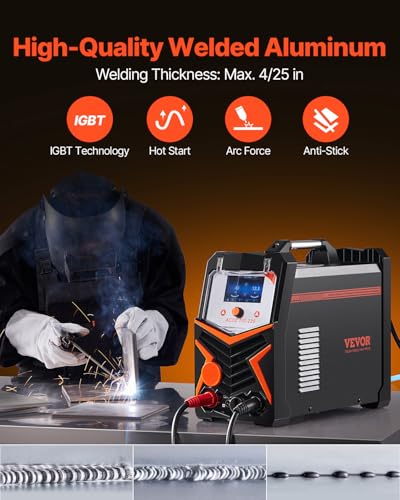
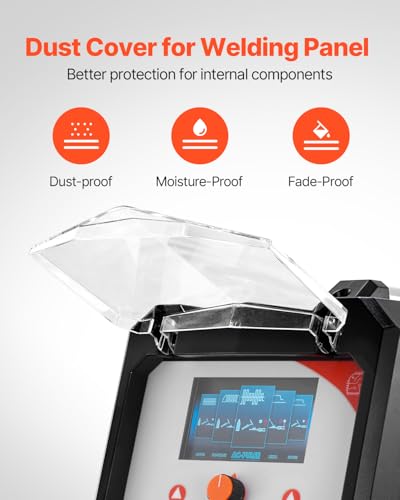
The VEVOR 225A feels like a machine designed with weekend warriors in mind, functional, no-frills, and packed with just enough features to get the job done. Its 6-in-1 capability covers all the basics, and the large LED display makes it easy to monitor settings, even in bright garages. It supports spool guns for aluminum MIG, which is a nice touch, but most owners use it in AC TIG mode for lighter fabrication.
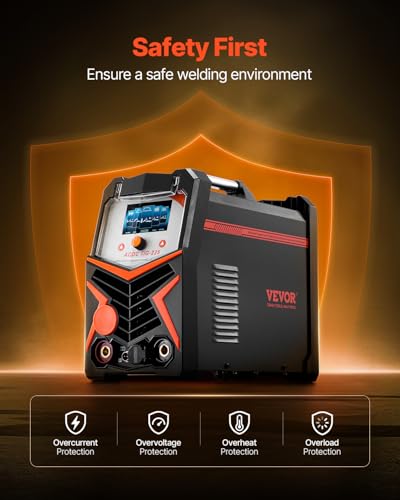
On paper, it matches higher-end models with 225A output and dual voltage, but in practice, reviewers note it’s best treated as a light to medium-duty machine. The duty cycle drops quickly at higher amps, and the build quality, while decent, doesn’t inspire confidence for daily use. Still, for someone restoring a trailer or building backyard gates, it’s more than capable. Compared to the Weldpro or PRIMEWELD, it’s less refined, but for casual users, that may not matter.
Product photos

How We Chose These aluminium tig welders
My team and I approached evaluating aluminium TIG welders by compiling specifications and feature lists from numerous manufacturers. We then cross-referenced this data with owner reviews from major retailers and expert opinions found in welding publications and forums. Rather than a hands-on lab test, this is a research-led comparison of specs and owner feedback, focused on identifying patterns in performance and reliability. This allows us to build a ranking based on real-world reported experiences.
For aluminium TIG welding, amperage output, AC frequency control, and pulse functionality proved most decisive. The ability to fine-tune AC frequency is critical for cleaning aluminium oxide and achieving quality welds. Amperage dictates the thickness of material you can effectively weld, while pulse control offers greater precision and reduces heat distortion. Ultimately, a welder’s versatility and ability to consistently deliver clean, strong aluminium welds determined its position.
Published specifications reliably indicate maximum amperage, duty cycle, and input voltage requirements. However, I placed greater weight on owner feedback regarding ease of use, arc stability, and long-term durability. Reputation, specifically how often experts recommend certain models or discuss common issues, also factored heavily into my assessment. Finding the right machine often comes down to matching features to your specific needs, and understanding what real users say about versatile AC/DC welders.
How To Pick The Right aluminium tig welders
Choosing the right aluminium TIG welder requires a bit more consideration than simply grabbing the cheapest model. You need to think about the type of aluminum you’ll be working with, the thickness, and your overall skill level.
A quality aluminium TIG welder delivers stable arc performance, precise control over heat input, and the ability to adjust key parameters like AC balance and pulse frequency. Look for models with dual voltage capability (110V/220V) for flexibility, and consider features like pulse control and foot pedal operation for enhanced precision. Prioritize machines built with IGBT technology for efficiency and reliability.
Understanding AC Balance and Frequency
Aluminum’s oxide layer is its biggest challenge when TIG welding. The AC balance control adjusts the amount of time the electrode spends in positive versus negative polarity during the AC cycle. Higher positive balance cleans more oxide but also increases heat input. Finding the sweet spot is crucial; too much heat and you’ll burn through, too little and you won’t get proper fusion. Frequency control impacts arc width and penetration – lower frequencies create a narrower arc for more focused heat, while higher frequencies widen the arc for broader heating. Don’t assume all machines offer full adjustability; some limit your control.
Duty Cycle and Amperage Output
Don’t get hung up on the peak amperage rating alone. A welder that claims 200 amps isn’t necessarily going to be able to sustain that output for long. The duty cycle, expressed as a percentage, tells you how long you can weld at a given amperage before the machine needs to cool down. A 60% duty cycle at 150 amps means you can weld for six minutes out of every ten at that amperage. For thicker aluminum, you’ll want a higher amperage and a reasonable duty cycle.
Here’s what to consider when looking at amperage and duty cycle: * A low amperage machine (under 150A) is fine for very thin sheet metal. * A mid-range unit (150A-200A) will handle most common aluminum thicknesses. * For consistently welding thicker aluminum (1/4” or more), you’ll want a machine with at least 200A and a 40% or higher duty cycle at that amperage, otherwise you’ll spend more time letting it cool than actually welding.
Features and Usability
Beyond the core welding capabilities, consider features that enhance usability. A pulse function is almost essential for aluminum, allowing for better heat control and cleaner welds. A foot pedal is a huge benefit, giving you hands-free control over the amperage. Look for a clear, easy-to-read display and intuitive controls. If you’re new to TIG welding, a machine with pre-programmed settings or simplified controls can be a lifesaver. Many people find that multi-purpose TIG welders are a good starting point.
A good rule of thumb: if you’re primarily working with aluminum, prioritize a machine specifically designed for AC TIG welding, even if it means sacrificing some features in other welding processes.
Finally, don’t overlook the included accessories. A quality TIG torch, ground clamp, and regulator are essential. Some machines come with a complete kit, while others require you to purchase accessories separately. If you plan to work with a variety of aluminum alloys, investing in TIG welders for aluminum that provide fine-tuned control is crucial.
Aluminium Tig Welders Compared
Here’s a comparison of key specifications for several aluminium TIG welders to help you make an informed decision.
| Product Name | Amperage (A) | Input Voltage | AC/DC | Pulse Function | Foot Pedal | Max. Al. Thickness (in) |
|---|---|---|---|---|---|---|
| Weldpro 200A | 200 | 110/220V | Yes | Yes | Included | N/A |
| Sunstac 250A | 250 | 110/220V | Yes | Yes | Optional | 5/32 (110V), 6/25 (220V) |
| PRIMEWELD TIG225X | 225 | 110/220V | Yes | Yes | Included | N/A |
| ARCCAPTAIN 200A | 200 | 110/220V | Yes | Yes | Optional | N/A |
| YESWELDER TIG-200P | 200 | 110/220V | Yes | Yes | Optional | 1/8 |
| Bestarc 215A | 215 | 110/220V | Yes | Yes | Included | N/A |
| VEVOR 225A | 225 | 110/220V | Yes | Yes | N/A | 1/4 |
Frequently Asked Questions
What amperage is sufficient for welding thin aluminum sheet metal?
A lower amperage machine (under 150 amps) is generally sufficient for welding very thin aluminum sheet metal (under 1/8 inch), as it minimizes the risk of burn-through and provides adequate control for delicate work. However, consider a slightly higher amperage if you anticipate needing to weld thicker material in the future.
How important is AC frequency control when welding aluminum?
AC frequency control is extremely important; it allows you to adjust the arc width and penetration, which is essential for cleaning aluminum oxide and achieving a clean, strong weld. Lower frequencies focus the heat, while higher frequencies broaden it.
What does a welder’s duty cycle tell me?
A welder’s duty cycle indicates how long you can weld at a specific amperage before the machine overheats and needs to cool down. For example, a 60% duty cycle at 150 amps means you can weld for six minutes out of every ten at that amperage.
Are foot pedals necessary for aluminium TIG welding?
While not strictly necessary, a foot pedal provides hands-free control over the amperage, which is highly beneficial for aluminum TIG welding, enabling precise heat management and cleaner welds. It’s especially useful for intricate work.
Where can I find more information on top-rated TIG welding machines?
My site contains detailed reviews and comparisons of various TIG welders, including models suited for aluminum. You’ll find in-depth analyses of features, performance, and user feedback to help you make an informed decision.
The Bottom Line
Choosing an aluminium TIG welder invariably means balancing control with convenience, and price with performance. While many options exist, the Weldpro 200A strikes the best overall balance for most users, offering a solid feature set, good amperage output, and included foot pedal – all at a reasonable price point. It’s a capable machine that will handle a wide range of aluminium welding tasks, especially for those stepping up from beginner models.
For those on a tighter budget, the YESWELDER TIG-200P provides excellent value. If portability is paramount, look at portable TIG welding units, though you often trade some power for reduced size and weight. And if you anticipate tackling heavier gauge aluminium regularly, the Sunstac 250A’s higher amperage and 220V capability make it a strong contender.
Ultimately, remember that the specifications aren’t everything. A stable arc, good AC frequency control, and a comfortable setup will contribute more to quality welds than simply chasing the highest amperage number. Prioritize a machine that feels right for your hands and skill level, and don’t underestimate the importance of practicing proper technique.
