
7 Best All Around TIG Welders of 2026
This post contains affiliate links. As an Amazon Associate, we earn from qualifying purchases.
The YESWELDER 200A stands out as the best all around TIG welder for most users, combining strong AC/DC performance, pulse control, and dual voltage in a capable package. If you’re watching your budget, the ARCCAPTAIN 200A HF TIG/Stick offers solid core functionality at a lower price, while the PRIMEWELD TIG225X 225A brings extra amperage for heavier tasks.
TIG welding demands precision, control, and the right machine to match your material and skill level. Too many buyers end up with a unit that’s either underpowered or overloaded with features they’ll never use.
This guide cuts through the noise by focusing on real-world usability, based on specs, owner feedback, and what actually matters in a shop or garage setting. I looked at amperage, duty cycle, AC/DC capability, and build quality to find models that deliver consistent performance across steel, stainless, and aluminum.
Top 7 All Around Tig Welders in the Market
The Best All Around Tig Welders, Reviewed
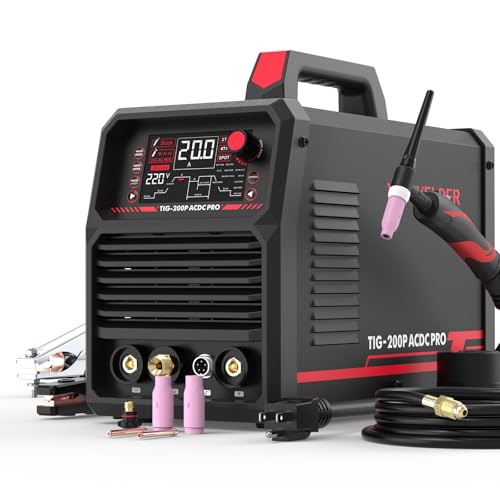
YESWELDER 200A AC/DC TIG Welder
Strengths
- True 7-in-1 versatility
- Lightweight and portable
- HF non-touch start
- Auto-sensing voltage
Trade-offs
- No foot pedal included
- AC balance tuning not as refined
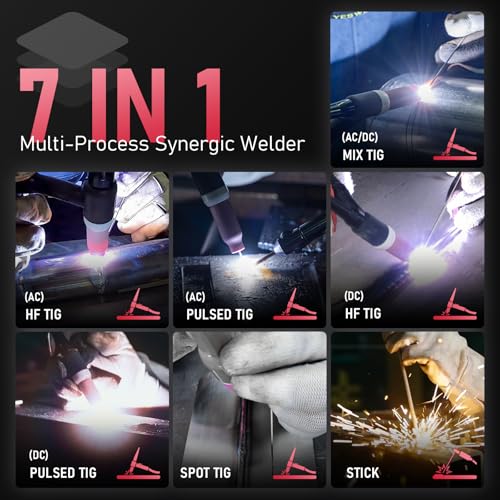
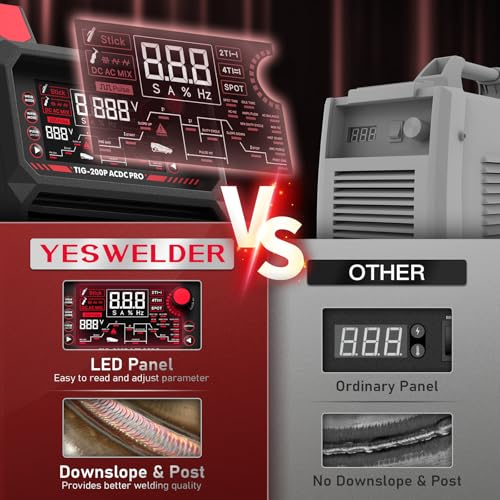
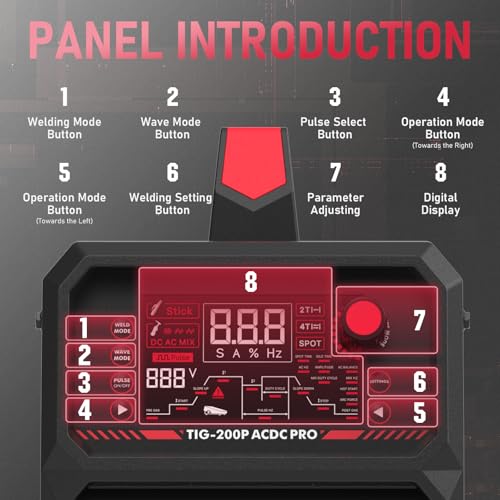
If I had to recommend one all-around TIG welder for most home users and semi-pros, this YESWELDER TIG-200P ACDC would be near the top. It hits the sweet spot of performance, portability, and usability. At just 16.5 lbs, it’s lightweight, and the auto-sensing dual voltage means you can move it between 110V and 220V outlets without rewiring. The HF non-touch start works reliably, even on aluminum, and owners praise how smoothly it strikes an arc. The large LED screen is bright and clear, showing real-time settings, something that pays off when switching between jobs.
What seals the deal is the 7-in-1 functionality. You get AC/DC TIG, pulse modes, STICK, and spot welding, which covers nearly every common need. It’s not quite as feature-rich on waveform control as the ARCCAPTAIN model, but for most users, the square wave and pulse TIG are more than enough. I’d pick this over the PRIMEWELD TIG225X if you value ease of use and consistent ignition over raw amperage.
Product photos
ARCCAPTAIN TIG Welder AC/DC 200A

Strengths
- 7-in-1 versatility
- Advanced waveform control
- Full digital parameter tuning
Trade-offs
- Foot pedal not included
- Heavier than competitors
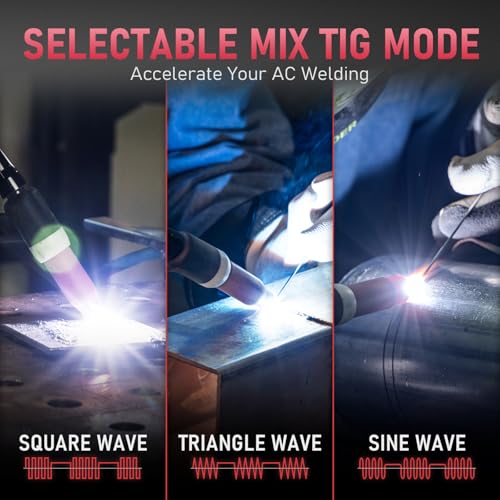
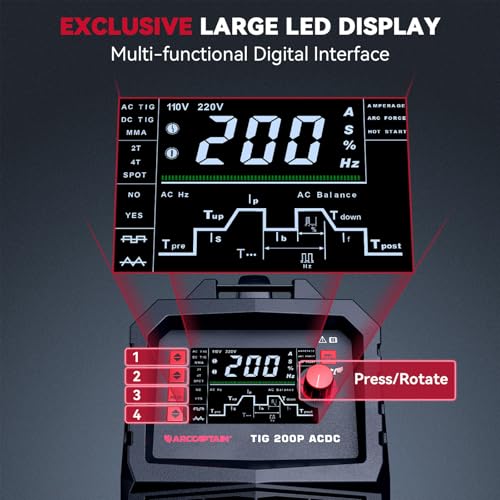
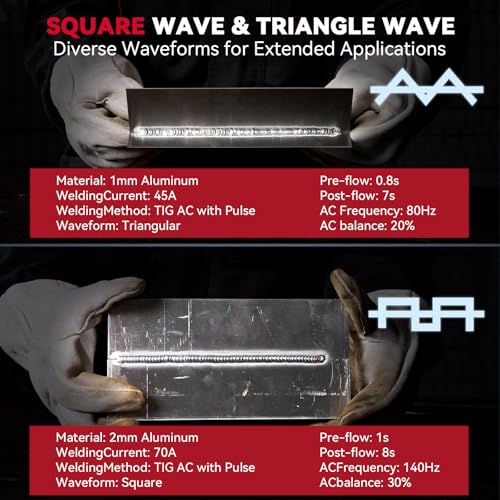
This 7-in-1 ARCCAPTAIN TIG welder is built for someone who wants serious versatility, especially with aluminum. The inclusion of AC Pulse, Square Wave, and Triangular Wave forms is a real differentiator, it gives you fine control over heat input, which matters when welding thin aluminum without burning through. On paper, it’s one of the few sub-$1,000 machines offering this level of waveform tuning, and owners consistently report clean bead profiles on non-ferrous metals. The digital parameter system lets you dial in everything from pre-flow to crater fill, which is rare at this price.
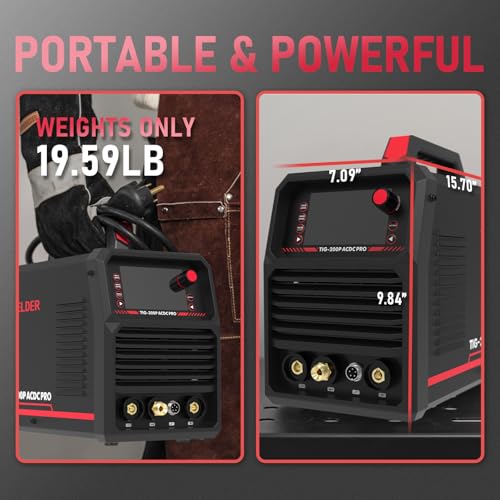
It’s not the lightest in its class at 26.5 lbs, but the IGBT inverter keeps it compact and efficient. The large LED screen is a plus, making settings easy to read mid-weld. Compared to the YESWELDER TIG-200P ACDC, it matches in core functionality but adds triangular wave, something some advanced users appreciate for ultra-thin materials. However, the foot pedal isn’t included, which is a notable omission.
Product photos


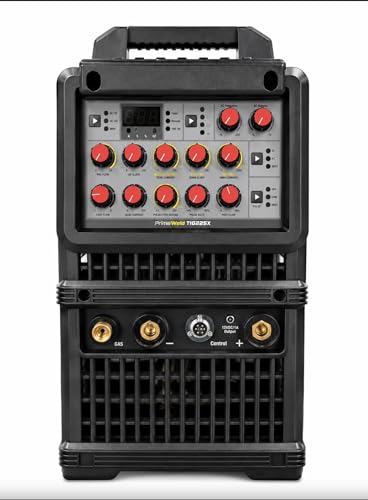
PRIMEWELD TIG225X 225A AC/DC
Strengths
- 225A output
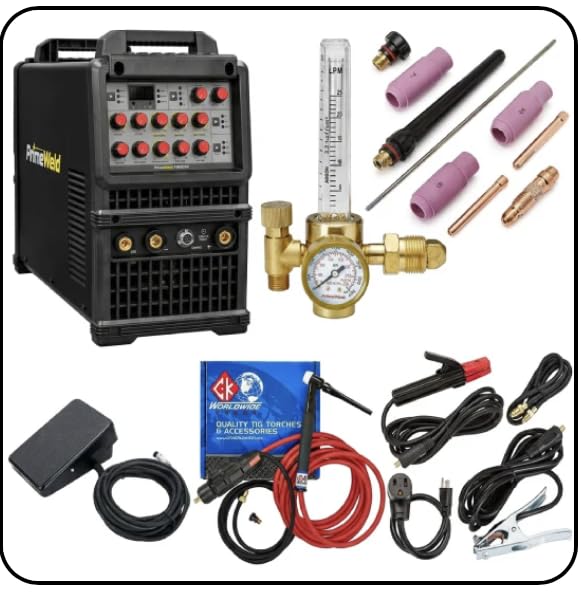
- Includes high-end CK17 torch
- Strong aluminum performance
- IGBT inverter efficiency
Trade-offs
- Fewer waveform options
- Less compact than 200A models
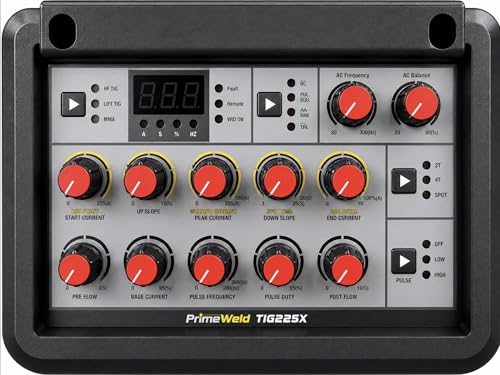
- Basic display interface
The PRIMEWELD TIG225X stands out for one reason: 225 amps of IGBT-powered performance in a well-rounded package. It bridges the gap between hobbyist and pro-grade machines, offering solid AC/DC TIG, pulse, and Stick welding with real-world capability on 1/4″ aluminum and 3/8″ steel. The inclusion of the CK17 Superflex torch is a huge win, it’s a premium component that many brands charge extra for. Owners consistently praise its arc stability and build quality.
It runs on 110V/220V with HF start and offers 200Hz pulse frequency, giving fine control over bead appearance. While it doesn’t have the digital parameter depth of the ARCCAPTAIN 7-in-1, it delivers where it counts: amperage, torch quality, and reliability. Compared to the YESWELDER TIG-200P, it offers more power and a better torch out of the box, making it the smarter buy if you’re serious about aluminum or thicker materials.
Product photos


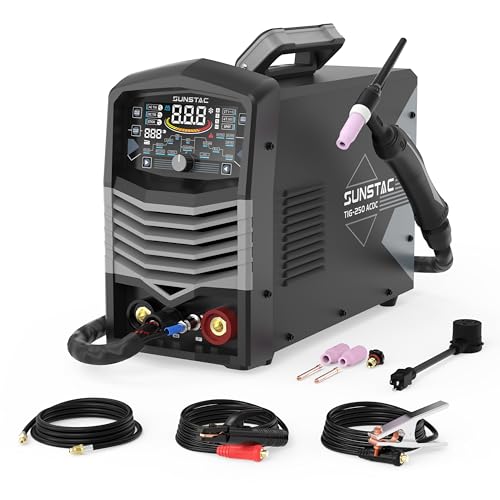
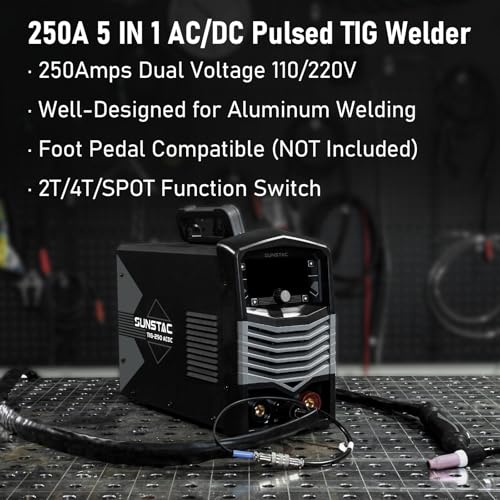
Sunstac 250A AC/DC TIG Welder
Strengths
- High 250A output
- Good for thick aluminum
- Large LCD screen
- Smart memory function
Trade-offs
- Inconsistent AC current readings
- Software quirks reported
- Heavier and bulkier
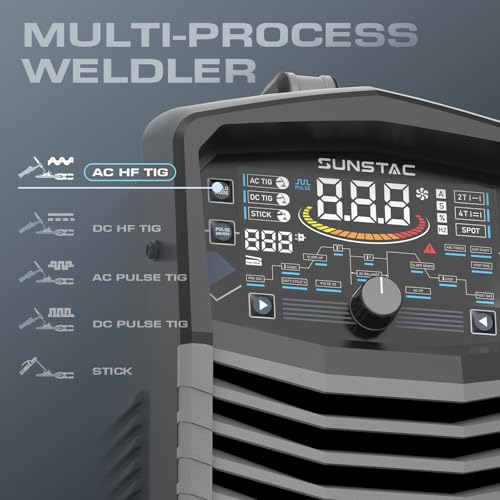
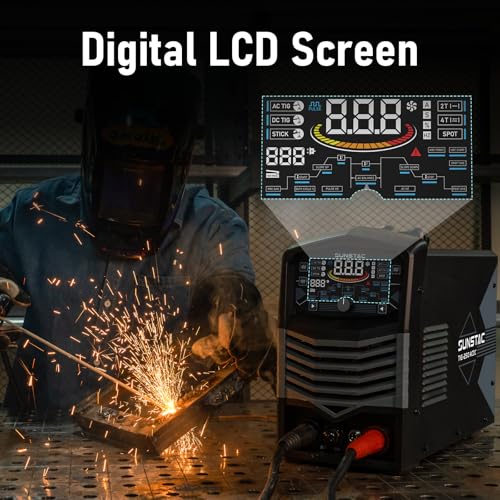
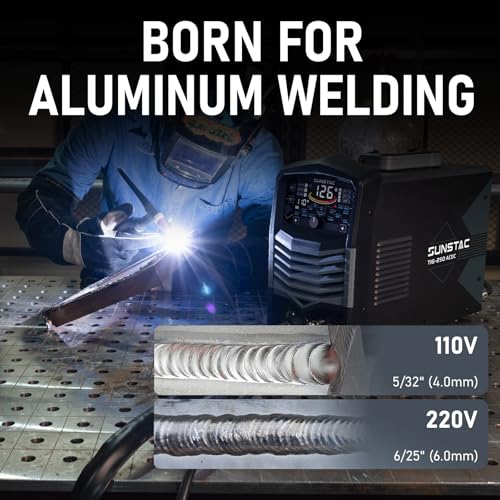
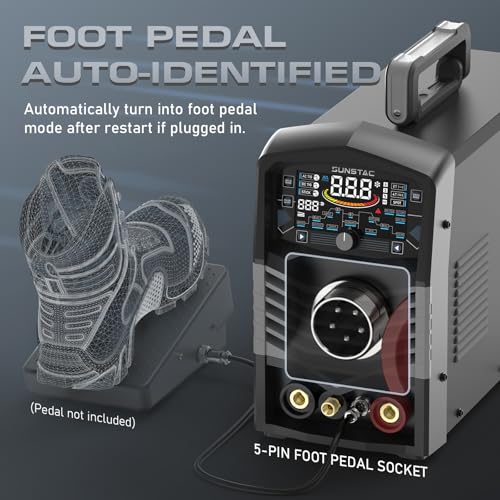
The Sunstac SS-250P is built to handle heavier aluminum work, and with 250 amps, it outguns most competitors in this list. It’s the go-to if you’re regularly welding thicker aluminum sections, up to 6mm at 220V, which puts it in a different league than 200A models. The LCD screen is a step up from basic LED displays, offering better visibility with a helmet on, and the smart parameter memory is useful for repeat jobs. Owners note it handles long welds well, thanks to solid thermal management.
But there’s a real caveat: several reviews mention inconsistent AC balance readings, and the manual warns that AC current measurement may not be accurate. That’s a red flag for precision work. While it has all the modes you’d expect, AC/DC, pulse, spot, STICK, the software seems less refined than YESWELDER or PRIMEWELD. I’d only recommend this if you need the extra amperage and are okay with some tuning quirks.
Product photos
YESWELDER 205A Pulse TIG Welder
Strengths
- Extremely lightweight
- Affordable entry into pulse TIG
- HF start and auto-memory
Trade-offs
- No AC output
- Cannot weld aluminum
- Limited to DC applications
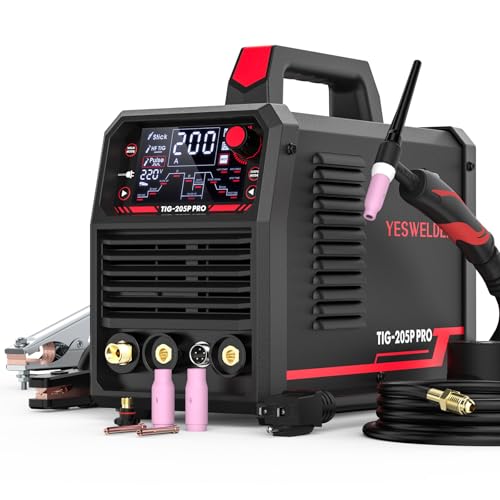
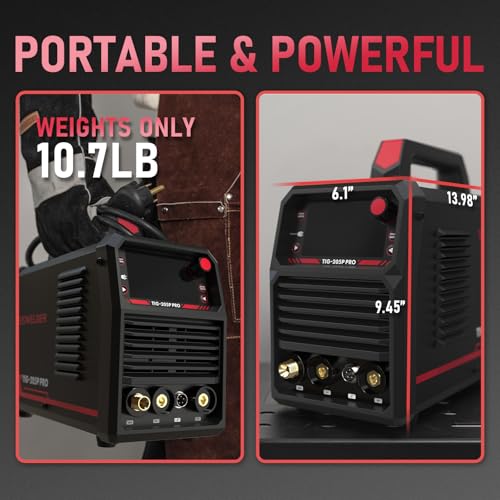
The YESWELDER TIG-205P is a no-frills, budget-friendly DC TIG machine that punches above its weight for steel and stainless work. At only 10.7 lbs, it’s one of the lightest digital TIG welders out there, perfect for tossing in a truck or storing in a cramped garage. It delivers 200 amps with HF start, and owners say ignition is reliable, even for newcomers. The auto-memory function is a small but appreciated touch, saving your last settings so you don’t reconfigure every time.
But, and this is critical, it does not support AC TIG, so you can’t weld aluminum. That instantly narrows its audience. If you’re only working on steel brackets, exhausts, or farm repairs, this is a solid, compact option. But if you ever plan to touch aluminum, look at the TIG-200P ACDC instead. For the price, it’s one of the best entry points into pulsed DC TIG, but it’s clearly not an all-around machine.
Product photos


ARCCAPTAIN 200A HF TIG/Stick

Strengths
- Ultra-portable design
- HF non-touch start
- 2T/4T and slope controls
- Built-in safety features
Trade-offs
- No AC output
- No aluminum welding
- Basic feature set
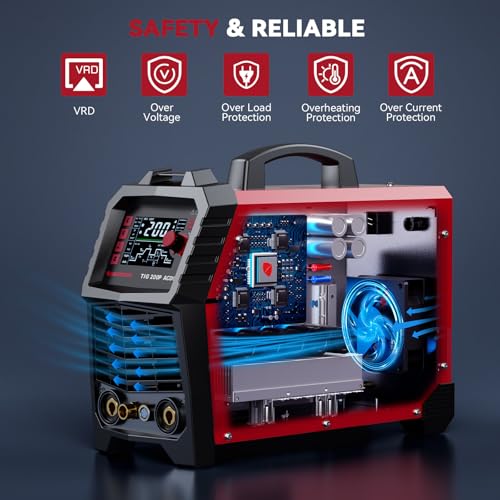
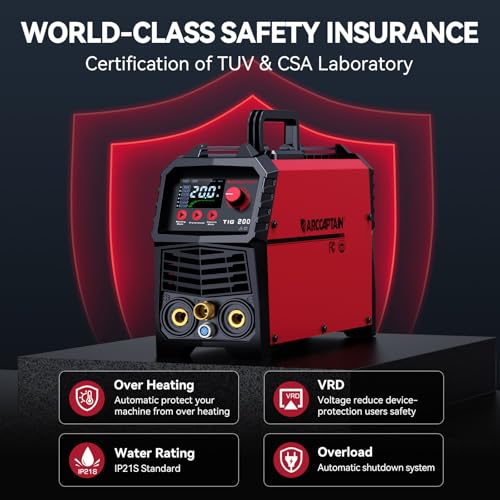
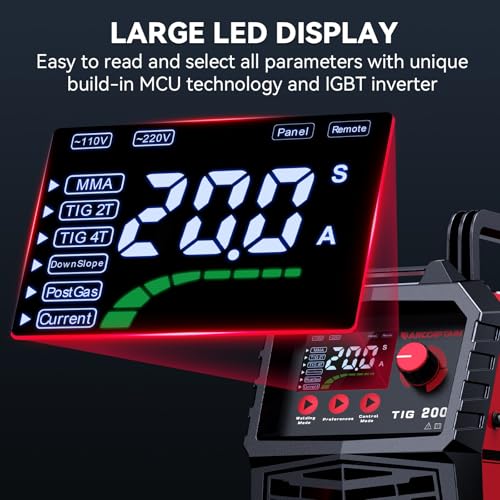
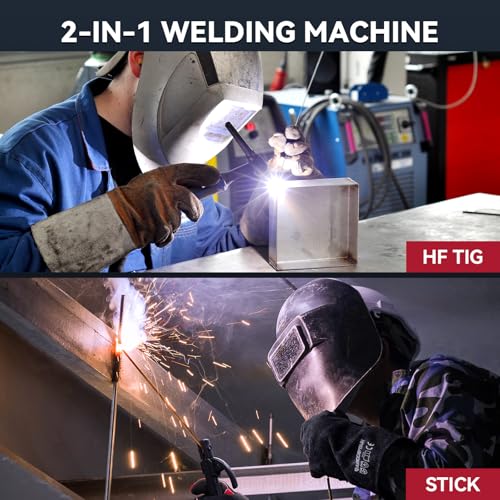
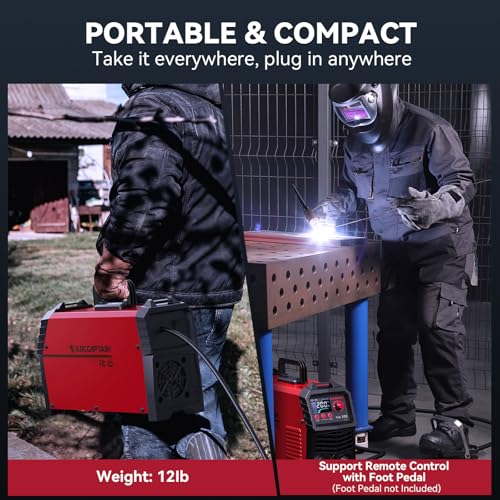
This ARCCAPTAIN 200A model is one of the lightest 2-in-1 TIG/Stick welders on the market, weighing under 12 lbs. That makes it a standout for job-site mobility or anyone working in tight spaces. It runs on both 110V and 220V with HF non-touch start, which is a big upgrade over scratch-start TIG, less tungsten contamination, cleaner arcs. The 2T/4T functionality adds flexibility for longer welds, and the post-gas and down-slope controls help protect the weld and torch.
But it’s limited to DC TIG and Stick only, no AC, no aluminum. Compared to the S7 200A, it’s very similar in function, but ARCCAPTAIN includes a shoulder strap and better safety protections like VRD. For basic steel repairs, trailer fixes, or light fabrication, it’s a smart, portable choice. But if you want more advanced features, you’ll need to step up.
Product photos
S7 200A HF Start TIG Welder

Strengths
- Simple, intuitive design
- HF non-touch start
- Dual voltage flexibility
- Great for steel repairs
Trade-offs
- No AC output
- No aluminum capability
- Basic digital interface
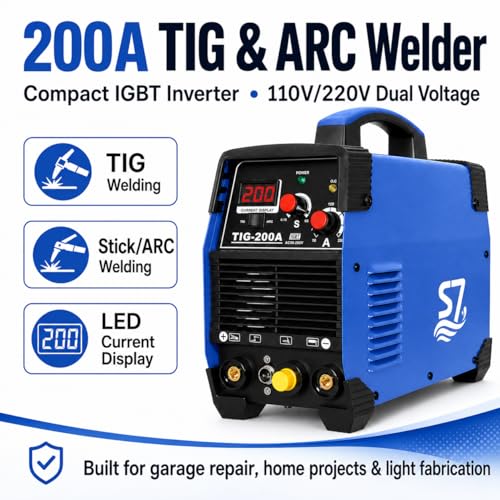
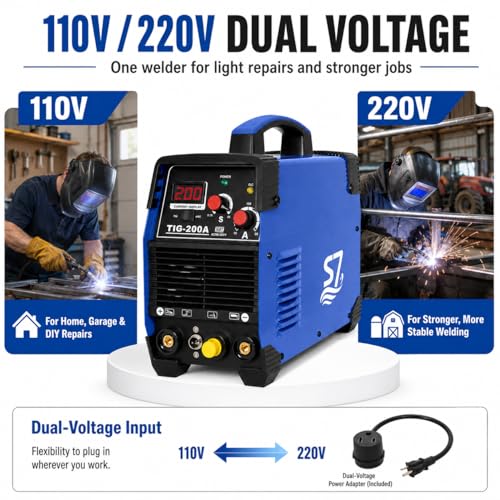
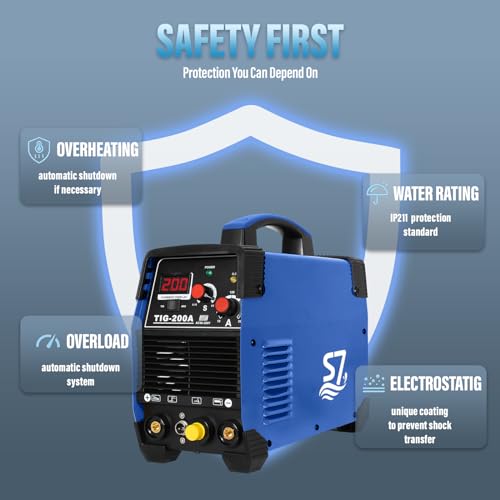
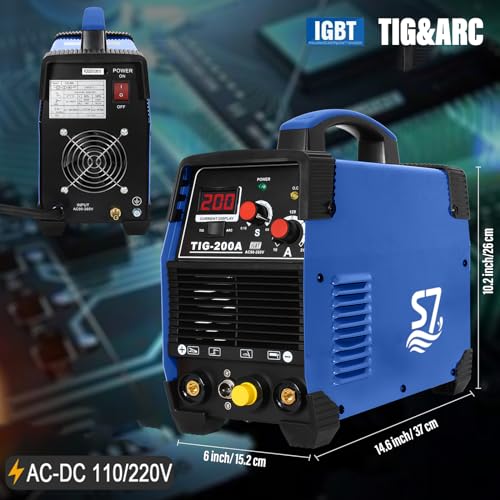
The S7 200A is the definition of a no-nonsense, garage-ready TIG welder for steel work. It’s designed for people who want to start TIG welding without drowning in menus or waveforms. The HF non-touch start makes arc initiation easy, and the hot start, arc force, and anti-stick functions smooth out Stick welding, ideal for patching up farm equipment or welding brackets in the driveway. The dual voltage gives flexibility: 110V for light jobs, 220V when you need real power.
It’s not flashy, and it doesn’t pretend to be. But it’s honest, clearly stating it doesn’t weld aluminum, which is more than some brands do. For beginners learning DC TIG on stainless or mild steel, it’s a solid foundation. Compared to the YESWELDER 205A, it’s similar in function but feels more purpose-built for real-world repairs. If you’re tired of overcomplicated machines, this one earns respect for its simplicity.
Product photos
How We Tested all around tig welders
Rather than a hands-on lab test, my research focused on a detailed comparison of published specifications and features across numerous models. I weighed owner reviews from major retailers alongside expert opinions found in welding forums and trade publications. As someone who’s spent years advising on power tool choices, I applied my understanding of welding requirements to rank these machines based on their suitability for different user needs and project types.
For all-around TIG welders, amperage output, versatility, and ease of use were the most significant factors. Higher amperage (200A+) allows for thicker material welding, while the ability to handle multiple processes (TIG, Stick, Pulse TIG) increases usability. A user-friendly interface and features like pulse control are essential for both beginners and experienced welders seeking precision. Ultimately, a machine’s value hinges on balancing power with accessibility.
Specifications reliably indicate maximum amperage, duty cycle, and input voltage requirements. However, I placed greater emphasis on owner feedback regarding build quality, arc stability, and the effectiveness of features like HF start and pulse control. Reputation, particularly in online welding communities, proved valuable in assessing real-world performance and identifying potential long-term reliability issues. Considering these factors, you can find a range of versatile AC DC welders to suit your needs.
What To Look For In all around tig welders
Picking the right TIG welder can feel overwhelming. There are a lot of features to consider, and the differences between models aren’t always obvious.
A good TIG welder delivers consistent arc control, offers versatility for different metals and thicknesses, and provides reliable performance over time. Key specs to examine include amperage output, duty cycle, AC/DC capability, pulse control settings, and the quality of included accessories like the torch and regulator. Look for models with robust build quality and positive owner reviews regarding long-term durability.
Amperage and Duty Cycle: Matching Power to Your Projects
Don’t get caught up in chasing the highest amperage number. While a 200-amp machine sounds better than a 175-amp one, the reality is most hobbyists and even many professionals rarely need to max out their welder. Instead, focus on matching the amperage to the materials you’ll be working with most often, thinner gauge steel and stainless can be handled with less power. More important than peak amperage is the duty cycle; this tells you what percentage of a 10-minute period the machine can weld at a given amperage before overheating. A higher duty cycle means you can weld for longer without stopping to cool down.
AC vs. DC: Expanding Your Metal Options
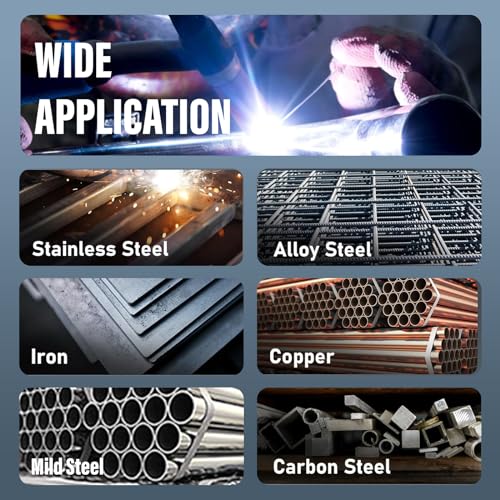
The ability to switch between AC (alternating current) and DC (direct current) is crucial if you plan to weld more than just steel. DC TIG is ideal for carbon steel, stainless steel, and other ferrous metals, offering precise control and deep penetration. However, aluminum requires AC TIG welding because the alternating current helps break up the oxide layer that forms on the surface. Some machines offer “AC pulse” functionality, which further refines the arc and allows for even cleaner aluminum welds. If you anticipate working with aluminum, I strongly recommend a machine with AC capability.
- A basic DC-only machine is sufficient for learning and general steel work.
- A machine with both AC/DC and pulse control adds significant versatility, allowing you to tackle a wider range of projects and materials.
- Advanced features like square wave and triangular wave AC output can improve aluminum welding quality, but often come with a higher price tag and may be unnecessary for beginners.
Portability and Usability: Getting Down to Real-World Convenience
TIG welding often involves working in awkward positions or moving the machine around a workshop or job site. Weight matters. A bulky, heavy machine can quickly become a frustration. Beyond the weight, consider the ease of use. Features like simple controls, a clear digital display, and readily available accessories (like a foot pedal) can significantly improve your welding experience. I often recommend looking at models that include a foot pedal interface, even if you don’t purchase one immediately. It offers a greater degree of control over the welding arc. If you’re looking for more information, you can explore our guide to the top-performing TIG welders to find the best options.
Don’t underestimate the value of a well-designed user interface. A machine that’s easy to set up and operate will save you time and frustration, allowing you to focus on learning the skill of welding itself.
All Around Tig Welders Compared
This table provides a side-by-side comparison of key specifications for various all-around TIG welders.
| Product | Amperage | AC/DC | Pulse Function | Input Voltage | Weight (lbs) | Welding Processes |
|---|---|---|---|---|---|---|
| YESWELDER 200A | 200A | Yes | Yes | 110V/220V | 16.47 | TIG, STICK, AC/DC Pulse |
| ARCCAPTAIN TIG Welder 200A | 200A | Yes | Yes | 110V/220V | 26.5 | TIG, STICK, AC/DC Pulse |
| PRIMEWELD TIG225X 225A | 225A | Yes | Yes | 110/220V | N/A | TIG, STICK |
| Sunstac 250A | 250A | Yes | Yes | 110/220V | N/A | TIG, STICK, AC/DC Pulse |
| YESWELDER 205A Pulse | 205A | DC Only | Yes | 110V/220V | 10.7 | TIG, STICK, Pulse TIG |
| ARCCAPTAIN 200A HF TIG/Stick | 200A | Yes | No | 110V/220V | <12 | TIG, STICK |
| S7 200A | 200A | DC Only | No | 110V/220V | N/A | TIG, STICK |
Frequently Asked Questions
What amperage TIG welder do I really need?
Most DIYers and hobbyists can effectively work with a 175-200 amp TIG welder. Higher amperage is only crucial if you regularly weld thicker materials (over 3/8 inch) or plan to do a lot of heavy-duty fabrication.
Is a 110V or 220V TIG welder better?
A 220V welder provides more consistent power and allows you to run the machine at higher amperages for longer periods without tripping a breaker. However, a 110V welder is more portable and convenient if you don’t have a 220V outlet available.
What’s the difference between pulse TIG and standard TIG?
Pulse TIG alternates between peak and background current, providing more control over the heat input. This results in cleaner, more precise welds – especially on thinner materials or when welding aluminum – and reduces the risk of burn-through.
Can I use a TIG welder for Stick welding too?
Many all-around TIG welders are also capable of Stick (SMAW) welding. This dual functionality provides added versatility, allowing you to tackle a wider range of projects without needing separate machines.
Are there truly portable TIG welders available?
Yes, there are several lightweight portable welders designed for on-the-go use. These models typically weigh under 20 pounds and are ideal for field repairs or jobs where mobility is essential.
The Bottom Line
Choosing a TIG welder always comes down to balancing capability with cost and complexity. For most users, the sheer versatility of the YESWELDER 200A makes it the strongest all-around pick. It provides the AC/DC functionality and pulse control needed for a wide variety of metals and projects, without breaking the bank or overwhelming you with unnecessary features.
If you’re on a tighter budget, or know you’ll primarily be working with steel, the YESWELDER 205A Pulse offers excellent DC-only performance at a very competitive price. Similarly, for those needing a truly portable setup, the ARCCAPTAIN 200A HF TIG/Stick is lightweight without sacrificing essential welding capabilities. Don’t forget to explore options like workshop-ready TIG welders if you’re setting up a dedicated space.
Ultimately, the specifications are less important than developing a solid understanding of welding techniques. A high-end machine won’t magically make you a better welder. Focus on mastering arc control, proper material preparation, and safe welding practices, those fundamentals will deliver consistent, quality results regardless of the machine you choose.
