7 Best 7-1/4 Inch Miter Saws of 2026
This post contains affiliate links. As an Amazon Associate, we earn from qualifying purchases.
After comparing the field and analyzing owner feedback, the BOSCH GCM18V-07SN stands out as the overall best 7-1/4 inch miter saw for its precision and solid build, while the SKIL MS6306-00 is a strong budget-friendly corded option that doesn’t skimp on key features. For those already invested in a battery ecosystem, the RYOBI ONE+ 18V sliding miter saw offers solid versatility and compatibility.
Most people shopping for a 7-1/4 inch miter saw aren’t just looking for a smaller tool, they want something that’s easier to move, store, and use without sacrificing too much cutting capacity. The real challenge is finding a compact saw that still delivers clean, accurate cuts and holds up over time.
In this guide, I break down the top models based on specs, real-world performance, and what owners actually say. These picks reflect what matters most: reliable power, repeatable accuracy, and smart features that make a difference on the job site or in the garage.
Top 7 7-1/4 Inch Miter Saws in the Market
The Best 7-1/4 Inch Miter Saws, Reviewed
BOSCH GCM18V-07SN Slide Miter Saw

Strengths
- 8-1/4″ crosscut
- 3-3/4″ crown capacity
- Brushless biturbo motor
- Smooth sliding action
- Tall fence
- Dust ready
Trade-offs
- Bare tool only
- No dual bevel
- Premium price
This Bosch GCM18V-07SN is the one I’d take to a job site if I could only bring one cordless miter saw. The combination of 8-1/4-inch crosscuts, 3-3/4-inch nested crown capacity, and a 26 lb weight is hard to beat. The biturbo brushless motor delivers power that rivals corded models, and owners consistently report clean, fast cuts in hardwood and dense trim.
The sliding bars are precisely centered, which makes the movement buttery smooth, a detail that matters after a full day of repetitive cuts. The tall fence adds stability, and the dust extraction is genuinely effective when paired with a shop vac. Against the DEWALT DCS361M1, this one offers sliding capability and better dust control. The 180-day return policy also reduces risk. For overall performance, portability, and build quality, it’s the top pick.
Product photos


RYOBI ONE+ 18V Sliding Miter Saw
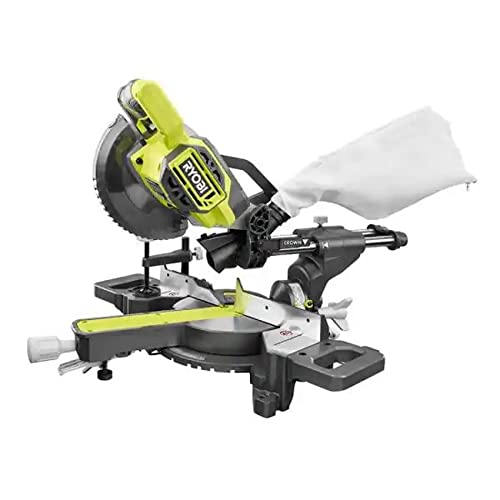
Strengths
- 800 cuts per charge
- RYOBI ONE+ compatible
- 2×10 crosscut capacity
- Sliding compound design
- Good value
Trade-offs
- No battery included
- Lighter build quality
- Slower bevel adjustment
RYOBI hits a sweet spot with this sliding miter saw, it claims up to 800 cuts per charge, which if even close to accurate, makes it one of the most efficient cordless options available. The real win is compatibility: if you already own any RYOBI ONE+ 18V tool, this saw drops right into your workflow. The 2×10 crosscut capacity matches Bosch’s top model, and owners confirm it powers through thick lumber without hesitation.
It doesn’t have the brand prestige of DEWALT or Bosch, but the value is undeniable. The sliding mechanism is smooth, and the overall design feels more premium than the price suggests. Where it lags is in motor speed and build density, it’s not as rigid as higher-end models during aggressive cuts. Still, for the ecosystem user, this is the smarter buy over buying a standalone corded saw.
Product photos
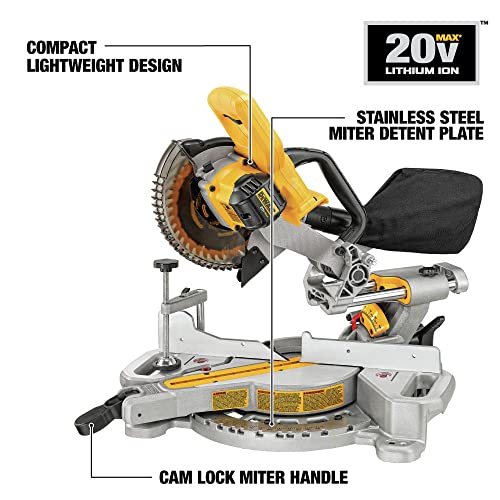
DEWALT 20V MAX 7-1/4″ Miter Saw

Strengths
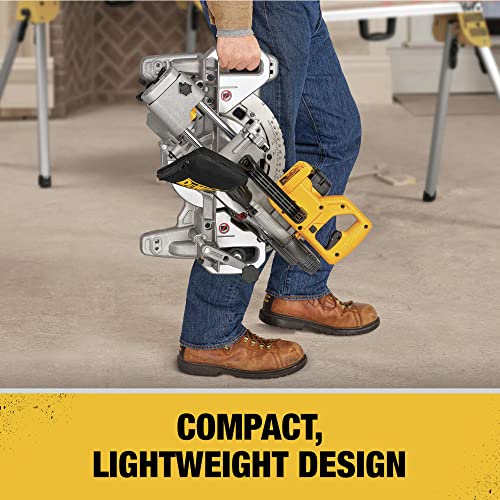
- Lightweight at 30 lbs
- Precise miter system
- Compatible with DEWALT 20V batteries
- Durable fence
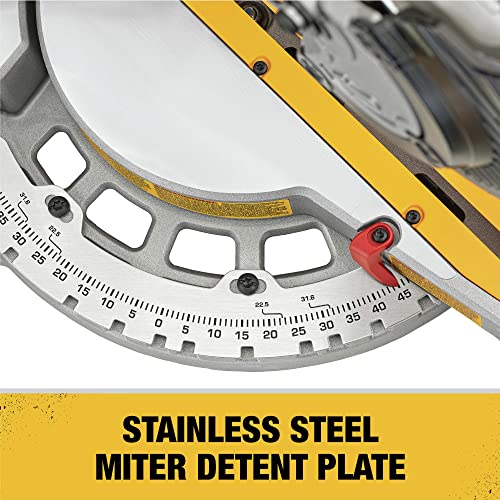
- Adjustable detent plate
Trade-offs
- No battery or charger
- No runtime claims
- No sliding function
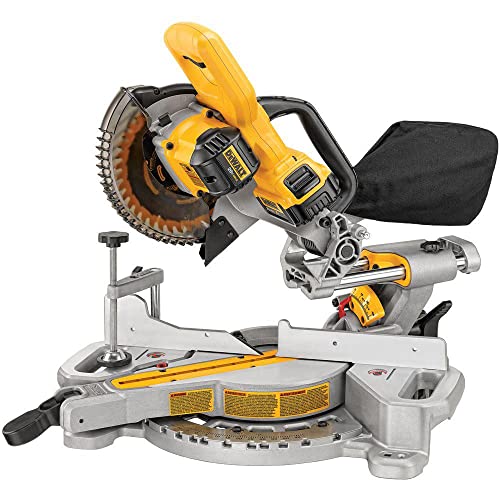
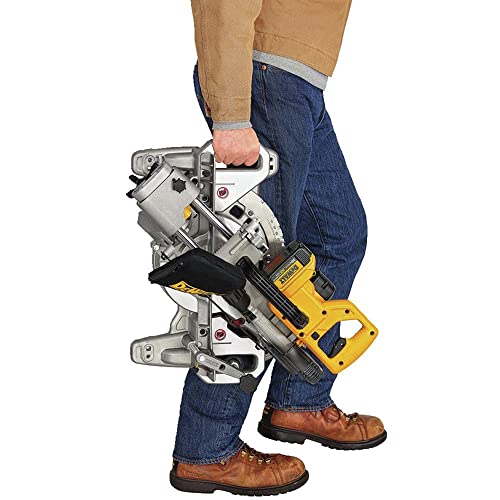
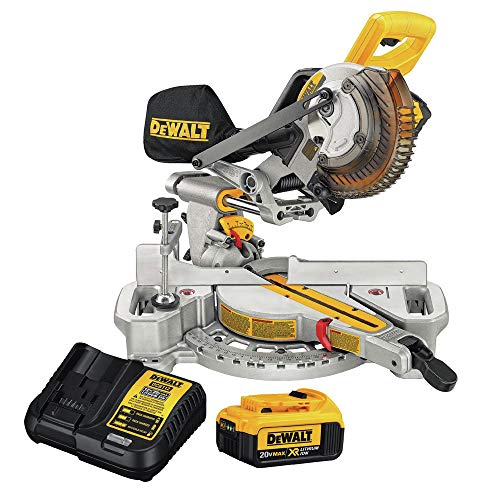
This DEWALT DCS361B is essentially the bare-tool sibling of the DCS361M1, and it shows in the stripped-down value. At 30 lbs, it’s one of the lightest in its class, and the compact footprint makes it a natural for truck storage or tight workbenches. The miter and fence system are identical to the higher-end model, so you still get that precise cam lock adjustment and durable stainless detent plate.
Where it falls short is obvious, no battery, no charger, no runtime specs. But if you’re already in the DEWALT 20V ecosystem, that’s a non-issue. Owners report it matches the M1 version in cut quality, just without the included power. Compared to other compact cordless saws, this one trades runtime data for portability and brand reliability. I’d pick it over bulkier models if I were constantly moving between sites.
Product photos

DEWALT DCS361M1 Cordless Miter Saw

Strengths
- Brushless motor
- 183 cuts per charge
- 11 miter detents
- Compact footprint
- Cut line indicator
Trade-offs
- No sliding rail
- No battery included
- Heavier than some
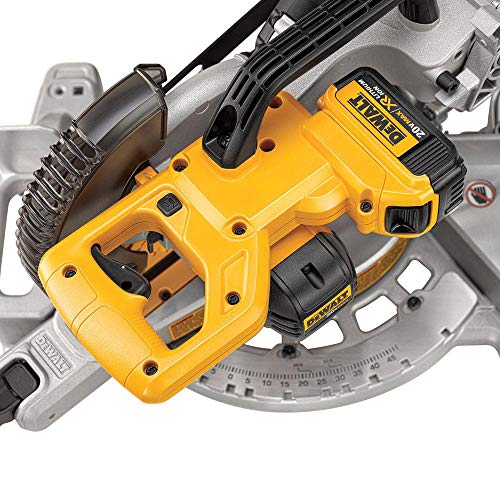
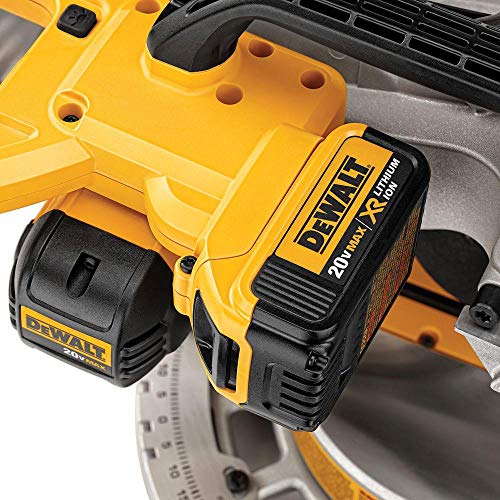
This DEWALT cordless miter saw stands out in a crowded field because it delivers serious runtime without sacrificing cut capacity. The spec that matters here is the 183 cuts in 2×4 pine per charge, that’s real-world productivity, and owners consistently report getting through full-day trim jobs on a single battery. The brushless motor helps, but it’s the smart design of the cut line positioning system that makes repeat cuts so reliable.
When compared to other cordless models, this one balances power and precision well. The cam lock miter handle and 11 positive stops mean you’re not fumbling during layout, and the fence system feels more stable than what you’d expect in a 31.6 lb saw. It’s not a sliding model, so crosscuts over 7 inches are off the table, but for trim, base, and crown work, it’s built for accuracy.
Product photos
WEN MM0713 Sliding Compound Miter Saw
Strengths
- Low cost
- 11.5″ crosscut capacity
- Dual-rail sliding
- LED guide
- Includes dust bag
Trade-offs
- Plastic construction
- No brand ecosystem
- 9.5-amp motor
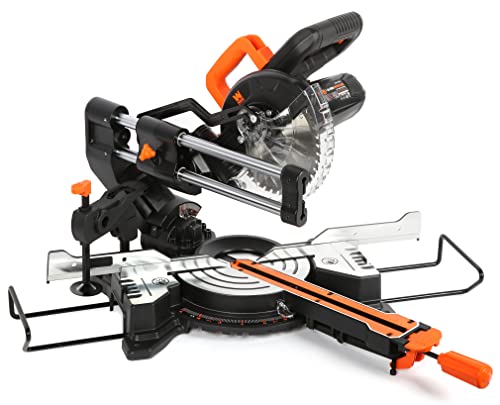
The WEN MM0713 is the budget pick, but it doesn’t feel like a compromise in all the right ways. For less than half the price of premium models, it delivers a dual-rail sliding system that actually works smoothly, and the 11.5-inch crosscut capacity is huge for the class. The 9.5-amp motor isn’t the strongest, but it’s enough for baseboard, casing, and shelf cuts, owners say it handles pine and MDF without issue.
The LED guide is basic but effective, and the included dust bag helps keep things tidy. It lacks the build quality of DEWALT or Bosch, and the plastic components feel less durable, but for occasional use, it’s hard to beat. Compared to the SKIL MS6306, it offers sliding capability and wider cuts at a fraction of the cost. I’d recommend it for beginners or homeowners with light-duty needs.
Product photos


SKIL MS6306-00 10 Amp Miter Saw

Strengths
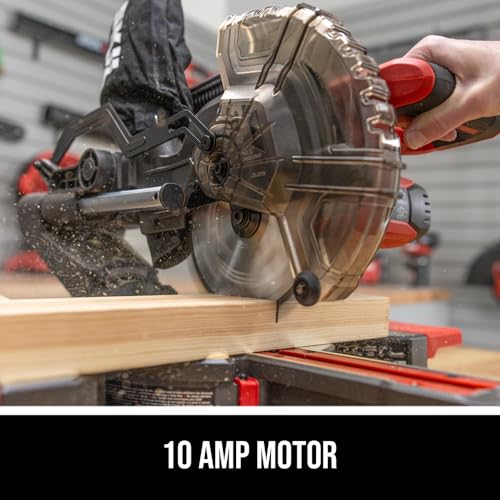
- 10-amp motor
- LED shadow line
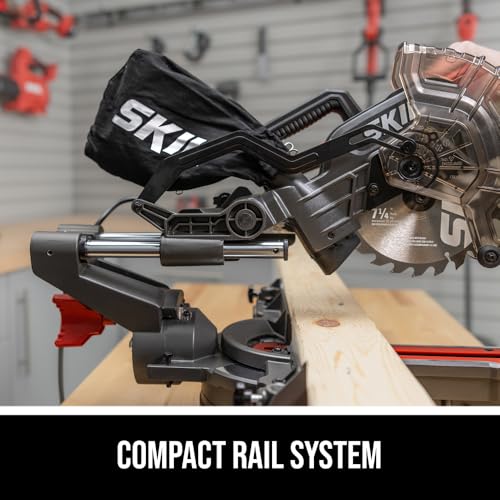
- Compact rail design
- Lightweight
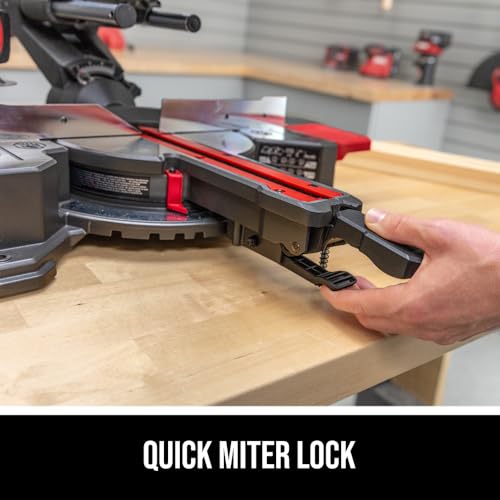
- Quick miter lock
Trade-offs
- No sliding capability
- No included stand
- Single bevel only
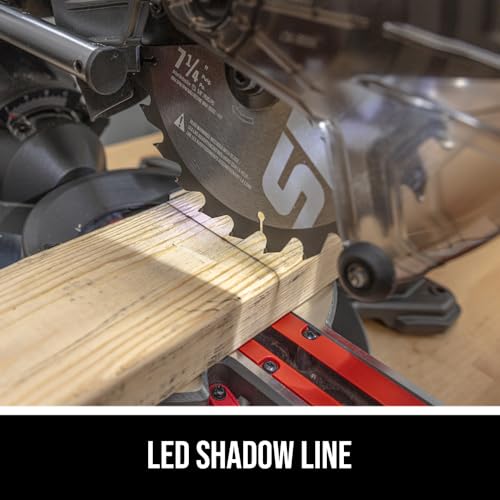
If you want raw corded power in a tight space, this SKIL model makes a strong case. The 10-amp motor pushes the blade to 4,800 RPM, which translates to clean, fast cuts in hardwood and dense trim, reviewers note it handles 2x10s without bogging down. What I like most is the fixed rail system that lets you work flush against a wall, a real advantage in cramped garages or unfinished rooms.
The LED shadow line is a smarter solution than lasers in my experience, it casts a sharp, wide line that doesn’t disappear in bright light. While it lacks a sliding function, the miter range is generous, hitting 50 degrees right and 47 left. It’s also lighter than most corded saws at under 25 lbs, making it easy to move around a job site. Against other fixed-base corded models, this one offers better maneuverability and cut visibility.
Product photos
CRAFTSMAN V20 Cordless Sliding Miter Saw
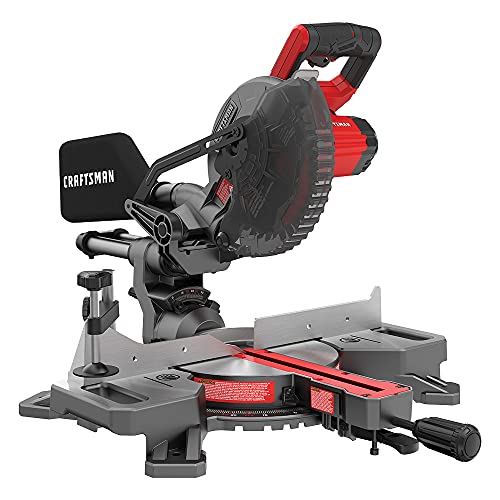
Strengths
- Sliding rail system
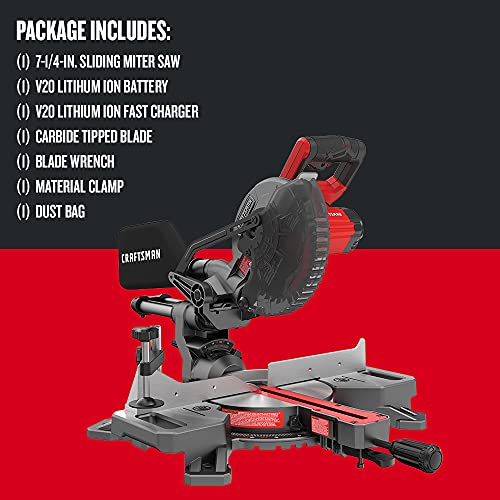
- Battery and charger included
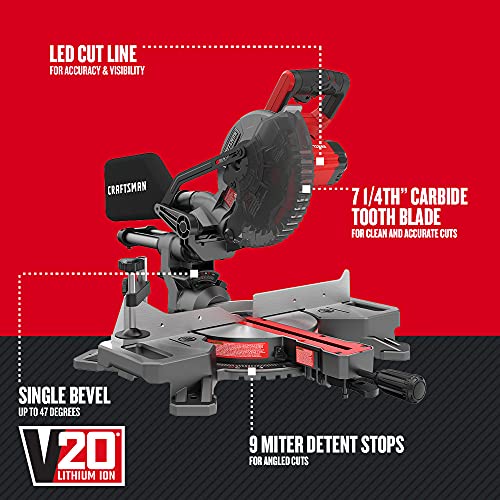
- LED cut line
- Good runtime
- Side carry handles
Trade-offs
- Slower RPM than rivals
- No dual-bevel
- Heavier build
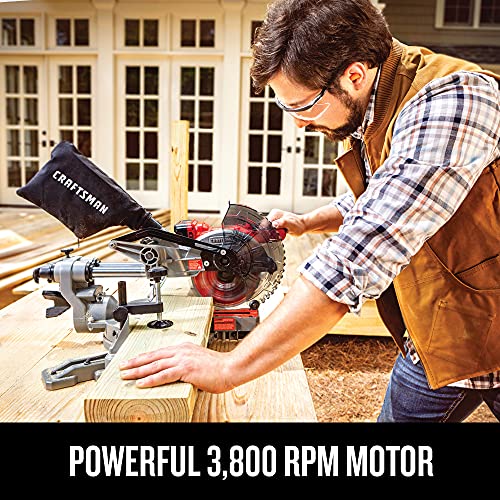
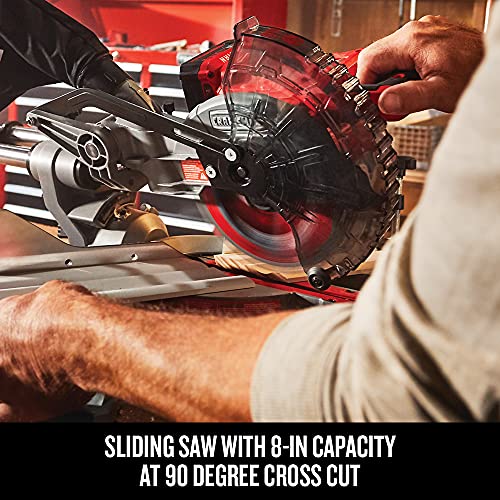
CRAFTSMAN brings a solid all-in-one package here, battery, charger, and a sliding miter saw that actually delivers on portability and cut width. The 8-inch crosscut at 90 degrees is a step above non-sliding models, and the LED cut line helps keep things accurate without the glare issues some lasers have. The 3,800 RPM motor isn’t the fastest, but it handles 2x material and hardwood trim without complaint.
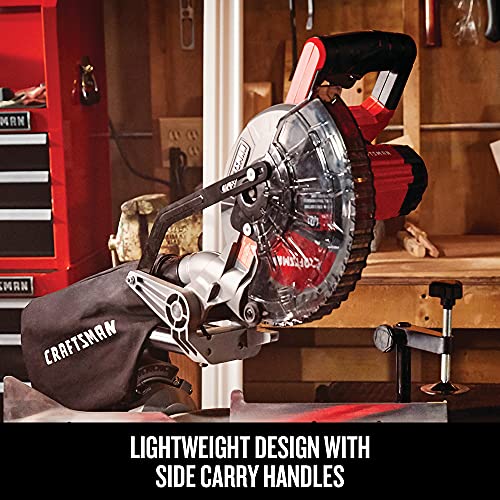
What stands out is the runtime claim of 585 cuts in MDF baseboard on a single charge. That’s impressive on paper, and owner feedback backs decent endurance, though not quite as long as DEWALT’s numbers. It’s heavier than some cordless options, but the side handles make it manageable. For mobile work, this is a strong contender, the sliding function gives it an edge over fixed models like the DEWALT DCS361B.
Product photos
How We Picked These 7-1/4 inch miter saws
Rather than a hands-on lab test, my research for these recommendations focused on a detailed comparison of published specifications and features across numerous models. I weighed owner reviews from multiple sources – looking for consistent praise and complaints – alongside assessments from reputable tool review sites. Ultimately, I ranked each saw based on how well its features aligned with the needs of typical DIYers and professionals, considering both performance and value.
For 7-1/4 inch miter saws, cutting capacity and portability are key. I prioritized models offering a good balance of these, recognizing that most users need a saw capable of handling common project materials while still being manageable to move around a workshop or jobsite. Battery performance was also a significant factor for cordless options, as consistent run-time directly impacts usability. Understanding your miter saw cutting capacity is crucial before you buy.
Published specs reliably tell you about motor power, blade size, and maximum cut dimensions. However, I placed more weight on owner feedback regarding build quality, accuracy, and the smoothness of sliding mechanisms. Reputations for reliability and customer support also played a role, as those factors often aren’t reflected in a datasheet. If you’re unsure about the right miter saw for projects, focusing on these real-world experiences is invaluable.
What To Look For In 7-1/4 inch miter saws
Picking the right miter saw can feel overwhelming, but understanding a few key factors will narrow down your options considerably.
A quality miter saw balances power, accuracy, and usability. Buyers should prioritize a robust motor capable of handling common materials, a precise miter and bevel system for clean angles, and features that enhance safety and ease of use, such as a clear cut line indicator and effective dust collection. Consider the types of projects you’ll tackle most often and select a saw with the capacity and features to match.
Blade and Cutting Capacity
Don’t underestimate the importance of blade quality. While most saws come with a blade, upgrading to a premium carbide-tipped blade can dramatically improve cut quality and reduce splintering, especially in hardwoods. Beyond the blade, really think about what you’ll be cutting. A saw that claims to cut 2×10 lumber is different than one that does it cleanly and repeatedly. Nested crown molding capacity is another critical specification, and varies widely, so check that it meets your typical project needs.
Power Source and Portability
The choice between corded and cordless is a big one. Corded saws deliver consistent power, which is great for demanding jobs, but they limit your mobility. Cordless models, like those running on Ryobi’s ONE+ system or Bosch’s PROFACTOR line, offer freedom, but battery life and power become considerations. If you need to move the saw around a jobsite frequently, portability is key. The CRAFTSMAN V20 Cordless Sliding Miter Saw, for example, is designed with side carry handles for easy transport. I often recommend considering where you’ll be using the saw most often.
- A heavier saw (over 40 lbs) generally sits more stable during cuts.
- A lighter saw (under 30 lbs) is much easier to move around, but may require more care to prevent shifting.
- Battery platform compatibility is huge. If you already own tools in a particular 18V or 20V system, sticking with that brand for your miter saw can save you money and space.
Accuracy and Features
Beyond raw power, accuracy is paramount. Look for a saw with a precise miter scale and positive stops at common angles. A well-built miter detent plate, like the adjustable stainless steel plate found on DeWALT models, contributes significantly to accurate cuts. Features like an integrated LED cut line indicator (SKIL MS6306-00) are extremely helpful, especially in dimly lit workshops. Don’t overlook the benefits of a dual bevel miter saw advantages – they offer greater flexibility for complex cuts.
Don’t skimp on the fence. A solid, square fence is the foundation of accurate miter cuts.
Ultimately, the “best” miter saw depends on your specific needs and budget. For a detailed comparison of some of the top 7-1/4 inch miter saw models, and to see how different saws stack up, be sure to check out our thorough guide to 7-1/4 inch sliding compound miter saws. And if you are considering a miter saw with adjustable angles, understand the adjustable bevel miter saw and how it can benefit your work.
7-1/4 Inch Miter Saws Compared
Here’s a comparison of key specifications for popular 7-1/4 inch miter saws to help you make an informed decision.
| Product Name | Voltage | Max Crosscut (in.) | Max Crown Nested (in.) | Weight (lbs) | Corded/Cordless | Slide? |
|---|---|---|---|---|---|---|
| BOSCH GCM18V-07SN | 18V | 8-1/4 | 3-3/4 | 26 | Cordless | Yes |
| RYOBI ONE+ 18V | 18V | 2×10 | N/A | N/A | Cordless | Yes |
| DEWALT 20V MAX | 20V | N/A | 3-5/8 | 30 | Cordless | No |
| DEWALT DCS361M1 | 20V | N/A | 3-5/8 | 31.6 | Cordless | No |
| WEN MM0713 | 120V | 11.5 | N/A | N/A | Corded | Yes |
| SKIL MS6306-00 | 120V | 2×10 | 3-1/2 | <25 | Corded | No |
| CRAFTSMAN V20 | 20V | 8 | 3-5/8 | N/A | Cordless | Yes |
Frequently Asked Questions
What’s the difference between a standard and a sliding miter saw?
A sliding miter saw’s head moves along rails, allowing for wider cuts than a standard, non-sliding model. This is especially important when working with larger boards or needing to cut wider angles, expanding your project capabilities.
Are cordless miter saws as powerful as corded ones?
Cordless miter saws have significantly improved, but generally, corded models still offer more consistent power for demanding cuts. However, many newer cordless options, especially those with high-voltage batteries, are powerful enough for the majority of DIY and even some professional tasks.
How important is the miter scale accuracy?
Miter scale accuracy is critical for precise angled cuts, as even small errors can accumulate in larger projects. Look for saws with clear, well-defined scales and positive stops at common angles to help you achieve accurate results every time.
What type of blade should I use for different materials?
A general-purpose blade works for many materials, but specialty blades deliver cleaner cuts. Carbide-tipped blades are best for wood and other soft materials, while blades with a higher tooth count are better for fine finishes and delicate cuts.
Where can I find more in-depth comparisons of miter saw models?
For sliding compound miter saw reviews, my site offers detailed breakdowns of various models, comparing features, specifications, and owner feedback to help you find the best fit for your needs.
The Bottom Line
Choosing a miter saw always involves trade-offs between portability, power, and price. For most homeowners and DIYers looking for a great all-around performer, the BOSCH GCM18V-07SN strikes an excellent balance. It delivers cordless convenience without sacrificing the cutting capacity and accuracy needed for a wide range of projects.
If you’re on a tighter budget, the SKIL MS6306-00 is a solid choice. For those already invested in the Ryobi ONE+ system, the RYOBI ONE+ 18V offers incredible value and convenience – leveraging batteries you likely already own. And if you prioritize portability above all else, the CRAFTSMAN V20 Cordless Sliding Miter Saw is designed for easy transport around the jobsite.
Ultimately, specs and features only tell part of the story. Focus on a saw that feels balanced, has a clear line of sight, and offers accurate, repeatable cuts. A well-built saw with a sharp blade, used with careful technique, will always outperform a feature-rich model operated poorly – understanding how compound miter saws work is the first step to making accurate cuts.
