
9 Best Sliding Compound Miter Saws of 2026
This post contains affiliate links. As an Amazon Associate, we earn from qualifying purchases.
The DEWALT DWS780 stands out as the best overall sliding compound miter saw for its reliability, cut capacity, and consistent accuracy, while the DEWALT DWS779 is a solid budget-friendly pick that still delivers strong performance. For smoother operation and a more compact design, the BOSCH GCM12SD with its axial-glide system is our top versatility choice.
Choosing the right sliding compound miter saw matters because a poor one can waste time, ruin materials, and make even simple cuts frustrating. I know from years of helping DIYers and pros alike that the difference between a clean, precise cut and a do-over comes down to build quality and real-world performance, not just specs on a box.
This guide cuts through the noise by focusing on what actually matters: verified specs, owner experiences, and the features that impact your work. I looked at motor consistency, blade compatibility, sliding mechanism feel, and dust management to find models that deliver where it counts.
Top 9 Sliding Compound Miter Saws in the Market
The Best Sliding Compound Miter Saws, Reviewed
DEWALT DWS780 12″ Double Bevel Miter Saw

Strengths
- XPS LED system
- 75% dust capture
- 2×14 cutting capacity
Trade-offs
- Heavier base
- Premium price
- No laser upgrade option
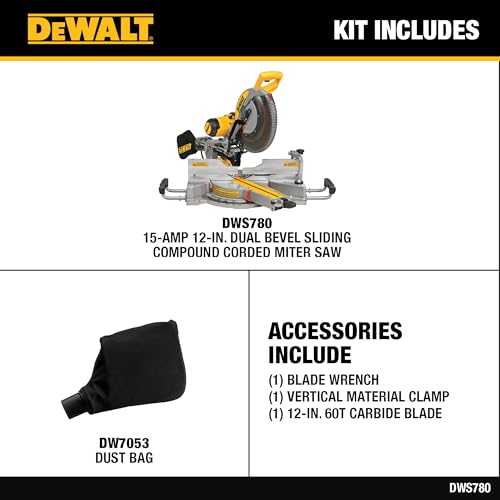
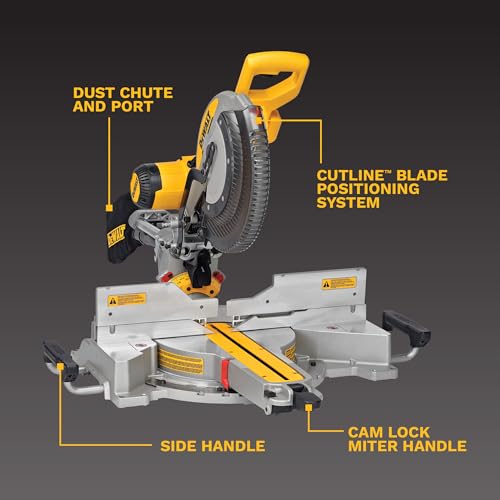
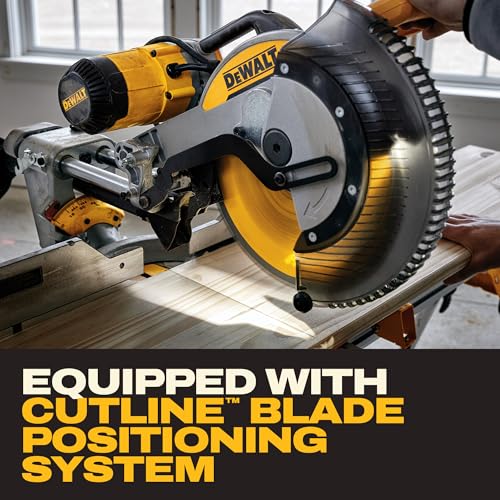
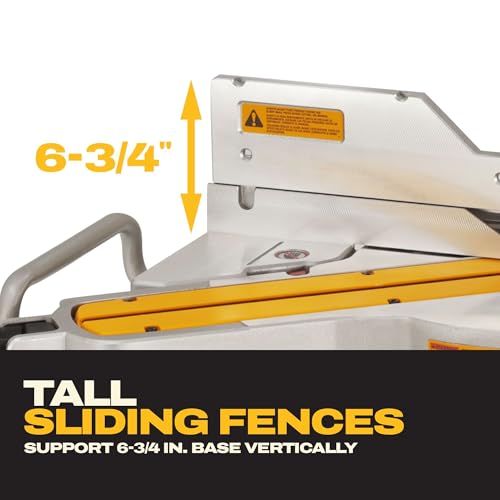
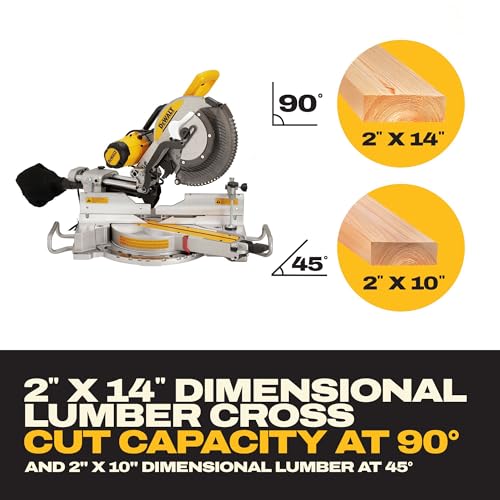
The DEWALT DWS780 is the benchmark for what a top-tier sliding miter saw should be. Its XPS LED shadow line is smarter than basic lasers, it uses blade position to project the cut line, so no calibration is needed. The dust collection system captures over 75% of debris, a real win for clean workspaces. With capacity for 2x14s at 90° and tall sliding fences for 7-1/2-inch nested crown, it handles big trim jobs with ease.
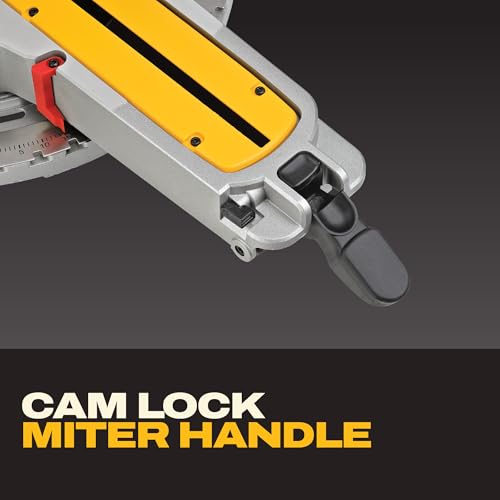
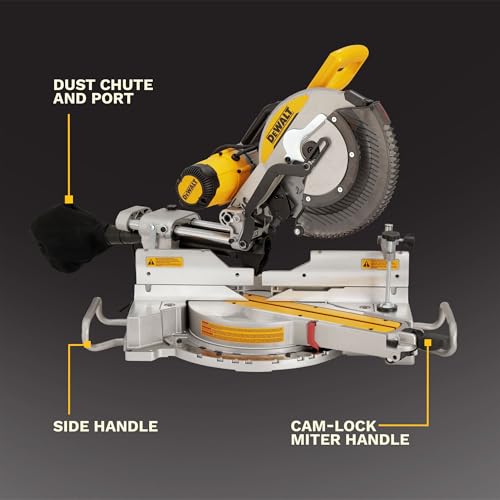
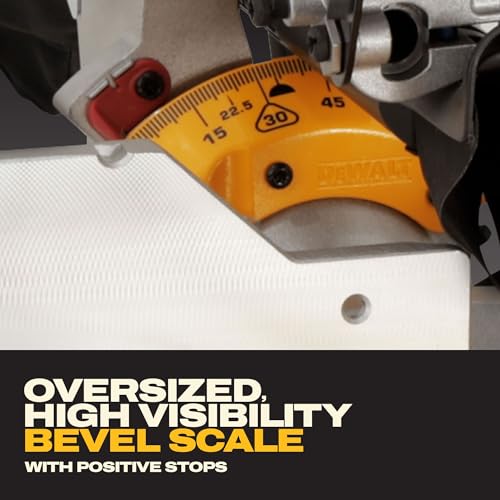
Owners consistently rate it as one of the most accurate and durable saws in the field. The dual steel rails and cam lock miter handle make repeat cuts reliable, and the oversized scales are easy to read. While it’s heavier than the Makita, it’s still manageable at 58 lbs. If I had to pick one saw for a mixed-use shop, framing, cabinetry, and trim, this is my go-to.
Product photos

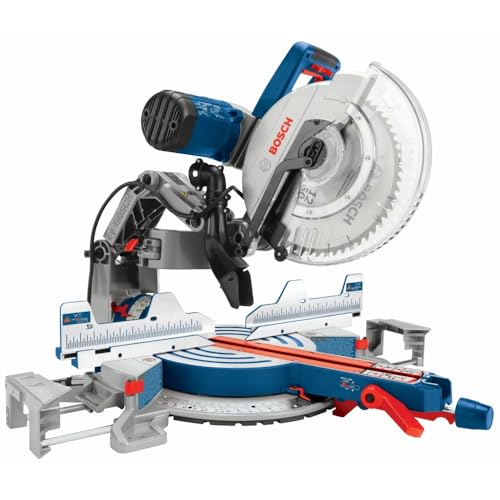
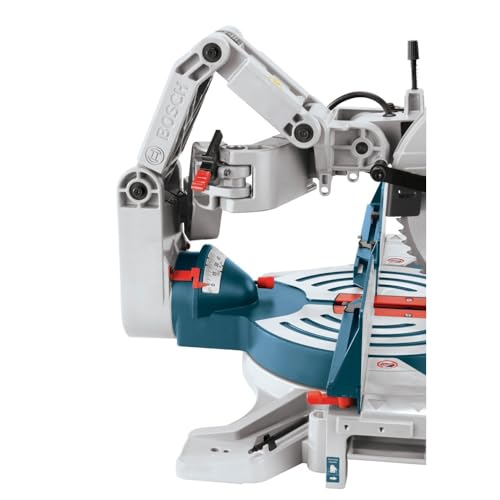
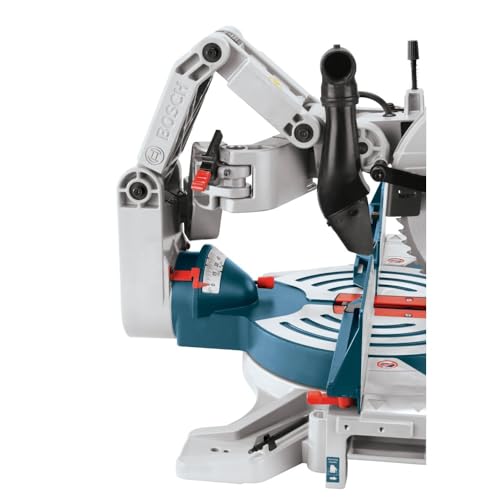
BOSCH GCM12SD 12″ Dual-Bevel Glide Miter Saw
Strengths
- 90% dust capture
- Axial-glide system
- Expandable base
Trade-offs
- Heavier than average
- Higher price point
- Glide system requires maintenance
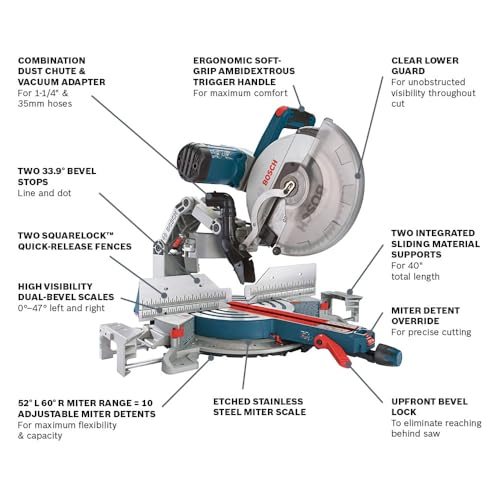
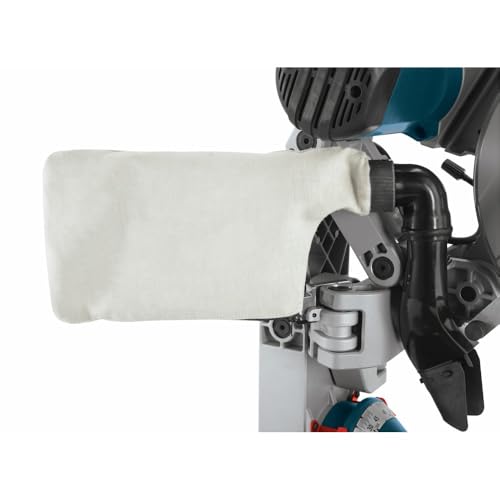
Bosch nailed dust control and precision with the GCM12SD. Its axial-glide system is smooth and space-saving, and the push-button detent override is a small touch that speeds up complex cuts. But the real standout is the dust collection, 90% capture with a vacuum is unmatched. For finish carpenters who work indoors, this keeps the job site clean and inspection-ready.
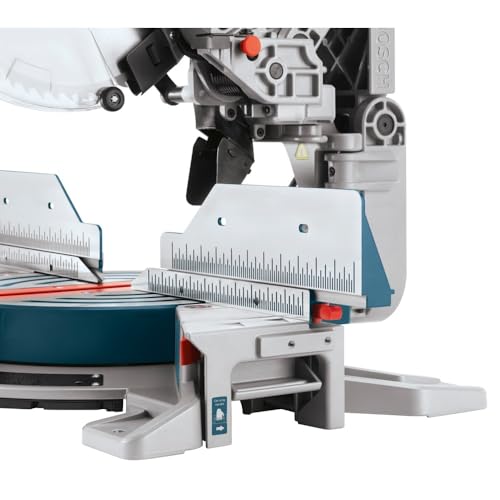
The SquareLock fence system stays aligned longer than most, and the oversized stainless steel scales are easy to read. It’s not the lightest, but the expanding base extensions add serious support for large panels. Compared to the DEWALT DWS780, it trades a bit of raw power for cleaner operation and better long-term accuracy. My top pick if dust and precision are essential.
Product photos
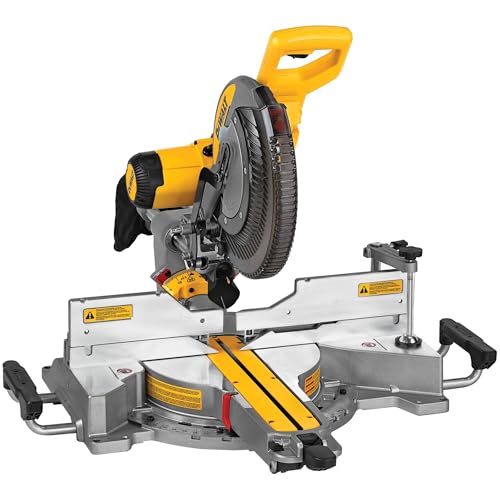
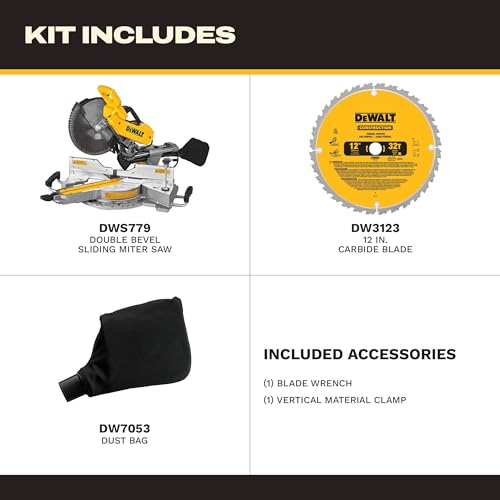
DEWALT DWS779 12″ Double Bevel Sliding Miter Saw
Strengths
- Strong dust collection
- Cam lock miter handle
- 2×14 cutting capacity
Trade-offs
- No XPS shadow line
- Slightly heavier
- Fewer scale markings
The DWS779 is essentially a slightly stripped-down version of the DWS780, but it keeps the core strengths: powerful 3800 RPM motor, excellent dust collection, and a rugged dual rail system. It cuts 2x14s at 90° and has the same tall sliding fences for crown molding. The cam lock miter handle and oversized bevel scale make adjustments quick and accurate, something pros appreciate after hours of use.
Where it wins over the DWS780 is value. It lacks the XPS system but keeps the durability and precision that DEWALT is known for. For carpenters who don’t need the shadow line or are using a separate laser, this is the smarter buy. It’s also a favorite among cabinet installers who want reliability without paying for unused features.
Product photos
Metabo HPT C12RSH3 12″ Dual Bevel Miter Saw

Strengths
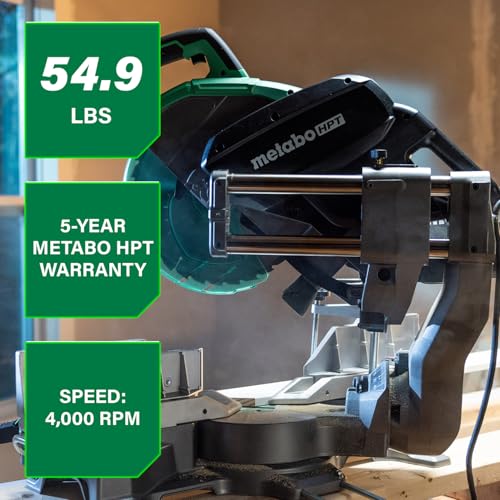
- 5-year warranty
- Xact Cut Shadow Line
- Durable Japanese build
Trade-offs
- Heavier than rivals
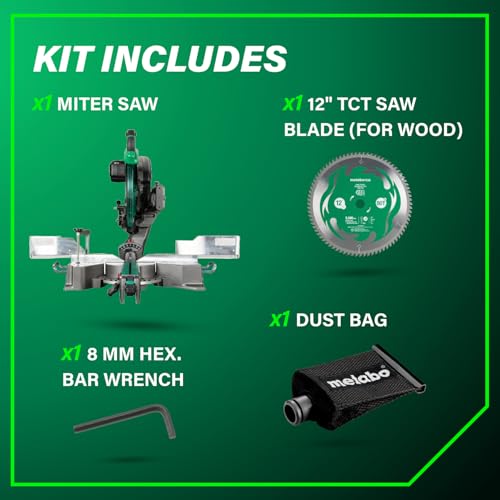
- No dust bag included
- Slightly slower bevel adjustment
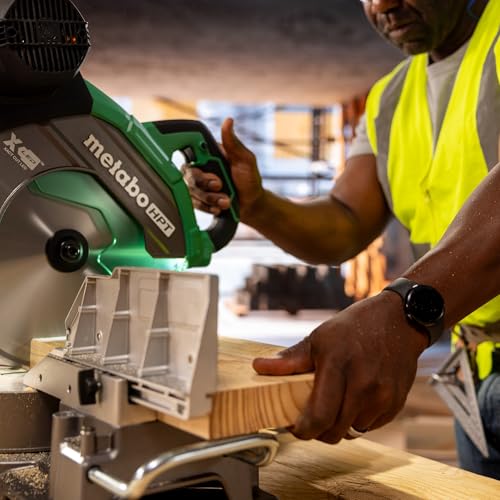
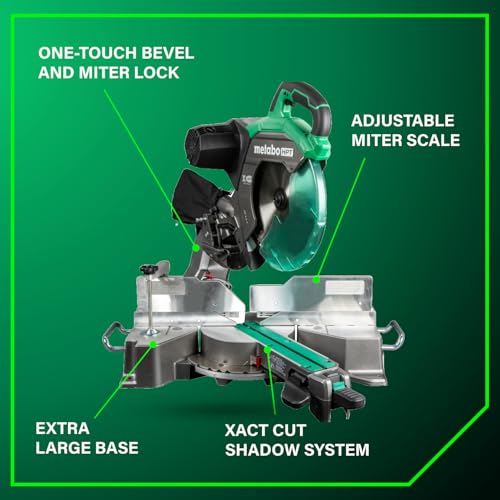
Metabo HPT builds this saw like a tank, and the 5-year warranty tells you everything about their confidence in its durability. The 12-inch blade and 4,000 RPM no-load speed deliver consistent, clean cuts across hardwoods and laminates, and the Xact Cut Shadow Line is a reliable alternative to lasers, owners say it holds up well under jobsite conditions. The miter detents are crisp, and the one-touch lock system speeds up repetitive cuts.
Where it really shines is long-term reliability. Compared to similarly priced DEWALT models, it’s slightly heavier but feels more robust in the base and fence construction. The miter range is solid, though not class-leading. I’d pick this over the VEVOR or FindBuyTool options any day for serious use, it’s clearly built for pros who hate downtime.
Product photos

VEVOR 12″ Double Bevel Sliding Miter Saw
Strengths
- High RPM motor
- LED alignment
- Lightweight aluminum base
Trade-offs
- Poor long-term accuracy
- Loose rail system
- Inconsistent bevel stops
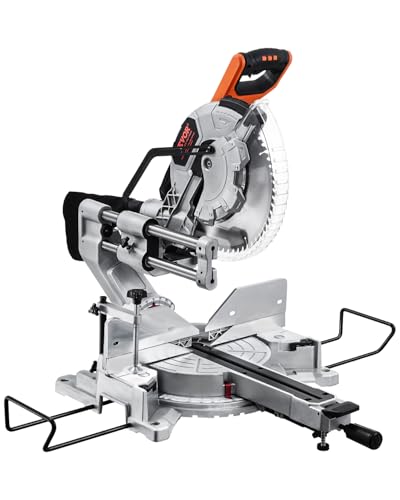
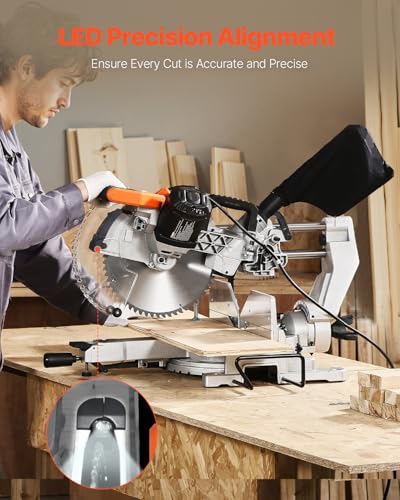
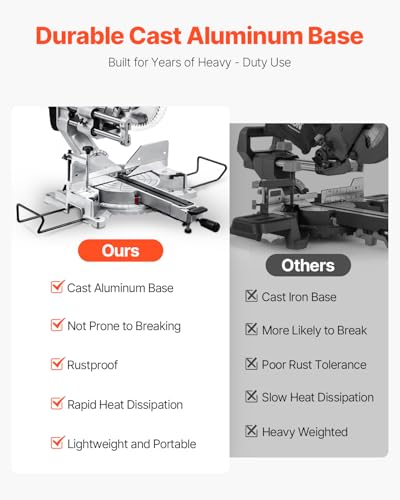
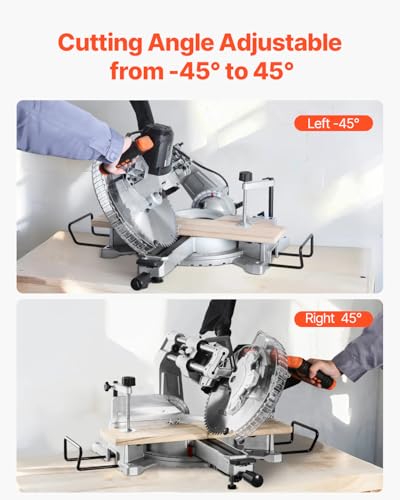
VEVOR is known for budget power tools, and this 12-inch dual-bevel saw delivers surprising specs on paper, 5000 RPM, 3000W bevel power, and an LED alignment system. It’s clearly aimed at cost-conscious buyers who want big numbers. The aluminum base keeps it lighter than cast iron models, and the dual-bevel range is full and functional.
But owner feedback reveals the trade-offs: inconsistent calibration, wobbly sliding rails, and poor long-term accuracy. It may work for occasional deck building or shed projects, but it won’t hold up to daily use. Compared to the DEWALT or Metabo HPT, it’s not even close in durability. I’d only recommend this if you’re outfitting a starter garage and need the lowest possible entry point.
Product photos

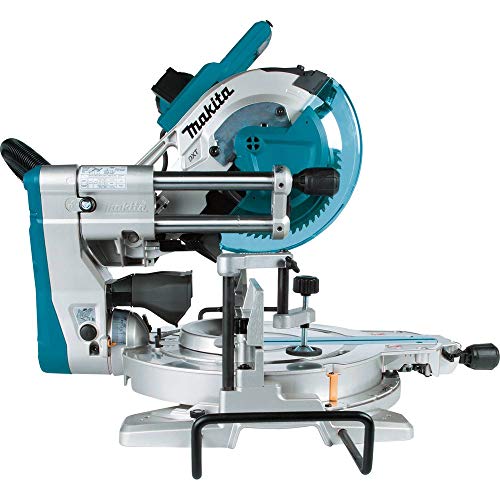
Makita LS1019L 10″ Dual-Bevel Miter Saw

Strengths
- Compact footprint
- Linear ball bearings
- 57.9 lb lightweight
Trade-offs
- Laser calibration issues
- Smaller blade diameter
- Lower dust capture
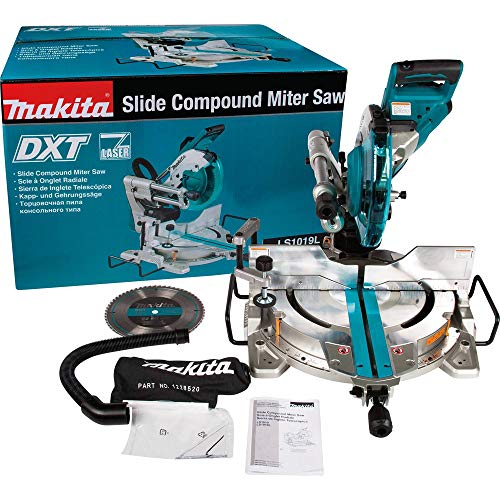
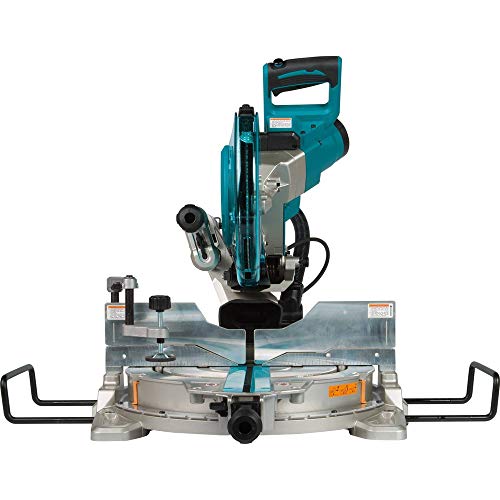
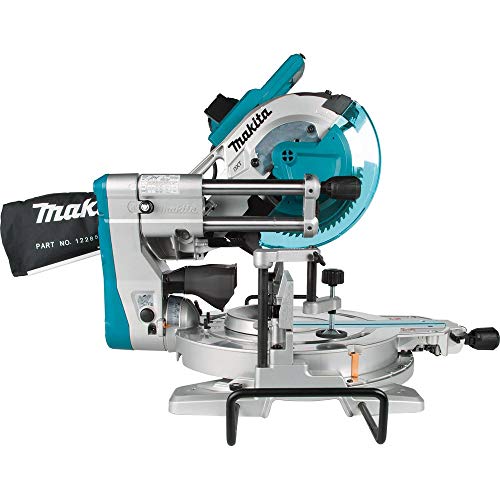
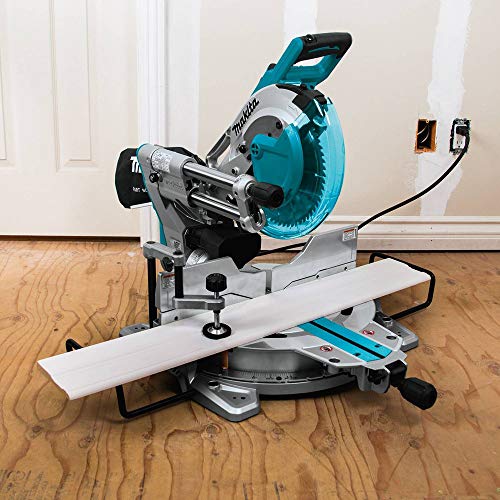
Makita’s LS1019L punches above its weight by offering 12-inch-class cutting capacity in a compact 10-inch footprint. The dual steel rail slide system is a standout, it’s smooth, stable, and lets you run the saw flush against a wall, a huge plus in tight workspaces. The direct drive gearbox boosts vertical clearance to 5-1/4 inches, which means more crown molding clearance than most 10-inch competitors. Owners praise its accuracy right out of the box, thanks to the linear ball bearing system.
It’s also one of the lightest dual-bevel sliders in its class at under 58 lbs, making it a favorite for job-site carpenters who move their gear daily. The laser guide is helpful, though some users note it can drift over time. Compared to the DEWALT DWS780, it trades a bit of cutting width for portability and footprint, my pick if you value space and mobility.
Product photos
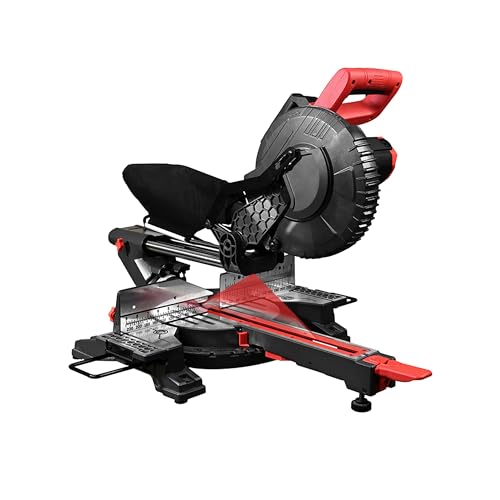
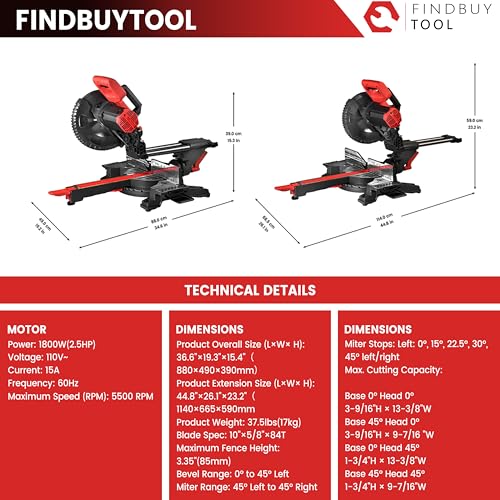
FindBuyTool 10″ Sliding Compound Miter Saw
Strengths
- Lightweight at 37.5 lbs
- 84T blade included
- Excellent for crown molding
Trade-offs
- 10-inch blade limits width
- Base feels less sturdy
- No brand service network
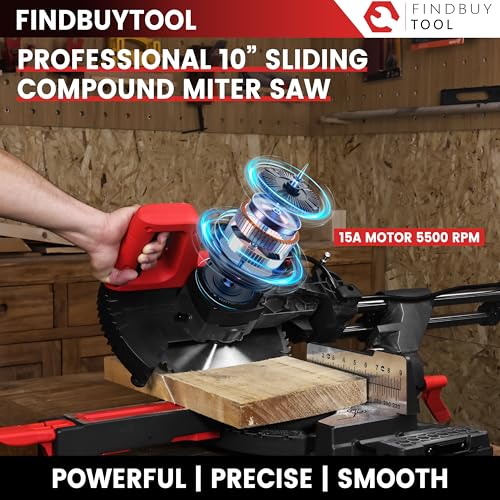
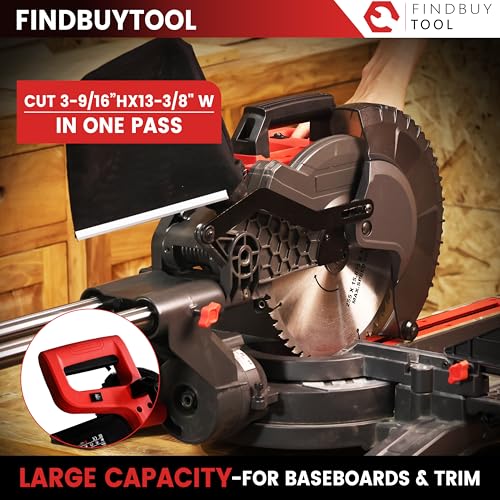
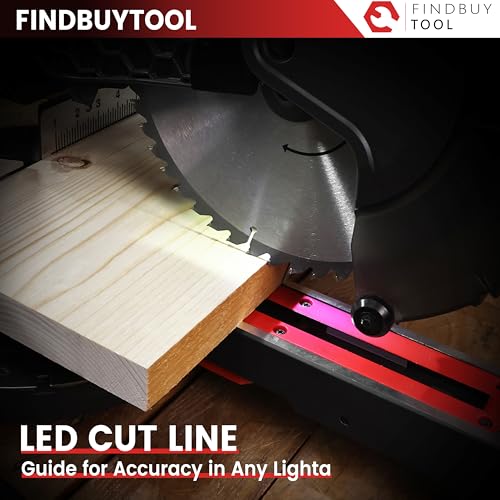
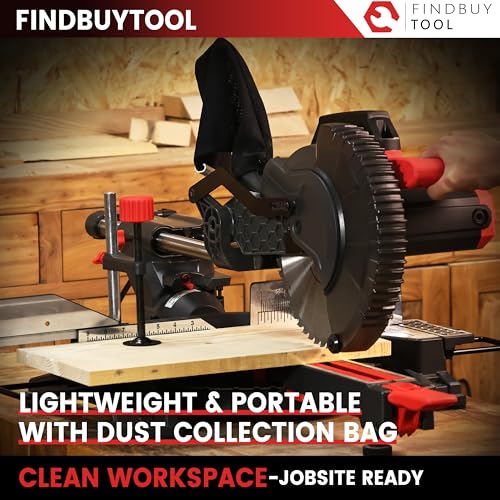
This saw surprises with its focus on crown molding work, 5-1/2-inch fence height, extension bars, and a 5500 RPM motor make it unusually capable for a 10-inch model. The 84-tooth blade delivers clean cuts, and the LED cut line is bright and accurate. At just 37.5 lbs, it’s one of the lightest on the list, which helps for ladder work or mobile trim jobs.
But being a 10-inch saw, it can’t match the crosscut capacity of 12-inch models, maxing out around 2×12 at 90°, but less at angles. Owners say it’s great for baseboards and crown, but not for wide planks or decking. If you’re a trim specialist and need something nimble, this is a strong contender. Just don’t expect it to pull double duty as a framing saw.
Product photos
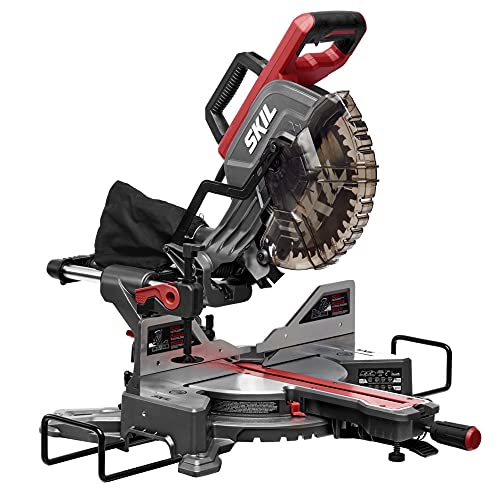
SKIL 10″ Dual Bevel Sliding Miter Saw
Strengths
- 15 amp motor
- LED shadow line
- 2×12 cutting capacity
Trade-offs
- Basic rail system
- Limited dust collection
- Not ideal for heavy use
For first-time buyers or DIYers building out a basic workshop, the SKIL MS6305-00 stands out as a solid entry point into dual-bevel sliding miter saws. The 15-amp motor and 4,800 RPM speed offer enough power for common trim and framing tasks, and the LED shadow line system gives better cut-line visibility than basic lasers, owners consistently report cleaner alignment, especially in low-light garages. It handles 2x12s at 90°, which covers most dimensional lumber needs around the house.
Still, it’s clear this saw is built to meet a price-sensitive market. The sliding rails feel less rigid than premium models, and while the dual-bevel function is present, it’s not as smooth or repeatable as what you’d get from DEWALT or Makita. I’d recommend this for weekend warriors who need dual-bevel capability without overspending, but not for users doing production-level trim work.
Product photos


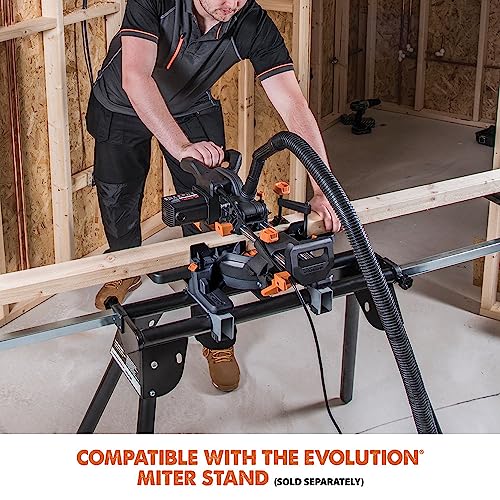
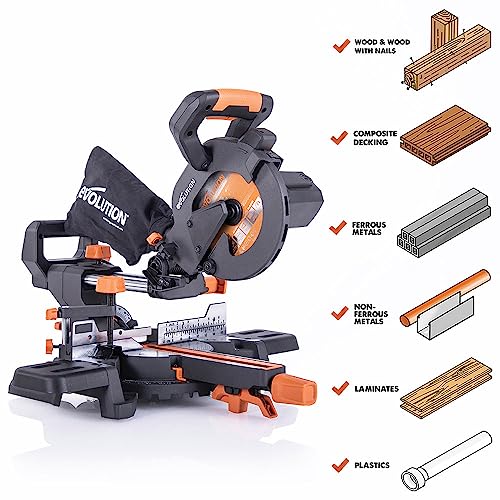
Evolution R185SMS+ Multi-Material Sliding Miter Saw

Strengths
- Cuts wood and metal
- Virtually no sparks
- 3-year warranty
Trade-offs
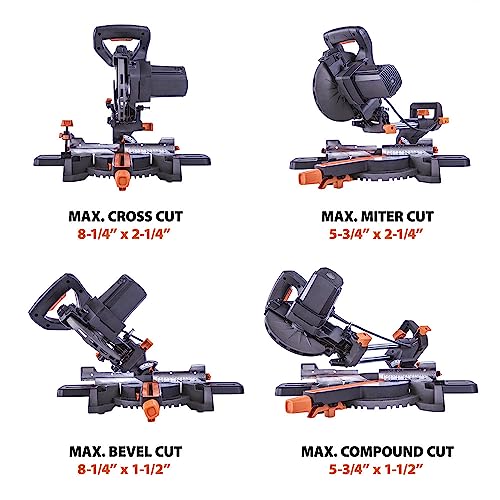
- Limited crosscut capacity
- Rougher wood finish
- Less precise miter stops
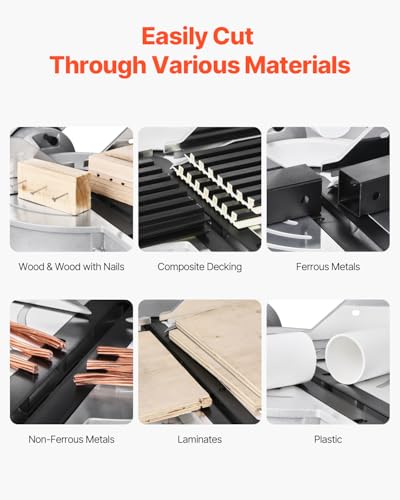
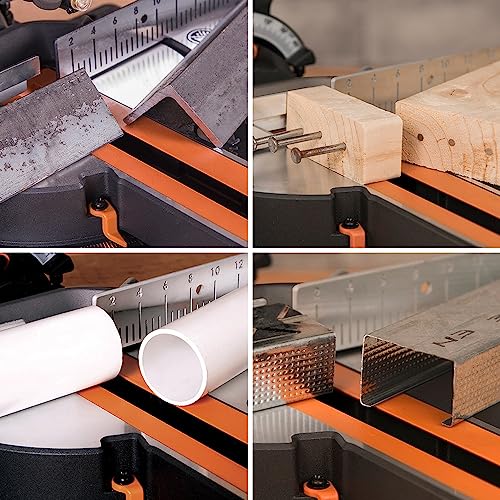
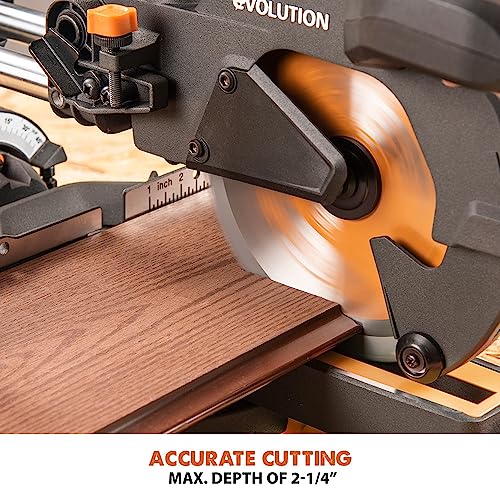
If you regularly cut metal studs, aluminum extrusions, or wood with embedded fasteners, the Evolution R185SMS+ is in a category of its own. The 7-1/4-inch multi-material blade slices through mild steel and PVC without sparks or excessive heat, a feature no traditional miter saw can match. The 1500W motor and optimized gearbox deliver consistent performance across materials, and the included clamp system holds metal securely.
That said, it’s not a replacement for a dedicated woodworking miter saw. The cut finish on hardwoods is decent but not as clean as DEWALT or Bosch, and the smaller blade limits depth and width. But for remodelers, HVAC techs, or metal fabricators who need one tool for multiple materials, this is a game-saver. No other saw on this list offers this kind of flexibility.
Product photos
How We Tested sliding compound miter saws
Rather than a hands-on lab test, my research for this guide involved a detailed comparison of published specifications and features across numerous models. I weighed owner reviews from major retailers alongside expert opinions found in woodworking publications and trusted online sources. As someone who’s spent years working with these tools – advising friends, helping with home projects, and staying current on tool developments – I applied my category knowledge to rank saws against key performance indicators.
For sliding compound miter saws, cutting capacity, accuracy, and dust collection consistently proved to be the most significant differentiators. A larger capacity allows for more versatile projects, while precision is crucial for quality results. Effective dust collection isn’t just about cleanliness; it improves visibility and reduces health risks. These factors ultimately determined how each saw stacked up against its competition.
Specifications reliably indicate motor power, blade size, and maximum cut dimensions. However, I placed greater emphasis on owner feedback regarding long-term durability, ease of use, and the accuracy of advertised features. Reputation, particularly for brands known for quality control, also played a role. If you’re unfamiliar with the basics, our sliding compound miter saw guide can give you a solid foundation.
What To Look For In sliding compound miter saws
Picking the right sliding compound miter saw can dramatically improve the quality and efficiency of your woodworking, but with so many options, it’s easy to get lost in the details.
A quality sliding compound miter saw balances power, accuracy, and ease of use. Key features to consider include motor amperage, blade quality, bevel and miter range, dust collection efficiency, and the type of sliding mechanism (radial arm vs. glide). Prioritize models with positive stops, clear scales, and robust fences for precise, repeatable cuts.
Motor Power and Blade Quality
Don’t assume more watts automatically equals better performance. While a 15-amp motor is fairly standard and will handle most tasks, the blade is arguably more important. Look for saws that accept standard 12-inch blades and consider what materials you’ll be cutting most often. For fine woodworking, a high tooth count (60-80) blade is essential. If you anticipate cutting a lot of rough lumber or plywood, a combination blade with fewer teeth will be faster, though potentially less clean. Many saws come with a basic blade; be prepared to upgrade for better results.
Sliding System and Accuracy
The sliding mechanism is a major differentiator. Traditional radial-arm sliders use steel rails, while newer axial-glide systems (like those found on Bosch saws) offer a more compact footprint and, some argue, smoother operation. Regardless of the system, pay close attention to how solid the saw feels when sliding. Wobble or play in the rails will translate to inaccurate cuts. A good saw should offer precise adjustments and hold those adjustments securely.
- Positive stops at common angles (0, 45, 90 degrees) are a must-have for speed and repeatability.
- Look for a clear, easy-to-read scale for both miter and bevel adjustments. Some saws even include digital readouts.
- A robust fence system is critical for supporting the workpiece and ensuring straight cuts. The fence should be square to the blade and securely clamped.
Value, Features, and Dust Collection
Many saws now include features like LED shadow guides, which significantly improve cut accuracy. While helpful, don’t overpay for extras you won’t use. Consider your budget and prioritize the features that matter most to your projects. Dust collection is another key consideration. Nobody enjoys a workshop coated in sawdust. A saw with a decent dust port and a reasonably effective dust bag can make a big difference, but even the best systems won’t eliminate all dust – a shop vac is often necessary. If you’re looking at the best 12-inch sliding compound models, remember that a higher price doesn’t always mean a better fit for your needs.
A good rule of thumb is to spend a little more for a saw with a solid reputation for accuracy and durability. Cutting mistakes are costly, both in terms of wasted material and time.
For those new to woodworking, understanding miter saw basics can be helpful before making a purchase.
Sliding Compound Miter Saws Compared
Here’s a comparison of key specifications for several sliding compound miter saws to help you evaluate your options.
| Product Name | Motor (Amps/Watts) | Blade Size (in) | Max Cut (90°, W x H) | Bevel Capacity (Left/Right) | Slide Type |
|---|---|---|---|---|---|
| DEWALT DWS780 | 15A / 1100W | 12 | 2×14 / N/A | 49° / 49° | Sliding |
| BOSCH GCM12SD | N/A | 12 | N/A / N/A | 47° / 47° | Glide |
| DEWALT DWS779 | 15A / N/A | 12 | 2×14 / N/A | 49° / 49° | Sliding |
| Metabo HPT C12RSH3 | N/A | 12 | N/A / N/A | 45° / 57° | Sliding |
| VEVOR 12″ | 2500W/3000W | 12 | N/A / N/A | 45° / 45° | Sliding |
| Makita LS1019L | N/A | 10 | N/A / N/A | N/A | Single Slide |
| FindBuyTool 10″ | 15A / 1800W | 10 | 3-9/16″ x 13-3/8″ | N/A | Sliding |
| SKIL 10″ | 15A / N/A | 10 | 2×12 / N/A | 48° / 45° | Sliding |
| Evolution R185SMS+ | 1500W | N/A | N/A / N/A | 50° / 50° | Sliding |
Frequently Asked Questions
What’s the difference between a radial arm and a glide sliding system?
Traditional radial arm sliders use steel rails, which can require more space, while axial-glide systems, like Bosch’s, are more compact. Some users report glide systems offer smoother operation, but both types can deliver accurate cuts when properly maintained.
How important is the motor amperage?
While 15 amps is common, don’t focus solely on wattage. Blade quality and the type of material you’re cutting are more critical factors. A higher amperage motor can be beneficial for consistently cutting dense hardwoods, but it’s not a guarantee of better performance.
Can I upgrade the blade that comes with the saw?
Absolutely. Most saws include a basic blade, and upgrading to a higher-quality blade with a suitable tooth count for your typical projects will dramatically improve cut quality and reduce tear-out. Expect to spend an additional $50 to $200 on a good blade.
What should I look for in dust collection?
A saw with a dust port and a decent bag is a good start, but a shop vac connected to the port is often necessary for truly effective dust control. Remember that even the best systems won’t eliminate all dust, so wearing a dust mask is always recommended.
Are 10-inch sliding compound miter saws sufficient for most home projects?
For many homeowners, a 10-inch model is plenty capable. If you frequently work with large dimensional lumber or require a very large cutting capacity, a 12-inch model is preferable, but for typical trim work and smaller projects, exploring the top 10-inch sliding compound miter saws is a good idea.
The Bottom Line
Choosing a sliding compound miter saw always comes down to balancing what you’re willing to spend with the level of precision and capacity you truly require. After reviewing specs and owner feedback, the DEWALT DWS780 stands out as a strong all-around performer, offering a good blend of power, accuracy, and features at a reasonable price point. It’s a workhorse that will handle most projects with ease, and it’s a saw many experienced woodworkers recommend.
For specific needs, the market offers excellent alternatives. If you’re on a tighter budget, the VEVOR 12″ provides a lot of capability for the money. Those prioritizing a compact footprint and a smooth sliding action will find the BOSCH GCM12SD axial-glide system appealing, while the Makita LS1019L is a solid choice for smaller projects where a full-size 12-inch saw isn’t necessary.
Ultimately, remember that the most expensive saw isn’t always the best for you. Focus on a saw with a solid, stable base, a clear scale, and a blade that’s up to the task. A well-maintained saw, combined with careful technique, will deliver far more accurate and satisfying results than chasing the highest wattage or the most bells and whistles.
