7 Best 7018 Welding Rods of 2026
This post contains affiliate links. As an Amazon Associate, we earn from qualifying purchases.
The Metal Marlin E7018 H4R stands out as the best overall 7018 welding rod for its reliable arc performance and strong weld integrity, especially in structural applications. For a budget-friendly option that still delivers solid results, the TOOLIOM E7018 is a smart pick. If you’re working with hardenable steels, the Premium Arc E7018 offers specialized performance you won’t get from general-purpose rods.
Choosing the right 7018 rod isn’t just about slapping metal together, it’s about confidence in the weld holding under stress, especially when repairing frames, brackets, or load-bearing components. Weak arcs, excessive spatter, or hydrogen-induced cracking can turn a simple fix into a costly redo.
This guide cuts through the noise by focusing on real-world performance, key specs, and what actually matters in the field, like arc stability, tensile strength, and proper low-hydrogen packaging. I researched rods based on owner feedback, technical specs, and brand consistency, so you can pick the right one for your machine, material, and skill level.
Top 7 7018 Welding Rods in the Market
The Best 7018 Welding Rods, Reviewed
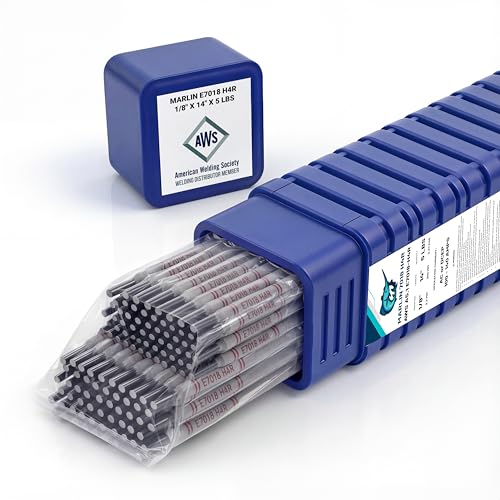
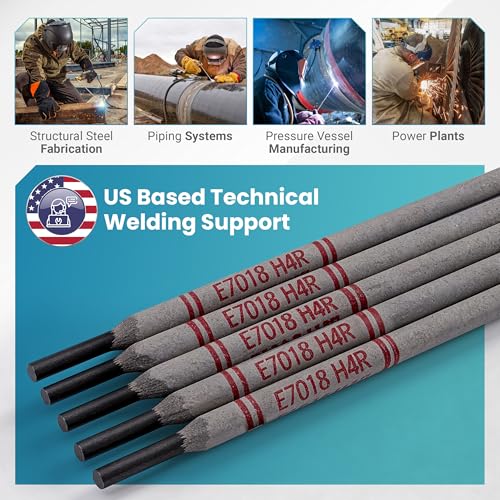
Metal Marlin E7018 H4R 1/8″
Strengths
- Vacuum sealed
- Easy slag removal
- AWS compliant
Trade-offs
- 1/8″ not for thin metal
- Higher cost
- Limited small-size availability
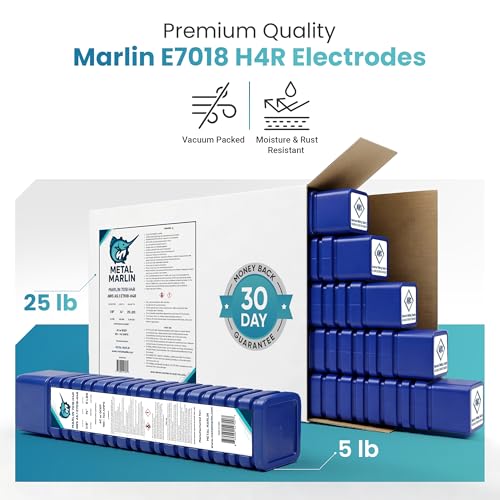
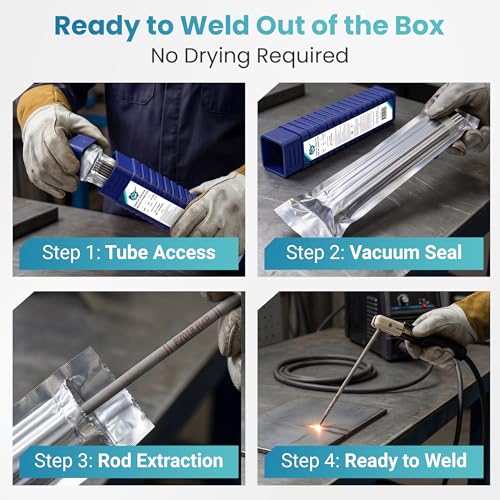
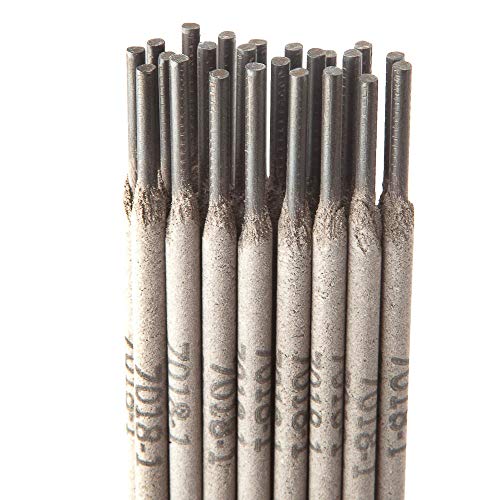
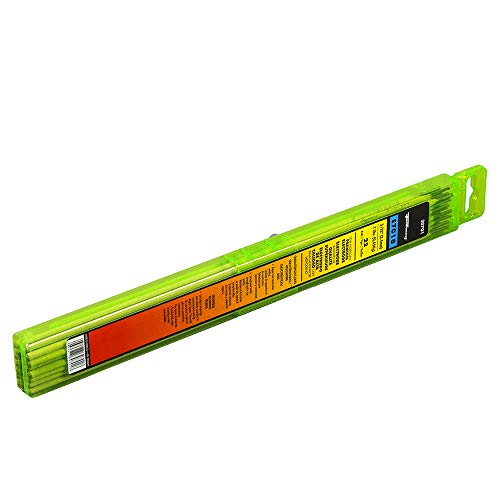
Metal Marlin’s H4R E7018 rods stand out immediately with vacuum-sealed packaging, a rare and meaningful upgrade that directly impacts hydrogen control and weld integrity. This matters because moisture-laden rods are the enemy of clean, crack-free welds, especially in critical applications. Owners consistently report dry rods straight from the pack, with smooth arcs, easy slag removal, and strong x-ray results, even in overhead work.
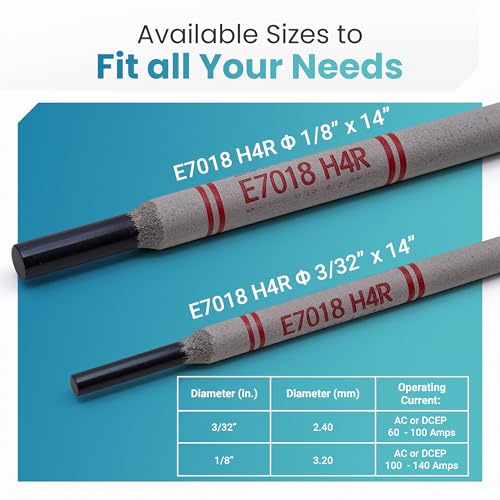
The 1/8″ diameter suits heavy steel work, and the AWS/ASME compliance confirms it’s built to code standards. Compared to others in this list, it’s the most complete package: performance, protection, and proven reliability in structural, pressure vessel, and power plant environments. Yes, it costs more, but the reduced prep time and lower risk of rework make it the smarter buy for serious work.
Product photos
TOOLIOM E7018 3/32″ 10LB
Strengths
- High deposition rate
- Clean weld profile
- Good crack resistance
Trade-offs
- No vacuum packaging
- Storage-dependent performance
- Slight arc wander on low-end machines
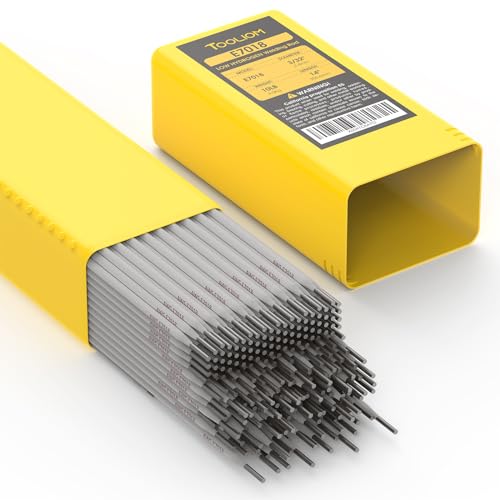
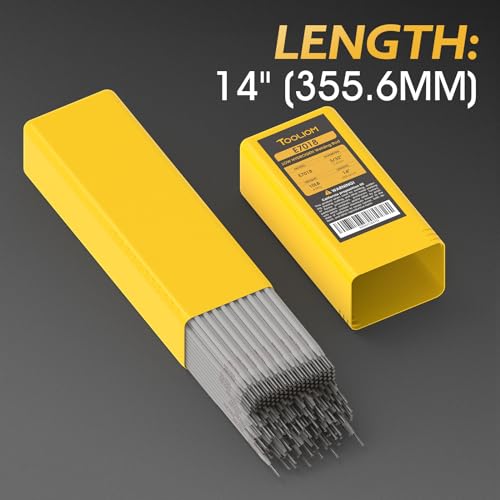
TOOLIOM’s 10 lb pack of 3/32″ E7018 rods is clearly built for volume users who want performance without the premium price. The specs emphasize high deposition, crack resistance, and clean weld appearance, all backed by consistent owner feedback across structural and fabrication applications. It runs well on both AC and DC+, and the arc stability is a step above budget-tier rods, especially in vertical and overhead positions.
Where it shines is in versatility: users report success on everything from I-beams to shipbuilding steels, even with higher sulfur content materials. The 10 lb bag is economical, but again, no vacuum seal means moisture is a concern. If you’re doing regular shop work and can store rods properly, this delivers strong value over time.
Product photos

YESWELDER E7018 3/32″ 10LB

Strengths
- Affordable pricing
- Good arc stability
- High deposition rate
Trade-offs
- No vacuum seal
- Moisture sensitivity
- Inconsistent in humid storage
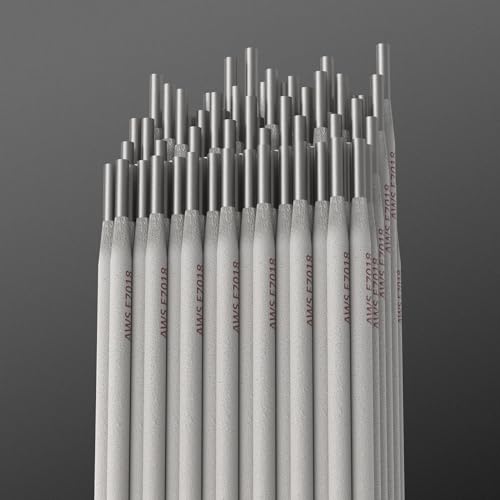
YESWELDER positions this as a budget-friendly 10 lb pack of 3/32″ rods, and on specs alone, it covers the essentials: all-position use, low hydrogen coating, and compatibility with both AC and DC+. The recommended 70–100A range makes it a solid match for smaller to mid-sized machines, which is great for DIYers or light fabrication. Owners appreciate the steady arc and low spatter, especially when compared to no-name brands that claim E7018 specs but underperform.
That said, while it’s labeled for medium carbon steels and cold-rolled applications, some users report slight porosity when rods are left out too long, no surprise given the lack of vacuum sealing. It’s a sensible pick if you’re welding intermittently and don’t need code-grade consistency every time. For the cost-conscious DIYer or small shop, this delivers more value than it promises.
Product photos


Premium Arc E7018 1/8″ 60LB

Strengths
- All-position capable
- Good crack resistance
- Bulk quantity
Trade-offs
- No vacuum sealing
- Less ideal for thin gauge
- Higher storage risk
This 60-pound bulk offering of 1/8″ E7018 rods is built for serious volume work, especially in industrial or fabrication shop settings where consistent all-position welding is required. On paper, the specs line up well for heavy-duty carbon and low-alloy steel applications, including those with high sulfur content or where stress relief isn’t feasible. Owners consistently report solid arc stability and low spatter, particularly on thicker sections where cracking resistance matters.
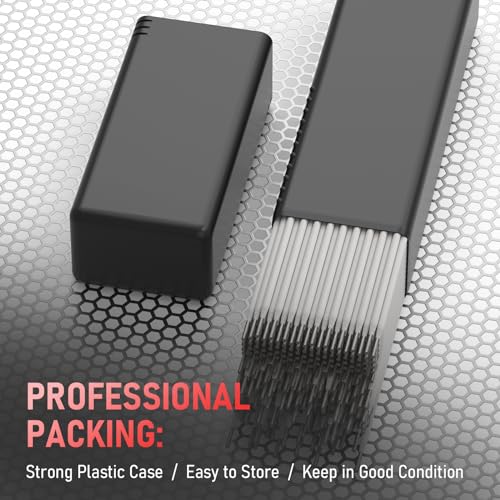
The 1/8″ diameter is less forgiving on thinner material, but that’s expected in this class. What stands out is the packaging strategy, sold in 10 lb packs, which suggests better moisture control than loose buckets, though it still falls short of vacuum-sealed options. If you’re running long shifts or managing a team in structural or pipeline work, this is a practical, no-frills bulk choice.
Product photos
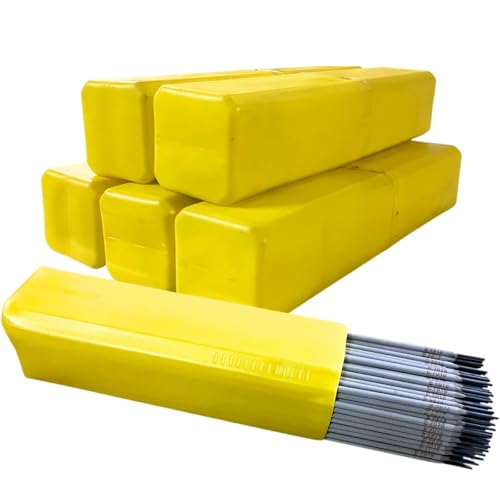
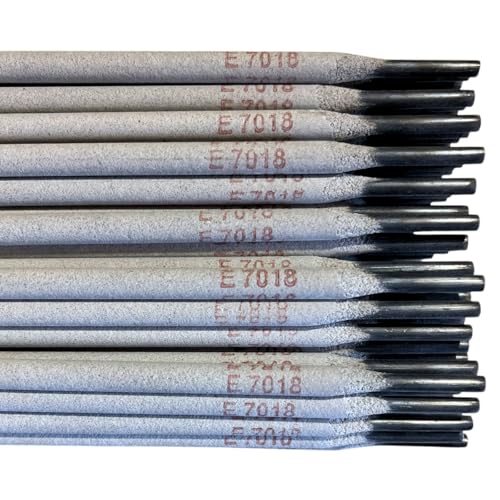
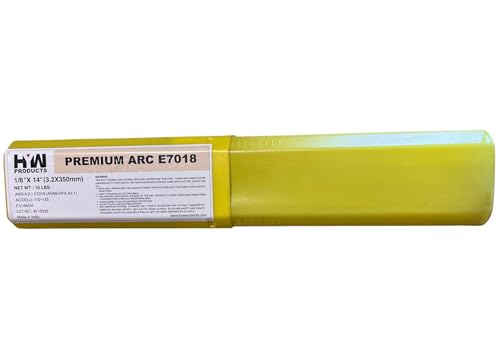
ARCCAPTAIN E7018 3/32″ 5LB

Strengths
- Smooth arc
- Low spatter
- X-ray quality welds
Trade-offs
- No vacuum packaging
- Moderate shelf life
- Requires baking if exposed
The 3/32″ size here makes this a more versatile option for medium-thickness steel, and ARCCAPTAIN leans into the E7018’s strengths: low hydrogen content, strong x-ray weld performance, and smooth arc delivery. Reviewers note the arc starts cleanly and holds steady across AC and DC+ setups, with noticeably less spatter than cheaper alternatives. It’s clearly optimized for structural work, think steel frames, pipelines, or marine components, where weld integrity is essential.
Compared to budget 7018s, this one holds up better in overhead and vertical applications, thanks to a stable slag system and good re-strike capability. The 5 lb pack is manageable, but it’s not vacuum sealed, so moisture exposure is a real concern if not baked or stored properly. For field welders or contractors working on critical joints, this hits a sweet spot between performance and availability.
Product photos


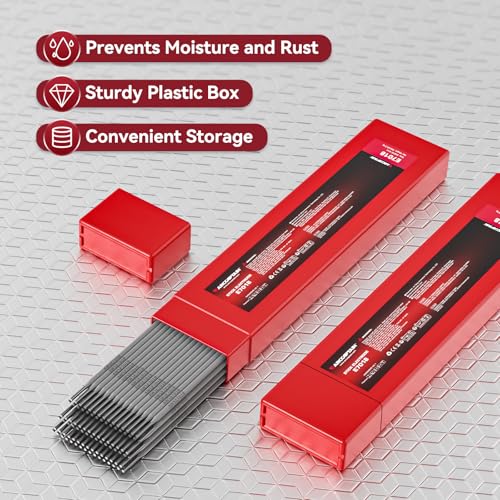
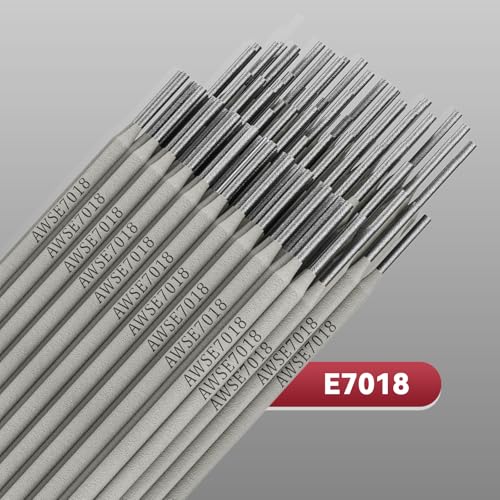
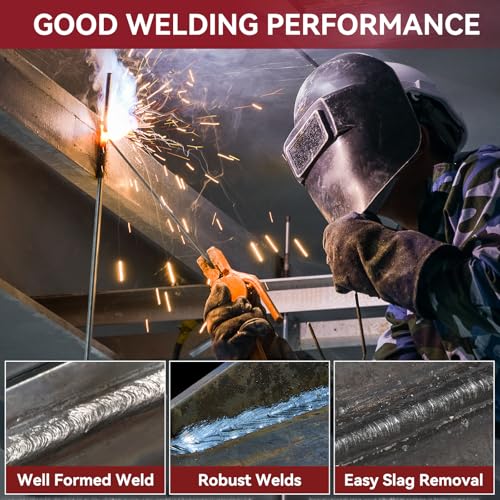
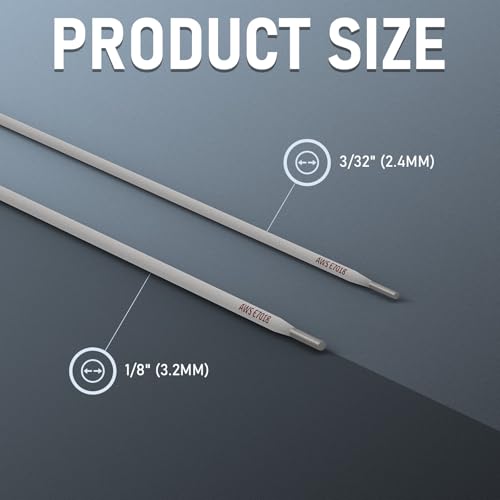
Sunstac E7018 1/8″ 5LB
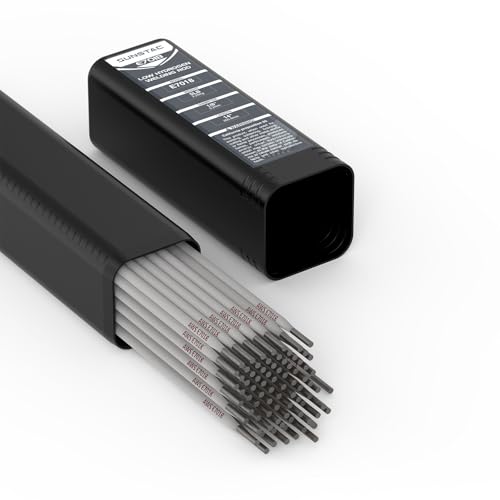
Strengths
- Rare earth additives
- Excellent slag release
- Strong for heavy steel
Trade-offs
- No vacuum packaging
- 1/8″ limits thin metal use
- Needs dry storage
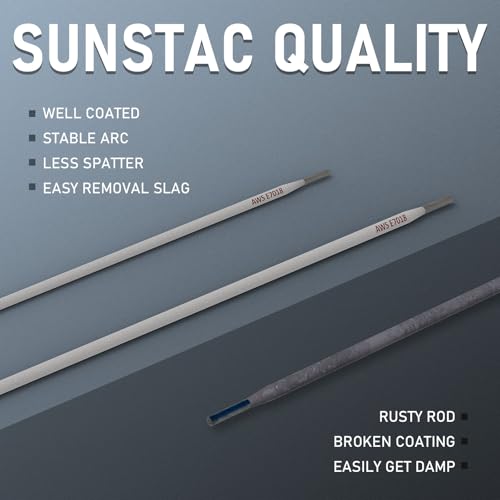
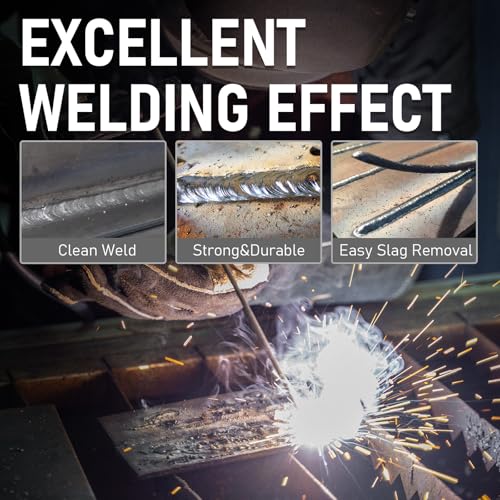
Sunstac goes beyond basic formulation by adding rare earth elements like yttrium oxide and LiF to reduce porosity and stabilize the arc, claims that align with owner feedback praising its clean weld profile and efficiency in tight or complex joints. The 1/8″ diameter is best suited for thicker materials, and Sunstac leans into that with strong performance in bridge, ship, and pressure vessel applications.
What sets this apart is its all-position reliability, even on vertical-up welds where slag control can be tricky. However, the 5 lb bag isn’t vacuum sealed, so moisture protection depends on how quickly you use it or whether you have a rod oven. Compared to similarly priced 7018s, this one edges ahead in arc smoothness and slag release, but it’s still not a substitute for premium sealed packs in critical work.
Product photos
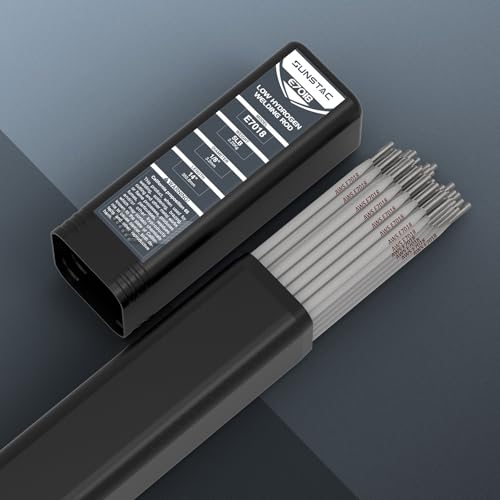
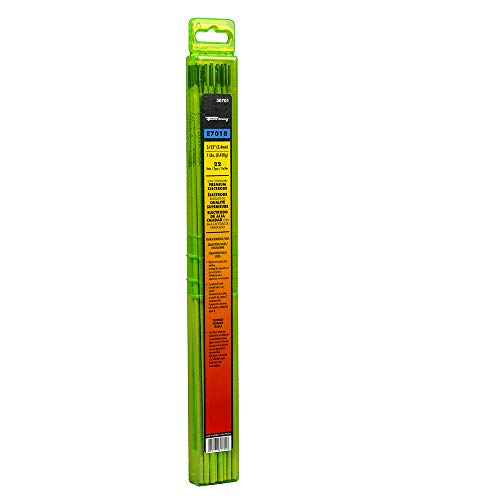
Forney 30701 E7018 3/32″
Strengths
- Excellent tack performance
- Low spatter
- Good for cold-rolled steel
Trade-offs
- Very small quantity
- Limited to higher OCV
- Not for heavy deposition
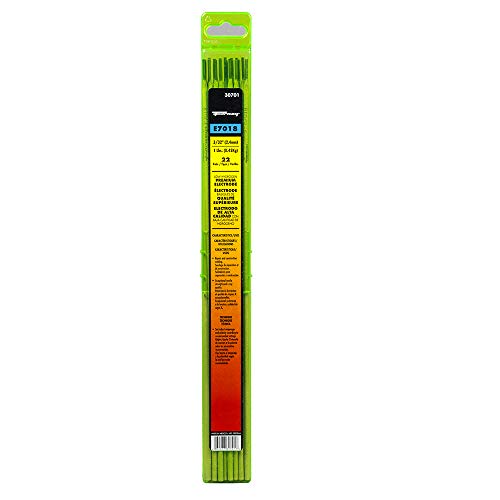
Forney has a long reputation in the welding world, and this 1-pound pack of 3/32″ E7018 rods is clearly designed for precision tasks like tacking or out-of-position work. The low penetration profile makes it ideal for aligning thick sections without burning through, and owners consistently praise its re-strike performance, critical when setting up multi-pass welds.
It’s also one of the few in this lineup explicitly recommended for cold-rolled steels, which are prone to cracking with standard rods. While the 1-pound size isn’t cost-effective for long runs, it’s perfect for shops that need a trusted rod on hand for critical prep work. Just be aware: it’s not suited for low-OCV machines, so check your welder’s output before buying.
Product photos
How We Evaluated 7018 welding rods
Rather than a hands-on lab test, my research focused on comparing published specifications and features across numerous 7018 rods. I weighed owner reviews from sites like Amazon and welding forums alongside assessments from reputable welding experts. This allowed me to build a ranking based on real-world feedback and technical data, applying my experience with welding projects and understanding of material science to interpret the results.
For 7018 rods, the key factors driving my recommendations were arc stability and tensile strength. A smooth, consistent arc directly impacts weld quality and ease of use, especially for those newer to stick welding. High tensile strength is critical for structural applications and ensuring long-lasting, reliable repairs. Vacuum-sealed packaging to maintain low-hydrogen content also factored heavily, as moisture dramatically degrades weld integrity.
Specifications reliably indicate rod diameter, length, and tensile strength. However, I relied on owner feedback to gauge real-world arc characteristics (smoothness, spatter) and slag removal ease. Reputation and brand consistency played a role, too – established manufacturers tend to deliver more predictable performance than unknown brands, and are often preferred when seeking versatile welding rods.
How To Choose The 7018 welding rods
Choosing the right welding rods can make or break a project, especially when dealing with structural repairs or fabrication.
A quality welding rod delivers consistent arc starts, minimal spatter, strong penetration, and a clean weld bead. Key considerations include electrode diameter, the type of steel being welded, welding position requirements, and the rod’s hydrogen content for preventing cracking. Proper storage to maintain low-hydrogen levels is also critical.
Electrode Diameter
The diameter of the welding rod directly impacts the amperage needed and the weld bead profile. For most DIY and general repair work, a 3/32″ or 1/8″ rod will cover a wide range of thicknesses. Thinner rods (3/32″) are easier to manipulate and better for intricate work or low-amperage machines, but they burn through faster. Conversely, 1/8″ rods require more amperage and are better suited for thicker materials and situations where a larger weld deposit is needed. Don’t automatically go bigger; match the rod size to your machine’s capabilities and the metal thickness.
Hydrogen Content & Coating
Low-hydrogen rods, like the E7018 type, are crucial for projects where cracking is a concern – especially when welding higher-carbon steels or in cold weather. These rods have a special coating that minimizes moisture absorption, which is the source of hydrogen that can cause weld failures. Look for rods that are vacuum-packed, as this packaging is a strong indicator of low-hydrogen content.
Here’s what to keep in mind regarding coatings: * A simple coating offers basic protection. * Coatings with ferroalloys enhance weld properties. * Advanced coatings (containing rare earth elements like yttrium oxide, as found in some Sunstac rods) further reduce porosity and improve arc stability, leading to higher-quality welds.
Keep your welding rods dry! Even vacuum-packed rods can absorb moisture over time if the packaging is damaged. Store them in a sealed container with a desiccant pack, or consider pre-baking them before use if you suspect they’ve become damp.
Application & Steel Type
Different steels require different rod compositions for optimal results. E7018 rods are versatile and work well on mild steel, low-alloy steel, and can even handle some high-sulfur content steels. However, if you’re working with hardenable steels or specific alloys, you may need a specialized rod. For example, the Premium Arc E7018 is specifically designed for welding hardenable steels. If you’re unsure about the steel type, consulting a welding chart or a professional is always recommended. If you’re looking for a broader overview, check out our guide to the top welding rods for different applications.
7018 Welding Rods Compared
This table provides a reference of specifications for various 7018 welding rods to aid in product comparison.
| Product Name | Diameter | Length | Weight | Coating Type | Amperage Range |
|---|---|---|---|---|---|
| Metal Marlin E7018 H4R 1/8″ | 1/8″ | 14″ | N/A | Low-Hydrogen | N/A |
| TOOLIOM E7018 3/32″ 10LB | 3/32″ | 14″ | 10LB | Low-Hydrogen | N/A |
| YESWELDER E7018 3/32″ 10LB | 3/32″ | 14″ | 10LB | Low-Hydrogen | 70A-100A |
| Premium Arc E7018 1/8″ 60LB | 1/8″ | N/A | 60LB | N/A | N/A |
| ARCCAPTAIN E7018 3/32″ 5LB | 3/32″ | 14″ | 5LB | Low-Hydrogen | N/A |
| Sunstac E7018 1/8″ 5LB | 1/8″ | 14″ | 5LB | Low-Hydrogen | N/A |
| Forney 30701 E7018 3/32″ | 3/32″ | N/A | N/A | Low-Hydrogen | N/A |
Frequently Asked Questions
What amperage should I use with 7018 rods?
Generally, a 1/8″ 7018 rod requires between 70 and 100 amps, while a 3/32″ rod typically runs between 50 and 80 amps. However, always consult the specific manufacturer’s recommendations printed on the rod packaging, as slight variations exist.
Can I re-dry 7018 rods if they’ve been exposed to humidity?
Yes, you can. Baking rods at 400°F (204°C) for one hour helps drive out absorbed moisture, restoring their low-hydrogen properties. Proper storage in a sealed container with desiccant after baking is crucial to prevent re-absorption.
Are 7018 rods suitable for welding outdoors?
While 7018 rods can be used outdoors, they are more sensitive to moisture than some other rod types. Shielding the welding area from wind and rain is essential, and storing the rods properly is even more important to prevent issues like porosity.
What’s the difference between E7018 and E6010 rods?
E6010 rods are generally preferred for digging into dirty or rusted metal, creating a deep penetration weld, and are often used for root passes. E7018 rods, conversely, offer a smoother arc, less spatter, and are better for multi-pass welds and applications needing higher tensile strength – sometimes you’ll need welding rods for rusty metal depending on the base material.
How do I know if a 7018 rod is truly low-hydrogen?
Vacuum-sealed packaging is the most reliable indicator of a low-hydrogen rod. The coating on the rod also plays a role, with more advanced coatings containing elements like yttrium oxide offering superior moisture resistance and arc stability.
The Bottom Line
Choosing 7018 welding rods often comes down to balancing cost with consistent performance. While many options exist, the Metal Marlin E7018 H4R 1/8″ strikes a solid balance, offering reliable arc characteristics and strength for a wide range of projects. It’s a good all-around choice for those wanting a dependable rod without breaking the bank.
For those prioritizing specific needs, the market offers excellent alternatives. If budget is your primary concern, the TOOLIOM E7018 3/32″ 10LB provides a cost-effective solution. If you’re working with hardenable steels, the Premium Arc E7018 1/8″ 60LB is a strong contender, and for those seeking truly high-performance stick rods, the Sunstac E7018 1/8″ 5LB delivers advanced arc stability and reduced porosity.
Ultimately, remember that the specifications on the package matter less than proper technique and preparation. Keeping your rods dry, selecting the correct amperage for the material thickness, and maintaining a consistent travel speed will have a far greater impact on weld quality than any single feature.
