
9 Best Welding Machines for Beginners 2026
This post contains affiliate links. As an Amazon Associate, we earn from qualifying purchases.
The ANDELI 135A MIG Welder is the best overall choice for beginners, offering reliable multi-process welding, automatic settings, and a helpful accessory kit. If you’re on a tight budget, the Hpoouo 200Amp Stick Welder delivers solid performance for basic projects, while the YESWELDER 160A MIG Welder gives more power and flexibility for those planning to grow into heavier work.
Most beginners don’t realize how much the wrong welder can slow down progress. Too complex, and you’ll spend more time fiddling than welding. Too limited, and you’ll outgrow it fast. I’ve seen it happen too many times in home workshops.
This guide cuts through the noise. We looked at specs, owner experiences, and real-world usability to find beginner machines that actually help you learn. These picks balance simplicity, safety, and room to grow – because starting strong makes all the difference.
Top 9 Welding Machines For Beginners in the Market
The Best Welding Machines For Beginners, Reviewed
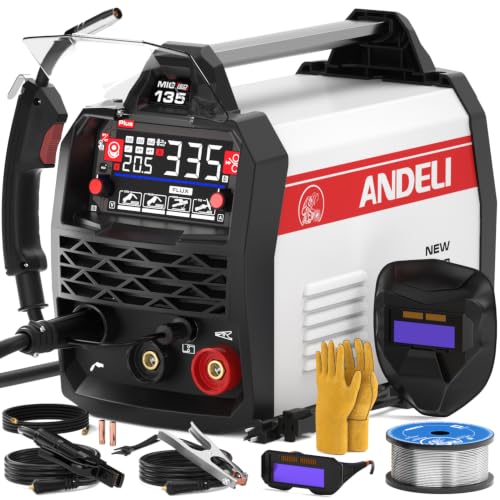
ANDELI 135A MIG Welder
Strengths
- PULSE MIG for cleaner welds
- Dual-voltage capability
- Large, protective LED display
Trade-offs
- Lift TIG torch not included
- Slightly higher learning curve
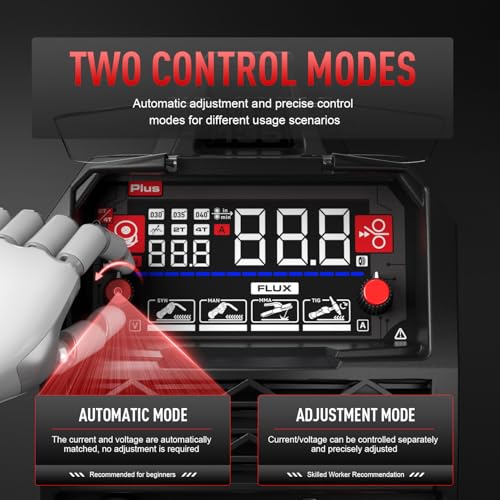
- Synergy not as intuitive for total beginners
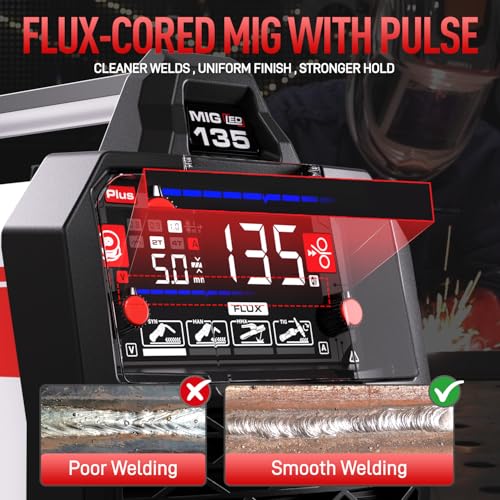
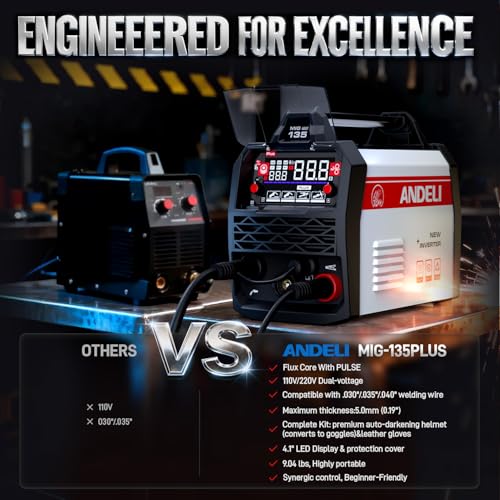
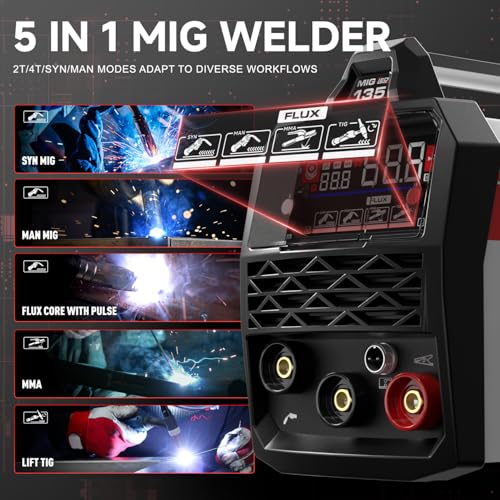
If I had to pick one machine as the best overall starter welder, it’d be the ANDELI 135A. It strikes a near-perfect balance between power, features, and usability. Dual-voltage (110V/220V) means it can grow with you, if you upgrade your shop power, the welder won’t hold you back. The PULSE MIG function is a big deal: it smooths the arc, reduces spatter, and improves bead quality, especially on thin materials. Owners consistently praise the weld finish, saying it looks more professional than expected at this price.
The large LED display is easy to read through a helmet, and the included auto-darkening helmet and gloves add real value. At under 9 lbs, it’s highly portable, and the 4-in-1 capability (MIG, flux core, lift TIG, stick) gives serious flexibility. Compared to the YESWELDER 135A, it’s more refined, with better build quality and a smarter interface.
Product photos

YESWELDER 160A MIG Welder
Strengths
- High 160A output
- Dual-voltage operation
- 4-in-1 functionality
Trade-offs
- Heavier than other models
- TIG torch sold separately
- Larger footprint
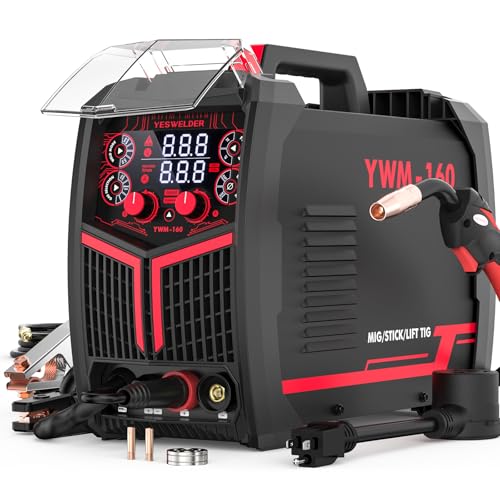
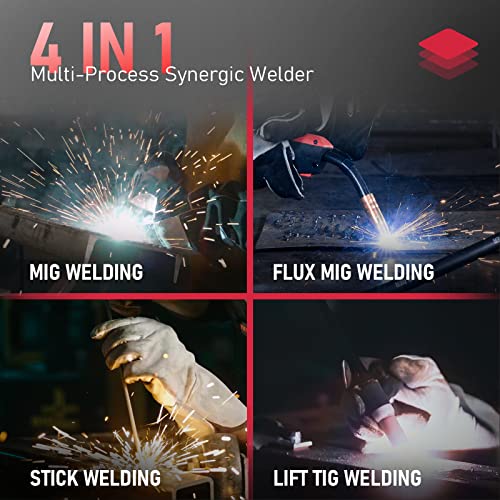
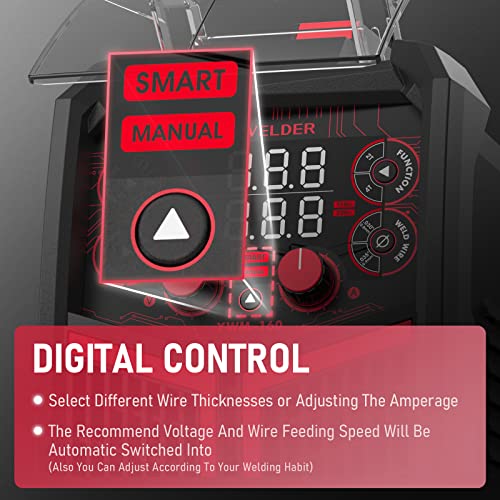
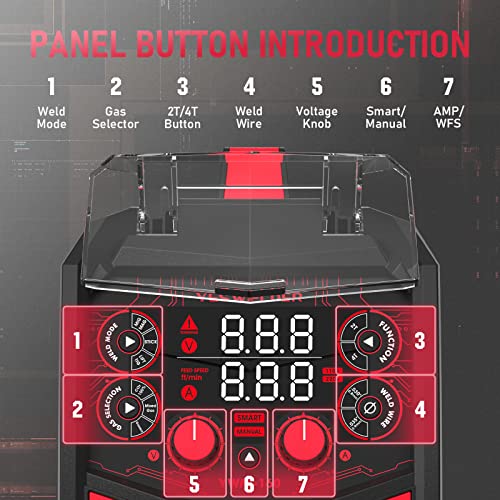
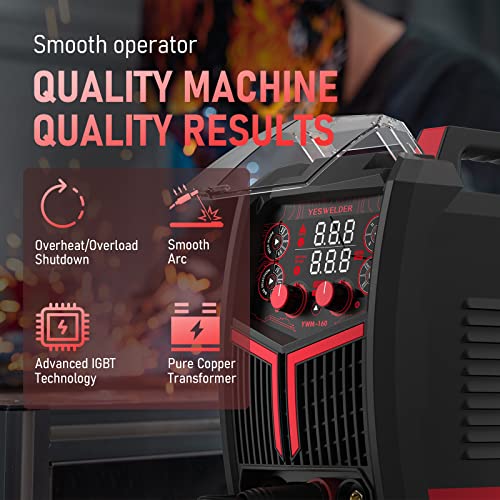
The YESWELDER 160A is built for thicker metal. With 160 amps and dual-voltage support, it can handle up to 3/16-inch steel with ease, more than most beginner machines. It’s a 4-in-1 unit (flux core, gas MIG, stick, lift TIG), so it’s as versatile as it is powerful. The smart synergic control helps beginners get started, while manual override gives pros room to tweak.
At 19.4 lbs, it’s the heaviest here, but still portable enough for job site work. The LED display is bright and clear, and owners note it handles voltage swings well, a plus on generator power. Compared to the ANDELI 135A, it trades some refinement for raw power and thickness capacity. If you’re working on car frames, trailers, or farm equipment, this is the one to reach for.
Product photos
Hpoouo 200Amp Stick Welder
Strengths
- High amperage for size
- Extremely portable
- Low cost
Trade-offs
- Basic build quality
- No digital display
- Stick-only process
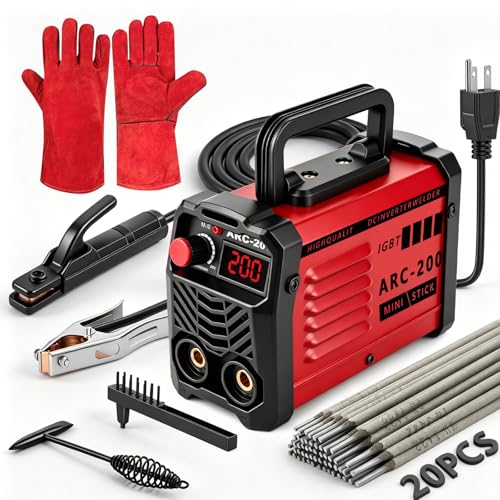
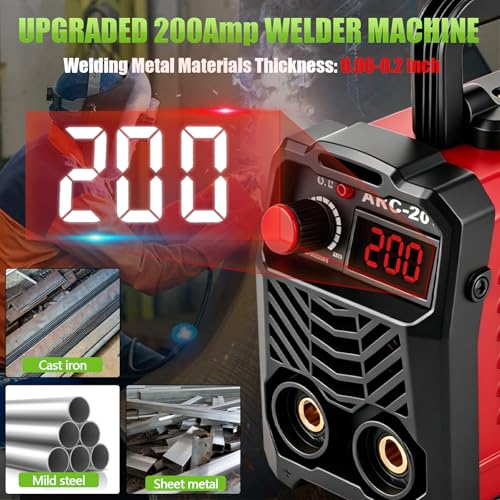
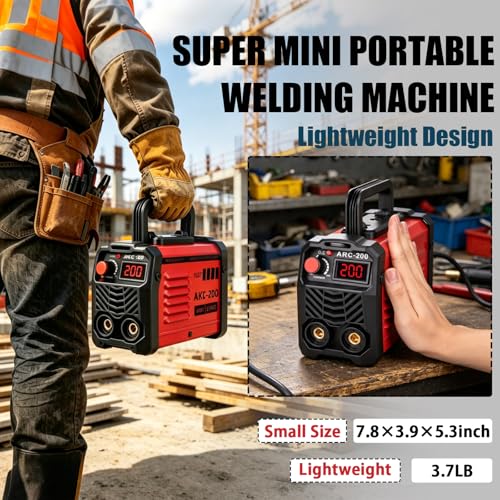
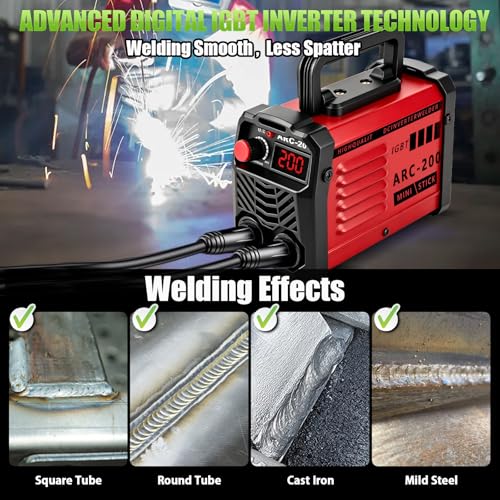
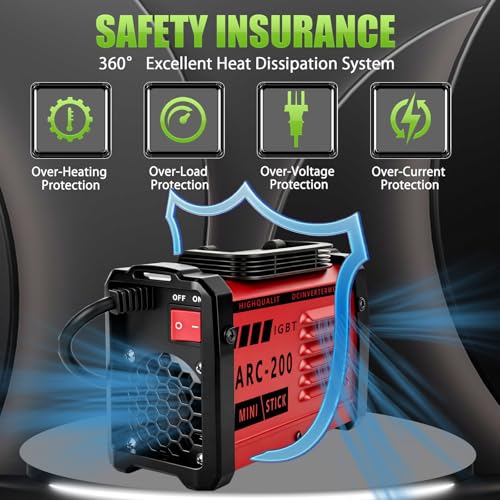
The Hpoouo 200Amp is a budget stick welder that delivers surprising power in a tiny package. At 3.7 lbs, it’s among the smallest on the market, yet it pushes up to 200A, enough to handle materials up to 0.2 inches thick. The IGBT inverter tech keeps the arc stable, and features like hot start and anti-stick help beginners avoid frustration. Owners report it strikes an arc easily and handles both thin and thick metal better than expected.
Where it shines is value. It includes 20 rods, gloves, and chipping tools, and the price is hard to beat. But it’s stick-only, and the build quality reflects the cost, some users note the plastic casing feels flimsy. Still, for someone who needs occasional welding and wants to keep costs low, it’s a smart entry point. Compared to the Sakerplus, it offers higher amperage but fewer presets and a less polished interface.
Product photos
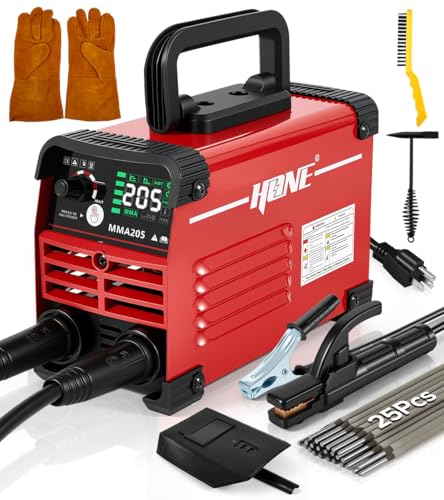
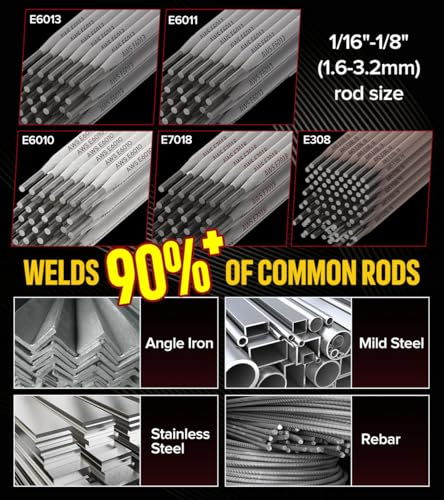
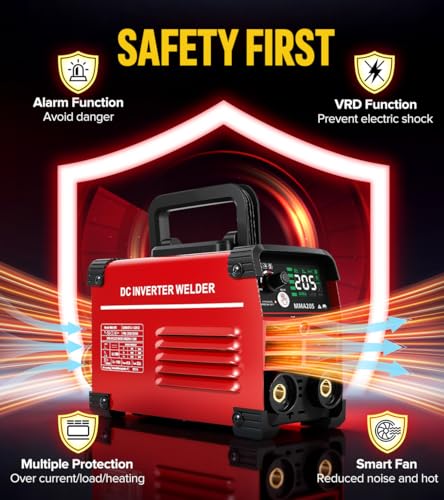
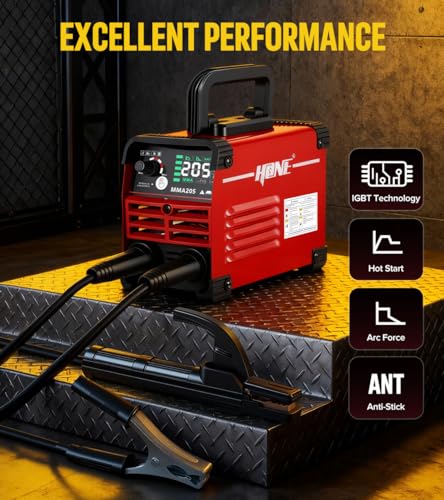
HONE 205A Stick Welder
Strengths
- 2-in-1 stick and lift TIG
- VRD for added safety
- High-quality included accessories
Trade-offs
- TIG torch not included
- Slightly bulkier than rivals
- No digital display
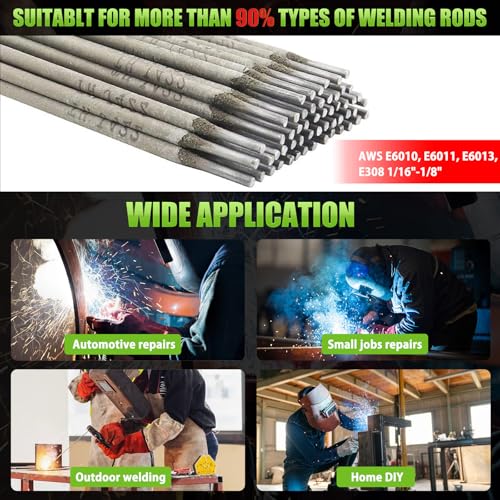
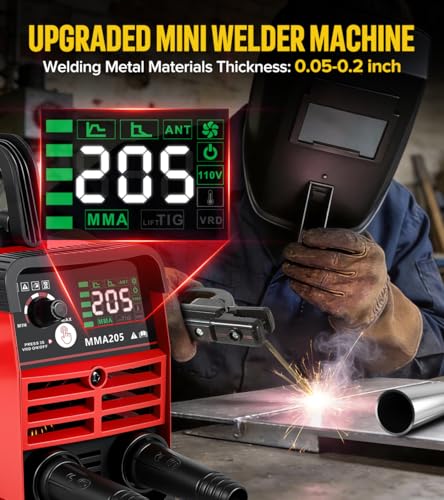
The HONE 205A welder is one of the few true 2-in-1 mini machines that includes both stick and lift TIG right in the firmware. That’s a big deal for beginners who want to explore TIG without buying a second machine. The 205A output handles thicker steel than most mini welders, and the VRD (voltage reduction) function adds a layer of safety, important for DIYers working in damp or unpredictable environments.
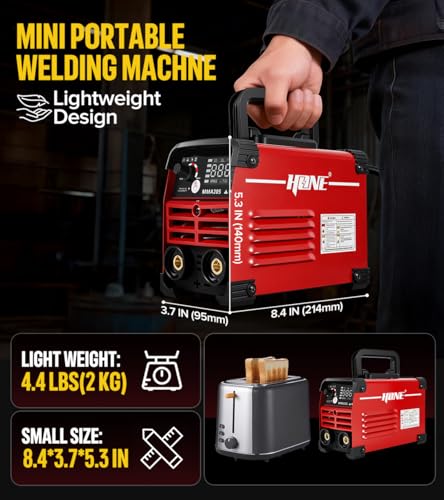
It’s slightly heavier than some competitors at 4.4 lbs, but still highly portable. Owners appreciate the 25 included rods and full set of accessories. The lift TIG function works well when paired with a compatible torch, though one isn’t included. Compared to the Hpoouo, it offers better safety features and dual-process capability, making it the smarter buy if you’re willing to spend a bit more.
Product photos
YESWELDER 135A MIG Machine
Strengths
- Synergic control simplifies setup
- Lightweight and compact
- 3-in-1 functionality
Trade-offs
- Noisy cooling fan
- Lift TIG torch sold separately
- Plastic housing feels less rugged
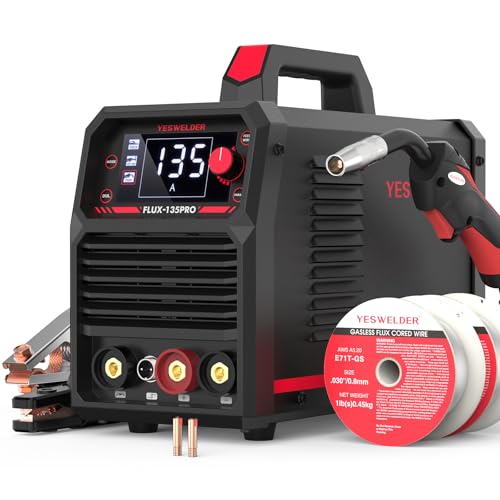
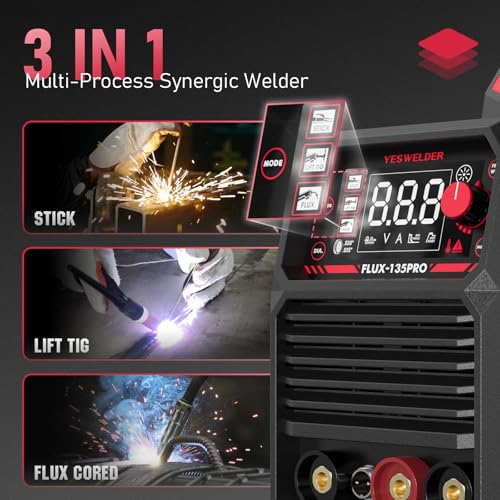
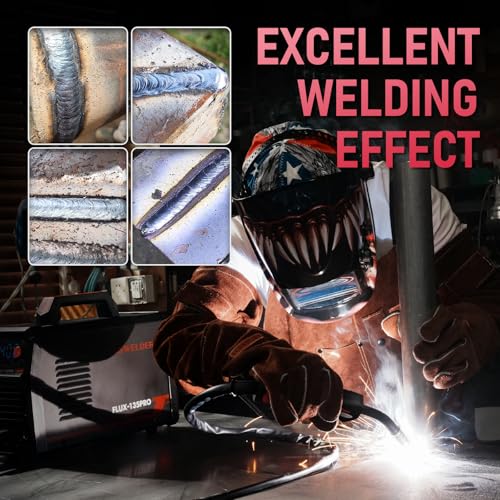
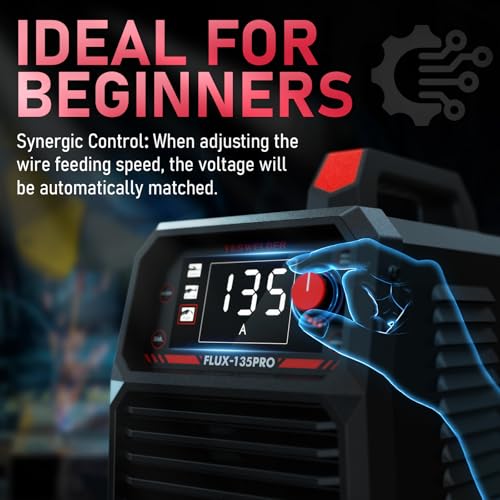
YESWELDER has carved a niche with budget-friendly machines that punch above their weight, and the 135A model is no exception. It offers 3-in-1 functionality, flux core MIG, stick, and lift TIG, which is rare at this size and price. The synergic control is a standout: adjust the wire feed, and voltage auto-matches, taking the guesswork out of settings. Reviewers note this makes it especially beginner-friendly, letting new users focus on technique rather than parameter tuning.
At 11.4 lbs, it’s easy to move around, and the digital display adds a level of precision uncommon in this class. It’s limited to 3/32-inch mild steel, so don’t expect heavy fabrication work, but for home garages and hobbyists, that’s plenty. Compared to the Lincoln 90i, it’s more versatile and lighter, though some owners report the fan can be noisy under load.
Product photos


FEMEROL 140A MIG Welder

Strengths
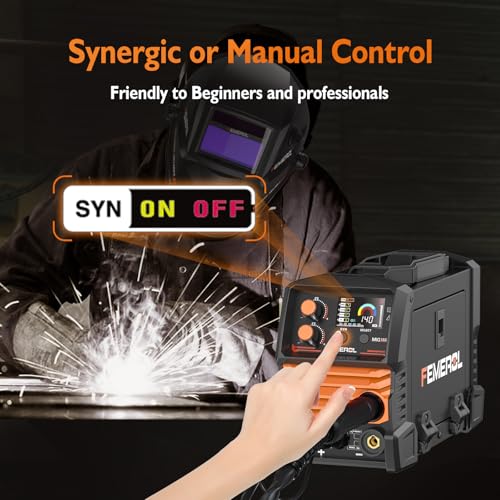
- Synergic and manual control
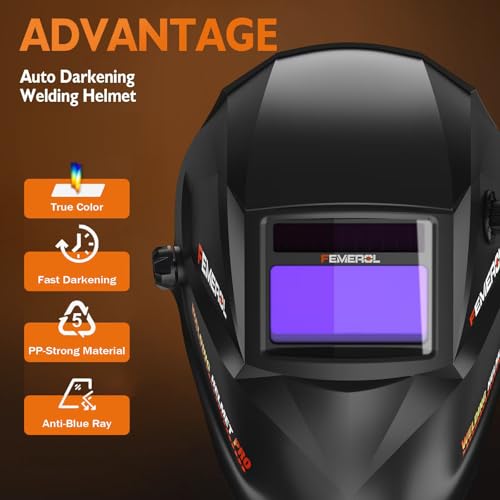
- Includes auto-darkening helmet
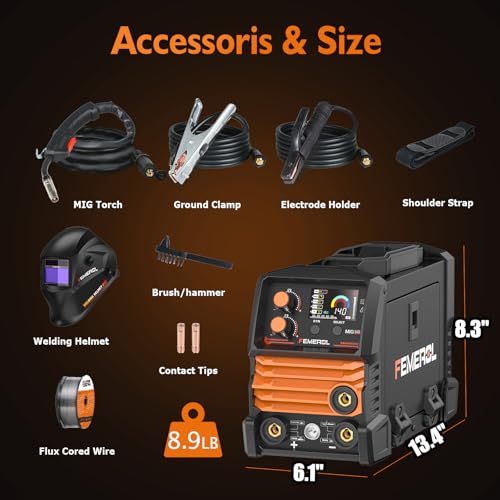
- Lightweight with shoulder strap
Trade-offs
- Brand recognition lower
- Lift TIG torch not included
- Plastic housing
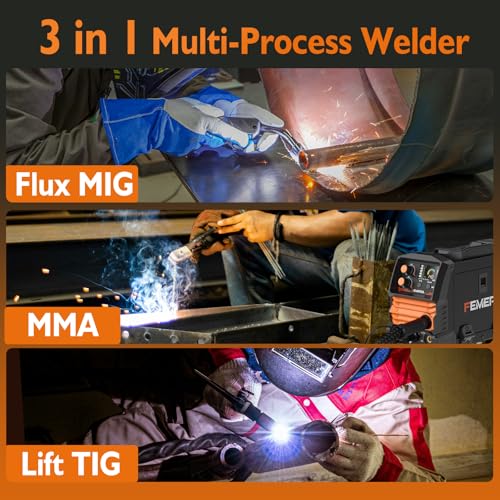
The FEMEROL 140A is a strong contender for best DIY-focused welder. It offers 140A output, synergic control, and a full 3-in-1 setup, flux core MIG, stick, and lift TIG. The LED display shows voltage and current in real time, which helps dial in settings without lifting your helmet. Owners appreciate the included auto-darkening helmet, which adds serious value right out of the gate.
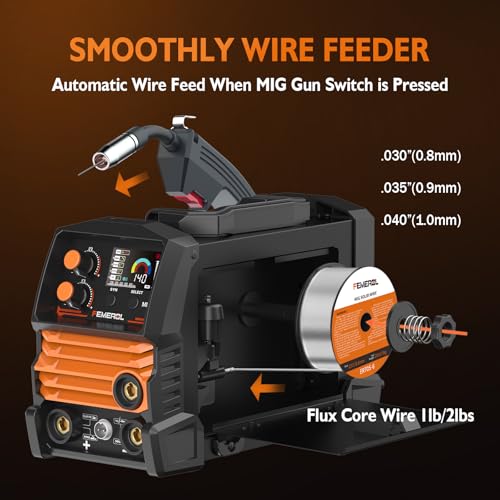
It’s lightweight at 8.9 lbs and comes with a shoulder strap, making it easy to carry to job sites. The wire feed system is smooth, and reviewers note minimal spatter in MIG mode. Compared to the YESWELDER 135A, it has a slightly higher output and better accessory bundle, though the brand isn’t as well-known. For weekend warriors, it’s a complete, capable package.
Product photos
Lincoln Electric 90i FC

Strengths
- Simple two-knob control
- Durable metal case
- Trusted brand reliability
Trade-offs
- No digital display
- Limited to flux core only
- Heavier than newer models
The Lincoln Electric 90i FC is a no-frills, plug-and-play flux core welder built for simplicity. On paper, it’s designed with the absolute beginner in mind, just two knobs for wire speed and voltage, no digital displays or fancy settings. Owners consistently report it fires up easily and runs smoothly on 120V, making it a solid pick for garage tinkerers or light repair work. It won’t handle thick material, maxing out around 1/4 inch with multiple passes, but for fence fixes or trailer patches, it’s more than capable.
Where it stands out is reliability. Lincoln’s name carries weight in the welding world, and this unit benefits from that reputation. It lacks the multi-process flexibility of newer inverters, but for someone who just wants to learn flux core without gas tanks or complex setups, this is a clean starting point. Compared to budget Chinese brands, it feels more rugged, though it’s heavier than some ultralight competitors.
Product photos


Sakerplus Handheld Welder
Strengths
- Extremely lightweight
- Beginner-friendly presets
- Full starter kit included
Trade-offs
- Stick-only process
- Lower max amperage
- No digital display
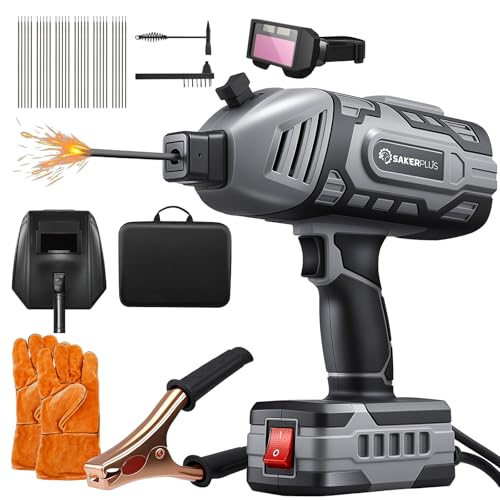
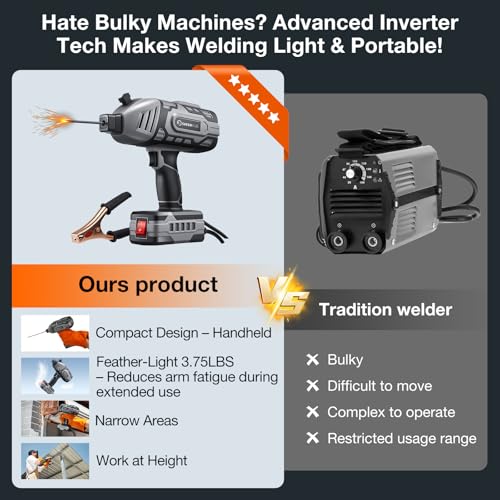
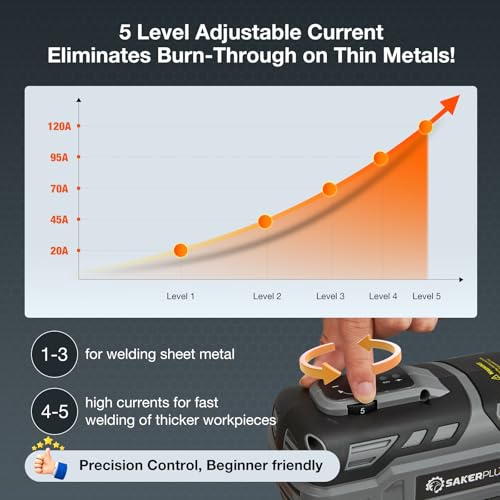
At just 3.75 lbs, the Sakerplus is one of the lightest arc welders on the market, and that’s its biggest selling point. It’s marketed as beginner-friendly, and on that front, it delivers, five preset current settings make it easy to avoid burn-through on thin metal, a common pain point for new welders. The included kit is impressive: helmet, gloves, rods, case, and tools, so you’re truly ready to weld out of the box.
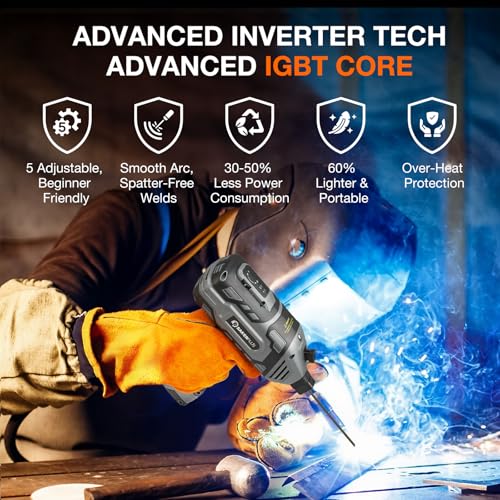
IGBT inverter tech helps stabilize the arc, and owners report solid performance on materials up to 1/8 inch. But it’s strictly a stick welder, which limits versatility compared to multi-process units. Still, for someone starting out with basic repairs, say, a broken gate or rusted bracket, it’s hard to beat the portability and completeness of the package. It’s not as powerful as 200A mini welders, but it’s gentler on thin steel.
Product photos
110V 2-in-1 Stick Welder
Strengths
- Ultra-compact and lightweight
- Excellent safety protections
- Lift TIG capability
Trade-offs
- Lower max amperage
- No digital display
- TIG torch not included
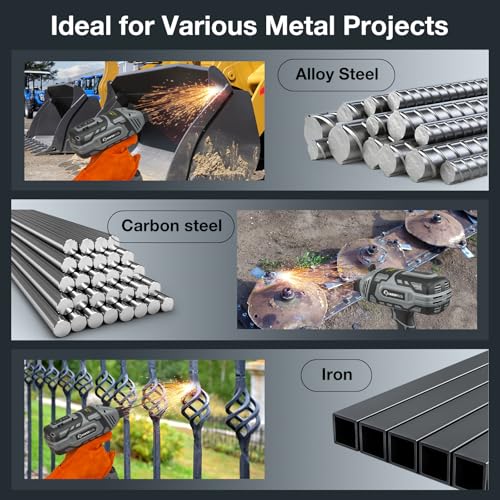
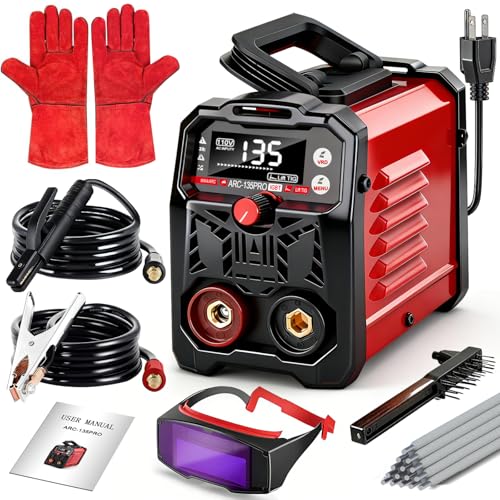
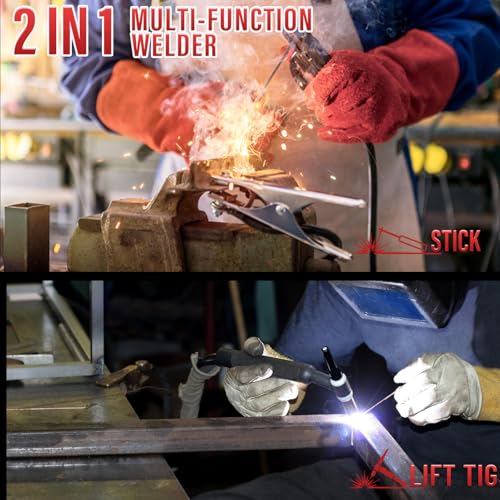
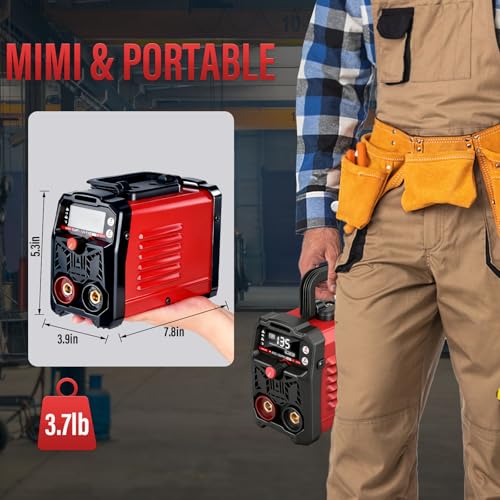
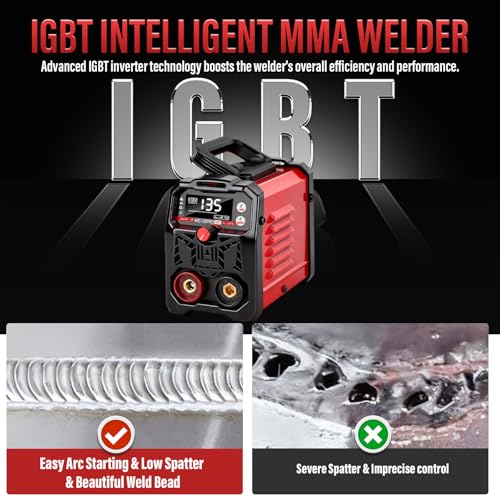
This red mini welder is all about compact design and smart engineering. At 3.7 lbs, it’s one of the smallest 2-in-1 units available, and the aluminum alloy body feels more durable than plastic-housed rivals. It runs stick and lift TIG, and the 135A output is modest but sufficient for thin to medium materials. The IGBT tech delivers a stable arc, and the hot start/anti-stick features make it forgiving for beginners.
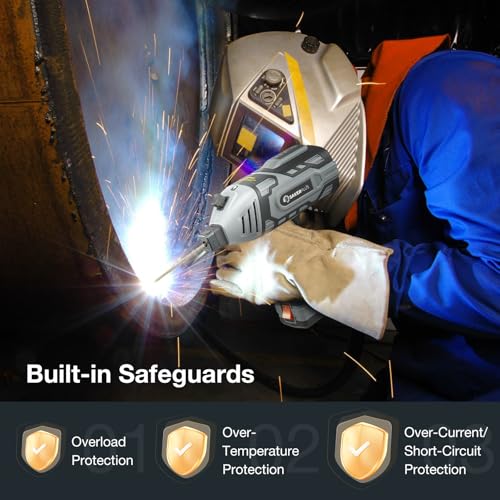
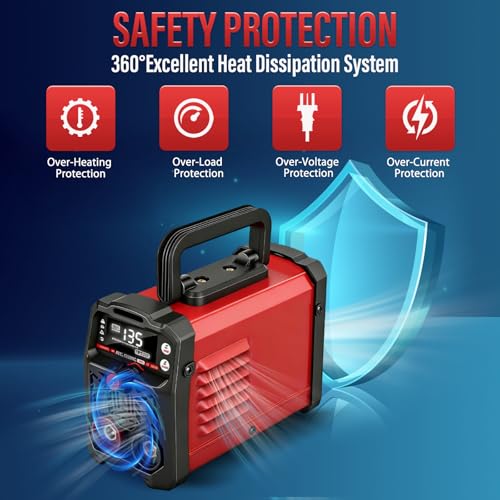
What stands out is the 360° protection system, overheat, overload, overcurrent, and overvoltage shutdowns add peace of mind. The included accessories are basic but functional. Compared to the HONE model, it has lower amperage but a sleeker design and better heat management. It’s not for heavy work, but as a precision tool for small jobs, it’s impressive.
Product photos

How We Chose These welding machines for beginners
We approached this guide by first compiling a list of popular and highly-rated welding machines marketed to beginners. Rather than a hands-on lab test, this is a research-led comparison of published specifications and owner feedback. I then compared those models across key features, considering both expert reviews from reputable sources and a deep explore what current owners are saying about real-world performance. Finally, we ranked the machines based on how well they met our criteria for usability, versatility, and value.
For beginner-focused welding machines, portability and ease of use were heavily weighted. A lighter machine is easier to maneuver, especially for those new to welding and learning different techniques. Equally important was the inclusion of features that simplify the process – things like synergic control, which automatically adjusts settings, and thorough accessory kits. We also prioritized machines with robust safety features, understanding that beginners are more likely to make mistakes. Finding a good best MIG welder for beginners is about minimizing the learning curve.
Specifications reliably tell you about maximum amperage, duty cycle, and input voltage requirements. However, judging the quality of the arc, the ease of setup, and the long-term durability requires looking at owner feedback. I paid close attention to recurring themes in reviews – complaints about flimsy build quality, confusing controls, or frequent failures. Reputation, specifically how long a brand has been in the welding space and its customer service record, also factored heavily into our assessments. It’s helpful to explore different entry-level MIG welders to see what other users are saying.
How To Pick The Right welding machines for beginners
Choosing your first welding machine can feel overwhelming, but focusing on your needs and understanding key features makes the process much easier.
A good welding machine for beginners balances ease of use with the capability to handle common projects. Look for models with synergic control, adjustable amperage, and built-in safety features. Consider the type of metal you’ll be welding most often, and prioritize portability if you plan to move the machine around a workshop or jobsite. A well-rounded machine will offer multiple processes (MIG, Stick, TIG) for versatility.
Understanding Welding Processes
The first major decision is the type of welding process. While many entry-level machines offer multiple options, understanding the differences is crucial. Stick welding (SMAW) is the most forgiving and cheapest to get started with, requiring only the machine and rods. MIG welding (GMAW) is faster and cleaner, but needs shielding gas (or flux-core wire) and is generally more complex. TIG welding (GTAW) offers the highest quality welds but has a steep learning curve. If you’re unsure, a multi-process machine gives you the flexibility to experiment and learn different techniques. Don’t assume you need TIG capabilities right away; starting with stick or flux-core MIG is often more practical.
Amperage and Material Thickness
Amperage dictates the machine’s ability to weld thicker materials. A 120V machine typically offers around 90-140 amps, sufficient for 1/8″ steel. If you anticipate working with thicker metal (3/8″ or more), you’ll need a 240V machine with higher amperage output. However, more amperage isn’t always better. Too much power on thin material will burn through it. That’s where synergic control comes in. Machines with synergic control automatically adjust voltage based on the wire speed or material thickness, simplifying the process and minimizing mistakes – which is why checking out welding machine reviews can be so useful.
Portability and Features
Consider where you’ll be welding and how often you’ll move the machine. Smaller, lighter welders (under 20 lbs) are much easier to transport and maneuver. Look for a machine with a sturdy handle or shoulder strap. Beyond portability, features like digital displays, hot start, arc force, and anti-stick can significantly improve your welding experience.
Here’s a breakdown of what to prioritize:
- Weight: Under 15 lbs is ideal for frequent transport.
- Input Voltage: 120V is convenient for home workshops, but limits material thickness.
- Included Accessories: A kit with a helmet, gloves, and rods saves money and gets you welding faster. While you’ll likely upgrade your helmet eventually, getting a basic one included is a good start – and remember to research best helmets for beginner welders to find one that offers the right level of protection.
A good rule of thumb is to start with a simpler machine and learn the fundamentals before investing in advanced features. Mastering the basics will make you a better welder regardless of the equipment you use.
Ultimately, choosing the right welding machine depends on your specific needs and budget. Don’t be afraid to start small, and remember that there’s a wealth of information available to help you make an informed decision. If you’re still unsure, seeking buying advice for welders from experienced sources can provide valuable insights.
Welding Machines for Beginners Compared
This table provides a side-by-side comparison of key specifications for various welding machines geared towards beginners.
| Product Title | Amperage (A) | Welding Processes | Voltage (V) | Weight (lbs) | Synergic Control | Included Accessories |
|---|---|---|---|---|---|---|
| ANDELI 135A MIG Welder | 135 | MIG, TIG, Stick, Flux Core | 110/220 | 9.04 | Yes | Helmet, Gloves, Wire |
| YESWELDER 160A MIG Welder | 160 | MIG, TIG, Stick, Flux Core | 110/220 | 19.4 | Yes | N/A |
| Hpoouo 200Amp Stick Welder | 200 | Stick | 110 | 3.7 | No | 20 Rods, Chip Hammer, Gloves |
| HONE 205A Stick Welder | 205 | Stick, TIG | 110 | 4.4 | No | 25 Rods, Brush, Gloves, Shield |
| YESWELDER 135A MIG Machine | 135 | MIG, TIG, Stick | 110 | 11.4 | Yes | .030″ Wire |
| FEMEROL 140A MIG Welder | 140 | MIG, TIG, Stick | 110 | 8.9 | Yes | Helmet, Wire, Nozzles, Tips |
| Lincoln Electric 90i FC | 90 | MIG | 120 | 15 | No | Welding Gun, Cables |
| Sakerplus Handheld Welder | 120 | Stick | 110 | 3.75 | No | Rods, Helmet, Gloves, Case |
| 110V 2-in-1 Stick Welder | 135 | Stick, TIG | 110 | N/A | No | Goggles, Rods, Gloves |
Frequently Asked Questions
What voltage outlet do I really need for a beginner welding machine?
Most entry-level welding machines run on standard 120V household outlets, which is convenient. However, a 240V outlet provides more power and allows you to weld thicker materials more effectively, though it requires a dedicated circuit.
Are multi-process welders a good choice for someone just starting out?
Yes, multi-process welders offer excellent versatility, letting you experiment with MIG, Stick, and TIG welding. While TIG has a steeper learning curve, starting with MIG or Stick and then expanding your skills is a practical approach, especially if you’re unsure what types of projects you’ll tackle.
How much shielding gas will I use with a MIG welder?
The amount of shielding gas you’ll use varies greatly, depending on welding frequency and thickness. A small cylinder (around 40-80 cubic feet) can last for several projects, but frequent welders will go through it quickly. You can find refills at most welding supply stores.
What’s the difference between flux-core and standard MIG welding?
Flux-core welding uses a special wire containing a flux that provides its own shielding, eliminating the need for external gas. Standard MIG welding requires a separate shielding gas (like argon or CO2). Flux-core is often preferred for outdoor projects or when portability is crucial, and is one of the beginner-friendly welding types.
What safety gear is absolutely essential when I start welding?
Beyond the machine itself, a welding helmet with an auto-darkening lens, welding gloves, a fire-resistant jacket or apron, and closed-toe shoes are critical. Proper eye and skin protection are paramount to prevent burns and arc flash, and it’s best to work in a well-ventilated area.
The Bottom Line
Welding, at its core, is a trade between control and convenience. You can spend more to get a machine with every bell and whistle, or you can focus on a simpler setup that teaches you the fundamentals. For most beginners, I believe the ANDELI 135A MIG Welder strikes the best balance. It offers multi-process capability, synergic control to take the guesswork out of settings, and a surprisingly complete accessory package to get you started right away.
If you’re on a tighter budget, or primarily interested in stick welding, the Hpoouo 200Amp Stick Welder is a fantastic entry point. For those who want maximum versatility and don’t mind a slightly heavier machine, the YESWELDER 160A MIG Welder provides a lot of capability for the price. And if you’re looking for a convenient, all-in-one solution, exploring complete welding starter kits is a smart move.
Ultimately, remember that the most expensive machine won’t make you a better welder. Focus on understanding the process, practicing proper technique, and prioritizing safety. A solid foundation in these areas will serve you far better than any single feature or specification.
