
7 Best Welding Kits for Beginners 2026
This post contains affiliate links. As an Amazon Associate, we earn from qualifying purchases.
The Ehomful 145A 4-in-1 MIG Welder is the best overall choice for beginners, offering strong performance, multiple welding processes, and a full set of included gear. If you’re on a tight budget, the Sakerplus Handheld Welder 110V delivers solid value with everything you need to start small projects right out of the box.
Most new welders don’t realize how confusing the jump from browsing to buying can be. Between misleading claims, incomplete kits, and technical jargon, it’s easy to end up with a machine that’s too limited or too complicated.
I researched the top welding kits for beginners by comparing specs, analyzing owner feedback, and evaluating what’s actually included. These picks balance ease of use, essential features, and real-world value, so you can start welding confidently without wasting money on gear you don’t need.
Top 7 Welding Kit For Beginners in the Market
The Best Welding Kit For Beginners, Reviewed
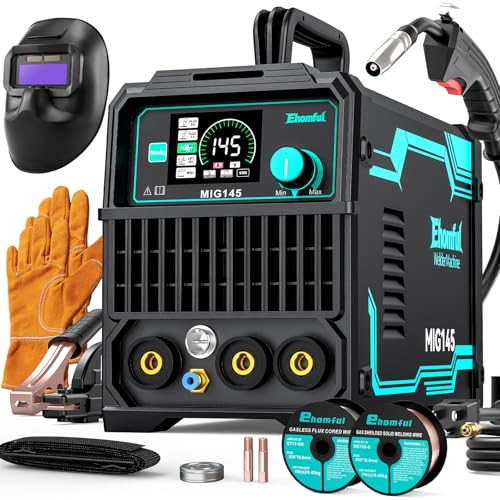
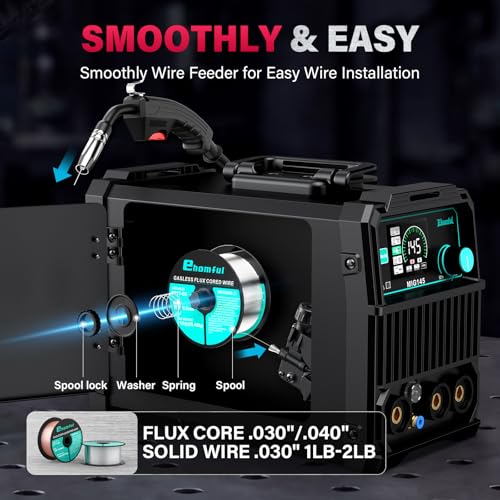
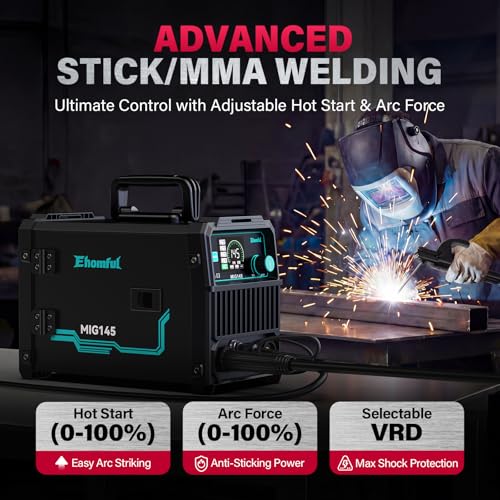
Ehomful 145A 4-in-1 MIG Welder
Strengths
- Dual voltage
- True 4-in-1 function
- Thorough kit
Trade-offs
- TIG torch not included
- Slightly bulkier
- Steeper learning curve
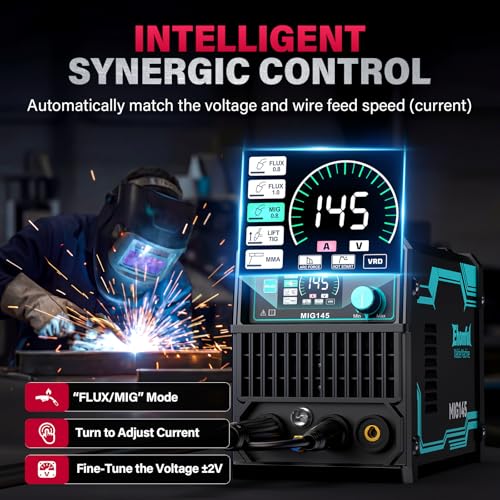
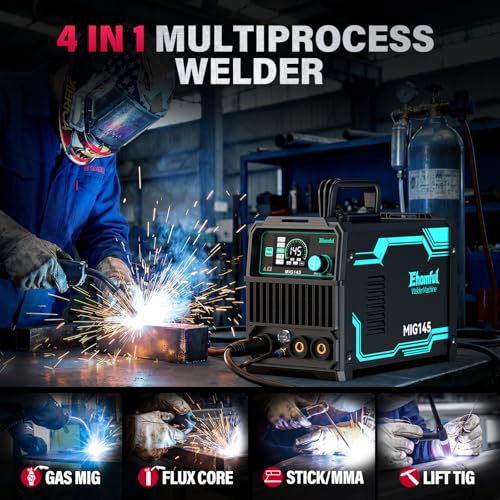
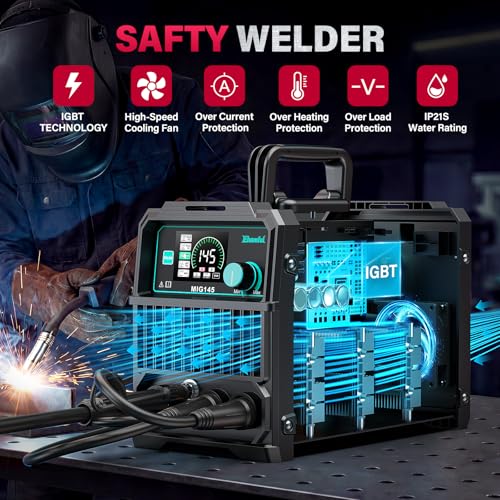
This is the most complete package on the list, and it earns the ‘Best Overall’ title for good reason. With 110V/220V dual voltage, 4-in-1 functionality (Gas MIG, Flux Core, Stick, Lift TIG), and a smart synergic control system, it’s built to grow with you. The inclusion of both flux-core and solid wire, plus a gas hose and connectors, means you can run gas-shielded MIG when you’re ready, a feature most budget units skip. Owners consistently report clean, spatter-free welds across materials.
It’s not the cheapest, but the included auto-darkening helmet, gloves, and full accessory set eliminate hidden costs. Compared to the ANDELI, it offers better versatility and a more polished interface. If you’re serious about learning to weld and want one machine that does it all, this is the pick.
Product photos
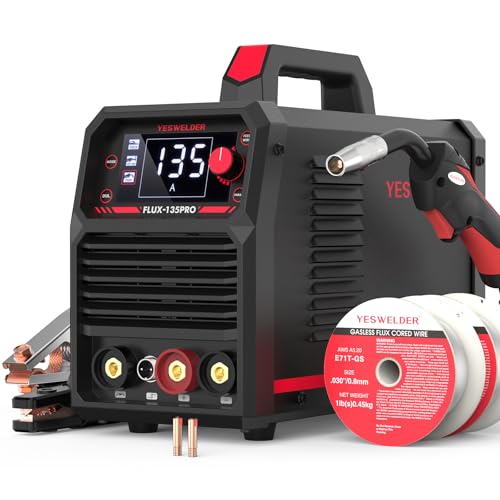
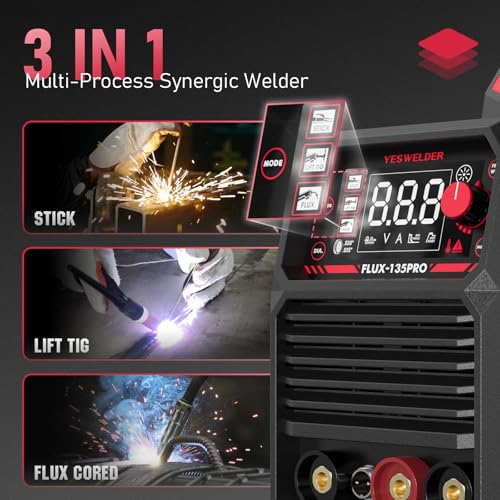
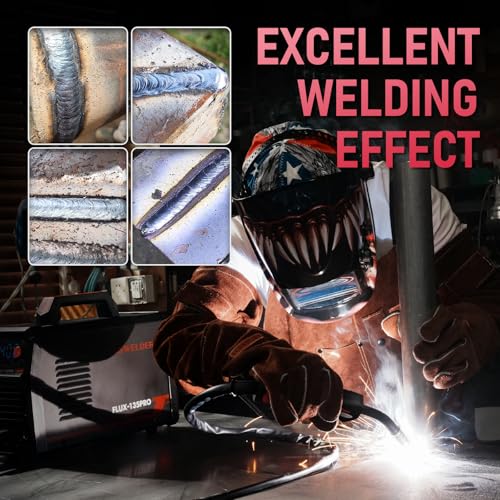
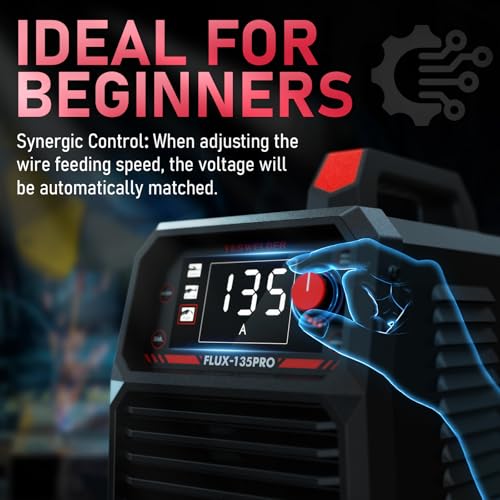
YESWELDER 135A MIG Welder
Strengths
- Lightweight
- Gasless MIG
- Synergic control
Trade-offs
- 110V only
- No TIG torch included
- Limited thickness capacity
This 3-in-1 MIG welder stands out for beginners who want flexibility without breaking the bank. The flux-core gasless capability means you can start welding right away without needing a gas tank, which is a big plus for casual DIYers. Owners consistently report smooth arc starts and minimal spatter, especially when using the included E71T-GS wire. The synergic control system does a solid job matching voltage to wire speed, simplifying setup, a real win for newcomers who don’t want to tweak multiple settings.
Still, it’s limited to 135 amps and mild steel up to 3/32 inch, so don’t expect it to power through heavy fabrication. Compared to dual-voltage models like the ANDELI or Ehomful, this one is 110V only, which may limit future scalability. But for the price, it’s a capable starter unit with a clean digital display and solid safety protections.
Product photos


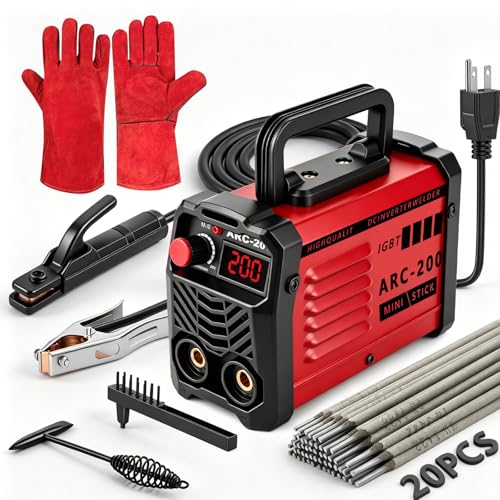
Hpoouo 200Amp Mini Stick Welder
Strengths
- Ultra lightweight
- High amp output
- Compact design
Trade-offs
- Stick-only
- No helmet included
- Basic display
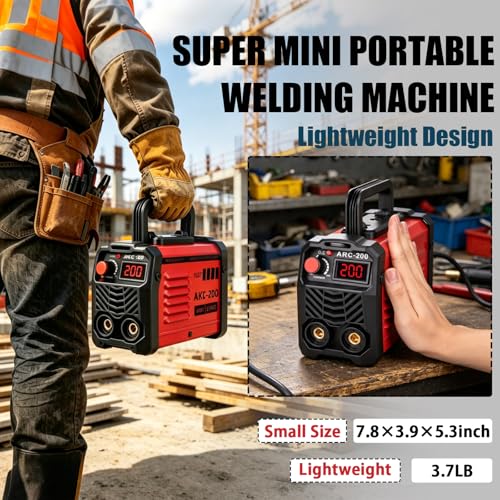
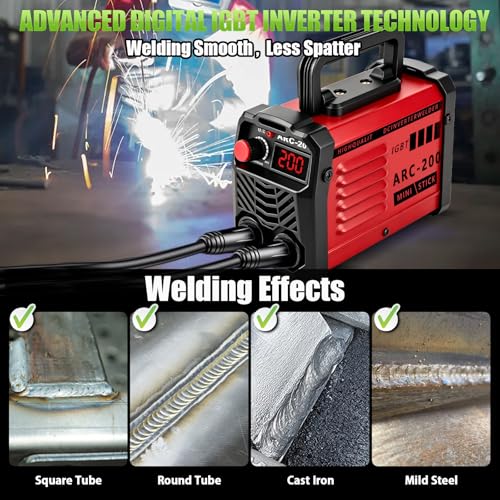
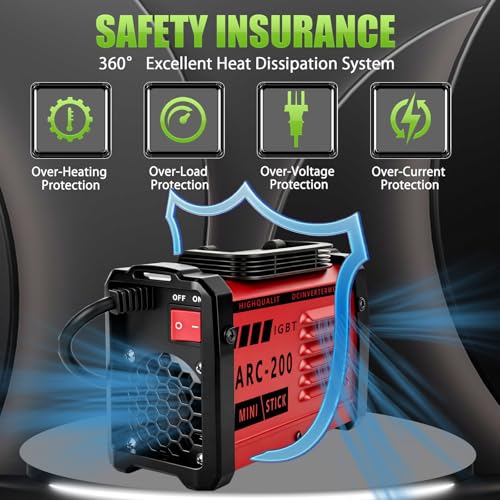
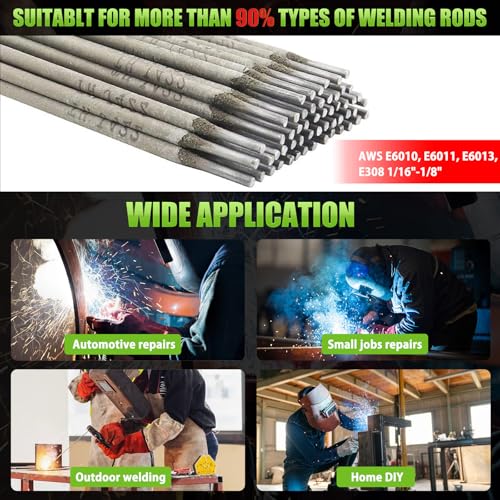
This welder is a portability champion, at just 3.7 lbs and small enough to fit in a backpack, it’s perfect for overhead work, tight spaces, or remote jobs. The 200-amp output handles most common rods, and the IGBT inverter tech delivers a stable arc even on thin metal. Owners like the Hot Start and Anti-Stick functions, which help prevent frustrating rod jams, a common issue for new users.
But it’s strictly a stick machine, so you’re limited to rod-based welding. Compared to the Sakerplus, it offers higher max amperage but fewer beginner aids like preset dials. Still, for its size and power, it’s impressively capable.
Product photos
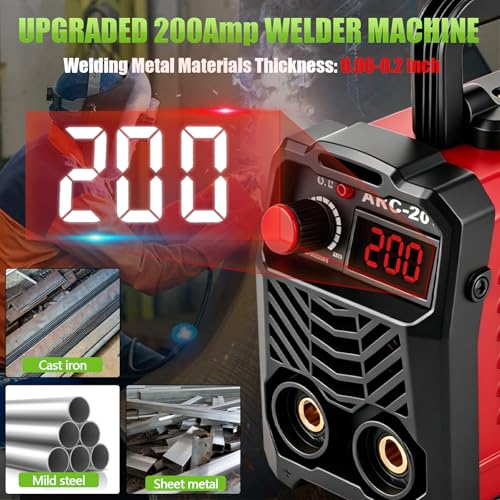
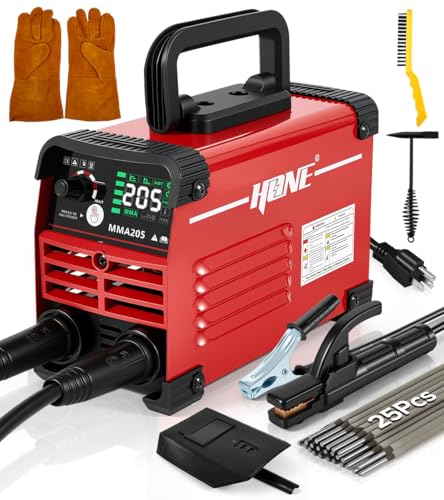
HONE 205A Stick Welder with Lift TIG
Strengths
- High 205A output
- Lift-TIG capable
- Excellent safety features
Trade-offs
- TIG torch not included
- No carry case
- Stick-only without add-ons
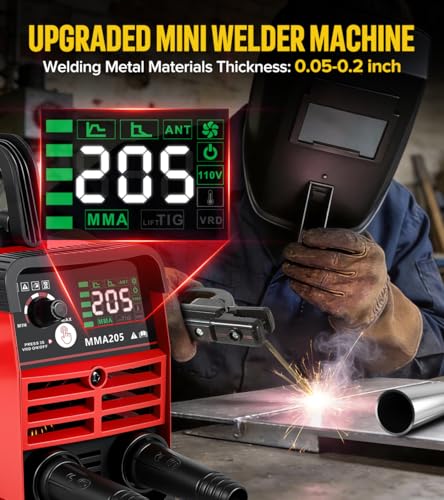
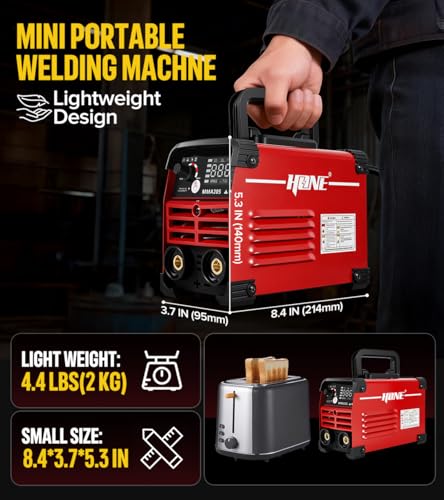
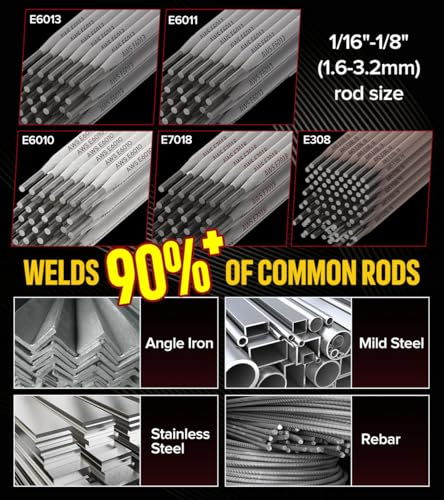
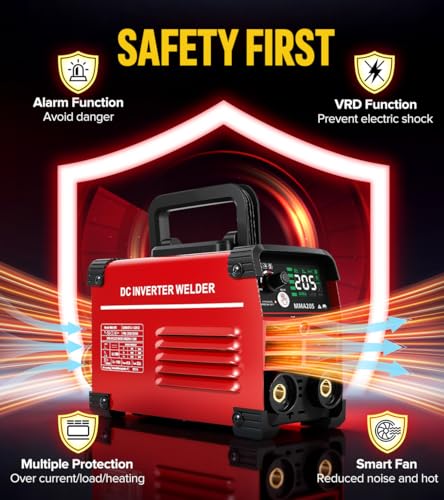
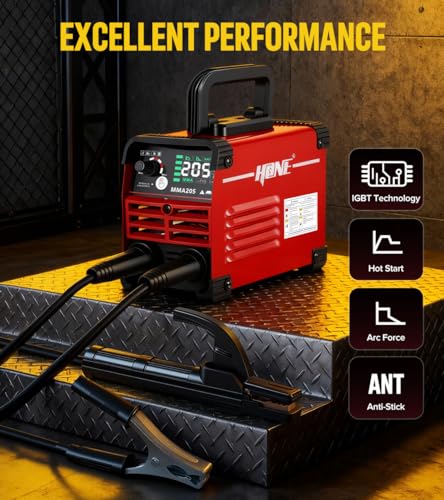
The HONE welder is a compact powerhouse that packs 205 amps into a 4.4 lb chassis, making it one of the most capable mini stick welders in this lineup. Its 2-in-1 Stick and Lift-TIG functionality is rare at this size, and owners appreciate being able to dabble in TIG-like welding without buying a second machine. The Hot Start, Arc Force, and Anti-Stick features work as advertised, reducing frustration during learning curves.
It doesn’t include a TIG torch, so you’ll need to buy one separately, a notable gap. But for farm repairs, trailer fixes, or field work where portability matters, this unit shines. Compared to the Hpoouo, it offers better current control and VRD safety, giving it an edge in reliability.
Product photos
Sakerplus Handheld Welder 110V
Strengths
- Extremely lightweight
- Beginner presets
- Full starter kit
Trade-offs
- Stick-only process
- No voltage adjustment
- No carrying case in some batches
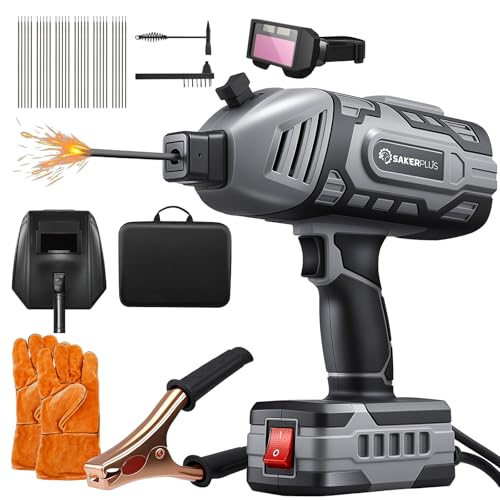
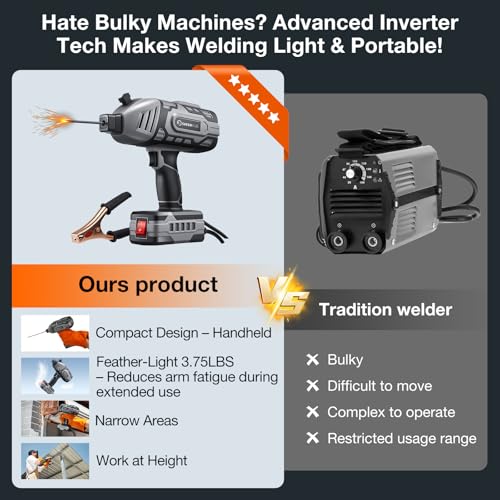
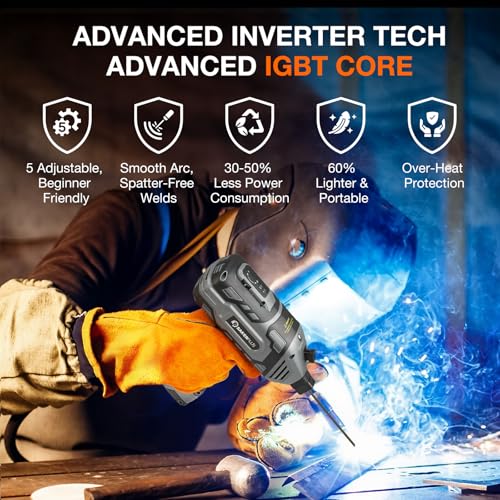
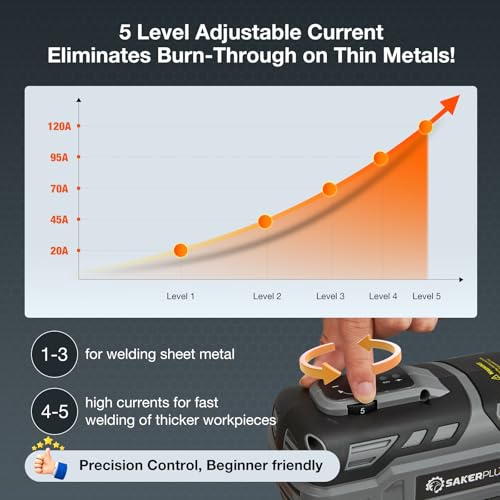
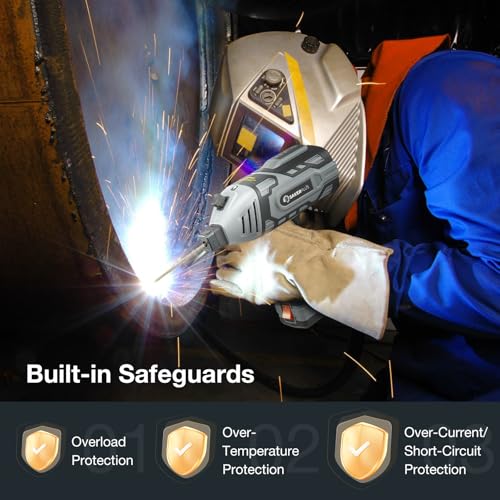
If you’re just starting out and want something truly plug-and-play, this handheld stick welder makes a strong first impression. At only 3.75 lbs, it’s among the lightest on the market, and the 5 preset current settings take the guesswork out of matching power to material thickness. Reviewers note it handles thin sheet metal well without burning through, a common pain point for new welders. The IGBT inverter tech helps maintain a stable arc, and the included accessories like gloves, helmet, and rods mean you can begin welding the same day.
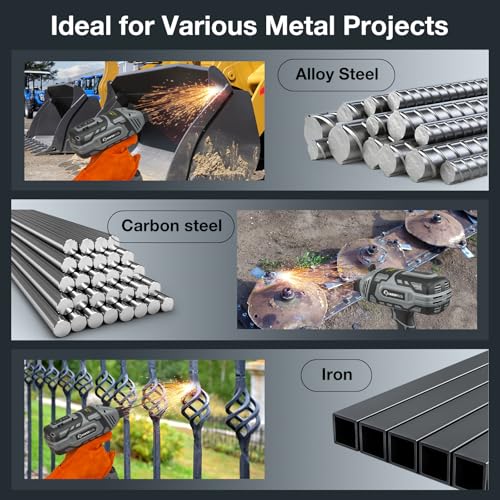
It’s not a MIG, so you won’t get the continuous wire feed that many beginners find easier. But for basic repairs, farm fixes, or automotive work, this kit delivers solid value. I’d recommend it over bulkier models if portability and simplicity are your top priorities.
Product photos
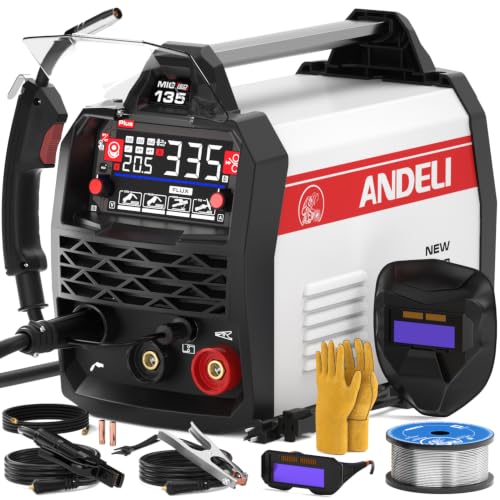
ANDELI 135A Pulse MIG Welder
Strengths
- Dual voltage
- PULSE MIG mode
- Large LED display
Trade-offs
- TIG torch sold separately
- Slightly heavier than competitors
- No gas solenoid for gas MIG
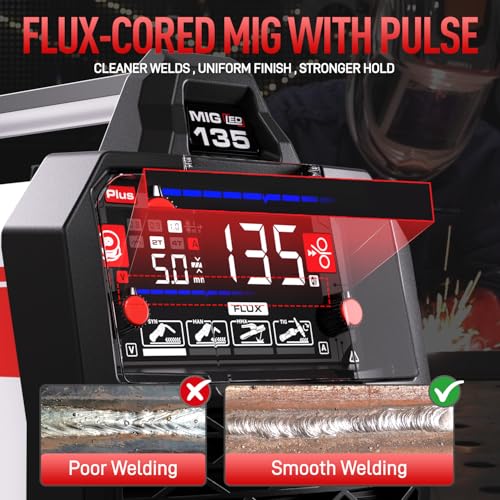
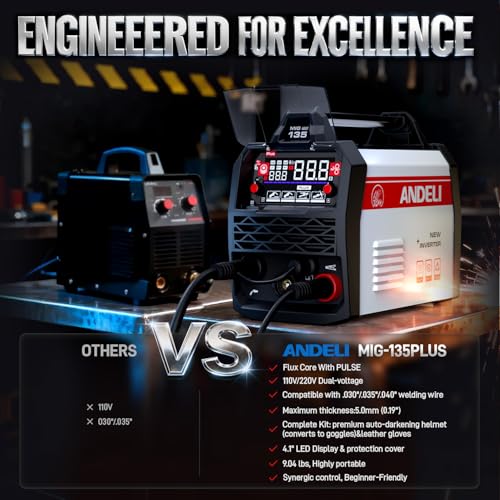
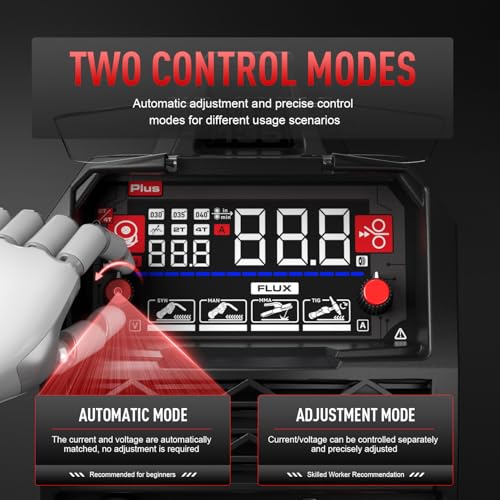
What sets the ANDELI apart is its dual-voltage support, a rare find in this class. Being able to switch between 110V and 220V gives it long-term flexibility, whether you’re in the garage or on a job site with industrial power. The PULSE MIG mode is another standout, delivering noticeably smoother beads and less spatter than standard flux-core units. Owners praise the large 4.1-inch LED display for visibility, especially when working with a helmet on.
It’s essentially a more refined version of the YESWELDER, with better build quality and smarter features. While it doesn’t include a TIG torch, the lift TIG function is compatible out of the box. For someone who plans to grow beyond beginner projects, this is the smarter buy over single-voltage models.
Product photos
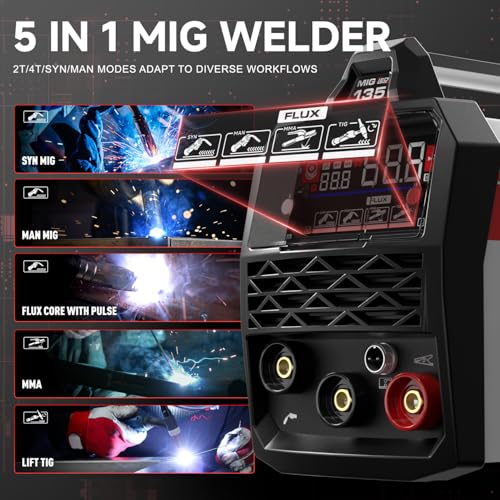

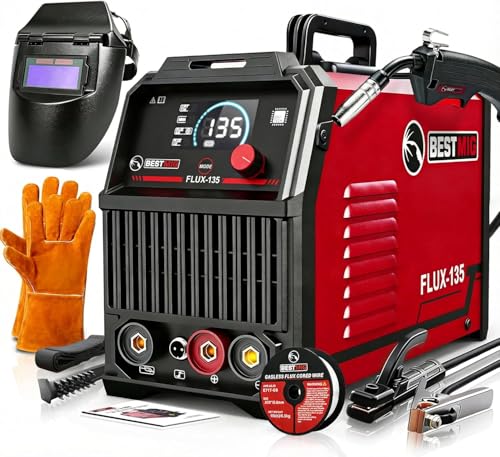
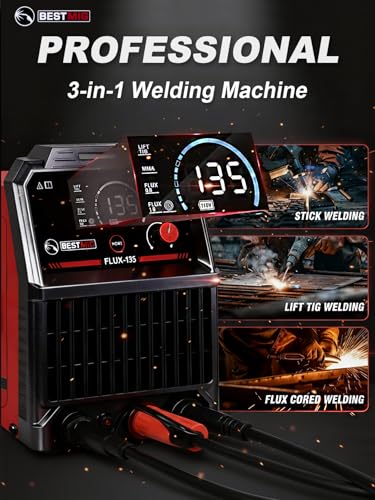
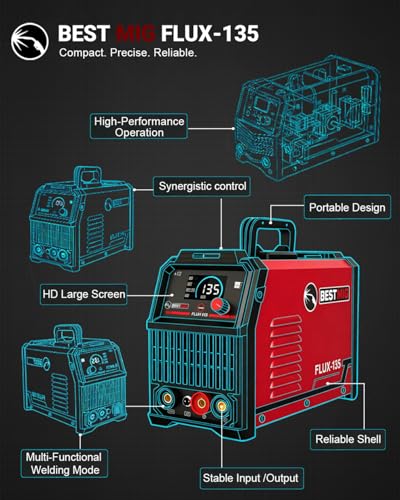
BESTMIG 135A 3-in-1 Welder
Strengths
- Includes helmet & gloves
- User-friendly interface
- Solid wire feed
Trade-offs
- 110V only
- No TIG torch
- Average thermal protection
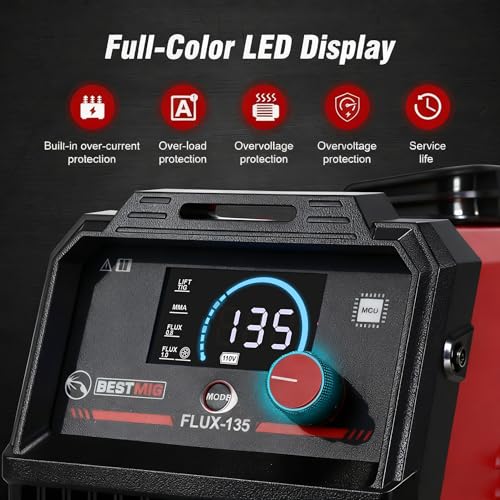
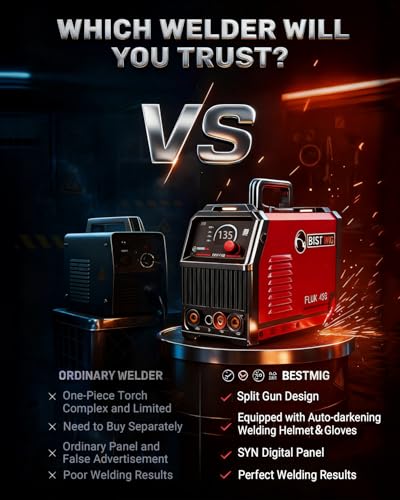
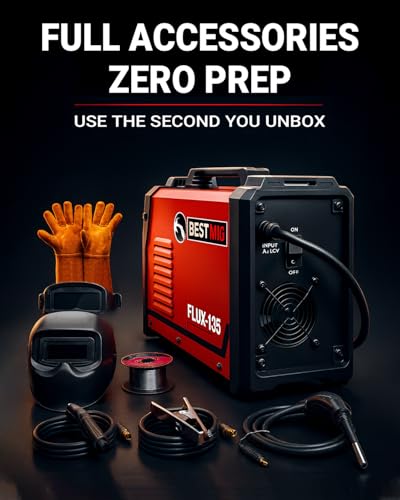
This kit hits an appealing balance between features and affordability, earning its ‘Best Value’ label. It includes a high-quality auto-darkening helmet and gloves, which many budget units skip, and the full-color LED display is easier to read than basic monochrome screens. The digital control system auto-adjusts voltage and wire speed, which owners find helpful when learning the basics. It handles 0.030” to 0.040” flux-core wire well and performs reliably on steel up to 1/8 inch.
It lacks dual voltage, so it won’t scale as well as the ANDELI or Ehomful. But for a beginner who wants a complete, no-fuss setup at a fair price, this is a compelling option. I’d pick it over the YESWELDER if the included safety gear tips your decision.
Product photos
How We Evaluated welding kit for beginners
I approached evaluating welding kits for beginners by focusing on a research-led comparison of published specifications, features, and – crucially – owner and expert feedback. Rather than a hands-on lab test, my team and I compiled data from manufacturer details, weighed user reviews across multiple platforms, and considered insights from reputable welding resources. We then ranked each kit based on a set of predetermined criteria, prioritizing those best suited to someone taking their first steps into welding.
For this category, the most important factors were ease of use, versatility, and included accessories. A beginner needs a machine that’s forgiving and doesn’t require extensive prior knowledge to produce decent results. Versatility, offering multiple welding processes in one unit, provides a wider learning experience and allows for tackling diverse projects. Finally, a complete kit minimizes the initial investment and gets someone welding quickly.
Specifications reliably indicate a welder’s maximum output and duty cycle, helping to gauge its capabilities. However, owner feedback proved essential for assessing real-world usability, arc stability, and the quality of included accessories. Reputation matters; kits from well-known brands with established customer support consistently ranked higher. For those looking to learn more about the wider category, our guide to the best MIG welder for beginners provides a broader overview.
How To Choose The welding kit for beginners
Choosing a welding kit can feel overwhelming, especially if you’re just starting out. There are a lot of options, and the features can quickly become confusing.
A good welding kit balances portability, ease of use, and the ability to handle the types of projects you envision. Prioritize models with built-in safety features, a clear interface, and included accessories to minimize initial setup costs and frustration. Consider the materials you’ll be welding, the thickness you’ll be working with, and whether you’ll need portability.
Understanding Welding Processes
The core of your decision revolves around the welding process. While many kits advertise multiple processes, focusing on what you actually need is key. Stick welding (SMAW) is the most forgiving and cheapest to get into, but produces more spatter and requires more cleanup. MIG welding (GMAW) is faster and cleaner, but generally requires shielding gas (though flux-cored options exist). TIG welding (GTAW) offers the most precision but has a steeper learning curve. Don’t fall for the trap of needing every process right away; start with one you’re comfortable learning.
Current and Duty Cycle Considerations
A welder’s amperage (current) dictates the thickness of metal it can handle. Don’t overbuy; a 135A welder is generally sufficient for home repairs and light fabrication up to about 1/4 inch steel. Equally important is the duty cycle – the percentage of time you can weld continuously at a given amperage before the machine overheats. A higher duty cycle means less downtime, but also usually a higher price. Look for a duty cycle of at least 60% at your anticipated amperage, and understand that manufacturer ratings are often optimistic.
- A low duty cycle (under 30%) is suitable only for very occasional, short welds.
- A moderate duty cycle (30-60%) is good for hobbyists and occasional DIY projects.
- A high duty cycle (60%+) is necessary for more demanding work, like automotive repair or fabrication.
A welder’s amperage rating isn’t the whole story. A 135A machine with a 60% duty cycle at 90A is often a better value than a 150A machine with a 35% duty cycle at the same amperage.
Essential Accessories and Value
Many “kits” are just a welder with a few basic consumables. The best value comes from kits that include everything you need to get started – a welding helmet (auto-darkening is a huge plus), gloves, a chipping hammer, a brush, and sample welding rods or wire. Don’t underestimate the cost of these extras; they can easily add $100-$200 to the overall price. If you’re a complete beginner, consider starting with one of the best beginner welding machines to avoid unnecessary complexity and expense. Finding a kit with a good warranty and readily available customer support is also crucial, especially when learning the ropes.
Welding Kit for Beginners Compared
Here’s a comparison of key specifications to help you choose the right kit.
| Product Name | Amperage (A) | Welding Processes | Voltage (V) | Portability | Included Helmet | Accessories |
|---|---|---|---|---|---|---|
| Ehomful 145A 4-in-1 MIG Welder | 145 | MIG, Stick, Lift TIG | 110/220 | Moderate | Yes | Gloves, Wire, Clamps, Torch, Adapter |
| YESWELDER 135A MIG Welder | 135 | MIG, Stick, Lift TIG | 120 | Lightweight | No | Wire, Clamps, Torch |
| Hpoouo 200Amp Mini Stick Welder | 200 | Stick | 110 | Very Light | No | Rods, Clamps, Brush, Gloves |
| HONE 205A Stick Welder with Lift TIG | 205 | Stick, Lift TIG | 110 | Lightweight | No | Rods, Clamps, Brush, Gloves |
| Sakerplus Handheld Welder 110V | 120 | Stick | 110 | Very Light | Yes | Rods, Clamps, Brush, Gloves, Case |
| ANDELI 135A Pulse MIG Welder | 135 | MIG, TIG, Stick | 110/220 | Moderate | Yes | Wire, Clamps, Torch, Helmet, Gloves |
| BESTMIG 135A 3-in-1 Welder | 135 | MIG, TIG, Stick | 120 | Moderate | Yes | Wire, Clamps, Torch, Helmet, Gloves |
Frequently Asked Questions
What’s the difference between flux-cored and MIG welding for a beginner?
Flux-cored welding doesn’t require external shielding gas, making it more portable and suitable for outdoor use. However, MIG welding generally produces cleaner welds with less spatter, though it needs a gas supply and regulator to operate effectively.
Are auto-darkening welding helmets really necessary for a first-time welder?
Yes, auto-darkening helmets are highly recommended. They protect your eyes from the intense arc flash without requiring you to manually flip down a shield, which is difficult to time correctly when you’re learning.
What metal thickness can most beginner welding kits handle?
Most kits marketed to beginners, with around 120-145 amps, can comfortably weld steel up to about 1/4 inch thick. Aluminum welding typically requires a dedicated machine or a kit specifically designed for multi-process welding and the proper settings.
What kind of electrical outlet do I need for a typical beginner welding kit?
Many beginner kits operate on standard 120V household outlets, but some higher-powered models require a 240V outlet. Always check the welder’s specifications and your outlet’s capacity before plugging in to avoid tripping a breaker or damaging the machine.
I’m interested in more precise welding. Should I start with a TIG welder?
While TIG welding offers the most control, it has a steeper learning curve than MIG or stick welding. If you’re interested in learning TIG, consider a multi-process machine that includes it as an option, but be prepared to invest extra time and practice – or explore the best TIG welder for beginners to ensure you’re set up for success.
The Bottom Line
Choosing a welding kit really comes down to balancing how much you want to spend with how much versatility you need right away. If you’re looking for the best overall starting point, I believe the Ehomful 145A 4-in-1 MIG Welder offers a strong combination of processes, included accessories, and a reasonable price point for those wanting to explore different welding techniques. It gives you room to grow without immediately overwhelming you with complexity.
For readers on a tighter budget, the Hpoouo 200Amp Mini Stick Welder is a solid choice, especially if you’re primarily interested in stick welding. If you anticipate a lot of portability or have limited space, the Sakerplus Handheld Welder 110V is worth considering – though you’ll need to factor in the cost of additional consumables. And for those wanting a more complete package with a strong emphasis on MIG welding, the BESTMIG 135A 3-in-1 Welder is a well-regarded option.
Ultimately, the specifications are less important than developing a solid understanding of the fundamentals. Focus on mastering proper technique, prioritizing safety, and practicing consistently. Don’t get caught up in chasing the highest amperage or the most features; a well-executed weld with a simpler machine will always be better than a poorly executed weld with a more complex one. For those specifically interested in stick welding, exploring the best stick welder for beginners can narrow your options considerably.
