
6 Best Welding Helmets for Beginners 2026
This post contains affiliate links. As an Amazon Associate, we earn from qualifying purchases.
The ARCCAPTAIN Intelligent Auto-Shade stands out as the best welding helmet for beginners, offering sharp clarity, fast response, and solid build quality. If you’re watching your budget, the YESWELDER Large View Auto Darkening delivers strong performance at a lower price, while the Miller Classic Series is a reliable choice for those who value brand reputation and optical precision.
Picking your first welding helmet can be overwhelming. You need something that protects your eyes without breaking the bank, but also makes learning easier with a clear, responsive view of your work. Too many beginners settle for cheap helmets with poor optics or sluggish darkening, which can lead to frustration and even injury.
This guide cuts through the noise. I compared specs, reviewed owner feedback, and evaluated real-world performance factors like lens clarity, switching speed, and comfort. These picks give you the best balance of safety, usability, and value to start welding confidently.
Top 6 Welding Helmet For Beginners in the Market
The Best Welding Helmet For Beginners, Reviewed
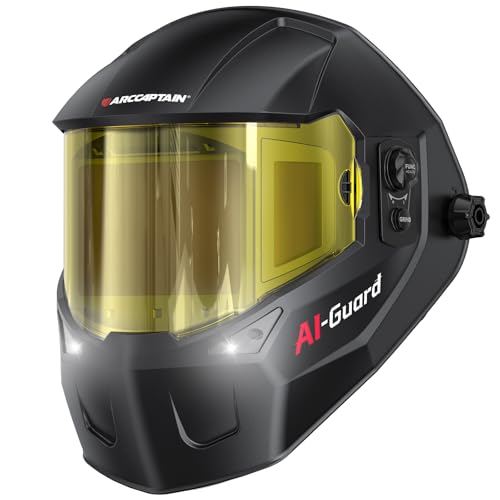
ARCCAPTAIN Intelligent Auto-Shade Welding Helmet
Strengths
- Panoramic 7.2″ view
- Internal screen controls
- Built-in LED work light
- 9 memory modes
- 7 arc sensors
Trade-offs
- Slightly bulkier design
- Higher price point
- Learning curve for settings
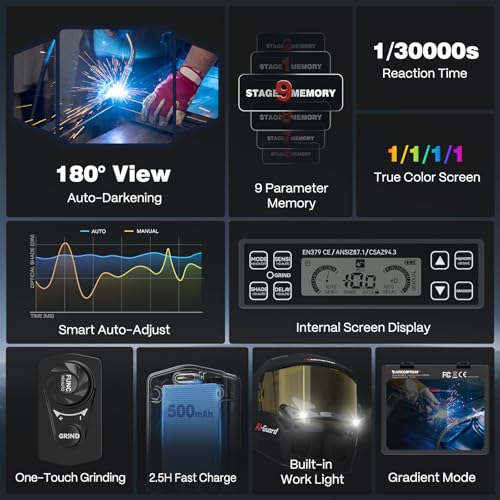
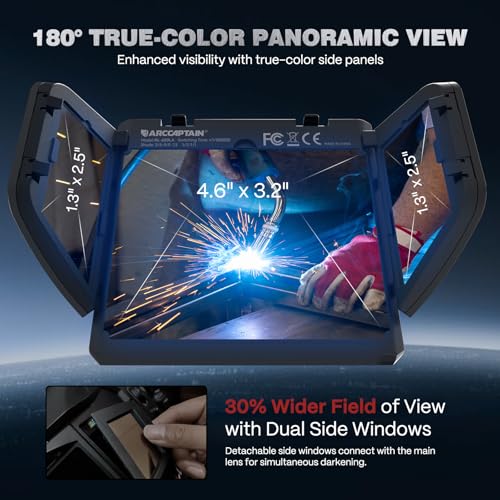
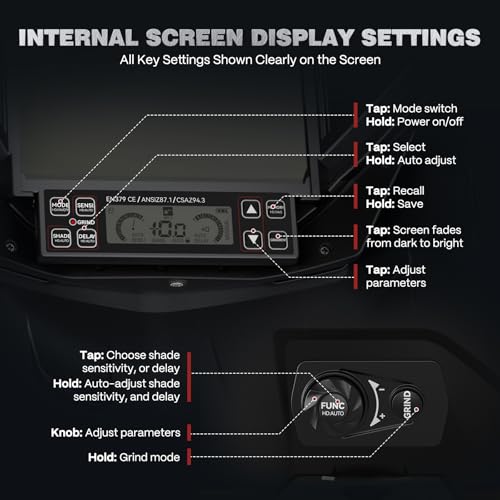
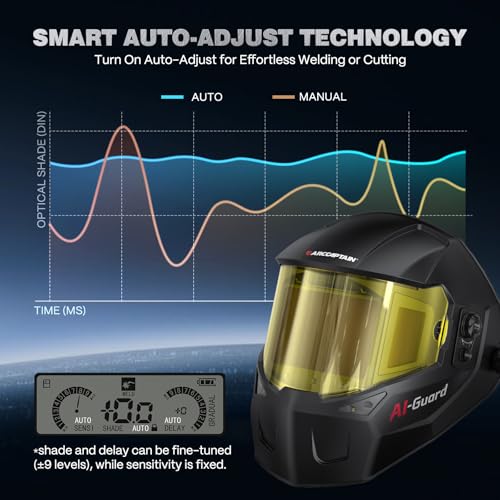
If you’re looking for the most well-rounded beginner helmet, this ARCCAPTAIN model is hard to beat. The panoramic 7.2-inch viewing area with true 1/1/1/1 clarity gives you an unusually wide field of vision, which is a big confidence boost when you’re still getting used to hand-eye coordination. Seven arc sensors mean it triggers fast and consistently, and the internal display lets you tweak settings without removing the helmet, a small but meaningful detail new welders will appreciate.
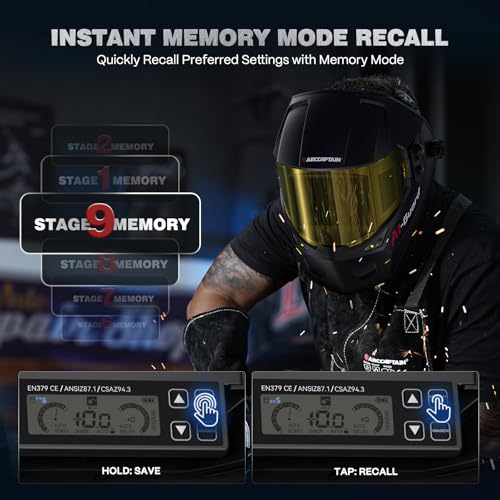
The built-in LED work light is a standout for poorly lit shops, and the 1,200-hour battery life on solar assist means you won’t be swapping batteries every other job. Owners praise the smooth gradient transitions and the ability to save up to 9 preset modes, which is overkill for a beginner but great if you plan to stick with welding long-term. For the balance of features, comfort, and real-world usability, this is the smarter buy over basic models.
Product photos
Miller Classic Series Welding Helmet

Strengths
- High-definition optics
- 6-inch viewing area
- Fast switching speed
- Ratchet headgear
- ANSI/CSA/CE certified
Trade-offs
- No memory mode
- No built-in work light
- Heavier than some modern designs
This helmet stands out for beginners who value optical clarity and reliability over flashy extras. The ClearLight technology delivers a crisp, high-definition view of the weld pool, which really helps when you’re still learning to control your arc. With a generous 6-square-inch viewing area and a fast 1/23,000-second switch speed, it performs well in low-amperage applications like TIG, where precision matters.
Owners consistently report it feels sturdier than budget models, and the ratchet headgear makes dialing in a secure fit straightforward. It doesn’t have memory modes or a built-in work light, but for someone starting out who wants a no-nonsense, professional-grade helmet, this one delivers solid performance right out of the box. I’d pick this over cheaper options if you’re serious about building good habits with clear visibility and consistent shading.
Product photos


YESWELDER Blue Light Blocking Helmet
Strengths
- Blue light blocking
- ANSI/CSA certified
- Adjustable controls
- Durable PP shell
- Solar + battery power
Trade-offs
- Small viewing area
- Only 2 arc sensors
- No memory or LED light
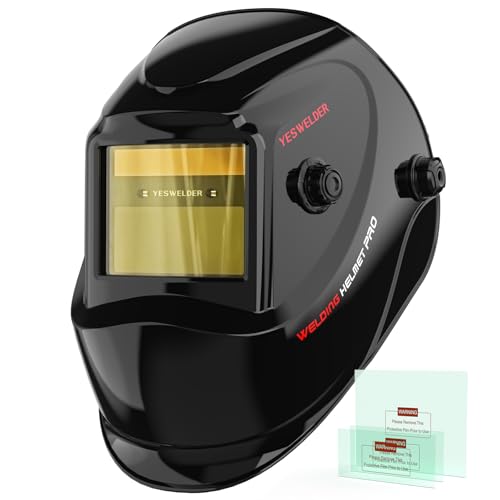
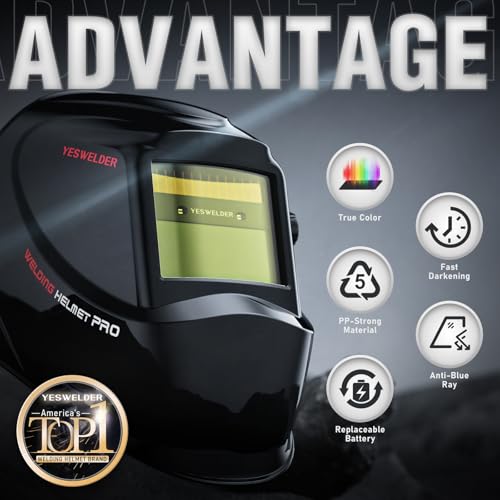
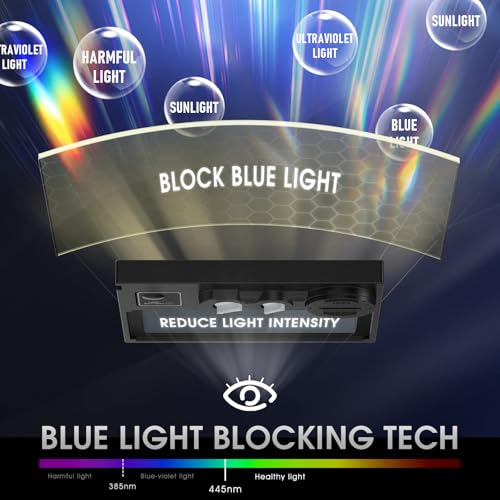
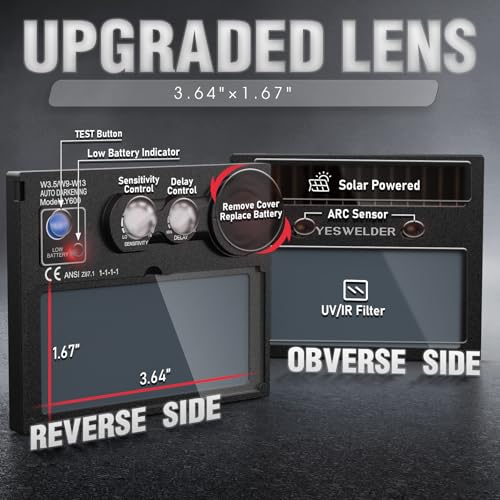
This YESWELDER model is built for beginners who want solid eye protection without extra bells and whistles. The blue light blocking outer lens is a standout, it noticeably reduces eye fatigue during long sessions, which matters when you’re still developing technique. The 1/30,000-second response time is fast, and the adjustable sensitivity helps fine-tune performance across different welding types.
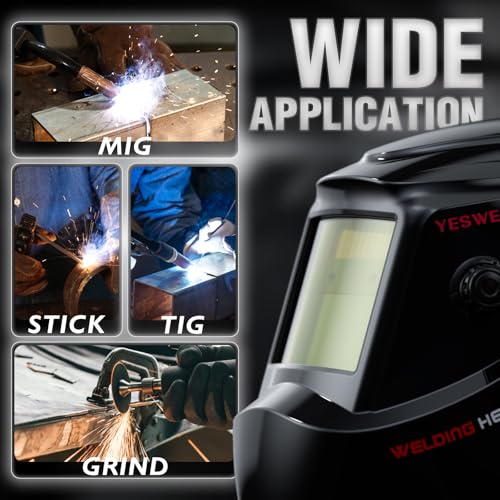
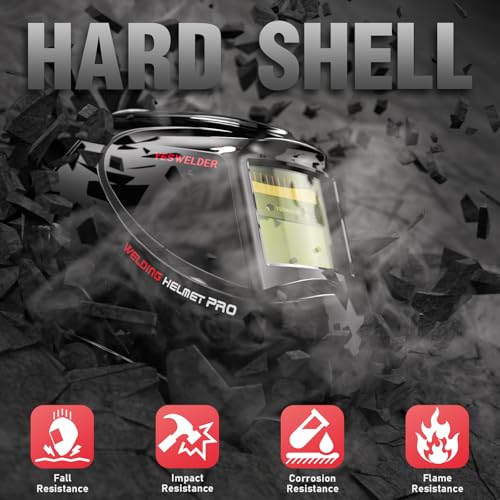
It’s not the largest view at 3.64″ x 1.67″, and with only two arc sensors, it’s less consistent in erratic arc conditions than four-sensor models. But the thickened PP shell feels rugged, and the pivot headgear provides a balanced fit. Owners say it’s reliable for basic MIG and stick work, though it’s not ideal for precision TIG. If eye safety and durability are your top concerns, this one delivers, just don’t expect wide visibility or advanced features.
Product photos
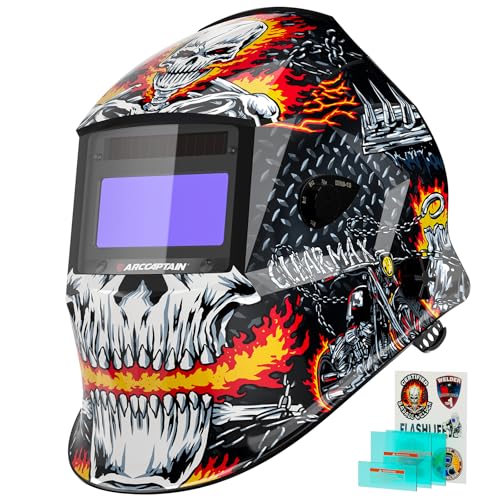
ARCCAPTAIN HSH-S800 Skeleton Knight Helmet
Strengths
- 1/1/1/1 optical clarity
- Lightweight at 1 lb
- Durable PA material
- Replaceable battery
- Excellent eye protection
Trade-offs
- Narrow viewing area
- No memory function
- No work light
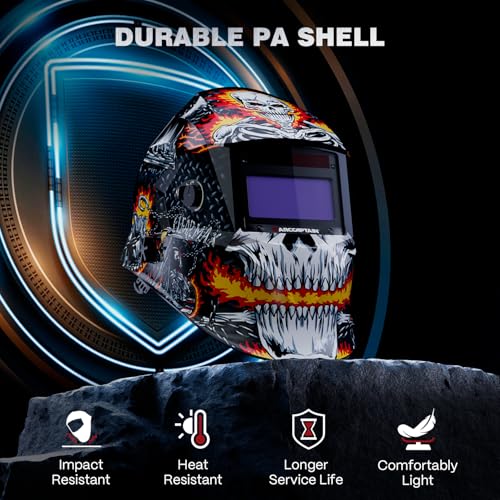
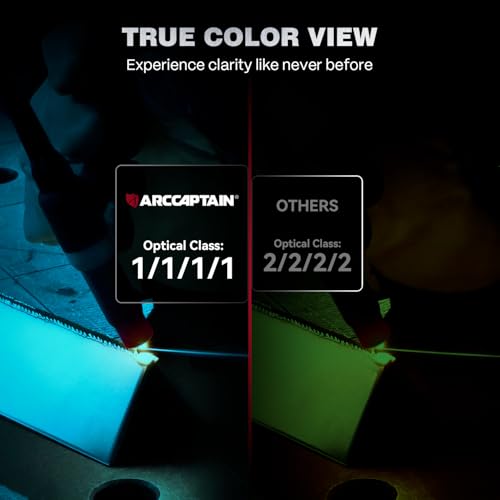
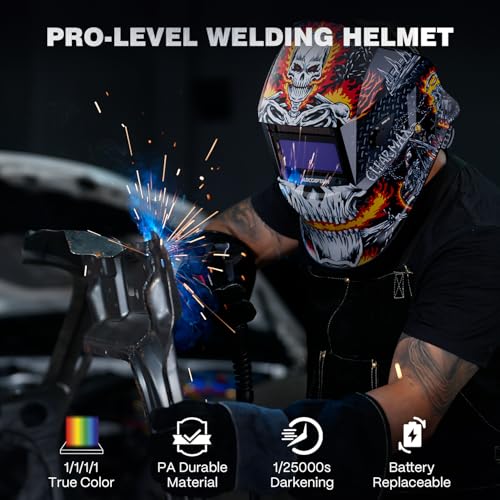
This helmet shines where it counts for beginners: optical clarity and comfort. The 1/1/1/1 true color lens provides a clean, accurate view of the weld pool, and the 3.86″ x 1.69″ screen, while narrower than panoramic models, still delivers sharp detail. The PA material shell is both lightweight and tough, and at just 1 lb, it reduces neck fatigue during long sessions, a real plus when you’re still building stamina.
It’s powered by solar cells and a replaceable battery, so you won’t get stranded mid-job. The 12-in-1 smart filter offers strong UV/IR protection, and owners report it holds up well in demanding environments. While it lacks memory modes and a wide field of view, its strength is delivering crisp, reliable optics in a durable, comfortable package. If clear vision is your priority, this one deserves serious consideration.
Product photos
YESWELDER Large View Auto Darkening Helmet
Strengths
- True color 1/1/1/1 lens
- Blue light blocking
- 4 arc sensors
- Wide shade range
- Comfortable headgear
Trade-offs
- Solar charging only
- No memory mode
- No built-in work light
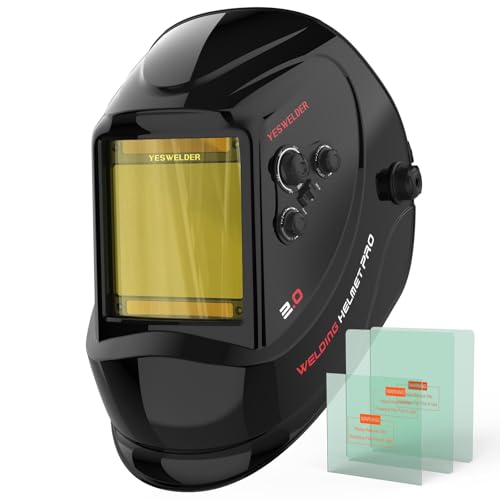
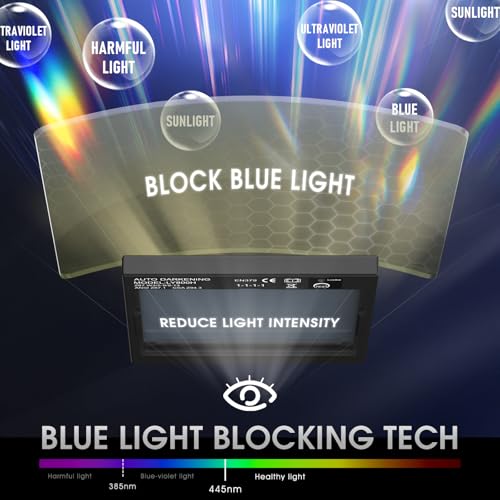
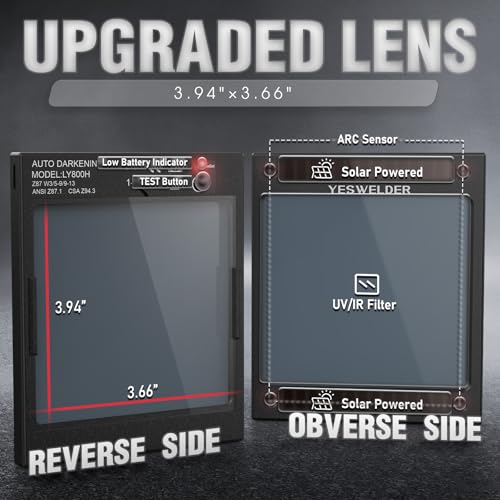
This YESWELDER model hits the sweet spot between price and performance, making it my top recommendation for most beginners. The 3.93″ x 3.66″ viewing area with 1/1/1/1 true color clarity gives a bright, natural view of the weld, and the blue light blocking adds a layer of comfort during extended use. With four arc sensors and a 1/30,000-second response time, it reacts quickly and consistently, critical when you’re still building muscle memory.
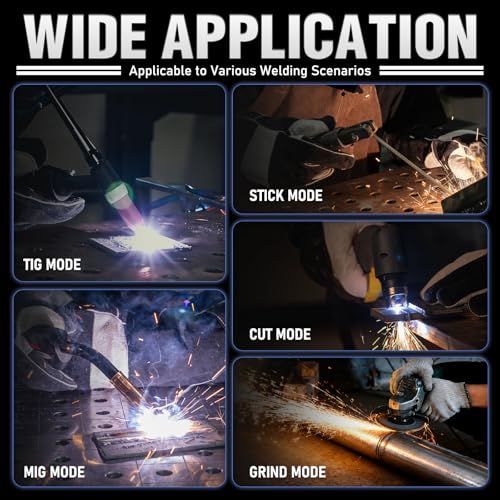
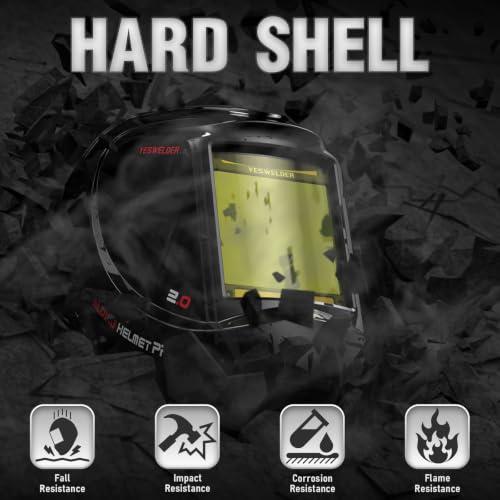
The pivoting headgear distributes weight well, and the breathable padding helps prevent overheating. It’s built with reinforced PP material, so it feels durable without being heavy. Owners consistently say it outperforms its price tag, and when you factor in the wide shade range (3/5-9 to 9-13), it handles everything from delicate TIG to heavy stick welding. For someone starting out who wants dependable performance without overspending, this is the smarter buy.
Product photos
ARCCAPTAIN Large View True Color Helmet

Strengths
- Large 1/1/1/1 lens
- USB-rechargeable LED light
- Lightweight at 1 lb
- Solar + battery power
- Affordable
Trade-offs
- Basic headgear adjustment
- LED light not pre-installed
- Fewer customization options
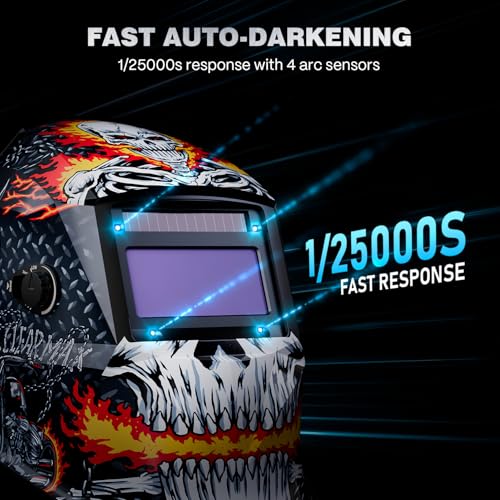
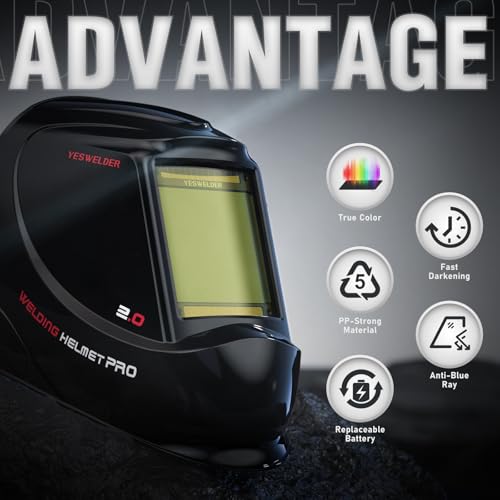
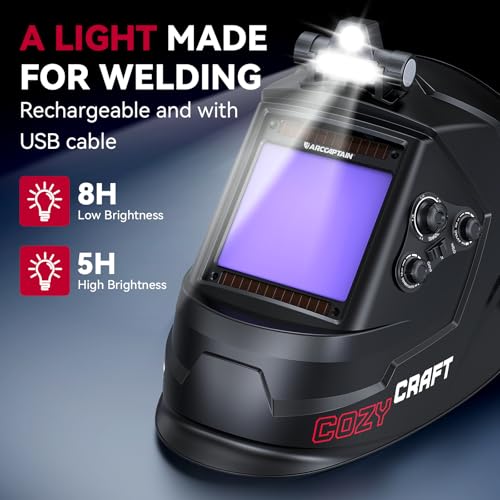
This is the go-to pick if you’re watching your budget but don’t want to sacrifice core performance. The 3.94″ x 3.66″ viewing area is larger than average, and the 1/1/1/1 optical clarity ensures colors look natural, which helps reduce eye strain during longer sessions. It switches fast at 1/25,000 second with four arc sensors, and the USB-rechargeable LED light is a rare inclusion at this price, handy for dim environments.
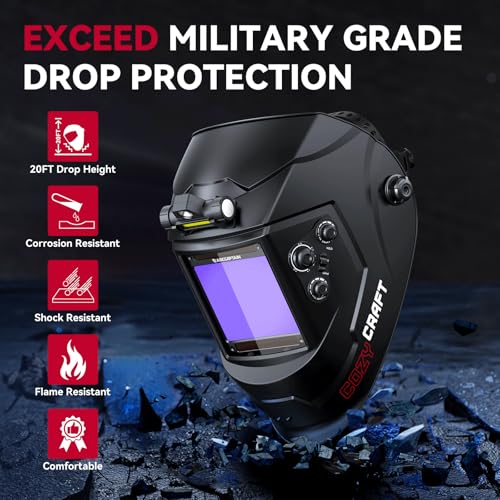
It’s lightweight at just 1 lb and uses flexible PP material, so it holds up well to drops and bumps. The solar panel plus lithium battery setup means you won’t constantly replace batteries. Some owners note the sensitivity controls can be finicky, and the fit isn’t as refined as pricier models, but for the cost, it’s a solid entry-level option. If you’re just starting and don’t want to over-invest, this one covers the basics well.
Product photos


How We Picked These welding helmet for beginners
Rather than a hands-on lab test, my research for these recommendations involved a detailed comparison of published specifications and features across numerous models. I weighed owner reviews from major retailers against assessments from reputable welding and tool review sites. As someone who’s spent years around workshops and seen firsthand what makes tools useful, I applied my category knowledge to rank these helmets against essential criteria for those starting out.
For beginner welding helmets, I prioritized optical clarity, ease of use, and overall protection. A clear view is crucial for learning proper technique, and auto-darkening features need to be reliable and adjustable. Equally important is the helmet’s ability to shield the eyes from harmful UV and IR radiation. Many beginners explore options within a tighter budget, so value for money also factored heavily into my rankings. You can find some excellent options among the budget welding helmets under 100.
Published specs reliably indicate lens clarity (optical ratings like 1/1/1/1) and switching speeds, giving a good baseline for performance. However, I placed more weight on owner feedback regarding long-term comfort, durability, and the accuracy of auto-darkening features. Reputable reviews helped me assess the consistency of build quality and the effectiveness of features like blue light filtering, things that aren’t always apparent from a datasheet.
Choosing The Right welding helmet for beginners
Choosing a welding helmet isn’t just about protection; it’s about comfort, visibility, and ultimately, the quality of your work.
A good welding helmet prioritizes optical clarity (rated 1/1/1/1 is ideal), fast switching speeds (under 1/25,000 sec is preferred), a comfortable and adjustable headgear, and reliable arc sensors. Beyond that, consider features like lens size, power source, and specialized options for TIG or precision work.
Viewing Area & Optical Clarity
Don’t underestimate the importance of a large viewing area. It sounds simple, but a wider field of vision dramatically reduces neck strain and allows for better situational awareness while welding. Many beginners make the mistake of prioritizing a low price over screen size, but a cramped view quickly becomes frustrating. Look for helmets with a viewing area of at least 3.5” x 1.6”, and ideally closer to 4” x 2”. More importantly, pay attention to the optical clarity rating. A 1/1/1/1 rating signifies the highest level of distortion-free vision, crucial for accurate placement and inspection of your welds.
Auto-Darkening Speed & Sensitivity
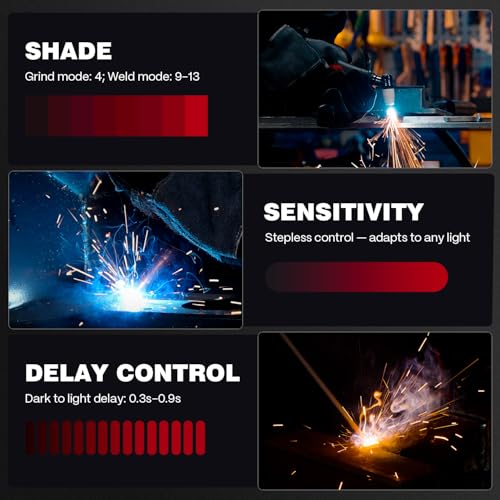
The auto-darkening filter (ADF) is the heart of a modern welding helmet. Speed matters. A slower switching time can cause flash blindness, even with the lens darkened. Anything slower than 1/25,000 of a second is generally not recommended, particularly for TIG welding where the arc is less intense and requires a faster response. Equally important is sensitivity control.
Here’s what to consider: * Adjustability is key. You’ll need to fine-tune the sensitivity based on the welding process (TIG, MIG, Stick) and the ambient light conditions. * Arc sensors. More sensors (four is common now) improve the reliability of arc detection, especially in low-light situations or when welding with erratic arcs. * Delay control. This setting dictates how long the lens stays dark after the arc stops. A longer delay is useful for preventing flash blindness when working in tight spaces or performing intermittent welds.
A quick rule of thumb: if you’re welding outdoors or in a brightly lit shop, you’ll likely need higher sensitivity settings; for indoor or dimly lit areas, lower settings are usually best.
Features & Value
Beyond the core functionality, consider what extra features align with your needs and budget. Some helmets offer memory settings to store preferred shade levels for different welding tasks, which is a real time-saver. Others include built-in work lights, which can be incredibly helpful when working in poorly lit areas. If you’re looking for a good starting point without breaking the bank, you might want to explore options within the range of affordable auto-darkening helmets. However, don’t compromise on safety features like ANSI Z87.1+ certification, which ensures the helmet meets minimum impact and optical requirements.
Welding Helmet for Beginners Compared
This table provides a side-by-side comparison of key specifications for various welding helmets designed for beginners.
| Product Title | Shade Range | Viewing Area (in²) | Auto-Darkening Speed (sec) | Arc Sensors | Power Source | Special Features |
|---|---|---|---|---|---|---|
| ARCCAPTAIN Intelligent Auto-Shade | 9-13 ±9 | 28.8 | 1/30000 | 7 | Solar/Rechargeable | Auto-Adjust, Work Light |
| Miller Classic Series | 8-13 | 36 | 1/23000 | 2 | Solar/Battery | ClearLight Lens Tech |
| YESWELDER Blue Light Blocking | 3.5/9-13 | 11.4 | 1/30000 | 2 | Solar/CR2450 | Blue Light Blocking |
| ARCCAPTAIN HSH-S800 Skeleton Knight | 4/9-13 | 13.2 | 1/25000 | 4 | Solar/CR2450 | Larger Screen |
| YESWELDER Large View Auto Darkening | 3/5-9/9-13 | 30.8 | 1/30000 | 4 | Solar/CR2450 | Large View, Blue Light |
| ARCCAPTAIN Large View True Color | 4/5-8/9-13 | 30.3 | 1/25000 | 4 | Solar/CR2450 | LED Light, Large View |
Frequently Asked Questions
What shade number should a beginner welder use?
Shade 8 to 11 is generally recommended for most beginner welding applications(MIG, Stick, and Flux-Core). The specific shade needed depends on the welding amperage; a chart is available from the American Welding Society to help determine the appropriate level for your setup.
Are solar-powered welding helmets reliable?
Yes, solar-powered helmets are quite reliable, but they often include a battery backup. The solar panel keeps the battery charged during use, and the battery ensures the helmet functions even in low-light conditions or when the solar panel isn’t receiving enough light.
How often do I need to replace the lens in an auto-darkening helmet?
The protective lens inside the helmet (under the ADF cartridge) needs replacing when it becomes scratched, pitted, or damaged, typically every 6-12 months with regular use. The ADF cartridge itself should last much longer if properly cared for, though damage there requires replacement.
Can I use a welding helmet for plasma cutting?
Yes, a welding helmet with an appropriate shade level can be used for plasma cutting, but it’s essential to select a helmet with a shade range that accommodates the higher light intensity. Consider looking at best auto-darkening welding helmets with a wider shade range for versatility.
What’s the difference between DIN and ANSI ratings for welding helmets?
DIN (Deutsche Industrie Norm) is a European standard while ANSI (American National Standards Institute) is the US standard. Both set safety requirements for welding helmets, but they differ in their testing methods. ANSI Z87.1+ is the current US standard, and helmets meeting either rating offer comparable protection.
The Bottom Line
Choosing a welding helmet really comes down to balancing how much control you want with how much you’re willing to spend. While features are nice, the most important thing is a clear view and reliable auto-darkening. For an excellent all-around choice that doesn’t compromise on essentials, I recommend the ARCCAPTAIN Intelligent Auto-Shade. It provides a solid blend of features and performance for new welders.
If you’re specifically on a budget, the YESWELDER Blue Light Blocking is a strong contender. For those who prioritize a larger field of vision, the YESWELDER Large View Auto Darkening offers a notably wider viewing area, and the ARCCAPTAIN HSH-S800 Skeleton Knight presents a larger screen as well. These models will get you started without sacrificing critical safety features.
Ultimately, specs tell part of the story, but consistent optical clarity and a fast, reliable auto-darkening response are what truly matter. Don’t get bogged down in chasing the highest numbers; instead, focus on finding a helmet with a 1/1/1/1 optical rating and a switching speed under 1/25,000 of a second. And remember to always check out our top-rated welding helmets for a broader look at the market.
