7 Best Welding Lenses of 2026
This post contains affiliate links. As an Amazon Associate, we earn from qualifying purchases.
The King 1.0 Adjustable Gold Lens stands out as the best overall welding lens for its fast darkening speed and broad shade range, while the PRERUNER Flex Series Gold Lens is a strong budget-friendly option that doesn’t skimp on clarity. For dedicated TIG welders, the Ridge Heir Single 2.0 Blue Lens delivers reliable performance at low amperages where most auto-darkening filters struggle.
Choosing the right welding lens isn’t just about protecting your eyes, it’s about seeing the weld pool clearly, reacting quickly, and working comfortably over long sessions. Too many welders settle for foggy, slow-reacting lenses that hurt performance and increase fatigue.
This guide cuts through the marketing by focusing on real-world specs and user feedback. We ranked each lens based on optical clarity, darkening speed, shade flexibility, and reliability in critical tasks like low-amp TIG welding. The result is a clear breakdown of which models deliver where it matters most.
Top 7 Welding Lens in the Market
The Best Welding Lens, Reviewed
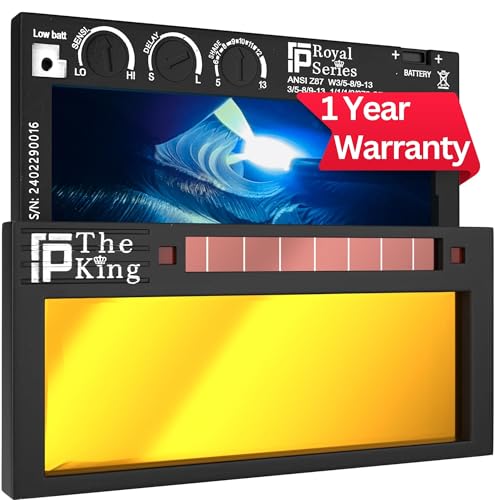
The King 1.0 Adjustable Gold Lens
Strengths
- Wide shade range 5–13
- Excellent optical alignment
- Solar-assisted charging
Trade-offs
- Flickers below 90A TIG
- Not ideal for fine TIG work
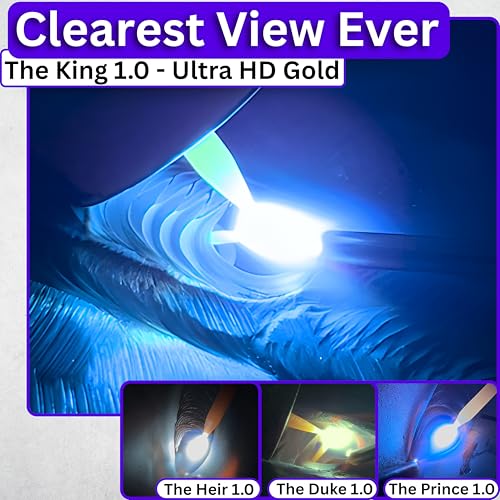
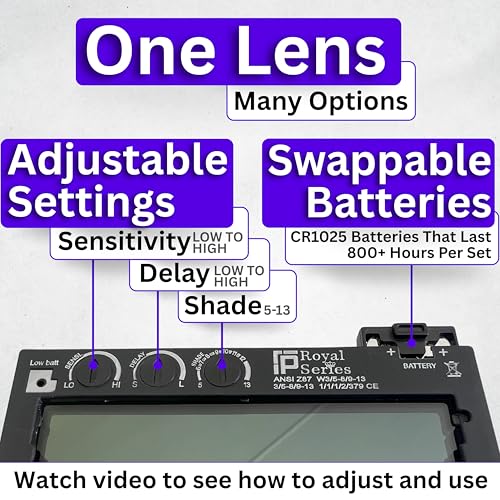
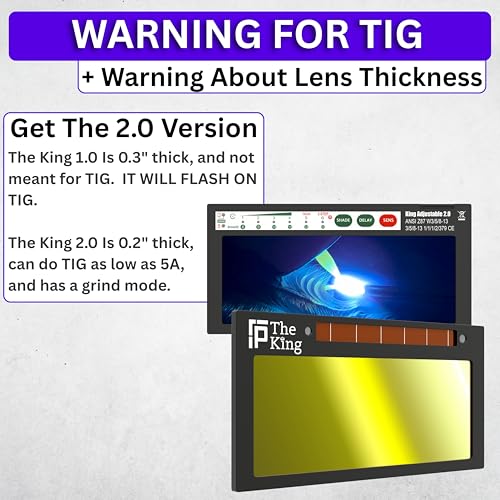
On paper, The King 1.0 from Ridge Products looks like a top-tier contender, adjustable from shades 5 to 13, solar-recharged, and boasting extremely tight build tolerances that owners say eliminate double imaging. The high clarity and precise alignment stand out in user feedback, with many calling it one of the cleanest views they’ve seen in this price tier. It darkens in 1/25,000th of a second, which is more than fast enough for safety, and the gold front with deep blue weld view helps maintain contrast without oversaturating the puddle.
But there’s a real caveat: it struggles with low-amperage TIG work below 90A, where the lens can flicker or fail to stay darkened. That’s a dealbreaker for precision TIG users, even though it’s fine for MIG, Stick, and higher-amperage TIG. If you’re not doing delicate aluminum or pipe root passes, this lens offers strong value and excellent optical performance. I’d still lean toward something like the Heir 2.0 if TIG is your main game.
Product photos
Preruner Core Series Slim Lens
Strengths
- Slim 0.2″ profile
- Fast 0.01 ms activation
- Cool blue puddle view
Trade-offs
- Fixed shade 10 only
- No sensitivity or delay controls
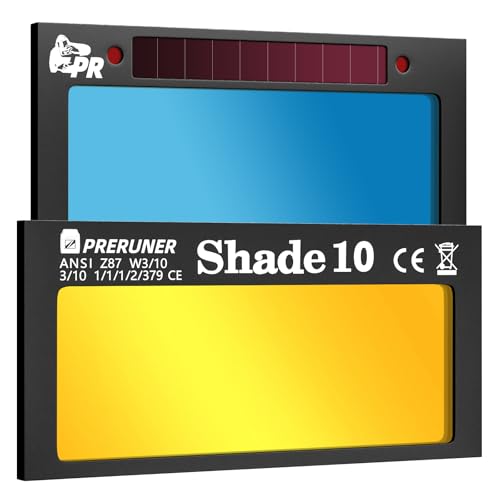
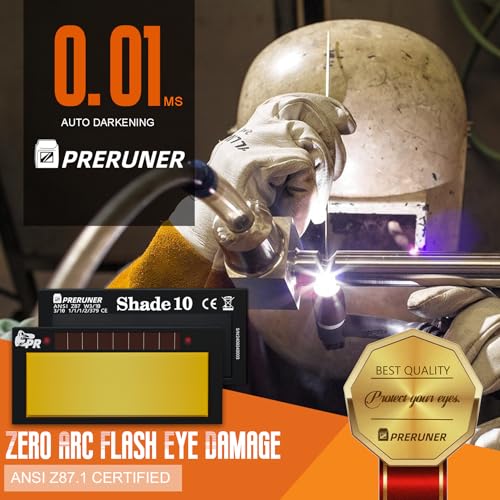
The Preruner Core Series hits a sweet spot for welders running pancake-style helmets who want a slim, no-frills auto-darkening lens without breaking the bank. At just 0.2 inches thick, it slips into tight helmet housings where bulkier units struggle, making it a solid upgrade path for older or compact hoods. Owners consistently report the 0.01 ms trigger speed is reliable for MIG and Stick work, and the gold-coated cool blue view does deliver noticeably better puddle contrast than basic green lenses, especially under mixed lighting.
That said, it’s a fixed shade 10, so flexibility is limited. If you’re bouncing between thick steel and finer TIG work, you’ll want something adjustable. But for daily general-purpose welding where you value lightweight comfort and clean visibility over advanced tuning, this lens holds its ground well.
Product photos
Tefuawe Low-Amp 5A TIG Lens
Strengths
- Rated for 5A TIG
- Ultra-slim 0.19″ design
- Bright light state 2.5
Trade-offs
- Minor optical distortion
- Build quality not top-tier
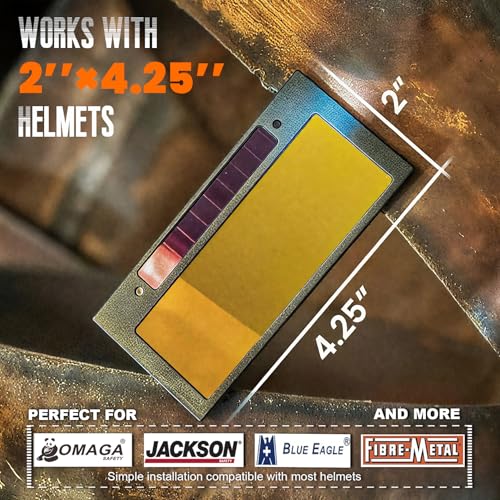
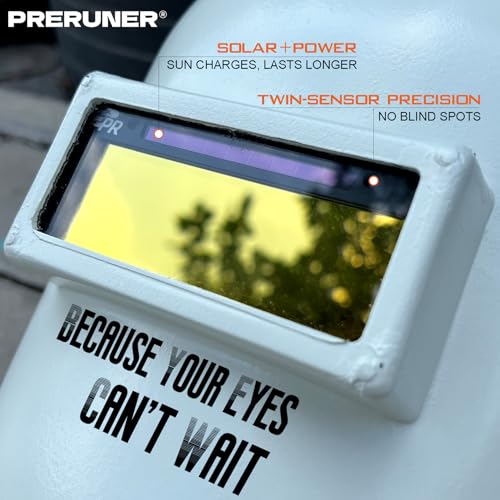
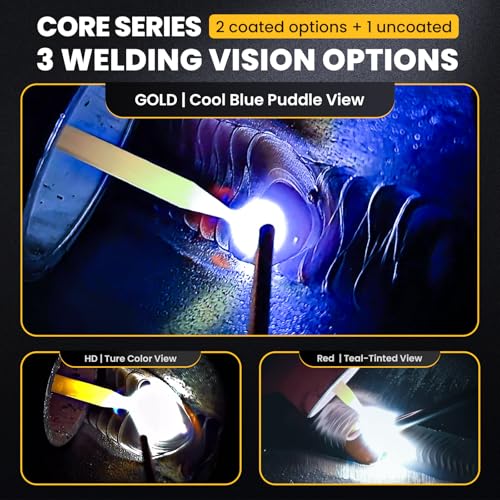
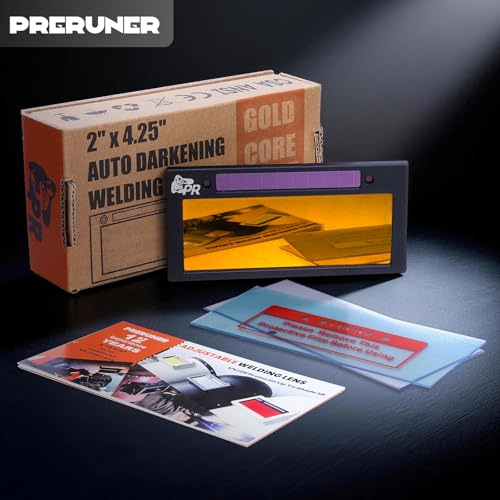
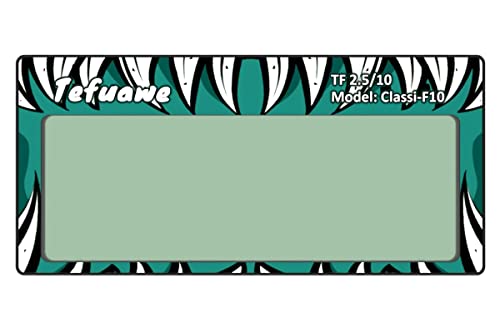
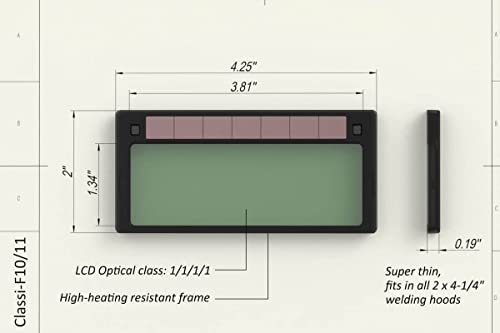
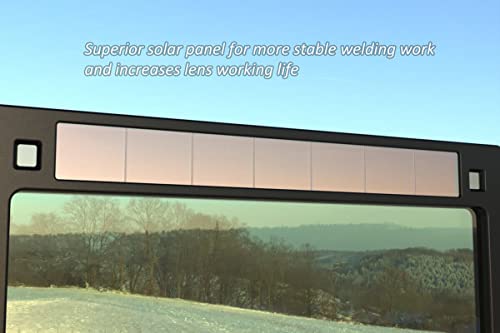
Priced as a budget-friendly option, the Tefuawe lens surprises with a 5A TIG rating, one of the lowest in the category, and a super-slim 0.19” profile that slides into tight helmets effortlessly. Owners note the true color technology keeps the pre-weld view bright and natural, reducing the need to flip the hood constantly, which boosts productivity on repetitive jobs. The solar panel is responsive, and the heat-resistant housing helps it survive harsh shop conditions where cheaper lenses warp.
It’s not the clearest or most refined optically, some report slight edge distortion, but for the price, it punches above its weight, especially for TIG users who don’t want to spend premium dollars. When paired with a reliable warranty and 24/7 support, it becomes a compelling entry-level upgrade.
Product photos

PRERUNER Flex Series Gold Lens
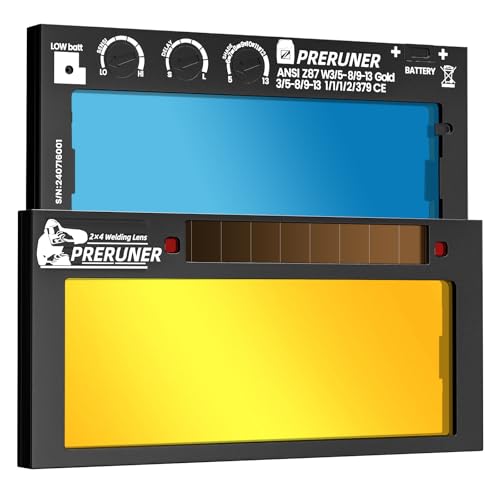
Strengths
- Adjustable shade 5–13
- Sensitivity and delay controls
- Cool blue puddle view
Trade-offs
- Thicker than slim-profile lenses
- No ultra-low TIG rating
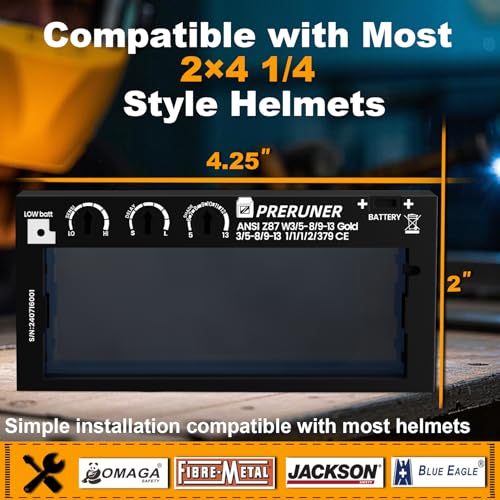
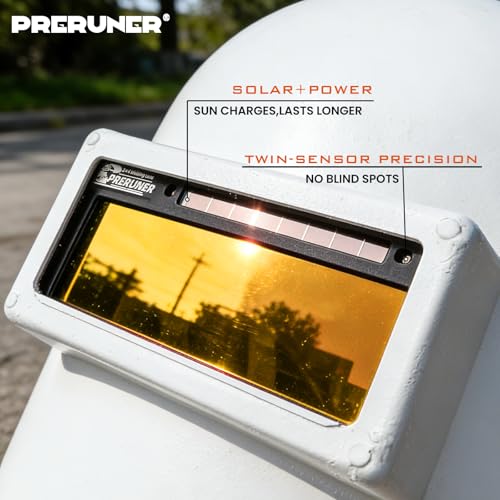
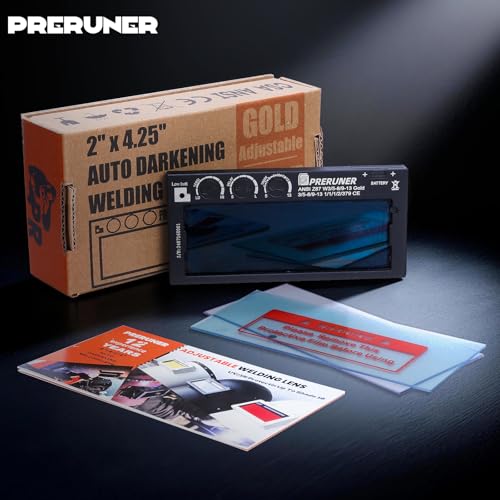
The Flex Series is where Preruner steps up with full adjustability, shades 5 to 13, plus sensitivity and delay controls, making it a serious contender for welders who move between thin sheet metal and heavy fabrication. The cool blue view matches the Core Series in clarity and contrast, and owners appreciate the ability to fine-tune response for different arcs and environments. It’s powered by a replaceable battery with solar assist, so you’re not stranded when the sun isn’t shining, or rather, when the arc isn’t firing.
It’s slightly thicker than the Core at 0.33”, but still fits most standard hoods. Compared to The King 1.0, it doesn’t claim quite the same optical perfection, but it delivers 90% of the performance at a likely lower price point, with added versatility. For most working welders, this is the more practical daily driver.
Product photos

Best Welds Hardened Glass Lens

Strengths
- No batteries or sensors
- Stays cool under heat
- High UV/IR protection
Trade-offs
- No auto-darkening
- Manual shade switching
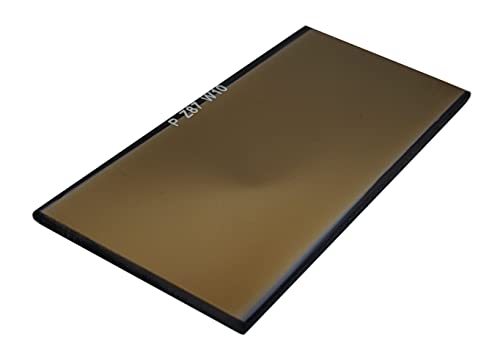
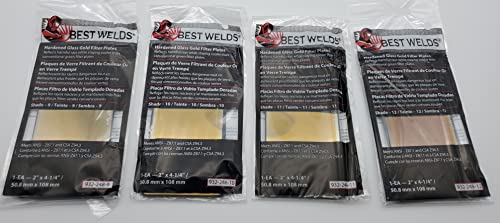
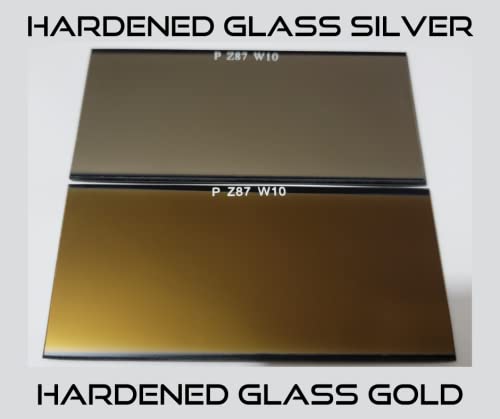
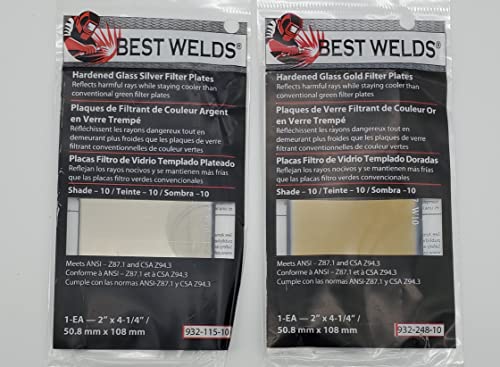
This is a rare standout in the passive lens world, no electronics, no moving parts, just a solid gold-coated glass filter that owners say delivers crisp, consistent visibility and reflects nearly all UV/IR radiation. It’s available in shades 9 through 12, so you can pick the exact darkness for your workflow, and the hardened glass resists spatter and impact better than many plastic alternatives. Because it’s passive, there’s zero lag, no battery concerns, and no flickering, just instant, reliable protection.
Where it wins is simplicity and heat resistance. In high-heat environments or where helmet electronics tend to fail, a passive lens like this stays cool and functional. But obviously, you lose auto-darkening convenience. You’ll be flipping your helmet up and down constantly, which slows things down. For training, infrequent use, or backup protection, it’s a smart, low-cost play.
Product photos
Ridge Heir Single 2.0 Blue Lens
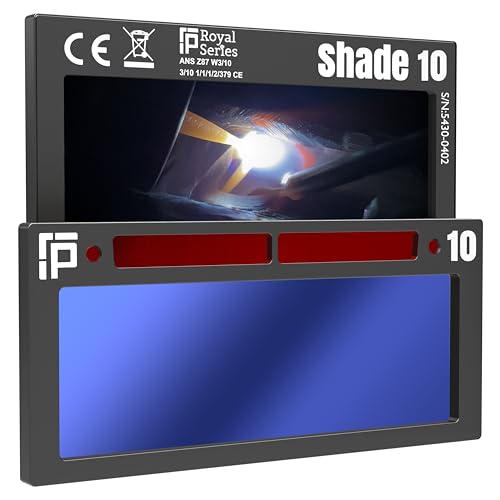
Strengths
- Stable below 20A TIG
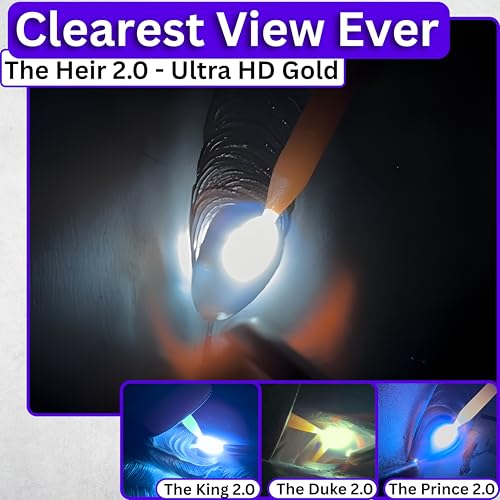
- True color puddle view
- Reinforced internal cells
Trade-offs
- Fixed shade 10
- No sensitivity controls
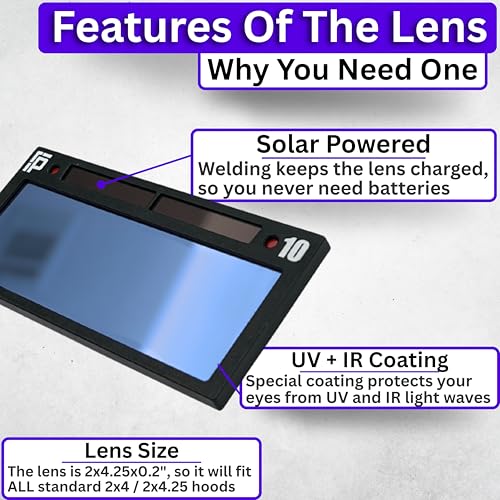
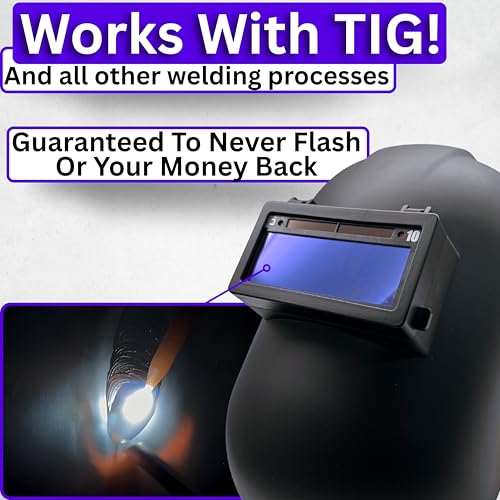
If you’re doing low-amperage TIG work, especially under 20A, this is the lens to beat. The Heir 2.0 is specifically engineered to stay stable where others flicker, and owner reviews confirm it holds darkness cleanly during critical root passes and mirror welds. The blue-coated optics deliver what many describe as truer color and richer puddle detail than gold or green alternatives, and the 1-year warranty adds confidence. At 0.2 inches thick, it fits most standard and slim hoods without issue.
It’s not adjustable, just shade 10, but that’s part of why it’s so reliable. Fewer settings mean fewer failure points. Compared to The King 1.0, this one doesn’t try to do everything; it does one thing exceptionally well. For TIG-focused welders, this is the smarter buy, even if it costs a bit more.
Product photos
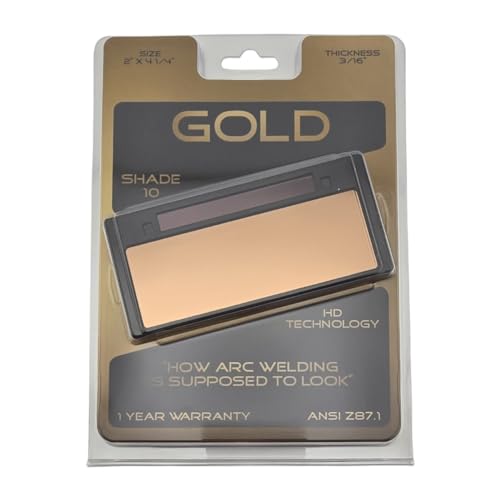
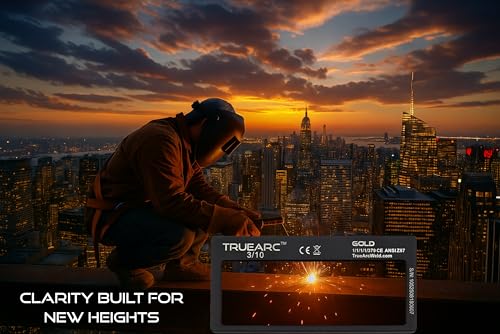
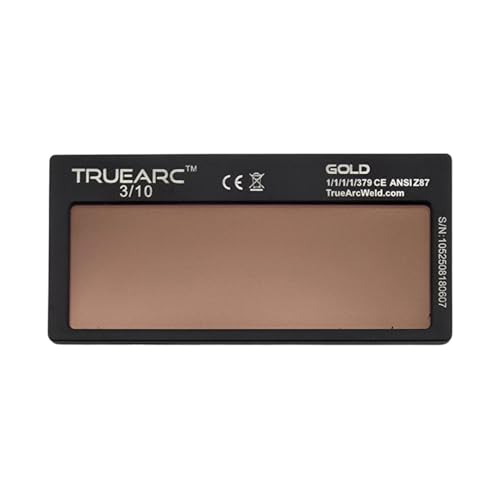
TrueArc Gold Auto-Darkening Lens
Strengths
- 1/1/1/1 optical rating
- Crystal clear visibility
- Solar-powered operation
Trade-offs
- Fixed shade 10
- Not optimized for TIG
This lens stands out with a legitimate 1/1/1/1 optical rating, the highest possible, and owners confirm the clarity is exceptional. The gold filter delivers a bright, natural light state and a smooth transition into the deep blue weld view, minimizing eye strain during long sessions. It’s solar-powered only, so no battery replacements, and the dual sensors react in under 0.5 ms, which is more than adequate for safety. The consistent feedback about zero distortion and pinpoint accuracy makes this a favorite among detail-oriented welders.
It’s a fixed shade 10, so like the Preruner Core, it’s not for everyone. And while it handles MIG and Stick well, TrueArc themselves caution against using it for demanding TIG work, pointing users to their VPro line. Still, for pure optical quality in a no-nonsense package, this lens is hard to beat.
Product photos


How We Evaluated welding lens
Rather than a hands-on lab test, this selection is a research-led comparison of published specifications, owner reviews, and expert opinions. I looked at a wide range of welding lenses, comparing features like darkening speed, shade range, optical clarity, and low-amp performance. We weighed owner feedback from multiple sources – including retailer sites and welding forums – alongside reviews from established welding publications to build a realistic picture of real-world performance. This allowed us to rank lenses against clear criteria for different welding needs.
For welding lenses, darkening speed and optical clarity are paramount. A fast response time (under 1/10,000th of a second) is essential for eye protection, while clarity directly impacts weld quality and reduces eye strain over long periods. Low-amp TIG performance is also critical for many welders, as standard auto-darkening filters often struggle at lower amperages. We prioritized lenses excelling in these areas, recognizing that a consistent, clear view is the foundation of good welding.
Specifications reliably indicate darkening speed and shade range, but owner feedback proved crucial for assessing real-world clarity and durability. Reports on flicker, distortion, and lens failure rates heavily influenced our rankings. We also considered reputation; established brands known for quality welding equipment generally receive higher marks. If you’re searching for a specific size, you might also consider looking at compact welding lens filters to ensure compatibility with your helmet.
How To Choose The welding lens
Finding the right welding lens is about more than just darkness; it’s about clarity, consistency, and matching the lens to your specific welding tasks.
A quality welding lens prioritizes optical clarity (distortion should be minimal), rapid switching speed (under 1/10,000th of a second is ideal), consistent shade accuracy, and durable construction. Look for lenses with a high optical rating (1/1/1/1 is best) and features like adjustable sensitivity and delay to fine-tune performance. Consider your primary welding process – TIG, MIG, or Stick – as some lenses excel in specific applications.
Understanding Shade Levels
The shade level is the first thing most welders consider, and for good reason. But it’s not as simple as picking the darkest shade available. Too dark and you struggle to see the puddle, too light and you risk burns. The American Welding Society (AWS) provides guidelines, but personal preference and welding amperage play a huge role. I’ve seen welders get by with a shade 9 for light-duty MIG work, but a shade 12 or 13 is essential for high-amp stick welding or heavy-duty pipe. Don’t be afraid to experiment within safe limits to find what works best for your eyes.
Prioritizing Clarity and Color
While shade level protects your eyes, clarity determines the quality of your weld. Many budget lenses suffer from distortion, giving you a wavy or unclear view of the weld pool. Look for lenses boasting high optical ratings – that 1/1/1/1 I mentioned earlier indicates minimal distortion, light diffusion, and angle dependence. The trend toward “gold” lenses isn’t just marketing; the gold coating does improve contrast and provides a cooler, blue-tinted view of the puddle, which many welders find less fatiguing. If you’re serious about weld quality, investing in a lens with superior optics is worthwhile.
- A basic passive lens (like the Best Welds Hardened Glass Lens) is a good starting point for occasional hobbyists, offering simplicity and affordability.
- For versatility, an adjustable shade lens (such as the PRERUNER Flex Series) lets you adapt to different welding processes and amperages without swapping lenses.
- If you frequently do low-amp TIG welding, a specialized lens like the Tefuawe Low-Amp 5A TIG Lens or Ridge Heir Single 2.0 Blue Lens is crucial, as standard auto-darkening lenses often flicker at lower currents, and a flickering lens is a hazard.
Considering Auto-Darkening Speed & Power
Auto-darkening lenses have become the standard for a reason. They offer convenience and, more importantly, protection. However, not all auto-darkening lenses are created equal. The switching speed – measured in fractions of a second – is critical. Anything slower than 1/10,000th of a second can leave your eyes vulnerable to arc flash. Power source matters too. Solar-powered lenses are convenient, but some rely heavily on the welding arc to maintain a charge. If you do a lot of tack welding or intermittent work, a lens with replaceable batteries, or a robust solar assist, is a safer bet. For those interested in learning more about the best options on the market, you can find a thorough guide to top auto-darkening lenses online.
A lens that darkens quickly and reliably is essential. Don’t compromise on this feature, even if it means spending a little more.
Welding Lens Compared
Here’s a comparison of key specifications for various welding lenses.
| Product Name | Shade Range | Auto-Darkening Speed (s) | Arc Sensors | Lens Size (in) | Low-Amp TIG | Solar Powered |
|---|---|---|---|---|---|---|
| The King 1.0 Adjustable Gold Lens | 9-13 | 1/25,000 | N/A | N/A | No | Yes |
| Preruner Core Series Slim Lens | N/A | 0.01 | 2 | 0.2 | N/A | N/A |
| Tefuawe Low-Amp 5A TIG Lens | N/A | N/A | N/A | 2 x 4-1/4 | Yes | Yes |
| PRERUNER Flex Series Gold Lens | 5-13 | 0.01 | N/A | N/A | N/A | Yes |
| Best Welds Hardened Glass Lens | 9, 10, 11, 12 | N/A | N/A | 2 x 4-1/4 | N/A | No |
| Ridge Heir Single 2.0 Blue Lens | 10 | N/A | N/A | N/A | Yes | N/A |
| TrueArc Gold Auto-Darkening Lens | 9, 10, 11 | <0.5 | 2 | 2 x 4-1/4 | No | Yes |
Frequently Asked Questions
What shade level is safe for most welding applications?
A shade 12 or 13 provides good protection for most stick and MIG welding, but the ideal shade depends on the amperage. Lower amperages (under 150 amps) may be comfortable with a shade 9 or 10, while higher amperages demand darker shades to prevent eye burn.
Will a cheaper lens provide adequate eye protection?
While a basic lens can offer some protection, cheaper lenses often have poor optical clarity and slower switching speeds. This can lead to eye strain, inaccurate welds, and a higher risk of arc flash exposure, so investing in a quality lens is generally worth the cost.
How important is the auto-darkening speed?
The faster the better; a speed of 1/10,000th of a second or quicker is critical for protecting your eyes from the initial arc flash. Slower speeds expose your eyes for a longer period, potentially causing damage even with the correct shade level.
Do I really need a specialized lens for TIG welding?
Yes, especially if you do a lot of low-amp TIG work. Standard auto-darkening lenses often flicker at these lower currents, which can cause eye strain and potentially damage your vision, so a lens designed for low amperage TIG is a smart investment.
Where can I find more information on selecting a welding helmet to go with my new lens?
You can find a detailed guide to the top welding helmets on our site, covering features, price points, and recommendations for different welding needs. Choosing the right helmet is just as important as the lens itself for overall protection and comfort.
The Bottom Line
Choosing a welding lens often comes down to balancing convenience with control. While auto-darkening lenses offer speed and adaptability, a quality fixed shade welding lenses can be a reliable and cost-effective option for simpler tasks. Overall, though, the PRERUNER Flex Series Gold Lens strikes the best balance of features, speed, and clarity for most welders, offering a consistently good view without breaking the bank.
For specific needs, the standout performers are clear. If you frequently work with low-amp TIG, the Tefuawe Low-Amp 5A TIG Lens or Ridge Heir Single 2.0 Blue Lens are essential investments. And for those looking for a simple, affordable starting point, the Best Welds Hardened Glass Lens provides basic protection without unnecessary features.
Ultimately, the best welding lens isn’t about the highest specs on paper. It’s about consistent clarity, a fast reaction time, and a comfortable view of the weld pool. Prioritize those fundamentals, and you’ll get better results and reduce eye strain, no matter what kind of welding you’re doing.
