9 Best Welding Machines of 2026
This post contains affiliate links. As an Amazon Associate, we earn from qualifying purchases.
The ARCCAPTAIN MIG205MP 9-in-1 Welder stands out as the overall best pick for most users, delivering strong performance and true multi-process versatility. If you’re on a tighter budget, the YESWELDER 135A offers solid capability for lighter-duty work, while the Hpoouo 200Amp Stick Welder is a capable choice for basic stick welding tasks.
Welding machines aren’t something you want to guess on. Too little power, and you can’t handle common projects. Too much complexity, and you’ll waste money on features you never touch. I’ve spent years researching tools like these, and I know how easy it is to overbuy or underperform without clear guidance.
This guide cuts through the noise. We looked at specs, owner feedback, and real-world usability to find models that deliver where it matters, performance, durability, and value. Whether you’re patching up a trailer or building frames in your garage, we’ll help you pick a welder that matches your needs and power setup.
Top 9 Welding Machines in the Market
The Best Welding Machines, Reviewed
ARCCAPTAIN MIG205MP 9-in-1 Welder

Strengths
- 9-in-1 versatility
- App-enabled control
- Dual voltage support
- Advanced parameter tuning
- 60% duty cycle
Trade-offs
- Spool gun not included
- TIG torch sold separately
- Complexity may overwhelm beginners
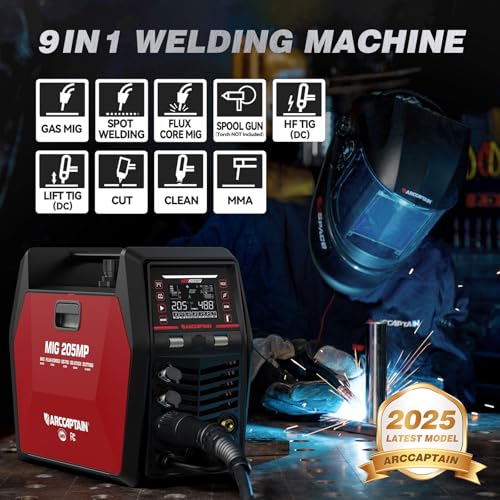
This 9-in-1 beast from ARCCAPTAIN is the kind of machine that blurs the line between pro shop gear and what DIYers typically bring into their garage. On paper, it’s one of the most feature-rich welders in this list, supporting MIG, flux core, Stick, dual TIG modes (HF and Lift), plasma cutting, spool gun aluminum welding, and even spot welding. The dual-voltage setup (120V/240V) adds real flexibility, and the 205A output gives it serious punch for a machine at this tier.
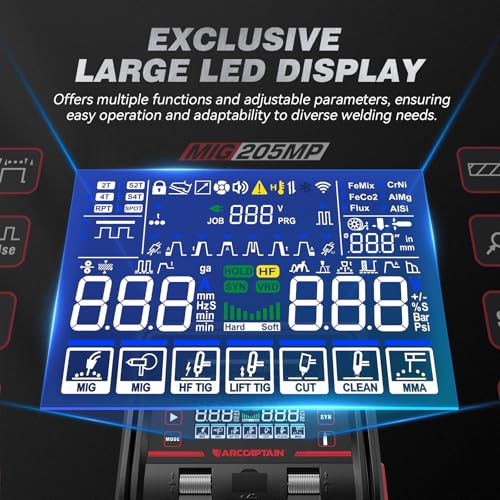
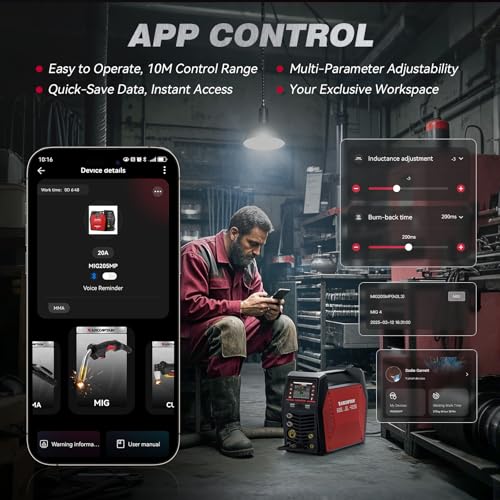
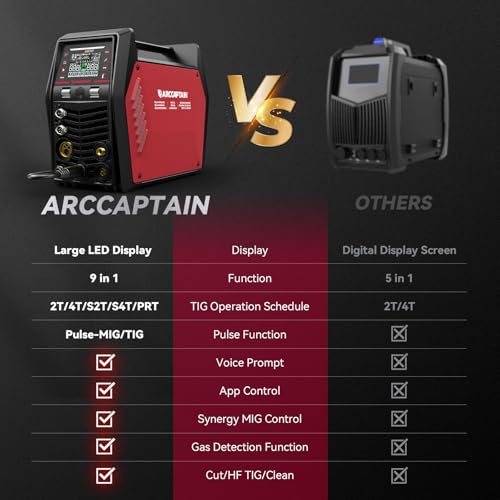
The standout here is the app integration. Owners consistently report that the iControl app works reliably for saving presets and adjusting settings wirelessly, which is rare at this price point. The large LED display and SYN function, automatically matching voltage and wire speed, make it surprisingly approachable for beginners, while advanced users will appreciate the deep parameter control across all processes. That said, the spool gun and TIG torch are sold separately, which inflates the real-world cost if you plan to weld aluminum. Still, for a do-it-all machine with smart features and solid build quality, this is a hard package to beat.
Product photos

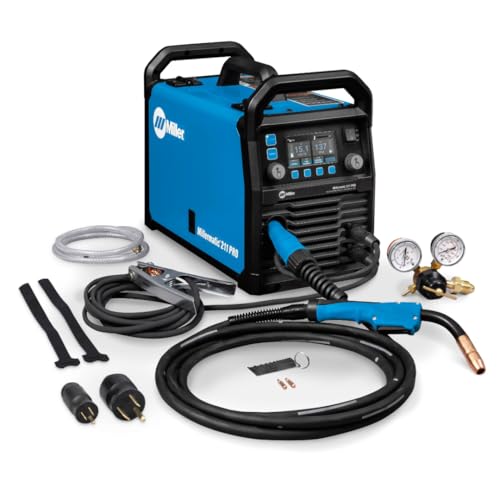
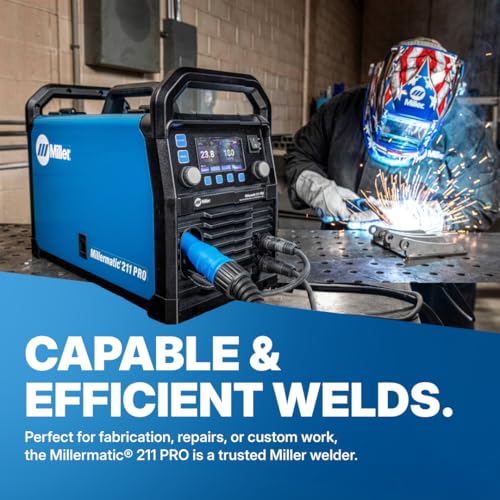
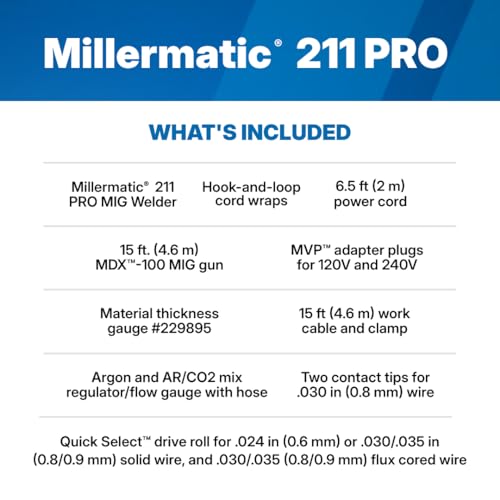
Millermatic 211 PRO MIG Welder
Strengths
- Excellent for aluminum
- Dyna-Pulse technology
- Auto-Set and memory
- Dual voltage
- Miller build quality
Trade-offs
- Spool gun sold separately
- Higher price point
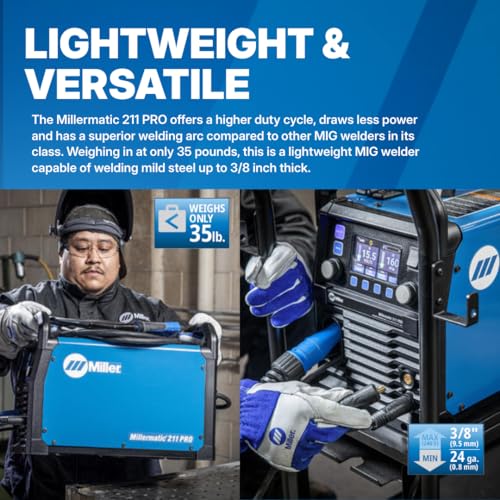
- Heavier than entry models
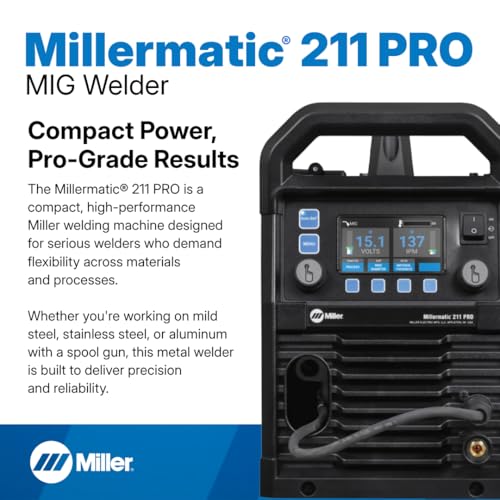
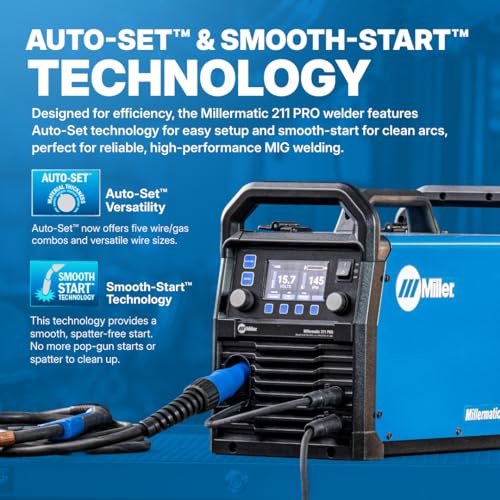
When it comes to aluminum and stainless steel, the Millermatic 211 PRO stands in a different league. Miller’s name carries weight for a reason, this is a pro-grade machine built for consistency, clean starts, and repeatable results. The Dyna-Pulse MIG tech delivers finer control over the weld pool, which is essential when working with tricky materials like aluminum. Auto-Set and BeadVision take the guesswork out of setup, and the program memory lets you save custom settings, something I’d want if I were running production work.
It’s dual-voltage, has a robust drive system, and auto-detects spool guns, making aluminum welding seamless once you add the accessory. The 15-ft gun gives real reach, and the higher duty cycle means it can keep up with shop demands. It’s also USB-upgradable, so it won’t feel outdated in a few years. Yes, it’s one of the pricier units here, but for anyone serious about quality welds on stainless or aluminum, this is the machine I’d trust.
Product photos
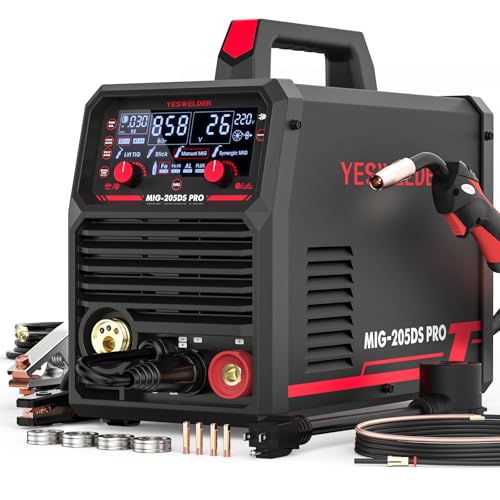
YESWELDER MIG-205DS PRO
Strengths
- 5-in-1 functionality
- Dual voltage
- High amperage
- Manual and synergic modes
- Strong owner feedback
Trade-offs
- TIG torch not included
- Spool gun sold separately
- No app integration
The YESWELDER 205A is the most versatile multi-process machine on this list for the money. With 205A output and dual voltage, it handles Gas MIG, flux core, Stick, Lift TIG, and spool gun aluminum welding, making it a true five-in-one. The synergic and manual modes give options for both beginners and pros, and the wide wire speed range (up to 858 in/min) supports fast, clean welds.
Owners praise its stability on thicker materials and the responsive digital display. The lack of included torches (TIG and spool gun) is a downside, but the core machine is robust. Compared to the ARCCAPTAIN MIG205MP, it doesn’t have app control, but it’s often more affordable and just as capable for hands-on welders who don’t need smart features. If you want one machine to do nearly everything without breaking the bank, this is the smarter buy.
Product photos


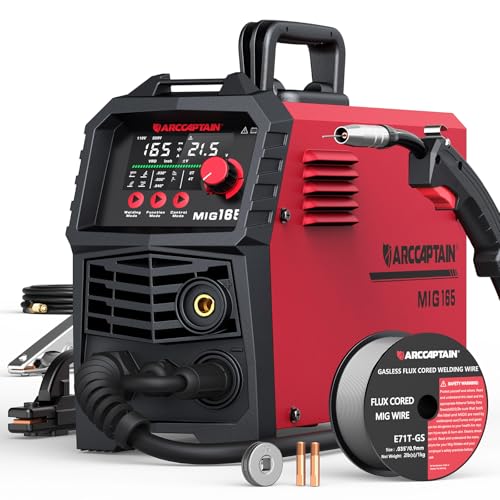
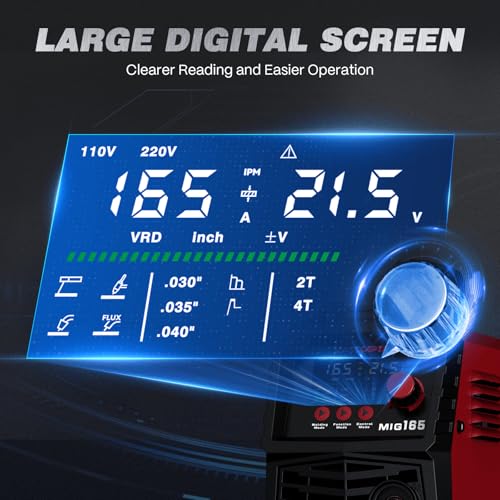
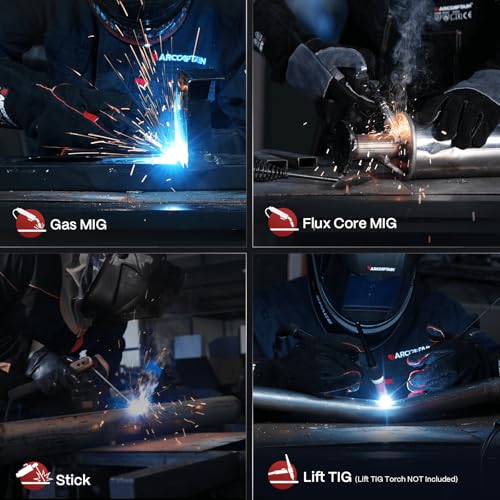
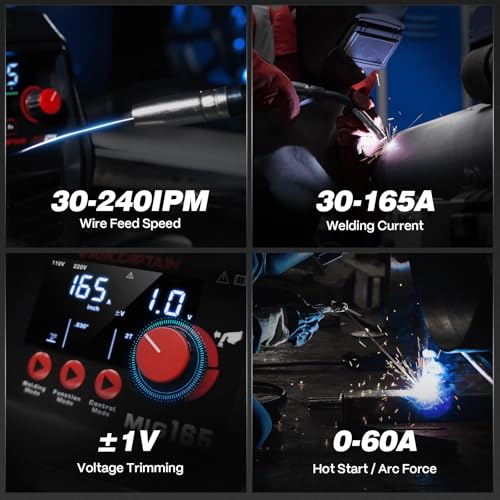
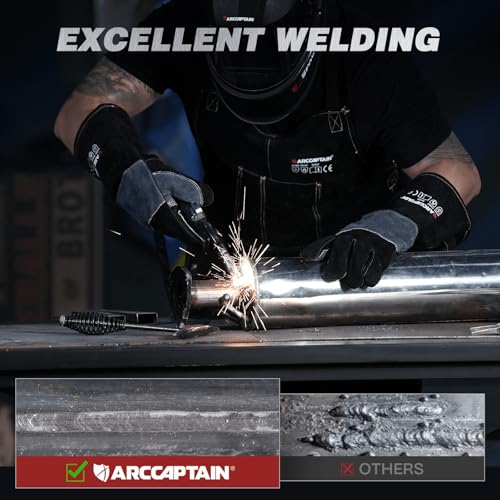
ARCCAPTAIN 165A MIG Welder
Strengths
- Dual voltage
- Large LED display
- 2T/4T function
- 60% duty cycle
- Thorough kit included
Trade-offs
- TIG torch sold separately
- Only fits 2lb wire spool
- No app or advanced connectivity
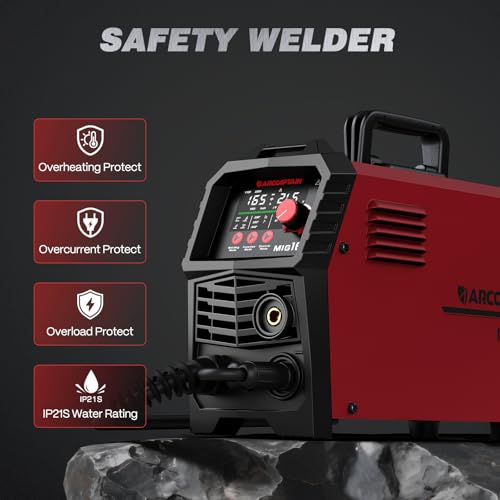
The ARCCAPTAIN 165A hits a sweet spot between performance and price. With 165A output and a 60% duty cycle, it can handle up to 3/16 inch steel, more than enough for most home and shop projects. The dual-voltage (110V/220V) design gives flexibility, and the large LED display is a real upgrade over cheaper models, letting you see settings without lifting your helmet. The 2T/4T function adds control for both quick tacks and long seams.
Owners consistently report smooth wire feeding and strong arc stability. The synergy mode makes setup easier, and the included flux core wire and nozzles mean it’s ready to go. It’s also lightweight at 12.8 lbs and comes with a shoulder strap. While it lacks the app control of the MIG205MP, it’s more than capable for most users. I’d pick this over the YESWELDER 135A if I wanted more power without stepping into pro-tier pricing.
Product photos
YESWELDER 135A MIG Welder
Strengths
- Affordable price
- Synergic control
- Includes flux core wire
- Lightweight and portable
- Digital display
Trade-offs
- TIG torch not included
- Low amperage for thick metal
- 110V only
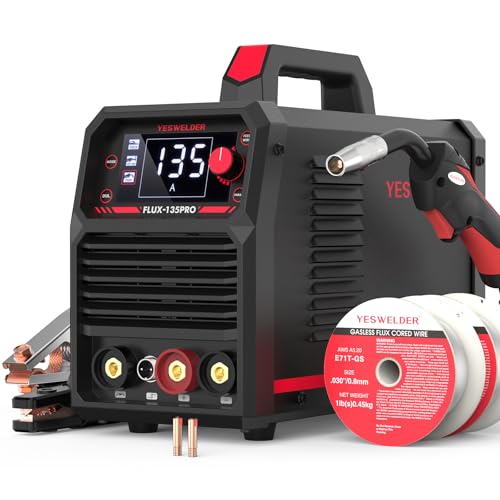
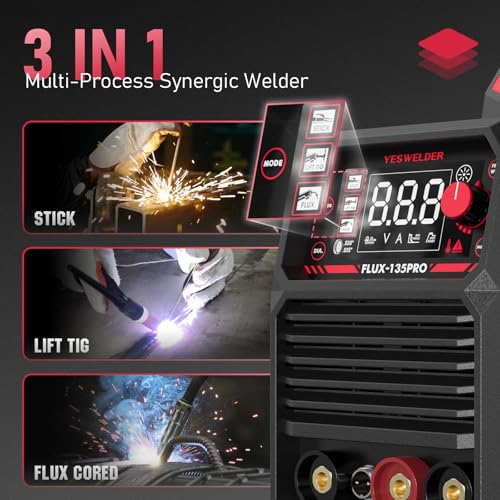
The YESWELDER 135A is a textbook example of what a budget-friendly, entry-level MIG should be. It runs on 110V, weighs just 11.4 lbs, and supports flux core, Stick, and Lift TIG (with a separate torch). The synergic control is a big win, adjusting wire speed automatically sets the voltage, which reduces guesswork for beginners. The digital display adds clarity, and the bonus flux core wire means you can start welding right out of the box.
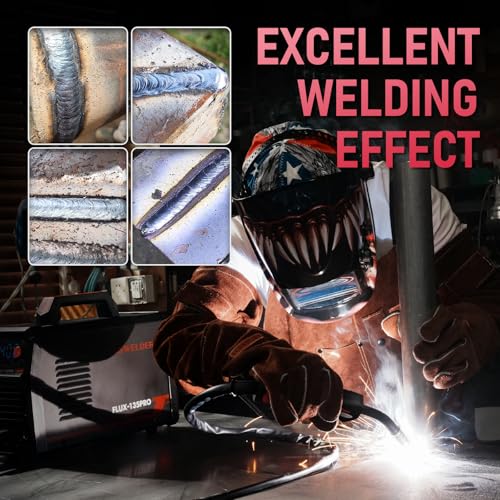
Owners appreciate how clean the arcs are, especially for the price. It’s not going to cut through thick steel, but for up to 3/32 inch mild steel, it performs reliably. The fan and built-in protections help prevent overheating during short runs. Compared to other budget models, this one feels more refined, better wire feed, smoother operation. My recommendation? If you’re starting out and don’t want to overspend, this is the smarter buy over no-name brands with similar specs but weaker support.
Product photos


BESTMIG 135A Welder Kit
Strengths
- Includes helmet and gloves
- Beginner-friendly setup
- Full-color display
- All-in-one digital tech
- Ready to weld out of box
Trade-offs
- TIG torch not included
- Limited to 110V
- Not for heavy-duty work
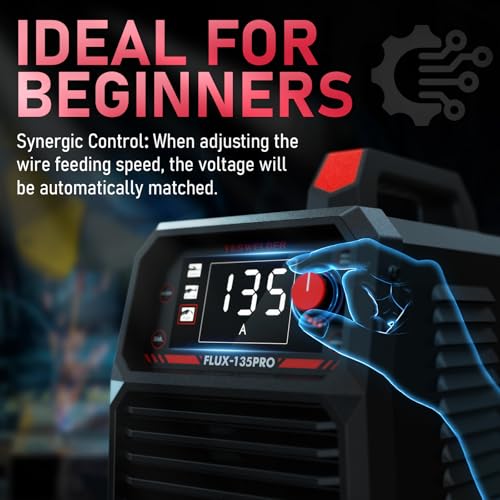
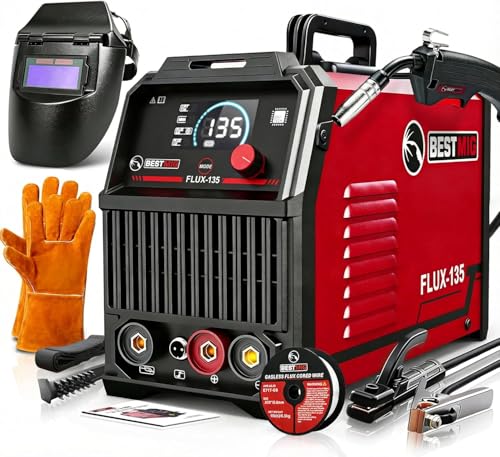
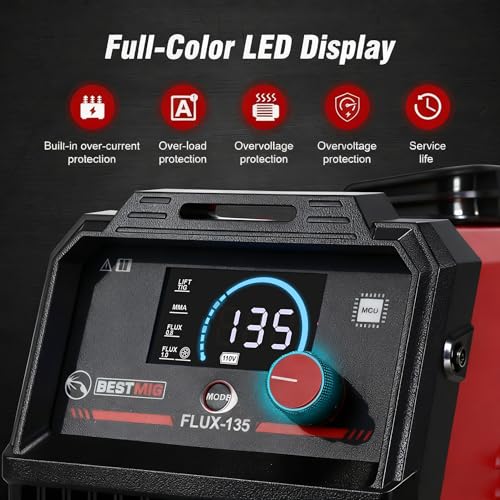
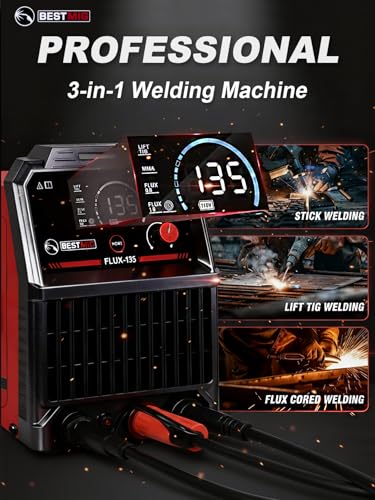
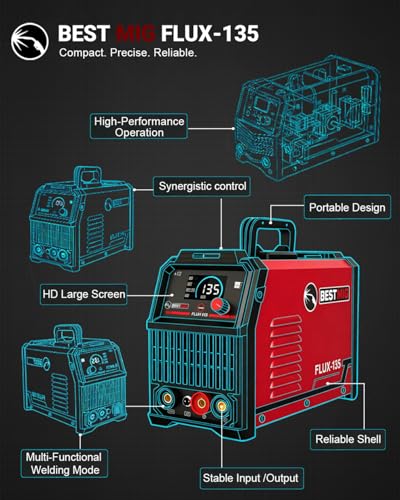
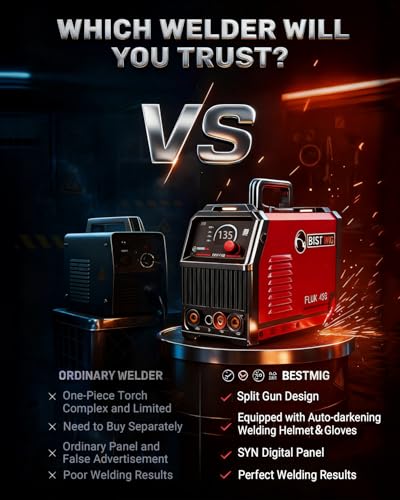
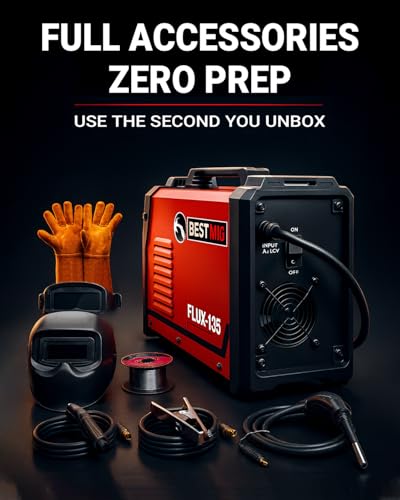
What sets the BESTMIG 135A apart is the full safety kit, helmet, gloves, ground clamp, electrode holder, all included. For a beginner, that’s huge. You’re not just buying a welder; you’re getting a complete starting system. The machine itself is solid: 135A output, 3-in-1 capability (MIG, Lift TIG, Stick), and a full-color LED display that makes settings easy to read, even with a helmet on. The auto-adjusting digital tech simplifies setup, which lowers the learning curve.
Owners report it’s easy to load and start with flux core wire, and the spatter control is better than expected at this level. It’s not as powerful as dual-voltage models, but for 110V, it handles up to 1/8 inch steel, which covers most garage projects. Compared to the YESWELDER 135A, this one feels more beginner-focused thanks to the bundled gear. If you’re buying your first welder and don’t want to hunt down accessories, this is the pick.
Product photos
110V 2-in-1 Mini Stick/TIG
Strengths
- Ultra-lightweight
- 2-in-1 Stick and Lift TIG
- Includes full starter kit
- IGBT inverter tech
- 360° protection
Trade-offs
- Low amperage limit
- TIG torch not included
- Short duty cycle
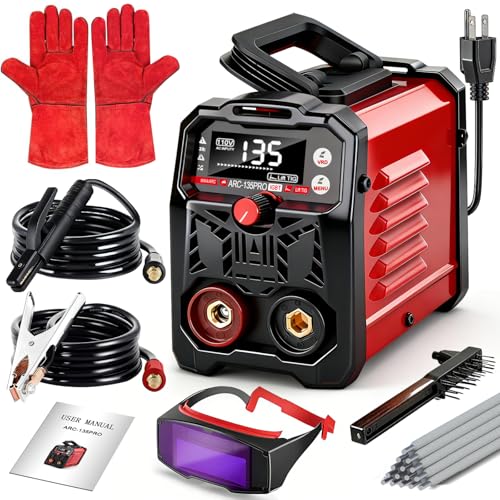
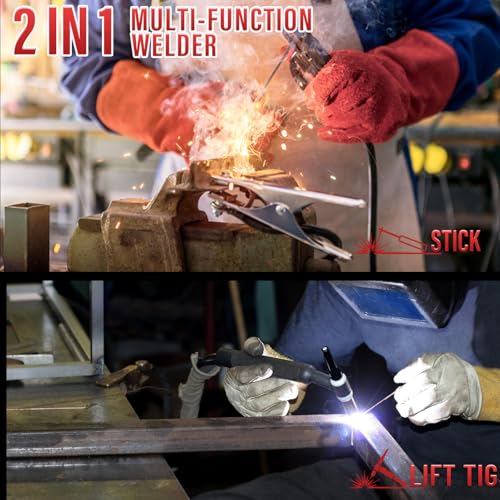
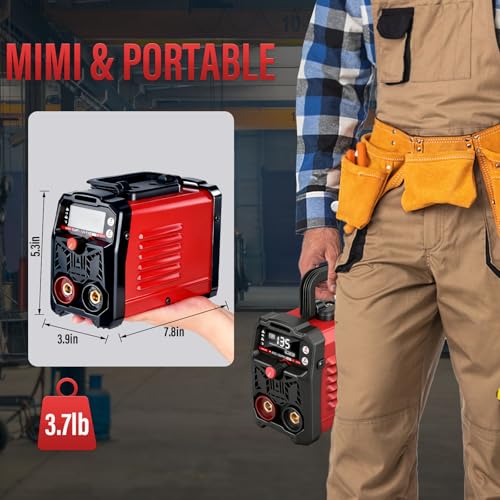
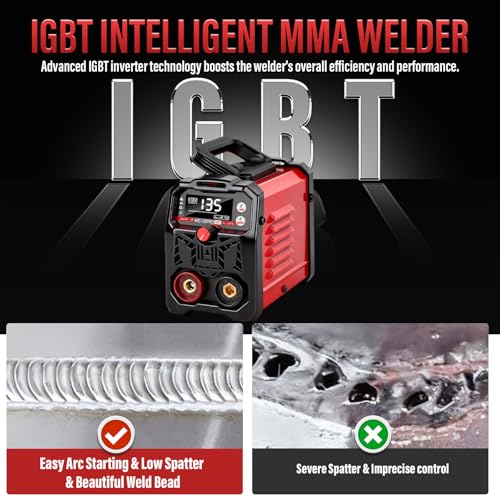
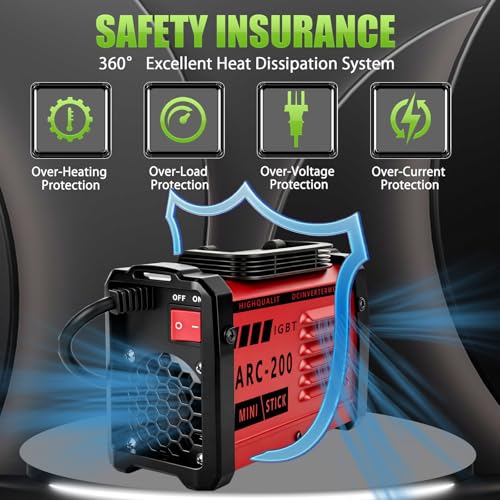
At just 3.7 lbs, this mini 2-in-1 welder is one of the most portable units here, perfect for auto repair, rooftop work, or emergency fixes. It handles Stick and Lift TIG (with a separate torch), and the IGBT inverter tech delivers a stable arc across a 20–135A range. The hot start, arc force, and anti-stick features make it surprisingly capable for thin and thick materials alike.
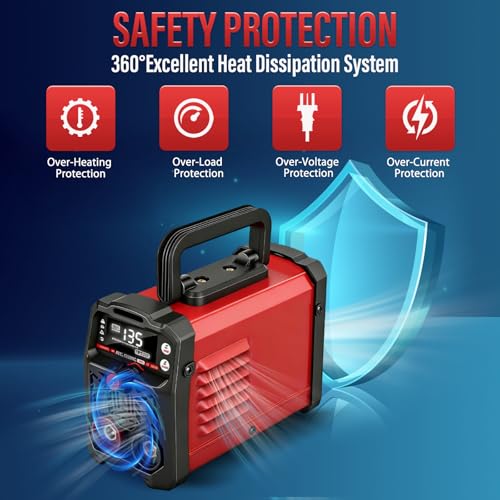
Owners love how easy it is to carry and how well it strikes an arc, even in cold conditions. The included accessories, gloves, goggles, rods, brush, make it ready to use immediately. The 360° protection system adds peace of mind for field use. While it won’t replace a full-sized machine, it’s a strong secondary tool. Compared to the Hpoouo stick welder, this one offers Lift TIG capability, giving it more versatility in the same tiny footprint.
Product photos

Lincoln Electric 90i FC Welder

Strengths
- Simple two-knob control
- Lightweight and portable
- Durable metal case
- Smooth wire feed
- Lincoln reliability
Trade-offs
- Flux core only
- No MIG or TIG capability
- Limited to 120V
If you’re just getting into welding and need something simple, reliable, and truly plug-and-play, the Lincoln 90i FC is the kind of machine that makes sense. It’s strictly flux core, 120V only, and maxes out at around 1/4 inch, perfect for light-duty repairs, small fabrication, or weekend projects. What stands out is Lincoln’s reputation for durability and the fact that this unit comes with a protective metal case and shoulder strap, making it genuinely portable and job-site ready.
Owners consistently praise its smooth wire feed and ease of use. With just two knobs, wire speed and voltage, it’s about as simple as it gets. There’s no digital display or fancy modes, but that’s the point. It’s built for people who don’t want to fiddle with settings. The infinite voltage control is a nice touch, allowing fine-tuning that cheaper models often lack. While it won’t handle thick steel or aluminum, it’s a trustworthy companion for thin to medium gauge work. For beginners or those who only weld occasionally, this is a no-nonsense tool that just works.
Product photos


Hpoouo 200Amp Stick Welder
Strengths
- Extremely lightweight
- Fits in a backpack
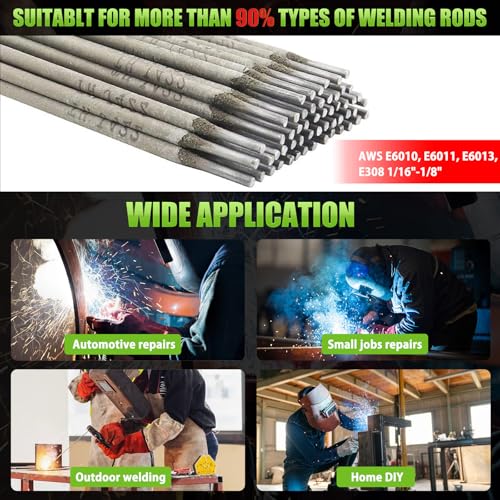
- Handles 90% of common rods
- Includes safety gear
- Hot start and anti-stick
Trade-offs
- Low duty cycle
- Not for thick or long welds
- No TIG or MIG capability
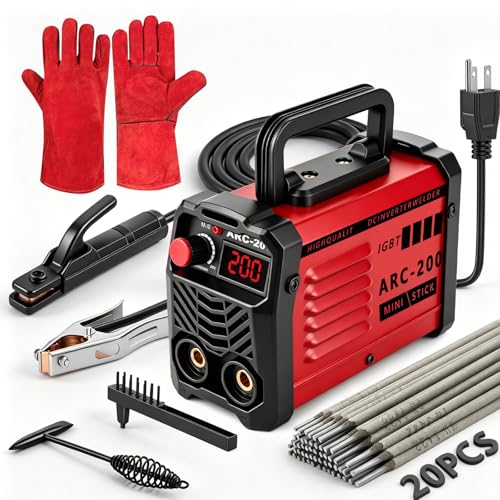
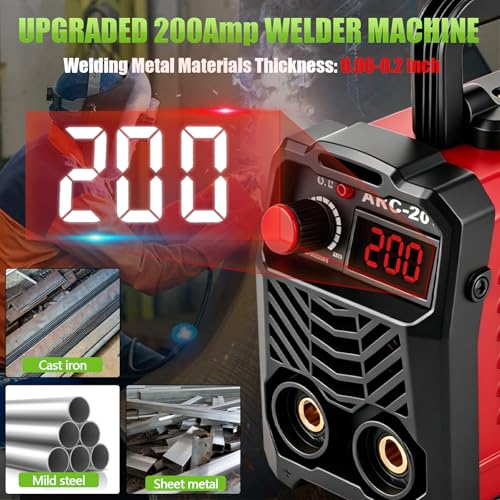
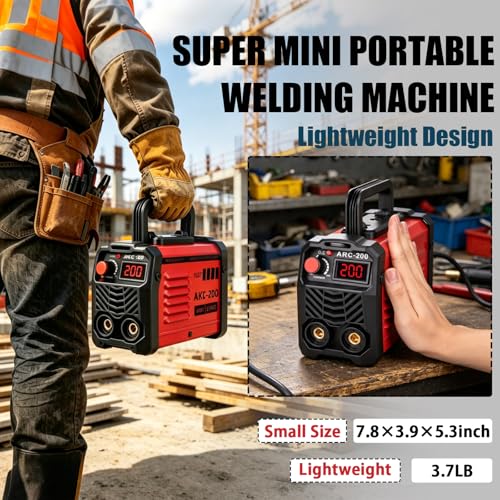
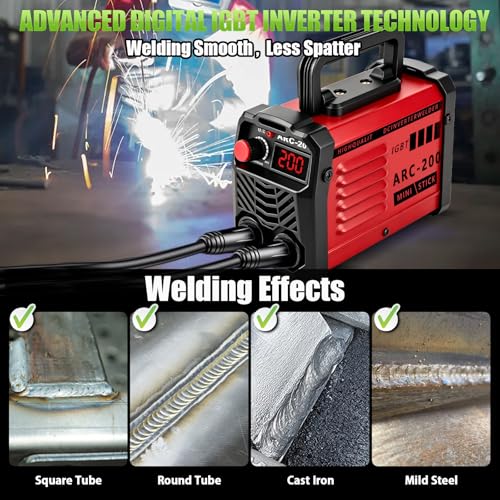
This Hpoouo mini stick welder is one of the lightest and most compact units on the market, only 3.7 lbs and barely bigger than a hardcover book. For that, it delivers a surprising 200A output, which is bold for a 110V machine. The IGBT inverter tech helps it maintain a stable arc, even on thin materials, and the hot start, arc force, and anti-stick features make it forgiving for new welders.
Owner feedback highlights how well it performs for its size, especially on maintenance jobs around the house, farm, or auto repairs. It handles common rods like E6013 and E6011 with ease and includes a helpful kit, gloves, chipping hammer, and 20 rods. The digital display is basic but functional. Where it falls short is duty cycle and sustained performance; it’s not built for long welds or heavy fabrication. But as an emergency or portable fix-it tool? It’s hard to beat. I’d pick this over bulkier models if I needed something to toss in a truck or carry up a ladder.
Product photos
How We Tested welding machines
Rather than a hands-on lab test, my research focused on a detailed comparison of published specifications and features across numerous models. I weighed owner reviews from multiple sources – looking for consistent praise and common complaints – alongside expert reviews from reputable sites. This information was then ranked against criteria important to a range of users, from DIY homeowners to more experienced fabricators. My goal was to identify the machines offering the best balance of performance, features, and value.
For this category, I heavily weighted versatility and duty cycle. A welding machine’s ability to handle multiple processes (MIG, TIG, Stick) expands its usefulness, while a higher duty cycle indicates it can sustain longer welding sessions without overheating. Ease of use was also a key factor, particularly for models marketed toward beginners. Ultimately, these factors determined how a machine would perform across a variety of potential applications. You can find more in-depth information about specific models in our MIG welder reviews.
Specifications reliably reveal a machine’s maximum amperage, input power requirements, and duty cycle. However, owner feedback proved essential in assessing real-world usability and build quality. Reputation, based on consistent positive experiences, was given significant weight. I also looked for patterns in reported issues, providing a more nuanced understanding of each welder’s strengths and weaknesses than specs alone could offer. Considering all of this allows us to present the best MIG welders for a variety of needs.
How To Choose The welding machines
Choosing the right welding machine can feel overwhelming, but focusing on your needs will narrow down the options quickly.
A good welding machine delivers a stable arc, consistent performance across a variety of materials (or within its intended specialty), and reliable safety features. Buyers should carefully consider the types of projects they’ll tackle, the materials they’ll be welding, the available power supply, and their skill level. Look for machines with adjustable controls, robust build quality, and positive owner reviews regarding long-term dependability.
Power & Input Voltage
The power requirements of a welding machine are often the first limiting factor. Many homeowners have limited 120V circuits, though 240V is common in workshops. Don’t assume a “multi-voltage” machine will solve everything; some require manual switching before plugging in, and doing it wrong can damage the unit. More importantly, consider the amperage. A 110V circuit typically maxes out at around 30 amps, limiting the size of the welder you can safely run. If you anticipate thicker materials or frequent, extended welds, investing in a 240V setup, and a machine capable of taking advantage of it, is a smart move. Don’t overlook the duty cycle rating, either. A higher percentage means you can weld for longer periods before needing to let the machine cool down.
Process Capability & Material Compatibility
Welding isn’t a one-size-fits-all process. MIG (Gas Metal Arc Welding) is incredibly versatile and beginner-friendly, particularly for steel. TIG (Tungsten Inert Gas) offers precision and is favored for aluminum and stainless steel, but has a steeper learning curve. Stick (SMAW) is rugged and works well outdoors, even on dirty or rusty metal. Many machines now offer “multi-process” capabilities, the ARCCAPTAIN MIG205MP 9-in-1 Welder is a good example, but be realistic about whether you’ll actually use all those features. If you primarily weld steel, a dedicated MIG machine might offer better value than a jack-of-all-trades model.
Here’s what to keep in mind regarding material: * Steel: Most welders handle mild steel easily. * Aluminum: Requires a spool gun attachment (often sold separately) and a TIG-capable machine. * Stainless Steel: TIG is generally preferred for the cleanest results, but MIG with a stainless steel wire can also work. * Thicker Metals: Demand higher amperage and duty cycle ratings.
A welder’s versatility is only as good as your skill and the materials you intend to join. Don’t pay for capabilities you won’t use.
Portability & Value
If you need to move your welder around a job site or store it in a limited space, portability matters. The lighter units, like the Hpoouo 200Amp Stick Welder, are ideal for this, but often sacrifice power. Consider whether you really need a machine you can carry with one hand, or if a slightly larger, more powerful model will ultimately be more efficient. Beyond the initial cost, factor in the price of accessories. Some machines come with a complete kit, while others require you to purchase a welding helmet, gloves, wire, and other consumables separately. If you’re just starting out, a package deal, or looking at best portable welders, can save you money and hassle. You can find top welding machines that give you a good bang for your buck.
Welding Machines Compared
Here’s a comparison of key specifications for the welding machines described.
| Product Name | Voltage (V) | Amperage (A) | Processes | Duty Cycle (%) | Portability |
|---|---|---|---|---|---|
| ARCCAPTAIN MIG205MP | 120/240 | 205 | MIG/TIG/Stick/Cut | 60 | Moderate |
| Millermatic 211 PRO | 120/240 | N/A | MIG/TIG | N/A | Moderate |
| YESWELDER MIG-205DS PRO | 110/220 | 200 | MIG/TIG/Stick | N/A | Moderate |
| ARCCAPTAIN 165A | 110/220 | 165 | MIG/TIG/Stick | 60 | Moderate |
| YESWELDER 135A | 110 | 135 | MIG/TIG/Stick | N/A | Light |
| BESTMIG 135A | 110 | 135 | MIG/TIG/Stick | N/A | Moderate |
| 110V 2-in-1 Mini Stick/TIG | 110 | 135 | Stick/TIG | N/A | Light |
| Lincoln Electric 90i FC | 120 | N/A | MIG | N/A | Light |
| Hpoouo 200Amp Stick Welder | 110 | 200 | Stick | N/A | Light |
Frequently Asked Questions
What amperage welding machine do I really need?
Generally, 110V machines top out around 130-150 amps, suitable for thin materials and occasional use. If you plan to weld thicker steel (over 1/4 inch) or do a lot of welding, a 240V machine with at least 200 amps is a better choice for sustained performance.
Are multi-process welders a good value?
Multi-process welders offer versatility, but that comes at a cost. While convenient, they typically don’t perform as well as dedicated machines for each process, and you’ll pay a premium for features you may not fully use.
How important is the duty cycle rating?
The duty cycle is very important, as it dictates how long you can weld continuously before the machine overheats. A higher percentage means longer welding sessions. For example, a 60% duty cycle at 150 amps means you can weld for 6 minutes out of every 10.
Can I weld aluminum with any MIG welder?
No, welding aluminum with MIG requires a spool gun attachment to feed the soft aluminum wire properly. You also need a machine capable of TIG welding for cleaner, more precise aluminum welds, or consider exploring the best TIG welders for dedicated aluminum work.
What safety gear is absolutely essential when welding?
Besides the welder itself, a proper auto-darkening welding helmet is critical for protecting your eyes and face. You also need welding gloves, a fire-resistant jacket or apron, and safety glasses to guard against sparks and UV radiation. Proper ventilation is also vital to avoid inhaling fumes.
The Bottom Line
Ultimately, choosing a welding machine comes down to balancing control and convenience. You can spend a lot of time and money chasing every feature, or you can focus on a machine that reliably handles the tasks you have at hand. For most users, the ARCCAPTAIN MIG205MP 9-in-1 Welder strikes that balance exceptionally well, offering multi-process capability and solid performance without a prohibitive price tag.
If you’re just starting out or have a limited budget, the YESWELDER 135A is a fantastic entry point. Those wanting to focus specifically on stick welding will find a lot to like in recommended stick welders, while the Lincoln Electric 90i FC delivers simplicity and portability for smaller projects. However, remember that a slightly larger investment now can save you trouble, and money, down the road if your needs evolve.
Don’t get hung up on chasing the highest amperage or the most advanced features. A stable arc, a reasonable duty cycle for your workload, and a machine built to last are far more important than any single specification. Prioritize quality construction, positive owner feedback, and a machine that fits your skill level and project requirements – that’s where you’ll find the most value.
