
5 Best Handheld Wet Tile Saws for 2026
This post contains affiliate links. As an Amazon Associate, we earn from qualifying purchases.
The POWERTEC HTS1045C stands out as the best handheld wet tile saw for most users, delivering strong motor power, solid cutting depth, and reliable build quality. For those on a tighter budget, the KSEIBI 4” offers solid performance at a lower price, while the 7” PeakPursuit provides greater cutting depth for specialized tasks.
Most people shopping for a handheld wet tile saw are looking for a fast, clean way to cut tile without the bulk of a full-size unit. Too often, buyers end up with underpowered tools that struggle with porcelain or lack basic safety features like GFCI protection.
This guide cuts through the noise by focusing on real-world performance, based on specs, owner feedback, and years of working with power tools. I looked at motor power, blade quality, depth of cut, and safety to find models that actually deliver.
Top 4 Handheld Wet Tile Saws in the Market
The Best Handheld Wet Tile Saws, Reviewed
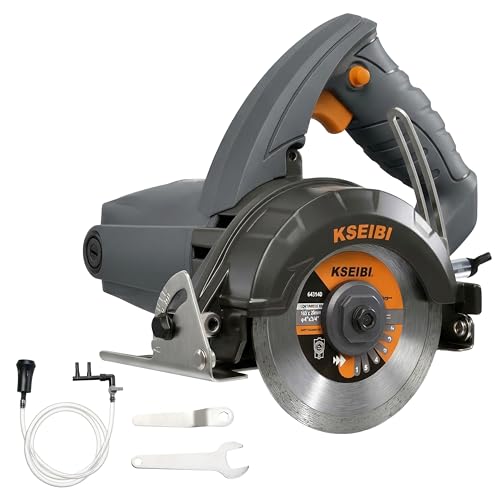
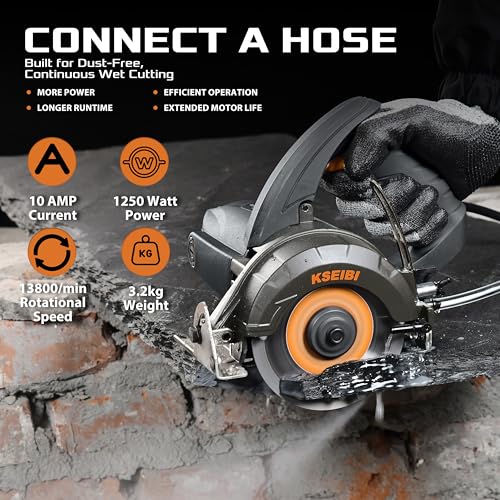
KSEIBI 4″ Marble Cutter with Water Cooling
Strengths
- 10-amp motor
- Lightweight design
- Includes water cooling kit
Trade-offs
- Limited depth vs larger saws
- No GFCI plug
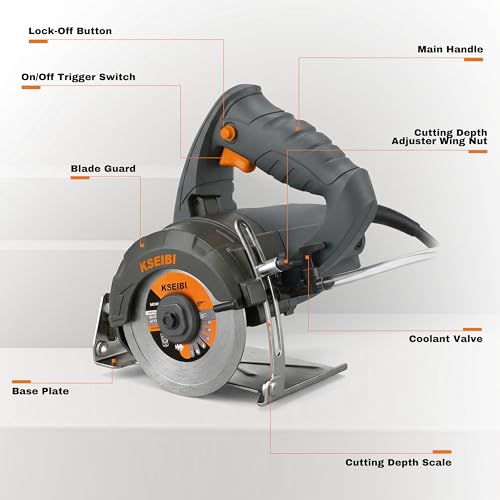
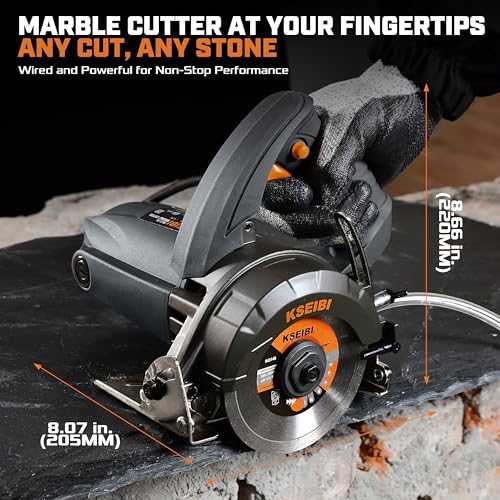
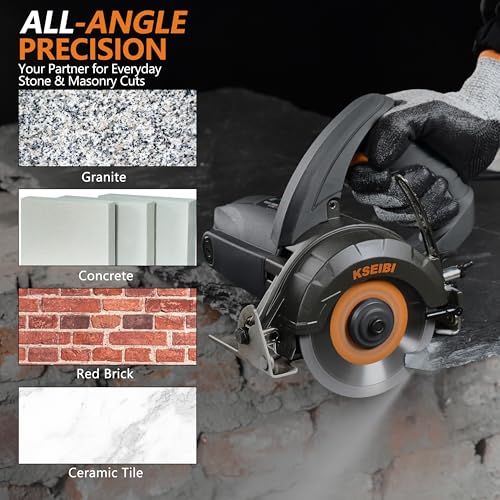
This KSEIBI 4-inch cutter packs a serious punch for its size, with a 10-amp motor spinning at 13,800 RPM, on paper, that’s faster than most in this class. It’s clearly built for precision work on porcelain, granite, and tile, and owners consistently report clean cuts with minimal chipping, especially when using the water cooling kit. The wet cutting system is simple but effective, helping suppress dust and keep the blade from overheating during extended runs.
Where it really stands out is portability. At just 7 pounds, it’s one of the lightest in this group, and the ergonomic handle makes it easy to guide through tight spots like backsplashes or floor edges. It doesn’t have the deepest cut (1-3/8 inches), so thicker stone slabs will push its limits. But for most bathroom or kitchen tiling jobs, it’s more than capable. Compared to the heavier POWERTEC model, this one trades raw depth for agility.
Product photos

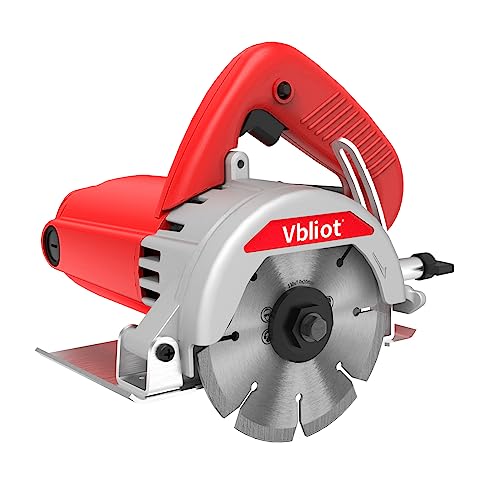
VBLIOT 4-3/8″ Handheld Tile Saw
Strengths
- Low cost
- High RPM
- Includes positioning base
Trade-offs
- Build quality concerns
- No water flow control
- No GFCI protection
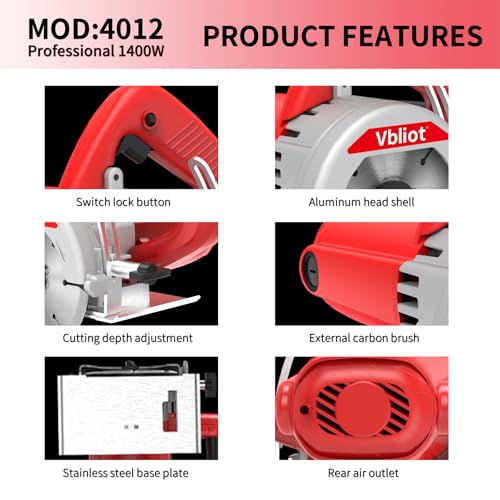
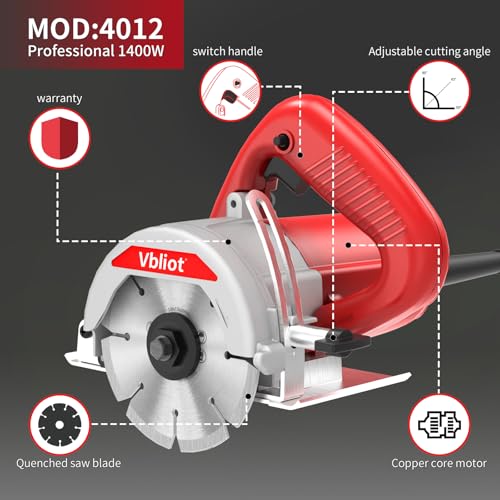
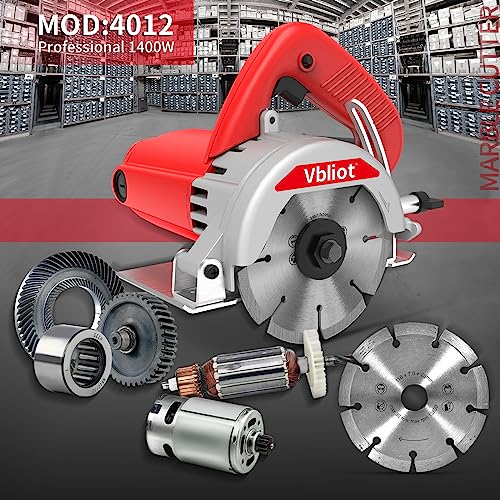
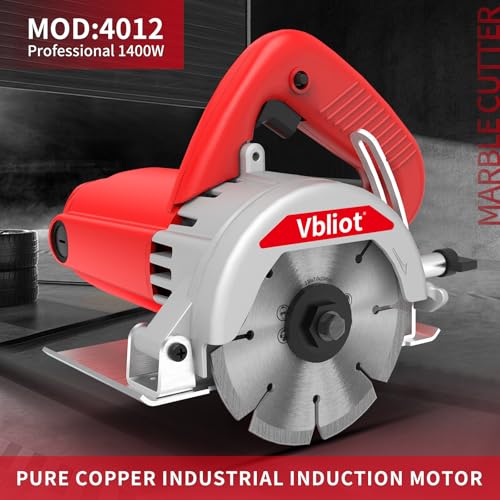
The VBLIOT is clearly the budget pick, 1400W of power, 13,000 RPM, and a 4-3/8-inch depth that looks impressive on paper. And for the price, it’s surprisingly versatile, marketed for concrete, tile, and even wood. But owners report mixed results: while it handles light-duty tile work fine, the build quality isn’t as rigid as the POWERTEC or KSEIBI. The depth claim seems optimistic, effective cutting depth drops fast with thicker materials.
It includes useful extras like a carbon brush wrench and positioning base, which helps with straight cuts. But it lacks a proper water flow adjuster and doesn’t include a GFCI plug, which is a concern for wet environments. I’d recommend it only for occasional use, say, a single bathroom remodel, where cost matters more than longevity.
Product photos

PeakPursuit 7″ Wet Tile Saw
Strengths
- Large cutting capacity
- Stable worktable
- Dust-minimizing reservoir
Trade-offs
- Not truly handheld
- Slower RPM
- Bulky setup
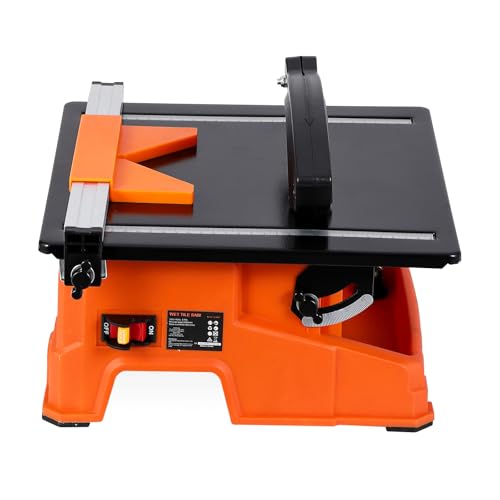
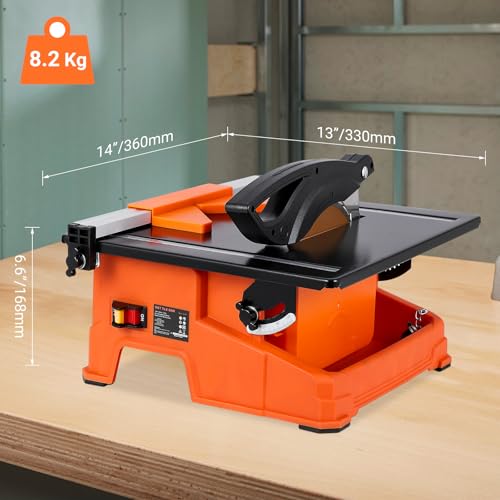
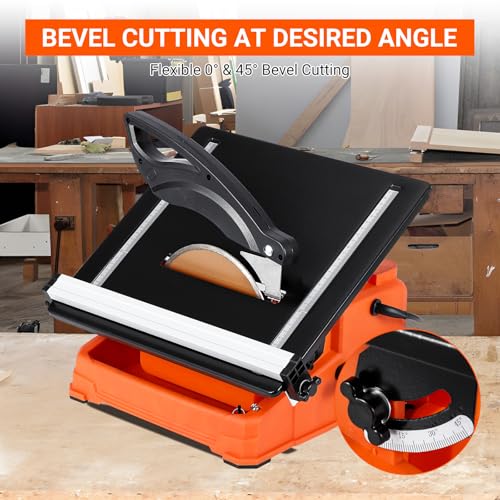
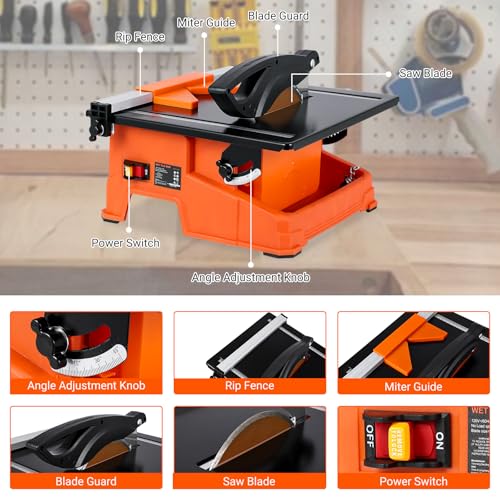
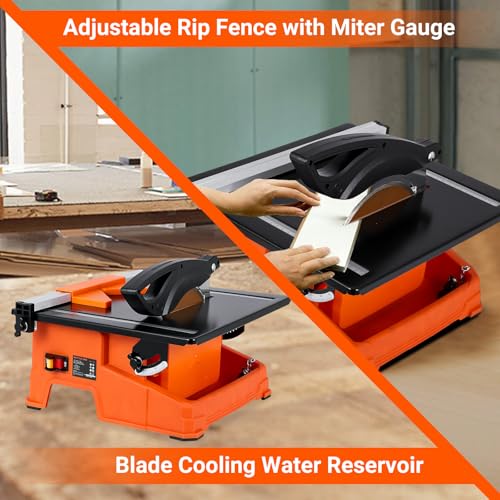
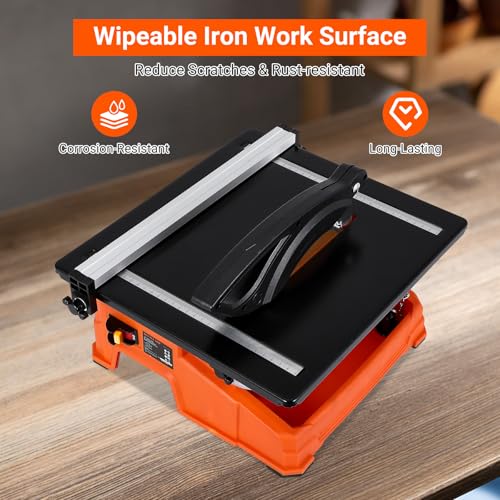
This PeakPursuit 7-inch model is built for a different kind of job, it’s not handheld, despite being in this list, but a benchtop wet saw with a large worktable and water reservoir. At 6500 RPM, it’s much slower than the corded handhelds, but the larger blade handles big-format tiles with ease. The 13×14-inch galvanized table gives serious support for slabs, and owners note it stays rust-free even with regular water use.
The 0–45° bevel adjustment is smooth, and the reset safety switch is a thoughtful touch for power interruptions. But it’s not for everyone, this isn’t a tool you’ll carry from room to room. Compared to true handhelds, it’s bulky and fixed in place. But if you’re laying large porcelain planks or natural stone in a single location, the stability and cut quality are worth the trade-off.
Product photos
POWERTEC HTS1045C 4.5″ Handheld Tile Saw

Strengths
- 12-amp motor
- GFCI safety plug
- Deeper cutting capacity
- Includes extra blade
Trade-offs
- Heavier than compact models
- Slightly higher learning curve
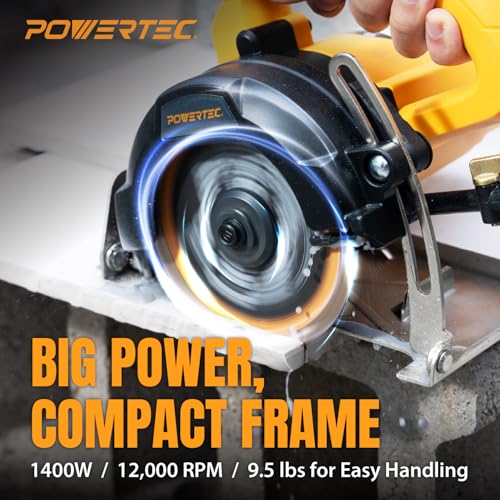
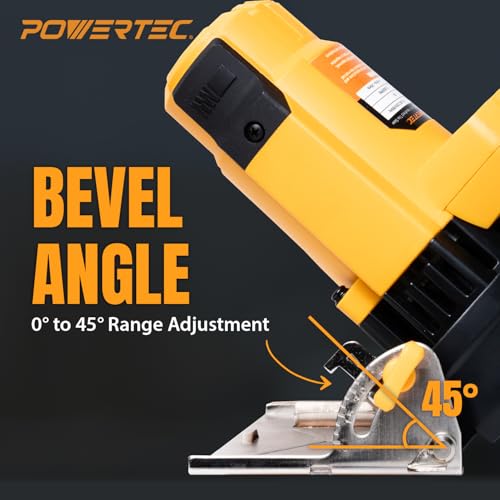
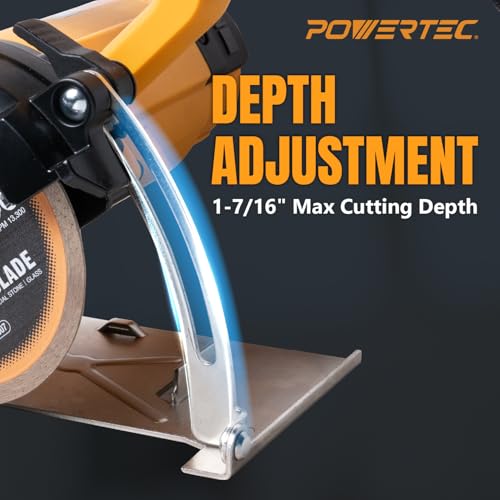
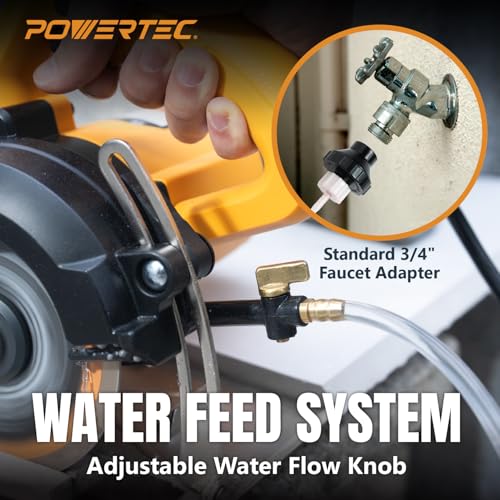
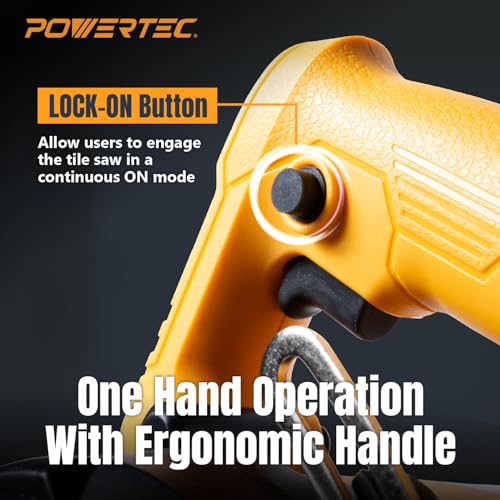
The POWERTEC HTS1045C earns its ‘Best Overall’ label not by dominating one category, but by excelling across the board. With a 12-amp motor and 1-7/16-inch max depth, it cuts deeper than most handhelds, making it a stronger pick for thicker stone or outdoor pavers. The adjustable water feed system gives real control over flow, which reviewers say prevents puddling while still keeping the blade cool. And the inclusion of a GFCI plug is a standout safety feature, rare at this level, and something I always recommend for wet cutting near floors or outdoors.
It’s a bit heavier at 9.5 lbs, but the balance feels solid in hand, and the extra blade in the package adds real value. While the KSEIBI is faster on RPM, this one delivers more sustained torque under load. For users tackling full-room tile installs or countertop edges, that extra depth and safety margin make it the smarter buy.
Product photos
How We Evaluated handheld wet tile saws
Rather than a hands-on lab test, my research for these recommendations focused on a detailed comparison of published specifications and features across numerous models. I weighed owner reviews from multiple sources, and cross-referenced them with expert opinions found in trade publications and established tool review sites. This process allowed me to rank saws based on a combination of performance indicators and real-world usability.
For handheld wet tile saws, cutting depth and motor power were heavily weighted. A deeper cutting capacity allows for more versatile applications, while sufficient motor power is crucial for cleanly cutting harder materials like porcelain and stone. Blade quality and the availability of safety features – particularly GFCI protection – also significantly impacted rankings, as these directly relate to both the quality of the cut and operator safety.
Specifications reliably indicate motor power, blade size, and maximum cutting depth. However, I relied on owner feedback to assess factors such as build quality, ease of use, and the effectiveness of the water cooling system. Reputation, particularly for brands known for durability in the power tool space, also played a role in my assessment, helping to predict long-term reliability. Understanding tile cutting techniques is also important for getting the most out of these tools.
Choosing The Right handheld wet tile saws
Choosing the right handheld tile saw can make the difference between a smooth, professional-looking tile job and a frustrating, time-consuming mess.
A quality handheld tile saw balances power with control. Look for models with robust motors (10+ amps is a good starting point) paired with features like adjustable depth and bevel settings for versatility. Blade quality is paramount; a diamond blade designed for the specific material you’re cutting will deliver cleaner cuts and longer life. Don’t overlook safety features like GFCI protection, especially when working with water.
Motor Power and Blade Speed
Don’t assume more power always equals better performance. While a higher amperage motor (12 amps or more) is beneficial for tackling thicker or harder materials like porcelain and stone, it’s the combination of power and blade speed (RPM) that truly matters. A slower-spinning, high-torque motor might bog down on dense tile, whereas a higher RPM motor with insufficient torque won’t maintain consistent speed under pressure. Consider the types of tile you’ll be cutting most often; for softer ceramic tile, a lower-powered saw may suffice, but for harder materials, investing in a more robust model is wise.
Blade Quality and Material
The blade is arguably the most critical component of any tile saw, and opting for a cheap one will almost always lead to chipped tiles and a frustrating experience. Most handheld tile saws use diamond blades, but the quality of the diamond matrix and the bond holding it together varies significantly. For general-purpose cutting, a continuous rim diamond blade is a good choice, but for faster, more aggressive cuts in softer materials, a segmented rim blade might be preferred. Understanding diamond blade applications is key to getting the best results.
- A basic, inexpensive blade may only last for a few cuts through hard porcelain.
- Mid-range blades offer a better balance of cost and durability, lasting for several projects.
- High-end blades, often featuring specialized diamond matrices and cooling technology, can cut through even the toughest materials with minimal chipping and maximum lifespan, making them a worthwhile investment for frequent users or professionals.
Usability and Safety Features
Beyond power and blade quality, ease of use and safety features are essential. Look for saws with adjustable depth and bevel settings, allowing you to make precise cuts for corners and edges. A comfortable grip and lightweight design will reduce fatigue during extended use. Safety features like a GFCI plug are absolutely crucial; they protect against electric shock in wet environments.
A good rule of thumb is to always wear safety glasses and a dust mask when operating a tile saw, even when using a wet-cutting model.
Many of the top handheld tile saws also include features like adjustable water flow controls and built-in water reservoirs, which help keep the blade cool, reduce dust, and improve cut quality. If you are looking for best portable tile cutters, ensure it has a carrying case for easy transport and storage.
Handheld Wet Tile Saws Compared
The following table provides a specification overview of several handheld wet tile saws to assist in comparing features.
| Product Name | Blade Size (in) | Motor Power (W) | Max Cut Depth (in) | RPM | Weight (lbs) | Bevel Cut |
|---|---|---|---|---|---|---|
| POWERTEC HTS1045C | 4.5 | 1400 | 1-7/16 | 12,000 | 9.5 | 45° |
| KSEIBI 4″ | 4 | 1250 | 1-3/8 | 13,800 | 7 | 45° |
| VBLIOT 4-3/8″ | 4-3/8 | 1400 | 4-3/8 | 13,000 | N/A | N/A |
| PeakPursuit 7″ | 7 | N/A | 1.34 | 6500 | N/A | 0-45° |
| POWERTEC HTS1045C with GFCI Plug | 4.5 | 1400 | 1-7/16 | 12,000 | 9.5 | 45° |
Frequently Asked Questions
What grit diamond blade should I use with a handheld wet tile saw?
A 100-200 grit blade is generally best for general-purpose cutting with these saws. Lower grits cut faster but leave a coarser finish, while higher grits provide a smoother cut but wear down quicker.
Can I cut porcelain tile with a 4-inch handheld wet tile saw?
Yes, you can, but it requires a saw with a powerful motor (12+ amps) and a high-quality diamond blade specifically designed for porcelain. Expect slower cutting speeds and potentially shorter blade life compared to ceramic tile.
How often do I need to replace the blade on my handheld wet tile saw?
Blade life varies greatly depending on use, but expect to replace it after approximately 20-50 hours of cutting hard materials like porcelain. Softer ceramic tile will extend the blade’s life considerably.
What’s the importance of GFCI protection on a wet tile saw?
GFCI (Ground Fault Circuit Interrupter) protection is essential for safety. It immediately cuts off power if it detects a ground fault, preventing electric shock when working with water – a critical feature for any wet-cutting tool.
Where can I find more in-depth wet tile saw comparisons and reviews?
Beyond this guide, numerous online resources offer detailed comparisons and owner reviews. Look for sites specializing in power tool testing and building/remodeling advice to get a broader perspective on different models.
The Bottom Line
Ultimately, choosing a handheld wet tile saw comes down to balancing the level of control and precision you require against how much fuss you’re willing to tolerate. For most homeowners and DIYers, the POWERTEC HTS1045C strikes that balance best. It delivers solid power, a good cutting depth, and the crucial GFCI protection, all at a reasonable price point.
If you’re on a tighter budget, the KSEIBI 4” offers a surprisingly capable option for smaller projects and softer tiles. Those who anticipate tackling a wide range of materials and larger jobs, however, should look to the VBLIOT 4-3/8” for its increased cutting depth and robust motor. Remember that proper wet saw cutting techniques will improve performance with any of these saws.
Beyond specs and features, remember that a quality blade is paramount, and safety should always be your first priority. A saw is only as good as the blade you put on it, and no time savings are worth risking injury. Focus on those fundamentals, and you’ll be well-equipped to tackle any tiling project with confidence.
