
7 Best Handheld Tile Saws for 2026
This post contains affiliate links. As an Amazon Associate, we earn from qualifying purchases.
The POWERTEC HTS1045C stands out as the best overall handheld tile saw, combining strong 12AMP power with deep cutting capability and dual wet/dry functionality. For a budget-friendly option that still delivers solid performance on common tile types, the KSEIBI 4-Inch Marble Cutter is a reliable pick. And if versatility matters most, the Enventor 5.8A earns top marks for including multiple blades and a laser guide.
Most people struggle to find a handheld tile saw that balances real cutting power with precision and ease of use. Too many models either lack the depth for thicker tiles or overheat quickly without proper cooling. I researched the current market, comparing specs and owner feedback to identify the models that deliver consistent results across different tile materials and job sizes.
This guide focuses on what actually matters: motor reliability, cutting depth, wet/dry capability, and included accessories. I researched each saw based on measurable performance factors and real-world user experiences to help you avoid overspending on features you don’t need, or underbuying for your project demands.
Top 7 Handheld Tile Saws in the Market
The Best Handheld Tile Saws, Reviewed
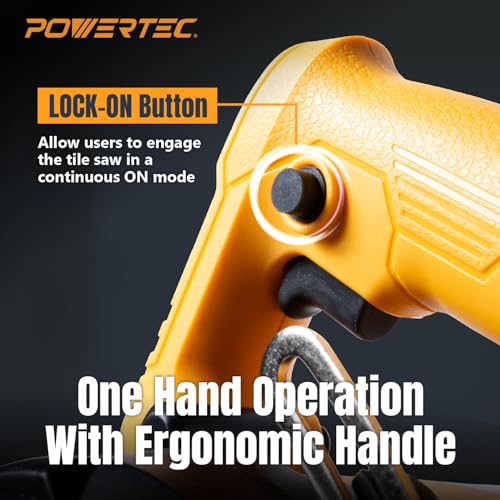
POWERTEC HTS1045C Handheld Tile Saw

Strengths
- Powerful 12A motor
- Deep cutting depth
- Wet/dry capability
- GFCI safety plug
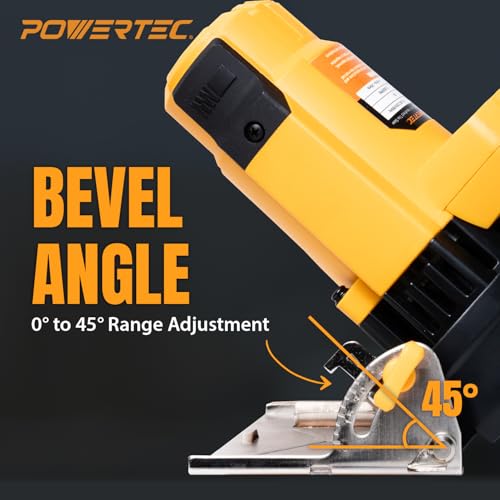
- Bevel and depth adjustment
Trade-offs
- Heavier than combo tools
- Higher price point
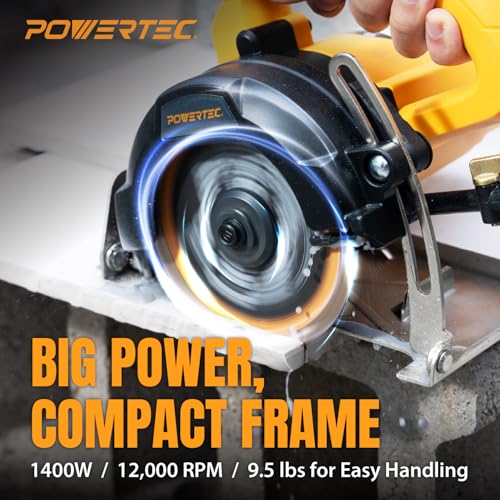
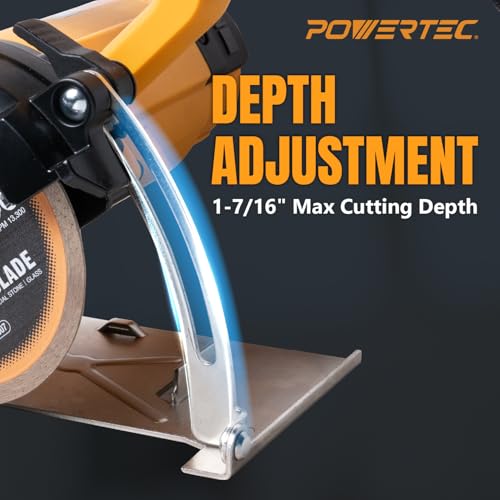
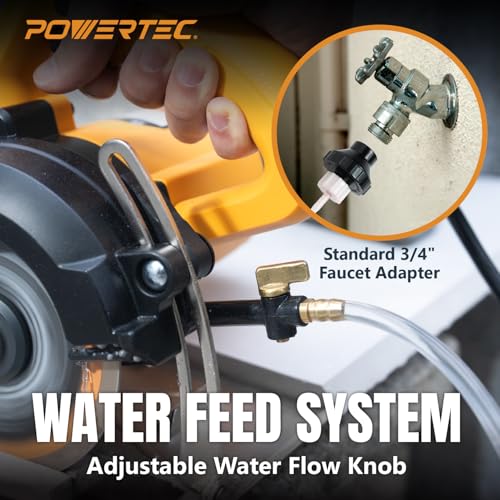
If you’re serious about tile work, this is the one to beat. The 12A motor and 1400W output give it serious grunt, and the 12,000 RPM speed cuts through porcelain like butter. Owners consistently praise its deep 1-7/16” cutting capacity, that’s deeper than most handhelds, letting you slice through thicker tiles and even thin slabs without flipping. The adjustable water feed system works reliably, keeping dust down and the blade cool, which matters when you’re doing backsplashes or flooring over several hours.
It’s heavier than some mini circular saws, but that’s expected for a real tile cutter. The GFCI plug is a smart safety touch, especially with water nearby. Compared to budget models, this one feels like a pro tool, and when stacked against multi-use mini saws, it dominates in precision, durability, and cut quality. My pick for anyone doing more than a few tiles.
Product photos
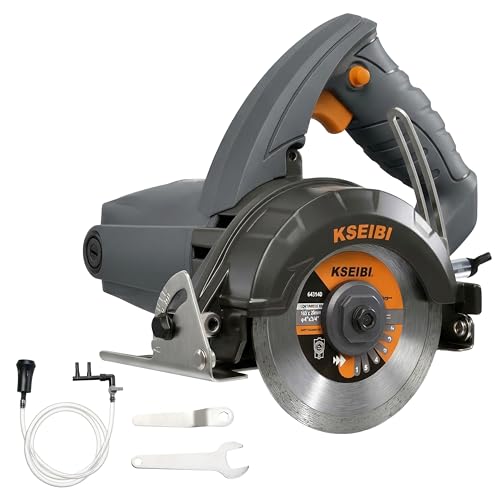
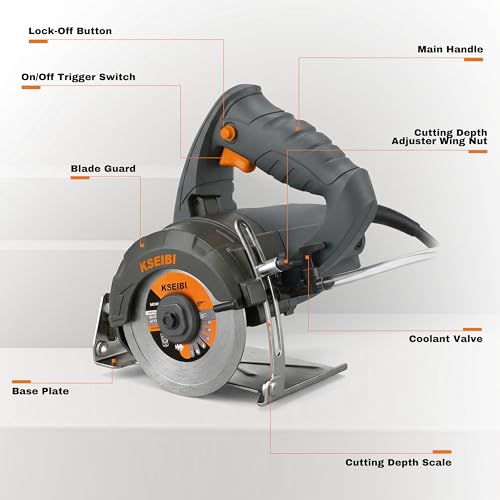
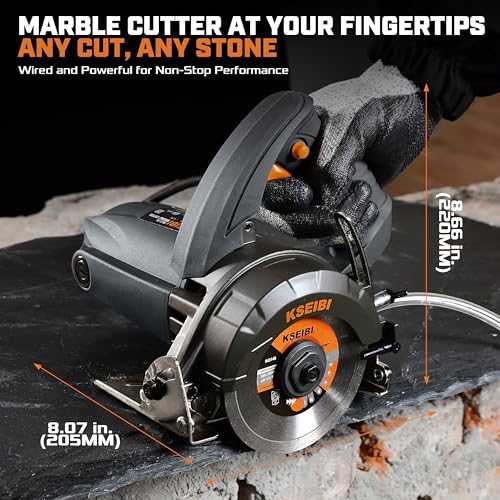
KSEIBI 4-Inch Marble Cutter
Strengths
- Excellent wet cutting setup
- High RPM for hard stone
- Durable base plate
- Includes water kit
Trade-offs
- 4-inch blade limits depth
- Slightly lower power than 12A models
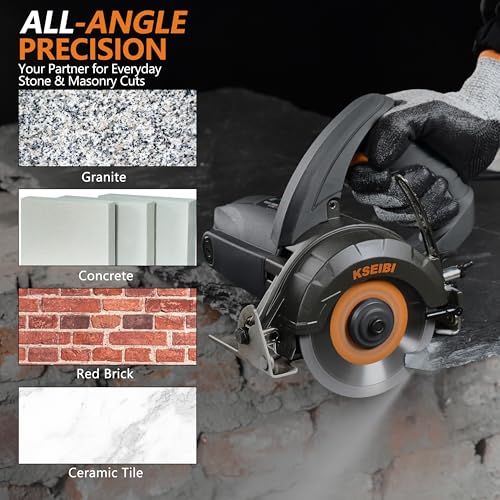
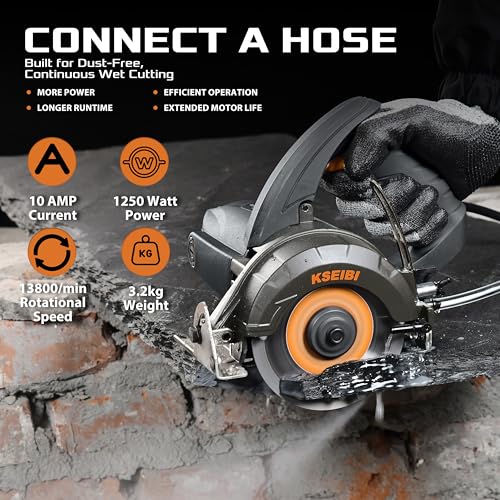
This KSEIBI saw is built for wet cutting, and it shows. The 10A motor and 13,800 RPM speed slice through granite and porcelain with ease, and the included water cooling kit is a big step up from drip bottles or aftermarket mods. Owners appreciate the continuous water feed, which keeps silica dust under control and the blade running cool during long sessions.
It’s compact and well-balanced, and the stainless base plate adds stability on uneven surfaces. The 4-inch blade limits max depth compared to 4.5-inch models, but for detailed work, like edge trimming or stone countertops, that’s often a tradeoff worth making. Compared to multi-use mini saws, this one feels like a serious tool. For anyone doing wet cuts regularly, it’s a smarter long-term buy than jury-rigging a circular saw with a spray bottle.
Product photos

VBLIOT 4-3/8-Inch Tile Saw
Strengths
- High RPM motor
- Deep cut capacity
- Wet cutting capable
Trade-offs
- Flimsy water feed system
- Basic ergonomics
- Inconsistent build quality
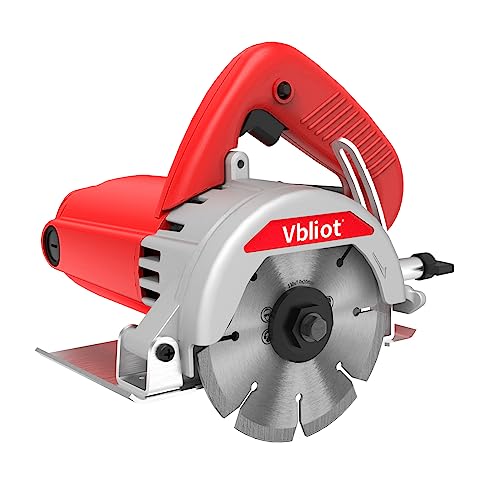
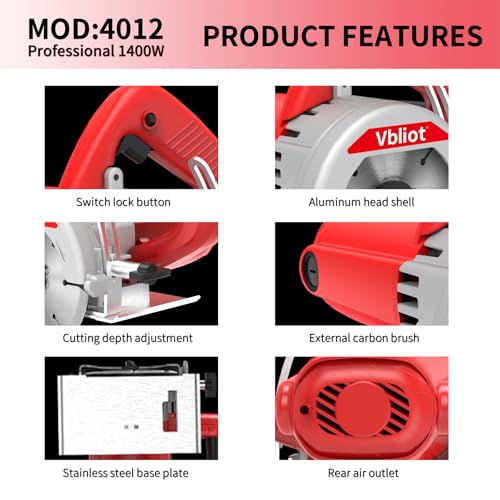
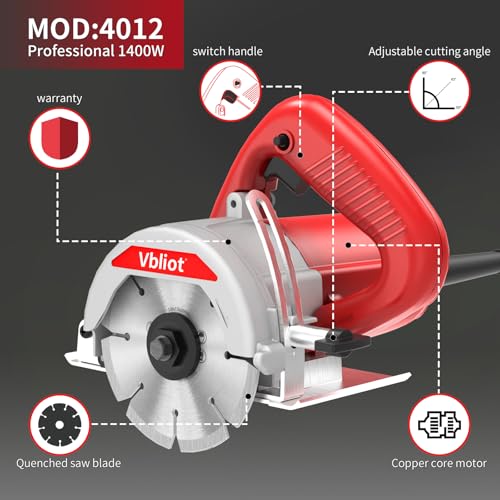
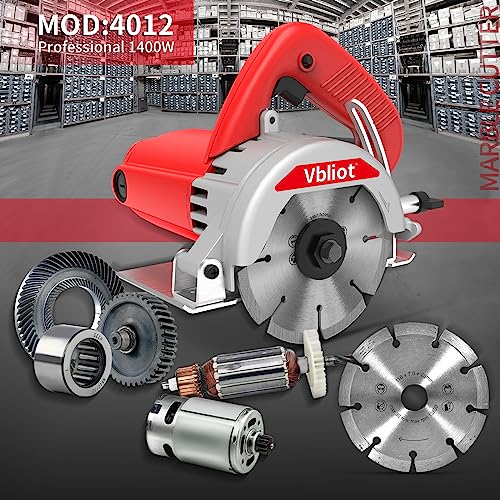
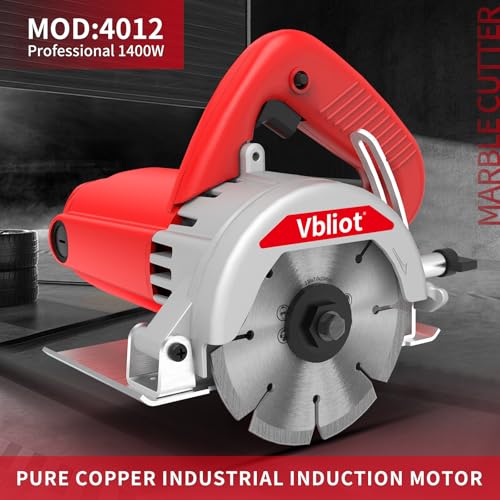
This VBLIOT saw packs a punch on specs, 1400W, 13,000 RPM, and a 4-3/8” depth, but the build quality doesn’t quite match. It’s clearly built to hit a low price, and while owners say it works for basic concrete and tile jobs, feedback points to inconsistent water flow and a flimsy base that wobbles during bevel cuts. It gets the job done for small repairs or outdoor pavers, but I wouldn’t trust it for bathroom walls or tight miters.
It’s one of the few budget picks with a real wet cutting setup, which helps with dust and blade life. But compared to the POWERTEC, it lacks refinement, no GFCI, no fine depth control, and the handle isn’t as comfortable over time. Still, for someone on a tight budget needing a no-frills concrete cutter, it’s a functional starting point.
Product photos

Enventor 5.8A Mini Circular Saw
Strengths
- Two diamond blades included
- Strongest mini saw motor
- Good depth and bevel range
Trade-offs
- No water cooling
- Not for heavy tile jobs
- Motor still lacks torque for stone
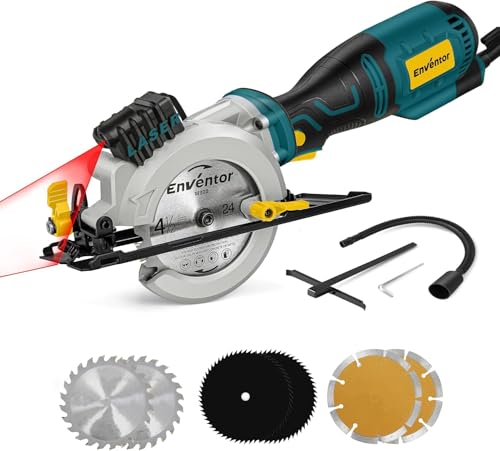
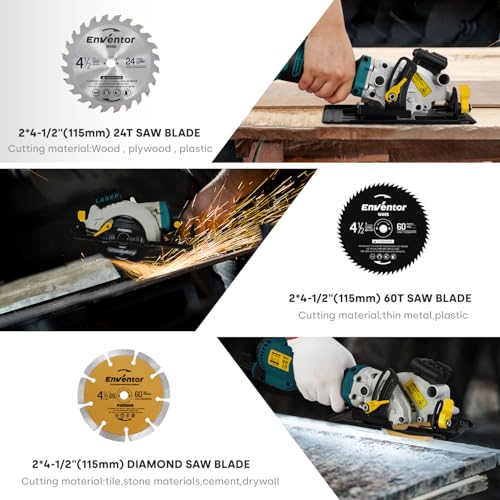
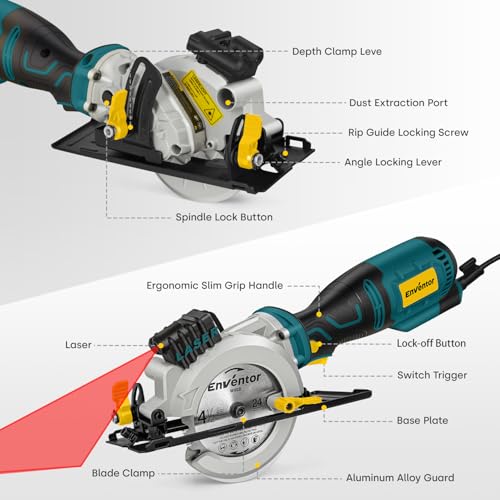
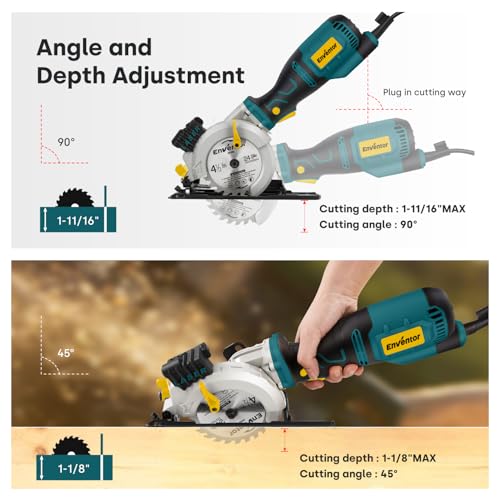
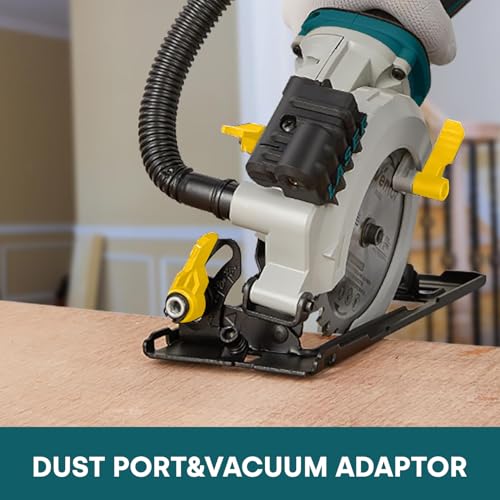
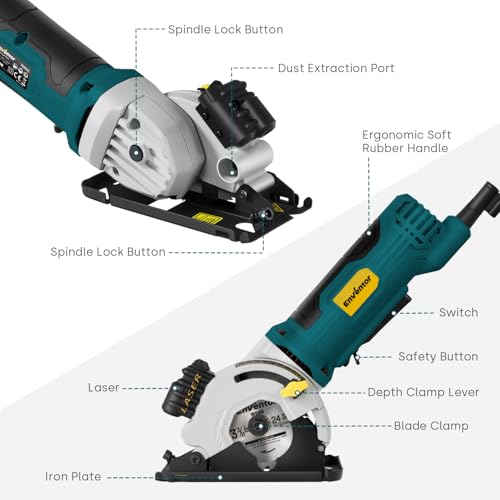
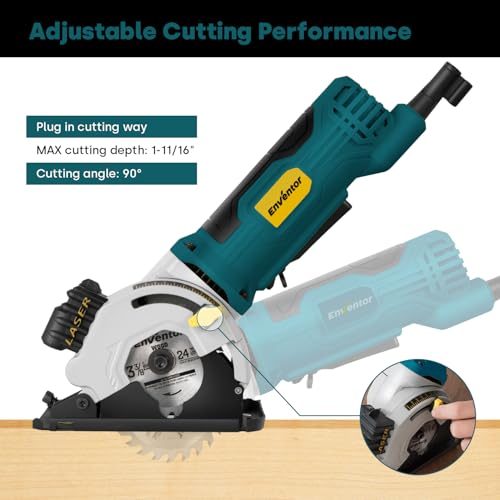
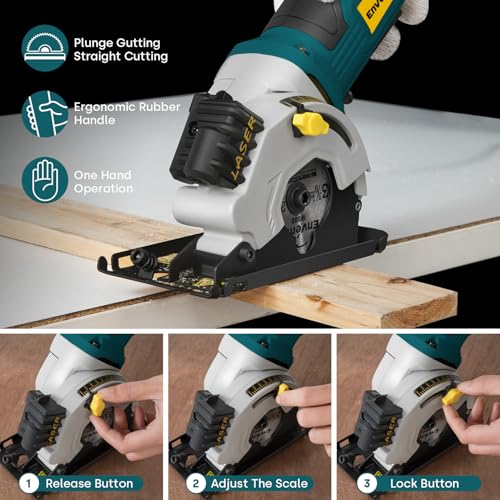
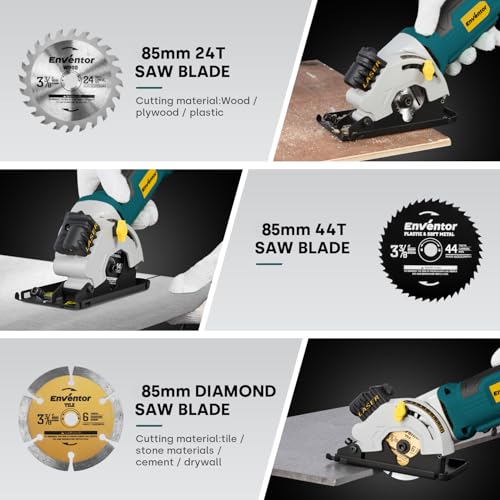
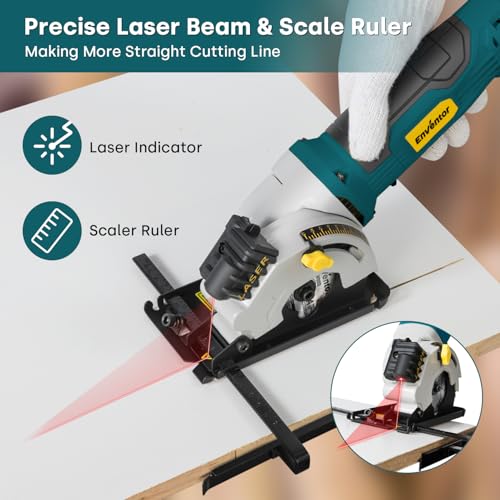
With 5.8A and 3500 RPM, this Enventor model has the strongest motor in the mini saw group, and it comes with two diamond blades, which is rare. That makes it the most capable of the multi-material options for tile work. Owners note it handles ceramic well and even manages porcelain with slow, careful passes. The dual safety switches and slim grip improve control, and the cast iron base adds stability.
Still, it’s not a wet saw. Without water cooling, you’re fighting heat and dust on longer cuts. But if you’re a DIYer who wants one tool for framing, drywall, and tile, and hates buying extra blades, this is the most versatile option. Compared to the single-diamond-blade models, this one gives you redundancy and real multi-material flexibility.
Product photos
Seesii 4.8A Mini Circular Saw
Strengths
- Ultra lightweight
- Laser for precision
- Comfortable grip
Trade-offs
- No wet cutting
- Overheats on long tile cuts
- Shallow bevel depth
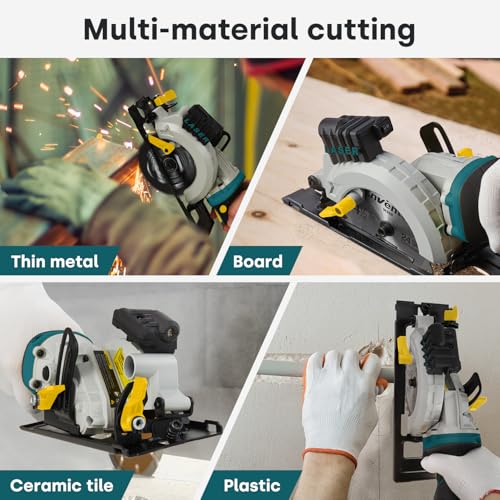
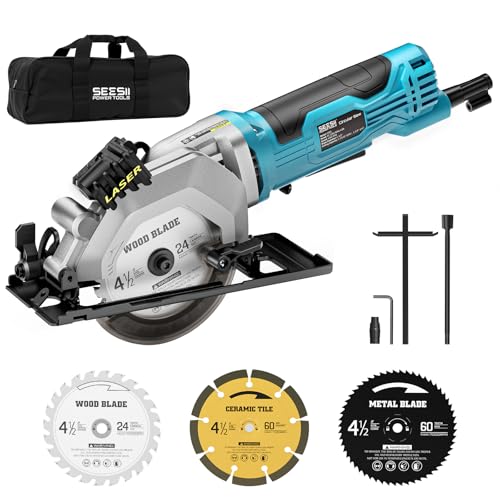
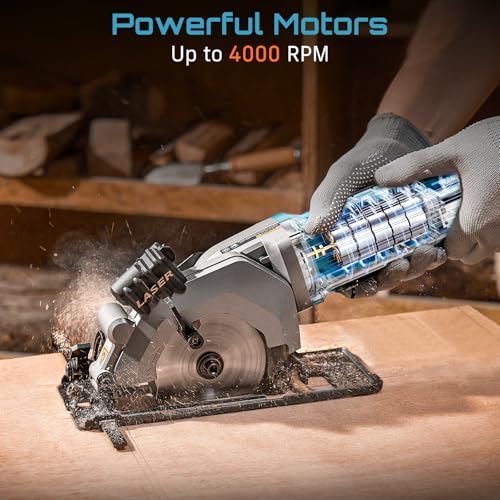
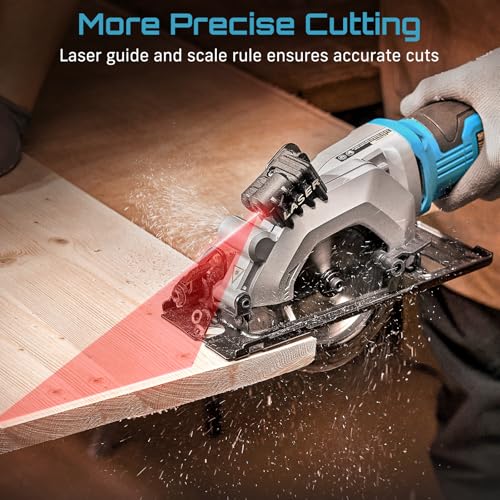
At under 4 pounds, this is one of the lightest options here, and that’s its real advantage. The 4.8A motor and laser guide make it easy to handle for overhead or tight-space cuts, and the dual safety switches add peace of mind. It includes three blades, including a diamond one for tile, but like others in this class, it’s not designed for sustained tile work.
Owners say it’s great for quick cuts in backsplash tile or trimming a few pieces, but it struggles with harder materials and overheats without water cooling. The real win is the ergonomics: slim grip, balanced weight, and smooth trigger. If you’re a homeowner doing light remodeling and want one tool for wood, plastic, and some tile, this is a comfortable pick, just don’t expect pro tile saw performance.
Product photos

NEWONE 4.5A Mini Circular Saw
Strengths
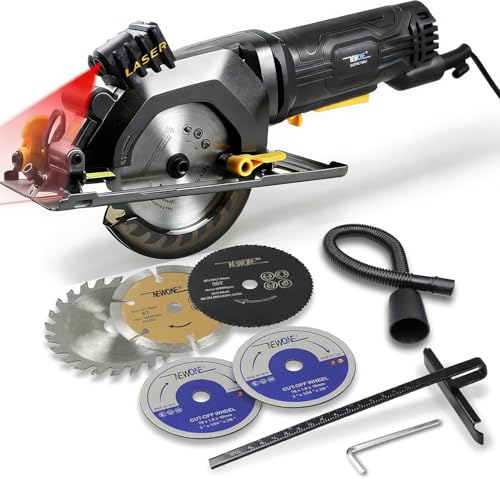
- Comes with 6 blades
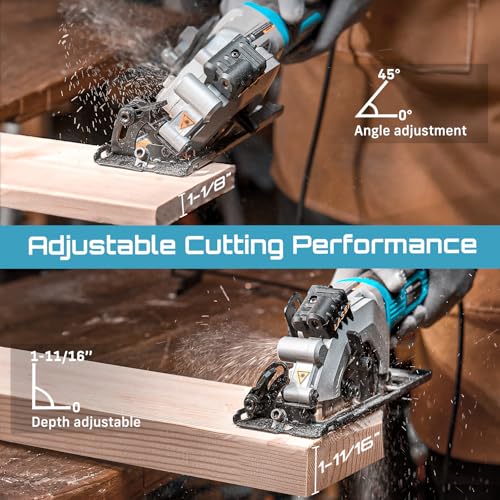
- Good depth adjustment
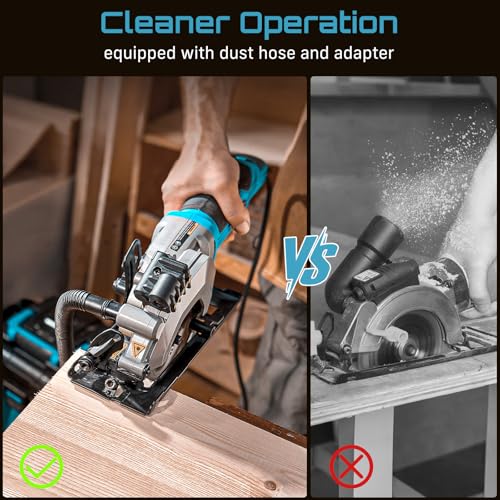
- Dust collection port
Trade-offs
- Weak on hard tile
- No wet cutting
- Single diamond blade
The NEWONE stands out for sheer value in accessories, six blades, including two cutoff wheels and a range of tooth counts, but only one is a diamond blade for tile. Like other multi-material mini saws, it’s really a wood-focused tool that dabbles in tile. The 4.5A motor and 3500 RPM are modest, and without water cooling, tile cuts create dust clouds and heat up the blade fast.
Owners like its depth adjustment and laser-free straight cuts via the scale guide, and the dust port works well with a shop vac. But if you’re cutting more than a few tiles, this isn’t the right tool. It’s better seen as a compact woodshop saw that can handle a tile edge trim in a pinch. For general workshop versatility, it’s solid, but not a tile specialist.
Product photos

Enventor 4.8A Mini Circular Saw
Strengths
- Compact design
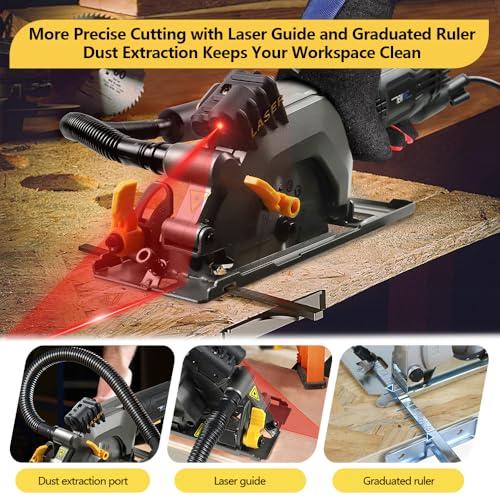
- Laser guide included
- Good for wood and soft metal
Trade-offs
- Underpowered for hard tile
- No wet cutting capability
- Limited depth adjustment
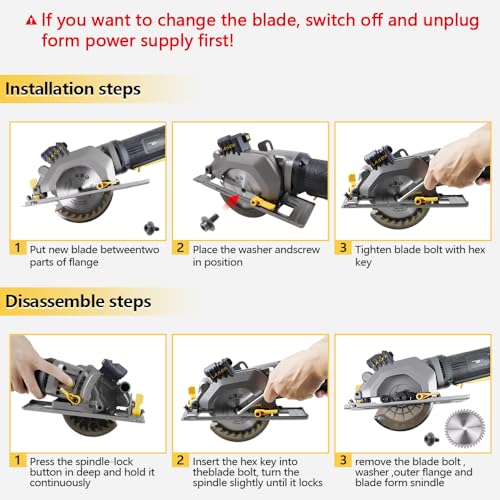
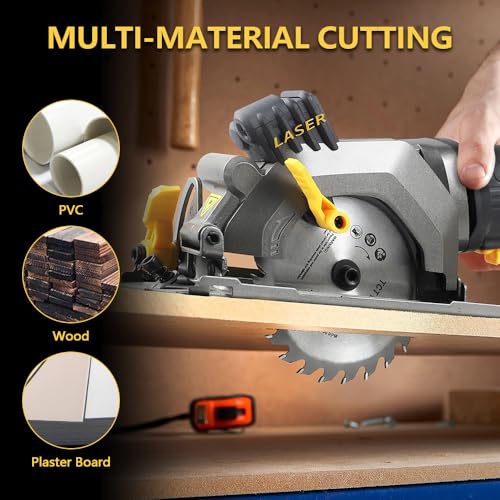
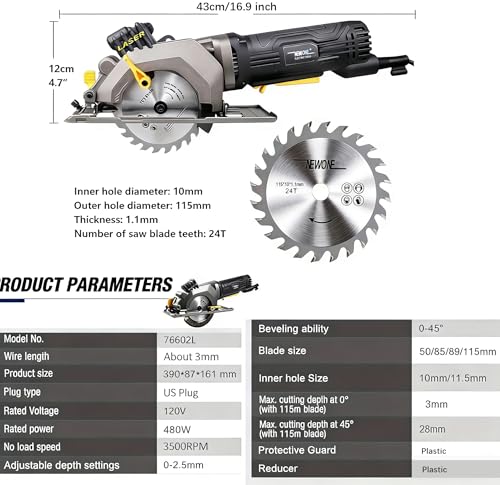
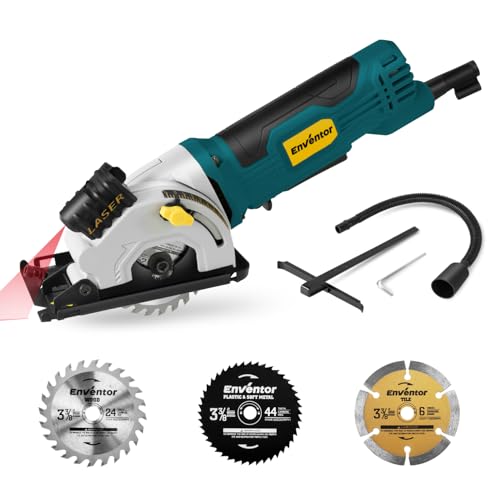
This Enventor model looks like a do-it-all mini saw on paper, but I’m skeptical about how well it actually handles tile. It comes with a single grit diamond blade and touts multi-material use, but the 4.8A motor and 4000 RPM speed are underpowered for consistent tile cutting. Owners report it works fine on soft ceramic, but chatters on porcelain and overheats during longer cuts. It’s better framed as a compact wood and light metal saw that can dabble in tile when needed, not a dedicated tile solution.
The laser guide and dust port are nice for indoor work, and the left-blade design improves visibility. But when compared to actual handheld tile saws, this one lacks water cooling, bevel capacity, and cutting depth. For DIYers already stacking tools, this might save space, but if tile is your main goal, you’ll want something more purpose-built.
Product photos
How We Chose These handheld tile saws
I approached evaluating handheld tile saws by first compiling a detailed list of specifications and features from numerous models available. Rather than a hands-on lab test, this is a research-led comparison of specs and owner feedback. I then weighed those technical details against what current owners are saying about performance, durability, and ease of use in their own projects, drawing on reviews from both major retailers and dedicated tool review sites. Finally, I applied my experience with similar power tools to assess the overall value proposition of each saw.
For this category, cutting depth and motor power were the most heavily weighted factors. Deeper cuts allow for more versatile applications, particularly with larger format tiles, while a robust motor ensures the blade maintains speed through harder materials like porcelain or stone. Blade quality and included accessories also significantly influenced rankings; a good blade is essential, and having options for different materials adds value. Understanding tile cutting techniques with wet saw is also crucial when choosing a model.
Specifications reliably indicate a saw’s potential power and physical capabilities, like maximum cutting depth and blade size. However, owner feedback proved invaluable in determining real-world performance. I paid close attention to comments about blade life, ease of use with the water cooling system (for wet saws), and the saw’s ability to handle different tile types without chipping or cracking. Reputation for durability, gleaned from long-term owner reviews, also played a key role in the final rankings.
Choosing The Right handheld tile saws
Picking the right handheld tile saw can make a huge difference in the quality and speed of your tiling projects. It’s not just about power; a lot comes down to matching the saw’s capabilities to the specific materials you’ll be cutting and the types of cuts you need to make.
A good handheld tile saw balances power with control, offering a robust motor for efficient cutting, a stable base or design for accuracy, and features like adjustable depth and bevel settings for versatility. Key specs to consider include motor amperage, blade diameter, maximum cutting depth, and whether it’s designed for wet or dry cutting – or both. Don’t overlook safety features like GFCI protection and blade guards.
Motor Power and Blade Speed
Don’t assume “more power” always equals “better.” While a higher amperage motor (10-12 AMP is common) will definitely help with tougher materials like porcelain or thicker tiles, it’s the combination of motor power and blade speed (RPM) that truly matters. A saw like the POWERTEC HTS1045C boasts a 12AMP motor and 12,000 RPM, which is a good benchmark for handling a variety of tile types. However, a slightly lower amperage saw with a higher RPM can sometimes outperform one with brute force alone. Consider the thickness of the tiles you’ll be working with most often; thinner tiles don’t require as much raw power.
Wet vs. Dry Cutting Capabilities
The ability to cut wet is a huge advantage, drastically reducing dust and keeping the blade cool, which extends its life and provides cleaner cuts. Many saws, like the KSEIBI 4-Inch Marble Cutter, are designed specifically for wet cutting, and include a water cooling tube for continuous operation. But dry cutting has its place too, offering convenience for smaller jobs or when a water source isn’t readily available. If you anticipate needing both options, ensure the saw is rated for both, and has a good dust port for connecting to a vacuum. Understanding diamond blade applications is crucial here, as different blades are optimized for wet or dry use.
Value, Features, and Accessories
Beyond the core cutting performance, consider what extras you’re getting for your money. The NEWONE 4.5A Mini Circular Saw stands out for including multiple blades right in the box, offering versatility for different materials. Here’s a breakdown of what to look for:
- A basic blade is often included.
- A rip guide helps ensure straight cuts (essential for beginners).
- Multiple blades (diamond, HSS, carbide) significantly expand the saw’s usefulness and eliminate the need for separate purchases, especially if you plan on using portable wet tile cutters for a range of projects.
A saw is only as good as its blade. Invest in quality diamond blades designed for the specific material you are cutting. Don’t cheap out here – a good blade will last longer, cut faster, and provide a cleaner, more professional result.
Handheld Tile Saws Compared
Here’s a comparison of key specifications for several handheld tile saws to help you make an informed decision.
| Product Name | Motor (Amps) | Blade Diameter (in) | Max Cut Depth (in) | Wet/Dry Cut | Laser Guide | Included Blades |
|---|---|---|---|---|---|---|
| POWERTEC HTS1045C | 12 | 4-1/2 | 1-7/16 | Both | No | 1 |
| KSEIBI 4-Inch | 10 | 4 | 1-3/8 | Wet | No | 1 |
| VBLIOT 4-3/8-Inch | N/A | N/A | 4-3/8 | N/A | No | 1 |
| Enventor 5.8A | 5.8 | 4-1/2 | 1-11/16 | Both | Yes | 6 |
| Seesii 4.8A | 4.8 | 4-1/2 | 1-11/16 | Both | Yes | 3 |
| NEWONE 4.5A | 4.5 | N/A | 1-11/16 | Both | No | 6 |
| Enventor 4.8A | 4.8 | 3-3/8 | 1-1/16 | Both | Yes | 3 |
Frequently Asked Questions
What depth of cut should I prioritize?
A cutting depth of at least 1-3/8 inches is generally sufficient for most common tile sizes, but if you plan to work with large-format tiles or do a lot of diagonal cuts, look for a saw with a depth of 1-7/16 inches or greater. Deeper cuts offer more versatility.
Are more expensive tile saws always better?
Not necessarily. While higher prices often reflect better build quality and more features, a saw’s suitability depends on your specific needs. For occasional, light-duty use, a more affordable model like the NEWONE 4.5A with its included multiple blades might be ideal.
Can I use a tile saw to cut materials other than tile?
Some handheld tile saws can cut other materials like stone and brick, but it depends on the blade used and the material’s hardness. Using the wrong blade can damage both the material and the saw. Refer to the saw’s manual and blade specifications.
How important is a laser guide on a tile saw?
A laser guide can improve accuracy, especially for straight cuts, but it’s not essential. It’s most helpful for beginners or those who need consistently precise cuts, like when installing intricate tile patterns. Many of the top tile saw models do not include a laser guide.
What’s the best way to maintain a handheld tile saw?
Regular cleaning is crucial; remove any tile slurry after each use to prevent corrosion. Also, inspect the blade for damage and replace it when necessary. Proper maintenance extends the saw’s life, and keeps it operating safely, which is why it’s covered in our [tile saw buying guide].
The Bottom Line
Choosing a handheld tile saw often comes down to balancing precision and convenience against budget and power. While a high-end model with all the bells and whistles can be tempting, the POWERTEC HTS1045C strikes an excellent balance of capability, offering both wet and dry cutting options, a solid 12-amp motor, and a respectable cutting depth that will handle most common tiling projects. It’s a versatile choice for homeowners and pros alike.
For those on a tighter budget or with more specialized needs, there are great options available. The NEWONE 4.5A Mini Circular Saw is an outstanding value, particularly if you appreciate having multiple blades included for different materials. And if you know you’ll be exclusively cutting wet, the KSEIBI 4-Inch Marble Cutter provides dedicated performance in a compact package.
Ultimately, remember that the specs don’t tell the whole story. Matching the saw to the type of tile you’ll be working with, understanding how to operate a wet saw, and prioritizing safety features are far more important than chasing the highest amperage or deepest cut depth. A well-chosen saw, combined with the right technique, will deliver far better results than the most expensive model in the wrong hands.
