
7 Best 10-Inch Wet Tile Saw Blades of 2026
This post contains affiliate links. As an Amazon Associate, we earn from qualifying purchases.
The DEWALT 10-Inch Continuous Rim blade stands out as the best overall for clean, precise cuts on hard tile, especially porcelain. For those watching their budget, the FACHLICH X-Turbo Mesh delivers solid performance without breaking the bank, while the GoYonder 10-Inch Super Thin offers excellent versatility with its dual arbor sizes and smooth wet and dry capability.
Most people struggle to find a blade that cuts cleanly without chipping or burning out too fast, especially when tackling tough materials like porcelain. Picking the wrong one wastes time, ruins tile, and leads to frustration on projects that should be straightforward.
Based on specs, owner feedback, and my years of experience with power tool accessories, I focused on durability, cut quality, and compatibility. These picks reflect real-world performance across different tile types and user needs, not just marketing promises.
Top 7 10 Inch Wet Tile Saw Blades in the Market
The Best 10 Inch Wet Tile Saw Blades, Reviewed
DEWALT 10-Inch Continuous Rim Diamond Blade
Strengths
- Continuous rim for smooth cuts
- Laser expansion slots
- Long blade life
Trade-offs
- Wet use only
- Higher price point
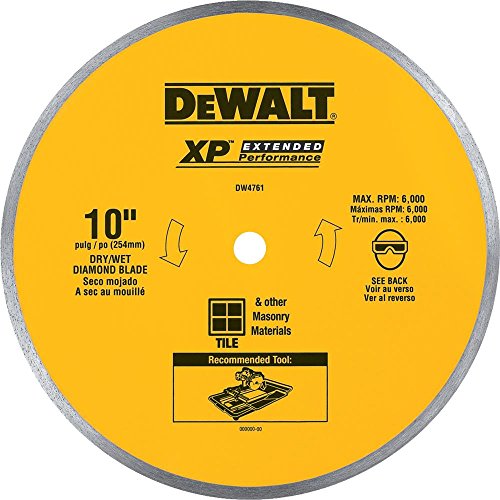
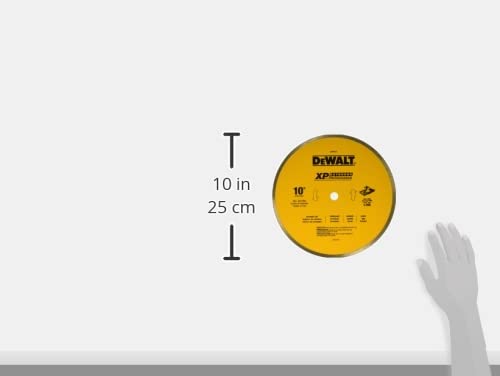
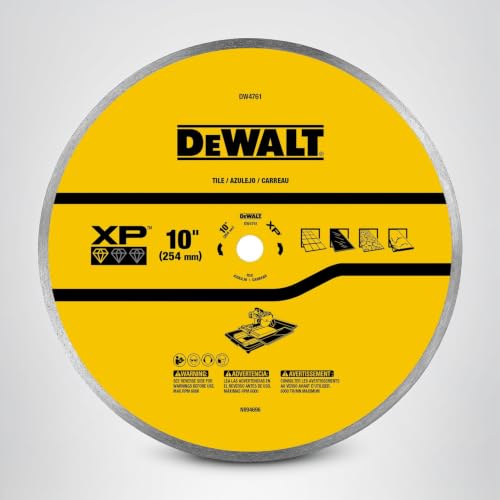
This is the blade I’d recommend as the overall best for most users, not because it’s the cheapest or the most versatile, but because it consistently delivers clean, chip-free cuts with excellent lifespan. The continuous rim design is key here, and owners confirm it leaves a polished edge on ceramic and porcelain alike. The XP4 matrix, which claims 4x life over standard blades, seems to hold up in long-term feedback.
Laser-cut expansion slots prevent warping, a real issue with high-heat cutting, and the 5/8-inch arbor fits nearly every wet saw. Compared to the GoYonder or ZORUNNA, it’s less flashy but more reliable in sustained use. It’s not for dry cutting, but if you’re using a proper wet saw, that’s not a drawback. This is the pro-tier pick that balances performance and longevity.
Product photos
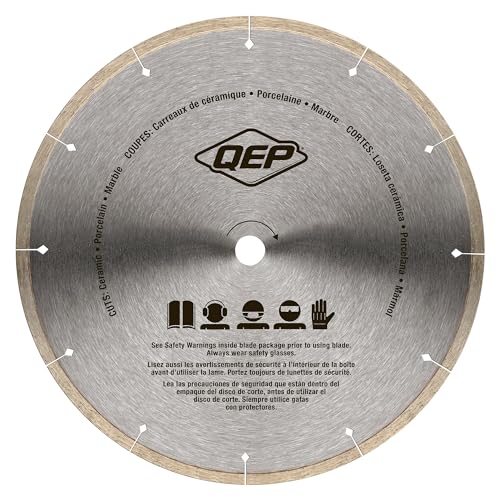
QEP 10″ Black Widow Thin Rim Blade

Strengths
- Excellent for porcelain
- Micro segment cooling
- Clean, chip-free cuts
Trade-offs
- Wet use only
- Not ideal for dry cutting
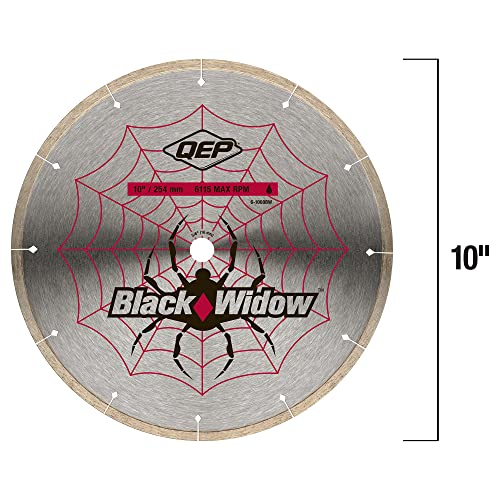
If you’re cutting a lot of porcelain, this is the blade that keeps coming up in owner reviews as a go-to. The 7 mm high-rim design with micro segments is clearly built for precision, and users consistently report clean, chip-free results even on dense tile. It’s strictly for wet cutting, which limits flexibility, but that’s a fair trade-off for the level of control it offers.
The 5/8-inch arbor fits most standard wet saws, and the steel quality feels robust in reports. Compared to multi-use blades like the Casaverde, the Black Widow doesn’t try to do everything, it does porcelain exceptionally well. I’d pick this over others if you’re tiling a bathroom or kitchen with high-end porcelain slabs and need edges that won’t need touch-ups.
Product photos

FACHLICH 10″ X-Turbo Mesh Porcelain Blade

Strengths
- Affordable price
- Good cut quality for cost
- Dual wet/dry use
Trade-offs
- Limited arbor size
- Shorter life than premium brands
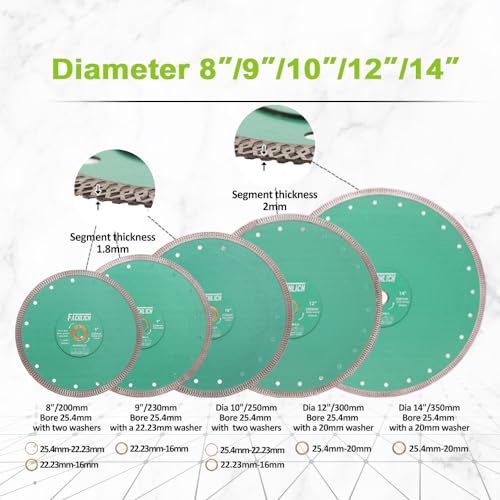
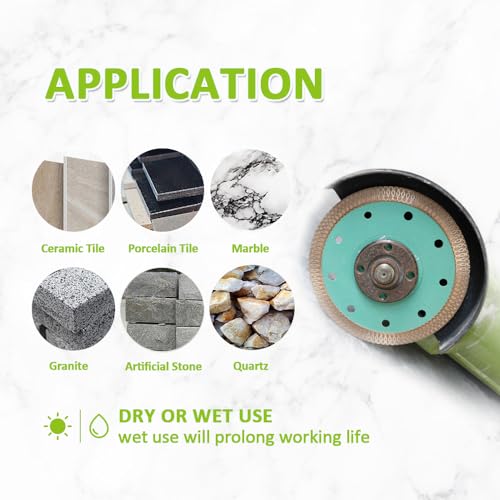
This blade makes a strong value play, solid specs on paper, including a hot-pressed sintered body and X mesh turbo rim, and owners report it performs well beyond its price. It handles both wet and dry cutting, and the 1.8mm thickness strikes a balance between speed and stability. The reinforced core helps reduce vibration, and users say it cuts cleanly through ceramic and mid-density porcelain.
It won’t match the DEWALT or QEP on finish quality for premium tile, but for weekend projects and basic renovations, it’s more than capable. Compared to the SHDIATOOL, it’s less adaptable in arbor size but often cheaper. If you’re on a budget and don’t need pro-level precision, this is the smarter pick.
Product photos


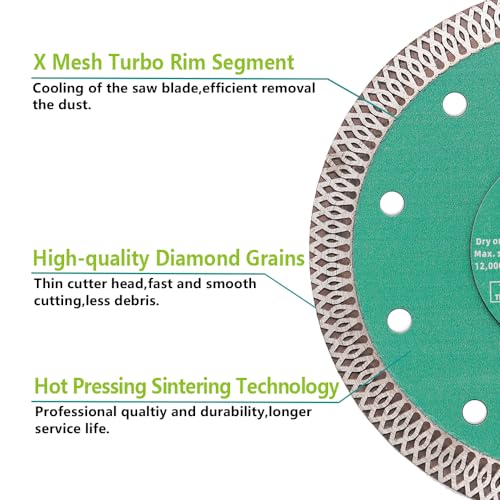
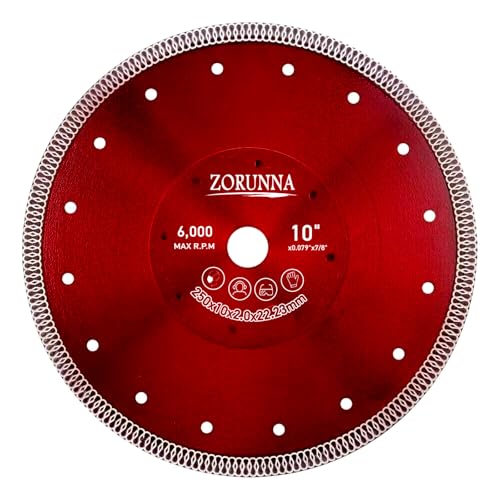
ZORUNNA 10″ Super Thin Tile Blade
Strengths
- Ultra-thin for precision
- Chip-free cutting
- Dual wet/dry use
Trade-offs
- 7/8″ arbor less common
- High RPM limit
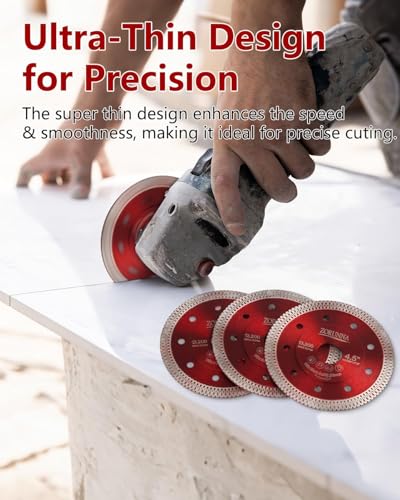
This blade leans hard into the chip-free promise, and the ultra-thin design with X-teeth turbo mesh rim delivers in owner feedback. At 1.8 mm thickness, it’s efficient and cuts fast, with many users saying it slices through porcelain like it’s meant to. The 7/8-inch arbor is less common, but the removable center ring helps it adapt to different grinders, which is a thoughtful touch.
It’s rated for both wet and dry use, and reviewers note it runs cool even during extended dry cuts, likely thanks to the segment design. Compared to the SHDIATOOL blade, it feels more refined in fit and finish. However, the max RPM of 13,200 means it’s not for high-torque wet saws pushing beyond that. For handheld work, it’s a standout.
Product photos
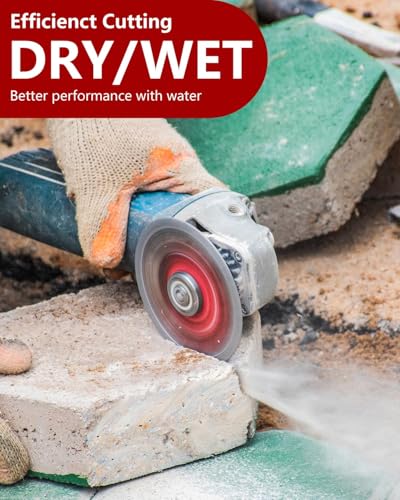

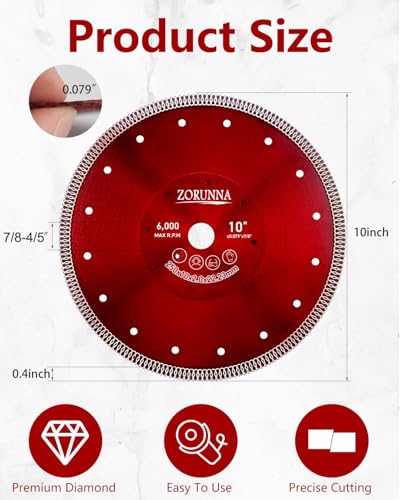
Casaverde 10″ Porcelain Cutting Diamond Blade

Strengths
- Dual wet/dry use
- Turbo mesh rim
- Thicker core design
Trade-offs
- Not the cleanest on dense porcelain
- No laser cooling slots
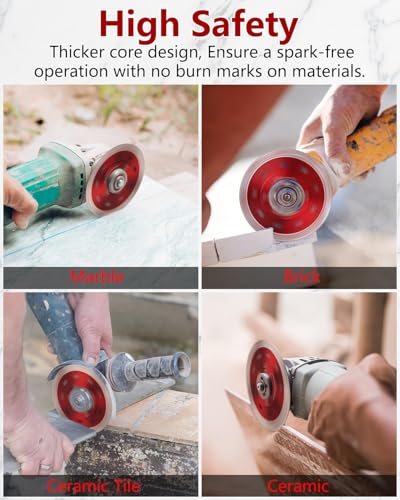
This blade makes a strong case for versatility, with a design that supports both wet and dry cutting right out of the box. The turbo mesh rim is a smart touch, helping with heat dissipation and debris removal, which owners say translates into smoother cuts across porcelain and ceramic. On paper, the thicker core should reduce vibration, and feedback generally supports that claim, users report less chatter than cheaper alternatives.
Where it stands out is in its flexibility. It’s not marketed as a specialist in one material, but it holds up across porcelain, granite, and thin masonry. That makes it a solid pick for DIYers who don’t want to swap blades constantly. Compared to dedicated porcelain blades like the QEP Black Widow, it doesn’t cut quite as cleanly on dense tile, but for general use, it’s dependable.
Product photos
SHDIATOOL 10″ Turbo Segment Diamond Blade
Strengths
- Multi-arbor compatibility
- Strong sintered build
- Good for varied materials
Trade-offs
- Slightly thicker than premium blades
- Not porcelain-optimized
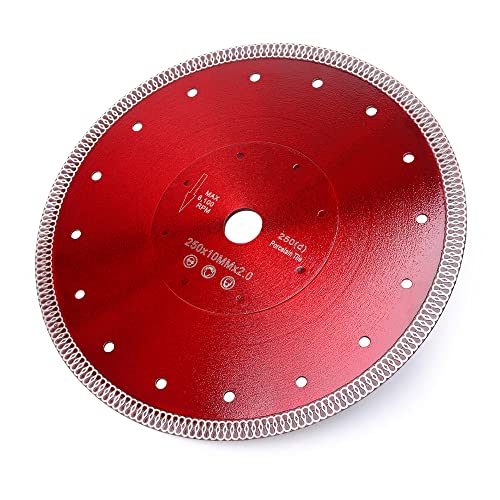
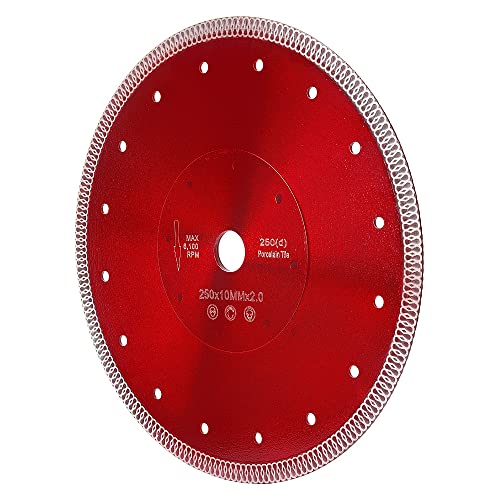
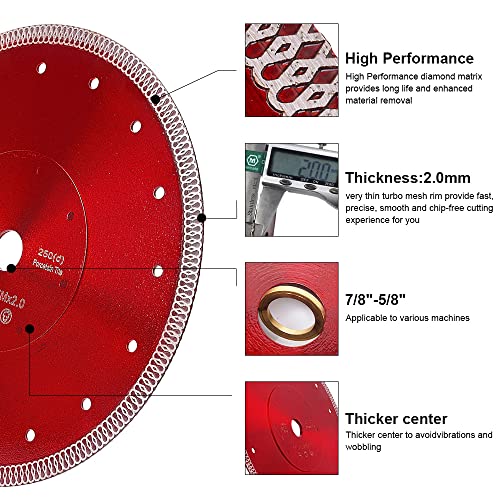
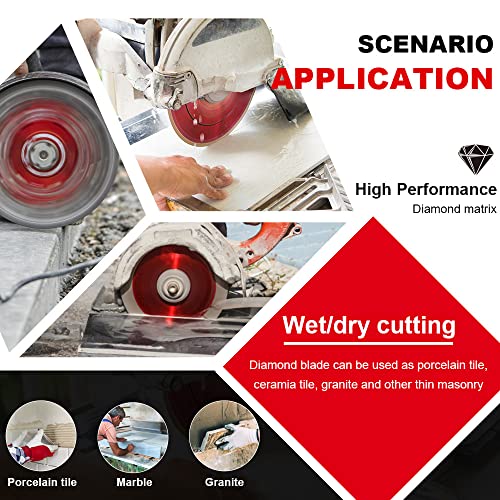
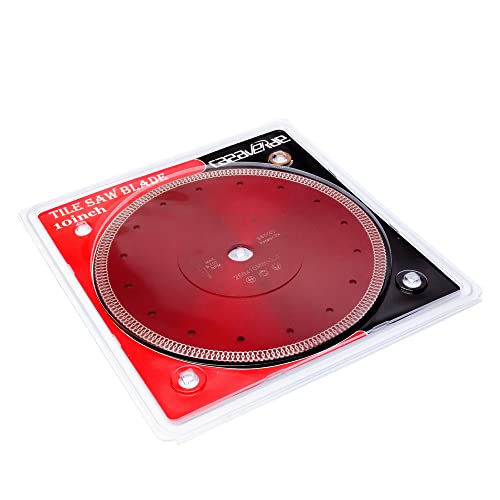
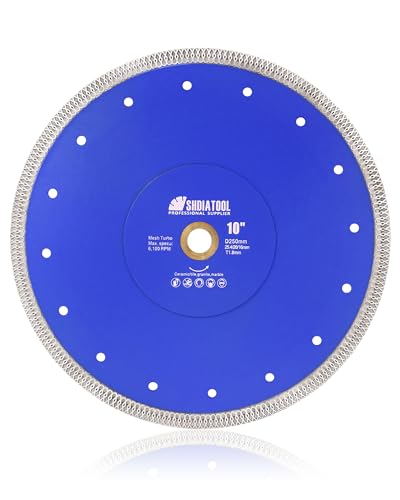
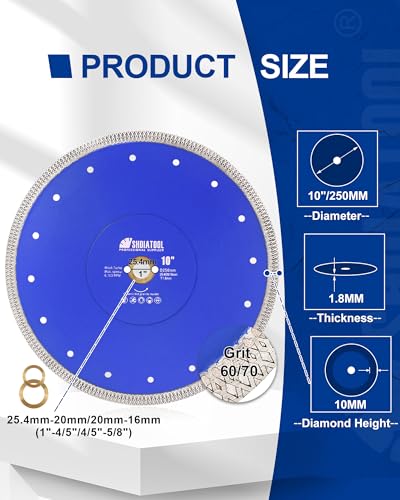
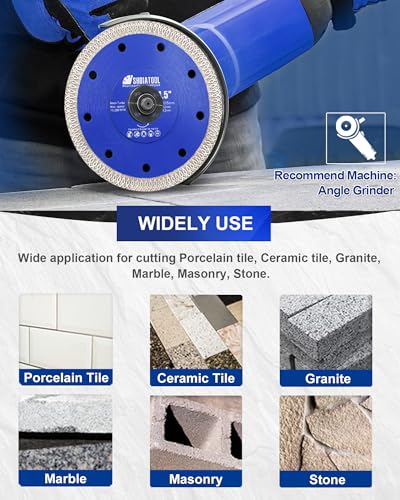
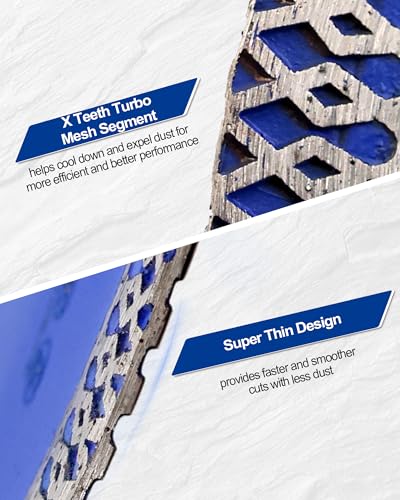
This is the jack-of-all-trades blade with a solid spec sheet, multiple arbor sizes via reducer washers, a super thin 1.8mm segment, and hot-pressed sintering for durability. Owners appreciate the flexibility: it fits a wide range of machines and handles everything from brick to marble without issue. The reinforced core helps with stability, and the X turbo segments do their job keeping cuts smooth.
It’s not the cleanest on porcelain compared to the QEP or DEWALT, but it’s more durable than most budget blades. When stacked against the FACHLICH, it feels like a step up in build quality. If you’re doing mixed jobs and don’t want to buy several specialty blades, this one covers a lot of ground without breaking down quickly.
Product photos

GoYonder 10″ Super Thin Diamond Blade
Strengths
- Dual arbor fit
- Super thin profile
- Good for grinders
Trade-offs
- Less rigidity on deep cuts
- Not ideal for large wet saws
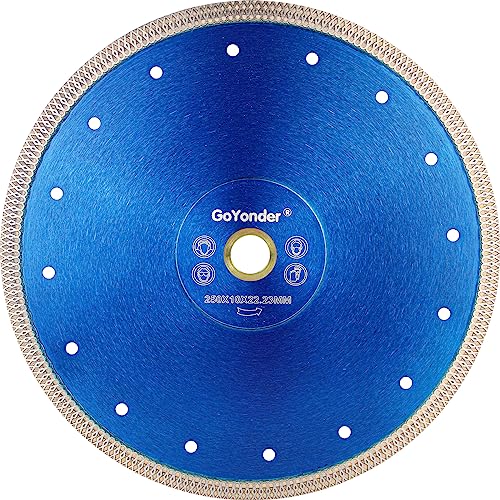
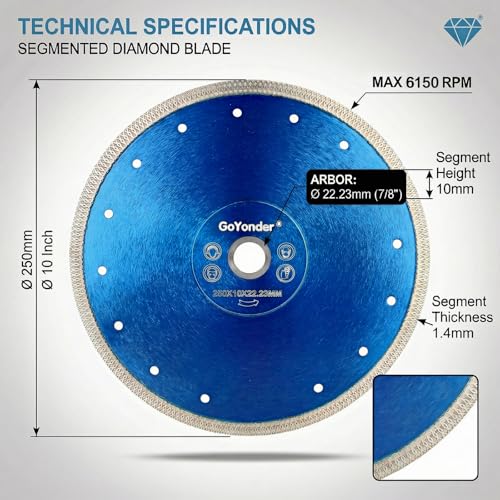
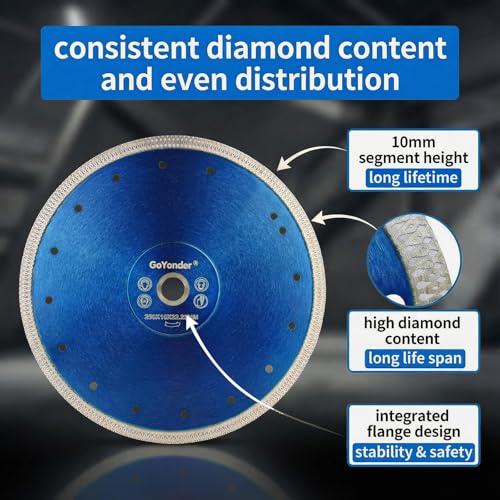
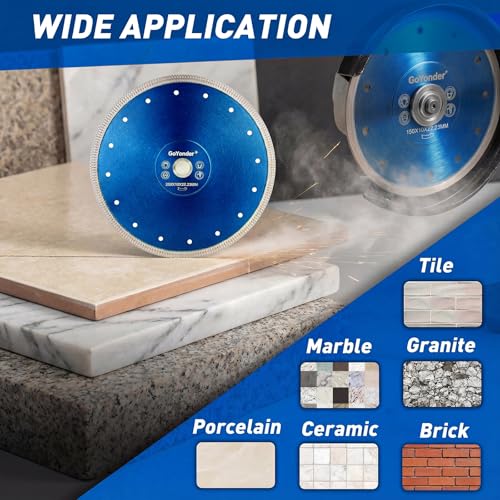
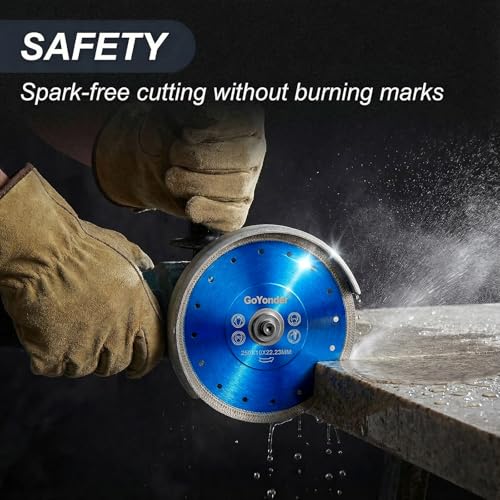
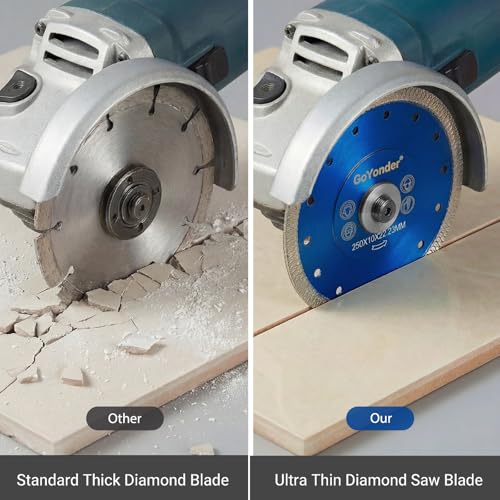
Built with angle grinder use in mind, this blade stands out for its dual arbor compatibility, 5/8″ and 7/8″, thanks to a removable center ring. That’s a real win for users juggling different tools. At 1.4mm thickness, it’s one of the thinnest here, which owners say reduces material loss and improves cut speed, especially in porcelain. The X-teeth turbo rim helps with cooling, and feedback shows it holds up well in both wet and dry runs.
It’s not as rigid as thicker blades, so it can drift slightly on deep cuts, but for handheld work, it’s impressively stable. Compared to the ZORUNNA, it’s similar in performance but slightly better adapted to grinders. If you’re doing cutouts or edge work with a grinder, this is the smarter buy.
Product photos
How We Picked These 10 inch wet tile saw blades
Rather than a hands-on lab test, my research for these recommendations focused on a detailed comparison of published blade specifications and features. I weighed owner reviews from multiple sources, alongside assessments from reputable tool review sites, to build a picture of real-world performance. My background in power tools and workshop experience informed how I ranked each blade against key criteria for cutting tile.
For 10-inch wet tile saw blades, cutting speed and minimizing chipping are paramount. A blade that dulls quickly adds significant time to projects, while excessive chipping wastes material and creates extra work. Blade life is also critical, as frequent replacements add up in cost. Therefore, I prioritized blades with robust diamond matrices and designs aimed at heat dissipation. You can learn more about the overall process of cutting tile with a wet saw to understand the importance of blade selection.
Blade specifications reliably indicate segment height, arbor size, and maximum RPM – factors impacting compatibility and safe operation. However, owner feedback proved essential for gauging the degree of chip-free cutting and actual blade longevity. Reputation and consistent positive reviews were given more weight than marketing claims about diamond matrix quality, as those are difficult to verify without destructive testing. A good wet saw tile cutting guide will also help you get the most out of your blade.
What To Look For In 10 inch wet tile saw blades
Choosing the right blade makes a massive difference in how cleanly and efficiently you cut tile.
A quality 10-inch wet tile saw blade should prioritize a consistent diamond matrix, a rim designed for the specific material being cut (porcelain, ceramic, etc.), and a stable core to minimize vibration. Look for blades with laser-cut expansion slots to prevent warping and consider the arbor size needed for your saw. Segment height and blade thickness also greatly impact performance and lifespan.
Material Matters Most
I’ve seen too many DIYers grab the first blade they find and struggle with chipping or excessively slow cutting. The type of tile you’re working with dictates the best blade choice. Porcelain, for example, is incredibly hard and requires a blade specifically designed for it. Standard blades will wear out quickly and produce a rough, chipped edge. Blades labeled for “hard masonry” or “porcelain certified” (like the QEP Black Widow) will have a higher concentration of diamond grit and a matrix designed to withstand that abrasion. If you’re primarily cutting softer ceramic tile, you can get away with a more general-purpose blade, but even then, a dedicated ceramic blade will give noticeably cleaner cuts. Understanding diamond blade applications is crucial for getting the most out of your investment.
Rim Design & Blade Thickness
The rim – the cutting edge of the blade – is where much of the magic happens. Continuous rim blades (like the DEWALT) are great for chip-free cuts on harder materials, but can be slower. Segmented rims, especially those with a turbo mesh design (Casaverde, GoYonder) offer faster cutting speeds by allowing for better cooling and chip evacuation. However, they can be more prone to chipping if the wrong blade is chosen for the material.
Here’s what I generally recommend when it comes to rim and thickness: * Thick Blades: Offer more stability, good for beginners. * Thin Blades (under 2mm): Faster cuts, less material waste, but require a steady hand. * Turbo Mesh Rims: Excellent for both speed and cooling, ideal for porcelain and harder tiles, but require a bit more skill to avoid chipping.
A thin-rimmed blade isn’t always the best choice. While they cut faster and reduce waste, they are also more prone to flexing and can produce a rougher edge if the material isn’t properly supported.
Value & Arbor Compatibility
Don’t automatically assume the most expensive blade is the best. Blades like the FACHLICH offer surprisingly good performance for the price, especially if you’re not cutting tile all day, every day. However, the “best value” blade is useless if it doesn’t fit your saw. Pay close attention to the arbor size (the diameter of the center hole). Many saws accept either a 5/8-inch or 7/8-inch arbor, and some blades (like the GoYonder) come with adapters. If you’re looking at a range of 10-inch tile saw blades, always confirm arbor compatibility before you buy. You don’t want to be stuck with a blade you can’t use.
10 Inch Wet Tile Saw Blades Compared
This table provides a specification comparison of various 10 inch wet tile saw blades to aid in product selection.
| Product Name | Arbor Size | Max RPM | Rim Type | Segment Height | Dry/Wet Use |
|---|---|---|---|---|---|
| DEWALT 10-Inch Continuous Rim | N/A | N/A | Continuous | N/A | Wet |
| QEP 10″ Black Widow Thin Rim | 5/8 in. | 6,115 | Thin | N/A | Wet |
| FACHLICH 10″ X-Turbo Mesh | N/A | N/A | X-Turbo Mesh | 10mm | Both |
| ZORUNNA 10″ Super Thin | 7/8″ | 13,200 | X-Teeth Turbo | N/A | Both |
| Casaverde 10″ Porcelain | N/A | N/A | X Teeth Turbo | N/A | Both |
| SHDIATOOL 10″ Turbo Segment | 25.4/20/16mm | N/A | Turbo | 10mm | Both |
| GoYonder 10″ Super Thin | 5/8″ or 7/8″ | N/A | Turbo | N/A | Both |
Frequently Asked Questions
What’s the difference between a continuous rim and a segmented rim blade?
A continuous rim blade offers cleaner cuts, particularly on harder materials like porcelain, but cuts slower. Segmented rims, especially turbo-mesh designs, cut faster by allowing for better cooling and chip removal, though they’re slightly more prone to chipping if not used carefully.
Can I use a dry-cutting blade in a wet saw?
Generally, no. While some blades are rated for both wet and dry cutting (like the FACHLICH), most dry-cutting blades lack the heat dissipation properties needed for extended use in a wet environment and can be damaged. Always check the manufacturer’s specifications.
How often should I replace my wet tile saw blade?
Blade life depends heavily on the material you’re cutting and usage frequency. Expect to replace a blade after 50-100 hours of heavy use, or sooner if you notice significant cutting slowdown or increased chipping. Dull blades create more heat and can damage your saw.
What arbor size do I need for my tile saw?
Most tile saws accommodate either a 5/8-inch or 7/8-inch arbor. Check your saw’s manual to confirm the correct size before purchasing a blade. Many blades, such as the GoYonder, include adapters to fit multiple arbor sizes. You can find more information about blades for wet tile saws to help you narrow down your search.
Are more expensive blades always better?
Not necessarily. While higher-priced blades often feature premium diamond matrices and construction, blades like the FACHLICH offer excellent performance for the price, especially for occasional use. Consider your project volume and material type when deciding how much to invest in a blade, reading tile cutting blade reviews can help.
The Bottom Line
Choosing a 10-inch wet tile saw blade always comes down to balancing speed and precision with how much you’re willing to spend. For most homeowners and DIYers, the QEP 10″ Black Widow Thin Rim strikes the best overall balance – it’s capable of clean cuts on a variety of tile types and won’t break the bank. It delivers a lot of performance for the price.
If you have a specific need, though, there are better options. For those working almost exclusively with porcelain or other very hard tiles, the Casaverde 10″ Porcelain blade is a standout. And if you’re on a tight budget, the FACHLICH 10″ X-Turbo Mesh offers surprisingly good value without sacrificing too much cutting ability. Understanding proper wet saw operation is key to getting the most from any blade you choose.
Ultimately, remember that the blade is just one piece of the puzzle. A steady hand, the correct cutting speed, and consistent water flow are just as important as the quality of the diamond matrix. Focusing on those fundamentals – and choosing a blade suited to your typical projects – will yield better results than chasing the highest specification numbers.
