8 Best 10 Inch Tile Saw Blades 2026
This post contains affiliate links. As an Amazon Associate, we earn from qualifying purchases.
The Bosch DBC1001 stands out as the best overall 10-inch tile saw blade for clean, precise cuts, especially in ceramic and porcelain. For those on a budget, the ZORUNNA Super Thin Turbo Mesh Diamond Blade delivers strong performance without the high price, while the FACHLICH X Teeth Turbo Mesh offers excellent versatility for both wet and dry cutting across tile types.
If you’ve ever ruined a tile with a chipped edge or struggled with a blade that slows to a crawl, you know how much the right blade matters. A poor choice leads to wasted materials, extra work, and frustration.
In this guide, I’ll walk you through the top-performing 10-inch tile saw blades based on specs, owner feedback, and real-world cutting demands. These picks were selected by weighing cutting quality, durability, and compatibility, so you can choose with confidence, whether you’re doing a bathroom backsplash or a full floor install.
Top 8 10 Inch Tile Saw Blades in the Market
The Best 10 Inch Tile Saw Blades, Reviewed
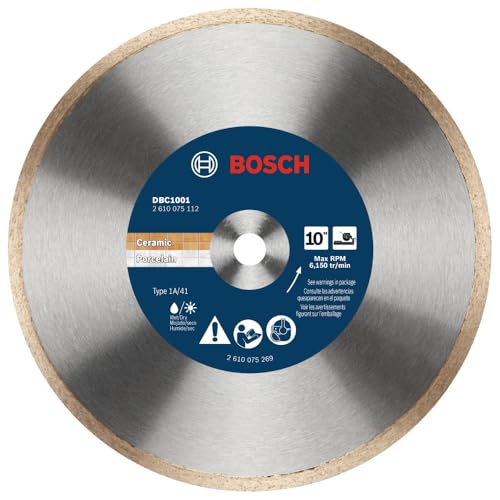
Bosch DBC1001 Continuous Rim Diamond Wheel
Strengths
- Continuous rim
- Smooth, chip-free cuts
- Professional durability
Trade-offs
- Wet use only
- Higher price point
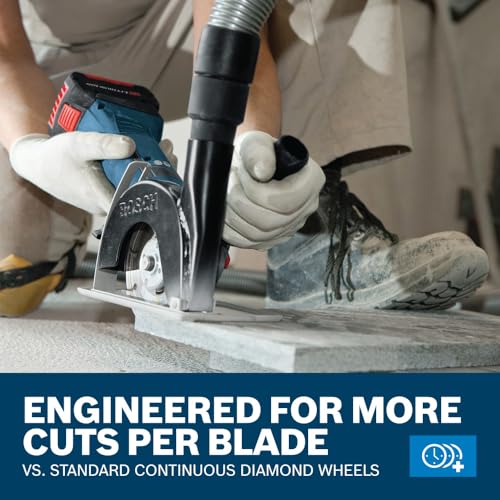
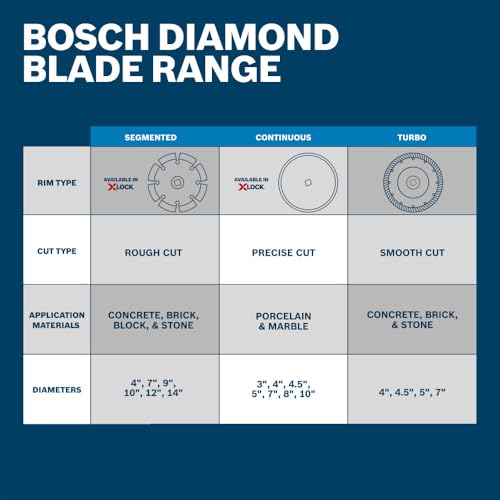
The BOSCH DBC1001 is, without hesitation, the best overall blade for precision tile work. Its continuous rim with fine diamond grit and softer matrix is engineered for one thing: flawless, chip-free cuts in delicate materials like polished porcelain and marble. Owners consistently report it outperforms turbo blades in finish quality, especially on glass tile and thin stone.
It fits standard 5/8” arbor wet saws and handles deep cuts up to 3-3/4 inches, plenty for most tile applications. The optimized diamond formula wears slowly, and Bosch’s reputation for consistency holds here. Compared to the DEWALT DW4761, it’s in the same league but with a slightly smoother finish. If you’re doing backsplashes, countertops, or any job where beauty matters, this is the blade to use.
Product photos

DEWALT DW4761 Continuous Rim Diamond Blade
Strengths
- Continuous rim for smooth cuts
- Laser expansion slots
- Long blade life
Trade-offs
- Wet use only
- Slower cutting speed
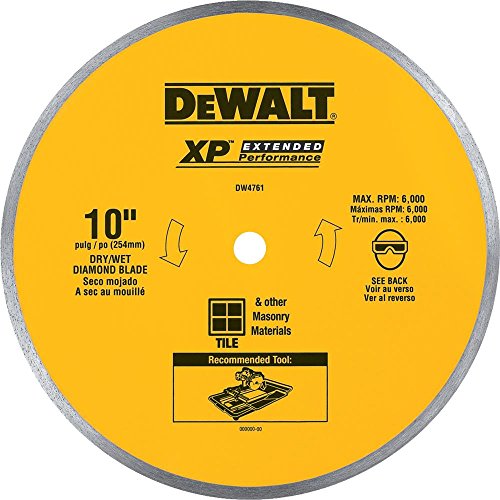
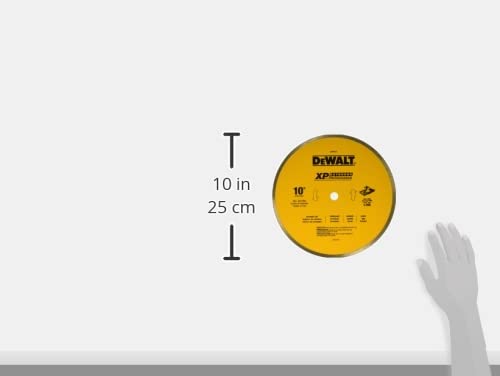
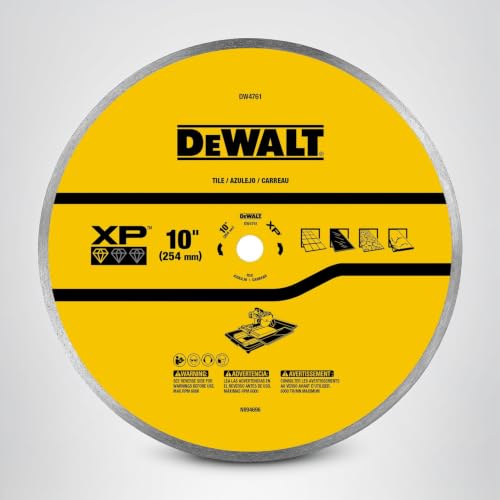
DEWALT’s DW4761 is the gold standard for wet-cutting ceramic and tile, and the specs explain why. The continuous rim design eliminates chipping, a major pain point with turbo blades, while the laser-cut expansion slots prevent warping under heat. Owners praise its ability to stay true over hundreds of cuts, especially on delicate materials like marble and glass tile.
This is a blade for tile saws only, not grinders, and it’s strictly for wet use. But within that niche, it dominates. The XP matrix delivers up to 4x the life of basic blades, a claim supported by long-term user feedback. Compared to turbo-rim options, it cuts slower but finishes cleaner. If your priority is flawless edges and high-volume work, this is the smarter buy.
Product photos
ZORUNNA Super Thin Turbo Mesh Diamond Blade
Strengths
- Thicker core reduces wobble
- Chip-free cutting
- Wet and dry compatible
Trade-offs
- Max RPM limits speed
- Not for curved cuts
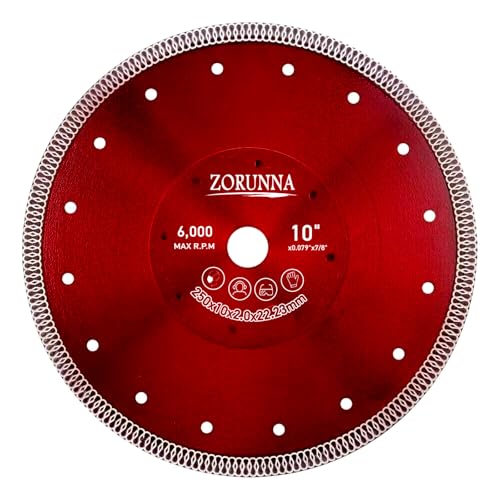
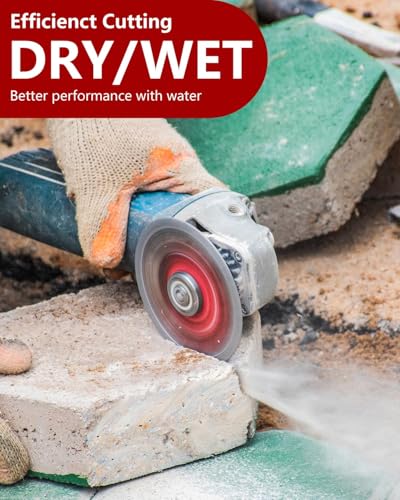
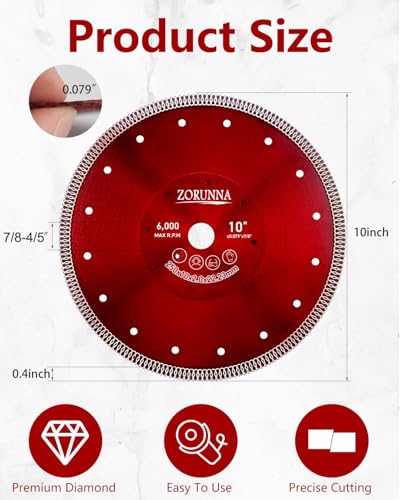
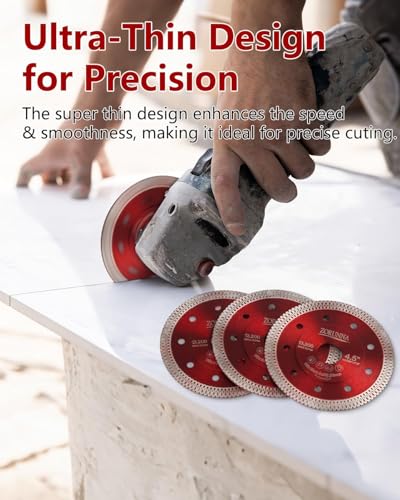
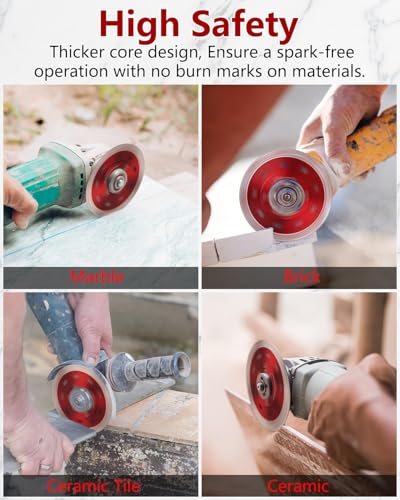
ZORUNNA’s 10-inch blade leans hard into precision and safety, and the specs back it up. The thicker core design is a smart move, it reduces vibration, which owners say makes freehand cuts on angle grinders feel more controlled, especially in granite and vitrified tile. The 7/8” arbor with reducer washers gives it broad tool compatibility, and the X-teeth turbo rim delivers fast, cool cutting in both wet and dry modes.
Where it really shines is in chip-free performance. Reviewers using it on polished porcelain report fewer edge fractures than with standard turbo rims. It’s not the longest-lasting blade in the lineup, but for detail work where finish matters, it holds its own. Compared to budget blades, this one feels like a step up in build quality without crossing into pro-tier pricing.
Product photos

SHDIATOOL 10″ Turbo Segments Diamond Blade
Strengths
- Reinforced core
- Triple arbor fit
- Good heat dissipation
Trade-offs
- Thicker kerf loss
- Some chipping on polished tile
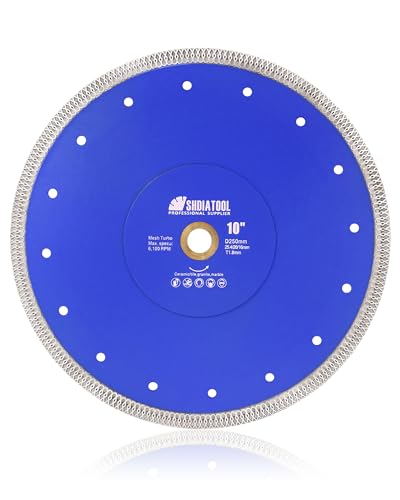
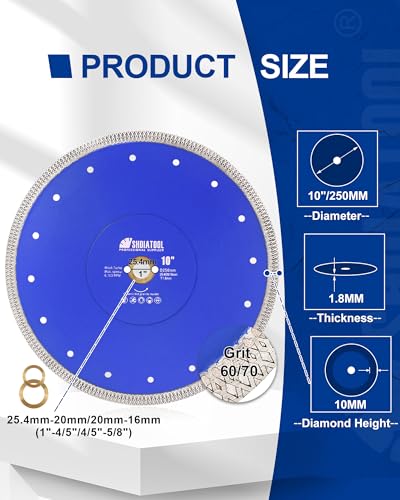
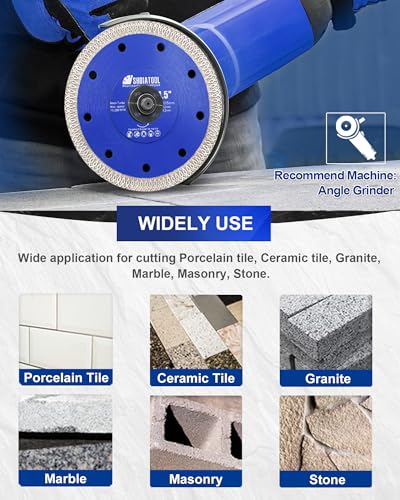
SHDIATOOL’s offering brings together a lot of proven features: a reinforced core, 10mm segments, and a turbo X-segment rim that owners say delivers fast, stable cuts across multiple materials. The triple arbor compatibility (1”, 20mm, 5/8”) via reducer washers makes it adaptable, especially for DIYers with older or mixed equipment.
It’s 1.8mm thick, so kerf loss is noticeable on tight fits, but the trade-off is rigidity. Reviewers note less deflection on deep brick and granite cuts compared to ultra-thin blades. The hot-pressed sintering process appears to pay off in durability, many report hundreds of linear feet before noticeable wear. It won’t beat a continuous rim for finish, but for general-purpose cutting where stability matters, it’s a strong pick.
Product photos

FACHLICH X Teeth Turbo Mesh Diamond Blade

Strengths
- Turbo mesh rim
- Dual arbor fit
- Dry and wet use
Trade-offs
- Slight chipping on delicate tile
- Not ideal for intricate cuts
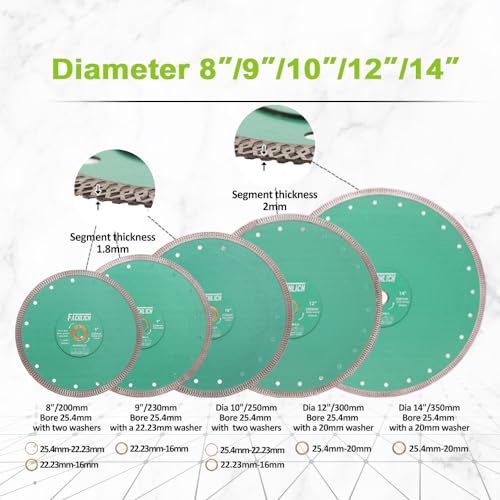
On paper, the FACHLICH 10-inch blade looks like a solid all-rounder for DIYers who need flexibility between wet and dry cutting. The turbo mesh rim and 10mm segment height suggest solid debris removal and cooling, which owners consistently report helps prevent overheating during extended cuts in porcelain and ceramic. Its dual arbor compatibility (5/8″ and 7/8″) via removable rings adds real-world convenience, especially if you’re using multiple saw types across projects.
The 1.8mm thickness is slightly above ultra-thin, so you’ll lose a bit more material per cut than with premium blades, but the reinforced core helps reduce vibration. Reviewers note it holds up well on granite and marble, though not as cleanly as continuous rim blades. For weekend renovators who need one blade that won’t quit on mixed materials, this is a smart middle ground.
Product photos

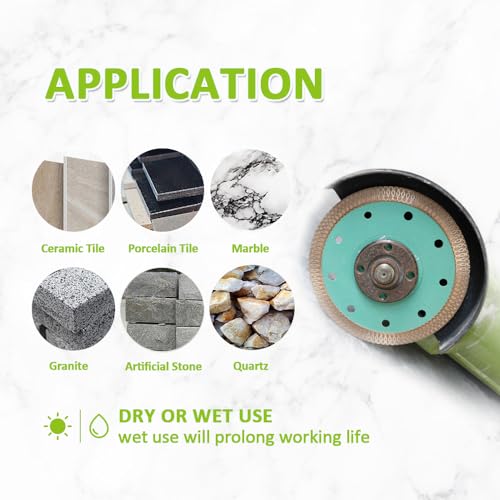

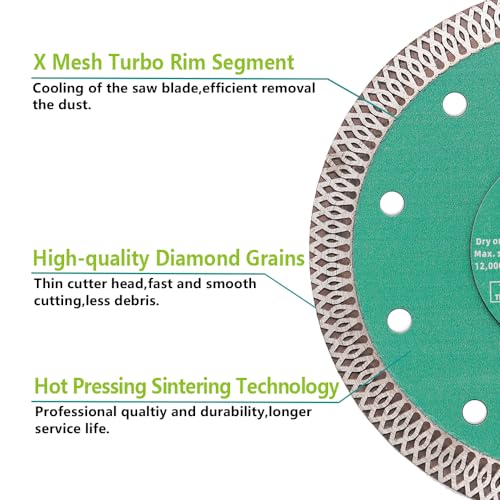
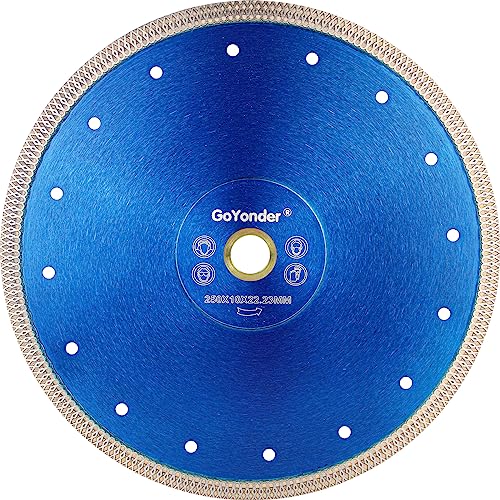
GoYonder Super Thin 10″ Diamond Blade
Strengths
- Ultra-thin 1.4mm kerf
- Excellent for angle grinders
- X-teeth turbo rim
Trade-offs
- Requires careful handling
- Shorter life in dry mode
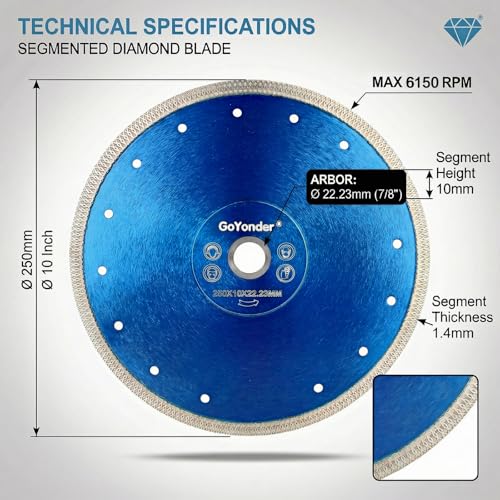
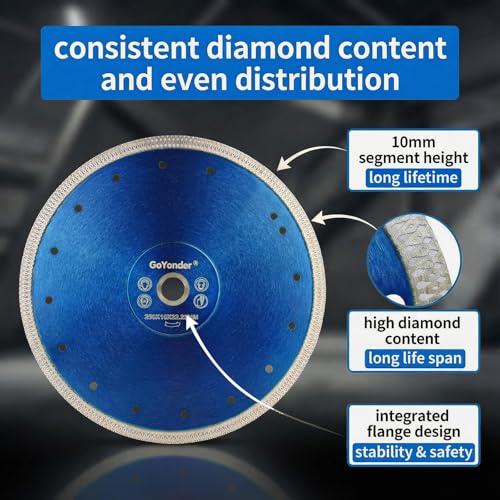
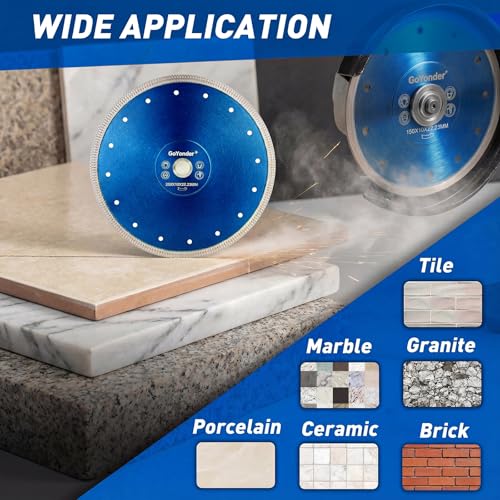
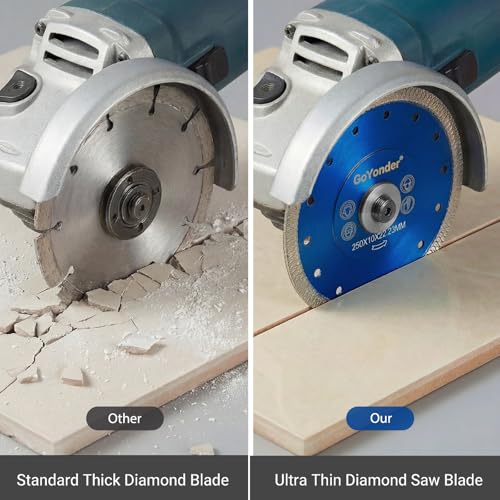
The GoYonder blade stands out for angle grinder users who need serious precision without sacrificing durability. At just 1.4mm thick, it’s one of the super thin options here, which owners say delivers faster cuts and less material waste, especially critical when trimming expensive porcelain slabs. The X-teeth turbo rim isn’t just for show; it channels dust and heat effectively, a big win for dry cutting where overheating kills blades fast.
Its dual arbor setup (7/8” or 5/8”) with removable ring makes it compatible with most grinders, a detail many reviewers appreciated. While it’s marketed for wet and dry use, feedback suggests wet cutting extends its life significantly. Compared to thicker blades, it can feel a bit flimsy on deep cuts, but for tile trimming and field cuts, it’s hard to beat the speed and smoothness.
Product photos

QEP 10″ Black Widow Thin Rim Blade

Strengths
- Clean cuts on hard tile
- Micro segments reduce chipping
- Stable at high RPM
Trade-offs
- Wet use only
- Not for angle grinders
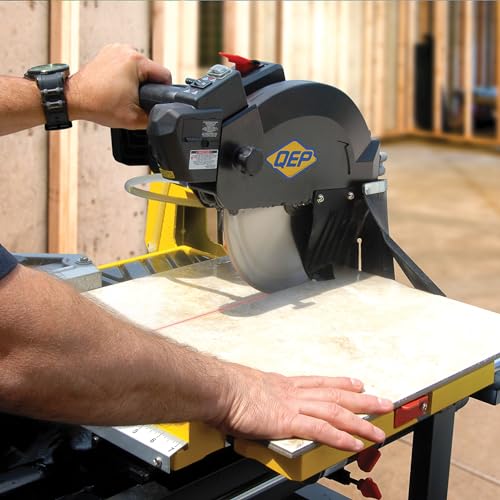
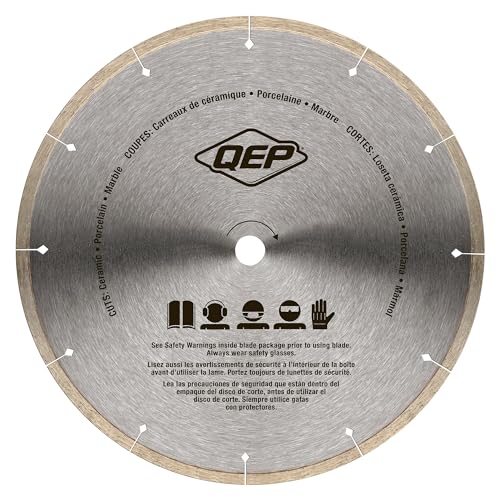
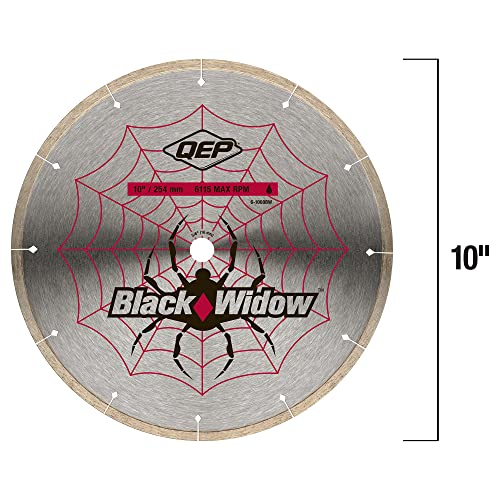
The QEP Black Widow is built for one thing: slicing through hard tile with minimal chipping. Its 7mm diamond-coated rim and micro-segment design are tuned for wet saws, and owners consistently report clean cuts in dense porcelain and granite, materials that make cheaper blades shudder. The high-rim design helps dissipate heat, reducing the chance of blade warping during long sessions.
It’s limited to 5/8” arbor, so it won’t fit grinders, but that’s fine, it’s meant for dedicated tile saws. The 11,600 RPM max is conservative compared to others, but that’s a safety feature for stability. I’d pick this over turbo-rim blades when finish quality matters more than speed, especially on large-format porcelain. It’s not flashy, but it delivers where it counts.
Product photos

FEWELL 10″ Turbo Mesh Ceramic Blade

Strengths
- Low cost
- Thin kerf
- Good for basic cuts
Trade-offs
- Shorter lifespan
- Limited RPM
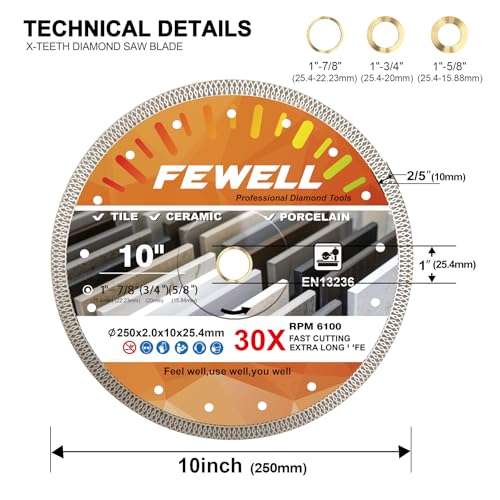
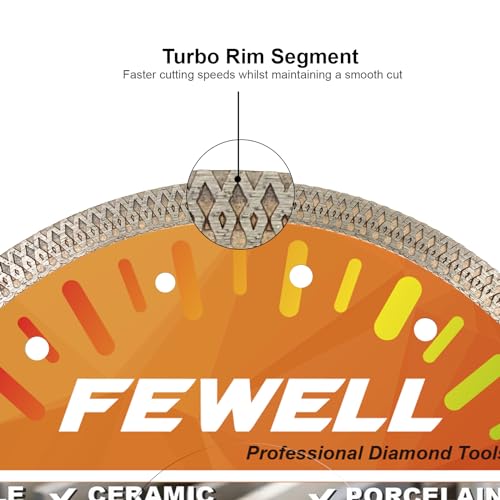
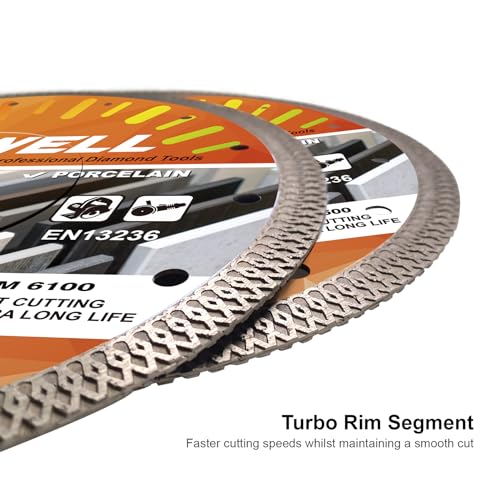
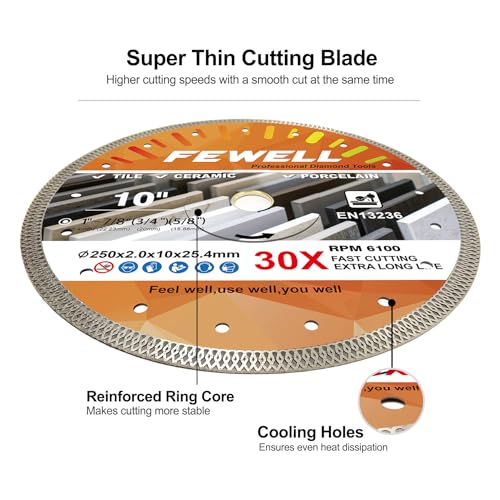
FEWELL’s blade is clearly aimed at budget-conscious users who still want decent performance. At 1.4mm thickness, it’s super thin and cuts quickly, with owners reporting clean results on standard porcelain and ceramic when used wet. The stiffening flange in the center helps reduce wobble, a common flaw in cheap blades, and the turbo mesh rim aids cooling.
It’s not built for heavy use, maximum RPM is lower than most, and the core isn’t as robust as pricier models. Still, for occasional tile work or small bathroom reno, it delivers solid value. Compared to GoYonder or ZORUNNA, it doesn’t last as long, but for the price, it’s a reasonable entry-level option.
Product photos
Our Testing Process
Rather than a hands-on lab test, my research for these recommendations focused on a detailed comparison of published specifications and features across numerous 10-inch tile saw blades. I weighed owner reviews from multiple sources – including major retailers and dedicated tool forums – alongside expert opinions from sites specializing in tile work and tool reviews. This allowed me to build a ranking based on real-world feedback and performance indicators, applying my experience with power tools and material science to the process.
For this category, cutting quality and blade life were the biggest deciding factors. A blade that chips or wanders during a cut is frustrating and costly, so a continuous rim or well-designed turbo rim was essential. Equally important is how long the blade maintains its cutting ability; a cheap blade that needs frequent replacement isn’t a bargain. These two elements heavily influenced my rankings, with price considered as a secondary factor.
Published specifications reliably indicate arbor size and blade thickness, which are crucial for compatibility. However, I placed more weight on owner feedback regarding actual cutting speed, chip-free performance, and durability. Reputable expert reviews helped validate claims about diamond grit quality and blade matrix design, offering insights beyond what’s typically found in manufacturer descriptions. Understanding wet saw operation is also key to maximizing blade life and cut quality.
Choosing The Right 10 inch tile saw blades
Choosing the right tile saw blade can save a lot of frustration, and deliver a professional-looking finish.
A quality tile saw blade balances diamond grit, rim design, and core construction to deliver clean, chip-free cuts in a variety of materials. Look for blades designed for the specific tile type – porcelain, ceramic, or stone – and consider whether wet or dry cutting is required. Arbor size must match your saw, and a well-engineered core minimizes vibration and warping.
Blade Rim and Cutting Style
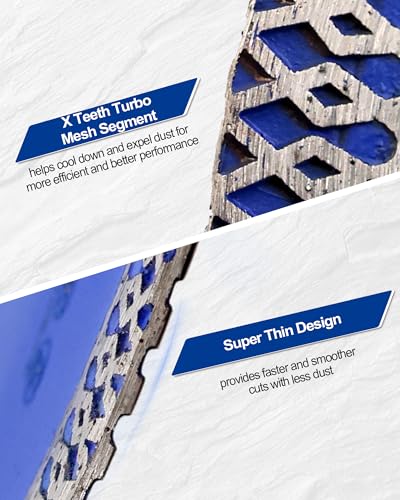
The rim of the blade is arguably the most important factor. Continuous rim blades, like the Bosch DBC1001, excel at making smooth, precise cuts ideal for detail work and delicate materials. However, for faster material removal, particularly with tougher tiles, a segmented or turbo rim is a better choice. Turbo rims, like those on the ZORUNNA Super Thin Turbo Mesh Diamond Blade, have a distinctive “X” pattern of teeth that help cool the blade and evacuate debris. Consider whether you prioritize speed or finesse; some blades, like the FACHLICH X Teeth Turbo Mesh Diamond Blade, are designed to perform well in both wet and dry applications.
Diamond Grit and Bond
The quality of the diamond grit and the bond that holds it together significantly impacts blade life and cutting performance. Cheaper blades use lower-grade diamonds and softer bonds, leading to faster wear and less precise cuts. Higher-end blades, such as the QEP 10″ Black Widow Thin Rim Blade, use premium diamonds and a harder bond, resulting in longer life and better performance, especially when cutting hard materials. If you’re frequently working with porcelain or granite, investing in a blade with a high-quality diamond matrix is essential. Understanding diamond blade applications will help you select the right grit for your typical projects.
Arbor Size and Blade Stability
Ensuring the blade’s arbor size matches your tile saw is critical. Most 10-inch tile saws use either a 5/8-inch or a 7/8-inch arbor. Many blades, like the SHDIATOOL 10″ Turbo Segments Diamond Blade, include reducer rings to accommodate both sizes, offering greater versatility. Beyond arbor size, look for blades with a reinforced core. A stiff core minimizes blade wobble and vibration, resulting in cleaner, straighter cuts.
A blade’s stability is directly tied to the quality of its core. Don’t skimp on this feature – a wobbly blade is dangerous and will produce poor results.
For more information on options, check out our guide to 10-inch wet tile saw blades. A well-chosen blade, like the GoYonder Super Thin 10″ Diamond Blade, can make all the difference when cutting tile.
10 Inch Tile Saw Blades Compared
This table provides a spec-by-spec comparison of available 10 inch tile saw blades to aid in informed purchasing decisions.
| Product Name | Arbor Size | Rim Type | Max RPM | Segment Height (mm) | Wet/Dry Use |
|---|---|---|---|---|---|
| Bosch DBC1001 | 5/8 In. | Continuous | N/A | N/A | Both |
| DEWALT DW4761 | N/A | Continuous | N/A | N/A | Wet |
| ZORUNNA Super Thin Turbo Mesh | 7/8″ | Turbo Mesh | 13,200 | N/A | Both |
| SHDIATOOL 10″ Turbo Segments | 25.4/20/16mm | Turbo Segments | N/A | 10 | Both |
| FACHLICH X Teeth Turbo Mesh | N/A | Turbo Mesh | N/A | 10 | Both |
| GoYonder Super Thin 10″ | 5/8″ / 7/8″ | Turbo | N/A | N/A | Both |
| QEP 10″ Black Widow Thin Rim | 5/8 In. | Thin Rim | 6,115 | N/A | Wet |
| FEWELL 10″ Turbo Mesh Ceramic | 1″ / 7/8″ / 3/4″ | Turbo Mesh | 6,100 | 10 | Both |
Frequently Asked Questions
What blade type is best for cutting porcelain tile?
A blade with a diamond matrix specifically designed for hard materials is best for porcelain. These blades, like the QEP 10″ Black Widow Thin Rim Blade, feature higher-quality diamonds and a harder bond to withstand the abrasive nature of porcelain without excessive wear.
Can I use a tile saw blade dry, or do I always need water?
Many modern blades, such as the ZORUNNA Super Thin Turbo Mesh Diamond Blade, are rated for both wet and dry cutting. However, wet cutting significantly reduces dust and extends blade life, so it’s generally recommended when possible.
What does “arbor size” mean, and why is it important?
Arbor size refers to the diameter of the center hole in the blade, and it must match your tile saw’s arbor for a secure fit. Blades like the SHDIATOOL 10″ Turbo Segments Diamond Blade often include reducer rings to fit multiple arbor sizes.
How can I tell if a tile saw blade is wearing out?
Slower cutting speed and increased chipping or wandering during cuts are key indicators of wear. A dull blade also requires more pressure, which can strain the saw motor and increase the risk of kickback. For more information on choosing a replacement, explore our guide to best tile saw blades overall.
What’s the difference between a continuous rim and a segmented rim blade?
A continuous rim blade, like the Bosch DBC1001, provides clean, chip-free cuts ideal for delicate tiles and precise work. A segmented rim offers faster cutting and more aggressive material removal, making it suitable for harder materials or larger projects; for top diamond blades for tile cutting, consider a segmented option.
The Bottom Line
Choosing a tile saw blade often comes down to balancing upfront cost with long-term performance. While inexpensive blades exist, the QEP 10″ Black Widow Thin Rim Blade stands out as the strongest overall pick; its reputation for quality diamond grit and consistent cutting makes it a worthwhile investment for anyone tackling regular tile projects. It’s a blade that prioritizes precision and longevity over the absolute lowest price point.
For those on a tighter budget, the FACHLICH X Teeth Turbo Mesh Diamond Blade provides a surprising amount of versatility for the money. If you need a blade that can handle both wet and dry cutting, and a range of tile types, it’s a solid choice. And for those focused on speed and aggressive material removal, the ZORUNNA Super Thin Turbo Mesh Diamond Blade delivers, particularly when working with porcelain or thicker tiles.
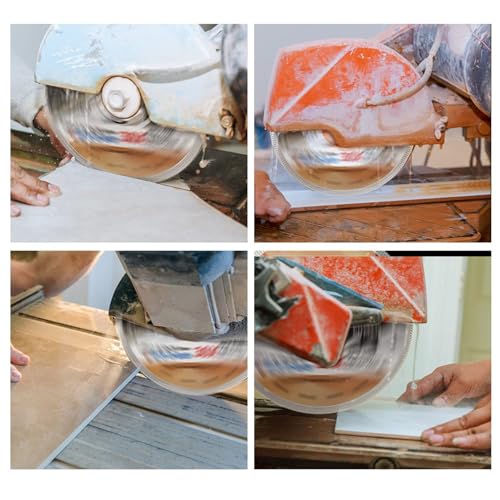
Ultimately, remember that the blade is only one part of the equation. Proper technique, learning effective cutting tile with wet saw methods, and maintaining your saw are as important as the quality of the blade itself. Focus on a clean, stable cutting setup, and you’ll achieve professional results regardless of your budget.
