Master How to Drill Into Cinder Block With These Pro Tips & Tricks
This post contains affiliate links. As an Amazon Associate, we earn from qualifying purchases.
To drill into cinder block, you need a hammer drill or rotary hammer with a carbide-tipped masonry bit, a method to locate the solid face shell (not the hollow core), and an anchor rated for hollow masonry, like sleeve anchors or masonry toggle bolts, installed without overtightening.
That “solid face shell” clause is where most DIY jobs fail. A cinder block isn’t uniform; it’s a concrete masonry unit (CMU) with a thin outer wall, hollow cavities, and solid webs. Drilling into the hollow core with a standard wedge anchor gives you zero holding power, the anchor just spins. Drilling into the brittle face shell and cranking it down cracks the block.
What follows: how to pick the right drill, the one-minute sound-and-pilot test to find solid material, and the three anchor types that actually hold in block. Skip the plastic anchors. Everyone does. They strip out within a month.
Key Takeaways
- A standard drill will burn out. You need a hammer drill’s impact action or, for more than a few holes, a rotary hammer.
- Find the solid face shell by tapping (solid thud) and drilling a 1/8″ pilot hole. Consistent resistance for 1-1.25 inches means you’re in the shell.
- Never use plastic drywall anchors or standard wedge anchors in hollow cores. They will pull out. Use sleeve anchors for solid sections or masonry toggle bolts for hollow ones.
- Overtightening a Tapcon or sleeve anchor in the thin face shell cracks it, destroying the hold. Stop when the anchor is snug.
- For light, non-structural loads, the softer mortar joint is easier to drill and repair, but it holds less weight than a properly anchored block face.
The Tool You Actually Need: Hammer Drill vs. Rotary Hammer
Don’t try this with a standard cordless drill. The motor bogs down, the bit overheats, and you’ll burn through a pack of masonry bits for maybe two holes. The hammering action is non-negotiable.
A hammer drill combines rotation with a rapid, hammer-like pulsation. This chips away the masonry instead of just grinding against it. For a handful of holes for a shelf or fixture, a quality hammer drill like a DeWalt DCD996B or a Milwaukee 2804-20 is the minimum.
A rotary hammer uses a piston mechanism to deliver a more powerful, true hammer blow. It’s the difference between a rapid tap and a solid punch. For more than five holes, coring a large hole for a vent, or drilling into dense block, a rotary hammer saves time, effort, and bits.
If you’re weighing a single project against future use, the jump in capability is worth it. A Bosch Bulldog or similar rotary hammer will drill a hole in cinder block in under ten seconds where a hammer drill might take a minute. Your arms will thank you.
Where this goes sideways: Using a “hammer drill” setting on a basic drill/driver. Many combo tools have a setting labeled for masonry, but they lack the dedicated hammer mechanism of a true hammer drill. You’ll still burn out the bit and make little progress. Check the specs: it must be a dedicated hammer drill or rotary hammer.
Decoding the Cinder Block: Face Shell, Hollow Core, or Mortar?
You’re not drilling into a solid wall. A standard 8x8x16 inch CMU has three distinct zones, and your anchor’s success depends on which one you hit.
| Zone | What It Is | Best For | Risk If Drilled Wrong |
|---|---|---|---|
| Face Shell | The solid outer wall, 1–1.25 inches thick. | Strongest point for anchors in solid material. | Drill deeper and you hit the hollow core; over-tighten and you crack the shell. |
| Hollow Core | The empty cavity behind the face shell. | Only anchors designed to grip the interior walls (toggle bolts). | Standard expansion anchors have nothing to grip and will pull straight through. |
| Mortar Joint | The cement line between blocks. | Light, non-structural loads; easier to drill and patch. | Weaker than block; not for weight-bearing shelves or safety gear. |
| Solid Web | The vertical solid sections inside the block. | Heaviest loads; often found where blocks overlap. | Hard to locate precisely without an exploratory pilot hole. |
The goal is to anchor into the face shell or a solid web. The hollow core is a last resort, and only with the right hardware.
The 60-Second Zone Test
You can’t see inside the wall, so you test.
- Tap Test: Knock on the wall with your knuckles or a screwdriver handle. A solid, dull thud indicates a face shell or solid web. A higher-pitched, hollow echo means there’s a cavity behind.
- Pilot Hole Confirmation: Chuck a 1/8″ masonry bit into your drill. Run it at low speed, no hammer mode, straight into the center of your marked spot. Apply light pressure.
- If you feel consistent resistance for about 1 to 1.25 inches and then the bit suddenly drops (free movement), you’ve drilled through the face shell into the hollow core. Stop. You need a hollow-wall anchor.
- If the resistance stays firm well past 1.25 inches, you’re in a solid section, perfect for a sleeve anchor or concrete screw.
This test hole is small enough to patch if you change your mind, and it prevents the major failure of installing an anchor that has nothing to grip.
Choosing an Anchor That Won’t Pull Out
The anchor is not interchangeable. Your zone dictates your choice.
For Solid Face Shells or Webs:
- Tapcon Concrete Screws: These blue, self-tapping screws are fantastic for medium loads. Drill the specified pilot hole, then drive them in with an impact driver. They grip the threads cut into the block.
- Sleeve Anchors: A step up for heavier loads. You drill a hole to the exact diameter, insert the anchor, and tighten the nut. The sleeve expands against the hole walls. A 3/8″ sleeve anchor in a solid block section holds serious weight.
For Hollow Cores:
- Masonry Toggle Bolts: These are not drywall toggles. They have wider, heavier-duty wings designed to spring open inside the cavity and bear against the interior block wall. They’re the standard solution for shelving or fixtures where you hit a void.
What most people get wrong: Using plastic expansion anchors. They are designed for drywall, not masonry. In block, they either spin during installation or strip out under the first real load. They are the most common cause of early failure.
Common mistake: Overtightening a sleeve anchor or Tapcon in the face shell. The shell is only about an inch thick and brittle. Cranking down on the nut compresses the concrete past its limit. You’ll hear a faint crack, and the anchor’s hold is now compromised. Snug is enough.
Step-by-Step: Drilling a Clean Hole
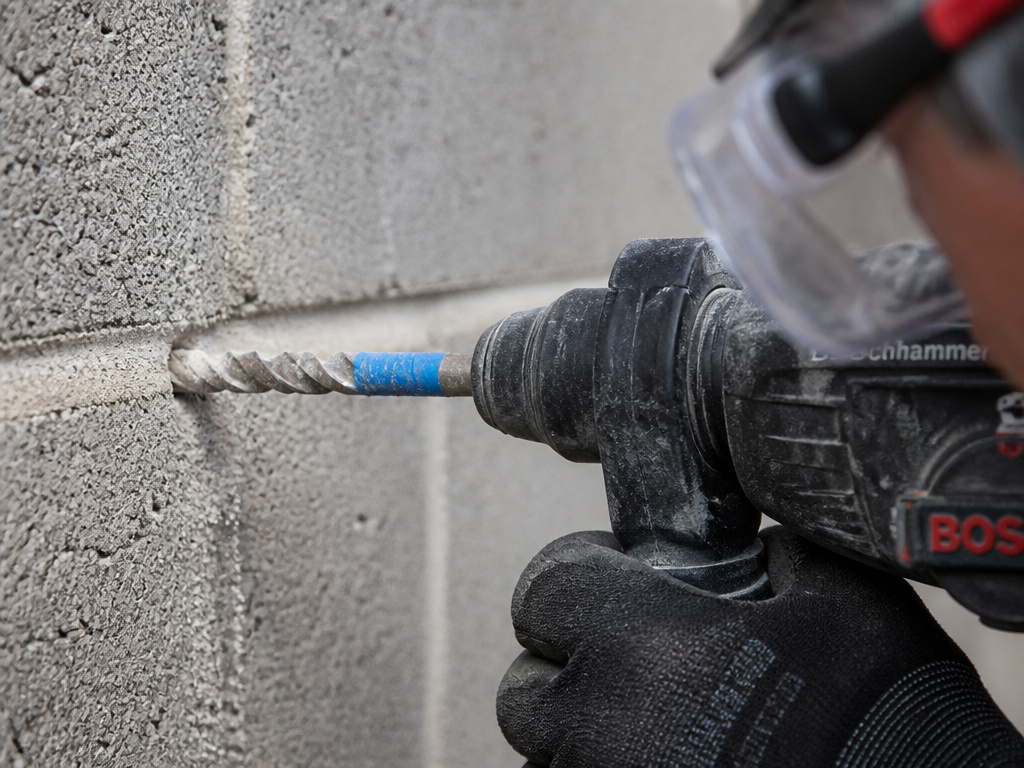
Gather your hammer drill, the correct carbide masonry bit for your anchor, a vacuum, tape, and safety glasses.
- Mark and Test: Mark your spot with a pencil. Perform the tap and pilot hole test described above to confirm your zone.
- Set Your Depth: Wrap a piece of painter’s tape around the bit at your target depth. For anchors, this is usually the anchor length plus a half-inch to ensure debris clearance.
- Drill: Position the drill perpendicular to the wall. Engage the hammer mode and start slow to let the bit establish a dimple. Apply steady, moderate pressure, let the tool do the work. For deeper holes, pull the bit out occasionally to clear dust.
- Clean the Hole: This step is critical. Use a vacuum or a blast of compressed air to remove all dust from the hole. Residual dust acts as a lubricant, allowing the anchor to slip.
- Install the Anchor: Insert the anchor by hand, then drive it home with the appropriate tool, a wrench for sleeve anchors, an impact driver for Tapcons. Stop tightening as soon as you feel firm resistance.
If your drill bit hits sudden, extreme resistance and sparks, you’ve likely found rebar. Stop. You cannot drill through steel rebar with a masonry bit. You’ll need to relocate your hole a few inches away or use a dedicated metal drill bit after switching tools.
When to Call a Pro: Core Drilling and Structural Concerns
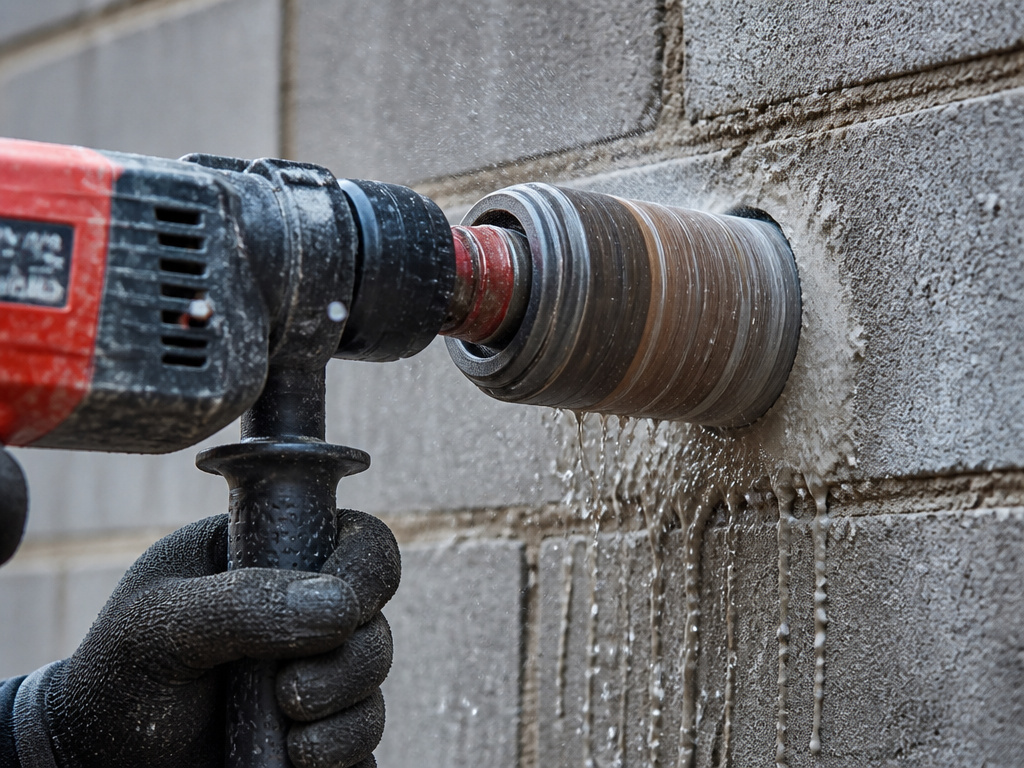
Drilling a 4-inch hole for a dryer vent or exhaust fan is a different game. This requires a diamond-tipped core bit and a powerful rotary hammer.
Before you start: Core drilling through a foundation wall can affect structural integrity. If the hole is near a corner, a load-bearing point, or is larger than 4 inches, consult a structural engineer first. It’s a non-negotiable step for safety.
The process involves marking the location carefully, aiming for a hollow core section of the block to make the job easier, and using a steady feed pressure with lots of water for cooling and dust suppression (if your tool is rated for wet use). This is often worth hiring out.
Frequently Asked Questions
Can I drill into cinder block without a hammer drill?
You can, but it’s inefficient and hard on tools. A standard drill will struggle, overheat the bit, and may not complete the hole. For a single, small-diameter hole, you might get through with a carbide bit and immense patience. For any real project, a hammer drill is the correct tool. There are alternative methods for concrete drilling, but they are not recommended for block.
Is it better to drill into the block or the mortar?
For strength, drill into the solid face of the block. The mortar joint is softer and easier to drill, making it a decent choice for very light loads like a small picture frame or a wire clip. However, mortar is weaker and crumbles more easily. For anything bearing weight, like a shelf or TV bracket, the block face is the only correct choice. Our guide on drilling into mortar covers the specifics.
What size drill bit do I use for Tapcon screws?
The size is specified on the Tapcon screw box and is critical. For example, a 3/16″ Tapcon screw requires a 3/16″ carbide masonry bit. Using a smaller or larger bit will result in poor holding power or a failed installation. This precision is what separates fastening screws in concrete from a guess.
How do I know if I’m using a masonry drill bit?
Masonry bit has a chisel-shaped, carbide tip brazed onto a steel shaft. It will not have the sharp, pointed tip of a wood or metal bit. The shaft is often also fluted to help clear dust. If you’re unsure, our article on how to identify a masonry drill bit has visual comparisons.
The Bottom Line
Drilling into cinder block succeeds or fails on three points: using a hammer-action drill, positively identifying the solid face shell before you commit, and matching the anchor to the zone you’re in. Skip the plastic plugs. Avoid the mortar for anything structural. And when you feel the urge to give that sleeve anchor one more “just to be sure” crank with the wrench, stop. Snug holds. Cracked block doesn’t.
For one shelf, a hammer drill and some Tapcons will do. For a basement finish with dozens of holes, rent a rotary hammer. It turns a day of frustration into an afternoon’s work. Your choice of hammer drill for concrete sets the pace for everything that follows.
