
Can You Cut Grass with a Weed Wacker? The Practical Truth
This post contains affiliate links. As an Amazon Associate, we earn from qualifying purchases.
Yes, you can cut grass with a weed wacker. It uses a high-speed nylon line or blade to slice through vegetation, and with the right technique, you can maintain a small or awkwardly shaped lawn. But it is not a lawn mower. The job is slower, less even, and puts more strain on both you and the tool.
Most people grab their trimmer, hold it like a scythe, and start whipping it back and forth. The result is a scalped, patchy lawn that looks chewed up, a pile of clippings that will smother the grass underneath, and a trimmer motor that’s screaming from the overload. They treat it like a mower, and that’s where everything goes wrong.
This guide walks through when it makes sense, the exact technique to get a decent cut, and the hard limits where you should just rent a mower. It also covers the safety gear you can’t skip and the long-term damage you can do to your lawn if you rely on a trimmer as your primary cutter.
Key Takeaways
- A weed wacker is a trimmer, not a mower. It works for small, rough, or obstacle-filled areas under 500 square feet, but it’s inefficient and uneven for anything larger.
- The technique is everything: hold it level, use short sweeps, and work in layers on tall grass. Forcing it tears the grass, invites disease, and burns out the tool.
- You must clear debris first and wear eye protection every single time. The line spins at over 7,000 RPM and turns a pebble into a projectile.
- Expect to rake. Trimmers scatter clippings everywhere, unlike a mower’s bag or mulch system. A thick mat of clippings left on the lawn will block sunlight and rot.
- For a lawn you care about, using a trimmer as a primary mower more than a few times a season will damage the grass crowns and lead to a thin, weedy patchwork.
What a Weed Wacker Is Designed to Do
A weed wacker, also called a string trimmer or weed eater, is an edge and detail tool. Its core job is to reach places a mower’s rigid deck and spinning blade cannot: tight against fences, around tree trunks, under low shrubs, and along sidewalk edges. The cutting mechanism is a single, rapidly spinning nylon filament or metal blade that extends from a small, round head.
The typical consumer-grade string trimmer head spins between 7,000 and 9,000 RPM, creating enough tip speed for the nylon line to slice through soft-stemmed weeds and grass. It is not designed for the continuous, high-torque load of cutting a full lawn’s worth of dense turf.
Think of it like a detail sander versus a belt sander. You can sand an entire tabletop with a detail sander, but your arm will give out long before you get a flat, even finish. The motor in a trimmer is built for intermittent, high-speed bursts, not the sustained load of mowing. Running it flat-out for 30 minutes straight on thick grass is a great way to overhear a brushed motor or drain a 2.0Ah battery in 15 minutes.
When It Actually Makes Sense to Cut Grass with a Trimmer
There are specific scenarios where firing up the trimmer instead of the mower is the smart move. It’s not about being cheap or lazy; it’s about using the right tool for a specific problem.
- Small, patchy lawns: A postage-stamp-sized yard behind a townhouse, or a narrow side yard between houses. If the total area is less than the size of a single-car garage, a mower is overkill.
- Extremely uneven terrain: Rocky, sloped, or bumpy ground where a mower deck would scalp high spots and miss low ones. The trimmer head floats over the contours.
- Spot maintenance between mows: That one sunny patch by the driveway that grows three inches faster than the rest of the lawn. A two-minute trim keeps it tidy.
- Clearing tall grass before bringing in the mower: If your lawn has gotten away from you, a trimmer can knock down the top foot of growth in layers so the mower doesn’t choke. This is a prep step, not the main event.
- Precision work around obstacles: Cutting grass around a delicate garden bed, a playground set, or a rock garden where a mower would cause collateral damage.
The moment your lawn becomes a contiguous, flat area larger than about 500 square feet, the equation changes. The trimmer’s 10-15 inch cutting swath versus a mower’s 20-22 inch deck means you’re making three times the passes. Your lower back and the tool’s motor will feel every one of them.
The Right Way to Mow with a Weed Wacker
If you’re going to do it, do it right. This isn’t about hacking away. It’s a controlled process that minimizes damage to the grass and the machine.
Before you start: Put on safety glasses or a full-face shield. Wear long pants, sturdy closed-toe shoes, and gloves. Clear the entire area of rocks, sticks, dog toys, and irrigation flags. The trimmer line will pick up and throw anything it hits at lethal speeds. Hearing protection is non-negotiable for gas models and a good idea for loud electric ones.
Step 1: Gear and Area Check
Start with a full battery or a topped-off gas tank. Nothing kills momentum like a dead tool halfway through. Inspect your trimmer line. It should be .095-inch diameter or thicker for grass cutting, the .080-inch line that comes on many box-store trimmers will vaporize. You want at least 6-8 inches of fresh line exposed. If you’re using a bump-feed head, tap it on the ground to advance new line before you start cutting, not when you hear the motor bog down.
Step 2: The Stance and Swing
Hold the shaft tight against your hip or thigh for stability. Keep the cutting head parallel to the ground, about an inch above the grass you want to keep. Don’t angle it. Start with the head at the highest point of the grass and take off the top third with a slow, side-to-side sweeping motion. Move forward about a foot with each sweep. Overlap your passes by a few inches. This layered approach is slower but prevents the head from grabbing and stalling.
Step 3: Managing the Aftermath
A mower collects or mulches. A trimmer missiles clippings in a 180-degree arc. When you’re done, you’ll have a layer of grass shreds scattered everywhere. You must rake or sweep them up. A dense, wet mat of clippings left on the lawn blocks sunlight and traps moisture against the grass crowns, which is a direct invitation for fungus and disease. It’s the single biggest mistake people make, they think the job is done when the grass is cut.
Step 4: The Tool’s Turn
When you finish, the tool needs care. For gas trimmers, let it idle for 30 seconds to cool down before shutting it off. For all types, clean the head and underside of the guard. Grass sap and debris harden into a concrete-like glue that throws off balance and strains the motor. Check the line length and wind on a fresh spool if needed. A clean, ready tool lives longer.
| Scenario | Technique Adjustment | Why It Matters |
|---|---|---|
| Tall, Overgrown Grass | Cut in layers. Top third first, then middle, then final height. | Prevents the line from wrapping around long stalks and stalling the motor. |
| Wet Grass | Avoid it if possible. If you must, use the very tip of the line and take tiny bites. | Wet grass clumps instantly, jams the guard, and can short out electric motors. |
| Around Trees & Posts | Slow to a crawl and use short, controlled taps with the line tip. | Prevents “girdling” damage to the tree bark, which can kill it. |
| On a Slope | Always cut across the slope (side to side), never up and down. | Maintains balance and control; cutting downhill can cause you to trip into the path of the trimmer. |
Weed Wacker vs. Lawn Mower: A Side-by-Side Reality Check
This isn’t about which tool is “better.” It’s about which tool is designed for the job. Using a trimmer to mow a lawn is like using a paring knife to slice a loaf of bread. It works, but it’s the wrong tool.
| Factor | Weed Wacker / String Trimmer | Lawn Mower |
|---|---|---|
| Primary Design Purpose | Trimming edges, cutting weeds in tight spaces. | Cutting large, open areas of turf evenly and efficiently. |
| Cutting Width | 10–15 inches (single line path). | 18–22 inches (standard push mower) to 60+ inches (riding). |
| Cut Quality & Consistency | Uneven, scalloped, depends entirely on user skill and steadiness. | Even, consistent height set by a deck adjustment. |
| Clipping Management | Scatters clippings in a wide arc; requires raking. | Bags, mulches, or side-discharges clippings neatly. |
| Operator Fatigue | High. Requires constant arm and core engagement to control the swinging head. | Moderate (push mower) to Low (riding mower). |
| Best For | Small patches (<500 sq ft), rough terrain, detail work around obstacles. | Any contiguous lawn area larger than a small shed. |
| Long-Term Lawn Health | Poor. Tearing grass blades opens pathways for disease. Scalping crowns kills grass. | Good. Sharp blades make clean cuts that heal quickly. |
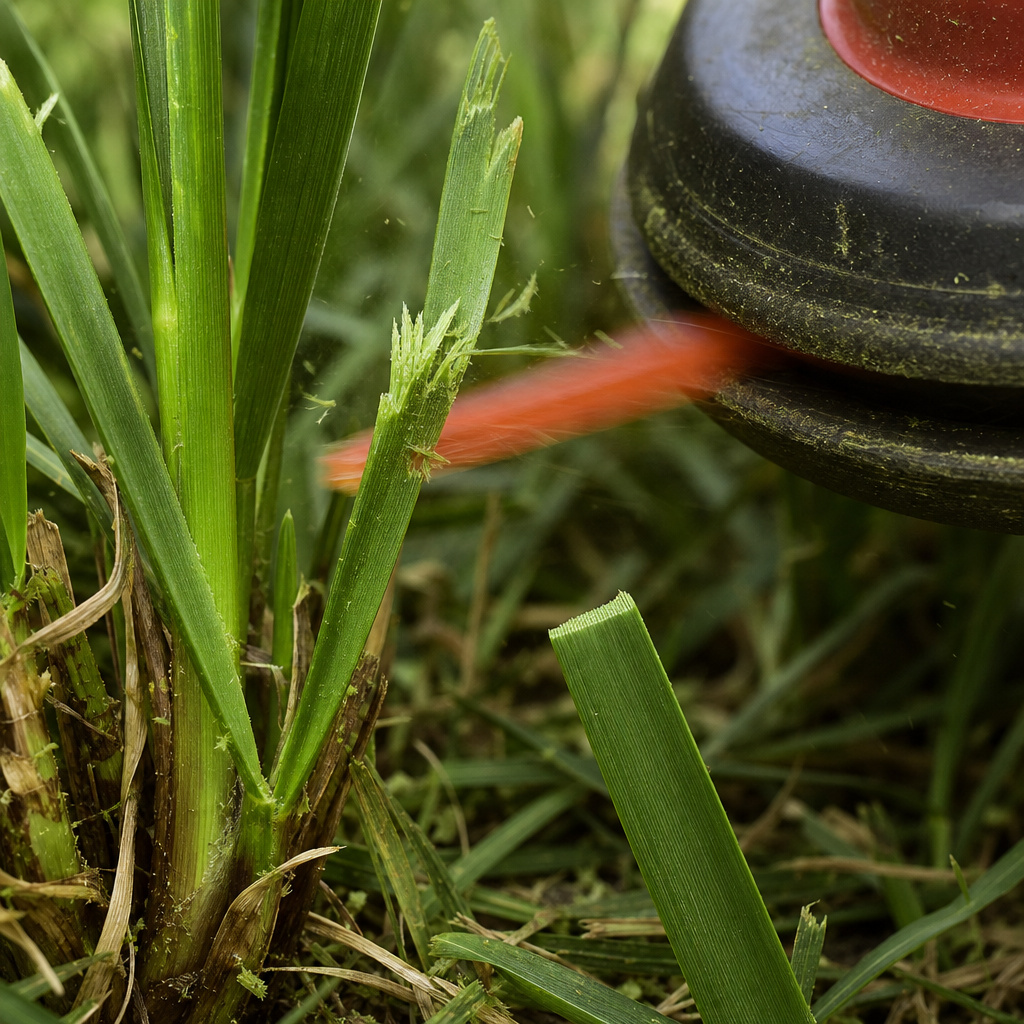
The physics are simple. A mower blade is a balanced, sharpened steel bar that cuts with a shearing action. A trimmer line is a whipping nylon filament that cuts with impact. The clean slice of a mower blade seals faster and stresses the plant less. The tearing impact of a trimmer line leaves a ragged wound that loses more moisture and is more vulnerable to fungal spores blowing in.
I learned this the hard way on a rental property with a tiny, fenced-in backyard. I used a Stihl FS 56 RC-E gas trimmer as the sole “mower” for one summer to avoid storing a mower. By August, the lawn was a patchy mess of stressed grass and invading clover. The grass blades were brown at the tips a day after trimming, a classic sign of tearing, not cutting. I spent the next fall reseeding.
What Will Go Wrong (And How to Fix It)
Even with perfect technique, things break. Here’s what you’ll likely face and how to handle it.
The line keeps breaking.
This is the universal sign you’re either using line that’s too thin or trying to cut too much, too fast. For grass cutting, step up to at least .095-inch diameter line. The cheap .080-inch stuff is for light weed whacking. If you’re cutting near fences, rocks, or foundations, you’re also likely hitting abrasives. Slow down. If breakage is constant, consider a solid-core line or a semi-professional grade like Oregon Magnum.
The trimmer is bogging down and smoking.
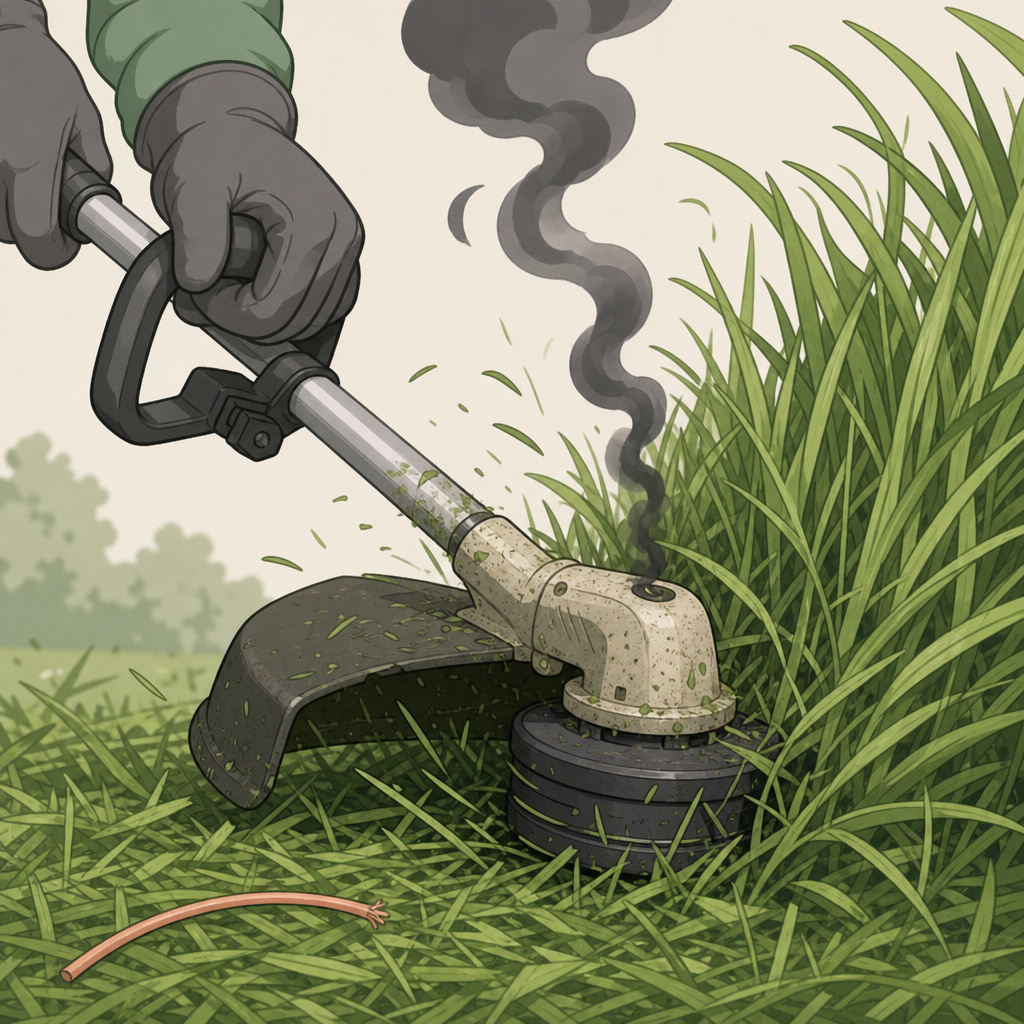
You’re overloading the motor. This is most common with cordless electric models on dense grass. You’re either trying to take too big a bite, or the grass is too wet and thick. Stop immediately. Let the motor cool. For your next pass, shorten your swing and only cut the top inch or two. On a gas model, black smoke often means an over-rich fuel mixture or a dirty air filter, basic maintenance that gets ignored.
The cut is wildly uneven.
Your arm isn’t a hydraulic cylinder. You’re dipping and rising without realizing it. Focus on locking the shaft against your body and using your hips to pivot, not your arms to swing. For a more even cut, some pros will actually mark a height on their shoe and try to keep the head gliding at that level. It’s fussy, but it works.
Grass is wrapping around the head.
You’re going too fast through tall, wet grass. The string hits a stalk, doesn’t cut it cleanly, and the momentum wraps it around the spindle. Always cut tall grass from the top down in layers. If it’s already wrapped, unplug the tool or remove the spark plug wire, then use a utility knife or needle-nose pliers to carefully cut and pull the grass out. Don’t just yank.
When You Absolutely Should Not Use a Weed Wacker
This isn’t a matter of difficulty. It’s a matter of causing real damage.
- Do not use it as your primary mower for a healthy lawn you care about. Beyond the uneven cut, the repeated tearing and scalping will weaken the grass plants over a single season. You’ll see more brown tips, thinner turf, and more weeds moving in.
- Do not use it on wet grass. The clippings will clump into a soggy mat that smothers the grass beneath and promotes mold. The wet grass also sticks to everything, overheating the motor and becoming a safety hazard.
- Do not use it without clearing the area first. I saw a trimmer throw a half-buried river rock through a vinyl fence panel once. The homeowner thought he’d cleared everything. He missed one stone. The repair bill was four times the cost of a lawn mower rental.
- Do not use a worn-out or underpowered tool. A tired gas trimmer that bogs down or a cordless model with a dying battery will tear grass rather than cut it. You’re doing more harm than good.
- Do not use it if you have back, shoulder, or wrist issues. The constant vibration and the need to stabilize the swinging head will aggravate any existing condition. A self-propelled mower is the right tool in that case.
Frequently Asked Questions
Can a weed wacker replace a lawn mower completely?
No. It is a supplement, not a replacement. For a lawn of any significant size (over 500 sq ft), a mower is faster, gives a healthier cut, and is less physically demanding. A trimmer lacks the cutting width, consistency, and clipping management of a mower.
What’s the best trimmer line for cutting grass?
For occasional grass cutting, a .095-inch diameter round nylon line is the minimum. For frequent use or thicker grass, upgrade to a .105-inch line or a twisted or square line profile. These hold their edge longer and resist breaking better against dense turf.
Is it bad for the weed wacker to use it as a mower?
Yes, if done regularly. The motor and drive shaft are designed for short, high-speed bursts, not continuous high-torque load. You’ll overheat the motor, wear out the spool head bearings faster, and significantly shorten the tool’s lifespan. It’s like running your car in first gear on the highway.
How do I get a more even cut with a trimmer?
Practice a consistent, level swing and cut in overlapping passes. For the best results, consider a straight-shaft trimmer with a bicycle-style handle (like many Stihl or Echo models). The second handle provides vastly better control for keeping the head level than a single loop handle.
Should I use a blade attachment instead of string?
Only for very heavy, woody growth like saplings or thick brush. A metal blade will destroy grass, cutting it too low and damaging the crown. It also poses a much greater safety risk from kickback and thrown debris. For grass, a heavy-duty string line is the correct and safer choice.
The Bottom Line
A weed wacker can cut grass in a pinch. For a tiny lawn, a rough patch, or a quick cleanup between mows, it’ll get the job done. But “can” and “should” are different. It’s a detail tool forced into a bulk job. You trade speed and lawn health for convenience.
If your situation demands it, you have no storage for a mower, your yard is all rocks and hills, or you just need to knock down a small area once, follow the safety rules, use the layered cutting technique, and always rake the clippings. Your back will be sore, the job will take three times longer, and the result won’t be golf-course smooth. But the grass will be shorter.
For anything more than an occasional, small-area fix, invest in a good lawn mower. Your grass, your tool, and your Saturday morning will thank you.
