
What Is a VSR Drill? The Tool That Changed Corded Drilling
This post contains affiliate links. As an Amazon Associate, we earn from qualifying purchases.
A VSR drill is a Variable-Speed Reversible drill. It’s a corded power tool where the trigger controls rotation speed, squeeze lightly for slow, squeeze fully for fast, and a switch changes the motor’s direction. The “3/8-inch” label refers to its chuck capacity, not its power. This design dominated workshops before cordless tools and remains the default for high-RPM, continuous-use tasks.
That speed control comes from a rheostat inside the trigger, a simple resistor that varies voltage to the motor. It’s a different beast from the electronic speed control in a modern cordless drill. The mechanical linkage is why a VSR drill bogs down under load instead of maintaining RPM.
What follows is a breakdown of the trigger mechanism, the real meaning behind specs like “8 Amp” and “0-2500 RPM,” and a clear comparison to the tools that have mostly replaced it. By the end, you’ll know exactly when to pull the cord on a VSR drill and when to reach for something else.
Key Takeaways
- The VSR trigger is a rheostat, not a computer. It reduces voltage to slow the motor, which also cuts torque, push too hard at low speed and the drill stalls.
- Chuck size (3/8″ or 1/2″) is the maximum shank diameter it can hold, not a power rating. Most VSR drills are 3/8″ models.
- They are built for sustained high RPM. A model like the DEWALT DWD112 runs at 2,500 RPM indefinitely, a task that overheats most cordless models in minutes.
- The “Reversible” part is crucial for removing screws and backing out jammed bits. The switch is separate from the speed control.
- Parts for older models like the Bosch 1001VSR are often discontinued. If it breaks, you’re likely buying a new drill.
The Anatomy of a VSR Drill
Forget the marketing. A VSR drill is defined by three physical components: the variable-speed trigger, the reversing switch, and a brushed motor. Everything else is just housing.
The trigger is the heart. Squeeze it partway, and a carbon disc inside a rheostat presses against a coiled resistor. This increases resistance in the circuit, dropping the voltage that reaches the motor. Less voltage means slower rotation. Squeeze it fully, and the disc makes full contact, delivering full line voltage (120V) for maximum speed. It’s purely analog.
The reversing switch is a simple mechanical lever that physically swaps the connection of the two motor brushes. This changes the polarity of the magnetic field in the motor, making it spin the opposite direction. It’s a binary state, forward or reverse, and works at any trigger speed.
This mechanical speed control is why a VSR drill can’t maintain RPM under load like a modern brushless drill. As you press into hard material, the motor draws more current, the voltage at the rheostat drops further, and the drill slows down audibly. That’s your cue to ease up or risk stalling.
The motor is universally a brushed DC type in these corded tools. Two carbon brushes press against a spinning commutator on the motor’s armature, delivering power and creating the electromagnetic field that drives rotation. They wear down over time and are the most common part to replace.
How Does a VSR Trigger Actually Work?
Pull the trigger on a VSR drill and you’re operating a century-old electrical principle. There’s no circuit board.
Inside the plastic housing, the trigger pivot presses a spring-loaded plunger onto a stack of carbon and ceramic discs. This stack is the rheostat. As the plunger presses harder, the discs compress, reducing electrical resistance along their path. Lower resistance allows more of the 120V AC current to pass through to the motor.
A separate component, often a rotary dial near the trigger, acts as a speed limiter. It doesn’t make the drill faster. It physically blocks the trigger from being pulled all the way. Set it to “1,” and the trigger hits a stop at the halfway point, capping the voltage at around 60V and the RPM at roughly half the no-load maximum.
This is a power loss system, not a governed one. When you set a low speed, you are literally restricting the power available. That’s why drilling a large hole at a low speed setting often fails, the motor lacks the torque because it’s being starved of voltage.
| Trigger Position | Rheostat Action | Voltage to Motor | Result |
|---|---|---|---|
| Light Squeeze | High resistance | Low (e.g., 30V) | Low RPM, low torque |
| Halfway | Medium resistance | Medium (e.g., 70V) | Medium RPM, medium torque |
| Full Squeeze | Minimal resistance | Full (120V) | Max RPM (e.g., 2500), max torque |
| With Speed Limiter Set | Trigger hits stop early | Capped (e.g., 60V) | RPM capped, torque reduced |
The reversing switch is downstream of this whole system. Flipping it reverses the motor’s direction, but the speed control from the trigger remains the same. You can back out a screw just as slowly as you drove it in.
Key Specs and What They Mean
The numbers on the side of a VSR drill tell a specific story. Here’s how to read them.
Chuck Size (3/8″ or 1/2″): This is the maximum diameter drill bit shank the chuck can tighten onto. It is not an indicator of power. A 3/8″ VSR drill is extremely common for general use. A 1/2″ model, like the Ryobi D50VSR, is less common and typically heavier, meant for larger bits and more demanding work. The chuck itself is often a keyless, ratcheting type on modern VSR drills for quick bit changes.
Amps (A): This is the current draw of the motor at full load. Higher amps generally mean a more powerful motor capable of producing more torque. The DEWALT DWD112 uses an 8 Amp motor. The Genesis GD38B uses a 4.2 Amp motor. More amps also mean a heavier, hotter-running tool.
No-Load Speed (RPM): This is the maximum rotational speed with the trigger fully pressed and no bit engaged. It’s a ceiling. The DEWALT DWD112 hits 0-2,500 RPM. The Genesis GD38B reaches 0-3,000 RPM. Higher RPM is better for small-diameter bits in wood or metal and for using wire wheel brushes.
Max Torque (Nm): Sometimes listed, this is the rotational force. The DWD112 produces 10.9 Nm. For comparison, a mid-range 12V drill might produce 30-40 Nm. VSR drills are not high-torque tools; they’re high-speed tools. For high torque, you need an impact driver.
Where this goes sideways: Assuming a 3/8″ drill is weak. Chuck size doesn’t equal power. That 3/8″ DEWALT DWD112 has an 8-amp motor that will out-work many 1/2″ corded drills on sustained RPM tasks. The limit is the shank size it can hold, not the power it can make.
The other critical spec is weight and build. A VSR drill like the DWD112 is all ball-bearing construction and weighs 1.8 kg (about 4 lbs). That weight dampens vibration and contributes to durability during long sessions. A lighter, plastic-geared drill won’t last under the same use.
VSR Drill vs. Modern Alternatives
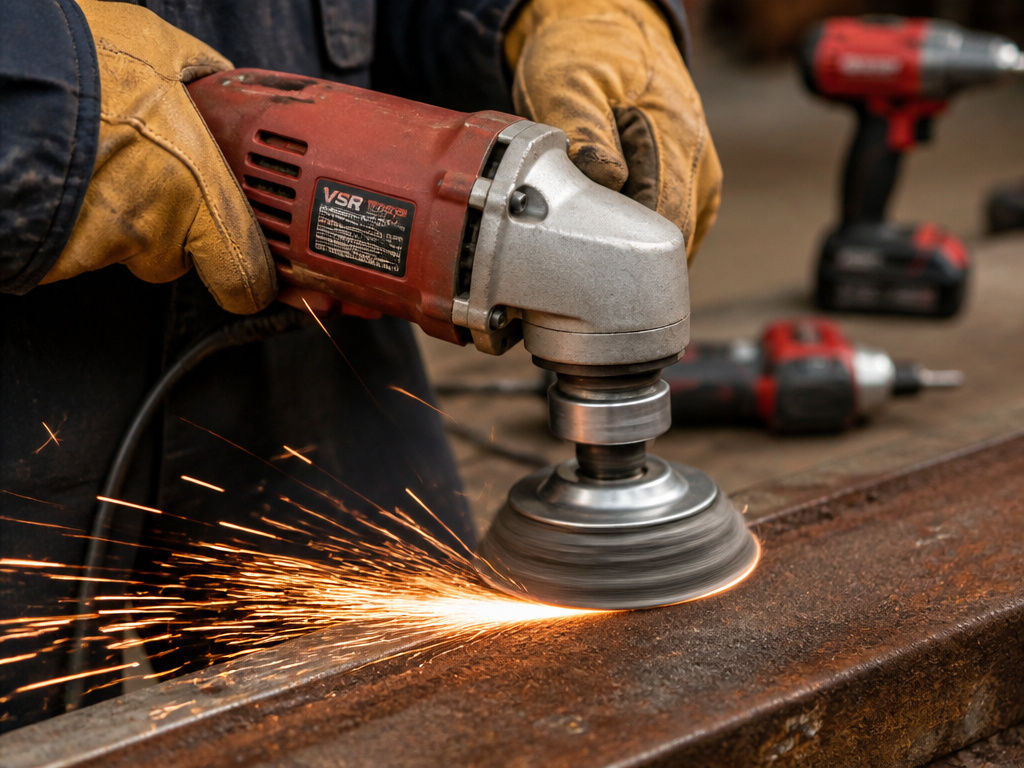 The VSR drill isn’t obsolete, but its role has narrowed. Here’s where it stands against today’s common tools.
VSR Drill vs. Cordless Drill/Driver:
The core difference is power delivery and control. A VSR drill runs on unlimited 120V AC power, perfect for long sessions of sanding, polishing, or running a 4” wire wheel at high RPM. A cordless drill uses electronic speed control to maintain RPM under load, which is superior for driving screws or drilling hard materials without stalling. The VSR wins on endurance and top speed; the cordless wins on control, convenience, and torque.
VSR Drill vs. Impact Driver:
This isn’t a close contest. An impact driver is a high-torque tool for driving lag bolts and long screws. It uses concussive blows, not continuous rotation. A VSR drill is a terrible choice for lag bolts, it will stall or burn out. Conversely, an impact driver is useless for precise drilling or high-speed accessory work. They are different tools for different jobs.
VSR Drill vs. Hammer Drill:
A hammer drill adds a pulsating hammering action for drilling into masonry. Many VSR drills have a “hammer drill” cousin that looks identical but has an extra mechanical mode. If your VSR drill doesn’t have a hammer setting, it will not drill into concrete effectively. This is a functional add-on, not a difference in the base drilling mechanism.
| Task | Best Tool | Why |
|---|---|---|
| Running a wire cup brush for rust removal | VSR Drill | Sustained high RPM (2500+) without battery fade or overheating. |
| Drilling 20 x 1/4″ holes in steel | Cordless Drill | Electronic control maintains RPM, prevents work hardening. |
| Driving 3″ deck screws | Impact Driver | High torque and impact action prevent cam-out and wrist strain. |
| Drilling into a brick wall | Hammer Drill | Hammering action fractures masonry; a standard VSR drill will just spin. |
| Mixing a 5-gallon bucket of paint | VSR Drill | Unlimited runtime, high RPM, and often a side handle for control. |
When to Use (and Not Use) a VSR Drill
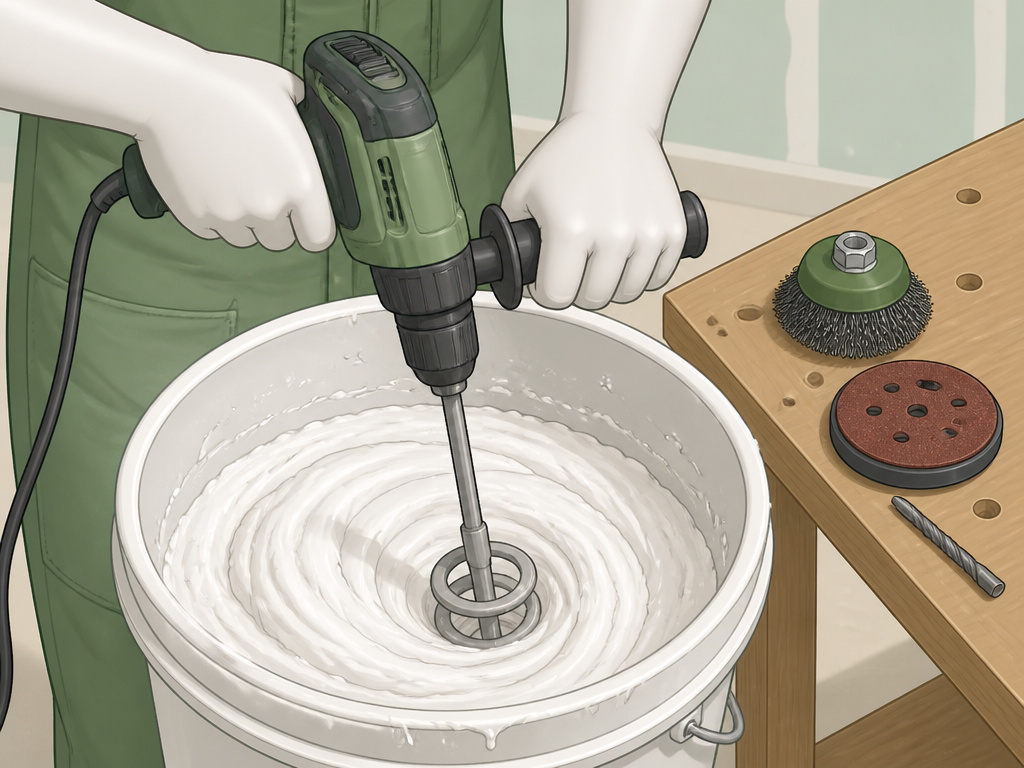 The VSR drill’s sweet spot is defined by runtime and rotational speed.
Use it for: * High-RPM accessory work: Polishing, wire brushing, buffing, or sanding with a backing pad. These tasks need sustained speed, not high torque. * Mixing: Paint, drywall mud, epoxy. The continuous power and often-available side handle make it ideal. * Repetitive drilling in soft materials: Drilling many small-diameter holes in wood or plastic where speed matters more than precision torque. * As a shop anchor: When you need a drill that’s always ready, never needs a battery charge, and can be loaned out without worrying about a charger.
Skip this if: You need to drill into masonry (get a hammer drill), drive lots of screws (get a driver), or work in a space without a convenient outlet. Its cord is its biggest limitation.
Do not use a VSR drill for: * Lag bolts or large screw driving: It lacks the torque and will stall, overheat, or strip the fastener head. * Precision metal drilling: The lack of RPM maintenance under load can cause bits to grab and break, or work-harden the metal. * Any task where you’d normally reach for an impact driver. They are not interchangeable.
Safety and Maintenance Notes
These are powerful, simple tools. Respect them.
Safety First:
- Eye protection is non-negotiable. Drilling and wire-wheel work throw debris. Safety glasses must comply with ANSI Z87.1.
- Use the side handle. For any high-torque or off-angle task, install the auxiliary handle. The rotational force can twist the tool from your grip.
- Mind the cord. Keep it away from the bit and spinning chuck. Use a proper outdoor-rated extension cord if needed, for a 4-8 amp drill, a 16-gauge cord is the minimum for runs over 50 feet.
- Check for hidden wiring. The manual for the Genesis GD38B warns to hold the tool by insulated grips when drilling into walls, as contact with a live wire can make the entire metal housing live.
Maintenance is straightforward:
- Keep it clean. Blow out dust from the vents regularly with compressed air.
- Listen to the brushes. A sparking sound from the motor housing or a drop in power often means the carbon brushes are worn. On many models, you can replace them by removing two caps on the side of the drill.
- Lubricate sparingly. A drop of light oil on the chuck’s moving parts occasionally is enough. Do not oil the motor or trigger mechanism.
- Store it indoors. Moisture rusts the chuck and internal components.
The reality of repair for older models is bleak. For a tool like the Bosch 1001VSR, official parts like the chuck (part #3608571513) and power cable are discontinued with no substitute. When a key component fails, the drill becomes a parts donor.
The Bottom Line
A VSR drill is a specialist. It’s not your first drill anymore, that’s a cordless drill/driver. But for the jobs it was built for, nothing in the cordless world truly replaces it. The combination of unlimited runtime, simple mechanical control, and sustained high RPM makes it a permanent fixture in a serious workshop.
If you regularly mix compounds, strip paint with wire wheels, or need a drill you can run for an hour straight, keep a VSR on the shelf. The DEWALT DWD112 is a benchmark model. For lighter duty, a Genesis GD38B will do. Just know its limits: it’s for spinning, not pounding. When you need to drive or demolish, reach for the right modern tool.
Frequently Asked Questions
What does VSR stand for on a drill?
VSR stands for Variable Speed Reversible. It means the drill’s trigger controls how fast it spins (variable speed) and a separate switch changes the direction of rotation (reversible). This was the standard feature set for corded drills before cordless technology became dominant.
Is a VSR drill better than a cordless drill?
It’s not better, it’s different. A VSR drill is better for tasks requiring sustained high speed and unlimited runtime, like mixing paint or using a wire brush. A modern cordless drill is better for control, convenience, and torque-sensitive tasks like driving screws. Most workshops benefit from having both.
Can you use a VSR drill as an impact driver?
No. A VSR drill provides continuous rotational force. An impact driver delivers sudden, concussive bursts of torque (hammering action) to drive stubborn fasteners. Using a VSR drill for heavy bolt driving will stall the motor or damage the drill.
What size is a VSR drill?
The most common VSR drill has a 3/8-inch keyless chuck, meaning it can hold bits with shanks up to 3/8-inch in diameter. Some heavier-duty models have a 1/2-inch chuck. The “size” refers to chuck capacity, not the physical size of the tool.
Are VSR drills still made?
Yes, but fewer models are available. Major brands like DEWALT still produce them (e.g., the DWD112), and value brands like Genesis offer them (the GD38B). Their production has decreased as the market shifted to cordless tools, but they remain in catalogs for industrial and serious DIY use.
