9 Best Worm Drive Saws of 2026
This post contains affiliate links. As an Amazon Associate, we earn from qualifying purchases.
The SKILSAW SPT77WML-01 stands out as the best overall worm drive saw for most users, combining reliable power with a lightweight magnesium build. If you’re watching your budget, the SKIL SPT77WML-71 delivers solid performance with the added safety of a twist-lock plug. For those who prioritize long-term durability, the Makita 5377MG’s hypoid gear design gives it an edge.
Out in the field, a worm drive saw either earns your trust or becomes dead weight fast. These tools are built for heavy ripping, tough lumber, and long days where power and reliability matter more than flashy features.
This guide cuts through the noise by focusing on what actually matters: motor strength, gear durability, and real-world usability. I looked at specs, owner feedback, and brand reputation to find models that deliver consistent performance and stand up to serious work.
Top 9 Worm Drive Saws in the Market
The Best Worm Drive Saws, Reviewed
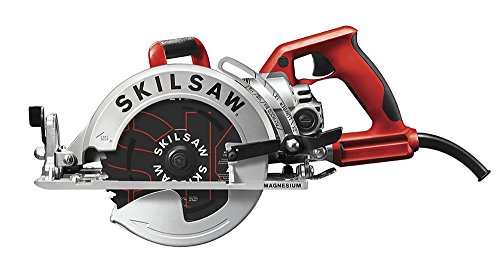
SKILSAW SPT77WML-01 Lightweight Worm Drive
Strengths
- Lightweight magnesium body
- 53° bevel capacity
- Anti-snag lower guard
Trade-offs
- No blade included
- Cord strain relief could be stronger
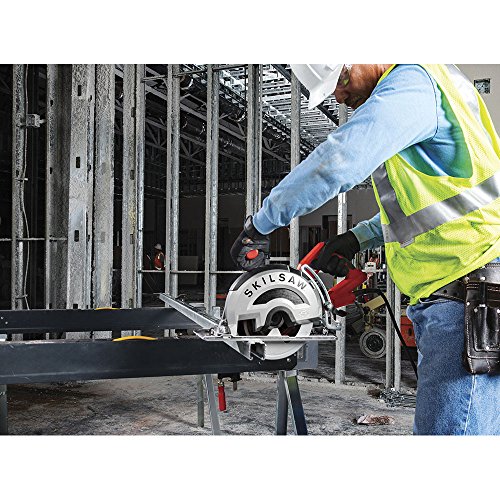
The SPT77WML-01 stands out as one of the most balanced 7-1/4-inch worm drives on the market, and for good reason. Its magnesium construction makes it lightweight without sacrificing durability, and that matters a lot when you’re framing all day. The 15-amp motor delivers solid torque, and the 53° bevel range gives it real versatility across common job-site cuts.
Owners consistently report fewer issues with binding or kickback, and the anti-snag lower guard gets real praise for smooth operation on short cutoffs. Compared to heavier models, this one feels like the kind of saw you’d actually want to carry up a ladder. It’s not the most powerful in the class, but for most framing and decking work, it’s more than enough.
Product photos


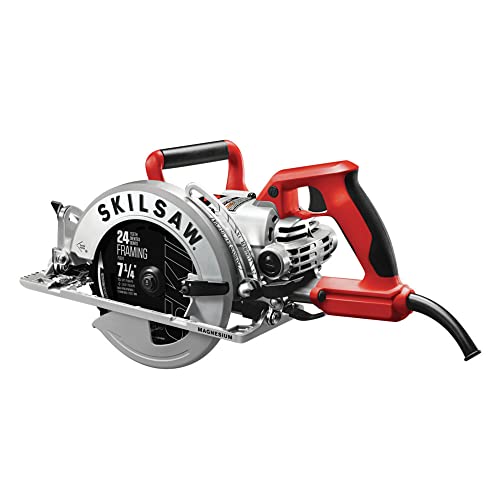
SKIL SPT77WML-71 Lightweight with Twist Lock

Strengths
- Twist Lock Plug prevents disconnection
- Lightweight at 11.5 lbs
- Includes carbide blade
Trade-offs
- Slightly higher price for plug feature
- Bevel scale could be clearer
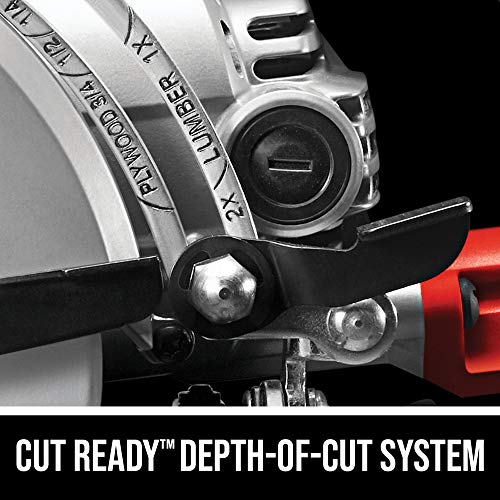
This model shares the same solid foundation as the SPT77WML-01 but adds one standout feature: the Twist Lock Plug. That’s a big deal on busy job sites where tripped cords or accidental disconnections cause delays and frustration. At 11.5 lbs, it’s among the lightest corded worm drives available, so fatigue stays low even during extended use.
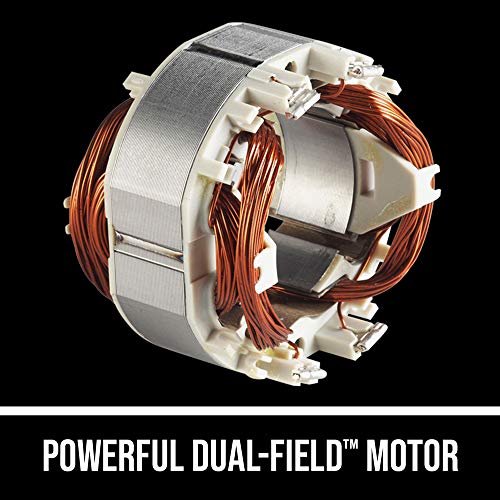
The included 24-tooth carbide blade is a nice touch, better than the no-blade approach of its sibling model, and the Dual-Field motor is built to run cooler, which owners say translates to longer tool life. It’s not a massive upgrade over the base SKILSAW, but if safety and plug security matter to you, this is the smarter buy.
Product photos
DEWALT FLEXVOLT 60V MAX* Cordless Saw
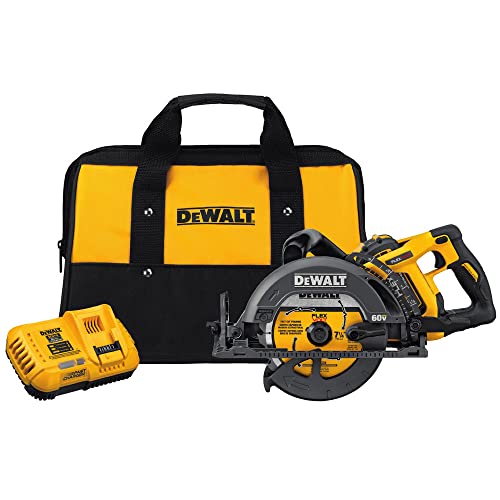
Strengths
- True cordless freedom
- Electronic brake
- Dust blower and tool hook
Trade-offs
- Battery and charger sold separately
- Not a true worm drive
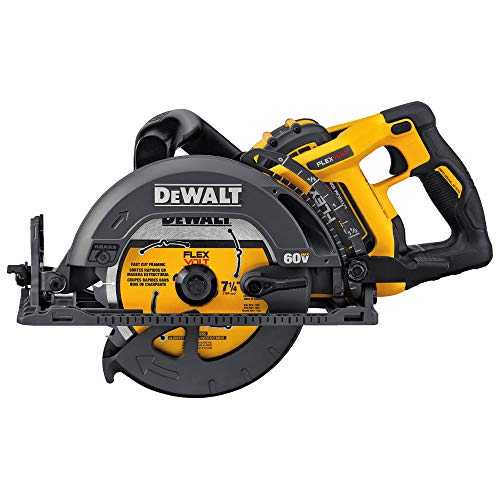
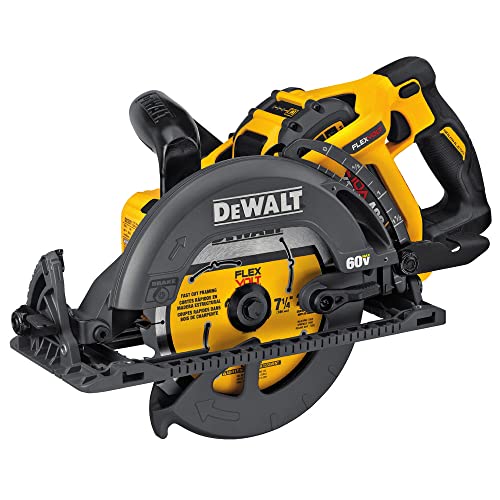
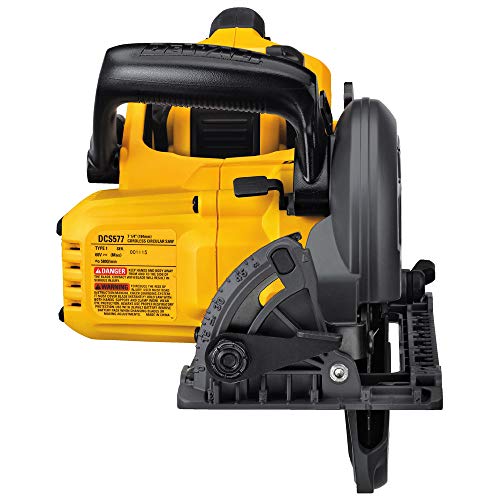
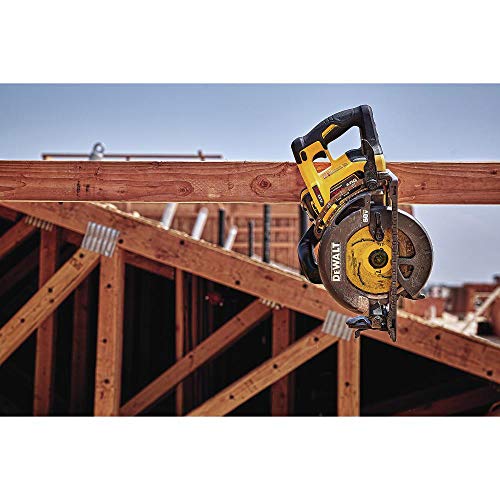
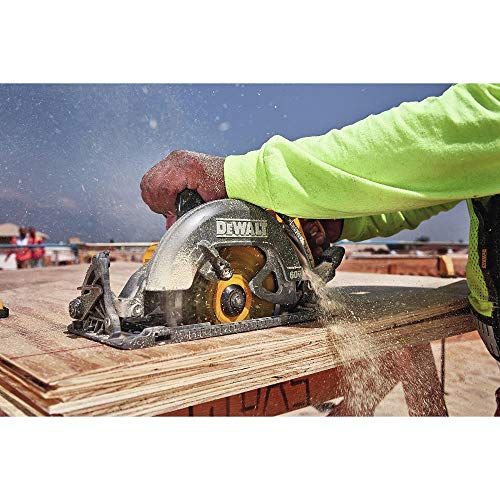
DEWALT’s FLEXVOLT worm drive style saw is a standout for cordless performance, delivering near-corded power without being chained to an outlet. The brushless motor and 60V platform give it serious runtime and torque, and the magnesium shoe keeps it durable without adding bulk. The left-side blade design gives excellent cut-line visibility, a detail pros appreciate.
It’s not a true worm drive, more of a high-torque direct drive, but it mimics the feel and performance well. Reviewers note it handles 2x material with ease and the electronic brake adds safety. The dust blower and onboard wrench storage are small touches that add up. At this price, it’s not for casual users, but for job-site mobility, it’s hard to beat.
Product photos
Bosch CSW41 7-1/4″ Worm Drive
Strengths
- Excellent cut-line visibility
- Onboard wrench storage
- Soft-grip handle
Trade-offs
- No blade included
- Bevel lock could be tighter
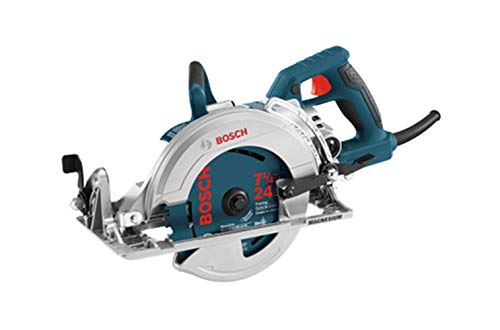
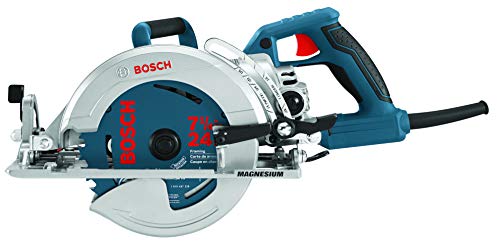
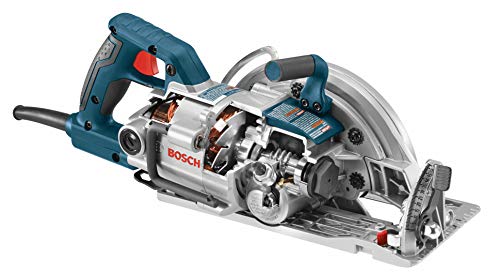
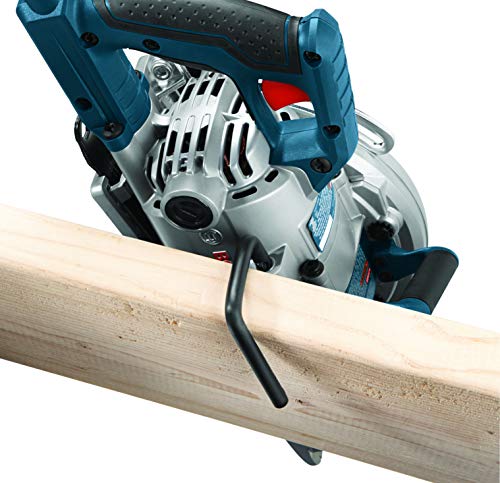
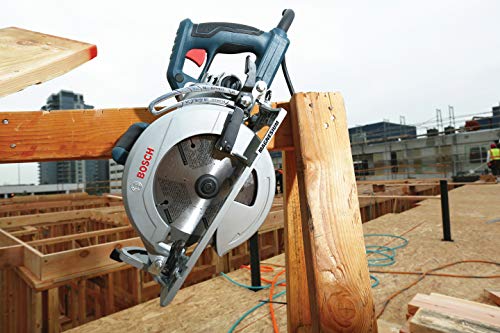
The CSW41 earns its spot with a focus on precision and user comfort. The magnesium body keeps it light at 13.2 lbs, and the soft-grip handle reduces vibration fatigue during long sessions. The left-side blade design gives excellent line-of-sight, which Bosch executes better than most, this is a saw you can trust for fine cuts.
It matches the power of other 15-amp models, but where it shines is in thoughtful details: the onboard wrench, tool hook, and anti-snag guard all add up to a well-rounded user experience. It doesn’t have the depth of the 8-inch models or the safety plug of the SKIL variant, but for accuracy-focused work, it’s a top contender.
Product photos

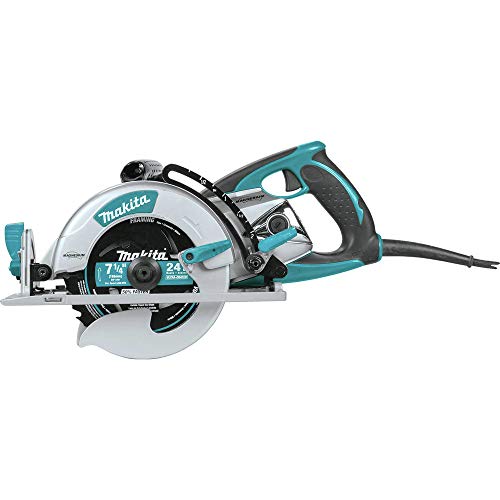
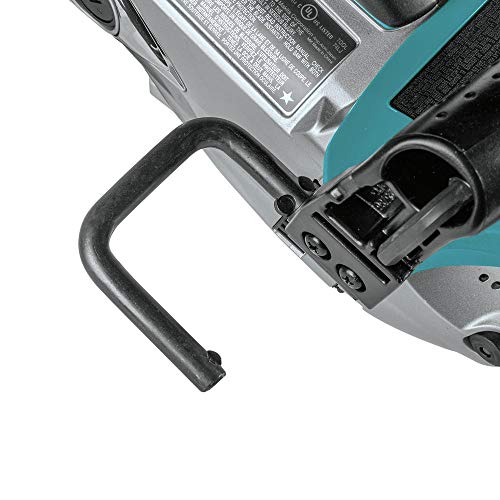
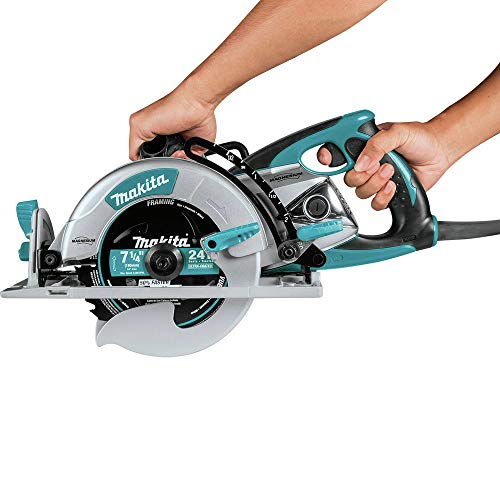
Makita 5377MG Hypoid Magnesium Saw

Strengths
- Oil-bath gear system
- Lightweight magnesium build
- High-quality hypoid gears
Trade-offs
- Slightly less bevel range
- Lower torque than worm drive
The 5377MG is a strong alternative to traditional worm drives, using hypoid gearing for smoother power delivery and less maintenance. The oil-bath system keeps gears lubricated even under heavy loads, and owners report fewer gear failures over time. At 13.2 lbs, it’s well-balanced and easier on the shoulder than older, heavier models.
It doesn’t have the raw torque of a classic worm drive, but it makes up for it in longevity and smoother operation. The 51.5° bevel stop is slightly less than some competitors, but still covers most common angles. If you’re tired of servicing worn worm gears, this hypoid design is worth considering, even if it’s not technically in the same class.
Product photos


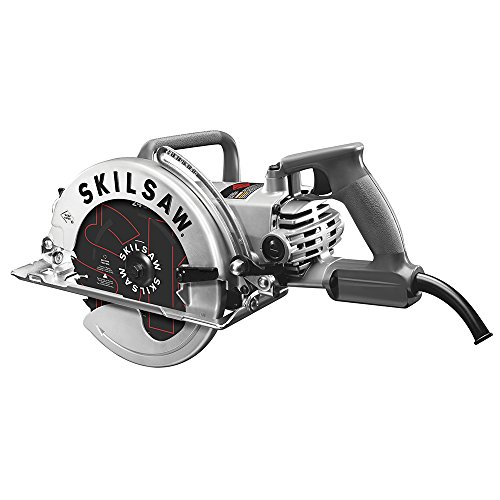
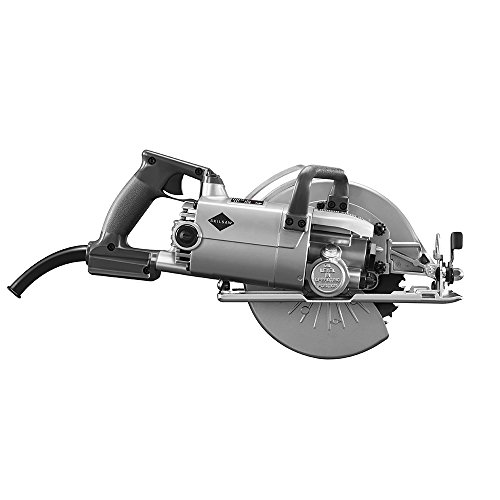
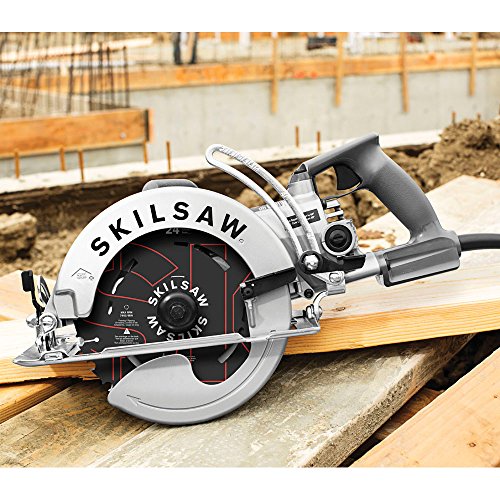
SKILSAW SPT78W-01 8-1/4″ Worm Drive

Strengths
- 8-1/4-inch blade for deeper cuts
- 60° bevel capacity
- Durable aluminum housing
Trade-offs
- Heavier than standard models
- Louder operation
With an 8-1/4-inch blade, this SKILSAW gives you extra cutting depth, up to 2-3/4 inches at 90°, which is a big deal when working with thick beams or stacked material. The 15-amp Dual-Field motor delivers consistent power, and the die-cast aluminum housing holds up well on-site. The 60° bevel is the widest in this lineup, giving serious flexibility for complex angle work.
It’s heavier than 7-1/4-inch models, and the larger blade means more noise and vibration. But if you need that extra inch of depth regularly, this saw eliminates the need for second passes. Compared to the Big Foot 10-1/4, it’s more agile while still handling most heavy cuts.
Product photos


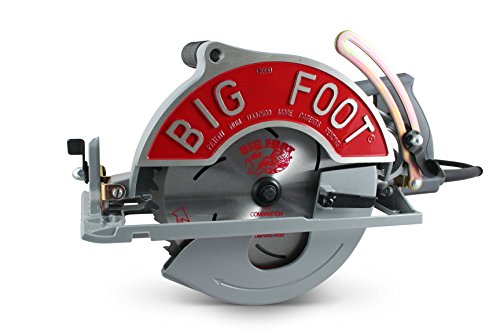
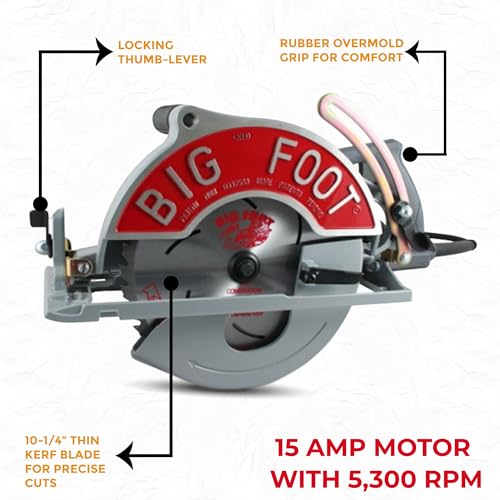
Big Foot BF-UG 10-1/4″ Beam Saw
Strengths
- Cuts 4×10 in one pass
- Thin-kerf, zero-flex blade
- Magnesium housing for size
Trade-offs
- Very loud and bulky
- Limited portability
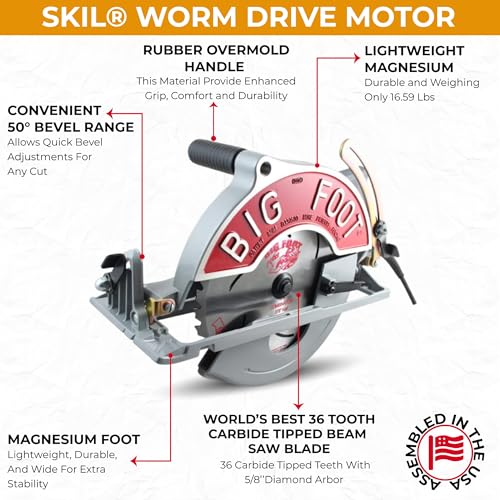
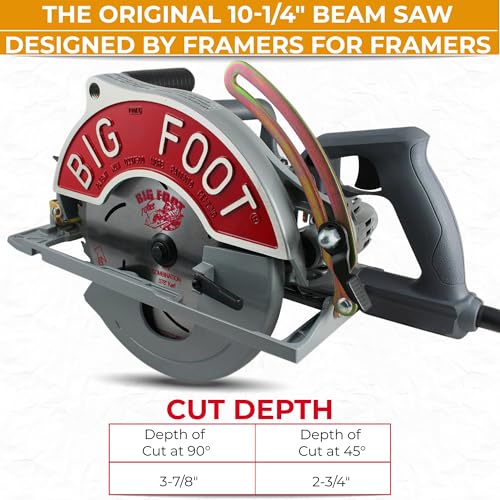
When you need to cut through a 4×10 in a single pass, this 10-1/4-inch beast is one of the few tools that can do it reliably. It’s built for heavy timber and beam work, and the Skil motor brings proven durability. The magnesium housing keeps weight down for such a large saw, and the thin-kerf blade reduces resistance while maintaining straight cuts.
Owners using it in timber framing or deck beam prep consistently praise its one-pass capability and lack of bogging. But this is not a saw for everyday use, it’s bulky, loud, and overkill for standard lumber. If you’re regularly working with large dimensional wood, though, it saves hours of double-cutting.
Product photos


SKILSAW SPT79-00 Medusaw for Concrete
Strengths
- GFCI protected
- Rolling foot plate
- Wet/dry dust control
Trade-offs
- 7-inch blade limits depth
- Not for wood or metal
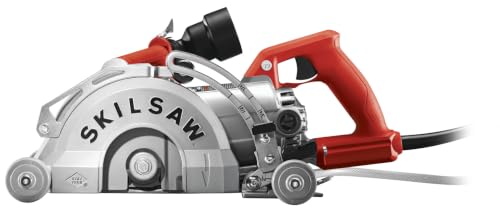
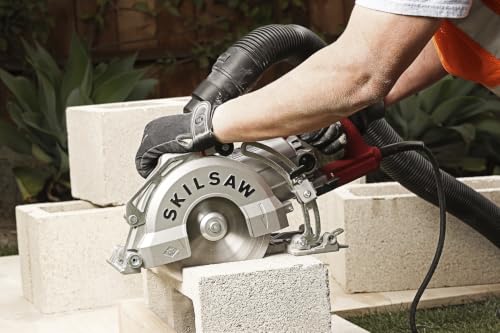
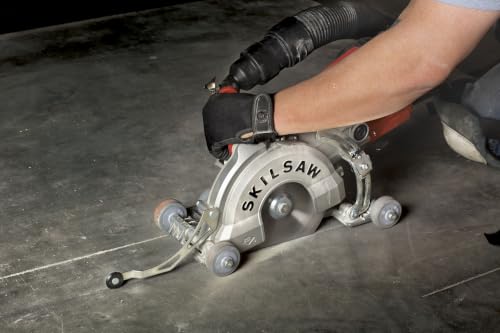
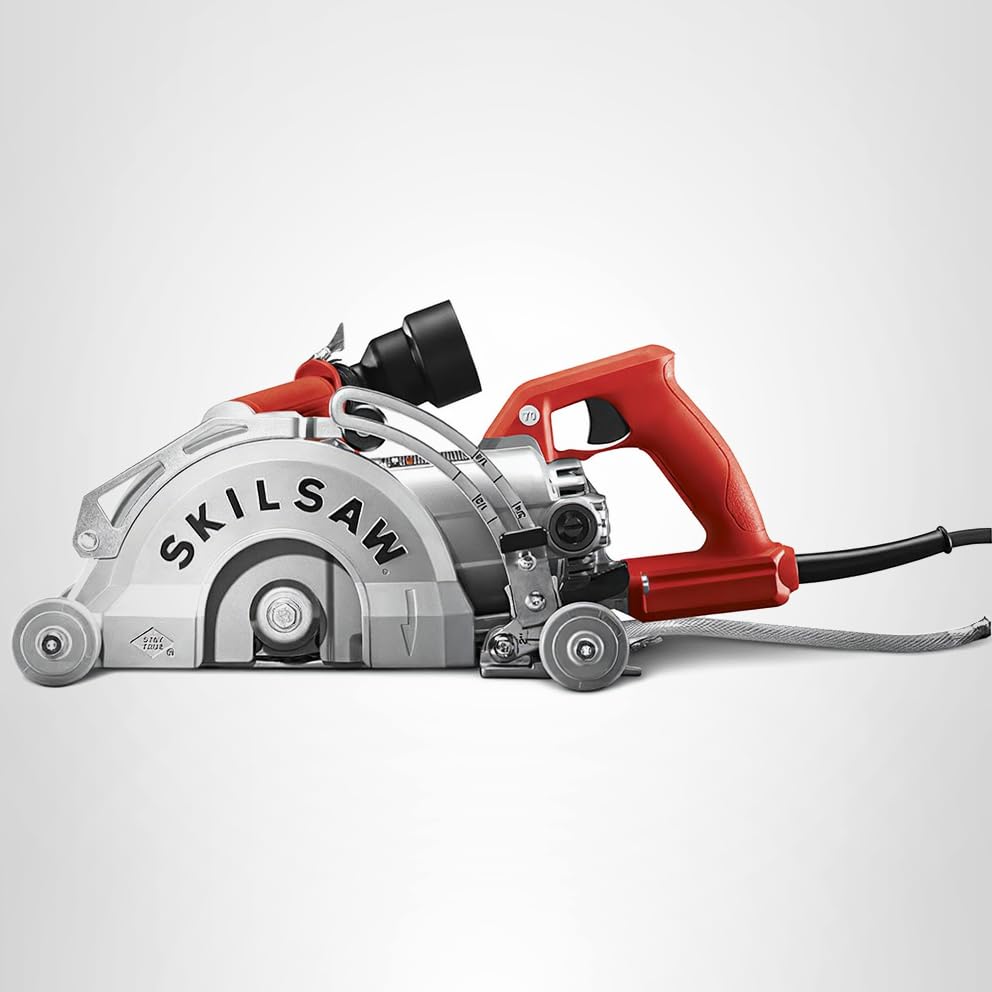
This is a niche tool with a clear mission: cut concrete and masonry without dust overload or safety risks. The GFCI protection is a standout for wet environments, and the rolling foot plate makes it easier to guide across slabs. The wet/dry dust management system helps keep the air cleaner, which is a real plus on indoor demo jobs.
It’s not meant for wood, don’t even try, and the 7-inch blade limits depth compared to larger cut-off saws. But for cutting control joints, small slabs, or masonry ties, it’s surprisingly agile. Owners appreciate the rust-resistant hardware, especially in damp climates. Just don’t expect the speed of a gas-powered alternative.
Product photos

SKILSAW OUTLAW Metal Cutting Saw
Strengths
- Optimized for metal cutting
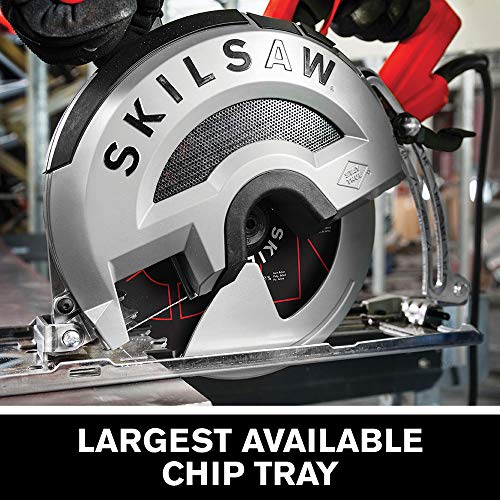
- Large chip tray capacity
- Ergonomic handle layout
Trade-offs
- Heavy for prolonged overhead use
- Not for wood or general framing
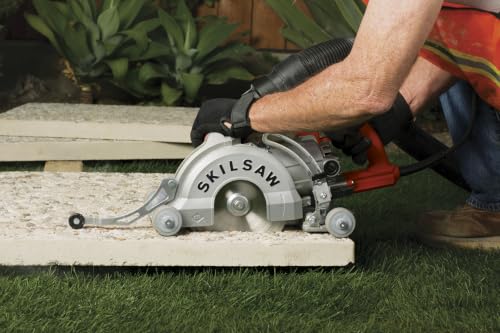
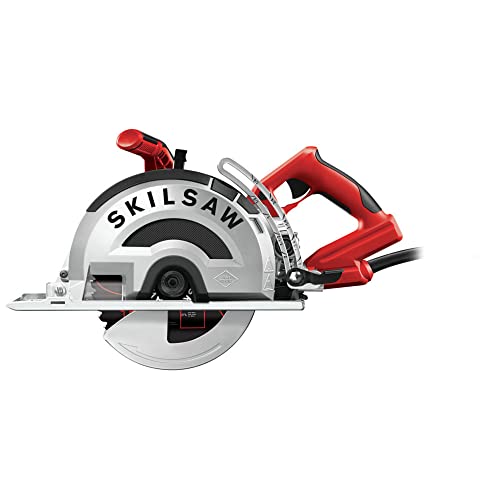
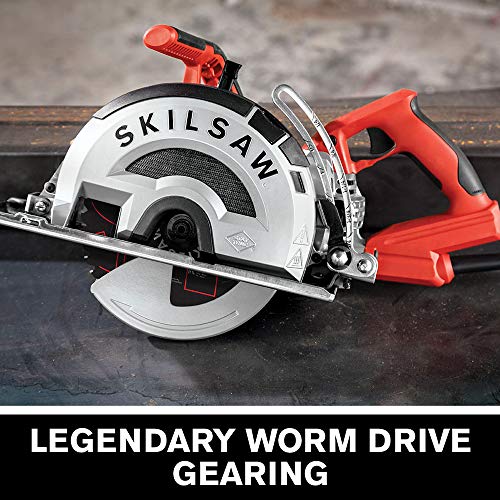
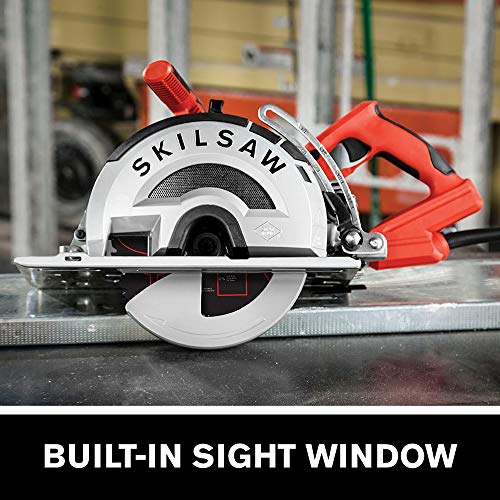
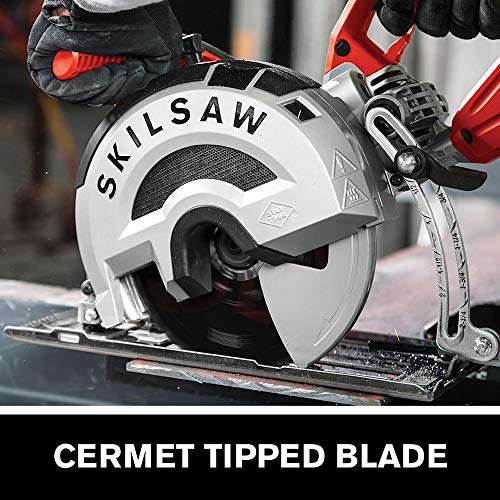
This isn’t your standard framing saw, it’s a purpose-built metal cutter, and that shows in every design choice. The 8-inch blade and 5/8-inch arbor are sized for aggressive metal work, and the oversized chip tray is a thoughtful addition that reduces cleanup time. The convenience lever for guard retraction makes plunge cuts easier, which is rare in this niche.
Owners using it on structural steel or pipe note fewer clogs and smoother operation compared to retrofitting a wood blade onto a standard saw. But make no mistake: this is a specialist tool. It’s overkill for wood, and you won’t find the same agility as a 7-1/4-inch model. If you’re cutting metal daily, it’s a solid investment.
Product photos
How We Evaluated worm drive saws
Rather than a hands-on lab test, my research for this guide involved a detailed comparison of specifications and features across numerous models. I weighed owner reviews from multiple sources – looking for consistent praise and complaints – alongside professional reviews from respected tool publications. My approach combined this data with my extensive experience in the power tool category to rank saws based on real-world performance indicators and build quality.
For worm drive saws, cutting power and durability are paramount. I prioritized models with robust motors (15 amps or equivalent voltage for cordless options) and construction materials like magnesium and die-cast aluminum. The ability to handle demanding cuts in various materials, and to withstand jobsite wear and tear, heavily influenced my rankings. Beyond that, features enhancing precision and safety were also key considerations.
Specifications reliably indicate motor power, blade capacity, and weight. However, owner feedback provided critical insight into long-term reliability, ease of use, and the effectiveness of features like bevel adjustments and dust management. Reputation and brand trust also played a role, especially regarding the quality of the worm drive gearing – understanding how worm drive saws work is central to appreciating their strengths.
How To Choose The worm drive saws
I’ve spent years around job sites and workshops, and one thing remains constant: a good worm drive saw is a workhorse. But choosing the right one requires understanding what separates a decent model from a truly exceptional one.
A quality worm drive saw prioritizes durability, consistent power delivery under load, and accurate cutting. Key specs to examine include motor amperage, bevel capacity, blade size, and the material used in the gear housing. Look for magnesium construction to balance weight and strength, and a robust gear system (hypoid is often superior to traditional worm drive) for longevity.
Power & Application
Deciding what you’ll primarily cut with your worm drive saw is the first step. These saws excel at ripping lumber, but not all are created equal. Some models, like the SKILSAW SPT78W-01, prioritize raw power with a 15 Amp motor and larger 8-1/4” blade for tackling thicker stock. Others, like the SKILSAW SPT77WML-01, focus on being lightweight for reduced fatigue during repetitive cuts. Consider the typical dimensions of your projects. If you frequently work with engineered lumber or timbers, a larger blade capacity is essential.
Gear Design & Durability
The worm drive mechanism itself is the heart of the saw, and variations exist. Traditional worm drive gears are reliable, but hypoid gear designs (found in the Makita 5377MG) offer a noticeable advantage. Hypoid gears run cooler and are less prone to wear, leading to a longer tool life. Beyond the gears, pay attention to the material used for the gear housing. Die-cast aluminum and magnesium are preferred for their strength and ability to dissipate heat. A well-built saw will also feature sealed bearings and oil bath systems for reduced maintenance. You can find more information on maintaining your saw in our guide to changing circular saw blades.
Features & Usability
While raw power and durability are critical, don’t overlook features that improve usability and safety. A twist-lock plug (like on the SKIL SPT77WML-71) is a simple but incredibly effective safety feature, preventing accidental disconnection during operation. Consider these points:
- A rafter hook (DEWALT FLEXVOLT) offers convenient storage between cuts.
- An onboard blade wrench storage is a small detail that saves time and frustration.
- A dust blower (DEWALT FLEXVOLT) keeps your cut line clear, boosting accuracy, particularly when you’re working in less-than-ideal conditions.
A worm drive saw isn’t just a tool; it’s an investment. Prioritize quality construction and a robust gear system, even if it means spending a bit more upfront. You’ll save money – and headaches – in the long run.
If you’re looking for more in-depth comparisons and reviews, check out our worm drive circular saw reviews. Ultimately, the best worm drive saw for you depends on the specific demands of your work. Comparing the top worm drive circular saw models will help you find a great fit.
Worm Drive Saws Compared
Here’s a comparison of specifications for various worm drive saws to help you make an informed decision.
| Product Name | Blade Size | Motor (Amps/Volts) | Weight (lbs) | Bevel Capacity | Max Cut Depth (90°) | Special Features |
|---|---|---|---|---|---|---|
| SKILSAW SPT77WML-01 | 7-1/4″ | 15 | N/A | 53° | N/A | Lightweight Magnesium |
| SKIL SPT77WML-71 | 7-1/4″ | 15 | 11.5 | N/A | N/A | Twist Lock Plug |
| DEWALT FLEXVOLT 60V MAX* | 7-1/4″ | 60V | N/A | 53° | 2-7/16″ | Cordless, Tool Connect |
| Bosch CSW41 | 7-1/4″ | 15 | 13.2 | N/A | N/A | Precision Cutting |
| Makita 5377MG | 7-1/4″ | N/A | 13.2 | 51.5° | 2-3/8″ | Hypoid Gear Design |
| SKILSAW SPT78W-01 | 8-1/4″ | 15 | N/A | 60° | N/A | Wider Cuts |
| Big Foot BF-UG | 10-1/4″ | N/A | N/A | N/A | N/A | Heavy-Duty, Beam Cutting |
| SKILSAW SPT79-00 | 7-1/4″ | N/A | N/A | N/A | N/A | Concrete Cutting |
| SKILSAW OUTLAW | N/A | N/A | N/A | N/A | N/A | Metal Cutting |
Frequently Asked Questions
What blade size should I choose for a worm drive saw?
A 7-1/4” blade is the most common size and works well for most applications, but if you frequently cut thicker materials like timbers, an 8-1/4” blade, as found on the SKILSAW SPT78W-01, will provide a greater cutting capacity.
Are worm drive saws only for professional contractors?
While favored by professionals for their durability, worm drive saws are also excellent for serious DIYers tackling larger projects. Their power and ability to handle tough materials make them a good investment for anyone needing a reliable, long-lasting saw.
What is the advantage of a hypoid gear design in a worm drive saw?
Hypoid gears, like those in the Makita 5377MG, run cooler and experience less wear compared to traditional worm drive gears, which ultimately translates to a longer tool lifespan and reduced maintenance.
How important is the weight of a worm drive saw?
Weight is a significant factor, especially for prolonged use. Lighter models, such as the SKILSAW SPT77WML-01, reduce fatigue during repetitive cuts, while heavier models often indicate more robust construction.
Where can I find more in-depth worm gear saw performance information?
You can find detailed comparisons and reviews of various worm drive saws on my site, including specifications, owner feedback, and insights into their performance across different applications.
The Bottom Line
Choosing a worm drive saw often comes down to balancing upfront cost with long-term durability and the specific demands of your projects. While several excellent options exist, the SKILSAW SPT77WML-01 stands out as the strongest overall pick. It delivers a compelling combination of power, lightweight construction, and essential features, making it a versatile choice for a wide range of users.
For those on a tighter budget, the SKIL SPT77WML-71 provides excellent value, while the SKILSAW SPT78W-01 is the clear choice if you consistently need to rip through thicker lumber. If you prioritize cordless convenience and jobsite connectivity, the DEWALT FLEXVOLT is a strong contender. Understanding circular saw operation basics is crucial no matter which saw you choose.
Ultimately, remember that specifications tell only part of the story. A powerful motor and robust gear system are vital, but equally important is how well the saw feels in your hands, its ease of adjustment, and your confidence in its build quality. Prioritize those fundamentals, and you’ll find a worm drive saw that will serve you reliably for years to come.
