6 Best Worm Gear Saws of 2026
This post contains affiliate links. As an Amazon Associate, we earn from qualifying purchases.
The SKILSAW SPT77WML 7-1/4″ is the best overall worm gear saw, delivering reliable power and lightweight magnesium construction. For tight budgets, the SKILSAW SPT77W-01 7-1/4″ offers solid performance with its durable dual-field motor. If you’re cutting metal or need aggressive reach, the FEIN Slugger 9″ stands out as the most versatile pick.
Worm gear saws aren’t for every job, but when you need serious torque to rip through heavy lumber or metal, few tools match their pulling power. Too many people buy based on speed alone, only to struggle with stalling and bogging on tough cuts.
This guide cuts through the noise by focusing on real-world performance, durability, and features that matter, like magnesium builds, bevel range, and anti-snag guards. I researched each model based on specs, owner feedback, and what actually holds up on job sites.
Top 6 Worm Gear Saws in the Market
The Best Worm Gear Saws, Reviewed
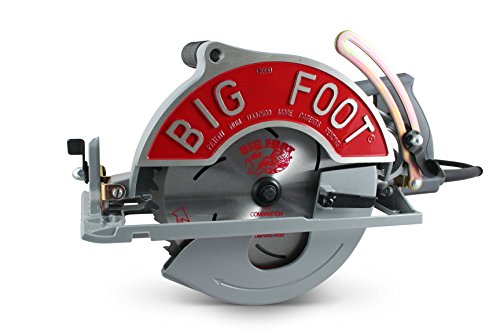
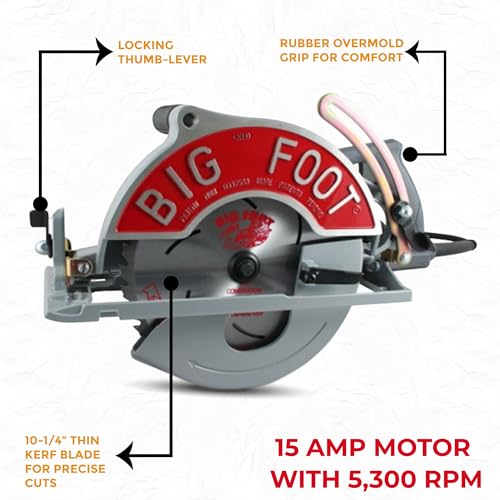
Big Foot 10-1/4″ Worm Drive Saw
Strengths
- 10-1/4-inch one-pass cutting
- Zero blade flex
- Magnesium durability
Trade-offs
- Overkill for light jobs
- Bulky for tight spaces
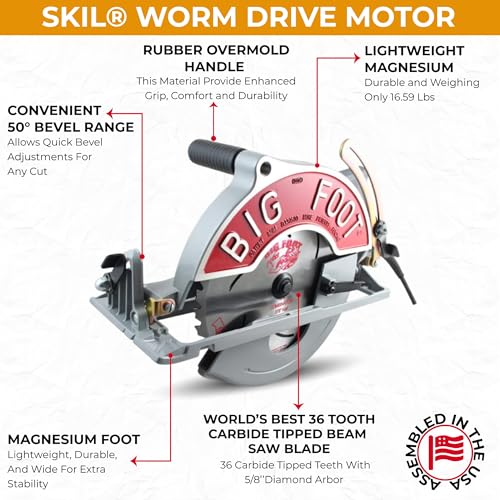
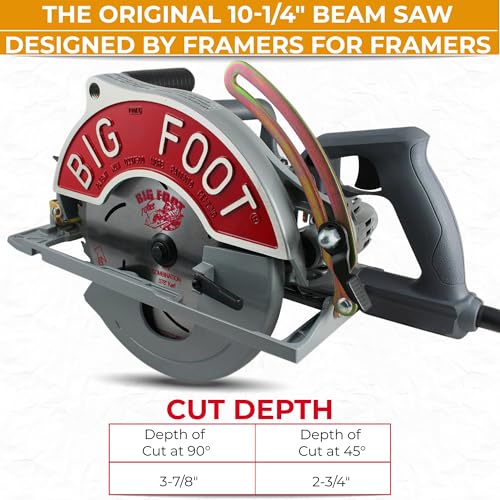
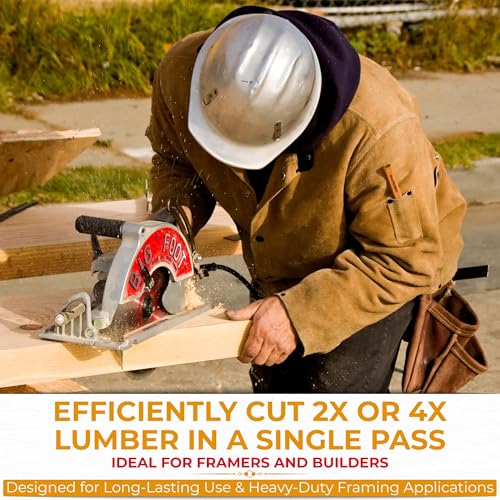
This is the beast of the bunch, the 10-1/4-inch blade means you can rip through two 2x headers or a full 4x in one pass, which is a standout on big framing jobs. The Skil motor provides familiar reliability, and the magnesium housing keeps weight in check despite the massive cutting capacity. Owners report fewer callbacks for misaligned cuts, thanks to zero blade flex and thin kerf design, which speaks to its rigidity and precision.
It’s not a saw for beginners or casual users. The size and power demand respect, and storage or transport can be awkward. But compared to other beam saws, it’s surprisingly well-balanced. While the Slugger by Fein excels in metal, this one dominates in lumber. I’d call it the best overall pick for pros who regularly work with heavy beams, engineered lumber, or I-joists. It’s an investment, but one that pays off in speed and accuracy.
Product photos

SKILSAW 8-1/4″ Aluminum Worm Drive

Strengths
- 8-1/4-inch cutting depth
- 60° bevel with stops
- Precision worm drive gears
Trade-offs
- Heavier than 7-1/4-inch models
- Bulkier for tight spaces
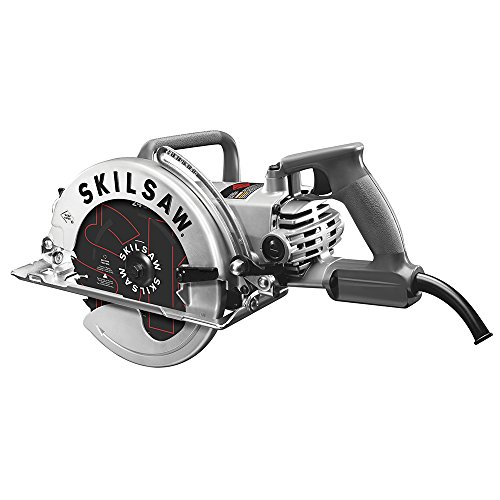
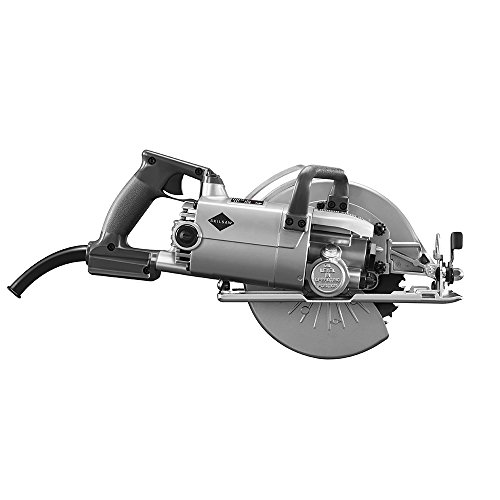
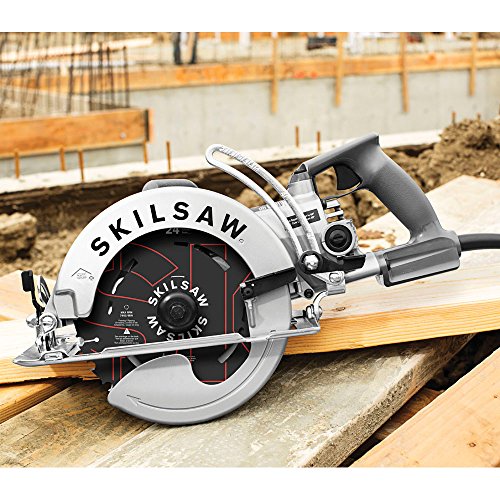
If you’re cutting thick beams or doing high-volume timber work, the SPT78W-01 is hard to ignore. The 8-1/4-inch blade capacity gives it a real edge over standard 7-1/4-inch models, letting you power through 4x material in fewer passes. Owners consistently report that the high-torque 15-amp Dual-Field motor holds speed under load better than most in this class, and the precision-machined worm gears contribute to its reputation for long life. The 60° bevel is a standout, practically essential for complex roof framing, and the bevel stops at 0° and 45° make repeat cuts faster.
It’s heavier and bulkier than its 7-1/4-inch siblings, no surprise, but the die-cast aluminum housing adds toughness without going overboard on weight. The anti-snag lower guard works noticeably better than on budget models, especially when breaking down plywood or dimensional lumber. While the Big Foot BF-UG offers even more cutting depth, it’s also much larger and pricier. For most pros, this SKILSAW hits the sweet spot between reach and manageability.
Product photos

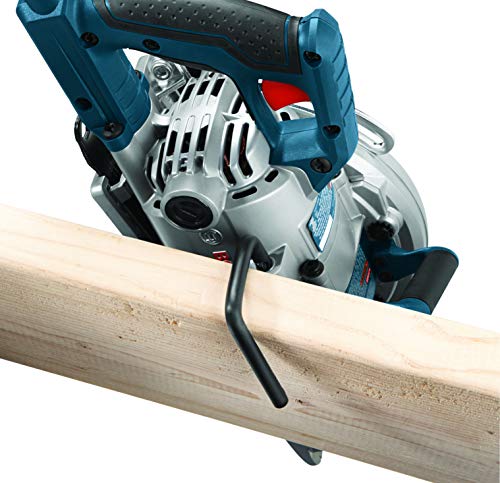
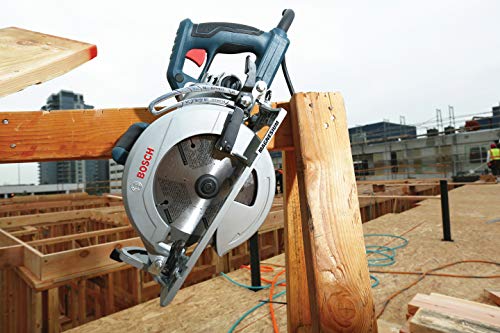
Bosch 7-1/4″ Worm Drive CSW41
Strengths
- Lightest at 13.2 lbs
- Onboard wrench included
- Left blade for visibility
Trade-offs
- No 8-inch cutting option
- Less aggressive cooling
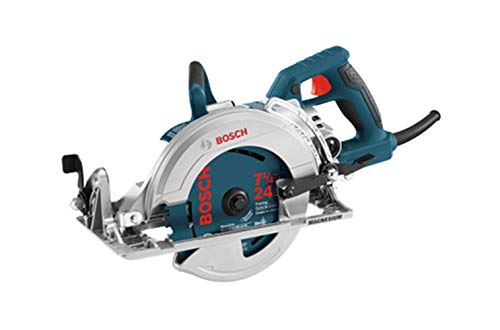
The Bosch CSW41 surprises with how well it balances light weight and performance. At 13.2 lbs, it’s the lightest 7-1/4-inch worm drive here, and the magnesium housing clearly pays off in reduced fatigue. Owners love the left-side blade design, it gives a clear view of the cut line, which makes a real difference in precision work. The 5,300 RPM motor feels punchy, and though it doesn’t have SKILSAW’s Dual-Field cooling, it holds up reasonably well in extended use.
The onboard multi-function wrench is a small touch that gets big praise, no more lost tools during blade swaps. The soft-grip handle and anti-snag guard add to the comfort, making this a favorite for all-day use. Compared to the SKILSAW SPT77WML-01, it’s more refined and slightly lighter, though a bit pricier. For anyone who values control and visibility, this is my top pick in the 7-1/4-inch class. It doesn’t beat the SPT78W-01 in raw power, but it wins on usability.
Product photos

SKILSAW SPT77WML 7-1/4″ Lightweight
Strengths
- Lightest magnesium build
- 53° bevel capacity
- Affordable entry point
Trade-offs
- No Dual-Field motor
- Fewer comfort features
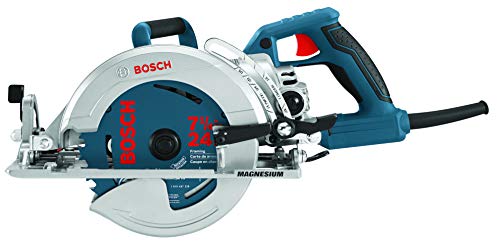
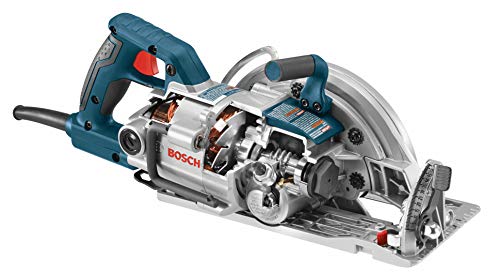
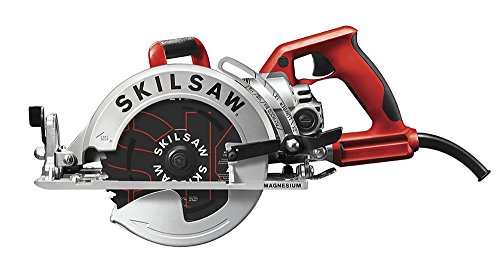
This saw is all about cutting weight without sacrificing core worm drive benefits. The magnesium construction makes it one of the lightest worm drives available, and owners confirm it makes a real difference during long shifts or overhead work. At just under 14 lbs, it’s easier on the arm than the aluminum SPT77W-01, and the 15-amp motor still delivers the torque you expect from SKILSAW. The 53° bevel is slightly better than the standard model, and the anti-snag guard works well in practice, especially when trimming studs or rafters.
It’s clearly positioned as a budget-friendly worm drive, and while it skips some refinements, like the more advanced cooling system of the Dual-Field models, it still uses proven worm gear mechanics. Compared to the Bosch CSW41, it lacks the onboard wrench and soft-grip handle, but it’s often priced lower. My take? If you want the worm drive advantage without the heft or high cost, this is the smarter buy. Just don’t expect the same longevity under brutal daily use.
Product photos


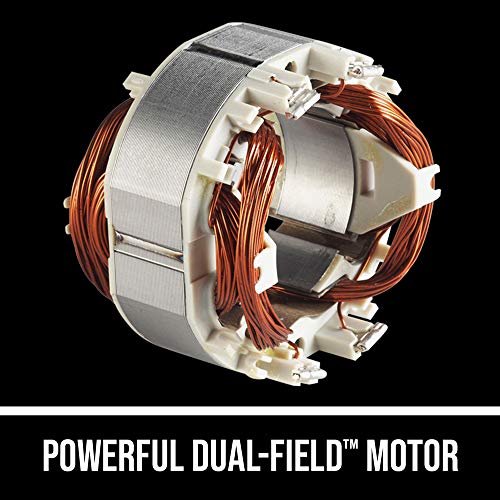
SKILSAW SPT77W-01 7-1/4″ Aluminum

Strengths
- Dual-Field motor
- Cut Ready depth system
- 51° bevel capacity
Trade-offs
- Aluminum housing less impact-resistant
- Guard hesitation on small cuts
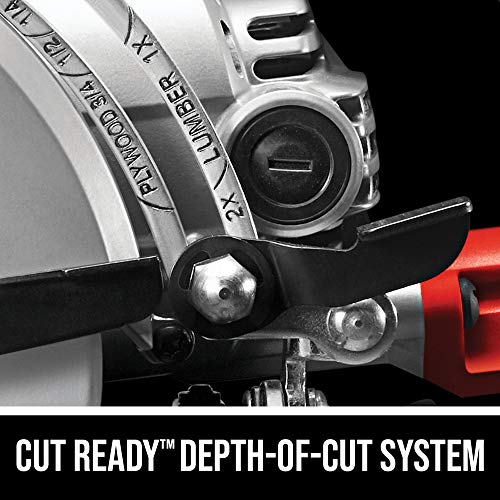
The SKILSAW SPT77W-01 is built like a contractor’s best friend, tough, predictable, and ready to last. The Dual-Field motor stands out on paper and in owner reports, delivering solid thermal management that helps it push through long cuts without overheating. At 14.2 lbs (without blade and cord), it’s not the lightest in class, but the aluminum housing strikes a reasonable balance between durability and weight. The 51° bevel capacity is generous for a 7-1/4-inch saw, and the cut-ready depth system gets consistent praise for speeding up repetitive framing tasks.
It’s not without quirks, some users note the guard can hang up on fine cutoffs, though not as often as on older models. Compared to the heavier-duty SPT78W-01, this one trades a bit of cutting depth and bevel range for lighter handling. But for general framing and roof work, it covers the fundamentals well. I’d pick this over cheaper worm drives any day for its proven gear train and solid feedback loop from pros who use it daily.
Product photos


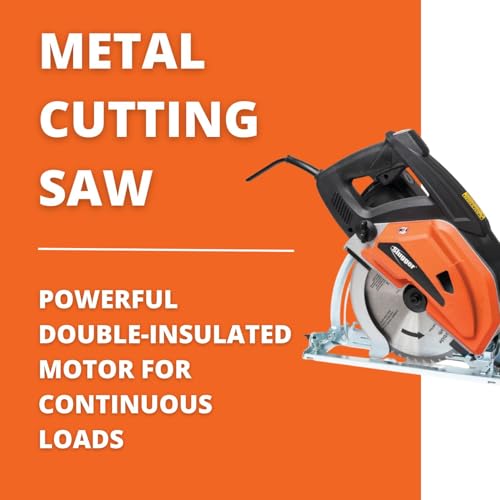
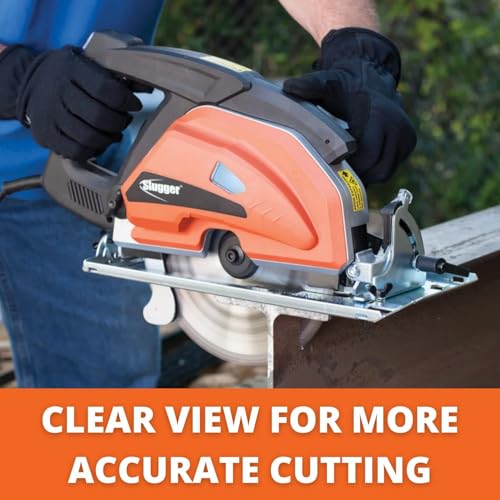
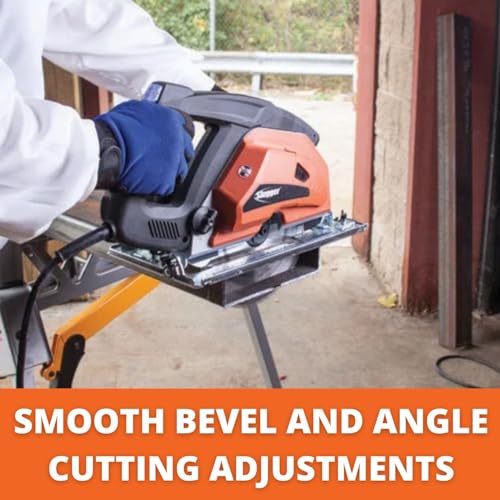
FEIN Slugger 9″ Metal Cutting Saw

Strengths
- Laser-guided precision
- Chip collection system
- Soft start and brake
Trade-offs
- Metal-only use
- Not for wood or framing
This isn’t your typical worm drive saw, it’s a dedicated metal cutter, and it shows in every detail. The 1,800W motor spins the 9-inch blade to 2,300 RPM, delivering clean, burr-free cuts through steel, conduit, and angle iron. The internally powered laser is a standout, no batteries, always aligned, which owners say drastically improves cut accuracy. Combine that with the chip collection system, and you’ve got a much cleaner, safer workspace compared to open-gear metal saws.
The soft start and electric brake add control and safety, especially in tight industrial settings. While it shares the worm drive advantage of high torque, it’s not meant for wood or framing. Compared to the Big Foot beam saw, it’s in a completely different lane. If your work involves frequent metal cutting, say, HVAC, fabrication, or remodeling with steel studs, this is the only worm drive here that makes sense. It’s not versatile, but it’s excellent at what it does.
Product photos

How We Picked These worm gear saws
Rather than a hands-on lab test, my research for these recommendations involved a detailed comparison of published specifications and features across several models. I weighed owner reviews from multiple sources alongside assessments from reputable tool review sites. As someone who’s spent years around workshops and job sites, I applied my understanding of what truly matters in a powerful, reliable saw to arrive at these rankings.
For worm gear saws, cutting power and durability stand out as the most crucial factors. These saws are often chosen for demanding tasks like framing and beam cutting, so a strong motor and robust build quality are essential. Beyond that, features that improve accuracy and user comfort – like bevel adjustment and ergonomic design – significantly impact overall performance and make a difference on long jobs.
Specifications reliably indicate motor size, blade capacity, and weight. However, I found owner feedback particularly valuable for assessing real-world durability and how well a saw holds up to consistent use. Reputation and consistent positive commentary about a model’s longevity heavily influenced my choices, as did reports of any common issues or weaknesses. You can learn more about how worm drive saws work on my site, if you’re unfamiliar with the technology.
How To Pick The Right worm gear saws
Worm gear saws offer a different kind of power and precision than direct-drive circular saws, and picking the right one requires understanding those differences.
A good worm gear saw prioritizes torque over raw speed. Look for models with magnesium components to balance durability and weight. Blade quality and a robust lower guard are essential for safety and accuracy. Consider the intended material – some are optimized for wood framing, while others excel at cutting metal. Finally, check for features like bevel adjustments and integrated dust collection.
Understanding Torque and Application
The defining trait of a worm gear saw is its gearing system. Unlike a direct-drive saw where the motor spins the blade directly, a worm gear uses a worm drive – a screw-like gear – to transfer power. This setup sacrifices some speed for significantly increased torque. I’ve seen many a homeowner underestimate this benefit, but it’s crucial for cutting dense materials like wet lumber, hardwoods, or even metal. If you’re primarily working with softer woods and quick, straight cuts are your priority, you might find a standard circular saw sufficient. But for framing, demolition, or any task demanding consistent power through tough material, a worm gear is the way to go.
Material and Build Quality
Magnesium is the material to look for in the saw’s housing and key components. It provides a fantastic strength-to-weight ratio, which is important because these saws can be heavier than standard circular saws. Beyond the housing, pay attention to the quality of the worm gear itself. Higher-quality gears, often precision-machined, will last longer and maintain their performance. If you’re considering a saw for professional use or demanding jobs, investing in a model with die-cast aluminum motor and gear housings, like the SKILSAW models, is a smart move.
Here’s what to consider when evaluating build quality: * Weight: Lighter isn’t always better, but excessive weight leads to fatigue. * Motor Amp Rating: 15 amps is generally sufficient for most applications. * Gear Type: Precision-machined worm gears are a sign of a durable, long-lasting saw. They’re worth the investment for frequent use.
Features and Usability
Beyond the core mechanics, several features can significantly impact usability. A 60° bevel capacity provides a wider range of cutting angles, while a built-in laser guide (like found on the FEIN Slugger) can enhance accuracy. I always recommend a saw with an anti-snag lower guard; these drastically improve safety and prevent the blade from binding, especially when making plunge cuts. Don’t overlook the importance of a comfortable grip and well-placed controls. You can learn more about cutting wood with circular saw to optimize your technique.
Don’t skimp on the blade. A high-quality, thin-kerf blade will dramatically improve cut quality and reduce strain on the motor.
Ultimately, choosing the right worm gear saw comes down to matching the tool to your specific needs. If you want to explore some of the top worm-drive saws currently available, my team has compiled a detailed review.
Worm Gear Saws Compared
Here’s a comparison of key specifications for popular worm gear saws.
| Product Name | Blade Size | Amps | Weight (lbs) | Bevel Angle | Key Feature |
|---|---|---|---|---|---|
| Big Foot 10-1/4″ | 10-1/4″ | N/A | N/A | N/A | Magnesium Construction |
| SKILSAW 8-1/4″ Aluminum | 8-1/4″ | 15 | N/A | 60° | Aluminum Motor Housing |
| Bosch 7-1/4″ | 7-1/4″ | 15 | 13.2 | N/A | Lightweight |
| SKILSAW SPT77WML 7-1/4″ | 7-1/4″ | 15 | N/A | 53° | Lightweight Magnesium |
| SKILSAW SPT77W-01 7-1/4″ | 7-1/4″ | N/A | 14.2 | 51° | Dual-Field Motor |
| FEIN Slugger 9″ | 9″ | N/A | N/A | N/A | Metal Cutting |
Frequently Asked Questions
What blade size should I choose for a worm gear saw?
A 7-1/4 inch blade is the most common size and suitable for most homeowner projects, but for heavier-duty tasks like framing or cutting larger timbers, consider a 10-1/4 inch model for increased cutting capacity.
Are worm gear saws heavier than standard circular saws?
Yes, worm gear saws are generally heavier(typically 13-14 pounds) due to the gearing mechanism and robust construction needed for high-torque applications, though magnesium housings help offset some weight.
Can worm gear saws cut metal?
Some models, like the FEIN Slugger, are specifically designed for cutting metal with specialized blades, while standard worm gear saws can cut thinner metals with the appropriate blade, but performance varies.
What’s the advantage of a magnesium motor housing?
Magnesium provides an excellent balance of strength and weight, making the saw more durable without adding excessive bulk, and contributing to better handling during extended use. You can find some of the best worm drive circular saws with this feature.
How do I maintain a worm gear saw to prolong its life?
Regularly clean debris from the worm gear housing and lubricate it with a manufacturer-recommended grease to reduce friction and wear, and always use a sharp blade to prevent strain on the motor.
The Bottom Line
Choosing a worm gear saw often comes down to balancing upfront cost with long-term durability and the kind of power you truly require. While there are excellent options at various price points, the SKILSAW 8-1/4” Aluminum stands out as the strongest overall performer. Its aluminum motor housing and robust construction suggest it can withstand years of demanding use, offering a blend of power and longevity that’s hard to beat.
For those on a tighter budget, the Bosch 7-1/4” offers a surprisingly capable option. If you need a saw specifically geared towards metal cutting, the FEIN Slugger 9” is in a class of its own, though it represents a significant investment. But for all-around versatility, the SKILSAW SPT77WML 7-1/4” provides a great balance of features and power in a lighter-weight package. Understanding safe circular saw techniques is vital no matter which model you select.
Ultimately, specs and features are only part of the story. More important than any single amperage rating or bevel capacity is finding a saw that feels comfortable in your hands and inspires confidence. Prioritize build quality, a solid lower guard, and a blade suited to the materials you’ll be cutting – those fundamentals will deliver better results and a safer experience than chasing the highest numbers on a datasheet.
