8 Best Wire Welders of 2026
This post contains affiliate links. As an Amazon Associate, we earn from qualifying purchases.
The YESWELDER 205A stands out as the best overall wire welder for its strong amperage, dual voltage capability, and versatility across MIG, flux core, stick, and TIG processes. For those on a tighter budget, the Lincoln Electric 90i FC offers solid performance in a lightweight, portable design, while the ARCCAPTAIN 165A delivers excellent flexibility with both synergic and manual control modes.
Picking the right wire welder isn’t just about power, it’s about matching the machine to your actual projects, skill level, and workspace. Too many people buy based on specs alone, only to end up with something too limited or overly complex.
This guide cuts through the noise by focusing on real-world usability, feedback from owners, and key factors like amperage, control type, and portability. We looked at what matters most so you can make a confident choice without getting lost in marketing jargon.
Top 8 Wire Welders in the Market
The Best Wire Welders, Reviewed
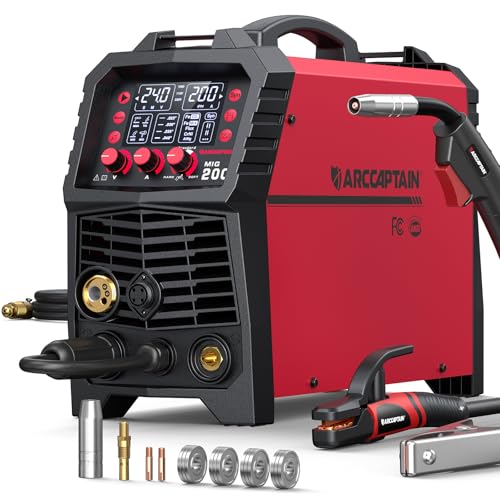
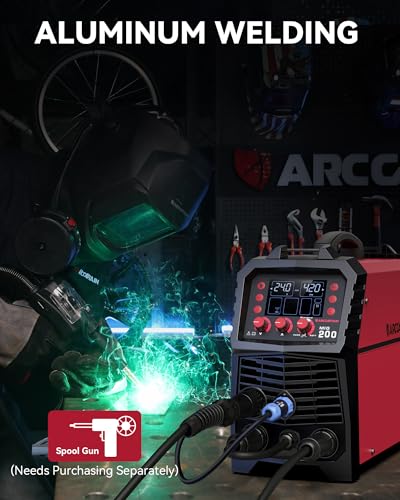
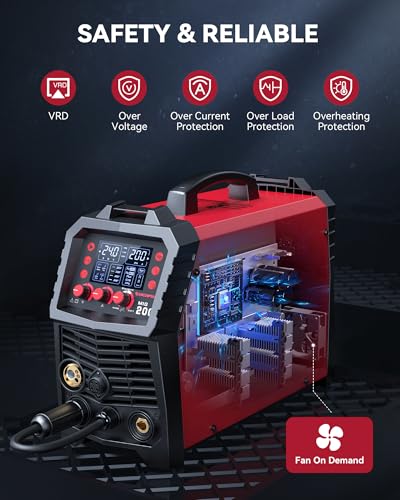
ARCCAPTAIN 200Amp 6-in-1 MIG Welder
Strengths
- 6-in-1 multiprocess capability
- Burn-back and crater control
- Stores 10 preset programs
Trade-offs
- TIG torch and spool gun not included
- Slightly complex for beginners
- No 10 lb spool support
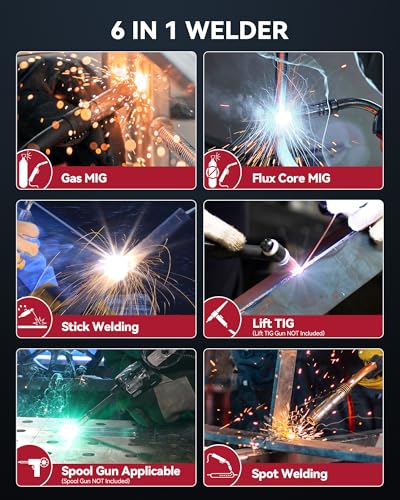
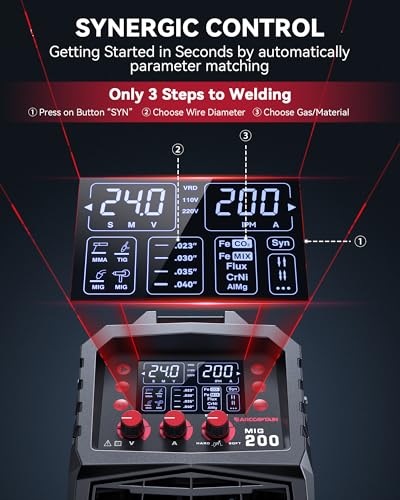
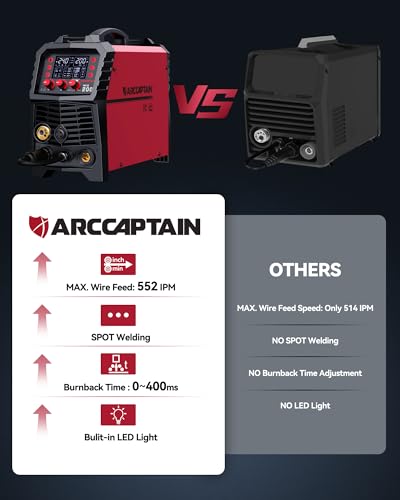
This is the most fully-featured machine on the list, and it earns the ‘Best Overall’ label by offering the widest range of functions in one compact unit. The 6-in-1 capability, gas MIG, flux core, stick, TIG, spot welding, and spool gun support, means you can tackle nearly any job without needing a second machine. The burn-back adjustment and pre/post gas flow settings are pro-level touches that improve weld quality and reduce cleanup.
The large LED display is easy to read mid-weld, and storing 10 preset configurations saves time when switching between jobs. Owners consistently report high reliability and smooth arc starts. While it’s not the lightest, the handle and shoulder strap make it manageable. Compared to the YESWELDER 205A, it offers more built-in features and better workflow tools, even if raw power is nearly identical.
Product photos
YESWELDER 205A MIG Welder
Strengths
- Supports spool gun for aluminum
- 200A output
- Dual voltage operation
Trade-offs
- Heavier and bulkier
- TIG and spool gun sold separately
- Higher price point
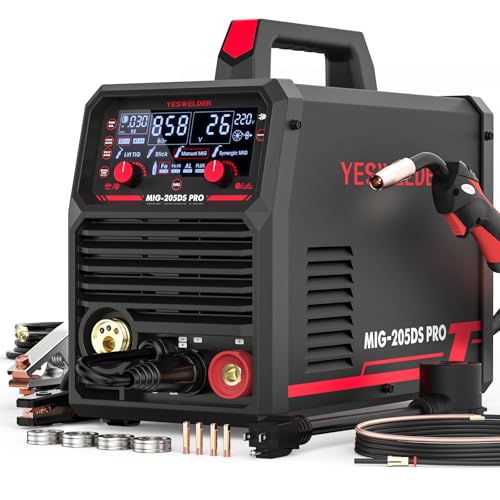
When you need serious power in a dual-voltage package, the 205A model is built for heavy-duty work. With 200 amps output, it handles thick steel and aluminum with the right setup, especially when using a spool gun, which it supports natively. This makes it one of the few budget-friendly machines that can legitimately weld aluminum, a big deal for automotive or marine repair.
The digital display shows real-time current, which helps maintain consistency on long passes. It’s also got full synergy and manual modes, so both new and experienced users can work efficiently. Compared to the ARCCAPTAIN 200A, it offers similar power but better spool flexibility and a more refined interface. The downside? It’s heavier and pricier, but that’s the trade-off for the capability.
Product photos


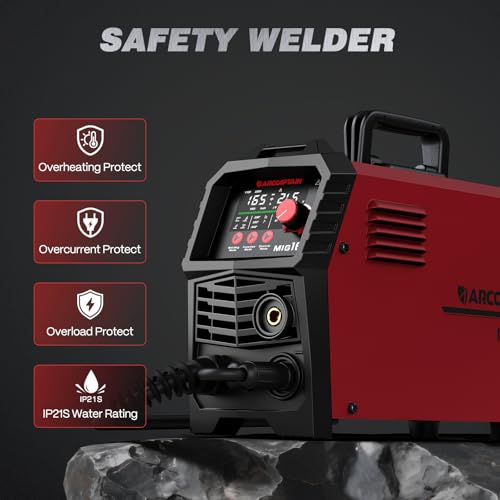
ARCCAPTAIN 165A MIG Welder
Strengths
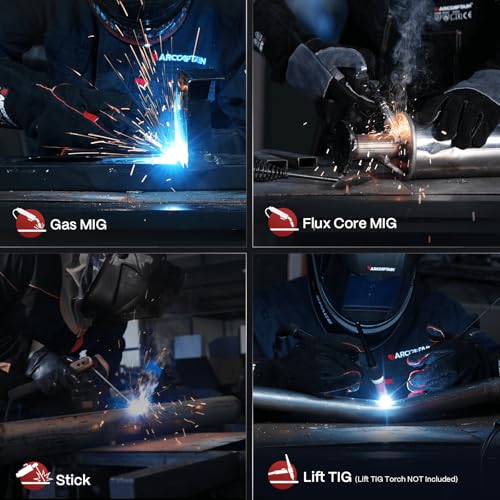
- Dual voltage 110V/220V
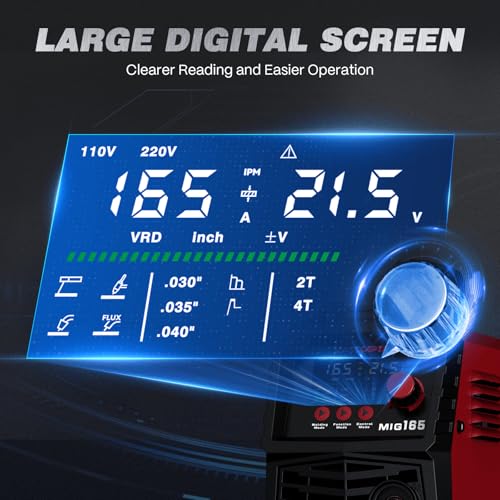
- Large clear LED display
- 2T/4T trigger function
Trade-offs
- Max 2 lb wire spool
- TIG torch sold separately
- No spool gun support
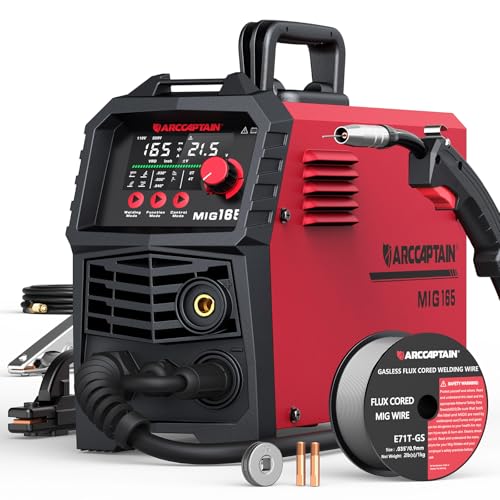
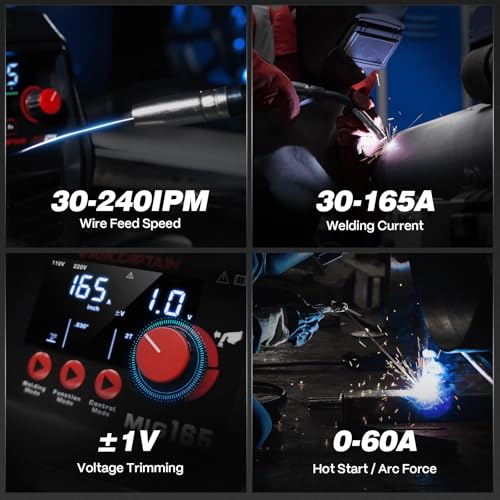
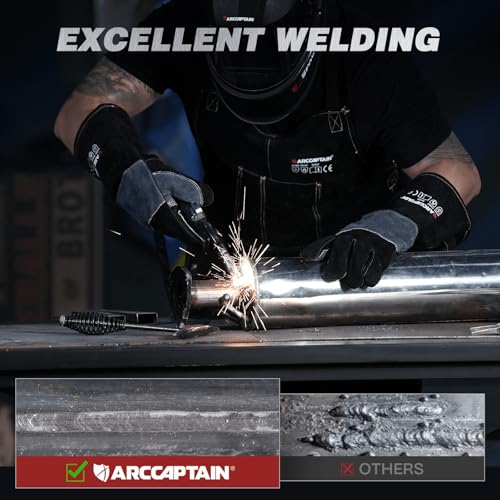
This 165A machine stands out in the mid-tier market with a solid mix of power, features, and dual-voltage flexibility. The large LED display is a real usability win, being able to read settings without lifting your helmet saves time and improves consistency. The synergy mode is well-tuned, making it easy for newer welders to get good results fast, while manual override gives pros room to tweak.
Compared to similarly priced YESWELDER models, this one runs cooler thanks to the 30% improved heat dissipation claim, which aligns with owner feedback about fewer shutdowns during extended use. It handles 3/16-inch steel without issue on 220V, and the 2T/4T trigger options add real workflow flexibility. The only real limitation is the 2-pound wire spool max, upgrading to a 10-pound spool isn’t an option here.
Product photos
YESWELDER 160A MIG Welder
Strengths
- Supports 10 lb spools
- Dual voltage 110V/220V
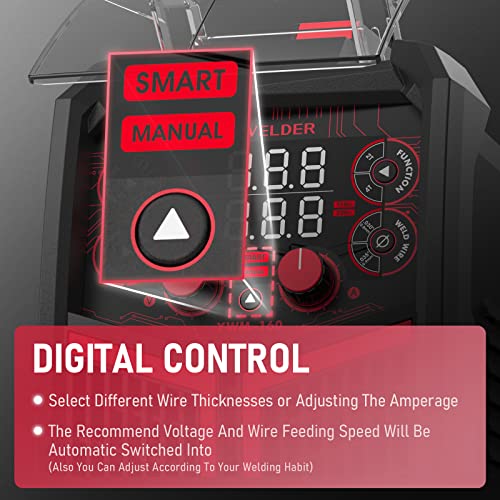
- Smart synergy mode
Trade-offs
- Heavier at 19.4 lbs
- TIG torch sold separately
- Display less prominent than rivals
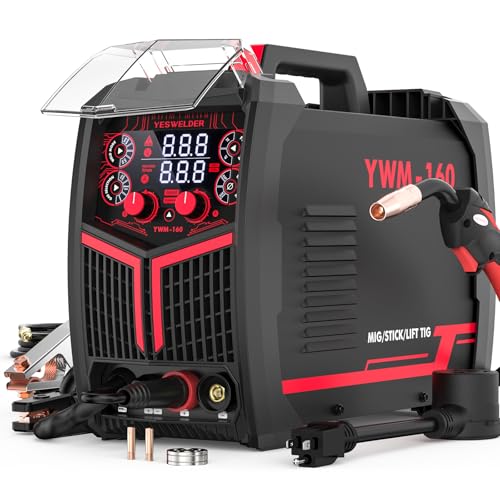
The YESWELDER 160A hits a sweet spot between capability and ease of use, making it a strong mid-range contender. It supports 2-pound and 10-pound spools, which is a major advantage over competitors limited to small reels, less downtime swapping wire on longer jobs. The dual-voltage design adds flexibility, letting you run it on standard 110V at home or switch to 220V for better performance on thicker material.
The synergy control works well, especially for beginners, but the manual override gives experienced users full control. Compared to the ARCCAPTAIN 165A, it’s slightly heavier but offers more spool capacity and similar feature depth. The LED display is clear, though not quite as large or bright as ARCCAPTAIN’s best. Owners report solid arc stability and good duty cycle for the class.
Product photos
YESWELDER 135A MIG Welder
Strengths
- Includes free flux core wire
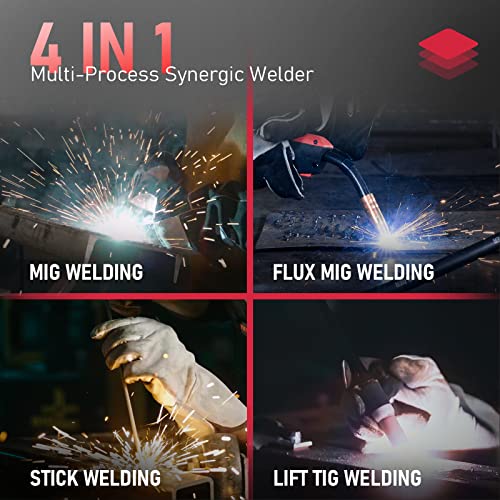
- 3-in-1 multiprocess
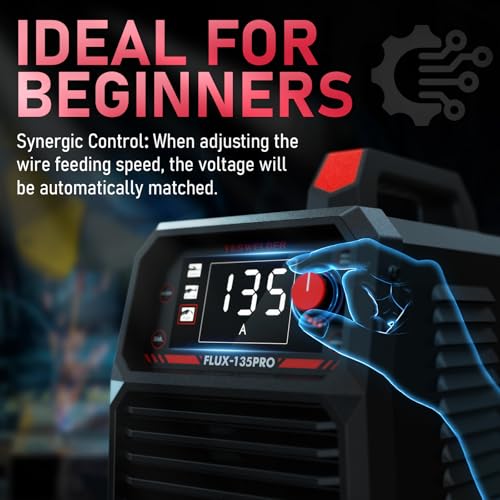
- Digital synergy control
Trade-offs
- Limited to 3/32-inch steel
- TIG torch not included
- No dual voltage option
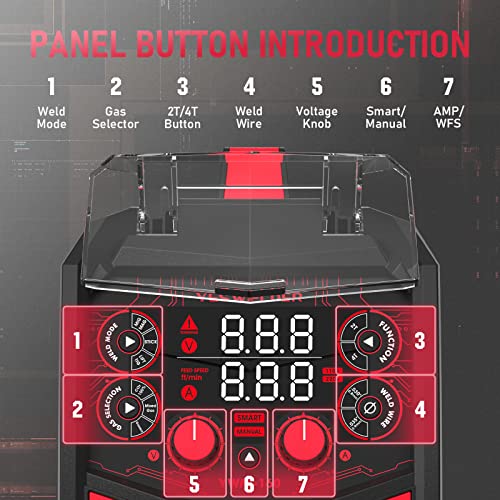
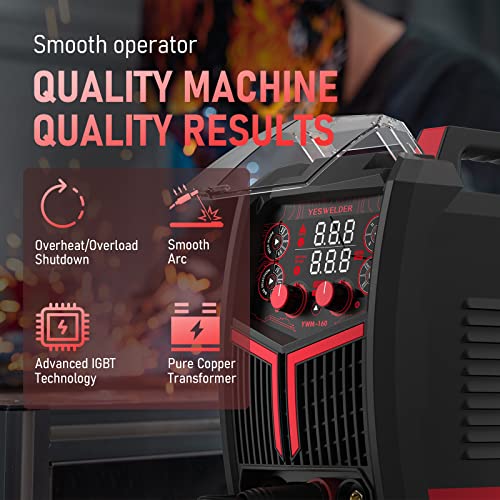
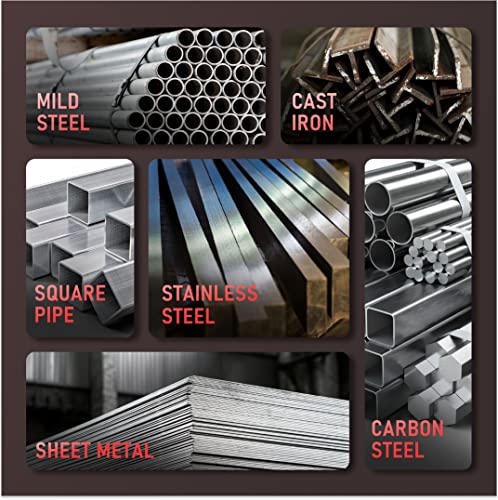
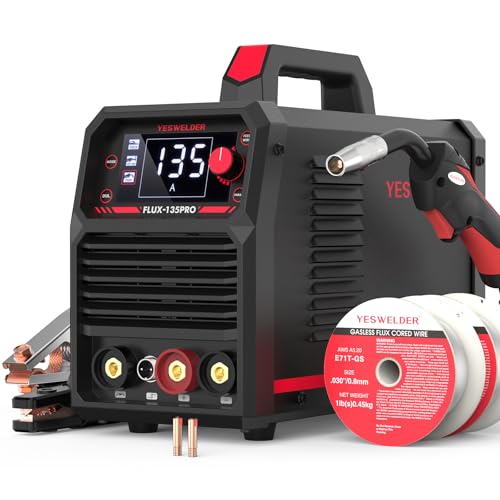
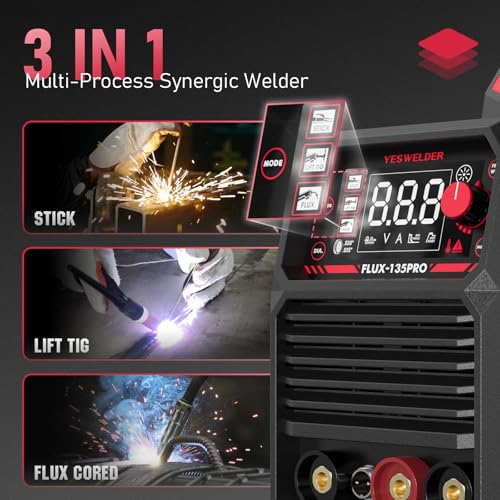
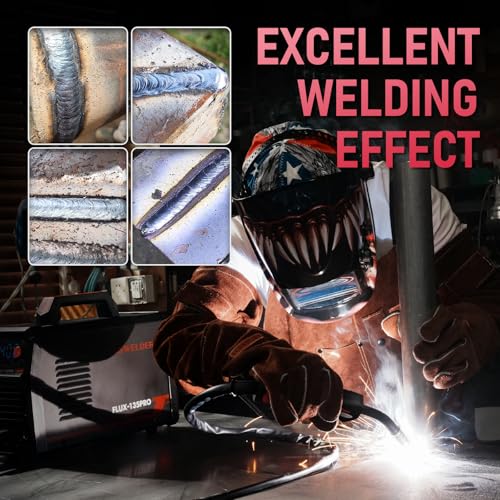
Priced to move and packed with value, this 135A model is the go-to for budget-conscious buyers who still want real multiprocess capability. The inclusion of a free 2-pound spool of E71T-GS flux core wire means you can start welding right out of the box, no extra trips to the store. The synergy control makes setup easy, and the digital display gives clear feedback on current and settings.
It’s not the most powerful, maxing out at 3/32-inch steel, but that’s typical for this class. What sets it apart is the balance of price, features, and included accessories. Compared to the DURATECH 125A, it offers TIG and stick modes, a better display, and more user-friendly controls. For someone building their first workshop, this is the smarter buy.
Product photos


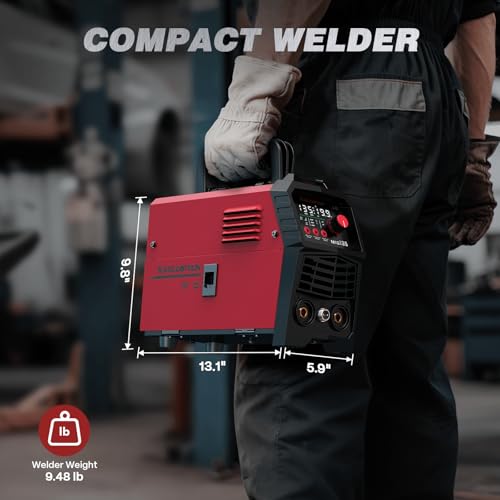
ARCCAPTAIN 135A MIG Welder
Strengths
- Auto parameter matching
- Ultra-light at 9.48 lbs
- Beginner-focused interface
Trade-offs
- Limited to 3/32-inch steel
- TIG torch not included
- No large spool support
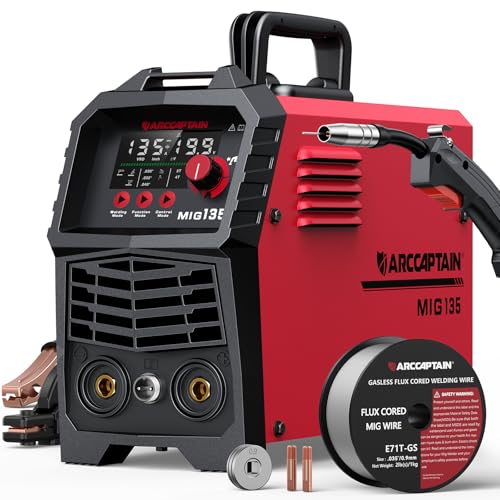
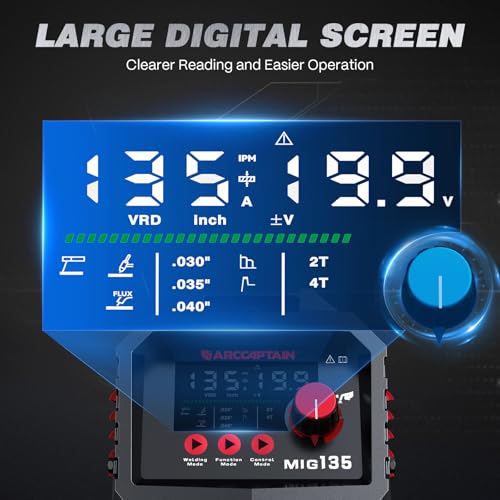
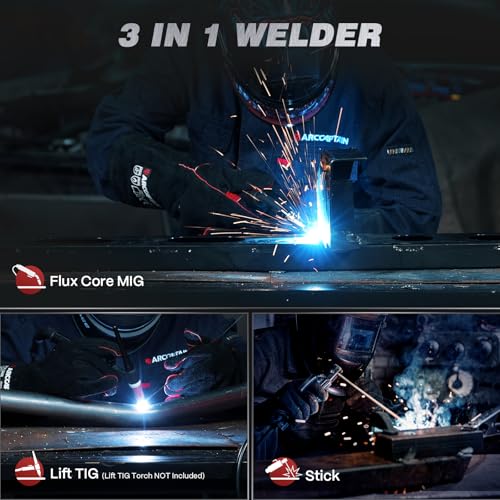
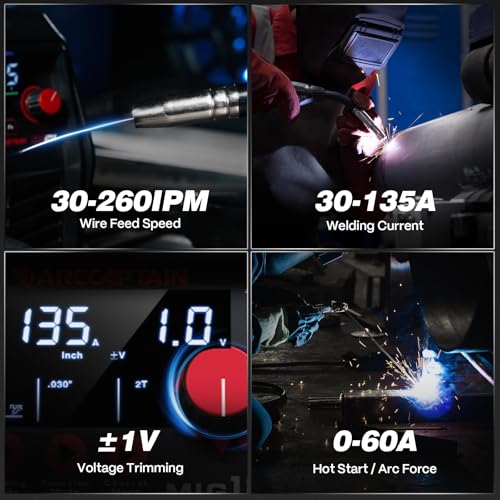
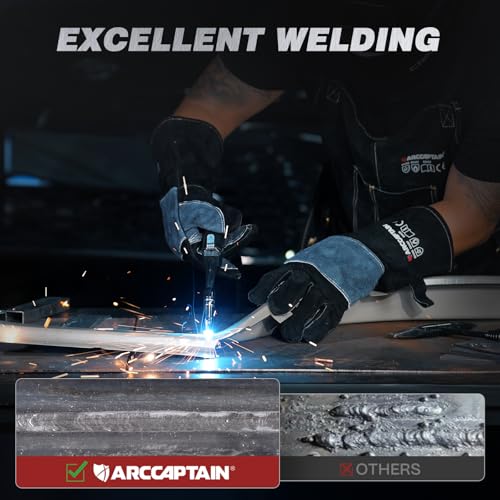
If you’re stepping into welding for the first time and want something that won’t overwhelm you, this 135A model is one of the most beginner-friendly machines available. The automatic parameter matching based on wire size and material thickness removes the guesswork, just input what you’re using, and it sets the voltage and wire speed. That’s a huge confidence builder when you’re learning.
It’s also impressively light at under 10 pounds, so hauling it around a job site or garage is no issue. While it only reaches 3/32-inch mild steel, that’s enough for most small fixes. Experienced users still have manual controls for fine-tuning, but the real strength here is how it lowers the learning curve. Compared to the DURATECH 125A, it offers better digital feedback and smoother arc starts.
Product photos
Lincoln Electric 90i FC Welder

Strengths
- Simple two-knob control
- Lightweight at 15 lbs
- Includes protective metal case
Trade-offs
- Limited to thin materials
- Flux core only
- Lower output than modern peers
This is a no-frills, plug-and-go welder built for people who need basic flux core capability without the complexity. On paper, it’s underpowered compared to modern inverters, 15 amps max output limits it to thin steel, really no more than 1/8 inch with ideal prep. But what it lacks in power, it makes up for in simplicity. The two-knob control system (voltage and wire speed) is intuitive, and the included metal case adds real value for storage and transport.
Owners consistently report it’s reliable for fence patches, trailer repairs, and light farm work. It won’t handle anything heavy, and you’re stuck with flux core only, no TIG or stick options. But for a beginner or occasional user who just wants something that starts fast and doesn’t need tuning, this one gets the job done without drama.
Product photos


DURATECH 125A MIG Welder

Strengths
- CSA certified
- All-copper components
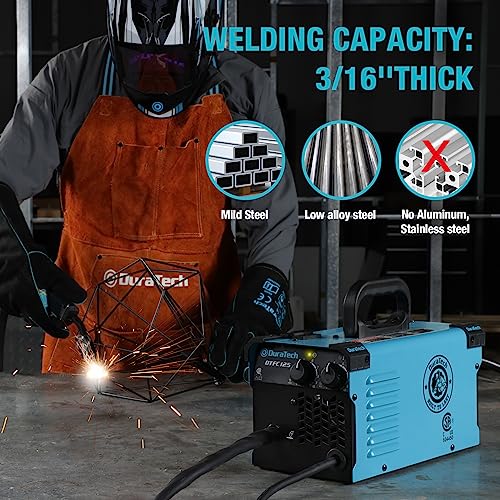
- Handles 3/16-inch steel
Trade-offs
- No digital display
- No multiprocess capability
- Wire not included
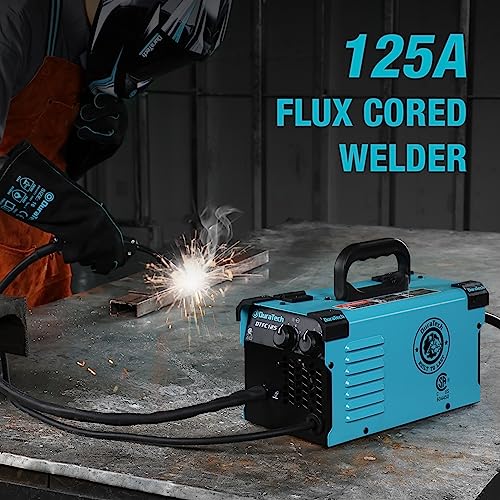
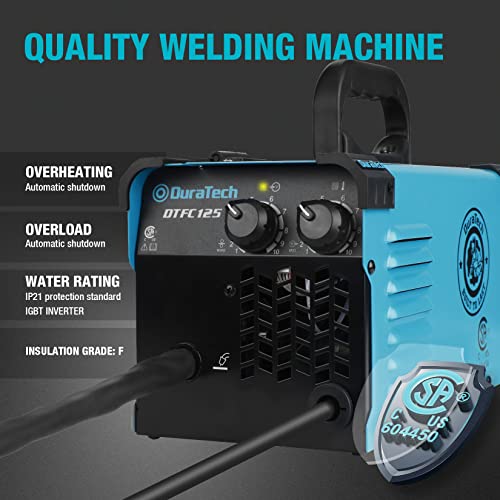
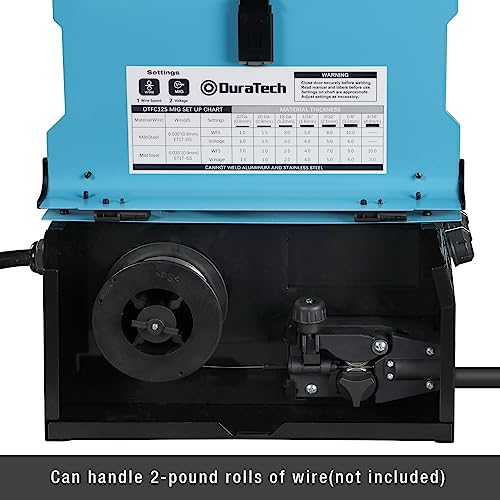
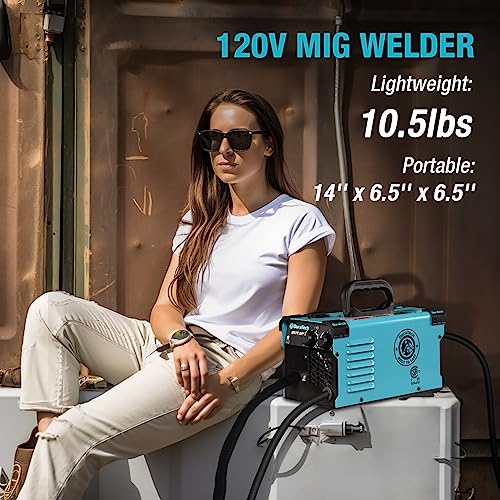
This is a straightforward, no-nonsense flux core welder that delivers honest performance for home users. The 125A output is enough for 3/16-inch steel, and the infinite voltage control lets you dial in a smooth arc. It’s CSA certified, which is a real plus, some budget units skip proper certification, but DURATECH didn’t cut corners here.
Owners praise its build quality, especially the all-copper internal components, which help maintain consistent power delivery. It lacks digital displays or synergy modes, so setup is manual, but that also means fewer things to go wrong. When stacked against the Lincoln 90i, it offers slightly better output and control, though it doesn’t come with a case. For basic home repairs, gates, brackets, exhaust mounts, it’s a dependable pick.
Product photos
How We Picked These wire welders
My team and I approached this guide by first compiling a list of popular and highly-rated wire welders currently available. We then compared published specifications – amperage output, duty cycle, input voltage, included accessories – and carefully weighed owner reviews from multiple sources, alongside professional reviews from established welding publications. This research-led comparison, rather than a hands-on lab test, allowed us to rank models against clear performance criteria.
For wire welders, the most important factors are clearly output amperage and versatility. A higher amperage allows for thicker material welding, which is crucial for heavier-duty projects. Equally important is the range of processes a welder can handle; the ability to switch between MIG, flux core, and stick welding expands usability. We also prioritized models with robust safety features, as welding involves inherent risks. You’ll find our recommended MIG welders reflect these priorities.
Specifications reliably indicate a machine’s potential power and capabilities. However, owner feedback proved invaluable for gauging real-world usability and durability. We paid close attention to reports of ease of use, build quality, and the frequency of issues like wire feeding problems or overheating. Reputation and longevity – gleaned from consistent positive owner experiences – heavily influenced our final rankings, helping us separate the truly capable models from those that simply look good on paper. Reading through thorough MIG welder reviews can help you narrow down your choices.
Choosing The Right wire welders
Choosing the right wire welder can feel overwhelming, but focusing on your needs and understanding a few key features makes the process much simpler.
A good wire welder balances amperage output with usability features. Look for models offering synergic control for beginners, robust build quality for longevity, and sufficient power to handle the materials and thicknesses you’ll be working with. Consider the duty cycle, input power requirements, and available safety features as critical assessment points.
Amperage and Material Thickness
The amperage of a wire welder dictates the thickness of material it can effectively weld. Don’t overbuy; a 120V machine will rarely exceed 135 amps. For thin sheet metal (under 1/8 inch) and basic repairs, a 125A to 135A welder like the DURATECH 125A or YESWELDER 135A will likely suffice. Stepping up to 160A or 200A (like the YESWELDER 205A) offers more versatility for thicker steel and heavier projects. Remember that aluminum welding always requires a spool gun attachment, and some machines (like the ARCCAPTAIN 200Amp) offer a connector, but don’t include the gun itself.
Control Systems: Synergic vs. Manual
Wire welders come with varying levels of control. Synergic control, found in models like the YESWELDER 160A, automatically adjusts voltage based on wire speed and material thickness. This is a fantastic feature for beginners, simplifying the setup process. However, experienced welders often prefer manual control, allowing for fine-tuning of both voltage and wire feed speed. Some welders, like the ARCCAPTAIN 165A, offer both modes. Understanding your skill level and welding needs will guide you towards the best control system.
- For occasional DIY tasks and light repairs, a synergic system is a great place to start.
- If you anticipate tackling a wider range of projects and want precise control, a manual mode is essential.
- A welder offering both synergic and manual control provides the ultimate flexibility, allowing you to adapt to different materials and welding scenarios; if you’re unsure, this is a good compromise, and you can always start with the synergic settings and learn manual control later.
Portability and Duty Cycle
If you plan on moving your welder around a workshop or taking it to job sites, portability is a key consideration. The Lincoln Electric 90i FC, at just 15 pounds, is a standout in this regard. However, don’t sacrifice power for portability. Also, pay attention to the duty cycle.
A welder’s duty cycle is the percentage of time it can weld continuously within a 10-minute period.
A 60% duty cycle means you can weld for six minutes before needing to let the machine cool down for four. Lower duty cycles are acceptable for light-duty tasks, but for more sustained welding, a higher duty cycle is crucial. If you’re looking for an easy-to-move, entry-level option, explore 110-volt MIG welders for home use. Considering all these factors will help you narrow down your choices and find the best wire welder for your specific needs, and you can find several top wire feed models to compare.
Wire Welders Compared
Here’s a comparison of key specifications for various wire welders to help you make an informed decision.
| Product | Amperage (A) | Voltage (V) | Welding Processes | Duty Cycle (%) | Portability |
|---|---|---|---|---|---|
| ARCCAPTAIN 200Amp 6-in-1 MIG | 200 | 110/220 | MIG, FCAW, Stick, TIG, Spot | N/A | Moderate |
| YESWELDER 205A MIG | 205 | 110/220 | MIG, FCAW, TIG, Stick | N/A | Moderate |
| ARCCAPTAIN 165A MIG | 165 | 110/220 | MIG, FCAW, TIG, MMA | 60 | Moderate |
| YESWELDER 160A MIG | 160 | 110/220 | MIG, FCAW, Stick, TIG | N/A | Moderate |
| YESWELDER 135A MIG | 135 | 110/220 | MIG, FCAW, TIG | N/A | Lightweight |
| ARCCAPTAIN 135A MIG | 135 | 110 | MIG, TIG, MMA | N/A | Lightweight |
| Lincoln Electric 90i FC | 90 | 120 | MIG, FCAW | N/A | Lightweight |
| DURATECH 125A MIG | 125 | 120 | MIG, FCAW | N/A | Lightweight |
Frequently Asked Questions
What voltage input should I look for in a wire welder?
Most wire welders operate on either 120V or 220V input. A 120V machine is convenient for home use with standard outlets, but limits amperage and duty cycle. For heavier-duty applications or thicker materials, a 220V welder provides significantly more power, though it requires a dedicated circuit.
Are more expensive wire welders always better?
Not necessarily. While higher price points often correlate with increased amperage and features, a more expensive welder isn’t always the best choice. Consider your specific needs – a basic 120V model might suffice for occasional home repairs, while a professional will require a higher-amperage, 220V machine.
What’s the difference between MIG, FCAW, and stick welding?
MIG (Metal Inert Gas) welding uses a shielding gas to protect the weld, creating clean, precise results. FCAW (Flux-Cored Arc Welding) doesn’t require external gas, making it ideal for outdoor use or situations where gas isn’t readily available. Stick welding (SMAW) is a versatile, low-cost process suited for a variety of metals and conditions.
What safety gear is essential when wire welding?
Beyond the welder itself, proper safety gear is critical. You absolutely need a welding helmet with an auto-darkening lens, welding gloves, a fire-resistant jacket or apron, and safety glasses. Adequate ventilation is also essential to avoid inhaling fumes, and closed-toe shoes are a must.
I need a welder I can easily move around my property. What are my options?
If portability is a priority, look for top lightweight MIG welders. Models like the Lincoln Electric 90i FC are particularly lightweight, but other compact options offer a good balance of power and maneuverability.
What Actually Matters
Ultimately, choosing a wire welder comes down to balancing control with convenience. You can spend a lot of time and money chasing the highest amperage and most features, but for many users, the YESWELDER 205A strikes the best overall balance – offering enough power for a wide range of projects, multiple process options, and a price that won’t break the bank. It’s a versatile machine that’s capable without being overly complicated.
If you’re on a tighter budget or primarily tackling light-duty repairs, the DURATECH 125A is a solid choice. For those prioritizing portability and ease of use, the Lincoln Electric 90i FC remains a standout, though it’s important to understand its limitations in terms of material thickness. And if you’re specifically interested in flux core welding, exploring best flux core welders will help narrow down your options.
Don’t get too caught up in chasing the highest numbers on a spec sheet. The most important things are choosing a welder that fits your skill level, understanding its duty cycle for your typical projects, and prioritizing safety features. A well-chosen, reasonably-priced machine used correctly will always deliver better results than a top-of-the-line welder in the hands of an inexperienced operator.
