
9 Best MIG Welders of 2026
This post contains affiliate links. As an Amazon Associate, we earn from qualifying purchases.
The ARCCAPTAIN MIG205MP is the best overall MIG welder for most users, offering solid performance and multi-process flexibility. If you’re on a tighter budget, the YESWELDER 135A delivers strong value for light-duty home projects.
Most people shopping for a MIG welder aren’t sure whether they need 110V or 220V, flux-core or gas, single or multi-process – and that confusion leads to buying the wrong tool. After years of working with welders in real-world settings, I know the right choice comes down to matching the machine to your actual projects, not just the specs on paper.
This guide cuts through the noise by focusing on what owners and pros say matters most: consistent arc quality, ease of use, and long-term reliability. I compared key features, voltage options, amperage ranges, and real-world feedback to highlight the models that deliver where it counts.
Top 9 Mig Welders in the Market
The Best Mig Welders, Reviewed
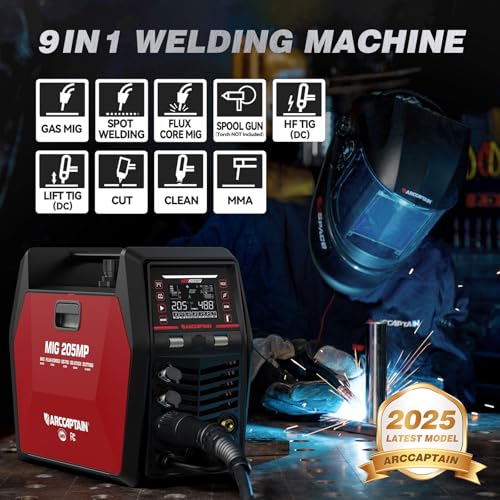
ARCCAPTAIN MIG205MP 9-in-1 MIG Welder

Strengths
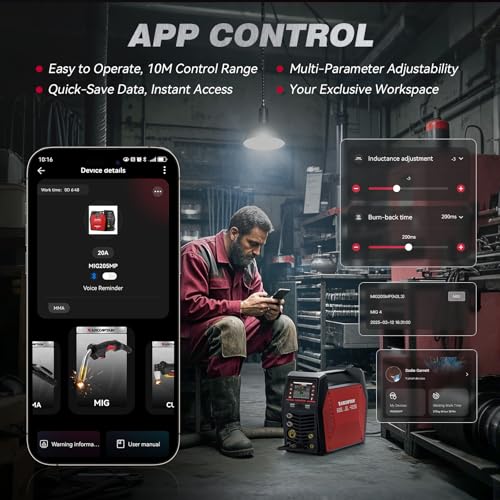
- App control available
- 9 welding modes
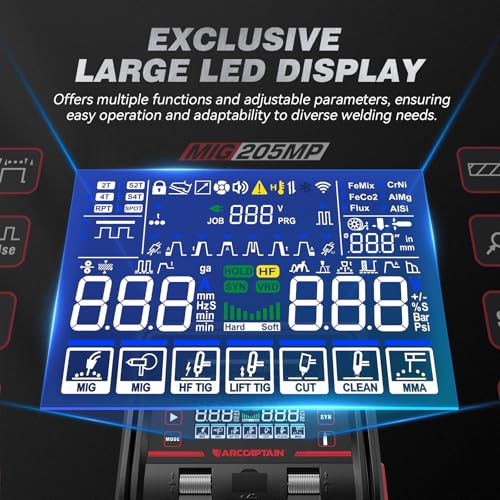
- Large LED display
- Dual voltage
- Smart parameter matching
Trade-offs
- Spool gun sold separately
- App reliance may not suit all
- Complex for beginners
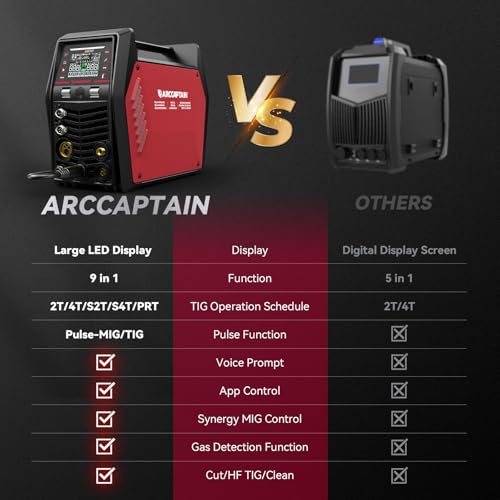
This 9-in-1 unit pushes the envelope for what a mid-tier inverter welder can do, and on paper, it’s hard to ignore. The integration of app control isn’t just a gimmick, owners consistently report that saving custom profiles and adjusting settings remotely streamlines repetitive jobs. The dual-voltage design, wide amperage range (up to 205A), and support for both HF and Lift TIG modes make it unusually versatile for the price. If you’re someone who dabbles in aluminum, steel, and stick work without wanting multiple machines, this consolidates a lot of capability.
Where it stands out is in its smart features: the SYN function automatically matching voltage to material type is a real help for newer welders, and the large LED display is genuinely easier to read with a helmet on. The 60% duty cycle is standard, but paired with dual cooling fans and solid protection systems (overheat, over-voltage, etc.), it suggests decent durability under moderate use. Compared to the YESWELDER 185A, it offers more advanced control and broader process support, though it demands a separate spool gun for aluminum, no surprise in this class.
Product photos

ARCCAPTAIN 200Amp 6-in-1 MIG Welder
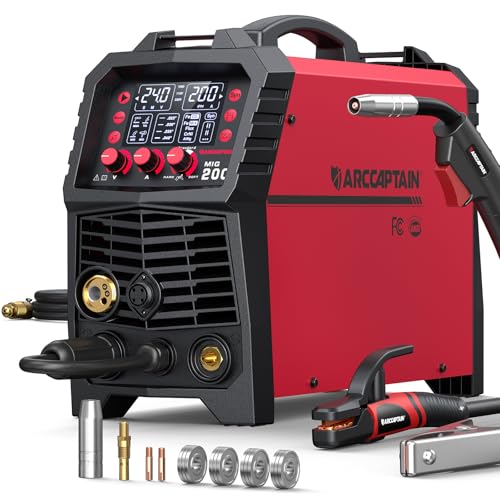
Strengths
- Aluminum-ready with spool gun
- Burn-back adjustment
- Pre and post gas flow
- 10 preset memories
- Dual voltage
Trade-offs
- Spool gun not included
- TIG torch sold separately
- Rollers for some wires extra
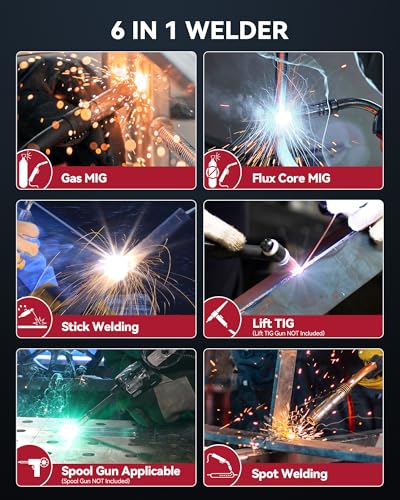
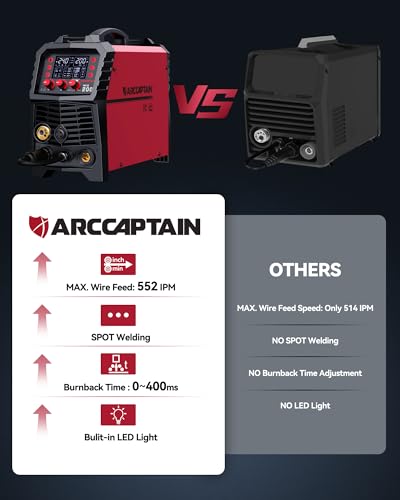
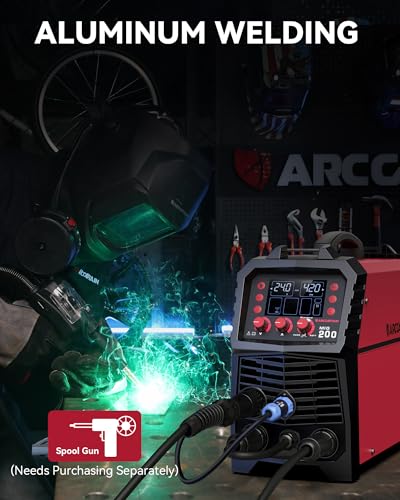
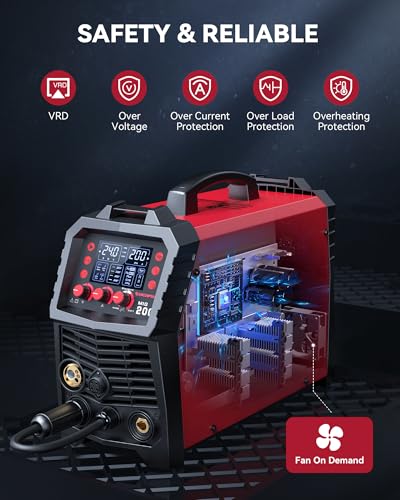
This model is clearly designed with aluminum in mind, more so than most in its class. The spool gun compatibility, pre-flow/post-flow, and burn-back adjustment are all features that matter when welding aluminum cleanly. At 200A, it has the power to run a spool gun effectively, and the dual voltage support means it can scale up when needed. Owners who’ve added the spool gun report smooth wire feeding and minimal clogging, which is a win at this price.
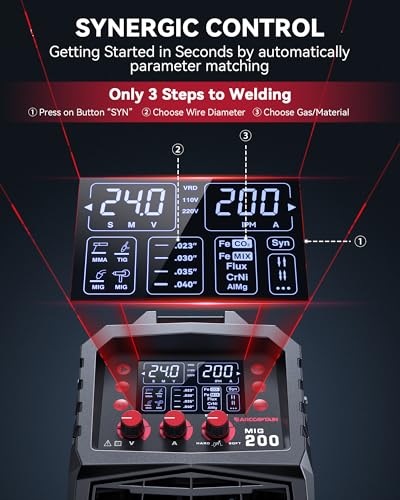
The large LED display and 10 preset memories make repeat jobs faster, and the adaptive crater function helps prevent cracking at the end of welds. It lacks the app control of the MIG205MP, but that also means fewer points of failure. Compared to the YESWELDER 185A, it’s more focused on aluminum performance, though it supports a similar range of processes. If you’re doing trailers, bike frames, or anything with thin aluminum, this is the better pick.
Product photos
YESWELDER 185A 5-in-1 MIG Welder
Strengths
- Higher amperage output
- Supports 10lb spools
- Dual voltage
- Manual and synergic modes
- Lightweight
Trade-offs
- TIG torch sold separately
- Spool gun required for aluminum
- Average duty cycle
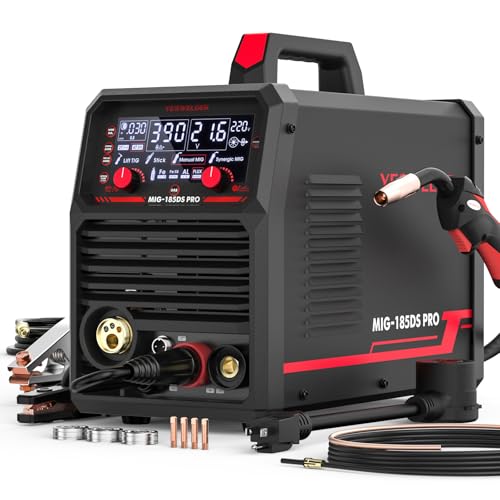
The 185A fills a sweet spot between affordability and capability, more power than the 135A, more features than the Lincoln 90i, and enough versatility to handle MIG, stick, and TIG with the right add-ons. Its 185A output gives it real reach on thicker materials, and the dual voltage support means it can scale from garage use to job sites. The synergic and manual MIG modes make it flexible: beginners can let the machine pick settings, while experienced users fine-tune current and voltage.
Owners appreciate the digital display and the fact that it supports both 2lb and 10lb spools, a rare plus in this range. It’s nearly as light as the 135A at 12 lbs, so portability doesn’t suffer. Compared to the ARCCAPTAIN 165A, it offers higher amperage and larger spool support, though its cooling system isn’t quite as robust. If you want one machine that grows with your skills and handles a wider range of materials, this is the smarter buy.
Product photos


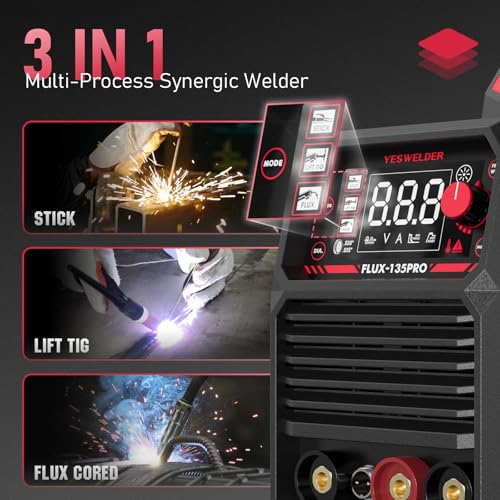
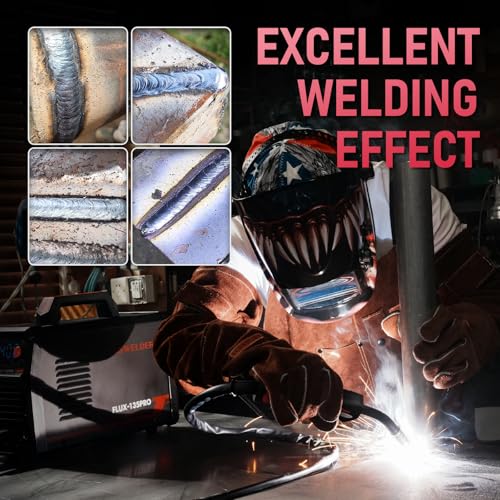
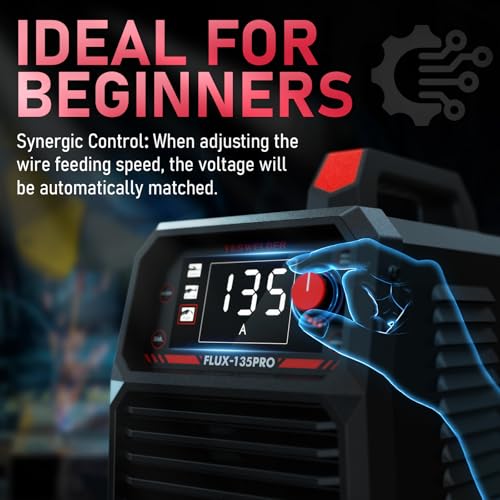
YESWELDER 135A Flux Core MIG Welder
Strengths
- Budget-friendly
- Lightweight and portable
- Synergic control
- Includes flux core wire
- Gasless option
Trade-offs
- Limited to thinner metals
- No aluminum welding
- Basic build quality
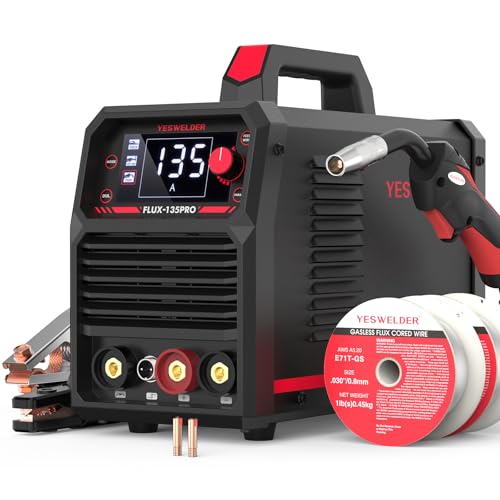
This is the kind of welder I’d recommend to a neighbor just starting out and working on small fences, shelves, or trailer repairs. At 135A, it’s not built for heavy fabrication, but it handles up to 3/32” mild steel with consistent results, and the synergic control makes dialing in settings almost foolproof. The included flux core wire means you can begin welding right away, no gas tank needed, which is a real plus for beginners or casual users.
Owners praise its plug-and-play simplicity and the fact that it runs on 110V, making it ideal for garages without 240V circuits. It’s one of the lightest on the list at 11.4 lbs, so hauling it around a property or job site isn’t a chore. Compared to the Lincoln 90i, it offers slightly more power and digital feedback, though it lacks the same brand pedigree. It won’t replace a pro machine, but for the price, it delivers honest performance with minimal frustration.
Product photos


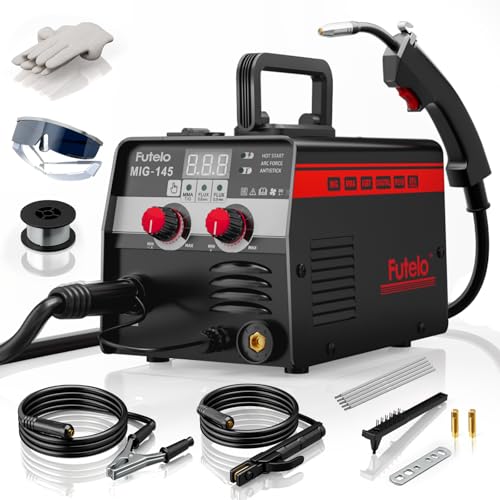
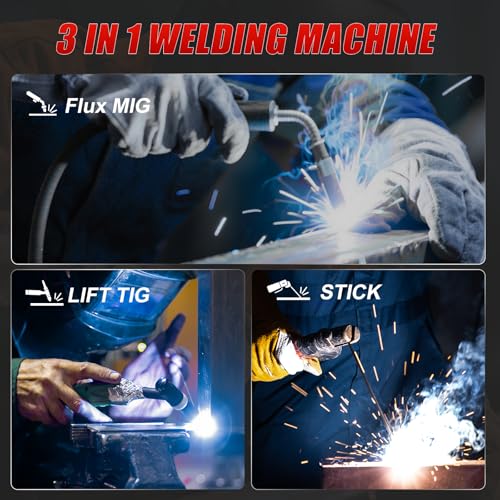
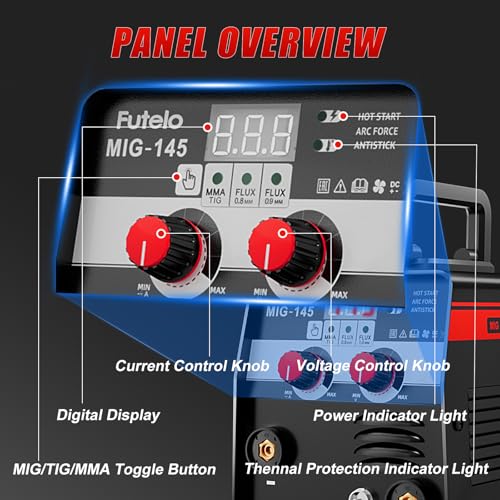
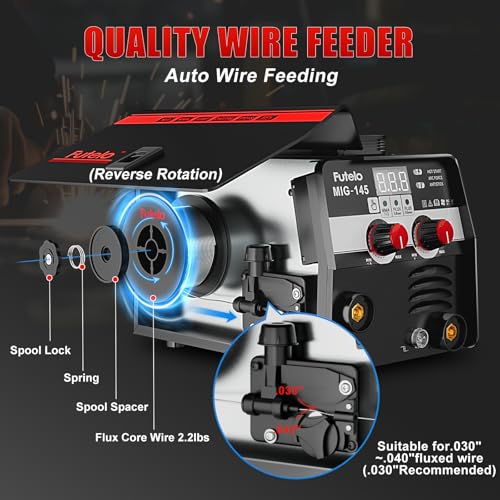
Futelo 145A 3-in-1 MIG Welder
Strengths
- Extremely lightweight
- Thorough kit included
- Synergic control
- Bright digital display
- Beginner-friendly
Trade-offs
- 110V only
- No 240V option
- TIG torch not included
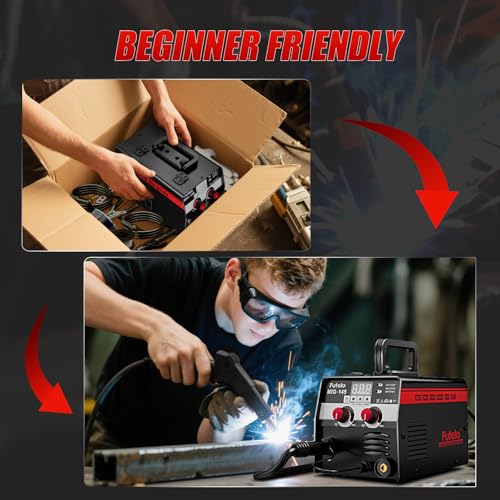
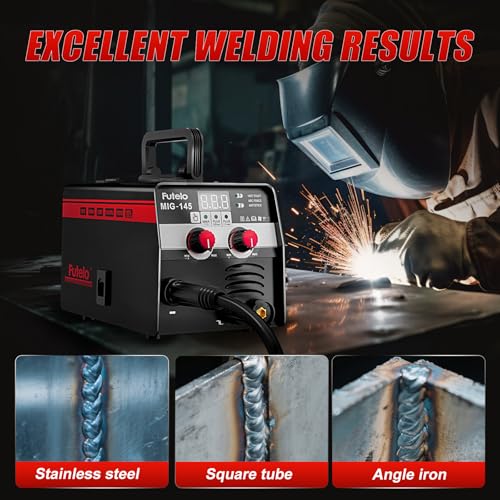
At just 7.5 lbs, this is the lightest serious welder on the list, and that matters if you’re climbing a ladder, working on a car frame, or moving around a property. Don’t let the size fool you: 145A is enough to handle 5mm steel, and the synergic control makes setup fast. The included accessories are generous, gloves, goggles, rods, wire, wrench, so it’s truly ready to use out of the box, which is rare.
Owners report it’s surprisingly stable for its size, though the lack of 240V support limits its duty cycle on long runs. The LED display is bright and readable, and the auto-adjust feature helps new users avoid bad starts. Compared to the Lincoln 90i, it offers more power and digital feedback; compared to the YESWELDER 135A, it’s lighter and better equipped. If portability is your top priority, this is the one to beat.
Product photos
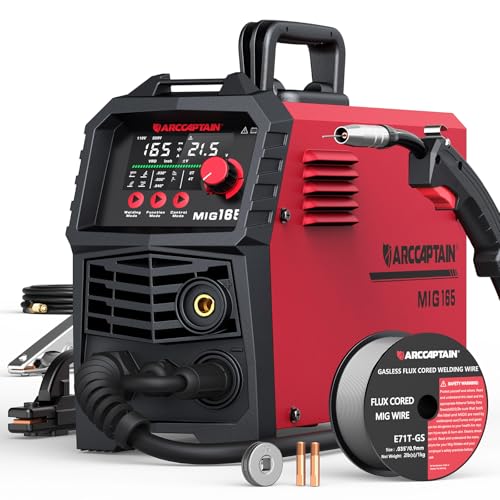
ARCCAPTAIN 165A MIG Welder
Strengths
- Handles thick steel well
- Dual voltage support
- Lightweight and portable
- 2T/4T trigger options
- Good heat dissipation
Trade-offs
- Only fits 2lb wire spools
- TIG torch not included
- No spool gun support
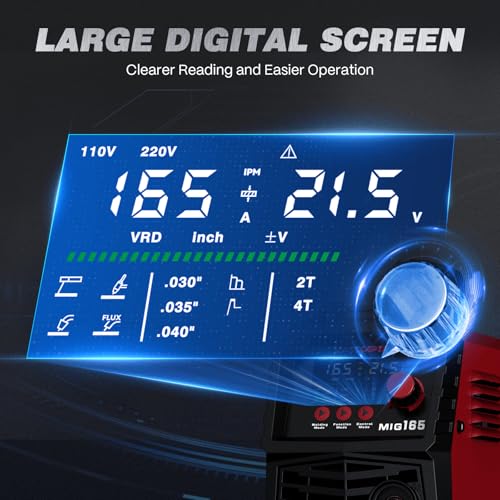
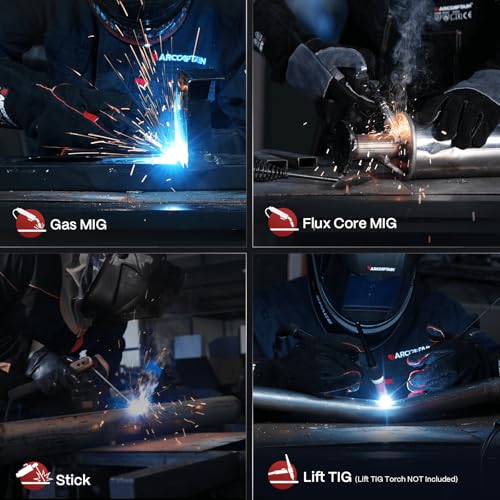
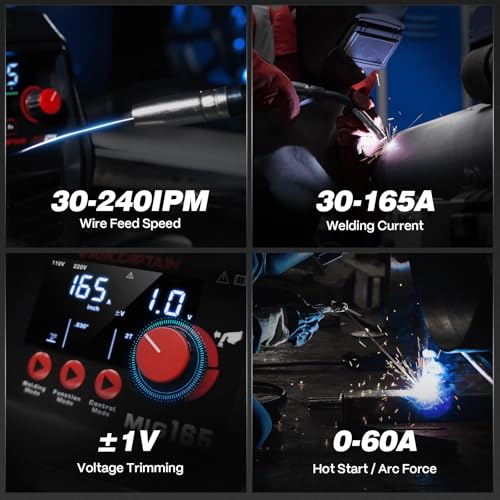
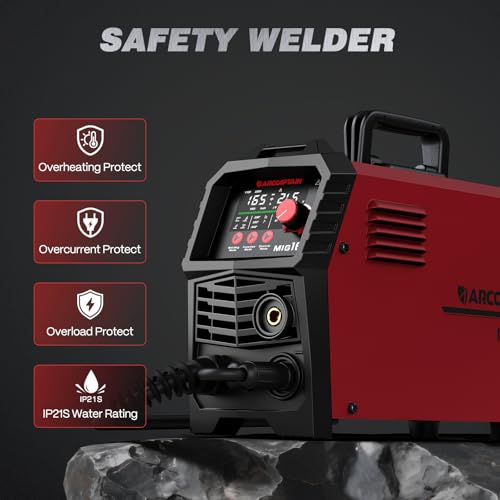
With a max output of 165A and a 60% duty cycle, this welder punches above its weight when it comes to handling thicker materials, up to 3/16” mild steel reliably, which puts it ahead of budget models like the YESWELDER 135A. The IGBT inverter tech and upgraded MCU deliver smoother arcs and better thermal management, and owners note fewer shutdowns during extended runs. The synergy mode is well-tuned, making setup faster for beginners, while the 2T/4T trigger options add real flexibility for pros tackling long seams or tight corners.
It’s not the most feature-packed ARCCAPTAIN model, but it strikes a smart balance: solid build, clear LED display, and dual voltage without the bloat of app dependency. It’s lighter than many competitors at 12.8 lbs, yet doesn’t feel flimsy. Compared to the Futelo 145A, it offers higher output and better heat tolerance, though it shares the limitation of only supporting 2lb spools. If you need a no-nonsense, portable rig that can handle heavier farm or garage repairs, this is a strong contender.
Product photos
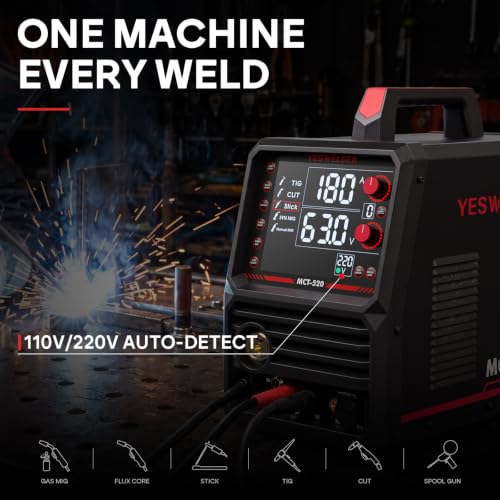
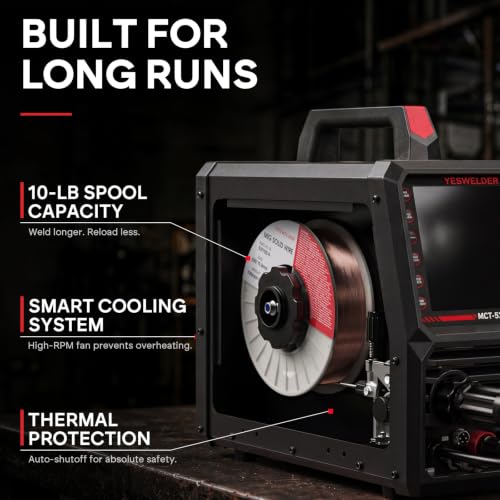
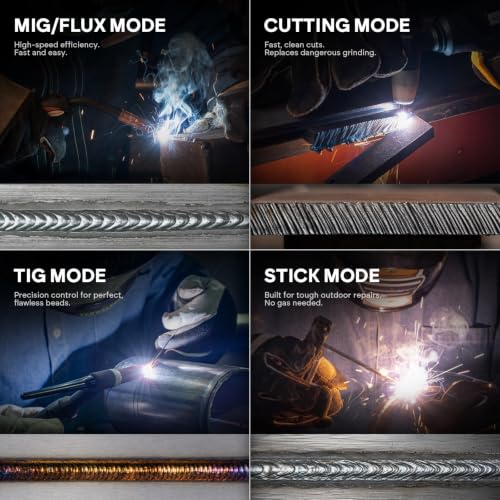
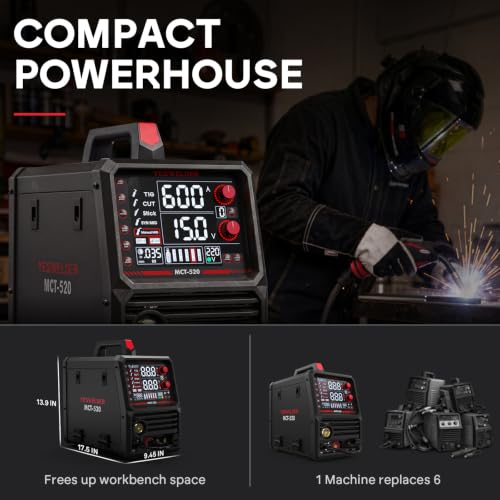
YESWELDER MCT-520 6-in-1 Combo Welder
Strengths
- Built-in plasma cutter
- Large glove-friendly display
- Advanced parameter control
- 6-in-1 functionality
- 24/7 USA support
Trade-offs
- Foot pedal sold separately
- Heavy for a combo unit
- Setup takes time
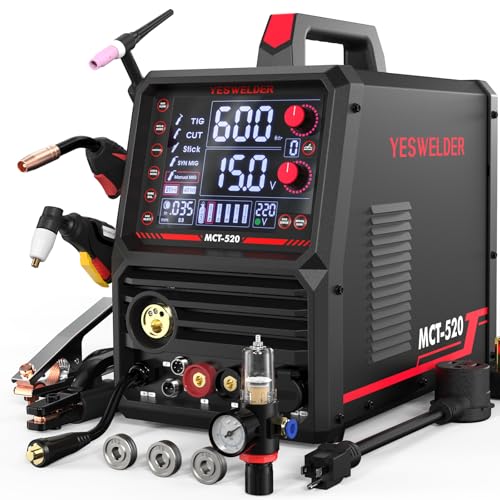
This machine is built for the welder who also cuts, think farm gates, old trailers, or field repairs where lugging multiple tools isn’t practical. The 50A plasma cutter can slice through 5/8” metal, which is serious capability, and it shares the same power source as the welder, making it efficient. The 200A welding output is strong for dual-voltage machines, and the 7” LED display is a standout: big, glove-friendly, and far more usable than touchscreens or app-dependent interfaces.
Owners love the physical dials, no fumbling with apps or Bluetooth, and the fact that it’s field-tested by pros adds credibility. The parameter control is deep: you can tweak inductance, arc force, and TIG ramp times, which puts it closer to pro gear than toy-like multi-machines. Compared to the ARCCAPTAIN MIG205MP, it trades app bells and whistles for real-world usability and a built-in cutter. If you need both functions, this is the only combo on the list that doesn’t feel like a compromise.
Product photos

Lincoln Electric 90i MIG Welder

Strengths
- Simple two-knob control
- Durable metal casing
- Lincoln reliability
- Shoulder strap included
- Flux core ready
Trade-offs
- Low power output
- No digital display
- No multi-process capability
The Lincoln 90i is the definition of ‘no frills, gets the job done.’ It’s not powerful, maxing out around 90A, but for patching a mailbox, repairing a bike frame, or fixing a lawn mower, it’s more than enough. The two-knob control (voltage and wire speed) couldn’t be simpler, and the infinite voltage adjustment lets you fine-tune the arc smoothly. Lincoln’s inverter tech ensures it runs efficiently on 120V, and the metal case adds durability you don’t see on plastic-housed budget models.
It’s heavier than some at 15 lbs, but the shoulder strap makes it manageable. Compared to the YESWELDER 135A, it has less power and no digital display, but Lincoln’s reputation for reliability and better customer support gives it an edge for buyers who value brand trust. It’s not expandable, no TIG, no 240V, no aluminum, but for tiny jobs, that’s fine.
Product photos


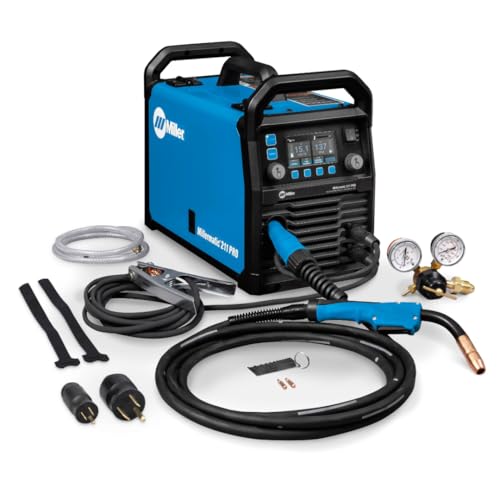
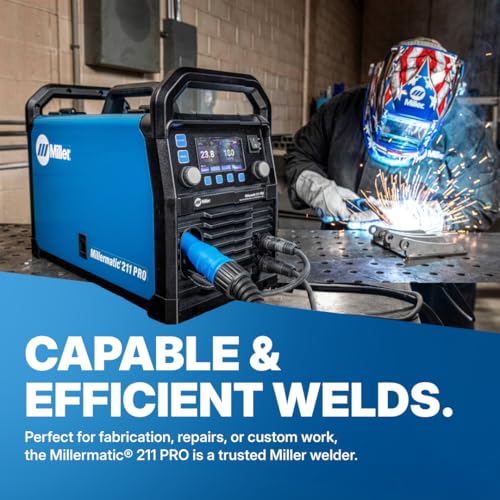
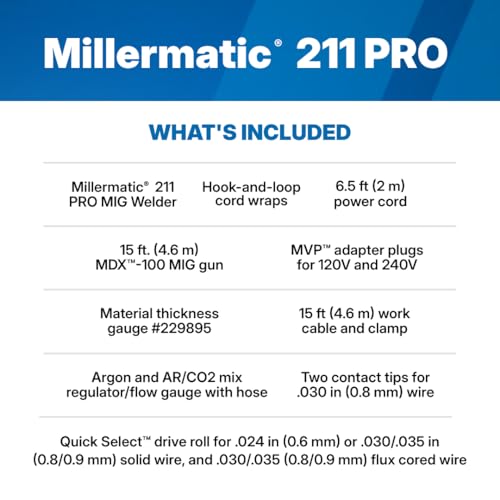
Millermatic 211 PRO MIG Welder
Strengths
- Dyna-Pulse MIG technology
- Auto-Set with BeadVision
- Spool gun ready
- Dual voltage no-tools switch
- High duty cycle
Trade-offs
- Higher price point
- No TIG or stick modes
- Limited portability
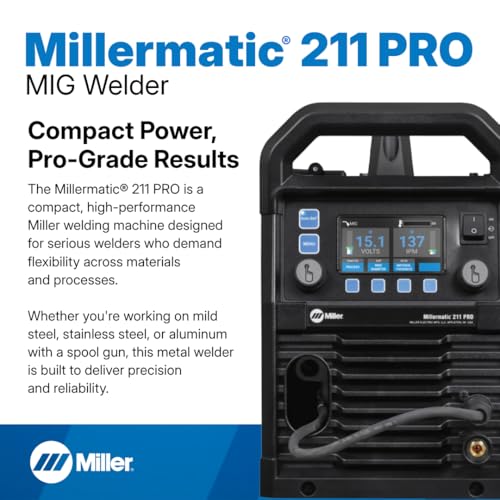
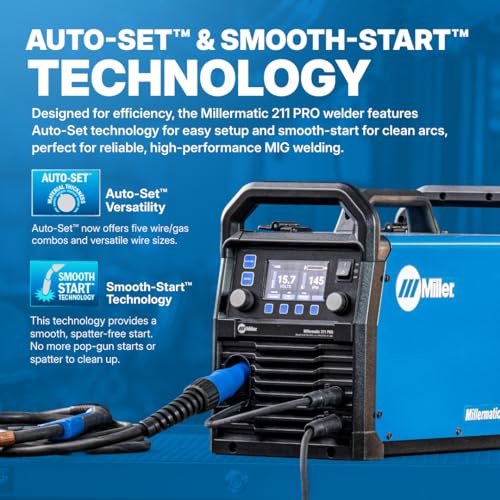
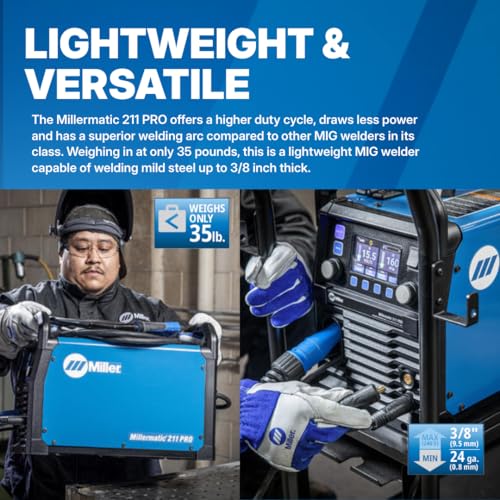
When I think ‘professional-grade,’ this is the machine that sets the benchmark. The Millermatic 211 PRO isn’t just another inverter, it’s a precision tool built for consistency, uptime, and clean welds. The Dyna-Pulse MIG mode is a standout, especially for thin materials or aluminum, where it reduces heat input and spatter dramatically. The Auto-Set feature is more refined than similar systems on budget brands, and BeadVision gives real-time feedback that helps maintain weld quality, something contractors actually rely on.
It’s also spool gun ready with auto-detection, which means switching to aluminum is fast and reliable. The dual-voltage MVP plug is a small but meaningful upgrade, no tools needed, and it’s less prone to damage. Compared to the ARCCAPTAIN MIG205MP, it lacks app control, but what it gains is rugged reliability and Miller’s legendary support network. This is the kind of welder that gets used eight hours a day on job sites and still runs years later.
Product photos
How We Evaluated mig welders
I’ve spent a good portion of my career – over 15 years – around power tools and welding, and I approach evaluating mig welders by looking at a combination of published specifications, owner reviews, and expert opinions. Rather than a hands-on lab test of each model, this is a research-led comparison. I examined features, duty cycles, amperage ranges, and included accessories, then weighed those against what current owners and welding professionals are saying about real-world performance and reliability.
For mig welders, the most important factors are versatility and output capacity. A welder that can handle a wider range of materials and thicknesses – from thin sheet metal to thicker steel – is inherently more useful. Equally important is the quality of the arc and how easy the machine is to control, particularly for beginners. If you’re looking for even more power and capabilities, checking out options designed for more demanding work, such as those among the best professional 220V MIG welders can be a good next step.
Specifications give you a solid baseline on maximum output, duty cycle (how long it can weld continuously), and input power requirements. However, owner feedback is critical for understanding the real-world usability of those specs. I paid close attention to comments about ease of use, build quality, and how well the machine performs across different materials. Professional reviews helped validate those reports and assess the overall value proposition of each welder.
How To Pick The Right mig welders
Choosing the right MIG welder can feel overwhelming, but focusing on your specific needs will narrow down the field considerably.
A good MIG welder balances portability, amperage output, duty cycle, and feature set to deliver consistent, clean welds across a range of materials and thicknesses. Look for models with synergic control for ease of use, and consider the types of metals you’ll be working with to ensure compatibility. Assess the duty cycle – a higher percentage means longer continuous welding without overheating.
Amperage and Material Thickness
The amperage output of a MIG welder directly dictates the thickness of metal you can effectively weld. Don’t overbuy; a 120V machine with 130-140 amps is sufficient for most home DIY projects and auto body repair involving sheet metal. If you anticipate working with thicker steel – say, 1/4 inch or more – you’ll need a 240V machine delivering 180 amps or higher. Consider that aluminum requires even more amperage, and a dedicated spool gun. Don’t get caught up in chasing the highest number; matching the amperage to your projects is key.
Features and Control Systems
Synergic control is a huge benefit, especially for beginners. These systems automatically adjust voltage based on wire speed and material thickness, simplifying setup and reducing the potential for errors. However, more experienced welders might prefer manual control, allowing for fine-tuning of parameters like inductance and burn-back for specific applications. Look for a clear, easy-to-read display – the larger screens on some models are especially helpful when working in less-than-ideal lighting. If you’re considering aluminum welding, ensure the unit is spool-gun ready, or comes with one included. If you think you’ll be tackling a range of projects, a multi-process welder offering TIG and stick capabilities can be a smart investment.
Portability and Value
Weight matters, especially if you plan on moving the welder around your shop or taking it to job sites. Many compact inverter-based MIG welders are surprisingly lightweight. However, don’t sacrifice build quality for portability. A heavier-duty machine will generally be more reliable and offer a longer lifespan. If you’re on a tight budget, you can find capable entry-level 110V welders that will handle many common tasks.
- A basic flux-core only welder can be had for under $300.
- A 5-in-1 multi-process welder (MIG, TIG, Stick, etc.) generally starts around $500 and can go up quickly.
- For serious hobbyists or professionals, a higher-end model with advanced features and a robust duty cycle can easily exceed $1000, but provides the best long-term value.
Don’t assume more features automatically mean better. Focus on the features you will actually use, and prioritize build quality and reliability over flashy extras.
If you’re new to welding, exploring some of the best 110-volt MIG welders can be a great starting point. And for those seeking a balance of price and performance, checking out MIG welders under $1000 is a smart move to find some top-value MIG units.
MIG Welders Compared
Here’s a comparison of key specifications for several MIG welders to help you find the right fit for your needs.
| Product Name | Welding Processes | Input Voltage | Output Current (Amps) | Duty Cycle (%) | Weight (lbs) |
|---|---|---|---|---|---|
| ARCCAPTAIN MIG205MP | MIG/TIG/Stick/Cut | 120V/240V | 30-205 | 60 | N/A |
| ARCCAPTAIN 200Amp | MIG/Stick/TIG | 110V/220V | 20-200 | N/A | N/A |
| YESWELDER 185A | MIG/TIG/Stick | 120V | 185 | N/A | 12 |
| YESWELDER 135A | MIG/TIG/Stick | 120V | 135 | N/A | 11.4 |
| Futelo 145A | MIG/TIG/Stick | 110V | 30-145 | N/A | 7.5 |
| ARCCAPTAIN 165A | MIG/TIG/Stick | 110V/220V | Up to 165 | 60 | 12.8 |
| YESWELDER MCT-520 | MIG/TIG/Stick/Cut | 120V | 20-200 | N/A | N/A |
| Lincoln Electric 90i | MIG | 120V | N/A | N/A | 15 |
| Millermatic 211 PRO | MIG/TIG | 120V/240V | N/A | N/A | N/A |
Frequently Asked Questions
What’s the difference between flux-core and MIG welding?
MIG welding uses a shielding gas to protect the weld pool, creating cleaner, stronger welds, while flux-core welding relies on a flux-filled wire that generates its own shielding. Flux-core is generally better for outdoor use or thicker materials where gas shielding isn’t practical, but MIG offers more control and a higher-quality finish.
What input voltage do I really need – 120V or 240V?
Most home DIYers will be fine with a 120V MIG welder if they’re working on sheet metal or auto body repairs. However, if you plan to weld thicker materials (over 1/4 inch) or need a higher duty cycle, a 240V machine is essential for consistent performance and preventing overloads.
How important is synergic control for a beginner?
Synergic control is very helpful for beginners because it automatically adjusts the voltage based on wire speed and material thickness, simplifying the welding process. While experienced welders might prefer manual control, synergic settings get you up and running quickly with good results.
Can I use a MIG welder to weld aluminum?
Yes, but it requires additional equipment and setup. You’ll need a spool gun specifically designed for aluminum wire, as the standard MIG gun can cause feeding issues. Also, aluminum requires more amperage and a different wire type than steel.
Where can I find a good, affordable MIG welder to get started?
There are several options for those looking for beginner-friendly welding machines that won’t break the bank. You can find capable 110V models for under $500, offering a good balance of features and performance for basic projects.
The Bottom Line
Choosing a MIG welder always involves a trade-off between upfront cost and long-term capability. You can find machines that’ll get you started for a few hundred dollars, but if you anticipate a lot of use or thicker materials, investing in a more robust model like the Millermatic 211 PRO will pay off in the long run. Ultimately, the “best” welder is the one that fits your specific project needs and skill level.
For those on a budget or tackling smaller DIY projects, the YESWELDER 135A provides a surprising amount of versatility at a very approachable price. If you need a machine that can handle a wider range of tasks and materials, the ARCCAPTAIN MIG205MP is a standout, offering multi-process functionality and a healthy amperage output. And for those who value portability, exploring some of the best compact MIG welders will help you find a truly mobile MIG setup.
Don’t get overly focused on specs like duty cycle percentages or synergic control features. The most important things are matching the welder’s amperage to the thickness of the metal you’ll be working with, choosing a machine that feels comfortable and intuitive to operate, and prioritizing build quality for lasting reliability. A well-made welder in the hands of a careful operator will always produce better results than a feature-rich machine used improperly.
