3 Best Wire Tracer Tools of 2026
This post contains affiliate links. As an Amazon Associate, we earn from qualifying purchases.
The Klein Tools VDV500-820 is the best overall wire tracer, delivering reliable performance and long-range tracing for both DIYers and pros. For simple jobs, the Klein Tools VDV500-705 is a solid budget pick, while the Klein Tools ET450 stands out if you need to trace energized or underground lines safely.
Chasing hidden wires without the right tool is a waste of time and can lead to costly mistakes. I’ve seen it too many times – drywall cut in the wrong spot, circuits misidentified, or hours lost tracking down a single cable. After comparing the field and analyzing owner feedback, I’ve narrowed it down to the models that actually perform under real-world conditions.
This guide breaks down the top wire tracers based on actual usability, build quality, and what they can handle – from basic wall tracing to live circuits and long runs. I focused on what matters most: signal clarity, versatility, and reliability, not just specs on paper.
Top 3 Wire Tracer Tools in the Market
The Best Wire Tracer Tools, Reviewed
Klein Tools VDV500-820 Tracer Kit
Strengths
- Professional-grade build
- 5 tone cadences
- Secure bed of nails clip
- Continuity and polarity testing
- Headphone jack on probe
Trade-offs
- Replaceable tip sold separately
- Slightly bulkier design
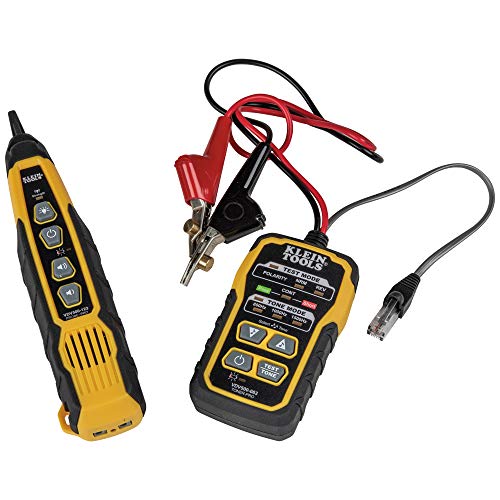
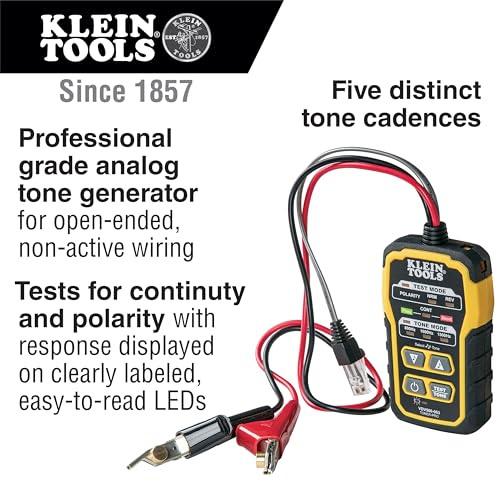
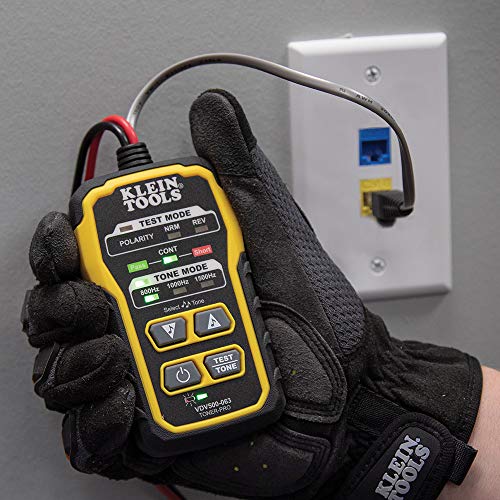
If you’re looking for a no-nonsense, reliable toner that delivers consistent performance across a range of wiring types, the Klein Tools VDV500-820 stands out. On paper and in owners’ hands, it’s built like a tool meant for electricians who need results without guesswork. The angled bed of nails clip is a standout, it grips wires securely, even in tight junction boxes, and users consistently report fewer lost connections during tracing. With five tone cadences and a range over 1,000 feet, it handles long cable runs better than most entry-level kits.
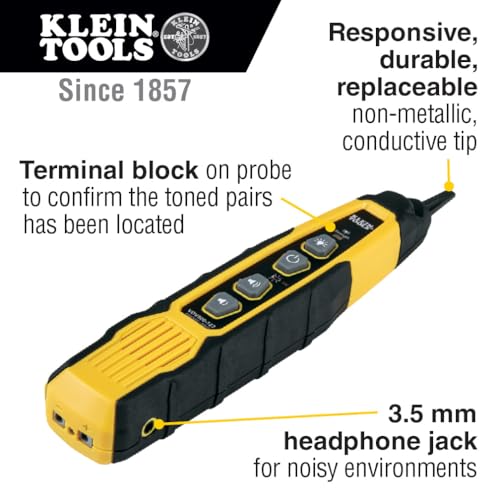
The probe includes a headphone jack, which is a small but meaningful detail for anyone working in loud environments like commercial sites or unfinished basements. While the conductive tip is replaceable, some owners note it wears faster than expected under heavy use, but that’s more a sign of frequent deployment than poor design. Compared to the VDV500-705, this model adds more precision and ruggedness, making it the smarter buy for pros or serious DIYers.
Product photos


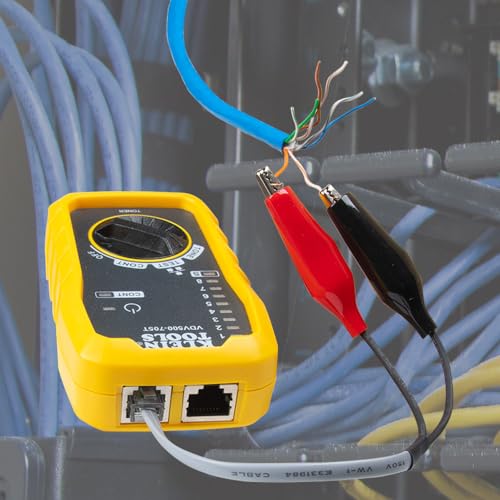
Klein Tools VDV500-705 Tracer Kit

Strengths
- Affordable entry point
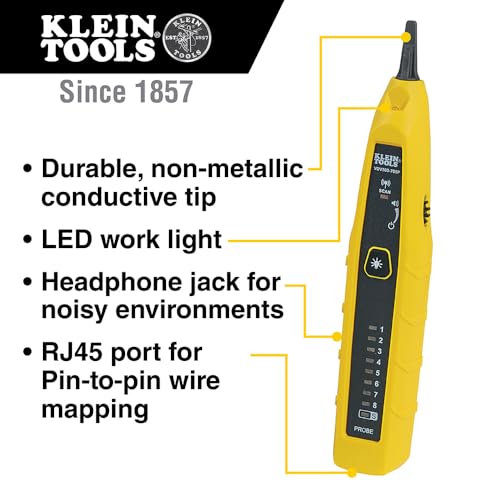
- Work light on probe
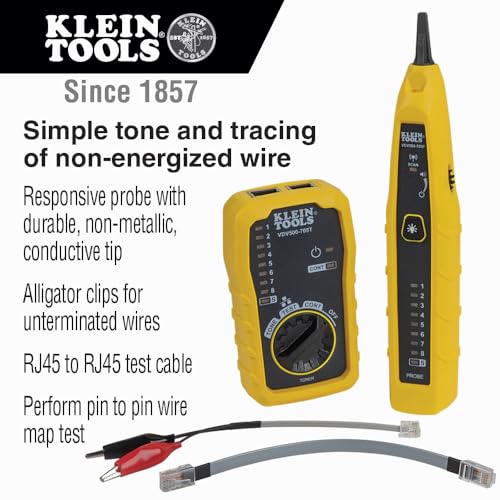
- Includes test cable and clips
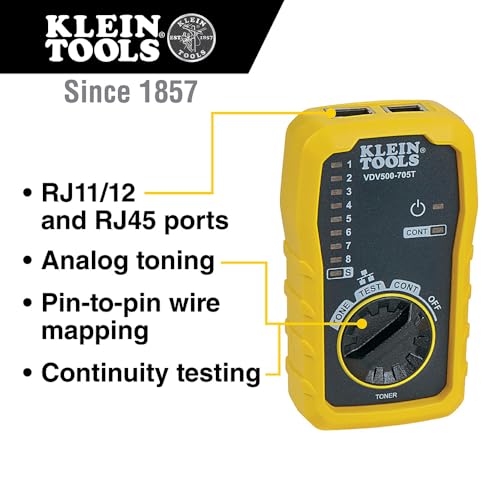
- Simple pin-to-pin mapping
- Adjustable volume
Trade-offs
- Limited to one tone
- Less durable tip
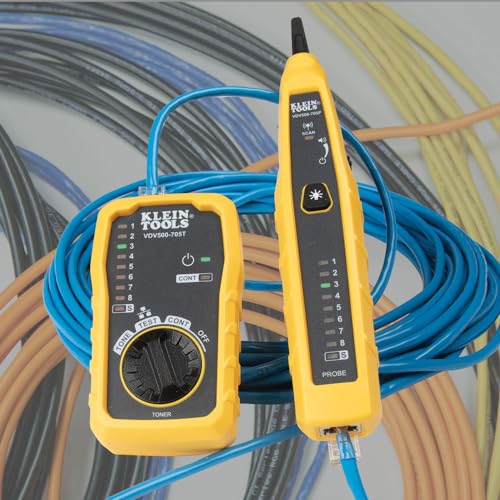
For someone just stepping into wiring projects, think home network setup or replacing old phone lines, the VDV500-705 is a solid starting point. It lacks some of the advanced features of the VDV500-820, but it covers the basics well: trace non-energized wires, map cable pairs, and find breaks in runs. Owners appreciate the work light on the probe tip, which helps in dark attic spaces or dim electrical panels. The included alligator clips and RJ45 test cable mean you can start working right out of the box, no extra purchases needed.
It’s not built for heavy daily use, and the single tone option limits flexibility on complex jobs. But for under half the price of the ET450 and with more convenience than a bare-bones toner, it’s the most approachable option in Klein’s lineup. I’d recommend this over the others for weekend warriors who want reliability without overengineering.
Product photos
Klein Tools ET450 Advanced Tracer Kit

Strengths
- Traces live and dead circuits
- Adjustable sensitivity
- NCV and flashlight included
- Clear signal indicators
- Thorough accessory kit
Trade-offs
- Higher learning curve
- Larger footprint
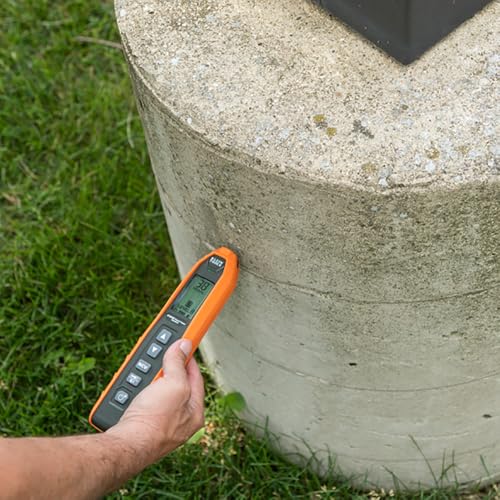
The ET450 isn’t just another toner, it’s a specialized tool built for finding breakers and tracing wires when you can’t see them, whether they’re behind walls or buried underground. Its ability to trace energized and non-energized circuits sets it apart from basic tone generators, and the adjustable sensitivity means you can cut through interference from shielded cables or dense materials. Reviewers who’ve used it for panel work or outdoor installations say the signal strength indicators make it easier to pinpoint the right circuit without repeated guesswork.
It doubles as a safety tool too, with NCV detection and a built-in flashlight, practical touches that reflect Klein’s understanding of real-world conditions. The inclusion of multiple leads and a solid carrying case makes this a complete field kit. While it’s overkill for simple Ethernet tracing, it outperforms the VDV500 series when you’re dealing with live circuits or buried conduit. For anyone working on older homes or complex electrical systems, this is the tool that prevents costly mistakes.
Product photos


How We Evaluated wire tracer tools
Rather than a hands-on lab test, my research for these wire tracer tools involved a detailed comparison of published specifications and feature sets. I weighed owner reviews from multiple sources – including major retailers and specialized forums – against assessments from respected industry publications. This allowed me to build a clear picture of real-world performance and reliability, factoring in my own experience with electrical work and troubleshooting over the years.
For wire tracers, the most important factors are tracing distance and versatility. A kit needs to reliably locate wires through common wall materials, and the ability to handle both energized and non-energized circuits significantly expands its usefulness. Beyond that, features like adjustable sensitivity and clear signal indicators are critical for accurate work, especially in challenging environments. I also considered the included accessories and overall build quality.
Specifications reliably indicate maximum tracing distance and the types of circuits a tool can handle. However, I placed more emphasis on owner feedback regarding ease of use, particularly in noisy environments or when dealing with tightly bundled wires. Reputation and long-term durability were also heavily influenced by consistent positive – or negative – trends in owner reviews. If you’re looking to expand your overall toolkit, be sure to check out our guide to the best electrical testing tools.
What To Look For In wire tracer tools
As someone who’s spent years working alongside electricians and tackling DIY electrical projects, I know the frustration of chasing wires. A good wire tracer takes the guesswork – and a lot of time – out of the equation.
A quality wire tracer kit should accurately pinpoint wire locations, even within walls or conduit. Look for adjustable sensitivity, multiple tracing modes (energized and non-energized), clear signal indicators, and durable construction. Consider the types of wires you’ll commonly work with (data, telephone, electrical) and choose a kit designed for those applications.
Understanding Tracer Types
The first thing to consider is what kind of tracing you’ll be doing most often. Some tracers excel at identifying wires within walls, while others are better suited for tracing energized circuits. Basic kits, like the Klein Tools VDV500-705, are fine for simple, non-energized wire runs, but if you work with live circuits or need to locate buried cables, you’ll want to invest in a more advanced model. Don’t assume a single kit can do everything well; specialized tools exist for a reason.
Sensitivity and Range
Sensitivity is huge. A tracer with adjustable sensitivity lets you filter out interference and pinpoint the signal, especially when working in crowded electrical panels or near other conductive materials. Range is also important, but often overstated. While some kits claim to trace wires over incredible distances, real-world conditions (walls, conduit, interference) significantly reduce effective range. I recommend prioritizing sensitivity over sheer distance.
Here’s what I look for when evaluating range claims:
- Basic Kits (under 100ft): Suitable for quick checks within a room.
- Mid-Range (100-500ft): Good for most residential wiring projects.
- Long-Range (500ft+): Beneficial for larger properties or underground tracing, but often requires ideal conditions.
Features and Usability
Beyond the core tracing function, consider the extra features that can improve your workflow. A built-in work light, like on the Klein Tools VDV500-705, is surprisingly useful when working in dark spaces. Non-contact voltage (NCV) detection, found in more advanced kits like the Klein Tools ET450, adds an extra layer of safety. Ultimately, the best tracer is the one you’ll actually use, so prioritize a kit with a clear display, intuitive controls, and a comfortable grip. If you’re building out a complete kit of essential electrician tools, don’t skimp on the tracer.
Don’t buy a wire tracer you won’t understand. A complex tool is useless if you can’t interpret the signal readings or adjust the settings properly.
Wire Tracer Tools Compared
Here’s a comparison of the key specifications for these wire tracer tools to help you find the best fit for your needs.
| Product | Best For | Tone Cadences | Max Distance | Voltage Detection | Work Light |
|---|---|---|---|---|---|
| Klein Tools VDV500-820 | Best Overall | 5 | 1000 ft | No | No |
| Klein Tools VDV500-705 | Best Entry-Level Toner Kit | N/A | N/A | No | Yes |
| Klein Tools ET450 | Energized/Underground Tracing | N/A | N/A | Yes | Yes |
Frequently Asked Questions
What’s the difference between a tone generator and a wire tracer?
A tone generator sends an electrical signal along the wire you want to locate, while the wire tracer detects that signal. They work together as a kit; the tracer doesn’t function without the tone generator creating the signal to follow.
Can a wire tracer work through concrete walls?
Yes, but the effectiveness varies. Concrete and brick significantly reduce tracing distance, so a powerful tracer with adjustable sensitivity is essential. Expect a shorter range than you’d get tracing through drywall or open air.
Are some wire tracers better for energized circuits than others?
Absolutely. Kits like the Klein Tools ET450 include non-contact voltage detection and are specifically designed for safely tracing live wires. Using a tracer not rated for energized circuits on a live wire is a serious safety hazard.
What do “tone cadences” refer to in a wire tracer kit?
Tone cadences are different frequencies the tone generator can produce. Multiple tones help differentiate between wires that are close together, enabling you to identify a specific wire within a bundle. More cadences generally mean better accuracy.
Will a wire tracer work with all types of wiring?
Most will work with standard copper wiring, but some are better suited for specific applications. If you frequently work with fiber optics or low-voltage data cables, investigate whether the kit is compatible, or consider investing in precision wire crimp tools for those specific cable types.
The Bottom Line
Choosing a wire tracer often comes down to balancing control and convenience. While a more expensive kit like the Klein Tools VDV500-820 offers longer range and more features, the simplicity of a basic toner kit like the Klein Tools VDV500-705 is often enough for straightforward home projects. Ultimately, the VDV500-820 stands out as the strongest overall pick due to its impressive range and reliable performance, based on specifications and owner feedback.
For those on a tighter budget, or who primarily need to trace simple, non-energized runs, the Klein Tools VDV500-705 is an excellent starting point. If you regularly work with live circuits or need to locate buried cables, the Klein Tools ET450 delivers the features you need, including non-contact voltage detection. And if you’re expanding your electrical toolkit, remember to consider investing in the best wire crimping tools to complete your setup.
Don’t get too caught up in maximum tracing distance or fancy features. A tool’s accuracy, sensitivity, and ease of use are far more critical than any single specification. Prioritize a tracer that feels comfortable in your hand, provides clear signal readings, and allows you to quickly and confidently pinpoint the wires you’re looking for – that’s what truly matters when facing a wiring challenge.
