
7 Best Wire Feed Welders of 2026
This post contains affiliate links. As an Amazon Associate, we earn from qualifying purchases.
The YESWELDER 205A MIG Welder stands out as the best overall wire feed welder for its strong amperage and dual-voltage flexibility, while the ARCCAPTAIN 165A is a solid budget-friendly pick with multi-process capability and a helpful auto-set feature. For those prioritizing portability, the lightweight Futelo 145A delivers solid performance in a compact design.
Most people shopping for a wire feed welder aren’t just buying a tool, they’re trying to solve a problem, whether it’s repairing a trailer, building a gate, or starting a side hustle in metal fabrication. The real challenge isn’t finding a welder, it’s sorting through the noise to find one that’s powerful enough, reliable, and actually matches your skill level and project needs.
This guide cuts through the marketing by focusing on what owners and specs tell us matters most: amperage, duty cycle, process versatility, and real-world usability. I compared top models based on performance indicators and user feedback to help you make a smarter, more confident choice, without overspending on features you won’t use.
Top 7 Wire Feed Welders in the Market
The Best Wire Feed Welders, Reviewed
YESWELDER 205A MIG Welder
Strengths
- Dual voltage
- 5-in-1 functionality
- Strong 200A output
- Synergic control
- Digital display
Trade-offs
- Spool gun not included
- TIG torch sold separately
- Heavier than entry models
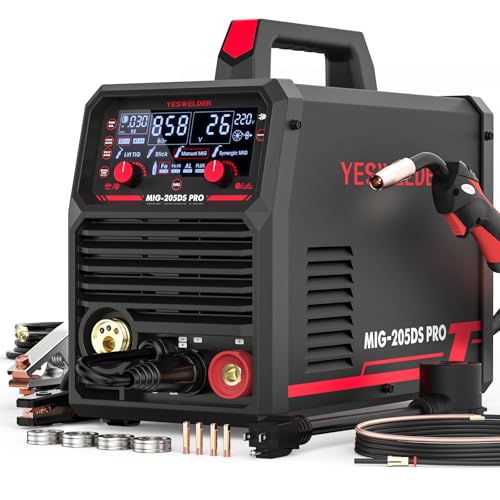
The YESWELDER MIG-205DS PRO stands out in a crowded field by offering dual voltage and a rare 5-in-1 capability that includes gas MIG, flux core, spool gun aluminum MIG, Lift TIG, and Stick. On paper, this is the most versatile unit here, and owners consistently report it handles thicker steel with confidence thanks to its 200-amp output. The digital display adds real precision, letting users monitor current in real time, something intermediate and advanced welders will appreciate.
Where it really pulls ahead is flexibility. If you’re working on automotive projects one day and aluminum fencing the next, being able to switch to a spool gun setup (sold separately) is a big deal. The synergic mode is forgiving for beginners, but the manual override gives pros room to tweak. Compared to the Millermatic 142 or Lincoln 90i, this is a much more serious tool for someone expanding beyond basic DIY.
Product photos


ARCCAPTAIN 165A MIG Welder
Strengths
- Dual voltage
- 2T/4T trigger mode
- Large LED display
- Good duty cycle
- Cooling fan upgrade
Trade-offs
- TIG torch not included
- Only fits 2lb spools
- Setup can be tricky
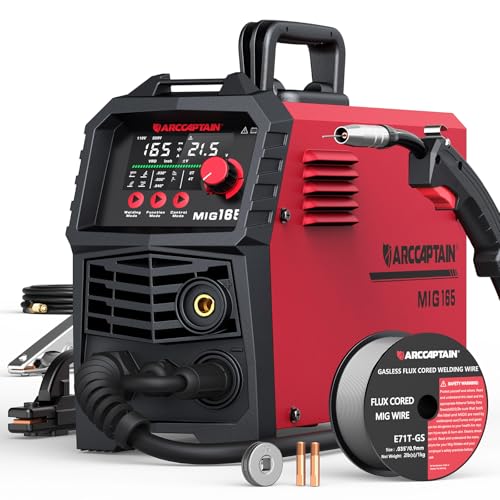
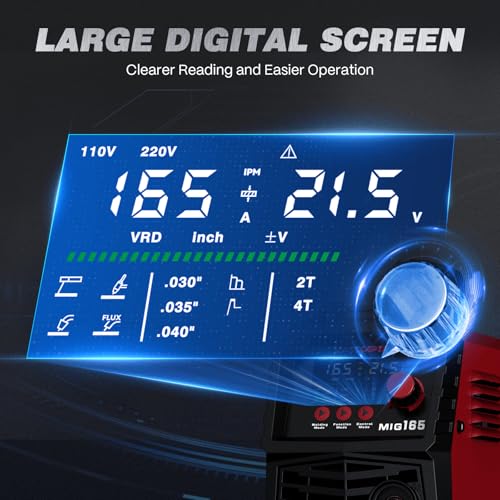
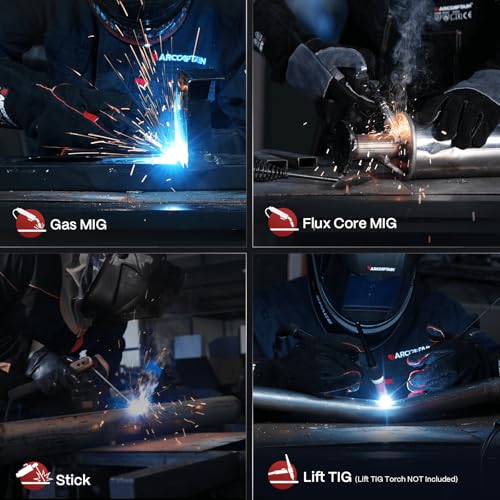
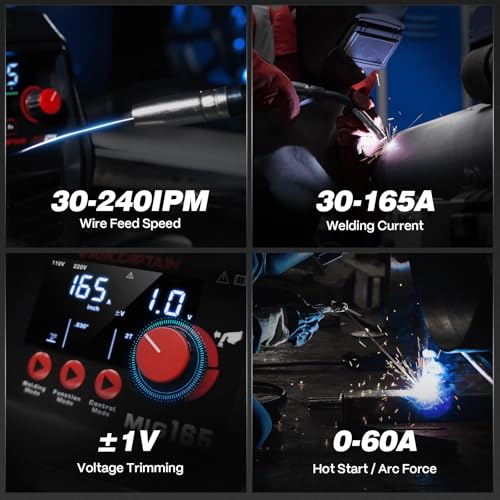
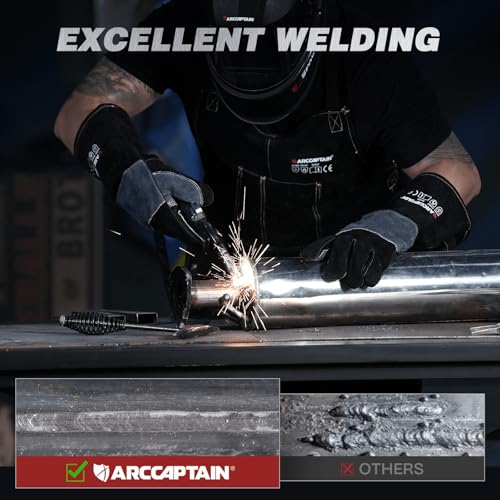
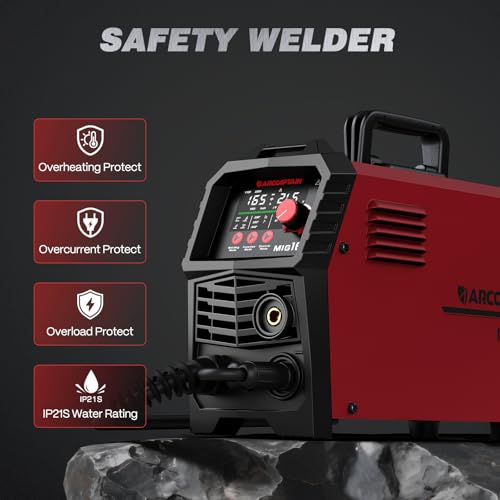
The ARCCAPTAIN MIG165 hits a sweet spot with dual voltage, 165A output, and a large LED display that’s easy to read mid-weld. It’s a 4-in-1 machine supporting gas MIG, flux core, Lift TIG, and Stick, though again, the TIG torch is sold separately. What sets it apart is the 2T/4T trigger control, which lets you lock in continuous welds (4T) or use short bursts (2T), a feature usually found on pricier industrial units. Owners say this makes long seams and tight corners much easier to manage.
It’s not as flashy as the YESWELDER 205A, but it’s more powerful than most 110V-only models. The upgraded cooling fan helps maintain duty cycle, and the package includes a decent set of accessories. Compared to the Millermatic 142, it offers more manual control, though it lacks Auto-Set’s simplicity. If you want flexibility without stepping up to 220V-only machines, this is the smarter buy.
Product photos
YESWELDER 135A MIG Welder
Strengths
- Budget-friendly
- Bonus flux-core wire
- Lightweight and portable
- Synergic control
- Digital display
Trade-offs
- No helmet included
- TIG torch sold separately
- Limited to 110V
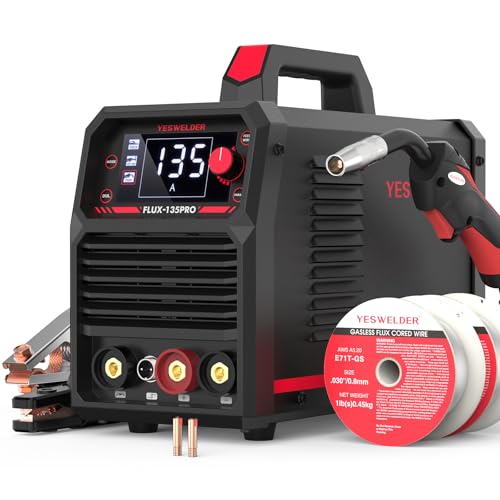
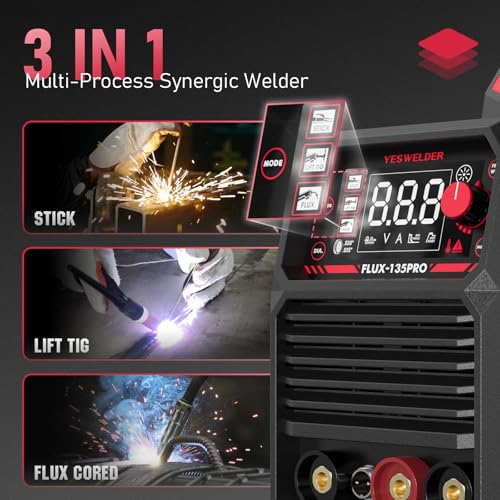
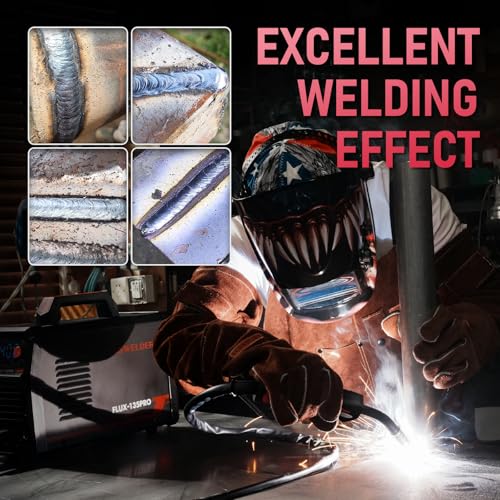
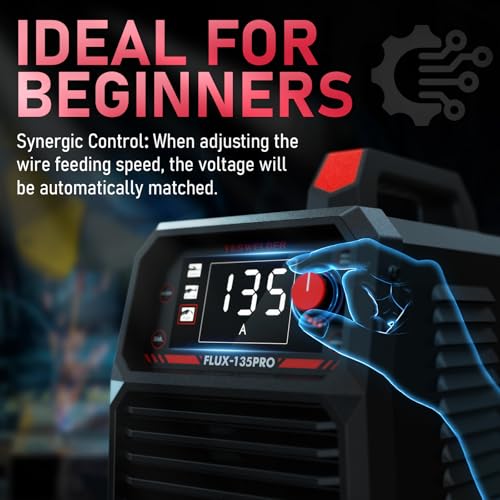
If you’re on a tight budget but still want a no-nonsense 3-in-1 machine, this YESWELDER 135A delivers. It’s lightweight at 11.4 lbs, runs on 110V, and includes a bonus spool of flux-core wire so you can start welding without buying gas. The synergic control works well, adjust wire speed and it auto-matches voltage, which takes the guesswork out for beginners. Owners report clean starts and consistent arcs, especially on thin steel, and the digital display adds a level of control you don’t always get at this price.
Compared to the BESTMIG 135A, it feels a bit more refined in operation, though it lacks the included helmet. It won’t match the power of the 205A dual-voltage model, but for under-the-radar repairs, small fabrications, or learning the basics, it’s one of the smarter buys. I’d pick this over the BESTMIG if you already have safety gear and want better long-term performance.
Product photos


BESTMIG 135A MIG Welder
Strengths
- Includes helmet and gloves
- Beginner-friendly setup
- Clean digital display
- Flux-core capable
- 3-in-1 functionality
Trade-offs
- TIG torch not included
- Wire feeder issues reported
- Not for heavy use
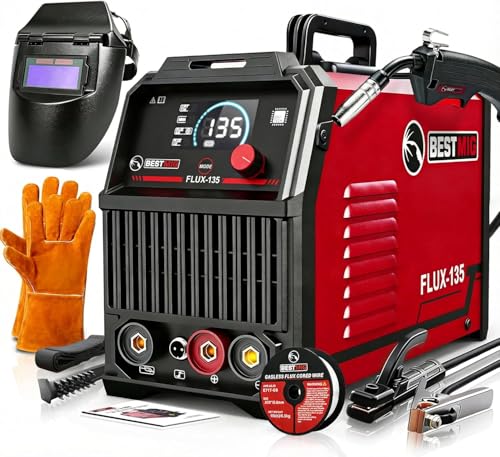
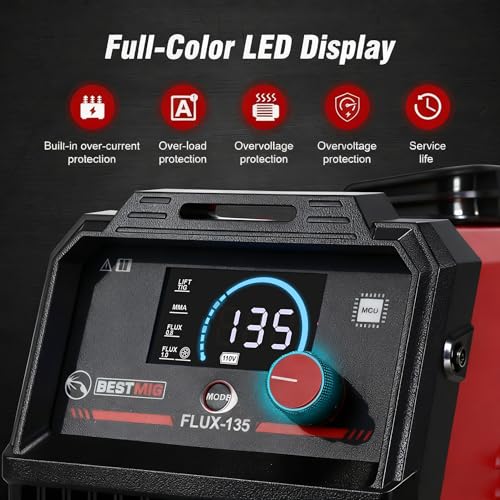
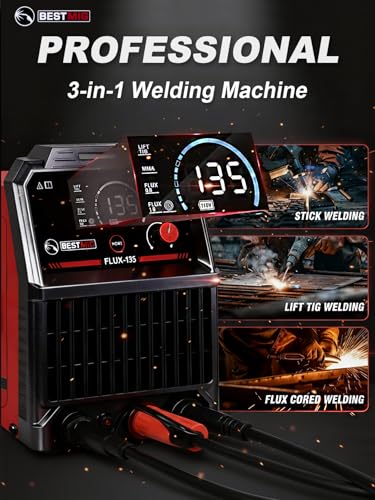
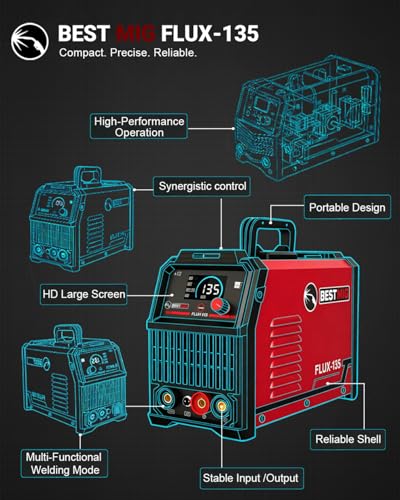
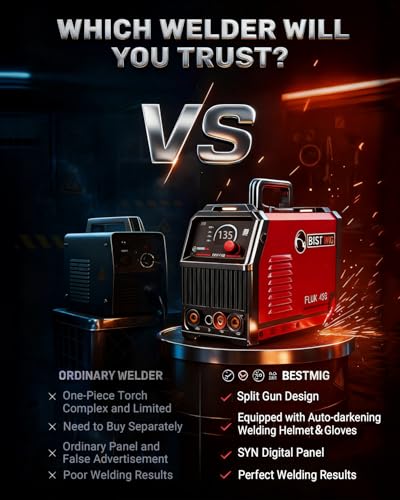
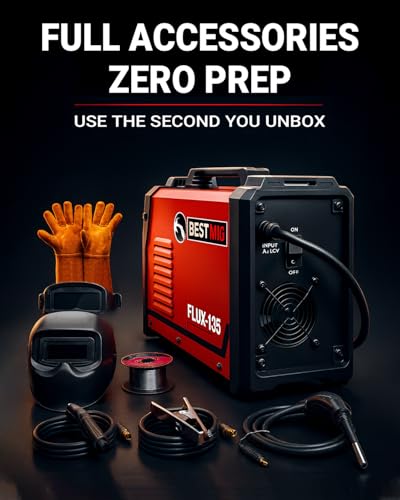
The BESTMIG FLUX-135 grabs attention by bundling a full safety kit, helmet, gloves, ground clamp, and electrode holder, right in the box. That alone makes it a standout for newcomers who don’t want to chase down gear. It’s a 3-in-1 unit with MIG, Stick, and Lift TIG, though notably, the TIG torch isn’t included, which is a bit of a bait-and-switch. Still, the digital interface is clean, and owners praise how easily it handles flux-core welding on thin to medium steel without gas.
For the price tier, it’s a smart pick if you prioritize convenience. But compared to the YESWELDER 135A or Futelo 145A, the build feels a little less rugged, and some reviewers mention the wire feeder can be finicky with thicker wire. It’s not the most durable long-term, but for light-duty home projects, it gets the job done without fuss.
Product photos
Lincoln Electric 90i FC Welder

Strengths
- Simple two-knob control
- Flux-core ready
- Portable with case
- Smooth weld performance
- Lincoln reliability
Trade-offs
- No digital display
- No multi-process capability
- No TIG or gas MIG
The Lincoln 90i FC is the definition of simple, no-frills welding. With just two knobs, wire speed and voltage, it’s about as straightforward as it gets. It’s 120V, lightweight at 15 lbs, and comes in a protective metal case with a shoulder strap, making it ideal for carrying between job sites. It runs on flux-core wire, so no gas tank needed, and owners consistently report smooth, spatter-free welds on thin steel up to 1/4 inch.
Where it shines is ease of use. Unlike models with digital menus, this one is purely analog, turn the knobs, pull the trigger, and you’re welding. That makes it perfect for beginners or anyone who hates scrolling through settings. But it’s also limited: no TIG, no gas MIG, no digital display. Compared to the Futelo or YESWELDER 135A, it’s less feature-rich, but sometimes less is more.
Product photos


Millermatic 142 MIG Welder

Strengths
- Auto-Set feature
- Generator compatible
- Simple to use
- Reliable Miller build
- 120V operation
Trade-offs
- MIG only
- No Stick or TIG
- Higher price point
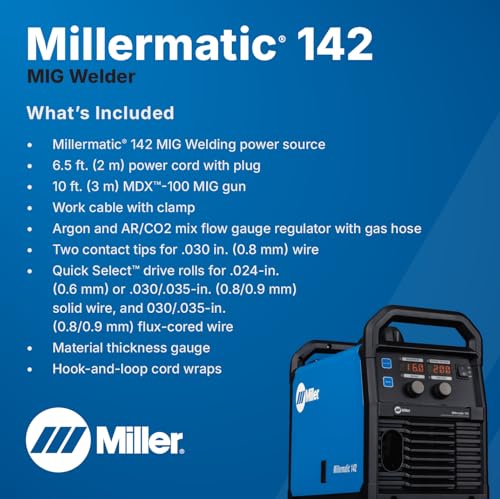
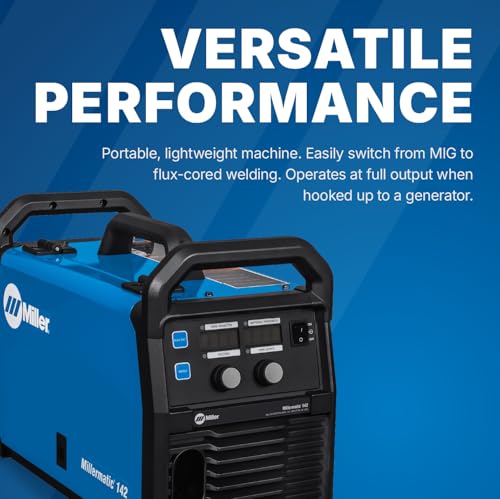
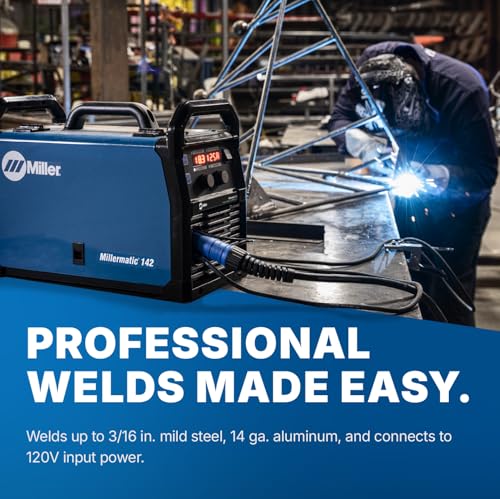
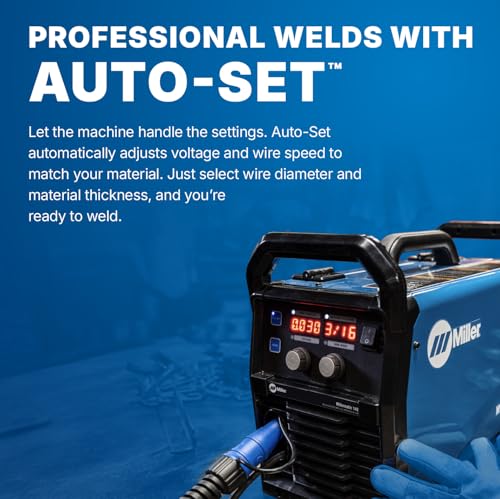
The Millermatic 142 is where brand reputation meets real-world usability. Miller’s Auto-Set feature is the star, set your wire size and material thickness, and the machine dials in the right voltage and wire speed automatically. That’s a huge advantage for beginners or occasional users who don’t want to fiddle with settings. It runs on 120V, so no special outlet needed, and owners love that it works reliably off a generator, which matters for fieldwork.
But here’s the catch: it’s not a multi-process machine. It’s MIG-only, no Stick or TIG. That makes it less versatile than the YESWELDER or ARCCAPTAIN models. And while the build quality feels solid, it’s also more expensive than most in this list. If you only need MIG and value foolproof operation, it’s a strong contender. But if you want one welder to do it all, you’ll need to look elsewhere.
Product photos

Futelo 145A MIG Welder
Strengths
- Ultra lightweight
- Comes with full kit
- Synergic control
- Good for beginners
- Bright LED display
Trade-offs
- No dual voltage
- TIG torch not included
- Limited duty cycle
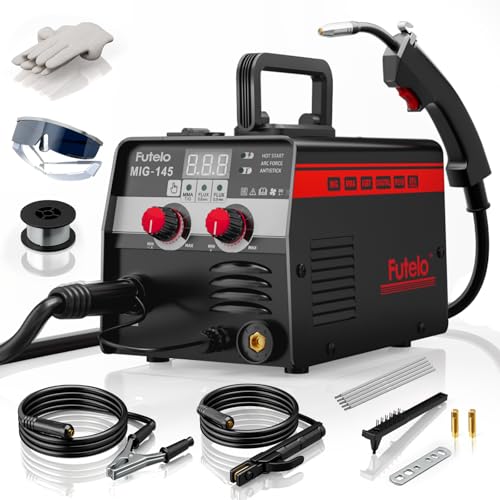
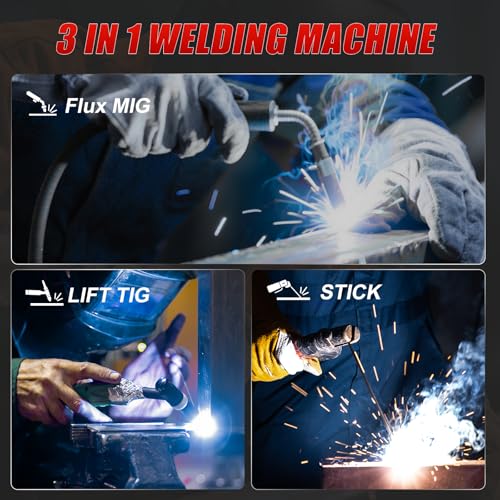
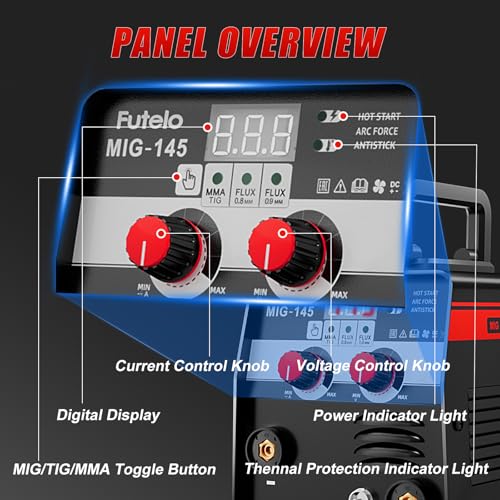
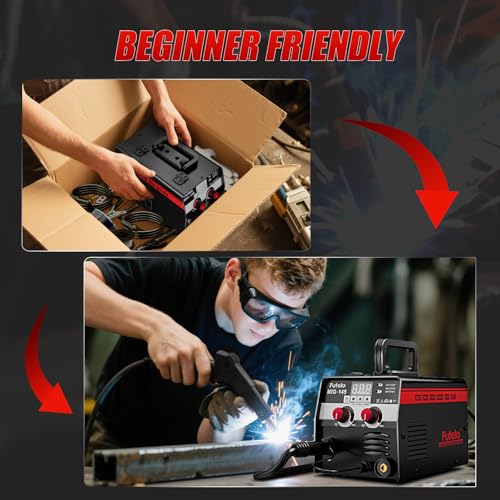
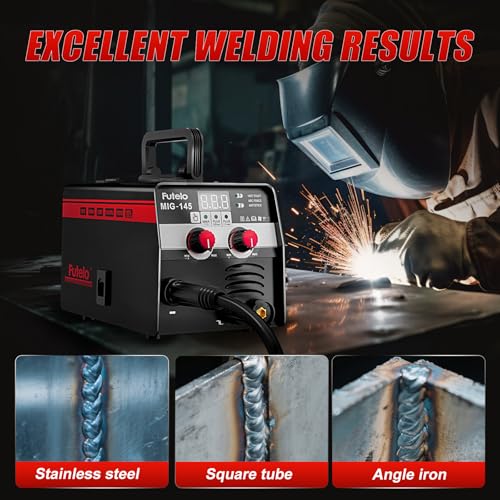
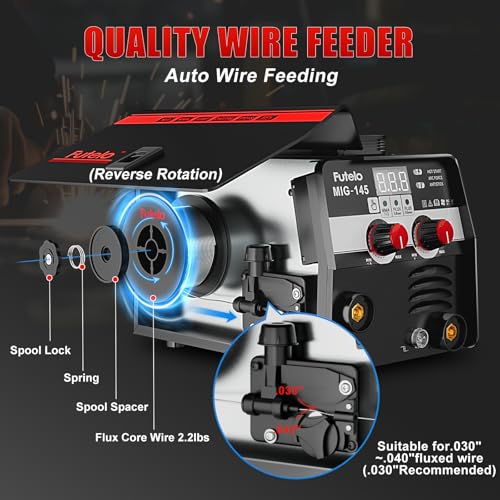
At just 7.5 lbs, the Futelo 145A is the lightest serious welder in this lineup, and that portability makes it a gem for mobile jobs or cramped garages. It’s a 3-in-1 machine with MIG, Stick, and Lift TIG support, and unlike some competitors, it comes with nearly everything you need to start, gloves, goggles, wire, rods, even a hammer. The smart synergic control means beginners can set wire size or amperage and let the machine auto-match voltage and feed speed, which cuts down on trial and error.
Owners consistently highlight how easy it is to pick up and go, the kind of welder you toss in the truck bed for weekend farm fixes. But it’s not just for newbies. The LED display is bright and readable through a helmet, and the 145A output handles up to 5mm steel. It doesn’t have dual voltage like the YESWELDER 205A, so it’s limited to 110V jobs, but for pure portability and out-of-box readiness, it’s hard to beat.
Product photos
How We Picked These wire feed welders
Rather than a hands-on lab test, this selection is a research-led comparison of published specifications and owner feedback. I focused on models frequently discussed in welding communities and widely available for purchase. We compared features across numerous units, weighing published specs against what owners report about real-world performance. This involved analyzing owner reviews from major retailers, alongside professional assessments from established tool review sites and welding forums.
For wire feed welders, output amperage, duty cycle, and material compatibility are paramount. A higher amperage allows for thicker material welding, while a robust duty cycle prevents overheating during extended use. Equally important is versatility – the ability to handle different processes like MIG, flux-cored, and stick welding. These factors directly impact the welder’s ability to tackle a range of projects, making them key differentiators in our ranking.
Specifications reliably indicate a machine’s potential output and input requirements. However, owner feedback provided crucial insight into usability, the accuracy of advertised features (like auto-set functions), and long-term durability. Reputation and brand consistency also played a role; established manufacturers often deliver more reliable performance and better customer support. If you’re looking for a smaller, more portable option, you might also want to consider our guide to the compact 110-volt welders.
How To Pick The Right wire feed welders
Choosing a wire feed welder can feel overwhelming, but understanding your needs and the key features will point you toward the right machine.
A good wire feed welder balances power with usability. Look for models with a robust amperage output for the materials you’ll be working with, clear digital displays for precise control, and safety features like overload protection. Duty cycle is also critical; a higher percentage means you can weld for longer periods without overheating the machine. Consider the types of welding – MIG, Stick, and TIG – you’ll be doing and ensure the welder supports them, or if accessories are available.
Amperage and Material Thickness
The amperage a welder puts out dictates the thickness of material it can effectively join. Don’t overspend on a machine with more power than you’ll actually use, but avoid underpowering it, either. For thin sheet metal (automotive work, for example) 120-150 amps is often sufficient. If you anticipate working with thicker steel – say, 1/4 inch or more – you’ll want to look at models with 200 amps or higher. Remember, stainless steel generally requires more amperage than mild steel of the same thickness.
Features and Versatility
Many wire feed welders now offer multiple process capabilities (MIG, Stick, TIG). While a dedicated TIG welder will always provide the highest quality TIG welds, a multi-process machine can be a great value if you only occasionally need TIG functionality. Consider whether you’ll need pulsed MIG for aluminum, or spool gun compatibility. The level of control is also important. Synergic control is fantastic for beginners, automatically adjusting settings, but experienced welders will appreciate the fine-tuning options of manual control. If you’re looking for a machine to learn on, exploring the best starter MIG welders can be a useful starting point.
Portability and Accessories
Weight and size matter, particularly if you plan to move the welder around a shop or take it to job sites. Compact, inverter-based welders are significantly lighter than older transformer-based models. Beyond the welder itself, pay attention to what’s included. A good package will contain a MIG gun, ground clamp, electrode holder, and sample welding wire. Some, like the BESTMIG 135A, include a welding helmet and gloves, saving you additional costs. Don’t assume all accessories are created equal; look for reviews mentioning the quality of the included consumables.
A welder is only as good as its accessories. Always factor in the cost of replacement consumables – contact tips, nozzles, welding wire – when evaluating the overall value of a machine.
If you’re still unsure which model is right for you, checking out a list of the top MIG welders can provide a broader overview of the market and help you narrow down your options. I often recommend considering the features you absolutely require versus those that are simply “nice to have” when making your final decision among the recommended MIG welders.
Wire Feed Welders Compared
This table provides a detailed specification comparison of various wire feed welders to aid in informed purchasing decisions.
| Product Title | Amperage (A) | Voltage (V) | Processes | Weight (lbs) | Duty Cycle (%) | Auto-Set |
|---|---|---|---|---|---|---|
| YESWELDER 205A MIG Welder | 200 | 110/220 | MIG/TIG/Stick | N/A | N/A | No |
| ARCCAPTAIN 165A MIG Welder | 165 | 110/220 | MIG/TIG/Stick | 12.8 | 60 | Yes |
| YESWELDER 135A MIG Welder | 135 | 110 | MIG/TIG/Stick | 11.4 | N/A | Yes |
| BESTMIG 135A MIG Welder | 135 | 110 | MIG/TIG/Stick | N/A | N/A | Yes |
| Lincoln Electric 90i FC | 90 | 120 | MIG | 15 | N/A | No |
| Millermatic 142 | N/A | 120 | MIG | N/A | N/A | Yes |
| Futelo 145A MIG Welder | 145 | 110 | MIG/TIG/Stick | 7.5 | N/A | Yes |
Frequently Asked Questions
What duty cycle should I look for in a wire feed welder?
A 60% duty cycle is generally sufficient for hobbyist use, meaning you can weld for 6 minutes out of every 10 at a given amperage without overheating. For more demanding projects or professional use, aim for a higher duty cycle – 80% or more – to avoid downtime.
Are multi-process welders (MIG, TIG, Stick) a good value?
Multi-process welders offer versatility, but a dedicated machine will always perform better at a single process. They’re a good choice if you only need TIG or stick occasionally, as they avoid the cost of purchasing separate welders, though the TIG functionality may not match a dedicated unit.
What’s the difference between MIG and flux-cored welding?
MIG welding uses a shielding gas to protect the weld pool from contamination, producing cleaner, more precise welds. Flux-cored welding doesn’t require external gas, relying instead on a flux within the wire, making it suitable for outdoor or windy conditions, but typically results in more spatter.
How much does it cost to maintain a wire feed welder?
Beyond the initial purchase price, factor in the ongoing cost of consumables like contact tips, nozzles, welding wire, and shielding gas (for MIG). Expect to spend around $50 to $150 per year on these items, depending on your usage and the type of welding you’re doing.
What are the best options if I need a portable welder?
If you require a welder you can easily move around, consider the best mobile MIG units. Inverter-based models are typically lighter and more compact than traditional transformer welders, making them ideal for job sites or workshops with limited space.
The Bottom Line
Choosing a wire feed welder really comes down to balancing how much control you want with how much fuss you’re willing to deal with. For most homeowners and DIYers, the YESWELDER 205A MIG Welder strikes the best overall balance – offering a good amperage range, multi-process capability, and a price that won’t break the bank. It’s a versatile machine that can handle a wide range of projects without demanding expert-level skills.
If you’re on a tighter budget, or if you know you’ll primarily be doing lighter-duty MIG work, the BESTMIG 135A MIG Welder is an excellent choice. For those who anticipate a lot of outdoor work or need to weld thicker materials frequently, exploring the best flux core welders could be a worthwhile step, as these machines are often better suited for those conditions. Ultimately, the best value often lies in a machine that offers the features you’ll actually use.
Don’t get too caught up in chasing the highest amperage or the fanciest digital display. A welder’s ability to consistently deliver a solid, clean weld depends more on things like build quality, the accuracy of its settings, and the quality of your technique. Focus on those fundamentals, and you’ll be well on your way to successful welding projects.
