
6 Best Wet Saws of 2026
This post contains affiliate links. As an Amazon Associate, we earn from qualifying purchases.
The DEWALT 10-Inch with Stand is the overall best wet saw for most users, combining power and stability for clean, accurate cuts. For DIYers on a budget, the QEP 7-Inch 700XT delivers solid performance at a lower price. If you’re working with thick stone or large-format tile, the VEVOR 12-Inch Electric Concrete Wet Saw offers the capacity and cutting depth you need.
If you’ve ever tried cutting tile with the wrong tool, you know how frustrating and messy it can be. Chips, crooked cuts, and constant blade overheating turn what should be a straightforward job into a headache. A reliable wet saw changes all that, but with so many options, it’s easy to overbuy or end up with something underpowered.
This guide cuts through the noise. I compared motor specs, cutting capacity, and real-world feedback from owners to identify the models that actually perform. You’ll learn what matters most, from blade size to water pump reliability, so you can pick the right saw for your next tiling project.
Top 6 Wet Saws in the Market
The Best Wet Saws, Reviewed
DEWALT 10-Inch Wet Tile Saw with Stand

Strengths
- 15-amp motor
- 37 in. rip capacity
- Fits through 30 in. doors
- Stainless steel rollers
- Integrated accessory storage
Trade-offs
- Heavier at 91 lbs
- Higher price point
- Larger footprint
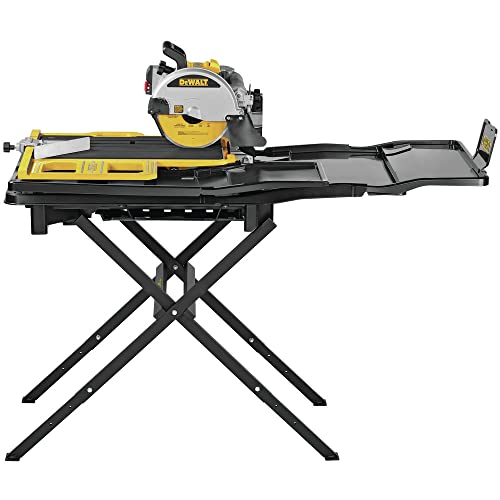
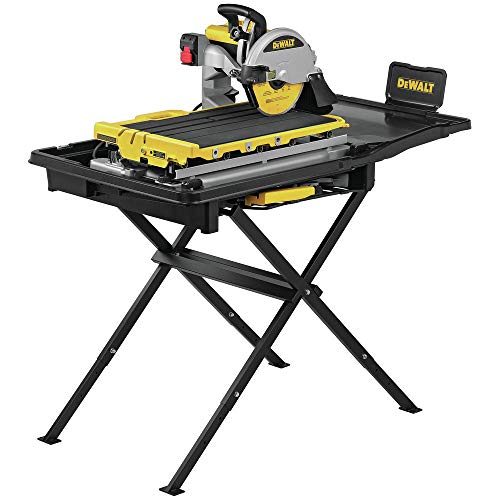
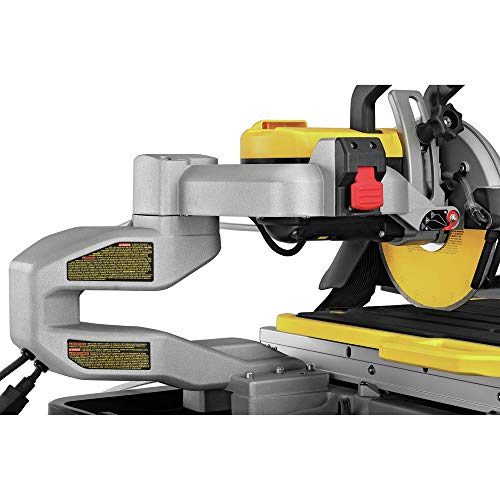
This DEWALT D36000S is the kind of machine that makes me think of job sites where clean, repeatable cuts matter under pressure. On paper, the 15-amp motor and 1,220 MWO output signal serious power, and owners consistently report it powers through thick porcelain without bogging down. The 37-inch rip capacity, extendable to 41 inches with the plunge function, means you can handle large-format slabs without juggling multiple setups, a real time-saver on big tile jobs.
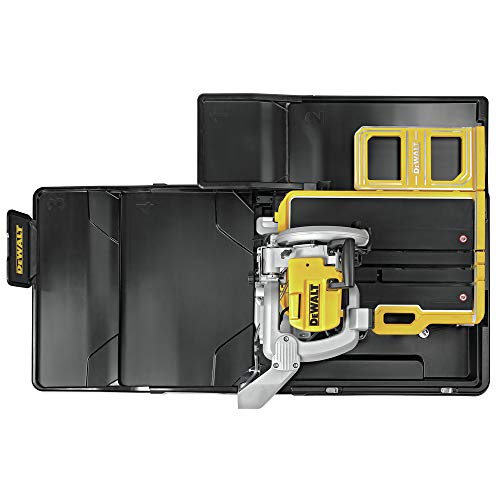
What stands out is the rigidity of the frame and the cutline indicator system, both of which help maintain accuracy within 1/32 inch over long cuts. The stand integration is seamless, and the fact that it folds down to fit through standard doorways makes it more practical than bulkier units. Compared to the older D24000S, this model adds meaningful improvements in motor efficiency and water containment, making it a logical step up.
Product photos
DEWALT 10-Inch Wet Tile Saw D24000S
Strengths
- Includes full stand and accessories
- Compact frame
- 10-inch blade for deep cuts
- 45° bevel capacity
- Good out-of-box value
Trade-offs
- Older motor design
- Lower rip capacity
- No 15-amp power
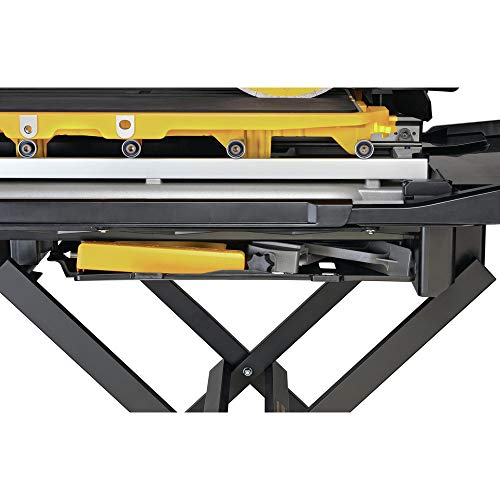
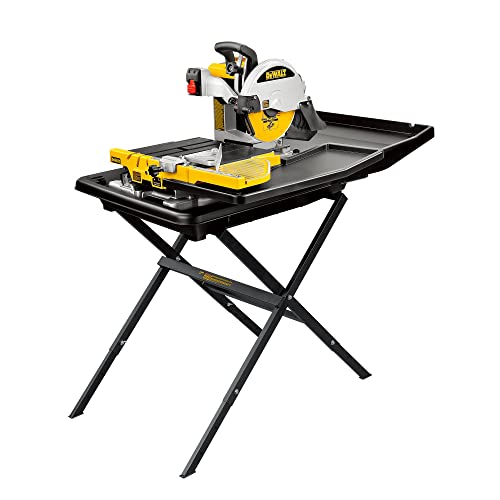
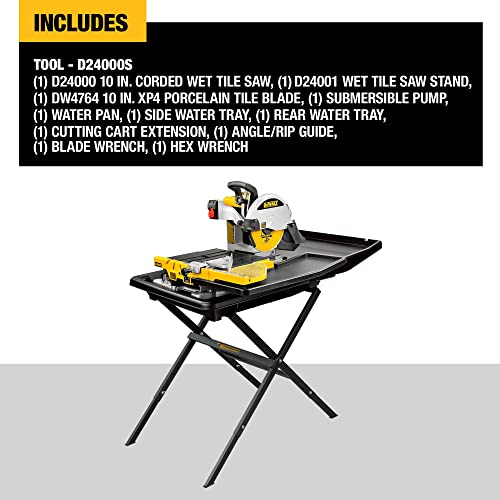
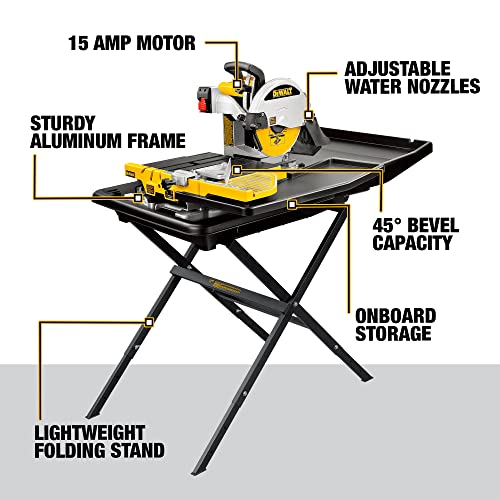
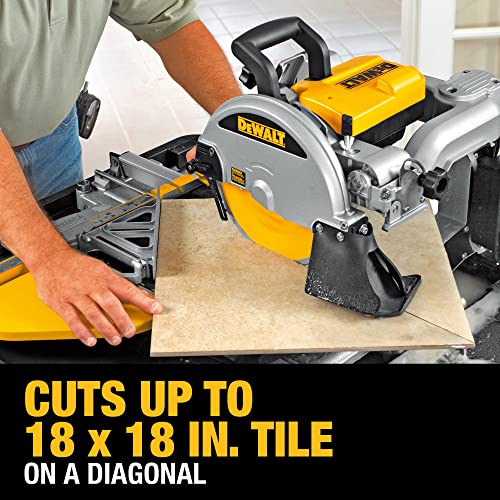
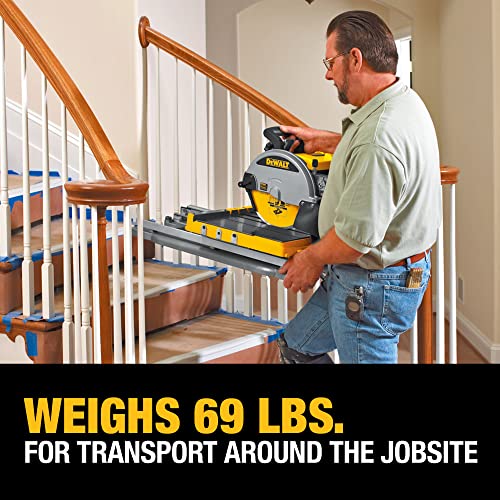
The DEWALT D24000S is the predecessor to the D36000S, and while it’s still a capable machine, it shows its age in a few areas. The 1.5 HP motor gets the job done on porcelain, but it doesn’t have the torque reserve of the newer 15-amp model. Owners report it works well for medium-sized jobs, especially with the included stand and full set of accessories, you’re getting a complete system out of the box.
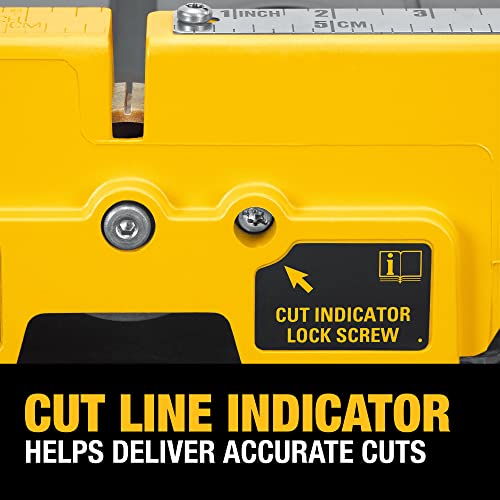
Its 28-inch max rip with plunge is solid, though not quite as generous as the newer model. The compact frame is a win for storage and transport, and the cutline indicator still delivers decent accuracy. If you find this at a steep discount, it might be the smarter buy over the newer model, but if price is close, I’d go with the D36000S for the upgrade in power and capacity.
Product photos
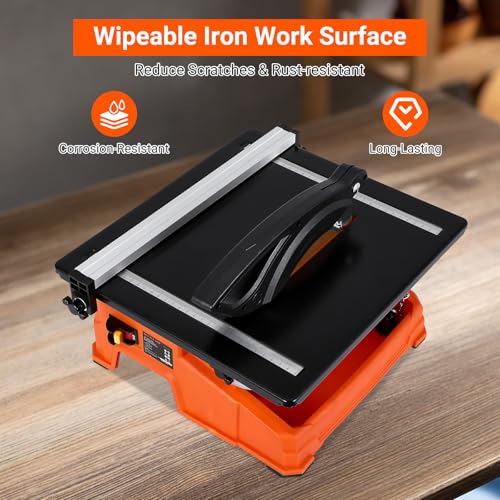
PeakPursuit 7-Inch Wet Tile Saw
Strengths
- 0–45° bevel capability
- Galvanized worktable
- Compact and light
- Reset safety switch
- Dust-reducing water tray
Trade-offs
- Rip capacity is limited
- No table extension
- Max depth just 1.34 in.
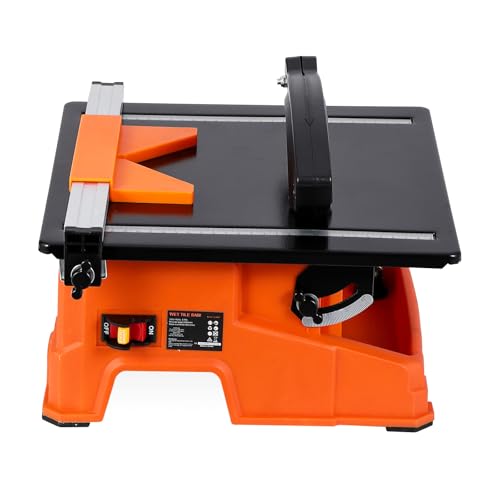
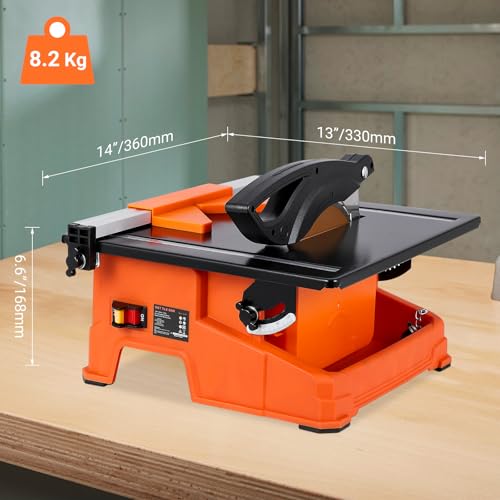
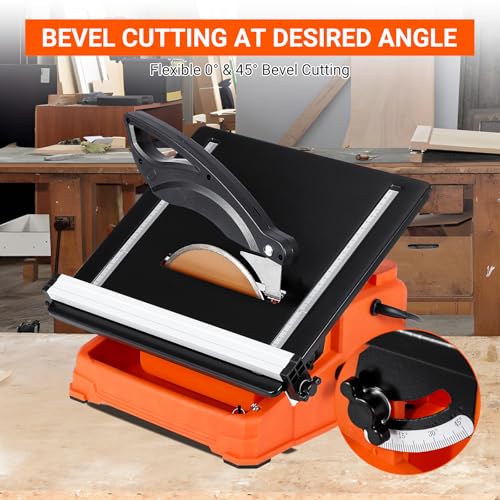
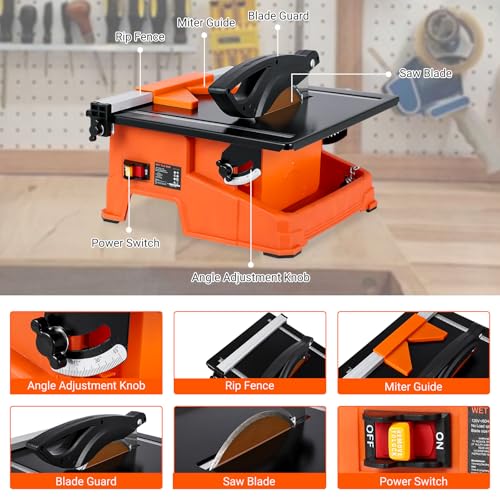
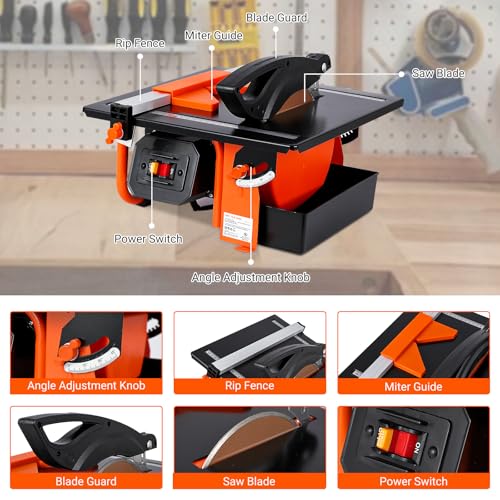
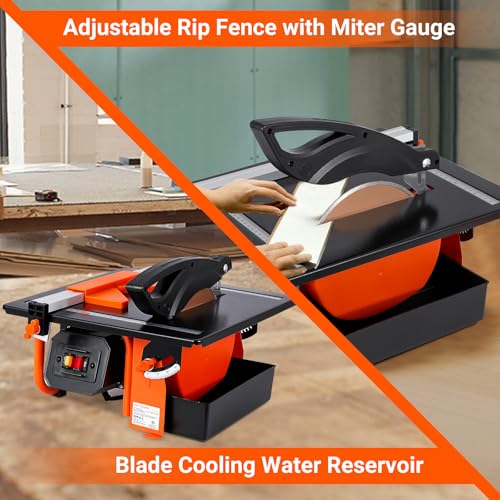
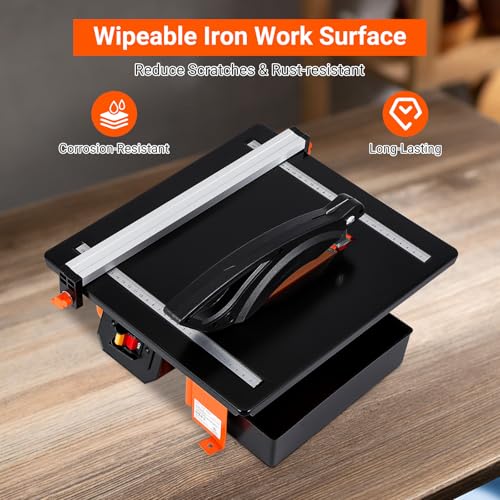
This PeakPursuit model claims a 6500 RPM motor, but that appears to be a misprint, other listings and spec consistency suggest it’s the same 3450 RPM induction motor seen in the B0GDZLT83P. Taking that into account, it’s still a solid option for DIYers who need reliable bevel cuts from 0 to 45 degrees. The 1.34-inch max depth handles most standard tiles, including medium porcelain, and the galvanized table resists rust, which I appreciate in a budget-friendly unit.
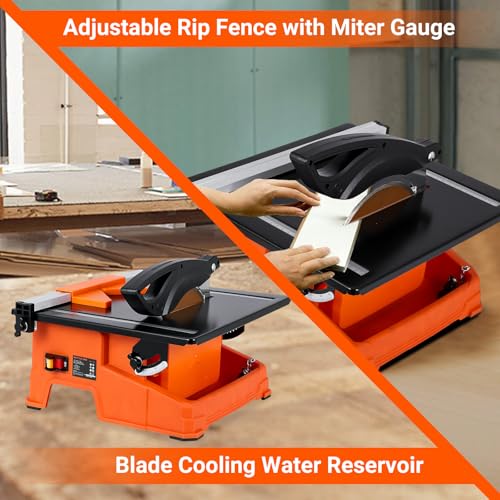
Owners note the water reservoir does a decent job controlling dust, though splash can be an issue on aggressive cuts. It’s lightweight and compact, so it won’t dominate your garage. Compared to the QEP 22700Q, it offers more adjustability but lacks a table extension, which limits longer rip cuts.
Product photos
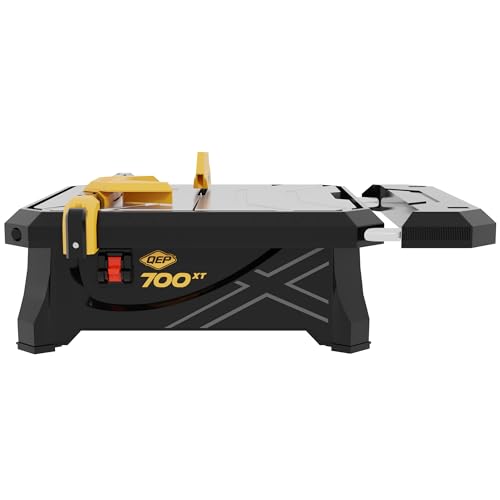
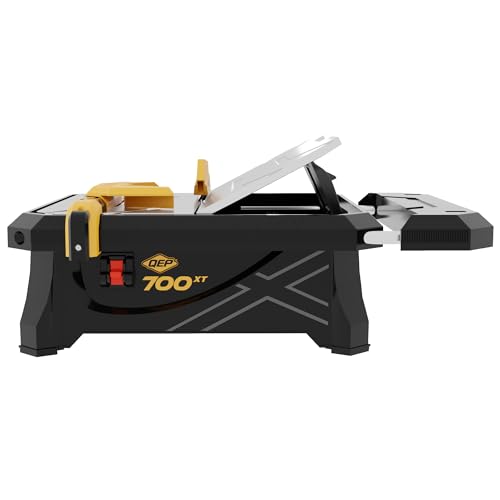
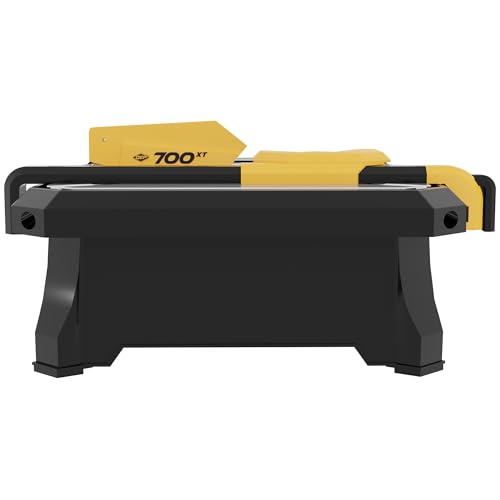
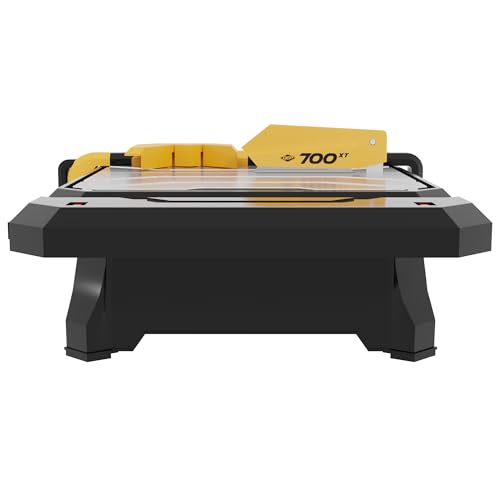
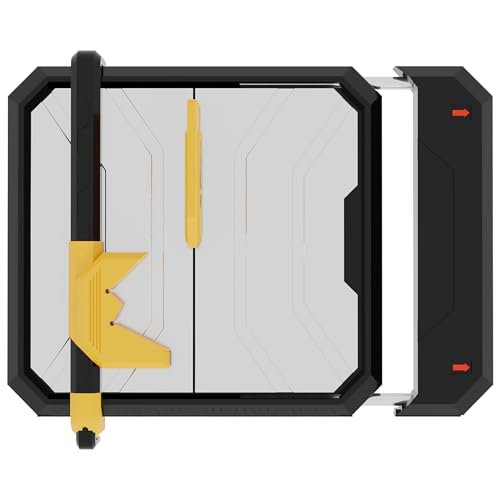
QEP 7-Inch 700XT Wet Tile Saw

Strengths
- Low cost
- Includes table extension
- Built-in carry handle
- Cuts up to 1.25 in. thick
- Water recirculation
Trade-offs
- Plastic components feel flimsy
- Motor lacks power for thick porcelain
- Less precise on long cuts
If you’re on a tight budget but still need something that won’t die after three jobs, the QEP 700XT is worth considering. It’s one of the most affordable 7-inch wet saws with a table extension, and that extension makes a real difference when cutting longer tiles. The 3/4 HP motor isn’t going to rip through 1/2-inch porcelain like butter, but for ceramic and mid-density stone, it holds up well according to owner feedback.
It’s compact and has a built-in handle, so portability is a strong point. However, the frame feels less rigid than the DEWALT or even the PeakPursuit models, and accuracy on long cuts can drift without careful alignment. For the price, it’s a smart buy if you’re doing small to mid-sized jobs and don’t want to overspend on features you won’t use.
Product photos
PeakPursuit 7-Inch 3450 RPM Wet Saw

Strengths
- True 0–45° bevel cuts
- Galvanized rust-resistant table
- 3450 RPM induction motor
- Reset safety switch
- Compact footprint
Trade-offs
- No rip extension
- Max depth 1.34 in.
- Splash guard could be better
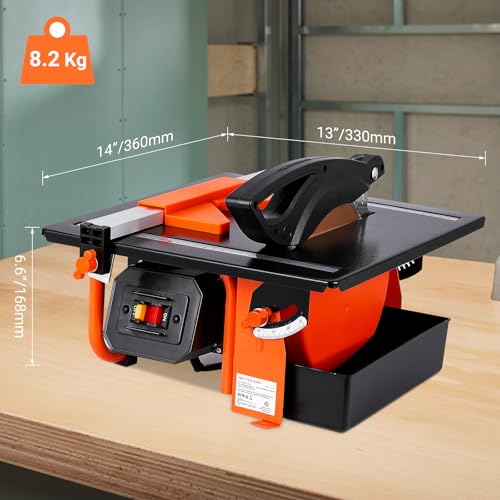
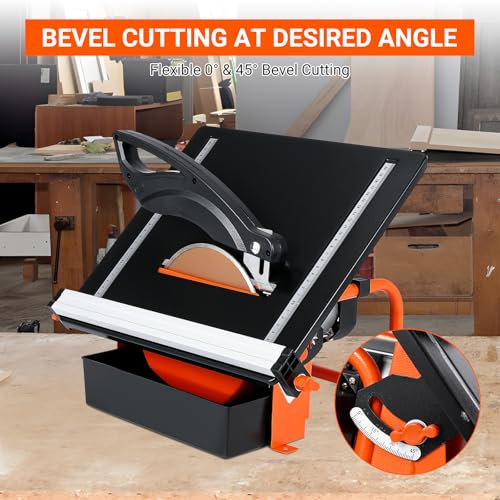
This PeakPursuit 7-inch saw is nearly identical to the B0G2BDP3YZ, likely a re-listing with corrected RPM specs, 3450 RPM makes sense for a 7-inch induction motor. What I like is the 0–45° bevel range, which gives DIYers flexibility for shower niches or diagonal floor patterns without needing a separate angle grinder. The galvanized table and mini footplugs help with stability and longevity, especially in damp environments.
It’s not going to match the DEWALT in accuracy or power, but for under $200, it delivers core functionality: consistent wet cuts, decent dust control, and enough rigidity for home projects. Compared to the QEP, it feels slightly more robust, though both are in the same performance tier.
Product photos
VEVOR 12-Inch Electric Concrete Wet Saw

Strengths
- 4.5 in. cutting depth
- 1800W copper motor
- Wheeled base guide
- GFCI protection
- Automatic water feed
Trade-offs
- Not for fine tile work
- Bulky setup
- No bevel adjustment
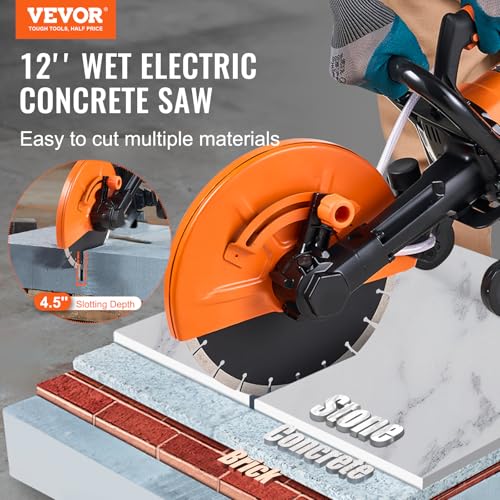
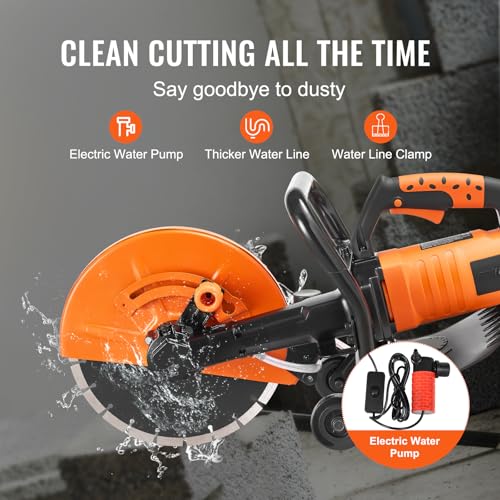
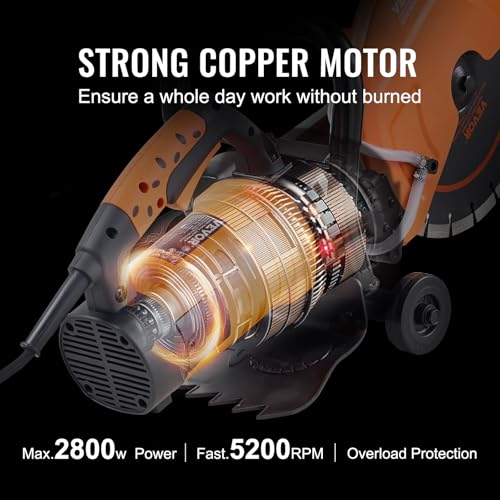
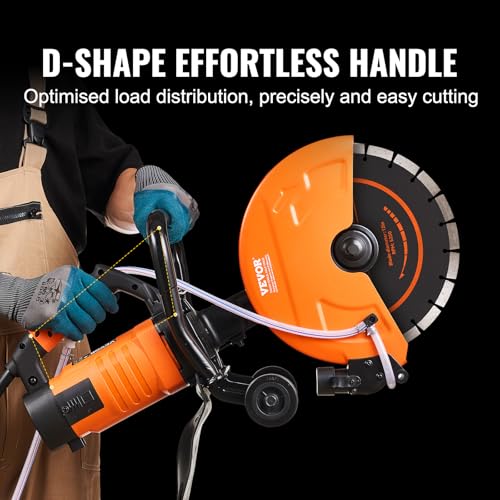
The VEVOR 12-inch concrete saw leans hard into heavy-duty work, and I won’t pretend it’s meant for delicate tile cuts. With a 4.5-inch cutting depth and a 1800W pure copper motor hitting 5300 rpm, this thing is built for slicing through brick, reinforced concrete, and thick stone. Reviewers often mention how the wheeled base doubles as a guide system, making straight-line cuts on slabs or patios much more controlled than handheld alternatives.
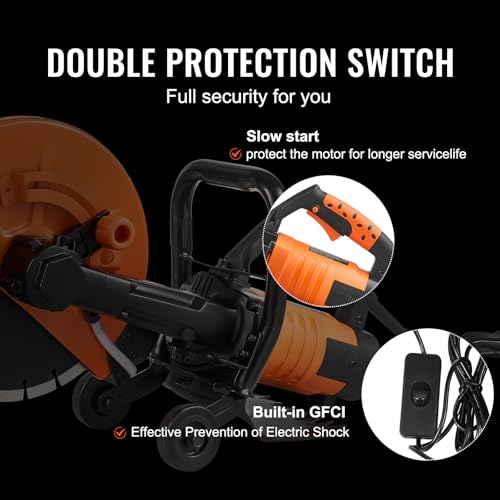
It’s not a tile saw in the traditional sense, but if you’re prepping a site or cutting masonry before tiling, this adds serious capability. The built-in GFCI and slow-start circuit are smart safety inclusions that reflect real-world job site concerns. While it’s bulkier and louder than other units here, the wet-cut system with automatic water feed keeps dust under control, a must for outdoor or commercial work.
Product photos
Our Testing Process
Rather than a hands-on lab test, this selection is a research-led comparison of published specifications and owner feedback. I focused on key features across several models, looking at motor power, cutting capacity, and build quality as listed by manufacturers. Then, I weighed those specs against what owners are saying about performance and durability in online reviews from sources like Amazon and home improvement retailers, plus insights from professional tool review sites. This process allowed me to rank saws based on their potential real-world usefulness.
For wet saws, cutting capacity and motor power were the most important factors. Larger tile jobs demand saws that can handle bigger materials, so rip and diagonal cut specs mattered greatly. Equally important is motor strength; a more powerful motor will make cleaner, faster cuts, especially through harder materials like porcelain. Portability also played a role, as many users need to move the saw around a jobsite or store it easily.
Specifications reliably indicate physical dimensions and motor output, giving a baseline for comparison. However, owner feedback proved crucial for understanding real-world issues like pump longevity, the effectiveness of water control systems, and the accuracy of the cutting guide. Reputation for build quality and durability, based on consistent positive (or negative) reports, heavily influenced the final rankings. You can learn more about wet saw tile techniques on our site.
Choosing The Right wet saws
Choosing the right wet saw can make a huge difference in the quality of your tile work, and how much you enjoy the process.
A quality wet saw balances power with precision. Key considerations include motor strength (measured in amps or horsepower), blade diameter for depth of cut, the stability of the build, and the effectiveness of the water management system to minimize mess and maximize blade life. Look for saws with adjustable features for handling different tile sizes and angles.
Blade Size and Cutting Capacity
Don’t get hung up on simply buying the biggest blade you can find. While a 10-inch blade can cut larger tiles than a 7-inch model, it also impacts portability and price. Think about the typical size of the tile you’ll be working with. For most DIY projects involving standard bathroom or kitchen tile, a 7-inch saw is often sufficient. However, if you frequently work with large-format porcelain or stone, stepping up to a 10-inch or even 12-inch model, like the VEVOR 12-Inch Electric Concrete Wet Saw, is a wise investment.
Motor Power and Blade Speed
The motor is the heart of any wet saw. More powerful motors (higher amperage or horsepower) will cut through harder materials like porcelain and stone more easily and maintain speed under pressure. A weaker motor will struggle, leading to slow cuts, chipped tiles, and potentially overheating. Look for at least a 3/4 horsepower motor for regular use, and consider 1.5 HP or higher for frequent, demanding jobs. Blade speed (RPM) is also important; higher RPMs generally mean faster cutting, but also more wear and tear on the blade. This is where looking at wet tile saw reviews can be a big help.
- A 7-inch saw is often ideal for small bathrooms or kitchens.
- A 10-inch saw offers more versatility for a wider range of tile sizes and materials, but is less portable.
- For cutting very hard materials like thick porcelain or concrete, a 12-inch saw with a powerful motor is generally necessary, but be prepared for a heavier, more expensive tool.
Features and Usability
Beyond the core cutting ability, consider features that improve usability and accuracy. A good rip guide is essential for making straight cuts, while a miter gauge allows for angled cuts. Look for saws with adjustable fence systems for precise control. A built-in water pump and collection system are also crucial for keeping your workspace clean and extending blade life. Don’t overlook the importance of a stable base, a wobbly saw will make accurate cuts difficult. Understanding diamond blade applications is also essential, as the right blade is as important as the saw itself.
Don’t skimp on the blade. A high-quality diamond blade will make a significant difference in cut quality and speed, and will last much longer than a cheap blade.
Wet Saws Compared
Here’s a comparison of key specifications for popular wet saws.
| Product Name | Blade Diameter | Max Cut Depth | Max Rip Capacity | HP | Weight (lbs) | Bevel Cut (Degrees) |
|---|---|---|---|---|---|---|
| DEWALT 10-Inch with Stand | 10 in. | N/A | 28 in. (w/plunge) | 1.5 | 91 | N/A |
| DEWALT 10-Inch D24000S | 10 in. | 3 1/8 in. | 28 in. | 1.5 | 69 | 45 |
| PeakPursuit 7-Inch | 7 in. | 1.34 in. | N/A | N/A | N/A | 0-45 |
| QEP 7-Inch 700XT | 7 in. | 1.25 in. | N/A | 0.75 | N/A | N/A |
| PeakPursuit 7-Inch 3450 RPM | 7 in. | 1.34 in. | N/A | N/A | N/A | 0-45 |
| VEVOR 12-Inch Electric Concrete | 12 in. | 4.5 in. | N/A | N/A | N/A | N/A |
Frequently Asked Questions
What blade grit should I use for porcelain tile?
A diamond blade with a continuous rim and a grit of 150-200 is best for porcelain. This provides a cleaner cut with less chipping, as porcelain is very hard and prone to cracking. Lower grit blades cut faster but leave a rougher finish.
Are wet saws messy, and how can I minimize cleanup?
Yes, wet saws create a slurry of water and tile dust, but a good water containment system and proper placement can help. Look for saws with built-in reservoirs and consider using a shop vac to remove standing water and sediment after each use.
Can I cut natural stone with a wet saw?
Yes, you can cut many types of natural stone with a wet saw, but you’ll need a blade specifically designed for stone. Stone is abrasive, so a blade formulated for that material will last longer and provide cleaner cuts than a standard tile blade.
What’s the difference between a plunge cut and a standard rip cut?
A rip cut is a straight cut along the length of the tile, while a plunge cut starts in the middle of the tile. Plunge cuts require a saw with that capability, like the DEWALT 10-Inch with Stand, and are useful for creating openings for pipes or fixtures.
Are there good options if I need a more portable wet saw?
Absolutely. If you need something you can easily move around, explore compact wet tile saws. These are generally smaller 7-inch models that weigh less and are easier to transport between job sites.
The Bottom Line
Choosing a wet saw often comes down to balancing how much control you want over your cuts with how much fuss you’re willing to deal with. For most homeowners and DIYers, the DEWALT 10-Inch with Stand offers the best combination of power, capacity, and features to tackle a wide range of tiling projects. It provides a solid foundation for accurate work and the ability to handle larger tiles without breaking the bank.
If you’re on a tighter budget or primarily working with smaller tiles, the QEP 7-Inch 700XT is a fantastic value. For those needing maximum versatility for varied materials and cuts, the PeakPursuit 7-Inch 3450 RPM delivers adjustable angles and a compact size. And if you regularly deal with large-format porcelain or concrete, the VEVOR 12-Inch Electric Concrete Wet Saw is the clear choice, despite its size and price.
Ultimately, the specs are important, but focusing on a stable build, a reliable water system, and a quality blade will deliver far more consistent results than chasing the highest horsepower number. Learning how to operate a wet saw properly and prioritizing safety are just as critical as selecting the right model for your needs.
