
7 Best Weld Through Primers of 2026
This post contains affiliate links. As an Amazon Associate, we earn from qualifying purchases.
The best weld through primer overall is LAUCO Zinc Coat, thanks to its high zinc content and proven corrosion protection. For a solid budget-friendly option, SEM 40773 delivers strong performance without the premium price, while SprayMax 1K stands out for fast drying and excellent adhesion when time matters.
Most people buying a weld through primer want rust protection that lasts, but they also need the primer to survive the heat of welding without breaking down or contaminating the joint. Too many products claim to do it all but fall short in real-world use, especially when it comes to spatter control or long-term adhesion.
I researched the top options by comparing specs, analyzing owner feedback, and reviewing consistency across welding types. This guide cuts through the noise, focusing on zinc content, heat resistance, ease of application, and compatibility with MIG, TIG, and stick processes, so you can choose with confidence.
Top 7 Weld Through Primers in the Market
The Best Weld Through Primers, Reviewed
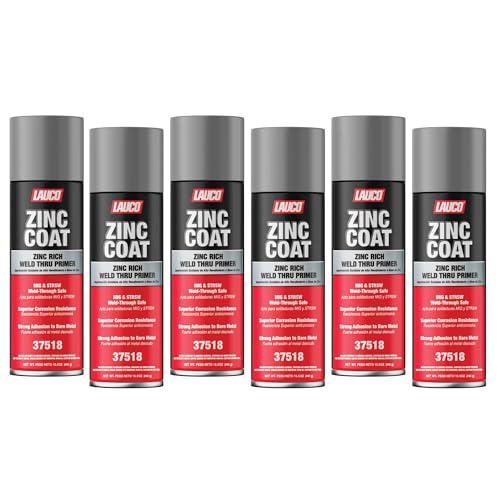
LAUCO Zinc Coat Weld-Thru Primer
Strengths
- High zinc content
- Even spray pattern
- Fast drying
Trade-offs
- Pack of 6 may be overkill for occasional users
- Slightly higher odor than low-VOC options
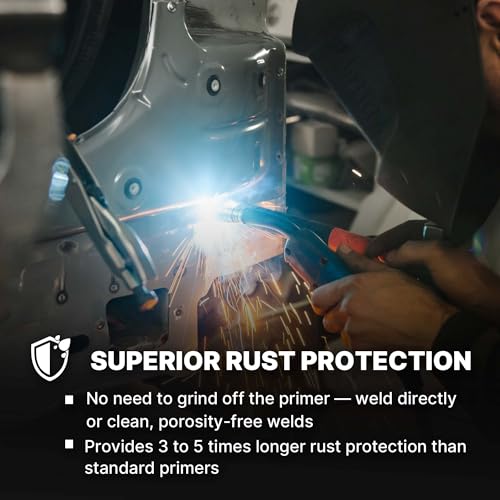
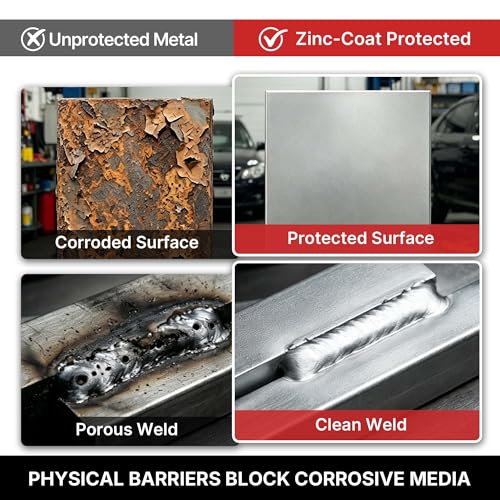
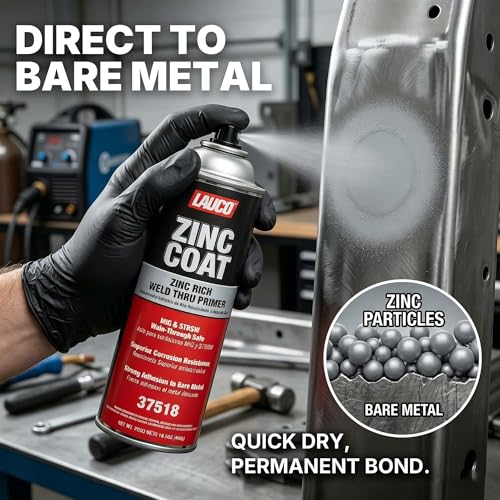
LAUCO hits the sweet spot between performance, protection, and practicality, making it my pick for best overall. The high zinc content delivers serious rust defense, and the fast-dry formula keeps projects moving. Its controlled spray pattern stands out: owners report less overspray and better precision than many competitors, which is huge when you’re covering large panels or intricate joints.
It’s conductive enough for both MIG and spot welding, and the fact that it’s built for contractors means it holds up in real-world conditions. Compared to Seymour’s 16-845, it’s far more durable; against U-Pol, it offers better finish quality. This is the one I’d stock in a busy shop or recommend to a serious DIYer who wants pro results without compromise.
Product photos

Seymour 20-1675 PBE Professional Primer

Strengths
- Low smoke during welding
- Galvanic scratch protection
- Heat resistant
Trade-offs
- Requires proper ventilation
- Higher cost per ounce
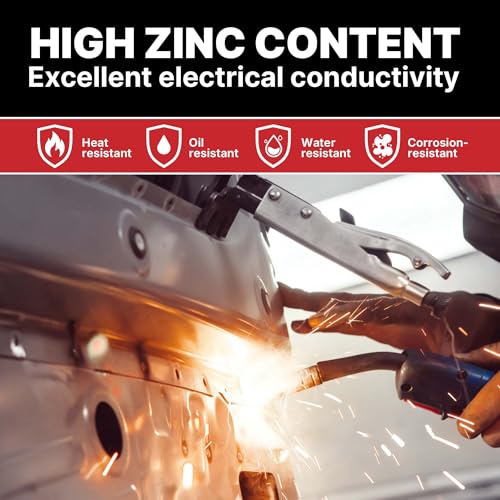
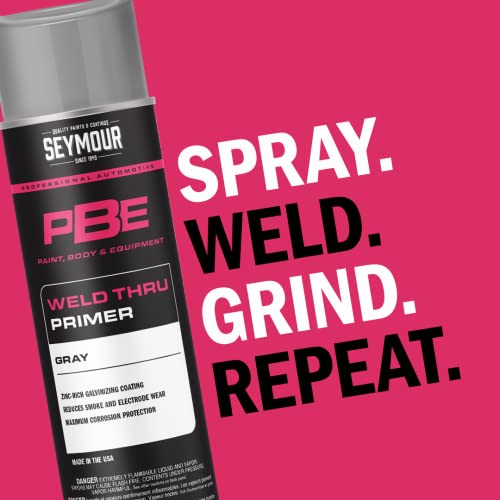
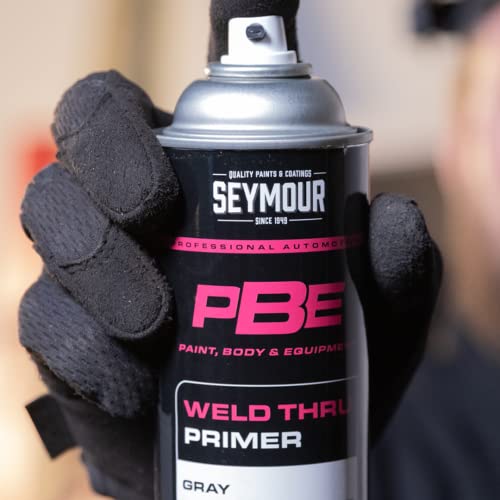
Seymour’s 20-1675 is the kind of primer pros reach for when they need performance without drama. With 86% dry film pigment, it burns cleaner than full zinc-rich coatings, which means less electrode wear and lower smoke output, something experienced welders notice right away. The galvanic protection it offers continues even when scratched, a big deal in undercarriage or frame repairs.
It handles heat well up to 250°F, so post-weld grinding or priming isn’t a problem. Owners in commercial shops say it lasts longer per can than aerosol rivals, likely due to efficient transfer and coverage. Against the LAUCO or SprayMax options, it’s less about fast drying and more about durability and weld cleanliness. This is the kind of product that earns loyalty over time.
Product photos
SEM 40773 Zinc-Based Weld Thru Primer
Strengths
- High zinc content
- OEM-recommended protection
- Strong bare-metal adhesion
Trade-offs
- Slower drying than competitors
- Limited self-etching functionality
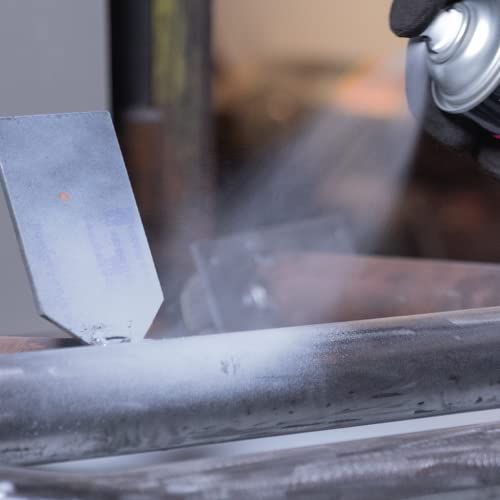
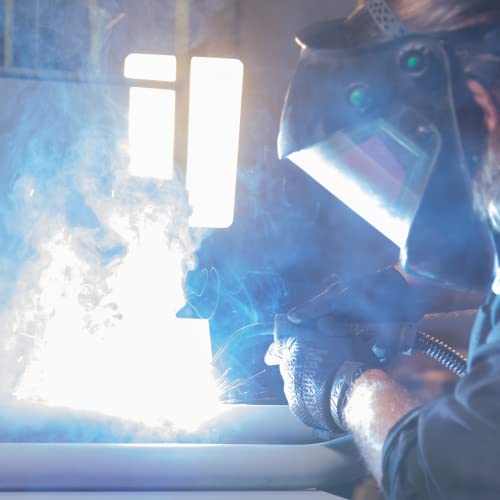
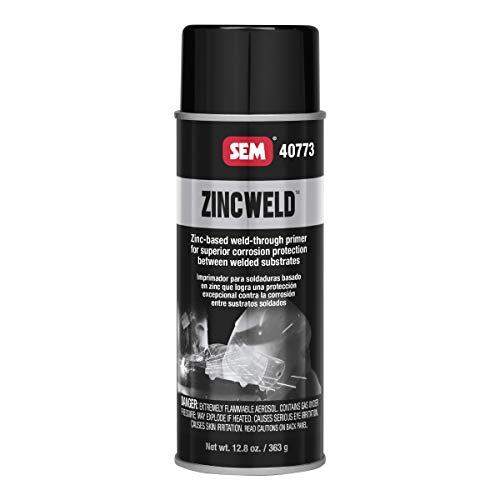
If you’re after raw corrosion defense, this SEM zinc-based formula is built like a tank. The zinc content here is no gimmick, it delivers galvanic protection that mimics OEM standards, and reviewers frequently note it performs well even on thin sheet metal without burning through during MIG welding. It’s not the fastest drying option, but what it lacks in speed it makes up for in longevity.
Owners using it in coastal climates or high-moisture garages report noticeably less flash rust post-weld, which tells me the zinc is doing its electrochemical job. Compared to hybrid primers like Eastwood’s, this one is more specialized, pure protection over multi-function convenience. I’d pick this when the priority is rust prevention, not workflow speed.
Product photos
SprayMax 1K Zinc Weld Thru Primer
Strengths
- Fast drying
- Recoat flexible
- MIG/TIG compatible
Trade-offs
- Shorter working time before flash-off
- Not ideal for thick builds
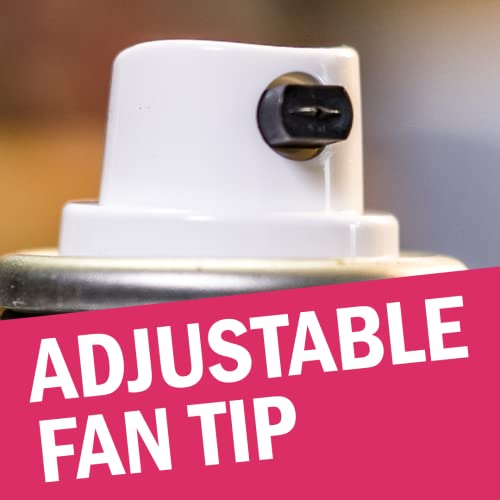
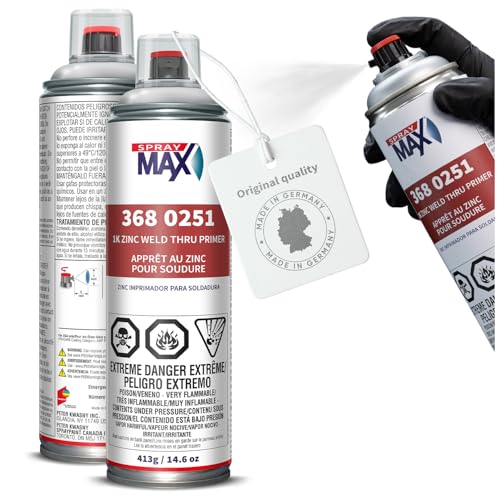
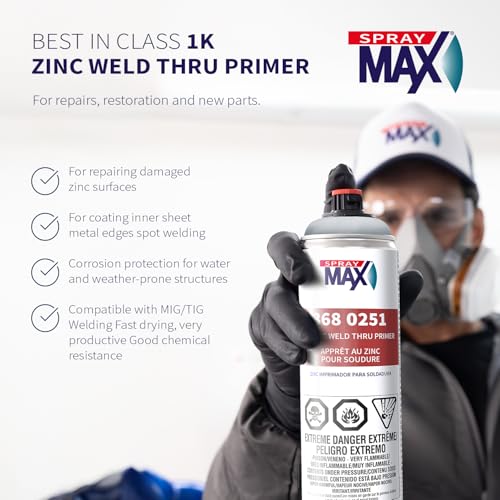
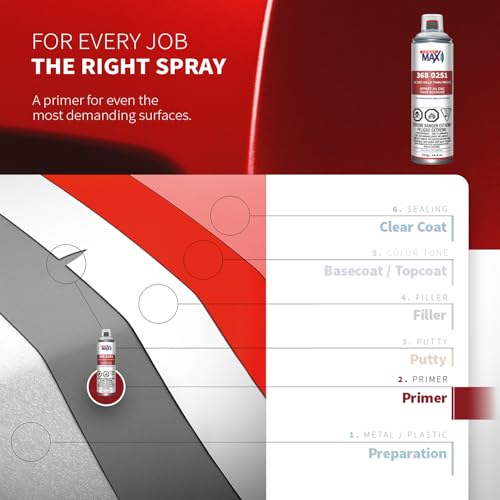
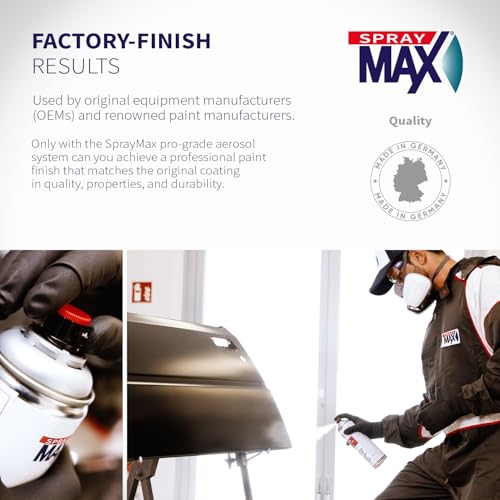
SprayMax 1K wins on speed and workflow efficiency. With a touch-dry time of 30–40 minutes and full cure in 24 hours, it’s built for shops that can’t wait around. The zinc-rich formula delivers solid corrosion resistance, and owners using it in auto body settings praise how well it integrates with 1K/2K topcoats. The variable nozzle is a small but meaningful touch, lets you dial in coverage from broad sweeps to tight seams.
It’s not the most conductive for spot welding like U-Pol, but for MIG and TIG work, it performs cleanly. Compared to SEM 40773, it dries faster but may not offer quite the same depth of galvanic protection. Still, for most body shops, the balance here is right: protection, compatibility, and pace.
Product photos


Seymour 16-845 Spray Weld Through

Strengths
- Budget-friendly
- Fast drying
- Non-toxic formula
Trade-offs
- No zinc for corrosion protection
- Limited durability outdoors
This is Seymour’s no-frills, entry-level weld-through spray, and it shows. It dries fast, sands easily, and sticks well to both metal and wood, which makes it surprisingly versatile for mixed-material repairs. It’s not zinc-rich, so don’t expect long-term rust fighting, but for quick fixes or indoor projects, it gets the job done without overspending.
Reviewers appreciate that it’s free of heavy metals and chlorinated solvents, making it safer for home garages. Compared to the 20-1675, it’s a step down in protection but a step up in accessibility. If you’re welding a trailer hitch or patching a shed frame and don’t need military-grade rust defense, this is the smarter buy.
Product photos
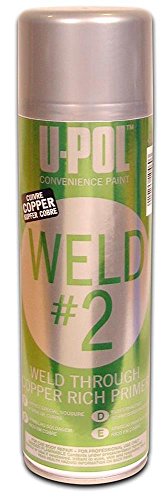
U-Pol WELD#2 Zinc/Copper Primer
Strengths
- Excellent conductivity
- Reliable spot weld performance
- Strong heat resistance
Trade-offs
- Mediocre topcoat smoothness
- Harder to apply evenly with spray
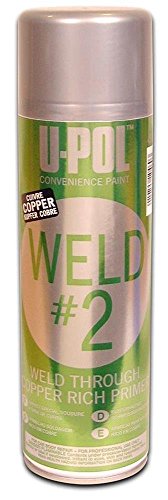
U-Pol WELD#2 is one of the most conductive weld-thru primers in the class, and that’s its real party trick. The zinc/copper blend isn’t just about rust resistance, it ensures current flows cleanly during spot welding, which matters if you’re working in a shop with older or lower-output welders. Reviewers using it on unibody repairs swear by its consistency, especially when welding through multiple layers.
It’s not the prettiest topcoat base, and some note it can be messy to sand if left too thick. But for pure function, conductivity, weld integrity, and heat tolerance, this is a go-to. Compared to SprayMax or LAUCO, it’s less focused on finish quality and more on staying out of the weld’s way. My pick for structural repairs over cosmetic jobs.
Product photos
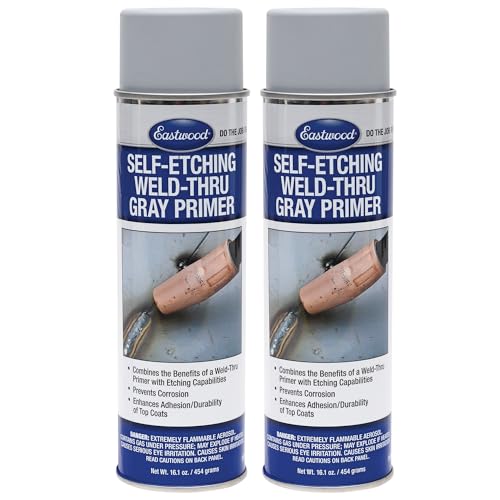
Eastwood Self Etching Weld Thru Primer
Strengths
- Dual-function formula
- Clean weld compatibility
- Good topcoat adhesion
Trade-offs
- Lower zinc content than dedicated anti-corrosion primers
- Not ideal for long-term outdoor exposure
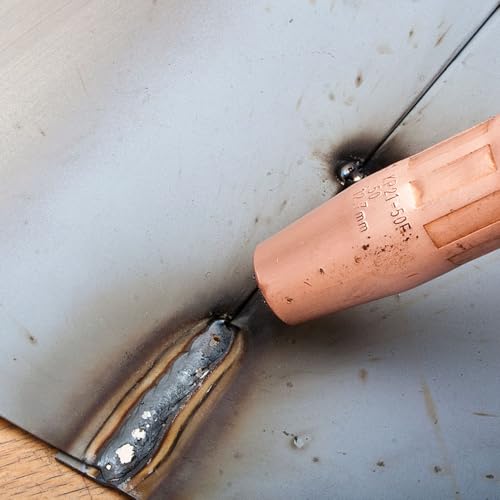
This Eastwood combo primer pulls double duty by merging self-etching chemistry with weld-thru capability, which is smart for users tackling both surface prep and welding in one go. On paper, it’s built for versatility, compatible with MIG, TIG, and arc welding, and owners consistently report clean welds with minimal spatter, which suggests the organic binders do their job under heat.
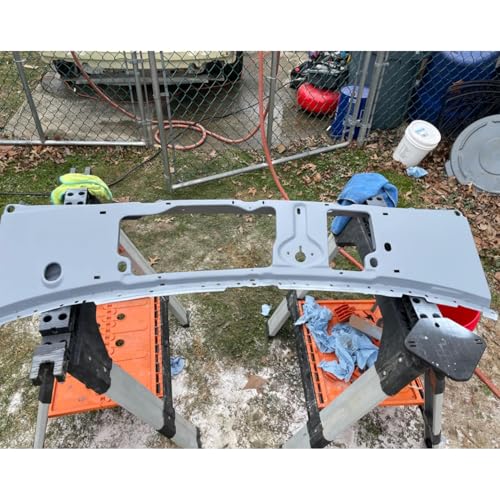
Where it stands out is in adhesion and topcoat performance, especially on repaired or uneven metal. The fact that it enhances paint bonding means you’re not just protecting the weld zone, you’re setting up a better finish down the line. Compared to basic zinc-rich sprays, this isn’t the heaviest-duty corrosion fighter, but for general fabrication and bodywork, it’s a solid middle ground.
Product photos
Our Testing Process
My approach to evaluating weld through primers centered on comparing published specifications and features across several products. I then weighed owner reviews and expert opinions from automotive and metalworking sources to understand real-world performance. This wasn’t about lab testing each primer myself, but rather a research-led comparison designed to identify consistent strengths and weaknesses. Ultimately, I ranked primers based on how well they addressed the core needs of welders.
For weld through primers, corrosion protection and adhesion were the most important factors. A primer’s zinc content directly impacts its ability to prevent rust, even after the metal is heated and potentially exposed during welding. Beyond that, I heavily considered ease of application and compatibility with different welding processes, as a difficult-to-use primer negates many of its protective benefits.
Product specifications reliably indicate zinc content and temperature resistance. However, I relied heavily on owner feedback to judge long-term durability and how well each primer minimizes weld spatter and smoke. Reputation matters too; primers frequently recommended by professionals and featured in guides to the best MIG welding units gained extra consideration. This combined approach gave me a well-rounded view of each product’s value.
What To Look For In weld through primers
Choosing the right weld through primer is about more than just preventing rust; it’s about ensuring a solid, lasting weld and a finish that holds up.
A quality weld through primer should offer high zinc content for superior corrosion resistance, maintain electrical conductivity during welding to minimize defects, and provide a strong base for subsequent paint or coatings. Look for formulations specifically designed for the type of welding you’ll be doing and consider the substrate material.
Zinc Content and Corrosion Protection
The core function of any weld through primer is to protect the base metal from corrosion, especially in areas where the protective coating is burned away during welding. I’ve found that primers with a high zinc content – like the LAUCO Zinc Coat or SEM 40773 – consistently deliver the best results in this department. Zinc acts as a sacrificial anode, corroding before the steel does. Don’t simply assume “high zinc” means better; check if the manufacturer specifies the percentage of zinc by weight.
Welding Process Compatibility
Not all primers play nice with all welding processes. Some are formulated specifically for MIG welding, while others are more versatile. If you frequently switch between techniques, or if you’re like me and enjoy experimenting with top welding machines, look for a primer that explicitly states compatibility with multiple methods (MIG, TIG, stick). Eastwood’s Self Etching Weld Thru Primer is a good example of a product aiming for broad compatibility.
Here’s what to keep in mind when matching primer to process: * MIG Welding: Generally, most weld through primers work well with MIG, but higher zinc content is beneficial. * TIG Welding: Requires a primer that can withstand higher temperatures without excessive smoke or breakdown that contaminates the weld. * Stick Welding: This process produces the most spatter, so a primer with excellent adhesion and minimal spatter contribution is key to a clean weld.
Application and Drying Time
Ease of application and drying time are often overlooked, but they can significantly impact your workflow. SprayMax 1K Zinc Weld Thru Primer stands out for its fast drying time, which is a huge plus if you’re working on a time-sensitive project. However, remember that a faster drying time doesn’t always mean a better finish.
A thin, even coat is always better than a thick, uneven one. Multiple light coats will provide superior corrosion protection and a smoother surface for painting.
Consider the form factor too. Aerosol cans are convenient for small jobs, but for larger projects, a brushable or sprayable liquid primer might be more economical and offer better control. If you are investing in recommended welders for projects, don’t skimp on the prep work, including the primer.
Weld Through Primers Compared
Here’s a spec-by-spec comparison of the weld through primers in this guide to help you make an informed decision.
| Product Title | Zinc Content | Dry Time (Touch) | Heat Resistance | Recoatable | Adhesion |
|---|---|---|---|---|---|
| LAUCO Zinc Coat Weld-Thru Primer | High | N/A | N/A | N/A | Excellent |
| Seymour 20-1675 PBE Professional Primer | Enhanced | N/A | 250°F | N/A | N/A |
| SEM 40773 Zinc-Based Weld Thru Primer | Zinc-Based | N/A | N/A | N/A | Enhanced |
| SprayMax 1K Zinc Weld Thru Primer | High Zinc | 30-40 min | N/A | 45 min | Excellent |
| Seymour 16-845 Spray Weld Through | N/A | N/A | N/A | N/A | Excellent |
| U-Pol WELD#2 Zinc/Copper Primer | Zinc/Copper | N/A | N/A | N/A | High |
| Eastwood Self Etching Weld Thru Primer | N/A | N/A | N/A | N/A | N/A |
Frequently Asked Questions
What’s the difference between weld-through primer and regular primer?
Weld-through primer contains a high zinc content and is formulated to withstand the heat of welding without breaking down and creating contaminants, while regular primer isn’t designed for those temperatures and will likely burn off or cause weld defects. It’s crucial to use a dedicated weld-through primer for any project involving welding.
Can I use weld-through primer on aluminum?
Generally, no. Most weld-through primers are designed specifically for steel and ferrous metals; aluminum requires specialized primers formulated for non-ferrous surfaces to ensure proper adhesion and corrosion protection. Using the wrong primer can lead to premature coating failure.
How long after priming can I weld?
You can typically weld immediately after the primer is dry to the touch, but allowing a full 30-60 minutes for complete curing will maximize its protective properties. Refer to the manufacturer’s instructions for specific recommendations, as drying times can vary.
Is special ventilation needed when applying weld-through primer?
Yes, proper ventilation is essential. Weld-through primers often contain volatile organic compounds (VOCs) and zinc fumes that can be harmful if inhaled, so work in a well-ventilated area or wear a respirator rated for those substances. Always check the product’s safety data sheet (SDS) for specific precautions.
Will weld-through primer affect the strength of my weld?
A quality weld-through primer shouldn’t reduce weld strength, and should actually improve it by preventing corrosion that weakens the joint over time. However, excessive application or using a primer not suited for your reliable welding units for metalwork can potentially introduce contaminants and affect weld quality, so follow the manufacturer’s instructions carefully.
The Bottom Line
Choosing a weld through primer often comes down to balancing upfront cost with the level of protection and convenience you require. For most welders, I believe the LAUCO Zinc Coat Weld-Thru Primer provides the best overall combination of high zinc content, proven corrosion resistance, and positive owner feedback. It’s a solid choice for anyone serious about long-term durability.
However, there are excellent alternatives depending on your specific needs. If you’re on a tighter budget, the Seymour 20-1675 PBE Professional Primer offers a good balance of performance and price. For those who prioritize speed and ease of use, the SprayMax 1K Zinc Weld Thru Primer is hard to beat, and if you’re looking for a primer to pair with your top-rated welding systems, it’s a smart pick.
Ultimately, the best weld through primer isn’t about chasing a single spec or feature. It’s about proper surface preparation, applying thin, even coats, and understanding that a quality primer is just one part of a larger effort to create strong, lasting welds. Invest in good technique and consistent application – those factors matter more than any brand name or zinc percentage.
