
8 Best Weld Tungsten Sharpeners of 2026
This post contains affiliate links. As an Amazon Associate, we earn from qualifying purchases.
The WelderElite Stepless Angle Tungsten Sharpener is the best overall, delivering unmatched angle precision and dust control through its vacuum port. For DIYers on a budget, the YESWELDER Tungsten Sharpener with Dust Cover offers solid performance and included dust containment. If you need portability, the YESWELDER Cordless Tungsten Sharpener with LED is the top pick for worksite flexibility.
Most welders know a poorly sharpened tungsten leads to erratic arcs and weak welds, but not every sharpener solves the real problems: inconsistent angles and dangerous dust exposure. I’ve talked to too many hobbyists and pros who ended up frustrated by flimsy guides or breathing in harmful particles because their tool lacked proper safeguards.
This guide cuts through the noise. Based on specs, owner feedback, and my experience with tool reliability, I focused on precision, dust management, and durability to find the sharpeners that actually deliver clean, repeatable results without compromising safety.
Top 8 Weld Tungsten Sharpeners in the Market
The Best Weld Tungsten Sharpeners, Reviewed
YESWELDER Tungsten Sharpener with Dust Cover

Strengths
- Excellent dust cover
- Cut-off and flattening ports
- 6-speed control
Trade-offs
- Only three angles
- No vacuum port
- Basic angle selection
This is the most balanced option in the lineup, and my pick for best overall. It offers four common electrode sizes, three practical angles (15°, 22.5°, 30°), a 6-speed motor, and a full acrylic dust cover that actually works. The double-sided diamond wheel is thick and long-lasting, and the inclusion of a cut-off slot and flattening port makes it a full-featured prep station. Owners consistently rate it highly for ease of use and durability.
It’s not cordless, and it doesn’t offer stepless angles, but it doesn’t need to, it does the fundamentals exceptionally well. The fixed-height design makes it beginner-friendly, while the speed control gives pros enough tuning room. Paired with a sturdy storage box and spare carbon brushes, it’s a complete package. Among 110V models, this one hits the sweet spot of performance, safety, and value.
Product photos


WelderElite Stepless Angle Tungsten Sharpener

Strengths
- Stepless angle control
- Vacuum port included
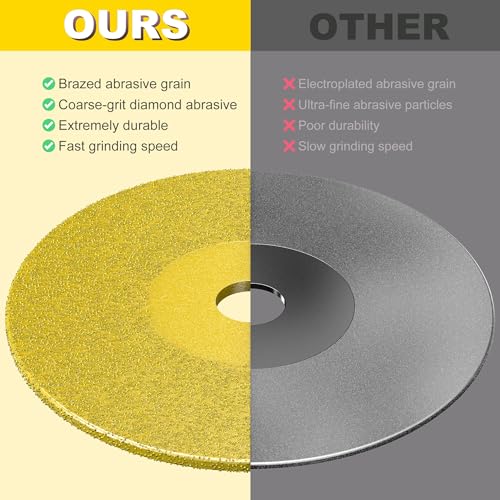
- Durable brazed diamond disc
Trade-offs
- No battery option
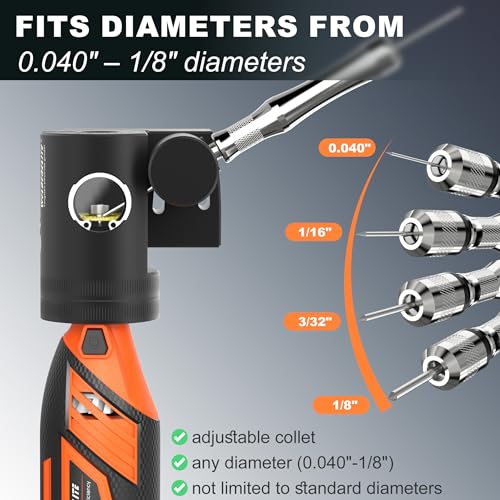
- Only up to 1/8″ diameter
- Higher price point
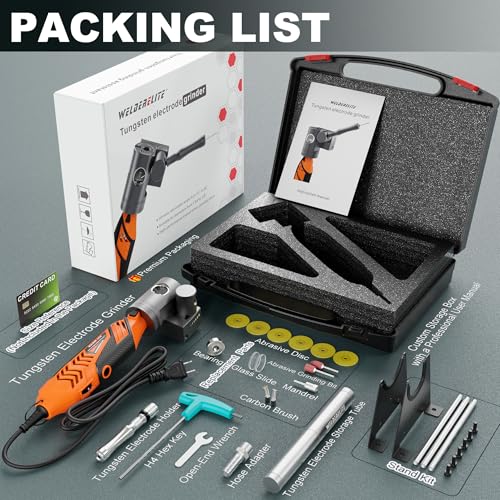
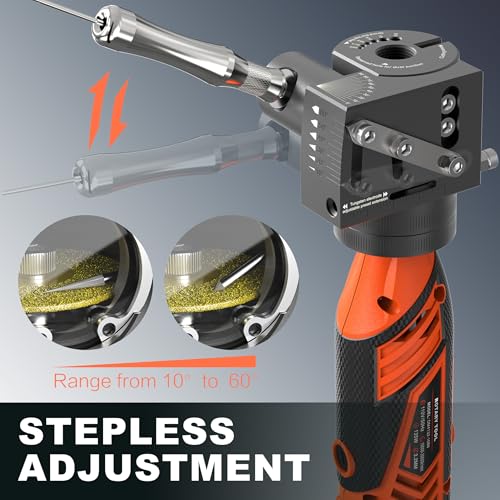
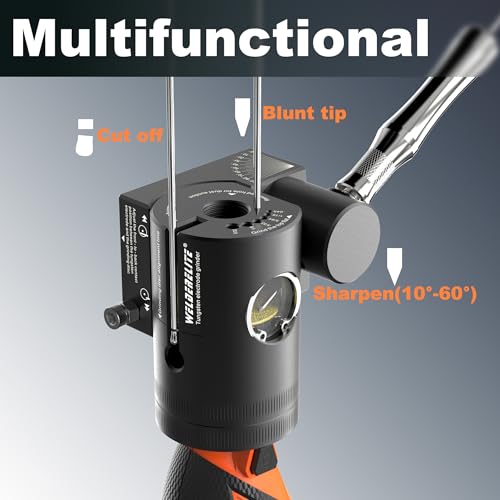
If you want full control over your tip geometry, this is the closest thing to a pro-grade solution in the consumer space. The stepless angle adjustment from 10° to 60° is a standout, no more being stuck with preset holes. You can fine-tune your angle down to the degree, which matters when you’re dialing in for exotic alloys or thick materials. The large glass window lets you monitor progress without opening the chamber, and the vacuum port is a major plus for shop cleanliness.
It’s 110V only, so no portability, but the trade-off is consistent power and a robust brazed diamond disc. Owners praise its precision and durability, and the included stand adds hands-free convenience. It’s one of the few models that feels built for serious production work. The only downside? It only fits electrodes up to 1/8″, so larger rods are out of the question.
Product photos
YESWELDER Cordless Tungsten Sharpener with LED
Strengths
- Truly cordless
- LED speed display
- Long battery life
Trade-offs
- Basic dust cover
- No cut-off slot
- No flattening port
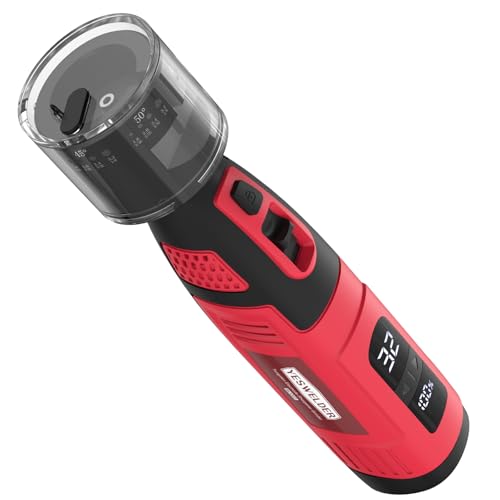
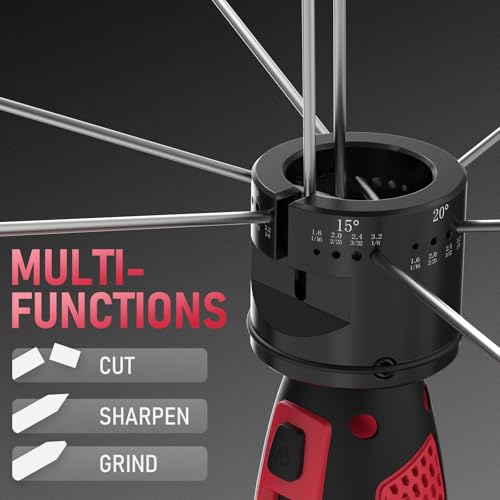
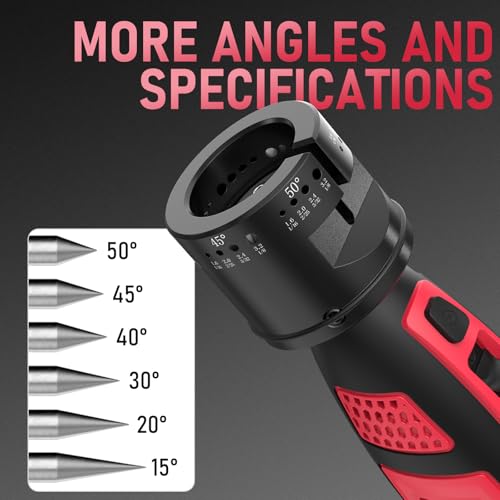
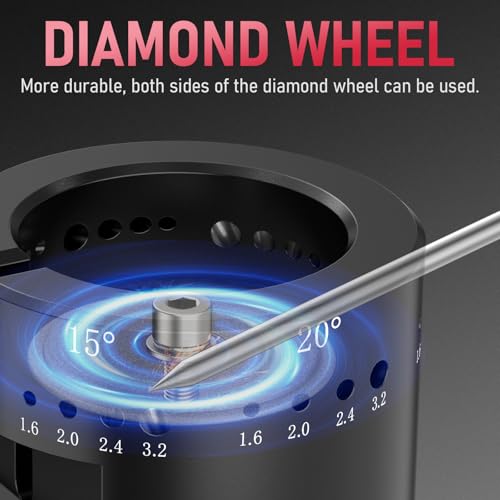
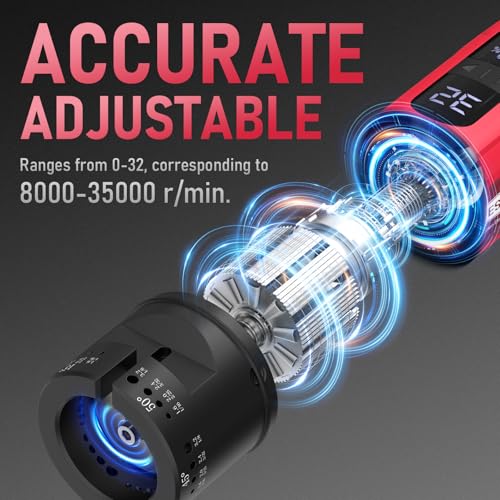
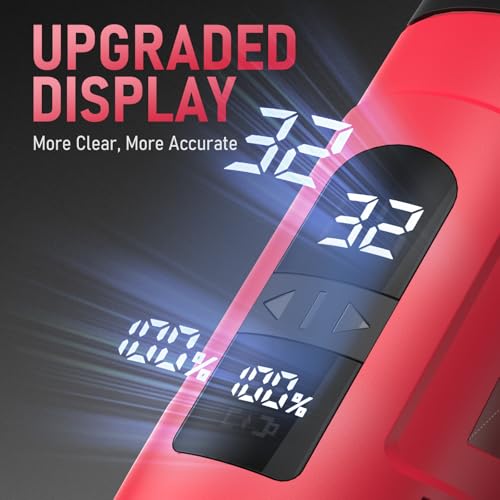
Cordless convenience in a tungsten sharpener is a rare win, and this model delivers it, though with some trade-offs. The 4.5-hour runtime on a full charge is solid, and the USB-C charging adds modern usability. The LED display gives real-time speed feedback, and the 0–32 speed settings (8,000–35,000 RPM) offer fine control, which matters when you’re tuning for delicate work. Owners appreciate the portability, especially on job sites where outlets are scarce.
It supports four electrode sizes and six angles up to 50°, which covers most TIG needs. The build feels durable, and the double-sided diamond wheel is thicker than average. But the dust cover is more of a splash guard than a full enclosure, and there’s no vacuum port. If you’re working in tight spaces or outdoors, this is a strong pick, just don’t expect lab-level dust control.
Product photos
Eastwood TG1800 Tungsten Sharpener
Strengths
- Extremely durable
- High RPM range
- Lifetime tech support
Trade-offs
- Only two electrode sizes
- No dust cover
- Limited angle options
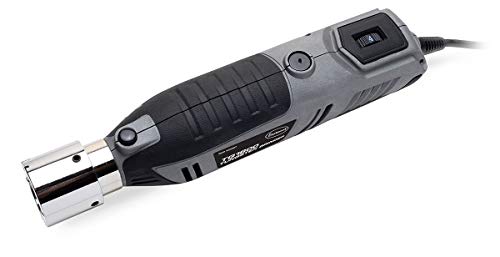
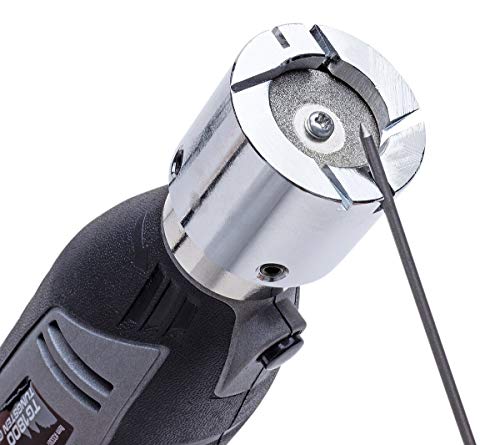
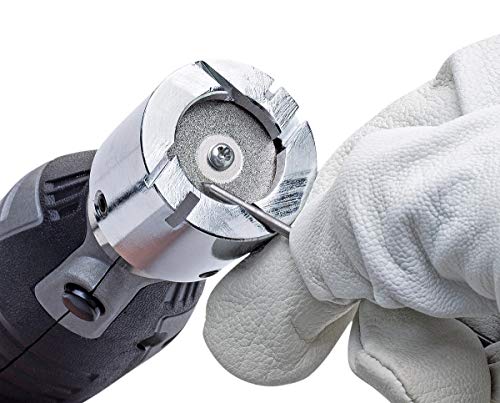
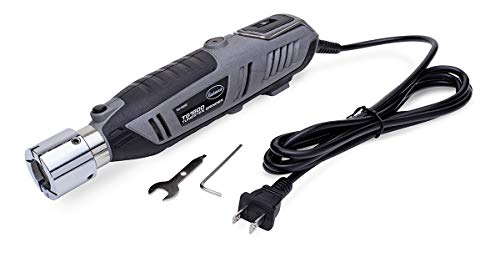
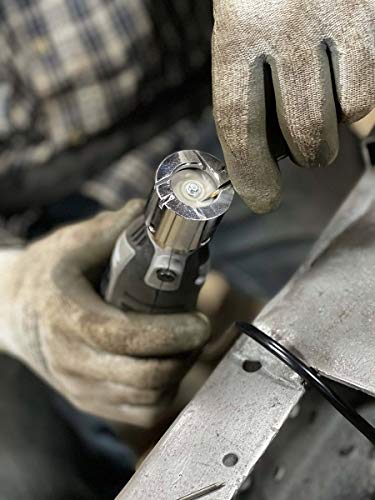
Eastwood has a reputation for building tools that last, and this sharpener fits the mold. It’s simple, only two angles (10° and 22.5°), two electrode sizes (1/16” and 3/32”), and a single-speed motor, but it’s built like a tank. The CNC-machined body and double-sided diamond wheel are overbuilt in the best way, and owners report years of trouble-free use. The 0–40,000 RPM range gives flexibility, and the lifetime tech support adds real value.
But it’s not flexible. If you’re using 0.040” or 1/8” rods, you’re out of luck. And there’s no dust cover, a glaring omission given the health risks. Still, for a welder who sticks to standard sizes and wants a no-nonsense, durable tool that just works, this is hard to beat. It’s not flashy, but it’s reliable.
Product photos
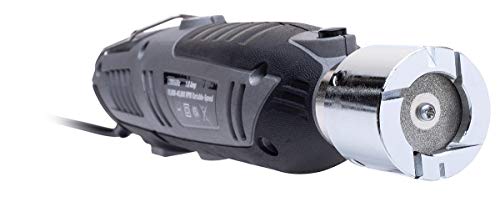
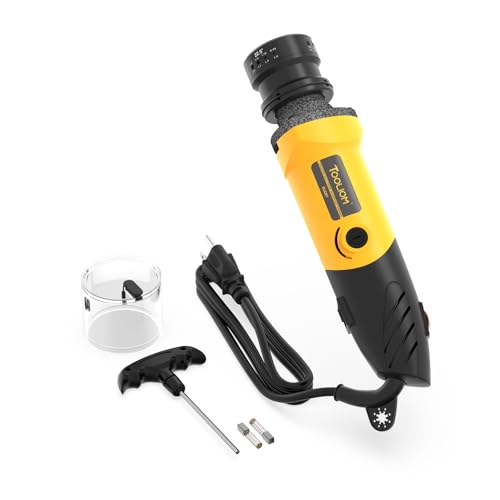
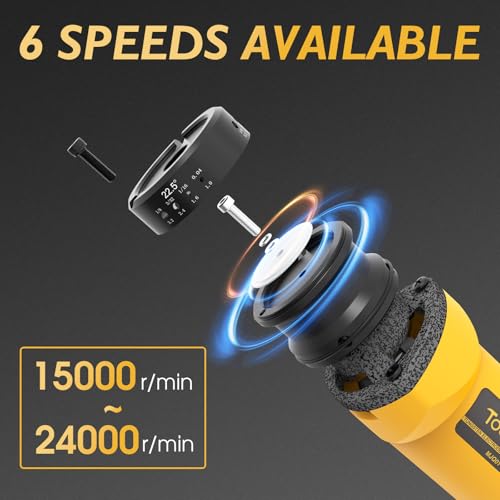
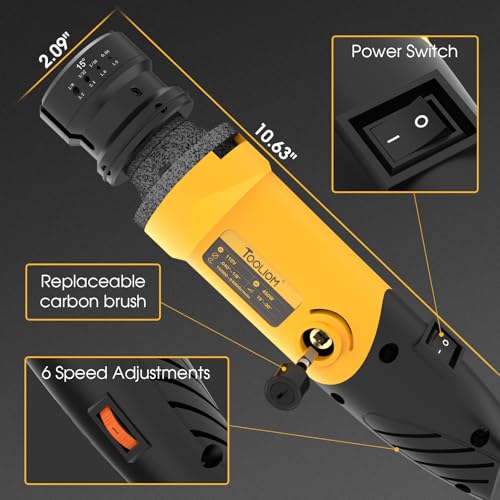
TOOLIOM Tungsten Sharpener with Dust Shield
Strengths
- Solid dust protection
- Cut-off and flattening ports
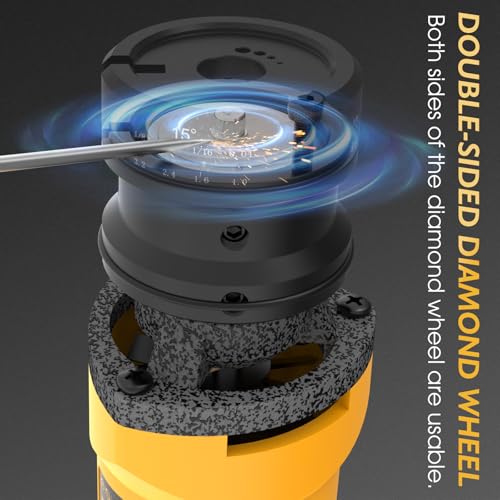
- Thick double-sided wheel
Trade-offs
- Limited to three angles
- No vacuum port
This sharpener hits a sweet spot between precision and practicality, especially for welders who value clean, repeatable prep without fiddling with adjustments. The fixed-height design with clearly labeled ports for four common electrode sizes and three key angles (15°, 22.5°, 30°) means you can get a consistent point fast, no guesswork. Owners consistently report that it delivers a clean grind every time, and the inclusion of a cut-off slot and flattening port adds real utility, especially when you’ve dipped the tip or need a flat for AC work.
The CNC-machined aluminum body feels robust, and the double-sided diamond wheel is thick enough to last longer than cheaper models. But the real standout is the full acrylic dust shield, it’s one of the most effective enclosures in this category at containing tungsten dust, which matters for long-term health. It’s not the most adjustable, but for most common TIG applications, that’s not a drawback.
Product photos
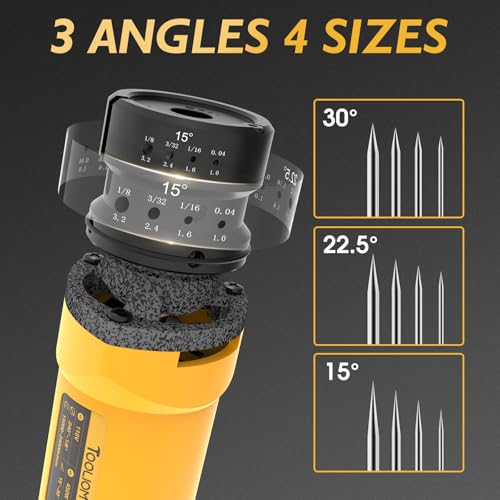
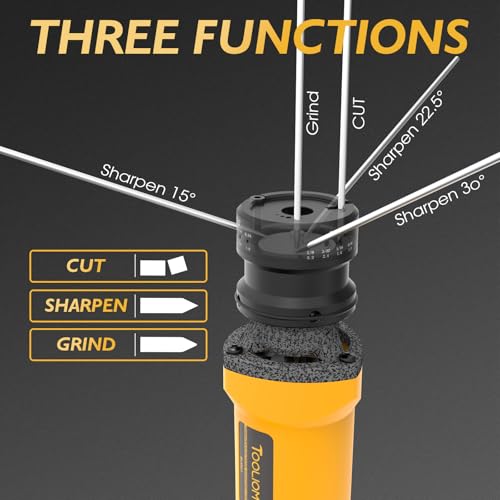
DIDUEMEM 8V Cordless Tungsten Sharpener

Strengths
- Low-cost cordless option
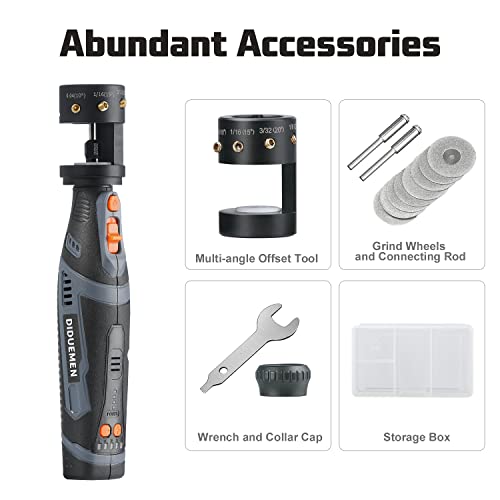
- Good accessory bundle
- Global voltage charger
Trade-offs
- Weak motor for heavy use
- Poor dust management
- No cut-off or flat port
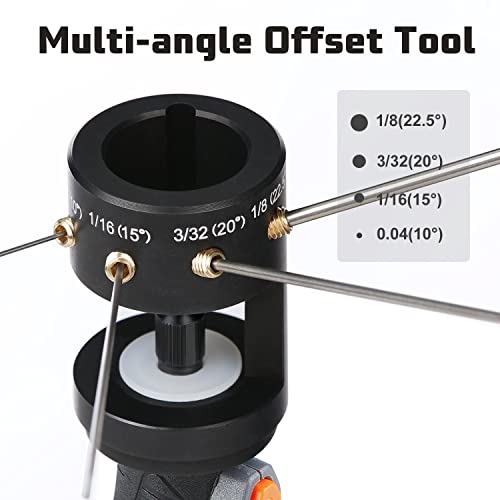
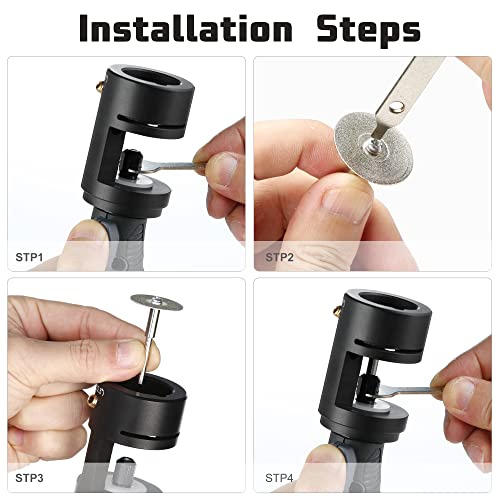
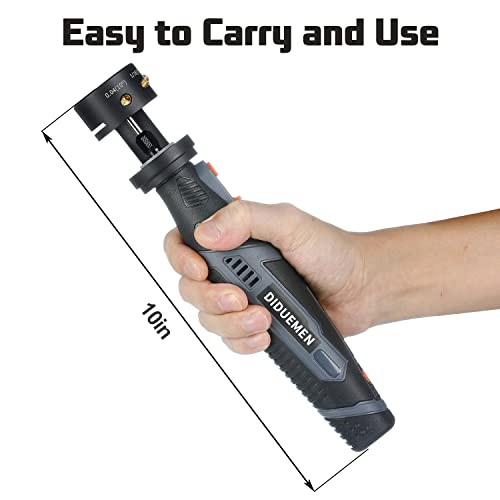
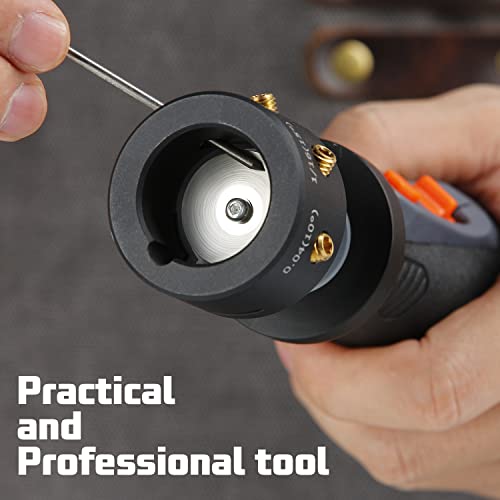
This cordless model stands out as the most affordable battery-powered option, and for light users, it makes sense. The 8V system is compact and runs long enough for occasional touch-ups, and the 110–240V charger means it’s travel-ready. It supports four common sizes and four preset angles (10° to 22.5°), which covers basic needs. The included accessories, 9 double-sided wheels, 3 spindles, suggest long-term usability.
But it’s underpowered compared to AC models, and owners note it struggles with frequent use. The dust cover is minimal, and there’s no vacuum port or cut-off slot. It’s clearly built for budget-conscious buyers who weld infrequently. Still, for a DIYer with a garage setup or someone who needs portability on a tight budget, it’s a functional entry point.
Product photos
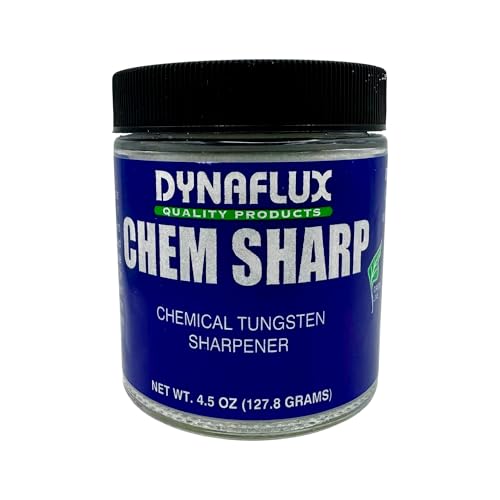
TWSupply Chem Sharp Tungsten Sharpener
Strengths
- No dust or electricity
- Compact and portable
- Works on all tungsten types
Trade-offs
- Slow process
- Not for heavy resurfacing
- Limited to maintenance
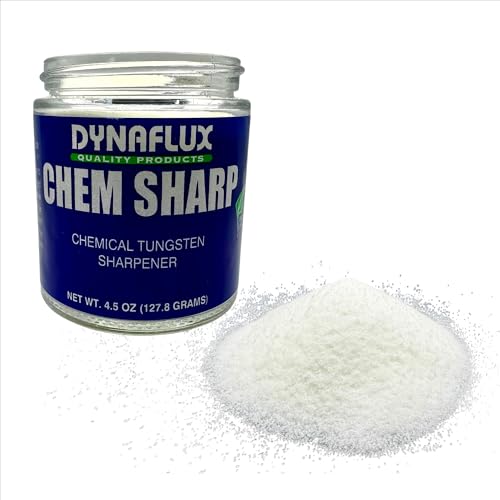
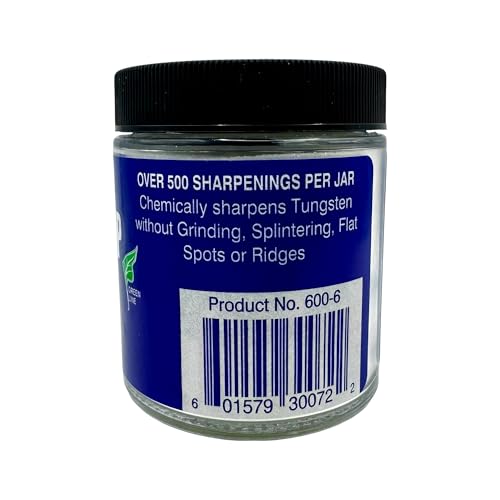
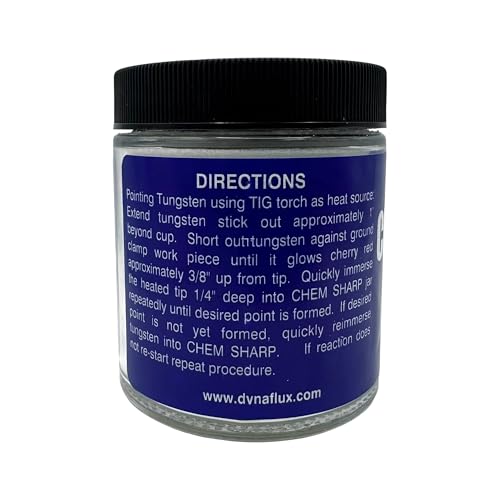
Chemical sharpening is a niche approach, but it has real appeal for welders who want to avoid grinding altogether. This compound uses a chemical reaction to form a clean, consistent point without mechanical wear or hazardous dust. That’s a big deal if you’re in a confined space, lack power, or just hate cleaning grinder residue. On paper, it’s simple, dip, wait, wipe, and owners say it works surprisingly well for maintaining arc stability.
It’s not fast, and it won’t fix a badly contaminated tip. But for touch-ups, fine-tuning, or emergency prep, it’s a clever alternative. The 4.5 oz size is compact enough to stash in a toolbox, and it works across common tungsten diameters. Just don’t expect the speed or control of a mechanical sharpener, this is a supplement, not a replacement.
Product photos
SONNLER Tungsten Sharpener Grinder Head
Strengths
- 8 precise angles
- No height adjustment needed
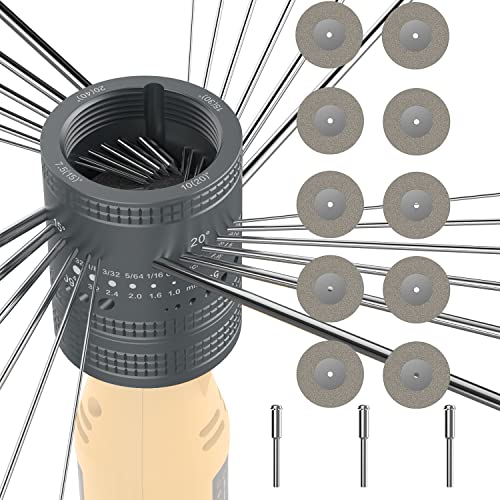
- 10 double-sided wheels included
Trade-offs
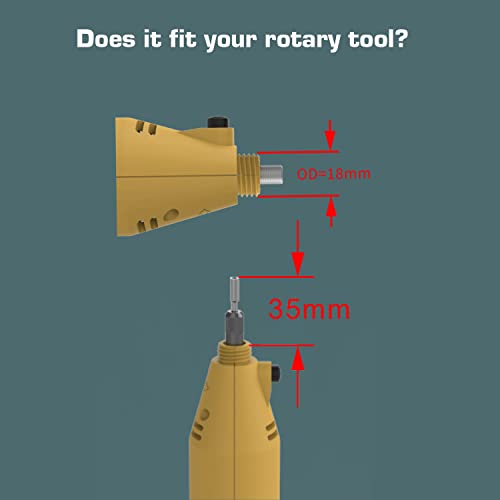
- Requires separate rotary tool
- No dust protection
- No cut-off or flat tip port
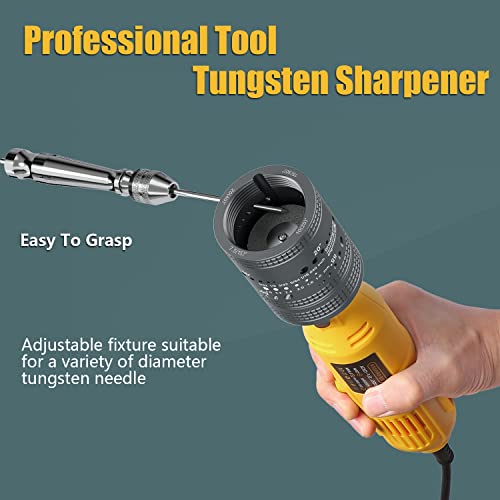
This isn’t a standalone tool, it’s a grinder head only, meant to mount on an existing rotary tool, and that changes everything. If you already own a compatible rotary tool, this could be a smart, cost-effective upgrade. The 48-hole design (supporting 6 electrode sizes and 8 angles) is impressive on paper, and owners confirm it delivers precise, repeatable results without needing to adjust the wheel height. The offset compensation for each hole is a thoughtful touch that keeps the tip centered during grinding.
But you’re only getting the head, no motor, no power. That means you’ll need to supply your own rotary tool, and compatibility isn’t guaranteed across all brands. It’s also missing a dust shield, which is a real concern given the toxicity of tungsten dust. Still, for a mobile welder or hobbyist with the right setup, this offers unmatched angle flexibility in a compact form.
Product photos


How We Evaluated weld tungsten sharpeners
Rather than a hands-on lab test, my research focused on a detailed comparison of published specifications and features across numerous models. I weighed owner reviews from major retailers alongside expert opinions found in welding forums and trade publications. My assessment combined this data with my understanding of what truly matters in a tungsten sharpener – consistent angles, ease of use, and durability – to rank the options.
For weld tungsten sharpeners, the ability to consistently produce accurate angles and the quality of dust control were heavily weighted. Precise angles are critical for arc starting and weld quality, and inconsistent angles can lead to frustrating results. Equally important is managing tungsten dust, as it’s a health hazard and can contaminate your workspace. Beyond those, build quality and the convenience of features like cordless operation factored into the rankings.
Specifications reliably indicate the range of tungsten sizes and angles a sharpener can handle. However, I placed greater emphasis on owner feedback regarding long-term durability and the actual consistency of the sharpened points. Reputation matters; brands consistently praised for quality and ease of use rose to the top. Understanding the right TIG welding electrode selection is also key, as the sharpener needs to accommodate the type of tungsten you use.
How To Pick The Right weld tungsten sharpeners
Finding the right tungsten sharpener can drastically improve your TIG welds, and it’s a surprisingly nuanced purchase.
A quality weld tungsten sharpener consistently delivers precise angles, accommodates common electrode sizes, minimizes dust exposure, and offers durability for repeated use. Look for models with clearly marked angle guides, robust grinding wheels, and features that prioritize operator safety and workspace cleanliness. The ability to easily replace worn components is also a key consideration.
Electrode Size and Angle Versatility
Don’t assume all sharpeners handle every tungsten size and angle you’ll encounter. Many are limited to 1/16″ and 3/32″ electrodes, which is fine for basic work, but restricting if you tackle heavier gauge materials. I’ve seen welders frustrated by having to purchase multiple sharpeners to cover their needs. Consider a unit that supports at least 0.040″ up to 1/8″, and ideally, offers a range of angles – 10°, 15°, 18°, 20°, 22.5°, 30°, and even up to 60° for specialized applications. This flexibility protects your investment and adapts to different welding projects.
Dust Control and Safety Features
Tungsten dust is hazardous to your health, so a sharpener with built-in dust control is crucial. Some models, like the TOOLIOM Tungsten Sharpener with Dust Shield, include an acrylic dust cover to contain particles. Others, such as the WelderElite Stepless Angle Tungsten Sharpener, offer a port for connecting a vacuum. Beyond dust collection, look for features like a fixed-height design for safer operation and clear markings to prevent accidental angle adjustments.
Here’s what I recommend prioritizing when it comes to safety and dust: * Dust Cover: Essential for containing hazardous particles. * Fixed-Height Design: Reduces the risk of accidental contact with the grinding wheel. * Clear Markings: Ensures accurate and repeatable angle settings, minimizing errors and potential hazards.
Power Source and Portability
The type of power source impacts where and how you can use a tungsten sharpener. Cordless models, like the YESWELDER Cordless Tungsten Sharpener with LED and the DIDUEMEM 8V Cordless Tungsten Sharpener, offer excellent portability for field work or shops with limited outlets. However, they require regular charging. Corded sharpeners, such as the Eastwood TG1800 Tungsten Sharpener, provide consistent power but limit your mobility. If you primarily weld in one location, a corded model is likely sufficient, but if you frequently move between jobsites, a cordless option is worth the investment. And remember, if you’re looking for a broader range of precision tungsten grinders to compare, you’ll find a detailed overview there.
A sharp tungsten electrode is the foundation of a clean, stable TIG weld. Don’t skimp on quality – a well-maintained point will save you time, material, and frustration in the long run.
Weld Tungsten Sharpeners Compared
Here’s a comparison of key specifications for various weld tungsten sharpeners to help you choose the right tool.
| Product Title | Electrode Size (in) | Angles (deg) | Power Source | Cordless | Dust Collection |
|---|---|---|---|---|---|
| YESWELDER Tungsten Sharpener with Dust Cover | 0.040, 1/16, 3/32, 1/8 | 15, 22.5, 30 | Corded | No | Acrylic Cover |
| WelderElite Stepless Angle Tungsten Sharpener | 0.040 – 1/8 | 10-60 | Corded | No | Vacuum Port |
| YESWELDER Cordless Tungsten Sharpener with LED | 1/16, 5/64, 3/32, 1/8 | 15, 20, 30, 40, 45, 50 | Battery | Yes | Acrylic Cover |
| Eastwood TG1800 Tungsten Sharpener | 1/16, 3/32 | 10, 22.5 | Corded | No | N/A |
| TOOLIOM Tungsten Sharpener with Dust Shield | 0.040, 1/16, 3/32, 1/8 | 15, 22.5, 30 | Corded | No | Acrylic Shield |
| DIDUEMEM 8V Cordless Tungsten Sharpener | 0.04, 1/16, 3/32, 1/8 | 10, 15, 20, 22.5 | Battery | Yes | N/A |
| TWSupply Chem Sharp Tungsten Sharpener | N/A | N/A | N/A | No | N/A |
| SONNLER Tungsten Sharpener Grinder Head | 5/32, 1/8, 3/32, 5/64, 1/6, 040 | 7.5, 10, 15, 20, 22.5, 25, 27.5, 30 | N/A | No | N/A |
Frequently Asked Questions
What’s the best way to store a weld tungsten sharpener?
Store it in a dry environment, ideally in its original packaging or a protective case. This prevents dust and debris from entering the mechanism and ensures consistent performance when you next need it.
Can I use a weld tungsten sharpener on all types of tungsten electrodes?
Yes, but check the sharpener’s specifications to confirm it accommodates the diameter and composition of your tungsten. Some sharpeners are designed for specific types like ceriated or lanthanated tungsten, and using it on the wrong type could damage the wheel or electrode.
How often should I replace the grinding wheel?
Replacement frequency depends on usage, but generally, replace the wheel when you notice a decrease in sharpening precision or increased effort is needed. Frequent users might replace it every few months, while occasional welders could go a year or more.
Are cordless tungsten sharpeners as powerful as corded models?
Cordless sharpeners have improved significantly, but generally, corded models deliver more consistent power for demanding applications. However, for portability and convenience, a quality cordless sharpener is often a worthwhile trade-off, especially if you occasionally use high-speed angle grinders for other tasks.
What’s the difference between a fixed-angle and a variable-angle sharpener?
Fixed-angle sharpeners offer pre-set angles for quick, repeatable sharpening, while variable-angle sharpeners allow you to customize the angle. Variable-angle sharpeners provide greater flexibility for specialized welding techniques, but require more skill and precision to use effectively.
The Bottom Line
Choosing a weld tungsten sharpener often comes down to balancing control with convenience. You can spend less and accept a more manual process, or invest in a feature-rich model that streamlines sharpening and minimizes mess. For most welders, I recommend the YESWELDER Tungsten Sharpener with Dust Cover. It strikes a good balance of features, accuracy, and price, providing a solid sharpening experience without breaking the bank.
If you frequently weld in the field or need maximum flexibility, the YESWELDER Cordless Tungsten Sharpener with LED or the DIDUEMEM 8V Cordless Tungsten Sharpener are excellent choices. For those prioritizing a wide range of angles and compatibility with a vacuum system, the WelderElite Stepless Angle Tungsten Sharpener is a strong contender. And if you need to expand your shop’s capabilities beyond tungsten, consider looking at versatile grinder models to handle a variety of tasks.
Ultimately, the best sharpener isn’t about the flashiest features or the highest price tag. It’s about consistently delivering a precise, repeatable point. Prioritize models with clear angle markings, a durable grinding wheel, and effective dust control, as those fundamentals are far more important than any single specification.
