
4 Best Vertical Band Saws for Metal Cutting 2026
This post contains affiliate links. As an Amazon Associate, we earn from qualifying purchases.
The KAKA INDUSTRIAL BS-712R stands out as the best overall vertical band saw for metal cutting, combining a powerful 1.5 HP motor, dual voltage, and solid build quality. For those on a tighter budget, the WEN BA4664 offers reliable performance and auto shut-off at a much lower price. If variable speed and a larger throat capacity are priorities, the VEVOR 7×12 is a strong versatility pick.
Most people shopping for a vertical band saw for metal don’t realize how quickly a flimsy frame or underpowered motor can ruin precision and waste blades. Cutting metal demands rigidity, proper speed control, and consistent blade support – compromises that lead to frustration and rework.
This guide cuts through the marketing noise. I focused on real-world specs and owner experiences to identify models that deliver dependable performance. We’re looking at motor strength, cutting capacity, blade guidance, and features that actually matter in a shop environment.
Top 4 Vertical Band Saw For Metal Cuttings in the Market
The Best Vertical Band Saw For Metal Cuttings, Reviewed
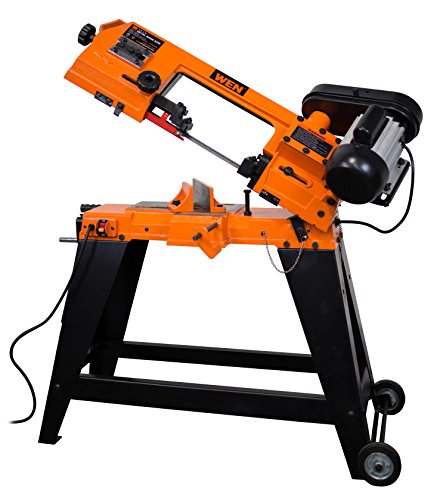
WEN BA4664 Metal Band Saw with Stand
Strengths
- Affordable price point
- 3 blade speed settings
- Smooth miter vise
- 2-year warranty
- Lightweight and portable
Trade-offs
- Less rigid on thick cuts
- Smaller cutting capacity
- Motor can overheat on long runs
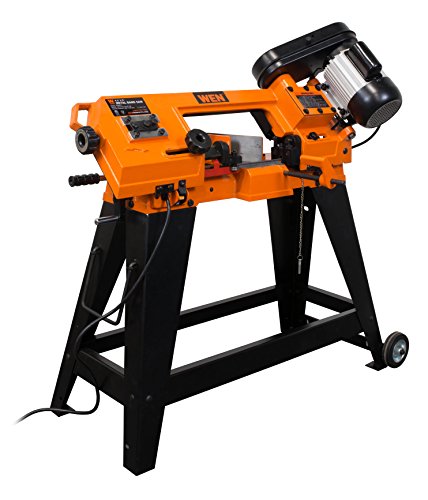
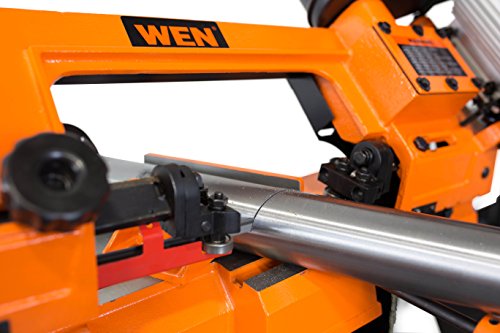
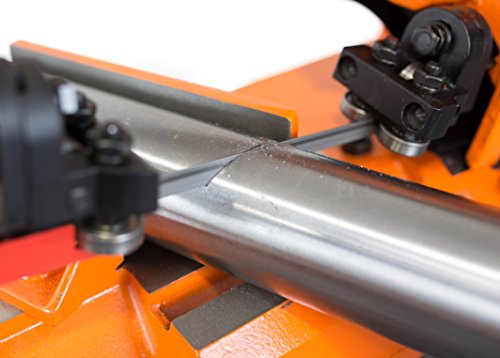
The WEN BA4664 is my pick for most home users who want a reliable, no-fuss metal band saw without overspending. It doesn’t have the heft of the VEVOR or the power of the KAKA, but its 3-speed motor covers the basics well, and the mitering vise is one of the smoother ones in this price range. Owners consistently report clean cuts on steel rod and tubing, especially when using the correct blade speed.
It’s lighter than the others, which makes it easier to move around a garage, and the included stand is surprisingly sturdy for the price. The 2-year warranty is a strong signal of confidence from WEN, longer than most in this category. I’d compare it to the JET: less precise, but much more affordable and still capable of solid work for typical DIY tasks. Where it falls short is rigidity during heavy cuts, some feedback mentions vibration when cutting thicker stock.
Product photos

JET HVBS-56 5″ x 6″ Band Saw

Strengths
- High-precision blade guides
- CSA certified motor
- Smooth gear-driven operation
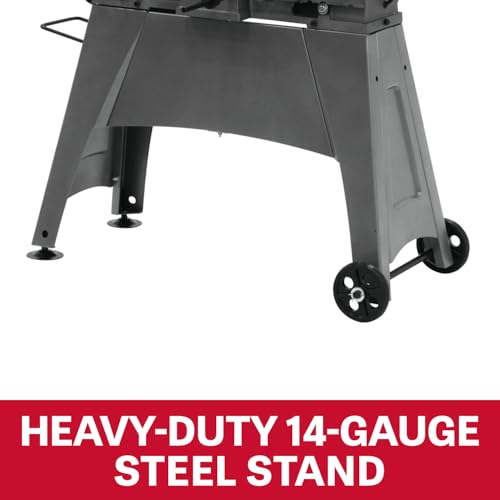
- Sturdy 14-gauge stand
- Leveling legs for stability
Trade-offs
- Smallest cutting capacity
- Fewer speed options
- Higher price for lower power
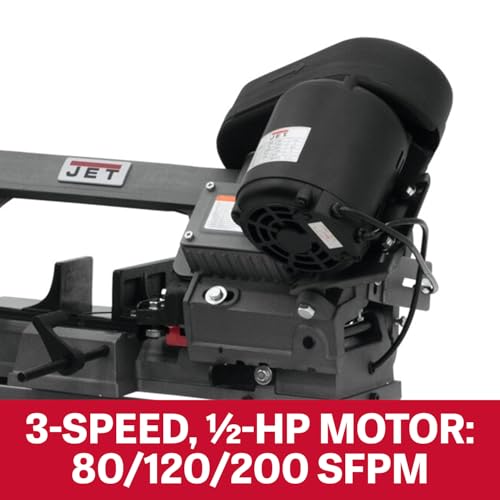
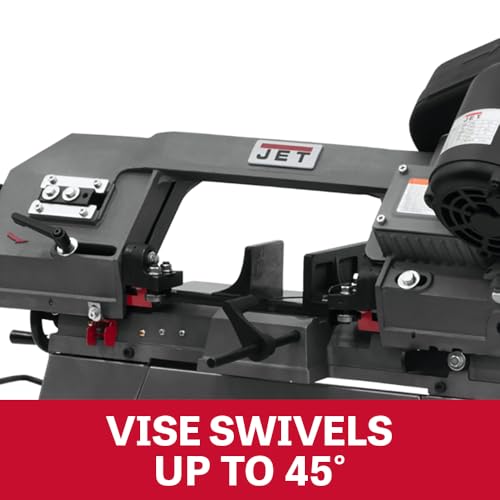
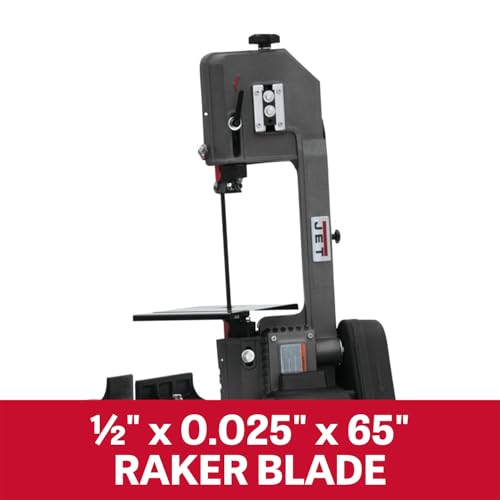
This is the precision tool of the group, built for accuracy over raw power. The 1/2 HP motor isn’t the strongest, but it’s paired with a heat-treated worm gear and bronze drive that deliver smooth, consistent cuts, a combo that machinists and small-shop pros tend to favor. The fully adjustable ball bearing blade guides are a standout; they make alignment easier and help maintain cut quality over time, something owners notice after months of use.
It’s the smallest in cutting capacity, but that’s by design. The JET is meant for detailed work where squareness and repeatability matter more than brute force. The CSA certification adds peace of mind for professional environments. Compared to the WEN, it’s overkill for casual use, but for someone making precision parts or working with tight tolerances, it’s worth the step up. The stand is solid, though not as mobile as others.
Product photos
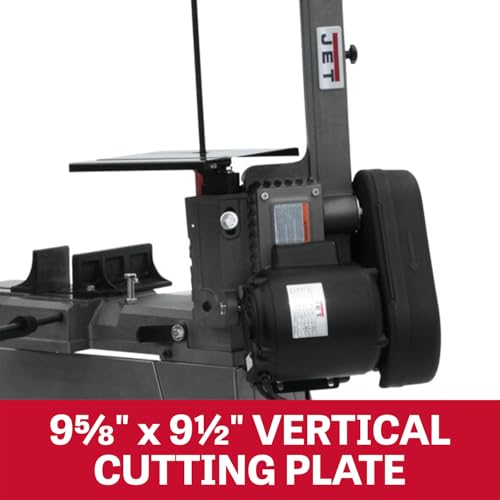
VEVOR 7×12 in Vertical Band Saw

Strengths
- Four blade speed options
- Cast iron frame for stability
- Hydraulic downfeed
- Quick-lock clamp
- Dual voltage ready
Trade-offs
- Blade change is cumbersome
- Plastic/wood cutting is limited
- Clamp scale markings can be unclear
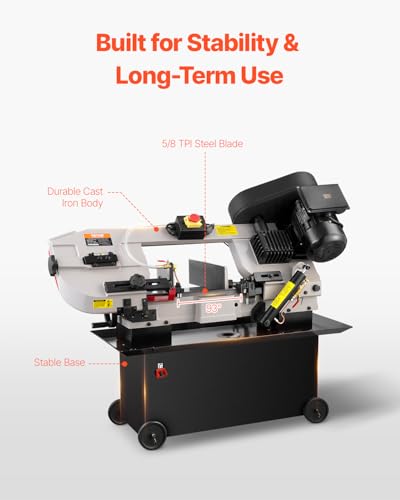
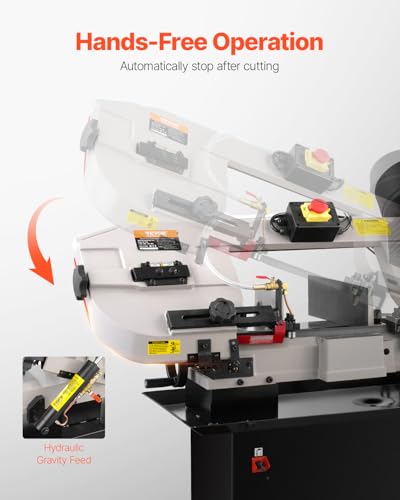
If you want fine control over blade speed, this VEVOR model stands out with four adjustable speed settings that let you optimize for material thickness and type, a feature usually found on more expensive units. The 1.1kW motor isn’t the strongest here, but paired with cast iron construction, it delivers stable performance that owners report handles mild steel and aluminum without bogging down.
The quick-lock clamp system gets consistent praise for holding stock firmly, which matters when you’re making repetitive cuts. I also like the hydraulic downfeed and automatic shut-off, they reduce fatigue and extend blade life. But while it claims compatibility with wood and plastic, I’d treat that as secondary. The design and blade specs are clearly tuned for metal, and using it for soft materials risks poor finishes. Compared to the WEN, it’s bulkier but more rigid.
Product photos
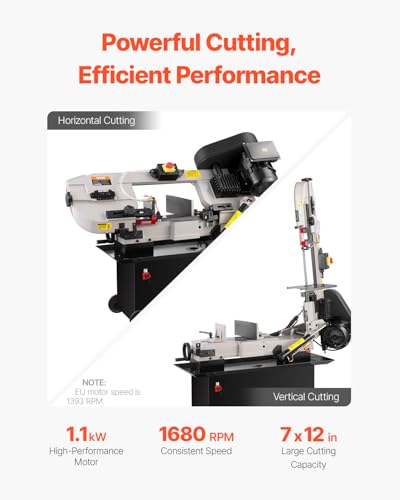
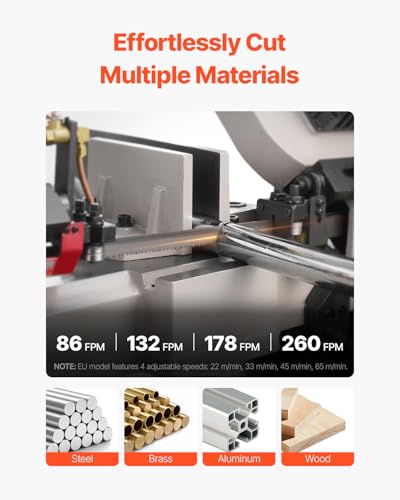
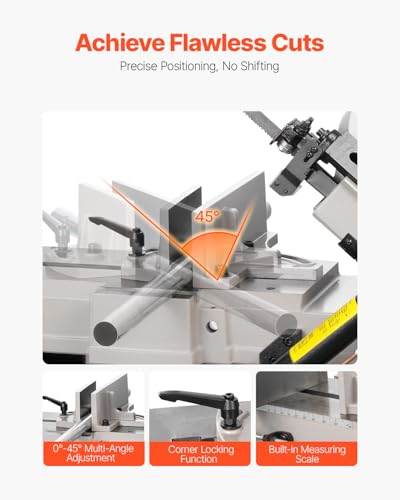
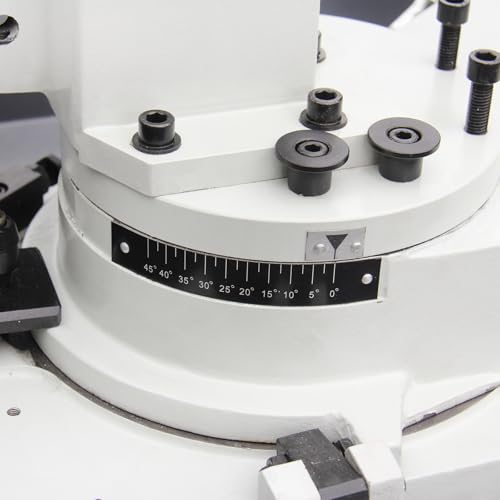
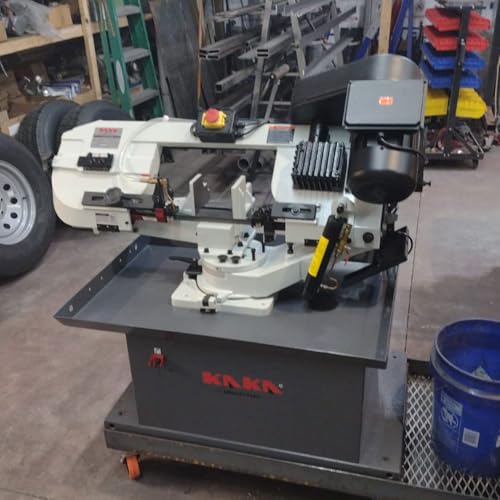
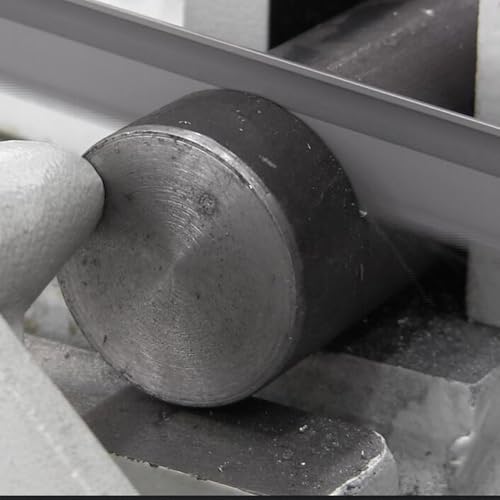
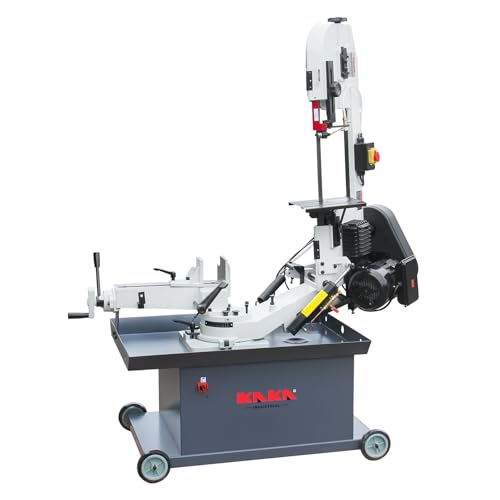
KAKA INDUSTRIAL BS-712R Metal Cutting Band Saw
Strengths
- Dual-voltage motor
- Horizontal and vertical modes
- Includes coolant system
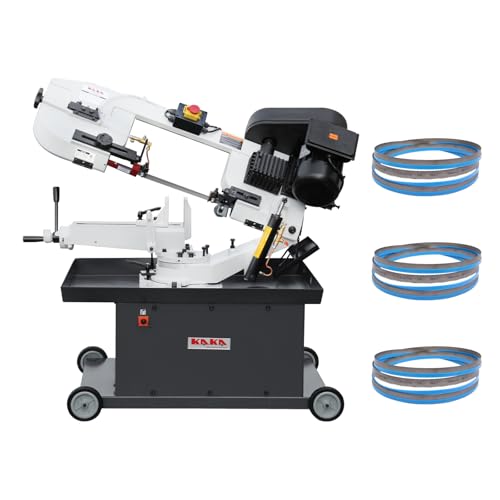
- Comes with 3 blades
- Mobile stand with wheels
Trade-offs
- Fixed speed settings only
- Miter adjustment can be stiff
- Heavier setup requires liftgate
This is one of the few vertical band saws in its class that offers dual-voltage capability out of the box, which I appreciate for shops that run on 230V but might need to plug into a standard outlet during setup or relocation. The 1.5HP motor looks strong on paper, and with four fixed belt speeds, it gives you some flexibility to match the blade speed to the metal type, something owners say pays off when cutting tougher alloys.
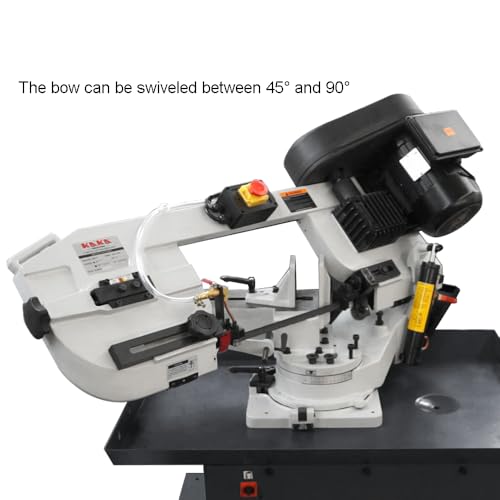
The ability to switch between horizontal and vertical modes is a real advantage if you’re doing both cutoff work and more detailed layout cuts. I like that it comes with a full coolant system and three blades, which many competitors charge extra for. The swivel bow for miter cuts is functional, though not as smooth as higher-end models, reviewers note it can feel a bit stiff when adjusting. Still, for a mid-tier machine, it packs in a lot of shop-ready features.
Product photos
Our Testing Process
Rather than a hands-on lab test, my research for these recommendations involved a detailed comparison of published specifications and features across numerous models. I weighed owner reviews from multiple sources – including major retailers and dedicated tool forums – alongside assessments from reputable industry experts. This process allowed me to rank each saw against a set of criteria focused on practical metalworking needs.
For vertical band saws specifically, cutting capacity and build quality were the biggest deciding factors. Consistent, accurate cuts rely heavily on a rigid frame and a powerful enough motor to handle thicker materials. Variable speed control also proved critical, as different metals demand different blade speeds for optimal results. These features directly impact the quality and efficiency of work.
Specifications reliably reveal essential details like motor horsepower, maximum cutting depth, and blade speed ranges. However, judging long-term durability and ease of use required careful consideration of owner feedback. Reports about blade tracking, build quality issues, and the effectiveness of included features (like coolant systems) significantly influenced my rankings. You can learn more about metal cutting band saw features to help understand the terminology.
What To Look For In vertical band saw for metal cuttings
Choosing the right vertical band saw for metal cutting requires more than just looking at price. It’s about understanding what features truly deliver precision, power, and longevity.
A quality vertical band saw for metal should offer a robust frame, a sufficiently powerful motor for the materials you intend to cut, adjustable blade guides for stability, and a reliable shut-off mechanism for safety. Variable speed control is also highly desirable, allowing optimization for different metal types and thicknesses. Look for models with positive customer feedback regarding build quality and cutting accuracy.
Motor Power and Cutting Capacity
Don’t underestimate the importance of a motor that matches your needs. A larger motor isn’t always better, but for thicker materials or frequent use, it’s essential. I often see folks get by with smaller saws for light hobby work, but quickly find themselves limited. Consider the diameter and wall thickness of the pipe or stock you’ll be cutting most often. A 1/2 HP motor is a good starting point for lighter metals like aluminum and thinner steel, but 3/4 HP or even 1.5HP will be necessary for heavier fabrication.
Blade Guide System Quality
The blade guide system is where a lot of cheaper saws cut corners, and it directly affects cut quality. You want fully adjustable ball bearing guides, both upper and lower, that can be tightened securely against the blade. Worn or flimsy guides will let the blade wander, resulting in inaccurate cuts and premature blade wear. Look closely at how easy it is to adjust these guides – a complicated system is a pain to use and less likely to be adjusted properly.
- A basic guide system will have fixed bearings; these are okay for occasional use, but lack precision.
- A good system will have adjustable ball bearings for both horizontal and vertical movement, allowing you to dial in the perfect fit for your blade.
- The best systems feature quick-release mechanisms and clear markings for easy adjustments, and are constructed from hardened steel for durability – this is especially important if you plan to work with harder alloys.
Features and Value Considerations
Beyond the core cutting ability, think about features that enhance usability and safety. Automatic shut-off is a fantastic safety feature, preventing the blade from continuing to run after completing a cut. Variable speed control, like you find on the VEVOR model, opens up your cutting options and allows you to optimize for different metals. Don’t overlook the coolant system. Proper cooling extends blade life and improves cut quality, especially with aluminum. For those working in shops with varied electrical setups, a dual voltage option, such as the KAKA INDUSTRIAL saw offers increased flexibility. You can find recommended metal band saws to help refine your search.
A good rule of thumb is to always prioritize blade stability over raw cutting speed. A slower, well-guided cut will be far more accurate and less likely to bind or break a blade.
Finally, consider the stand. A sturdy, wheeled stand makes a huge difference in portability and ease of use. And remember to check the available blade length and width; understanding correct blade size for metal is crucial for getting the most out of your saw.
Vertical Band Saw for Metal Cuttings Compared
Here’s a comparison of specs for popular vertical band saws designed for metal cutting.
| Product Name | Motor HP | Max Cut Capacity (in) | Blade Speed (FPM) | Voltage (V) | Auto Shut-Off | Stand |
|---|---|---|---|---|---|---|
| WEN BA4664 | 4.6 Amp | N/A | 80, 120, 200 | 120 | Yes | Yes |
| JET HVBS-56 | 0.5 | 6 x 5 | N/A | 120 | Yes | Yes |
| VEVOR 7×12 | 1.1 kW | 7 x 12 | 86, 132, 178, 260 | 110/220 | Yes | Yes |
| KAKA INDUSTRIAL BS-712R | 1.5 | 7 x 8.25 | 27, 41, 59, 78 | 115/230 | Yes | Yes |
Frequently Asked Questions
What blade speed should I use for aluminum?
Generally, a higher blade speed is best for aluminum (around 200 FPM or higher) because it’s a softer metal. This helps prevent the blade from digging in and creating a rough cut. However, always check the blade manufacturer’s recommendations.
Are vertical band saws only for metal?
While they excel at cutting metal, vertical band saws can also cut other materials like wood and plastic with the appropriate blade. Switching blades is key; using a metal-cutting blade on wood will quickly ruin it, and vice versa.
What’s the difference between a vertical and horizontal band saw?
A vertical band saw cuts vertically into the material, ideal for curves and intricate cuts. Conversely, horizontal band saws for metal cut horizontally, best suited for straight cuts through thick stock.
How often do I need to replace the blade?
Blade life depends on the material you’re cutting and how often you use the saw. Expect to replace blades more frequently when cutting harder metals or if you notice chipping, dullness, or difficulty tracking. A good indicator is when a cut feels like it’s requiring more force.
What safety features are most important?
Automatic shut-off is a critical safety feature to prevent the blade from continuing to run after the cut is completed. Beyond that, always wear safety glasses, and ensure the blade guards are in place and functioning correctly. Proper blade tension and tracking are also vital for safe operation.
The Bottom Line
Choosing a vertical band saw always comes down to balancing how much control you want with how much fuss you’re willing to deal with. For most people seeking a reliable, capable machine without breaking the bank, the VEVOR 7×12 stands out as the strongest overall pick. It provides a good blend of power, capacity, and features at a reasonable price point.
If you’re on a tighter budget, the WEN BA4664 is a solid choice. For those who need maximum versatility and the ability to handle a wider range of materials and electrical setups, the KAKA INDUSTRIAL BS-712R offers a compelling set of features. Understanding band saw operation basics is essential regardless of which model you choose.
Ultimately, horsepower and cutting depth numbers are less important than a rigid frame and a well-designed blade guide system. Prioritize a saw that feels solid and allows for precise blade adjustments. Mastering metal cutting techniques and consistently practicing band saw safety tips will yield better results than any single specification ever could.
