
7 Best Vertical Air Compressors for Home Garages 2026
This post contains affiliate links. As an Amazon Associate, we earn from qualifying purchases.
The DEWALT 60 Gallon Vertical Air Compressor stands out as the best overall pick for serious home garage use, delivering strong, sustained airflow for demanding tools. For those on a tighter budget, the CRAFTSMAN 33 Gallon Air Compressor offers solid performance and reliability without breaking the bank.
Most homeowners don’t realize how quickly a small compressor can fall short when running impact wrenches, spray guns, or framing nailers. Run times, duty cycles, and noise levels can make or break your workflow, and your weekend project.
I researched the top vertical air compressors by comparing specs, analyzing owner feedback, and evaluating real-world performance for common garage tasks. These picks reflect what actually works for DIYers and hobbyists who need dependable power, reasonable noise, and long-term durability without overspending.
Top 7 Vertical Air Compressor For Home Garages in the Market
The Best Vertical Air Compressor For Home Garages, Reviewed
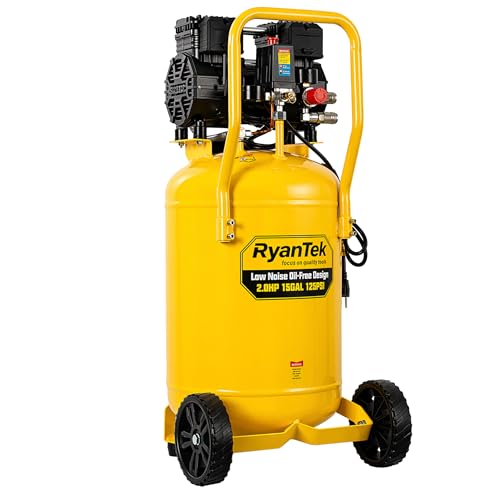
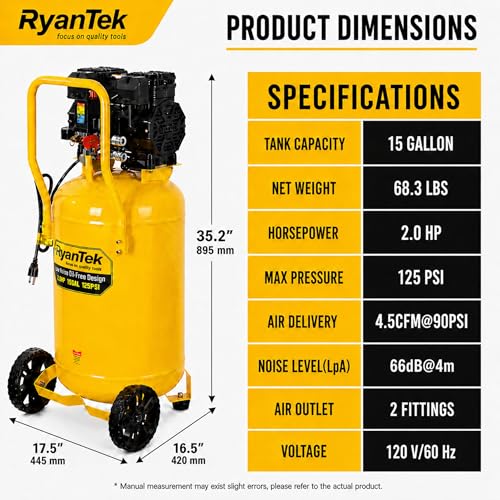
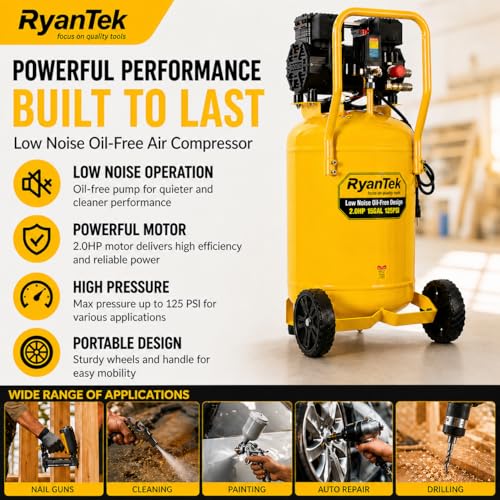
15-Gallon Air Compressor, 2HP, Twin Cylinder
Strengths
- 4.5 CFM at 90 PSI
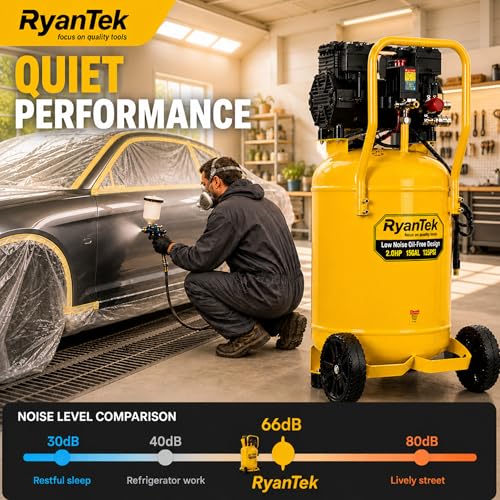
- 66 dB quiet operation
- Oil-free twin cylinder
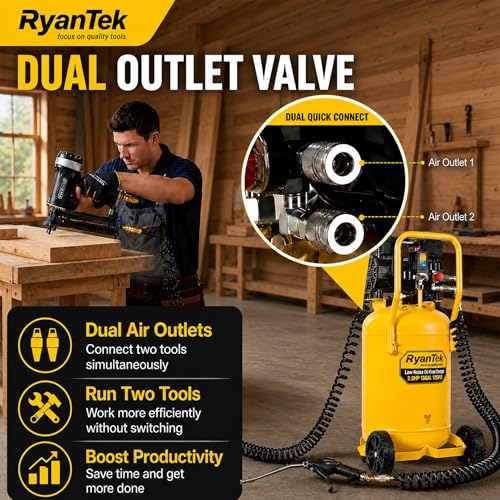
- Dual air outlets
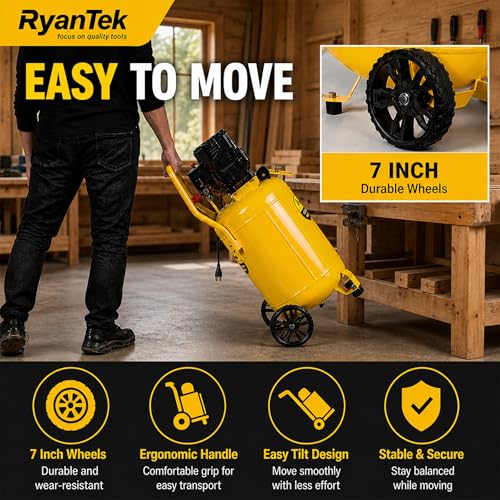
- Compact vertical design
Trade-offs
- 125 PSI max pressure
- Not for heavy spray guns
This compressor hits the sweet spot for most home garage setups. The 15-gallon tank and 4.5 CFM at 90 PSI mean it can power common tools like framing nailers and impact wrenches without constant cycling. The twin-cylinder design contributes to smoother operation and better cooling, which owners consistently report translates into longer run times during weekend projects.
The 66 dB noise level is legit for this class, not whisper-quiet, but far from disruptive. When you factor in the oil-free pump and vertical footprint, it becomes a clean, space-conscious unit that’s easy to tuck into a corner. The dual outlets are a nice touch, letting you swap tools without replugging constantly. Compared to smaller units, this one breathes easier under load.
Product photos
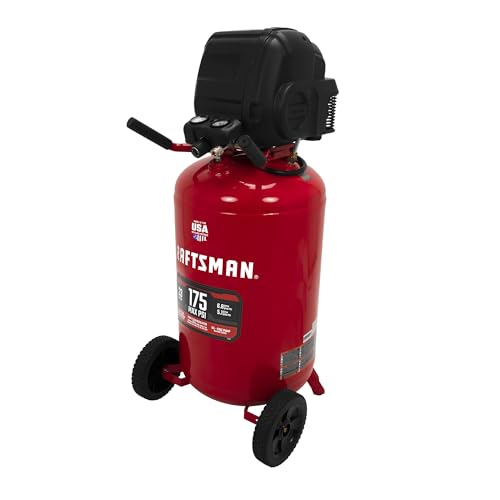
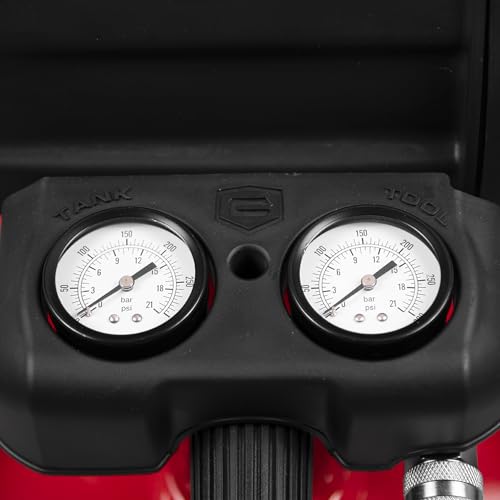
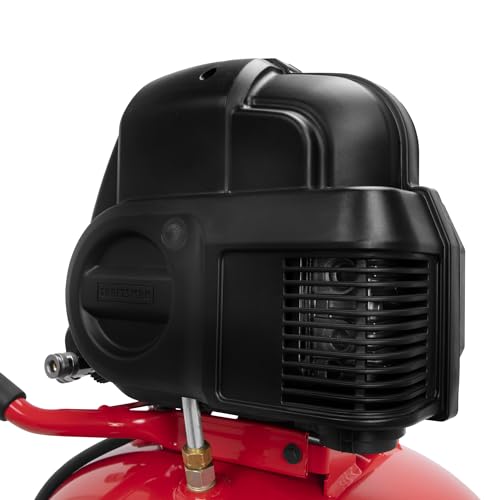
CRAFTSMAN 33 Gallon Air Compressor

Strengths
- 5.1 CFM at 90 PSI
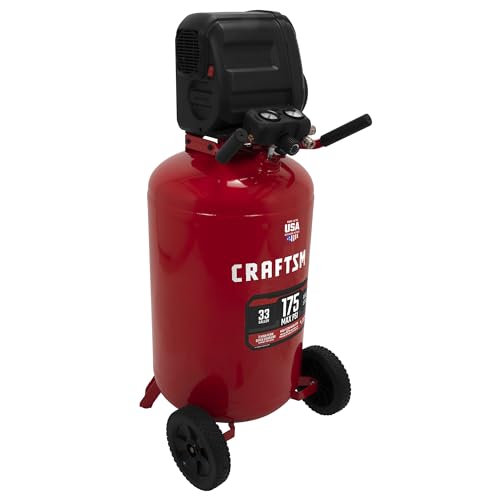
- 175 PSI max pressure
- Oil-free pump
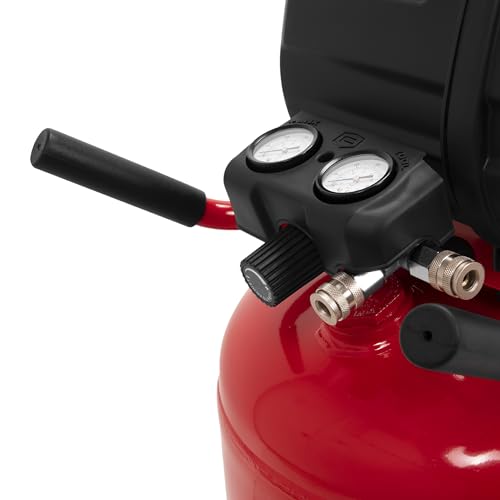
- Dual quick couplers
- 33-gallon vertical tank
Trade-offs
- Heavy for portability
- Noisier than smaller units
CRAFTSMAN built this one to last, and the numbers back it up. With 5.1 CFM at 90 PSI and a 175 PSI max, it’s clearly aimed at users doing more than just tire inflation. The oil-free pump keeps maintenance low, and the dual quick couplers are a smart addition for shops where two people might be working or switching tools rapidly. On paper, the 48% higher SCFM than older CRAFTSMAN models suggests real engineering effort, not just rebranding.
It’s not the largest in the lineup, but it bridges the gap between home and prosumer use. Owners praise its reliability and consistent recovery times, especially when powering multiple tools over a few hours. It won’t match a two-stage industrial unit, but for a serious DIYer or part-time contractor, it’s a solid step up.
Product photos
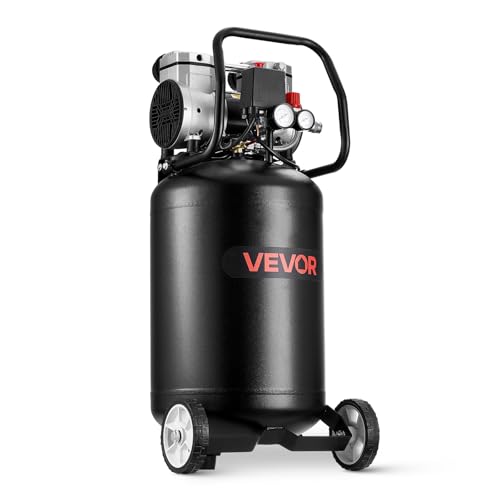
VEVOR 14-Gallon Air Compressor
Strengths
- 4.3 SCFM at 90 PSI
- Oil-free pump
- Affordable build
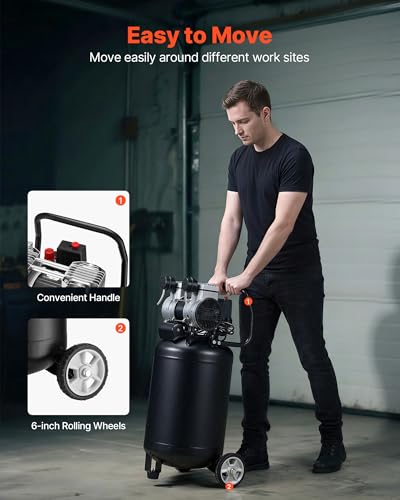
- Wheels and handle
- 14-gallon vertical tank
Trade-offs
- Noisy under load
- Not for heavy tools
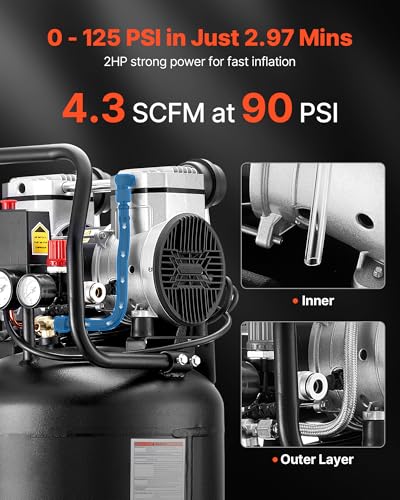
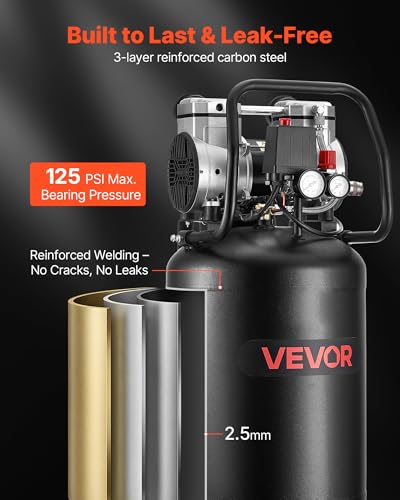
VEVOR delivers solid specs for the price, but it’s clearly aimed at light tasks. The 4.3 SCFM at 90 PSI is decent on paper, and the 2.5 mm steel tank feels robust for the class. It recovers fast enough for intermittent nailing or inflation, but don’t expect it to keep up with a spray gun or continuous sanding.
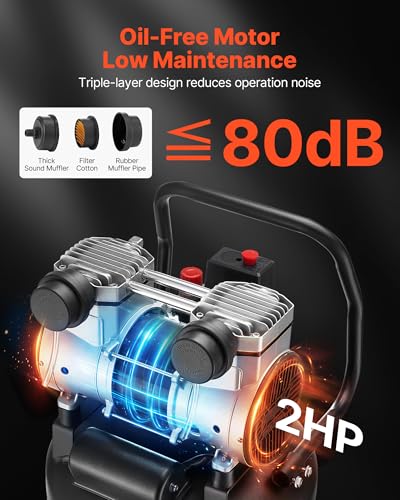
Owners report it’s noisier than advertised, and while the oil-free pump cuts maintenance, it doesn’t run as cool under load as belt-driven units. That said, for someone setting up a first garage or doing occasional car projects, it’s hard to beat the value. It’s not going to last 15 years like a Dewalt, but for light use, it gets the job done without breaking the bank.
Product photos
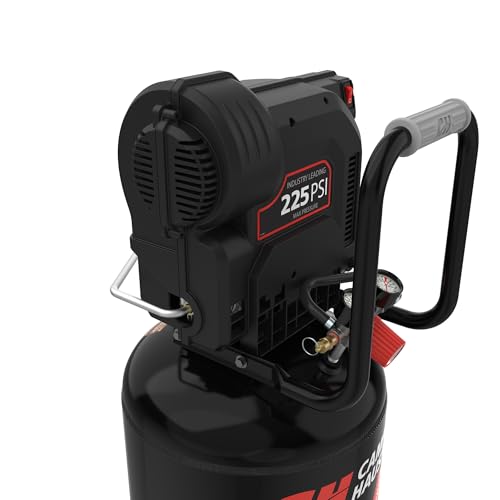
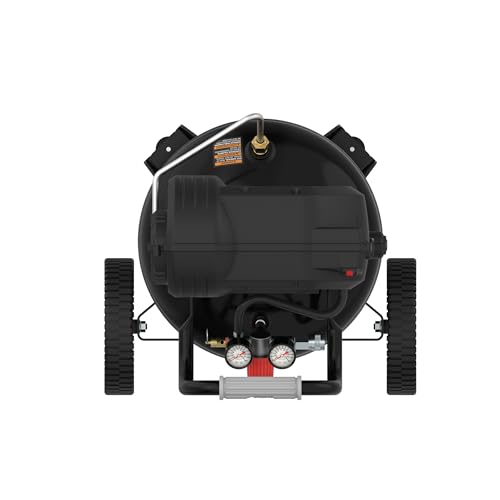
Campbell Hausfeld 15 Gallon Air Compressor
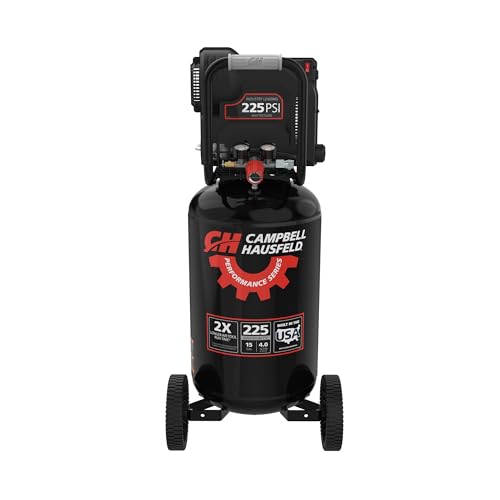
Strengths
- 225 PSI max pressure
- Oil-free pump
- 400 ft extension cord compatible
- 15-gallon vertical tank
- Cold-weather reliable
Trade-offs
- 4.0 CFM lower than rivals
- Noisy operation
225 PSI is a lot, more than most home compressors offer, and it gives this unit a real edge in efficiency. Higher pressure means longer tool run times between cycles, which owners say makes a noticeable difference with impact wrenches and air ratchets. The 4.0 CFM at 90 PSI is slightly below some rivals, but the high PSI compensates by storing more air in the tank.
The oil-free pump keeps maintenance low, and the ability to run on a 400-foot extension cord is a standout for detached garages or outdoor projects. It’s not the quietest or fastest-recovering unit, but for the price, the flexibility and pressure capability stand out. I’d pick this over pricier models if you’re working far from an outlet.
Product photos

Dewalt 30 Gallon Vertical Air Compressor

Strengths
- 6.2 SCFM at 90 PSI
- Oil-lube belt drive
- 175 PSI max pressure
- Durable single-stage pump
- 30-gallon vertical tank
Trade-offs
- Requires oil maintenance
- Louder than oil-free models
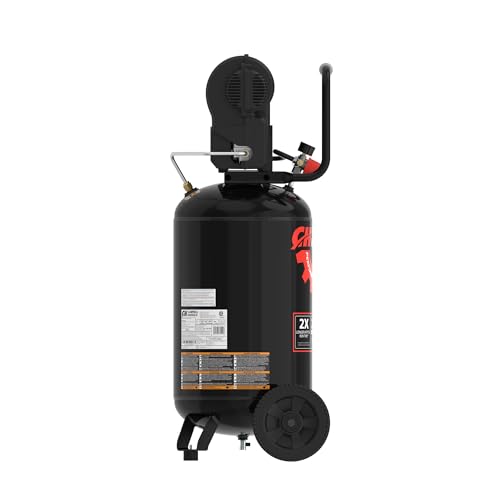
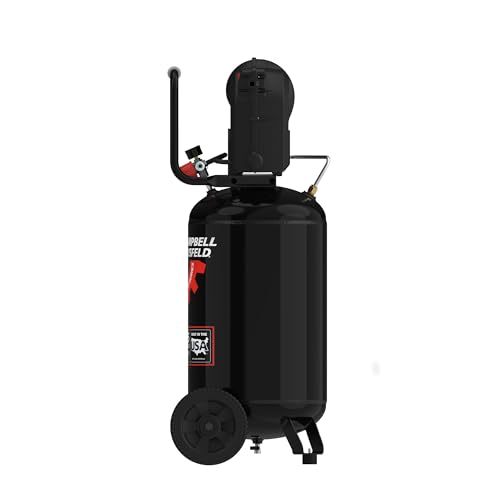
Dewalt went traditional here with an oil-lube belt drive system, and that’s a good thing if you’re serious about durability. Belt drives run cooler and smoother than direct drive, and the oil-lubricated pump means longer life under heavy loads. The 6.2 SCFM at 90 PSI is strong for a single-stage unit, and owners report it handles framing nailers and sanders without breaking a sweat.
It’s heavier and needs more maintenance than oil-free models, but that trade-off pays off in longevity. The 175 PSI max gives extra headroom for tools that need higher pressure. Compared to similarly sized oil-free units, this one feels like it’s built to work daily, not just on weekends. If you’re okay with checking oil and occasional belt tensioning, this is a workhorse.
Product photos
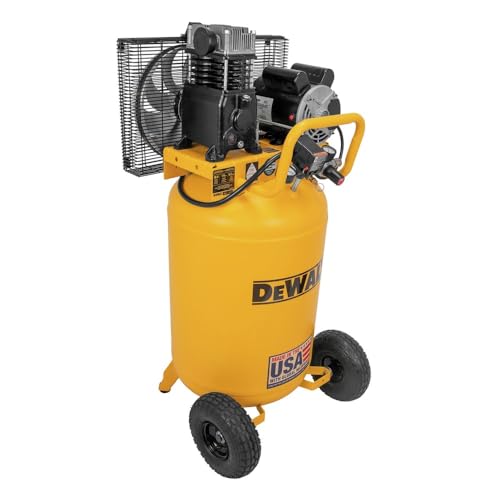
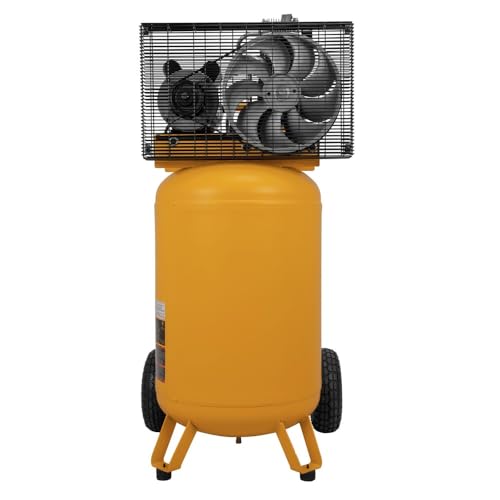
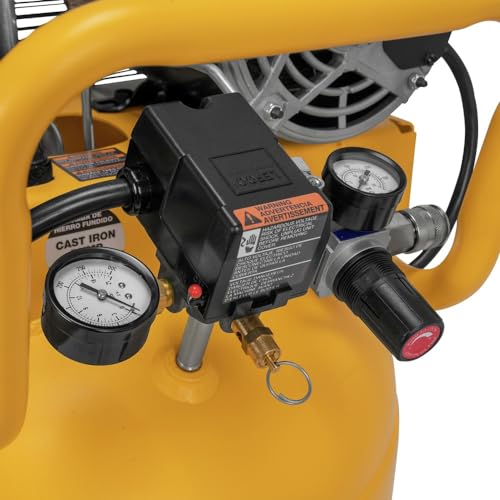
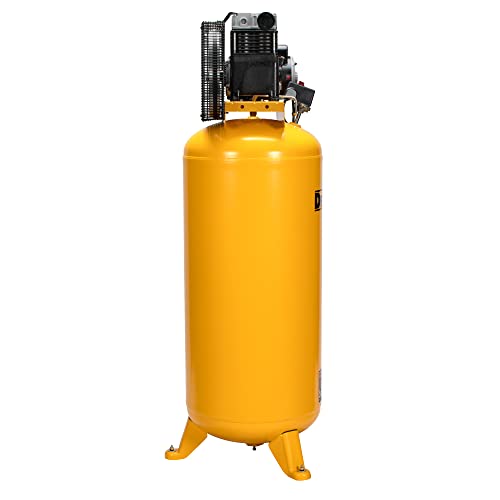
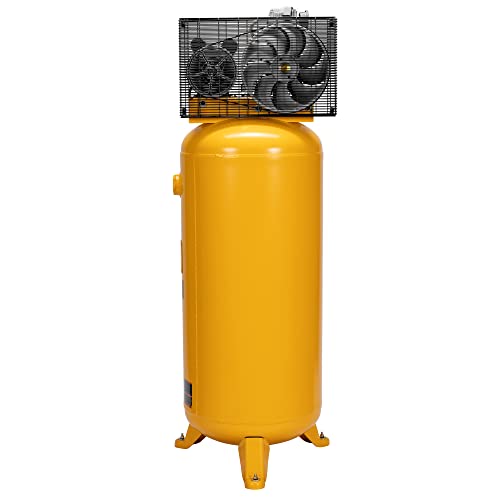
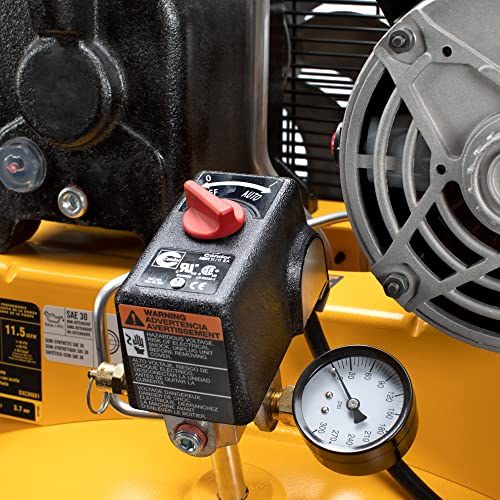
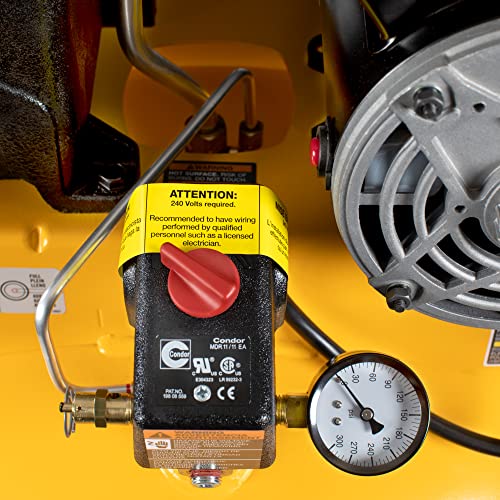
DEWALT 60 Gallon Vertical Air Compressor

Strengths
- 11.5 SCFM at 90 PSI
- 60-gallon tank
- Oil-lubricated pump
- 3.7 HP motor
- 240V for steady power
Trade-offs
- Requires 240V circuit
- Large footprint
- Not mobile
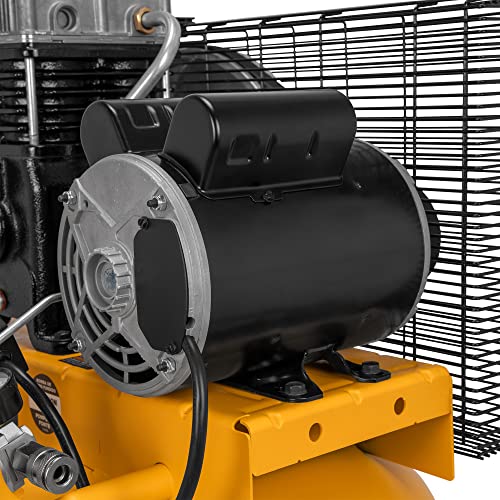
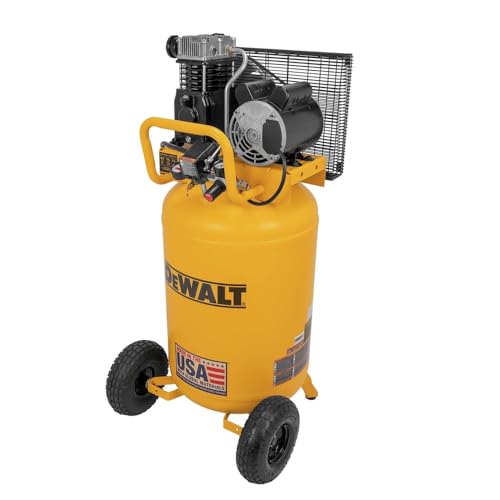
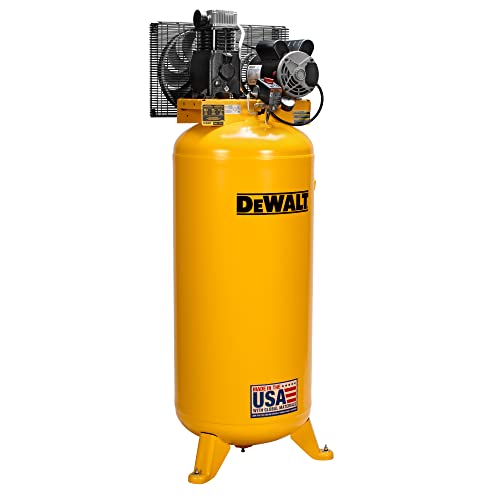
This is a shop-grade machine disguised as a garage unit. With 11.5 SCFM at 90 PSI and a 60-gallon tank, it’s built for non-stop use. The oil-lubricated pump and 3.7 HP motor mean it can run sanders, spray guns, and multiple tools all day. Reviewers note how rarely it cycles, a sign of serious reserve capacity.
It’s not portable, and the 240V requirement means you’ll need a dedicated outlet. But if you’re running a body shop, woodworking studio, or full-time repair garage, this is the kind of compressor that disappears into the background because it just works. Compared to smaller units, it’s in a different league entirely.
Product photos
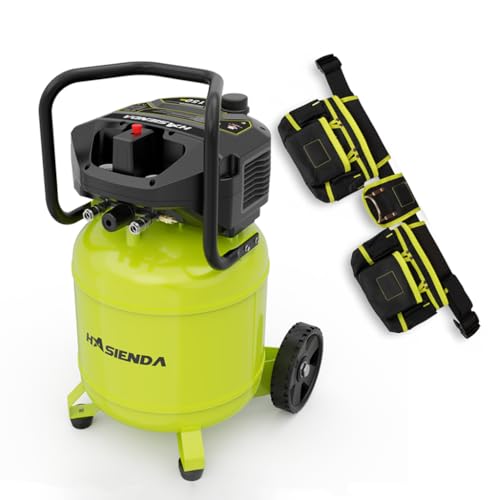
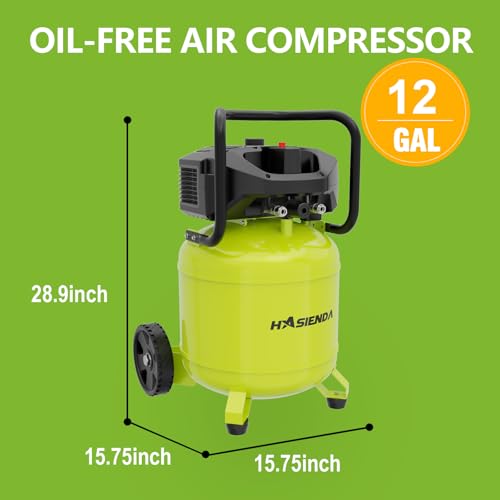
HASIENDA 12 Gallon Workshop Air Compressor
Strengths
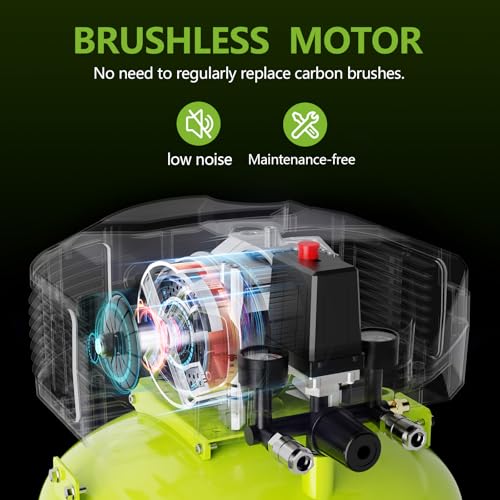
- Brushless motor
- 3.9 SCFM at 90 PSI
- 150 PSI max pressure
- Low noise
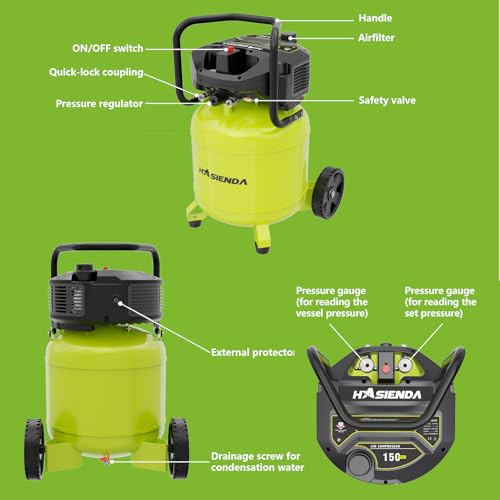
- Built-in safety protections
Trade-offs
- Lower CFM for spray guns
- 12-gallon tank fills quickly
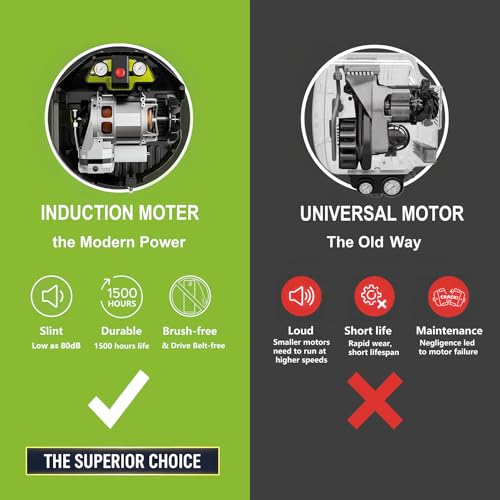
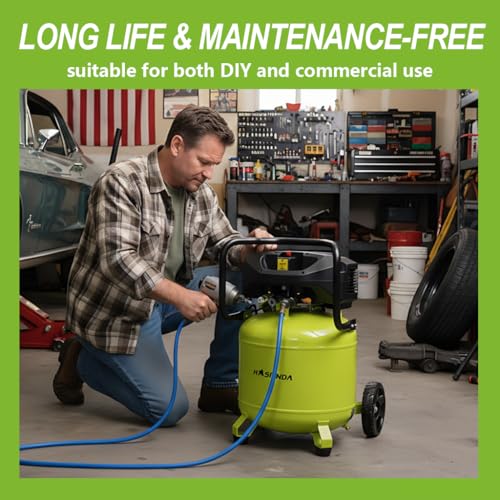
The standout here is the brushless motor, a rare feature in this category. Most compressors still use brushed motors that wear out over time, but this one eliminates that failure point. Reviewers consistently note how much quieter it runs than expected, and the lack of carbon brush maintenance is a real plus for casual users. The 3.9 SCFM at 90 PSI is modest, but enough for finish nailers, brad guns, and tire inflation.
It’s not going to power a HVLP spray gun for long, but if you value clean, quiet starts and long-term reliability over raw output, this makes sense. The safety features are thorough, especially the thermal and overload protection, useful if you’re leaving it running unattended during a project. For light-duty users, it’s a smart, future-proofed choice.
Product photos
How We Chose These vertical air compressor for home garages
Rather than a hands-on lab test, my research involved a detailed comparison of published specifications and features across numerous models. I weighed owner reviews from major retailers alongside expert opinions found in tool-focused publications. Applying my experience with power tool performance and maintenance needs, I ranked these compressors against criteria important to garage users – capacity, CFM delivery, noise levels, and portability.
For vertical air compressors, consistent airflow (CFM) and tank capacity are paramount. Sufficient CFM dictates whether a compressor can reliably power your tools, while tank size impacts how long you can run tools before the motor cycles on. Durability – specifically pump construction and overall build quality – also heavily influenced my assessment, as a garage compressor needs to withstand regular use and potentially less-than-ideal storage conditions.
Specifications reliably reveal core performance metrics like CFM at 90 PSI and maximum tank pressure. However, owner feedback proved crucial for understanding real-world noise levels and long-term reliability. Reputation within the DIY and automotive communities also played a role; compressors consistently praised for their quiet operation or ease of maintenance received higher consideration. You can find more information about various options in our guide to the best air compressors for home garages.
How To Choose The vertical air compressor for home garages
Choosing the right air compressor for your garage can feel overwhelming, but understanding your needs and the key specs will make the process much easier.
A good air compressor delivers consistent pressure (CFM) at your desired PSI, features durable construction for longevity, and offers a tank size appropriate for the intended applications. Look for oil-free options for reduced maintenance, and consider noise levels if working in enclosed spaces. Portability via wheels and a handle is also a significant convenience.
Tank Size & Portability
The size of the air tank is directly tied to how you plan to use the compressor. Smaller, 15-gallon tanks like the CRAFTSMAN 33 Gallon Air Compressor are fine for basic tasks like inflating tires or running a nail gun intermittently. But if you anticipate extended use, say, painting an entire car or running multiple tools simultaneously, you’ll quickly exhaust a smaller tank. Larger tanks, such as the 60-gallon Dewalt model, provide a much larger air reserve. Don’t overlook portability. A vertical design helps with space saving, and integrated wheels and a handle are almost essential if you need to move the compressor around the garage or job site.
CFM & PSI: Understanding Performance
CFM (cubic feet per minute) and PSI (pounds per square inch) are the two critical performance numbers. PSI indicates the maximum pressure the compressor can generate, while CFM measures the volume of air it delivers at a given PSI. Most air tools list their CFM requirements, and you need a compressor that can meet or exceed those needs. A compressor with a high PSI but low CFM won’t be able to power tools effectively. If you’re considering more demanding applications, you might even look at two-stage air compressors for garages for sustained high CFM output.
Noise & Maintenance Considerations
Noise can be a significant factor, especially if your garage is attached to the house or you have neighbors close by. Some compressors, like the HASIENDA 12 Gallon Workshop Air Compressor, boast impressively quiet operation thanks to brushless motors. Oil-free compressors, like many of the models we’ve reviewed, eliminate the need for regular oil changes and reduce overall maintenance. However, they generally have a shorter lifespan than oil-lubricated models. Here’s a quick rule of thumb:
For intermittent DIY use, an oil-free compressor is a great choice. For heavy, professional use, an oil-lubricated compressor will likely offer better durability and longevity.
Ultimately, the best choice depends on your specific needs and budget. If you’re still unsure, exploring a range of vertical air compressor models can help narrow down your options. Don’t hesitate to read detailed reviews and consider what other users are saying about their experiences with different best vertical compressors for garages.
Vertical Air Compressor for Home Garages Compared
Here’s a comparison of key specifications for vertical air compressors suitable for home garage use.
| Product Title | Tank Size (Gallons) | HP | Max PSI | SCFM @ 90 PSI | Oil-Free? |
|---|---|---|---|---|---|
| 15-Gallon Air Compressor | 15 | 2 | 125 | 4.5 | Yes |
| CRAFTSMAN 33 Gallon Air Compressor | 33 | N/A | 175 | 5.1 | Yes |
| VEVOR 14-Gallon Air Compressor | 14 | 2 | 125 | 4.3 | Yes |
| Campbell Hausfeld 15 Gallon Air Compressor | 15 | N/A | 225 | 4.0 | Yes |
| Dewalt 30 Gallon Vertical Air Compressor | 30 | 2 | 175 | 6.2 | No |
| DEWALT 60 Gallon Vertical Air Compressor | 60 | 3.7 | 155 | 11.5 | No |
| HASIENDA 12 Gallon Workshop Air Compressor | 12 | N/A | 150 | 3.9 | Yes |
Frequently Asked Questions
What size compressor is sufficient for most garage tasks?
A 30-gallon compressor with at least 5 CFM at 90 PSI will handle most common garage jobs(inflating tires, running nailers, and powering small impact wrenches). However, if you plan on sandblasting or using multiple tools simultaneously, a 60-gallon tank is a better choice.
Are oil-free compressors really maintenance-free?
While oil-free compressors don’t require oil changes, they still need regular draining of the tank to prevent rust and corrosion. The motor brushes will also eventually wear out and may require replacement, though this is generally a less frequent maintenance item than oil changes.
How much noise should I expect from a vertical air compressor?
Noise levels vary significantly, but most compressors fall within the 70-85 decibel range. Quieter models, often featuring brushless motors, can operate around 75 decibels. If noise is a concern, look for models specifically advertised as quiet or consider sound dampening materials for your garage.
Can I run a plasma cutter with a vertical air compressor?
Generally, no. Plasma cutters often require a significantly higher CFM than most vertical compressors can deliver consistently. You’ll likely need a larger, dedicated compressor – or consider a portable air compressors for garages with a higher CFM output – to power a plasma cutter effectively.
What’s the difference between single-stage and two-stage compressors?
Single-stage compressors compress air in one stroke, making them suitable for intermittent use. Two-stage compressors compress air in two stages, resulting in higher pressure and CFM delivery. While more expensive, two-stage compressors are better for demanding applications and offer greater efficiency, especially when you need consistently high output for tasks like automotive repair.
The Bottom Line
Choosing a vertical air compressor always comes down to balancing how much you want to spend against how much capability you really require. While a larger tank and higher CFM are desirable, the Dewalt 60 Gallon Vertical Air Compressor strikes a strong balance for serious DIYers and those with a wide range of tool needs. It provides ample air storage and consistent airflow for demanding tasks without breaking the bank compared to professional-grade options.
For those on a tighter budget or with more modest air tool requirements, the VEVOR 14-Gallon Air Compressor is an excellent starting point. Similarly, if you are specifically looking for quiet air compressors for garages, the HASIENDA 12 Gallon Workshop Air Compressor makes a good choice due to its brushless motor and reduced noise levels. Each of these compressors delivers a good value proposition for a specific set of priorities.
Ultimately, the specs matter less than understanding how you’ll use the compressor. Prioritize consistent CFM to match your tools’ requirements, and don’t skimp on build quality. A well-maintained compressor, even a smaller one, will always outperform a larger, poorly-made model in the long run.
