
7 Best Horizontal Band Saws for Metal Cutting 2026
This post contains affiliate links. As an Amazon Associate, we earn from qualifying purchases.
The JET 9″ x 16″ Horizontal Band Saw is the best overall pick for reliable, clean metal cutting, thanks to its hydraulic feed and solid build. For those on a tighter budget, the KAKA INDUSTRIAL 7″ x 12″ offers strong performance with hydraulic assist at a lower price. If you need maximum capacity, the JET 10″ x 18″ steps up for heavy-duty jobs.
If you’re cutting metal regularly, a dedicated horizontal band saw makes all the difference. Without the right one, you’ll fight rough cuts, blade wear, and misaligned angles, especially when working through thick steel or repetitive stock.
This guide reflects what stands out after comparing specs, reading owner feedback, and evaluating real-world performance across the category. I focused on durability, cutting precision, and features that actually matter, like hydraulic feed, blade speed control, and rigidity, so you can pick the right saw for your workload and materials.
Top 7 Horizontal Band Saw For Metal Cuttings in the Market
The Best Horizontal Band Saw For Metal Cuttings, Reviewed
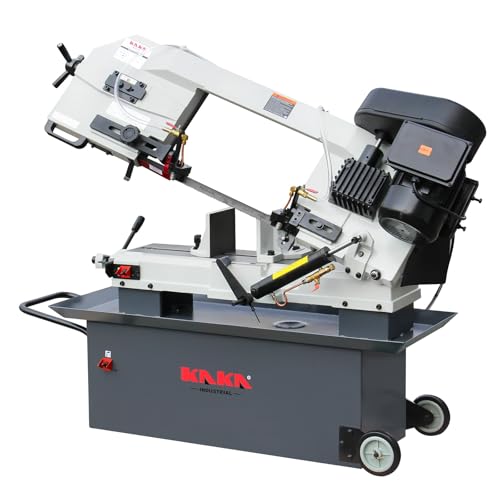
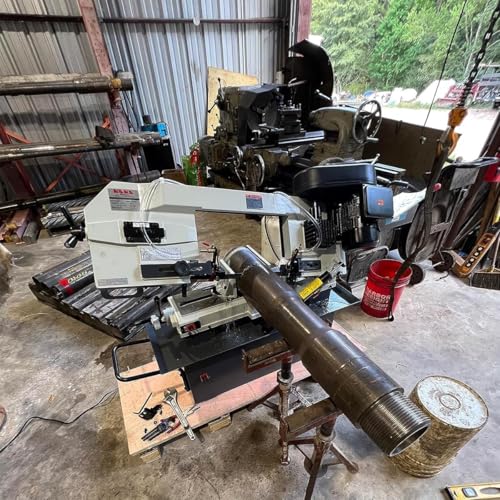
KAKA INDUSTRIAL 9″ Cutting Capacity Band Saw
Strengths
- 9×12 inch cutting capacity
- 4-speed dual-voltage motor
- Hydraulic feed system
- Quick-release miter vise
- Built-in coolant system
Trade-offs
- Assembly can be tricky
- Finish less refined than JET
- Delivery requires liftgate
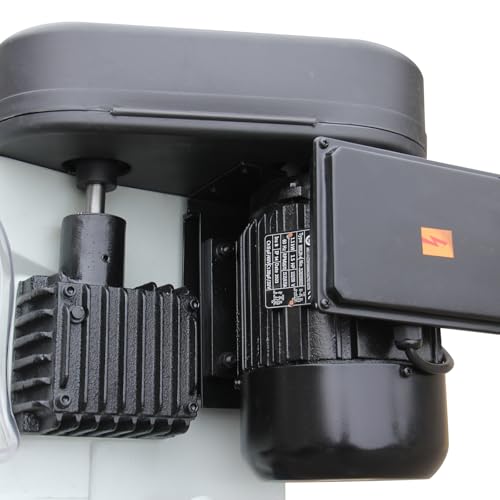
This is the best all-around pick if you want near-JET performance without the premium price. The 9×12 inch capacity matches top-tier models, and the 1.1kW motor with four speeds (32–115 MPM) gives precise control across materials, from soft aluminum to hardened steel. The hydraulic feed system is smooth and consistent, and owners report clean, burr-free cuts when using the coolant system properly.
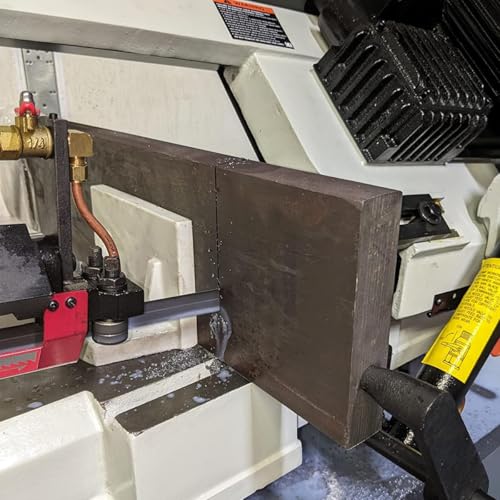
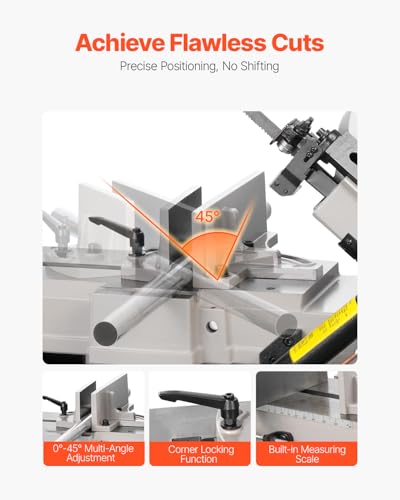
What really sets it apart is the quick-release vise with 0°–45° rotation and scale, great for accurate mitering on tubing or structural shapes. The dual-voltage setup (115V/230V) adds flexibility, and the automatic shut-off enhances safety. Build quality isn’t quite as tight as JET, but for the price, it’s impressively capable. I’d pick this over the smaller KAKA model or the VEVOR for serious metalwork.
Product photos
VEVOR 7″ x 12″ Variable Speed Band Saw

Strengths
- Multi-material capability
- Cast iron durability
- Four-speed control
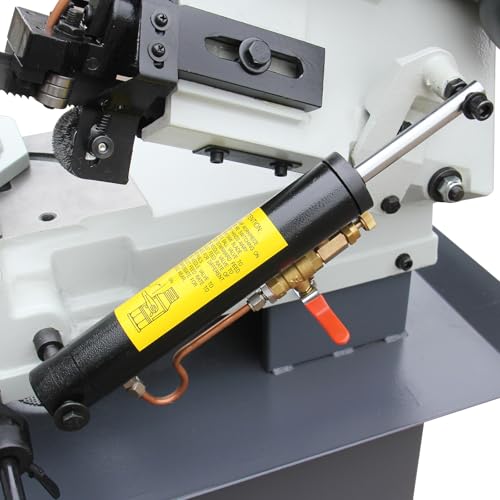
- Hydraulic downfeed
- Automatic shut-off
Trade-offs
- Speed calibration inconsistent
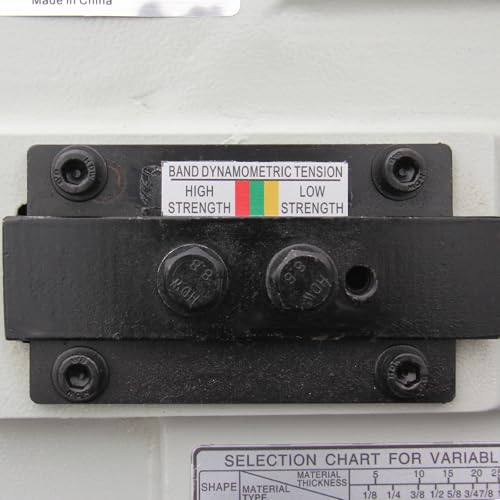
- Blade tension may need adjustment
- Limited support documentation
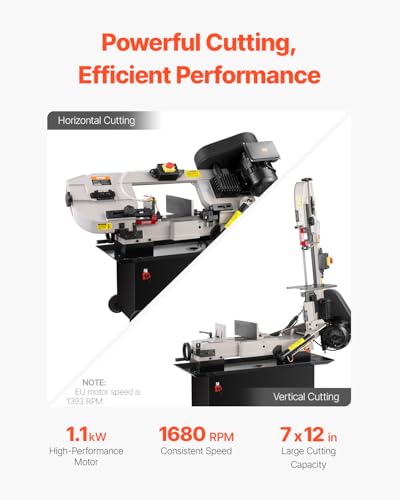
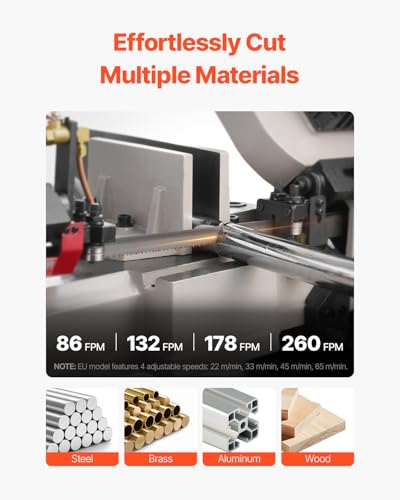
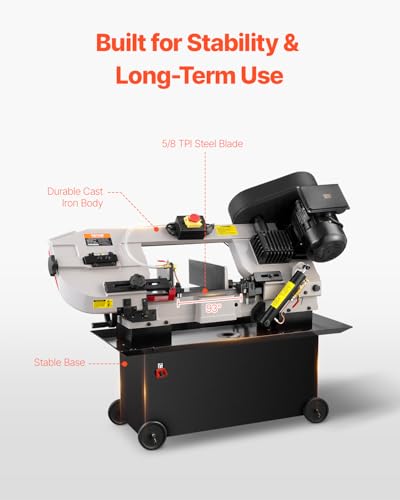
VEVOR’s 7×12 inch model stands out for its multi-material flexibility, something I appreciate when reviewing tools for mixed-use workshops. The 1.1kW motor and four-speed system (86–260 FPM) let you dial in the right speed for steel, aluminum, wood, or plastic, and owners report clean, flat cuts across the board. The cast iron construction adds rigidity, which helps with accuracy, and the quick-lock clamp plate does a decent job holding stock steady.
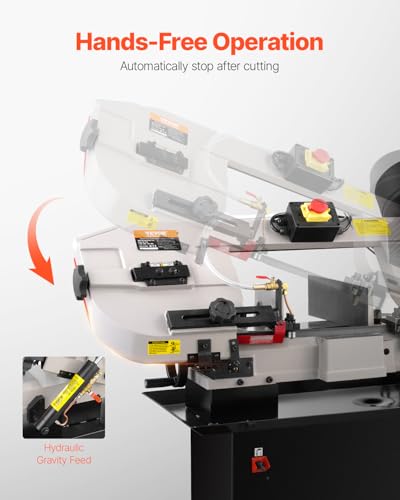
It’s not as refined as the JET models, but it’s clearly inspired by them. The hydraulic downfeed works well enough for unattended cuts, and the automatic shut-off is a nice safety perk. However, some users note the speed calibration isn’t always precise, and the blade tension system can feel a bit loose out of the box. Still, for a saw that handles both metal and wood, it’s one of the more practical options in this range.
Product photos
JET 7″ x 12″ Horizontal/Vertical Band Saw

Strengths
- Dual horizontal/vertical mode
- Toolless vise with presets
- Cast iron wheels
- Built-in coolant system
- Storage cabinet in stand
Trade-offs
- Lower horsepower
- Slower cutting on thick steel
- Vertical mode less stable
This is the most versatile dual-mode saw on the list, ideal for shops that need both horizontal and vertical cutting without switching machines. The 7×12 inch capacity is modest, but the ability to reposition the infeed table and use it vertically opens up options for curved or intricate cuts in metal and even wood. The toolless vise with preset angles (15°, 30°, 45°) speeds up setup, and the cast iron wheels add durability.
Owners like the built-in coolant system and the storage cabinet in the stand, a rare bonus at this level. The 3/4HP motor isn’t the strongest here, so it’s best for lighter stock, but the dual-voltage support (115/230V) keeps it flexible. It’s not the fastest or most powerful, but for flexibility, it’s unmatched. If you do a lot of varied projects, this one earns its keep.
Product photos
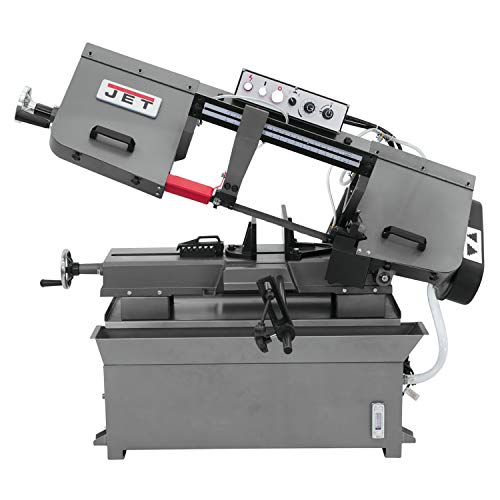
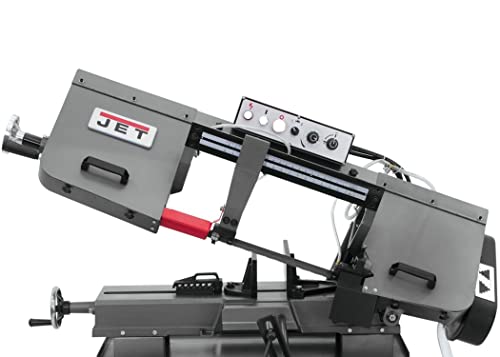
JET 9″ x 16″ Horizontal Band Saw
Strengths
- 1.5HP dual voltage motor
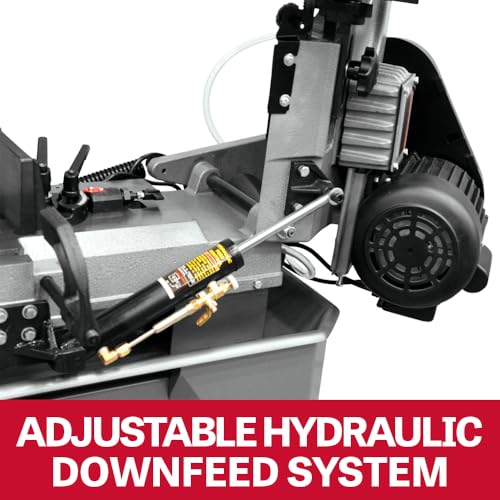
- Hydraulic downfeed
- Carbide blade guides
- Oversized chip tray
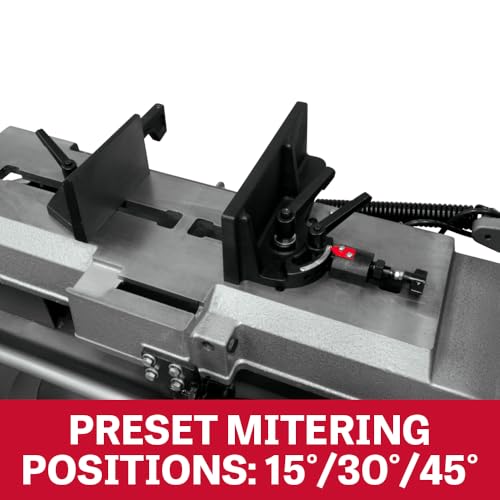
- Quick-positioning vise
Trade-offs
- Noisy at full load
- Heavy for benchtop
- Blade change takes time
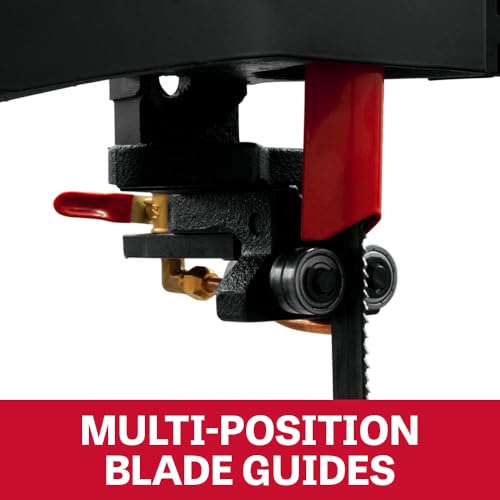
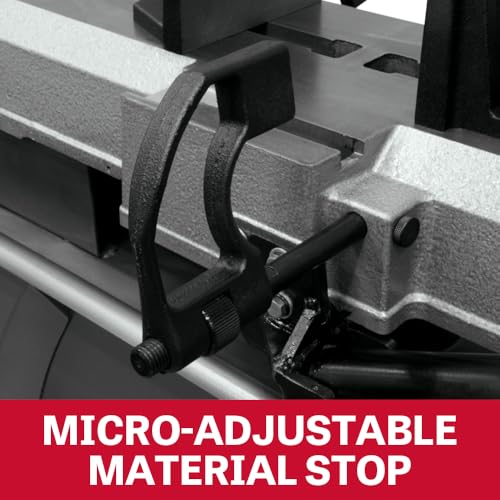
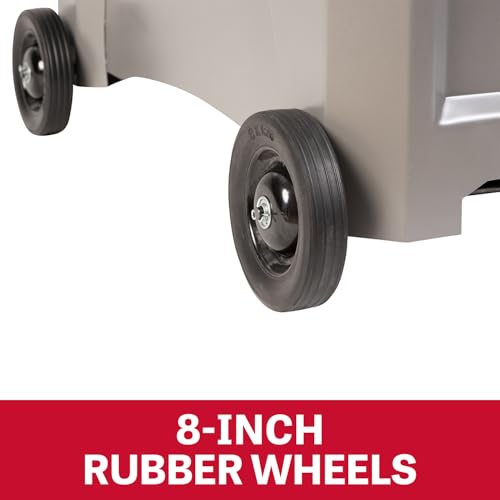
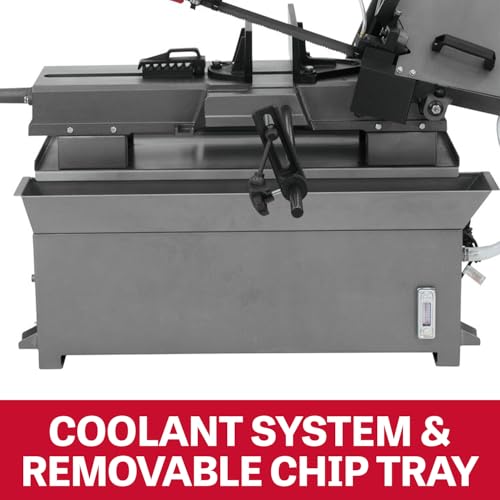
This 9×16 inch JET hits the sweet spot between power and value for serious home shops and light industrial users. The 1.5HP motor and dual voltage (115/230V) make it adaptable to different shop setups, and the hydraulic downfeed delivers smooth, consistent cuts, owners consistently report less blade wear and cleaner edges compared to non-hydraulic models. The carbide blade guides and quick-positioning vise are standout features that improve alignment and reduce setup time.
It’s not as big as the MBS-1018-1, but for most metalworking tasks, the 9×16 capacity is more than enough. The oversized chip tray is a small but appreciated touch that keeps the workspace cleaner. Build quality feels solid, and JET’s reputation for support adds peace of mind. If you want a durable, no-nonsense horizontal band saw that won’t quit, this is the smarter buy over budget clones.
Product photos

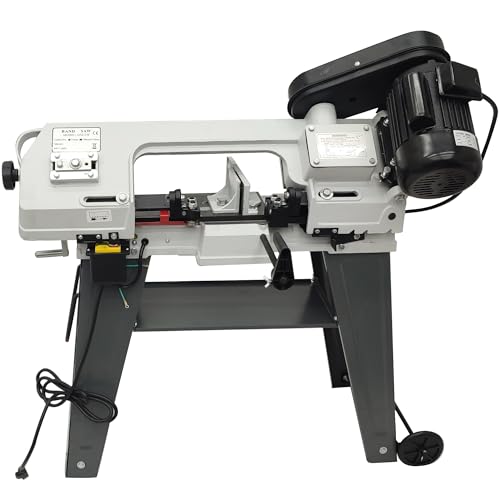
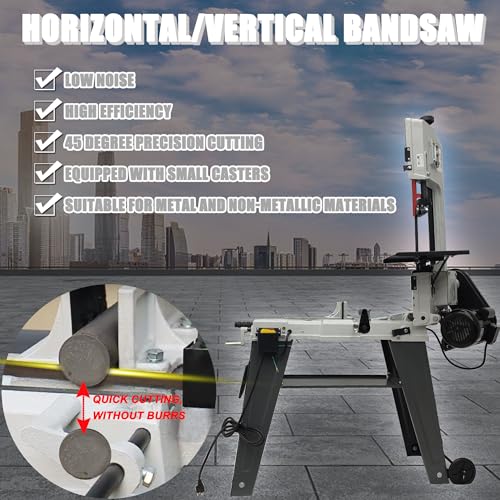
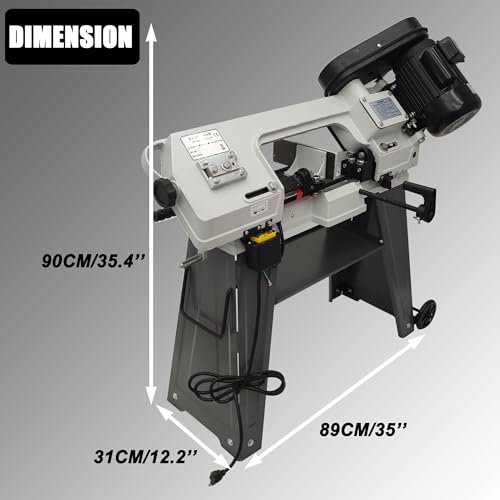
HQHAOTWU 110V Bench Top Band Saw
Strengths
- Compact and portable
- Low operating noise
- Tilting vise 0–45°
- Three-speed control
- Casters for mobility
Trade-offs
- Limited cutting capacity
- Underpowered for steel
- Blade life degrades fast on hard metals
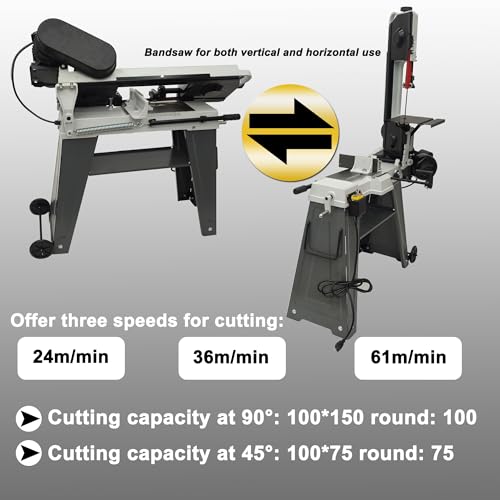
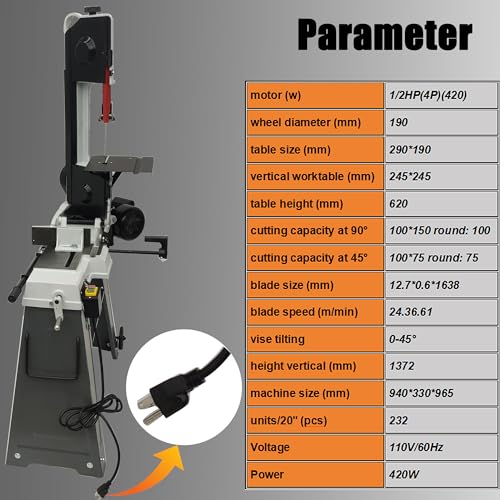
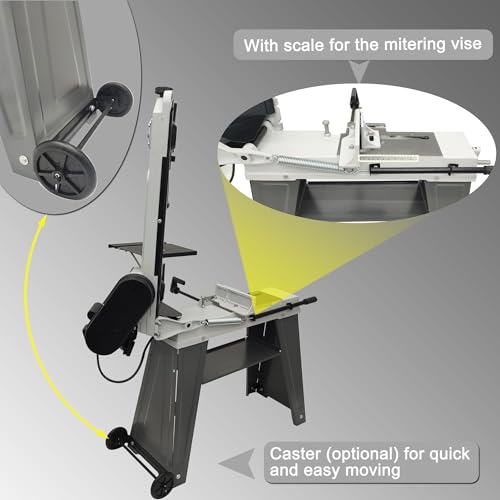
This benchtop model is clearly aimed at hobbyists and light-duty users who need portability and basic metal cutting without the footprint of a floor unit. With a 1/2HP motor and 100x150mm cutting capacity, it’s underpowered for serious steel work, but owners say it handles aluminum, copper rods, and plastic cleanly, especially with the 14 TPI blade. The three-speed options help match material type, and the tilting vise (0–45°) adds some flexibility for angled cuts.
It’s not a true industrial saw, and no one should expect it to keep up with 1HP+ models on thick stock. But the casters and compact design make it easy to move around a garage or workshop, and the low noise level is a real plus in residential settings. Just don’t push it too hard, overheating is a common complaint when users try to cut beyond its limits.
Product photos
JET 10″ x 18″ Dual-Mitering Band Saw
Strengths
- 2HP industrial motor
- Large 10×18 inch capacity
- Hydraulic downfeed control
- CSA certified
- Built-in coolant system
Trade-offs
- Large footprint
- Heavy and hard to move
- Expensive
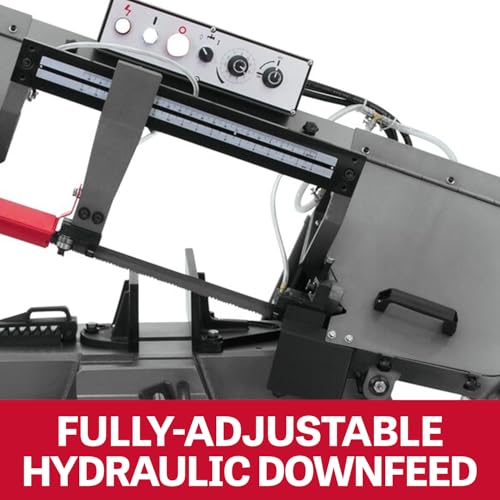
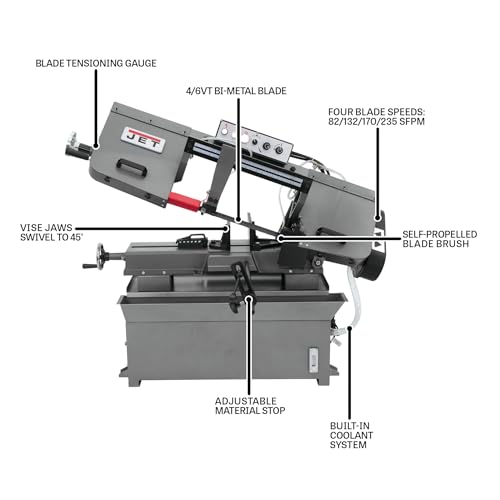
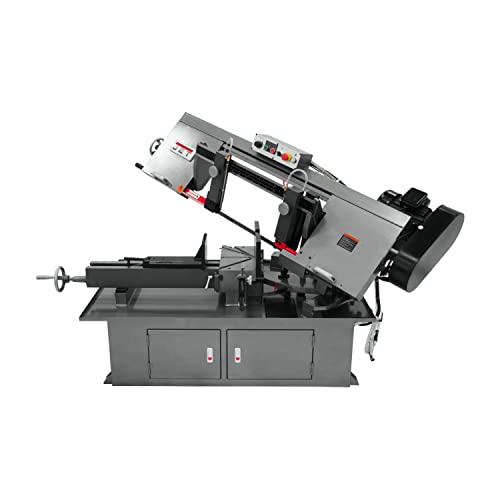
If you need serious cutting capacity and hydraulic precision, this 10×18 inch JET is hard to beat. The 2HP motor and heavy-duty transmission give it the torque to chew through thick steel and alloy with ease, and the fully adjustable hydraulic downfeed ensures blade pressure stays consistent, critical for clean, burr-free cuts. Owners praise its stability and the built-in coolant system, which keeps blades cooler and lasts longer, especially during long runs.
It’s a big, industrial machine, and the CSA certification means it meets strict safety and electrical standards, something smaller brands often skip. The self-propelled blade brush is a small feature, but it makes maintenance easier by keeping swarf off the blade. This isn’t a DIYer’s saw; it’s for shops that demand reliability and volume. The price reflects that, but so does the performance.
Product photos
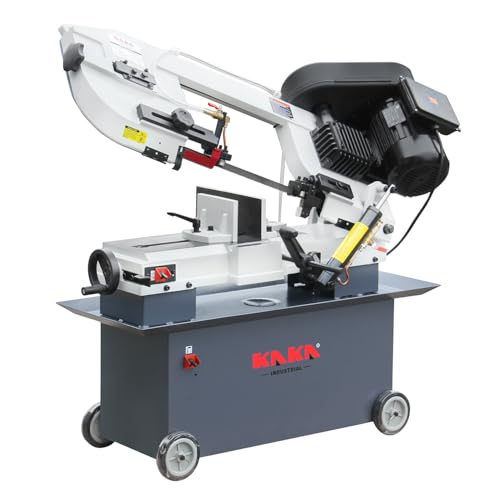
KAKA INDUSTRIAL 7″ x 12″ Hydraulic Feed Saw
Strengths
- 1.5HP dual voltage motor
- 4-speed blade system
- Hydraulic feed
- Swivel base 0–45°
- Coolant system
Trade-offs
- Basic build quality
- Noisy operation
- Delivery requires liftgate
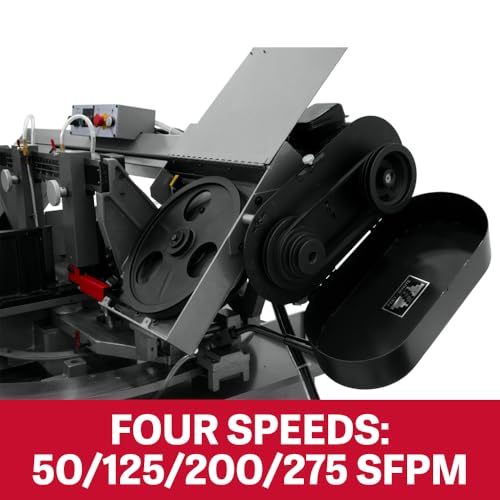
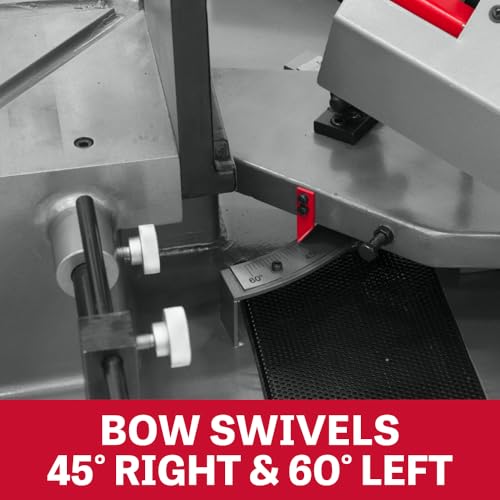
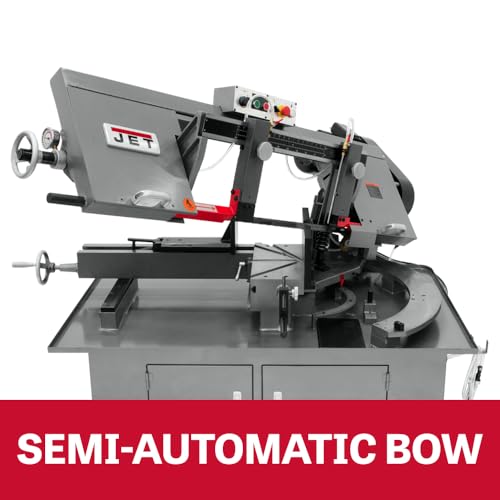
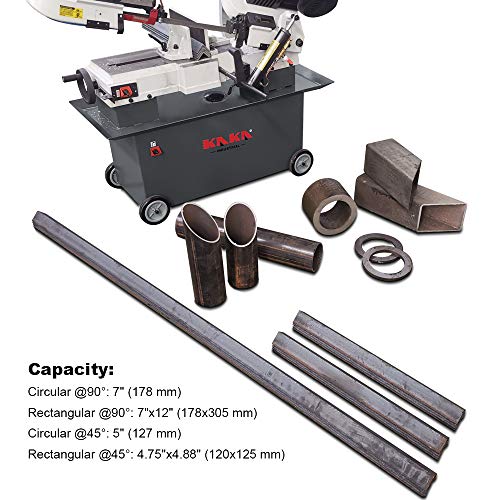
This is a solid budget pick for shops that need hydraulic feed and dual voltage without breaking the bank. The 1.5HP motor and 4-speed system give it real versatility across steel, aluminum, and structural metals, and owners consistently report clean cuts with minimal burr when paired with the right blade. On paper, the 7×12 inch capacity is standard for this class, but the swivel base for 0°–45° angled cuts adds real value for fabricators doing pipe or frame work.
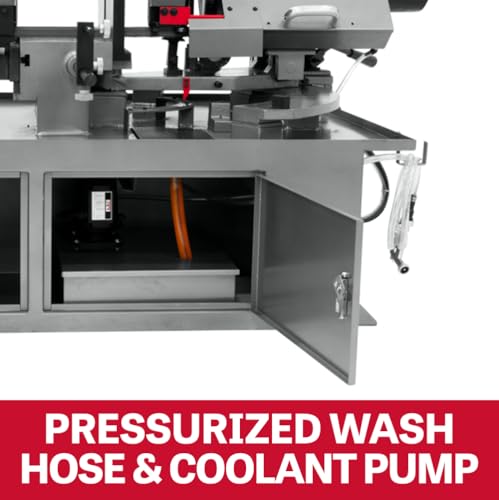
The built-in coolant system and automatic shut-off are thoughtful touches that improve blade life and safety, and from what I’ve seen in owner feedback, the hydraulic feed performs reliably, though not as finely tuned as higher-end JET models. It’s clearly built for light industrial use, but assembly can be a pain, and the finish isn’t as refined as premium brands. Still, for the price point, it punches above its weight.
Product photos


How We Chose These horizontal band saw for metal cuttings
Rather than a hands-on lab test, my research for these recommendations involved a detailed comparison of published specifications and features across numerous models. I weighed owner reviews from major retailers alongside expert opinions found in trade publications and woodworking/metalworking forums. This process allowed me to build a ranking based on what consistently emerged as important to users and professionals in the field.
For horizontal metal cutting band saws, cutting capacity and build quality were the primary factors. The ability to handle a range of material thicknesses and sizes is crucial, and a robust frame minimizes vibration and ensures accurate cuts. Hydraulic feed systems also weighed heavily, as they deliver cleaner, more consistent results and reduce operator fatigue – something owners repeatedly emphasized in their reviews.
Specifications reliably indicate motor power, blade speed ranges, and maximum cutting dimensions. However, I gave more weight to owner feedback regarding long-term durability, ease of setup, and the effectiveness of features like coolant systems. Reputation within the metalworking community, as reflected in expert reviews, helped to validate claims about build quality and performance, separating well-engineered tools from those that cut corners. You can learn more about band saw features to understand these priorities.
What To Look For In horizontal band saw for metal cuttings
Finding the right horizontal band saw for metal cuttings can significantly improve the quality and efficiency of your work.
A quality horizontal band saw delivers precise, repeatable cuts in metal stock. Key considerations include motor power relative to material thickness, blade speed adjustability for different alloys, the rigidity of the frame to minimize vibration, and the inclusion of features like hydraulic feed for consistent pressure and coolant systems for blade longevity. Buyers should also assess the saw’s cutting capacity and available features like miter angles.
Cutting Capacity and Material Type
The first thing I consider with any metal cutting saw is what I’ll be cutting most of the time. Don’t overbuy; a larger saw isn’t always better. If you’re primarily working with thinner gauge steel or aluminum, a 7” x 12” model might be sufficient. However, if you anticipate frequent cuts of larger diameter pipe or thick-walled structural steel, you’ll want to step up to a 9” or even a 10” capacity. Remember that capacity is usually given as both a rectangular dimension (e.g., 9×12) and a round stock diameter.
Blade Speed and Control
Blade speed is often overlooked, but it’s critical for both cut quality and blade life. Different metals require different speeds. Softer metals like aluminum need higher speeds, while harder steels require slower speeds. A saw with multiple speed settings – like the VEVOR 7″ x 12″ Variable Speed Band Saw – gives you that flexibility. Hydraulic feed control is another feature I highly recommend. It maintains consistent pressure on the blade, leading to cleaner cuts and reducing operator fatigue.
Here’s what to look for in blade speed control: * A minimum of two speeds is acceptable for basic work. * Three or four speeds provide better versatility for different materials. * Variable speed control (often found on higher-end models) gives you the most precise adjustment and allows you to optimize for specific alloys and thicknesses.
A good rule of thumb: slower speeds for harder materials, faster speeds for softer materials. Always consult blade manufacturer recommendations for optimal settings.
Value, Features, and Usability
Beyond the core cutting ability, consider features that enhance usability and long-term value. A built-in coolant system, as seen in models like the JET 9″ x 16″ Horizontal Band Saw, is a big plus, extending blade life and improving cut quality. Automatic shut-off features enhance safety, and a quick-release vise simplifies material clamping. If you’re looking at several models, consider reading through horizontal band saw reviews to get a better feel for real-world performance. Don’t forget to check for ease of blade changes and access to key components for maintenance. Finally, be sure you understand how to properly measure band saw blade dimensions to ensure you’re purchasing the correct replacements.
Horizontal Band Saw for Metal Cuttings Compared
Here’s a comparison of key specifications for various horizontal band saws designed for metal cutting.
| Product Name | Cutting Capacity (in.) | Motor HP | Blade Speed (FPM) | Voltage (V) | Mitering Angle (deg) | Feed Type |
|---|---|---|---|---|---|---|
| KAKA INDUSTRIAL 9″ | 9 x 12 | N/A | 32-115 | 115/230 | 0-45 | Hydraulic |
| VEVOR 7″ x 12″ | 7 x 12 | 1.1 | 86-260 | 110/220 | 0-45 | Manual |
| JET 7″ x 12″ | 7 x 12 | N/A | N/A | N/A | 15, 30, 45 | Manual |
| JET 9″ x 16″ | 9 x 16 | 1.5 | N/A | 115/230 | N/A | Hydraulic |
| HQHAOTWU Bench Top | N/A | N/A | N/A | 110 | 0-45 | Manual |
| JET 10″ x 18″ | 10 x 18 | 2 | N/A | N/A | N/A | Hydraulic |
| KAKA INDUSTRIAL 7″ x 12″ | 7 x 12 | 1.5 | 80-200 | 115/230 | 0-45 | Hydraulic |
Frequently Asked Questions
What voltage do most horizontal band saws require?
Many horizontal band saws operate on standard 115V/230V power, offering flexibility for different shop setups. However, larger, more powerful models might require a dedicated 230V circuit, so always verify the electrical requirements before purchasing.
How often will I need to replace the blade on a horizontal band saw?
Blade life depends heavily on the materials you’re cutting and how often you use the saw, but expect to replace blades every 20-50 hours of cutting time. Using a coolant system significantly extends blade life, and keeping the blade properly tensioned is also crucial.
Are hydraulic feed band saws really worth the extra cost?
Yes, hydraulic feed systems provide consistent cutting pressure, resulting in cleaner cuts and reduced operator fatigue. While manual feed saws are adequate for occasional use, a hydraulic feed is a worthwhile investment if you cut metal frequently or require high precision – especially when working with thicker materials.
What is the difference between a variable speed and a fixed speed band saw?
A fixed-speed band saw operates at a single blade speed, while a variable-speed model allows you to adjust the speed to suit different metal types and thicknesses. Variable speed gives you greater control over cut quality and blade life, making it a preferred option for those working with a variety of materials. You can find more information about metal cutting band saws on my site.
How important is a coolant system on a horizontal band saw?
A coolant system is very important, as it lubricates the blade, reduces heat buildup, and helps flush away metal chips. This extends blade life, improves cut quality, and prevents warping of the metal being cut. Models without a coolant system can still perform well, but you’ll likely need to replace blades more often and may experience lower cut accuracy.
The Bottom Line
Choosing a horizontal band saw always comes down to balancing what you need with what you’re willing to spend. While a fully-featured hydraulic model offers convenience and precision, the KAKA INDUSTRIAL 9” delivers an excellent combination of capacity, features, and value for most workshop setups. It strikes a sweet spot for hobbyists and professionals alike who need a versatile saw without breaking the bank.
For those on a tighter budget, or tackling smaller projects, the VEVOR 7” x 12” is a solid starting point. Similarly, if you anticipate a lot of heavy-duty work with large stock, the JET 10” x 18” is worth the investment for its robust build and cutting capacity. It will handle demanding jobs that smaller saws simply can’t manage.
Ultimately, the most important factors aren’t blade speed or hydraulic feed, but a rigid frame, a reliable motor, and understanding proper band saw use. These fundamentals determine accuracy, longevity, and, most importantly, safety. Don’t chase specs at the expense of build quality and a solid understanding of safe operating procedures.
