
9 Best Tree Trimming Tools of 2026
This post contains affiliate links. As an Amazon Associate, we earn from qualifying purchases.
The SEESII Brushless 2-in-1 Pole Saw stands out as the best overall tree trimming tool for most homeowners, combining serious reach with reliable cordless power. If you’re watching your budget, the Fiskars 28-Inch Bypass Loppers deliver sharp, consistent cuts for smaller jobs. For those who want versatility without power, the BlumeTrec 14.5FT Manual Pole Saw offers solid reach and adjustability.
Trimming trees shouldn’t mean risking a fall from a wobbly ladder or struggling with a tool that can’t handle the branch in front of you. Too many people buy based on price or convenience, only to end up with dull blades, awkward reach, or tools that quit mid-job.
In this guide, I’ve focused on what actually matters, cutting performance, real-world reach, and long-term reliability, using specs, owner feedback, and my years of hands-on experience with yard tools to identify the ones worth your time and money.
Top 9 Tree Trimming Tools in the Market
The Best Tree Trimming Tools, Reviewed
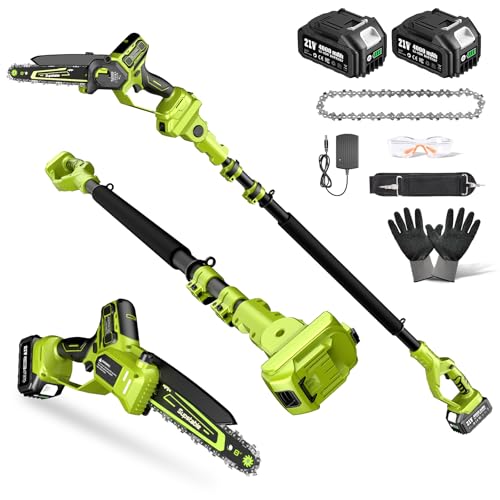
8-Inch Cordless Pole Saw
Strengths
- Brushless motor
- 180° cutting head
- Two battery sizes
Trade-offs
- Heavier at full extension
- Higher price point
- Larger storage footprint
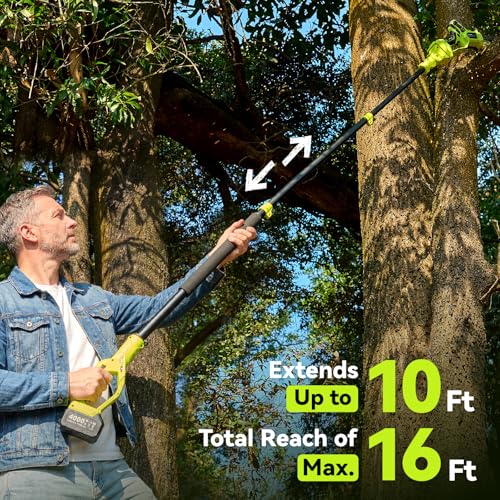
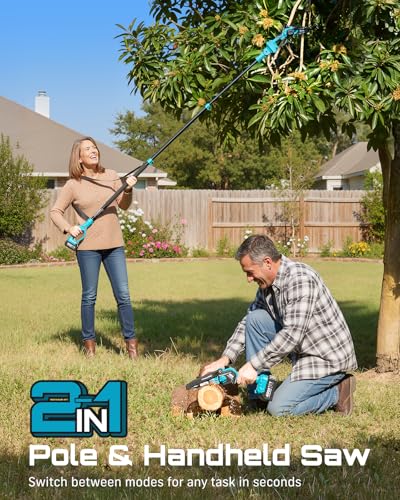
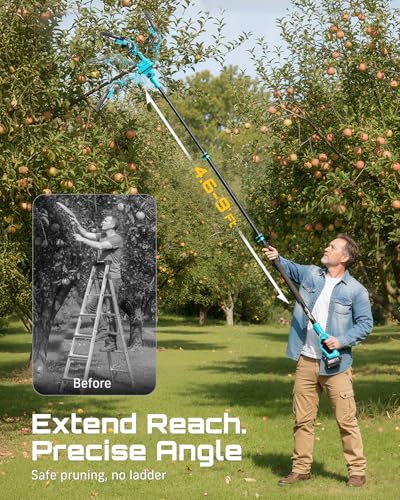
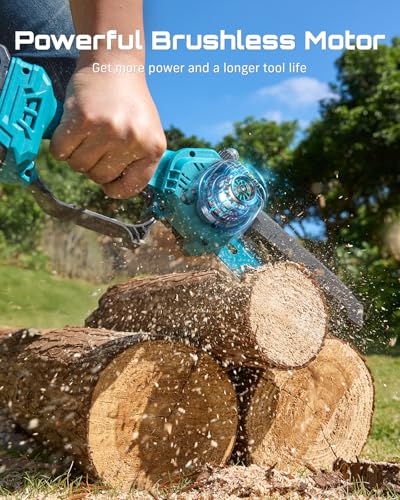
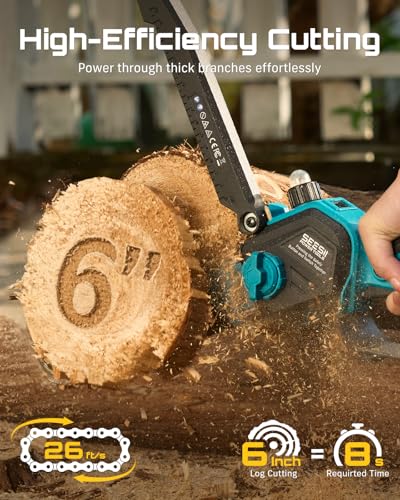
This is the most complete package in the lineup, and it earns the ‘Best Overall’ label for good reason. The brushless motor delivers consistent power, easily slicing through 6-inch limbs, and the ability to swap between 6-inch and 8-inch bars adds serious versatility. The 16-foot reach is among the best, and the 180-degree adjustable head means you can tackle branches from any angle without repositioning.
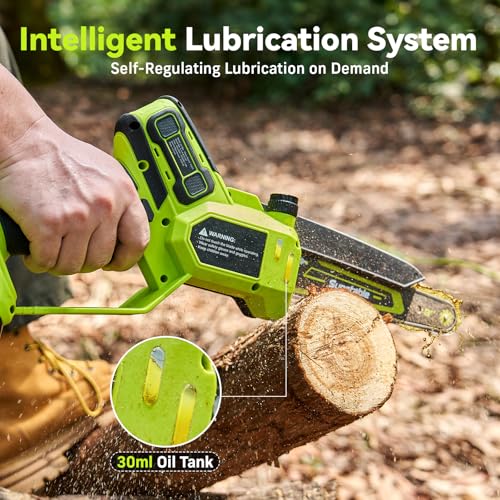
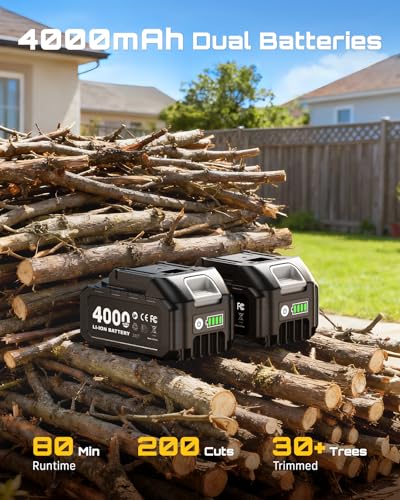
Owners consistently praise the automatic oiling and tool-free chain tensioning, features that make maintenance accessible even for novices. With two 4000mAh batteries and a 2-year warranty, it’s built for reliability. Compared to other cordless models, it strikes the best balance between power, reach, and user-friendliness. It’s not the cheapest, but for most homeowners, it’s the smarter long-term investment.
Product photos


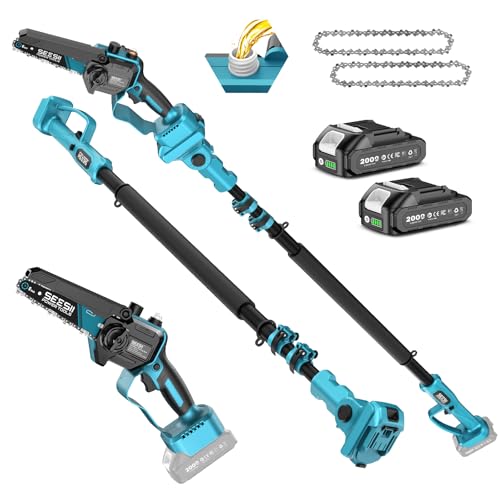
SEESII 2-in-1 Electric Pole Saw
Strengths
- Budget-friendly
- Lightweight build
- Complete accessory kit
Trade-offs
- Smaller batteries
- Brush motor wears faster
- Shorter reach
If you’re on a budget but still want a full 2-in-1 cordless setup, this SEESII model is hard to beat. It’s lighter than most at just 3.2 lbs, and the brush motor handles 6-inch branches well enough for occasional use. The dual 2000mAh batteries aren’t as robust as the 4000mAh versions, but they’re sufficient for small to medium yards, owners say it’s perfect for quick weekend touch-ups. The automatic oiling and tool-free chain tensioning make maintenance a breeze, even for beginners.
It doesn’t have the power or longevity of brushless models, and the 10-foot max reach limits high trimming on tall trees. But for the price, you get a complete kit with gloves, goggles, and spare chain, which adds real value. Compared to the pricier SEESII brushless version, this one trades durability for affordability, but for light-duty users, that’s a fair trade.
Product photos
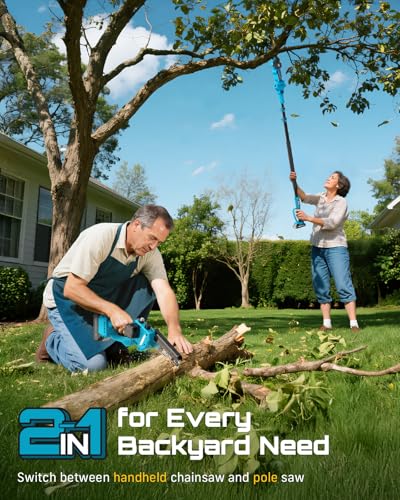

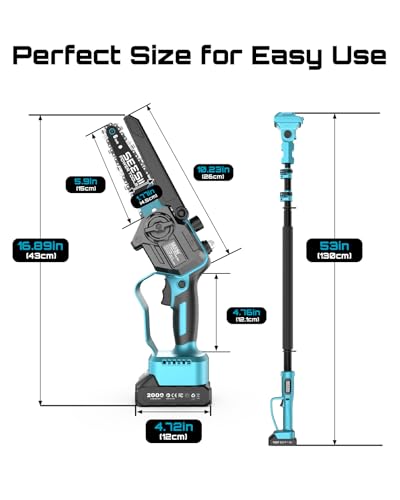


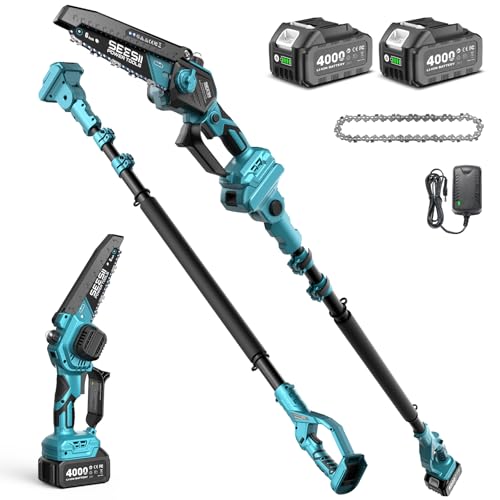
SEESII Brushless 2-in-1 Pole Saw
Strengths
- Brushless motor
- Dual high-capacity batteries
- Angle-adjustable head
Trade-offs
- Shorter bar length
- No 8-inch bar option
- Plastic housing feels light
This is one of the few cordless pole saws that actually delivers on the brushless motor promise: longer runtime, cooler operation, and noticeably smoother cutting through 4-inch limbs. The dual 4000mAh batteries are a major plus, owners report getting through full yard sessions without swapping, which is rare at this price tier. The 15.5-foot max reach is practical, and the angle-adjustable head helps with awkward cuts, though it’s not quite as flexible as the 180-degree models.
It’s also one of the better-balanced lightweight designs, and the shoulder strap included in the kit makes extended overhead work far less taxing. While it’s not as rugged as pro-grade gas models, for a homeowner tackling weekly pruning or storm cleanup, this SEESII model outperforms most brush-motor competitors. The tool-free chain replacement is a small detail that makes maintenance much easier.
Product photos
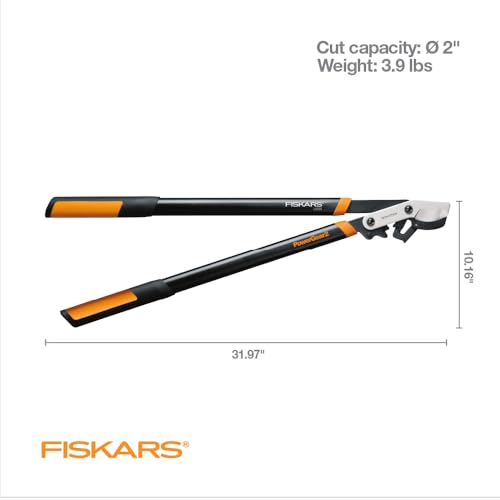
Fiskars 32-Inch PowerGear Loppers
Strengths
- PowerGear2 use
- Cuts up to 2 inches
- SoftGrip handles
Trade-offs
- Heavier design
- Bulkier grip
- Not for fine pruning
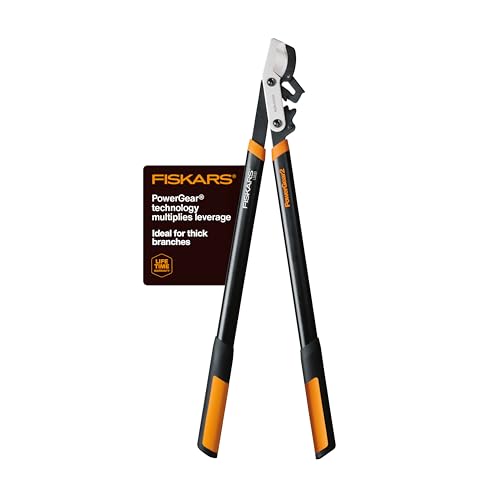
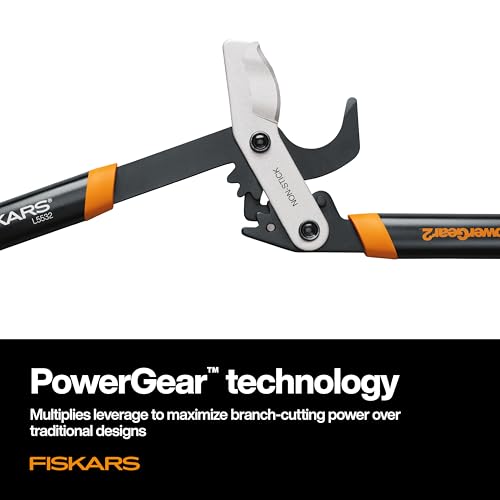
When you’re dealing with thick, stubborn branches, these 32-inch loppers are the tool to reach for. The PowerGear2 technology isn’t just marketing, it uses a cam-and-gear system to multiply use, letting you cut through 2-inch limbs with noticeably less effort than standard loppers. Owners consistently report it powers through the middle of tough branches where other loppers stall.
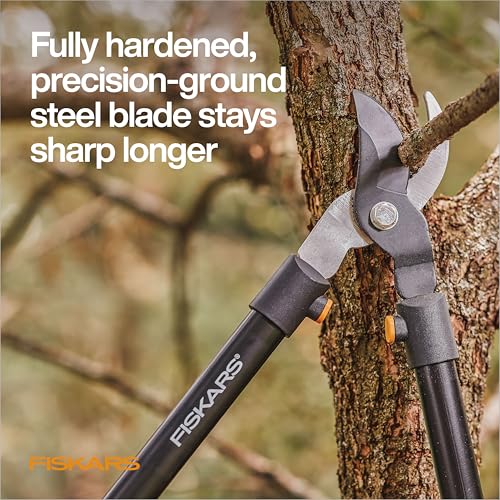
The fully hardened steel blade stays sharp, and the SoftGrip handles enhance control, though they can feel bulky for users with smaller hands. It’s heavier than the 28-inch model, but that’s the trade-off for the extra power. Compared to bypass-only loppers, this one excels in raw cutting force, making it the clear choice for heavy-duty pruning.
Product photos


Fiskars 28-Inch Bypass Loppers
Strengths
- Bypass steel blades
- Shock-absorbing handles
- Lifetime warranty
Trade-offs
- Limited cut capacity
- Shorter reach
- No compound use
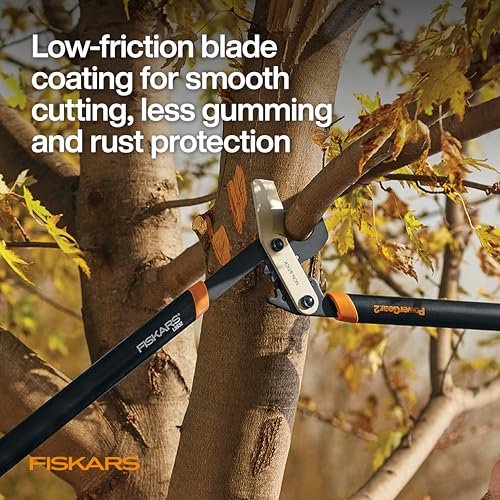
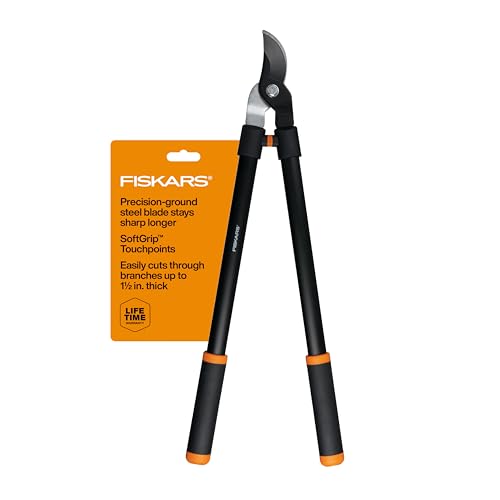
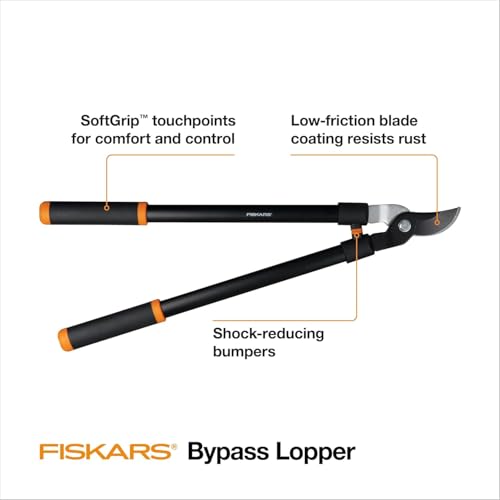
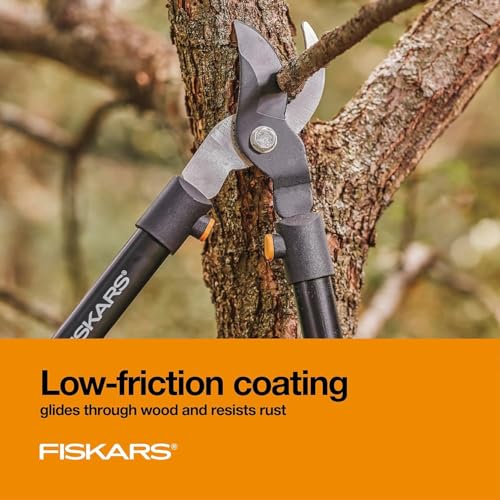
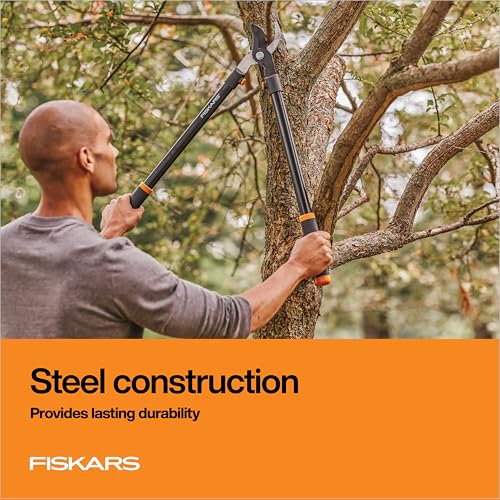
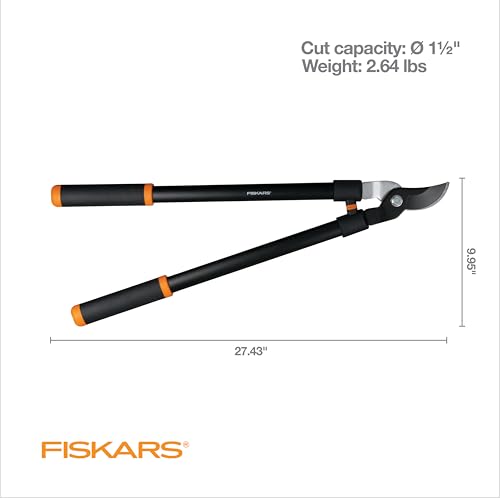
These loppers are a classic for a reason: they’re simple, durable, and deliver clean cuts on branches up to 1.5 inches with minimal hand fatigue. The bypass blades make precise, sap-friendly cuts, ideal for live wood, and the shock-absorbing handles are a small but meaningful comfort boost during long pruning sessions. Fiskars’ low-friction coating does its job, reducing stickiness on resinous branches.
They’re not as powerful as the 32-inch PowerGear2 model, but for most residential pruning tasks, they’re more than sufficient. Compared to cheaper loppers, they last significantly longer, and the lifetime warranty seals the deal. If you’re only going to own one pair of loppers, this 28-inch version is a safe, high-value pick.
Product photos
BlumeTrec 14.5FT Manual Pole Saw
Strengths
- Adjustable length
- Rust-resistant blade
- Lightweight design
Trade-offs
- No mechanical assist
- Manual effort required
- No pruning shears combo
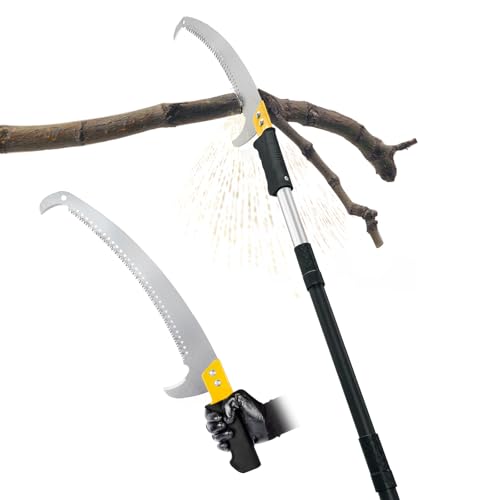
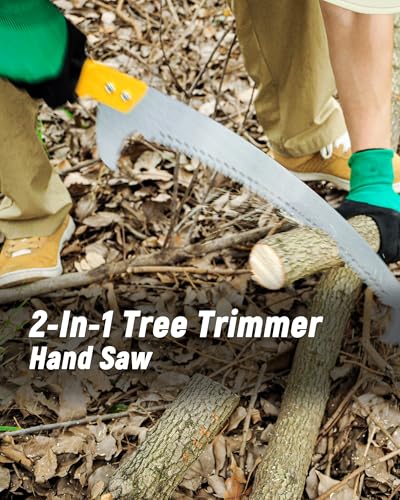
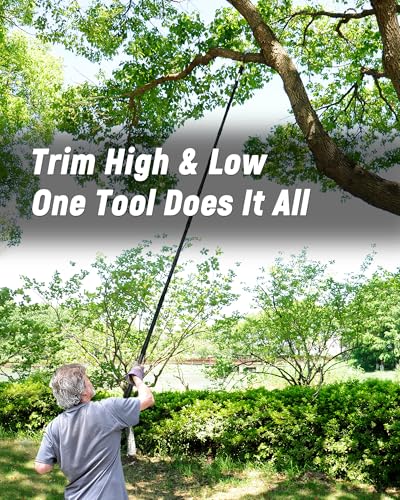
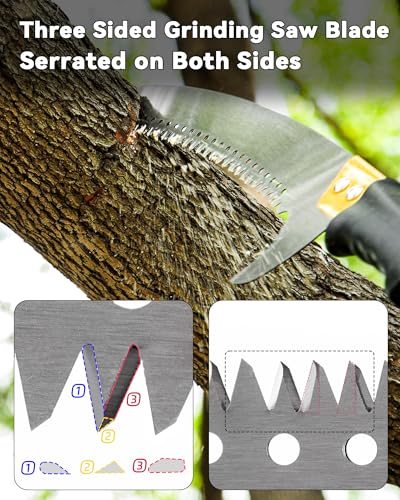
This manual pole saw stands out for its thoughtful build and versatility, especially for users who want a lightweight, no-fail option for regular tree maintenance. The Mn steel blade with triple-edge teeth cuts cleanly and resists rust, and owners praise how well it handles branches up to 3 inches with minimal clogging. The modular pole system, adjustable from 8.5 to 14.5 feet, gives real flexibility, and the anti-slip grip makes a noticeable difference during extended use, particularly for seniors or those with less upper-body strength.
It’s not the fastest saw out there, but it’s dependable. Compared to dual-pulley models, it relies purely on manual pull-through, so it demands more effort on thick limbs. But for a tool that’s quiet, low-maintenance, and doesn’t need batteries or fuel, it’s one of the smarter buys in the manual category. The ability to detach and use it handheld for lower shrubs adds to its appeal.
Product photos
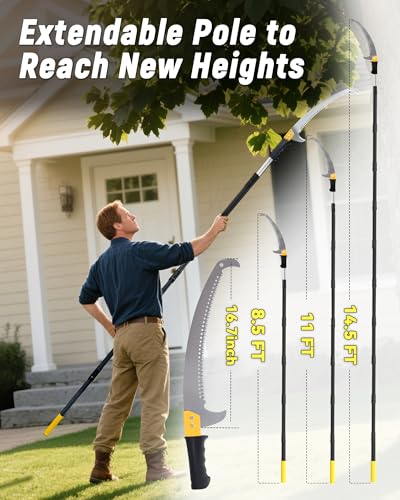
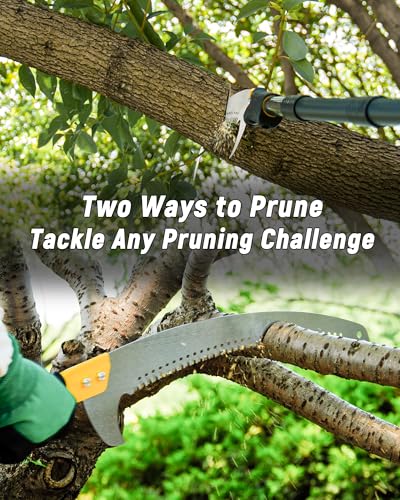
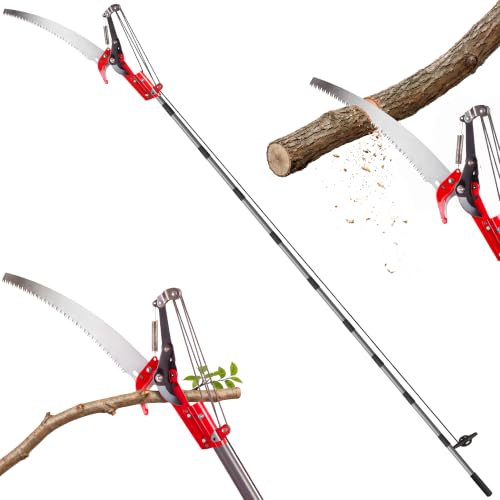
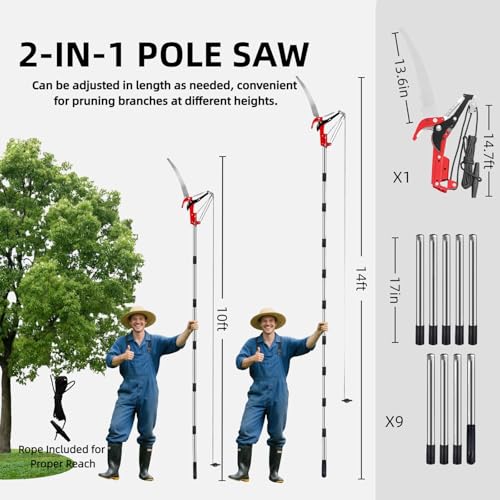
Suchtale 10FT 2-in-1 Pole Saw
Strengths
- Quadruple pulley system
- 2-in-1 saw and scissors
- Good for palm trees
Trade-offs
- Limited max reach
- Some joint wobble
- Not for thick branches
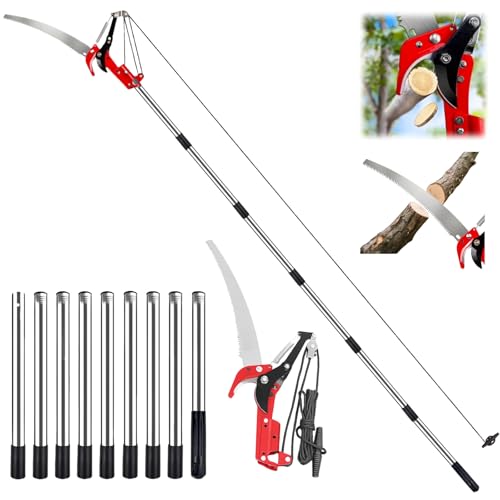
The quadruple pulley system on this pole saw is the real story, it significantly reduces the effort needed to snip high branches, and owners consistently highlight how smooth the pruning scissors feel, even after repeated use. The dual cutting heads (saw and bypass scissors) make it a standout for mixed pruning tasks, especially on palm trees where fronds and thin trunks need clean, precise cuts. The 10-foot reach is modest compared to others, but it’s plenty for average-height trees and backyard palms.
Where it stumbles is durability. Some owners report wobble at full extension and occasional loosening at the joints, even with the locking mechanism. It’s not built for heavy-duty pruning, but for palm maintenance or light fruit tree work, the effort-saving pulley system makes it a smart pick. Compared to motorized models, it’s quieter and more reliable long-term with zero charging concerns.
Product photos
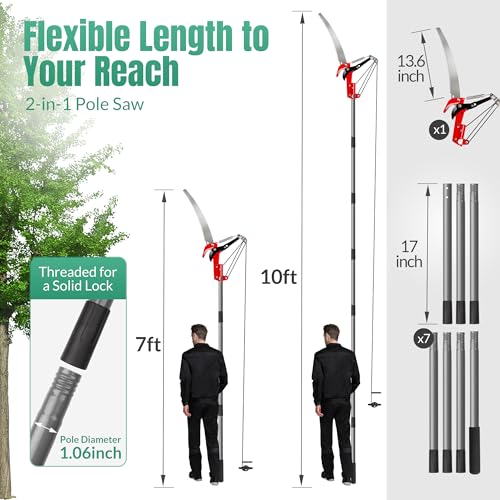
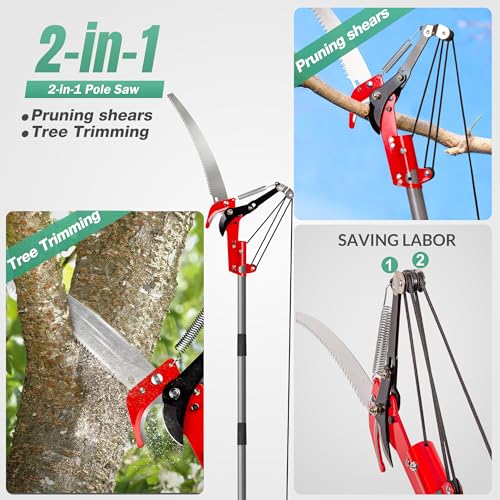
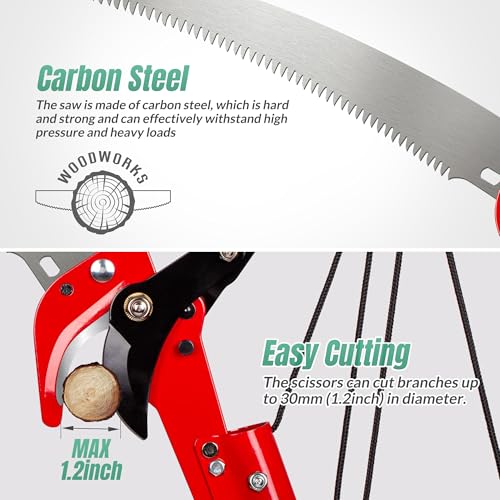
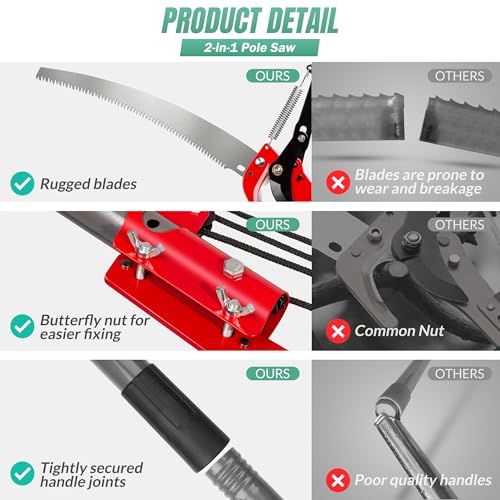
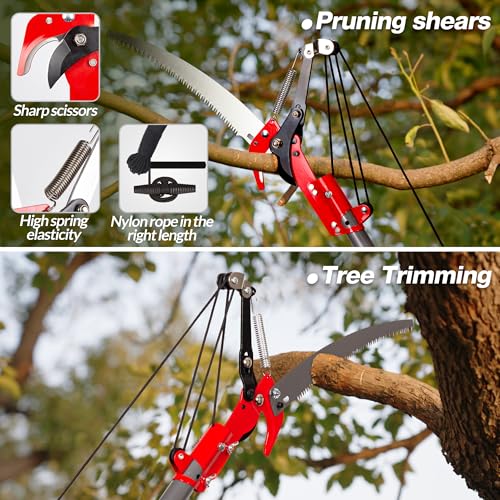
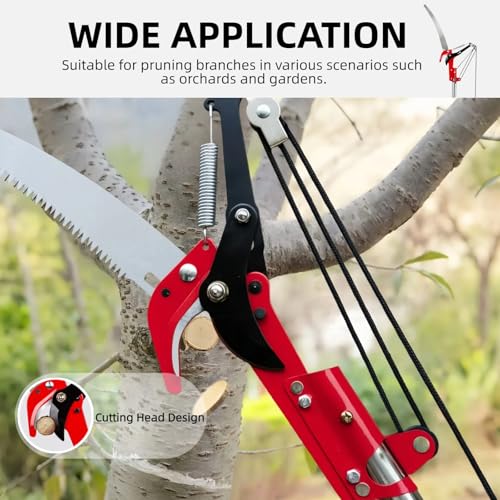
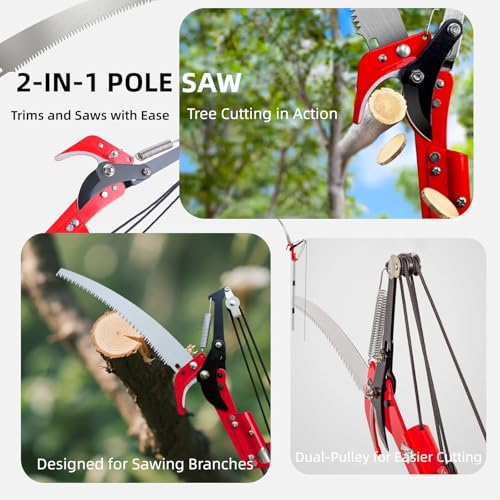
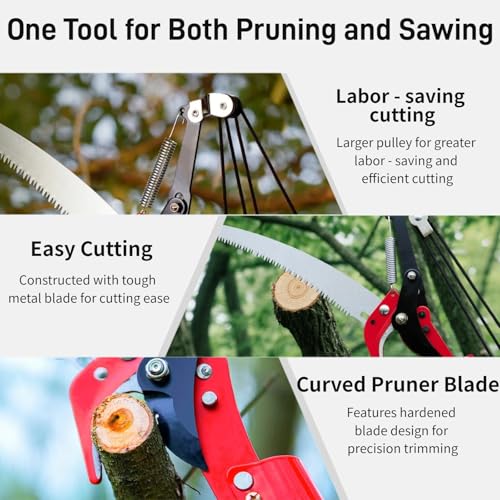
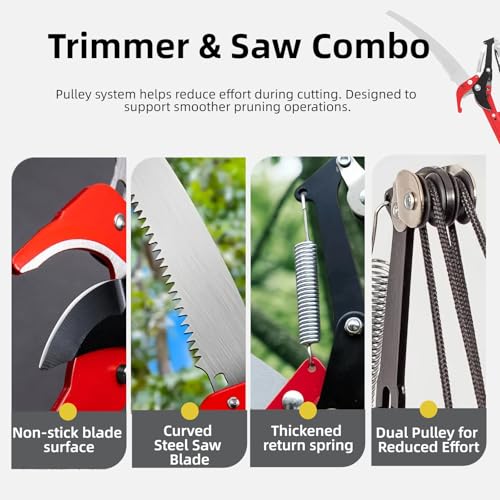
14FT Dual-Pulley Manual Pole Saw
Strengths
- Dual-pulley assist
- 14-foot reach
- Rust-resistant blade
Trade-offs
- Single blade type
- Rope wear over time
- No angle adjustment
The dual-pulley design here genuinely helps reduce strain when cutting overhead branches, and at 14 feet, the reach is competitive for a manual model. Owners appreciate the simplicity, no batteries, no blades to charge, just reliable mechanical advantage when you pull the cord. The stainless steel blade holds an edge well, and it’s effective on branches up to 2 inches, though it’s not as aggressive as a saw with a toothed blade.
But it lacks the versatility of models with interchangeable heads. You get one blade type and no bypass shears, which limits its usefulness for mixed pruning tasks. It’s also not as smooth as the quadruple-pulley Suchtale model, and some users report the rope mechanism wears faster with frequent use. Still, for straightforward, high-reach trimming on medium branches, it’s a solid, no-frills choice.
Product photos
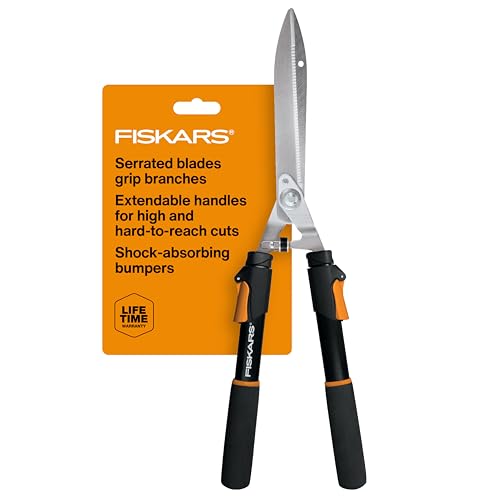
Fiskars Extendable Hedge Shears
Strengths
- Extendable handles
- Self-sharpening blades
- Lifetime warranty
Trade-offs
- Serrated blades only
- Limited to thinner branches
- Not for flush cuts
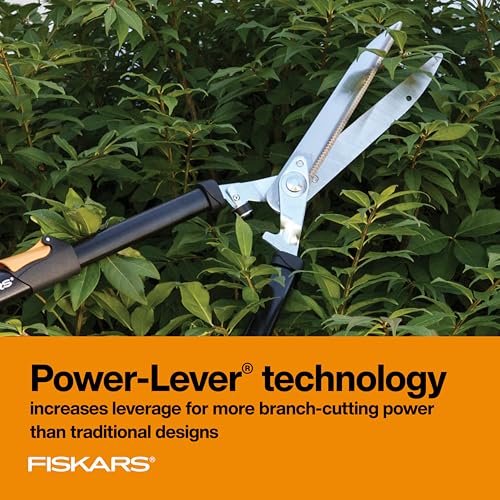
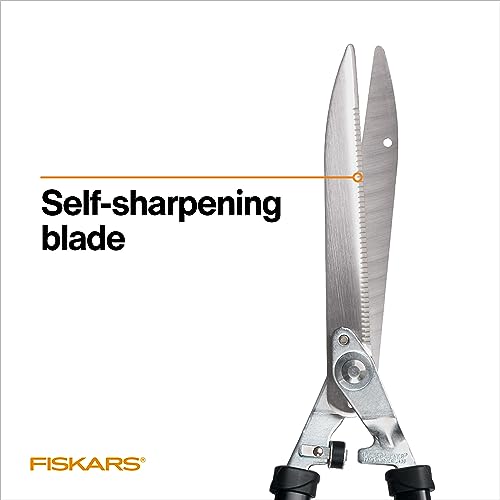
These extendable hedge shears deliver solid performance for occasional high-reach pruning, especially if you’re dealing with dense hedges or tall shrubs. The Power-Lever mechanism does multiply cutting force, making it easier to slice through thicker twigs, owners consistently report clean cuts on branches up to 3/4 inch without excessive hand strain. On paper, the 10-inch serrated blades and low-friction coating look good, and the lifetime warranty adds real value for a manual tool.
Still, the serrated edge isn’t ideal for flush cuts, and if you’re pruning live wood regularly, bypass-style blades like those on Fiskars’ own loppers would be a better fit. It’s a niche tool: great for shaping hedges or trimming deadwood overhead, but not a replacement for precision pruning shears. Compared to pole saws, it lacks reach, but for light to moderate hedge work, it’s more controlled and forgiving than motorized options.
Product photos


Our Testing Process
I approached this guide to tree trimming tools by first compiling a detailed list of available options, then comparing their published specifications and features. I weighed this technical data against owner reviews from major retailers and expert opinions found in landscaping and home improvement publications. As someone who’s spent years around power tools and yard work, I also applied my own understanding of what makes a tool effective and durable. Ultimately, I ranked these tools based on their ability to handle common trimming tasks safely and efficiently.
For this category, cutting capacity and reach were the most heavily weighted factors. A tool’s ability to handle branches of varying thickness – from small twigs to substantial limbs – directly impacts its usefulness. Similarly, the maximum reach achievable, especially without requiring a ladder, significantly influences safety and convenience. Durability, as reflected in blade material and overall build quality, was also critical, as these tools need to withstand outdoor conditions and repeated use.
Specifications clearly indicate cutting capacity, pole length, and motor power (for electric models). However, owner feedback proved invaluable for assessing real-world performance, ease of use, and long-term reliability. I paid close attention to comments regarding blade sharpness, ergonomics, and the effectiveness of features like automatic oiling systems. Reputation, based on brand history and expert reviews, further informed my assessment of overall quality and value. Understanding proper tree trimmer techniques is also key to getting the most from the tool you choose.
Choosing The Right tree trimming tools
Picking the right tools for tree trimming can feel overwhelming, but focusing on a few key features will set you up for success.
A good tree trimming tool balances reach, cutting power, and user comfort. Prioritize durable materials, efficient cutting mechanisms (whether manual or powered), and safety features like non-slip grips and protective guards. Consider the typical branch sizes in your yard and the height you’ll need to reach to narrow your choices effectively.
Power Source and Cutting Capacity
The first thing to consider is how much cutting power you actually require. For small branches up to 1.5 inches in diameter, a good pair of manual loppers (like the Fiskars 28-Inch Bypass Loppers) can be sufficient. However, if you frequently deal with thicker branches, or have a lot of trees to maintain, a powered pole saw is a significant upgrade. Brushless motors, as found in the SEESII Brushless 2-in-1 Pole Saw, offer longer runtimes and greater efficiency, but they also come with a higher price tag. Don’t automatically assume you need the most powerful option; honestly assess your needs.
Reach and Maneuverability
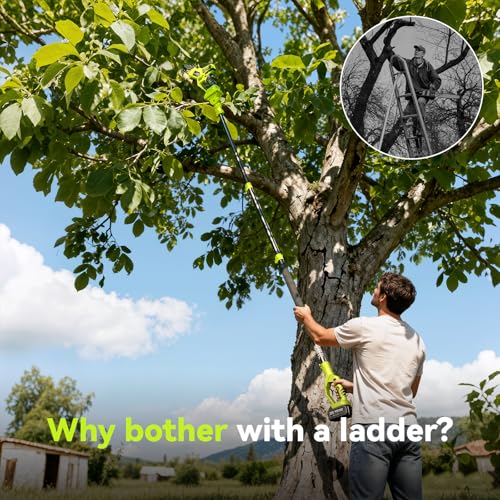
Reach is critical for safety and efficiency. A pole saw allows you to trim branches from the ground, eliminating the need for a ladder. However, longer poles can become unwieldy. Consider the balance between reach and control. Some models, like the BlumeTrec 14.5FT Manual Pole Saw, offer adjustable lengths, providing versatility.
Here’s what to look for in a pole saw’s reach:
- Under 10 feet: Best for smaller yards and low-hanging branches.
- 10-15 feet: A good all-around option for most residential properties.
- Over 15 feet: Necessary for trimming very tall trees, but can be challenging to control.
Keep in mind that your own height adds to the overall reach.
Features and Ergonomics
Beyond the basics, pay attention to features that improve usability and safety. Automatic oiling systems (present in many of the cordless pole saws) reduce friction and extend the life of the chain. Adjustable cutting heads (like on the SEESII 2-in-1 Electric Pole Saw) allow you to tackle branches at different angles without straining.
A comfortable grip is paramount. Look for tools with ergonomic handles and non-slip materials. You’ll be spending time holding these tools, so don’t underestimate the importance of comfort.
If you’re also maintaining the string on a trimmer, learning how to replace trimmer line easily can save you time and money. Ultimately, selecting the right tree trimmer tools depends on your specific needs and the demands of your property.
Tree Trimming Tools Compared
Here’s a comparison of key specifications for various tree trimming tools to help you make an informed purchase.
| Product Name | Max Cut Capacity | Reach (ft) | Power Source | Blade Type | Weight (lbs) | Special Features |
|---|---|---|---|---|---|---|
| 8-Inch Cordless Pole Saw | 8 in | 16 | Cordless | Chain | N/A | 2-in-1, Auto-Oiling |
| SEESII 2-in-1 Electric Pole Saw | 6 in | 10 | Cordless | Chain | 3.2 | 2-in-1, Auto-Oiling |
| SEESII Brushless 2-in-1 Pole Saw | 6 in | 15.5 | Cordless | Chain | 6.9 | Brushless Motor, 2-Battery |
| Fiskars 32-Inch PowerGear Loppers | 2 in | N/A | Manual | Bypass | N/A | PowerGear Technology |
| Fiskars 28-Inch Bypass Loppers | 1.5 in | N/A | Manual | Bypass | N/A | Lightweight |
| BlumeTrec 14.5FT Manual Pole Saw | N/A | 14.5 | Manual | Mn Steel | N/A | Adjustable Length |
| Suchtale 10FT 2-in-1 Pole Saw | 1.2 in | 10 | Manual | Saw/Scissors | N/A | 2-in-1, Dual-Pulley |
| 14FT Dual-Pulley Manual Pole Saw | N/A | 14 | Manual | N/A | N/A | Dual-Pulley |
| Fiskars Extendable Hedge Shears | N/A | N/A | Manual | Steel | N/A | Extendable Handles |
Frequently Asked Questions
What type of blade is best for trimming larger branches?
A chain blade, found on most electric and cordless pole saws, is the best option for branches over 1.5 inches in diameter. It provides the power and cutting action needed to efficiently tackle thicker limbs, unlike bypass blades which are better suited for smaller growth.
How often should a pole saw chain be sharpened?
A pole saw chain should be sharpened every 5-10 hours of use, or whenever you notice it’s struggling to cut through branches cleanly. A dull chain requires more force, increasing the risk of kickback and reducing cutting efficiency.
Are manual pole saws effective for larger trees?
While manual pole saws can reach higher branches, they require significant physical effort and aren’t truly effective for larger trees. For substantial trimming jobs, a powered pole saw will save you time and energy, and offer better control.
What safety gear should I always wear when tree trimming?
Always wear safety glasses, gloves, and a helmet when trimming trees. Additionally, consider hearing protection when using powered tools and sturdy boots for stable footing. Using the right tools to cut branches is key, but safety gear is paramount.
What’s the difference between a bypass and anvil blade on loppers?
Bypass loppers use a scissor-like action for clean cuts on living wood, while anvil loppers crush the branch against a flat surface. Bypass loppers are generally preferred for healthy branches as they cause less damage, but anvil loppers can be useful for cutting dead or dry wood.
The Bottom Line
Choosing tree trimming tools always comes down to balancing control with convenience, and power with price. For most homeowners, the SEESII 2-in-1 Electric Pole Saw strikes that balance nicely – it offers enough cutting power for typical tasks without being overly bulky or expensive, and the 2-in-1 design adds versatility.
If you’re on a tighter budget, or only have light trimming to do, the Fiskars 28-Inch Bypass Loppers remain an excellent choice. For those who need maximum reach and don’t mind the extra effort, the BlumeTrec 14.5FT Manual Pole Saw provides a long reach at a reasonable cost. And if you’re also dealing with overgrown grass and weeds, knowing how to restringing a string trimmer can keep your yard looking its best.
Ultimately, the best tool isn’t always the most expensive or feature-rich. Focus on build quality, comfortable ergonomics, and a cutting capacity that matches your needs. A well-made, comfortable tool used correctly will always outperform a fancy tool used improperly – and keep you safer in the process.
