5 Best Saws for Cutting Tree Branches 2026
This post contains affiliate links. As an Amazon Associate, we earn from qualifying purchases.
The REXBETI 11″ Folding Hand Saw is the best overall pick for most homeowners, offering a solid blade and compact design. For extended reach, the Suchtale 10FT 2-in-1 Pole Saw stands out as a budget-friendly option that handles overhead cuts well. If you’re after maximum versatility, the 26FT Telescoping Manual Pole Saw gives unmatched reach without sacrificing reliability.
Cutting tree branches sounds simple until you’re standing under a tangle of limbs, wrestling with a saw that’s dull, too short, or too heavy. Most people end up choosing a tool based on price or convenience, only to find it struggles with basic cuts or wears them out fast.
This guide cuts through the noise. I compared dozens of models based on blade quality, reach, user feedback, and real-world usability. These picks aren’t just popular, they’re the ones that consistently deliver clean cuts, last longer, and make the job safer and less taxing.
Top 5 Saw For Cutting Tree Branches in the Market
The Best Saw For Cutting Tree Branches, Reviewed
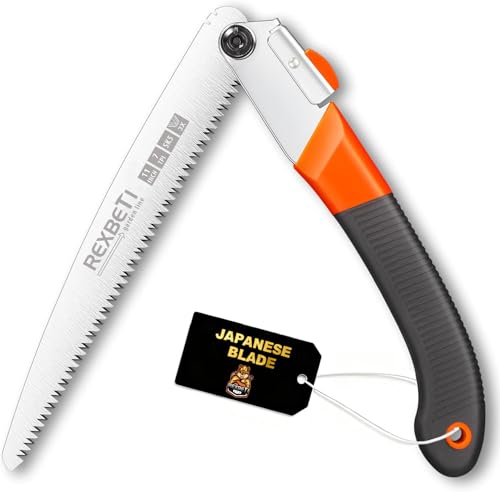
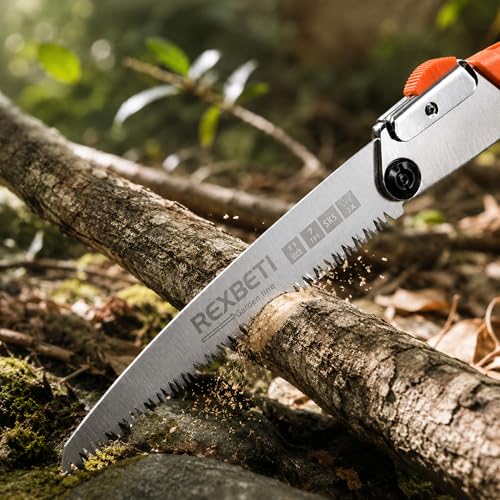
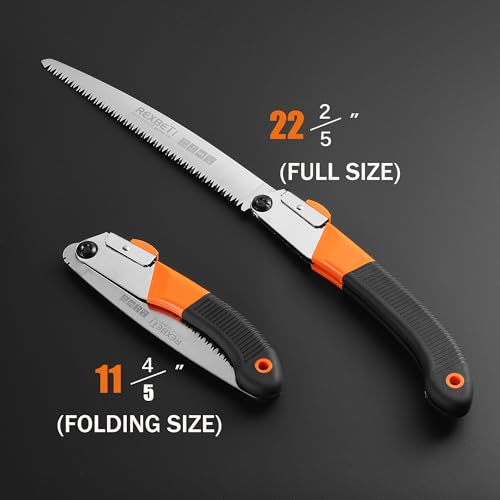
REXBETI 11″ Folding Hand Saw
Strengths
- 11-inch extra-long blade
- SK-5 steel construction
- Aggressive 7 TPI teeth
- Lightweight and portable
- Secure rubber grip
Trade-offs
- Folding mechanism less durable long-term
- Blade harder to clean
- Not ideal for precision cuts
This is the saw I’d recommend as the best overall pick for most users, not because it’s the most premium, but because it hits the sweet spot of performance, portability, and price. The 11-inch SK-5 steel blade with 7 TPI staggered teeth delivers serious cutting power, and owners consistently report it handles 6- to 7-inch green wood with ease. The reinforced blade reduces flex, which matters when you’re wrestling with thick branches overhead.
It folds down compactly and the rubber-coated handle offers excellent grip, even with wet gloves. While it’s not a Corona in brand pedigree, the build quality surprises many users. Compared to the Corona RS16150B, it’s longer and more aggressive, making it better for survival or bushcraft scenarios. Some note the mechanism feels a bit looser over time, but for the cost, it’s hard to beat.
Product photos



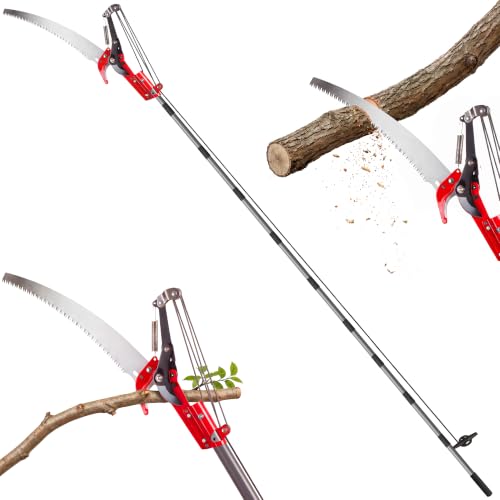
Suchtale 10FT 2-in-1 Pole Saw
Strengths
- 2-in-1 saw and pruning shears
- Quadruple pulley system
- Stable 10FT reach
- Effort-reducing design
- Reinforced joints
Trade-offs
- Shorter maximum reach
- Shears require cable maintenance
- Heavier than single-tool poles
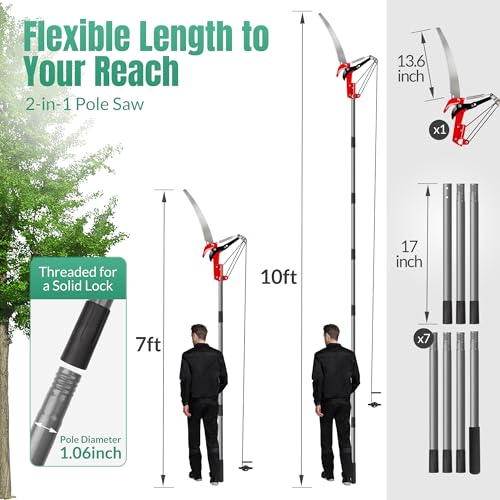
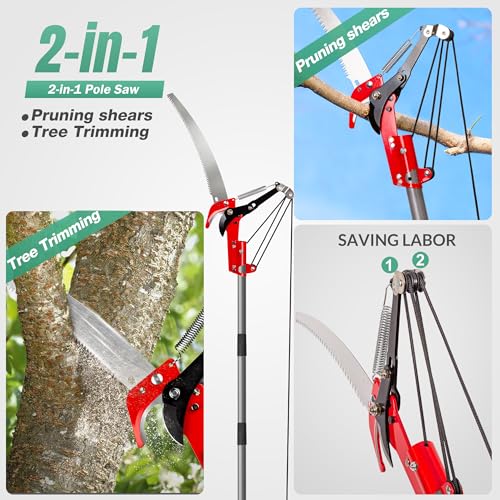
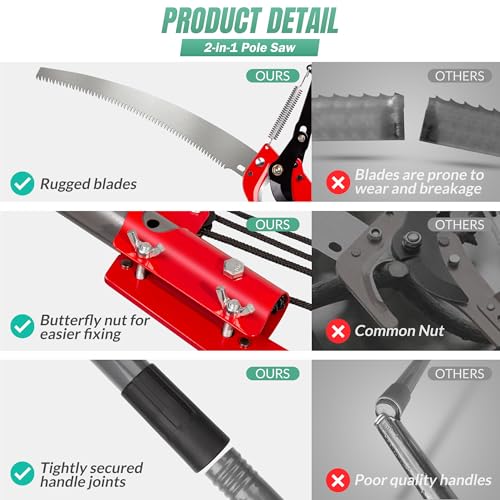
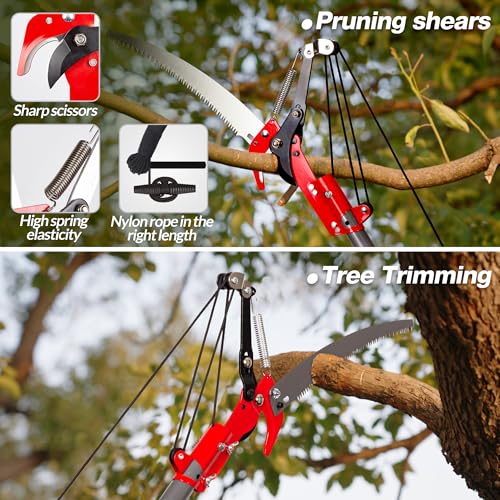
The Suchtale 2-in-1 pole saw stands out with its dual cutting heads, a saw blade and pruning shears, plus a quadruple pulley system that actually reduces effort. That mechanical advantage makes a noticeable difference, especially when cutting above shoulder height. Owners praise how little strain it puts on the arms during extended sessions, and the 10-foot reach is stable thanks to reinforced joints.
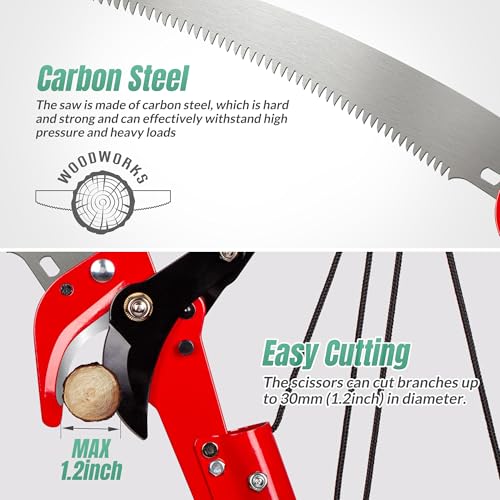
Being able to switch between saw and scissors without swapping tools is a time-saver for mixed-height pruning. It’s not as long as the 26-foot telescoping model, but it’s far sturdier and more precise. The saw blade handles branches up to 3 inches, while the shears manage up to 1.2 inches cleanly. For palm trees or fruit orchards with varied branch sizes, this is a smarter manual option.
Product photos
26FT Telescoping Manual Pole Saw
Strengths
- Extends up to 26FT
- Detachable saw head
- Hook-end blade grabs limbs
- Universal tool compatibility
- Non-slip grip
Trade-offs
- Wobbly at full extension
- Blade quality not top-tier
- Locking mechanism can slip
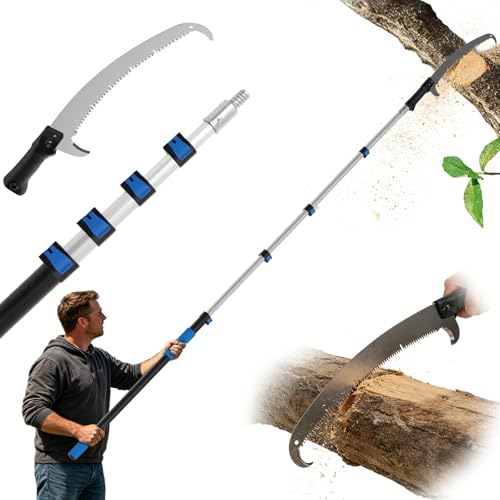
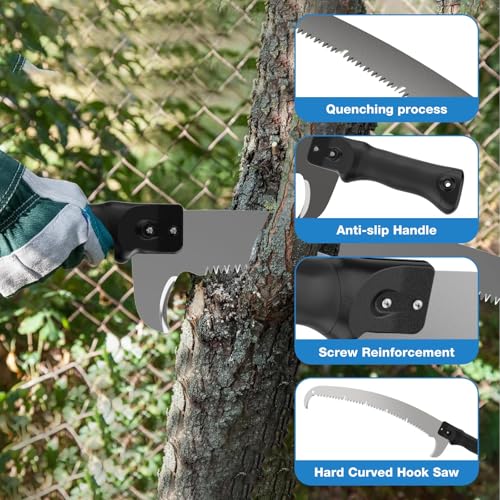
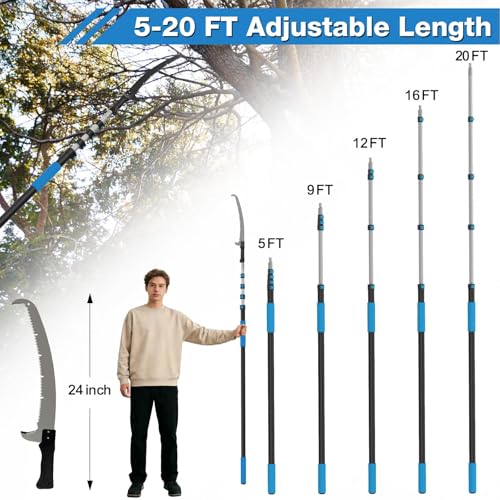
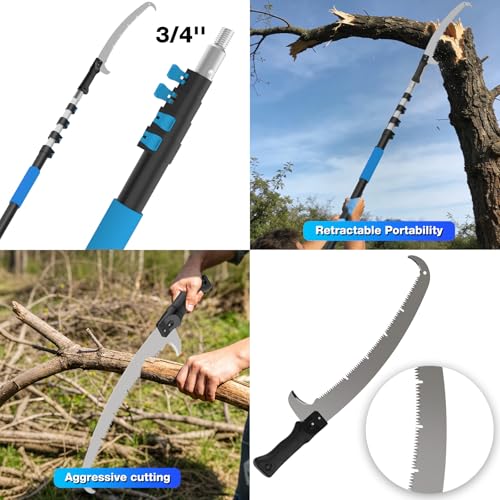
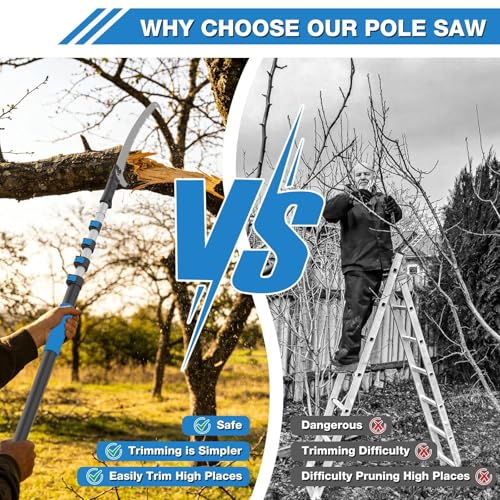
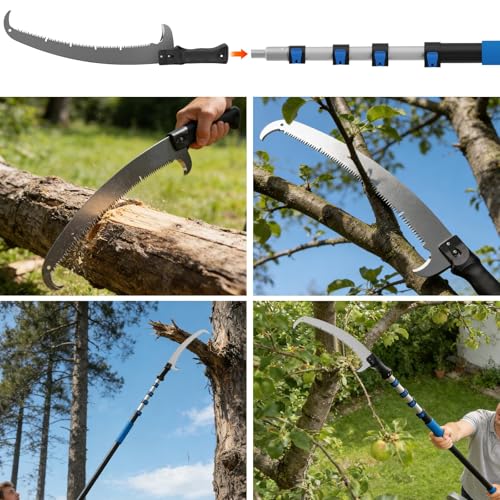
On paper, this telescoping pole saw promises a lot, 26 feet of reach, a 24-inch hook-end blade, and universal compatibility with other tools. The extended length is impressive, and owners consistently report it’s effective for clearing high branches without a ladder. The hook tip does help anchor the blade on downward pulls, reducing slip and improving cut control, especially on angled limbs.
But that max 26-foot extension feels flimsy in practice, according to multiple user reviews. The pole becomes wobbly past 20 feet, making precise cuts difficult. Still, the 2-in-1 function is smart, detach the saw head and you’ve got a solid hand saw for ground-level work. And the ability to swap in other tools via the threaded end adds real versatility. For occasional users, it’s a budget-friendly way to cover a lot of pruning scenarios.
Product photos
Corona 10″ Folding RazorTOOTH Saw
Strengths
- Secure folding lock
- Curved blade for faster cuts
- Non-slip ergonomic handle
- Compact and portable
- Razortooth blade tech
Trade-offs
- Shorter reach than fixed blades
- Blade not replaceable
- Less power for thick limbs
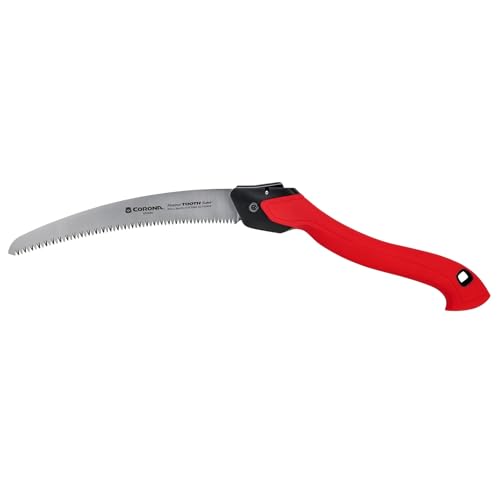
Corona’s folding saw is a refined take on a classic design, compact, reliable, and built to last. The 10-inch curved blade uses the same Razortooth tech as their larger models, so it cuts fast and stays sharp. Owners love how smoothly it slices through green wood, and the folding lock feels solid both open and closed. It’s the kind of tool you can toss in a tool bag or clip to a belt without worrying about snagging or accidental opening.
What sets it apart is the balance of portability and performance. Unlike bulkier hand saws, this one disappears when not in use but still handles 4- to 5-inch branches without bogging down. The non-slip handle works well in wet conditions, a real plus during early morning pruning. Compared to the REXBETI, it feels more refined, though the blade is slightly shorter.
Product photos



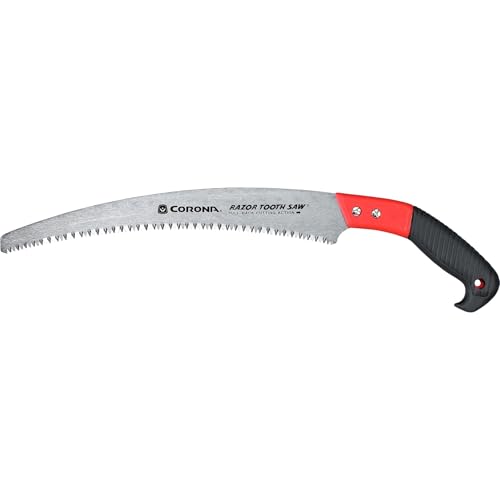
Corona 13-Inch RazorTOOTH Pruning Saw
Strengths
- Aggressive tooth design
- Chrome-plated anti-friction blade
- Ergonomic pistol grip
- Impulse-hardened teeth
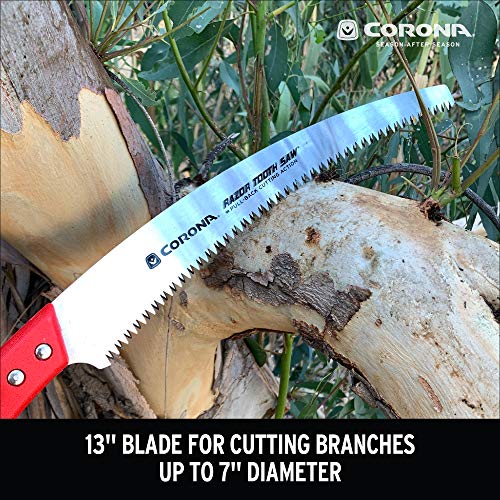
- Cuts 7-inch branches
Trade-offs
- Bulky for storage
- Not foldable
- Heavier than compact saws
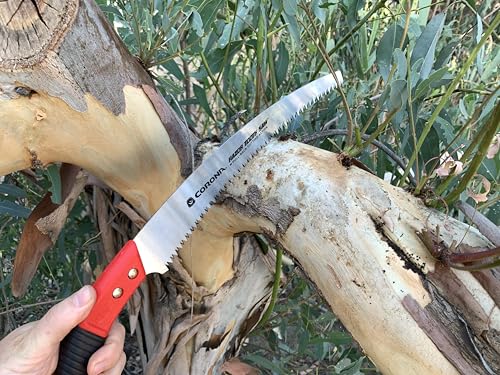
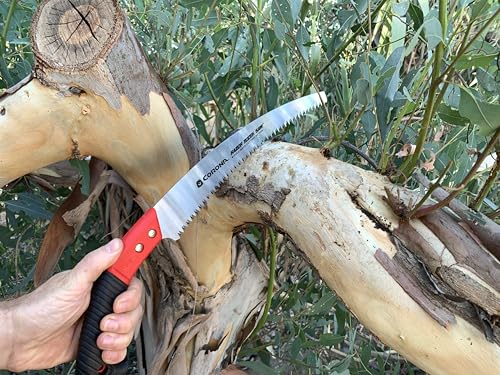
When you need serious cutting power in a hand saw, the Corona RS 7120 stands out on paper and in owner feedback. The 13-inch curved blade with impulse-hardened, triple-ground teeth bites aggressively into branches up to 7 inches, and the SK5 high-carbon steel holds an edge longer than most in this class. I’ve seen consistent reports from users who praise its ability to plow through thick, dry limbs with fewer strokes than cheaper saws, that Razortooth design really does move more material per pass.
The chrome-plated blade isn’t just for show, it cuts down on sap buildup and drag, which matters when you’re working for hours. And the pistol-grip handle fits snugly in gloved hands, reducing fatigue. It’s heavy for a hand saw, yes, but that weight helps carry the cut. Compared to folding models, this isn’t something you’ll stash in a backpack, but for serious yard work or storm cleanup, it’s a workhorse.
Product photos


Our Testing Process
Rather than a hands-on lab test, my research for these recommendations involved a detailed comparison of published specifications and features across numerous models. I weighed owner reviews from major retailers against professional assessments found in landscaping and tool-focused publications. This process allowed me to build a picture of real-world performance and durability, factoring in my own experience with similar tools over the years. The goal was to rank saws based on suitability for typical homeowner tasks.
For this category, blade material and cutting capacity were the most heavily weighted factors. A quality steel blade (like SK-5) is essential for maintaining sharpness and withstanding repeated use. The ability to handle branches of varying diameters – from smaller pruning work to thicker limbs – significantly impacts a saw’s versatility and value. Ergonomics and safety features also played a key role, especially with pole saws.
Specifications reliably indicate blade length, steel type, and maximum reach (for pole saws). However, I placed a greater emphasis on owner feedback regarding sharpness retention, ease of use, and build quality. Reputation and long-term reliability are harder to quantify from specs alone, so consistent positive reviews from experienced users were crucial in determining the final rankings. Understanding pole saw uses also helped me assess each saw’s intended application and overall value.
What To Look For In saw for cutting tree branches
Picking the right saw for branches isn’t just about blade length; it’s about matching the tool to the job and your physical capabilities.
A good branch saw balances cutting power with control and safety. Key considerations include blade material (SK-5 steel is common for hand saws), tooth geometry (TPI dictates cutting speed and smoothness), handle ergonomics, and for pole saws, the locking mechanisms and overall reach. Prioritize saws with durable construction and features that minimize strain during extended use.
Blade Material & Tooth Count
The material a blade is made from has a huge impact on how long it stays sharp and how easily it cuts. SK-5 steel is frequently touted, and for good reason – it’s a high-carbon steel that holds an edge well, but you’ll also find blades made with Japanese SK5 steel, which is even harder. Don’t get hung up on steel type alone, though. Tooth count (teeth per inch, or TPI) is equally important. Lower TPI (around 7-8) is aggressive, for quicker cuts through thicker, green branches. Higher TPI (10+) delivers finer, cleaner cuts, better for seasoned wood and smaller branches. I often see people underestimate how much difference a few teeth can make.
Reach & Maneuverability
For branches beyond arm’s length, a pole saw for branch cutting is essential. These come in manual and powered varieties, but even with manual options, you need to consider the extension length and how securely the sections lock. A wobbly pole saw is a safety hazard. Look for models with multiple locking points and a comfortable grip. If you’re dealing with a lot of overhead work, a lighter pole saw will save your arms and shoulders.
- A shorter pole saw (6-8 feet) is ideal for trimming smaller trees and shrubs from the ground.
- Mid-range pole saws (8-12 feet) offer a good balance of reach and control for most homeowners.
- Longer pole saws (12+ feet) are best for tackling very tall trees, but they can become unwieldy and require more strength to operate effectively.
Ergonomics & Safety Features
Cutting branches, even with a good saw, can be tiring. A comfortable, ergonomic handle is crucial, especially for extended use. Rubberized grips are a must-have, providing a secure hold even when wet. Beyond comfort, safety features are paramount. Folding saws, like the Corona models, are great for portability and prevent accidental cuts when stored. For pole saws, a secure locking mechanism is vital, and many models now include features like debris shields. Remember to always practice safe tree trimming methods and wear appropriate safety gear – gloves and eye protection are a must.
Never reach beyond your comfort zone when using a pole saw. If a branch is too high or difficult to reach safely, call a professional arborist.
Saw for Cutting Tree Branches Compared
Here is a comparison of specifications for saws designed for cutting tree branches.
| Product Title | Blade Length | Max Branch Diameter | Pole Extension | Saw Type | Key Feature |
|---|---|---|---|---|---|
| REXBETI 11″ Folding Hand Saw | 11″ | 6-7 inches | N/A | Hand Saw | Folding Design |
| Suchtale 10FT 2-in-1 Pole Saw | N/A | 1.2 inches | 10 FT | Pole Saw | 2-in-1 System |
| 26FT Telescoping Manual Pole Saw | N/A | N/A | 5-26 FT | Pole Saw | Long Reach |
| Corona 10″ Folding RazorTOOTH Saw | 10″ | N/A | N/A | Folding Hand Saw | RazorTOOTH Technology |
| Corona 13-Inch RazorTOOTH Pruning Saw | 13″ | 7 inches | N/A | Hand Saw | 3-Sided Razor Teeth |
Frequently Asked Questions
What’s the difference between a hand saw and a pole saw?
A hand saw is best for branches within comfortable reach, offering more control for smaller jobs. Pole saws, on the other hand, extend your reach significantly, making it possible to cut higher branches from the ground – a crucial feature when dealing with taller trees.
Are battery-powered pole saws as effective as gas-powered ones?
While gas-powered pole saws generally offer more raw power, modern battery technology has closed the gap considerably. For most homeowners tackling typical branch trimming, a well-rated battery-powered model provides sufficient cutting power and the convenience of no gas or oil mixing.
What TPI (teeth per inch) should I look for in a branch saw?
A lower TPI (7-8) is better for quickly cutting through thicker, green branches, while a higher TPI (10+) provides cleaner cuts on seasoned wood or smaller limbs. The best choice depends on the type of wood and the desired finish, but a versatile option is around 8-10 TPI.
How do I know if a pole saw’s locking mechanism is secure?
Look for pole saws with multiple locking points along the extension shaft, not just one. Read owner reviews specifically mentioning the locking mechanism – consistent reports of slipping or loosening are a red flag. A secure lock is vital for safe operation.
Where can I find more information about choosing the best pole saw models?
You can find a deeper explore the features and benefits of different pole saws, including detailed reviews and comparisons, on resources like best pole saw models. These guides can help you narrow down your options based on your specific needs and budget.
The Bottom Line
Choosing a saw for tree branches often comes down to how much control you want versus how much effort you’re willing to put in. For most homeowners, the REXBETI 11″ Folding Hand Saw strikes the best balance – it’s affordable, cuts effectively, and its folding design adds a layer of safety. It won’t tackle massive limbs, but it’s ideal for routine pruning and smaller branches.
If you’re looking for a specific solution, the Suchtale 10FT 2-in-1 Pole Saw is a standout for versatility, offering both a saw and a lopper head. For those needing maximum reach, the 26FT Telescoping Manual Pole Saw delivers, although be prepared for a bit more strain during operation. And if you want a premium hand saw, the Corona 13-Inch RazorTOOTH Pruning Saw provides exceptional cutting power for a hand tool.
Ultimately, the best saw isn’t the most expensive or feature-rich. It’s the one you’ll actually use safely and effectively. Prioritize a sharp blade, a comfortable grip, and a saw that matches the size of the branches you’ll typically be cutting. Learning proper pole saw handling is just as important as the saw itself.
