8 Best TIG Welding Machines of 2026
This post contains affiliate links. As an Amazon Associate, we earn from qualifying purchases.
The overall best tig welding machine is the Sunstac 250A AC/DC Aluminum TIG Welder, offering strong amperage, dual voltage, and solid owner feedback. For a more budget-friendly option, the YESWELDER 200A AC/DC Aluminum Tig Welder delivers impressive versatility without breaking the bank.
Most people shopping for a tig welder aren’t just buying a tool, they’re trying to solve a problem, whether it’s restoring a frame, fabricating brackets, or learning to weld aluminum. It’s easy to get lost in specs and features that sound good on paper but don’t translate to real-world performance.
This guide cuts through the noise by focusing on what actually matters: amperage range, AC/DC capability, pulse control, and real user experiences. I looked at the current market, compared specs, and weighed owner feedback to find machines that deliver reliability, control, and value, so you can pick one with confidence.
Top 8 Tig Welding Machines in the Market
The Best Tig Welding Machines, Reviewed
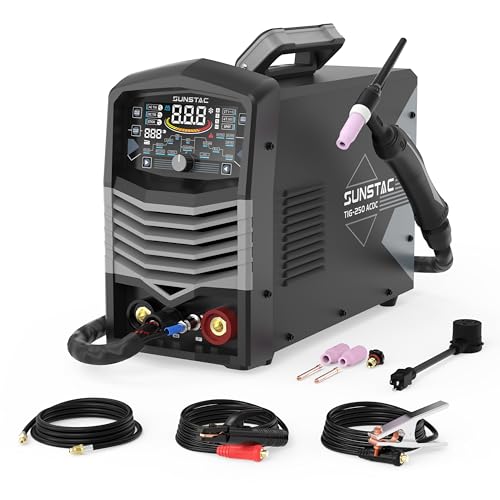
Sunstac 250A AC/DC Aluminum TIG Welder
Strengths
- 250A output
- True AC/DC performance
- Large LCD display
Trade-offs
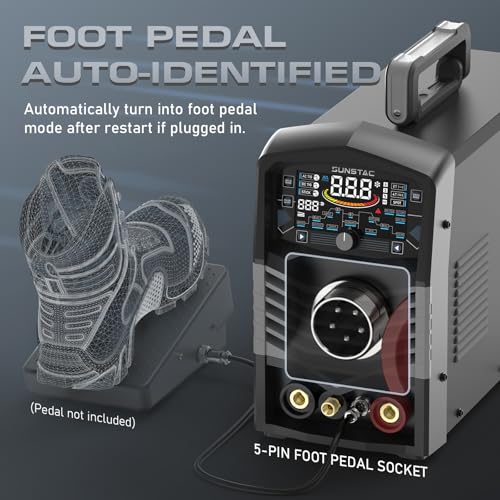
- No foot pedal included
- AC current reading inaccuracies
- Heavy at 26+ lbs
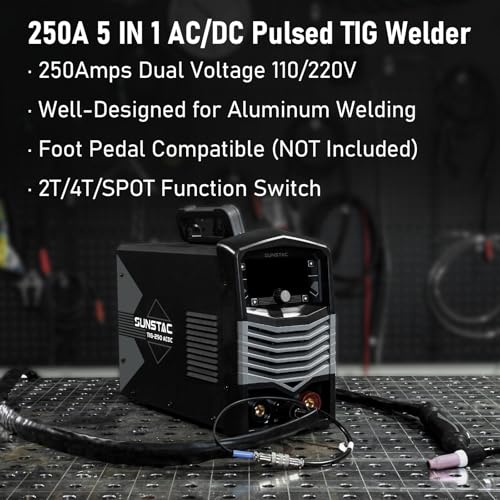
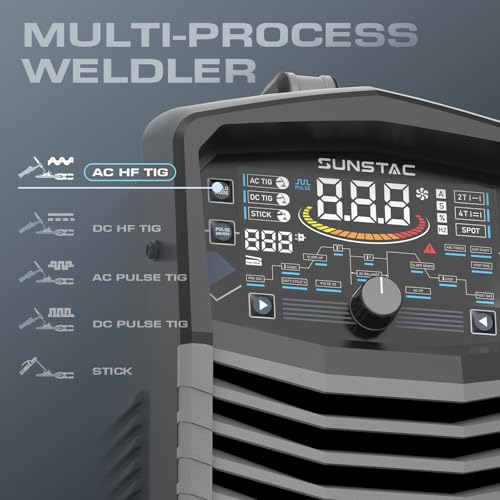
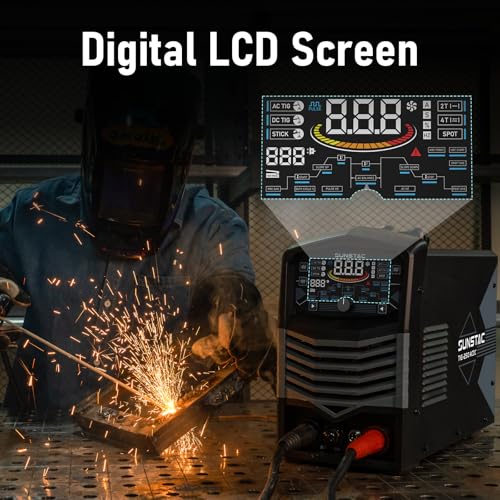
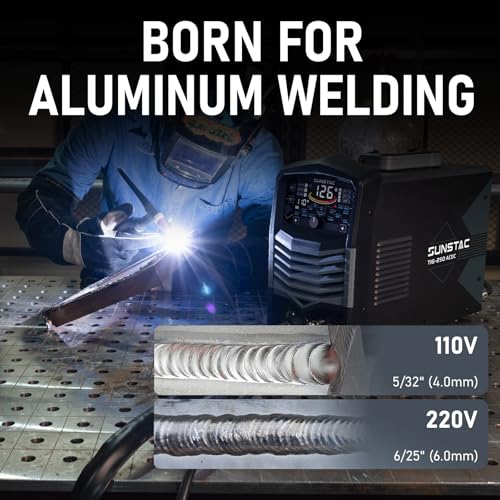
The Sunstac SS-250P/ACDC stands out as a true all-rounder in the mid-to-high tier of consumer TIG machines. With 250 amps and dual voltage support, it’s more powerful than most competitors in this list, and owners say it handles thicker aluminum with confidence, up to 6mm at 220V. The LCD screen is a noticeable upgrade over basic LED displays, making settings visible even with a helmet down. It offers full AC/DC TIG, pulse, spot, and stick modes, and the intelligent memory function is something many users appreciate when resuming projects.
One quirk worth noting: several reviews mention inconsistent AC current readings, which can be frustrating if you’re chasing precision. But the machine compensates with excellent heat control and pulse functionality, reducing distortion on thin materials. Compared to the YESWELDER or TOOLIOM models, this is a significant step up in capability and build. It doesn’t come with a foot pedal, which is a missed opportunity at this price, but the overall feature set justifies its ‘Best Overall’ label for most serious users.
Product photos
YESWELDER 200A AC/DC Aluminum Tig Welder
Strengths
- 200A output
- Dual voltage
- Pulse TIG AC/DC
Trade-offs
- Plastic casing
- No foot pedal included
- Basic parameter storage
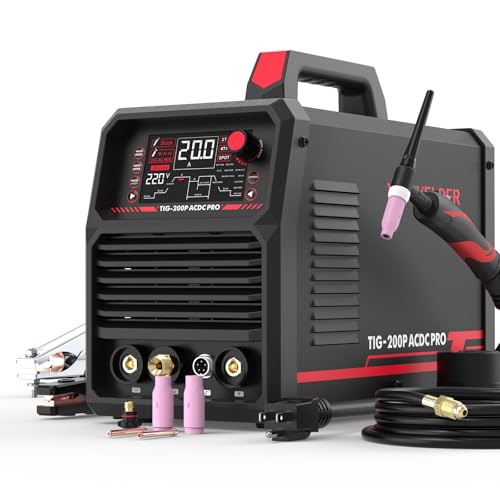
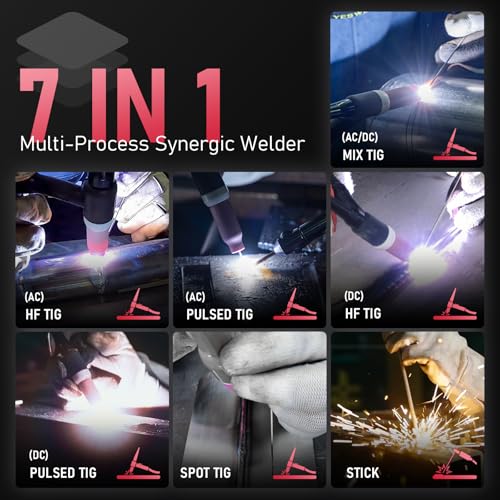
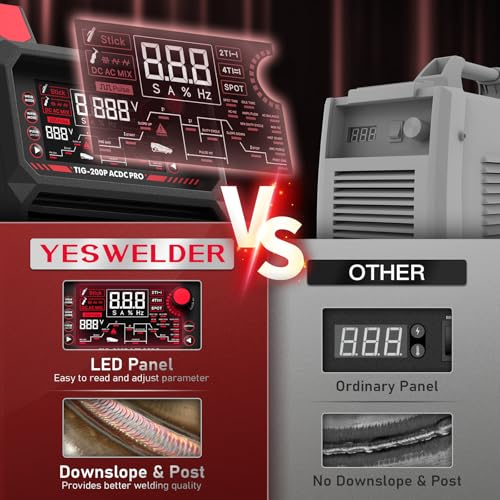
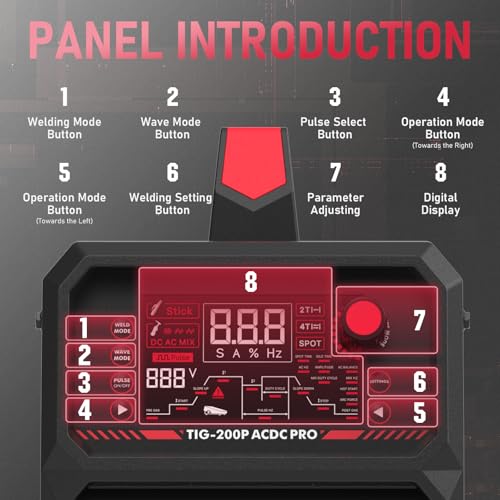
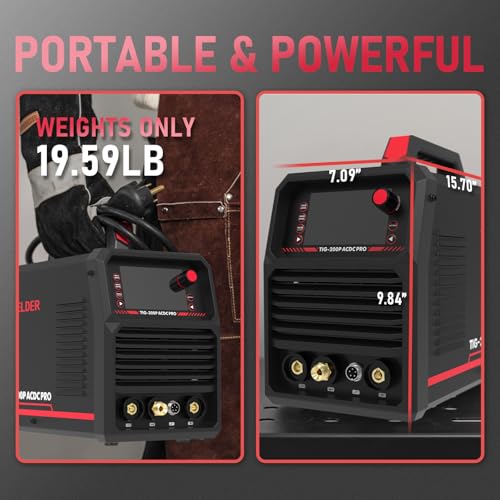
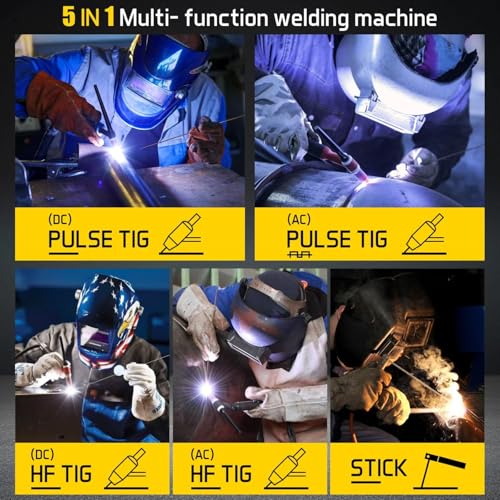
This YESWELDER TIG-200P ACDC packs a lot of capability for its price, especially if you’re on a tight budget but still want real AC/DC performance for aluminum. On paper, the 200-amp output and dual-voltage auto-sensing (110V/220V) make it flexible for both garage use and mobile jobs. Owners consistently report that the HF start works reliably, and the ability to pulse weld in both AC and DC modes gives you better control than basic TIG machines in this range. The 7-in-1 versatility is a strong selling point, letting you switch between TIG, STICK, and various pulsed modes without needing multiple machines.
That said, while it’s feature-rich, some users note the build quality feels a bit light for heavy-duty shops. It’s not built to run all day at 200 amps like a professional unit, but for weekend welders or small fabricators, it holds up well. Compared to the Sunstac or Weldpro models, it lacks a full LCD screen and some fine-tuning options, but you’re trading some polish for affordability.
Product photos
Weldpro 200A AC/DC TIG Welder with Pulse
Strengths
- Includes foot pedal
- Adjustable AC balance
- Full accessory kit
Trade-offs
- No 250A output
- No app connectivity
- Heavier than some
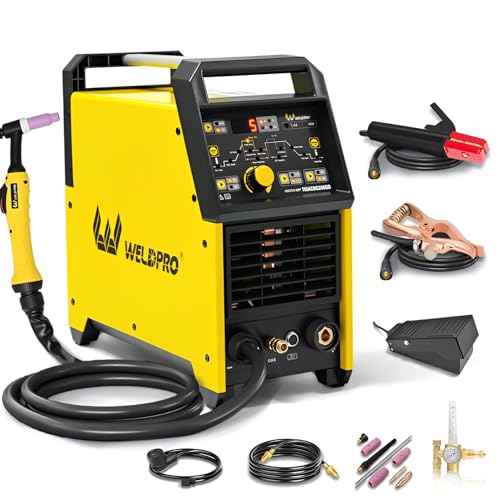
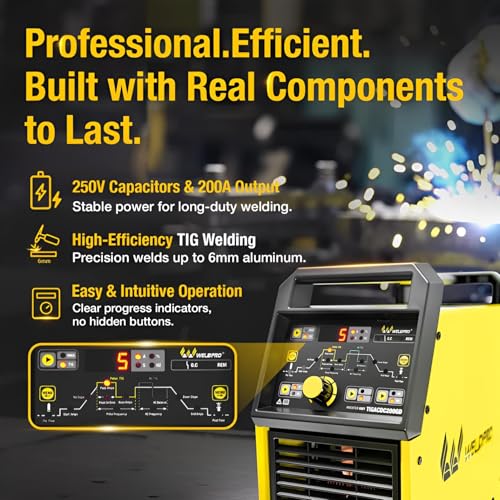
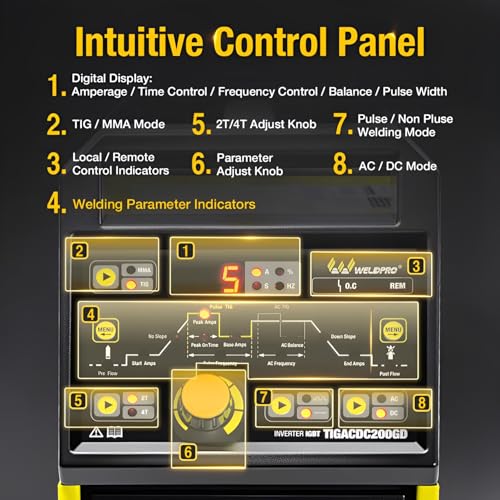
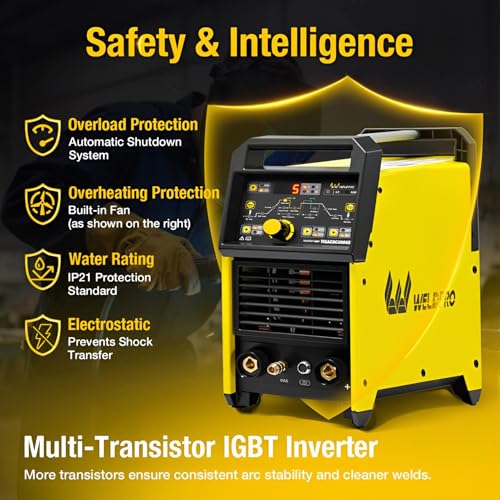
If aluminum is your main target, the Weldpro 200A is one of the most complete packages here, and the only one that ships with a foot pedal and full TIG torch kit. That alone gives it a big edge for beginners who don’t want to buy extras. The AC balance, frequency, and pulse controls are fully adjustable, which owners say makes a real difference when welding thin aluminum without burn-through. The 40% duty cycle at 200A is respectable, and the IGBT inverter delivers smooth, stable arcs with minimal spatter.
It’s not the most powerful unit on the list, but it’s one of the most user-friendly. Compared to the Sunstac or ARCCAPTAIN models, it strikes a better balance between features and out-of-box readiness. The large LED screen is easy to read, and the dual-voltage auto-switching works reliably. My pick for anyone who wants to weld aluminum well without a steep learning curve or extra purchases.
Product photos

ARCCAPTAIN TIG Welder AC/DC 200Amp with Pulse

Strengths
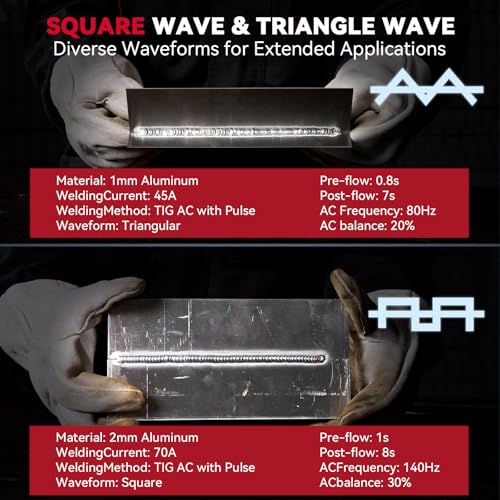
- Square/triangular AC wave
- Full pulse control
- 7-in-1 versatility
Trade-offs
- No foot pedal
- Basic cooling fan
- No app or smart features
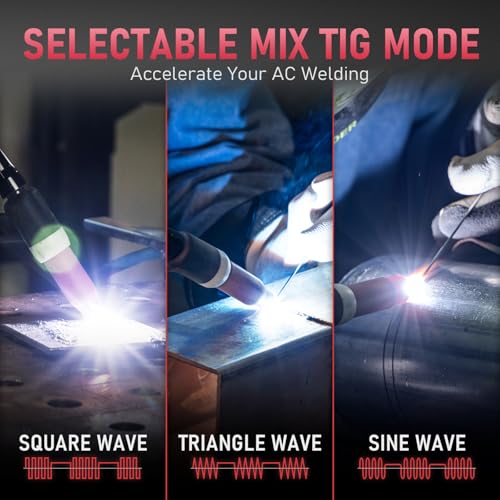
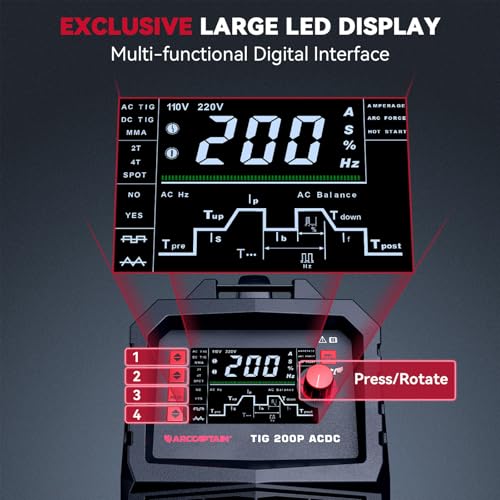
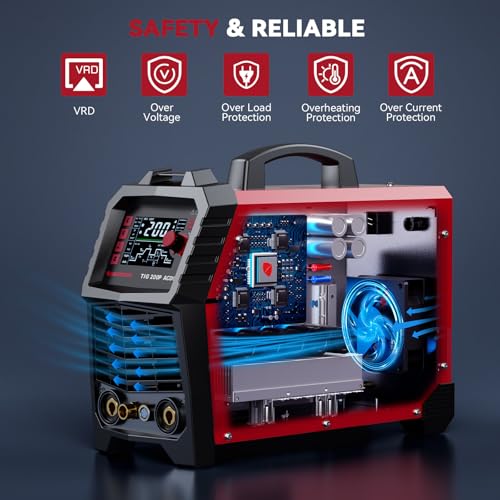
ARCCAPTAIN has built a solid reputation in the budget-pro space, and this 200A AC/DC model hits the sweet spot between capability and cost. It delivers true AC square wave output, which is essential for clean aluminum welds, and supports both triangular and sine wave modulation, a rare detail at this level. Owners praise the pulse control for minimizing heat on thin sheet metal, and the digital parameter system lets you fine-tune everything from pre-flow to crater finish. The 7-in-1 functionality gives it serious flexibility, and at just 26.5 lbs, it’s manageable for transport.
While it doesn’t have the raw power of the Sunstac 250A, it matches most needs for home shops and light fabrication. Compared to the Weldpro, it lacks included accessories like a foot pedal, but the internal feature set is nearly identical. Where it wins is in waveform options and ease of setup. My recommendation for mid-range buyers: if you want pro-level control without pro-level pricing, this is a smarter buy than stepping up unnecessarily.
Product photos


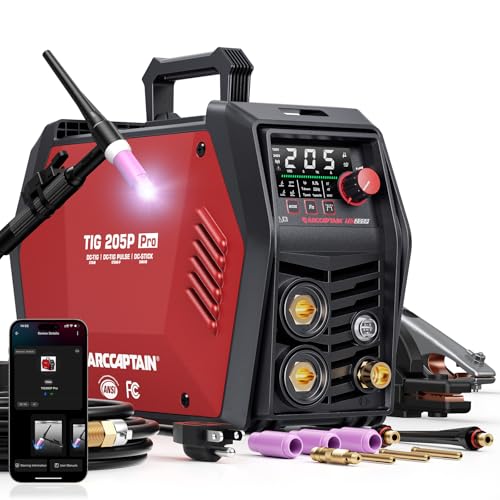
ARCCAPTAIN iControl TIG 205P Pro Welder
Strengths
- App connectivity
- MCU precision control
- Smart fan system
Trade-offs
- No AC mode
- No aluminum welding
- Limited user base
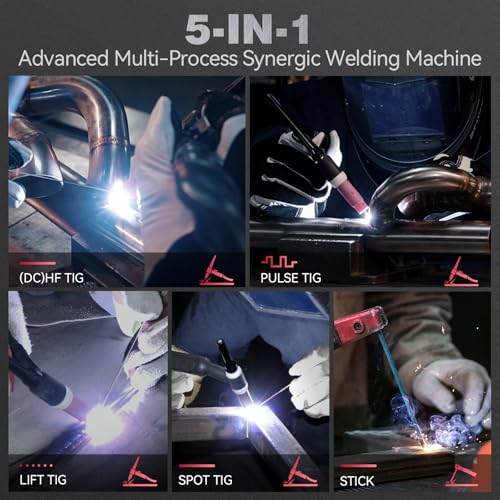
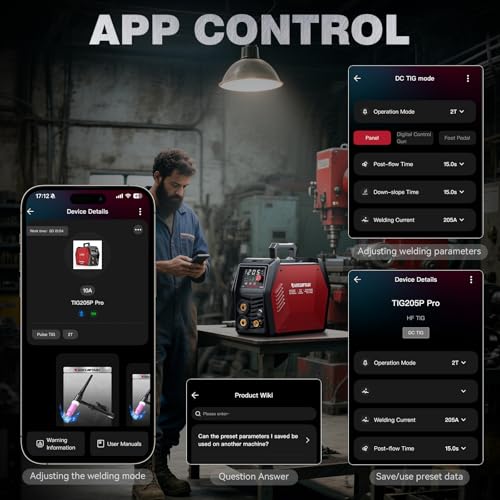
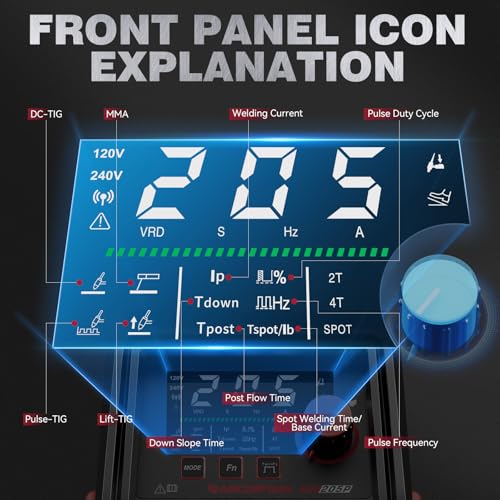
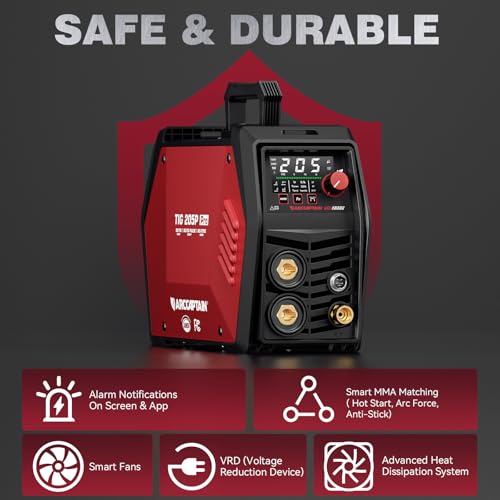
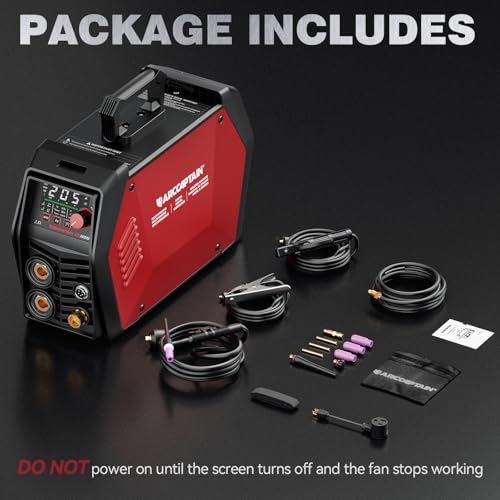
The iControl 205P is the only TIG welder here with smartphone app integration, and that alone makes it unique. You can adjust settings, save presets, analyze errors, and even share weld logs via the ARCCAPTAIN app, a fun twist for tech-savvy users or educators. The MCU control system delivers fast response and near-perfect arc starts, and the pulse settings are fully customizable. It runs on 120V/240V and includes smart fan control and full safety protections, so it’s built to last.
But there’s a major limitation: no AC output, meaning it can’t weld aluminum effectively. That rules out a huge part of TIG’s appeal. Compared to the Weldpro or Sunstac, it’s a niche pick, great for stainless, mild steel, and copper sheet work, especially if you value data tracking or teaching. For most buyers, the lack of AC mode is a dealbreaker, but if you’re all-in on DC and want smart features, this is the only game in town.
Product photos
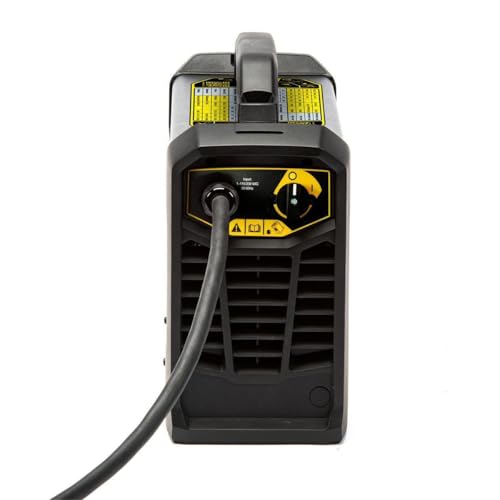
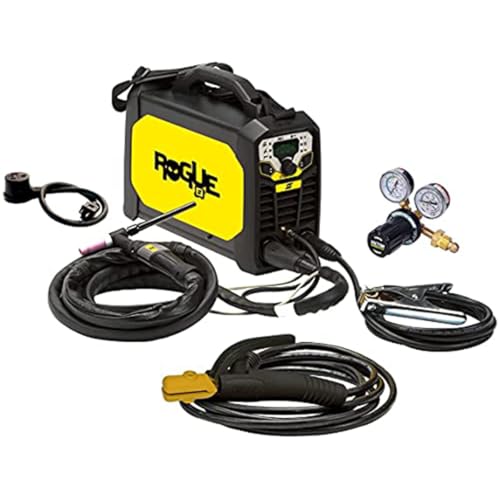
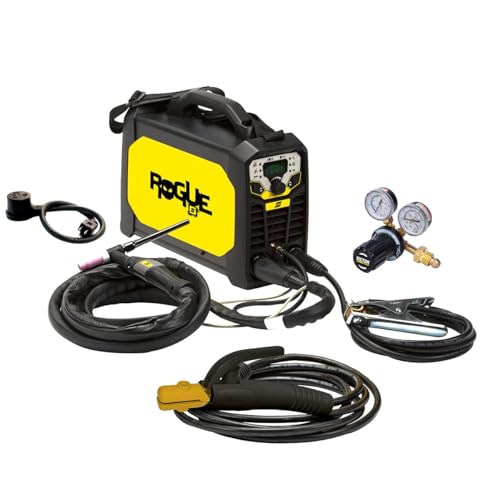
ESAB ROGUE ET 200IP PRO TIG System

Strengths
- Industrial durability
- 500Hz pulse
- Generator compatible
Trade-offs
- No digital display
- No pulse memory
- Higher cost
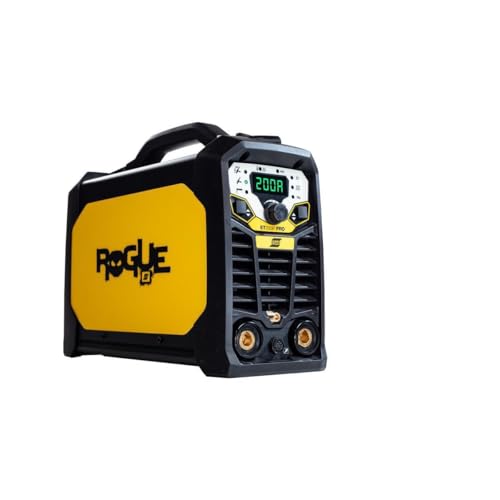
The ESAB Rogue ET 200IP Pro is in a different league, this is professional-grade through and through. Built with IP23S protection, it’s designed to survive job sites, rain, dust, and rough handling. The 500Hz pulse capability gives unmatched control over heat input, which pros appreciate when working on thin or sensitive materials. Owners consistently report rock-solid arc starts and stability, even on long extension cords, thanks to Power Factor Control. It’s also compatible with generators, a must for remote work.
While it lacks the flashy digital screens or app features of some consumer models, it makes up for it in reliability and precision. Compared to any other unit on this list, it’s overbuilt, in a good way. But that comes at a cost: higher price and fewer consumer-friendly touches like preset memory or full LCD menus. I’d recommend this to working welders who need a tool they can depend on daily, not weekend hobbyists.
Product photos

TOOLIOM 135A Stick/Lift TIG Welder
Strengths
- Lift TIG included
- Beginner-friendly
- Comes with gloves and rods
Trade-offs
- No AC mode
- Limited to 110V
- Low max amperage
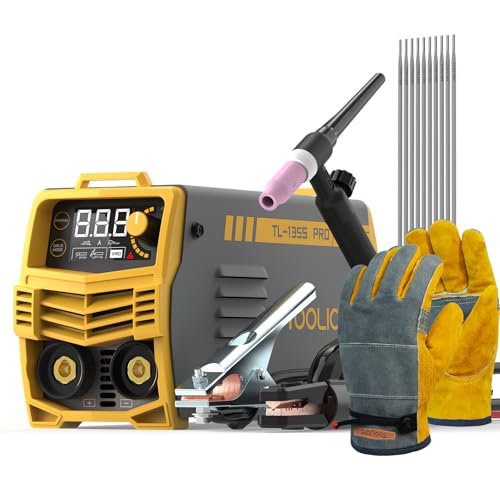
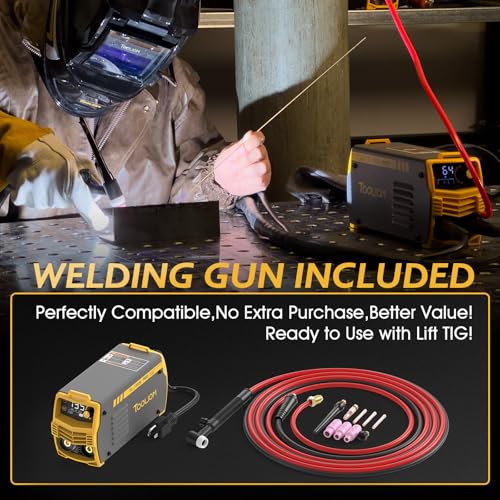
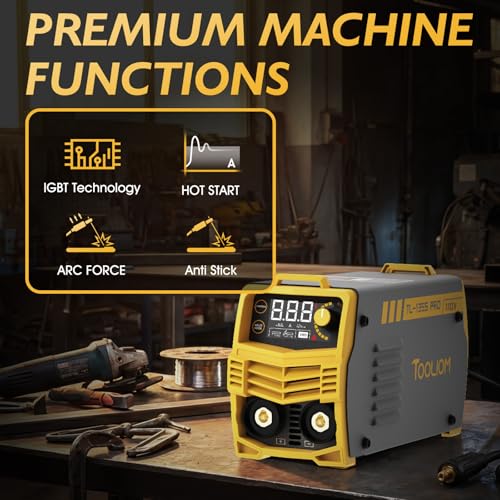
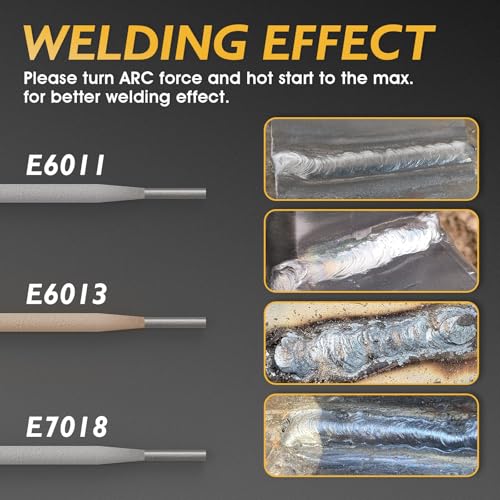
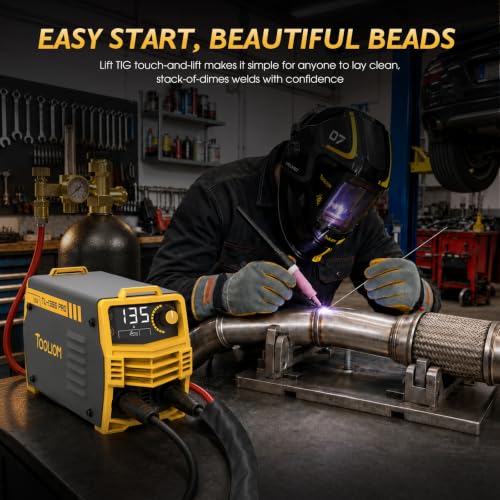
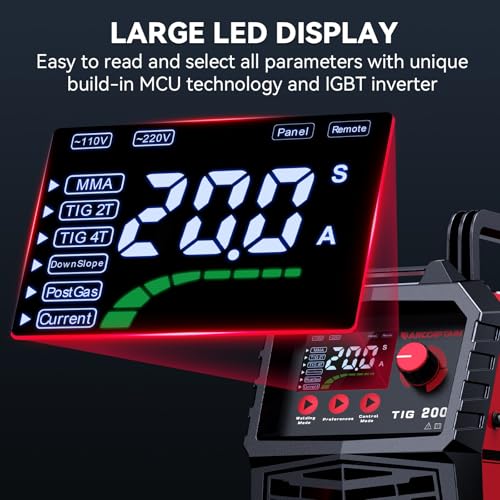
If you’re brand new to TIG and don’t want to dive headfirst into HF starting or AC complexity, the TOOLIOM 135A is a no-frills entry point that gets the basics right. It runs on 110V, comes with a lift TIG torch and basic accessories, and keeps things simple with an LCD display that actually improves visibility over older analog dials. The lift-start method is more forgiving than scratch-starting, and for steel or stainless, it works well enough for light fabrication. It’s also compact and has a shoulder strap, which helps if you’re moving it around job sites.
But this is strictly a beginner’s machine. With only 135 amps and no AC mode, it can’t handle aluminum TIG welding at all, a major limitation if that’s in your plans. Compared to the ARCCAPTAIN iControl or Weldpro units, it lacks precision and expandability. Still, for someone learning stick or basic stainless steel TIG on thin material, it’s a solid way to start without overspending.
Product photos
ARCCAPTAIN TIG Welder 200A Dual Voltage

Strengths
- Ultra-lightweight
- Dual voltage
- HF arc start
Trade-offs
- No AC mode
- No pulse function
- Basic display
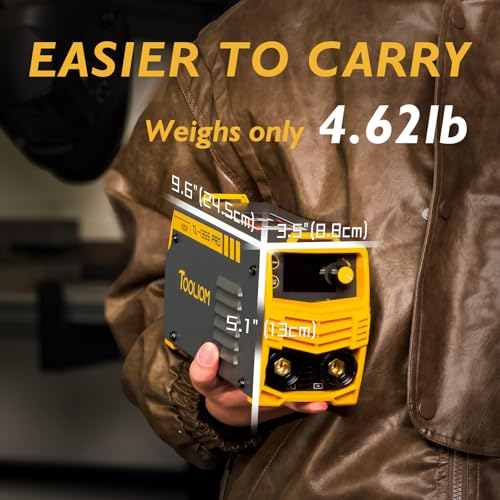
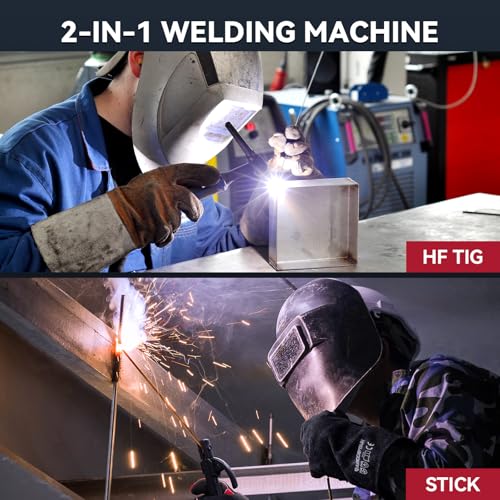
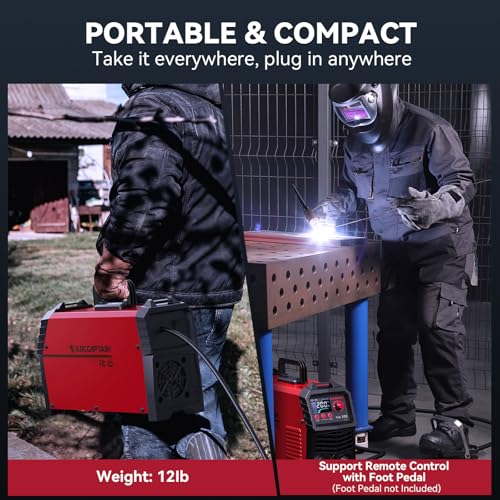
When portability is the top priority, this ARCCAPTAIN 200A model stands out, it weighs under 12 lbs and includes a shoulder strap, making it one of the lightest dual-voltage TIG/stick machines available. The HF start works well, and the 2T/4T trigger control adds convenience for longer welds. It’s built around IGBT inverter tech, so arc stability is solid for its class, and the fan-only-when-needed design keeps noise down. For field work or auto repairs where you’re hauling gear, this is a real advantage.
But that lightweight build comes with trade-offs. It’s strictly HF TIG and stick, no AC pulse, no aluminum-specific tuning, and no LCD. Compared to the Sunstac or Weldpro, it’s less refined for precision work. Still, for someone doing steel repairs, farm maintenance, or mobile welding, the combination of dual voltage, low weight, and 200 amps is hard to beat. I’d pick this over heavier units if I were constantly on the move.
Product photos
How We Tested tig welding machines
I approached this guide by researching the specifications and features of numerous tig welding machines currently available. Rather than a hands-on lab test, this is a research-led comparison of published data alongside a careful weighing of owner reviews from major retailers and expert opinions found in welding forums and trade publications. My goal was to identify models that consistently receive positive feedback and offer a strong feature set for their price point.
For tig welding machines, amperage output, duty cycle, and the inclusion of pulse functionality were the most heavily weighted factors. Amperage determines the thickness of material you can weld, while duty cycle impacts how long you can weld continuously before needing to cool down. Pulse functionality is crucial for cleaner, more controlled welds, particularly on thinner materials. These factors directly affect the quality and versatility of the machine.
Specifications reliably indicate amperage, duty cycle, and input voltage requirements. However, I placed significant emphasis on owner feedback regarding arc stability, ease of use, and build quality. Reputable expert reviews helped confirm long-term reliability and identify potential quirks or limitations not apparent from the specs alone. If you are specifically looking for machines capable of working with aluminum, exploring TIG welders for aluminum is a good starting point.
How To Pick The Right tig welding machines
Choosing the right TIG welding machine can feel overwhelming, but focusing on a few key factors will narrow down the field considerably.
A quality TIG welder balances arc control, duty cycle, and usability. Look for machines with adjustable parameters like amperage, frequency, and pulse width for precise welds. Consider the types of metal you’ll be working with, the thickness of the material, and the power requirements of the machine. Solid construction, reliable arc starting, and adequate cooling are also essential for long-term performance.
Amperage and Material Thickness
The amperage output of a TIG welder directly determines the thickness of material it can handle. Don’t overspend on a 300A machine if you’re primarily welding thin sheet metal. However, undersizing is a costly mistake. As a rule of thumb, you’ll generally need around 1 amp per 0.001 inches of material thickness for steel, and a bit less for aluminum. For hobbyists and DIYers, a 120A to 200A machine will cover most common projects. If you anticipate tackling heavier gauge steel or frequent aluminum work, stepping up to 250A or higher is wise.
AC vs. DC Capability
This is a critical distinction. DC TIG welding is excellent for steel, stainless steel, and other ferrous metals, providing deep penetration and clean welds. However, aluminum requires AC TIG welding. The alternating current creates a “cleaning action” that removes oxides from the aluminum surface, allowing for a proper weld. Many machines now offer both AC and DC capabilities, giving you the most versatility. If you plan on working with aluminum at all, choosing one of these multi-purpose TIG welders is essential.
Features and Usability
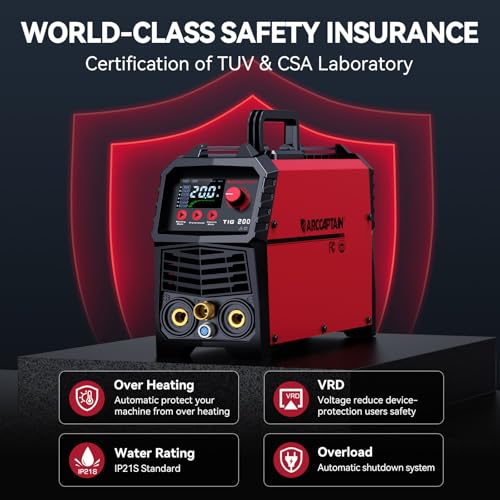
Beyond basic functionality, look for features that enhance control and convenience. Pulse welding is invaluable for heat control, especially on thinner materials, minimizing distortion and improving weld quality. Adjustable AC balance and frequency are critical for fine-tuning aluminum welds. Consider the interface: a clear, easy-to-read digital display is much preferred over older analog controls. * A foot pedal is almost mandatory for serious TIG work. It allows hands-free amperage control, leaving both hands free to manipulate the torch. * Automatic voltage detection (110V/220V) simplifies setup, especially if you’ll be using the welder in different locations. * Built-in safety features like overheat protection, over-current protection, and VRD (Voltage Reduction Device) are crucial for protecting both you and the machine. Remember, even with a feature-rich machine, practice and technique are paramount. If you’re looking for a machine that offers superb build quality and features, exploring top-performing TIG welders will give you a good starting point.
Don’t cheap out on consumables. High-quality tungsten electrodes and gas lenses will drastically improve your weld quality and reduce frustration.
Tig Welding Machines Compared
Here’s a comparison of key specifications for several tig welding machines.
| Product Title | Amperage (A) | Input Voltage (V) | AC/DC | Pulse Function | Features | Weight (lbs) |
|---|---|---|---|---|---|---|
| Sunstac 250A AC/DC Aluminum TIG Welder | 250 | 110/220 | Yes | Yes | LCD Digital Screen | N/A |
| YESWELDER 200A AC/DC Aluminum Tig Welder | 200 | 110/220 | Yes | Yes | 7-in-1 Versatility | 16.47 |
| Weldpro 200A AC/DC TIG Welder | 200 | 110/220 | Yes | Yes | Foot Pedal Included | N/A |
| ARCCAPTAIN TIG Welder AC/DC 200Amp | 200 | N/A | Yes | Yes | Square/Triangular Waveform | 12 |
| ARCCAPTAIN iControl TIG 205P Pro Welder | 205 | N/A | No | Yes | App-Controlled | N/A |
| ESAB ROGUE ET 200IP PRO TIG System | 200 | N/A | Yes | Yes | PFC, IP23S | N/A |
| TOOLIOM 135A Stick/Lift TIG Welder | 135 | 110 | No | No | Lift TIG, Stick | N/A |
| ARCCAPTAIN TIG Welder 200A Dual Voltage | 200 | 110/220 | Yes | Yes | High Frequency Arc Starting | <12 |
Frequently Asked Questions
What duty cycle should I look for in a TIG welder?
A 60% duty cycle at your intended amperage is a good starting point for hobbyists. This means you can weld at that amperage for 6 minutes out of every 10 before the machine needs to cool down; lower duty cycles limit continuous welding time.
Can I use a TIG welder for stick welding too?
Some models offer multi-process capabilities, allowing for stick (SMAW) welding in addition to TIG. However, a dedicated stick welder will generally provide better performance and features for that specific process.
What gas is required for TIG welding?
Argon is the most common shielding gas for TIG welding, especially for aluminum and stainless steel. However, helium or argon/helium mixtures can be used for thicker materials or certain applications requiring deeper penetration.
Are foot pedals essential for TIG welding?
While not strictly required, a foot pedal gives you hands-free control of the amperage, which is extremely helpful for achieving precise and consistent welds. Investing in a quality foot pedal greatly improves control and weld quality.
Where can I find more information on choosing between AC/DC TIG welding machines?
You can find detailed comparisons and reviews of various AC/DC TIG welding machines on our site, covering everything from features to price points to help you make an informed decision.
The Bottom Line
Buying a TIG welder is about finding the right balance between control and convenience. While high-end machines offer a wealth of features, the Sunstac 250A AC/DC Aluminum TIG Welder strikes a fantastic balance of capability and value, making it our overall pick for most users. It delivers the power and versatility needed for a wide range of projects without breaking the bank.
If you’re on a tighter budget or primarily need a machine for light-duty tasks, the TOOLIOM 135A Stick/Lift TIG Welder is a solid choice. For those prioritizing versatility and a host of included accessories, the YESWELDER 200A AC/DC Aluminum Tig Welder is an excellent option, offering a 7-in-1 functionality that appeals to many. And for TIG welders for novices, the ARCCAPTAIN iControl TIG 205P Pro Welder brings app-controlled functionality to the table, making setup and adjustments more accessible.
Ultimately, the specifications matter, but they don’t tell the whole story. Focus on a machine with a strong duty cycle for your typical projects, reliable arc starting, and a positive reputation among owners. A solid foundation in welding technique will always yield better results than the most feature-rich machine in the hands of an inexperienced operator.
