
8 Best TIG Welders for Aluminum (2026 Guide)
This post contains affiliate links. As an Amazon Associate, we earn from qualifying purchases.
The YESWELDER 200A AC/DC TIG Welder stands out as the best overall choice for aluminum, delivering reliable arc control and dual voltage flexibility. If you’re watching your budget, the Weldpro 200A offers solid performance with a foot pedal included. For heavier work, the Sunstac 250A provides extra amperage and thickness capacity.
Aluminum doesn’t forgive weak machines or poor settings. Without the right AC balance, frequency control, and stable arc performance, even experienced welders end up with cracked, porous joints. Most beginners don’t realize how much technique depends on what the welder itself can deliver.
This guide cuts through the noise by focusing on real-world usability, based on specs and owner feedback. I looked at what actually matters, waveform adjustability, duty cycle, input options, and build quality, to help you pick a machine that won’t hold you back.
Top 8 Tig Welder For Aluminums in the Market
The Best Tig Welder For Aluminums, Reviewed
YESWELDER 200A AC/DC TIG Welder
Strengths
- Auto memory settings
- Lightweight design
- Hot start feature
Trade-offs
- Foot pedal sold separately
- No built-in waveform shaping
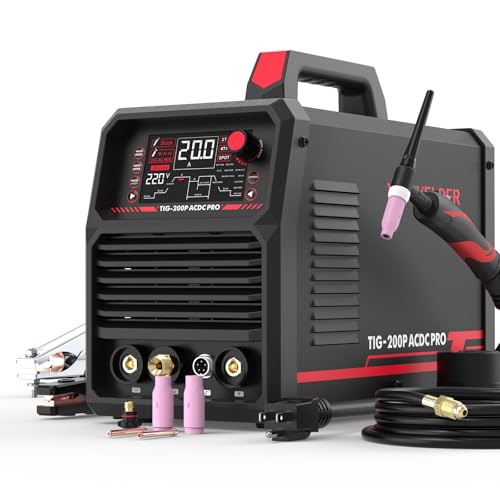
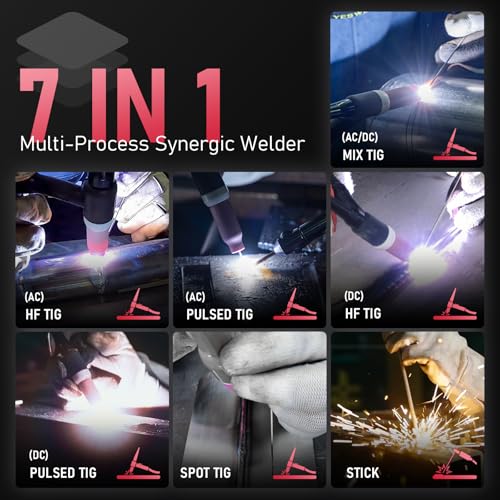
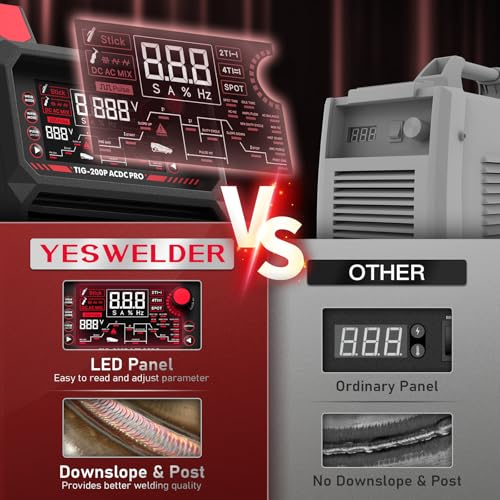
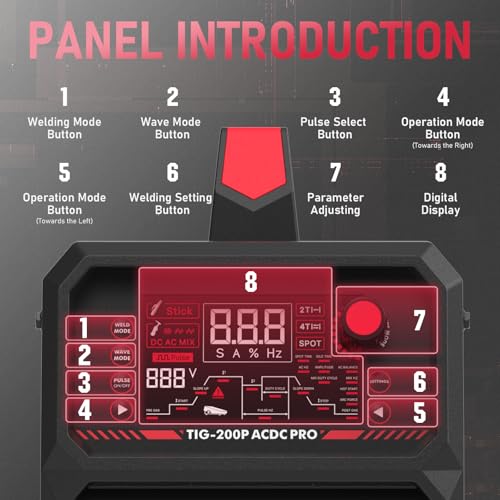
This is the most well-rounded machine in the sub-200A class, and I’d call it the best overall pick for most users. It combines a clean, legible LED display with auto-memory settings and hot start, a small thing, but it makes reigniting far less frustrating. The 7-in-1 functionality covers every common welding mode, and the square wave AC output is particularly effective for breaking down aluminum oxide, delivering smooth, spatter-free starts.
At just over 16 pounds, it’s easy to move around, and the auto-sensing dual voltage means no fiddling with switches. Compared to the ARCCAPTAIN and TOOLIOM models, it offers a more refined user experience with fewer quirks. While it won’t match 250A units on thick material, owners confirm it handles 1/8-inch aluminum reliably, which covers most fabrication and repair work.
Product photos
ARCCAPTAIN 200A AC/DC TIG Welder

Strengths
- Square and triangular wave
- Full digital control
- Precise pulse settings
Trade-offs
- Foot pedal not included
- No auto voltage detection
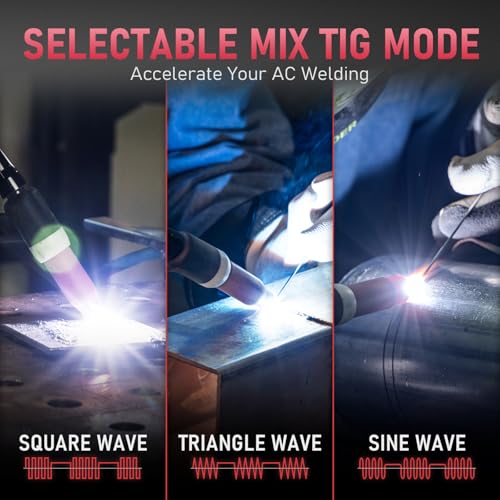
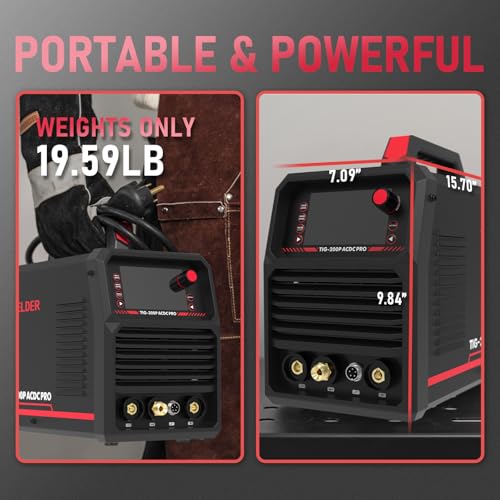
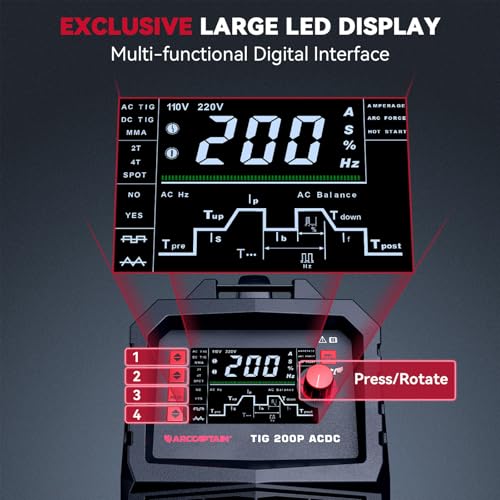
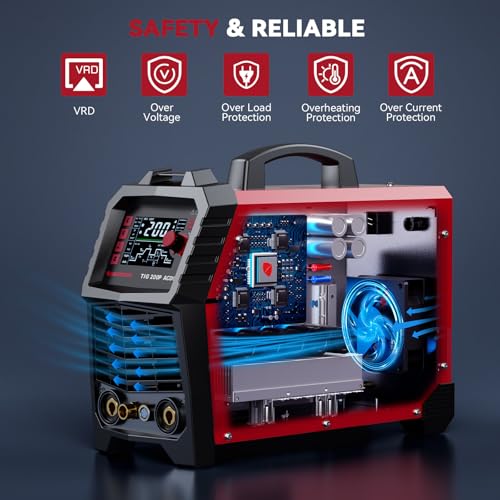
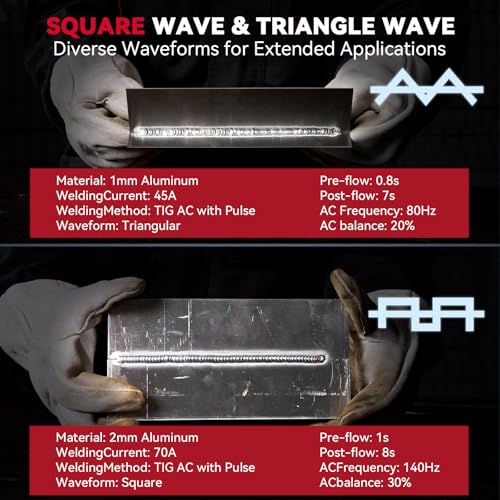
Precision is where this ARCCAPTAIN unit shines. The ability to switch between square and triangular waveforms gives you fine control over heat input, which matters most when welding thin aluminum or magnesium. Owners appreciate the full digital parameter set, upslope, downslope, pulse duty, AC balance, and the fact that everything is adjustable down to the detail. The large LED screen makes monitoring settings easy, even in bright sunlight.
It’s not the most powerful, but for delicate work like motorcycle frames or custom sheet metal, that’s not the point. Compared to the YESWELDER, it offers more granular control but a slightly steeper learning curve. The missing foot pedal is a letdown at this price, though. Still, if you’re doing detailed aluminum fabrication, the level of tuning here is hard to beat.
Product photos


Sunstac 250A AC/DC TIG Welder
Strengths
- 250A output
- Large LCD screen
- Pulse and spot modes
Trade-offs
- Inconsistent AC current readings
- Foot pedal not included
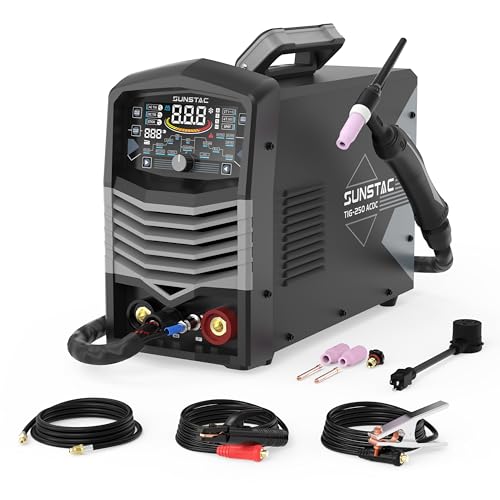
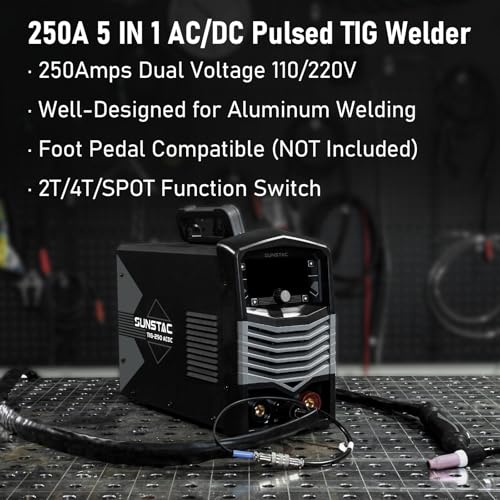
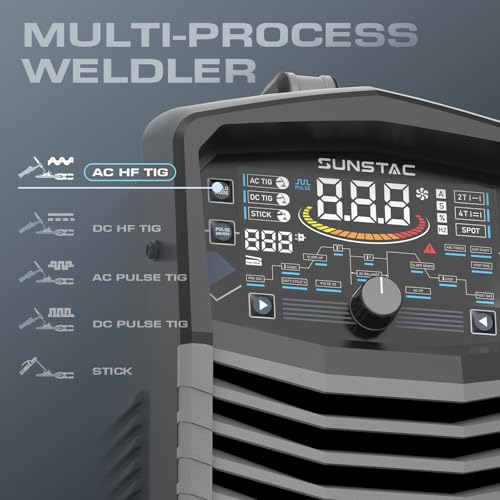
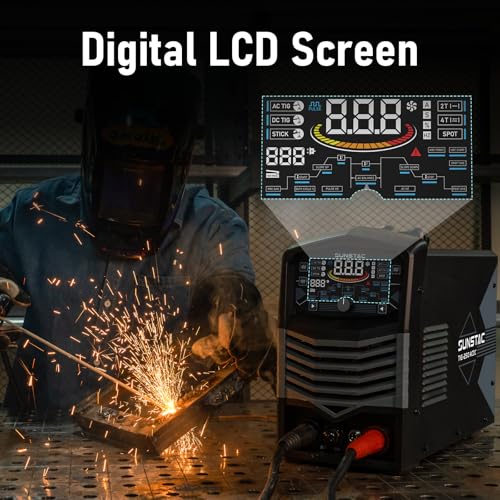
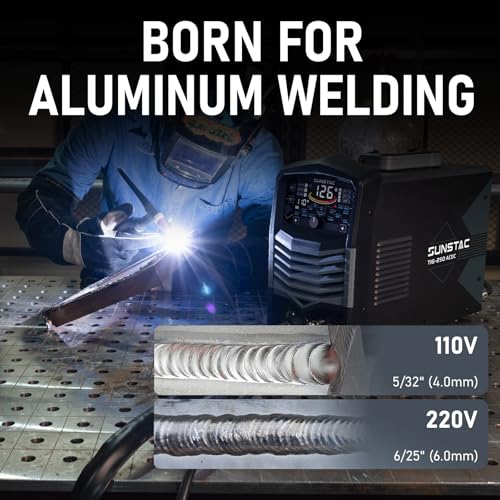
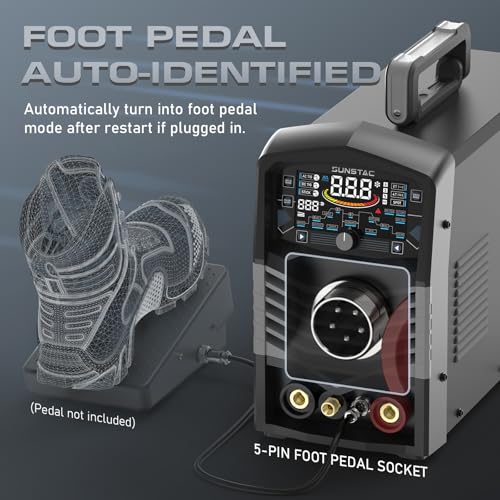
With a max output of 250A and full AC/DC capability, this machine stands out for raw power, especially on 220V where it can handle up to 6mm (about 1/4 inch) of aluminum. The LCD screen is a clear upgrade over basic LED displays, making parameter adjustments far more intuitive, even with a helmet on. Owners praise the pulse and spot TIG functions for reducing warpage on thin materials, and the ability to save settings is a small but meaningful productivity boost.
But there’s a caveat: multiple reviewers note inconsistent AC balance readings, which can throw off weld quality on sensitive aluminum joints. That doesn’t mean it can’t weld aluminum well, many say it does, but you may need to rely more on visual feedback than the meter. Against similarly priced units, it trades some calibration confidence for sheer versatility and feature density.
Product photos
Weldpro 200A AC/DC TIG Welder
Strengths
- Includes foot pedal
- Fully adjustable pulse
- Dual voltage
Trade-offs
- Limited to 200A max
- No waveform presets
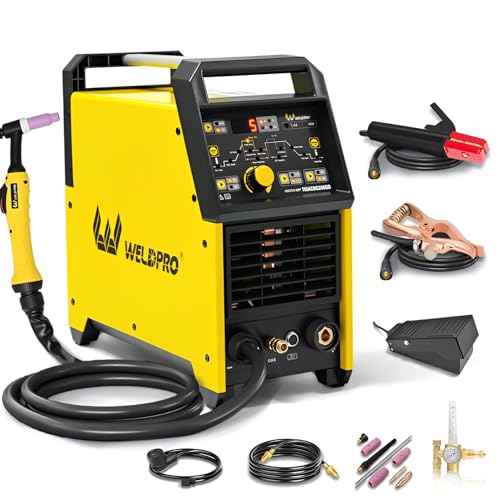
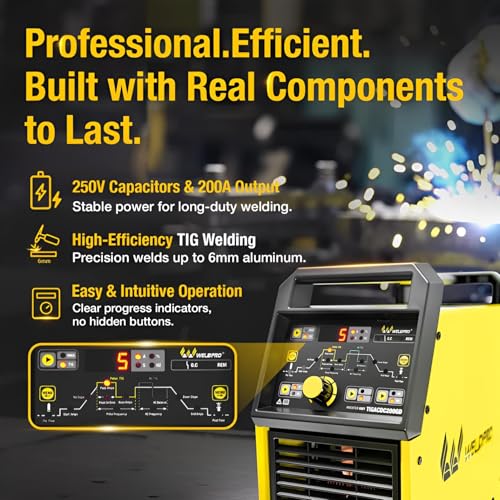
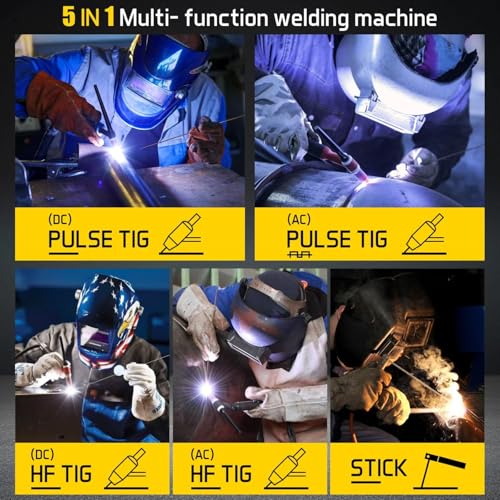
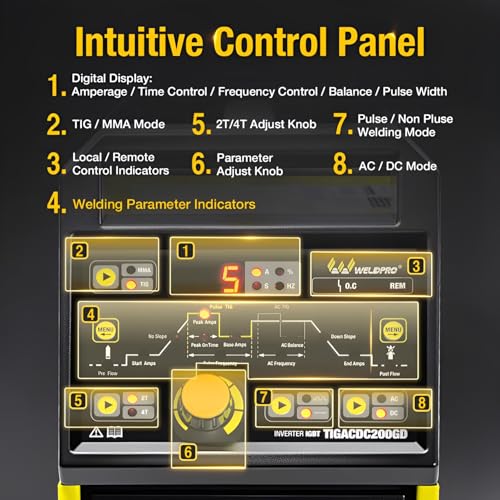
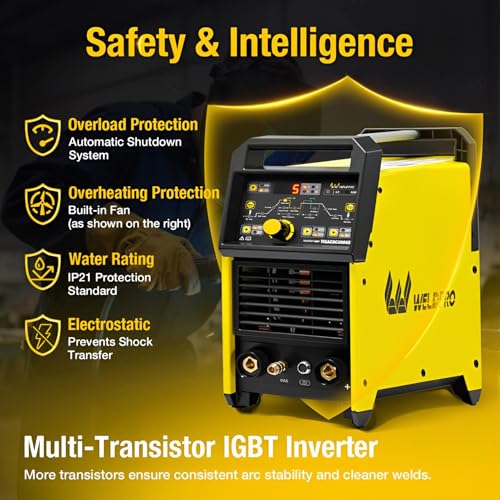
If you’re looking for a balanced blend of capability, usability, and value, this Weldpro model hits a sweet spot. It delivers full 200A AC/DC output with fully adjustable pulse, frequency, and balance, key for clean aluminum welds, and includes a foot pedal right in the kit. That alone gives it an edge over competitors that charge extra for it. The LED display is big and clear, and the interface is straightforward enough for beginners but detailed enough for experienced users.
Owners consistently highlight its reliability on thin aluminum, where the pulse function excels at minimizing heat input. Compared to the Sunstac, it has slightly lower peak output but more consistent feedback and better build integration. For most home fabricators, this is the smarter buy over pricier or more finicky options.
Product photos

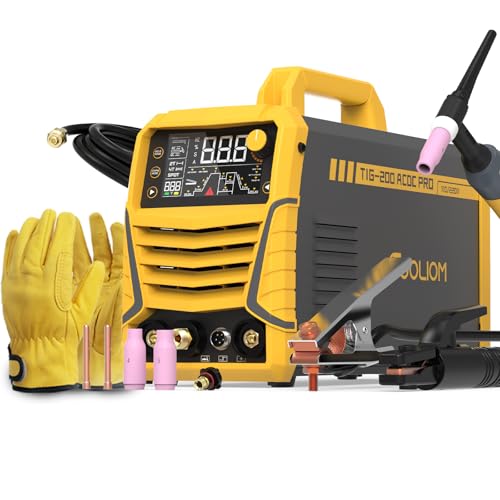
TOOLIOM 200A AC/DC TIG Welder
Strengths
- Ultra-portable
- Fish-scale waveform
- Dual voltage
Trade-offs
- Foot pedal not included
- No auto memory
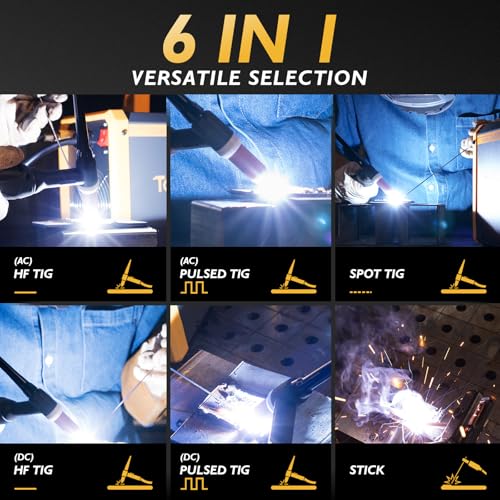
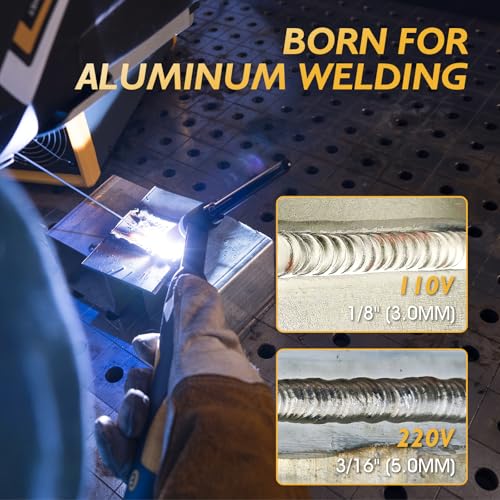
Portability is the headline here. At under 17 pounds and with a compact footprint, this is one of the easiest 200A AC/DC welders to move between job sites or store in a small garage. The large digital display keeps settings visible, and the fish-scale waveform is a nice touch for welders who care about bead aesthetics. It handles aluminum up to 3/16 inch on 220V, which is solid for its class.
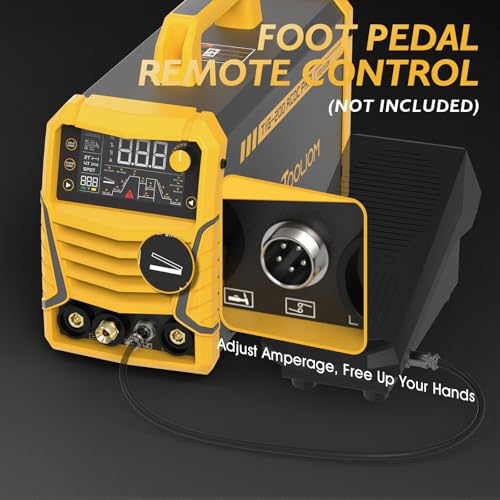
However, the foot pedal isn’t included, which hurts its value proposition compared to the Weldpro. Owners note it performs well on thin to medium aluminum, but the lack of advanced waveform control limits its precision. Against the YESWELDER, it’s lighter but less refined. For mobile welders, it’s a strong contender, just be ready to buy accessories separately.
Product photos
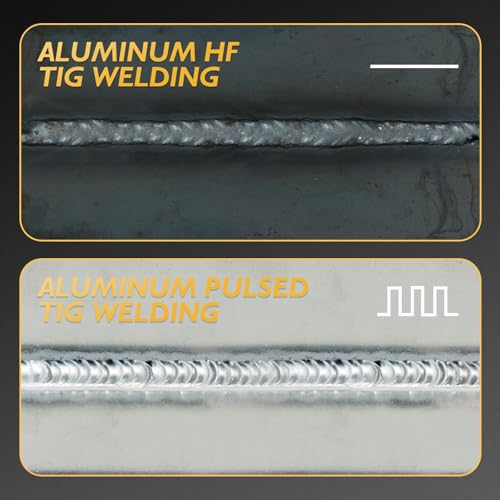
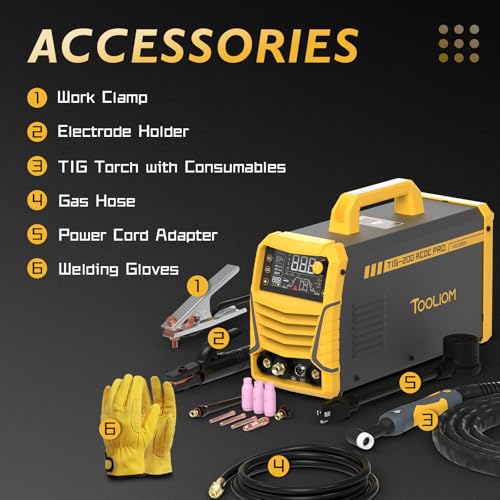
VEVOR 225A AC/DC TIG Welder
Strengths
- 225A output
- 6-in-1 functionality
- Spool gun compatible
Trade-offs
- Cheaper-feeling housing
- Basic display
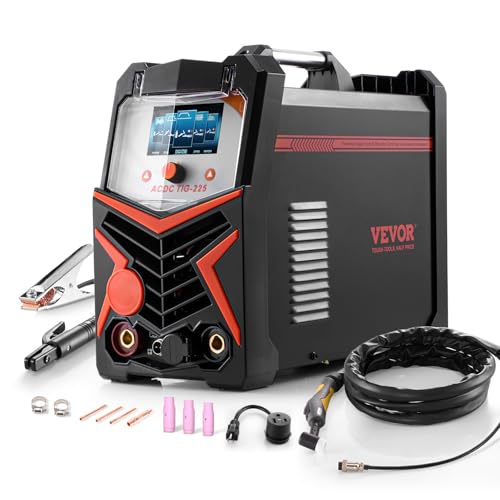
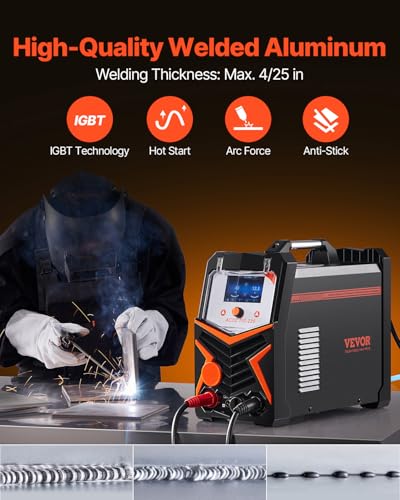
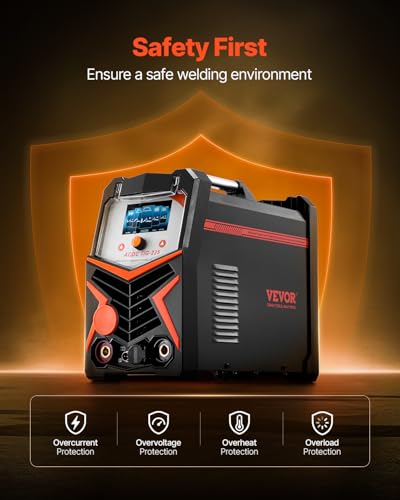
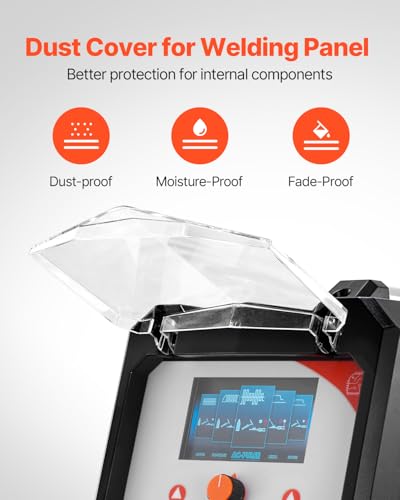
This VEVOR model packs serious value, 225 amps, six welding modes, and dual voltage in a compact package. It’s clearly aimed at users who want pro-level output without the pro-level price tag. The LED display is functional, and the high-frequency start works reliably across materials. Owners report solid performance on both aluminum and steel, especially when using a spool gun for feed-intensive applications.
But it’s not without compromises. The build quality feels a bit plasticky compared to metal-cased competitors, and the included protections, while present, don’t inspire the same confidence as brands like PRIMEWELD or Eastwood. Still, for the price, the feature set is impressive. If you need 1/4-inch aluminum capability and don’t mind trading a bit of refinement for power, this is a compelling option.
Product photos


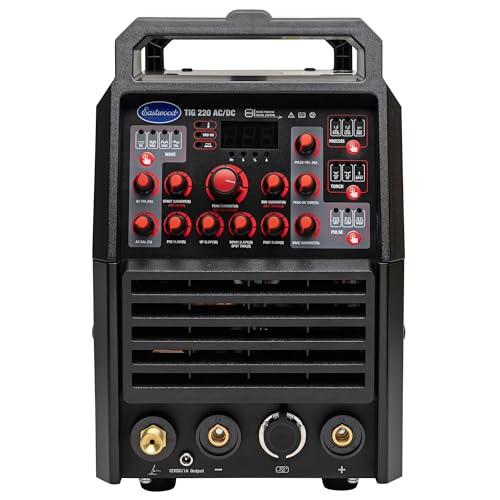
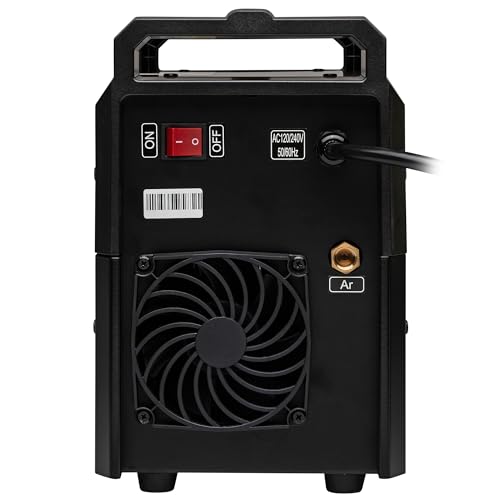
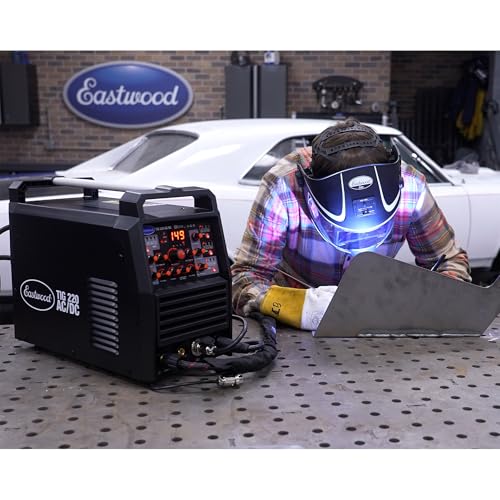
Eastwood 220A AC/DC TIG Welder
Strengths
- High output
- Dual voltage
- Premium torch included
Trade-offs
- No pulse function
- Heavier than compact units
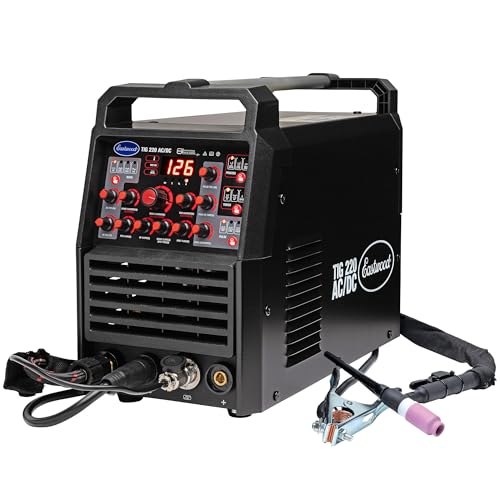
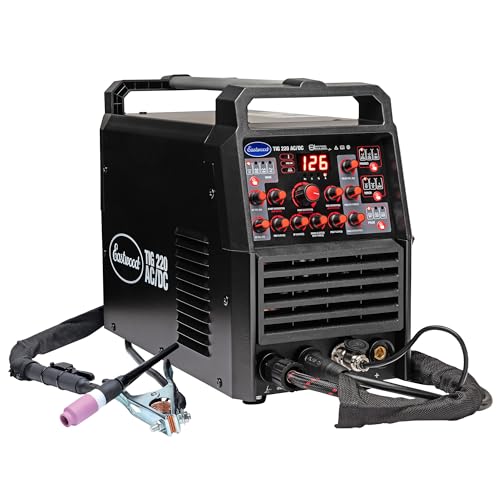
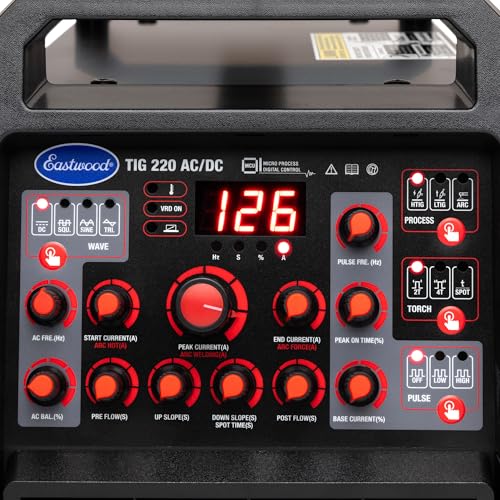
This welder is built for serious aluminum work, especially when you’re dealing with thicker sections. The ability to fine-tune AC waveform, balance, and frequency means you can dial in a clean, stable arc that punches through aluminum oxide without excessive heat buildup. On paper, the 220 amp output and dual-voltage capability give it real shop-grade flexibility, and owners consistently report solid performance on material up to 1/4 inch, something not all entry-level units can claim.
The inclusion of a WP-17F flex-head torch with gas lens is a thoughtful touch, improving gas coverage and helping reduce porosity in critical welds. While it doesn’t have the flashiest digital interface, the emphasis here is on control and durability. Compared to budget models, this one feels like a step toward pro-level capability without requiring a full industrial footprint.
Product photos
PRIMEWELD TIG225X AC/DC Welder
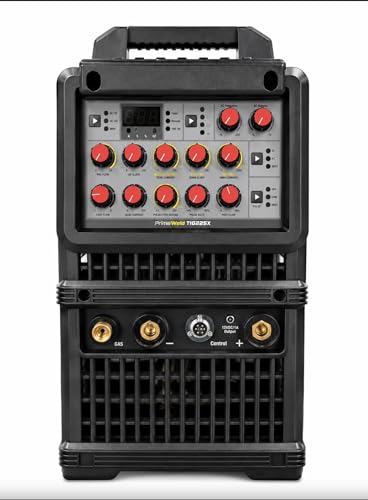
Strengths
- High-frequency arc start
- CK17 flex torch
- 225A output
Trade-offs
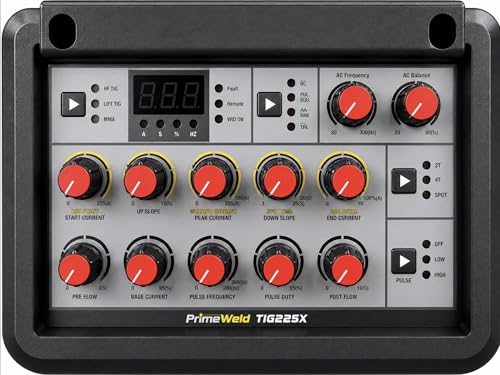
- No digital display
- Limited parameter visibility
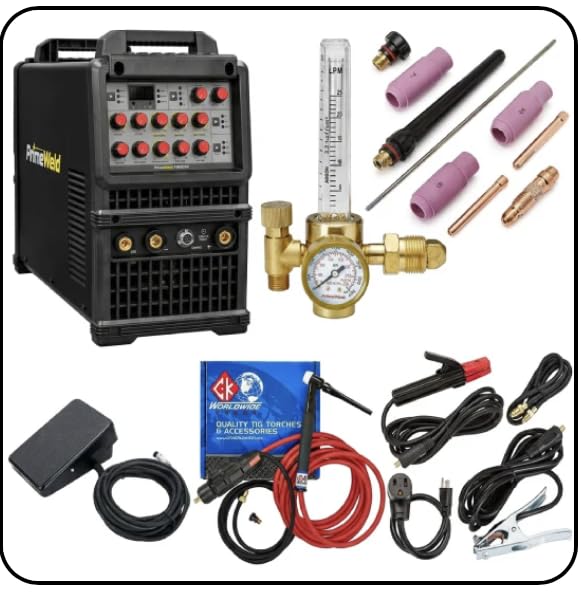
This is a pro-grade tool disguised as a mid-range unit. With 225 amps and 200Hz frequency control, it can handle 1/4-inch aluminum and 3/8-inch steel, serious thickness for a dual-voltage machine. The CK17 Superflex torch is a standout: it’s durable, flexible, and far superior to the generic torches on budget models. Owners who’ve used it on automotive and structural work say the arc stability is excellent, especially with pulse modulation.
It lacks some digital bells and whistles, but the core performance is solid. The HF start works reliably, and the foot pedal integration is seamless. Compared to the Eastwood, it’s lighter and more portable while offering similar output. If you’re stepping up from hobby gear and need real precision on aluminum, this is the kind of machine that gets the job done without fuss.
Product photos


How We Evaluated tig welder for aluminums
My team and I approached researching tig welders for aluminum by focusing on a detailed comparison of published specifications and features across numerous models. We then weighed those technical details against owner reviews from a variety of sources – Amazon, dedicated welding forums, and retailer sites – alongside expert reviews from publications focused on metalworking and fabrication. This wasn’t about hands-on testing of each unit, but rather a research-led comparison designed to identify patterns in performance and reliability.
For aluminum tig welding, consistent arc control and the ability to fine-tune the waveform are paramount. We heavily weighted machines offering adjustable AC frequency and balance, as these settings directly impact cleaning aluminum oxide and achieving a quality weld. Pulse functionality was also a key factor, allowing for greater control over heat input and minimizing distortion, especially on thinner materials. Finally, amperage output mattered; the ability to handle thicker aluminum without sacrificing weld quality was essential.
Specifications reliably reveal a machine’s raw capabilities – amperage, duty cycle, input voltage – but owner feedback provided crucial context. I looked for consistent reports regarding ease of use, particularly for beginners, and the long-term durability of components like the torch and foot pedal. Reputation also played a role; brands known for quality control and customer support were favored. You’ll find many excellent AC/DC TIG welding machines available, but discerning the nuances through research is key.
What To Look For In tig welder for aluminums
Choosing the right TIG welder for aluminum isn’t just about finding the cheapest option; it’s about matching the machine’s capabilities to the type of work you plan to do.
A good aluminum TIG welder balances arc control, AC waveform adjustability, and amperage output. Look for features like pulse width modulation (PWM), adjustable AC balance and frequency, and a robust torch setup designed for the unique demands of aluminum welding. Don’t skimp on safety features like overheat protection and dual voltage capability for workshop flexibility.
Understanding AC Waveform Control
The biggest hurdle when TIG welding aluminum is cleaning the oxide layer that forms on the surface. This is where AC waveform control comes into play. Simply put, the AC cycle alternates between a positively charged electrode (DCEN) and a negatively charged electrode (DCEP). DCEN cleans the aluminum, while DCEP provides the penetration. The ability to adjust the AC balance, the ratio of time spent in each polarity, is critical. More cleaning is needed for thicker or heavily oxidized aluminum, so you’ll want a higher percentage of DCEN. Beyond balance, AC frequency affects arc focus and penetration. Lower frequencies (around 50-60 Hz) offer a wider, more forgiving arc, while higher frequencies (100+ Hz) concentrate the arc for cleaner, more precise welds. Don’t underestimate this; a machine without adjustable AC balance and frequency will severely limit your aluminum welding success.
Amperage and Duty Cycle: Matching Power to Projects
Don’t fall into the trap of automatically grabbing the highest amperage TIG welder you can find. While more power can be useful, it’s not always necessary. Think about the thickness of the aluminum you’ll typically be welding. For sheet metal up to 1/8 inch, a 120-150 amp machine might be sufficient. For thicker material, like 1/4 inch or greater, you’ll need 200 amps or more. Equally important is the duty cycle – the percentage of time you can weld at a given amperage before the machine overheats. A 60% duty cycle at 150 amps means you can weld for 6 minutes out of every 10 at that amperage. Lower duty cycles are fine for small projects, but if you plan on doing a lot of welding, look for a higher duty cycle rating.
- A 110V input is convenient for home workshops, but it limits your amperage output.
- Dual voltage (110V/220V) machines offer the best of both worlds, providing flexibility for different power sources and allowing you to unlock the machine’s full potential.
- Consider the material thickness you’ll weld most often. A machine capable of handling thicker aluminum will be more versatile in the long run, even if you don’t need that capacity immediately.
Features and Usability: Beyond the Basics
Beyond waveform control and amperage, several features can significantly enhance your welding experience. A pulse function, for example, allows you to alternate between peak and background current, reducing heat input and improving weld quality, particularly on thinner materials. A foot pedal is nearly essential for precise amperage control, allowing you to adjust the current on the fly without interrupting your weld. Look for machines with clear, easy-to-read digital displays and intuitive controls. I often recommend checking out reviews of the top TIG welding machines to see what other welders are saying about the usability of different models. Don’t overlook accessories either; a quality TIG torch, collets, and gas lens kit are crucial for achieving professional-looking results. If you’re new to TIG welding, consider starting with a package that includes all the necessary accessories.
A foot pedal isn’t a luxury, it’s a necessity for aluminum TIG welding. It allows for precise heat control, preventing burn-through and improving weld quality.
Finding the best TIG welders for aluminum requires careful consideration. If you’re still unsure about the best machine for your needs, exploring resources about high-performance TIG welders can provide valuable insights. Also, be sure to consider TIG welders by application as your needs may differ from someone else’s.
Tig Welder for Aluminums Compared
Here’s a comparison of key specifications for tig welders designed for aluminum welding.
| Product Name | Amperage (A) | AC/DC | Pulse Function | Input Voltage | Aluminum Thickness Capacity | Foot Pedal |
|---|---|---|---|---|---|---|
| YESWELDER 200A AC/DC TIG Welder | 200 | Yes | Yes | 110/220V | Up to 1/8″ | Optional |
| ARCCAPTAIN 200A AC/DC TIG Welder | 200 | Yes | Yes | N/A | 0.5-5mm (1/5″-1.97″) | Optional |
| Sunstac 250A AC/DC TIG Welder | 250 | Yes | Yes | 110/220V | Up to 6mm (1/4″) | Optional |
| Weldpro 200A AC/DC TIG Welder | 200 | Yes | Yes | 110/220V | N/A | Included |
| TOOLIOM 200A AC/DC TIG Welder | 200 | Yes | Yes | N/A | Up to 1/8″ (3mm) @ 110V | Optional |
| VEVOR 225A AC/DC TIG Welder | 225 | Yes | Yes | N/A | 1/4″ Aluminum | N/A |
| Eastwood 220A AC/DC TIG Welder | 220 | Yes | Yes | 120/240V | 1/4″ | Included |
| PRIMEWELD TIG225X AC/DC Welder | 225 | Yes | Yes | 110/220V | 1/4″ | Yes |
Frequently Asked Questions
What amperage TIG welder do I really need for aluminum?
For most home and DIY aluminum projects, a 150-200 amp TIG welder will be sufficient. Thicker aluminum (over 1/4 inch) will require 200 amps or more to achieve proper penetration without overheating the machine.
Is a foot pedal essential for TIG welding aluminum, or just a convenience?
A foot pedal is nearly essential for controlling the heat input when welding aluminum. It allows you to adjust amperage on the fly, preventing burn-through and creating cleaner, more consistent welds.
Can I use a standard TIG welding torch for aluminum, or do I need a special one?
While you can use a standard torch, a torch specifically designed for aluminum welding with a ceramic gas lens is highly recommended. These torches provide better gas coverage and a more focused arc, leading to higher quality welds.
What’s the difference between AC balance and AC frequency, and why are they important?
AC balance controls the cleaning action (DCEN) versus the penetration (DCEP) of the arc; more balance is needed for thicker, oxidized aluminum. AC frequency affects arc focus – lower frequencies create a wider arc, while higher frequencies provide a more concentrated arc for precision work.
Are there affordable TIG welders capable of handling aluminum, or are they always a significant investment?
There are several reasonably priced AC/DC TIG welders suitable for aluminum, like the YESWELDER 200A and ARCCAPTAIN 200A. However, investing in premium TIG welding units often provides better arc control, durability, and features for more demanding projects.
The Bottom Line
Choosing a TIG welder for aluminum often comes down to balancing control with convenience. You can spend more to get a machine with every bell and whistle, or focus on the core features – adjustable AC balance and frequency, sufficient amperage, and a reliable torch – that truly matter for quality aluminum welds. For the best overall performance and a good feature set without breaking the bank, the Weldpro 200A AC/DC TIG Welder stands out as a strong choice.
If you’re on a tighter budget, the YESWELDER 200A AC/DC TIG Welder delivers a lot of capability for the price, and the TOOLIOM 200A AC/DC TIG Welder is a solid option for lighter-duty work. For those needing maximum versatility and the ability to tackle thicker aluminum, the Sunstac 250A AC/DC TIG Welder provides the power and adjustability you’ll appreciate. Ultimately, remember that finding TIG welders for aluminum that meet your needs is key.
Don’t get lost in the specifications. More than any single feature, consistent arc control, a quality torch, and a good understanding of aluminum welding techniques will have the biggest impact on your results. Focus on mastering the fundamentals – proper gas coverage, cleaning the material, and dialing in the right settings – and you’ll be well on your way to creating strong, beautiful aluminum welds.
